Class Warfare and Economic Analysis: Professor Rick Wolff
Economically the United States is at a critical point as billionaires and corporations pull in historic profit during the so called jobless recovery. The United States government and governments worldwide now face rising costs to cover its debt. How does this happen? The local state and federal government need to free up money by taxing corporations and the rich, OR they can start cutting., laying off people and cutting programs. Governments have made the decision to cut without debating an alternative which is to tax the wealthy and the business community.
We talk with returning guest Professor Rick Wolff about the larger post-austerity cuts perspective and why the burden was put on the masses of people while corporations and banks were bailed out with bonuses. As wealth moves upward during this serious crisis, are there any solutions? In a recent article Debts, Truth and Lies in the US, Rick suggests that state and local governments can become less dependent on the federal government and corporations. Instead of giving unemployment compensation to workers, state and local governments could restart their economies by providing the unemployed with capital to start businesses.
Rick has a new radio show on WBAI here in New York City. Its called The Economic Update and it airs at Noon every Saturday. Rick is Professor of Economics Emeritus, University of Massachusetts, Amherst where he taught economics from 1973 to 2008. He is currently a Visiting Professor in the Graduate Program in International Affairs of the New School University, New York City and teaches classes regularly at the Brecht Forum in Manhattan.
Rick Wolff:
In the last 40 years, taxes on corporations have been systematically dropped.
When class warfare is discussed its often a simple idea. One class is the rich, the other is the poor. Then there is the class of corporations as distinguished from individuals. Big business is a class, different from small business.
Are you the kind of person that works 9 to 5 or are you the kind of person that hires people to do that work?
Marx argues that if the mass of people are producing that surplus, and the employer draws it into his hands, it gives the employer and enormous advantage over the worker.
Here in America we have 300 million who work here and 500 large corporations that do most of the business.
The history of the world is a struggle about doing something about the extremes of wealth and poverty on the one hand and powerful and powerless. The efforts to equalize wealth didn’t deal with the efforts of production. They should have. If you think about the last 30 years of American history, we’ve undone the reforms of the New Deal.
They (businesses) used the surplus they got from the workers, to undo the social security, the unemployment insurance, the Glass-Steagal Act,
It’s a bit strange to hear my fellow liberals asking for new reforms for the banking system, new programs to help working people, its all very nice but if you don’t deal with the organization of production, even if you struggle hard and win a few reforms, they won’t be secure.
You haven’t changed the production system and that’s the key issue.
It’s called co-ops, the idea is that the people who get together to do that work on a project, ought also decide what is done with the fruits of their labor.
We don’t need a king to tell us what to do, we can govern ourselves.
Right now, we have 5 to 7 percent of Americans doing extraordinarily well and the mass of people getting more worried. The small group of wealthy people have begun to manage the situation. The first order of business is to make the political system depend on them.
Candidates have to rely on lobbyists. Lobbyists more than anyone else, write legislation.
Empires in the past have always collapsed because those running them did not remember the limits.
Everything the Republicans are doing is making the conditions for most Americans worse.
You cut government services at a time of unemployment and housing disasters you’re making peoples lives worse.
Bowling Alone. Americans have stopped engaging in civic activities.
We are five percent of the world’s population and consume 65 percent of the psychological drugs produced in this world. We face a social problem and a social problem requires a social solution.
Also Featured in the episode:
Class Warfare and Organized Labor: Attorney Daniel Gross
The very rights that protect organized labor and the benefits of workers are being disassembled during one of the worst economic downturns to hit the United States. These are classic union busting techniques used by corporations and the far right wing of the Republican Party. In the last month, Republican governors of Montana, Indiana, Ohio, Michigan, Pennsylvania and New Jersey targeted organized labor with insidious laws to dismantle fundamental worker rights such as capping wages and removing bargaining power for public employees. This anti-public union push also reignited a progressive movement among unions in many states ending in some biggest worker demonstrations seen in years, yet some of these laws aimed at pulling apart unions were passed. We’re joined today by attorney Daniel Gross, co-founder and executive director of Brandworkers International, a non-profit organization protecting and advancing the rights of retail and food employees. We talk with him about the of rights of union employees as state politicians backed by corporations strike at the heart of traditional organized labor.
Bhairavi Desai: New York Taxi Workers Alliance
What does organized labor and class activism look like? In New York City, founding member of the New York Taxi Workers Alliance Bhairavi Desai has organized some of the biggest taxi strikes in New York history. The one day strike in April 1999, brought awareness to issues such as unfair regulations, medical checkups and health insurance for drivers.
The mass activism tactics also include going to court. Her activism has created a solidarity with immigrant workers around the world especially in Third World countries where people are forced to migrate into the US for jobs. More than 60 percent of cab drivers are immigrants from South Asia and Bhairavi who was born in India has bridged the many cultural differences. Bhairavi joins us to talk about her tireless work to organize immigrants not only around labor but also quality of life issues.
To Listen to the Episode
Wednesday, August 10, 2011

Tuesday, August 09, 2011
Guardian: London riots and UK unrest: fourth night live updates
London riots and UK unrest: fourth night live updates
• Violence in Manchester, West Bromwich and Wolverhampton
• IPCC: no evidence that Mark Duggan shot at police
• 16,000 police being deployed in London to maintain order
• First fatality as man shot in Croydon, south London, dies
• Send us your footage of the riots
• Live map: every verified incident, updated through the night
To Access
• Violence in Manchester, West Bromwich and Wolverhampton
• IPCC: no evidence that Mark Duggan shot at police
• 16,000 police being deployed in London to maintain order
• First fatality as man shot in Croydon, south London, dies
• Send us your footage of the riots
• Live map: every verified incident, updated through the night
To Access
Ideas: How to Think About Science #5 - Ulrich Beck and Bruno Latour on the Risk Society and the False Dichotomy Between Nature and Culture
How to Think About Science: Episode 5 - Ulrich Beck and Bruno Latour
Ideas
Few people ever apply a name that sticks to an entire social order, but sociologist Ulrich Beck is one of them. In 1986 in Germany he published Risk Society, and the name has become a touchstone in contemporary sociology. Among the attributes of Risk Society is the one he just mentioned: science has become so powerful that it can neither predict nor control its effects. It generates risks too vast to calculate. In the era of nuclear fission, genetic engineering and a changing climate, society itself has become a scientific laboratory. In this episode 5 Ulrich Beck talks about the place of science in a risk society. Later in the hour you'll hear from another equally influential European thinker, Bruno Latour, the author of We Have Never Been Modern. He will argue that our very future depends on overcoming a false dichotomy between nature and culture.
To Listen to the Episode
Ideas
Few people ever apply a name that sticks to an entire social order, but sociologist Ulrich Beck is one of them. In 1986 in Germany he published Risk Society, and the name has become a touchstone in contemporary sociology. Among the attributes of Risk Society is the one he just mentioned: science has become so powerful that it can neither predict nor control its effects. It generates risks too vast to calculate. In the era of nuclear fission, genetic engineering and a changing climate, society itself has become a scientific laboratory. In this episode 5 Ulrich Beck talks about the place of science in a risk society. Later in the hour you'll hear from another equally influential European thinker, Bruno Latour, the author of We Have Never Been Modern. He will argue that our very future depends on overcoming a false dichotomy between nature and culture.
To Listen to the Episode
Violence: Peace and Conflict Studies Archive
[Not necessarily just acts of violence, more looking at the causes, subject, context, or effects of violence. Also issues of representation of, protests against, and attempts to stop violence.]
Ali, Wajahat, et al. "Fear, Inc.: The Roots of the Islamophobia Network in America." Center for American Progress (August 26, 2011)
"Anaheim: A Tale of Two Cities." Faultlines (December 12, 2012)
Asking for Consent is Sexy ["A blog which gives friendly tips on how to avoid rape situations - don't rape someone."]
Attalah, Lina, Sharif Abdel Kouddous, and Chris Toensing. "Massacre in Cairo: Egypt on Brink After Worst Violence Since 2011 Revolution." Democracy Now (August 15, 2013)
Bajak, Frank. "Study: Colombia anti-union violence undeterred." Boston Globe (October 2, 2011)
Benton, Michael Dean. "Quentin Tarantino, King of the Mooks - One Basterd’s Inglourious Response." North of Center 1.8 (2009)
Boullosa, Carmen. "A Report From Hell." Words Without Borders (March 2012)
"The Brown Army Faction: A Disturbing New Dimension of Far-Right Terror." Der Spiegel (November 14, 2011)
Carlin, Dan. "Gunning for Violence." Common Sense #244 (December 28, 2012)
Carpentier, Megan. "Steubenville and the misplaced sympathy for Jane Doe's rapists: Rape is unique in US society as a crime where the blighted future of the perpetrators counts for more than the victim's." Comment is Free (March 18, 2013)
Chiu, Joanna. "SlutWalk: Does The Media Make the Message?" WIMNs Voices (May 26, 2011)
Ciccariello-Maher, George and Mike King. "American Blowback: Cop-on-Cop Crime in LA." Counterpunch (February 8, 2013)
Cioca, Kori, Kirby Dick and Trina McDonald. "The Invisible War: New Film Exposes Rape, Sexual Assault Epidemic in U.S. Military." Democracy Now (January 30, 2012)
Connors-Manke, Beth. "Ciudad Juárez: Reckoning with feminicide, part 2." North of Center (November 9, 2011)
Costa, Amanda Lin. "Breaking the Cycle of Violence: An Interview With Documentarian Steve James." Truthout (August 8, 2011)
Cox, Laverne and CeCe McDonald. "'Black Trans Bodies Are Under Attack': Freed Activist CeCe McDonald, Actress Laverne Cox Speak Out." Democracy Now (February 19, 2014)
Crowther, Alicia. "Amnesty International Campaign Shows Last Meals of Wrongly Executed" The Lived Prison (February 23, 2013)
Culp-Ressler, Tara. "New Study Disputes Robin Thicke, Finds Sexual Aggression Doesn’t Actually Have Blurred Lines." Think Progress (march 5, 2014)
Debusmann, Bernd. "America's Problematic Remote Control Wars." Reuters (July 8, 2011)
"Domestic violence: still not chic, artistic or cutting edge." Feministing (August 31, 2011)
Engber, Daniel. "The Reel Sounds of Violence." On the Media (March 2, 2012)
Ensler, Eve. "I Am an Emotional Creature." FORA TV (February 16, 2010)
Esbati, Ali. "Eyewitness to Norwegian Massacre: Survivor Recalls Attack at Island Youth Camp." Democracy Now (July 27, 2011)
Feffer, John. "Governments Kill." Institute for Policy Studies (August 23, 2011)
Freedman, Carl. "The Supplement of Coppola: Primitive Accumulation and the Godfather Trilogy." Film International #49 (2011): 8-41
Frey, Mattias. "Great Directors: Michael Haneke." Senses of Cinema #57 (2010)
Fry, Douglas P. "Peace in Our Time: Steven Pinker offers a curiously foreshortened account of humanity's irenic urges." Bookforum (December/January 2012)
Giroux, Henry A. "Racism and the Aesthetic of Hyperreal Violence: Pulp Fiction and Other Visual Tragedies." Social Identities 1:2 (1995): 333-354.
Godmilow, Jill. "Killing the Documentary: An Oscar-Nominated Filmmaker Takes Issue With The Act of Killing." IndieWire (March 5, 2014)
Graeber, David. "Concerning the Violent Peace-Police: An Open Letter to Chris Hedges." N + 1 (February 9, 2012)
Greenwald, Glenn. "Discussing the Motives of the Afghan Shooter." Salon (March 19, 2012)
---. "Norway Attacks Expose U.S. Media’s Double Standard on 'Terrorism.'" Democracy Now (July 26, 2011)
Gwynne, Kristen, Monica Johnson Hostler, and X. "Hacker Group Anonymous Leaks Chilling Video in Case of Alleged Steubenville Rape, Cover-Up." Democracy Now (January 7, 2013)
Herzog, Werner and Errol Morris. "The Act of Killing." Vice (Video posted on Youtube: July 17, 2013)
Holland, Joshua. "Scary Flashes of Iraq and Afghanistan Wars in the LAPD's Manhunt for Chris Dorner." AlterNet (February 8, 2013)
Jensen, Derrick. "Endgame." Unwelcome Guests #311 (June 18, 2006) ["Derrick Jensen speaking about his forthcoming book, Endgame, on the hidden nature of violence in Western Culture, and the revolutionary nature of the changes needed to live on the land sustainability once more. He begins by explaining his premises, and argues from them why he believes violent destruction of man's civilizing influence on nature is the appropriate response, and one for which future generations will thank us."]
Jensen, Robert, et al. "The Psychology of Transition: Undoing Millennia of Social Control." Unwelcome Guests #597 (March 31, 2012)
Jones, Ann. "How US Wars Came Home With the Troops: Up Close, Personal and Bloody." Truthout (April 17, 2014)
Jourdan, Brandon. "Egyptian Winter: A New Short Documentary." Global Uprising (March 4, 2013) ["Two years after the revolution in Egypt began, unrest continues across the country as the political and economic situation worsens. As the current government consolidates its power, the demands of the revolution may seem further away than ever. Still the revolution has opened up new spaces for political action, spurring public debate on issues that have gone unacknowledged and unresolved for too long. This short documentary looks at some of the reasons motivating revolutionaries to keep taking the streets, the obstacles that they are facing, and the tactics that they are using. It looks into the current economic and political problems facing Egyptians, the growing independent union movement, black bloc tactics, and the response of women to sexual assaults.]"
Khamvongsa, Channapha, Thoummy Silaphan and Manixia Thor. "40 Years After Secret U.S. War in Laos Ended, Millions of Unexploded Bomblets Keep Killing Laotians." Democracy Now (April 4, 2013)
Koresky, Michael. "Consider the Source: On The Passion of the Christ." Reverse Shot (Spring 2004)
Larsen, Solana. "United Kingdom: London Burning (Videos)." Global Voices (August 8, 2011)
Loudermilk, A. "Last to Leave the Theater: Sissy Spectatorship of Stalker Movies and the "Final Girls" Who Survive Them." Bright Lights Film Journal #78 (November 2012)
MacKinnon, Catherine. "Lovelace." Harvard University Press Blog (August 9, 2013)
Mate, Gabor. "More Compassion, Less Violence Needed in Addressing Drug Addiction. Democracy Now (June 6, 2011)
McCormack, Tim. "Laws of Desire: What did David Cronenberg's Videodrome get right about us?" Moving Image (January 26, 2012)
McGovern, Ray. "Excusing Torture, Again." Common Dreams (January 9, 2013)
McLemee, Scott. "Culture War to Shooting War." Inside Higher Education (August 10, 2011)
Murphy, Meghan. "Exploring prostitution and abolition: Activism, events and debates." The F Word (March 12, 2011)
Nocera, Joe. "Holiday Weekend Gun Report: May 23-26, 2014." The New York Times (May 27, 2014)
Omer, Mohammed. "Breaking Truce, Israeli Strikes Kill "Moderate" Hamas Military Chief, Palestinian Civilians in Gaza." Democracy Now (November 15, 2012)
Oppenheimer, Joshua. "The Act of Killing: New Film Shows U.S.-Backed Indonesian Death Squad Leaders Re-enacting Massacres." Democracy Now (July 19, 2013)
Partapuoli, Kari Helene. "Norway Attacks Reveal Growing Violent, Anti-Muslim Sentiment in Europe." Democracy Now (July 26, 2011)
Peck, Adam. "There Has Been an Average of One School Shooting Every Other School Day so far This Year." Moyers and Co. (January 23, 2014)
Perlstein, Rick. "Chicago History Repeats Itself As Cops and Protesters Clash." Rolling Stone (May 21, 2012)
Pinker, Steven. "The Better Angels of Our Nature: Why Violence Has Declined." Radio Open Source (March 10. 2014)
Pitter, Laura. "After Obama Shuns Probe, Bipartisan Panel Finds "Indisputable" Evidence U.S. Tortured Under Bush." Democracy Now (April 17, 2013)
Porter, Henry. "American gun use is out of control. Shouldn't the world intervene?" Comment is Free (September 21, 2013)
Potter, Gary. "Fundamental Violence: Protestant Fundamentalism and Violent Crime." Uprooting Criminology (November 11, 2013)
Power, Nina. "There is a context to London's riots that can't be ignored: Those condemning the events in north London and elsewhere would do well to take a step back and consider the bigger picture." Guardian (August 8, 2011)
Reichert, Jeff. Jesus Christ: Superman (or Every Man for Himself and Armond Against All)>" Reverse Shot (Spring 2004)
Ross, Julianne. "The White House Just Released an Anti-Sexual Assault Video That Every Man Needs to See." PolicyMic (April 29, 2014)
Sharlet, Jeff. "Norwegian Shooting Suspect’s Views Echo Xenophobia of Right-Wing Extremists in U.S., Europe." Democracy Now (July 27, 2011)
Sifton, John. "A Brief History of Drones." The Nation (February 27, 2012)
"Sight and Sound Poll 2012: Seven Samurai." Current (September 28, 2012)
Stampler, Laura. "Slutwalk Sweeps the Nation." Huffington Post (April 20, 2011)
"The Steubenville Files." Local Leaks (January 1, 2012)
Stewart, Jon. Scapegoat Hunter: Gun Control." The Daily Show (January 8, 2013)
"Survivor tries to make sense of aftermath of Norway attacks as trial continues." Public Radio International (May 7, 2012)
Thompson, A.K. "Chris Hedges vs. CrimethInc. on Violence: Will We Get the Debate We Deserve?" Truthout (September 12, 2012)
Varon, Jeremy. "Armed Struggle and the New Left." Against the Grain (September 28, 2011)
Villoro, Juan. "Violence and Drug Trafficking in Mexico." Words Without Borders (March 2012)
Vizcarrondo, Sara. "The Art of 'Killing': How Much Truth Comes from the Lie that Tells the Truth?" Documentary (Summer 2013)
Walker, Alice. "30th Anniv. of "The Color Purple": Racism, Violence Against Women Are Global Issues." Democracy Now (September 28, 2012)
White, Rob. "Interview with Göran Hugo Olsson." Film Quarterly (Winter 2011)
Ali, Wajahat, et al. "Fear, Inc.: The Roots of the Islamophobia Network in America." Center for American Progress (August 26, 2011)
"Anaheim: A Tale of Two Cities." Faultlines (December 12, 2012)
Asking for Consent is Sexy ["A blog which gives friendly tips on how to avoid rape situations - don't rape someone."]
Attalah, Lina, Sharif Abdel Kouddous, and Chris Toensing. "Massacre in Cairo: Egypt on Brink After Worst Violence Since 2011 Revolution." Democracy Now (August 15, 2013)
Bajak, Frank. "Study: Colombia anti-union violence undeterred." Boston Globe (October 2, 2011)
Benton, Michael Dean. "Quentin Tarantino, King of the Mooks - One Basterd’s Inglourious Response." North of Center 1.8 (2009)
Boullosa, Carmen. "A Report From Hell." Words Without Borders (March 2012)
"The Brown Army Faction: A Disturbing New Dimension of Far-Right Terror." Der Spiegel (November 14, 2011)
Carlin, Dan. "Gunning for Violence." Common Sense #244 (December 28, 2012)
Carpentier, Megan. "Steubenville and the misplaced sympathy for Jane Doe's rapists: Rape is unique in US society as a crime where the blighted future of the perpetrators counts for more than the victim's." Comment is Free (March 18, 2013)
Chiu, Joanna. "SlutWalk: Does The Media Make the Message?" WIMNs Voices (May 26, 2011)
Ciccariello-Maher, George and Mike King. "American Blowback: Cop-on-Cop Crime in LA." Counterpunch (February 8, 2013)
Cioca, Kori, Kirby Dick and Trina McDonald. "The Invisible War: New Film Exposes Rape, Sexual Assault Epidemic in U.S. Military." Democracy Now (January 30, 2012)
Connors-Manke, Beth. "Ciudad Juárez: Reckoning with feminicide, part 2." North of Center (November 9, 2011)
Costa, Amanda Lin. "Breaking the Cycle of Violence: An Interview With Documentarian Steve James." Truthout (August 8, 2011)
Cox, Laverne and CeCe McDonald. "'Black Trans Bodies Are Under Attack': Freed Activist CeCe McDonald, Actress Laverne Cox Speak Out." Democracy Now (February 19, 2014)
Crowther, Alicia. "Amnesty International Campaign Shows Last Meals of Wrongly Executed" The Lived Prison (February 23, 2013)
Culp-Ressler, Tara. "New Study Disputes Robin Thicke, Finds Sexual Aggression Doesn’t Actually Have Blurred Lines." Think Progress (march 5, 2014)
Debusmann, Bernd. "America's Problematic Remote Control Wars." Reuters (July 8, 2011)
"Domestic violence: still not chic, artistic or cutting edge." Feministing (August 31, 2011)
Engber, Daniel. "The Reel Sounds of Violence." On the Media (March 2, 2012)
Ensler, Eve. "I Am an Emotional Creature." FORA TV (February 16, 2010)
Esbati, Ali. "Eyewitness to Norwegian Massacre: Survivor Recalls Attack at Island Youth Camp." Democracy Now (July 27, 2011)
Feffer, John. "Governments Kill." Institute for Policy Studies (August 23, 2011)
Freedman, Carl. "The Supplement of Coppola: Primitive Accumulation and the Godfather Trilogy." Film International #49 (2011): 8-41
Frey, Mattias. "Great Directors: Michael Haneke." Senses of Cinema #57 (2010)
Fry, Douglas P. "Peace in Our Time: Steven Pinker offers a curiously foreshortened account of humanity's irenic urges." Bookforum (December/January 2012)
Giroux, Henry A. "Racism and the Aesthetic of Hyperreal Violence: Pulp Fiction and Other Visual Tragedies." Social Identities 1:2 (1995): 333-354.
Godmilow, Jill. "Killing the Documentary: An Oscar-Nominated Filmmaker Takes Issue With The Act of Killing." IndieWire (March 5, 2014)
Graeber, David. "Concerning the Violent Peace-Police: An Open Letter to Chris Hedges." N + 1 (February 9, 2012)
Greenwald, Glenn. "Discussing the Motives of the Afghan Shooter." Salon (March 19, 2012)
---. "Norway Attacks Expose U.S. Media’s Double Standard on 'Terrorism.'" Democracy Now (July 26, 2011)
Gwynne, Kristen, Monica Johnson Hostler, and X. "Hacker Group Anonymous Leaks Chilling Video in Case of Alleged Steubenville Rape, Cover-Up." Democracy Now (January 7, 2013)
Herzog, Werner and Errol Morris. "The Act of Killing." Vice (Video posted on Youtube: July 17, 2013)
Holland, Joshua. "Scary Flashes of Iraq and Afghanistan Wars in the LAPD's Manhunt for Chris Dorner." AlterNet (February 8, 2013)
Jensen, Derrick. "Endgame." Unwelcome Guests #311 (June 18, 2006) ["Derrick Jensen speaking about his forthcoming book, Endgame, on the hidden nature of violence in Western Culture, and the revolutionary nature of the changes needed to live on the land sustainability once more. He begins by explaining his premises, and argues from them why he believes violent destruction of man's civilizing influence on nature is the appropriate response, and one for which future generations will thank us."]
Jensen, Robert, et al. "The Psychology of Transition: Undoing Millennia of Social Control." Unwelcome Guests #597 (March 31, 2012)
Jones, Ann. "How US Wars Came Home With the Troops: Up Close, Personal and Bloody." Truthout (April 17, 2014)
Jourdan, Brandon. "Egyptian Winter: A New Short Documentary." Global Uprising (March 4, 2013) ["Two years after the revolution in Egypt began, unrest continues across the country as the political and economic situation worsens. As the current government consolidates its power, the demands of the revolution may seem further away than ever. Still the revolution has opened up new spaces for political action, spurring public debate on issues that have gone unacknowledged and unresolved for too long. This short documentary looks at some of the reasons motivating revolutionaries to keep taking the streets, the obstacles that they are facing, and the tactics that they are using. It looks into the current economic and political problems facing Egyptians, the growing independent union movement, black bloc tactics, and the response of women to sexual assaults.]"
Khamvongsa, Channapha, Thoummy Silaphan and Manixia Thor. "40 Years After Secret U.S. War in Laos Ended, Millions of Unexploded Bomblets Keep Killing Laotians." Democracy Now (April 4, 2013)
Koresky, Michael. "Consider the Source: On The Passion of the Christ." Reverse Shot (Spring 2004)
Larsen, Solana. "United Kingdom: London Burning (Videos)." Global Voices (August 8, 2011)
Loudermilk, A. "Last to Leave the Theater: Sissy Spectatorship of Stalker Movies and the "Final Girls" Who Survive Them." Bright Lights Film Journal #78 (November 2012)
MacKinnon, Catherine. "Lovelace." Harvard University Press Blog (August 9, 2013)
Mate, Gabor. "More Compassion, Less Violence Needed in Addressing Drug Addiction. Democracy Now (June 6, 2011)
McCormack, Tim. "Laws of Desire: What did David Cronenberg's Videodrome get right about us?" Moving Image (January 26, 2012)
McGovern, Ray. "Excusing Torture, Again." Common Dreams (January 9, 2013)
McLemee, Scott. "Culture War to Shooting War." Inside Higher Education (August 10, 2011)
Murphy, Meghan. "Exploring prostitution and abolition: Activism, events and debates." The F Word (March 12, 2011)
Nocera, Joe. "Holiday Weekend Gun Report: May 23-26, 2014." The New York Times (May 27, 2014)
Omer, Mohammed. "Breaking Truce, Israeli Strikes Kill "Moderate" Hamas Military Chief, Palestinian Civilians in Gaza." Democracy Now (November 15, 2012)
Oppenheimer, Joshua. "The Act of Killing: New Film Shows U.S.-Backed Indonesian Death Squad Leaders Re-enacting Massacres." Democracy Now (July 19, 2013)
Partapuoli, Kari Helene. "Norway Attacks Reveal Growing Violent, Anti-Muslim Sentiment in Europe." Democracy Now (July 26, 2011)
Peck, Adam. "There Has Been an Average of One School Shooting Every Other School Day so far This Year." Moyers and Co. (January 23, 2014)
Perlstein, Rick. "Chicago History Repeats Itself As Cops and Protesters Clash." Rolling Stone (May 21, 2012)
Pinker, Steven. "The Better Angels of Our Nature: Why Violence Has Declined." Radio Open Source (March 10. 2014)
Pitter, Laura. "After Obama Shuns Probe, Bipartisan Panel Finds "Indisputable" Evidence U.S. Tortured Under Bush." Democracy Now (April 17, 2013)
Porter, Henry. "American gun use is out of control. Shouldn't the world intervene?" Comment is Free (September 21, 2013)
Potter, Gary. "Fundamental Violence: Protestant Fundamentalism and Violent Crime." Uprooting Criminology (November 11, 2013)
Power, Nina. "There is a context to London's riots that can't be ignored: Those condemning the events in north London and elsewhere would do well to take a step back and consider the bigger picture." Guardian (August 8, 2011)
Reichert, Jeff. Jesus Christ: Superman (or Every Man for Himself and Armond Against All)>" Reverse Shot (Spring 2004)
Ross, Julianne. "The White House Just Released an Anti-Sexual Assault Video That Every Man Needs to See." PolicyMic (April 29, 2014)
Sharlet, Jeff. "Norwegian Shooting Suspect’s Views Echo Xenophobia of Right-Wing Extremists in U.S., Europe." Democracy Now (July 27, 2011)
Sifton, John. "A Brief History of Drones." The Nation (February 27, 2012)
"Sight and Sound Poll 2012: Seven Samurai." Current (September 28, 2012)
Stampler, Laura. "Slutwalk Sweeps the Nation." Huffington Post (April 20, 2011)
"The Steubenville Files." Local Leaks (January 1, 2012)
Stewart, Jon. Scapegoat Hunter: Gun Control." The Daily Show (January 8, 2013)
"Survivor tries to make sense of aftermath of Norway attacks as trial continues." Public Radio International (May 7, 2012)
Thompson, A.K. "Chris Hedges vs. CrimethInc. on Violence: Will We Get the Debate We Deserve?" Truthout (September 12, 2012)
Varon, Jeremy. "Armed Struggle and the New Left." Against the Grain (September 28, 2011)
Villoro, Juan. "Violence and Drug Trafficking in Mexico." Words Without Borders (March 2012)
Vizcarrondo, Sara. "The Art of 'Killing': How Much Truth Comes from the Lie that Tells the Truth?" Documentary (Summer 2013)
Walker, Alice. "30th Anniv. of "The Color Purple": Racism, Violence Against Women Are Global Issues." Democracy Now (September 28, 2012)
White, Rob. "Interview with Göran Hugo Olsson." Film Quarterly (Winter 2011)
Amanda Lin Costa: Breaking the Cycle of Violence - An Interview With Documentarian Steve James
Breaking the Cycle of Violence: An Interview With Documentarian Steve James
by Amanda Lin Costa
Truthout

It might be shocking to learn that a US Department of Justice report that surveyed homicide statistics for almost thirty years concluded that most murders are intraracial, with 86 percent of White murders committed by Whites, and 94 percent of Black murders committed by Blacks. Wikipedia notes “the report doesn’t provide any details concerning what races or ethnicities are included in the designations "White" or "Black" but we don’t need those details to realize from those statistics that the heart of violence sits in our own communities, perpetrated by neighbors, family members, friends and acquaintance against each other.
If you live in a neighborhood with a high murder rate, this truth is tangible and palatable with the heart-wrenching site of memorials on almost every block. Memorials created from candles, teddy bears, photos and poetry that mourns and pays tribute to the dead. One could drown in violence statistics. They stack up endlessly and fill books but to what end? How can the tides of violence be changed when the causes and solutions are debated endlessly from the floors of congress to the minds of academia and still no single answer appears?
The writer and political activist Mary McCarthy wrote, “In violence we forget who we are.” Violence destroys hearts, families and communities. Yet, McCarthy also wrote, “We are the hero of our own story” --- meaning: we can change the tides and we can shape the future. Maybe we can’t change the world but we may just be able to save a life and isn’t that something?!? This is the question Eddie Bocanegra, Ameena Matthews and Ricardo “Cobe” Williams ask themselves everyday as violence interrupters in Chicago’s CeaseFire program.
Filmmaker Steve James, best known for the award winning documentary “Hoop Dreams,” and Alex Kotlowitz author of the best-selling book “There Are No Children Here: The Story of Two Boys Growing Up in the Other America” spent fourteen months on the streets of Chicago with CeaseFire’s violence interrupters to create a documentary that addresses topics much broader than just the violent microcosm we are entrenched in while watching The Interrupters.
The film begins with an eye-opening statistic that sets the whole tone for the film --- more people died from violence in Chicago than American soldiers in Iraq and Afghanistan over the same period of time. Is Chicago unique?
No it’s not unique. Chicago might not even be in the top ten most dangerous cities per capita in the United States right now but it has historically been very high. The murder rate is down considerably across the country (not that it’s low) since it reached its peak in the early nineties during the crack epidemic. There is a feeling in the communities featured in the film that the crime back then was between warring gangs and drug dealers and that it didn't effect everyday people. Now, there is a feeling that the crime is random and the kids feel more vulnerable. So even though there are half as many murders it doesn't feel any safer to them.
To Read the Interview and watch the trailer for the documentary
by Amanda Lin Costa
Truthout
It might be shocking to learn that a US Department of Justice report that surveyed homicide statistics for almost thirty years concluded that most murders are intraracial, with 86 percent of White murders committed by Whites, and 94 percent of Black murders committed by Blacks. Wikipedia notes “the report doesn’t provide any details concerning what races or ethnicities are included in the designations "White" or "Black" but we don’t need those details to realize from those statistics that the heart of violence sits in our own communities, perpetrated by neighbors, family members, friends and acquaintance against each other.
If you live in a neighborhood with a high murder rate, this truth is tangible and palatable with the heart-wrenching site of memorials on almost every block. Memorials created from candles, teddy bears, photos and poetry that mourns and pays tribute to the dead. One could drown in violence statistics. They stack up endlessly and fill books but to what end? How can the tides of violence be changed when the causes and solutions are debated endlessly from the floors of congress to the minds of academia and still no single answer appears?
The writer and political activist Mary McCarthy wrote, “In violence we forget who we are.” Violence destroys hearts, families and communities. Yet, McCarthy also wrote, “We are the hero of our own story” --- meaning: we can change the tides and we can shape the future. Maybe we can’t change the world but we may just be able to save a life and isn’t that something?!? This is the question Eddie Bocanegra, Ameena Matthews and Ricardo “Cobe” Williams ask themselves everyday as violence interrupters in Chicago’s CeaseFire program.
Filmmaker Steve James, best known for the award winning documentary “Hoop Dreams,” and Alex Kotlowitz author of the best-selling book “There Are No Children Here: The Story of Two Boys Growing Up in the Other America” spent fourteen months on the streets of Chicago with CeaseFire’s violence interrupters to create a documentary that addresses topics much broader than just the violent microcosm we are entrenched in while watching The Interrupters.
The film begins with an eye-opening statistic that sets the whole tone for the film --- more people died from violence in Chicago than American soldiers in Iraq and Afghanistan over the same period of time. Is Chicago unique?
No it’s not unique. Chicago might not even be in the top ten most dangerous cities per capita in the United States right now but it has historically been very high. The murder rate is down considerably across the country (not that it’s low) since it reached its peak in the early nineties during the crack epidemic. There is a feeling in the communities featured in the film that the crime back then was between warring gangs and drug dealers and that it didn't effect everyday people. Now, there is a feeling that the crime is random and the kids feel more vulnerable. So even though there are half as many murders it doesn't feel any safer to them.
To Read the Interview and watch the trailer for the documentary
BBC: West Indian Writer and Broadcaster Darius Howe Commenting on the London Riots
[Amazing unscripted moment, watch the broadcaster desperately continue to turn the story around and how Howe keeps focused on communicating his perspective]
Ideas: How to Think About Science: Episode 4 - Ian Hacking & Andrew Pickering on Science as Experimental Philosophy
How to Think About Science: Episode 4 - Ian Hacking & Andrew Pickering
Ideas (CBC)

Philosophers of science tended, until quite recently, to treat science as a mainly theoretical activity. Experiment - science's actual, often messy encounter with the world - was viewed as something secondary, a mere hand-servant to theory. Popular understanding followed suit. Theories were what counted: one spoke of the theory of evolution, the theory of relativity, the Copernican theory and so on. It was as thinkers and seers that the great scientists were lionized and glorified. But this attitude has recently begun to change. A new generation of historians and philosophers have made the practical, inventive side of science their focus. They've pointed out that science doesn't just think about the world, it makes the world and then remakes it. Science, for them, really is what the thinkers of the 17th century first called it: experimental philosophy. In this episode we hear from two of the scholars who've been influential in advancing this changed view: first Ian Hacking, widely regarded as Canada's pre-eminent philosopher of science, and later in the hour Andrew Pickering, author of The Mangle of Practice.
To Listen to the Episode

Ideas (CBC)
Philosophers of science tended, until quite recently, to treat science as a mainly theoretical activity. Experiment - science's actual, often messy encounter with the world - was viewed as something secondary, a mere hand-servant to theory. Popular understanding followed suit. Theories were what counted: one spoke of the theory of evolution, the theory of relativity, the Copernican theory and so on. It was as thinkers and seers that the great scientists were lionized and glorified. But this attitude has recently begun to change. A new generation of historians and philosophers have made the practical, inventive side of science their focus. They've pointed out that science doesn't just think about the world, it makes the world and then remakes it. Science, for them, really is what the thinkers of the 17th century first called it: experimental philosophy. In this episode we hear from two of the scholars who've been influential in advancing this changed view: first Ian Hacking, widely regarded as Canada's pre-eminent philosopher of science, and later in the hour Andrew Pickering, author of The Mangle of Practice.
To Listen to the Episode
London Riots -- Third Night
Global Voices Solana Larsen has compiled a collection of reports, charts/maps and videos from people in the areas: United Kingdom: London Burning (Videos)
Also Adam Gabbatt and Richard Adams are compiling up to the minute coverage for the Guardian: London riots: the third night – live coverage
Also some good Guardian reports that provide context for the riots (or insurrections) that are missing from official statements repeated by other media sources:
Nina Power's "There is a context to London's riots that can't be ignored: Those condemning the events in north London and elsewhere would do well to take a step back and consider the bigger picture."
Alexandra Topping's "Looting 'fuelled by social exclusion': Young looters from poor estates have nothing to lose and no reason to obey social norms, say experts."
Also Adam Gabbatt and Richard Adams are compiling up to the minute coverage for the Guardian: London riots: the third night – live coverage
Also some good Guardian reports that provide context for the riots (or insurrections) that are missing from official statements repeated by other media sources:
Nina Power's "There is a context to London's riots that can't be ignored: Those condemning the events in north London and elsewhere would do well to take a step back and consider the bigger picture."
Alexandra Topping's "Looting 'fuelled by social exclusion': Young looters from poor estates have nothing to lose and no reason to obey social norms, say experts."
Amanda Lin Costa: A Story of the Earth Liberation Front -- An Interview With Documentarian Marshall Curry
A Story of the Earth Liberation Front: An Interview With Documentarian Marshall Curry
by Amanda Lin Costa
Truthout

When John Muir formed the Sierra Club in 1892 and fought to pass the National Parks Bill in 1899, it is difficult to believe he imagined future environmentalists would resort to acts defined by the US government as terrorism to protect the land. Or perhaps it isn't so far fetched and he predicted this escalation. Muir biographer,
Donald Worster, says of Muir's environmentalism that his mission was "saving the American soul from total surrender to materialism."
Materialism, money and commerce are woven as tightly together as a strangler fig, which will climb up its host tree until eventually it kills it, in its search for the light of day. "Soul Saving" falls under a moral realm that often considers itself outside of earthly laws, with the means justifying the end.
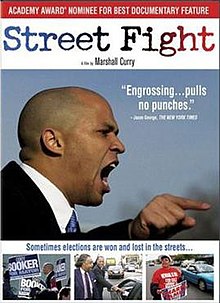
Robert F. Kennedy Jr. drew parallels between the environmental movement and the civil rights movement. Today's battle to protect the land has become a modern day David and Goliath, with groups such as Earth Liberation Front throwing fire instead of rocks. How effective or justified their actions are is a complicated issue. Documentary filmmaker Marshall Curry tackles this complex subject in his film, "If a Tree Falls." In 2005, Marshall was selected by Filmmaker Magazine as one of the "Twenty-Five New Faces of Independent Film." In 2007, he received the International Trailblazer Award at MIPDOC in Cannes. His first documentary, "Street Fight" was nominated for an Oscar and an Emmy. His second documentary, "Racing Dreams" is being made into a feature film by Dreamworks.
To Read the Interview
by Amanda Lin Costa
Truthout
When John Muir formed the Sierra Club in 1892 and fought to pass the National Parks Bill in 1899, it is difficult to believe he imagined future environmentalists would resort to acts defined by the US government as terrorism to protect the land. Or perhaps it isn't so far fetched and he predicted this escalation. Muir biographer,
Donald Worster, says of Muir's environmentalism that his mission was "saving the American soul from total surrender to materialism."
Materialism, money and commerce are woven as tightly together as a strangler fig, which will climb up its host tree until eventually it kills it, in its search for the light of day. "Soul Saving" falls under a moral realm that often considers itself outside of earthly laws, with the means justifying the end.
Robert F. Kennedy Jr. drew parallels between the environmental movement and the civil rights movement. Today's battle to protect the land has become a modern day David and Goliath, with groups such as Earth Liberation Front throwing fire instead of rocks. How effective or justified their actions are is a complicated issue. Documentary filmmaker Marshall Curry tackles this complex subject in his film, "If a Tree Falls." In 2005, Marshall was selected by Filmmaker Magazine as one of the "Twenty-Five New Faces of Independent Film." In 2007, he received the International Trailblazer Award at MIPDOC in Cannes. His first documentary, "Street Fight" was nominated for an Oscar and an Emmy. His second documentary, "Racing Dreams" is being made into a feature film by Dreamworks.
To Read the Interview
Monday, August 08, 2011
Ideas: How to Think About Science: Episode 3 - Margaret Lock on Biology and Culture
How to Think About Science: Episode 3 - Margaret Lock
Ideas (CBC)
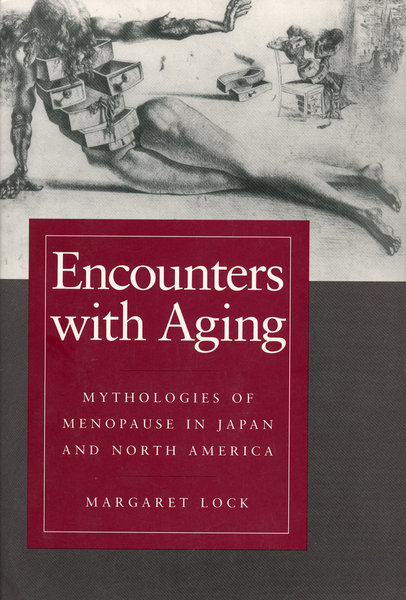
In 1993 medical anthropologist Margaret Lock published Encounters with Aging: Mythologies of Menopause in Japan and North America. The book explores dramatic differences in the way women experience menopause in each place. Such variation is usually taken as purely cultural, but, in her book, Margaret Lock makes a surprising suggestion. She proposes that there are biological differences between Japanese and North American women. Culture doesn't just interpret biology, she says, it also shapes it. Margaret Lock is a professor in the Department of Social Studies of Medicine at McGill. In this episode you'll hear her current reflections on what she calls "local biologies" later in the hour. David Cayley begins his conversation with a discussion of another pathbreaking book of hers called Twice Dead: Organ Transplants and the Reinvention of Death.
To Listen to the Episode

Ideas (CBC)
In 1993 medical anthropologist Margaret Lock published Encounters with Aging: Mythologies of Menopause in Japan and North America. The book explores dramatic differences in the way women experience menopause in each place. Such variation is usually taken as purely cultural, but, in her book, Margaret Lock makes a surprising suggestion. She proposes that there are biological differences between Japanese and North American women. Culture doesn't just interpret biology, she says, it also shapes it. Margaret Lock is a professor in the Department of Social Studies of Medicine at McGill. In this episode you'll hear her current reflections on what she calls "local biologies" later in the hour. David Cayley begins his conversation with a discussion of another pathbreaking book of hers called Twice Dead: Organ Transplants and the Reinvention of Death.
To Listen to the Episode
Jason Leopold: Air Force Pulls Christian-Themed Ethics Training for Nuclear Missile Officers After Publication of Truthout Report
Air Force Pulls Christian-Themed Ethics Training for Nuclear Missile Officers After Publication of Truthout Report
by Jason Leopold
Truthout
...
St. Augustine's "Qualifications for Just War," according to the way the Air Force characterized it in the 43 PowerPoint slides used in the ethics training, are: "to avenge or to avert evil; to protect the innocent and restore moral social order (just cause)" and "to restore moral order; not expand power, not for pride or revenge (just intent)."
One of the PowerPoint slides also contained a passage from the Book of Revelation that claims Jesus Christ, as the "mighty warrior," believed some wars to be just.
At the conclusion of the ethics training session, missile officers were asked to sign a legal document stating they will not hesitate to launch the nuclear-armed Intercontinental Ballistic Missiles (ICBM) "if lawfully ordered to do so by the President of the United States or his lawful successor."
The use of religious imagery in the slides and the numerous references to the New and Old Testament would appear to constitute a violation of the First Amendment establishing a wall of separation between church and state and Clause 3, Article 6 of the Constitution, which specifically prohibits a "religious test."
The PowerPoint was included with more than 500 pages of other documents pertaining to a missile officer's first week in training that was released by the Air Force under the Freedom of Information Act (FOIA) and provided to Truthout by the Military Religious Freedom Foundation (MRFF), a civil rights organization.
Another PowerPoint slide quoted Wernher Von Braun, a former member of the Nazi Party and SS officer who is regarded as the father of the US space program. Von Braun was not cited in the PowerPoint as a scientific expert, rather, he was specifically being referenced as a moral authority, which is remarkable considering that the Nazi scientist used Jews imprisoned in concentration camps, captured French anti-Nazi partisans, civilians, and others to help build the V-2, a weapon responsible for the death of thousands of British civilians.
MRFF President Mikey Weinstein said more than 30 missile officers contacted his organization over the past week to complain about the Christian imagery and biblical passages in the ethics training. He said the decision by the Air Force to pull the ethics course material is a "great victory for the constitution." [Full disclosure: Weinstein is a member of Truthout's Board of Advisers.]
"We are not going to commend the Air Force for doing something they should have done a quarter-century ago," Weinstein said. "It's an outrage and a deliberate attempt to torture and distort our constitution when the US Air Force mandatorily teaches its nuclear missile launch officers that fundamentalist Christian theology is inextricably intertwined with the 'correct' decision to launch nukes."
To Read the Rest of the Article
by Jason Leopold
Truthout
...
St. Augustine's "Qualifications for Just War," according to the way the Air Force characterized it in the 43 PowerPoint slides used in the ethics training, are: "to avenge or to avert evil; to protect the innocent and restore moral social order (just cause)" and "to restore moral order; not expand power, not for pride or revenge (just intent)."
One of the PowerPoint slides also contained a passage from the Book of Revelation that claims Jesus Christ, as the "mighty warrior," believed some wars to be just.
At the conclusion of the ethics training session, missile officers were asked to sign a legal document stating they will not hesitate to launch the nuclear-armed Intercontinental Ballistic Missiles (ICBM) "if lawfully ordered to do so by the President of the United States or his lawful successor."
The use of religious imagery in the slides and the numerous references to the New and Old Testament would appear to constitute a violation of the First Amendment establishing a wall of separation between church and state and Clause 3, Article 6 of the Constitution, which specifically prohibits a "religious test."
The PowerPoint was included with more than 500 pages of other documents pertaining to a missile officer's first week in training that was released by the Air Force under the Freedom of Information Act (FOIA) and provided to Truthout by the Military Religious Freedom Foundation (MRFF), a civil rights organization.
Another PowerPoint slide quoted Wernher Von Braun, a former member of the Nazi Party and SS officer who is regarded as the father of the US space program. Von Braun was not cited in the PowerPoint as a scientific expert, rather, he was specifically being referenced as a moral authority, which is remarkable considering that the Nazi scientist used Jews imprisoned in concentration camps, captured French anti-Nazi partisans, civilians, and others to help build the V-2, a weapon responsible for the death of thousands of British civilians.
MRFF President Mikey Weinstein said more than 30 missile officers contacted his organization over the past week to complain about the Christian imagery and biblical passages in the ethics training. He said the decision by the Air Force to pull the ethics course material is a "great victory for the constitution." [Full disclosure: Weinstein is a member of Truthout's Board of Advisers.]
"We are not going to commend the Air Force for doing something they should have done a quarter-century ago," Weinstein said. "It's an outrage and a deliberate attempt to torture and distort our constitution when the US Air Force mandatorily teaches its nuclear missile launch officers that fundamentalist Christian theology is inextricably intertwined with the 'correct' decision to launch nukes."
To Read the Rest of the Article
Ideas: How To Think About Science - #2 Lorraine Daston on Paradigms and Objectivity
How To Think About Science #2: Lorraine Daston
Ideas (CBC)

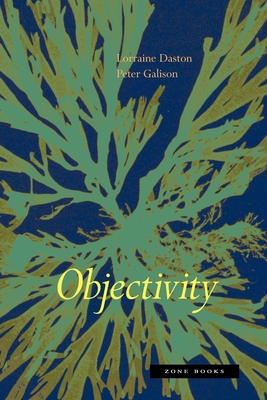
The Max Planck Institute for the History of Science occupies an elegant and airy new building in a leafy suburb of Berlin. It houses approximately a hundred scholars whose research extends from medieval cosmology to the role of experiment in 19th century German gardening to the ways in which medical technology has reshaped the contemporary boundary between life and death. The director is American Lorraine Daston.
David Cayley interviewed her recently in her office at the institute, and told him that there was a time when she would not even have dreamed of a hundred historians of science under one roof. When she was a graduate student at Harvard in the 70's, she says, the history of science was more a collection of strays from other disciplines than it was a discipline in itself. But a crucial challenge had been issued. In 1962 philosopher/historian Thomas Kuhn had published The Structure of Scientific Revolutions, the book that suddenly put the previously unusual word paradigm on everybody's lips. Kuhn rejected the assumption of a continuous linear progress in science. And thereby, Lorraine Daston says, he framed the question with which her generation grew up, how to write the history of science as something other than a triumphant progress to a foregone conclusion.
To Listen to the Episode
Ideas (CBC)
The Max Planck Institute for the History of Science occupies an elegant and airy new building in a leafy suburb of Berlin. It houses approximately a hundred scholars whose research extends from medieval cosmology to the role of experiment in 19th century German gardening to the ways in which medical technology has reshaped the contemporary boundary between life and death. The director is American Lorraine Daston.
David Cayley interviewed her recently in her office at the institute, and told him that there was a time when she would not even have dreamed of a hundred historians of science under one roof. When she was a graduate student at Harvard in the 70's, she says, the history of science was more a collection of strays from other disciplines than it was a discipline in itself. But a crucial challenge had been issued. In 1962 philosopher/historian Thomas Kuhn had published The Structure of Scientific Revolutions, the book that suddenly put the previously unusual word paradigm on everybody's lips. Kuhn rejected the assumption of a continuous linear progress in science. And thereby, Lorraine Daston says, he framed the question with which her generation grew up, how to write the history of science as something other than a triumphant progress to a foregone conclusion.
To Listen to the Episode
Senses of Cinema: Mattias Frey - Great Directors: Michael Haneke
Michael Haneke
by Mattias Frey
Senses of Cinema

Michael Haneke is arguably Europe’s most esteemed and most controversial filmmaker. After twenty years of directing for the cinema, he has earned a place in the pantheon of the most acclaimed active auteurs. His feature Benny’s Video (1992) shocked crowds with its restrained, antipsychological portrait of a teenager who kills a young girl “to see how it is”. Funny Games (1997) inspired a fierce debate on how one can interrogate violence in film. On the whole, Haneke’s polemical programme attempts to lay bare the coldness of Western society and challenge Hollywood’s blithe treatment of violence. With acknowledged influences including Andrei Tarkovsky, Jean-Marie Straub, Michelangelo Antonioni, Jon Jost, Abbas Kiarostami and above all Robert Bresson, his recent work has garnered a host of accolades and arthouse success. Caché (Hidden, 2005) won the Palme d’or and was voted by The Times as the “film of the decade”. Das weiße Band (The White Ribbon, 2009) earned Academy Award nominations for Best Cinematography and Best Foreign-Language Film.
Born in 1942 in Munich, Michael Haneke grew up in the Lower Austrian city of Wiener Neustadt. He studied psychology, philosophy and theatre at the University of Vienna and wrote film and literature reviews on the side. From 1967 to 1970 he worked as editor and dramaturge at the southern German television station Südwestfunk. It was in 1970 that Haneke began writing and directing films and (similar to most Austrian directors of his generation) his initial experiences behind the camera were projects for television. Haneke has also directed a number of stage productions (including Strindberg, Goethe, Bruckner, and Kleist) in Berlin, Munich, Vienna and Paris. His first film intended for cinematic release, Der siebente Kontinent (The Seventh Continent), premiered in 1989.
Writers retrospectively plot a director’s career as a teleological historical narrative with a familiar literary pattern, in this way circumscribing his or her works for the sake of a neat (if contrived) principle of organisation. Examining a living, very much active filmmaker is problematic and, I would argue, assessing Haneke is particularly challenging. No sooner has a commentator made a “definitive” pronouncement on what does or does not characterise Haneke’s oeuvre, than the director defies all expectations. After being initially positioned in the context of Austria’s television and film (cottage) industries and cultural politics, for example, he moved his operations to Paris and began making French-language “European” films with high-profile arthouse stars and multinational funding. Over the years, Haneke has regularly issued devastating squibs denouncing the manipulative American cinema (see the epigraph to this essay)—and then proceeded to make a picture with Hollywood money. After years of nostalgic recuperations of celluloid materiality and cinematic spectatorship, he began to make films that depend on digital technology and demand DVD viewing.
In spite of my own admonition against trying to pin down a moving target, I will attempt to work out a few characteristics of Haneke’s cinema and the experience of watching it. Although these principles do not apply equally to each individual film, they provide a framework to begin to approach the director.
Stories chronicle the failings of emotionally cold individuals and the implosion of bourgeois social structures when placed under a complicating duress.
Culturally, these narratives concern and comment on the identity politics of European class systems, gender roles and ethnic hierarchies, as well as the individual and collective guilt that these structures engineer.
Narrative forms tend toward the episodic and elliptical. Befitting art cinema practices, characters’ motivations remain obscure and their goals ambiguous; clear narrative resolutions are foreclosed or made impossible to determine. Haneke’s cinema provokes, demands but ultimately frustrates interpretation.
Stylistically, Haneke’s work favours the long take over montage and static shots over camera movement. Specific patterns of editing, framing, sound design and performance produce an uncomfortable viewing experience that, at best, invites a critical attitude towards media, images and the representation of violence and, at worst, uses these elements as titillation or authorial signature.
More so than the works of other filmmakers, watching Haneke is coloured by his media performances, theoretical observations and self-analyses. On the festival circuit and in provocative interviews, an ensemble of Hanekean provocations and buzzwords (e.g., “Every film rapes”; “I want to rape the viewer into independence”) competes with the viewer’s experience and invites critical attacks.
To Read the Rest of the Essay

by Mattias Frey
Senses of Cinema
Michael Haneke is arguably Europe’s most esteemed and most controversial filmmaker. After twenty years of directing for the cinema, he has earned a place in the pantheon of the most acclaimed active auteurs. His feature Benny’s Video (1992) shocked crowds with its restrained, antipsychological portrait of a teenager who kills a young girl “to see how it is”. Funny Games (1997) inspired a fierce debate on how one can interrogate violence in film. On the whole, Haneke’s polemical programme attempts to lay bare the coldness of Western society and challenge Hollywood’s blithe treatment of violence. With acknowledged influences including Andrei Tarkovsky, Jean-Marie Straub, Michelangelo Antonioni, Jon Jost, Abbas Kiarostami and above all Robert Bresson, his recent work has garnered a host of accolades and arthouse success. Caché (Hidden, 2005) won the Palme d’or and was voted by The Times as the “film of the decade”. Das weiße Band (The White Ribbon, 2009) earned Academy Award nominations for Best Cinematography and Best Foreign-Language Film.
Born in 1942 in Munich, Michael Haneke grew up in the Lower Austrian city of Wiener Neustadt. He studied psychology, philosophy and theatre at the University of Vienna and wrote film and literature reviews on the side. From 1967 to 1970 he worked as editor and dramaturge at the southern German television station Südwestfunk. It was in 1970 that Haneke began writing and directing films and (similar to most Austrian directors of his generation) his initial experiences behind the camera were projects for television. Haneke has also directed a number of stage productions (including Strindberg, Goethe, Bruckner, and Kleist) in Berlin, Munich, Vienna and Paris. His first film intended for cinematic release, Der siebente Kontinent (The Seventh Continent), premiered in 1989.
Writers retrospectively plot a director’s career as a teleological historical narrative with a familiar literary pattern, in this way circumscribing his or her works for the sake of a neat (if contrived) principle of organisation. Examining a living, very much active filmmaker is problematic and, I would argue, assessing Haneke is particularly challenging. No sooner has a commentator made a “definitive” pronouncement on what does or does not characterise Haneke’s oeuvre, than the director defies all expectations. After being initially positioned in the context of Austria’s television and film (cottage) industries and cultural politics, for example, he moved his operations to Paris and began making French-language “European” films with high-profile arthouse stars and multinational funding. Over the years, Haneke has regularly issued devastating squibs denouncing the manipulative American cinema (see the epigraph to this essay)—and then proceeded to make a picture with Hollywood money. After years of nostalgic recuperations of celluloid materiality and cinematic spectatorship, he began to make films that depend on digital technology and demand DVD viewing.
In spite of my own admonition against trying to pin down a moving target, I will attempt to work out a few characteristics of Haneke’s cinema and the experience of watching it. Although these principles do not apply equally to each individual film, they provide a framework to begin to approach the director.
Stories chronicle the failings of emotionally cold individuals and the implosion of bourgeois social structures when placed under a complicating duress.
Culturally, these narratives concern and comment on the identity politics of European class systems, gender roles and ethnic hierarchies, as well as the individual and collective guilt that these structures engineer.
Narrative forms tend toward the episodic and elliptical. Befitting art cinema practices, characters’ motivations remain obscure and their goals ambiguous; clear narrative resolutions are foreclosed or made impossible to determine. Haneke’s cinema provokes, demands but ultimately frustrates interpretation.
Stylistically, Haneke’s work favours the long take over montage and static shots over camera movement. Specific patterns of editing, framing, sound design and performance produce an uncomfortable viewing experience that, at best, invites a critical attitude towards media, images and the representation of violence and, at worst, uses these elements as titillation or authorial signature.
More so than the works of other filmmakers, watching Haneke is coloured by his media performances, theoretical observations and self-analyses. On the festival circuit and in provocative interviews, an ensemble of Hanekean provocations and buzzwords (e.g., “Every film rapes”; “I want to rape the viewer into independence”) competes with the viewer’s experience and invites critical attacks.
To Read the Rest of the Essay

Sunday, August 07, 2011
Ideas: How To Think About Science -- #1 Steven Shapin and Simon Schaffer
How To Think About Science: Episode 1 - Steven Shapin and Simon Schaffer
Ideas (CBC Radio)

In 1985 a book appeared that changed the way people thought about the history of science. Until that time, the history of science had usually meant biographies of scientists, or studies of the social contexts in which scientific discoveries were made. Scientific ideas were discussed, but the procedures and axioms of science itself were not in question. This changed with the publication of Leviathan and the Air Pump, subtitled Hobbes, Boyle and the Experimental Life, the book's avowed purpose was - "to break down the aura of self-evidence surrounding the experimental way of producing knowledge." This was a work, in other words, that wanted to treat something obvious and taken for granted - that matters of fact are ascertained by experiment - as if it were not at all obvious; that wanted to ask, how is it actually done and how do people come to agree that it has truly been done.
The authors of this pathbreaking book were two young historians, Steven Shapin and Simon Schaffer, and both have gone on to distinguished careers in the field they helped to define, science studies. Steven Shapin will be featured later in this series, but How to Think About Science begins with a conversation with Simon Schaffer. David Cayley called on him recently in his office at the Whipple Museum of the History of Science at Cambridge where he teaches.
To Listen to the Episode
Ideas (CBC Radio)
In 1985 a book appeared that changed the way people thought about the history of science. Until that time, the history of science had usually meant biographies of scientists, or studies of the social contexts in which scientific discoveries were made. Scientific ideas were discussed, but the procedures and axioms of science itself were not in question. This changed with the publication of Leviathan and the Air Pump, subtitled Hobbes, Boyle and the Experimental Life, the book's avowed purpose was - "to break down the aura of self-evidence surrounding the experimental way of producing knowledge." This was a work, in other words, that wanted to treat something obvious and taken for granted - that matters of fact are ascertained by experiment - as if it were not at all obvious; that wanted to ask, how is it actually done and how do people come to agree that it has truly been done.
The authors of this pathbreaking book were two young historians, Steven Shapin and Simon Schaffer, and both have gone on to distinguished careers in the field they helped to define, science studies. Steven Shapin will be featured later in this series, but How to Think About Science begins with a conversation with Simon Schaffer. David Cayley called on him recently in his office at the Whipple Museum of the History of Science at Cambridge where he teaches.
To Listen to the Episode
Mike Elk and Bob Sloan: The Hidden History of ALEC and Prison Labor
The Hidden History of ALEC and Prison Labor
Mike Elk and Bob Sloan
The Nation
The breaded chicken patty your child bites into at school may have been made by a worker earning twenty cents an hour, not in a faraway country, but by a member of an invisible American workforce: prisoners. At the Union Correctional Facility, a maximum security prison in Florida, inmates from a nearby lower-security prison manufacture tons of processed beef, chicken and pork for
Prison Rehabilitative Industries and Diversified Enterprises (PRIDE), a privately held non-profit corporation that operates the state’s forty-one work programs. In addition to processed food, PRIDE’s website reveals an array of products for sale through contracts with private companies, from eyeglasses to office furniture, to be shipped from a distribution center in Florida to businesses across the US. PRIDE boasts that its work programs are “designed to provide vocational training, to improve prison security, to reduce the cost of state government, and to promote the rehabilitation of the state inmates.”
Although a wide variety of goods have long been produced by state and federal prisoners for the US government—license plates are the classic example, with more recent contracts including everything from guided missile parts to the solar panels powering government buildings—prison labor for the private sector was legally barred for years, to avoid unfair competition with private companies. But this has changed thanks to the American Legislative Exchange Council (ALEC), its Prison Industries Act, and a little-known federal program known as PIE (the Prison Industries Enhancement Certification Program). While much has been written about prison labor in the past several years, these forces, which have driven its expansion, remain largely unknown.
Somewhat more familiar is ALEC’s instrumental role in the explosion of the US prison population in the past few decades. ALEC helped pioneer some of the toughest sentencing laws on the books today, like mandatory minimums for non-violent drug offenders, “three strikes” laws, and “truth in sentencing” laws. In 1995 alone, ALEC’s Truth in Sentencing Act was signed into law in twenty-five states. (Then State Rep. Scott Walker was an ALEC member when he sponsored Wisconsin's truth-in-sentencing laws and, according to PR Watch, used its statistics to make the case for the law.) More recently, ALEC has proposed innovative “solutions” to the overcrowding it helped create, such as privatizing the parole process through “the proven success of the private bail bond industry,” as it recommended in 2007. (The American Bail Coalition is an executive member of ALEC’s Public Safety and Elections Task Force.) ALEC has also worked to pass state laws to create private for-profit prisons, a boon to two of its major corporate sponsors: Corrections Corporation of America and Geo Group (formerly Wackenhut Corrections), the largest private prison firms in the country. An In These Times investigation last summer revealed that ALEC arranged secret meetings between Arizona’s state legislators and CCA to draft what became SB 1070, Arizona’s notorious immigration law, to keep CCA prisons flush with immigrant detainees. ALEC has proven expertly capable of devising endless ways to help private corporations benefit from the country’s massive prison population.
To Read the Rest
Mike Elk and Bob Sloan
The Nation
The breaded chicken patty your child bites into at school may have been made by a worker earning twenty cents an hour, not in a faraway country, but by a member of an invisible American workforce: prisoners. At the Union Correctional Facility, a maximum security prison in Florida, inmates from a nearby lower-security prison manufacture tons of processed beef, chicken and pork for
Prison Rehabilitative Industries and Diversified Enterprises (PRIDE), a privately held non-profit corporation that operates the state’s forty-one work programs. In addition to processed food, PRIDE’s website reveals an array of products for sale through contracts with private companies, from eyeglasses to office furniture, to be shipped from a distribution center in Florida to businesses across the US. PRIDE boasts that its work programs are “designed to provide vocational training, to improve prison security, to reduce the cost of state government, and to promote the rehabilitation of the state inmates.”
Although a wide variety of goods have long been produced by state and federal prisoners for the US government—license plates are the classic example, with more recent contracts including everything from guided missile parts to the solar panels powering government buildings—prison labor for the private sector was legally barred for years, to avoid unfair competition with private companies. But this has changed thanks to the American Legislative Exchange Council (ALEC), its Prison Industries Act, and a little-known federal program known as PIE (the Prison Industries Enhancement Certification Program). While much has been written about prison labor in the past several years, these forces, which have driven its expansion, remain largely unknown.
Somewhat more familiar is ALEC’s instrumental role in the explosion of the US prison population in the past few decades. ALEC helped pioneer some of the toughest sentencing laws on the books today, like mandatory minimums for non-violent drug offenders, “three strikes” laws, and “truth in sentencing” laws. In 1995 alone, ALEC’s Truth in Sentencing Act was signed into law in twenty-five states. (Then State Rep. Scott Walker was an ALEC member when he sponsored Wisconsin's truth-in-sentencing laws and, according to PR Watch, used its statistics to make the case for the law.) More recently, ALEC has proposed innovative “solutions” to the overcrowding it helped create, such as privatizing the parole process through “the proven success of the private bail bond industry,” as it recommended in 2007. (The American Bail Coalition is an executive member of ALEC’s Public Safety and Elections Task Force.) ALEC has also worked to pass state laws to create private for-profit prisons, a boon to two of its major corporate sponsors: Corrections Corporation of America and Geo Group (formerly Wackenhut Corrections), the largest private prison firms in the country. An In These Times investigation last summer revealed that ALEC arranged secret meetings between Arizona’s state legislators and CCA to draft what became SB 1070, Arizona’s notorious immigration law, to keep CCA prisons flush with immigrant detainees. ALEC has proven expertly capable of devising endless ways to help private corporations benefit from the country’s massive prison population.
To Read the Rest
Danny Mayer: How JP Morgan Took Over All Kentucky's Financial Services, And Why You Should Be Scared
How JP Morgan Took Over All Kentucky's Financial Services, And Why You Should Be Scared
By Danny Mayer
North of Center; AlterNet
On July 1, JP Morgan Chase became the Commonwealth’s bank. As the state’s official depository, JP now receives all deposits, writes all checks and makes all wire transfers on the $12-15 billion that flow through Kentucky state government in the course of a fiscal year. It will cut payroll checks, receive federal and other funds earmarked for the state, and disburse educational or transportation or any other funds to their appropriate monetary endpoints. For its trouble, the bank will receive $1.3 million in state fees and the ability to re-lend idle state funds out to customers for private gain.
Yes, you should be worried.
JP's decade
A global corporation with more than $2 trillion in assets and operations in 60 countries, JP Morgan Chase has been a major figure in the ongoing global financial crisis. As one of the largest private banks in the U.S., the bank made incredible amounts of money by underwriting many of the questionable loans (sub-prime, zero down, adjustable rate) that fueled the American housing bubble. It then made even more money by packaging hundreds of these shitty loans into a single “product,” a mortgage backed security, which it sold like Twinkies to pious religious non-profits, filthy-rich hedge fund managers, municipal fire-fighters, retired auto-workers, and the like, each security effectively putting these groups on the hook—and not JP—for the shitty loans that it had helped create.
When, inevitably, individual homeowners began to default on their loans, thereby triggering the stock market collapse of 2008, JP Morgan found a way to make money on that, too, by buying insurance (known as credit default swaps) on the shitty securities of shitty mortgages that it had sold to unwitting investors. For good measure, the U.S. government handed the corporation $25 billion in TARP funds, $30 billion in U.S. treasury backing to purchase bankrupt Bear Stearns (previously a global leader in mortgage backed securities), and the biggest chunk of the $129 billion of taxpayer-provided money earmarked for creditors of bankrupt credit default swaps provider AIG.
Since 2002, the bank has turned its attention to another easy revenue source: city, state and national government debt. Along with other large banks like Goldman Sachs, it began selling a new type of complicated loan to countries like Greece, states like Connecticut and Mississippi, and cities as far-flung as Birmingham, Alabama, and Milan, Italy. Even the Delaware Port Authority and the Pennsylvania school system have gotten caught in the JP trap.
These derivative packages, named “swaps” to ensure they do not get officially counted as debt on government balance sheets, essentially act as second and third and fourth-mortgages on public infrastructure projects like airports and highways. Loaded with adjustable rates and a slew of fees and “trigger points” that ensure rapid debt growth, the swaps essentially ensure the privatization of public government assets. In the case of Birmingham, Alabama, for example, Rolling Stone journalist Matt Taibbi has reported how a city sewer project initially estimated to cost $250 million generated “a total of $1.28 billion just in interest and fees on the debt,” most of which went into the private coffers of J.P. Morgan. The result for Birmingham? “Between 2008 and 2009,” Taibbi notes, “the annual payment on Jefferson County’s debt jumped from $53 million to a whopping $636 million.” The debt now stands at $4800 per resident.
This is the corporation that our state leaders have chosen to safeguard and disperse public state money.
Local first
In the most recent of a slew of fraud-related lawsuits targeting JP Morgan’s financial transactions, the corporate giant has been forced to pay $228 million in damages for rigging bids on municipal bonds—public debt incurred to pay for expensive infrastructure projects. The lawsuit accused JP Morgan of insider dealings that inflated the taxpayer cost on over 90 projects spanning 31 states. As is standard in these cases, the money the bank was forced to pay back reflected only a percentage of what they made off the deals, quarters on the dollar. What’s more, because the settlement did not require the bank to admit guilt, it has been effectively insulated from any future litigation on behalf of the specific localities that were defrauded.
One of these states, it should be known, is Kentucky. A small blurb appearing in the July 13 Herald-Leader, less than 2 weeks after state leaders made JP Morgan Chase our Commonwealth bank, cited two separate bid-rigging schemes that had made their way onto the 31-state lawsuit: Western Kentucky’s Henderson County received $224,000 from the lawsuit, while the University of Kentucky stood to recoup $66,000 as part of the settlement.
“The issue with UK,” the Herald-Leader blurb reported, “involved a series of bonds totaling $18.695 million dating to May 2001” for the Peter H. Bosomworth Health Sciences Research Building (described by UK as “the Medical Center’s marquee research facility”) and its utility infrastructure.
To Read the Rest of the Essay
By Danny Mayer
North of Center; AlterNet
On July 1, JP Morgan Chase became the Commonwealth’s bank. As the state’s official depository, JP now receives all deposits, writes all checks and makes all wire transfers on the $12-15 billion that flow through Kentucky state government in the course of a fiscal year. It will cut payroll checks, receive federal and other funds earmarked for the state, and disburse educational or transportation or any other funds to their appropriate monetary endpoints. For its trouble, the bank will receive $1.3 million in state fees and the ability to re-lend idle state funds out to customers for private gain.
Yes, you should be worried.
JP's decade
A global corporation with more than $2 trillion in assets and operations in 60 countries, JP Morgan Chase has been a major figure in the ongoing global financial crisis. As one of the largest private banks in the U.S., the bank made incredible amounts of money by underwriting many of the questionable loans (sub-prime, zero down, adjustable rate) that fueled the American housing bubble. It then made even more money by packaging hundreds of these shitty loans into a single “product,” a mortgage backed security, which it sold like Twinkies to pious religious non-profits, filthy-rich hedge fund managers, municipal fire-fighters, retired auto-workers, and the like, each security effectively putting these groups on the hook—and not JP—for the shitty loans that it had helped create.
When, inevitably, individual homeowners began to default on their loans, thereby triggering the stock market collapse of 2008, JP Morgan found a way to make money on that, too, by buying insurance (known as credit default swaps) on the shitty securities of shitty mortgages that it had sold to unwitting investors. For good measure, the U.S. government handed the corporation $25 billion in TARP funds, $30 billion in U.S. treasury backing to purchase bankrupt Bear Stearns (previously a global leader in mortgage backed securities), and the biggest chunk of the $129 billion of taxpayer-provided money earmarked for creditors of bankrupt credit default swaps provider AIG.
Since 2002, the bank has turned its attention to another easy revenue source: city, state and national government debt. Along with other large banks like Goldman Sachs, it began selling a new type of complicated loan to countries like Greece, states like Connecticut and Mississippi, and cities as far-flung as Birmingham, Alabama, and Milan, Italy. Even the Delaware Port Authority and the Pennsylvania school system have gotten caught in the JP trap.
These derivative packages, named “swaps” to ensure they do not get officially counted as debt on government balance sheets, essentially act as second and third and fourth-mortgages on public infrastructure projects like airports and highways. Loaded with adjustable rates and a slew of fees and “trigger points” that ensure rapid debt growth, the swaps essentially ensure the privatization of public government assets. In the case of Birmingham, Alabama, for example, Rolling Stone journalist Matt Taibbi has reported how a city sewer project initially estimated to cost $250 million generated “a total of $1.28 billion just in interest and fees on the debt,” most of which went into the private coffers of J.P. Morgan. The result for Birmingham? “Between 2008 and 2009,” Taibbi notes, “the annual payment on Jefferson County’s debt jumped from $53 million to a whopping $636 million.” The debt now stands at $4800 per resident.
This is the corporation that our state leaders have chosen to safeguard and disperse public state money.
Local first
In the most recent of a slew of fraud-related lawsuits targeting JP Morgan’s financial transactions, the corporate giant has been forced to pay $228 million in damages for rigging bids on municipal bonds—public debt incurred to pay for expensive infrastructure projects. The lawsuit accused JP Morgan of insider dealings that inflated the taxpayer cost on over 90 projects spanning 31 states. As is standard in these cases, the money the bank was forced to pay back reflected only a percentage of what they made off the deals, quarters on the dollar. What’s more, because the settlement did not require the bank to admit guilt, it has been effectively insulated from any future litigation on behalf of the specific localities that were defrauded.
One of these states, it should be known, is Kentucky. A small blurb appearing in the July 13 Herald-Leader, less than 2 weeks after state leaders made JP Morgan Chase our Commonwealth bank, cited two separate bid-rigging schemes that had made their way onto the 31-state lawsuit: Western Kentucky’s Henderson County received $224,000 from the lawsuit, while the University of Kentucky stood to recoup $66,000 as part of the settlement.
“The issue with UK,” the Herald-Leader blurb reported, “involved a series of bonds totaling $18.695 million dating to May 2001” for the Peter H. Bosomworth Health Sciences Research Building (described by UK as “the Medical Center’s marquee research facility”) and its utility infrastructure.
To Read the Rest of the Essay
Friday, August 05, 2011
Democracy Now: Lisa Graves - Secretive Corporate-Legislative Group ALEC Holds Annual Meeting to Rewrite State Laws
Secretive Corporate-Legislative Group ALEC Holds Annual Meeting to Rewrite State Laws
Democracy Now
Hundreds of state legislators from all 50 states have gathered in New Orleans for the annual meeting of the American Legislative Exchange Council, known as ALEC. Critics say the Washington-based organization plays a key role in helping corporations secretly draft model pro-business legislation that has been used by state lawmakers across the country. Unlike many other organizations, ALEC’s membership includes both state lawmakers and corporate executives who gather behind closed doors to discuss and vote on model legislation. In recent months, ALEC has come under increasing scrutiny for its role in drafting bills to attack workers’ rights, roll back environmental regulations, privatize education, deregulate major industries, and passing voter ID laws. Nonetheless, this year’s annual ALEC meeting boasts the largest attendance in five years, with nearly 2,000 guests in attendance. We go to New Orleans to speak with Lisa Graves, executive director of the Center for Media and Democracy. Last month, her organization released 800 model bills approved by companies and lawmakers at recent ALEC meetings.
To Watch/Listen/Read
Democracy Now
Hundreds of state legislators from all 50 states have gathered in New Orleans for the annual meeting of the American Legislative Exchange Council, known as ALEC. Critics say the Washington-based organization plays a key role in helping corporations secretly draft model pro-business legislation that has been used by state lawmakers across the country. Unlike many other organizations, ALEC’s membership includes both state lawmakers and corporate executives who gather behind closed doors to discuss and vote on model legislation. In recent months, ALEC has come under increasing scrutiny for its role in drafting bills to attack workers’ rights, roll back environmental regulations, privatize education, deregulate major industries, and passing voter ID laws. Nonetheless, this year’s annual ALEC meeting boasts the largest attendance in five years, with nearly 2,000 guests in attendance. We go to New Orleans to speak with Lisa Graves, executive director of the Center for Media and Democracy. Last month, her organization released 800 model bills approved by companies and lawmakers at recent ALEC meetings.
To Watch/Listen/Read
Patty Lovera: Cargill Meat Recall Heightens Fears Budgets Cuts Will Weaken Oversight, Threaten Public Health
Cargill Meat Recall Heightens Fears Budgets Cuts Will Weaken Oversight, Threaten Public Health
Democracy Now
In one of the largest meat recalls in U.S. history, this week the food giant Cargill ordered the recall of 36 million pounds of ground turkey. The recall came after at least one person died from Salmonella, and another 76 people fell ill, from turkey products traced to Cargill’s processing plant in Springdale, Arkansas. According to the federal Center for Disease Control and Prevention, the Salmonella outbreak involves a strain of the bacteria known as Salmonella Heidelberg, which is resistant to many commonly prescribed antibiotics. Although the recall was announced this week, the outbreak began in March. More than 3,000 people die a year from food poisoning in the United States, and millions more get sick. Food safety advocates say this latest outbreak shows how budget cuts have hampered the ability of federal and state health agencies to effectively protect public health. We speak with Patty Lovera, assistant director of the food safety group, Food & Water Watch. "As Congress comes back this fall...in budget-cutting mode [where] nothing is really sacred, we need to be telling them food safety inspections...are not acceptable places to find these savings," Lovera says.
To Watch/Listen/Read
Democracy Now
In one of the largest meat recalls in U.S. history, this week the food giant Cargill ordered the recall of 36 million pounds of ground turkey. The recall came after at least one person died from Salmonella, and another 76 people fell ill, from turkey products traced to Cargill’s processing plant in Springdale, Arkansas. According to the federal Center for Disease Control and Prevention, the Salmonella outbreak involves a strain of the bacteria known as Salmonella Heidelberg, which is resistant to many commonly prescribed antibiotics. Although the recall was announced this week, the outbreak began in March. More than 3,000 people die a year from food poisoning in the United States, and millions more get sick. Food safety advocates say this latest outbreak shows how budget cuts have hampered the ability of federal and state health agencies to effectively protect public health. We speak with Patty Lovera, assistant director of the food safety group, Food & Water Watch. "As Congress comes back this fall...in budget-cutting mode [where] nothing is really sacred, we need to be telling them food safety inspections...are not acceptable places to find these savings," Lovera says.
To Watch/Listen/Read
Relationships: Peace and Conflict Studies Archive
[Family, friendship, love ... in all aspects]
"The Being Deaf Show." RE:SOUND (2007)
Borden, Amy. "At the global market: Ousmane Sembène’s Moolaadé and the economics of women’s rights." Jump Cut #53 (Summer 2011)
Brook, Chris. "ACLU Files Lawsuit For Second Parent Adoption." Law and Disorder (July 9, 2012)
Frazen, Jonathan. "Liking Is for Cowards. Go for What Hurts." (Commencement address to the graduates of Kenyon College) The New York Times (May 29, 2011)
House, Silas. "Beshear lawsuit embarrasses state, tarnishes his legacy; Backward thinking on Ky.'s gay-marriage ban." Lexington Herald-Leader (May 13, 2014)
Ide, Enku. "On the Marriage Equality Act." Dialogic (March 26, 2013)
LGBT Pride Parades The Big Picture (July 8, 2011)
McGowan, Todd. "The Love of Antagonism in Le Mepris." Acidemic #7 (2012)
Moniz, Tomaz. " Notes from the Frontlines of Bringing Up Girls: What I really want to tell my daughters about autonomy and sex, in the midst of a war on women." Yes! (October 3, 2012)
Musgrave, Beth. "Citing new same-sex marriage ruling, Fayette judge allows step mother to adopt her wife's son." Lexington Herald-Leader (February 28, 2014)
Noddings, Nel. "Caring in Education." The Encyclopedia of Informal Education (2005)
Richards, Cecile. "'A War on Women': GOP Bills Targeting Abortion and Reproductive Rights." Democracy Now (February 16, 2011)
Ryan, Christopher and Cacilda Jetha. "Introduction: Another Well-Intentioned Inquisition." Sex at Dawn: The Prehistoric Origins of Modern Sexuality. (Harper, 2010: 1-15)
Savage Love [Seattle: Weblog of sexual/relationship ethics columnist Dan Savage -- there is also a weekly podcast.]
Scagliotti, John. "Why Gay Marriage Matters: A Reply to Dean Spade and Craig Willse." Organizing Upgrades (September 12, 2013)
Smiler, Barry. "No Such Thing as Polyamory." Electronic Journal of Human Sexuality #14 (2011)
Spade, Dean and Craig Willse. "Marriage Will Never Set Us Free." Organizing Updgrade (September 3, 2013)
Waldron, Travis. "Kentucky Church Unanimously Votes To Stop Signing Marriage Licenses Until Gay Marriage Is Legalized." Think Progress (April 21, 2011)
Wolfe, Leanna. "On Kittens and the Very Invented Culture of Polyamory." Electronic Journal of Human Sexuality (October 12, 2008)
Wolfson, Andrew. "Beshear lawyers say gay marriage threatens Kentucky birth rates." Louisville Courier-Journal (May 9, 2014)
"The Being Deaf Show." RE:SOUND (2007)
Borden, Amy. "At the global market: Ousmane Sembène’s Moolaadé and the economics of women’s rights." Jump Cut #53 (Summer 2011)
Brook, Chris. "ACLU Files Lawsuit For Second Parent Adoption." Law and Disorder (July 9, 2012)
Frazen, Jonathan. "Liking Is for Cowards. Go for What Hurts." (Commencement address to the graduates of Kenyon College) The New York Times (May 29, 2011)
House, Silas. "Beshear lawsuit embarrasses state, tarnishes his legacy; Backward thinking on Ky.'s gay-marriage ban." Lexington Herald-Leader (May 13, 2014)
Ide, Enku. "On the Marriage Equality Act." Dialogic (March 26, 2013)
LGBT Pride Parades The Big Picture (July 8, 2011)
McGowan, Todd. "The Love of Antagonism in Le Mepris." Acidemic #7 (2012)
Moniz, Tomaz. " Notes from the Frontlines of Bringing Up Girls: What I really want to tell my daughters about autonomy and sex, in the midst of a war on women." Yes! (October 3, 2012)
Musgrave, Beth. "Citing new same-sex marriage ruling, Fayette judge allows step mother to adopt her wife's son." Lexington Herald-Leader (February 28, 2014)
Noddings, Nel. "Caring in Education." The Encyclopedia of Informal Education (2005)
Richards, Cecile. "'A War on Women': GOP Bills Targeting Abortion and Reproductive Rights." Democracy Now (February 16, 2011)
Ryan, Christopher and Cacilda Jetha. "Introduction: Another Well-Intentioned Inquisition." Sex at Dawn: The Prehistoric Origins of Modern Sexuality. (Harper, 2010: 1-15)
Savage Love [Seattle: Weblog of sexual/relationship ethics columnist Dan Savage -- there is also a weekly podcast.]
Scagliotti, John. "Why Gay Marriage Matters: A Reply to Dean Spade and Craig Willse." Organizing Upgrades (September 12, 2013)
Smiler, Barry. "No Such Thing as Polyamory." Electronic Journal of Human Sexuality #14 (2011)
Spade, Dean and Craig Willse. "Marriage Will Never Set Us Free." Organizing Updgrade (September 3, 2013)
Waldron, Travis. "Kentucky Church Unanimously Votes To Stop Signing Marriage Licenses Until Gay Marriage Is Legalized." Think Progress (April 21, 2011)
Wolfe, Leanna. "On Kittens and the Very Invented Culture of Polyamory." Electronic Journal of Human Sexuality (October 12, 2008)
Wolfson, Andrew. "Beshear lawyers say gay marriage threatens Kentucky birth rates." Louisville Courier-Journal (May 9, 2014)
Richard D. Wolff: A Tale of Two Lootings
A Tale of Two Lootings
by Richard D. Wolff
Truthout
The political posturing around the debt ceiling "crisis" was mostly a distraction from the hard issues. The hardest of those - underlying US economic decline - keeps resurfacing to display costs, pains and injustices that threaten to dissolve society. Its causes - two long-term trends over the last 30 years - help also to explain the political failures that now compound the social costs of economic decline.
The first trend is the attack on jobs, wages and benefits, and the second is the attack on the federal government's budget. The first trend enables the second. A capitalist economy suffering high unemployment with all its costly consequences shapes a bizarre, disconnected politics. The two major parties ignore unemployment and the system that keeps reproducing it. They argue instead over how much to cut social programs for the people while they agree that such cutting is the major way to fix the government's broken budget.
The first trend amounts to looting the US working class (the media softens that to "disappearing middle class"). Since the 1970s, real wages have been flat to declining, while productivity per worker has risen steadily. What employers give workers (wages) has remained the same while what workers produce for their employers (profits) rose. Workers and their families responded by working ever more hours and borrowing ever more money to get or keep the "American dream." By 2007, they were physically exhausted, families emotionally stressed and deeply anxious about the debts that their flat real wages could no longer sustain. When the system crashed, zooming unemployment, further wage and benefit reductions and home foreclosures made everything still worse for most Americans.
The second trend was looting the government. This happened because exhausted and stressed workers turned away from participation or even political interests after the 1970s. In contrast, employers used the profits made possible by flat wages and rising productivity to buy politicians, parties and policies. More than ever before, businesses and top executives grabbed the levers of political power. They made government serve their interests. Starting in the 1980s, Washington lowered business taxes, deregulated businesses, cut taxes on executives' and other high incomes, increased spending on the military-industrial and medical-insurance complexes, provided more opportunities and freedom for financial speculation, and so on. To distract people from recognizing, debating, or opposing this political shift, more was also spent on social programs and supports.
To Read the Rest of the Essay
by Richard D. Wolff
Truthout
The political posturing around the debt ceiling "crisis" was mostly a distraction from the hard issues. The hardest of those - underlying US economic decline - keeps resurfacing to display costs, pains and injustices that threaten to dissolve society. Its causes - two long-term trends over the last 30 years - help also to explain the political failures that now compound the social costs of economic decline.
The first trend is the attack on jobs, wages and benefits, and the second is the attack on the federal government's budget. The first trend enables the second. A capitalist economy suffering high unemployment with all its costly consequences shapes a bizarre, disconnected politics. The two major parties ignore unemployment and the system that keeps reproducing it. They argue instead over how much to cut social programs for the people while they agree that such cutting is the major way to fix the government's broken budget.
The first trend amounts to looting the US working class (the media softens that to "disappearing middle class"). Since the 1970s, real wages have been flat to declining, while productivity per worker has risen steadily. What employers give workers (wages) has remained the same while what workers produce for their employers (profits) rose. Workers and their families responded by working ever more hours and borrowing ever more money to get or keep the "American dream." By 2007, they were physically exhausted, families emotionally stressed and deeply anxious about the debts that their flat real wages could no longer sustain. When the system crashed, zooming unemployment, further wage and benefit reductions and home foreclosures made everything still worse for most Americans.
The second trend was looting the government. This happened because exhausted and stressed workers turned away from participation or even political interests after the 1970s. In contrast, employers used the profits made possible by flat wages and rising productivity to buy politicians, parties and policies. More than ever before, businesses and top executives grabbed the levers of political power. They made government serve their interests. Starting in the 1980s, Washington lowered business taxes, deregulated businesses, cut taxes on executives' and other high incomes, increased spending on the military-industrial and medical-insurance complexes, provided more opportunities and freedom for financial speculation, and so on. To distract people from recognizing, debating, or opposing this political shift, more was also spent on social programs and supports.
To Read the Rest of the Essay
History for the Future: Richard Wolff on the Continuing Economic Crisis
Richard Wolff on the Continuing Economic Crisis
History for the Future

Richard D. Wolff [is a] professor of economics emeritus at the University of Massachusetts-Amherst, and most recently the author of Capitalism Hits the Fan: The Global Economic Meltdown and What To Do About It (2009), Rick has been on the show before talking about the origins of neoliberalism, and the current housing market crisis in the United States. In this new episode Rick discusses the economic crisis, unemployment, and debt. Towards the end of our conversation, Rick explores the role that media events like the Royal Wedding last month play in our culture.
To Listen to the Episode
History for the Future
Richard D. Wolff [is a] professor of economics emeritus at the University of Massachusetts-Amherst, and most recently the author of Capitalism Hits the Fan: The Global Economic Meltdown and What To Do About It (2009), Rick has been on the show before talking about the origins of neoliberalism, and the current housing market crisis in the United States. In this new episode Rick discusses the economic crisis, unemployment, and debt. Towards the end of our conversation, Rick explores the role that media events like the Royal Wedding last month play in our culture.
To Listen to the Episode
Thursday, August 04, 2011
Philosophy: Peace and Conflict Studies Archive
All Watched Over By Machines of Loving Grace (United Kingdom: Adam Curtis, 2011)
Andrejevic, Mark. "Estrangement 2.0." World Picture #6 (Winter 2011)
Apostolidès, Jean-Marie. "On the Literary Career of Albert Camus and His Novel The Stranger>." Entitled Opinions (December 6, 2005)
Appiah, Kwame Anthony. "How To Make a Moral Revolution." Open Source (November 12, 2010)
Aravamudan, Srinivas. "Introduction: Perpetual War." PMLA (October 2009)
Aristotle. Nicomachaen Ethics. The Internet Classics Archive (Originally written 350 B.C.)
Assange, Julian and Slavoj Zizek. "Full Video of WikiLeaks’ Julian Assange & Philosopher Slavoj Žižek With Amy Goodman." Democracy Now (July 2, 2011)
Ball, Norman. "The Power of Auteurs and the Last Man Standing: Adam Curtis' Documentary Nightmares." Bright Lights Film Journal #78 (November 2012)
Baskins, Jon. "The Perspective of Terrence Malick." The Point #2 (Winter 2010)
Benton, Michael Dean. "My Understanding of Anarchism." Dialogic (March 4, 2012)
---. "Notes on Anti-Oedipus: Capitalism and Schizophernia." Dialogic (February 20, 2014)
Boggs, Grace Lee. "Becoming Detroit: Grace Lee Boggs on Reimagining Work, Food, and Community." On Being (July 18, 2013)
Borradori, Giovanna. "The Illusion of Negative Freedom." Dialogic (Excerpt from "Terrorism and the Legacy of the Enlightenment: Habermas and Derida." Philosophy in a Time of Terror: Dialogues with Jurgen Habermas and Jacques Derrida. University of Chicago Press, 2003: 1-24.)
Botton, Alain de. "Wants a Religion for Atheists: Introducing Atheism 2.0." Open Culture (January 26, 2012)
Chomsky, Noam. "Everyday Anarchist." Modern Success (April 14, 2013)
Daston, Lorraine. "How To Think About Science #2: On Paradigms and Objectivity." Ideas (January 2, 2009)
Daub, Adrian. "Georg Wilhelm Friedrich Hegel and his heirs." Entitled Opinions (October 19, 2011)
Dobson, Teresa M. and Tammy Iftody. "Consciousness and Complexity in Waking Life" Complicity: An International Journal of Complexity and Education 6.1 (2009)
Earp, Brian. "Choosing one’s own (sexual) identity: Shifting the terms of the ‘gay rights’ debate." Practical Ethics (January 26, 2012)
Eisenstein, Charles. The Ascent of Humanity. (Panathea Productions, 2007)
Farrow, Robert. "The Wicker Man: Games of truth, anthropology, and the death of ‘man’." Metaphilm (June 20, 2005)
Feldman, Karen. "Walter Benjamin and his 'Artwork' essay." Entitled Opinions (July 3, 2013) [They are discussing Benjamin's 1936 essay: "The Work of Art in the Age of Mechanical Reproduction"
Fernandez, Ingrid. "Visions of the Other: The Return of the Abject in Roman Polanski's The Tenant." Bright Lights Film Journal #78 (November 2012)
Foucault, Michel. "Panopticism." From Discipline & Punish: The Birth of the Prison (NY: Vintage Books 1995): 195-228.
Gonzalez, Pedro Blas. "Citizen Kane: Biography and the Unfinished Sentence." Senses of Cinema #57 (2010)
Graeber, David. "On the phenomenon of bullshit jobs." libcom (August 20, 2013)
Hacking, Ian and Andrew Pickering. "How To Think About Science #4: On Science as Experimental Philosophy." Ideas (January 2, 2009)
Hecht, Jennifer Michael. "A History of Doubt." Being (May 3, 2007)
Hinton, Stephen. "The Love/Hate Relationship Between Friedrich Nietzsche and Richard Wagner." Entitled Opinions (November 30, 2011)
Hoxby, Blair. "Aristotle's Poetics." Entitled Opinions (March 8, 2011)
Human Resources: Social Engineering in the 20th Century (USA: Scott Noble, 2011: 119 mins)
Into Eternity Making Contact (March 18, 2014) ["Our world is generating more and more nuclear waste, but have no permanent place to dispose of it. But the nation of Finland has a plan. They’re building an underground cave, to hold thousands of tones of nuclear waste, for at least 100 thousand years. On this edition, we hear excerpts of the film, “Into Eternity”, which explores the logistical and philosophical quandaries around the construction of something that if it works, might very well outlast the entire human race."]
Jones, Kent. "To Live or Clarify the Moment: Rick Linklater’s Waking Life." Senses of Cinema (March 2002)
Krznaric, Roman. "The Power of Outrospection." RSA Animate (December 3, 2012)
Levine, Bruce E. "How Ayn Rand Seduced Generations of Young Men and Helped Make the U.S. Into a Selfish, Greedy Nation." AlterNet (December 15, 2011)
Ludlow, Peter. "Hacktivists as Gadflies." The Stone (April 13, 2013)
Macy, Joanna. "A Wild Love for the World." On Being (November 1, 2012)
McGowan, Todd. "The Love of Antagonism in Le Mepris." Acidemic #7 (2012)
McLemee, Scott. "Culture War to Shooting War." Inside Higher Education (August 10, 2011)
Mooney, James. "Epistemology: Dreams and Demons -- Abre los ojos (Open your eyes)." Film and Philosophy (September 9, 2011)
Morris, David. "Where is Kropotkin When We Really Need Him? If you want to know what anarchism is and why we should care, read Kropotkin." Common Dreams (February 10, 2012)
Ng, Edwin. "The (Zen) Buddhist Heart of I ♥ Huckabees." Journal of Religion and Film 14.1 (April 2010)
Nightingale, Andrea. "Epicurus and Epicureanism." Entitled Opinions (November 8, 2005)
Nuland, Sherwin. "The Biology of Spirit." On Being (March 6, 2014)["Dr. Sherwin Nuland died this week at the age of 83. He became well-known through his first book, How We Die, which won the National Book Award in 1994. But pondering death was for him a way of wondering at life. He reflected on the meaning of life by way of scrupulous and elegant detail about human physiology."]
Nussbaum, Martha. "21st Century Enlightenment." RSA (Dec 16, 2010)
Oliver, Paul. "Michel Foucault - The Development of Knowledge." Excerpt from Foucault: The Key Ideas. Blacklick, OH: McGraw Hill, 2010: 17-21.
Popova, Maria. "What Is Science? From Feynman to Sagan to Asimov to Curie, an Omnibus of Definitions." Brain Pickings (April 6, 2012)
Power, Nina. "The Spectre of the “Public”: The Ideology of Law and Order." Backdoor Broadcasting Company (The Birkbeck Institute for the Humanities "Ideology Now – Conference": April 28, 2012)
The Power of Nightmares (United Kingdom: Adam Curtis, 2004)
Remen, Rachel Naomi. "Listening Generously: The Healing Stories of Rachel Naomi Remen." On Being (July 29, 2010)
Russell, Bertrand. "Authority and the Individual, Pts. 1-6." The Reith Lectures (December 24, 1948 - January 30, 1949)
Sandberg, Anders. "Asking the Right Questions: Big Data and Civil Rights." Practical Ethics (August 16, 2012)
Sanford, Matthew. "The Body's Grace." On Being (May 3, 2012)
Schnapp, Jeffrey. "The Phenomenon of Crowds." Entitled Opinions (November 29, 2005)
"Science and the Search for Meaning: Five Questions, Part Five: Can Science be Sacred?" To the Best of Our Knowledge (08/28/11)
Sheehan, Thomas. "On the Historical Jesus." Entitled Opinions (January 31, 2006)
Sluga, Hans. "The Life and Work of Michel Foucault." Entitled Opinions (April 18, 2012)
Smith, Mark K. "Dialogue and conversation for learning, education and change." Informal Encyclopedia of Education (2001)
Sullivan, Kathleen. "On the U.S. Constitution." Entitled Opinions (May 2, 2006)
Sylvia, John. "All the Argument We Need." Pop Culture and Philosophy (June 10, 2009)
Yoshioka, Maximilian. "History or Humanity? On Lu Chuan's City of Life and Death A Nietzschean Perspective on Nanjing." Bright Lights Film Journal #76 (May 2012)
---. "Technocratic Totalitarianism: One-Dimensional Thought in Jean-Luc Godard's Alphaville." Bright Lights Film Journal #78 (November 2012)
Zaroff, Larry. "Medicine and the Human Condition." Entitled Opinions (November 23, 2011)
Zizek, Slavoj. "Actual Politics." Theory & Event 14.4 (2011)
---. "First as Tragedy, Then as Farce." RSAnimate (July 28, 2010)
Andrejevic, Mark. "Estrangement 2.0." World Picture #6 (Winter 2011)
Apostolidès, Jean-Marie. "On the Literary Career of Albert Camus and His Novel The Stranger>." Entitled Opinions (December 6, 2005)
Appiah, Kwame Anthony. "How To Make a Moral Revolution." Open Source (November 12, 2010)
Aravamudan, Srinivas. "Introduction: Perpetual War." PMLA (October 2009)
Aristotle. Nicomachaen Ethics. The Internet Classics Archive (Originally written 350 B.C.)
Assange, Julian and Slavoj Zizek. "Full Video of WikiLeaks’ Julian Assange & Philosopher Slavoj Žižek With Amy Goodman." Democracy Now (July 2, 2011)
Ball, Norman. "The Power of Auteurs and the Last Man Standing: Adam Curtis' Documentary Nightmares." Bright Lights Film Journal #78 (November 2012)
Baskins, Jon. "The Perspective of Terrence Malick." The Point #2 (Winter 2010)
Benton, Michael Dean. "My Understanding of Anarchism." Dialogic (March 4, 2012)
---. "Notes on Anti-Oedipus: Capitalism and Schizophernia." Dialogic (February 20, 2014)
Boggs, Grace Lee. "Becoming Detroit: Grace Lee Boggs on Reimagining Work, Food, and Community." On Being (July 18, 2013)
Borradori, Giovanna. "The Illusion of Negative Freedom." Dialogic (Excerpt from "Terrorism and the Legacy of the Enlightenment: Habermas and Derida." Philosophy in a Time of Terror: Dialogues with Jurgen Habermas and Jacques Derrida. University of Chicago Press, 2003: 1-24.)
Botton, Alain de. "Wants a Religion for Atheists: Introducing Atheism 2.0." Open Culture (January 26, 2012)
Chomsky, Noam. "Everyday Anarchist." Modern Success (April 14, 2013)
Daston, Lorraine. "How To Think About Science #2: On Paradigms and Objectivity." Ideas (January 2, 2009)
Daub, Adrian. "Georg Wilhelm Friedrich Hegel and his heirs." Entitled Opinions (October 19, 2011)
Dobson, Teresa M. and Tammy Iftody. "Consciousness and Complexity in Waking Life" Complicity: An International Journal of Complexity and Education 6.1 (2009)
Earp, Brian. "Choosing one’s own (sexual) identity: Shifting the terms of the ‘gay rights’ debate." Practical Ethics (January 26, 2012)
Eisenstein, Charles. The Ascent of Humanity. (Panathea Productions, 2007)
Farrow, Robert. "The Wicker Man: Games of truth, anthropology, and the death of ‘man’." Metaphilm (June 20, 2005)
Feldman, Karen. "Walter Benjamin and his 'Artwork' essay." Entitled Opinions (July 3, 2013) [They are discussing Benjamin's 1936 essay: "The Work of Art in the Age of Mechanical Reproduction"
Fernandez, Ingrid. "Visions of the Other: The Return of the Abject in Roman Polanski's The Tenant." Bright Lights Film Journal #78 (November 2012)
Foucault, Michel. "Panopticism." From Discipline & Punish: The Birth of the Prison (NY: Vintage Books 1995): 195-228.
Gonzalez, Pedro Blas. "Citizen Kane: Biography and the Unfinished Sentence." Senses of Cinema #57 (2010)
Graeber, David. "On the phenomenon of bullshit jobs." libcom (August 20, 2013)
Hacking, Ian and Andrew Pickering. "How To Think About Science #4: On Science as Experimental Philosophy." Ideas (January 2, 2009)
Hecht, Jennifer Michael. "A History of Doubt." Being (May 3, 2007)
Hinton, Stephen. "The Love/Hate Relationship Between Friedrich Nietzsche and Richard Wagner." Entitled Opinions (November 30, 2011)
Hoxby, Blair. "Aristotle's Poetics." Entitled Opinions (March 8, 2011)
Human Resources: Social Engineering in the 20th Century (USA: Scott Noble, 2011: 119 mins)
Into Eternity Making Contact (March 18, 2014) ["Our world is generating more and more nuclear waste, but have no permanent place to dispose of it. But the nation of Finland has a plan. They’re building an underground cave, to hold thousands of tones of nuclear waste, for at least 100 thousand years. On this edition, we hear excerpts of the film, “Into Eternity”, which explores the logistical and philosophical quandaries around the construction of something that if it works, might very well outlast the entire human race."]
Jones, Kent. "To Live or Clarify the Moment: Rick Linklater’s Waking Life." Senses of Cinema (March 2002)
Krznaric, Roman. "The Power of Outrospection." RSA Animate (December 3, 2012)
Levine, Bruce E. "How Ayn Rand Seduced Generations of Young Men and Helped Make the U.S. Into a Selfish, Greedy Nation." AlterNet (December 15, 2011)
Ludlow, Peter. "Hacktivists as Gadflies." The Stone (April 13, 2013)
Macy, Joanna. "A Wild Love for the World." On Being (November 1, 2012)
McGowan, Todd. "The Love of Antagonism in Le Mepris." Acidemic #7 (2012)
McLemee, Scott. "Culture War to Shooting War." Inside Higher Education (August 10, 2011)
Mooney, James. "Epistemology: Dreams and Demons -- Abre los ojos (Open your eyes)." Film and Philosophy (September 9, 2011)
Morris, David. "Where is Kropotkin When We Really Need Him? If you want to know what anarchism is and why we should care, read Kropotkin." Common Dreams (February 10, 2012)
Ng, Edwin. "The (Zen) Buddhist Heart of I ♥ Huckabees." Journal of Religion and Film 14.1 (April 2010)
Nightingale, Andrea. "Epicurus and Epicureanism." Entitled Opinions (November 8, 2005)
Nuland, Sherwin. "The Biology of Spirit." On Being (March 6, 2014)["Dr. Sherwin Nuland died this week at the age of 83. He became well-known through his first book, How We Die, which won the National Book Award in 1994. But pondering death was for him a way of wondering at life. He reflected on the meaning of life by way of scrupulous and elegant detail about human physiology."]
Nussbaum, Martha. "21st Century Enlightenment." RSA (Dec 16, 2010)
Oliver, Paul. "Michel Foucault - The Development of Knowledge." Excerpt from Foucault: The Key Ideas. Blacklick, OH: McGraw Hill, 2010: 17-21.
Popova, Maria. "What Is Science? From Feynman to Sagan to Asimov to Curie, an Omnibus of Definitions." Brain Pickings (April 6, 2012)
Power, Nina. "The Spectre of the “Public”: The Ideology of Law and Order." Backdoor Broadcasting Company (The Birkbeck Institute for the Humanities "Ideology Now – Conference": April 28, 2012)
The Power of Nightmares (United Kingdom: Adam Curtis, 2004)
Remen, Rachel Naomi. "Listening Generously: The Healing Stories of Rachel Naomi Remen." On Being (July 29, 2010)
Russell, Bertrand. "Authority and the Individual, Pts. 1-6." The Reith Lectures (December 24, 1948 - January 30, 1949)
Sandberg, Anders. "Asking the Right Questions: Big Data and Civil Rights." Practical Ethics (August 16, 2012)
Sanford, Matthew. "The Body's Grace." On Being (May 3, 2012)
Schnapp, Jeffrey. "The Phenomenon of Crowds." Entitled Opinions (November 29, 2005)
"Science and the Search for Meaning: Five Questions, Part Five: Can Science be Sacred?" To the Best of Our Knowledge (08/28/11)
Sheehan, Thomas. "On the Historical Jesus." Entitled Opinions (January 31, 2006)
Sluga, Hans. "The Life and Work of Michel Foucault." Entitled Opinions (April 18, 2012)
Smith, Mark K. "Dialogue and conversation for learning, education and change." Informal Encyclopedia of Education (2001)
Sullivan, Kathleen. "On the U.S. Constitution." Entitled Opinions (May 2, 2006)
Sylvia, John. "All the Argument We Need." Pop Culture and Philosophy (June 10, 2009)
Yoshioka, Maximilian. "History or Humanity? On Lu Chuan's City of Life and Death A Nietzschean Perspective on Nanjing." Bright Lights Film Journal #76 (May 2012)
---. "Technocratic Totalitarianism: One-Dimensional Thought in Jean-Luc Godard's Alphaville." Bright Lights Film Journal #78 (November 2012)
Zaroff, Larry. "Medicine and the Human Condition." Entitled Opinions (November 23, 2011)
Zizek, Slavoj. "Actual Politics." Theory & Event 14.4 (2011)
---. "First as Tragedy, Then as Farce." RSAnimate (July 28, 2010)
Pedro Blas Gonzalez: Citizen Kane - Biography and the Unfinished Sentence
Citizen Kane: Biography and the Unfinished Sentence
by Pedro Blas Gonzalez
Senses of Cinema
Citizen Kane (Orson Welles, 1941) is essentially a tale told in the hope of answering the question: What is the essence of this rarefied entity called man? More importantly, the story is about the life of one individual. The story unfolds around an enigmatic character named Charles Foster Kane (Orson Welles). When Kane’s life finally expires, his associates and friends are contacted and urged to say what they know about this newspaper magnate. Citizen Kane highlights the struggle that often exists between the private, internal and metaphysical reality that makes up the essence of each individual, and its distillation in objective reality.
In the opening sequence we are treated to a glimpse into the world of Charles Foster Kane’s mansion — his castle — as some call it. The camera stands outside a black, cast-iron gate that has a large letter K affixed at the top. The night is dark and foggy, this, perhaps intimating or foreshadowing a mystery that is about to unravel. Citizen Kane is most definitely a suspense yarn that surprises us with its metaphysical/existential complexity.
In some respects, the film is truly a supreme portrayal of childhood. The theme of the film really hinges on the understanding or lack thereof that Charles Foster Kane’s friends, colleagues, and the media have of the enigmatic character. While the film suggests that the life of public individuals can never remain private, we are also to believe that the inner life of private individuals, on the other hand, can never be made truly explicit. Part of the reason for this is that if we understand individuality to mean an autonomous self-reflective form of contemplation, then this individualism of which Kane partakes, is his stamp of originality. Without a doubt, Kane is a complicated and multifaceted character. In this very respect he is a genuine character and not just a caricature or cardboard entity, as is the case more often than not in post 1960s films, for instance. Kane already displays his personality and idealism as a young man.
The great irony that surrounds Charles Foster Kane is that he is everyman. In fact, he is a composite sketch of many men. His struggle is characterised by the anonymity imposed on individuality by the contingencies of the objective world, and an autonomous sense of interiority. Kane knows exactly what he wants. What seems so misleading about the film in terms of the latter is the fact that Kane is both a public and wealthy person. These two components of his personal circumstance distract us from attempting to come to terms with Kane’s identity and not just with what he does. Citizen Kane is essentially an existential tale told in the only manner that any cinematic story can be told: with words and pictures.
Guillermo Cabrera Infante, writer and acute observer of cinema, makes the point that the two themes that inspire the film are the degradation of privacy of public persons and the crushing weight of materialism. Cabrera Infante’s most penetrating notion is his argument that the former is expressed verbally, while the latter theme is visual. This, he explains, is a strong case of counterpoint. (1) The essential ingredient that makes Citizen Kane a tale of existential significance is the collage of different characters from Kane’s past that offer testimonial commentary on his life. The firsthand account of these people creates a vital reality to the story that attempts to penetrate into the essence of Charles Foster Kane — the man — as he knew himself.
But do these testimonies succeed? Just who are these people? After we have dispensed with the outright malicious will of those who have an ax to grind, the limitations placed on us by time and memory, romantic exaggerations, and simple forgetting of details, we arrive at bare naked reality. In many respects, Kane enjoys the privilege of having so many people who are willing to make known their memories of him. How much their insight can say anything substantial about Kane has everything to do with the moral quality of his acquaintances and friends. Depending on their ability to articulate what they know about him, and the degree of their good will, will Kane’s essential qualities become known. This process, then, also involves a case of good fortune. If we are moved by the truism that the dead tell no tales, then what are we left with? Well, clearly their life, essence and work, as these can only be rounded off by those who knew them. This is a case of simple justice.
Citizen Kane offers an exploration of existential autonomy by juxtaposing the virtues of human essence with the exigencies of the objective world. We can contrast this dualistic approach where, even though the main emphasis is the internal, with one of Orson Welles last films — F for Fake (1973), a film that also seeks to uncover the difference between appearance and reality. F for Fake only focuses on the daily lives of several people, and their chic, incessant chatter. F for Fake tries to answer the question: what is real? In the latter film Orson Welles is back to his old cinematic tricks, the very staple of imagination that brought him notoriety, beginning with his radio broadcast of H.G. Well’s novel War of the Worlds.
To Read the Rest of the Essay

by Pedro Blas Gonzalez
Senses of Cinema
Citizen Kane (Orson Welles, 1941) is essentially a tale told in the hope of answering the question: What is the essence of this rarefied entity called man? More importantly, the story is about the life of one individual. The story unfolds around an enigmatic character named Charles Foster Kane (Orson Welles). When Kane’s life finally expires, his associates and friends are contacted and urged to say what they know about this newspaper magnate. Citizen Kane highlights the struggle that often exists between the private, internal and metaphysical reality that makes up the essence of each individual, and its distillation in objective reality.
In the opening sequence we are treated to a glimpse into the world of Charles Foster Kane’s mansion — his castle — as some call it. The camera stands outside a black, cast-iron gate that has a large letter K affixed at the top. The night is dark and foggy, this, perhaps intimating or foreshadowing a mystery that is about to unravel. Citizen Kane is most definitely a suspense yarn that surprises us with its metaphysical/existential complexity.
In some respects, the film is truly a supreme portrayal of childhood. The theme of the film really hinges on the understanding or lack thereof that Charles Foster Kane’s friends, colleagues, and the media have of the enigmatic character. While the film suggests that the life of public individuals can never remain private, we are also to believe that the inner life of private individuals, on the other hand, can never be made truly explicit. Part of the reason for this is that if we understand individuality to mean an autonomous self-reflective form of contemplation, then this individualism of which Kane partakes, is his stamp of originality. Without a doubt, Kane is a complicated and multifaceted character. In this very respect he is a genuine character and not just a caricature or cardboard entity, as is the case more often than not in post 1960s films, for instance. Kane already displays his personality and idealism as a young man.
The great irony that surrounds Charles Foster Kane is that he is everyman. In fact, he is a composite sketch of many men. His struggle is characterised by the anonymity imposed on individuality by the contingencies of the objective world, and an autonomous sense of interiority. Kane knows exactly what he wants. What seems so misleading about the film in terms of the latter is the fact that Kane is both a public and wealthy person. These two components of his personal circumstance distract us from attempting to come to terms with Kane’s identity and not just with what he does. Citizen Kane is essentially an existential tale told in the only manner that any cinematic story can be told: with words and pictures.
Guillermo Cabrera Infante, writer and acute observer of cinema, makes the point that the two themes that inspire the film are the degradation of privacy of public persons and the crushing weight of materialism. Cabrera Infante’s most penetrating notion is his argument that the former is expressed verbally, while the latter theme is visual. This, he explains, is a strong case of counterpoint. (1) The essential ingredient that makes Citizen Kane a tale of existential significance is the collage of different characters from Kane’s past that offer testimonial commentary on his life. The firsthand account of these people creates a vital reality to the story that attempts to penetrate into the essence of Charles Foster Kane — the man — as he knew himself.
But do these testimonies succeed? Just who are these people? After we have dispensed with the outright malicious will of those who have an ax to grind, the limitations placed on us by time and memory, romantic exaggerations, and simple forgetting of details, we arrive at bare naked reality. In many respects, Kane enjoys the privilege of having so many people who are willing to make known their memories of him. How much their insight can say anything substantial about Kane has everything to do with the moral quality of his acquaintances and friends. Depending on their ability to articulate what they know about him, and the degree of their good will, will Kane’s essential qualities become known. This process, then, also involves a case of good fortune. If we are moved by the truism that the dead tell no tales, then what are we left with? Well, clearly their life, essence and work, as these can only be rounded off by those who knew them. This is a case of simple justice.
Citizen Kane offers an exploration of existential autonomy by juxtaposing the virtues of human essence with the exigencies of the objective world. We can contrast this dualistic approach where, even though the main emphasis is the internal, with one of Orson Welles last films — F for Fake (1973), a film that also seeks to uncover the difference between appearance and reality. F for Fake only focuses on the daily lives of several people, and their chic, incessant chatter. F for Fake tries to answer the question: what is real? In the latter film Orson Welles is back to his old cinematic tricks, the very staple of imagination that brought him notoriety, beginning with his radio broadcast of H.G. Well’s novel War of the Worlds.
To Read the Rest of the Essay
Wednesday, August 03, 2011
History for the Future: Talking Drug Policy and Addiction with Caroline Acker
Talking Drug Policy and Addiction with Caroline Acker
History for the Future (WRCT: Pittsburgh Public Radio)
... an interview with Caroline Acker, Associate Professor of History at Carnegie Mellon University. We talk about the development of American drug policy, the meaning of addiction, her work in co-founding Prevention Point Pittsburgh (the area needle exchange program), and drug policy under Obama. … And yes, she even briefly mentions Richard Nixon.
To Listen to the Interview
History for the Future (WRCT: Pittsburgh Public Radio)
... an interview with Caroline Acker, Associate Professor of History at Carnegie Mellon University. We talk about the development of American drug policy, the meaning of addiction, her work in co-founding Prevention Point Pittsburgh (the area needle exchange program), and drug policy under Obama. … And yes, she even briefly mentions Richard Nixon.
To Listen to the Interview
National Priorities Project: Where did your 2010 Federal Income Taxes Go?
Taxday 2011
National Priorities Project
National Priorities Project offers you several ways to learn about how the federal government spent each 2010 federal income tax dollar. Find out what other revenue sources were used to pay our nation’s bills in 2010.
A Breakout of Your Federal Dollar
A bar chart showing how many cents out of every tax dollar are spent on healthcare, income security & labor, the military, and each of nine other spending categories.
Revenue Sources & Federal Funds
A look at total federal revenue with a comparison of individual and corporate income taxes.
Visualize Your Tax Dollar
Your personal tax calculator (how what you paid was spent), and a visual presentation of the data. Estimate your federal income tax (or your friend's).
Revenues and Borrowing FAQ
A quick guide to Federal Funds, Trust Funds, debt, deficits and more.
Count Your Pennies
A deeper breakdown of our classic bar chart showing how much of every tax dollar goes into selected programs - WIC, Head Start, Section 8 Housing, and more.
Notes and Sources
To Access Charts and Reports
National Priorities Project
National Priorities Project offers you several ways to learn about how the federal government spent each 2010 federal income tax dollar. Find out what other revenue sources were used to pay our nation’s bills in 2010.
A Breakout of Your Federal Dollar
A bar chart showing how many cents out of every tax dollar are spent on healthcare, income security & labor, the military, and each of nine other spending categories.
Revenue Sources & Federal Funds
A look at total federal revenue with a comparison of individual and corporate income taxes.
Visualize Your Tax Dollar
Your personal tax calculator (how what you paid was spent), and a visual presentation of the data. Estimate your federal income tax (or your friend's).
Revenues and Borrowing FAQ
A quick guide to Federal Funds, Trust Funds, debt, deficits and more.
Count Your Pennies
A deeper breakdown of our classic bar chart showing how much of every tax dollar goes into selected programs - WIC, Head Start, Section 8 Housing, and more.
Notes and Sources
To Access Charts and Reports
Genevieve Yue: The Curtain’s Undrawn - An Interview with Olivier Assayas on Carlos
The Curtain’s Undrawn: An Interview with Olivier Assayas on Carlos
by Genevieve Yue
Senses of Cinema

After his celebrated “return to form” signaled in 2008’s Summer Hours, a delicate chamber drama set amid the shaded gardens of a French countryside estate, Olivier Assayas’s latest, Carlos, explodes any such expectations of what form an Assayas film might take. Though the restless, handheld camerawork, tuned to a nervy post-punk score, is still present, here he spreads his canvas wider, covering much of Europe, Africa, and the Middle East over the course of three decades, or in viewing time, roughly five and a half hours, depending on the film’s various theatrical and television releases. The film tracks the rise and fall of Ilich Ramírez Sánchez, better known as “Carlos the Jackal,” a terrorist active during the 1970s and 1980s. Venezuelan-born, educated in Moscow, an instrumental figure in a number of militant leftist causes and later a mercenary-for-hire working from behind the Iron Curtain, Carlos, as Edgar Ramírez portrays him, is a dizzying, media-savvy, shape-shifting blur, as much a product of the Cold War politics as one of its most visible agents. With Carlos, the global trajectories expressed in Irma Vep (1996), demonlover (2002), Clean (2004), and Boarding Gate (2007) –and treated peripherally in Summer Hours and Les Destineés (2000) – accelerate and multiply, and, for the first time treating a non-fiction subject, Assayas also draws these currents into historical relief. While the film ostensibly focuses on the exploits of the enigmatic man at its center, it’s arguably more concerned with the dramatically shifting world around him, and more broadly the reorganization of European leftism after the heady days of May 1968, the disintegration of unified international struggle, and the way that generation, which is also Assayas’s, grappled with the revolution that never came.
To Read the Interview
by Genevieve Yue
Senses of Cinema
After his celebrated “return to form” signaled in 2008’s Summer Hours, a delicate chamber drama set amid the shaded gardens of a French countryside estate, Olivier Assayas’s latest, Carlos, explodes any such expectations of what form an Assayas film might take. Though the restless, handheld camerawork, tuned to a nervy post-punk score, is still present, here he spreads his canvas wider, covering much of Europe, Africa, and the Middle East over the course of three decades, or in viewing time, roughly five and a half hours, depending on the film’s various theatrical and television releases. The film tracks the rise and fall of Ilich Ramírez Sánchez, better known as “Carlos the Jackal,” a terrorist active during the 1970s and 1980s. Venezuelan-born, educated in Moscow, an instrumental figure in a number of militant leftist causes and later a mercenary-for-hire working from behind the Iron Curtain, Carlos, as Edgar Ramírez portrays him, is a dizzying, media-savvy, shape-shifting blur, as much a product of the Cold War politics as one of its most visible agents. With Carlos, the global trajectories expressed in Irma Vep (1996), demonlover (2002), Clean (2004), and Boarding Gate (2007) –and treated peripherally in Summer Hours and Les Destineés (2000) – accelerate and multiply, and, for the first time treating a non-fiction subject, Assayas also draws these currents into historical relief. While the film ostensibly focuses on the exploits of the enigmatic man at its center, it’s arguably more concerned with the dramatically shifting world around him, and more broadly the reorganization of European leftism after the heady days of May 1968, the disintegration of unified international struggle, and the way that generation, which is also Assayas’s, grappled with the revolution that never came.
To Read the Interview
Media Matters: Introducing The Environment Matters Podcast
Introducing The Environment Matters Podcast
Media Matters
... Media Matters launches the weekly podcast Environment Matters, which covers conservative misinformation on environment and energy issues.
In this episode, Media Matters researchers Jocelyn Fong and Shauna Theel discuss conservative media coverage of the recent heat wave. Fox News did not mention global warming while covering the heat wave; on the other hand, Rush Limbaugh declared that "almost no temperature records were broken" this July and concocted creative conspiracy theories to explain away global warming.
To Access the Podcast
Media Matters
... Media Matters launches the weekly podcast Environment Matters, which covers conservative misinformation on environment and energy issues.
In this episode, Media Matters researchers Jocelyn Fong and Shauna Theel discuss conservative media coverage of the recent heat wave. Fox News did not mention global warming while covering the heat wave; on the other hand, Rush Limbaugh declared that "almost no temperature records were broken" this July and concocted creative conspiracy theories to explain away global warming.
To Access the Podcast



Tuesday, July 19, 2011
History for the Future: Howard Campbell on the Drug War Zone
Howard Campbell on the Drug War Zone
History for the Future

Professor of anthropology at the University of Texas-El Paso, Howard Campbell, discusses his book Drug War Zone: Frontline Dispatches from the Streets of El Paso and Juarez (2009). Based on extensive interviews and discussions with participants in both the drug trafficking industry and in law enforcement, Campbell’s work explores how this powerful, illicit economy operates from the perspective of the people involved. Such a view, Campbell suggests, forces us to call into question easy assumptions about the so-called “War on Drugs,” among much else.
To Listen to the Episode and To Access More Resources
History for the Future
Professor of anthropology at the University of Texas-El Paso, Howard Campbell, discusses his book Drug War Zone: Frontline Dispatches from the Streets of El Paso and Juarez (2009). Based on extensive interviews and discussions with participants in both the drug trafficking industry and in law enforcement, Campbell’s work explores how this powerful, illicit economy operates from the perspective of the people involved. Such a view, Campbell suggests, forces us to call into question easy assumptions about the so-called “War on Drugs,” among much else.
To Listen to the Episode and To Access More Resources
History for the Future: Jason Morgan on “The Troubles” in Northern Ireland
Jason Morgan on “The Troubles” in Northern Ireland
History for the Future
Jason Morgan is a doctoral candidate in the History Department at Carnegie Mellon University where he is nearing completion on a dissertation titled: “Counter-Terror Ideology, Paramilitaries, and their Communities in Northern Ireland in the 1970s.” We talk about the origin of “the Troubles,” community relationships to paramilitaries, and “terrorism.”
To Listen to the Episode
History for the Future
Jason Morgan is a doctoral candidate in the History Department at Carnegie Mellon University where he is nearing completion on a dissertation titled: “Counter-Terror Ideology, Paramilitaries, and their Communities in Northern Ireland in the 1970s.” We talk about the origin of “the Troubles,” community relationships to paramilitaries, and “terrorism.”
To Listen to the Episode
Tim Brock: On Rupert Murdoch's Plea of Ignorance in Regard to His Newspaper's Police of Hacking the Phones of Private Citizens
Tim Brock provides the quote of the day:
"No wonder Rupert Murdoch likes George W. They both subscribe to the idea that one man at the top of a large bureaucratic organization is not responsible for what ensures after they establish a culture of stupidity and corruption within the organization."
"No wonder Rupert Murdoch likes George W. They both subscribe to the idea that one man at the top of a large bureaucratic organization is not responsible for what ensures after they establish a culture of stupidity and corruption within the organization."
Subscribe to:
Posts (Atom)