[via Essential Talks (docs) for Cultural Change]
Wednesday, June 15, 2011

Capitalism: Peace and Conflict Studies Archive
Alperovitz, Gar. "America Beyond Capitalism." Unwelcome Guests #637 (January 5, 2013)
Benton, Michael Dean. "The Many Headed Hydra." Politics and Culture (2001)
---. "Notes on Anti-Oedipus: Capitalism and Schizophernia." Dialogic (February 20, 2014)
Blyth, Mark. "Sovereigns, Citizens and Suckers." Open Source (September 6, 2011)
Chang, Ha Joon. Bad Samaritans: The Myth of Free Trade and the Secret History of Capitalism. NY: Bloomsbury Press, 2008.
Einstein, Albert. "Why Socialism?" Monthly Review (May 1949)
Foster, John Bellamy, Robert W. McChesney and R. Jamil Jonna. "Monopoly and Competition in Twenty-First Century Capitalism." Monthly Review (April 1, 2011)
Frank, Thomas. "Academy Fight Song." The Baffler #23 (2013)
Fulcher, James. Capitalism: A Very Short Introduction. Oxford University Press, 2004.
Hagos, Michael. "The Cult of Having Versus the City of Being." Wafrika (2009)
Harvey, David. "17 Contradictuions of Capitalism." London School of Economics and Political Science (April 2, 2014)
A Brief History of Neoliberalism. NY: Oxford University Press, 2007.
---. "Crises of Capitalism." RSA Animate (June 28, 2010: Video)
---. Reading Capital with David Harvey (A close reading of the text of Karl Marx’s Capital Volume I in 13 video lectures: 2011)
Hedges, Chris. "Days of Destruction, Days of Revolt." Law and Disorder Radio (July 30, 2012)
Klein, Naomi. The Shock Doctrine: The Rise of Disaster Capitalism. NY: Metropolitan Books, 2007.
Kwoba, Brian. "How Capitalism Underdeveloped Africa." We Are Many (June 2009)
Lebowitz, Michael A. "The Unifying Element in All Struggles Against Capital Is the Right of Everyone to Full Human Development." Monthly Review (November 1, 2011)
MacArthur, Julie L. "From Fenians to financiers: James Connolly and the Irish meltdown." (December 16, 2010)
McChesney, Robert. "Capitalism and the Internet." Against the Grain (March 16, 2011)
Peet, Richard. "Finance Capital." Unwelcome Guests (September 28, 2012)
Prins, Nomi. "The Egyptian Uprising Is a Direct Response to Ruthless Global Capitalism." AlterNet (February 4, 2011)
Reosti, Ron. "Making the American Socialist Revolution." Law and Disorder Radio (July 15, 2013)
Resnick, Stephen. "Econ 305: Marxian Economics." (38 video lectures: 2011)
Roy, Arundhati. "Capitalism: A Ghost Story" We Are Many (March 26, 2014 at The New School in NYC) ["From the poisoned rivers, barren wells, and clear-cut forests, to the hundreds of thousands of farmers who have committed suicide to escape punishing debt, to the hundreds of millions of people who live on less than two dollars a day, there are ghosts nearly everywhere you look in India. India is a nation of 1.2 billion, but the country’s 100 richest people own assets equivalent to one-fourth of India’s gross domestic product. Capitalism: A Ghost Story examines the dark side of democracy in contemporary India, and shows how the demands of globalized capitalism has subjugated billions of people to the highest and most intense forms of racism and exploitation."]
---. "Is India on a Totalitarian Path? Arundhati Roy on Corporatism, Nationalism and World’s Largest Vote." Democracy Now (April 9, 2014)
Schuman, Michael. "Marx’s Revenge: How Class Struggle Is Shaping the World." Time (March 25, 2013)
Sharber, Dan. "World on Fire: Capitalism, the Environment, and Our Future." We Are Many (October 24, 2012)
Tabb, William K. "The Crisis: A View From Occupied America." The Monthly Review 64.4 (September 2012)
Weinberg, Meyer. A Short History of American Capitalism. New History Press, 2003.
Wolff, Richard D. "Eurozone Woes Result from Mating of Our "Dysfunctional" Political, Economic Systems." Democracy Now (December 12, 2011)
---. Global Capitalism (Presentation posted on Youtube: February 15, 2013)
---. "Is There an Alternative for Capitalist Economics and Politics?" TruthOut (January 8, 2013)
---. "Jettisoning Accustomed Categories of Thought (Marxian Class Analysis 2) Unwelcome Guests #625 (October 13, 2012)
---. "Occupy the Economy: Challenging Capitalism, Pt 2." Law and Disorder Radio (July 30, 2012)
---. "The Vast Machine to Perpetuate Hopelessness (Marxian Class Analysis 1)." Unwelcome Guests #624 (October 6, 2012)
Wu, Timothy. "The Master Switch: The Rise and Fall of Information Empires." The Center of Internet and Society (May 15, 2011)
Yates, Michael D. "The Great Inequality." Monthly Review (March 1, 2012)
Žižek, Slavoj. "First as Tragedy, Then as Farce." RSAnimate (July 28, 2010)
Benton, Michael Dean. "The Many Headed Hydra." Politics and Culture (2001)
---. "Notes on Anti-Oedipus: Capitalism and Schizophernia." Dialogic (February 20, 2014)
Blyth, Mark. "Sovereigns, Citizens and Suckers." Open Source (September 6, 2011)
Chang, Ha Joon. Bad Samaritans: The Myth of Free Trade and the Secret History of Capitalism. NY: Bloomsbury Press, 2008.
Einstein, Albert. "Why Socialism?" Monthly Review (May 1949)
Foster, John Bellamy, Robert W. McChesney and R. Jamil Jonna. "Monopoly and Competition in Twenty-First Century Capitalism." Monthly Review (April 1, 2011)
Frank, Thomas. "Academy Fight Song." The Baffler #23 (2013)
Fulcher, James. Capitalism: A Very Short Introduction. Oxford University Press, 2004.
Hagos, Michael. "The Cult of Having Versus the City of Being." Wafrika (2009)
Harvey, David. "17 Contradictuions of Capitalism." London School of Economics and Political Science (April 2, 2014)
A Brief History of Neoliberalism. NY: Oxford University Press, 2007.
---. "Crises of Capitalism." RSA Animate (June 28, 2010: Video)
---. Reading Capital with David Harvey (A close reading of the text of Karl Marx’s Capital Volume I in 13 video lectures: 2011)
Hedges, Chris. "Days of Destruction, Days of Revolt." Law and Disorder Radio (July 30, 2012)
Klein, Naomi. The Shock Doctrine: The Rise of Disaster Capitalism. NY: Metropolitan Books, 2007.
Kwoba, Brian. "How Capitalism Underdeveloped Africa." We Are Many (June 2009)
Lebowitz, Michael A. "The Unifying Element in All Struggles Against Capital Is the Right of Everyone to Full Human Development." Monthly Review (November 1, 2011)
MacArthur, Julie L. "From Fenians to financiers: James Connolly and the Irish meltdown." (December 16, 2010)
McChesney, Robert. "Capitalism and the Internet." Against the Grain (March 16, 2011)
Peet, Richard. "Finance Capital." Unwelcome Guests (September 28, 2012)
Prins, Nomi. "The Egyptian Uprising Is a Direct Response to Ruthless Global Capitalism." AlterNet (February 4, 2011)
Reosti, Ron. "Making the American Socialist Revolution." Law and Disorder Radio (July 15, 2013)
Resnick, Stephen. "Econ 305: Marxian Economics." (38 video lectures: 2011)
Roy, Arundhati. "Capitalism: A Ghost Story" We Are Many (March 26, 2014 at The New School in NYC) ["From the poisoned rivers, barren wells, and clear-cut forests, to the hundreds of thousands of farmers who have committed suicide to escape punishing debt, to the hundreds of millions of people who live on less than two dollars a day, there are ghosts nearly everywhere you look in India. India is a nation of 1.2 billion, but the country’s 100 richest people own assets equivalent to one-fourth of India’s gross domestic product. Capitalism: A Ghost Story examines the dark side of democracy in contemporary India, and shows how the demands of globalized capitalism has subjugated billions of people to the highest and most intense forms of racism and exploitation."]
---. "Is India on a Totalitarian Path? Arundhati Roy on Corporatism, Nationalism and World’s Largest Vote." Democracy Now (April 9, 2014)
Schuman, Michael. "Marx’s Revenge: How Class Struggle Is Shaping the World." Time (March 25, 2013)
Sharber, Dan. "World on Fire: Capitalism, the Environment, and Our Future." We Are Many (October 24, 2012)
Tabb, William K. "The Crisis: A View From Occupied America." The Monthly Review 64.4 (September 2012)
Weinberg, Meyer. A Short History of American Capitalism. New History Press, 2003.
Wolff, Richard D. "Eurozone Woes Result from Mating of Our "Dysfunctional" Political, Economic Systems." Democracy Now (December 12, 2011)
---. Global Capitalism (Presentation posted on Youtube: February 15, 2013)
---. "Is There an Alternative for Capitalist Economics and Politics?" TruthOut (January 8, 2013)
---. "Jettisoning Accustomed Categories of Thought (Marxian Class Analysis 2) Unwelcome Guests #625 (October 13, 2012)
---. "Occupy the Economy: Challenging Capitalism, Pt 2." Law and Disorder Radio (July 30, 2012)
---. "The Vast Machine to Perpetuate Hopelessness (Marxian Class Analysis 1)." Unwelcome Guests #624 (October 6, 2012)
Wu, Timothy. "The Master Switch: The Rise and Fall of Information Empires." The Center of Internet and Society (May 15, 2011)
Yates, Michael D. "The Great Inequality." Monthly Review (March 1, 2012)
Žižek, Slavoj. "First as Tragedy, Then as Farce." RSAnimate (July 28, 2010)
Dominique Russell: Lucrecia Martel — “a decidedly polyphonic cinema”
Lucrecia Martel — “a decidedly polyphonic cinema”
by Dominique Russell
Jump Cut

In his film sound manifesto, sound designer Randy Thom calls for films to be “designed for sound,” that is, to be conceived of aurally as well as visually. Rather than thinking of good sound as an add-on or as an effect at the service of the visual, Thom proposes that directors consider sound an “active agent,” one whose presence interacts with and therefore changes other elements of the film. In his words:
"What I propose is that the way for a filmmaker to take advantage of sound is not simply to make it possible to record good sound on the set, or simply to hire a talented sound designer/composer to fabricate sounds, but rather to design the film with sound in mind, to allow sound’s contributions to influence creative decisions in the other crafts."
While he gives examples as varied as Citizen Kane, Raging Bull, Eraserhead, The Elephant Man, Never Cry Wolf and Once Upon a Time in the West as films that were “thoroughly ‘sound designed,’ though no sound designer was credited on most of them,” Thom also theorizes more broadly what his ideal “aurally conceived” film would look like. Principally, a film that was “written for sound” would tell the story more-or-less through the point of view of one or more of the characters; have locations and sets which encourage sound as a player; and avoid non-stop dialogue. Thom then suggests a number of visual techniques that “starve the eye” and might heighten sound, allowing for sound to be part of the seduction of storytelling.
Reading this manifesto shortly after seeing Lucrecia Martel’s La niña santa (The Holy Girl, 2004),[1][open endnotes in new window] I was struck how her films answer Thom’s call for “aurally conceived cinema.” Here is a filmmaker who makes truly “audio-visual” cinema. Unlike those of many of her contemporaries, her soundtracks are not suffused with loud music and bone-rattling effects, yet sound stands out in her films. Her stunning first feature, La Ciénaga (The Swamp, 2001) tells the story of two families, one upper class and in decline, the other middle class and harried, and through them builds a devastating portrait of life in the Argentine provinces. The film is autobiographical in many ways. It is almost as if she had closed her eyes to remember the sounds of her childhood, so prominent, detailed and realistic is the soundscape. She herself has argued that its
“sound display […] defines a very profound thing of the film. Because, in the cinema, you might close your eyes, but you can’t stop listening” (qted in Martín Morán, 235).
Martel's next film, La niña santa, deals with the confused sexual awakening of adolescent girls. Much of the film foregrounds environment, especially the provincial hotel in which it takes place; and the film's spaces and drama are largely delineated in audio terms. This is not to attribute either films’ effects completely to sound aesthetics, of course — the heightening of ambiguity, for example, is a hallmark of the art cinema to which Martel's cinema belongs — but it does explain some peculiarities of Martel’s film style.[2] Her films contain all the elements outlined by Thom, and then some. Limited point of view, carefully chosen locations, the use of close-ups and other means of what Thom advocates as “starving the eye,” characterize her features. In La ciénaga the precise manipulation of noise displaces dialogue in many instances and takes over many of the functions of a musical score, immersing the spectator in the life of the film's dysfunctional extended family while excluding her at the same time. La niña santa thematizes and visualizes sound as well, placing the question of sound at the heart of the screenplay and images. In the pages that follow I explore the mechanisms and effects of Martel’s soundtracks with an eye to demonstrating the originality of her sonic imagination by making comparisons with the conventions of film sound.
Martel and New Argentine Cinema
To understand this originality, it is important to place Martel's work in the context of the New Argentine Cinema, alongside filmmakers such as Martin Rejtman, Adrián Caetano, Pablo Trapero, Daniel Burman, to name the best-known. Her work emerges from this fervor of filmmaking that renewed Argentine cinema, and she is at once representative and exceptional within it. The New Argentine Cinema is[3] less a movement than a generational shift that was facilitated by a boom of new film schools ,[4] the passing of the “Cinema law” which allowed for the recovery of some production costs, as well as the rebirth of film journals.[5] All of this took place during and after the economic crisis that devastated the middle class. In some sense, the crisis helped inspire the boom, as middle class youth who might have studied medicine or law decided that if these professions offered no shelter from the storm, they might as well do what they loved.
To Read the Rest of the Essay

by Dominique Russell
Jump Cut
In his film sound manifesto, sound designer Randy Thom calls for films to be “designed for sound,” that is, to be conceived of aurally as well as visually. Rather than thinking of good sound as an add-on or as an effect at the service of the visual, Thom proposes that directors consider sound an “active agent,” one whose presence interacts with and therefore changes other elements of the film. In his words:
"What I propose is that the way for a filmmaker to take advantage of sound is not simply to make it possible to record good sound on the set, or simply to hire a talented sound designer/composer to fabricate sounds, but rather to design the film with sound in mind, to allow sound’s contributions to influence creative decisions in the other crafts."
While he gives examples as varied as Citizen Kane, Raging Bull, Eraserhead, The Elephant Man, Never Cry Wolf and Once Upon a Time in the West as films that were “thoroughly ‘sound designed,’ though no sound designer was credited on most of them,” Thom also theorizes more broadly what his ideal “aurally conceived” film would look like. Principally, a film that was “written for sound” would tell the story more-or-less through the point of view of one or more of the characters; have locations and sets which encourage sound as a player; and avoid non-stop dialogue. Thom then suggests a number of visual techniques that “starve the eye” and might heighten sound, allowing for sound to be part of the seduction of storytelling.
Reading this manifesto shortly after seeing Lucrecia Martel’s La niña santa (The Holy Girl, 2004),[1][open endnotes in new window] I was struck how her films answer Thom’s call for “aurally conceived cinema.” Here is a filmmaker who makes truly “audio-visual” cinema. Unlike those of many of her contemporaries, her soundtracks are not suffused with loud music and bone-rattling effects, yet sound stands out in her films. Her stunning first feature, La Ciénaga (The Swamp, 2001) tells the story of two families, one upper class and in decline, the other middle class and harried, and through them builds a devastating portrait of life in the Argentine provinces. The film is autobiographical in many ways. It is almost as if she had closed her eyes to remember the sounds of her childhood, so prominent, detailed and realistic is the soundscape. She herself has argued that its
“sound display […] defines a very profound thing of the film. Because, in the cinema, you might close your eyes, but you can’t stop listening” (qted in Martín Morán, 235).
Martel's next film, La niña santa, deals with the confused sexual awakening of adolescent girls. Much of the film foregrounds environment, especially the provincial hotel in which it takes place; and the film's spaces and drama are largely delineated in audio terms. This is not to attribute either films’ effects completely to sound aesthetics, of course — the heightening of ambiguity, for example, is a hallmark of the art cinema to which Martel's cinema belongs — but it does explain some peculiarities of Martel’s film style.[2] Her films contain all the elements outlined by Thom, and then some. Limited point of view, carefully chosen locations, the use of close-ups and other means of what Thom advocates as “starving the eye,” characterize her features. In La ciénaga the precise manipulation of noise displaces dialogue in many instances and takes over many of the functions of a musical score, immersing the spectator in the life of the film's dysfunctional extended family while excluding her at the same time. La niña santa thematizes and visualizes sound as well, placing the question of sound at the heart of the screenplay and images. In the pages that follow I explore the mechanisms and effects of Martel’s soundtracks with an eye to demonstrating the originality of her sonic imagination by making comparisons with the conventions of film sound.
Martel and New Argentine Cinema
To understand this originality, it is important to place Martel's work in the context of the New Argentine Cinema, alongside filmmakers such as Martin Rejtman, Adrián Caetano, Pablo Trapero, Daniel Burman, to name the best-known. Her work emerges from this fervor of filmmaking that renewed Argentine cinema, and she is at once representative and exceptional within it. The New Argentine Cinema is[3] less a movement than a generational shift that was facilitated by a boom of new film schools ,[4] the passing of the “Cinema law” which allowed for the recovery of some production costs, as well as the rebirth of film journals.[5] All of this took place during and after the economic crisis that devastated the middle class. In some sense, the crisis helped inspire the boom, as middle class youth who might have studied medicine or law decided that if these professions offered no shelter from the storm, they might as well do what they loved.
To Read the Rest of the Essay
Tuesday, June 14, 2011
Steve Horn: MSNBC's (GE's) Dylan Ratigan Show "Firewater?" Series - Natural Gas Industry-Media Complex Exposed
MSNBC's (GE's) Dylan Ratigan Show "Firewater?" Series: Natural Gas Industry-Media Complex Exposed
by Steve Horn
PR Watch
The June 8-June 10 episodes of MSNBC's Dylan Ratigan Show featured a three-part series titled "Firewater?" It pondered whether drilling for methane gas is a path toward a prosperious "clean energy" future for the United States, or if, to the contrary, the harms of methane gas drilling, caused by a process called fracking, nullify these oft-repeated industry claims.
While three recent scientific reports -- one by Duke University, one by Cornell University, and one by the Post Carbon Institute -- point to the latter, Ratigan's series portrayed the issue as still up for debate, with both sides' claims having equal merit.
Lest we chalk this up to a typical display of mythical "balanced reporting" by the mass media, it is also important to remember that NBC is owned, in part, by General Electric, alongside Comcast. GE, being a jack of all trades, makes electronics, produces healthcare equipment, manufactures weaponry for war, and designed the nuclear reactors that melted down in recent the Fukushima Daiichi nuclear disaster. Furthermore, it maintains an energy wing called GE Energy, which among other things, is on the hunt for methane gas, under a wing called GE Oil and Gas.
Additionally, GE is a water privatizer, having recently attended the 2011 Global Water Summit, whose website's URL, appropriately enough, is www.WaterMeetsMoney.com. At this point, it is beyond doubt that fracking contaminates drinking water with all sorts of toxic chemicals and carcinogens, including benzene, a known carcinogen.
Yet Ratigan failed to disclose not only GE's financial interest in drilling for methane gas, but also the company's contamination of drinking water. But Ratigan's failure to disclose in his "Firewater" series went far beyond this. A day-by-day run-through of journalistic disclosure failures, thus, is in order.
Day One: Front Group Representative and Four Voices For vs. One Against
Day one of the series served as the "introduction" to the fracking debate, accompanied by an article that ran in the Huffington Post. Roughly a five-minute segment, Ratigan delved into details about "how it's done" and "who stands to gain from this project." From the onset, Ratigan said he hopes to "lay out the claims and hopefully get to the facts."
In explaining "how it's done," Ratigan did not mention that during the process of drilling for underground gas reserves, a secret stew of chemicals is injected into the ground that allows for the gas to rise to the earth's surface. Nor did he mention that -- thanks to what is now infamously called the "Halliburton Loophole" -- the U.S. Environmental Protection Agency is prohibited from applying the Safe Drinking Water Act to the methane gas drilling process. Thanks to this loophole, gas drilling companies do not have to disclose what chemicals they inject into the ground because the formulas are deemed "trade secrets." The "Halliburton Loophole" was crafted at a 2001 meeting of former Vice President Dick Cheney's secretive Energy Task force. Attendees at that meeting included -- coincidentally --the CEOs of General Electric and Cabot Oil and Gas.
To Read the Rest of the Essay and Access Hyperlinked Sources
by Steve Horn
PR Watch
The June 8-June 10 episodes of MSNBC's Dylan Ratigan Show featured a three-part series titled "Firewater?" It pondered whether drilling for methane gas is a path toward a prosperious "clean energy" future for the United States, or if, to the contrary, the harms of methane gas drilling, caused by a process called fracking, nullify these oft-repeated industry claims.
While three recent scientific reports -- one by Duke University, one by Cornell University, and one by the Post Carbon Institute -- point to the latter, Ratigan's series portrayed the issue as still up for debate, with both sides' claims having equal merit.
Lest we chalk this up to a typical display of mythical "balanced reporting" by the mass media, it is also important to remember that NBC is owned, in part, by General Electric, alongside Comcast. GE, being a jack of all trades, makes electronics, produces healthcare equipment, manufactures weaponry for war, and designed the nuclear reactors that melted down in recent the Fukushima Daiichi nuclear disaster. Furthermore, it maintains an energy wing called GE Energy, which among other things, is on the hunt for methane gas, under a wing called GE Oil and Gas.
Additionally, GE is a water privatizer, having recently attended the 2011 Global Water Summit, whose website's URL, appropriately enough, is www.WaterMeetsMoney.com. At this point, it is beyond doubt that fracking contaminates drinking water with all sorts of toxic chemicals and carcinogens, including benzene, a known carcinogen.
Yet Ratigan failed to disclose not only GE's financial interest in drilling for methane gas, but also the company's contamination of drinking water. But Ratigan's failure to disclose in his "Firewater" series went far beyond this. A day-by-day run-through of journalistic disclosure failures, thus, is in order.
Day One: Front Group Representative and Four Voices For vs. One Against
Day one of the series served as the "introduction" to the fracking debate, accompanied by an article that ran in the Huffington Post. Roughly a five-minute segment, Ratigan delved into details about "how it's done" and "who stands to gain from this project." From the onset, Ratigan said he hopes to "lay out the claims and hopefully get to the facts."
In explaining "how it's done," Ratigan did not mention that during the process of drilling for underground gas reserves, a secret stew of chemicals is injected into the ground that allows for the gas to rise to the earth's surface. Nor did he mention that -- thanks to what is now infamously called the "Halliburton Loophole" -- the U.S. Environmental Protection Agency is prohibited from applying the Safe Drinking Water Act to the methane gas drilling process. Thanks to this loophole, gas drilling companies do not have to disclose what chemicals they inject into the ground because the formulas are deemed "trade secrets." The "Halliburton Loophole" was crafted at a 2001 meeting of former Vice President Dick Cheney's secretive Energy Task force. Attendees at that meeting included -- coincidentally --the CEOs of General Electric and Cabot Oil and Gas.
To Read the Rest of the Essay and Access Hyperlinked Sources
Marian Wang: Dodd-Frank Delays Bring ‘Temporary Relief’ for Banks
Dodd-Frank Delays Bring ‘Temporary Relief’ for Banks
by Marian Wang
Pro Publica
There are yet more delays in implementing financial reform. The Commodity Futures Trading Commission has said it needs extra time to write a set of derivatives rules required by Dodd-Frank, and others that were scheduled to go into effect automatically next month may be deferred until the end of the year [1]—leaving the multi-trillion-dollar market mostly unregulated for the time being. The agency is meeting today [2] to hammer out the details of the delay.
Derivatives are essentially bets on the value of an asset [3], and though there are many legitimate uses for these financial instruments, they can also be used by speculators in such a way that destabilizes markets—or, for that matter, entire financial systems. Dodd-Frank aims at making many of those transactions more transparent.
The commission’s chairman, Gary Gensler, said the extra time could be considered “some interim relief [4]” for Wall Street. He’s also said in recent days [5] that volatile commodities prices and speculation in the commodities market show that new derivatives rules are needed.
The delay doesn’t come as a surprise. As the New York Times noted last week [6], the agency in April extended the time for public comments by a month. It has been swamped with meetings with financial industry lobbyists and has even received forged comment letters [7] from stakeholders hoping to influence the derivatives rules.
All this lobbying may have had an effect. Gensler spoke to the U.S. Chamber of Commerce last fall and laid out a strict timetable [8] for implementing derivatives regulations—and nine months later, his agency is figuring out a new one [9].
The CFTC isn't the only one falling behind on derivatives rules. Securities and Exchange Commission—which is tasked with writing rules for a category of security-based derivatives—has said that it will also be delaying them and providing some “temporary relief [10]." The Washington Post noted that the SEC has yet to draft some of its rules [11].
To Read the Rest of the Article
by Marian Wang
Pro Publica
There are yet more delays in implementing financial reform. The Commodity Futures Trading Commission has said it needs extra time to write a set of derivatives rules required by Dodd-Frank, and others that were scheduled to go into effect automatically next month may be deferred until the end of the year [1]—leaving the multi-trillion-dollar market mostly unregulated for the time being. The agency is meeting today [2] to hammer out the details of the delay.
Derivatives are essentially bets on the value of an asset [3], and though there are many legitimate uses for these financial instruments, they can also be used by speculators in such a way that destabilizes markets—or, for that matter, entire financial systems. Dodd-Frank aims at making many of those transactions more transparent.
The commission’s chairman, Gary Gensler, said the extra time could be considered “some interim relief [4]” for Wall Street. He’s also said in recent days [5] that volatile commodities prices and speculation in the commodities market show that new derivatives rules are needed.
The delay doesn’t come as a surprise. As the New York Times noted last week [6], the agency in April extended the time for public comments by a month. It has been swamped with meetings with financial industry lobbyists and has even received forged comment letters [7] from stakeholders hoping to influence the derivatives rules.
All this lobbying may have had an effect. Gensler spoke to the U.S. Chamber of Commerce last fall and laid out a strict timetable [8] for implementing derivatives regulations—and nine months later, his agency is figuring out a new one [9].
The CFTC isn't the only one falling behind on derivatives rules. Securities and Exchange Commission—which is tasked with writing rules for a category of security-based derivatives—has said that it will also be delaying them and providing some “temporary relief [10]." The Washington Post noted that the SEC has yet to draft some of its rules [11].
To Read the Rest of the Article
Democracy Now: Scott Crow and Mike German - FBI to Expand Domestic Surveillance Powers As Details Emerge of Its Spy Campaign Targeting Activists
FBI to Expand Domestic Surveillance Powers As Details Emerge of Its Spy Campaign Targeting Activists
Democracy Now
Civil liberties advocates are raising alarm over news the FBI is giving agents more leeway to conduct domestic surveillance. According to the New York Times, new guidelines will allow FBI agents to investigate people and organizations "pro-actively" without firm evidence for suspecting criminal activity. We speak to former FBI agent Mike German, who now works at the American Civil Liberties Union, and Texas activist, Scott Crow, who has been the focus of intense FBI surveillance from 2001 until at least 2008. Using the Freedom of Information Act, Crow received 440 pages of heavily-redacted documents revealing the FBI had set up a video camera outside his house, traced the license plates of cars parked in front of his home, recorded the arrival and departure of his guests and observed gatherings that Crow attended at bookstores and cafes. The agency also tracked Crow’s emails and phone conversations and picked through his trash to identify his bank and mortgage companies. “It definitely has been traumatizing at different points,” says Crow. “But if we don’t come out and be open about this, then they’ve already won, and the surveillance and the ‘War on Terror’ wins against us.”
Mike German, National Security Policy Counsel for the American Civil Liberties Union. From 1988 to 2004 he served as an FBI agent specializing in domestic counterterrorism.
Scott Crow, Austin-based activist targeted by FBI surveillance. His book Black Flags and Windmills is set to be published in August.
To Watch/Listen/Read
Democracy Now
Civil liberties advocates are raising alarm over news the FBI is giving agents more leeway to conduct domestic surveillance. According to the New York Times, new guidelines will allow FBI agents to investigate people and organizations "pro-actively" without firm evidence for suspecting criminal activity. We speak to former FBI agent Mike German, who now works at the American Civil Liberties Union, and Texas activist, Scott Crow, who has been the focus of intense FBI surveillance from 2001 until at least 2008. Using the Freedom of Information Act, Crow received 440 pages of heavily-redacted documents revealing the FBI had set up a video camera outside his house, traced the license plates of cars parked in front of his home, recorded the arrival and departure of his guests and observed gatherings that Crow attended at bookstores and cafes. The agency also tracked Crow’s emails and phone conversations and picked through his trash to identify his bank and mortgage companies. “It definitely has been traumatizing at different points,” says Crow. “But if we don’t come out and be open about this, then they’ve already won, and the surveillance and the ‘War on Terror’ wins against us.”
Mike German, National Security Policy Counsel for the American Civil Liberties Union. From 1988 to 2004 he served as an FBI agent specializing in domestic counterterrorism.
Scott Crow, Austin-based activist targeted by FBI surveillance. His book Black Flags and Windmills is set to be published in August.
To Watch/Listen/Read
Democracy Now: Jeremy Scahill and Samer Muscati on Blackwater Founder Erik Prince’s Private Army of “Christian Crusaders” in the United Arab Emirates
Jeremy Scahill on Blackwater Founder Erik Prince’s Private Army of “Christian Crusaders” in the UAE
Democracy Now
The United Arab Emirates has confirmed hiring a company headed by Erik Prince, the billionaire founder of the military firm Blackwater. According to the New York Times, the UAE secretly signed a $529 million contract with Prince’s new company, Reflex Responses, to put together an 800-member battalion of foreign mercenaries. The troops could be deployed if foreign guest workers stage revolts in labor camps, or if the UAE regime were challenged by pro-democracy protests like those sweeping the Arab world. Prince has one rule about the new force: no Muslims. We speak to investigative journalist Jeremy Scahill and Samer Muscati of Human Rights Watch.
To Watch/Listen/Read
Guests:
Jeremy Scahill, award-winning investigative journalist and author of the bestselling book Blackwater: The Rise of the World’s Most Powerful Mercenary Army. He is the national security correspondent at The Nation magazine and a Democracy Now! correspondent. His most recent blog entry is titled 'Erik Prince, You're No Indiana Jones’
Samer Muscati, Iraq and United Arab Emirates researcher at Human Rights Watch
Democracy Now
The United Arab Emirates has confirmed hiring a company headed by Erik Prince, the billionaire founder of the military firm Blackwater. According to the New York Times, the UAE secretly signed a $529 million contract with Prince’s new company, Reflex Responses, to put together an 800-member battalion of foreign mercenaries. The troops could be deployed if foreign guest workers stage revolts in labor camps, or if the UAE regime were challenged by pro-democracy protests like those sweeping the Arab world. Prince has one rule about the new force: no Muslims. We speak to investigative journalist Jeremy Scahill and Samer Muscati of Human Rights Watch.
To Watch/Listen/Read
Guests:
Jeremy Scahill, award-winning investigative journalist and author of the bestselling book Blackwater: The Rise of the World’s Most Powerful Mercenary Army. He is the national security correspondent at The Nation magazine and a Democracy Now! correspondent. His most recent blog entry is titled 'Erik Prince, You're No Indiana Jones’
Samer Muscati, Iraq and United Arab Emirates researcher at Human Rights Watch
Travis Crum: Marchers scale Blair Mountain - Protesters rally at Labor's 'Gettysburg,' vow mountaintop-removal fight
Marchers scale Blair Mountain: Protesters rally at Labor's 'Gettysburg,' vow mountaintop-removal fight
by Travis Crum
West Virginia Gazette-Mail
Hundreds of protesters reached the summit of Blair Mountain on Saturday, marking the end of a weeklong, 50-mile march to raise awareness of mountaintop-removal mining and labor rights in West Virginia.
The protesters came from far and wide to participate in the journey, hailing not only from West Virginia, but also Kentucky, Utah, North Carolina, Tennessee, Australia and Japan. The five-day march was an effort to preserve Blair Mountain as a historical site and to prevent coal companies from using it for mountaintop-removal mining.
Environmental attorney Robert F. Kennedy Jr., country music singer and West Virginia native Kathy Mattea, former congressman Ken Hechler and West Virginia activist Larry Gibson joined the protesters Saturday.
"This is the Gettysburg of the union movement," Kennedy said during a rally before the protesters reached the summit.
Kennedy, who just released the anti-mountaintop-removal mining documentary "The Last Mountain," said legislators and the state Department of Environmental Protection are too controlled by the interests of coal companies.
"Everything this industry does is illegal, it's a criminal enterprise," he said. "If you came to the Hudson River and you tried to fill 25 feet of a Hudson River tributary, we would put you in jail, I guarantee it. If you tried to blow up a mountain in the Berkshires, the Adirondacks, or a mountain in Colorado, California or Utah, you would go to jail."
Mattea said she was compelled to attend the protest because she is from South Charleston and has immediate family members who are strong supporters of coal miner unions and environmental protections. She performed a song by folk singer Jean Ritchie called "Black Waters."
"I came to stand here on this ground, on this day, with all of you because what we are attempting to save here echoes the values in my own life," Mattea said. "In 1921, thousands of people stood on this mountain, miners and ordinary people from all walks of life. . . . They stood together to say, 'No more.'"
In 1921, the march on Blair Mountain was the biggest armed conflict in American labor history. More than 10,000 union miners marched from Marmet to help organize non-union coal mines in Southern West Virginia. After several days of battles, federal troops arrived and ended the conflict.
In 2009, the site was added to the National Register of Historic Places. Nine months later, after pressure from coal companies on state agencies, it was removed from the register.
Today, labor and environmental groups are backing a lawsuit that seeks to restore Blair Mountain's place on the list.
To Read the Rest of the Article
by Travis Crum
West Virginia Gazette-Mail
Hundreds of protesters reached the summit of Blair Mountain on Saturday, marking the end of a weeklong, 50-mile march to raise awareness of mountaintop-removal mining and labor rights in West Virginia.
The protesters came from far and wide to participate in the journey, hailing not only from West Virginia, but also Kentucky, Utah, North Carolina, Tennessee, Australia and Japan. The five-day march was an effort to preserve Blair Mountain as a historical site and to prevent coal companies from using it for mountaintop-removal mining.
Environmental attorney Robert F. Kennedy Jr., country music singer and West Virginia native Kathy Mattea, former congressman Ken Hechler and West Virginia activist Larry Gibson joined the protesters Saturday.
"This is the Gettysburg of the union movement," Kennedy said during a rally before the protesters reached the summit.
Kennedy, who just released the anti-mountaintop-removal mining documentary "The Last Mountain," said legislators and the state Department of Environmental Protection are too controlled by the interests of coal companies.
"Everything this industry does is illegal, it's a criminal enterprise," he said. "If you came to the Hudson River and you tried to fill 25 feet of a Hudson River tributary, we would put you in jail, I guarantee it. If you tried to blow up a mountain in the Berkshires, the Adirondacks, or a mountain in Colorado, California or Utah, you would go to jail."
Mattea said she was compelled to attend the protest because she is from South Charleston and has immediate family members who are strong supporters of coal miner unions and environmental protections. She performed a song by folk singer Jean Ritchie called "Black Waters."
"I came to stand here on this ground, on this day, with all of you because what we are attempting to save here echoes the values in my own life," Mattea said. "In 1921, thousands of people stood on this mountain, miners and ordinary people from all walks of life. . . . They stood together to say, 'No more.'"
In 1921, the march on Blair Mountain was the biggest armed conflict in American labor history. More than 10,000 union miners marched from Marmet to help organize non-union coal mines in Southern West Virginia. After several days of battles, federal troops arrived and ended the conflict.
In 2009, the site was added to the National Register of Historic Places. Nine months later, after pressure from coal companies on state agencies, it was removed from the register.
Today, labor and environmental groups are backing a lawsuit that seeks to restore Blair Mountain's place on the list.
To Read the Rest of the Article
John Bellamy Foster, Robert W. McChesney and R. Jamil Jonna: Monopoly and Competition in Twenty-First Century Capitalism
Monopoly and Competition in Twenty-First Century Capitalism
by John Bellamy Foster, Robert W. McChesney and R. Jamil Jonna
Monthly Review
...
The evidence we have provided with respect to the U.S. economy suggests that economic concentration is greater today than it has ever been, and it has increased sharply over the past two decades. Why then is this not commonly acknowledged—and even frequently denied? Why indeed have so many across the political spectrum identified the past third of a century as an era of renewed economic competition? There are several possible explanations for this that deserve attention. For starters, the past three decades have seen dramatic changes in the world economy and much upheaval. Four major trends have occurred that, individually and in combination, have appeared to foster new economic competition, while at the same time leading inexorably to greater concentration: (1) economic stagnation; (2) the growth of the global competition of multinational corporations; (3) financialization; and (4) new technological developments.
The slowdown of the real growth rates of the capitalist economies, beginning in the 1970s, undoubtedly had a considerable effect in altering perceptions of monopoly and competition. Although monopolistic tendencies of corporations were not generally seen in the economic mainstream as a cause of the crisis, the post-Second World War accommodation between big capital and big unions, in manufacturing in particular, was often presented as a key part of the diagnosis of the stagflation crisis of the 1970s. Dominant interests associated with capital insisted that the large firms break loose from the industrial relations moorings they had established. The restructuring of firms to emphasize leaner and meaner forms of competition in line with market pressures was viewed by the powers-that-be as crucial to the revitalization of the economy. The result of all of this, it was widely contended, was the launching of a more competitive global capitalism.
The giant corporations that had arisen in the monopoly stage of capitalism operated increasingly as multinational corporations on the plane of the global economy as a whole—to the point that they confronted each other with greater or lesser success in their own domestic markets as well in the global economy. The result was that the direct competitive pressures experienced by corporate giants went up. Nowhere were the negative effects of this change more evident than in relation to U.S. corporations, which in the early post-Second World War years had benefitted from the unrivaled U.S. hegemony in the world economy. Multinational corporations encouraged worldwide outsourcing and sales as ways of increasing their profit margins, relying less on national markets for their production and profits. Viewed from any given national perspective, this looked like a vast increase in competition—even though, on the international plane as a whole, it encouraged a more generalized concentration and centralization of capital.
The U.S. automobile industry was the most visible manifestation of this process. The Detroit Big Three, the very symbol of concentrated economic power, were visibly weakened in the 1970s with renewed international competition from Japanese and German automakers, which were able to seize a share of the U.S. market itself. As David Harvey has noted: “Even Detroit automakers, who in the 1960s were considered an exemplar of the sort of oligopoly condition characteristic of what Baran and Sweezy defined as ‘monopoly capitalism,’ found themselves seriously challenged by foreign, particularly Japanese, imports. Capitalists have therefore had to find other ways to construct and preserve their much coveted monopoly powers. The two major moves they have made” involve “massive centralization of capital, which seeks dominance through financial power, economies of scale, and market position, and avid protection of technological advantages…through patent rights, licensing laws, and intellectual property rights.”13
One of the most important historical changes affecting the competitive conditions of large industrial corporations was the reemergence of finance as a driver of the system, with power increasingly shifting in this period from corporate boardrooms to financial markets.14 Financial capital, with its movement of money capital at the speed of light, increasingly called the shots, in sharp contrast to the 1950s and ’60s during which industrial capital was largely self-financing and independent of financial capital. In the new age of speculative finance, it was often contended that an advanced and purer form of globalized competition had emerged, governed by what journalist Thomas Friedman dubbed “the electronic herd,” over which no one had any control.15 The old regime of stable corporations was passing and, to the untrained eye, that looked like unending competitive turbulence—a veritable terra incognita.
Technological changes also affected perceptions of the role of the giant corporations. With new technologies associated in particular with the digital revolution and the Internet giving rise to whole new industries and giant firms, many of the old corporate powers, such as IBM, were shaken, though seldom experienced a knockout punch. John Kenneth Galbraith’s world of The New Industrial State, where a relatively small group of corporations ruled imperiously over the market based on their own “planning system,” was clearly impaired.16
All of these developments are commonly seen as engendering greater competition in the economy, and could therefore appear to conflict with a notion of a general trend toward monopolization. However, the reality of the case is more nuanced. Most of these skirmishes were being fought out by increasingly centralized global corporations, each aiming to maintain or advance its relative monopoly power. Such globalized oligopolistic rivalry has more to do, as Harvey says, with constructing and conserving “much-coveted monopoly powers” than promoting competition in the narrow sense in which that term is employed in received economics. Twentieth-century monopoly capitalism was not returning to its earlier nineteenth-century competitive stage, but evolving into a twenty-first-century phase of globalized, financialized monopoly capital. The booming financial sector created turmoil and instability, but it also expedited all sorts of mergers and acquisitions. In the end, finance has been—as it invariably is—a force for monopoly. Announced worldwide merger and acquisition deals in 1999 reached $3.4 trillion, an amount equivalent at that time to 34 percent of the value of all industrial capital (buildings, plants, machinery, and equipment) in the United States.17 In 2007, just prior to the Great Financial Crisis, worldwide mergers and acquisitions reached a record $4.38 trillion, up 21 percent from 2006.18 The long-term result of this process is a ratcheting up of the concentration and centralization of capital on a world scale.
Chart 4 shows net value of acquisitions of the top five hundred global corporations (with operations in the United States and Canada) as a percentage of world income. The upward trend in the graph, most marked since the 1990s, indicates that acquisitions of these giant multinational corporations are centralizing capital at rates in excess of the growth of world income. Indeed, as the chart indicates, there was a tenfold increase in the net value of annual global acquisitions by the top five hundred firms (operating in the United States and Canada) as a percentage of world income from the early 1970s through 2008.
...
To Read the Entire Essay
by John Bellamy Foster, Robert W. McChesney and R. Jamil Jonna
Monthly Review
...
The evidence we have provided with respect to the U.S. economy suggests that economic concentration is greater today than it has ever been, and it has increased sharply over the past two decades. Why then is this not commonly acknowledged—and even frequently denied? Why indeed have so many across the political spectrum identified the past third of a century as an era of renewed economic competition? There are several possible explanations for this that deserve attention. For starters, the past three decades have seen dramatic changes in the world economy and much upheaval. Four major trends have occurred that, individually and in combination, have appeared to foster new economic competition, while at the same time leading inexorably to greater concentration: (1) economic stagnation; (2) the growth of the global competition of multinational corporations; (3) financialization; and (4) new technological developments.
The slowdown of the real growth rates of the capitalist economies, beginning in the 1970s, undoubtedly had a considerable effect in altering perceptions of monopoly and competition. Although monopolistic tendencies of corporations were not generally seen in the economic mainstream as a cause of the crisis, the post-Second World War accommodation between big capital and big unions, in manufacturing in particular, was often presented as a key part of the diagnosis of the stagflation crisis of the 1970s. Dominant interests associated with capital insisted that the large firms break loose from the industrial relations moorings they had established. The restructuring of firms to emphasize leaner and meaner forms of competition in line with market pressures was viewed by the powers-that-be as crucial to the revitalization of the economy. The result of all of this, it was widely contended, was the launching of a more competitive global capitalism.
The giant corporations that had arisen in the monopoly stage of capitalism operated increasingly as multinational corporations on the plane of the global economy as a whole—to the point that they confronted each other with greater or lesser success in their own domestic markets as well in the global economy. The result was that the direct competitive pressures experienced by corporate giants went up. Nowhere were the negative effects of this change more evident than in relation to U.S. corporations, which in the early post-Second World War years had benefitted from the unrivaled U.S. hegemony in the world economy. Multinational corporations encouraged worldwide outsourcing and sales as ways of increasing their profit margins, relying less on national markets for their production and profits. Viewed from any given national perspective, this looked like a vast increase in competition—even though, on the international plane as a whole, it encouraged a more generalized concentration and centralization of capital.
The U.S. automobile industry was the most visible manifestation of this process. The Detroit Big Three, the very symbol of concentrated economic power, were visibly weakened in the 1970s with renewed international competition from Japanese and German automakers, which were able to seize a share of the U.S. market itself. As David Harvey has noted: “Even Detroit automakers, who in the 1960s were considered an exemplar of the sort of oligopoly condition characteristic of what Baran and Sweezy defined as ‘monopoly capitalism,’ found themselves seriously challenged by foreign, particularly Japanese, imports. Capitalists have therefore had to find other ways to construct and preserve their much coveted monopoly powers. The two major moves they have made” involve “massive centralization of capital, which seeks dominance through financial power, economies of scale, and market position, and avid protection of technological advantages…through patent rights, licensing laws, and intellectual property rights.”13
One of the most important historical changes affecting the competitive conditions of large industrial corporations was the reemergence of finance as a driver of the system, with power increasingly shifting in this period from corporate boardrooms to financial markets.14 Financial capital, with its movement of money capital at the speed of light, increasingly called the shots, in sharp contrast to the 1950s and ’60s during which industrial capital was largely self-financing and independent of financial capital. In the new age of speculative finance, it was often contended that an advanced and purer form of globalized competition had emerged, governed by what journalist Thomas Friedman dubbed “the electronic herd,” over which no one had any control.15 The old regime of stable corporations was passing and, to the untrained eye, that looked like unending competitive turbulence—a veritable terra incognita.
Technological changes also affected perceptions of the role of the giant corporations. With new technologies associated in particular with the digital revolution and the Internet giving rise to whole new industries and giant firms, many of the old corporate powers, such as IBM, were shaken, though seldom experienced a knockout punch. John Kenneth Galbraith’s world of The New Industrial State, where a relatively small group of corporations ruled imperiously over the market based on their own “planning system,” was clearly impaired.16
All of these developments are commonly seen as engendering greater competition in the economy, and could therefore appear to conflict with a notion of a general trend toward monopolization. However, the reality of the case is more nuanced. Most of these skirmishes were being fought out by increasingly centralized global corporations, each aiming to maintain or advance its relative monopoly power. Such globalized oligopolistic rivalry has more to do, as Harvey says, with constructing and conserving “much-coveted monopoly powers” than promoting competition in the narrow sense in which that term is employed in received economics. Twentieth-century monopoly capitalism was not returning to its earlier nineteenth-century competitive stage, but evolving into a twenty-first-century phase of globalized, financialized monopoly capital. The booming financial sector created turmoil and instability, but it also expedited all sorts of mergers and acquisitions. In the end, finance has been—as it invariably is—a force for monopoly. Announced worldwide merger and acquisition deals in 1999 reached $3.4 trillion, an amount equivalent at that time to 34 percent of the value of all industrial capital (buildings, plants, machinery, and equipment) in the United States.17 In 2007, just prior to the Great Financial Crisis, worldwide mergers and acquisitions reached a record $4.38 trillion, up 21 percent from 2006.18 The long-term result of this process is a ratcheting up of the concentration and centralization of capital on a world scale.
Chart 4 shows net value of acquisitions of the top five hundred global corporations (with operations in the United States and Canada) as a percentage of world income. The upward trend in the graph, most marked since the 1990s, indicates that acquisitions of these giant multinational corporations are centralizing capital at rates in excess of the growth of world income. Indeed, as the chart indicates, there was a tenfold increase in the net value of annual global acquisitions by the top five hundred firms (operating in the United States and Canada) as a percentage of world income from the early 1970s through 2008.
...
To Read the Entire Essay
Monday, June 13, 2011

Mike Dawson: Is Scream a Parody, Pastiche, or Post Modern Thriller?
Is Scream a Parody, Pastiche, or Post Modern Thriller?
by Mike Dawson
Left Field Cinema

In December 1996 Scream, a film written by Kevin Williamson, and directed by Wes Craven was released for its American audience to see. The film had a unique element, which distinguished it from other horror movies that proceeded it. It was aware of the existence of other horror films. The film follows a group of teenagers in a small Californian town as they are killed one by one by a serial killer. The central characters all watch horror movies, and constantly draw ironic reference from their experiences or what they’re doing to what has happened in the horror movies they’ve already seen. Scream has been referred to as many things, a parody is one of the most common. Critics such as Kim Newman and Barry Norman have described it as a parody, but is this a correct application of the word. Is Scream a parody of previous horror films? The Oxford Concise Dictionary of Literary Terms defines a parody as: “A mocking imitation…ridiculing the stylistic habits of an author…by exaggerated mimicry.” (Baldick, 2001, 185) This definition gives very specific criteria for a parody, and not all of these criteria are met in Scream. It does mock horror movies, which have preceded it and ridicules the conventions that their authors have created. “They’re all the same, some stupid killer stalking some big breasted girl who can’t act who’s always running up the stairs when she should be going out the front door, it’s insulting.” (Williamson, 1996) But as the above quote illustrates the film mostly mocks through the characters references to the horror films, not through imitation. The imitation is done in the film as seriously as the horror films it imitates. It is not exaggerated either, if anything the imitation of films from the Halloween series or the Friday the 13th series is scaled down in comparison, and made more realistic. Both these series of films feature the invincible killers Michael Myers and Jason Voorhees who can be shot, decapitated, blown up, fall from great heights and still come back for more. The killers in Scream are grounded in reality because of their own mortality. The body count reaches ten including the killers. This is substantially lower than most slasher horror movies. Friday 13th Part VII The New Blood gets up to twenty three by its conclusion. It is also approximately thirty minutes longer than the average slasher horror film giving the plot line longer to develop. “Unlike most horror movies, Scream was made on a decent budget and stars people you’ve heard of.” (Hicks, 1997)
To Read the Rest of the Analysis
To Listen to the Podcast Version
by Mike Dawson
Left Field Cinema
In December 1996 Scream, a film written by Kevin Williamson, and directed by Wes Craven was released for its American audience to see. The film had a unique element, which distinguished it from other horror movies that proceeded it. It was aware of the existence of other horror films. The film follows a group of teenagers in a small Californian town as they are killed one by one by a serial killer. The central characters all watch horror movies, and constantly draw ironic reference from their experiences or what they’re doing to what has happened in the horror movies they’ve already seen. Scream has been referred to as many things, a parody is one of the most common. Critics such as Kim Newman and Barry Norman have described it as a parody, but is this a correct application of the word. Is Scream a parody of previous horror films? The Oxford Concise Dictionary of Literary Terms defines a parody as: “A mocking imitation…ridiculing the stylistic habits of an author…by exaggerated mimicry.” (Baldick, 2001, 185) This definition gives very specific criteria for a parody, and not all of these criteria are met in Scream. It does mock horror movies, which have preceded it and ridicules the conventions that their authors have created. “They’re all the same, some stupid killer stalking some big breasted girl who can’t act who’s always running up the stairs when she should be going out the front door, it’s insulting.” (Williamson, 1996) But as the above quote illustrates the film mostly mocks through the characters references to the horror films, not through imitation. The imitation is done in the film as seriously as the horror films it imitates. It is not exaggerated either, if anything the imitation of films from the Halloween series or the Friday the 13th series is scaled down in comparison, and made more realistic. Both these series of films feature the invincible killers Michael Myers and Jason Voorhees who can be shot, decapitated, blown up, fall from great heights and still come back for more. The killers in Scream are grounded in reality because of their own mortality. The body count reaches ten including the killers. This is substantially lower than most slasher horror movies. Friday 13th Part VII The New Blood gets up to twenty three by its conclusion. It is also approximately thirty minutes longer than the average slasher horror film giving the plot line longer to develop. “Unlike most horror movies, Scream was made on a decent budget and stars people you’ve heard of.” (Hicks, 1997)
To Read the Rest of the Analysis
To Listen to the Podcast Version
Democracy Now: $6.6 Billion Shipped to Iraq Alleged Stolen: Possibly "Largest Theft of Funds in National History"
$6.6 Billion Shipped to Iraq Alleged Stolen: Possibly "Largest Theft of Funds in National History"
Democracy Now
Federal auditors now believe as much as $6.6 billion earmarked for Iraq might have been stolen in the early years of the Iraq war in what is now being described as possibly "the largest theft of funds in national history." Between 2003 and 2004, the United States shipped $12 billion in cash to Iraq in what was the biggest international cash airlift of all time. For years, the Pentagon has been unable to account for where more than half the money went. The Los Angeles Times reports Iraqi officials are now threatening to go to court to reclaim the money, which came from Iraqi oil sales, seized Iraqi assets and surplus funds from the United Nations’ oil-for-food program.
Democracy Now
Federal auditors now believe as much as $6.6 billion earmarked for Iraq might have been stolen in the early years of the Iraq war in what is now being described as possibly "the largest theft of funds in national history." Between 2003 and 2004, the United States shipped $12 billion in cash to Iraq in what was the biggest international cash airlift of all time. For years, the Pentagon has been unable to account for where more than half the money went. The Los Angeles Times reports Iraqi officials are now threatening to go to court to reclaim the money, which came from Iraqi oil sales, seized Iraqi assets and surplus funds from the United Nations’ oil-for-food program.
Justin Vicari: Colonial fictions - Le Petit Soldat and its revisionist sequel, Beau Travail
Colonial fictions: Le Petit Soldat and its revisionist sequel, Beau Travail
by Justin Vicari
Jump Cut

...
If The Little Soldier is Eurocentric, with the true Third World totally absent from the film and not allowed to speak for itself, Denis corrects this oversight by setting her revisionist sequel entirely in Africa, where the European Legionnaires are themselves outsiders, classic Others. She redraws the map even further; there is one early sequence that begins with the soldiers — already visibly diverse in their racial backgrounds — training on a beach. We cannot help but note that their stolidly muscular bodies have an equal strength and presence regardless of their differences in skin tone.
Then, in a scene which symbolically dismantles the role of the canonic author as privileged figure, Denis cuts to a close-up of a disembodied hand writing verse in French on the white pages of a notebook, superimposed over ocean waves sparkling and rolling underneath. This striking image is reminiscent of a similar shot of “writing-over-the-ocean” in Francois Truffaut’s The Story of Adele H. (1975), about Victor Hugo’s troubled daughter and her obsessive love for a soldier. That scene's context fits Denis’ purposes (since Galoup’s obsession with Gilles will come to dominate the film), but what is decisive about the shot in her film is the unmistakable political implication in its reversal of privileged points-of-view. Truffaut's Adele Hugo (played by Isabel Adjani) writes many letters in the film, which we see her reciting into the camera as she composes them; at one point we see an image of her face reciting/composing superimposed over ocean waves. But whereas Truffaut attaches this “writing-across-the-waves” to the specific surname of France’s most famous author, thereby underscoring the writer's individualism as such, Denis makes writing poetry wholly anonymous; anyone’s hand could be writing it. Thus, the academic fetish (so familiar from Godard) of name-dropping, of canon formation, is teased here, but ultimately sent away unfulfilled. Denis overrules the mythos of the Great Author in favor of a nameless “writing.”
However, only moments later, when the African Rahel is showing off one of her rugs, she is asked, “Where did you get this?” She proudly answers, “I made it myself.” Denis allows Rahel to be the acclaimed artist, to be given her signatory due. Within these two moments, Denis overturns centuries of scholastic Eurocentric thinking in which poetry is treated as a specialized individualistic achievement and rug-weaving as the random expression of a collective tribal ritual.
Nameless, authorless writing, whether cultural artifact or cultural symptom, suggests a nameless, authorless cinema, whose unfolding messages will be random and raw, not necessarily guided by the eye of a master-craftsman but culled from a species of life-being-lived. Indeed there are times in Beau Travail when Denis achieves this. Some of her scenes mingle dream and documentary in a way that seems to eavesdrop or directly absorb life rather than existing as compositional links in a methodically super-constructed work. Such a decentralized visual and narrative style has its specific uses, not all of which are idealistic in themselves. Sometimes, when artists repudiate high or “imperial” culture, it is not only because that culture is deemed as ineluctably oppressive, allied with an ancien regime or with corrupt power; it is also because that culture, in spite of its legitimate selling points, may no longer be able to save us from lurking threats. Something more genuine and immediate, less insular and more shared, more open and communal, must be evolved at certain historical, turning-point moments.
One is reminded of Godard's young Bruno Forestier trying to understand political chaos through the limited prism of western culture, speculating at one point, “And Veronica, are her eyes Velasquez gray or Renoir gray?” while the world he knows is being torn apart by terrorism, torture and warfare. He is helplessly using the staid canon of imperial culture to try to fathom a changing world in which power itself has begun to be less concentrated, and in which marginalized voices need to be assimilated by the center for the true composition of the world to make sense.
Thus, as a kind of harbinger of new, non-imperial manhood, Beau Travail’s Gilles stands in contrast to the older, more classical and Eurocentric way of thinking. He is on friendly terms with the blacks in the regiment. A semi-surreal sequence shows Gilles and some other young soldiers carrying a nearly naked African through the dusky streets of Djibouti in a kind of victory processional; at one point, they set the African down and he, in turn, carries Gilles on his shoulders. Galoup says, “They carried one of their own,” while we see Gilles doffing his cap and waving like a heroic conqueror. But Gilles’ “conquest” here is fraternal and compassionate — he is pointedly accepted by the natives as “one of their own.” In another scene, we see an African painstakingly pulling sea-urchin needles from Gilles’ foot. Finally, Gilles attacks Galoup precisely to defend another black soldier from being abused.
To Read the Entire Essay

by Justin Vicari
Jump Cut
...
If The Little Soldier is Eurocentric, with the true Third World totally absent from the film and not allowed to speak for itself, Denis corrects this oversight by setting her revisionist sequel entirely in Africa, where the European Legionnaires are themselves outsiders, classic Others. She redraws the map even further; there is one early sequence that begins with the soldiers — already visibly diverse in their racial backgrounds — training on a beach. We cannot help but note that their stolidly muscular bodies have an equal strength and presence regardless of their differences in skin tone.
Then, in a scene which symbolically dismantles the role of the canonic author as privileged figure, Denis cuts to a close-up of a disembodied hand writing verse in French on the white pages of a notebook, superimposed over ocean waves sparkling and rolling underneath. This striking image is reminiscent of a similar shot of “writing-over-the-ocean” in Francois Truffaut’s The Story of Adele H. (1975), about Victor Hugo’s troubled daughter and her obsessive love for a soldier. That scene's context fits Denis’ purposes (since Galoup’s obsession with Gilles will come to dominate the film), but what is decisive about the shot in her film is the unmistakable political implication in its reversal of privileged points-of-view. Truffaut's Adele Hugo (played by Isabel Adjani) writes many letters in the film, which we see her reciting into the camera as she composes them; at one point we see an image of her face reciting/composing superimposed over ocean waves. But whereas Truffaut attaches this “writing-across-the-waves” to the specific surname of France’s most famous author, thereby underscoring the writer's individualism as such, Denis makes writing poetry wholly anonymous; anyone’s hand could be writing it. Thus, the academic fetish (so familiar from Godard) of name-dropping, of canon formation, is teased here, but ultimately sent away unfulfilled. Denis overrules the mythos of the Great Author in favor of a nameless “writing.”
However, only moments later, when the African Rahel is showing off one of her rugs, she is asked, “Where did you get this?” She proudly answers, “I made it myself.” Denis allows Rahel to be the acclaimed artist, to be given her signatory due. Within these two moments, Denis overturns centuries of scholastic Eurocentric thinking in which poetry is treated as a specialized individualistic achievement and rug-weaving as the random expression of a collective tribal ritual.
Nameless, authorless writing, whether cultural artifact or cultural symptom, suggests a nameless, authorless cinema, whose unfolding messages will be random and raw, not necessarily guided by the eye of a master-craftsman but culled from a species of life-being-lived. Indeed there are times in Beau Travail when Denis achieves this. Some of her scenes mingle dream and documentary in a way that seems to eavesdrop or directly absorb life rather than existing as compositional links in a methodically super-constructed work. Such a decentralized visual and narrative style has its specific uses, not all of which are idealistic in themselves. Sometimes, when artists repudiate high or “imperial” culture, it is not only because that culture is deemed as ineluctably oppressive, allied with an ancien regime or with corrupt power; it is also because that culture, in spite of its legitimate selling points, may no longer be able to save us from lurking threats. Something more genuine and immediate, less insular and more shared, more open and communal, must be evolved at certain historical, turning-point moments.
One is reminded of Godard's young Bruno Forestier trying to understand political chaos through the limited prism of western culture, speculating at one point, “And Veronica, are her eyes Velasquez gray or Renoir gray?” while the world he knows is being torn apart by terrorism, torture and warfare. He is helplessly using the staid canon of imperial culture to try to fathom a changing world in which power itself has begun to be less concentrated, and in which marginalized voices need to be assimilated by the center for the true composition of the world to make sense.
Thus, as a kind of harbinger of new, non-imperial manhood, Beau Travail’s Gilles stands in contrast to the older, more classical and Eurocentric way of thinking. He is on friendly terms with the blacks in the regiment. A semi-surreal sequence shows Gilles and some other young soldiers carrying a nearly naked African through the dusky streets of Djibouti in a kind of victory processional; at one point, they set the African down and he, in turn, carries Gilles on his shoulders. Galoup says, “They carried one of their own,” while we see Gilles doffing his cap and waving like a heroic conqueror. But Gilles’ “conquest” here is fraternal and compassionate — he is pointedly accepted by the natives as “one of their own.” In another scene, we see an African painstakingly pulling sea-urchin needles from Gilles’ foot. Finally, Gilles attacks Galoup precisely to defend another black soldier from being abused.
To Read the Entire Essay
Sunday, June 12, 2011
TED: Jehane Noujaim Wishes for a Global Day of Film
(via Cutting on the Action)
Jehane Noujaim Wishes for a Global Day of Film: In this TED talk, Jehane Noujaim discusses the power of film and the potential it has to change the world. Each year the TED organization works to grant one wish of one of its speakers. Here, Noujaim reveals her wish for a global day of film. She discusses the ability film has to bridge gaps between cultures and continents. Noujaim’s powerful film, Control Room, documented Al Jazeera’s coverage of the Iraq war and the differing ways Arabs and the U.S. covered the war. In her talk, Noujaim discusses the power of film, inspiring any individual with dreams of making a difference in this world to pick up a camera and try:
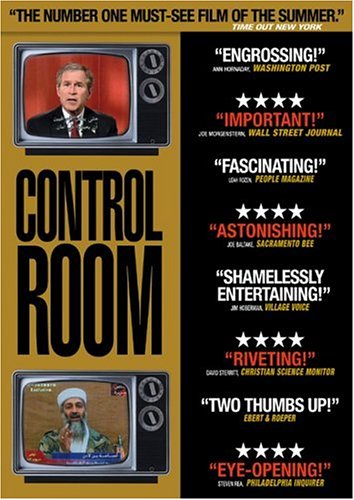
Jehane Noujaim Wishes for a Global Day of Film: In this TED talk, Jehane Noujaim discusses the power of film and the potential it has to change the world. Each year the TED organization works to grant one wish of one of its speakers. Here, Noujaim reveals her wish for a global day of film. She discusses the ability film has to bridge gaps between cultures and continents. Noujaim’s powerful film, Control Room, documented Al Jazeera’s coverage of the Iraq war and the differing ways Arabs and the U.S. covered the war. In her talk, Noujaim discusses the power of film, inspiring any individual with dreams of making a difference in this world to pick up a camera and try:
All Watched Over By Machines of Loving Grace (United Kingdom: Adam Curtis, 2011)
(Description from Top Documentary Films)
A series of films about how humans have been colonized by the machines they have built. Although we don’t realize it, the way we see everything in the world today is through the eyes of the computers. It claims that computers have failed to liberate us and instead have distorted and simplified our view of the world around us.
1. Love and Power. This is the story of the dream that rose up in the 1990s that computers could create a new kind of stable world. They would bring about a new kind global capitalism free of all risk and without the boom and bust of the past. They would also abolish political power and create a new kind of democracy through the Internet where millions of individuals would be connected as nodes in cybernetic systems – without hierarchy.
2. The Use and Abuse of Vegetational Concepts. This is the story of how our modern scientific idea of nature, the self-regulating ecosystem, is actually a machine fantasy. It has little to do with the real complexity of nature. It is based on cybernetic ideas that were projected on to nature in the 1950s by ambitious scientists. A static machine theory of order that sees humans, and everything else on the planet, as components – cogs – in a system.
3. The Monkey in the Machine and the Machine in the Monkey. This episode looks at why we humans find this machine vision so beguiling. The film argues it is because all political dreams of changing the world for the better seem to have failed – so we have retreated into machine-fantasies that say we have no control over our actions because they excuse our failure.
Adam Curtis is a documentary film maker, whose work includes The Power of Nightmares, The Century of the Self, The Mayfair Set, Pandora’s Box, The Trap and The Living Dead.
Saturday, June 11, 2011
Gabor Maté: Obama Admin Should Heed Global Panel’s Call to End "Failed" U.S.-Led Drug War; More Compassion, Less Violence Needed in Addressing Drug Ad
Democracy Now
Dr. Gabor Maté: Obama Admin Should Heed Global Panel’s Call to End "Failed" U.S.-Led Drug War

A high-level international panel has concluded the so-called "war on drugs" has failed and that governments should consider legalizing substances, including marijuana. The Global Commission on Drug Policy is comprised of 19 members, including several former heads of state. The Office of National Drug Control Policy at the White House has refuted the findings of the commission’s report. We speak to Dr. Gabor Maté, a Canadian physician and bestselling author of four books, including In the Realm of Hungry Ghosts: Close Encounters with Addiction. "On any level you care to name, the war on drugs is a failure," Dr. Maté says.
To Watch/Listen/Read
Dr. Gabor Maté: More Compassion, Less Violence Needed in Addressing Drug Addiction
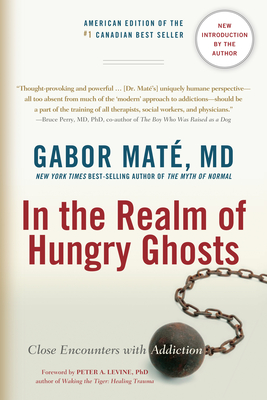
In part two of our interview about a new report declaring the so-called "war on drugs" a failure, Dr. Gabor Maté notes that "where violent suppression of drug activity increases, so does killings and violence related to drug use." The Canadian physician and author also relates the study’s findings to his own work in a drug addiction treatment clinic in Vancouver. "The causes of the addiction in their life have to be understood and addressed, and they have to be treated with compassion," says Maté.
To Watch/Listen/Read
Dr. Gabor Maté: Obama Admin Should Heed Global Panel’s Call to End "Failed" U.S.-Led Drug War
A high-level international panel has concluded the so-called "war on drugs" has failed and that governments should consider legalizing substances, including marijuana. The Global Commission on Drug Policy is comprised of 19 members, including several former heads of state. The Office of National Drug Control Policy at the White House has refuted the findings of the commission’s report. We speak to Dr. Gabor Maté, a Canadian physician and bestselling author of four books, including In the Realm of Hungry Ghosts: Close Encounters with Addiction. "On any level you care to name, the war on drugs is a failure," Dr. Maté says.
To Watch/Listen/Read
Dr. Gabor Maté: More Compassion, Less Violence Needed in Addressing Drug Addiction
In part two of our interview about a new report declaring the so-called "war on drugs" a failure, Dr. Gabor Maté notes that "where violent suppression of drug activity increases, so does killings and violence related to drug use." The Canadian physician and author also relates the study’s findings to his own work in a drug addiction treatment clinic in Vancouver. "The causes of the addiction in their life have to be understood and addressed, and they have to be treated with compassion," says Maté.
To Watch/Listen/Read
Equal Time for Freethought: Bruce Levine - Toward a Healthy Society
#388: Toward a Healthy Society w/ Dr. Bruce Levine
Equal Time for Freethought
Are Americans a “Broken People?” What happened to the outrage we displayed in the 1930s and 1960s? Why are people in other nations which are considered far more regressive than the USA – like Egypt – so much more actively involved in the political and economic happenings in their nations?
What can we do about creating a healthy society if we can’t even find the inner strength to protest things like bailouts for banks and corporations, as well as stolen presidential elections and an anti-healthcare pro-insurance company “healthcare bill?”
We will be speaking with Clinical Psychologist and author of Get Up; Stand Up, Dr. Bruce Levine, as we explore these questions and more
To Listen to the Conversation
Equal Time for Freethought
Are Americans a “Broken People?” What happened to the outrage we displayed in the 1930s and 1960s? Why are people in other nations which are considered far more regressive than the USA – like Egypt – so much more actively involved in the political and economic happenings in their nations?
What can we do about creating a healthy society if we can’t even find the inner strength to protest things like bailouts for banks and corporations, as well as stolen presidential elections and an anti-healthcare pro-insurance company “healthcare bill?”
We will be speaking with Clinical Psychologist and author of Get Up; Stand Up, Dr. Bruce Levine, as we explore these questions and more
To Listen to the Conversation
Friday, June 10, 2011
The Power of Nightmares (United Kingdom: Adam Curtis, 2004)
Viewer comment at Internet Movie Database:
This documentary offers a remarkable insight into the reality of our current fear induced climate. Adam Curtis chronicles the rise of neo-conservatism and the resulting change in the world's political agenda orchestrated by those who place their trust in the philosophical ideal of the necessity of evil to unite a country. The filmmaker manages to successfully pluck apart the myth of the reality of there being a logistically organized terror network, let alone one that is managing to orchestrate terror attacks from a cave in the remote mountains of Afghanistan. His arguments are backed up by some eye opening interviews with authorities on the field of Islamic fundamentalism, members of the US government and members of the US judicial system. These insights are parred with concrete, startling facts and the result is a program that manages to shake us awake making us aware of a far more realistic terror threat namely that of psychological warfare carried out by the powers that be, accompanied by a sensationalist media frenzy. I cannot recommend this program highly enough.
Wednesday, June 08, 2011
Democracy Now: Bill Moyers on His Legendary Journalism Career: "Democracy Should Be a Brake on Unbridled Greed and Power"
Bill Moyers on His Legendary Journalism Career: "Democracy Should Be a Brake on Unbridled Greed and Power"
Democracy Now
In a Democracy Now! special broadcast, we are joined by legendary journalist Bill Moyers, a founding organizer of the Peace Corps, press secretary for President Lyndon Johnson, a publisher of Newsday, and senior correspondent for CBS News. Public television is where he has made his home, producing many groundbreaking shows and winning more than 30 Emmy Awards. Moyers has just published a new book, "Bill Moyers Journal: The Conversation Continues," a collection of interviews from his popular PBS show that aired from 2007 to 2010. "The greatest change in politics in my time has been the transformation of democracy, America, from a citizens’ society, the moral agency of all those people in the civil rights movement who stood up against the weight of authority and against persecution and acted as agents of change—the change from a citizens’ society to a consumer society, where most of us are caught up on that treadmill, trying to get more," Moyers says. In a wide-ranging interview, he also discusses the state of the public media infrastructure he helped to establish as part of the Johnson administration. "Public broadcasting, which remains a place that treats you as a citizen and not a consumer, is also threatened. We must defend it. We must call it back to its heights. We must continue to support it, because without it, we’re at the mercy, totally, of corporate power."
To Watch/Listen/Read
Democracy Now
In a Democracy Now! special broadcast, we are joined by legendary journalist Bill Moyers, a founding organizer of the Peace Corps, press secretary for President Lyndon Johnson, a publisher of Newsday, and senior correspondent for CBS News. Public television is where he has made his home, producing many groundbreaking shows and winning more than 30 Emmy Awards. Moyers has just published a new book, "Bill Moyers Journal: The Conversation Continues," a collection of interviews from his popular PBS show that aired from 2007 to 2010. "The greatest change in politics in my time has been the transformation of democracy, America, from a citizens’ society, the moral agency of all those people in the civil rights movement who stood up against the weight of authority and against persecution and acted as agents of change—the change from a citizens’ society to a consumer society, where most of us are caught up on that treadmill, trying to get more," Moyers says. In a wide-ranging interview, he also discusses the state of the public media infrastructure he helped to establish as part of the Johnson administration. "Public broadcasting, which remains a place that treats you as a citizen and not a consumer, is also threatened. We must defend it. We must call it back to its heights. We must continue to support it, because without it, we’re at the mercy, totally, of corporate power."
To Watch/Listen/Read
Subscribe to:
Posts (Atom)