"No Way Out"–Freed Hiker Shane Bauer on Solitary Confinement from Iran to United States
Democracy Now
Shane Bauer was one of three Americans detained in 2009 while hiking in Iraq’s Kurdish region near the Iranian border. He and Josh Fattal were held for 26 months, and Sarah Shourd — now Bauer’s wife — was held for 13 months, much of it in solitary confinement. Seven months after being freed from prison in Iran, Bauer began investigating solitary confinement in the United States. Now, in his first major article since his release for Mother Jones magazine, Bauer finds California prisoners are being held for years in isolation based on allegations they are connected to prison gangs. In his first live television interview since his release, Bauer joins us to discuss his report.
To Watch the Episode and an Extended Interview
Thursday, November 08, 2012

Dorian Lynskey: The GOP Delusion - how conservatives were mugged by reality
The GOP Delusion: how conservatives were mugged by reality
by Dorian Lynskey
33 Revolutions Per Minute
...
This is what happens when you spend the entire election cycle ignoring the facts in front of you. At every turn conservatives have blamed “skewed” polls, and a biased mainstream media for Romney’s problems, never taking seriously the idea that the electorate might have a pro-Obama bias. Look at Slate’s pundit dartboard. Apart from CNBC’s Jim Cramer, all of the outliers are conservative ideologues, predicting a Romney victory with between 273 and 325 electoral college votes. Faced with data to the contrary, they attempted to smear conscientious number-crunchers like FiveThirtyEight’s Nate Silver. On the night, the result was exactly as Silver had predicted.
Conservatism has became a faith-based ecosystem, resistant to any facts that complicate its version of reality. It is driven by apocalyptic terrors. The future of the republic itself is always in danger. The Constitution is destined for the shredder. The American eagle hangs its head. Ironically, the two issues that come closest to a real existential threat — climate change and the 2008 banking crisis — don’t trigger any anxiety in conservatives, while the phantasm of a socialist dictatorship has them trembling with fear and rage.
As Richard Hofstadter argued as long ago as 1964, the appeal of such life-or-death rhetoric is that it justifies an extreme response: block, sabotage, destroy, crush them. If you convince yourself that a centrist like Obama (who has disappointed his liberal base on several issues) is actually a Mancurian Candidate president out to destroy America from within than any lie about his beliefs, his religion, even his country of birth, is justified. Hofstadter:
This is how you build a fun-packed, self-sustaining echo chamber. It is not how you run a party, let alone a country. There are, of course, people on the left who harbour paranoid delusions, from the 9/11 Truthers to the hardcore Assangists, but they have no sway over the Democrats. Conservative fanatics, however, have commandeered the GOP.
Helped by the Tea Party insurgency, the Republicans’ mid-term gains in 2010 appeared to vindicate, and intensify, the party’s obstructionist tendencies. It was during that campaign that Senate Minority Leader Mitch McConnell notoriously said: “The single most important thing we want to achieve is for President Obama to be a one-term president.” When you make your top priority fucking up the other guy and then fail, you have to ask yourselves what the hell you’re playing at.
The insanity of the current GOP position is threefold. Firstly, it rules out the bipartisan collaboration on which the efficacy of the US political system depends, and means that Washington wastes its time with fruitless and costly battles like the one over the debt ceiling in summer 2011. Conservatives then have the nerve to complain that it is Obama, whose attempts at consensus have been militantly rebuffed from day one, who has divided the nation.
Secondly, it punishes the moderates. By the standards of the modern GOP Reagan would never have won the nomination, Romney’s father George would most likely have been a Democrat and a British Conservative like David Cameron wouldn’t last five minutes. Romney was forced into the impossible position of having to pander to the hardliners in the primaries and then trying to pull a last-minute moderate switcheroo in the debates, which was the first time the American public actually warmed to him.
Thirdly, it is based on the fantasy that the American public deep down wants paranoid movement conservatism. Already you can hear the voices crying that the GOP would have won if Romney weren’t such a moderate wimp. Extreme progressives don’t really believe that their values are shared by the nation at large but their conservative counterparts, insanely, do.
What we’re seeing now is the explosion that occurs when the conservatives’ alternate reality collides with the actual reality of the ballot box. It’s not just Obama’s victory. Same-sex marriage referenda passed by significant margins in Maryland, Maine and Washington. Colorado and Washington voted to legalise marijuana. Todd Akin and Richard Mourdock, whose “gaffes” about rape and abortion were merely stating the party’s platform position, lost Senate races they might otherwise have won. There are now more female senators, including the passionately liberal Elizabeth Warren and the openly gay Tammy Baldwin, than ever before. Demographic changes favour the Democrats, who lead among African-Americans, Latinos, young people, college graduates and women, while a massive 88% of Romney’s support came from white people. Conservatives assumed those groups either wouldn’t turn out or somehow don’t represent the real America and therefore don’t constitute a mandate.
To Read the Entire Commentary
by Dorian Lynskey
33 Revolutions Per Minute
...
This is what happens when you spend the entire election cycle ignoring the facts in front of you. At every turn conservatives have blamed “skewed” polls, and a biased mainstream media for Romney’s problems, never taking seriously the idea that the electorate might have a pro-Obama bias. Look at Slate’s pundit dartboard. Apart from CNBC’s Jim Cramer, all of the outliers are conservative ideologues, predicting a Romney victory with between 273 and 325 electoral college votes. Faced with data to the contrary, they attempted to smear conscientious number-crunchers like FiveThirtyEight’s Nate Silver. On the night, the result was exactly as Silver had predicted.
Conservatism has became a faith-based ecosystem, resistant to any facts that complicate its version of reality. It is driven by apocalyptic terrors. The future of the republic itself is always in danger. The Constitution is destined for the shredder. The American eagle hangs its head. Ironically, the two issues that come closest to a real existential threat — climate change and the 2008 banking crisis — don’t trigger any anxiety in conservatives, while the phantasm of a socialist dictatorship has them trembling with fear and rage.
As Richard Hofstadter argued as long ago as 1964, the appeal of such life-or-death rhetoric is that it justifies an extreme response: block, sabotage, destroy, crush them. If you convince yourself that a centrist like Obama (who has disappointed his liberal base on several issues) is actually a Mancurian Candidate president out to destroy America from within than any lie about his beliefs, his religion, even his country of birth, is justified. Hofstadter:
The paranoid is a militant leader. He does not see social conflict as something to be mediated and compromised, in the manner of the working politician. Since what is at stake is always a conflict between absolute good and absolute evil, the quality needed is not a willingness to compromise but the will to fight things out to the finish. Nothing but complete victory will do.
This is how you build a fun-packed, self-sustaining echo chamber. It is not how you run a party, let alone a country. There are, of course, people on the left who harbour paranoid delusions, from the 9/11 Truthers to the hardcore Assangists, but they have no sway over the Democrats. Conservative fanatics, however, have commandeered the GOP.
Helped by the Tea Party insurgency, the Republicans’ mid-term gains in 2010 appeared to vindicate, and intensify, the party’s obstructionist tendencies. It was during that campaign that Senate Minority Leader Mitch McConnell notoriously said: “The single most important thing we want to achieve is for President Obama to be a one-term president.” When you make your top priority fucking up the other guy and then fail, you have to ask yourselves what the hell you’re playing at.
The insanity of the current GOP position is threefold. Firstly, it rules out the bipartisan collaboration on which the efficacy of the US political system depends, and means that Washington wastes its time with fruitless and costly battles like the one over the debt ceiling in summer 2011. Conservatives then have the nerve to complain that it is Obama, whose attempts at consensus have been militantly rebuffed from day one, who has divided the nation.
Secondly, it punishes the moderates. By the standards of the modern GOP Reagan would never have won the nomination, Romney’s father George would most likely have been a Democrat and a British Conservative like David Cameron wouldn’t last five minutes. Romney was forced into the impossible position of having to pander to the hardliners in the primaries and then trying to pull a last-minute moderate switcheroo in the debates, which was the first time the American public actually warmed to him.
Thirdly, it is based on the fantasy that the American public deep down wants paranoid movement conservatism. Already you can hear the voices crying that the GOP would have won if Romney weren’t such a moderate wimp. Extreme progressives don’t really believe that their values are shared by the nation at large but their conservative counterparts, insanely, do.
What we’re seeing now is the explosion that occurs when the conservatives’ alternate reality collides with the actual reality of the ballot box. It’s not just Obama’s victory. Same-sex marriage referenda passed by significant margins in Maryland, Maine and Washington. Colorado and Washington voted to legalise marijuana. Todd Akin and Richard Mourdock, whose “gaffes” about rape and abortion were merely stating the party’s platform position, lost Senate races they might otherwise have won. There are now more female senators, including the passionately liberal Elizabeth Warren and the openly gay Tammy Baldwin, than ever before. Demographic changes favour the Democrats, who lead among African-Americans, Latinos, young people, college graduates and women, while a massive 88% of Romney’s support came from white people. Conservatives assumed those groups either wouldn’t turn out or somehow don’t represent the real America and therefore don’t constitute a mandate.
To Read the Entire Commentary
Wednesday, November 07, 2012
Frederick C. Harris: The Price of a Black President
The Price of a Black President
by Frederick C. Harris
The New York Times
...
But for those who had seen in President Obama’s election the culmination of four centuries of black hopes and aspirations and the realization of the Rev. Dr. Martin Luther King Jr.’s vision of a “beloved community,” the last four years must be reckoned a disappointment. Whether it ends in 2013 or 2017, the Obama presidency has already marked the decline, rather than the pinnacle, of a political vision centered on challenging racial inequality. The tragedy is that black elites — from intellectuals and civil rights leaders to politicians and clergy members — have acquiesced to this decline, seeing it as the necessary price for the pride and satisfaction of having a black family in the White House.
These are not easy words to write. Mr. Obama’s expansion of health insurance coverage was the most significant social legislation since the Great Society, his stimulus package blunted much of the devastation of the Great Recession, and the Dodd-Frank financial overhaul added major new protections for consumers. His politics would seem to vindicate the position of civil rights-era leaders like Bayard Rustin, who argued that blacks should form coalitions with other Democratic constituencies in support of universal, race-neutral policies — in opposition to activists like Malcolm X, who distrusted party politics and believed that blacks would be better positioned to advance their interests as an independent voting bloc, beholden to neither party.
But the triumph of “post-racial” Democratic politics has not been a triumph for African-Americans in the aggregate. It has failed to arrest the growing chasm of income and wealth inequality; to improve prospects for social and economic mobility; to halt the re-segregation of public schools and narrow the black-white achievement gap; and to prevent the Supreme Court from eroding the last vestiges of affirmative action. The once unimaginable successes of black diplomats like Colin L. Powell, Condoleezza Rice and Susan E. Rice and of black chief executives like Ursula M. Burns, Kenneth I. Chenault and Roger W. Ferguson Jr. cannot distract us from facts like these: 28 percent of African-Americans, and 37 percent of black children, are poor (compared with 10 percent of whites and 13 percent of white children); 13 percent of blacks are unemployed (compared with 7 percent of whites); more than 900,000 black men are in prison; blacks experienced a sharper drop in income since 2007 than any other racial group; black household wealth, which had been disproportionately concentrated in housing, has hit its lowest level in decades; blacks accounted, in 2009, for 44 percent of new H.I.V. infections.
Mr. Obama cannot, of course, be blamed for any of these facts. It’s no secret that Republican obstruction has limited his options at every turn. But it’s disturbing that so few black elites have aggressively advocated for those whom the legal scholar Derrick A. Bell called the “faces at the bottom of the well.”
The prophetic tradition of speaking truth to power, regardless of political winds or social pressures, has a long history. Ida B. Wells risked her life to publicize the atrocity of lynching; W. E. B. Du Bois linked the struggle against racial injustice to anticolonial movements around the world; Cornel West continues to warn of the “giant triplets of racism, materialism and militarism” that King identified a year before his death.
But that prophetic tradition is on the wane. Changes in black religious practice have played a role. Great preachers of social justice and liberation theology, like Gardner C. Taylor, Samuel DeWitt Proctor, John Hurst Adams, Wyatt Tee Walker and Joseph E. Lowery, have retired or passed away. Taking their place are megachurch preachers of a “gospel of prosperity” — like Creflo A. Dollar Jr., T. D. Jakes, Eddie L. Long and Frederick K. C. Price — who emphasize individual enrichment rather than collective uplift. “There’s more facing us than social justice,” Bishop Jakes has said. “There’s personal responsibility.”
To Read the Rest of the Commentary
Monday, November 05, 2012
Sunday, November 04, 2012
Unwelcome Guests #619 - The Financialization of Nature (And the Nature of Financialization)
Episode #619 - The Financialization of Nature (And the Nature of Financialization)
Unwelcome Guests
... the show [starts] with a 2011 interview of Joan Baxter on the pattern of land grabbing that is ongoing in the developing world, especially in Africa, which rich foreign investors are increasingly carrying out, increasing landlessness and poverty amongst the local population. Arable land especially, she notes, is appealing to those with capital who are looking for an investment or a source of income. As we hear, this often involves uprooting communities and converting what was previously jointly held, sustainably farmed land into commercially managed energy intensive monocultures for export. Those who carry this [out] rely not only on bribery to ensure the support of key government officials, they are also supported by the whole ideology of foreign investment and economic development; sometimes locals fail to distinguish between NGOs with ostensibly altruistic motives and multi-national corporations who don't even bother to make such claims.
... [the] first hour [finishes] with the soundtrack of a short video on the Financialization of Nature, which summarizes the ongoing switch from an economy centered on the real world to one centered on the fictional needs of capital, looking at topics such as emission trading schemes.
In our second hour ... William Black [speaks] from the same conference ... featured in episode 611. He recalls the lessons learned from the savings and loan crisis:
Black notes that far from being prosecuted for their criminality, many of the individuals who profited massively from the S&L crisis went on to leading positions in the US political system, where they could use their experience to repeat the phenomenon on an even larger scale. Although he remains more or less committed to the modern financial system, Black's insider's view provides more evidence that the financial 'crisis' was anything but a surprise, and was in fact widely predicted by those regulators with enough integrity to follow their conscience rather than the sociopathic culture of those in charge of financial markets. In spite of volumes of compelling evidence, minimal effort has been expended to bring charges against those who committed fraud. Black reflects on the corruption of the legal system in US, noting that the US supreme court ruled that only government could bring civil suits against fraudulent banks - something they have shown no interest in doing.
[The episode concludes] with another short reading from the final chapter of David Graeber's Debt, The First 5000 Years.
To Listen to the Episode
Unwelcome Guests
... the show [starts] with a 2011 interview of Joan Baxter on the pattern of land grabbing that is ongoing in the developing world, especially in Africa, which rich foreign investors are increasingly carrying out, increasing landlessness and poverty amongst the local population. Arable land especially, she notes, is appealing to those with capital who are looking for an investment or a source of income. As we hear, this often involves uprooting communities and converting what was previously jointly held, sustainably farmed land into commercially managed energy intensive monocultures for export. Those who carry this [out] rely not only on bribery to ensure the support of key government officials, they are also supported by the whole ideology of foreign investment and economic development; sometimes locals fail to distinguish between NGOs with ostensibly altruistic motives and multi-national corporations who don't even bother to make such claims.
... [the] first hour [finishes] with the soundtrack of a short video on the Financialization of Nature, which summarizes the ongoing switch from an economy centered on the real world to one centered on the fictional needs of capital, looking at topics such as emission trading schemes.
In our second hour ... William Black [speaks] from the same conference ... featured in episode 611. He recalls the lessons learned from the savings and loan crisis:
Accounting abuses also provided the ultimate perverse incentive. It paid to seek out bad loans, because only those who had no intention of repaying would be willing to offer the high loan fees and interest required for the best looting. It was rational for operators — that's CEOs — to drive their banks ever deeper into insolvency, as they looted them.
— James Pierce, leader of the national investigation into the Savings and Loan Crisis
Black notes that far from being prosecuted for their criminality, many of the individuals who profited massively from the S&L crisis went on to leading positions in the US political system, where they could use their experience to repeat the phenomenon on an even larger scale. Although he remains more or less committed to the modern financial system, Black's insider's view provides more evidence that the financial 'crisis' was anything but a surprise, and was in fact widely predicted by those regulators with enough integrity to follow their conscience rather than the sociopathic culture of those in charge of financial markets. In spite of volumes of compelling evidence, minimal effort has been expended to bring charges against those who committed fraud. Black reflects on the corruption of the legal system in US, noting that the US supreme court ruled that only government could bring civil suits against fraudulent banks - something they have shown no interest in doing.
[The episode concludes] with another short reading from the final chapter of David Graeber's Debt, The First 5000 Years.
To Listen to the Episode

Saturday, November 03, 2012
Unwelcome Guests #6 - Created Unequal (Law, Money and Mumia Abu-Jamal)
Episode #6 - Created Unequal (Law, Money and Mumia Abu-Jamal)
Unwelcome Guests
The first hour continues [the] lecture series with Michael Parenti. First, some real history on the Founding Fathers - how they created a Constitution designed to protect the rich while appearing offering sufficient concessions to the poor to secure their support. Then "Justice for Sale", which explains how slanted the US legal process is against blacks and the poor.
In the second hour, ... focus on the case of longtime inmate of death row, political prisoner, Mumia Abu-Jamal. After the background to his arrest, we listen to some of his commentaries, and play a documentary from Bruderhof Radio.
To Listen to the Episode
Wednesday, October 31, 2012
Freedom Riders (USA: Stanley Nelson, 2012: 117 mins)
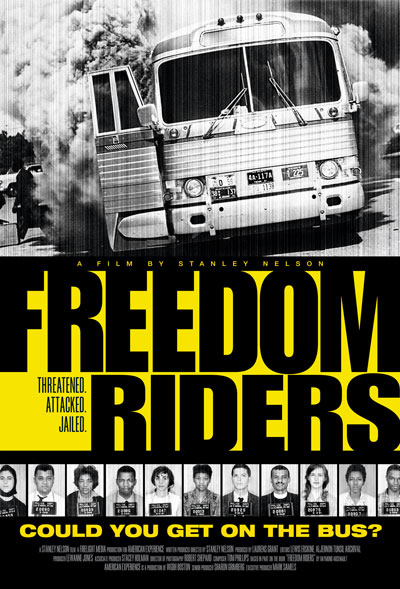
I was working with this documentary with Peace Studies students last week and I was amazed, inspired and awed at the courage and passion of the students who participated in the Freedom Rides.
To watch it online
Unwelcome Guests #618 - The Consolidation of Police State USA (The Ongoing American Military Coup)
Episode #618 - The Consolidation of Police State USA (The Ongoing American Military Coup)
Unwelcome Guests
We start the show this week with an interview of two regular contributors to the show, Peter Dale Scott and Peter Phillips, who each highlight different aspects of Police State USA. The interviewer is Gary Null from the Progressive Commentary Hour, who begins with a 20 minute summary of his objections to the present state of the US nation, with an emphasis on the shrinking Civil Rights and the countervailing unaccountable (and increasingly violent) corporate hierarchy. Peter Dale Scott highlights the importance of the Sep 11thactivation of COG in the effective repeal of the Posse Commitatus Act of 1878 and the steady removal of the US Constitution. Projected Censored's Peter Phillips emphasizes the symbiotic relationship between big media and the Military-Industrial-Congressional Complex in keep the typical US citizen spellbound in front of a screen, in unthinking obedience to the same system which is stocking up on ammo and preparing huge detention facilities for imprisoning Americans. Gary Null's angle is continued exasperation at the failure of anyone to challenge the ongoing descent into fascism.
In our second hour, we hear an disturbing interview with Frank Morales on the bigger picture of the ongoing militarization of USA. He begins by describing an essay on "The American Military Coup of 2012", a fictional essay written 20 years ago which describes the coup as "the outgrowth of trends already visible as far back as 1992" such as "the massive diversion of military forces to civilian uses, particularly law enforcement".
As domestic dissent is becoming more widespread, more violence is needed by the US government and its legal maneuvering become ever more ridiculous. Morales talks about the Military-Media complex, since perpetual reinforcement by the media is required to keep people confused, afraid and submissive to the iron fist which is ever more clearly visible below the velvet glove of 'democracy'.
To Listen to the Episode
Tuesday, October 30, 2012
Benjamin Ginsberg: The Fall Of The Faculty
The Fall of the Faculty
by Benjamin Ginsberg
Here and Now

College students generally view professors as individuals who exercise a good deal of power. Members of the faculty, after all, direct the lectures, labs, studios and discussions around which academic life is organized. Professors also control the grades and recommendations that help to determine students’ graduate school and career prospects.
Students are often aware, too, that some of their professors are movers and shakers beyond the walls of the campus. Academics are visible in the worlds of science, literature, the arts, finance and, especially, politics where they serve as analysts, commentators, advisors and high-level policy makers.
But, whatever standing they may have in the eyes of undergraduates or even in the corridors of national power, most professors possess surprisingly little influence in their own schools’ decision-making processes. At most, though perhaps not all of America’s thousands of colleges and universities, the faculty has been shunted to the sidelines. Faculty members will learn about major new programs and initiatives from official announcements or from the campus newspaper. Power on campus is wielded mainly by administrators whose names and faces are seldom even recognized by students or recalled by alumni.
At most schools to be sure, faculty members control the content of their own classes and, for the most part, their own research agendas. The faculty, collectively, plays a recognized though not exclusive role in the hiring and promotion of its members. Outside these two areas, though, administrators seldom bother to consult the faculty. And, should faculty members have the temerity to offer unsolicited views, these will be more or less politely ignored. Thus, there are few schools whose faculty members have a voice in business or investment decisions. Hardly any faculties are consulted about the renovation or construction of buildings and other aspects of the school’s physical plant. Virtually everywhere, student issues, including the size of the student body, tuition, financial aid and admissions policies are controlled by administrators. At most schools, fund raising and alumni relations are administrative matters, though faculty members are often asked to entertain alumni gatherings by giving talks and presentations.
Most professors, perhaps, have only a passing interest in the university’s physical plant or its investment strategies. Particularly at research universities many faculty members normally pay little attention to their school’s undergraduate admissions policies. But, professors lack much power even in areas in which they have a strong interest, such as the appointment of senior administrators, the development of new programs and curricula, and the definition of budgetary priorities.
As to appointments, on most campuses, presidential searches are controlled by the trustees or regents, while provosts, deans and other senior administrators are appointed by the president with varying degrees of faculty input. Professors, to be sure, often do serve on administrative or presidential search committees, alongside administrators, students and college staffers. These searches, however, are usually organized and overseen by corporate search firms employed by trustees, in the case of presidential searches, or the school’s administration for other searches. Before the 1960s, such firms were seldom retained by universities. Today, however, as college administrators imitate the practices of their corporate counterparts, search firms are a fixture of academic life. In recent years, two-thirds of the presidential searches conducted by large universities have been directed by professional head hunters.
In consultation with their employers, these firms identify most of the candidates whom the committee will be able to meet and consider. Generally speaking, search firms rule out candidates about whom anything at all negative is said when they investigate candidates’ backgrounds. This practice introduces a marked bias in favor of the most boring and conventional candidates. And, even the constrained choice given the committee is seldom final. Search committees are generally empowered only to recommend two or three candidates for review by the president or trustees who actually make the final decision. Many schools, of course, do not bother with even the pretense of faculty participation in administrative searches. The faculty learns the name of a new president or provost when the trustees issue a press release.
Once appointed, presidents serve at the pleasure of the trustees and can only be removed by them. Other administrators serve at the pleasure of the president. Every school employs a great many administrators whom the faculty regard as foolish or incompetent. But, so long as these individuals retain the support of their administrative superiors, the faculty is usually powerless to remove them. At one school, Pennsylvania’s Albright College, the faculty were dismayed to learn in 1999 that the resume’ of their newly appointed president was filled with fraudulent claims–books never published, positions never held and so on. Yet, while the facts of the matter could not be disputed, most trustees continued to support the president for nearly five years before he finally agreed to step down. Much of the Boston University faculty loathed and feared dictatorial President John Silber during his twenty-five years in office but, given Silber’s solid base of support among powerful members of the board of trustees, faculty opposition came to naught. In a similar vein, the trustees stood by the president of West Virginia University in the face of a faculty no-confidence vote when it was revealed that the university had awarded the daughter of the state’s governor an MBA degree she had not actually earned. Conversely, faculty support will certainly not protect an administrator’s job if she or he runs afoul of the Board. In 2005, for example, Cornell’s Jeffrey Lehman, a president whose work was generally approved by the faculty, was summarily fired by the Board, apparently in the wake of a personnel dispute. The Board neither consulted with nor informed the faculty before determining that Lehman should go.
To Read the Rest of the Excerpt
by Benjamin Ginsberg
Here and Now
College students generally view professors as individuals who exercise a good deal of power. Members of the faculty, after all, direct the lectures, labs, studios and discussions around which academic life is organized. Professors also control the grades and recommendations that help to determine students’ graduate school and career prospects.
Students are often aware, too, that some of their professors are movers and shakers beyond the walls of the campus. Academics are visible in the worlds of science, literature, the arts, finance and, especially, politics where they serve as analysts, commentators, advisors and high-level policy makers.
But, whatever standing they may have in the eyes of undergraduates or even in the corridors of national power, most professors possess surprisingly little influence in their own schools’ decision-making processes. At most, though perhaps not all of America’s thousands of colleges and universities, the faculty has been shunted to the sidelines. Faculty members will learn about major new programs and initiatives from official announcements or from the campus newspaper. Power on campus is wielded mainly by administrators whose names and faces are seldom even recognized by students or recalled by alumni.
At most schools to be sure, faculty members control the content of their own classes and, for the most part, their own research agendas. The faculty, collectively, plays a recognized though not exclusive role in the hiring and promotion of its members. Outside these two areas, though, administrators seldom bother to consult the faculty. And, should faculty members have the temerity to offer unsolicited views, these will be more or less politely ignored. Thus, there are few schools whose faculty members have a voice in business or investment decisions. Hardly any faculties are consulted about the renovation or construction of buildings and other aspects of the school’s physical plant. Virtually everywhere, student issues, including the size of the student body, tuition, financial aid and admissions policies are controlled by administrators. At most schools, fund raising and alumni relations are administrative matters, though faculty members are often asked to entertain alumni gatherings by giving talks and presentations.
Most professors, perhaps, have only a passing interest in the university’s physical plant or its investment strategies. Particularly at research universities many faculty members normally pay little attention to their school’s undergraduate admissions policies. But, professors lack much power even in areas in which they have a strong interest, such as the appointment of senior administrators, the development of new programs and curricula, and the definition of budgetary priorities.
As to appointments, on most campuses, presidential searches are controlled by the trustees or regents, while provosts, deans and other senior administrators are appointed by the president with varying degrees of faculty input. Professors, to be sure, often do serve on administrative or presidential search committees, alongside administrators, students and college staffers. These searches, however, are usually organized and overseen by corporate search firms employed by trustees, in the case of presidential searches, or the school’s administration for other searches. Before the 1960s, such firms were seldom retained by universities. Today, however, as college administrators imitate the practices of their corporate counterparts, search firms are a fixture of academic life. In recent years, two-thirds of the presidential searches conducted by large universities have been directed by professional head hunters.
In consultation with their employers, these firms identify most of the candidates whom the committee will be able to meet and consider. Generally speaking, search firms rule out candidates about whom anything at all negative is said when they investigate candidates’ backgrounds. This practice introduces a marked bias in favor of the most boring and conventional candidates. And, even the constrained choice given the committee is seldom final. Search committees are generally empowered only to recommend two or three candidates for review by the president or trustees who actually make the final decision. Many schools, of course, do not bother with even the pretense of faculty participation in administrative searches. The faculty learns the name of a new president or provost when the trustees issue a press release.
Once appointed, presidents serve at the pleasure of the trustees and can only be removed by them. Other administrators serve at the pleasure of the president. Every school employs a great many administrators whom the faculty regard as foolish or incompetent. But, so long as these individuals retain the support of their administrative superiors, the faculty is usually powerless to remove them. At one school, Pennsylvania’s Albright College, the faculty were dismayed to learn in 1999 that the resume’ of their newly appointed president was filled with fraudulent claims–books never published, positions never held and so on. Yet, while the facts of the matter could not be disputed, most trustees continued to support the president for nearly five years before he finally agreed to step down. Much of the Boston University faculty loathed and feared dictatorial President John Silber during his twenty-five years in office but, given Silber’s solid base of support among powerful members of the board of trustees, faculty opposition came to naught. In a similar vein, the trustees stood by the president of West Virginia University in the face of a faculty no-confidence vote when it was revealed that the university had awarded the daughter of the state’s governor an MBA degree she had not actually earned. Conversely, faculty support will certainly not protect an administrator’s job if she or he runs afoul of the Board. In 2005, for example, Cornell’s Jeffrey Lehman, a president whose work was generally approved by the faculty, was summarily fired by the Board, apparently in the wake of a personnel dispute. The Board neither consulted with nor informed the faculty before determining that Lehman should go.
To Read the Rest of the Excerpt

On the Media: Jose Antonio Vargas - "Illegal" vs. "Undocumented"
"Illegal" vs. "Undocumented"
On the Media
Since writing an article called "My Life as an Undocumented Immigrant" in the New York Times Magazine last year, Pulitzer Prize-winning journalist Jose Antonio Vargas has been trying to foster conversation about immigration issues. In a speech last week at the Online News Association conference, he announced his plan to track and hopefully influence news organizations away from using the term "illegal" to describe immigrants. Bob asks Vargas why he feels this change in nomenclature is important.
To Listen to the Episode
On the Media: Seth Rosenfeld - Subversives: The FBI's War on Student Radicals, and Reagan's Rise to Power
"Subversives"
On the Media

In 1981, student journalist Seth Rosenfeld began researching the FBI's misconduct in its investigations of 1960s student protests at UC Berkeley. The project blossomed into a 30-year investigative odyssey, resulting in the release of 300,000 FBI documents, which the government spent over $1 million trying to block. Bob talks to Rosenfeld about some of the stunning revelations from his new book, Subversives: The FBI's War on Student Radicals, and Reagan's Rise to Power.
To Listen to the Episode
On the Media
In 1981, student journalist Seth Rosenfeld began researching the FBI's misconduct in its investigations of 1960s student protests at UC Berkeley. The project blossomed into a 30-year investigative odyssey, resulting in the release of 300,000 FBI documents, which the government spent over $1 million trying to block. Bob talks to Rosenfeld about some of the stunning revelations from his new book, Subversives: The FBI's War on Student Radicals, and Reagan's Rise to Power.
To Listen to the Episode
On the Media: Kaplan and the Washington Post
Kaplan and the Washington Post
On the Media
Kaplan Higher Education runs for-profit colleges that are under intense scrutiny for misleading students about their future success in order to rake in federal student loans - loans that students often default on. Kaplan Higher Education is also the highly profitable subsidiary of the Washington Post Company which is ever-more reliant on those profits to support its struggling newspaper. Tamar Lewin of the New York Times explains how Kaplan’s business interests are compromising the Post’s journalistic integrity.
To Listen to the Episode
Monday, October 29, 2012
Webster Word-of-the-Day: ad hominem
(via Webster Word-of-the-Day)
ad hominem \ad-HAH-muh-nem\ (adjective)
1 : appealing to feelings or prejudices rather than intellect
2 : marked by or being an attack on an opponent's character rather than by an answer to the contentions made
The governor's only response to the criticism of his new policy was to launch an ad hominem attack against those doing the criticizing.
Sheldon Richman: Why Americans Should Reject Obama-Romney Foreign Policy
Why Americans Should Reject Obama-Romney Foreign Policy
by Sheldon Richman
Counterpunch
If we needed evidence of the impoverishment of American politics, the so-called debate between President Barack Obama and Mitt Romney gave us all we could ask for.
We normally expect a debate to highlight some disagreement, but in American politics disagreement is reserved for minor matters. The two parties — actually the two divisions of the uniparty that represents the permanent regime — agree on all fundamentals. If you need proof, observe how the establishment media treated Ron Paul, who challenged the permanent regime’s basic premises on foreign policy, civil liberties, and monetary control. He dug too deep.
It’s been noted, mostly by humorists, that Romney continuously expressed his agreement with Obama across a range of issues: drone warfare, Iran, Afghanistan, even Iraq. He tried to manufacture differences by suggesting that he would have done more sooner. But this all sounded flaccid; Romney seemed desperate to draw some contrast with a foreign policy that he embraces.
What does Romney really believe? Who can say? What we do know is that he’s taking his foreign-policy advice from a team of neoconservatives, formerly of the George W. Bush administration, who helped dig the hole the country is in.
Obama, for his part, defended his record, which someone other than Romney could have torn to shreds. Obama brags about ending the occupation of Iraq, yet he forgets that Bush had already signed an agreement, insisted on by the Iran-friendly Iraqi government, to get out by the end of 2011. What Obama won’t tell you is that he begged Prime Minister Maliki to ask U.S. troops to remain. Thankfully, Maliki said no.
Obama of course also mentioned the killing of Osama bin Laden. Two things about that: First, capture and trial would have been a better example for the world than summary execution by Navy SEALs. Second, the enfeebled bin Laden was a has-been by May 2011, having been kicked upstairs when he started devising impossible “plots.” He was no threat to the American people.
Someone other than Romney might have pointed out that Obama’s policy has helped to spread al-Qaeda’s influence beyond Afghanistan and Iraq. Thanks to the president’s drone warfare — which regularly murders innocents — and other interventions, there are now al-Qaeda affiliates or sympathizers in Libya, Syria, Somalia, Yemen, Mali, and elsewhere.
But Romney can’t point this out, because he approves of Obama’s imperialist policy and drone warfare. He apparently can’t wait until he, like Obama, gets to personally choose targets from a presidential kill list.
And then there’s Iran. At the debate, Romney lauded Obama’s “crippling sanctions” on the Iranian economy. But there is no such thing as an “economy.” There are only people engaged in buying and selling.
Obama and Romney both say that war against Iran should be a last resort. But if that is the case, why do they dehumanize the people of Iran? Sanctions don’t cripple the Iranian economy. Sanctions cripple people — economically, nutritionally, and in every other respect. They make life hell for average people, especially children and the elderly. The rulers suffer least of all.
To Read the Rest of the Essay
Subscribe to:
Posts (Atom)