Law and Disorder
White-washing Human Rights Abuses and Suppressing a Popular Revolution
Two years since the Arab-Spring demonstrations erupted in Bahrain, human rights abuses continue to this day. In 2011, an independent report exposes these abuses that compelled the Kingdom of Bahrain to hire former NYPD police chief John Timoney to white was acts of political repression. Who is John Timoney and why was he outsourced to Bahrain? We ask legal worker and journalist Kris Hermes who recently penned the article John Timoney and Kingdom of Bahrain: White-washing Human Rights Abuses and Suppressing a Popular Revolution.
Guest – Kris Hermes, activist who provides legal support work on cases involving political dissidents.
Egyptian President Mohamed Morsi Ousted Following Days of Massive Largest Anti-Government Protest
Last week, democratically elected President Mohamed Morsi was ousted following historic demonstrations by Egyptian protesters. Morsi and his advisors have been held under house arrest in the Egyptian Republican Guard Club, the highest Brotherhood leader, Mohammed Badie, and some associates of his have been arrested. Protesters accused Morsi of supporting Obama’s anti-Syrian agenda, ignoring critical economic problems and betraying his support for Palestinians. However, what are the some of the economic issues involved that led up to these massive protests?
Guest – Omar el-Shafei, political activist, and independent researcher currently living in NYC. He is a doctoral candidate of International Law at Paris VII University in France. Omar is a founding member of the “Committee of Solidarity with the Struggle of the Egyptian People” in Paris, France, and author of “Workers, Trade Unions, and the State in Egypt, 1984-1989,” Cairo Papers in Social Science, American University in Cairo Press (Volume 18, Monograph 2, Summer 1995).
To Listen to the Episode
Saturday, July 13, 2013

On the Media -- Noah Feldman: A Coup by any Other Name
A Coup by any other name
On the Media
A military coup is essentially a military action that transfers government power from one entity to another. This sounds a lot like what happened in Egypt with the military's removal of President Mohamed Morsi, but the new Egyptian leadership - and the Obama administration - are refusing to call it a coup. Bob talks to Harvard law professor Noah Feldman about using the C-word.
To Listen to the Episode
More resources:
Deborah Amos: A Dark, Complex Story (On the Media)
On the Media
A military coup is essentially a military action that transfers government power from one entity to another. This sounds a lot like what happened in Egypt with the military's removal of President Mohamed Morsi, but the new Egyptian leadership - and the Obama administration - are refusing to call it a coup. Bob talks to Harvard law professor Noah Feldman about using the C-word.
To Listen to the Episode
More resources:
Deborah Amos: A Dark, Complex Story (On the Media)
Friday, July 12, 2013
Democracy Now -- A Hunger Strike Against Solitary Confinement: Shane Bauer on Inhuman Prisons from California to Iran
A Hunger Strike Against Solitary Confinement: Shane Bauer on Inhuman Prisons from California to Iran
Democracy Now
More than 12,000 prisoners in California have entered their fifth day of a hunger strike in a push to end long-term solitary confinement, which they call a form of "indefinite state-sanctioned torture." Other demands include ending harsh group punishment, redefining gang activity, improving food quality, and increasing access to healthcare and education services. In addition to refusing meals, more than a thousand prisoners are also missing classes and prison work programs. This is the third large-scale hunger strike in the past two years. The current fast began at Pelican Bay State Prison and has now spread to two-thirds of the state’s 33 prisons. Corrections officials have reportedly responded by threatening to search prisoners’ cells, subject them to mental health evaluations, and deny them access to visitors and mail. "While the solitary confinement is at the core of it, it’s kind of about a lot of other issues," says Shane Bauer, a reporter who investigated the use of solitary confinement in U.S. prisons for Mother Jones magazine last year. "It’s become a much more widespread hunger strike. Each prison has its own demands. There are demands you see for rise in wages, from 13 cents an hour to $1 an hour, demand for the return of educational classes, and really the demands for the return of a lot of services that have been cut in recent years." Bauer began investigating solitary confinement in the United States shortly after being released from 26 months in an Iranian prison.
To Watch the Episode
Democracy Now
More than 12,000 prisoners in California have entered their fifth day of a hunger strike in a push to end long-term solitary confinement, which they call a form of "indefinite state-sanctioned torture." Other demands include ending harsh group punishment, redefining gang activity, improving food quality, and increasing access to healthcare and education services. In addition to refusing meals, more than a thousand prisoners are also missing classes and prison work programs. This is the third large-scale hunger strike in the past two years. The current fast began at Pelican Bay State Prison and has now spread to two-thirds of the state’s 33 prisons. Corrections officials have reportedly responded by threatening to search prisoners’ cells, subject them to mental health evaluations, and deny them access to visitors and mail. "While the solitary confinement is at the core of it, it’s kind of about a lot of other issues," says Shane Bauer, a reporter who investigated the use of solitary confinement in U.S. prisons for Mother Jones magazine last year. "It’s become a much more widespread hunger strike. Each prison has its own demands. There are demands you see for rise in wages, from 13 cents an hour to $1 an hour, demand for the return of educational classes, and really the demands for the return of a lot of services that have been cut in recent years." Bauer began investigating solitary confinement in the United States shortly after being released from 26 months in an Iranian prison.
To Watch the Episode
Thursday, July 11, 2013
Democracy Now: Jailed Journalist Barrett Brown Faces 105 Years For Reporting on Hacked Private Intelligence Firms
Jailed Journalist Barrett Brown Faces 105 Years For Reporting on Hacked Private Intelligence Firms
Democracy Now
Journalist Barrett Brown spent his 300th day behind bars this week on a range of charges filed after he used information obtained by the hacker group Anonymous to report on the operations of private intelligence firms. Brown faces 17 charges ranging from threatening an FBI agent to credit card fraud for posting a link online to a document that contained stolen credit card data. But according to his supporters, Brown is being unfairly targeted for daring to investigate the highly secretive world of private intelligence and military contractors. Using information Anonymous took from the firm HBGary Federal, Brown helped discover a secret plan to tarnish the reputations of WikiLeaks and journalist Glenn Greenwald of The Guardian. Brown similarly analyzed and wrote about the millions of internal company emails from Stratfor Global Intelligence that were leaked in 2011. We speak to Peter Ludlow, professor of philosophy at Northwestern University, whose article "The Strange Case of Barrett Brown" recently appeared in The Nation. "Considering that the person who carried out the actual Stratfor hack had several priors and is facing a maximum of 10 years, the inescapable conclusion is that the problem is not with the hack itself but with Brown’s journalism," Ludlow argues. He adds that the case against Brown could suggest criminality "to even link to something or share a link with someone."
To Watch the Report
Democracy Now
Journalist Barrett Brown spent his 300th day behind bars this week on a range of charges filed after he used information obtained by the hacker group Anonymous to report on the operations of private intelligence firms. Brown faces 17 charges ranging from threatening an FBI agent to credit card fraud for posting a link online to a document that contained stolen credit card data. But according to his supporters, Brown is being unfairly targeted for daring to investigate the highly secretive world of private intelligence and military contractors. Using information Anonymous took from the firm HBGary Federal, Brown helped discover a secret plan to tarnish the reputations of WikiLeaks and journalist Glenn Greenwald of The Guardian. Brown similarly analyzed and wrote about the millions of internal company emails from Stratfor Global Intelligence that were leaked in 2011. We speak to Peter Ludlow, professor of philosophy at Northwestern University, whose article "The Strange Case of Barrett Brown" recently appeared in The Nation. "Considering that the person who carried out the actual Stratfor hack had several priors and is facing a maximum of 10 years, the inescapable conclusion is that the problem is not with the hack itself but with Brown’s journalism," Ludlow argues. He adds that the case against Brown could suggest criminality "to even link to something or share a link with someone."
To Watch the Report
Lannan Podcasts: Chris Hedges with James Wright
Chris Hedges with James Wright
Lannan Podcasts

Chris Hedges, who has written, “The rush of battle is often a potent and lethal addiction, for war is a drug,” is a senior fellow at The Nation Institute and publishes a regular column on truthdig.com. Hedges, a veteran war correspondent, has survived ambushes in Central America, imprisonment in Sudan, and a beating by Saudi military police. He is the author of What Every Person Should Know About War, a stark look at the effects of war on combatants and the book War is a Force that Gives Us Meaning. Hedges joined the staff of The New York Times in 1990 and was part of the team that won the 2002 Pulitzer Prize for the paper’s coverage of global terrorism. He spent seven years as The Times Middle East Bureau Chief after having worked for The Dallas Morning News, The Christian Science Monitor, and National Public Radio. In 2002, he received the Amnesty International Global Award for Human Rights Journalism. A graduate of the Harvard Divinity School, Hedges has taught at Columbia University, New York University, and Princeton University. His most recent book is Empire of Illusion: The End of Literacy and the Triumph of Spectacle. His other publications include I Don’t Believe in Atheists and Collateral Damage: America’s War Against Iraqi Civilians. Hedges is currently at work on a book on poverty in the U.S. with the graphic illustrator Joe Sacco.
To Listen to the Presentation and Discussion

Lannan Podcasts
Chris Hedges, who has written, “The rush of battle is often a potent and lethal addiction, for war is a drug,” is a senior fellow at The Nation Institute and publishes a regular column on truthdig.com. Hedges, a veteran war correspondent, has survived ambushes in Central America, imprisonment in Sudan, and a beating by Saudi military police. He is the author of What Every Person Should Know About War, a stark look at the effects of war on combatants and the book War is a Force that Gives Us Meaning. Hedges joined the staff of The New York Times in 1990 and was part of the team that won the 2002 Pulitzer Prize for the paper’s coverage of global terrorism. He spent seven years as The Times Middle East Bureau Chief after having worked for The Dallas Morning News, The Christian Science Monitor, and National Public Radio. In 2002, he received the Amnesty International Global Award for Human Rights Journalism. A graduate of the Harvard Divinity School, Hedges has taught at Columbia University, New York University, and Princeton University. His most recent book is Empire of Illusion: The End of Literacy and the Triumph of Spectacle. His other publications include I Don’t Believe in Atheists and Collateral Damage: America’s War Against Iraqi Civilians. Hedges is currently at work on a book on poverty in the U.S. with the graphic illustrator Joe Sacco.
To Listen to the Presentation and Discussion
Tuesday, July 09, 2013
Democracy Now -- Glenn Greenwald: "Rogue" Actions of U.S. in Snowden Row Yield Latin American Offers of Asylum
Glenn Greenwald: "Rogue" Actions of U.S. in Snowden Row Yield Latin American Offers of Asylum
Democracy Now
Venezuela, Bolivia and Nicaragua have opened the door to granting asylum to National Security Agency whistleblower Edward Snowden in a standoff with the United States. The offers came after a plane carrying Bolivian President Evo Morales was forced to land in Austria after France and Portugal barred it from their airspace over false suspicions that Snowden was on board. The United States has refused to confirm or deny whether it was responsible. We discuss the latest with Guardian journalist Glenn Greenwald, who broke the NSA surveillance story based on Snowden’s leaks last month. In his latest scoop, Greenwald has revealed the NSA has systematically tapped into Brazil’s telecommunication network and indiscriminately intercepted, collected and stored the email and telephone records of millions of Brazilians for years. "The U.S. government has been its own worst enemy in this entire episode," Greenwald says. "The idea they would pressure their European allies to block the plane carrying a president of a sovereign state is a really radical and extreme act. It smacks of rogue nation status and the kind of imperialism and colonialism that Latin America has long chafed at. I think that’s the reason you’re seeing so much support for Snowden in Latin American governments and among the populations as well."
To Watch the Episode
Democracy Now
Venezuela, Bolivia and Nicaragua have opened the door to granting asylum to National Security Agency whistleblower Edward Snowden in a standoff with the United States. The offers came after a plane carrying Bolivian President Evo Morales was forced to land in Austria after France and Portugal barred it from their airspace over false suspicions that Snowden was on board. The United States has refused to confirm or deny whether it was responsible. We discuss the latest with Guardian journalist Glenn Greenwald, who broke the NSA surveillance story based on Snowden’s leaks last month. In his latest scoop, Greenwald has revealed the NSA has systematically tapped into Brazil’s telecommunication network and indiscriminately intercepted, collected and stored the email and telephone records of millions of Brazilians for years. "The U.S. government has been its own worst enemy in this entire episode," Greenwald says. "The idea they would pressure their European allies to block the plane carrying a president of a sovereign state is a really radical and extreme act. It smacks of rogue nation status and the kind of imperialism and colonialism that Latin America has long chafed at. I think that’s the reason you’re seeing so much support for Snowden in Latin American governments and among the populations as well."
To Watch the Episode
Saturday, July 06, 2013
Empire/Imperialism/Colonialism: Peace and Conflict Studies Archive
Empire/Imperialism/Colonialism
Ali, Tariq. "Turning Points in the History of Imperialism." Law and Disorder Radio (Decenber 31, 2013)
Benton. Michael Dean. "The Many Headed Hydra." Politics and Culture (August 10, 2010)
Johnson, Chalmers. "Militarism and the American Empire." Conversations with History (2005)
---. "Our Managed Democracy." TruthDig (May 15, 2008)
Kinzer, Stephen and William Murphy, Jr. "US Wars and Social Control (From Regime Change Abroad to the War on Drugs at Home)." Unwelcome Guests #304 (April 30, 2006) ["In our first hour, this week, Stephen Kinzer, whose book, Overthrow, details the US empire's long history of instigating regime change, both the public pretext and the real interests at play. In our second hour, William Murphy Jr speaks about the "War On Drugs"."]
Linebaugh, Peter and Marcus Rediker. The Many Headed Hydra: The Hidden History of the Revolutionary Atlantic. Boston: Beacon Press, 2000.
Mirrlees, Tanner. "How to Read Iron Man: The Economics, Geopolitics and Ideology of an Imperial Film Commodity." Cineaction #92 (2014)
Parenti, Michael. "The Sword and the Dollar." Unwelcome Guests #4 (April 5, 2000)
Rafael, Vincente. "Translation in Wartime." Arcade (2008)
Ransby, Barbara. "Remembering the Overlooked Life of Eslanda Robeson, Wife of Civil Rights Legend Paul Robeson." Democracy Now (February 12, 2013)
Shiva, Vandana. Stolen Harvest: The Hijacking of the Global Food Supply. Cambridge, MA: South End Press, 2000: 5-20.
Vicari, Justin. "Colonial fictions: Le Petit Soldat and its revisionist sequel, Beau Travail." Jump Cut #50 (2008)
Ali, Tariq. "Turning Points in the History of Imperialism." Law and Disorder Radio (Decenber 31, 2013)
Benton. Michael Dean. "The Many Headed Hydra." Politics and Culture (August 10, 2010)
Johnson, Chalmers. "Militarism and the American Empire." Conversations with History (2005)
---. "Our Managed Democracy." TruthDig (May 15, 2008)
Kinzer, Stephen and William Murphy, Jr. "US Wars and Social Control (From Regime Change Abroad to the War on Drugs at Home)." Unwelcome Guests #304 (April 30, 2006) ["In our first hour, this week, Stephen Kinzer, whose book, Overthrow, details the US empire's long history of instigating regime change, both the public pretext and the real interests at play. In our second hour, William Murphy Jr speaks about the "War On Drugs"."]
Linebaugh, Peter and Marcus Rediker. The Many Headed Hydra: The Hidden History of the Revolutionary Atlantic. Boston: Beacon Press, 2000.
Mirrlees, Tanner. "How to Read Iron Man: The Economics, Geopolitics and Ideology of an Imperial Film Commodity." Cineaction #92 (2014)
Parenti, Michael. "The Sword and the Dollar." Unwelcome Guests #4 (April 5, 2000)
Rafael, Vincente. "Translation in Wartime." Arcade (2008)
Ransby, Barbara. "Remembering the Overlooked Life of Eslanda Robeson, Wife of Civil Rights Legend Paul Robeson." Democracy Now (February 12, 2013)
Shiva, Vandana. Stolen Harvest: The Hijacking of the Global Food Supply. Cambridge, MA: South End Press, 2000: 5-20.
Vicari, Justin. "Colonial fictions: Le Petit Soldat and its revisionist sequel, Beau Travail." Jump Cut #50 (2008)
Law and Disorder Radio -- Tariq Ali: Turning Points in the History of Imperialism
Law and Disorder Radio

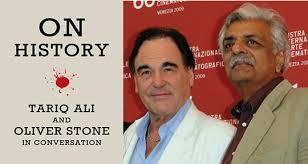
Tariq Ali: Turning Points in the History of Imperialism
Today we’re joined by internationally renowned writer and activist Tariq Ali. Tariq is visiting from London where he is editor of the New Left Review.
A writer and filmmaker, Tariq has written more than 2 dozen books on world history and politics, including The Duel: Pakistan on the Flight Path of American Power, The Obama Syndrome and On History. We talk specifically about several turning points in global history, the Occupy movement and US elections.
Guest – Tariq Ali, writer, journalist and film-maker, born in Lahore and educated at Oxford University. He writes regularly for a range of publications including The Guardian and The London Review of Books. He has written more than a dozen books including non-fiction as well as scripts for both stage and screen.
To Listen to the Episode
Tariq Ali: Turning Points in the History of Imperialism
Today we’re joined by internationally renowned writer and activist Tariq Ali. Tariq is visiting from London where he is editor of the New Left Review.
A writer and filmmaker, Tariq has written more than 2 dozen books on world history and politics, including The Duel: Pakistan on the Flight Path of American Power, The Obama Syndrome and On History. We talk specifically about several turning points in global history, the Occupy movement and US elections.
Guest – Tariq Ali, writer, journalist and film-maker, born in Lahore and educated at Oxford University. He writes regularly for a range of publications including The Guardian and The London Review of Books. He has written more than a dozen books including non-fiction as well as scripts for both stage and screen.
To Listen to the Episode
Law and Disorder Radio: Political Prisoner Lynne Stewart - December 2012 Update; Michael Ratner Speech On Bradley Manning in Washington DC
Law and Disorder Radio
Updates:
Hosts Discuss War Culture and the Newtown Connecticut School Massacre
Letter to University of California President Advising Him of Need to Protect Protect Pro-Palestinian Speech on Campus
Michael Ratner Remembers Former Federal Judge and Conservative Legal Scholar Robert Bork
Six Month Anniversary Julian Assange at Ecuadoran Embassy: Free Press Foundation
Political Prisoner Lynne Stewart - December 2012 Update
Criminal defense attorney, political prisoner and good friend, Lynne Stewart continues to inspire people around her while serving a 10 year sentence at the Federal Medical Center in Fort Worth Texas. As many listeners know, Lynne was convicted on charges related to materially aiding terrorism, related to her representation of Omar Abdel Rahman. Her original 2 year sentence was increased to 10 years after the government pressured the trial judge to reconsider his sentencing decision.
Co-host Michael Smith reads a few paragraphs from a recent letter by Lynne. Lynne Stewart turned 73 this past October, she’s a breast cancer survivor and has recently come out of surgery. She says she’s feeling better and ready to take on the next step in her case.
“I am now beginning my fourth (4th) year of imprisonment. It does not get better and I have to gut check myself regularly to be certain that I am resisting the pervasive institutionalization that takes place. A certain degree of reclusiveness with the help of good books, interesting people to correspond with, writing on topics of public interest, seems to work for me. Of course I still am working with any woman who needs help but I know that my sometimes truth-telling self is not what folks here want to hear. I do try to give folks whatever comfort I can. An old timer here, 18 years in, has begun an initiative to mobilize for prison reform by getting people on the outside to sign off on her well written petition to the White House. She is straight out of the courage and style of the old southern civil rights struggle but has now dedicated herself to this. The demands are modest. I have placed her petition on this, my website. Please sign on.”
Guest – Ralph Poynter, activist and Lynne’s partner. Please write to Lynne Stewart: #53504-054 / Federal Medical Center, Carswell / PO Box 27137 / Ft. Worth, TX 76127
Michael Ratner Speech On Bradley Manning in Washington DC
We hear a speech by our own Michael Ratner delivered at the Bradley Manning support event. Michael Ratner, President Emeritus of the Center for Constitutional Rights, who represents WikiLeaks and Julian Assange. Attorney David Coombs also speaks about the case of his client, Bradley Manning. He is preceded by Emma Cape of the Bradley Manning Support Network. The event was held at All Souls Church Unitarian in Washington DC, December 2012.
To Listen to the Episode
Updates:
Hosts Discuss War Culture and the Newtown Connecticut School Massacre
Letter to University of California President Advising Him of Need to Protect Protect Pro-Palestinian Speech on Campus
Michael Ratner Remembers Former Federal Judge and Conservative Legal Scholar Robert Bork
Six Month Anniversary Julian Assange at Ecuadoran Embassy: Free Press Foundation
Political Prisoner Lynne Stewart - December 2012 Update
Criminal defense attorney, political prisoner and good friend, Lynne Stewart continues to inspire people around her while serving a 10 year sentence at the Federal Medical Center in Fort Worth Texas. As many listeners know, Lynne was convicted on charges related to materially aiding terrorism, related to her representation of Omar Abdel Rahman. Her original 2 year sentence was increased to 10 years after the government pressured the trial judge to reconsider his sentencing decision.
Co-host Michael Smith reads a few paragraphs from a recent letter by Lynne. Lynne Stewart turned 73 this past October, she’s a breast cancer survivor and has recently come out of surgery. She says she’s feeling better and ready to take on the next step in her case.
“I am now beginning my fourth (4th) year of imprisonment. It does not get better and I have to gut check myself regularly to be certain that I am resisting the pervasive institutionalization that takes place. A certain degree of reclusiveness with the help of good books, interesting people to correspond with, writing on topics of public interest, seems to work for me. Of course I still am working with any woman who needs help but I know that my sometimes truth-telling self is not what folks here want to hear. I do try to give folks whatever comfort I can. An old timer here, 18 years in, has begun an initiative to mobilize for prison reform by getting people on the outside to sign off on her well written petition to the White House. She is straight out of the courage and style of the old southern civil rights struggle but has now dedicated herself to this. The demands are modest. I have placed her petition on this, my website. Please sign on.”
Guest – Ralph Poynter, activist and Lynne’s partner. Please write to Lynne Stewart: #53504-054 / Federal Medical Center, Carswell / PO Box 27137 / Ft. Worth, TX 76127
Michael Ratner Speech On Bradley Manning in Washington DC
We hear a speech by our own Michael Ratner delivered at the Bradley Manning support event. Michael Ratner, President Emeritus of the Center for Constitutional Rights, who represents WikiLeaks and Julian Assange. Attorney David Coombs also speaks about the case of his client, Bradley Manning. He is preceded by Emma Cape of the Bradley Manning Support Network. The event was held at All Souls Church Unitarian in Washington DC, December 2012.
To Listen to the Episode
Friday, July 05, 2013
David Cromwell and David Edwards: Snowden, Surveillance And The Secret State
Snowden, Surveillance And The Secret State
by David Cromwell and David Edwards
Media Lens

...
The Primary Function Of The State
As important as the revelations of Edward Snowden are, the bigger picture is the overwhelming drive by state power to pursue its own strategic designs, to promote the corporate and financial interests with which it is in league, and to protect itself from any threat from the general population to make government truly work for the public.
The independent journalist Jonathan Cook makes the same point (via Facebook, June 26, 2013) that this is the real significance of the recent shocking revelations about surveillance:
Cook quotes from a Guardian article which reveals that a UK police unit called the National Domestic Extremism Unit is monitoring 9,000 political activists:
Cook concludes:
Historian Mark Curtis, who has extensively analysed formerly secret government records for several groundbreaking books, has noted that the primary function of the British state, 'virtually its raison d'être for several centuries – is to aid British companies in getting their hands on other countries' resources.' The British security services have an important role to play in support of 'the national interest':
A similar picture could be painted of all the major 'democracies', not least the United States.
The shocking extent of the corruption of democracy by big business and its political allies remains mostly off the corporate media's agenda. And corporate-employed reporters and commentators have mastered the art of not making painful connections; painful for powerful interests, that is. No wonder, too, that our major political parties offer no real choice: they all represent essentially the same interests crushing any moves towards meaningful public participation in the shaping of policy.
Making The Planet Uninhabitable
In the introduction of a new book, Managing Democracy, Managing Dissent, Rebecca Fisher outlines the stranglehold that corporate power, including its mass media sector and political accomplices, has on democracy. Fisher, an activist with Corporate Watch, writes:
The framework of global capitalism – its reigning institutions, policies and practices - tends to be taken for granted in the corporate media. Media academic and activist Robert McChesney points to the 'persistent reluctance' of commentators to 'make a no-holds-barred assessment' of capitalism. He makes a revealing comparison to illustrate this absurdity:
But on the rare occasion when the system is questioned, notes McChesney, even critical writers feel obliged to provide a 'loyalty oath' to capitalism:
McChesney's observations about 'scholars' extend to media professionals, as he makes clear in his book. As we have often said, one cannot expect a corporate media system to report honestly or accurately about the corporate world.
To Read the Entire Article and Access Hyperlinked Resources

by David Cromwell and David Edwards
Media Lens
...
The Primary Function Of The State
As important as the revelations of Edward Snowden are, the bigger picture is the overwhelming drive by state power to pursue its own strategic designs, to promote the corporate and financial interests with which it is in league, and to protect itself from any threat from the general population to make government truly work for the public.
The independent journalist Jonathan Cook makes the same point (via Facebook, June 26, 2013) that this is the real significance of the recent shocking revelations about surveillance:
'I've been saying since the first Snowden revelations about the NSA that the goal of all this mass surveillance is not to foil terrorism; it's to prevent all challenges to, or efforts to hold accountable, the corporate elites who are plundering our communities and the planet to enrich themselves.'
Cook quotes from a Guardian article which reveals that a UK police unit called the National Domestic Extremism Unit is monitoring 9,000 political activists:
'In recent years the unit is known to have focused its resources on spying on environmental campaigners, particularly those engaged in direct action and civil disobedience to protest against climate change.'
Cook concludes:
'The tapping of our phone calls and internet activity is being used for exactly the same nefarious purposes: to ensure we remain either docile or intimidated as our political and financial elites grow ever more ostentatious in their depravity and corruption.'
Historian Mark Curtis, who has extensively analysed formerly secret government records for several groundbreaking books, has noted that the primary function of the British state, 'virtually its raison d'être for several centuries – is to aid British companies in getting their hands on other countries' resources.' The British security services have an important role to play in support of 'the national interest':
'As Lord Mackay, then Lord Chancellor, revealed in the mid-1990s, the role of MI6 is to protect Britain's "economic well-being" by keeping "a particular eye on Britain's access to key commodities, like oil or metals [and] the profits of Britain's myriad of international business interests".' (Mark Curtis, Web of Deceit: Britain's Real Role in the World, Vintage, 2003, pp. 210-211.)
A similar picture could be painted of all the major 'democracies', not least the United States.
The shocking extent of the corruption of democracy by big business and its political allies remains mostly off the corporate media's agenda. And corporate-employed reporters and commentators have mastered the art of not making painful connections; painful for powerful interests, that is. No wonder, too, that our major political parties offer no real choice: they all represent essentially the same interests crushing any moves towards meaningful public participation in the shaping of policy.
Making The Planet Uninhabitable
In the introduction of a new book, Managing Democracy, Managing Dissent, Rebecca Fisher outlines the stranglehold that corporate power, including its mass media sector and political accomplices, has on democracy. Fisher, an activist with Corporate Watch, writes:
'our legal avenues to hold our putative representatives to account, or to persuade them to take heed of our demands, are restricted to actions via pressure groups or tame and largely ineffectual protests about specific, isolated issues. This ensures that the capitalist system is able to reap catastrophic damage upon subject populations and the environment, even to the extent of threatening the habitability of the planet, while remaining, for the most part, insulated from public challenge.' (Rebecca Fisher, editor, Managing Democracy, Managing Dissent: Capitalism, Democracy and the Organisation of Consent, Corporate Watch, London, 2013, p. 2)
The framework of global capitalism – its reigning institutions, policies and practices - tends to be taken for granted in the corporate media. Media academic and activist Robert McChesney points to the 'persistent reluctance' of commentators to 'make a no-holds-barred assessment' of capitalism. He makes a revealing comparison to illustrate this absurdity:
'A scholar studying the Soviet Union would never discount the monopoly of economic and political power held by the Communist Party and the state and then focus on other matters. The political economy would be central to any credible analysis, or the scholar would be dismissed as a charlatan. The same is true of any academic study of any ancient civilization.' (Robert McChesney, Digital Disconnect: How Capitalism Is Turning The Internet Against Democracy, The New Press, New York, 2013, p. 17)
But on the rare occasion when the system is questioned, notes McChesney, even critical writers feel obliged to provide a 'loyalty oath' to capitalism:
'whenever scholars examine their own society, it is generally taboo to challenge the prerogatives and privileges of those who stand atop it and benefit from the status quo, even in political democracies. This may be nearly as true of the United States as it was of the old Soviet Union.' (Ibid., p. 17)
McChesney's observations about 'scholars' extend to media professionals, as he makes clear in his book. As we have often said, one cannot expect a corporate media system to report honestly or accurately about the corporate world.
To Read the Entire Article and Access Hyperlinked Resources
Thursday, July 04, 2013
William Boardman: San Diego's Circus Trial; Democracy Now: Jeff Olson Acquitted for Writing Water Soluble Chalk Slogans in Front of Bank of America in San Diego
Anti-Bank Protester Acquitted for Chalk Slogans in San Diego; Activist Detained in Pennsylvania
Democracy Now
A protester in California has been acquitted of all charges after being tried for writing protest slogans on a sidewalk. Jeff Olson faced up to 13 years in prison and $13,000 in fines on misdemeanor vandalism charges after using washable chalk outside three Bank of America branches in San Diego. Olson’s messages included "No Thanks, Big Banks" and "Shame on Bank of America." He has accused a Bank of America executive, Darrell Freeman, of pressuring local prosecutors to go through with the case. After the verdict, Olson urged supporters to protest big banks by moving their money to local credit unions.
Jeff Olson: "There’s one way for them to send a message that will be heard, and that’s to close your account at a big Wall Street bank and move your money to a local, non-profit, community credit union. If you’re mad about this, if you think this wasn’t fair what happened to me, close your Wall Street bank account."
Olson’s acquittal comes days after a similar arrest in Pennsylvania. Healthcare activist AJ Marin was detained for using chalk to write a sidewalk slogan against Republican Governor Tom Corbett’s decision to reject federal funds for expanding Medicare. Marin wrote: "Governor Corbett has health insurance, we should too." He’s been charged with disorderly conduct.
-----------------------------------------------------
San Diego's Circus Trial
By William Boardman
Reader Supported News
Sidewalk chalk protest reveals gaping governmental failures
Perhaps you've heard about - and enjoyed - the acquittal of Jeff Olson after he was tried on 13 counts of vicious chalk attack on the Bank of America in San Diego.
A jury of his peers said essentially the same thing as Senator Elizabeth Warren's tweet last week: "You've got to be kidding me."
Well, no, actually, no one involved was really kidding.
Olson, 40, wasn't kidding when he went on a seven month rampage, from February to August, 2012, remorselessly using a water-soluble children's chalk to scar the sidewalks in front of a local Bank of America with such vicious messages as "No thanks, big banks" and "Shame on Bank of America."
Being water-soluble, the chalked messages didn't last. It's possible that the sentiment behind them remains semi-permanent among much of the population.
Seems the Bank of America Has Tender Feelings
The Bank of America wasn't kidding when it complained, but at first the San Diego City Attorney was reluctant to prosecute. The bank's Darell Freeman, VP of Global Corporate Security, reportedly hounded police and prosecutors to act.
The Bank of America wasn't kidding when it claimed it had to spend more than $6,000 cleaning chalk off public sidewalks, and security VP Freeman even got into a confrontation with Olson, as he chalked up two more branches.
The Bank of America wasn't kidding when it reminded City Attorney Jan Goldsmith that his election campaign had accepted banks' financial contributions. And it wasn't kidding when it reminded Goldsmith that he might be looking for more contributions when he decided to run for mayor in 2016.
Finally the Bank Snapped the City Attorney Into Line
City Attorney Goldsmith wasn't kidding when, perhaps regretting his politically unseemly delay, he went ahead and overcharged Olson with 13 misdemeanor counts of vandalism, putting Olson in jeopardy of a potential sentence of $13,000 in fines and 13 years in jail.
Olson wasn't kidding when he asserted that his chalk crusade was a constitutionally protected expression of his First Amendment right to free speech, or when he hired defense attorney Tom Tosdal.
City Attorney Goldsmith's lead prosecutor, Paige Hazard, wasn't kidding when, according to the San Diego reader, she offered Olson a plea deal:
On May 16, Hazard told Olson the City would drop the case if he agreed to serve 32 hours of community service, attend an 8-hour seminar by the "Corrective Behavior Institute," pay Bank of America $6,299 in restitution for the clean-up, waive all Fourth Amendment rights guarding against search and seizures, and surrender his driver's license for a three year period.
Olson wasn't kidding when he turned down the deal.
Well, If You Don't Like the First Offer, How About a Worse One?
Prosecutor Hazard wasn't kidding when she made a second offer, according to the Reporter:
So on June 18, as the June 25 trial date neared, Hazard offered Olson another deal. Olson would plead guilty to one count of vandalism, agree to serve three years' probation, pay restitution - amount undetermined - spend 24 hours cleaning up graffiti, and surrender his driver's license for 2 years.
Olson wasn't kidding when he turned down the deal, telling reporters: "I didn't see how that was fair…. It was their decision to take this to court, not mine."
San Diego mayor Bob Filner wasn't kidding when he wrote a June 20 memorandum that read, in part:
This young man is being persecuted for thirteen counts of vandalism stemming from an expression of political protest that involved washable children's chalk on a City sidewalk. It is alleged that he has no previous criminal record. If these assertions are correct, I believe this is a misuse and waste of taxpayer money. It could also be characterized as an abuse of power that infringes on First Amendment particularly when it is arbitrarily applied to some, but not all, similar speech."
To Read the Rest of the Article
Democracy Now
A protester in California has been acquitted of all charges after being tried for writing protest slogans on a sidewalk. Jeff Olson faced up to 13 years in prison and $13,000 in fines on misdemeanor vandalism charges after using washable chalk outside three Bank of America branches in San Diego. Olson’s messages included "No Thanks, Big Banks" and "Shame on Bank of America." He has accused a Bank of America executive, Darrell Freeman, of pressuring local prosecutors to go through with the case. After the verdict, Olson urged supporters to protest big banks by moving their money to local credit unions.
Jeff Olson: "There’s one way for them to send a message that will be heard, and that’s to close your account at a big Wall Street bank and move your money to a local, non-profit, community credit union. If you’re mad about this, if you think this wasn’t fair what happened to me, close your Wall Street bank account."
Olson’s acquittal comes days after a similar arrest in Pennsylvania. Healthcare activist AJ Marin was detained for using chalk to write a sidewalk slogan against Republican Governor Tom Corbett’s decision to reject federal funds for expanding Medicare. Marin wrote: "Governor Corbett has health insurance, we should too." He’s been charged with disorderly conduct.
-----------------------------------------------------
San Diego's Circus Trial
By William Boardman
Reader Supported News
Sidewalk chalk protest reveals gaping governmental failures
Perhaps you've heard about - and enjoyed - the acquittal of Jeff Olson after he was tried on 13 counts of vicious chalk attack on the Bank of America in San Diego.
A jury of his peers said essentially the same thing as Senator Elizabeth Warren's tweet last week: "You've got to be kidding me."
Well, no, actually, no one involved was really kidding.
Olson, 40, wasn't kidding when he went on a seven month rampage, from February to August, 2012, remorselessly using a water-soluble children's chalk to scar the sidewalks in front of a local Bank of America with such vicious messages as "No thanks, big banks" and "Shame on Bank of America."
Being water-soluble, the chalked messages didn't last. It's possible that the sentiment behind them remains semi-permanent among much of the population.
Seems the Bank of America Has Tender Feelings
The Bank of America wasn't kidding when it complained, but at first the San Diego City Attorney was reluctant to prosecute. The bank's Darell Freeman, VP of Global Corporate Security, reportedly hounded police and prosecutors to act.
The Bank of America wasn't kidding when it claimed it had to spend more than $6,000 cleaning chalk off public sidewalks, and security VP Freeman even got into a confrontation with Olson, as he chalked up two more branches.
The Bank of America wasn't kidding when it reminded City Attorney Jan Goldsmith that his election campaign had accepted banks' financial contributions. And it wasn't kidding when it reminded Goldsmith that he might be looking for more contributions when he decided to run for mayor in 2016.
Finally the Bank Snapped the City Attorney Into Line
City Attorney Goldsmith wasn't kidding when, perhaps regretting his politically unseemly delay, he went ahead and overcharged Olson with 13 misdemeanor counts of vandalism, putting Olson in jeopardy of a potential sentence of $13,000 in fines and 13 years in jail.
Olson wasn't kidding when he asserted that his chalk crusade was a constitutionally protected expression of his First Amendment right to free speech, or when he hired defense attorney Tom Tosdal.
City Attorney Goldsmith's lead prosecutor, Paige Hazard, wasn't kidding when, according to the San Diego reader, she offered Olson a plea deal:
On May 16, Hazard told Olson the City would drop the case if he agreed to serve 32 hours of community service, attend an 8-hour seminar by the "Corrective Behavior Institute," pay Bank of America $6,299 in restitution for the clean-up, waive all Fourth Amendment rights guarding against search and seizures, and surrender his driver's license for a three year period.
Olson wasn't kidding when he turned down the deal.
Well, If You Don't Like the First Offer, How About a Worse One?
Prosecutor Hazard wasn't kidding when she made a second offer, according to the Reporter:
So on June 18, as the June 25 trial date neared, Hazard offered Olson another deal. Olson would plead guilty to one count of vandalism, agree to serve three years' probation, pay restitution - amount undetermined - spend 24 hours cleaning up graffiti, and surrender his driver's license for 2 years.
Olson wasn't kidding when he turned down the deal, telling reporters: "I didn't see how that was fair…. It was their decision to take this to court, not mine."
San Diego mayor Bob Filner wasn't kidding when he wrote a June 20 memorandum that read, in part:
This young man is being persecuted for thirteen counts of vandalism stemming from an expression of political protest that involved washable children's chalk on a City sidewalk. It is alleged that he has no previous criminal record. If these assertions are correct, I believe this is a misuse and waste of taxpayer money. It could also be characterized as an abuse of power that infringes on First Amendment particularly when it is arbitrarily applied to some, but not all, similar speech."
To Read the Rest of the Article
Wednesday, July 03, 2013
Sarah Jaffe: When There’s a Fee to Get Your Pay
When There’s a Fee to Get Your Pay
By Sarah Jaffe
In These Times
In the years since the financial crisis struck in 2008, it’s often been pointed out that gains for bankers have gone hand in hand with losses for workers. But few cases provide a better example of just how direct that relationship can be than that of Natalie Gunshannon, who says her employer put her in a situation that forced her to pay fees to one of the big banks just to access her wages.
Gunshannon, of Dallas Township, Penn., filed a class action lawsuit this week against a McDonald’s franchise where she worked, claiming that she and other workers were paid not through check or direct deposit, but through a pre-paid JPMorgan Chase debit card. Along with her card, her lawsuit alleges, she received a list of fees she’d incur when she used it: $1.50 for ATM withdrawals; $5 for over-the-counter cash withdrawals; $1 per balance inquiry; 75 cents for online bill pay and $15 if she lost the card or had it stolen from her.
“I need to receive all the money I earn,” Gunshannon, who was being paid around $7.44 an hour, told a local newspaper. “I can’t afford to lose even a few dollars per paycheck. I just think people should be paid fairly and not have to pay fees to get their wages.”
The lawsuit, filed by attorney Mike Cefalo of Cefalo & Associates and provided to In These Times by the firm, alleges that the cards violate the Pennsylvania Wage Payment and Collection Act, which provides that “Wages shall be paid in lawful money of the United States or check.” The suit further alleges that the fees reduce the actual wages workers receive—in some cases bringing them below minimum wage, which in Pennsylvania remains at the federal minimum wage rate of $7.25 per hour.
The lawsuit also notes that managerial employees were paid by regular direct deposit; only hourly workers were stuck with the cards and the fees.
In a statement, Albert and Carol Mueller, the owners of the McDonald’s in question, said that they could not comment on the case, and added, “We are committed to providing them the best possible work environment so [employees] can deliver the fast, reliable service that our customers expect.” (McDonald’s Corporation did not return a request for comment.)
These “payroll cards,” which after being loaded with wages work like a regular debit card, are growing increasingly popular as companies look for alternatives to paper checks and payroll services. Like most debit cards, payroll cards can be used to purchase goods, or they can be used to make withdrawals from banks or ATMs. JPMorgan Chase is one of several banking companies, including Bank of America and U.S. Bank, that offer them.
JPMorgan's website touts its “Prepaid Card Solutions” as an efficient and cost-effective way to pay employees, calling them a “direct deposit alternative for unbanked and underserved employees.” Cost-effective, apparently, for the employer—who transfers the cost of the service to the workers themselves. As the Consumer Financial Protection Bureau—the government office founded by Elizabeth Warren to inform consumers of their rights when dealing with financial products—explains, employers make arrangements with the financial institution as to the terms of the cards, including “any fees that may be charged to [the employee].”
According to the CFPB, employers “typically” offer the card as one of several payment options and advise employees who opt for the payroll card to read the terms and conditions carefully. But according to Gunshannon’s lawsuit, when she asked if she could be paid another way, she was told, “If you don’t activate the card, there is no way for us to pay you.” She quit, and called a lawyer.
Nickeled and dimed
Fast food workers like Gunshannon are some of the lowest-paid workers in the country. As many have noted, it’s expensive to be poor, with lower-income people paying more for, among other things, basic financial services. A recent study released by the Fast Food Forward campaign—the union- and community group-backed campaign to organize New York City’s fast food industry—and performed by research firm Anzalone Research found that 84 percent of fast food workers surveyed said they had been the victims of wage theft in some form. Jonathan Westin, campaign director of Fast Food Forward and executive director of New York Communities for Change, said at the time, “The [wage theft] epidemic is preying on the city’s most vulnerable residents—the men and women who make $7.25 / hour and are the least able to afford it.”
To Read the Rest
By Sarah Jaffe
In These Times
In the years since the financial crisis struck in 2008, it’s often been pointed out that gains for bankers have gone hand in hand with losses for workers. But few cases provide a better example of just how direct that relationship can be than that of Natalie Gunshannon, who says her employer put her in a situation that forced her to pay fees to one of the big banks just to access her wages.
Gunshannon, of Dallas Township, Penn., filed a class action lawsuit this week against a McDonald’s franchise where she worked, claiming that she and other workers were paid not through check or direct deposit, but through a pre-paid JPMorgan Chase debit card. Along with her card, her lawsuit alleges, she received a list of fees she’d incur when she used it: $1.50 for ATM withdrawals; $5 for over-the-counter cash withdrawals; $1 per balance inquiry; 75 cents for online bill pay and $15 if she lost the card or had it stolen from her.
“I need to receive all the money I earn,” Gunshannon, who was being paid around $7.44 an hour, told a local newspaper. “I can’t afford to lose even a few dollars per paycheck. I just think people should be paid fairly and not have to pay fees to get their wages.”
The lawsuit, filed by attorney Mike Cefalo of Cefalo & Associates and provided to In These Times by the firm, alleges that the cards violate the Pennsylvania Wage Payment and Collection Act, which provides that “Wages shall be paid in lawful money of the United States or check.” The suit further alleges that the fees reduce the actual wages workers receive—in some cases bringing them below minimum wage, which in Pennsylvania remains at the federal minimum wage rate of $7.25 per hour.
The lawsuit also notes that managerial employees were paid by regular direct deposit; only hourly workers were stuck with the cards and the fees.
In a statement, Albert and Carol Mueller, the owners of the McDonald’s in question, said that they could not comment on the case, and added, “We are committed to providing them the best possible work environment so [employees] can deliver the fast, reliable service that our customers expect.” (McDonald’s Corporation did not return a request for comment.)
These “payroll cards,” which after being loaded with wages work like a regular debit card, are growing increasingly popular as companies look for alternatives to paper checks and payroll services. Like most debit cards, payroll cards can be used to purchase goods, or they can be used to make withdrawals from banks or ATMs. JPMorgan Chase is one of several banking companies, including Bank of America and U.S. Bank, that offer them.
JPMorgan's website touts its “Prepaid Card Solutions” as an efficient and cost-effective way to pay employees, calling them a “direct deposit alternative for unbanked and underserved employees.” Cost-effective, apparently, for the employer—who transfers the cost of the service to the workers themselves. As the Consumer Financial Protection Bureau—the government office founded by Elizabeth Warren to inform consumers of their rights when dealing with financial products—explains, employers make arrangements with the financial institution as to the terms of the cards, including “any fees that may be charged to [the employee].”
According to the CFPB, employers “typically” offer the card as one of several payment options and advise employees who opt for the payroll card to read the terms and conditions carefully. But according to Gunshannon’s lawsuit, when she asked if she could be paid another way, she was told, “If you don’t activate the card, there is no way for us to pay you.” She quit, and called a lawyer.
Nickeled and dimed
Fast food workers like Gunshannon are some of the lowest-paid workers in the country. As many have noted, it’s expensive to be poor, with lower-income people paying more for, among other things, basic financial services. A recent study released by the Fast Food Forward campaign—the union- and community group-backed campaign to organize New York City’s fast food industry—and performed by research firm Anzalone Research found that 84 percent of fast food workers surveyed said they had been the victims of wage theft in some form. Jonathan Westin, campaign director of Fast Food Forward and executive director of New York Communities for Change, said at the time, “The [wage theft] epidemic is preying on the city’s most vulnerable residents—the men and women who make $7.25 / hour and are the least able to afford it.”
To Read the Rest
Tuesday, July 02, 2013
Law and Disorder Radio: ACLU Files Lawsuit For Second Parent Adoption; Drone Summit: Killing and Spying by Remote Control; Woody Guthrie – 100th Centennial Celebration
Law and Disorder Radio
ACLU Files Lawsuit For Second Parent Adoption
The American Civil Liberties Union and the ACLU of North Carolina Legal Foundation filed a lawsuit on behalf of six same-sex couples and their children seeking the right to obtain second parent adoptions for their children. What is a second parent adoption? That’s when one partner in an unmarried couple adopts the other partner’s biological or adoptive child. This can occur in both gay and straight relationships. In December 2010, the North Carolina Supreme Court banned second parent adoptions for same-sex couples.
Guest – Attorney Chris Brook, Legal Director with the ACLU of North Carolina
Drone Summit: Killing and Spying by Remote Control
Earlier this year, human rights advocates, robotics technology experts, lawyers, journalists and activists gathered to bring detailed up to date information about the widespread and rapidly expanding deployment of both lethal and surveillance drones, including drone use in the United States. We hear excerpts of 2 presentations delivered at the drone conference in Washington DC titled Drone Summit: Killing and Spying by Remote Control.
Medea Benjamin , co-founder of the human rights group Global Exchange and the peace group CODEPINK. She’s also the author of the new book Drone Warfare: Killing by Remote Control. It’s a comprehensive look at the growing menace of drone warfare, with analysis of who is producing the drones, where they are being used, and who pilots the unmanned planes.
Trevor Timm, activist at the Electronic Frontier Foundation, who specializes in free speech issues and government transparency.
Woody Guthrie – 100th Centennial Celebration
Woodrow Wilson Guthrie was born on July 14, 1912, in Okemah, Oklahoma. Music festivals around the country mark his centennial. Many know Woody Guthrie by the song, “This Land Is Your Land” but he recorded much more and the bulk of those songs are archived in the Library of Congress. Woody was very productive, he was a writer, a cartoonist, and a biographer. “Roots of Woody Guthrie: Celebrating Woody at 100″ Down Home Radio Show
Guest - Eli Smith (host/producer) is a banjo player, writer, researcher and promoter of folk music living in New York City. Eli is a Smithsonian Folkways recording artist. Eli organizes two folk festivals annually, the Brooklyn Folk Festival in the Spring and Washington Square Park Folk Festival in the Fall.
To Listen to the Episode
ACLU Files Lawsuit For Second Parent Adoption
The American Civil Liberties Union and the ACLU of North Carolina Legal Foundation filed a lawsuit on behalf of six same-sex couples and their children seeking the right to obtain second parent adoptions for their children. What is a second parent adoption? That’s when one partner in an unmarried couple adopts the other partner’s biological or adoptive child. This can occur in both gay and straight relationships. In December 2010, the North Carolina Supreme Court banned second parent adoptions for same-sex couples.
Guest – Attorney Chris Brook, Legal Director with the ACLU of North Carolina
Drone Summit: Killing and Spying by Remote Control
Earlier this year, human rights advocates, robotics technology experts, lawyers, journalists and activists gathered to bring detailed up to date information about the widespread and rapidly expanding deployment of both lethal and surveillance drones, including drone use in the United States. We hear excerpts of 2 presentations delivered at the drone conference in Washington DC titled Drone Summit: Killing and Spying by Remote Control.
Medea Benjamin , co-founder of the human rights group Global Exchange and the peace group CODEPINK. She’s also the author of the new book Drone Warfare: Killing by Remote Control. It’s a comprehensive look at the growing menace of drone warfare, with analysis of who is producing the drones, where they are being used, and who pilots the unmanned planes.
Trevor Timm, activist at the Electronic Frontier Foundation, who specializes in free speech issues and government transparency.
Woody Guthrie – 100th Centennial Celebration
Woodrow Wilson Guthrie was born on July 14, 1912, in Okemah, Oklahoma. Music festivals around the country mark his centennial. Many know Woody Guthrie by the song, “This Land Is Your Land” but he recorded much more and the bulk of those songs are archived in the Library of Congress. Woody was very productive, he was a writer, a cartoonist, and a biographer. “Roots of Woody Guthrie: Celebrating Woody at 100″ Down Home Radio Show
Guest - Eli Smith (host/producer) is a banjo player, writer, researcher and promoter of folk music living in New York City. Eli is a Smithsonian Folkways recording artist. Eli organizes two folk festivals annually, the Brooklyn Folk Festival in the Spring and Washington Square Park Folk Festival in the Fall.
To Listen to the Episode
Lisa Wade -- History Repeating Itself: Discriminatory Voting Laws
History Repeating Itself: Discriminatory Voting Laws
by Lisa Wade
Sociological Images
Last week the U.S. Supreme Court struck down the part of the Voting Rights Act of 1965 that required states with a documenting history of discrimination to get federal approval before changing their voting laws. When the law was passed in 1965, one of its main targets were “literacy tests.”
Ostensibly designed to ensure that everyone who voted could read and write, they were actually tools with which to disenfranchise African Americans and sometimes Latinos and American Indians. Minority voters were disproportionately required to take these tests and, when they did, the election official at the polling place had 100% jurisdiction to decide which answers were correct and score the test as he liked. The point was to intimidate and turn them away from the polls. If this sounds bad, you should see the range of disturbing and terrifying things the White elite tried to keep minorities from voting.
The tactics to manipulate election outcomes by controlling who votes is still part and parcel of our electoral politics. In fact, since most voters are not “swing” voters, some would argue that “turnout” is a primary ground on which elections are fought. This is not just about mobilizing or suppressing Democrats or Republicans, it’s about mobilizing or suppressing the turnout of groups likely to vote Democrat or Republican. Since most minority groups lean Democrat, Republicans have a perverse incentive to suppress their turn out. In other words, this isn’t a partisan issue; I’d be watching Democrats closely if the tables were turned.
Indeed, states have already moved to implement changes to voting laws that had been previously identified as discriminatory and ruled unconstitutional under the Voting Act. According to the Associated Press:
After the high court announced its momentous ruling Tuesday, officials in Texas and Mississippi pledged to immediately implement laws requiring voters to show photo identification before getting a ballot. North Carolina Republicans promised they would quickly try to adopt a similar law. Florida now appears free to set its early voting hours however Gov. Rick Scott and the GOP Legislature please. And Georgia’s most populous county likely will use county commission districts that Republican state legislators drew over the objections of local Democrats.
So, yeah, it appears that Chief Justice John Roberts’ justification that “our country has changed” was pretty much proven wrong within a matter of hours or days. This is bad. It will be much more difficult to undo discriminatory laws than it was to prevent them from being implemented and, even if they are challenged and overturned, they will do damage in the meantime.
To Read the Rest, to Access Hyperlinked Resources, and to See a Louisiana Voting Literacy Test circa 1964
by Lisa Wade
Sociological Images
Last week the U.S. Supreme Court struck down the part of the Voting Rights Act of 1965 that required states with a documenting history of discrimination to get federal approval before changing their voting laws. When the law was passed in 1965, one of its main targets were “literacy tests.”
Ostensibly designed to ensure that everyone who voted could read and write, they were actually tools with which to disenfranchise African Americans and sometimes Latinos and American Indians. Minority voters were disproportionately required to take these tests and, when they did, the election official at the polling place had 100% jurisdiction to decide which answers were correct and score the test as he liked. The point was to intimidate and turn them away from the polls. If this sounds bad, you should see the range of disturbing and terrifying things the White elite tried to keep minorities from voting.
The tactics to manipulate election outcomes by controlling who votes is still part and parcel of our electoral politics. In fact, since most voters are not “swing” voters, some would argue that “turnout” is a primary ground on which elections are fought. This is not just about mobilizing or suppressing Democrats or Republicans, it’s about mobilizing or suppressing the turnout of groups likely to vote Democrat or Republican. Since most minority groups lean Democrat, Republicans have a perverse incentive to suppress their turn out. In other words, this isn’t a partisan issue; I’d be watching Democrats closely if the tables were turned.
Indeed, states have already moved to implement changes to voting laws that had been previously identified as discriminatory and ruled unconstitutional under the Voting Act. According to the Associated Press:
After the high court announced its momentous ruling Tuesday, officials in Texas and Mississippi pledged to immediately implement laws requiring voters to show photo identification before getting a ballot. North Carolina Republicans promised they would quickly try to adopt a similar law. Florida now appears free to set its early voting hours however Gov. Rick Scott and the GOP Legislature please. And Georgia’s most populous county likely will use county commission districts that Republican state legislators drew over the objections of local Democrats.
So, yeah, it appears that Chief Justice John Roberts’ justification that “our country has changed” was pretty much proven wrong within a matter of hours or days. This is bad. It will be much more difficult to undo discriminatory laws than it was to prevent them from being implemented and, even if they are challenged and overturned, they will do damage in the meantime.
To Read the Rest, to Access Hyperlinked Resources, and to See a Louisiana Voting Literacy Test circa 1964
Monday, July 01, 2013
Entitled Opinions: Kathleen Sullivan on the U.S. Constitution
A conversation with Professor of Law Kathleen Sullivan on the founding scriptures of America.
Entitled Opinions
Professor Sullivan is the Stanley Morrison Professor of Law at Stanford University. She received a B.A. from Cornell in 1976 and a B.A. from Oxford in 1978 where she was a Marshall Scholar. She received her J.D. from Harvard in 1981. Her broad experience in the practice of law includes being a clerk to Judge James L. Oakes on the U.S. Court of Appeals (1981-82), an attorney in a constitutional appellate practice (1982-84), Assistant Professor of Law at Harvard (1984-89; full professor from 1989-93), Visting Professor at USC Law Center (1991), Professor of Law at Stanford (since 1992). She has been a Robert E. Paradise Fellow (1995-96) and Dean and Richard E. Lang Professor of Law at Stanford (1999-2004).
She is a member of the Foundation Press Editorial Board and of the American Philosophical Society, a fellow of the American Academy of Arts and Sciences and is on the Board of Trustees of the Century Foundation. For her teaching she has been awarded the Albert M. Sacks-Paul A. Freund Award for Teaching Excellence at Harvard (1992) and the John Bingham Hurlbut Award for Excellence in Teaching at Stanford (1996).
Her primary field is Constitutional Law, which she teaches at Stanford Law School and on which she has written leading text Constitutional Law with Gerald Gunther (New York, 2004), now in its 15th edition.
Professor Sullivan continues to practice law at the California firm Quinn Emanuel.
To Listen to the Conversation
Entitled Opinions
Professor Sullivan is the Stanley Morrison Professor of Law at Stanford University. She received a B.A. from Cornell in 1976 and a B.A. from Oxford in 1978 where she was a Marshall Scholar. She received her J.D. from Harvard in 1981. Her broad experience in the practice of law includes being a clerk to Judge James L. Oakes on the U.S. Court of Appeals (1981-82), an attorney in a constitutional appellate practice (1982-84), Assistant Professor of Law at Harvard (1984-89; full professor from 1989-93), Visting Professor at USC Law Center (1991), Professor of Law at Stanford (since 1992). She has been a Robert E. Paradise Fellow (1995-96) and Dean and Richard E. Lang Professor of Law at Stanford (1999-2004).
She is a member of the Foundation Press Editorial Board and of the American Philosophical Society, a fellow of the American Academy of Arts and Sciences and is on the Board of Trustees of the Century Foundation. For her teaching she has been awarded the Albert M. Sacks-Paul A. Freund Award for Teaching Excellence at Harvard (1992) and the John Bingham Hurlbut Award for Excellence in Teaching at Stanford (1996).
Her primary field is Constitutional Law, which she teaches at Stanford Law School and on which she has written leading text Constitutional Law with Gerald Gunther (New York, 2004), now in its 15th edition.
Professor Sullivan continues to practice law at the California firm Quinn Emanuel.
To Listen to the Conversation
Andrew O'Hehir -- From Ike to “The Matrix”: Welcome to the American dystopia
From Ike to “The Matrix”: Welcome to the American dystopia
By Andrew O'Hehir
Salon
Part Orwellian security state, part Huxley wonderland and part "Matrix," America is three dystopias in one!
American society has been sliding toward the realm of dystopian science fiction — toward a nightmarish mishmash of George Orwell, Aldous Huxley and Philip K. Dick — since at least the early years of the Reagan administration, and arguably a lot longer than that. (Since Watergate? The Kennedy assassination? The A-bomb? Take your pick.) We may have finally gotten there. We live in a country that embodies three different dystopian archetypes at once: America is partly a panopticon surveillance-and-security state, as in Orwell, partly an anesthetic and amoral consumer wonderland, as in Huxley, and partly a grand rhetorical delusion or “spectacle,” as in Dick or “The Matrix” or certain currents of French philosophy.
Let’s step away from the brainiac analysis for a second and give full credit to the small-town Republican and war hero who warned us about what was coming, more than 50 years ago. In his 1961 farewell address, President Dwight Eisenhower spoke gravely about “the potential for the disastrous rise of misplaced power” that lay in the coming coalition between “the military-industrial complex” and “the scientific-technological elite.” It would require “an alert and knowledgeable citizenry,” Ike cautioned, to make sure this combination did not “endanger our liberties or democratic processes.” As we say these days: Our bad.
I can’t find any direct evidence that Eisenhower had ever read Orwell’s “1984” or Huxley’s “Brave New World,” let alone that they shaped his insights into the heretical possibility that the alternative to Soviet-style Communism might turn out to be just as bad in its own way. Ike wasn’t the country bumpkin that many East Coast intellectuals of that era assumed him to be (English was his best subject at West Point), but he favored history and biography over literature and philosophy. His dire and all too prescient vision of the American future was no doubt drawn from the cultural climate around him, so perhaps he can be said to have absorbed the Orwellian vision by osmosis and made it his own. (Intriguingly, his granddaughter Susan Eisenhower, an eminent foreign policy expert, seems aware of the connection and cites “1984” as a formative influence on her own career.)
After the recent revelations about grandiose NSA domestic surveillance campaigns, complete with PowerPoint presentations that look like material from an unreleased mid-‘90s satire by Paul Verhoeven, we learned that sales of one recent edition of Orwell’s “1984” had apparently spiked by almost 7,000 percent on Amazon. Are these facts actually connected? Are these facts even facts? There’s no way to be sure, which may illustrate how difficult it is to know or understand anything amid the onslaught of pseudo-information. Maybe our current situation (as many Twitter users observed) owes more to Franz Kafka than to Orwell.
If people are really going to read “1984,” instead of just throwing it around as a reference, that can only be a good thing. (You can also watch Michael Radford’s excellent film version, with John Hurt and Richard Burton – actually released in 1984! — online right now.) It’s a devastating novel by one of the best writers of English prose of the last century, and a work that shaped both the thinking and the vocabulary of our age. But as a predictor or manual for the age of permanent war, permanent political paralysis and Total Information Awareness (Adm. John Poindexter’s much-mocked predecessor to PRISM), it gives you only part of the story.
If the technology of the national security state has finally caught up with, and indeed surpassed, anything imagined by Orwell’s Big Brother, who must rely on two-way “telescreens” and regular old secret agents to keep tabs on every citizen, the context is almost entirely different. Writing in the immediate aftermath of World War II, Orwell imagined an indefinite combination of postwar British poverty and austerity mixed with the drab, monochromatic austerity of the Soviet Union during the worst of the Stalin years. He was also imagining the aftermath of a future world-transforming war that would be even worse than the last one. Although it’s more widely understood as a political metaphor, “1984” also points the way toward “Planet of the Apes,” “The Hunger Games” and countless other post-apocalyptic visions.
Our own society, with its endless array of electronic gizmos, opulent luxury goods and a vibrant and/or morbid pop culture capable of invading every waking moment (and the sleeping ones too), looks nothing like that. At least on its surface, it more closely resembles the pharmaceutically cushioned, caste-divided and slogan-nourished Dr. Phil superstate of Huxley’s “Brave New World,” which is built around constant distraction and consumption and in which all desire for transcendence and spirituality can be answered with chemicals. But we certainly don’t live in the atheistic, full-employment command economy envisaged by Huxley either — he was imagining an unholy technocratic union of Lenin and Henry Ford — even if many people on the right remain convinced that Barack Obama is leading us there.
For a long time, especially in the ‘80s and ‘90s, it was customary for intellectuals who addressed the differences and similarities between Orwell and Huxley to assert that “1984” had not come true and that Huxley had come closer to predicting, as Christopher Hitchens put, it the “painless, amusement-sodden, and stress-free consensus” and “blissed-out and vacant servitude” of the postmodern age. I think the best of these comes from Neil Postman’s withering assessment in the foreword to “Amusing Ourselves to Death,” a landmark work of cultural criticism published in 1985:
To Read the Rest
By Andrew O'Hehir
Salon
Part Orwellian security state, part Huxley wonderland and part "Matrix," America is three dystopias in one!
American society has been sliding toward the realm of dystopian science fiction — toward a nightmarish mishmash of George Orwell, Aldous Huxley and Philip K. Dick — since at least the early years of the Reagan administration, and arguably a lot longer than that. (Since Watergate? The Kennedy assassination? The A-bomb? Take your pick.) We may have finally gotten there. We live in a country that embodies three different dystopian archetypes at once: America is partly a panopticon surveillance-and-security state, as in Orwell, partly an anesthetic and amoral consumer wonderland, as in Huxley, and partly a grand rhetorical delusion or “spectacle,” as in Dick or “The Matrix” or certain currents of French philosophy.
Let’s step away from the brainiac analysis for a second and give full credit to the small-town Republican and war hero who warned us about what was coming, more than 50 years ago. In his 1961 farewell address, President Dwight Eisenhower spoke gravely about “the potential for the disastrous rise of misplaced power” that lay in the coming coalition between “the military-industrial complex” and “the scientific-technological elite.” It would require “an alert and knowledgeable citizenry,” Ike cautioned, to make sure this combination did not “endanger our liberties or democratic processes.” As we say these days: Our bad.
I can’t find any direct evidence that Eisenhower had ever read Orwell’s “1984” or Huxley’s “Brave New World,” let alone that they shaped his insights into the heretical possibility that the alternative to Soviet-style Communism might turn out to be just as bad in its own way. Ike wasn’t the country bumpkin that many East Coast intellectuals of that era assumed him to be (English was his best subject at West Point), but he favored history and biography over literature and philosophy. His dire and all too prescient vision of the American future was no doubt drawn from the cultural climate around him, so perhaps he can be said to have absorbed the Orwellian vision by osmosis and made it his own. (Intriguingly, his granddaughter Susan Eisenhower, an eminent foreign policy expert, seems aware of the connection and cites “1984” as a formative influence on her own career.)
After the recent revelations about grandiose NSA domestic surveillance campaigns, complete with PowerPoint presentations that look like material from an unreleased mid-‘90s satire by Paul Verhoeven, we learned that sales of one recent edition of Orwell’s “1984” had apparently spiked by almost 7,000 percent on Amazon. Are these facts actually connected? Are these facts even facts? There’s no way to be sure, which may illustrate how difficult it is to know or understand anything amid the onslaught of pseudo-information. Maybe our current situation (as many Twitter users observed) owes more to Franz Kafka than to Orwell.
If people are really going to read “1984,” instead of just throwing it around as a reference, that can only be a good thing. (You can also watch Michael Radford’s excellent film version, with John Hurt and Richard Burton – actually released in 1984! — online right now.) It’s a devastating novel by one of the best writers of English prose of the last century, and a work that shaped both the thinking and the vocabulary of our age. But as a predictor or manual for the age of permanent war, permanent political paralysis and Total Information Awareness (Adm. John Poindexter’s much-mocked predecessor to PRISM), it gives you only part of the story.
If the technology of the national security state has finally caught up with, and indeed surpassed, anything imagined by Orwell’s Big Brother, who must rely on two-way “telescreens” and regular old secret agents to keep tabs on every citizen, the context is almost entirely different. Writing in the immediate aftermath of World War II, Orwell imagined an indefinite combination of postwar British poverty and austerity mixed with the drab, monochromatic austerity of the Soviet Union during the worst of the Stalin years. He was also imagining the aftermath of a future world-transforming war that would be even worse than the last one. Although it’s more widely understood as a political metaphor, “1984” also points the way toward “Planet of the Apes,” “The Hunger Games” and countless other post-apocalyptic visions.
Our own society, with its endless array of electronic gizmos, opulent luxury goods and a vibrant and/or morbid pop culture capable of invading every waking moment (and the sleeping ones too), looks nothing like that. At least on its surface, it more closely resembles the pharmaceutically cushioned, caste-divided and slogan-nourished Dr. Phil superstate of Huxley’s “Brave New World,” which is built around constant distraction and consumption and in which all desire for transcendence and spirituality can be answered with chemicals. But we certainly don’t live in the atheistic, full-employment command economy envisaged by Huxley either — he was imagining an unholy technocratic union of Lenin and Henry Ford — even if many people on the right remain convinced that Barack Obama is leading us there.
For a long time, especially in the ‘80s and ‘90s, it was customary for intellectuals who addressed the differences and similarities between Orwell and Huxley to assert that “1984” had not come true and that Huxley had come closer to predicting, as Christopher Hitchens put, it the “painless, amusement-sodden, and stress-free consensus” and “blissed-out and vacant servitude” of the postmodern age. I think the best of these comes from Neil Postman’s withering assessment in the foreword to “Amusing Ourselves to Death,” a landmark work of cultural criticism published in 1985:
What Orwell feared were those who would ban books. What Huxley feared was that there would be no reason to ban a book, for there would be no one who wanted to read one. Orwell feared those who would deprive us of information. Huxley feared those who would give us so much that we would be reduced to passivity and egotism. Orwell feared that the truth would be concealed from us. Huxley feared the truth would be drowned in a sea of irrelevance. Orwell feared we would become a captive culture. Huxley feared we would become a trivial culture, preoccupied with some equivalent of the feelies, the orgy porgy, and the centrifugal bumblepuppy.
To Read the Rest
Subscribe to:
Posts (Atom)