(via Patrick Michels: Events Downtown Last Weekend, SlutWalk Urges End to Victim-Blaming Culture Surrounding Rape.")
SlutWalks Sweep The Nation
by Laura Stampler
Huffington Post
Toronto police constable Michael Sanguinetti thought he was offering the key to rape prevention. "I'm not supposed to say this," he told a group of students at an Osgoode Hall Law School safety forum on January 24, but to prevent being sexually assaulted, “Avoid dressing like sluts.”
Despite Sanguinetti’s subsequent written apology and promises of further professional training, the victim-blaming gaffe heard round the world sparked a movement that began in Canada but is now sweeping the United States and abroad: SlutWalks.
“We had just had enough,” said Heather Jarvis, who founded SlutWalk Toronto with friend Sonya Barnett. “It isn’t about just one idea or one police officer who practices victim blaming, it’s about changing the system and doing something constructive with anger and frustration.”
While Jarvis, 25, and Barnett, 38, initially expected only 200–300 people to show their support, upwards of 3,000 massed on the streets of Toronto on April 3 -- some wearing jeans and a T-shirt; others in outfits more appropriate for a Victoria's Secret fashion show: thigh-highs, lingerie, stilettos -- and marched to police headquarters. Their goal: to shift the paradigm of mainstream rape culture, which they believe focuses on analyzing the behavior of the victim rather than that of the perpetrator.
“The idea that there is some aesthetic that attracts sexual assault or even keeps you safe from sexual assault is inaccurate, ineffective and even dangerous,” said Jarvis. She recalled a sign at the march that read: "It was Christmas day. I was 14 and raped in a stairwell wearing snowshoes and layers. Did I deserve it too?"
Since the movement’s inception, the SlutWalk campaign has gone viral. Facebook groups have been emerging to promote satellite SlutWalks in Europe, Asia, Australia and most major US cities. Asheville, Dallas, Hartford, Boston and Rochester will host SlutWalks between now and May 7.
The ubiquity of a rape culture that attributes sexual assault to a woman’s dress or expression of sexuality (both in the court of law as well as in the court of public opinion) helps explain the movement’s widespread resonance and popularity.
To Read the Rest of the Article
Monday, April 25, 2011

David Leigh, James Ball, Ian Cobain and Jason Burke: Guantánamo leaks lift lid on world's most controversial prison
Guantánamo leaks lift lid on world's most controversial prison
• Innocent people interrogated for years on slimmest pretexts
• Children, elderly and mentally ill among those wrongfully held
• 172 prisoners remain, some with no prospect of trial or release
• Interactive guide to all 779 detainees
by David Leigh, James Ball, Ian Cobain and Jason Burke
The Guardian (United Kingdom)
More than 700 leaked secret files on the Guantánamo detainees lay bare the inner workings of America's controversial prison camp in Cuba.
The US military dossiers, obtained by the New York Times and the Guardian, reveal how, alongside the so-called "worst of the worst", many prisoners were flown to the Guantánamo cages and held captive for years on the flimsiest grounds, or on the basis of lurid confessions extracted by maltreatment.
The 759 Guantánamo files, classified "secret", cover almost every inmate since the camp was opened in 2002. More than two years after President Obama ordered the closure of the prison, 172 are still held there.
The files depict a system often focused less on containing dangerous terrorists or enemy fighters, than on extracting intelligence. Among inmates who proved harmless were an 89-year-old Afghan villager, suffering from senile dementia, and a 14-year-old boy who had been an innocent kidnap victim.
The old man was transported to Cuba to interrogate him about "suspicious phone numbers" found in his compound. The 14-year-old was shipped out merely because of "his possible knowledge of Taliban...local leaders"
The documents also reveal:
• US authorities listed the main Pakistani intelligence service, the Inter-Services Intelligence Directorate (ISI), as a terrorist organisation alongside groups such as al-Qaida, Hamas, Hezbollah and Iranian intelligence.
Interrogators were told to regard links to any of these as an indication of terrorist or insurgent activity.
• Almost 100 of the inmates who passed through Guantánamo are listed by their captors as having had depressive or psychotic illnesses. Many went on hunger strike or attempted suicide.
• A number of British nationals and residents were held for years even though US authorities knew they were not Taliban or al-Qaida members. One Briton, Jamal al-Harith, was rendered to Guantánamo simply because he had been held in a Taliban prison and was thought to have knowledge of their interrogation techniques. The US military tried to hang on to another Briton, Binyam Mohamed, even after charges had been dropped and evidence emerged he had been tortured.
• US authorities relied heavily on information obtained from a small number of detainees under torture. They continued to maintain this testimony was reliable even after admitting that the prisoners who provided it had been mistreated.
To Read the Rest of the Reports and Watch the Video Report
• Innocent people interrogated for years on slimmest pretexts
• Children, elderly and mentally ill among those wrongfully held
• 172 prisoners remain, some with no prospect of trial or release
• Interactive guide to all 779 detainees
by David Leigh, James Ball, Ian Cobain and Jason Burke
The Guardian (United Kingdom)
More than 700 leaked secret files on the Guantánamo detainees lay bare the inner workings of America's controversial prison camp in Cuba.
The US military dossiers, obtained by the New York Times and the Guardian, reveal how, alongside the so-called "worst of the worst", many prisoners were flown to the Guantánamo cages and held captive for years on the flimsiest grounds, or on the basis of lurid confessions extracted by maltreatment.
The 759 Guantánamo files, classified "secret", cover almost every inmate since the camp was opened in 2002. More than two years after President Obama ordered the closure of the prison, 172 are still held there.
The files depict a system often focused less on containing dangerous terrorists or enemy fighters, than on extracting intelligence. Among inmates who proved harmless were an 89-year-old Afghan villager, suffering from senile dementia, and a 14-year-old boy who had been an innocent kidnap victim.
The old man was transported to Cuba to interrogate him about "suspicious phone numbers" found in his compound. The 14-year-old was shipped out merely because of "his possible knowledge of Taliban...local leaders"
The documents also reveal:
• US authorities listed the main Pakistani intelligence service, the Inter-Services Intelligence Directorate (ISI), as a terrorist organisation alongside groups such as al-Qaida, Hamas, Hezbollah and Iranian intelligence.
Interrogators were told to regard links to any of these as an indication of terrorist or insurgent activity.
• Almost 100 of the inmates who passed through Guantánamo are listed by their captors as having had depressive or psychotic illnesses. Many went on hunger strike or attempted suicide.
• A number of British nationals and residents were held for years even though US authorities knew they were not Taliban or al-Qaida members. One Briton, Jamal al-Harith, was rendered to Guantánamo simply because he had been held in a Taliban prison and was thought to have knowledge of their interrogation techniques. The US military tried to hang on to another Briton, Binyam Mohamed, even after charges had been dropped and evidence emerged he had been tortured.
• US authorities relied heavily on information obtained from a small number of detainees under torture. They continued to maintain this testimony was reliable even after admitting that the prisoners who provided it had been mistreated.
To Read the Rest of the Reports and Watch the Video Report
Not Coming to a Theater Near You: J. Hoberman -- An Army of Phantoms: American Movies and the Making of the Cold War
An Interview with J. Hoberman
by Leo Goldsmith
Not Coming to a Theater Near You
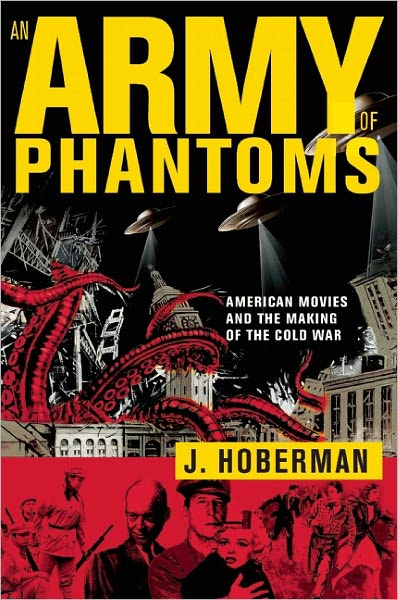
Since his debut review – of no less a film than David Lynch’s Eraserhead – in 1977, J. Hoberman’s has been one of the defining voices in contemporary American film criticism. As the senior film critic at The Village Voice since 1988, Hoberman has for fifty weeks a year offered his insights into cinema in an oft-imitated style that is not only rich and thoughtful, but also, always, damn entertaining. In his advocacy and analysis of a wide range of classic, contemporary, and experimental film – popcorn, arthouse, and avant-ephemera alike – his weekly writings on film mirror the devoutly eclectic film culture of his hometown, which he and Jonathan Rosenbaum so lovingly documented in their 1991 classic, Midnight Movies (Da Capo Press).
But journalism is only part of the picture. Wearing his historian hat, Hoberman is also the author of about a dozen books, including Red Atlantis: Communist Culture in the Absence of Communism (Temple University Press, 1999), On Jack Smith’s Flaming Creatures (and Other Secret-flix of Cinemaroc) (Granary Books/Hips Road, 2001), and The Magic Hour: Film at Fin de Siècle (Temple University Press, 2003). His new book An Army of Phantoms: American Movies and the Making of the Cold War, a prequel to his acclaimed 2003 book The Dream Life: Movies, Media, and the Mythology of the Sixties, follows the similarly fractious social climate of the postwar era, with its paranoid visions of witch-hunts and wild ones, flying saucers and impending nuclear blitzes, mind-controlling propaganda and wars of the worlds, both earthbound and intergalactic. Hoberman’s particular interest here is the cinema that captured and often prodded the pathologies of the day: reactionary exposés of the lurking Red Menace, crypto-socialist satires and sympathetic docudramas, and those scads of B-grade Cold War allegories presented in the genre guise of science fiction, the biblical epic, the western. With a cast of characters including G-men, fact-finders, space invaders, coonskin kids, Christian soldiers, and “white negroes,” and with cameos from the likes of Ronald Reagan, Nick Ray, Orson Welles, and Joe McCarthy, it’s a densely detailed, near-hallucinatory history, irradiated with Hoberman’s inimitable, vibrant prose.
To Read the Interview
by Leo Goldsmith
Not Coming to a Theater Near You
Since his debut review – of no less a film than David Lynch’s Eraserhead – in 1977, J. Hoberman’s has been one of the defining voices in contemporary American film criticism. As the senior film critic at The Village Voice since 1988, Hoberman has for fifty weeks a year offered his insights into cinema in an oft-imitated style that is not only rich and thoughtful, but also, always, damn entertaining. In his advocacy and analysis of a wide range of classic, contemporary, and experimental film – popcorn, arthouse, and avant-ephemera alike – his weekly writings on film mirror the devoutly eclectic film culture of his hometown, which he and Jonathan Rosenbaum so lovingly documented in their 1991 classic, Midnight Movies (Da Capo Press).
But journalism is only part of the picture. Wearing his historian hat, Hoberman is also the author of about a dozen books, including Red Atlantis: Communist Culture in the Absence of Communism (Temple University Press, 1999), On Jack Smith’s Flaming Creatures (and Other Secret-flix of Cinemaroc) (Granary Books/Hips Road, 2001), and The Magic Hour: Film at Fin de Siècle (Temple University Press, 2003). His new book An Army of Phantoms: American Movies and the Making of the Cold War, a prequel to his acclaimed 2003 book The Dream Life: Movies, Media, and the Mythology of the Sixties, follows the similarly fractious social climate of the postwar era, with its paranoid visions of witch-hunts and wild ones, flying saucers and impending nuclear blitzes, mind-controlling propaganda and wars of the worlds, both earthbound and intergalactic. Hoberman’s particular interest here is the cinema that captured and often prodded the pathologies of the day: reactionary exposés of the lurking Red Menace, crypto-socialist satires and sympathetic docudramas, and those scads of B-grade Cold War allegories presented in the genre guise of science fiction, the biblical epic, the western. With a cast of characters including G-men, fact-finders, space invaders, coonskin kids, Christian soldiers, and “white negroes,” and with cameos from the likes of Ronald Reagan, Nick Ray, Orson Welles, and Joe McCarthy, it’s a densely detailed, near-hallucinatory history, irradiated with Hoberman’s inimitable, vibrant prose.
To Read the Interview
First Listen: Fleet Foxes -- Helplessness Blues
Fleet Foxes, 'Helplessness Blues'
by Andy Hess
First Listen (NPR)

It's been nearly three years since Fleet Foxes' self-titled debut catapulted the Seattle band from small clubs to massive sold-out shows and the stage of Saturday Night Live. That's made the weight of expectation heavy for Fleet Foxes' follow-up.
The making of Helplessness Blues — out May 3 — was a long and painstaking process. After coming off a seemingly endless tour last fall, Fleet Foxes entered into recording sessions that were fraught with second-guessing and a lack of consensus. Multiple songs were re-recorded; the entire album had to be mixed twice.
"There are so many considerations to make when you are making a record," frontman Robin Pecknold said in an interview with Stereogum. "You just want to make the best thing that you can, you know? You want it to be a good song, but it can't be too much like anything else you've already done. And you can't help but think about the landscape that this music is going to be received in, which also affects your creative process."
Fortunately, Helplessness Blues works well in spite of all that pressure. The band hasn't changed the recipe that worked so well on its debut, but it does add a few new ingredients. A saxophone freakout marks the last third of "The Shrine/An Argument," for example, while trilling flutes float over "Grown Ocean."
Still making intricate folk songs with otherworldly harmonies, Fleet Foxes' members clearly wrestled with the fear of repeating themselves in making Helplessness Blues. Ultimately, they wind up letting go and doing what they do best, and the results are outstanding.
To Listen to Fleet Foxes new release
by Andy Hess
First Listen (NPR)
It's been nearly three years since Fleet Foxes' self-titled debut catapulted the Seattle band from small clubs to massive sold-out shows and the stage of Saturday Night Live. That's made the weight of expectation heavy for Fleet Foxes' follow-up.
The making of Helplessness Blues — out May 3 — was a long and painstaking process. After coming off a seemingly endless tour last fall, Fleet Foxes entered into recording sessions that were fraught with second-guessing and a lack of consensus. Multiple songs were re-recorded; the entire album had to be mixed twice.
"There are so many considerations to make when you are making a record," frontman Robin Pecknold said in an interview with Stereogum. "You just want to make the best thing that you can, you know? You want it to be a good song, but it can't be too much like anything else you've already done. And you can't help but think about the landscape that this music is going to be received in, which also affects your creative process."
Fortunately, Helplessness Blues works well in spite of all that pressure. The band hasn't changed the recipe that worked so well on its debut, but it does add a few new ingredients. A saxophone freakout marks the last third of "The Shrine/An Argument," for example, while trilling flutes float over "Grown Ocean."
Still making intricate folk songs with otherworldly harmonies, Fleet Foxes' members clearly wrestled with the fear of repeating themselves in making Helplessness Blues. Ultimately, they wind up letting go and doing what they do best, and the results are outstanding.
To Listen to Fleet Foxes new release
Sunday, April 24, 2011
Rachel Maddow: Why a Michigan High School is Ground Zero for U.S. Politics
"financial martial law" and charter school policies = privatization of education .... this is not what democracy looks like, this is what I fear about the charter school movement
Visit msnbc.com for breaking news, world news, and news about the economy
Eurozine: Chernobyl 25 Years On
Chernobyl 25 years on
Eurozine
"I well remember that day and that evening, 26 April 1986, I remember that I was unable to do anything because of the silent scream that, as it seemed to me, filled all the space around me." Writing twenty-five years after the Chernobyl disaster, Belarusian writer Barys Piatrovich recalls the tension of unknowing during the days that followed, his desperate attempts to contact his relatives in the zone, and the arrival of evacuees during Easter celebrations in his parents' village. Today, barely any of the Chernobyl evacuees are still alive. Dispersed throughout Belarus, they died alone and unmourned:
"The fact that the authorities made no concessions to the evacuees is evidence of their 'farsightedness' and just how well informed they were about the consequences of the accident," writes Piatrovich. "Most of the 'Chernobylites' from the 30km Belarusian exclusion zone died within ten, fifteen or twenty years of being moved. It would have been immediately obvious that something was wrong if whole villages or streets had died out, leaving empty houses behind. As it is, the 'Chernobylites' died off quietly, one by one, almost unnoticed, without spoiling the national statistical picture even at district or local level..."
Piatrovich's moving personal account of the Chernobyl disaster gains even greater force after the Fukushima disaster, becoming an implicit reproach of the system that could allow a similar meltdown at a nuclear reactor to reoccur. Five years ago, on the occasion of the twentieth anniversary of Chernobyl in 2006, Guillaume Grandazzi wrote that "the major nuclear catastrophe, predicted by a few 'prophets of evil', actually took place. But it is doubtful whether a lesson was learned from it. Our societies seem to entertain an ambivalent relationship with catastrophes, and may indeed harbour a desire for catastrophe."
Grandazzi accuses the Chernobyl Forum, an organization created by the IAEA, the UN, the World Bank and the governments of the affected countries, of purveying the fiction of risk-free atomic power even while commemorating the disaster. In a special Focal Point on Chernobyl and energy politics, we bring his and other texts out of the archive, including Alla Yaroshinskaya on the Soviet leadership's cover-up operation and calculated policy of disinformation following the accident; photographer Igor Kostin, the first journalist on the scene of the catastrophe, on his repeated visits to Chernobyl over seventeen years; and ethnographer Dzianis Ramaniuk on the folkloric rituals still maintained by the zone's former inhabitants.
Extending the focus to energy politics in general, we publish another new text: a translation of one of the last articles published by "Sun King" Hermann Scheer, the pre-eminent international campaigner for renewable energies who died last year. Scheer warns of the impression of consensus over the energy question created by corporate interest in renewables, suggesting that the "switchover" is only a matter of when and how. This represents a new strategy of the conventional energy sector to ensure the switchover takes place on terms favourable to it alone. Nowhere, writes Scheer, are these double standards more visible than in continuing investment and political support for nuclear power.
Angela Saini, on the other hand, sees the energy debate in a rather different light. Writing before the Fukushima accident, she suggests that nuclear power might make ecological sense. Faced with the reality that renewables will be unable to replace conventional energy sources in the foreseeable future, arguments for nuclear power – that it is the cleanest and least expensive option – are causing environmentalists to reconsider. Or at least that was the case before 11 March 2011.
To Read the Essays
Eurozine
"I well remember that day and that evening, 26 April 1986, I remember that I was unable to do anything because of the silent scream that, as it seemed to me, filled all the space around me." Writing twenty-five years after the Chernobyl disaster, Belarusian writer Barys Piatrovich recalls the tension of unknowing during the days that followed, his desperate attempts to contact his relatives in the zone, and the arrival of evacuees during Easter celebrations in his parents' village. Today, barely any of the Chernobyl evacuees are still alive. Dispersed throughout Belarus, they died alone and unmourned:
"The fact that the authorities made no concessions to the evacuees is evidence of their 'farsightedness' and just how well informed they were about the consequences of the accident," writes Piatrovich. "Most of the 'Chernobylites' from the 30km Belarusian exclusion zone died within ten, fifteen or twenty years of being moved. It would have been immediately obvious that something was wrong if whole villages or streets had died out, leaving empty houses behind. As it is, the 'Chernobylites' died off quietly, one by one, almost unnoticed, without spoiling the national statistical picture even at district or local level..."
Piatrovich's moving personal account of the Chernobyl disaster gains even greater force after the Fukushima disaster, becoming an implicit reproach of the system that could allow a similar meltdown at a nuclear reactor to reoccur. Five years ago, on the occasion of the twentieth anniversary of Chernobyl in 2006, Guillaume Grandazzi wrote that "the major nuclear catastrophe, predicted by a few 'prophets of evil', actually took place. But it is doubtful whether a lesson was learned from it. Our societies seem to entertain an ambivalent relationship with catastrophes, and may indeed harbour a desire for catastrophe."
Grandazzi accuses the Chernobyl Forum, an organization created by the IAEA, the UN, the World Bank and the governments of the affected countries, of purveying the fiction of risk-free atomic power even while commemorating the disaster. In a special Focal Point on Chernobyl and energy politics, we bring his and other texts out of the archive, including Alla Yaroshinskaya on the Soviet leadership's cover-up operation and calculated policy of disinformation following the accident; photographer Igor Kostin, the first journalist on the scene of the catastrophe, on his repeated visits to Chernobyl over seventeen years; and ethnographer Dzianis Ramaniuk on the folkloric rituals still maintained by the zone's former inhabitants.
Extending the focus to energy politics in general, we publish another new text: a translation of one of the last articles published by "Sun King" Hermann Scheer, the pre-eminent international campaigner for renewable energies who died last year. Scheer warns of the impression of consensus over the energy question created by corporate interest in renewables, suggesting that the "switchover" is only a matter of when and how. This represents a new strategy of the conventional energy sector to ensure the switchover takes place on terms favourable to it alone. Nowhere, writes Scheer, are these double standards more visible than in continuing investment and political support for nuclear power.
Angela Saini, on the other hand, sees the energy debate in a rather different light. Writing before the Fukushima accident, she suggests that nuclear power might make ecological sense. Faced with the reality that renewables will be unable to replace conventional energy sources in the foreseeable future, arguments for nuclear power – that it is the cleanest and least expensive option – are causing environmentalists to reconsider. Or at least that was the case before 11 March 2011.
To Read the Essays
Saturday, April 23, 2011
James Green: Death in the Haymarket
Death in the Haymarket
by James Green
Socialism 2010 (Chicago)
We Are Many

To Listen to the Presentation
by James Green
Socialism 2010 (Chicago)
We Are Many
To Listen to the Presentation
To the Best of Our Knowledge: Travel
Travel
To the Best of Our Knowledge
SEGMENT 1:

Rick Steves is the author of 30 European guidebooks, and host of public radio and television travel shows. He's also done a one-hour special on travel in Iran. His new book is "Travel as a Political Act." Steves talks with Jim Fleming about the advantages of travel in war-torn areas. ... Also, Mark Johnson has spent years traveling around the world recording street musicians. He calls his project "Playing for Change" and talks about it with Steve Paulson.

SEGMENT 2:

Lynn Sharon Schwartz is a novelist and a veteran traveler. She tells Anne Strainchamps that she's finally admitted to herself that at this stage in her life, she doesn't like traveling. Her memoir is called "Not Now, Voyager." Also, Raphael Kadushin is a senior travel writer for Conde Nast magazines, and author of "Big Trips: More Good Gay Travel Writing."He talks with Steve Paulson about travel writing's utility for the armchair traveler.
SEGMENT 3:
William Least Heat Moon created a sensation with his book "Blue Highways." He's back now with "Roads to Quoz," about traveling along America's back roads. Moon talks with Anne Strainchamps about the trips that inspired the new book.

To Listen to the Episode
To the Best of Our Knowledge
SEGMENT 1:
Rick Steves is the author of 30 European guidebooks, and host of public radio and television travel shows. He's also done a one-hour special on travel in Iran. His new book is "Travel as a Political Act." Steves talks with Jim Fleming about the advantages of travel in war-torn areas. ... Also, Mark Johnson has spent years traveling around the world recording street musicians. He calls his project "Playing for Change" and talks about it with Steve Paulson.
SEGMENT 2:
Lynn Sharon Schwartz is a novelist and a veteran traveler. She tells Anne Strainchamps that she's finally admitted to herself that at this stage in her life, she doesn't like traveling. Her memoir is called "Not Now, Voyager." Also, Raphael Kadushin is a senior travel writer for Conde Nast magazines, and author of "Big Trips: More Good Gay Travel Writing."He talks with Steve Paulson about travel writing's utility for the armchair traveler.
SEGMENT 3:
William Least Heat Moon created a sensation with his book "Blue Highways." He's back now with "Roads to Quoz," about traveling along America's back roads. Moon talks with Anne Strainchamps about the trips that inspired the new book.
To Listen to the Episode
Sunday, April 17, 2011
Uprising Radio: A Conversation with Nikki Giovanni; David Hilliard: Huey--The Spirit of a Panther
Uprising Radio
A Conversation with Nikki Giovanni
Nikki Giovanni, award winning poet...

Nikki Giovanni is an award winning poet and writer. She was born in Knoxville, Tennessee, on June 7, 1943. She was raised in Cincinnati, Ohio and graduated with honors in history from her Fisk University. Since 1987, she has been on the faculty at Virginia Tech, where she is a University Distinguished Professor. She is the NAACP Image Award winner for Literature in 1998, 2000, and 2003. She won the Langston Hughes award for Distinguished Contributions to Arts and Letters in 1996 and was the first recipient for the Rosa Parks Women of Courage Award in 2001. She has been awarded 21 honorary doctorates from various universities nationwide. Her books include "Black Feeling, Black Talk," "Black Judgement," "Quilting the Black-Eyed Pea," "Blues For All the Changes." Her CD, The Nikki Giovanni Poetry Collection, was nominated for a Grammy award. She has just completed a children’s book about Rosa Parks. I met Ms. Giovanni at the California Institute of Technology on February 9th when she spoke on campus.
After I spoke with her, she gave a lecture at Beckman Auditorium on the campus of Caltech in Pasadena to a packed audience. During her speech she shared some of her poetry.
For more information, visit www.nikki-giovanni.com.
...
Huey: Spirit of the Panther
GUEST: David Hilliard, former chief of staff for the Black Panther Party, co-author of Huey: Spirit of the Panther

Continuing our black history month coverage, we turn next to David Hilliard, the former chief of staff for the Black Panther Party. He has written a new book entitled, Huey: Spirit of the Panther. It is the first ever authorized biography of Black Panther Party co-founder Huey P. Newton. The Black Panther Party for Self Defense was formed in Oakland, California in 1966 and this year marks its fortieth anniversary. In the book, Hilliard details the life of one of the most misunderstood political leaders of the twentieth century. Huey: Spirit of the Panther, includes never before released photographs, interviews and information about a man that FBI director J. Edgar Hoover once called, "the greatest threat to the internal security of the country."
To Listen to the Episode
A Conversation with Nikki Giovanni
Nikki Giovanni, award winning poet...
Nikki Giovanni is an award winning poet and writer. She was born in Knoxville, Tennessee, on June 7, 1943. She was raised in Cincinnati, Ohio and graduated with honors in history from her Fisk University. Since 1987, she has been on the faculty at Virginia Tech, where she is a University Distinguished Professor. She is the NAACP Image Award winner for Literature in 1998, 2000, and 2003. She won the Langston Hughes award for Distinguished Contributions to Arts and Letters in 1996 and was the first recipient for the Rosa Parks Women of Courage Award in 2001. She has been awarded 21 honorary doctorates from various universities nationwide. Her books include "Black Feeling, Black Talk," "Black Judgement," "Quilting the Black-Eyed Pea," "Blues For All the Changes." Her CD, The Nikki Giovanni Poetry Collection, was nominated for a Grammy award. She has just completed a children’s book about Rosa Parks. I met Ms. Giovanni at the California Institute of Technology on February 9th when she spoke on campus.
After I spoke with her, she gave a lecture at Beckman Auditorium on the campus of Caltech in Pasadena to a packed audience. During her speech she shared some of her poetry.
For more information, visit www.nikki-giovanni.com.
...
Huey: Spirit of the Panther
GUEST: David Hilliard, former chief of staff for the Black Panther Party, co-author of Huey: Spirit of the Panther
Continuing our black history month coverage, we turn next to David Hilliard, the former chief of staff for the Black Panther Party. He has written a new book entitled, Huey: Spirit of the Panther. It is the first ever authorized biography of Black Panther Party co-founder Huey P. Newton. The Black Panther Party for Self Defense was formed in Oakland, California in 1966 and this year marks its fortieth anniversary. In the book, Hilliard details the life of one of the most misunderstood political leaders of the twentieth century. Huey: Spirit of the Panther, includes never before released photographs, interviews and information about a man that FBI director J. Edgar Hoover once called, "the greatest threat to the internal security of the country."
To Listen to the Episode
Ben Williamson: On Parenting, Media, Education and Phobias
[Warning for serious film viewers -- do not read this article until you have seen Dogtooth]
On Parenting, Media, Education and Phobias
By Ben Williamson
DMLcentral

Modern cinema can teach us how youth and media are widely understood in our cultures. Cinema, like works of literature and visual art, can represent and diagnose our widespread fears and fantasies about young people and about how we, as cultures, bring them up. Back 150 years ago, for example, Charles Kingsley’s moral fable The Water-Babies challenged child labor. Today, the journal "International Research in Children’s Literature" publishes scholarly analyses of how children’s literature can both help in children’s growing up and impose on them social and moral codes from the dominant culture. Similarly, analyzing the way in which childhood is represented in movies can help illuminate today’s cultural concerns with children’s growing up and the ways in which they are positioned by social and moral codes in the digital age.
Extreme Fears About Media and Learning
The award-winning Greek film Dogtooth, which is lined up for a 2010 Academy Award for best foreign film, is a seriously unsettling dissection of modern family life, parenting and adolescence. Superficially, it’s a movie about parents imprisoning their own children, a paranoid total fantasy of protection from a toxic outside world. Yet it’s also, more subtly, a movie about learning and media.
On an isolated hill, a disciplinarian father and acquiescent mother and their three grown children live in total insulation from the outside world. The children are in fact infantilized adults, physically mature but suspended in a psychologically pre-adolescent state. The house and its gardens, which appear at first to be a middle class idyll, are completely barricaded with high fences against a supposedly dangerous outside world.
Inside, the three children are now being trained, like dogs, to protect the home from whatever dangers might threaten it. Their father trains them to bark and to patrol the garden on all fours. None of them even has a name. The siblings refer to one another as “The Eldest,” “The Son” and “The Youngest Daughter.” The film inverts the media stereotype children are like animals and suggests instead that they can be brutalized and bestialized by over-protective paternalistic petting.
Even outside, the modern world has been appropriated into the total fantasy. When airplanes fly overhead, the parents claim they are toys. Father occasionally drops a few fish into the swimming pool, too, so that he can demonstrate his traditional harpooning skills.

To Read the Rest of the Essay
On Parenting, Media, Education and Phobias
By Ben Williamson
DMLcentral
Modern cinema can teach us how youth and media are widely understood in our cultures. Cinema, like works of literature and visual art, can represent and diagnose our widespread fears and fantasies about young people and about how we, as cultures, bring them up. Back 150 years ago, for example, Charles Kingsley’s moral fable The Water-Babies challenged child labor. Today, the journal "International Research in Children’s Literature" publishes scholarly analyses of how children’s literature can both help in children’s growing up and impose on them social and moral codes from the dominant culture. Similarly, analyzing the way in which childhood is represented in movies can help illuminate today’s cultural concerns with children’s growing up and the ways in which they are positioned by social and moral codes in the digital age.
Extreme Fears About Media and Learning
The award-winning Greek film Dogtooth, which is lined up for a 2010 Academy Award for best foreign film, is a seriously unsettling dissection of modern family life, parenting and adolescence. Superficially, it’s a movie about parents imprisoning their own children, a paranoid total fantasy of protection from a toxic outside world. Yet it’s also, more subtly, a movie about learning and media.
On an isolated hill, a disciplinarian father and acquiescent mother and their three grown children live in total insulation from the outside world. The children are in fact infantilized adults, physically mature but suspended in a psychologically pre-adolescent state. The house and its gardens, which appear at first to be a middle class idyll, are completely barricaded with high fences against a supposedly dangerous outside world.
Inside, the three children are now being trained, like dogs, to protect the home from whatever dangers might threaten it. Their father trains them to bark and to patrol the garden on all fours. None of them even has a name. The siblings refer to one another as “The Eldest,” “The Son” and “The Youngest Daughter.” The film inverts the media stereotype children are like animals and suggests instead that they can be brutalized and bestialized by over-protective paternalistic petting.
Even outside, the modern world has been appropriated into the total fantasy. When airplanes fly overhead, the parents claim they are toys. Father occasionally drops a few fish into the swimming pool, too, so that he can demonstrate his traditional harpooning skills.
To Read the Rest of the Essay

Saturday, April 16, 2011
Beau Grosscup: Cluster Munitions and State Terrorism
Cluster Munitions and State Terrorism
by Beau Grosscup
Monthly Review
For decades, major global and regional powers have waged war against those they accuse of fighting immorally—that is, those who use terrorism to harm civilians at home and abroad. Paradoxically, these righteous “wars on terror” are being fought in an era in which the distinction between war waged only against soldiers, and war against soldiers as well as civilians has virtually collapsed. The technological development, stemming from the Industrial Revolution, of aerial bombardment and weapons of mass destruction has made it more difficult to separate citizen from soldier.1
More importantly, theories regarding how to fight and win modern war view civilian populations as cannon fodder for both conventional arsenals and weapons of mass destruction. Post-First World War strategic bombing theory saw the industrial home front as a central part of the battlefield. Post-Second World War nuclear strategic theory purposely targets major population centers. These theories have collapsed any soldier/citizen distinction. Nevertheless, for the political and military interests of the major powers, it is imperative that this distinction hold. In waging wars on terror, such a delineation permits globally powerful nations to rally public opinion under the assertion that what separates us (self) from them (other) is that civilian life is paramount for us and not for “the terrorists.”
Among the global powers, the “bombing nations” (primarily the United States, Great Britain, Israel, and Russia) have conducted their various air wars on terrorism under “rapid dominance theory,” euphemistically known as “shock and awe.” Rapid dominance theory is the latest revision of classical post-First World War strategic bombing theory. Though modified in some respects, the central goal of shock and awe remains consistent with strategic bombing policy: to rain terror from the skies on civilians and their infrastructure, thereby forcing capitulation of their political/military leadership. Thus, like its predecessor, it is a strategy of state terrorism.2
The bombing nations’ use of cluster munitions reinforces this point on two levels. First, due to their design and strategic purpose, cluster munitions have a proven catastrophic impact, commonly associated with terrorism, on civilian life. Yet, through the use of and fight against efforts to ban cluster munitions, the bombing nations demonstrate a strong commitment to these instruments of state power. Second, cluster munitions and the terror they produce serve the bombing nations’ strategic political and military interests in both war and postwar settings. Moreover, in their efforts to dodge the terrorism label, the bombing nations’ campaign to divorce cluster munitions from terrorism have created arguments that are logically and legally flawed.
What Are Cluster Munitions and Why Are They Controversial?
Cluster munitions are air-dropped (bomblets or “bombies”) or ground-launched (grenades) ordnance that expel smaller submunitions. The Military Analysis Network describes cluster munitions as small, explosive- or chemical-filled weapons designed for saturation coverage of a large area. The military purpose (both offensive and defensive) of cluster munitions is to destroy an enemy in place, or to slow or prevent enemy movement away from or through an area. Classified as antipersonnel ordnance, they can easily penetrate buildings and armor. When cluster munitions explode, each bomblet can kill people within fifty meters, over a “footprint” of approximately one thousand by one thousand meters.
The Soviet Union and Germany were the first to develop and use cluster munitions at the end of the Second World War. Today, the major cluster munitions producers include such U.S. firms as Alliant Techsystems, L-3 Communications, Lockheed Martin, General Dynamics, Raytheon, Northrop Grumman, and Textron. Other notable manufacturers are Poongsan and Hanwha (South Korea), BEA (Great Britain), Rheinmetall (Germany), Rocketsan (Turkey), and Israeli Military Industries (Israel).3 To date, at least fifteen countries have used cluster munitions. The United States saturated Indochina with cluster munitions in the 1970s. The Soviet Union employed them in Afghanistan in the 1980s. In the post-Cold War decades, the bombing nations have used cluster munitions in Chechnya and Georgia (Russia), the former Yugoslavia (U.S.-led NATO), Afghanistan and Iraq (United States and Great Britain), and Lebanon and Gaza (Israel). In total, billions of submunitions are held in the arsenals of eighty-five nations.4
To Read the Rest of the Essay
by Beau Grosscup
Monthly Review
For decades, major global and regional powers have waged war against those they accuse of fighting immorally—that is, those who use terrorism to harm civilians at home and abroad. Paradoxically, these righteous “wars on terror” are being fought in an era in which the distinction between war waged only against soldiers, and war against soldiers as well as civilians has virtually collapsed. The technological development, stemming from the Industrial Revolution, of aerial bombardment and weapons of mass destruction has made it more difficult to separate citizen from soldier.1
More importantly, theories regarding how to fight and win modern war view civilian populations as cannon fodder for both conventional arsenals and weapons of mass destruction. Post-First World War strategic bombing theory saw the industrial home front as a central part of the battlefield. Post-Second World War nuclear strategic theory purposely targets major population centers. These theories have collapsed any soldier/citizen distinction. Nevertheless, for the political and military interests of the major powers, it is imperative that this distinction hold. In waging wars on terror, such a delineation permits globally powerful nations to rally public opinion under the assertion that what separates us (self) from them (other) is that civilian life is paramount for us and not for “the terrorists.”
Among the global powers, the “bombing nations” (primarily the United States, Great Britain, Israel, and Russia) have conducted their various air wars on terrorism under “rapid dominance theory,” euphemistically known as “shock and awe.” Rapid dominance theory is the latest revision of classical post-First World War strategic bombing theory. Though modified in some respects, the central goal of shock and awe remains consistent with strategic bombing policy: to rain terror from the skies on civilians and their infrastructure, thereby forcing capitulation of their political/military leadership. Thus, like its predecessor, it is a strategy of state terrorism.2
The bombing nations’ use of cluster munitions reinforces this point on two levels. First, due to their design and strategic purpose, cluster munitions have a proven catastrophic impact, commonly associated with terrorism, on civilian life. Yet, through the use of and fight against efforts to ban cluster munitions, the bombing nations demonstrate a strong commitment to these instruments of state power. Second, cluster munitions and the terror they produce serve the bombing nations’ strategic political and military interests in both war and postwar settings. Moreover, in their efforts to dodge the terrorism label, the bombing nations’ campaign to divorce cluster munitions from terrorism have created arguments that are logically and legally flawed.
What Are Cluster Munitions and Why Are They Controversial?
Cluster munitions are air-dropped (bomblets or “bombies”) or ground-launched (grenades) ordnance that expel smaller submunitions. The Military Analysis Network describes cluster munitions as small, explosive- or chemical-filled weapons designed for saturation coverage of a large area. The military purpose (both offensive and defensive) of cluster munitions is to destroy an enemy in place, or to slow or prevent enemy movement away from or through an area. Classified as antipersonnel ordnance, they can easily penetrate buildings and armor. When cluster munitions explode, each bomblet can kill people within fifty meters, over a “footprint” of approximately one thousand by one thousand meters.
The Soviet Union and Germany were the first to develop and use cluster munitions at the end of the Second World War. Today, the major cluster munitions producers include such U.S. firms as Alliant Techsystems, L-3 Communications, Lockheed Martin, General Dynamics, Raytheon, Northrop Grumman, and Textron. Other notable manufacturers are Poongsan and Hanwha (South Korea), BEA (Great Britain), Rheinmetall (Germany), Rocketsan (Turkey), and Israeli Military Industries (Israel).3 To date, at least fifteen countries have used cluster munitions. The United States saturated Indochina with cluster munitions in the 1970s. The Soviet Union employed them in Afghanistan in the 1980s. In the post-Cold War decades, the bombing nations have used cluster munitions in Chechnya and Georgia (Russia), the former Yugoslavia (U.S.-led NATO), Afghanistan and Iraq (United States and Great Britain), and Lebanon and Gaza (Israel). In total, billions of submunitions are held in the arsenals of eighty-five nations.4
To Read the Rest of the Essay
Uprising Radio: Gene Sharp -- The Most Influential American Thinker on Non-Violent Struggle You’ve Never Heard Of
Gene Sharp: The Most Influential American Thinker on Non-Violent Struggle You’ve Never Heard Of
Uprising Radio
While the rolling revolution in the Middle East continues with Bahrain, Yemen, and Libya, buoyed by the success of Egypt and Tunisia, one unassuming American figure is emerging as providing the inspiration for a range of tactics used by Arab organizers. His name is Gene Sharp, he lives in Boston, and you’ve probably never heard of him. Considered “the godfather of the nonviolent resistance,” Gene Sharp has spent decades studying with the care and methods of a scientist, major and minor revolutions and uprisings the world over. In his 1973 magnum opus, The Politics of Non-Violent Action, Sharp explored in great detail, the principles that help non-violent resistance work, especially in the overthrowing of dictatorships by organized populations. The 900 page book also lists nearly 200 methods of non-violent action culled from his studies. Since then Sharp has authored a number of books and booklets with titles like “From Dictatorship to Democracy,” and “There are Realistic Alternatives,” which have been translated into dozens of languages and used worldwide. His latest book is the 600 page work “Waging Non-Violent Struggle.” Gene Sharp spent 30 years as a political scientist at Harvard University’s Center for International Affairs. He remains dedicated to the study of peace and nonviolent struggle through the efforts of The Albert Einstein Institution, a nonprofit group he created in 1983. However, over the years his work has garnered criticism from various factions, even on the left. A few years ago the Albert Einstein Institution was accused of being a U.S. government sponsored organization to overthrow foreign regimes. Stephen Zunes, a Professor of Politics at the University of San Francisco and frequent Uprising guest wrote a lengthy refutation of these charges in 2008. Most recently Arab American commentator Asad Abu Khalil commented on Gene Sharp’s rising stature by accusing Americans of looking for a “Lawrence of Arabia” figure to take credit away from Egyptian protesters. Still, many reports now suggest that Gene Sharp’s work inspired, not the cause of revolution, but the tactics used by organizers in Egypt and elsewhere. Gene Sharp was nominated for a Nobel Peace Prize in 2009.
To Listen to the Episode
Uprising Radio
While the rolling revolution in the Middle East continues with Bahrain, Yemen, and Libya, buoyed by the success of Egypt and Tunisia, one unassuming American figure is emerging as providing the inspiration for a range of tactics used by Arab organizers. His name is Gene Sharp, he lives in Boston, and you’ve probably never heard of him. Considered “the godfather of the nonviolent resistance,” Gene Sharp has spent decades studying with the care and methods of a scientist, major and minor revolutions and uprisings the world over. In his 1973 magnum opus, The Politics of Non-Violent Action, Sharp explored in great detail, the principles that help non-violent resistance work, especially in the overthrowing of dictatorships by organized populations. The 900 page book also lists nearly 200 methods of non-violent action culled from his studies. Since then Sharp has authored a number of books and booklets with titles like “From Dictatorship to Democracy,” and “There are Realistic Alternatives,” which have been translated into dozens of languages and used worldwide. His latest book is the 600 page work “Waging Non-Violent Struggle.” Gene Sharp spent 30 years as a political scientist at Harvard University’s Center for International Affairs. He remains dedicated to the study of peace and nonviolent struggle through the efforts of The Albert Einstein Institution, a nonprofit group he created in 1983. However, over the years his work has garnered criticism from various factions, even on the left. A few years ago the Albert Einstein Institution was accused of being a U.S. government sponsored organization to overthrow foreign regimes. Stephen Zunes, a Professor of Politics at the University of San Francisco and frequent Uprising guest wrote a lengthy refutation of these charges in 2008. Most recently Arab American commentator Asad Abu Khalil commented on Gene Sharp’s rising stature by accusing Americans of looking for a “Lawrence of Arabia” figure to take credit away from Egyptian protesters. Still, many reports now suggest that Gene Sharp’s work inspired, not the cause of revolution, but the tactics used by organizers in Egypt and elsewhere. Gene Sharp was nominated for a Nobel Peace Prize in 2009.
To Listen to the Episode
Friday, April 15, 2011
"Family Friendly" Machine Gun Festival Welcomes Neo-Nazi Extremists
What's up with the little kids in Nazi shirts at the Knob Creek Gun Range Machine Gun Shoot in West Point, KY?
Link to the article that accompanies the video
Link to the article that accompanies the video
Thursday, April 14, 2011
Human Rights/Civil Rights: Peace and Conflict Studies Archive
Abdurrahman, Sarah. "My Detainment Story or: How I learned to Stop Feeling Safe in My Own Country and Hate Border Agents." On the Media (September 20, 2013)
Alexander, Michelle. "The New Jim Crow: Mass Incarceration in the Age of Jim Crow." We Are Many (September 12, 2012)
American Civil Liberties Union (ACLU) (Blog for the organization: "The ACLU is our nation's guardian of liberty, working daily in courts, legislatures and communities to defend and preserve the individual rights and liberties that the Constitution and laws of the United States guarantee everyone in this country. These rights include: Your First Amendment rights - freedom of speech, association and assembly; freedom of the press, and freedom of religion. Your right to equal protection under the law - protection against unlawful discrimination. Your right to due process - fair treatment by the government whenever the loss of your liberty or property is at stake. Your right to privacy - freedom from unwarranted government intrusion into your personal and private affairs. The ACLU also works to extend rights to segments of our population that have traditionally been denied their rights, including people of color; women; lesbians, gay men, bisexuals and transgender people; prisoners; and people with disabilities. If the rights of society's most vulnerable members are denied, everybody's rights are imperiled.)
Assange, Julian and Michael Ratner. "Julian Assange on Being Placed on NSA "Manhunting" List & Secret Targeting of WikiLeaks Supporters." Democracy Now (February 18, 2014)
Auken, Laurie Van. The still- classified 28 pages of the JICI dealing with terrorist financing, the 9/11 families’ stalled lawsuit to bankrupt the terrorists and the direct interventions by the White House to protect the Saudi regime against the justice-seeking families, and the many uninvestigated questions and facts covered up by the 9/11 commission. Boiling Frogs (August 19, 2011)
Bajak, Frank. "Study: Colombia anti-union violence undeterred." Boston Globe (October 2, 2011)
Baptie, Trisha and Gunilla Ekberg. "Prostitution and Women's Equality: Imagining More for Women, Parts 1 and 2." Needs No Introduction (March 24 and 31, 2011)
Barghouti, Mustafa. "Is There Room for Gandhi in Palestine?" Open Source (April 30, 2010)
Bauer, Shane. "A Hunger Strike Against Solitary Confinement: Shane Bauer on Inhuman Prisons from California to Iran." Democracy Now (July 12, 2013)
Benjamin, Medea and Trevor Timm. "Drone Summit: Killing and Spying by Remote Control." Law and Disorder (July 9, 2012)
Benkler, Yochai. "A Free Irresponsible Press: Wikileaks and the Battle Over the Soul of the Networked Fourth Estate." Harvard Civil Rights-Civil Liberties Law Review (Forthcoming: 2011)
Boardman, William. "San Diego's Circus Trial." Reader Supported News (July 3, 2013)
Borden, Amy. "At the global market: Ousmane Sembène’s Moolaadé and the economics of women’s rights." Jump Cut #53 (Summer 2011)
Bromwich, David. "Diary: The Snowden Case." The London Review of Books 35.13 (July 4, 2013)
Brook, Chris. "ACLU Files Lawsuit For Second Parent Adoption." Law and Disorder (July 9, 2012)
Carlin, Dan. "The Bitter Harvest of Fear." Common Sense #214 (December 15, 2011)
---. "Gunning for Violence." Common Sense #244 (December 28, 2012)
---. "Liberty on Life Support." Common Sense #231 (July 4, 2012)
---. "Pyrrhic Schadenfreude." Common Sense #199 (May 2, 2011)
---. "Security Uber Alles. Common Sense #219 (February 9, 2012)
---. "The Wages of Fear." Common Sense #274 (May 7, 2014) ["Should police need a warrant to search the cellphones of arrested individuals? The Supreme Court is debating it and Dan is using it as a springboard to discuss the how our fear is affecting the 4th Amendment."]
Cohen, Andrew. "40 Years Later, the Cruelty of Papillon is a Reality in U.S. Prisons: Two generations after the famous film about solitary confinement first appeared, it's still relevant to the deplorable treatment of inmates in America's prisons today." The Atlantic (December 16, 2013)
Coleman, Gabriella. "Geeks are the New Guardians of Our Civil Liberties." MIT Technology Review (February 4, 2013)
Conant, Jeff, et al. "A Report Back from the World Water Forum." Making Contact (May 6, 2009)
Convention on the Rights of the Child [UNICEF]
Crawford, Jarmahl, Peniel Joseph and Isabel Wilkerson. "Stokely Carmichael and Black Power." Radio Open Source (March 6, 2014)
Crespo, Glenn and Larry Hildes. "Inside the Army Spy Ring & Attempted Entrapment of Peace Activists, Iraq Vets, Anarchists." Democracy Now (February 25, 2014)
Crockford, Kade. "San Francisco Woman Pulled Out of Car at Gunpoint Because of License Plate Reader Error." Free Future (May 13, 2014)
Crow, Scott and Mike German. "FBI to Expand Domestic Surveillance Powers As Details Emerge of Its Spy Campaign Targeting Activists." Democracy Now (June 14, 2011)
Crowther, Alicia. "Amnesty International Campaign Shows Last Meals of Wrongly Executed" The Lived Prison (February 23, 2013)
Datta, Deblina, et al. "Guard Us All? Immigrant Women and the HPV Vaccine." Making Contact (July 29, 2009)
Devereaux, Ryan, Sunita Patel and Nicholas Peart. "Testimony, Recordings at Trial Reveal the Racial Biases and Arrest Quotas Behind NYPD’s Stop & Frisk." Democracy Now (April 4, 2013)
Dubal, Veena. "Presumed Guilty: American Muslims and Arabs (9-11 Encore Edition)." Making Contact (September 6, 2011)
Ellsberg, Daniel. "NDAA Indefinite Detention Provision is Part of 'Systematic Assault on Constitution'." Democracy Now (February 5, 2013)
Ewing, Heidi and Rachel Grady. "12th & Delaware Offers Unique Inside Look at Struggle Between Abortion Clinic and Anti-Abortion Pregnancy Care Center." Democracy Now (August 2, 2010)
Excluded Workers Congress. "Unity for Dignity: Expanding the Right to Organize to Win Human Rights at Work." Jobs With Justice (December 2010)
Flores, Fernando, et al. "A special one-hour program on the South Central Farm in Los Angeles – lessons in human rights, immigrant rights, ecological sustainability, and activism." Uprising Radio (June 16, 2006)
Free Speech Radio (Online radio and podcast that covers global human rights and civil rights issues.)
Ginger, Ann Fagan. "Challenging US Human Rights Violations since 9/11." Uprising Radio (February 8, 2006)
"Glenn Greenwald On Security and Liberty." (Archive of commentaries at The Guardian newspaper: "A critical, campaigning column on vital issues of civil rights, freedom of information and justice – and their enemies, from the award-winning journalist, former constitutional litigator and author of three New York Times bestsellers.")
Global Voices: Advocacy ["Global Voices Advocacy is a project of Global Voices Online. We seek to build a global anti-censorship network of bloggers and online activists throughout the developing world that is dedicated to protecting freedom of expression and free access to information online. The aim of this network is to raise awareness of online freedom of speech issues, and to share tools and tactics with activists and bloggers facing censorship on different parts of the globe. The network is meant not only to provide support to its members, but also to produce educational guides about anonymous blogging, anti-censorship campaigns, and online organizing. By collaborating with software developers, activists, and bloggers, the network hopes to design new and more appropriate tools to protect our rights on the Internet. The Director of Global Voices Advocacy is Sami ben Gharbia, a Tunisian free speech advocate and blogger based in the Netherlands. From China, John Kennedy contributes regular updates on citizen media and censorship. Additionally, dozens of volunteers contribute articles."]
Greene, Robyn. "Even Your Avatar Can't Escape NSA Surveillance." ACLU (December 12, 2013)
Greenwald, Glenn. "NSA collecting phone records of millions of Verizon customers daily." The Guardian (June 6, 2013)
---. "On Boston Marathon Arrest: Will We Deny Constitutional Rights in the Name of Fear?" Democracy Now (April 22, 2013)
---. "What rights should Dzhokhar Tsarnaev get and why does it matter? The Obama DOJ says it intends to question the Boston bombing suspect "extensively" without first Mirandizing him." The Guardian (April 20, 2013)
Hedges, Chris. "The Unsilenced Voice of a Long Distance Revolutionary." TruthDig (December 9, 2012)
---. "We’re Losing the Last Shreds of Legal Rights to Protect Ourselves from Oligarchy." RINF (May 8, 2014)
Heins, Marjorie. "Priests of Our Democracy, The Supreme Court, Academic Freedom, and the Anti-Communist Purge." Law and Disorder Radio (February 25, 2013)
Hermes, Kris. "White-washing Human Rights Abuses and Suppressing a Popular Revolution." Law and Disorder (July 8, 2013)
Hogarth, Sarah. Post Coup Aftermath - Honduras." Law and Disorder Radio (January 31, 2011)
Jaffer, Jameel. "Kill List Exposed: Leaked Obama Memo Shows Assassination of U.S. Citizens 'Has No Geographic Limit'." Democracy Now (February 5, 2013)
Jones, William P. and Gary Younge. "50 Years Later, the Untold History of the March on Washington & MLK’s Most Famous Speech." Democracy Now (August 21, 2013)
Kearns, Michael. "CIA Psychologist's Notes Reveal True Purpose Behind Bush's Torture Program." (March 22, 2011)
Kersgaard, Scot. "Alabama gives birth to a new civil rights movement." The Colorado Independent (November 16, 2011)
Khalek, Rania. "Unarmed Black Woman Shot and Killed by Chicago Police Officer Less Than a Month After Trayvon Martin Shooting." TruthOut (April 6, 2012)
Landau, Susan. "Surveillance or Security? The Risks Posed by New Wiretapping Technologies." Berkman Center for Internet and Society Podcast (March 8, 2011)
Law and Disorder Radio ["Law and Disorder is a weekly, independent radio program airing on several stations across the United States and podcasting on the web. Law and Disorder gives listeners access to rare legal perspectives on issues concerning civil liberties, privacy, right to dissent and the horrendous practices of torture exercised by the US government. This program examines the political forces and legislation that are moving the United States into a police state. Three of the top progressive attorneys and activists host the program and bring an amazing, diverse line up of guests from grassroots activists to politically mindful authors. Most importantly, Law and Disorder brings access to attorneys who give insights to some of the most controversial cases."]
Leigh, David, James Ball, Ian Cobain and Jason Burke. "Guantánamo leaks lift lid on world's most controversial prison • Innocent people interrogated for years on slimmest pretexts • Children, elderly and mentally ill among those wrongfully held • 172 prisoners remain, some with no prospect of trial or release • Interactive guide to all 779 detainees." The Guardian (April 25, 2011)
Lessig, Lawrence and Jonathan Zittrain. "The Internet Kill Switch." Radio Berkman (March 16, 2011)
Lewis, John. "John Lewis Marches On." Moyers & Company (July 26, 2013)
"Loss of U.S. Civil Liberties." History Commons (Ongoing Historical Timeline)
Mayer, Carl. "Challenging The National Defense Authorization Act of 2012." Law and Disorder Radio (January 7, 2013)
McLemee, Scott. "CLR James and African American Liberation." We Are Many (June 18, 2009)
Mitchell, Jerry and Dawn Porter. "Spies of Mississippi: New Film on the State-Sponsored Campaign to Defeat the Civil Rights Movement." and "PART 2: Interview with "Spies of Mississippi" Director and Reporter Jerry Mitchell." Democracy Now (February 25, 2014)
Morales, Frank, Gary Null, Peter Phillips and Peter Dale Scott. "The Consolidation of Police State USA (The Ongoing American Military Coup)." Unwelcome Guests #618 (August 25, 2012)
Moynihan, Colin and Scott Shane. "For Anarchist, Details of Life as F.B.I. Target." The New York Times (May 29, 2011)
Naked Citizens Journeyman Pictures (32 min. Documentary: May 2013)
Newman, Zak. "What's the Difference Between Force Feeding and Waterboarding?" Blog of Rights (March 24, 2014)
Onesto, Li. "California's Pelican Bay Prison Hunger Strike: "We Are Human Beings!" Global Research (July 18, 2011)
Open Society Justice Initiative. Globalizing Torture: CIA Secret Detention and Extraordinary Rendition. Open Society Foundations (February 2013)
Pitter, Laura. "After Obama Shuns Probe, Bipartisan Panel Finds "Indisputable" Evidence U.S. Tortured Under Bush." Democracy Now (April 17, 2013)
Posner, Sarah. "Arizona’s 20 Week Abortion Ban Is Latest Attack on Women’s Reproductive Rights." Uprising Radio (April 17, 2012)
Radack, Jesselyn and Michael Ratner. "Spying on Lawyers: Snowden Documents Show NSA Ally Targeted U.S. Law Firm." Democracy Now (February 18, 2014)
Ratner, Michael. "Speech on Bradley Manning in Washington DC." Law and Disorder Radio (The event was held at All Souls Church Unitarian in Washington DC, December 2012)
---. "Ten Years after 9/11: War, Operation American Condor (Guantanamo) , Civil Liberties and Hope." Law and Disorder Radio (July 25, 2011)
Richardson, Michelle. "'Patriot Act' Extended: Assault on Liberties Continues." The Burt Cohen Show (June 5, 2011)
Rose, Joel. "This Is The Police: Put Down Your Camera." NPR (May 13, 2011)
Sandberg, Anders. "Asking the Right Questions: Big Data and Civil Rights." Practical Ethics (August 16, 2012)
Scagliotti, John. "Why Gay Marriage Matters: A Reply to Dean Spade and Craig Willse." Organizing Upgrades (September 12, 2013)
Scheer, Robert. "There Goes the Republic." Truthdig (December 14, 2011)
Shaheed, Hakeem, et al. "Survivors of Solitary Confinement." Making Contact (June 3, 2009)
Simons, Marco. "Supreme Court to Decide Whether U.S. Corporations Can Be Sued for Abuses Overseas." Democracy Now (February 24, 2012)
Southern Poverty Law Center ["The Southern Poverty Law Center is a nonprofit civil rights organization dedicated to fighting hate and bigotry, and to seeking justice for the most vulnerable members of society. Founded by civil rights lawyers Morris Dees and Joseph Levin Jr. in 1971, the SPLC is internationally known for tracking and exposing the activities of hate groups. Our innovative Teaching Tolerance program produces and distributes – free of charge – documentary films, books, lesson plans and other materials that promote tolerance and respect in our nation’s schools. We are based in Montgomery, Ala., the birthplace of the modern civil rights movement, and have offices in Atlanta, New Orleans, Miami, Fla., and Jackson, Miss. The SPLC was founded to ensure that the promises of the civil rights movement became a reality for all. Since our founding in 1971, we’ve won numerous landmark legal victories on behalf of the exploited, the powerless and the forgotten. Our lawsuits have toppled institutional racism in the South, bankrupted some of the nation’s most violent white supremacist groups and won justice for exploited workers, abused prison inmates, disabled children and other victims of discrimination."]
Spade, Dean and Craig Willse. "Marriage Will Never Set Us Free." Organizing Updgrade (September 3, 2013)
"Supreme Court Denies Review of NSA Warrantless Surveillance Case." Center for Constitutional Rights (March 4, 2014) ["Recent Snowden Revelations Showed Government Likely Spying on Attorney Communications"]
Takei, George. "George Takei on Arizona’s Anti-Gay Bill, Life in a Japanese Internment Camp & Star Trek’s Mr. Sulu." Democracy Now (February 27, 2014)
Theoharis, Jeanne. "On Rosa Parks’ 100th Birthday, Recalling Her Rebellious Life Before and After the Montgomery Bus." Democracy Now (February 4, 2013)
Verheyden-Hilliard, Mara. "FBI Considers The Occupy Movement A Terrorist Threat: The State of Civil Rights and Public Policy." Law and Disorder Radio (January 7, 2013)
Wachowski, Lana. "What It Means To Be Transgendered." Women and Hollywood (October 24, 2012)
Wolf, Naomi. "How the US uses sexual humiliation as a political tool to control the masses." The Guardian (April 5, 2012)
Wright, Simon, et al. "Trayvon Martin & The Fight Against The New Jim Crow." We Are Many (April 11, 2012)
Zeese, Kevin. "Bradley Manning and the Rule of Law." TruthOut (January 14, 2011)
Alexander, Michelle. "The New Jim Crow: Mass Incarceration in the Age of Jim Crow." We Are Many (September 12, 2012)
American Civil Liberties Union (ACLU) (Blog for the organization: "The ACLU is our nation's guardian of liberty, working daily in courts, legislatures and communities to defend and preserve the individual rights and liberties that the Constitution and laws of the United States guarantee everyone in this country. These rights include: Your First Amendment rights - freedom of speech, association and assembly; freedom of the press, and freedom of religion. Your right to equal protection under the law - protection against unlawful discrimination. Your right to due process - fair treatment by the government whenever the loss of your liberty or property is at stake. Your right to privacy - freedom from unwarranted government intrusion into your personal and private affairs. The ACLU also works to extend rights to segments of our population that have traditionally been denied their rights, including people of color; women; lesbians, gay men, bisexuals and transgender people; prisoners; and people with disabilities. If the rights of society's most vulnerable members are denied, everybody's rights are imperiled.)
Assange, Julian and Michael Ratner. "Julian Assange on Being Placed on NSA "Manhunting" List & Secret Targeting of WikiLeaks Supporters." Democracy Now (February 18, 2014)
Auken, Laurie Van. The still- classified 28 pages of the JICI dealing with terrorist financing, the 9/11 families’ stalled lawsuit to bankrupt the terrorists and the direct interventions by the White House to protect the Saudi regime against the justice-seeking families, and the many uninvestigated questions and facts covered up by the 9/11 commission. Boiling Frogs (August 19, 2011)
Bajak, Frank. "Study: Colombia anti-union violence undeterred." Boston Globe (October 2, 2011)
Baptie, Trisha and Gunilla Ekberg. "Prostitution and Women's Equality: Imagining More for Women, Parts 1 and 2." Needs No Introduction (March 24 and 31, 2011)
Barghouti, Mustafa. "Is There Room for Gandhi in Palestine?" Open Source (April 30, 2010)
Bauer, Shane. "A Hunger Strike Against Solitary Confinement: Shane Bauer on Inhuman Prisons from California to Iran." Democracy Now (July 12, 2013)
Benjamin, Medea and Trevor Timm. "Drone Summit: Killing and Spying by Remote Control." Law and Disorder (July 9, 2012)
Benkler, Yochai. "A Free Irresponsible Press: Wikileaks and the Battle Over the Soul of the Networked Fourth Estate." Harvard Civil Rights-Civil Liberties Law Review (Forthcoming: 2011)
Boardman, William. "San Diego's Circus Trial." Reader Supported News (July 3, 2013)
Borden, Amy. "At the global market: Ousmane Sembène’s Moolaadé and the economics of women’s rights." Jump Cut #53 (Summer 2011)
Bromwich, David. "Diary: The Snowden Case." The London Review of Books 35.13 (July 4, 2013)
Brook, Chris. "ACLU Files Lawsuit For Second Parent Adoption." Law and Disorder (July 9, 2012)
Carlin, Dan. "The Bitter Harvest of Fear." Common Sense #214 (December 15, 2011)
---. "Gunning for Violence." Common Sense #244 (December 28, 2012)
---. "Liberty on Life Support." Common Sense #231 (July 4, 2012)
---. "Pyrrhic Schadenfreude." Common Sense #199 (May 2, 2011)
---. "Security Uber Alles. Common Sense #219 (February 9, 2012)
---. "The Wages of Fear." Common Sense #274 (May 7, 2014) ["Should police need a warrant to search the cellphones of arrested individuals? The Supreme Court is debating it and Dan is using it as a springboard to discuss the how our fear is affecting the 4th Amendment."]
Cohen, Andrew. "40 Years Later, the Cruelty of Papillon is a Reality in U.S. Prisons: Two generations after the famous film about solitary confinement first appeared, it's still relevant to the deplorable treatment of inmates in America's prisons today." The Atlantic (December 16, 2013)
Coleman, Gabriella. "Geeks are the New Guardians of Our Civil Liberties." MIT Technology Review (February 4, 2013)
Conant, Jeff, et al. "A Report Back from the World Water Forum." Making Contact (May 6, 2009)
Convention on the Rights of the Child [UNICEF]
Crawford, Jarmahl, Peniel Joseph and Isabel Wilkerson. "Stokely Carmichael and Black Power." Radio Open Source (March 6, 2014)
Crespo, Glenn and Larry Hildes. "Inside the Army Spy Ring & Attempted Entrapment of Peace Activists, Iraq Vets, Anarchists." Democracy Now (February 25, 2014)
Crockford, Kade. "San Francisco Woman Pulled Out of Car at Gunpoint Because of License Plate Reader Error." Free Future (May 13, 2014)
Crow, Scott and Mike German. "FBI to Expand Domestic Surveillance Powers As Details Emerge of Its Spy Campaign Targeting Activists." Democracy Now (June 14, 2011)
Crowther, Alicia. "Amnesty International Campaign Shows Last Meals of Wrongly Executed" The Lived Prison (February 23, 2013)
Datta, Deblina, et al. "Guard Us All? Immigrant Women and the HPV Vaccine." Making Contact (July 29, 2009)
Devereaux, Ryan, Sunita Patel and Nicholas Peart. "Testimony, Recordings at Trial Reveal the Racial Biases and Arrest Quotas Behind NYPD’s Stop & Frisk." Democracy Now (April 4, 2013)
Dubal, Veena. "Presumed Guilty: American Muslims and Arabs (9-11 Encore Edition)." Making Contact (September 6, 2011)
Ellsberg, Daniel. "NDAA Indefinite Detention Provision is Part of 'Systematic Assault on Constitution'." Democracy Now (February 5, 2013)
Ewing, Heidi and Rachel Grady. "12th & Delaware Offers Unique Inside Look at Struggle Between Abortion Clinic and Anti-Abortion Pregnancy Care Center." Democracy Now (August 2, 2010)
Excluded Workers Congress. "Unity for Dignity: Expanding the Right to Organize to Win Human Rights at Work." Jobs With Justice (December 2010)
Flores, Fernando, et al. "A special one-hour program on the South Central Farm in Los Angeles – lessons in human rights, immigrant rights, ecological sustainability, and activism." Uprising Radio (June 16, 2006)
Free Speech Radio (Online radio and podcast that covers global human rights and civil rights issues.)
Ginger, Ann Fagan. "Challenging US Human Rights Violations since 9/11." Uprising Radio (February 8, 2006)
"Glenn Greenwald On Security and Liberty." (Archive of commentaries at The Guardian newspaper: "A critical, campaigning column on vital issues of civil rights, freedom of information and justice – and their enemies, from the award-winning journalist, former constitutional litigator and author of three New York Times bestsellers.")
Global Voices: Advocacy ["Global Voices Advocacy is a project of Global Voices Online. We seek to build a global anti-censorship network of bloggers and online activists throughout the developing world that is dedicated to protecting freedom of expression and free access to information online. The aim of this network is to raise awareness of online freedom of speech issues, and to share tools and tactics with activists and bloggers facing censorship on different parts of the globe. The network is meant not only to provide support to its members, but also to produce educational guides about anonymous blogging, anti-censorship campaigns, and online organizing. By collaborating with software developers, activists, and bloggers, the network hopes to design new and more appropriate tools to protect our rights on the Internet. The Director of Global Voices Advocacy is Sami ben Gharbia, a Tunisian free speech advocate and blogger based in the Netherlands. From China, John Kennedy contributes regular updates on citizen media and censorship. Additionally, dozens of volunteers contribute articles."]
Greene, Robyn. "Even Your Avatar Can't Escape NSA Surveillance." ACLU (December 12, 2013)
Greenwald, Glenn. "NSA collecting phone records of millions of Verizon customers daily." The Guardian (June 6, 2013)
---. "On Boston Marathon Arrest: Will We Deny Constitutional Rights in the Name of Fear?" Democracy Now (April 22, 2013)
---. "What rights should Dzhokhar Tsarnaev get and why does it matter? The Obama DOJ says it intends to question the Boston bombing suspect "extensively" without first Mirandizing him." The Guardian (April 20, 2013)
Hedges, Chris. "The Unsilenced Voice of a Long Distance Revolutionary." TruthDig (December 9, 2012)
---. "We’re Losing the Last Shreds of Legal Rights to Protect Ourselves from Oligarchy." RINF (May 8, 2014)
Heins, Marjorie. "Priests of Our Democracy, The Supreme Court, Academic Freedom, and the Anti-Communist Purge." Law and Disorder Radio (February 25, 2013)
Hermes, Kris. "White-washing Human Rights Abuses and Suppressing a Popular Revolution." Law and Disorder (July 8, 2013)
Hogarth, Sarah. Post Coup Aftermath - Honduras." Law and Disorder Radio (January 31, 2011)
Jaffer, Jameel. "Kill List Exposed: Leaked Obama Memo Shows Assassination of U.S. Citizens 'Has No Geographic Limit'." Democracy Now (February 5, 2013)
Jones, William P. and Gary Younge. "50 Years Later, the Untold History of the March on Washington & MLK’s Most Famous Speech." Democracy Now (August 21, 2013)
Kearns, Michael. "CIA Psychologist's Notes Reveal True Purpose Behind Bush's Torture Program." (March 22, 2011)
Kersgaard, Scot. "Alabama gives birth to a new civil rights movement." The Colorado Independent (November 16, 2011)
Khalek, Rania. "Unarmed Black Woman Shot and Killed by Chicago Police Officer Less Than a Month After Trayvon Martin Shooting." TruthOut (April 6, 2012)
Landau, Susan. "Surveillance or Security? The Risks Posed by New Wiretapping Technologies." Berkman Center for Internet and Society Podcast (March 8, 2011)
Law and Disorder Radio ["Law and Disorder is a weekly, independent radio program airing on several stations across the United States and podcasting on the web. Law and Disorder gives listeners access to rare legal perspectives on issues concerning civil liberties, privacy, right to dissent and the horrendous practices of torture exercised by the US government. This program examines the political forces and legislation that are moving the United States into a police state. Three of the top progressive attorneys and activists host the program and bring an amazing, diverse line up of guests from grassroots activists to politically mindful authors. Most importantly, Law and Disorder brings access to attorneys who give insights to some of the most controversial cases."]
Leigh, David, James Ball, Ian Cobain and Jason Burke. "Guantánamo leaks lift lid on world's most controversial prison • Innocent people interrogated for years on slimmest pretexts • Children, elderly and mentally ill among those wrongfully held • 172 prisoners remain, some with no prospect of trial or release • Interactive guide to all 779 detainees." The Guardian (April 25, 2011)
Lessig, Lawrence and Jonathan Zittrain. "The Internet Kill Switch." Radio Berkman (March 16, 2011)
Lewis, John. "John Lewis Marches On." Moyers & Company (July 26, 2013)
"Loss of U.S. Civil Liberties." History Commons (Ongoing Historical Timeline)
Mayer, Carl. "Challenging The National Defense Authorization Act of 2012." Law and Disorder Radio (January 7, 2013)
McLemee, Scott. "CLR James and African American Liberation." We Are Many (June 18, 2009)
Mitchell, Jerry and Dawn Porter. "Spies of Mississippi: New Film on the State-Sponsored Campaign to Defeat the Civil Rights Movement." and "PART 2: Interview with "Spies of Mississippi" Director and Reporter Jerry Mitchell." Democracy Now (February 25, 2014)
Morales, Frank, Gary Null, Peter Phillips and Peter Dale Scott. "The Consolidation of Police State USA (The Ongoing American Military Coup)." Unwelcome Guests #618 (August 25, 2012)
Moynihan, Colin and Scott Shane. "For Anarchist, Details of Life as F.B.I. Target." The New York Times (May 29, 2011)
Naked Citizens Journeyman Pictures (32 min. Documentary: May 2013)
Newman, Zak. "What's the Difference Between Force Feeding and Waterboarding?" Blog of Rights (March 24, 2014)
Onesto, Li. "California's Pelican Bay Prison Hunger Strike: "We Are Human Beings!" Global Research (July 18, 2011)
Open Society Justice Initiative. Globalizing Torture: CIA Secret Detention and Extraordinary Rendition. Open Society Foundations (February 2013)
Pitter, Laura. "After Obama Shuns Probe, Bipartisan Panel Finds "Indisputable" Evidence U.S. Tortured Under Bush." Democracy Now (April 17, 2013)
Posner, Sarah. "Arizona’s 20 Week Abortion Ban Is Latest Attack on Women’s Reproductive Rights." Uprising Radio (April 17, 2012)
Radack, Jesselyn and Michael Ratner. "Spying on Lawyers: Snowden Documents Show NSA Ally Targeted U.S. Law Firm." Democracy Now (February 18, 2014)
Ratner, Michael. "Speech on Bradley Manning in Washington DC." Law and Disorder Radio (The event was held at All Souls Church Unitarian in Washington DC, December 2012)
---. "Ten Years after 9/11: War, Operation American Condor (Guantanamo) , Civil Liberties and Hope." Law and Disorder Radio (July 25, 2011)
Richardson, Michelle. "'Patriot Act' Extended: Assault on Liberties Continues." The Burt Cohen Show (June 5, 2011)
Rose, Joel. "This Is The Police: Put Down Your Camera." NPR (May 13, 2011)
Sandberg, Anders. "Asking the Right Questions: Big Data and Civil Rights." Practical Ethics (August 16, 2012)
Scagliotti, John. "Why Gay Marriage Matters: A Reply to Dean Spade and Craig Willse." Organizing Upgrades (September 12, 2013)
Scheer, Robert. "There Goes the Republic." Truthdig (December 14, 2011)
Shaheed, Hakeem, et al. "Survivors of Solitary Confinement." Making Contact (June 3, 2009)
Simons, Marco. "Supreme Court to Decide Whether U.S. Corporations Can Be Sued for Abuses Overseas." Democracy Now (February 24, 2012)
Southern Poverty Law Center ["The Southern Poverty Law Center is a nonprofit civil rights organization dedicated to fighting hate and bigotry, and to seeking justice for the most vulnerable members of society. Founded by civil rights lawyers Morris Dees and Joseph Levin Jr. in 1971, the SPLC is internationally known for tracking and exposing the activities of hate groups. Our innovative Teaching Tolerance program produces and distributes – free of charge – documentary films, books, lesson plans and other materials that promote tolerance and respect in our nation’s schools. We are based in Montgomery, Ala., the birthplace of the modern civil rights movement, and have offices in Atlanta, New Orleans, Miami, Fla., and Jackson, Miss. The SPLC was founded to ensure that the promises of the civil rights movement became a reality for all. Since our founding in 1971, we’ve won numerous landmark legal victories on behalf of the exploited, the powerless and the forgotten. Our lawsuits have toppled institutional racism in the South, bankrupted some of the nation’s most violent white supremacist groups and won justice for exploited workers, abused prison inmates, disabled children and other victims of discrimination."]
Spade, Dean and Craig Willse. "Marriage Will Never Set Us Free." Organizing Updgrade (September 3, 2013)
"Supreme Court Denies Review of NSA Warrantless Surveillance Case." Center for Constitutional Rights (March 4, 2014) ["Recent Snowden Revelations Showed Government Likely Spying on Attorney Communications"]
Takei, George. "George Takei on Arizona’s Anti-Gay Bill, Life in a Japanese Internment Camp & Star Trek’s Mr. Sulu." Democracy Now (February 27, 2014)
Theoharis, Jeanne. "On Rosa Parks’ 100th Birthday, Recalling Her Rebellious Life Before and After the Montgomery Bus." Democracy Now (February 4, 2013)
Verheyden-Hilliard, Mara. "FBI Considers The Occupy Movement A Terrorist Threat: The State of Civil Rights and Public Policy." Law and Disorder Radio (January 7, 2013)
Wachowski, Lana. "What It Means To Be Transgendered." Women and Hollywood (October 24, 2012)
Wolf, Naomi. "How the US uses sexual humiliation as a political tool to control the masses." The Guardian (April 5, 2012)
Wright, Simon, et al. "Trayvon Martin & The Fight Against The New Jim Crow." We Are Many (April 11, 2012)
Zeese, Kevin. "Bradley Manning and the Rule of Law." TruthOut (January 14, 2011)
Public Campaign: How a Dozen Multinational Corporations Spent a Billion Dollars on Lobbying and Campaign Contributions and Avoided Paying Taxes
(via TruthOut)
How a Dozen Multinational Corporations Spent a Billion Dollars on Lobbying and Campaign Contributions and Avoided Paying Taxes
Public Campaign
Twelve large American corporations have been identified by news reports, nonprofit organizations, and elected officials as paying little or no federal income taxes. Collectively, these one dozen corporate tax dodgers have benefited dramatically – in tax loopholes, bailouts, and subsidies – from the more than $1 billion dollars they have invested into influencing Washington. As Americans pay their taxes this month, it is important to understand that our political system lets these corporations off the hook while the rest of us foot the bill.
Background
Every year, Americans work hard to earn enough to both support their families and pay their taxes – an effort that gets increasingly difficult due to declining wage standards and an increasingly complex tax code. Roads, armies, and social welfare all cost money, and we all must bear the burden to ensure that America can continue to fulfill its destiny year after year. But having spent the first three months of the year earning enough just to settle their tax bills,1 average Americans have a right to be angry upon learning that some of the country’s largest corporations aren’t paying any federal income tax at all—despite making billions in profit. At a time when Congress and the President are slashing government spending with budget cuts that strike at the middle class and most vulnerable, Americans want to know why big corporations aren’t paying their fair share. And they want to know why the people elected to represent the people have let it happen.
Unfortunately, the truth is that not only did Congress permit corporations to get away without paying – they caused it to happen by passing a series of loopholes and gimmicks for multinational corporations that allow them to shelter profits in overseas business entities. According to the non-partisan Government Accountability Office (GAO), eighty-three of the 100 largest publicly traded U.S. corporations utilize such tax havens to reduce their U.S. tax liability.2 Ironically, these accounting tricks aren’t available for companies that only do business in the United States, so Congress in effect is providing tax incentives to ship jobs overseas and dismantle the middle class.
These tax loopholes didn’t happen by accident. They developed as a result of a consistent campaign of lobbying and political contributions by big corporations that can afford to throws millions of dollars around Washington each year. Much of this effort was targeted at the two congressional committees responsible for writing tax laws: the House Ways and Means Committee and the Senate Finance Committee.
To shed light on this story, Public Campaign analyzed the lobbying expenses and political contributions of 12 large, well-known corporations, their political action committees (PACs), and their executives. These 12 corporations were chosen because they have been identified by news reports, nonprofits, and elected officials as egregious corporate tax dodgers. It should be noted that what these large corporations are doing to avoid tax payments is perfectly legal. But as we have often noted about our campaign finance laws, the scandal is what is legal, not illegal.
It won’t come as any surprise that we found that the dozen tax dodging corporations invested heavily in Washington politics. While the extent to which these corporations and their executives spent is not knowable – corporations and wealthy executives regularly give to trade associations and political organizations without disclosing the donations – Public Campaign’s analysis found that the dozen corporations, their PACs, and executives spent more than $1 billion over the last ten years to influence Washington.
To Read the List of Corporations
How a Dozen Multinational Corporations Spent a Billion Dollars on Lobbying and Campaign Contributions and Avoided Paying Taxes
Public Campaign
Twelve large American corporations have been identified by news reports, nonprofit organizations, and elected officials as paying little or no federal income taxes. Collectively, these one dozen corporate tax dodgers have benefited dramatically – in tax loopholes, bailouts, and subsidies – from the more than $1 billion dollars they have invested into influencing Washington. As Americans pay their taxes this month, it is important to understand that our political system lets these corporations off the hook while the rest of us foot the bill.
Background
Every year, Americans work hard to earn enough to both support their families and pay their taxes – an effort that gets increasingly difficult due to declining wage standards and an increasingly complex tax code. Roads, armies, and social welfare all cost money, and we all must bear the burden to ensure that America can continue to fulfill its destiny year after year. But having spent the first three months of the year earning enough just to settle their tax bills,1 average Americans have a right to be angry upon learning that some of the country’s largest corporations aren’t paying any federal income tax at all—despite making billions in profit. At a time when Congress and the President are slashing government spending with budget cuts that strike at the middle class and most vulnerable, Americans want to know why big corporations aren’t paying their fair share. And they want to know why the people elected to represent the people have let it happen.
Unfortunately, the truth is that not only did Congress permit corporations to get away without paying – they caused it to happen by passing a series of loopholes and gimmicks for multinational corporations that allow them to shelter profits in overseas business entities. According to the non-partisan Government Accountability Office (GAO), eighty-three of the 100 largest publicly traded U.S. corporations utilize such tax havens to reduce their U.S. tax liability.2 Ironically, these accounting tricks aren’t available for companies that only do business in the United States, so Congress in effect is providing tax incentives to ship jobs overseas and dismantle the middle class.
These tax loopholes didn’t happen by accident. They developed as a result of a consistent campaign of lobbying and political contributions by big corporations that can afford to throws millions of dollars around Washington each year. Much of this effort was targeted at the two congressional committees responsible for writing tax laws: the House Ways and Means Committee and the Senate Finance Committee.
To shed light on this story, Public Campaign analyzed the lobbying expenses and political contributions of 12 large, well-known corporations, their political action committees (PACs), and their executives. These 12 corporations were chosen because they have been identified by news reports, nonprofits, and elected officials as egregious corporate tax dodgers. It should be noted that what these large corporations are doing to avoid tax payments is perfectly legal. But as we have often noted about our campaign finance laws, the scandal is what is legal, not illegal.
It won’t come as any surprise that we found that the dozen tax dodging corporations invested heavily in Washington politics. While the extent to which these corporations and their executives spent is not knowable – corporations and wealthy executives regularly give to trade associations and political organizations without disclosing the donations – Public Campaign’s analysis found that the dozen corporations, their PACs, and executives spent more than $1 billion over the last ten years to influence Washington.
To Read the List of Corporations
Subscribe to:
Posts (Atom)