Sunday, January 18, 2009

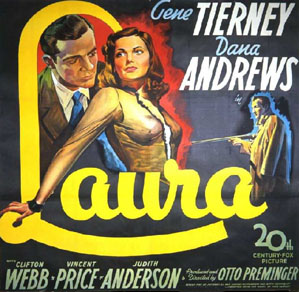
Out of the Past--Investigating Film Noir: Otto Preminger's Laura (1944)

Episode 9: Otto Preminger's Laura (1944)
Out of the Past: Investigating Film Noir
Hosts: Shannon Clute and Richard Edwards


Otto Preminger's 1944 "Laura" marks an important transition in film history. Visually it harks back to Hollywood's Golden Era, flooding with light elaborate sets and the glamorous stars they hold--but at crucial moments a noir vision bubbles up to artfully blemish this smooth facade. It is a classic love story--except that it hinges on forbidden fantasy and murder. It at once gives a coy nod to the parlor psychology of the "Thin Man" variety of mystery, and looks forward to the dark Hitchcockian psychological thriller. It is a Janus of a film, and it may be eternally debated whether its double vision signals an end or a beginning.

To Listen to the Episode

Saturday, January 17, 2009

On the Media: War Crimes (Mexico)

War Crimes
On the Media (NPR/WNYC: New York)
Host: Brooke Gladstone

In just the last two years over 6,800 people have been killed. 24 journalists have been murdered and 7 have vanished. This isn’t Iraq, but Mexico’s war on drugs - and the scale and severity of the violence is escalating. Vicente Calderon is a longtime Tijuana journalist and Amy Isackson is a longtime San Diego reporter, they’re collaborating on an ongoing series that seeks to bring home the war happening in our backyard.

Listen/Read

Friday, January 16, 2009

On the Media: Flying Shoe Coverage; Numbers Game; Bush's Language Legacy; Obama's Press Secretary; Presidential Pardons; Orwell/Language; Deep Throat

On the Media (WNYC New York/NPR)

I'll Shoe You

Throughout [the] flying shoe coverage, the comedic details of the debacle dominated headlines. But humor couldn’t dominate the essential moral. Bob ruminates on what the hurling of the footwear revealed about the extent of Iraqi discontent and of President Bush’s denial of the same.

To Listen/Read

A Number of Challenges

Journalists and audiences are struggling to comprehend the many numbers in the news these days. How much is $14 billion, or $50 billion, or $700 billion, besides well...a lot? And how can reporters help people understand these figures? Journalist and co-author of The Numbers Game, Michael Blastland says context is everything.

To Listen/Read

The Language Legacy

The Bush Administration leaves office in a month, but will its linguistic oeuvre remain? From the "Clean Skies Inititive" to "Enhanced Interrogation Techniques," Bushies paid close attention to the power of words. Republican wordsmith Frank Luntz, however, doesn't expect the terms to stick.

To Read/Listen

At Obama's Podium

Robert Gibbs, tapped by President-elect Obama as the new press secretary, will guide the administration's relationship with the media. But New York Times reporter Mark Leibovich says Gibbs' combative style may be a surprise to those expecting the transparency and openness promised during the election.

Read/Listen

Beg Your Pardon?

It’s that time of year again, the season of the presidential pardon. Much used and little understood it’s the one truly discretionary power of the president. Pardon historian P.S. Ruckman explains why the get-out-of-jail-free card is a constant subject of fascination and frustration for the public and the press.

Listen/Read

Orwell and the English Language

Best known for his novels 1984 and Animal Farm, George Orwell's mastery of clear language is nowhere more evident than in his essays. New Yorker staff writer George Packer, who has compiled some of these shorter works into two volumes, says Orwell's voice was irascible and witty and, above all, direct.

Read/Listen

Death of a Source

W. Mark Felt, Deep Throat of Watergate fame, died this week at the age of 95. Brooke remembers a champion of transparency who, in reality, wasn’t.

Thursday, January 15, 2009

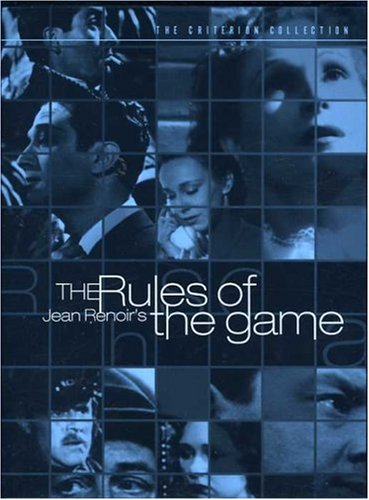
The Rules of the Game/Règle du jeu, La (Archive)

ENG 282 International Film Studies: Week 1

The Rules of the Game/Règle du jeu, La (France: Jean Renoir, 1939: 106 mins)


Criterion Collection: The Rules of the Game

Sesonske, Alexander. The Rules of the Game: Everyone Has Their Reasons Criterion Collection (January 1, 2004)

Criterion Collection: Films of Jean Renoir

Senses of Cinema: Great Directors Jean Renoir

Google Video: Jean Renoir

Strictly Film School: Jean Renoir

Jean Renoir Interviewed by jacques Rivette (video)

They Shoot Pictures Don't They: Jean Renoir archive

Film Reference: Bibliography of Writings on Jean Renoir

Ben Sonnenberg: France at the End of the Devil's Decade: Renoir's Rules of the Games (Counterpunch)

Google Video: The Rules of the Game clips

Alan Vanneman: Who Do You Love?--Jean Renoir's Rules of the Game Reconsidered (Bright Lights Film Journal)

French Films of the 1930s

Film Bibliography: French Films 1930s - 1960s

Obama's Inauguration: Hiding the Homeless

(Wouldn't want the celebrants to be disturbed by the sight of poor people in our nation's capital... funny how the shelters are able to open and serve these people in this circumstance, but during other times the city is unwilling/unable to help these people?)

Washington Post: Finding Havens for the Homeless

Gary Kamiya: What Waltz With Bashir can teach us about Gaza

What "Waltz With Bashir" can teach us about Gaza: The stunning new Israeli film reveals painful parallels between one of Israel's darkest moments and the current conflict.
By Gary Kamiya
Salon


The Israeli slaughter in Gaza is continuing into a third week under the approving gaze of the Bush administration, both political parties and the mainstream media. A U.N. Security Council resolution, worldwide protests, cries of outrage from human rights groups and the Red Cross, petitions by academics, and televised images of civilian deaths have no effect on Israel or on the American establishment. Nearly 900 Gazans have been killed, the already-desperate strip has been devastated, whole families wiped out. It is clear that Israel has no strategic vision, no idea of what its onslaught is supposed to ultimately achieve or how to end it. When it finally ends its assault, Hamas will emerge from the rubble, Iran and Hezbollah will be empowered, Egypt and Palestinian Authority leader Mahmoud Abbas will be weakened, and America's standing in the region will be lower than ever.

Yet in America the war might as well not even be happening. This Sunday's New York Times' "Week in Review" section, that snapshot of the American intelligentsia's collective brain, contained not a single word about Gaza. The ongoing carnage is clearly passé.

Yet in a strange case of art imitating life, at the same time that Israel is blasting a defenseless population enclosed in a tiny area, an Israeli film has appeared that depicts an earlier war in which Israel was complicit in an appalling massacre. America's cultural gatekeepers have rightfully hailed Ari Folman's "Waltz With Bashir" as a tour de force and cinematic breakthrough. On Sunday night, as Israeli warplanes carried out 12 bombing raids in Gaza, "Waltz With Bashir" won the Golden Globe Award for best foreign film. Most people who see Folman's stunning film will probably not connect it with Israel's current war. But if they dig a little deeper, they might realize that the film's moral lessons apply not just to the terrible events that took place 28 years ago but also to what is happening today.

"Waltz With Bashir" is about Folman's attempt to recover his lost memory of his experiences as a soldier during Israel's 1982 invasion of Lebanon, and in particular the Sabra and Shatilla slaughter of Palestinian civilians in two refugee camps. Carried out by Lebanese Christian militiamen, under Israeli protection and with its leaders' complicity, it was one of the most notorious massacres of the 20th century. "Bashir" is an extraordinary work, whose hallucinatory animated imagery and unflinching moral honesty offer an intense depiction of the horrors of war and its devastating psychic consequences. A dreamlike combination of "Apocalypse Now" and "Maus," it is at once the idiosyncratic story of one ex-soldier's attempt to heal his hidden wounds and a damning indictment of the Israeli leaders who enabled the slaughter. In the end, by interviewing other soldiers, talking to a psychiatrist and sharing his anguish with friends, Folman succeeds in putting together a fragmentary picture of the terrible events he witnessed and had blocked out for so long. Whether he himself gains any catharsis from his quest is not clear, for at the very end of the film he abruptly abandons both his personal narrative and his animated technique and simply shows filmed images of the slaughtered Palestinians heaped up like cordwood in the alleys of the camps.

Folman's film is not political. It does not preach or pass judgment. Yet in its artistic integrity, it unintentionally reveals the grim parallels between Israel's invasion of Lebanon and its complicity with the Sabra and Shatilla massacre and its current onslaught -- parallels that, if Israel and the U.S. heeded them, would lead them to understand that the Gaza campaign is both morally appalling and politically self-destructive. Israelis justifiably regard their leaders' role in enabling the Sabra and Shatilla massacre as one of Israel's darkest moments, a permanent stain on its character. Of course, Israel's moral culpability for the 1982 massacre is not the same as its moral responsibility for the civilians killed in the current war. But there are painful similarities. Sooner or later the patriotic war fervor will fade, and Israelis will realize that their leaders sent them to kill hundreds of innocent people for nothing. And perhaps in 2036, some haunted filmmaker will release "Waltz With Hamas."

To Read the Rest of the Essay

On the Media: The Flog of War

The Flog of War
On the Media (NPR)
Host: Bob Garfield

Not once, but twice in the last year, New York Times reporter David Barstow has written extensive front page stories about the conflicts of interest afflicting military experts paid to appear on television news. Charles Kaiser of the Columbia Journalism Review explains why despite this reporting, the use of military experts remains unchanged, a true SNAFU.

To Listen to the Interview

Matt Zoller Seitz: Copy Rites--YouTube vs. Kevin B. Lee

(This is essential reading for media critics/scholars and creative artists that are concerned about the continuing restriction, censorship and control of online texts. Courtesy of Green Cine Daily)

Copy Rites: YouTube vs. Kevin B. Lee
By Matt Zoller Seitz
The House Next Door

When the history of intellectual property law is written, January 12, 2009 should be marked as a decisive moment. It was the day that my friend, fellow House Next Door contributor and sometime filmmaking partner Kevin B. Lee saw his entire archive of critical video essays deleted by YouTube on grounds that his work violated copyright.

...

Kevin has copies of all his work, and I'm sure it will show up again somewhere, sometime. But the obliteration of YouTube as a global platform for his voice is a crime of greater magnitude than anything he did to create the video essays in the first place. YouTube is the town square of the 21st century—rather like a gigantic virtual mall that is, technically speaking, a private space, but which operates as a public sphere: a gathering spot, a cultural and political crossroads. By scourging Kevin's work from this crossroads and banning his video essays—and, potentially, all similar work—from YouTube, the company is allowing the powerful to muzzle the near-powerless. And it is endorsing the idea that in cases involving intellectual property law and the Internet, filmmakers can be deemed guilty, silenced, then made to plead for their right to speak.

There's also an unspoken class bias at work here, a bully mentality that chooses its targets based on who's likely to fight back and win. Consider commercial TV, which is filled with programs that routinely air copyrighted material without permission for purposes of journalism, satire or simple entertainment. The Daily Show and The Colbert Report don't ask permission to air any of the news clips they slice and dice each night for yuks; they consider a network's onscreen logo to be acknowledgment enough, and their assumption is almost never challenged. Talk shows don't think twice about airing a rival network's news footage or clips from a popular or notorious TV program in order to spark a discussion or anchor a satirical montage. Infotainment shows compile film clips for use in movie star obituaries—not just electronic presskit snippets meant for PR purposes, but clips from older movies that predate EPKs and that might have originally aired on some corporate competitor's channel—and the movie's copyright holders don't object. The shows that feature such clips are routinely repurposed on the parent company's websites, often with ads and sometimes with embedding functions that allow the clip to be reproduced by bloggers, and there are not currently, to the best of my knowledge, any lawsuits seeking to stop the practice. Kings wink at each other. Peasants get the axe.

Kevin B. Lee is not Napster; he's not some guy uploading every frame of every Bette Davis movie for kicks; he's not even Goldentusk. He's a critic and scholar doing work that could be considered, at worst, compelling free ads for essential pop art. YouTube, by reflexively siding with whichever party has more money and power, has renounced its founding spirit.

There should be a way to distinguish between piracy-for-profit (or unauthorized, free redistribution) and creative, interpretive, critical or political work that happens to use copyrighted material. And there must be an alternative to unilateral takedowns. The issues aren't just legal, they're practical. History has demonstrated that there's no copyright protection that can't be defeated, no corporate edict that can't be subverted. And given the technological sophistication that permits digital watermarking, there ought to be a way to make sampling of any sort, authorized or not, scaled to suit the filmmakers' means, profitable for the rights holders, and as fully automated as the copyright-infringement-scouring that's currently happening all over the Internet.

Whatever the solutions, they should be something other than one-size-fits-all. Digital watermarking abusers are engaged in an unwinnable war—one that, in its present state, will only produce collateral damage and make them increasingly unsympathetic, and therefore more likely to be demonized and resisted. The entertainment industry's unwillingness to recognize the plain fact that people have complex, idiosyncratic and yes, possessive relationships to songs, films and TV shows—relationships that are qualitatively different from their relationships to cars, hats, shoes and beer—contributes to a culture of calcified mutual resentment, and a public mindset (manifested most vividly in generations that cannot remember life before the Internet) that sees big entertainment companies as lead-footed dopes—Elmer Fudd blasting every rabbit hole in sight hoping to hit Bugs Bunny.

The situation as it stands is immoral, untenable and, I believe, a violation of fundamental rights. Almost nobody taking part in the early phases of digital media has the money to fight the Googles and Viacoms of the world, and of course that's what the takedown gremlins are counting on; injustice not resisted eventually becomes tradition. I fervently hope some brave, knowledgeable lawyer will see that there's more at stake here than the ethics of ripping and posting scenes from movies, and make a test case of Kevin's unconscionable treatment. The circumstances may seem mundane, but the implications are grim as can be. When individuals and governments permit corporations to dictate the terms by which their culture may be examined, the First Amendment becomes just another pile of words.

To Read the Entire Essay

More on these issues, available technologies, and examples of video/film-clip essays online (most of them cited in the above essay and the comments section):

Electronic Frontier Foundation

Insomniac Dad

Shooting Down Pictures: Uh, Oh, Storm's Brewing

Shooting Down Pictures

They Shoot Pictures, Don't They?

Moving Image Source: The Films of Oliver Stone

Moving Image Source: The Opening Credits of The Wire

Scanners: Close-Up--The Movie/Essay Dream

Scanners: Dark Knight #1--What is Wrong With This Picture?

The House Next Door: The Close-Up Blog-a-Thon

Handbrake: DVD to MPEG Converter

Squared 5: MPEG Streamclip Video Converter

40 Inspriational Speeches in 2 Minutes

Goldentusk

Wikipedia: Digital Watermarking

Steganography

Insomniac Dad: Berkeley(esque)

Insomniac Dad: A Little Love--The Art of Bill Melendez (Peanuts Animator)

Kristin Thompson: Fair is Still Fair, and More So

Film Studies For Free: Shooting Down YouTube--Bring Back Kevin Lee's Videos!

Karina Longworth: YouTube Cracking Down on Critical Video Essays

Social Media: Video Sharing Script

Googl's Counter Notification Process (to object to removal of materials) which is part of the larger explanation of the Digital Millennium Copyright Act

Online Policy Group vs Diebold

Center for Social Media: Code of Best Practices in Fair Use for Online Video

Sasha Frere Jones: Notube (The New Yorker)

Green Cine Daily: The Revolution Will Not Be YouTubed
Tuesday, January 13, 2009

Appalachian Voices: Clean Coal is a Dirty Lie

(Courtesy of Wes Houp)

Clean Coal is a Dirty Lie
Appalachian Voices


The Huffington Post: Canoeing Into Tennessee Coal Sludge (by Sandra Diaz)

Max Blumenthal: Pro-Israel Rally Attended by Big-Time NY Dems Descends into Calls for 'Wiping Out' Palestinians

(The language that the attendees of the Pro-Israel Rally use to describe Palestinians and why they should be wiped out is eerily similar to the language that was used in Europe to make the same case against the Jews. Very disturbing!)

Pro-Israel Rally Attended by Big-Time NY Dems Descends into Calls for 'Wiping Out' Palestinians
by Max Blumenthal
AlterNet

Attendants of a rally joined by Sen. Chuck Schumer and Gov. David Paterson in support of Israel's attacks on Gaza went far beyond the pale.

On January 11, an estimated 10,000 people rallied in front of the Israeli consulate in midtown New York in support of Israel’s attack on the Gaza Strip. The rally, which was organized by UJA-Federation of New York and the Jewish Community Relations Council of New York in cooperation with the Conference of Presidents of Major American Jewish Organizations, featured speeches by New York’s most senior lawmakers. While the crowd was riled to righteous anger by speeches about Hamas evildoers, the event was a festive affair that began and ended with singing and joyous dancing.

Sen. Chuck Schumer highlighted Israel’s supposed humanitarian methods of warfare by pointing to its text messaging of certain Gaza Strip residents urging them to vacate their homes before Israeli forces bombed them. “What other country would do that?” Schumer shouted from the podium. Gov. David Paterson appeared on stage wearing one of the red hats distributed to demonstrators as symbols of the red alerts some residents of Israel endure when Palestinian groups fire rockets their way. Paterson cited the many Qasam rockets that have fallen on Israel as a justification for the country’s operations in Gaza, a military assault that has resulted in over 800 casualties and thousands of injuries.

Then Paterson highlighted the anti-Semitism that has followed in the wake of Israel’s attack on Gaza, highlighting the beating of a teen-age girl in France. “This kind of anger and hatred spreads like a disease,” Paterson said, “and one thing I've always pointed out is there's no place for hate in the Empire State.”

To Read the Rest of the Report and To Watch the Video of the Rally

Monday, January 12, 2009

True Blood; They Want to Do Bad Things to You

(I appreciate the art of opening credits and Alan Ball's shows have elevated this medium with first Six Feet Under and now True Blood. Courtesy of Welcome Back Pottersville: They Want to Do Bad Things to You)

Saturday, January 10, 2009

2009 Reading Diary

(Always hopelessly behind on listing the books I read ... I read a lot of books, essays, student writings, poems, articles, etc and I'm researching constantly--these are the books I actually get to read straight through from beginning to the end. I would make a listing for essays--alone and in compilations, but it would take too much time... posting them when I can.)

5 stars: masterpiece
4 stars: superior
3 stars: good effort
2 stars: some redeeming qualities
1 star: give me back the time I wasted (these never show up here--b/c they get discarded before I finish them, sadly more and more books are falling into this category)

Non-Fiction:

Dixon, Wheeler Winston and Gwendolyn Audrey Foster. A Short History of Film. Rutgers University Press, 2008. 4 stars (assigned for my students in ENG 282: International Film Studies course)

Rosenbaum, Jonathan. Essential Cinema: On the Necessity of Film Canons. Baltimore: John Hopkins University Press, 2004. 5 stars.

Novels:

Chabon, Michael. The Yiddish Policeman's Union (Harper's Collins: 2007) 4 stars

Short Stories:

Chaon, Dan. "The Bees." Poe's Children: The New Horror. ed. Peter Straub. Doubleday, 2008: 1-19. 4 stars

Hand, Elizabeth. "Cleopatra Brimstone." Poe's Children: The New Horror. ed. Peter Straub. Doubleday, 2008: 20-70. 4 stars

Graphic Novels:

Willingham, Bill, et al. Fables 9: Sons of Empire; Fables 10: The Good Prince; Fables 11: War and Pieces. Vertigo Comics: 2007/2008/2008. 4/5/3 (respectively) stars.

Michael Benton: Michael Chabon's The Yiddish Policeman's Union (2007)

Chabon, Michael. The Yiddish Policeman's Union (Harper Collins: 2007) 4 stars


This was the first book I read by Chabon and I was impressed. He mines the noir sensibilities of Chandler, Hammet, et al, but makes it his own with a rich literate imagination of an alternate world in which there never was the creation of the nation-state Israel and a large percentage of post WWII Jewish refugees were resettled in the Alaska territories. The crisis of the book is set off on a small scale by the murder of a junky (with serious implications) and on a large scale by the impending eviction of the Jewsih settlement. The book resonates with the current Israeli/Gaza conflict and the American War on Terror. Like any good alternate-future/SF story, it is about the here-and-now.

Plazm #28: The Timeline of Dissent

Plazm


The Entire Exhibit

More:

Anti-War.us: Free Anti-War Activist Graphics


A Persistent Peace: Father John Dear reading & book signing (Morris Book Shop 1/29/08)

Father John Dear reading & book signing

Morris Book Shop
408 Southland Drive, Lexington
Thursday, January 29, 2009 at 7:00 p.m.


Nobel Peace Prize Nominee, John Dear, SJ has spent his entire adult life and ministry as a Jesuit priest, promoting peace. For this he has been jailed more than 75 times. He has spent more than a year of his life in jail. He has been mocked by armed U.S. soldiers standing outside the doors to his New Mexico parish. All this because he so fervently believes in peace.

PANEL DISCUSSION: War and Recession (Al's Bar: 1/21/08)

PANEL DISCUSSION: War and Recession

Wednesday, Jan 21 at 7 pm
Al’s Bar, 6th & Limestone
FREE and open to publ ic

Alan Bartley
Associate Professor, Economics
University of Transylvania
War & the economy: an Economist’s perspective

Michael Benton
English Coordinator and Professor,
Bluegrass Community and Technical College
Impact of media on war & the economy

Sue Roberts
Associate Professor and Chair, Geography
University of Kentucky
War & the economy: a Geographer’s perspective
Moderator: Richard Mitchell

Sponsor: Central Kentucky Peace & Justice

Pearls Before Swine

Pearls Before Swine

Earthquake Hits Costa Rica

(Courtesy of Teresa Webb)

Thinking of the friends we made in Costa Rica and wishing the best for Rolando and his family:

Costa Rica Death Toll

Friday, January 09, 2009

Left Field Cinema: Films of 2008

These are films that were released in UK in 2008 and it is one of the more interesting lists I have seen so far, especially the top 20 films:

Special: Films of 2008

If you would prefer to listen to a summary of the top ten films (highly recommended as it will provide a good list of films to watch and/or look forward to seeing):

Special: Top Ten Films of 2008, Pt 1

Special: Top Ten Films of 2008, Pt 2

I have been looking for a film podcast with a critical edge that focuses on world cinema and independent films. It took a long time, but it looks like Mike Dawson at Left Field Cinema is going to be a great resource/guide!