Showing posts with label Acting. Show all posts

Sunday, February 06, 2011

Monday, January 03, 2011

The Daily Notebook: Pete Postlethwaite, 1945 - 2011

Pete Postlethwaite, 1945 - 2011
by David Hudson
The Daily Notebook


...

"Pete Postlethwaite had one of those faces — weathered, folded, kneaded, endlessly interesting — that demanded to be on camera, even as it denied him any possibility of leading man status." Guy Lodge at In Contention: "And yet, in the latter half of his career, Postlethwaite... made a convincing case for the character actor as star. Neither his visage nor his gratifyingly alliterative name threatened more than a career as 'that guy,' but somehow we got to know him better than that." In his final film performance, he gave us a "vivid, knowing character sketch in Ben Affleck's The Town — it's a cruel irony that we last saw Postlethwaite on screen as a man who knew his number was up, but he couldn't have asked for a more affecting exit."

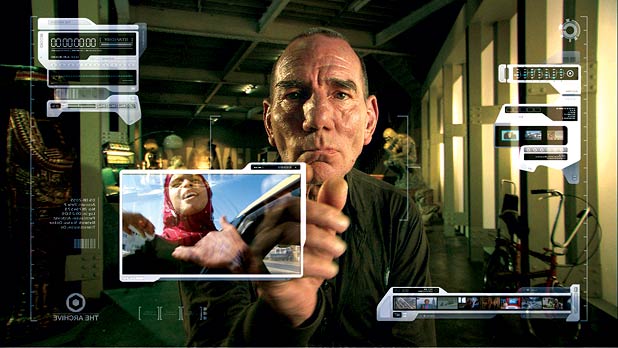
"In recent years Postlethwaite became known as much for his political activism as his acting," writes Matthew Weaver in the Guardian. "He was the front man in the climate change film The Age of Stupid, arriving at the 2009 London premiere on a bicycle. After the film's release he threatened to hand back the OBE he was awarded in 2004 in protest at the government's controversial decision to give the go-ahead for Kingsnorth coal-fired power station in Kent. He also adapted his home to become environmentally responsible, installing a wind turbine and other features. In 2003 he marched against the war in Iraq and was a vocal supporter of the Make Poverty History campaign." Also: Rosanna Greenstreet's quick Q&A with Postlethwaite in January 2009 and the Guardian's last interview (video, 3'35").

Former UK Deputy Prime Minister John Prescott in the Guardian: "I first saw Brassed Off — the tale about the troubles faced by a colliery brass band, following the closure of their pit — in June 1997. The story, loosely based on the Grimethorpe Colliery Band was moving but it was Pete Postlethwaite's speech right at the end that had a deep effect on me. His character, band leader Danny, after spending his life wanting to win the national brass band trophy, symbolically turns it down because he knows it's the only way he can get publicity for the 1000 miners who were sacked from his pit. The line that got me was: 'This government has systematically destroyed an entire industry — our industry. And not just our industry — our communities, our homes, our lives. All in the name of 'progress'. And for a few lousy bob.

To Read the Entire Post and Access Hyperlinked Resources

Saturday, October 02, 2010

Watching Theology: Werner Herzog's Grizzly Man (2005)

Werner Herzog's Grizzly Man (2005)
Watching Theology


A few summers ago, while most of us were out camping or having a bar-b-q, Timothy Treadwell and his girlfriend were being killed and eaten by a starving grizzly bear in Alaska. One of our most significant working directors, Werner Herzog, picked up his video footage and compiled a documentary about the severity of nature and Treadwell's death. In this episode, we look at the tragic life of "the Grizzly Man" as interpreted and remembered by Herzog and his cynicism. Is nature neutral, sinister or - as Treadwell believed - the Disney-like world of compassion and sentiment?

To Listen to the Episode

Monday, September 27, 2010

David Schwartz: Transformer -- Tilda Swinton on donkeys, identity, and the nature of screen acting

Transformer: Tilda Swinton on donkeys, identity, and the nature of screen acting
by David Schwartz
Moving Image Source
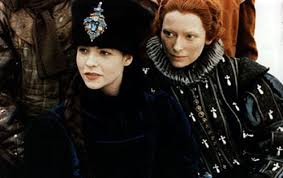


The malleability of identity, the way that categories like gender and class confine us if we let them define us—these are among the subjects that Tilda Swinton has consistently explored in a varied body of work that encompasses the Super-8 experiments of British filmmaker Derek Jarman and such mainstream movies as Michael Clayton (2007), for which she won an Academy Award.

In Jarman's The Last of England (1987), a poetic assault on stultifying Thatcher-era England, Swinton improvised the film's climactic scene, as a frenzied bride who tears apart her gown and performs a whirling dance on a beach: a rite of transformation, an attempt to transcend fixed roles. In Sally Potter's Orlando (1992), which is being rereleased this week, Swinton plays an androgynous nobleman who changes sex and travels through time, trying to find his or her true self.

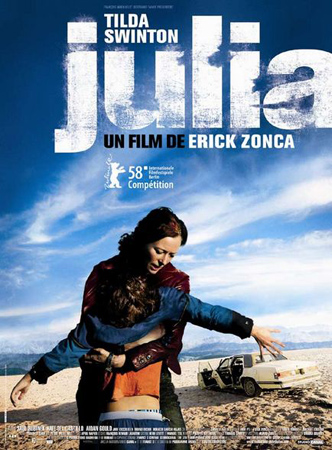
Fittingly, for someone who looks seriously at the roles we play, many of Swinton's best performances can be seen as meditations on the nature of acting. In a remarkable passage in Michael Clayton, we see Swinton's character, the high-powered corporate lawyer Karen Crowder, prepare for a video interview. As the film cuts between Crowder's nervous rehearsal in her hotel room and her polished performance in the interview, we see the disparity between the confident facade and the anxious actor. In one of the strongest performances of her career, in Erick Zonca's Julia (2008), she is an alcoholic whose life has become an outlandish performance motivated by her desperate need to connect with those around her. And in her latest film, the current arthouse hit I Am Love, she is Emma Recchi, a Russian native who has married into a wealthy Italian family. Emma's aristocratic veneer is a stylish performance; she maintains her social status only at the cost of repressing her true self, and sexuality. The contrast in style between Julia and Emma couldn't be greater; the former is a brash American whose psyche—and body—are in shambles. The latter is a refined, elegant woman who speaks fluent Italian with a Russian accent. Yet both characters are on a search for the same things: connection and authenticity.

Swinton herself has found connection in an intense series of cinematic collaborations; she seems drawn to directors whose films are labors of love (often with long gestation periods). And she has found authenticity in her astonishing performances, in work that is both physically and verbally articulate. In film after film, Swinton shows us that identity is more than a performance—it is a mystery.

To Read the Interview