Showing posts with label Cult Films. Show all posts

Sunday, February 06, 2011

Wednesday, November 24, 2010

Scott Tobias: The New Cult Canon -- Irma Vep

The New Cult Canon: Irma Vep
by Scott Tobias
The New Cult Canon (The A.V. Club)

"It is visually beautiful, but the editing is so self-destructive that it's as if Hopper had slashed his own canvases." —Pauline Kael on Dennis Hopper's The Last Movie


After reading the quote above many years ago, I felt I had to see Dennis Hopper's The Last Movie immediately—not because it might be visually beautiful, but because I was excited to see an artist slash his own canvases. What possible impulse could lead a filmmaker to sabotage his own work? And what does a film wind up looking like when it's completely torn apart and we can see the pieces of a more conventionally "cohesive" work lying on the floor? It's a very punk-rock thing to do, but it's also what film critics do by trade—pick apart and examine all the individual pieces that go into the whole, and occasionally slash a few canvases when necessary.

Turns out I couldn't really abide The Last Movie—which was more just a mess than the purposeful mess I was hoping for—but in 1996, Olivier Assayas' Irma Vep brought out the knife and happily slashed away. In that respect and many others, the film is a true torchbearer of the French New Wave—playful, restless, full of invention, and born of an overwhelming discontent for the status quo. At a time of artistic crisis, when French cinema was in danger of losing its identity to popular American imports, Assayas issued Irma Vep as a wake-up call to an industry that was slipping into compromise and irrelevance. Much like our Graham Greene-inspired friend Donnie Darko, when he floods the school and burns Patrick Swayze's house down, Assayas performed an act of creation by destruction. He also made film criticism seem sexy—which, as one of the pasty-faced legions who make a living from it, I can respect as no mean feat.

At the center of the movie—and a movie this scatterbrained needs a strong center—is Maggie Cheung, one of the world's most glamorous stars, playing herself. (Assayas later married her, temporarily cementing his status as the world's hippest film director. They divorced three years later, but it was amicable enough for Assayas to cast her as a Courtney Love/Yoko Ono type in 2004's Clean.) When we first see Cheung, she's stepped into the middle of a French production office and nobody seems to notice, which is just the first sign of how terminally chaotic the industry has become. No one picked her up at the airport and no one seems to even expect her, even though she's been chosen to play the lead role in a production slated to shoot imminently. She tries to apologize for being three weeks late, due to overruns on her latest Hong Kong film, but who would know to accept her apology?

Cheung has been cast as the lead in a remake of Les Vampires, Louis Feuillade's landmark 10-part serial from 1915 about a devious villainess who leads an underground thieving operation called The Vampire Gang, and steals jewels while wearing a form-fitting black catsuit. To most, it's a baffling choice to cast a Chinese actress in a role so quintessentially Parisian, but then again, there's nothing that looks wrong about Maggie Cheung in a latex catsuit. The director, René Vidal, is well past his prime; and since he's played by Jean-Pierre Léaud—the legendary Antoine Doinel from François Truffaut classics like The 400 Blows and Stolen Kisses—we can probably assume that he's a creatively stilted New Wave holdover. Whatever the case, René can't really come up with a coherent reason for remaking Les Vampires, but he tells Maggie that he saw her martial-arts film The Heroic Trio in Marrakech, and he hired her because she looked like a dancer. (Poor Maggie then has to give Réne the bum news that all those action sequences were really done by stunt doubles.)

And so it goes. Shooting doesn't go well. The one scene we do see get filmed in the movie-within-a-movie gets ruined by the actors cracking up… for the 24th take in a row. Réne storms out of dailies, raging about how his movie is "shit," and has a nervous breakdown. Meanwhile, wardrobe assistant Zoé, played with winning hyperactive charm by Nathalie Richard, develops a crush on Maggie, who doesn't pick up on her advances. Both Réne and Zoé project their fantasies onto her—and who can blame them?—but Maggie doesn't fit comfortably into the roles they want to her to play. If there's one word to describe Maggie's odyssey in France, it's awkward: Having to deal with the language barrier is one thing (she speaks English, but no French) and feeling alienated in a foreign land is another, but more than that, she's thrown in the middle of other people's crippling dysfunction. It's a wonder she doesn't catch the next flight out of De Gaulle at any moment.

There are innumerable great touches, big and small, in Irma Vep, which is organic and alive like few movies ever are. (It was shot on the fly in three weeks, and the spontaneity shows.) But the one sequence that everyone who's seen the film remembers is a restless Maggie slipping into her catsuit after hours and skulking around the hotel like Irma Vep in the movie. Only this time, she embodies the role effortlessly—she's sexy, mysterious, resourceful, and liberated in a way that she couldn't have been in Réne's stale, pointless remake.

To Read the Rest of the Essay

Scott Tobias: The New Cult Canon -- Donnie Darko (2001)

Donnie Darko
by Scott Tobias
The New Cult Canon (The A.V. Club)


In embarking on the mammoth, open-ended project that is The New Cult Canon, I face the scary and exhilarating prospect of a journey with no set course and no planned destination, but there was never a question that I'd be leaving port with Richard Kelly's Donnie Darko. To my mind, Donnie Darko is the quintessential cult movie of the last 20 years: Here was a much-hyped washout at Sundance that fell to a second-tier distributor (Newmarket), which released the film to middling reviews and feeble arthouse box-office (barely half a million when all was said and done). The film was left for dead until, miraculously, word of mouth started to swell and an audience steadily grew and rallied around it. The Pioneer Theater in New York ran it as a midnight movie for two years—this at a time when the midnight movie itself had long been left for dead. And DVD sales were so robust that Newmarket attempted to re-release the "Director's Cut" theatrically. (It tanked a second time, too.) The movie has inspired a level of obsession that separates cult phenomena from the everyday hits that wither past opening weekend.

I saw Donnie Darko three times in the theater: Once at the press screening, where I was apoplectic to find many of my fellow critics shrugging their shoulders; a second time during its two-week run here in Chicago, where I saw it with maybe five or six other people in the theater; and a third time at the Gene Siskel Film Center, where it kept coming back month after month to packed houses, including the near-soldout showing I attended. (And on a weeknight, no less!)

Why did I and so many others keep shuffling, zombie-like, to see this movie again and again in the theater? It certainly isn't perfect—films this crazily ambitious, from a first-time director no less, are rarely flawless—but Donnie Darko accomplishes perhaps the one thing I value most in cinema: It creates a world to get lost in, so particular and full of life that other concerns (in this case, an overstuffed mind-bender of a plot that has never quite cohered for me) fall by the wayside. And though I'll probably be defining cult movies a million different ways in this column, that's likely the common denominator, because once you have the ins and outs of the story figured out, what's the point of seeing a movie a second or third or hundredth time? The world of the film is paramount.

To Read the Rest of the Essay

Tuesday, August 24, 2010

Phoebe Bronstein: Man-Made Martyrs in the Age of Mechanical Reproduction -- Disturbing Manufactured Martyrdom in Paradise Now

Man-made martyrs in the age of mechanical reproduction: disturbing manufactured martyrdom in Paradise Now
by Phoebe Bronstein
Jump Cut


In the span of two days, two lifelong friends, Said (Kais Nashif) and Khaled (Ali Suliman), make the transition from car mechanics to suicide bombers. Their mission requires them to move undetected across the Israeli-Palestinian border and detonate two bombs in sequence in the city of Tel Aviv. Paradise Now (2005), written and directed by Palestinian-born Dutch director Hany Abu Assad, is set and shot on location in Nablus, a portion of the West Bank under Palestinian control. In combining fictional and documentary elements Abu Assad takes a cue from Gillo Pontecorvo’s 1967 film Battle of Algiers; and in a nod to Pontecorvo, Khaled even quotes a line from the paradigmatic film of the Third Cinema: “If we had airplanes, we wouldn’t need martyrs” (Rich).[1] [open endnotes in new window]

As a young Jewish woman, with a particularly religious extended family, I must first admit that I had my reservations about seeing (and later about writing on) a movie about Palestinian suicide bombers. I saw the film for the first time in 2005 in a New York art house theater. The movie had yet to gain ground in the United States and many people, myself included, knew little about it, save that it was a political thriller dealing with a hot-button issue. However, what is remarkable about this film, in a year when Stephen Spielberg’s film Munich (2005) premiered, is that Abu Assad refuses to engage in the melodramatic discourse that too often defines Israeli-Palestinian relations from the rhetoric of political news coverage to dinner-table conversations. According to Abu Assad this discourse often figures suicide bombers as either heroes and martyrs or villains and criminals. Instead, in Paradise Now Abu Assad works against these prevailing notions by revealing the construction and production of martyrdom. In this way, he calls attention to the incorporation of individual identities — that are neither good nor evil — into the collective identity of the Palestinian Resistance.[2] Abu Assad insists on a heterogeneous collective identity, all under the auspices of Palestine, which defies and subverts the dominant hegemonic ideologies that consistently stereotype and do violence to Palestinian identity.[3]

The Palestinian Resistance in the film both relies on the individual identity of its martyrs and on the construction of what Faisal Devji refers to as the “forging of the generic or universal Muslim,” a process both compelled and constructed by the media. By showcasing the production of the two men as martyrs instead of focusing on the violent back and forth of Israeli-Palestinian relations, Paradise Now presents an image of the Palestinian Resistance that subverts both the Resistance’s self-representation and Western media’s representation of it. By representing these tensions and suggesting a larger system outside of this violent back and forth of colonial/anti-colonial aggression, Abu Assad insists on a dialectical mode of thinking about, and a new image of, the Palestinian Resistance.[4] In this way, the film does not function to condemn the men, the Palestinian Resistance, or even Israel, but instead it condemns this cyclical system of violence perpetuated by both sides, the destruction reaped on the individual by the infrastructure of colonial and anti-colonial aggression, and the mediascape that compels and compounds that violence.

(Un)Spectacular violence: contextualizing the media, martyrdom, and Paradise Now

Fernando Solanas and Octavio Getino, pioneers of Third Cinema, argue in “Towards A Third Cinema” that systems of mass communication are akin to napalm, or in the 21st century perhaps weapons of mass destruction. Today, more than ever, these systems are all pervasive — from the Internet to television to Hollywood films — and so whoever controls and knows how to manipulate those channels holds incredible, potentially deadly power. However, Faisal Devji suggests in Landscapes of the Jihad that suicide martyrdom, particularly in the Islamic world, is a phenomenon compelled and constructed by the mass media, and so it makes use of those very same channels of mass dissemination through which oppression functions.[5] This phenomenon is alluded to in Paradise Now in the Resistance’s shooting of martyr videos and again when Said and Suha, his female friend and potential romantic interest, come across videos about both collaborators and martyrs for sale. By making use of the same channels of dissemination, the Palestinian Resistance remains locked in a violent conversation with the Western mass media in a type of colonial/anti-colonial struggle, where both sides produce and thrive on images of violence. This mediascape, which is reiterated time and again in political thrillers like Stephen Spielberg’s Munich or Peter Berg’s The Kingdom (2007), engages us emotionally rather than intellectually and discourages us as viewers from engaging critically with the films or issues represented, and so such media representations reiterate the “prevailing ideologies of society” (Hill 115).[6]

To Read the Rest of the Essay

Monday, July 26, 2010

Linda Williams: “Cluster fuck” -- The forcible frame in Errol Morris’s Standard Operating Procedure

“Cluster fuck”: the forcible frame in Errol Morris’s Standard Operating Procedure
by Linda Williams
Jump Cut


Morris’s contextualization and constant reframing of the photos, qua photos, makes it possible for us to realize that the human pyramid and the simultaneously orchestrated masturbations were most likely not the worst or even the true crimes of the U.S. military and “other governmental agencies”—code for the CIA and other groups whose presence in the prison never formed part of the official record and who could thus apparently act with impunity—at Abu Ghraib.

When Susan Sontag wrote not long after their publication that these “photographs are us,”[19] she meant that we as a nation are responsible for what they show: the corruption, waste, and immorality of our occupation of Iraq (26).[20] But I suggest that they are also “us” because we recognize in them a familiar spirit of play, however perverted, that seeks distraction—even something called “fun”—in the very midst of horror. Kracauer writes of the mass ornament:

“Here, in pure externality the audience encounters itself. Its own reality is revealed in the fragmented sequence of splendid sense impressions.”


This disclosure “in distraction,” he adds, “is therefore of moral significance.”[21] What is “legitimate,” then, about the photos framed by this film is that with the aid of the Interrotron Morris makes us see how such photos could have made sense to these soldiers “on the ground” who craved a higher vantage point that would dissociate them from the prisoners with whom they lived. The photos were a legitimate expression of the frustration of their own impotency, their own inability to act successfully as soldiers, their pathetic imitation of “norms” that utterly failed to tell them their duty. Both the framed photos and Morris’s extravagant (re)enactments of what might have occurred are the ornamental cluster fucks of this misguided war

The most important ethical lesson of the film, however, may be to discourage us from judging Harman, England, or any of the cast of characters from any higher ground, as Pack would do and as the military tribunal did. The value of the film, rather, is to have shown us what it was like to be there on the ground aspiring to be somewhere else, somewhere higher.

In Regarding the Pain of Others, Sontag argues that pictures cannot provide their own interpretations; they need captions to provide context.[22] This may not be an accurate assessment of all photos, but it seems patently true of these almost too obviously self-incriminating ones of Abu Ghraib. On first seeing these pictures, few people thought they needed further explanations or a frame of reference. In Morris’s film it is the interviews and the imaginative enactments of possible acts that provide the rich captions to complicate each photo.

Judith Butler challenges Sontag, writing that we do not always need a caption to understand that a political background is formulated and renewed through the work of a frame:

“Whenever and wherever the photograph yields up its own forcible frame to visual scrutiny and interpretation, it opens up the restrictions of interpreting reality to critical scrutiny . . . we come to interpret that interpretation that has been imposed upon us.”[23]


This, I argue is what Morris’s film does. It asks us to interpret the interpretation, to witness the witnesses. But it does so not only by citing the photos that so “forcibly” framed these acts of inhumanity but also by reframing and contextualizing them, showing us how very delimited these frames were, how much of “the visual field,” as Butler puts it, is “ruled out” (952).

The photos of Abu Ghraib pointed to and were often themselves evidence of crimes. But they are not the smoking guns they seemed to be. They suggest that “straight photographs” must always be considered in light of what we know about the situation of their taking and that very often, as in the torture-death of al-Jamadi, the real incriminating photo does not exist. Had the military prosecution that focused so intensely only on the little guys pursued the larger “primary framework” that set the conditions for what we see in these pictures, rather than assume, as the Guantánamo alum Pack does, that nakedness and stress positions were to be expected, then we might have gotten to the bottom of the torture that took place under the direct auspices of the “other government agencies.” Such a trial might have discovered whose decision it was to keep prisoners naked and shackled, whose decision it was to hold prisoners indefinitely and drive them to despair. But that would have been another movie.

To Read the Entire Essay

Thursday, July 15, 2010

Pinocchio Theory: Gamer

Gamer
by Steven Shaviro
Pinocchio Theory


Gamer is science fiction. This means, not just that the movie is set in the near future, in a world whose technology is extrapolated from our own, but also that it explores the futurity that is very much a part of our actual present — the potential for change that is inherent within our presentness. Literally speaking, the movie takes place “some years from this exact moment” (as an opening title tells us). The world of the film is one in which the media — and especially the computer gaming environment — that we know today are taken to the next level. In the movie’s near-future extrapolation, spectacle, virtualization, and “entertainment” in general have been pushed to their logical extremes. Everyone in the world, it seems, is addicted to MMORPGs (massively multi-player online role-playing games). But these games are themselves viscerally “real,” in a way that is not yet the case today. The basic science-fictional ploy of the movie is to envision a form of gaming in which gamers control the actions, not of virtual avatars on a screen, but of real, physical, flesh-and-blood bodies: human “actors.” In this way, Gamer combines, and updates, the two most prominent popular entertainment forms of the current decade: massively multiplayer online gaming, and reality television. Conceptually, Gamer explores these forms of entertainment in order to think about freedom and enslavement in what Deleuze called the control society, or in a world that — as McKenzie Wark describes it — has become indistinguishable from gamespace.

There are two games that dominate the world of Gamer: Society and Slayer. In both of these games, the human actors who actually perform the physical actions of the game have no free will. Thanks to nano-implants, they no longer control their own bodies and motor actions. Rather, they are forced to take orders from the gamers “playing” them. Artificial nanocells are introduced into their brains; these cells reproduce, replacing the original, organic nerve cells with synthetic ones. Once you have undergone this procedure, you have an IP address in your head, and your body obeys whatever commands are transmitted to that address by the player who controls you. You say what they say, and move the way that they want you to move. Of course, this only works one way: actors can’t see or hear their controllers, but the controllers are able to live vicariously through them.


Society is a hilariously sleazy live version of Second Life or The Sims, with gamers guiding their actors through scenarios of drug consumption, partying and clubbing, and (most of all) down ‘n’ dirty sex. Actors rollerskate through crowded plazas, crashing into one another; or they grope one another in crowded dance clubs; or they accost one another with corny pickup lines in bars. The gamespace of Society is visually garish, with hypersaturated colors, and with raunchy costumes and lurid, tacky interior decorations that egregiously shriek out their own “bad taste.” Our first view of Society’s gamespace is hilariously set to the satirical song “The Bad Touch” by Bloodhound Gang (“You and me baby ain’t nothin’ but mammals/ So let’s do it like they do on the Discovery Channel”). Gamer illustrates the relation between player and actor directly, by cutting back and forth between the “actor” Angie (Amber Valletta) and her controller (Ramsey Moore). Angie is ridiculously dressed in a white fur wrap, blue hot pants, pink platform boots, and an orange wig; she is reduced, basically, to being a sexbot in the world of Society. Her controller is a morbidly obese, wheelchair-bound man; we usually see him in extreme facial closeup, sweating profusely, consuming munchies, and licking his slobbering lips as he moves her into one degrading situation after another.


Society is all about sex as spectacle; but in reality, sex is subordinated to economics. The financial structure of Society is simple, and brilliantly capitalist: you can either be a consumer by paying to play, or be a worker by being paid to be played. As Vishnevetsky observes, Gamer is “the sort of movie that imagines what the working class would have to do in its fantasy scenario” — something that is left out of most transhumanist and “exodus-to-the-virtual-world” visions. On the one hand, consumers get a pornographic experience that is still vicarious (and therefore safe) for them, but more “real” than any mere simulation could be. On the other hand, the “actors” receive wages for what is the ne plus ultra of affective labor: the production, not of physical objects, but directly of moods, feelings, and experiences. The sim-actor is not just selling the use of his or her “labor-power” for a certain number of hours (as is the case in classical capitalism as described by Marx); more than this, he or she is actually selling his or her “life” itself as a commodity. Of course, such a “biopolitical” mode of exploitation (which would seem to combine the worst aspects of slavery and of wage labor) is increasingly the norm — as Hardt and Negri argue — in our contemporary world of post-Fordism, “real subsumption,” and immaterial or affective production. Today, profits are extracted from the whole texture of our lives, not just from the labor we perform during specific hours in a factory or an office. Behind both the consumer/player and the actor/slave, there is the billionaire software genius who created, and who owns, Society (more about him below). He not only makes immense profits from user fees, but also acquires massive amounts of economically-valuable data through the technology’s surveillance of everything that streams over the network, or that happens in the minds of the nano-implanted actors.

To Read the Rest of the Essay

Thursday, June 24, 2010

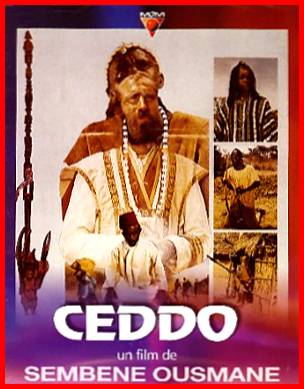
Nicola Marzano: The Art of Hunger -- Re-Defining Third Cinema

The Art of Hunger: Re-Defining Third Cinema
by NICOLA MARZANO
16:9


This article tries to address established notions of Third Cinema theory and its filmmakers from developing and post-colonial nations. The Third Cinema movement called for a politicized
film-making practice in Africa, Asia and Latin America, since its first appearance during the 60’s and 70’s, taking on board issues of race, class, religion, and national integrity.

The films investigated in this paper, from directors like Sembène, Getino, Solanas and Guzman, are amongst the most culturally significant and politically sophisticated from this movement and denote the adoption of an independent, often oppositional, stance towards
commercial genres and mainstream cinema.

Third Cinema has posed – and continues to pose – difficult and challenging questions. These questions, then, are crucial to this article, an article that focuses on Third Cinema in an inclusive fashion, studying films from Argentina, Chile, Senegal, and even England. Suggesting new methodologies and subtle refinements of existing ones, this article aims at rereading the entire phenomenon of film-making in a fast-vanishing 'Third World'.

Coming to terms with Third Cinema

There is an endless debate about Third Cinema and its strategies in offering valuable tools for documenting social reality. From the 70’s onwards, appreciation of its value and aesthetics has been unfolded through controversial approaches and different views on this radical form of cinema.

The idea of Third Cinema was conceived in the 1960s as a set of radical manifestos and low-budget experimental movies by a group of Latin American filmmakers, who defined a ’cinema of opposition’ to Hollywood and European models. Possibly, this new form of expression came from three different areas of the world: Asia, Africa, and Latin America. At the time these three zones were labelled ‘Third World’ (sometimes they, or at least some of them, still are).

Even though scholars like Willemen explained how the notion of Third Cinema was most emphatically not Third World Cinema, these two concepts have often been confused either intentionally or accidentally (Willemen 1991: 3).

To Read the Rest of the Essay

Sunday, June 06, 2010

Jennifer Wachtell: Hal Ashby -- The Director's Director

The Director's Director
by Jennifer Wachtell
Good
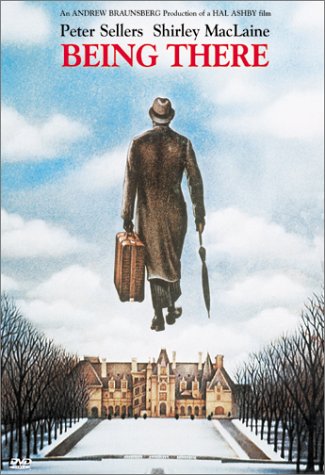
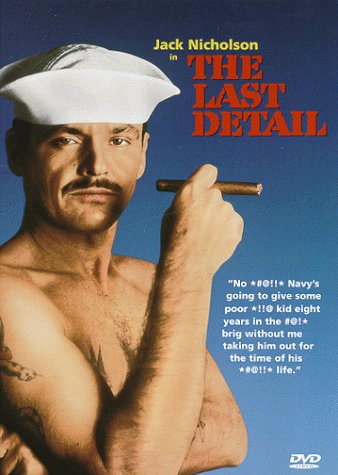


Hal Ashby's movies captured a messy, post-1960s America in alternately hilarious and poignant ways. Here, Wes Anderson, Judd Apatow, Alexander Payne, David O. Russell, and Jason Schwartzman talk about their favorites.

In the 1970s, Hal Ashby made a series of films so brilliant and yet so utterly different from one another that if you didn’t know who the director was, you might not think they were made by the same person. His films move effortlessly from the lavish mansion in Being There, a comic and prescient look at the effects of television on America, to the grim Veterans’ Administration Hospital and boardwalks of Venice Beach, California, in Coming Home. At his best, Ashby was able to make the personal political and the political personal, with humor and without boring the audience.

It is not surprising that Ashby’s films feel relevant at the moment, since our fragmented political climate isn’t that different from the post-Vietnam-and-Watergate years in which they were made. But unlike their latter-day counterparts, Ashby’s movies take on complicated subject matter without being reductive, telling stories through human relationships with no clean resolution. There is more said about American politics in Being There or about the women’s movement in Shampoo than in so many of the films that take on those subject matters directly.

During the late 1960s in Hollywood, the studios realized that there was something going on in the country that their corporate cultures didn’t entirely understand, and that as a result, their movies were out of sync with younger audiences. Then along came the indie hit Easy Rider, and it became clear to executives that they might need to open things up and look for ideas in new places.

Hal Ashby was a beneficiary of this new freedom, but he wasn’t a kid fresh out of film school. He had hitchhiked to California, away from his Mormon family in Utah and what must have been a difficult childhood—there were financial problems, his parents divorced, and his father committed suicide when Ashby was 12.

He had come up through the studio system, starting as a copyboy at Universal, a job he got through the unemployment office. He later worked as an apprentice editor, an especially arduous task before computers, and gradually became the editor on movies such as The Loved One and the original Thomas Crown Affair. He was said to be obsessed with his work, to the point of sleeping in the cutting room for days on end, and it took a physical toll.

Ashby did find the time to become politically active, and was an early supporter of the civil-rights and antiwar movements. He had been married and divorced three times by the 1960s, and in keeping with the era, he switched from heavy drinking to smoking a lot of pot.

In 1967, at the age of 38, Ashby was threatening to leave editing behind when he won an Oscar for In the Heat of the Night. In a fortunate twist of fate, Norman Jewison, for whom Ashby had edited several films, dropped out of directing The Landlord, and helped Ashby step into the project. Finally, at 40, Ashby had started his new career as a director, a rare transition for an editor, especially at his age. He seemed to enter this period of his career with a renewed openness and an experimental spirit. He used his difficult background to emphatically tell the stories of people who live on the edges of society.

Ashby never received the acclaim enjoyed by contemporaries like Francis Ford Coppola or Martin Scorsese—even though he made a bunch of the best films of that period. A few things worked against him: His material was so varied and his touch so light that his body of work isn’t easy to categorize.

The important critics of his day, such as Pauline Kael, didn’t love his work, and he was regarded as difficult to work with because of his strong antiauthoritarian streak. Sadly, his work fell off after the 1970s—some say because of drugs—and he died relatively young, of cancer, in 1988, before he could rebound and find his place again.

We asked some of the writers and directors who have been influenced by his work to tell us about their favorite Hal Ashby movies. Here’s what they had to say.

To Read the Commentaries

Tuesday, May 25, 2010

Ed Howard: The Bad Lieutenant — Port of Call: New Orleans

The Bad Lieutenant — Port of Call: New Orleans
by Ed Howard
Only the Cinema


It's been literally decades since Werner Herzog has made a truly satisfying fictional film. It seems obvious that, since at least the late 1980s, the director's interest has increasingly turned towards documentary and pseudo-documentary, while his fiction features have become less and less frequent, and more and more uneven. The Bad Lieutenant — Port of Call: New Orleans is, then, an unexpected revitalization of Herzog's instincts for fiction, a non-remake of the sex-drugs-and-violence-packed 1992 Abel Ferrara film Bad Lieutenant. Herzog's supposed remake, made with absolutely no knowledge of Ferrara's original and with only the most tenuous of connections — there's a lieutenant! and he's bad! — takes the basic premise of a corrupt cop and spins it out into a ludicrous (a)morality tale about the delicate balance between good and evil that exists within this addled New Orleans cop. Terence McDonagh (Nicolas Cage) is dirty in nearly every way. He's a drug addict who steals and snorts prodigious amounts of drugs, balancing heroin and coke and prescription painkillers. He sleeps with (and provides drugs to) the prostitute Frankie (Eva Mendes) and intimidates and rips off her clients whenever he encounters them. He stalks drunken and drugged-up kids coming out of clubs, holding them up for their stashes. He's an outrageous and lunatic figure, representing a wackier and goofier variation on Harvey Keitel's drugged-up psychopath in Ferrara's original film.

Herzog's first ingenious move was casting Nicolas Cage in this part and fully exploiting the actor's tendency towards over-the-top melodramatics. Cage's performance is something truly strange and unique, the work of an actor pouring all of his seemingly worst qualities into a character and really making him come alive. McDonagh's collapse, his moral degradation, is eloquently conveyed in every aspect of Cage's performance, from his permanent crooked slouch (evidence of the on-the-job injury that set him off on his painkiller addiction) to his twitchy mannerisms to the tortured cadences of his speech, shifting from drawled mumbling to coked-up hyperactivity with a moment's notice. For such a bizarre, purposefully overblown performance, Cage never forsakes the subtleties that suggest his character as fully as the more obvious gestures do. It'd be tempting to call this a "bad" performance, and it often seems like one in its superficial aspects. But Cage's oddball speech rhythms and over-emphasized facial tics only contribute to the unease generated by the character of McDonagh, by his unpredictable vacillations between hero cop, drug dropout and borderline psycho. It is, in its weird way, a disarmingly subtle performance.

Of course, the obvious gestures get most of the attention here, and with good reason. The film rolls out one nutty premise after another, right from the opening in which — after a few moody, blood-red-lit shots of a snake winding through a flooded jail cell — McDonagh and his partner Stevie (Val Kilmer) take bets about how long it will take for the rising water to drown a trapped prisoner. This comes only a few minutes after an onscreen title announces that the film takes place in the aftermath of Hurricane Katrina; the cops' irreverent attitude towards their responsibilities thus suggests a satirical perspective on the response of various US institutions and authorities to this tragedy. Of course, such social consciousness is not common in Herzog, and the remainder of the film addresses such issues only obliquely, in the form of the not-so-subtle markers of race and class that are constantly defining and limiting these characters. The incident that triggers the plot is the murder of a family of Senegalese immigrants, apparently a drug crime, and one of the film's looniest contrivances — and that's really saying something — is the fact that the police immediately make this crime a high priority. Herzog underlines the absurdity of it all, announcing the film's undeniable status as fantasy: the police captain tells his men that this crime will be their big concern and that any amount of overtime is justified, as if the police always dedicate such attention to the murders of black illegal immigrants who were tangentially involved in the drug trade.

Race is continually an unsettling presence in this film, particularly in a scene where McDonagh is confronted by a relative of the murdered family, who delivers a completely unfettered expression of grief that's nearly embarrassing in its nakedness and uncontrolled despair. Her performance is as unhinged as Cage's, and the meeting between them is a vortex for all of the film's ungainly and often ugly emotions: a black woman's grief and a white cop's frazzled guilt and half-functioning desire to do good. The caricaturing of this women makes the scene especially uncomfortable, but at the same time her pain and anger are palpable; like many things in this film, it's a potent combination of the awkwardly stylized and the startlingly real.

To Read the Rest of the Essay

Sunday, April 25, 2010

Scott Tobias: The New Cult Canon -- Morvern Callar (Lynne Ramsey, 2002)

The New Cult Canon: Morvern Callar
by Scott Tobias
The New Cult Canon


Lynne Ramsay's 2002 film Morvern Callar was the inspiration for this column, because for all its bleakness and deliberate frustrations, I can think of no cooler movie. It's a wonder that theaters didn't have doormen standing behind velvet ropes, determining who was hip enough to step into its world of enveloping disaffection. Based on Alan Warner's novel, which was part of a brief flowering of Scottish literature in the wake of Irvine Welsh's Trainspotting, the film is an adaptation with a high degree of difficulty. It's one thing to adapt someone like James M. Cain, whose steamroller plots are action-packed and give off a lot of surface heat; it's another to capture a character's internal life, which is usually the exclusive province of novels. Working with a plot that could fit comfortably on a cocktail napkin, Ramsay has to rely almost entirely on cinematic effects—and Samantha Morton's revelatory performance—to decipher a woman who's so deep in an existential funk that her behavior is always curious and sometimes extraordinarily callous.

Before getting into the movie itself, a few words on Ramsay: To my mind, Lynne Ramsay is one of the most talented filmmakers in the world, even though she only has two features to her credit, and nothing since Morvern Callar. Ramsay has a background in photography, and in her movies, it's clear that she's a photographer first and foremost. Each frame is immaculately composed, and unusually focused on the minute details that are more characteristic of photographers than film directors, who are usually concerned with the bigger picture. After making a series of acclaimed short films, Ramsay shot her stunning 1999 debut Ratcatcher, which might have been another piece of UK kitchen-sink miserablism if not for Ramsay's extraordinary eye for finding poetry in the everyday. (Incidentally, three of Ramsay's shorts are collected as bonus features on Criterion's Ratcatcher DVD.) Though Ratcatcher wallows in the horrific world of its 12-year-old protagonist—a Glaswegian apartment-dweller in the early '70s who lives in the stinking squalor of a garbage strike—it nonetheless has moments of real beauty. As I said in my review of the DVD, "Just when Ratcatcher seems overly content to bathe in Euro-art squalor, Ramsay counters with passages so breathtakingly lyrical and improbably optimistic that they shake off the oppressive pall that too often passes for hard realism."

In recent years, Ramsay has suffered some discouragement in getting her third film to the screen. She won the rights to Alice Sebold's The Lovely Bones while it was still an unpublished manuscript, and watched it slip away from her as the book became an unexpected phenomenon. True to form, Ramsay reportedly loved the grim premise for the book—about a little girl who's raped and killed, and then watches the aftermath from heaven—but disliked its second half, which she found too sentimental. She worked for more than a year to craft a screenplay more to her liking, but the rights eventually went to the all-powerful Peter Jackson, who's currently filming it for release next year. Ramsay was later attached to direct an adaptation of We Need To Talk About Kevin, Lionel Shriver's brilliant book about a mother grappling with her son's Columbine-like rampage. To me, it sounds like the ideal fit, but that project appears to have died on the vine, since I've heard nothing on it since 2006. So for now, there's only Ratcatcher and Morvern Callar, and hopefully a young filmmaker who isn't too discouraged to keep pushing new boulders up a hill.

For High Fidelity types like myself, the mix-tape has always been an important (if somewhat feeble) form of romantic expression, the pop-damaged equivalent of sending a bouquet of flowers. And Morvern Callar features the mix-tape to end all mix-tapes, with tracks from bands like The Velvet Underground, Can, Boards Of Canada, Broadcast, and Aphex Twin, among others. Morton's eponymous heroine receives her mix-tape in the cruelest fashion: As one in a series of Christmas gifts given by a boyfriend who has just committed suicide. (She also receives a leather jacket, a Walkman, and a lighter.)

As the film opens, Morvern is curled up on the floor next to her boyfriend's corpse, with Christmas lights pulsing like a disco around them. He's left her a note on her computer screen: He apologizes. He tells her he loves her. He encourages her to "be brave." He also leaves behind a completed novel and a list of possible publishers to solicit, as well as his ATM card for money to pay for the funeral. Clearly bruised by her boyfriend's cruel departure, Morvern doesn't follow through on the dead man's wishes, to put it mildly. She changes the byline on the novel to her name, and rather than using the cash from his bank account for a funeral, she buys tickets for her and her party-animal friend (and supermarket co-worker) Lanna (Kathleen McDermott) to vacation in Spain.

To Read the Rest of the Essay and View Film Clips

Tuesday, March 30, 2010

Thursday, March 18, 2010

Colloquy: #18 "B for Bad Cinema"

Issue #18: "B for Bad Cinema"
Colloquy

Introduction: B for Bad Cinema
Julia Vassilieva and Claire Perkins

Excremental Ecstasy, Divine Defecation and Revolting Reception: Configuring a Scatological Gaze in Trash Filmmaking
Zoe Gross

“They don’t call ’em exploitation movies for nothing!”: Joe Bob Briggs and the Critical Commentary on I Spit on Your Grave
Tristan Fidler

Erasing the B out of Bad Cinema: Remaking Identity in The Texas Chainsaw Massacre
Craig Frost

“Fucking Americans”: Postmodern Nationalisms in the Contemporary Splatter Film
Phoebe Fletcher

Their Time Has Come: Bad Cinema Nerds as Late-Capitalist Paradigm
Mark Steven

Snakes on a Plane and the prefabricated cult film
Kirsten Stevens

“Bad Form”: Contemporary Cinema’s Turn to the Perverse. David Lynch: Lost Highway (1997) Lars von Trier: Breaking the Waves (1996)
Hester Joyce and Scott Wilson

The Other Side of Indonesia: New Order’s Indonesian Exploitation Cinema as Cult Films
Ekky Imanjaya

Doing It for the Kids: Rebels and Prom Queens in the Cold War Classroom Film
Anika Ervin-Ward

Family Demons: The Ghost as Domestic Inheritance
Donna McRae

B for Bad, B for Bogus and B for Bold: Rupert Kathner, The Glenrowan Affair and Ned Kelly
Stephen Gaunson

Horror-Ritual: Horror Movie Villains as Collective Representations, Uncanny Metaphors and Ritual Transgressors
Mario Rodriguez

From Kracauer to Clover: Some Reflections on Genre and Gender in 70s/80s Slasher Films
Tyson Namow

General Articles

Roland Barthes's Photobiographies: Towards an “Exemption from Meaning”
Fabien Arribert-Narce

A Re-evaluation of Literature in Active and Critical Audience Studies
John Budarick

Adding ‘Pull’ to ‘Push’ Education in the Context of Neomillennial E-learning: YouTube and the Case of “Diagnosis Wenckebach”
Julie Willems

Arriving in the Future: The Utopia of Here and Now in the Work of Modern-Day Mystics From Eric Fromm to Eckhart Tolle
Thomas Reuter

Ash’s Stasi File as a Script of Life
Catherine Karen Roy

Book Reviews

Geoff Page. 60 Classic Australian Poems. Sydney: UNSW Press, 2009.
Robert Savage

William Marderness. How to Read a Myth. New York: Humanity Books, 2009.
Geoff Berry

Charles Bukowski. Hollywood. Edinburgh: Canongate, 2007.
Geoff Berry

David Damrosch, ed. Teaching World Literature. New York: The Modern Language Association of America, 2009.
Geoff Berry

Robert Savage. Hölderlin after the Catastrophe: Heidegger –Adorno – Brecht. Rochester NY: Camden House, 2009.
David Blencowe

To Access Issue #18