Showing posts with label Australia. Show all posts

Wednesday, December 01, 2010

Gabrielle Murray: Images of Torture, Images of Terror: Post 9/11 and the Escalation of Screen Violence

Images of Torture, Images of Terror: Post 9/11 and the Escalation of Screen Violence
by Gabrielle Murray (La Trobe)
Monash University Film & Television Studies


David Edelstein, the New York Magazine film critic, commenting on the surge in extreme, prolonged graphic torture, abduction, rape and dismemberment in films such as The Devil’s Rejects, Saw, Wolf Creek and Hostel, dubbed the phenomenon “torture porn” (2006). The current box-office success of films like the Saw and Hostel series stunned many critics; most seemed bewildered by young audiences’ thirst for such graphic fare. Edelstein’s uneasy review suggests that the media release of documentary images of US and UK military personal torturing prisoners at Abu Ghraib helped feed the escalation of uninhibited images of torture, degradation and mutilation in fiction film. This claim is echoed in most reviews and commentaries on the phenomenon (Barber 2007; Douthat 2006; Rimanelli and Liden 2006; Newman 2006). Furthermore, the critical literature argues increasingly graphic scenes are appearing in a broader range of mainstream and art-house releases.

However, while much of the critical literature agrees that public attitudes toward violent imagery are generally historically determined, most discussion of the nature of the linkages between social and cinematic violence remain circumstantial and speculative (Slocum 2004). This paper poses questions regarding the public and critical perception post 9/11 that there is a direct link between increased visual knowledge of violence and torture in the “real” world acquired from images on television and the internet, with an escalation of representations of explicit violence in the commercial and cultural medium of popular western cinema.


To Listen to the Lecture

Sunday, May 23, 2010

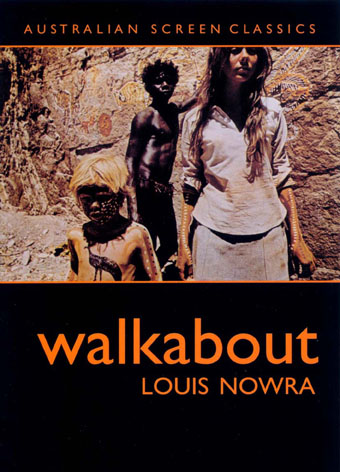
Paul Ryan: Walkabout -- Landscapes of Memory

Walkabout: Landscapes of Memory
By Paul Ryan
Criterion


Some years ago, I screened Nicolas Roeg’s 1973 film Don’t Look Now for a group of international students who were learning English. Rarely have I seen an audience more engaged by what they were watching. We discussed the film afterward, and I was delighted to discover that, despite their limited understanding of the language, these young people had not only grasped the essentials of the fragmented narrative but also picked up most of the nuances of the story. Of course, it should come as no real surprise that Roeg, who first distinguished himself as a cinematographer, would be able to convey a story in visual terms, but it was that audience’s response to the subtleties of the characters’ emotions that most underlined his achievement. The central scene of lovemaking prompted the first, hesitant remark: “It is beautiful when they try to make new baby.” It was obvious that these were not passive spectators. Where some would have seen a thriller, they had observed a tragedy.

Don’t Look Now should be proof enough that, more than any other British filmmaker of his generation, Roeg has the ability to create pure cinema. But the finest example of his gift remains Walkabout (1971), his first solo outing as a director. He had codirected and photographed Performance (1970), but it is generally accepted that, while the look and the pace of that film owe much to Roeg, its “authorship” can be more properly ascribed to its screenwriter, Roeg’s codirector, Donald Cammell. Walkabout is entirely Roeg’s own. Based on the 1959 novel The Children, by James Vance Marshall (a pseudonym for the English writer Donald G. Payne), Walkabout is, like its source material, essentially a coming-of-age story. In Marshall’s novel, the two white children are survivors of a plane crash, and the core of the tale is their journey through the Australian outback and relationship with an aboriginal boy who befriends them—as it is in the film. The book has long been regarded in Australia as a children’s classic along the lines of The Swiss Family Robinson, but Roeg and his screenwriter, Edward Bond, made small, significant changes that took the film into harsher territory.

The first of these was to eliminate the plane crash (initially, perhaps, to avoid similarities to the opening of Peter Brook’s 1963 adaptation of William Golding’s novel Lord of the Flies). They replaced it with the suicide of the children’s father—thus heightening the violence of the opening and personalizing the children’s sense of abandonment. Also heightened was the children’s curiosity about one another, which took on a deeper element of sensuality and, in the case of the girl and the aboriginal boy, nascent sexuality. In a justly famous sequence, the girl swims naked in a lake, and while this can be interpreted as her need to clean and refresh her­self in midjourney, it has an unmistakable element of display. Toward the film’s end, it is the turn of the young aborigine to display, by means of a sexually charged ritual dance directed at the girl. The girl’s fearful rejection of him leads to another major change from the novel. There, the native boy dies from a virus to which he would not have been exposed if not for his encounter with these outsiders; in the film, the young man takes his own life. A film with two suicides and a delicately sensual nude scene was never destined for the label of “children’s classic,” and yet one can sense that Roeg has trust in the reaction of an adolescent audience, for he is speaking the truth of adolescence to us all.

The film had a curious gestation. While working as cinematographer on François Truffaut’s only English-language film, Fahrenheit 451, in 1966, Roeg met the producer Si Litvinoff, who had recently optioned the Anthony Burgess novel A Clockwork Orange. The two met again, and became fast friends, when Roeg was photographing Richard Lester’s 1968 Petulia, and when Litvinoff discovered that Roeg was eager to turn to film direction, he started seriously considering giving him his chance with A Clockwork Orange. Soon afterward, Litvinoff went into partnership with the clothing manufacturer turned producer Max Raab, who was keen to finance A Clockwork Orange and was in favor of Roeg as director. But the new team turned first to Gerry O’Hara’s drama All the Right Noises (1969), and while Litvinoff was continuing to develop the script of A Clockwork Orange with Burgess and screenwriter Terry Southern, he discovered that Roeg had become obsessed with the James Vance Marshall novel, and had approached a writer he greatly admired, the British playwright Edward Bond, to work on a script. Litvinoff helped Roeg acquire the rights to the novel, and Raab agreed to finance Walkabout.

To Read the Rest of the Essay

Thursday, March 18, 2010

Colloquy: #18 "B for Bad Cinema"

Issue #18: "B for Bad Cinema"
Colloquy

Introduction: B for Bad Cinema
Julia Vassilieva and Claire Perkins

Excremental Ecstasy, Divine Defecation and Revolting Reception: Configuring a Scatological Gaze in Trash Filmmaking
Zoe Gross

“They don’t call ’em exploitation movies for nothing!”: Joe Bob Briggs and the Critical Commentary on I Spit on Your Grave
Tristan Fidler

Erasing the B out of Bad Cinema: Remaking Identity in The Texas Chainsaw Massacre
Craig Frost

“Fucking Americans”: Postmodern Nationalisms in the Contemporary Splatter Film
Phoebe Fletcher

Their Time Has Come: Bad Cinema Nerds as Late-Capitalist Paradigm
Mark Steven

Snakes on a Plane and the prefabricated cult film
Kirsten Stevens

“Bad Form”: Contemporary Cinema’s Turn to the Perverse. David Lynch: Lost Highway (1997) Lars von Trier: Breaking the Waves (1996)
Hester Joyce and Scott Wilson

The Other Side of Indonesia: New Order’s Indonesian Exploitation Cinema as Cult Films
Ekky Imanjaya

Doing It for the Kids: Rebels and Prom Queens in the Cold War Classroom Film
Anika Ervin-Ward

Family Demons: The Ghost as Domestic Inheritance
Donna McRae

B for Bad, B for Bogus and B for Bold: Rupert Kathner, The Glenrowan Affair and Ned Kelly
Stephen Gaunson

Horror-Ritual: Horror Movie Villains as Collective Representations, Uncanny Metaphors and Ritual Transgressors
Mario Rodriguez

From Kracauer to Clover: Some Reflections on Genre and Gender in 70s/80s Slasher Films
Tyson Namow

General Articles

Roland Barthes's Photobiographies: Towards an “Exemption from Meaning”
Fabien Arribert-Narce

A Re-evaluation of Literature in Active and Critical Audience Studies
John Budarick

Adding ‘Pull’ to ‘Push’ Education in the Context of Neomillennial E-learning: YouTube and the Case of “Diagnosis Wenckebach”
Julie Willems

Arriving in the Future: The Utopia of Here and Now in the Work of Modern-Day Mystics From Eric Fromm to Eckhart Tolle
Thomas Reuter

Ash’s Stasi File as a Script of Life
Catherine Karen Roy

Book Reviews

Geoff Page. 60 Classic Australian Poems. Sydney: UNSW Press, 2009.
Robert Savage

William Marderness. How to Read a Myth. New York: Humanity Books, 2009.
Geoff Berry

Charles Bukowski. Hollywood. Edinburgh: Canongate, 2007.
Geoff Berry

David Damrosch, ed. Teaching World Literature. New York: The Modern Language Association of America, 2009.
Geoff Berry

Robert Savage. Hölderlin after the Catastrophe: Heidegger –Adorno – Brecht. Rochester NY: Camden House, 2009.
David Blencowe

To Access Issue #18

Wednesday, January 27, 2010