Showing posts with label Youth. Show all posts

Wednesday, March 23, 2011

To the Best of Our Knowledge: Arts Education

Arts Education
To the Best of Our Knowledge (Wisconsin Public Radio)

SEGMENT 1:


Eric Booth is one of America's leading teaching artists and trainer of teaching artists. He's also the author of "The Music Teaching Artist's Bible: Becoming a Virtuoso Educator." He talks to Steve Paulson about the current state of arts education in American schools and shares his thoughts on how to engage children through arts education.

SEGMENT 2:


Michael Doucet is the founder of the pioneering, Grammy Award-winning Cajun band, BeauSoleil. The band recently released its 29th album, "Alligator Purse." Doucet also has an extensive background in arts education. He talks to Steve Paulson about educating people about Cajun culture through Cajun music. We also hear some music from BeauSoleil's "Alligator Purse" album.

Katie Salen is a game designer, interactive designer, animator and design educator. She's also the editor of "The Ecology of Games: Connecting Youth, Games, and Learning." Salen talks to Anne Strainchamps about what children can learn from designing and playing games.

SEGMENT 3:


David Gilmour is a Canadian film critic and novelist. He's also the author of a memoir called "The Film Club." In the book, Gilmour writes about his decision to let his son, Jesse, drop out of school, provided that he agrees to watch three movies a week with his father. Gilmour talks to Jim Fleming about the experience. We also hear clips from a few of the films that Gilmour watched with his son

To Listen to the Episode

Thursday, March 03, 2011

Tuesday, March 01, 2011

Henry Giroux: Left Behind? American Youth and the Global Fight for Democracy

Left Behind? American Youth and the Global Fight for Democracy
by Henry Giroux
Truthout

...

Student resistance in the United States must be viewed within a broader political landscape that, with few exceptions, remains unexamined. In the first instance, students in Western Europe, in particular, are faced with a series of crises that are more immediate, bold and radical in their assault on young people and the institutions that bear down heavily on their lives. In the face of the economic recession, educational budgets are being cut in take-no-prisoners extreme fashion; the social state is being radically dismantled; tuition costs have spiked exponentially; and unemployment rates for young people are far higher than in the United States (with the exception of youth in poor minority communities). European students have experienced a massive and bold assault on their lives, educational opportunities and their future. Moreover, European students live in societies where it becomes more difficult to collapse public life into largely private considerations. Students in these countries have access to a wider range of critical public spheres; politics in many of these countries has not collapsed entirely into the spectacle of celebrity/commodity culture; left-oriented political parties still exist; and labor unions have more political and ideological clout than they do in the United States. Alternative newspapers, progressive media and a profound sense of the political constitute elements of a vibrant, critical, formative culture and range of public spheres that have not erased the possibility to think critically, engage in political dissent, organize collectively and inhabit public spaces in which alternative and critical theories can be developed.

Because of the diverse nature of how higher education is financed and governed in the United States, the assault on colleges and universities has been less uniform and differentially spread out among community colleges, public universities and elite colleges, thus lacking a unified and highly oppressive narrative against which to position resistance. Moreover, the campus "culture wars" narrative has served to galvanize many youth around a reactionary cultural project while distancing them from the very nature of the economic and political assault on their future. All this suggests another set of questions has to be raised. The more important questions, ones which do not reproduce the all-too-commonplace demonization of young people as apathetic, are twofold. First, the issue should not be why there have been no student protests, but why have the protests that have happened not been more widespread, linked, sustained? The student protests against the draconian right-wing policies attempting to destroy the union rights and collective bargaining power of teachers supported by Republican Gov. Scott Walker in Wisconsin is one example indicating that students are engaged and concerned. There are also smaller student protests taking place at various colleges, including Berkeley, CUNY, and on other campuses throughout the United States. But student activists appear to constitute a minority of students, with very few enrolled in professional programs. Most student activists are coming from the arts, social sciences and humanities (the conscience of the college). Second, there is the crucial issue of what sort of conditions have young people inherited in American society that has undermined their ability to be critical agents capable of waging a massive protest movement against the growing injustices they face on a daily basis? After all, the assault on higher education in the United States, while not as severe as in Europe, still suggests ample reasons for students to be in the streets protesting such policies. Close to 43 states have pledged major cuts to higher education in order to compensate for insufficient state funding. This means an unprecedented hike in tuition rates is being implemented, enrollments are being slashed, salaries are being reduced and need-based scholarships in some states are being eliminated. Pell Grants, which allow poor students to attend college, are being cut. Robert Reich has chronicled some of the impacts on university budgets, which include: Georgia cutting "state funding for higher education by $151 million"; Michigan reducing "student financial aid by $135 million";(29) Florida raising tuition in its 11 public universities by 15 percent; and the University of California increasing tuition by 40 percent in two years.(30) As striking as these increases are, tuition has steadily risen over the past several decades, becoming a disturbingly normative feature of post-secondary education.

One reason students are not protesting these cuts in large numbers may be that, by the time the average American student now graduates, he or she has not only a degree, but also an average debt of about $23,000.(31) The vast majority must balance jobs with academics, leaving no opportunity to protest, however motivated a student might be. This debt amounts to a growing form of indentured servitude for many students that both undercuts any viable notion of social activism and is exacerbated by the fact that "unemployment for recent college graduates jumped from 5.8 percent to 8.7 percent in 2009." (32) Crippling debt plus few job opportunities in a society in which individuals are relentlessly held as solely responsible for the problems they experience leaves little room for rethinking the importance of larger social issues and the necessity for organized collective action against systemic injustices. In addition, as higher education becomes one of the most fundamental requirements for employment, many universities have reconfigured their mission exclusively in corporate terms, replacing education with training and defining students as consumers, faculty as a cheap form of subaltern labor and entire academic departments as "cost centers and revenue production units."(33) No longer seen as a social or public good, higher education is increasingly viewed less as a site of struggle than as a credential mill for success in the global economy.
Do you like this? Click here to get Truthout stories sent to your inbox every day - free.

Meanwhile, not only have academic jobs been disappearing, but given the shift to an instrumentalist education that is technicist in nature, students have been confronted for quite some time with a vanishing culture for sustained critical thinking. As universities and colleges emphasize market-based skills, students are neither learning how to think critically nor how to connect private troubles with larger public issues. The humanities continue to be downsized, eliminating one source of learning that encourages students to develop a commitment to public values, social responsibilities and the broader demands of critical citizenship. Moreover, critical thinking has been devalued as a result of the growing corporatization of higher education. Under the influence of corporate values, thought in its most operative sense loses its modus operandi as a critical mediation on "civilization, existence and forms of evaluation."(34) Increasingly, it has become more difficult for students to recognize how their education in the broadest sense has been systematically devalued and how this not only undercuts their ability to be engaged critics, but contributes further to making American democracy dysfunctional. How else to explain the reticence of students in protesting against tuition hikes? The forms of instrumental training they receive undermine any critical capacity to connect the fees they pay to the fact that the United States puts more money into the funding of war, armed forces and military weaponry than the next 25 countries combined - money that could otherwise fund higher education.(35)

The inability both to be critical of such injustices and to relate them to a broader understanding of politics, suggests a failure to think outside of the normative sensibilities of a neoliberal ideology that isolates knowledge and normalizes its own power relations. In fact, one recent study found that "45 percent of students show no significant improvement in the key measures of critical thinking, complex reasoning and writing by the end of their sophomore years."(36) The corporatization of schooling over the last few decades has done more than make universities into adjuncts of corporate power. It has also produced a culture of illiteracy and undermined the conditions necessary to enable students to be engaged and critical agents. The value of knowledge is now linked to a crude instrumentalism and the only mode of education that seems to matter is one that enthusiastically endorses learning marketable skills, embracing a survival-of-the-fittest ethic and defining the good life solely through accumulation and disposing of the latest consumer goods. Academic knowledge has been stripped of its value as a social good; to be relevant and therefore funded, knowledge has to justify itself in market terms or simply perish.

Enforced privatization, the closing down of critical public spheres and the endless commodification of all aspects of social life have created a generation of students, who are increasingly being reared in a society in which politics is viewed as irrelevant, just as the struggle for democracy is erased from social memory. This is not to suggest that Americans have abandoned the notion that ideas have power or that ideologies and visions can move people. Unfortunately, the institutions and cultural apparatuses that generate such ideas seem to be primarily controlled by the corporate media, right-wing think tanks, and other conservative groups. Public pedagogy is dominated by the right, whose activities proceed, more often than not, unchallenged from a left that has never taken public pedagogy seriously as part of its political strategy. The rise of the Tea Party movement seems to have no counterpart among progressives, especially young people, though this may change given the arrogant and right-wing attack being waged on unions, public-sector workers and public school educators in Wisconsin, Florida, Ohio, New Jersey, and other states where Tea Party candidates have come to power.(37)

In a social order dominated by the relentless privatizing and commodification of everyday life and the elimination of critical public spheres, young people find themselves in a society in which the formative cultures necessary for a democracy to exist have been more or less eliminated, reduced to spectacles of consumerism made palatable through a daily diet of game shows, reality TV and celebrity culture. What is particularly troubling in American society is the absence of vital, formative cultures necessary to construct questioning agents, who are capable of seeing through the consumer come-ons, who can dissent and act collectively in an increasingly imperiled democracy. Sheldon Wolin is instructive in his insistence that the creation of a democratic, formative culture is fundamental to enabling both political agency and a critical understanding of what it means to sustain a viable democracy. According to Wolin,

democracy is about the conditions that make it possible for ordinary people to better their lives by becoming political beings and by making power responsive to their hopes and needs. What is at stake in democratic politics is whether ordinary men and women can recognize that their concerns are best protected and cultivated under a regime whose actions are governed by principles of commonality, equality and fairness, a regime in which taking part in politics becomes a way of staking out and sharing in a common life and its forms of self-fulfillment. Democracy is not about bowling together but about managing together those powers that immediately and significantly affect the lives and circumstances of others and one's self.(38)


Instead of public spheres that promote dialogue, debate and arguments with supporting evidence, American society offers young people a conservatizing, deformative culture through entertainment spheres that infantilize almost everything they touch, while legitimating opinions that utterly disregard evidence, reason, truth and civility. The delete button has replaced the critical knowledge and the modes of education needed for intimacy, long-term commitments and the search for the good society. Attachments are short-lived and the pleasure of instant gratification cancels out the coupling of freedom, reason and responsibility. As a long-term social investment, young people are now viewed as a liability, if not a pathology. No longer a symbol of hope and the future, they are viewed as a drain on the economy and if they do not assume the role of functioning consumers, they are considered disposable.

To Read the Entire Essay

Monday, February 28, 2011

Chris Hedges: No Other Way Out

No Other Way Out
by Chris Hedges
TruthDig

I have watched mothers and fathers keening in grief over the frail corpses of their children in hospitals in Gaza and rural villages in El Salvador, Bosnia and Kosovo. The faces of these dead children, their bodies ripped apart by iron fragments or bullets tumbling end over end through their small, delicate frames, appear to me almost daily like faint and sadly familiar ghosts. The frailty and innocence of my own children make these images difficult to bear.

A child a day dies in war-related violence in Afghanistan. Children die in roadside explosions. They die in airstrikes. They die after militants lure them to carry suicide bombs, usually without their knowledge. They die in firefights. They are executed by the Taliban after being accused, sometimes correctly, of spying for the Afghan National Army. They are tiny pawns in a futile and endless war. They are robbed of their childhood. They live in fear and surrounded by the terror of indiscriminate violence. The United Nations, whose most recent report on children in Afghanistan covered a two-year period from Sept. 1, 2008, to Aug. 30, 2010, estimates that in the first half of last year at least 176 children were killed and 389 more wounded. But the real number is probably much, much higher. There are big parts of the country where research can no longer be carried out.

We will not stop the war in Afghanistan and Iraq, we will not end this slaughter of innocents, unless we are willing to rise up as have state workers in Wisconsin and citizens on the streets of Arab capitals. Repeated and sustained acts of civil disobedience are the only weapons that remain to us. Our political system is as broken and dysfunctional as that once presided over in Egypt by Hosni Mubarak. We must be willing to accept personal discomfort, to put our bodies in the way of the machine, if we hope to expose the lies of war and blunt the abuse by corporate profiteers. To do nothing, to refuse to act, to be passive, is to be an agent of injustice and to be complicit in murder. The U.N. report estimates that during the two-year period it studied almost 1,800 children were killed or injured in conflict-related violence, but numbers can never transmit the reality of such suffering.

On March 19, the eighth anniversary of the invasion of Iraq, I will join a coalition of U.S. military veterans from Iraq Veterans Against the War, March Forward!, Vietnam Veterans Against the War and Veterans for Peace who will gather in Lafayette Park across from the White House. The veteran-led action will result in numerous arrests, as did a Dec. 16 protest organized by Veterans for Peace. It will seek, because it is all we have left, to use our bodies to challenge the crimes of the state.

It does not matter if this protest or any other does not work. It does not matter if we are 500, as we were in December, or 50. It does not matter if the event is covered in the press or ignored. It matters only that those of us who believe in the rule of law, who find the organized sadism of war and militarism repugnant and who seek to protect the sanctity of life rise up. If we do not defend these virtues they will be extinguished. No one in power will defend them for us. Protests are rending the fabric of the U.S.-backed dictatorships in Tunisia, Yemen, Jordan, Egypt and Libya. They are flickering to life in the U.S. in states like Wisconsin. And they are beginning to convulse Iraq. Iraqis, for whom eight years of war and occupation have brought nothing but misery and death, are surrounding government buildings to denounce their puppet government. They are rising up to demand jobs, basic services including electricity, a reining in of our mercenary killers, some of whom have been used to quell restless crowds, and a right to determine their own future. These protesters are our true allies, not the hired thugs we pay to repress them.

We are wasting $700 million a day to pay for the wars in Iraq and Afghanistan, while our teachers, firefighters and police lose their jobs, while we slash basic assistance programs for the poor, children and the elderly, while we turn our backs on the some 3 million people being pushed from their homes by foreclosures and bank repossessions and while we do nothing to help the one in six American workers who cannot find work. These wars have taken hundreds of thousands of lives. They have pushed millions into refugee or displacement camps. They have left young men and women severely crippled and maimed. They have turned our nation into an isolated pariah, fueling the very terrorism we seek to defeat. And they cannot be won. The sooner we leave Iraq and Afghanistan the sooner we will save others and finally save ourselves.

To Read the Rest of the Commentary

Friday, February 25, 2011

Liz Dwyer: That Plan to Close Half of Detroit's Schools? It's Really Happening

That Plan to Close Half of Detroit's Schools? It's Really Happening
by Liz Dwyer
Good

Eminem's acclaimed Super Bowl advertisement for Chrysler told the world that despite what you've heard, Detroit is making a comeback. Tell that to the city's children, because the State of Michigan has sounded the death knell for Detroit Public Schools. DPS's Emergency Financial Manager (EFM), Robert Bobb, has received approval for his plan to shut down half of the city's public schools over the next two years, raising remaining school class sizes to 60 students. The decision could be the tipping point that pushes Michigan into Wisconsin-style protesting.

Bobb's solution addresses a $327 million budget deficit and will reduce the current 142 schools in the district down to 72 by the 2012-13 school year. The plan will likely drive more families out of the Detroit, setting up a domino effect of even more financial problems for the schools.

Steve Conn, a 25-year-veteran teacher at Detroit's Cass Technical High School, is heavily involved in plans to march through the state capital, Lansing, today at noon with teachers, parents, students, and other public education allies. The planned protest targets education budget cuts, the school closings, and a bill that will expand the number of EFM positions in the state.

If the bill passes, it "will allow the state to appoint an EFM over any school district, city or town that is in a financial deficit," says Conn. EFM's have the power to fire entire school boards, change pay and benefits and eliminate union contracts, all without any public debate. When financial times are tough, as they are now in many low-income communities, EFM's can decide to sell off or close libraries, schools and other public buildings, and they're only answerable to the governor. Conn says such a system position "replaces democracy with tyranny."

To Read the Rest of the Report

William John Cox: Political Upheaval and Women's Rights

Political Upheaval and Women's Rights
By William John Cox
Consortium

As the youth-led Freedom Movement of 2011 spreads rapidly across the Middle East, one can only wonder what would be happening in Iraq today if the U.S. had not invaded eight years ago.

Might Saddam Hussein have been driven from power by an internal popular uprising – as happened to Hosni Mubarak in Egypt and Zine El Abidine Ben Ali in Tunisia – without all the death and destruction wrought by George W. Bush’s invasion?

And, what does the overthrow of authoritarian governments – whether in Iraq from the U.S. invasion or in Tunisia from a popular uprising – portend for the rights of women? Will the changes unleash more Islamic fundamentalism and thus worsen the status of women in those countries?

Women’s rights continue to deteriorate in Iraq under the U.S.-installed Shiite government; their status is also threatened by Islamists in Tunisia, which – like Iraq – was long renowned as among the most secular of Arab nations.

It should be noted, too, that the personal liberties of women are under assault in the United States – by Christian fundamentalist politicians. The rise of fundamentalism, whether Islamic or Christian, almost always translates into fewer freedoms for women.

Iraq’s History

Under Iraq’s longtime Ba’athist government led by Saddam Hussein, Iraqi women enjoyed greater freedom than women in most other Arab nations and they played an active role in the political, economic and educational development of the nation.

The 1970 Constitution formally guaranteed equal rights to women and ensured their right to obtain an education, own property, vote and be elected to political offices. Iraq acceded to the United Nations Convention on the Elimination of All Forms of Discrimination Against Women in 1986.

However, at a cost of more than $1 trillion to the U.S. Treasury, President George W. Bush’s “Operation Iraqi Freedom” led to the slaughter of well over 100,000 Iraqis, including thousands of children, and the invasion resulted in women losing many of their previous rights.

After the ouster of Saddam Hussein, President Bush often bragged that now “Iraq is free of rape rooms;” however, his illegal invasion of Iraq not only exposed its women to rape by U.S. soldiers and mercenaries, but rape is increasingly used as a weapon by warring tribal factions, according to evidence gathered by women’s rights organizations.

“Rape is being used in the settling of scores in the sectarian war,” said Besmia Khatib of the Iraqi Women's Network.

While the new Iraqi constitution adopted after the invasion requires that women hold 25 percent of the seats in the parliament, it also provides that no law can contradict the “established rulings of Islam.”

Thus, the personal rights of women are subject to the interpretation of religious leaders, and those rights are being officially curtailed by the Shiite-controlled government.

Iraqi women must now submit to any male authority, including boys as young as 12-years-old, and they are being attacked and murdered for working, dressing "inappropriately" or attending university.

Because Iraq has more than three million widows – a result of Bush’s invasion and earlier wars under Saddam Hussein – sex trafficking has become widespread, as there is little or no opportunity for these women to find other employment.

Today, as the youth-driven Freedom Movement sweeps across the Middle East, it is touching Iraq, too, where freedom demonstrations have drawn thousands of protesters in the cities of Sulaimaniya, Falluja, Nassiriya Province, and Baghdad.

These demonstrations are being suppressed by the Iraqi security forces using U.S. supplied weapons and intimidation tactics, including raids on the office of the Iraqi organization that monitors press freedom.

The U.S. mainstream media and the Obama Administration have been largely silent about the Iraqi demonstrations; however, fair-minded Americans should conclude that, absent the invasion, the young people of Iraq would have been in the forefront of the Freedom Movement of 2011.

If history had taken that course, untold lives would have been spared and vast sums of money could have been spent improving the quality of life rather than destroying Iraqi standards of living. Plus, the United States would today enjoy greater respect from the world for promoting freedom and the rule of law, rather than violating those principles.

To Read the Rest of the Essay

Friday, February 11, 2011

Brian Becker: Saluting the Egyptian people -- A true victory is secured, revolution still unfolding

Saluting the Egyptian people: A true victory is secured, revolution still unfolding
by Brian Becker
ANSWER

...

Yesterday, Mubarak defiantly insisted that he would not leave, which the people had expected when they gathered in the hundreds of thousands.

Today, Egypt erupted. Protesters in the North Sinai town of El-Arish exchanged gunfire with police and hurled Molotov cocktails at police stations. (AFP, Feb. 11)

“Downtown, more than 10,000 tore apart military barricades in front of the towering State Television and Radio building, a pro-Mubarak bastion that has aired constant commentary supporting him and dismissing the protests. They swarmed on the Nile River corniche at the foot of the building, beating drums and chanting, ‘Leave! Leave! Leave!’ They blocked employees from entering, vowing to silence the broadcast. Soldiers in tanks in front of the building did nothing to stop them, though state TV continued to air.” (AP, Feb. 11)

The steadfast determination of the youth-led uprising coupled with the dramatic entrance of the Egyptian working class into the mass movement radically changed the relationship of forces.

Imperialist hypocrisy, fear

Having armed and financed the Mubarak dictatorship’s 30-year-long war against the Egyptian people, the U.S. government abruptly shifted its position in a last-minute effort to prevent U.S. imperialist interests in Egypt going down with Mubarak’s doomed ship.

As the regime seemed to be crumbling in the face of the uprising and the mass strike wave, Obama appeared on national television yesterday to announce that the U.S. government saluted the youth-led uprising.

For 18 days, Mubarak’s police and thugs murdered, beat, arrested and tortured thousands of valiant and peaceful protesters—and during that entire time, the U.S. government refused to cut its massive financing of the regime.

Obama and Secretary of State Hillary Clinton refused to call for Mubarak to step down immediately. The senior U.S. civilian officials and the Pentagon’s top command stayed in constant contact with their agent Omar Suleiman, Mubarak’s vice president, and their other agents in the senior leadership of Egypt’s military.

For now, the Egyptian military has assumed the power in Egypt. This is the preferred plan of the U.S. government. The continued presence of Mubarak was accelerating the militancy and radicalism of the uprising. Suddenly, as a consequence of the entrance of the people in a genuine uprising, Mubarak turned into a liability rather than a valued asset.

The main goal of the U.S. government now will be to find a way to sustain the authority of the Egyptian military high command, which has functioned as a client for the past 30 years.

It is too early to know how the ouster of Mubarak will impact the overall struggle in Egypt and throughout the Middle East.

A great victory has been secured. But the institutions of the dictatorship remain and behind them stand the Pentagon and the CIA. Undoubtedly, a new stage in the struggle will quickly unfold. The opening of political space for revolutionary and working-class forces to organize is of monumental importance.

The Israeli Zionist regime is deeply alarmed by the prospect of the end of the dictatorship. Although the Israeli regime pretends to be the great champion of “democracy,” the reality is that it fears the development of a genuine people’s government in Egypt, the largest Arab country that possesses the largest army in the Arab World.

The 1979 Egypt-Israel Peace Treaty, which followed the Camp David Summit Accord, is in fact a complete misnomer. The treaty gave the Israeli military a green light to wage war against other Arab peoples free from the threat of interference from the Egyptian military. In fact, this treaty sidelined the largest Arab army from engaging in any opposition to Israeli war plans against Lebanon, Syria, other Arab countries and especially the besieged Palestinian people. In exchange for the agreement, the United States provides nearly $2 billion to Egypt—most of it military aid—each year.

Youth, workers made the revolution

The young people of Egypt and the mass of the working class have, through their own efforts, changed the political equation.

To Read the Entire Commentary

Wednesday, February 09, 2011

Me Facing Life: Cyntoia's Story

(Extra credit opportunity for my students -- go watch it and write a two page, typed, response)

Join KET for monthly screenings of Independent Lens films in Lexington as part of the Independent Television Service's (ITVS) nationwide Community Cinema program. All Screenings are FREE and open to the public!

February's film is Me Facing Life: Cyntoia's Story. In 2004, sixteen year old Cyntoia Brown was arrested for murder. There was no question that a 43-year-old man is dead and that she killed him. What mystified filmmaker Daniel Birman was just how common violence among youth is, and just how rarely we stop to question our assumptions about it. He wondered in this case what led a girl—who grew-up in a reasonable home environment—to this tragic end?

February 17, 2010
6:00 PM
Lexington Public Library, Central Branch
140 East Main Street
Lexington, KY 40507

Sunday, February 06, 2011

Paul Mason: Twenty reasons why it's kicking off everywhere

Twenty reasons why it's kicking off everywhere
by Paul Mason
BBC

We've had revolution in Tunisia, Egypt's Mubarak is teetering; in Yemen, Jordan and Syria suddenly protests have appeared. In Ireland young techno-savvy professionals are agitating for a "Second Republic"; in France the youth from banlieues battled police on the streets to defend the retirement rights of 60-year olds; in Greece striking and rioting have become a national pastime. And in Britain we've had riots and student occupations that changed the political mood.

What's going on? What's the wider social dynamic?

My editors yesterday asked me put some bullet points down for a discussion on the programme that then didn't happen but I am throwing them into the mix here, on the basis of various conversations with academics who study this and also the participants themselves.

At the heart of it all are young people, obviously; students; westernised; secularised. They use social media - as the mainstream media has now woken up to - but this obsession with reporting "they use twitter" is missing the point of what they use it for.

In so far as there are common threads to be found in these different situation, here's 20 things I have spotted:

1. At the heart if it all is a new sociological type: the graduate with no future

2. ...with access to social media, such as Facebook, Twitter and eg Yfrog so they can express themselves in a variety of situations ranging from parliamentary democracy to tyrrany.

3. Therefore truth moves faster than lies, and propaganda becomes flammable.

4. They are not prone to traditional and endemic ideologies: Labourism, Islamism, Fianna Fail Catholicism etc... in fact hermetic ideologies of all forms are rejected.

5. Women very numerous as the backbone of movements. After twenty years of modernised labour markets and higher-education access the "archetypal" protest leader, organizer, facilitator, spokesperson now is an educated young woman.

6. Horizontalism has become endemic because technology makes it easy: it kills vertical hierarchies spontaneously, whereas before - and the quintessential experience of the 20th century - was the killing of dissent within movements, the channeling of movements and their bureaucratisaton.

7. Memes: "A meme acts as a unit for carrying cultural ideas symbols or practices, which can be transmitted from one mind to another through writing, speech, gestures, rituals or other imitable phenomena. Supporters of the concept regard memes as cultural analogues to genes, in that they self-replicate, mutate and respond to selective pressures." (Wikipedia) - so what happens is that ideas arise, are very quickly "market tested" and either take off, bubble under, insinuate themselves or if they are deemed no good they disappear. Ideas self-replicate like genes. Prior to the internet this theory (see Richard Dawkins, 1976) seemed an over-statement but you can now clearly trace the evolution of memes.

8. They all seem to know each other: not only is the network more powerful than the hierarchy - but the ad-hoc network has become easier to form. So if you "follow" somebody from the UCL occupation on Twitter, as I have done, you can easily run into a radical blogger from Egypt, or a lecturer in peaceful resistance in California who mainly does work on Burma so then there are the Burmese tweets to follow. During the early 20th century people would ride hanging on the undersides of train carriages across borders just to make links like these.

9. The specifics of economic failure: the rise of mass access to university-level education is a given. Maybe soon even 50% in higher education will be not enough. In most of the world this is being funded by personal indebtedess - so people are making a rational judgement to go into debt so they will be better paid later. However the prospect of ten years of fiscal retrenchment in some countries means they now know they will be poorer than their parents. And the effect has been like throwing a light switch; the prosperity story is replaced with the doom story, even if for individuals reality will be more complex, and not as bad as they expect.

To Read the Rest of this Outline

Firedoglake: Police Brutality Alive and Well in Houston: Teen Battered [Video]

[The video is amazing for so clearly capturing six officers brutalizing a 15 year old in broad daylight and being broadcast on TV news (and available in this link), but what is also very disturbing is the Houston Mayor Annise Parker's attempts to defend the police brutality, her attempt to suppress the video, and her attempt to threaten community activist Quannel X (awesome in the video) for releasing it to the media.]

Firedoglake: Police Brutality Alive and Well in Houston: Teen Battered [Video]

Tuesday, January 25, 2011

Youth Activists and Leaders Funded: Do Something Awards Program

Youth Activists and Leaders Funded: Do Something Awards Program

Do Something is a national nonprofit organization that inspires young people to believe that change is possible, and trains, funds, and mobilizes them to be leaders who measurably strengthen their communities. The Do Something Award identifies exceptional young social entrepreneurs, activists, and community leaders who have a significant social impact. Five nominees will receive a $10,000 community grant, participation in the Do Something Awards TV show, media coverage, and continued support from DoSomething.org. Of those five winners, one will be selected to win the Grand Prize and will receive a total of $100,000 towards his or her cause or organization. The application deadline is March 1, 2011. Visit the Do Something website for application information: Do Something Awards Program

Saturday, October 16, 2010

Friday, June 18, 2010

Lee Weston Sabo: Inimitable Charm -- Wes Anderson's Fantastic Mr. Fox

Inimitable Charm: Wes Anderson's Fantastic Mr. Fox
by Lee Weston Sabo
Bright Lights Film Journal


Children are smarter than adults tend to give them credit for, especially when it comes to absorbing complex ideas through storytelling. In children's literature, only the most inventive and nuanced writers are successful, the ones who don't merely convey a sense of wonder but actually stimulate imaginations and engage children in meaningful stories. Unfortunately, the same isn't true of children's cinema, which is flooded with watered down, cookie-cutter narratives with simplistic characters, cheap endings, and unambiguous moral lessons. Rarely does a children's film come along with depth to rival the misfit anxiety of Tove Jansson's Moomin series or the sociopolitical tension of Dr. Seuss's The Butter Battle Book. Children experience loneliness and fear, they watch the news and learn about the terrible things in the world, yet many adults seem to think they need to be cloaked with simple, easily digested stories to keep them complacent and content. Hollywood seems to think the same way about the adult population, as well.

Underestimating children's ability to deal with art and narrative betrays a belief that such mental capacity is an exclusively adult attribute. It would be ridiculous to claim that children are as smart as adults, or that children don't watch plenty of garbage in the cinema and on television, but the success of Spike Jonze's Where the Wild Things Are last year indicates that either adults are beginning to find a deeper appreciation of child-oriented art, or that children are finally being given their due access to artistic films instead of just entertainment. I don't have numbers on ticket sales demographics, but I'm betting that it's both, and, in any case, the definition of a "children's movie" is eroding, along with the vague border between what is "childish" and what is "adult" in the cinema. Perhaps it's not so strange, then, that Wes Anderson, a director either obsessed with or frozen in precocious adolescence, should find his greatest film in an adaptation of a short Roald Dahl novel. When an otherwise adult director makes a children's movie, critics often say that he or she seems to have made it for their "inner child," but with Fantastic Mr. Fox, Anderson, like Dahl, really seems to have told a story to appeal to a child's inner adult.

To Read the Rest of the Essay

Sunday, May 23, 2010

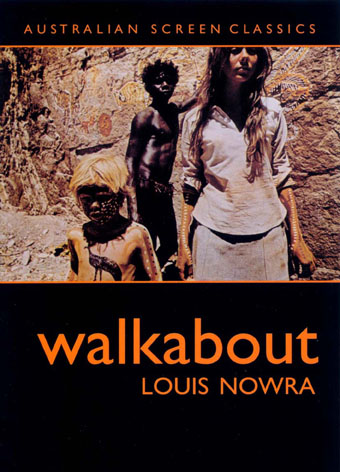
Paul Ryan: Walkabout -- Landscapes of Memory

Walkabout: Landscapes of Memory
By Paul Ryan
Criterion


Some years ago, I screened Nicolas Roeg’s 1973 film Don’t Look Now for a group of international students who were learning English. Rarely have I seen an audience more engaged by what they were watching. We discussed the film afterward, and I was delighted to discover that, despite their limited understanding of the language, these young people had not only grasped the essentials of the fragmented narrative but also picked up most of the nuances of the story. Of course, it should come as no real surprise that Roeg, who first distinguished himself as a cinematographer, would be able to convey a story in visual terms, but it was that audience’s response to the subtleties of the characters’ emotions that most underlined his achievement. The central scene of lovemaking prompted the first, hesitant remark: “It is beautiful when they try to make new baby.” It was obvious that these were not passive spectators. Where some would have seen a thriller, they had observed a tragedy.

Don’t Look Now should be proof enough that, more than any other British filmmaker of his generation, Roeg has the ability to create pure cinema. But the finest example of his gift remains Walkabout (1971), his first solo outing as a director. He had codirected and photographed Performance (1970), but it is generally accepted that, while the look and the pace of that film owe much to Roeg, its “authorship” can be more properly ascribed to its screenwriter, Roeg’s codirector, Donald Cammell. Walkabout is entirely Roeg’s own. Based on the 1959 novel The Children, by James Vance Marshall (a pseudonym for the English writer Donald G. Payne), Walkabout is, like its source material, essentially a coming-of-age story. In Marshall’s novel, the two white children are survivors of a plane crash, and the core of the tale is their journey through the Australian outback and relationship with an aboriginal boy who befriends them—as it is in the film. The book has long been regarded in Australia as a children’s classic along the lines of The Swiss Family Robinson, but Roeg and his screenwriter, Edward Bond, made small, significant changes that took the film into harsher territory.

The first of these was to eliminate the plane crash (initially, perhaps, to avoid similarities to the opening of Peter Brook’s 1963 adaptation of William Golding’s novel Lord of the Flies). They replaced it with the suicide of the children’s father—thus heightening the violence of the opening and personalizing the children’s sense of abandonment. Also heightened was the children’s curiosity about one another, which took on a deeper element of sensuality and, in the case of the girl and the aboriginal boy, nascent sexuality. In a justly famous sequence, the girl swims naked in a lake, and while this can be interpreted as her need to clean and refresh her­self in midjourney, it has an unmistakable element of display. Toward the film’s end, it is the turn of the young aborigine to display, by means of a sexually charged ritual dance directed at the girl. The girl’s fearful rejection of him leads to another major change from the novel. There, the native boy dies from a virus to which he would not have been exposed if not for his encounter with these outsiders; in the film, the young man takes his own life. A film with two suicides and a delicately sensual nude scene was never destined for the label of “children’s classic,” and yet one can sense that Roeg has trust in the reaction of an adolescent audience, for he is speaking the truth of adolescence to us all.

The film had a curious gestation. While working as cinematographer on François Truffaut’s only English-language film, Fahrenheit 451, in 1966, Roeg met the producer Si Litvinoff, who had recently optioned the Anthony Burgess novel A Clockwork Orange. The two met again, and became fast friends, when Roeg was photographing Richard Lester’s 1968 Petulia, and when Litvinoff discovered that Roeg was eager to turn to film direction, he started seriously considering giving him his chance with A Clockwork Orange. Soon afterward, Litvinoff went into partnership with the clothing manufacturer turned producer Max Raab, who was keen to finance A Clockwork Orange and was in favor of Roeg as director. But the new team turned first to Gerry O’Hara’s drama All the Right Noises (1969), and while Litvinoff was continuing to develop the script of A Clockwork Orange with Burgess and screenwriter Terry Southern, he discovered that Roeg had become obsessed with the James Vance Marshall novel, and had approached a writer he greatly admired, the British playwright Edward Bond, to work on a script. Litvinoff helped Roeg acquire the rights to the novel, and Raab agreed to finance Walkabout.

To Read the Rest of the Essay

Bill Moyers Journal: The Earth Conservation Corps

The Earth Conservation Corps
Bill Moyers Journal

"Endangered Species" tells a story of urban blight and community faith. One of America's gleaming symbols of freedom and prosperity, Washington, DC is also home to one of the most impoverished and polluted neighborhoods in America. On the banks of the Anacostia River, the Southeast section of the nation's capital has been an environmental disaster area and a home for violence. But now a non-profit group called the Earth Conservation Corps (ECC), composed of young adults from under-resourced communities, is bringing hope to this neighborhood under siege.

To Watch/Listen to the Episode and Access More Resources

Sunday, March 07, 2010

Allison Kilkenny: Normalizing the police state (and how it ends with taser-firing drones)

Normalizing the police state (and how it ends with taser-firing drones)
By ALLISON KILKENNY
True/Slant

Bob Herbert recently wrote about the overzealous enforcement of “peace officers” assigned to New York City schools. The officers are accused of detaining, searching, handcuffing, and arresting students for silly things like drawing on desks, or handling — not using, but handling — cell phones in school.

In one case, a safety officer kicked in the door of a stall in the boys’ bathroom, wounding a student’s head. The officer’s response to questioning about the matter was: “That’s life. It will stop bleeding.”

Another student, this time a 5-year-old, was shipped off to a hospital psychiatric ward for throwing a tantrum.

These absurd reactions to normal childhood behavior is all part of “Zero Tolerance.” Six-year-old Zachary Christie faced disciplinary action after bringing a Cub Scout utensil that can serve as a knife, fork, and spoon to school. Apparently, the state of Delaware is terrified of children shanking each other, and after all, it’s the era of Zero Tolerance.

Treating children as suspects is the new normal in American culture. There is something innately wrong with children. If they’re too chatty, they need to be medicated. If they’re too angry, they need to be suppressed by a “peace officer.” They are not to be trusted, and must be monitored at all times.

A school in Pennsylvania is accused of covertly activating webcams in school-issued laptops to spy on students. The accusations have generated a lot of outrage, but this is the logical conclusion of the country’s general movement toward a police state. If the NSA can wiretap citizens’ phones, the FBI can infiltrate protest groups, and the police can generally dominate and suppress any kind of protest, why shouldn’t schools be able to monitor student activity?

Americans have already accepted forms of police brutality (macing, sound cannons, tasering) as the inevitable punishments for exercising their First Amendment rights. They have already submitted to the bureaucratic requirements of permits (permits to gather, permits to use a bullhorn,) and the ridiculous spectacle of caged protests where activists are literally penned behind gates and cannot move from their designated locations as they “exercise” their “freedom of speech.”

When the protest spills past the acceptable parameters of activism, the police state shocks the citizenry back into submission. They taser, and mace, and deafen people until they stop fighting.

There hasn’t been too much fuss about this kind of oppression. Some guy got tasered when he asked John Kerry a question, but his fellow citizens mostly laughed about that. Jay Leno had a lot of fun with the “Don’t taze me, bro” stuff. Good times had by all.

To Read the Rest of the Article

Thursday, February 25, 2010

Republican legislator Bob Marshall says disabled children are 'God's punishment' for abortion

(I should start a WTF archive... Courtesy of Gerald Adair)

Video: Republican legislator says disabled children are 'God's punishment' for abortion
Crooks and Liars

When a group of religious-right poobahs unveiled their effort in Virginia last week to attack Planned Parenthood and its funding, one of them -- a Republican legislator named Bob Marshal, as Josh at RightWingWatch reported -- declared that God punished women who've had abortions by giving them disabled children later:

“The number of children who are born subsequent to a first abortion with handicaps has increased dramatically. Why? Because when you abort the first born of any, nature takes its vengeance on the subsequent children,” said Marshall, a Republican.

“In the Old Testament, the first born of every being, animal and man, was dedicated to the Lord. There’s a special punishment Christians would suggest.”


To Read the Rest of the Post and to watch the video of Bob Marshall

Sunday, February 21, 2010

Kamran Afary and Kevin Anderson: Behind the 2009 Upheaval in Iran

Behind the 2009 Upheaval in Iran
By: Kamran Afary and Kevin Anderson
Logos

I. Not a Mere Election Protest

The Friday, June 12 election was widely expected to be a somnolent affair in which
Ahmadinejad coasted to a second term over some lackluster opponents. Instead, the Moussavi campaign quickly heated up, jarring not only the conservative establishment but also sparking a new and supposedly apathetic generation of youth into action. At a rally at the University of Tabriz, Moussavi appealed to youth alienated by the morality police. Students complained of political and gender repression, including cameras in classrooms to prevent conversation among students of the opposite sex.

The Zahra Rahnavard factor also took on great importance, reported Robert Dreyfuss: "Moussavi had another not-so-secret weapon: his wife, Zahra Rahnavard. A noted intellectual and sculptor, Rahnavard campaigned alongside her husband, sometimes holding his hand. Clearly a liberated woman, she called for an end to the much-despised harassment of women by the cultural police and backed equal rights for women. At a vast rally in downtown Tehran, I watched her mesmerize the crowd. 'We are going to make a revolution in the revolution!' she cried. Women in pink lipstick and with blond highlights in partly uncovered hair shouted beside women in black chadors" ("Iran's Green Wave," The Nation, 7/20/09 < http://www.thenation.com/doc/20090720/dreyfuss>)

Rahnavard has been part of the Islamist establishment, but has evolved in a feminist direction in recent years. Independent women's organizations also sprung up during the campaign: "Thirty-four Islamist and secular feminist groups coalesced to form the Women's Movement Convergence, for instance, with nearly 700 activists gathering to hammer out a common platform. A week before the election, the Convergence held a debate with the representatives of the reformist candidates in the Office of the Islamic Revolution's Women to assess which candidate would be most consistently committed to women's rights" (Kaveh Ehsani, Arang Keshavarzian and Norma Claire Moruzzi, "Tehran, June 2009," Middle East Report Online, 6/28/09 )

Nothing helped to discredit Ahmadinejad more than the two weeks of television debates among the presidential contenders, which interrupted regime conservatives' monopoly over the broadcast media. The mass debates on the streets during the late evenings following the debates were crucial in convincing a large majority of the population to participate and to vote against Ahmadinejad.

During the TV debates, Moussavi attacked Ahmadinejad's practice of massive Stasi-like surveillance. He repeatedly denounced Ahmadinejad's bullying of activist students, and pledged to rein in the so called "morality police" who harass young people, especially women. For his part, Karroubi questioned Ahmadinejad about his statements (which he latter had denied) that he was protected by a "halo" from the 12th Shia Imam (the Madhi or Messiah) during his 2005 UN speech. Karroubi, a cleric who holds the rank of ayatollah, termed this the most crass charlatanism. In the June 6 debate, he also quoted a former head of Mossad, who had exulted on Israeli Arabic TV that Ahmadinejad's provocative language actually helped Israel: "If Mossad were to spend hundreds of billions of dollars on someone who would ensure Israeli interests -- no one could do this better than Ahmadinejad." Karroubi added, "Every sentence that Ahmadinejad says against Israel makes things easier for Israel in the world."

After each debate, young and old, men and women, gathered in the streets of Tehran and the provinces to show support for their candidates and argue for or against their policies. The debates emboldened people to openly characterize Ahmadinejad as a compulsive liar. One could argue that a new form of Iranian rap/hip hop was born on the streets during these days. Comic chants and call and responses attest to this. Here is one example: One group would chant: "Should I say it" (mocking Ahmadinejad's ham-handed question to Moussavi during the debate before holding up a copy of Rahnavard's doctoral diploma to question her qualifications). The other group, posing as Moussavi, would say: "Go ahead, say it." Then they all would chant "2X2=7, 2X2=10. 2X2 equals whatever I want it to be." For the first time since the 1979 revolution, the streets of Tehran and other cities were filled with people debating policy with gales of laughter as a form of comic relief.

Four days before the election, on June 8, Ahmadinejad held a boisterous rally of tens of thousands in central Tehran, many of them members of the Basiji militia and their families instructed to attend. But that evening, Moussavi supporters created an even larger outpouring, a human chain that stretched for twelve miles along Tehran's major north-south axis, Vali Asr Street. The fact that they were able to mount this event in more working class South Tehran as well as more affluent North Tehran showed the breadth of their support.

The vast crowds and intense anger stirred up by the brief two weeks of open election campaigning undoubtedly shocked and frightened regime conservatives, who a month earlier had been expecting voter apathy and another low-turnout Ahmadinejad victory, as in 2005. Although the office of the president has limited real power, Moussavi's campaign tactics seemed to suggest that he and Rahnavard would, were he elected, continue to use popular mobilizations to press for change. Moreover, with the opposition crowds growing by the day, there was probably worry as to what would happen had the election gone into a second round, which would have meant yet another week of boisterous reformist rallies. Thus, it is likely that this led regime conservatives to pull the plug at the end of the first round of the campaign, giving Ahmadinejad his stolen "landslide" in an improvised fashion.

There was a brief lull and widespread disbelief immediately after Ahmadinejad was declared the winner on Saturday, June 13. But within hours millions began asking, "Where is my vote?"

As vast numbers of people from all social classes took to the streets to protest the stolen election and its endorsement by Supreme Religious Leader Ali Khamenei, the world media seemed surprised at the movement's scope and persistence, even in the face of severe repression by the Basiji militia. During the week of June 15, demonstrations in Tehran were drawing over a million people, something not seen since the days of the 1978-79 Islamic Revolution. The street protests subsided somewhat by late June in the face of beatings, gunfire, and mass arrests of organizers. By late June, many experts and pundits were predicting that the movement on the streets would collapse or that people like Moussavi or Rafsanjani would compromise with Ahmadinejad and Khamenei. Instead, massive crowds of protestors have continued to appear when circumstances have allowed, as seen in the hundreds of thousands who took to the streets on July 17 as Rafsanjani denounced the repression of protestors in a major public sermon during a Friday prayer service broadcast nationwide over the radio. Moreover, after repression did not stop mass participation in the protests, even the regime conservatives began to argue publicly among themselves.

To Read the Rest of the Essay