Showing posts with label Genre. Show all posts

Sunday, January 23, 2011

Skepchick: Girls, Violence and Dragon Tattoos

Girls, Violence and Dragon Tattoos
by Jen
Skepchick


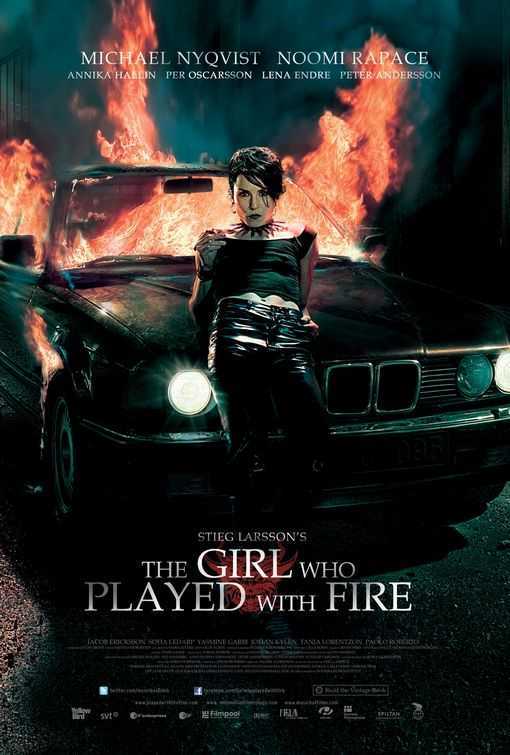
Like many another crime fiction junkie, I’m mildly obsessed with Steig Larsson’s Millennium trilogy. I pounced on the first book, The Girl with the Dragon Tattoo, when it first appeared in the States, and was rather thrilled to discover a good crime story with a startling unique and complex female character at its heart – an unfortunately rare occurrence. All too often, especially historically, women only occupy the backdrops of noir genre tales.

But beyond the story itself, the (anti-)heroine Lisbeth Salander has also seemed to find herself in the middle of a popular criticism debate about women, violence and the representation of both in art. The graphic depiction of both the violence – extremely sexual in nature – she is subject to and the violence she delivers in return has been the justification for critics to discuss whether or not her story deserves to be taken seriously or if it’s nothing but salacious drama only befitting the pulp from which tradition it springs.

Let’s say this immediately and clearly – misogynist imagery does not equal a misogynist work of art. That’s a lazy correlation too many readers, watchers and reviewers currently make about books, films and the like, and it’s simplistic and shallow. Rape scenes do not automatically mean sexual content is being using gratuitously. Descriptions of women being victimized do not immediately point to exploitation.

The impulse to label it as such is of course well-intended, and sometimes well-suited. It’s a sign of progress and, in general, a step in the right direction. But it’s not truly progress if it’s only an impulsive leap to the opposite end of the spectrum instead of a carefully considered conclusion about a terribly complicated and nuanced topic.

Let’s also be clear about this – it’s entirely possible for a book to be feminist without featuring a single feminist in it. Lisbeth Salander, for example, is not a feminist. She’s an extremely emotionally damaged individual focused on survival, although she seems to be at least on the path to improvement by the close of the trilogy. She’s a victim of systematic abuse and torture, and she’s committed to self-preservation and revenge by any means possible. She’s not a necessarily noble figure. She doesn’t have to be to prove Larsson’s point. The fact that she isn’t proves it even more successfully.

To Read the Rest of the Essays

Monday, November 22, 2010

Left Field Cinema: Horror Movies as Modern Day Morality Tales, Pts. 1-5

Analysis: Horror Movies as Modern Day Morality Tales – Introduction
by Mike Dawson
Left Field Cinema

Part one of a five part series asking whether horror movies are the modern day equivalent of the classical morality tales from the years before cinema.


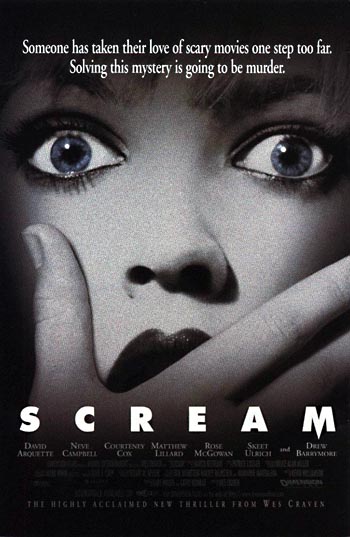
“There are certain rules that one must abide by in order to successfully survive a horror movie. Number one: You can never have sex… Sex equals death… Number two: You can never drink or do drugs. It’s the sin factor, it’s a sin, it’s an extension of number one. And number three, never, ever, under any circumstances say ‘I’ll be right back’, because you won’t be back.” (Craven, 1996)


This quote is taken from the Wes Craven film Scream (1996), a part parody, part pastiche, part postmodern thriller. It can easily be considered the most self-observant horror movie ever made. It examines its own genre clichés and traits with the keenest eye. The ‘sin factor’, which the character of Randy (played by Jamie Kennedy) refers to in Scream, is rightly stated to be the creative force behind these clichés and traits. The ’sin factor’ is central to the nature of horror films, and means that the issue of morality is innate within the genre. The horror film can be viewed as a modern day version of the classical morality tales which took the popular shape of nursery rhymes and fairy tales in the years before cinema was invented. Morality tales are narratives with a clear moral message that is reinforced as the plot unfolds; usually the message of the piece is a warning of some kind that is often set in a metaphorical scenario. The supernatural or hyper real settings and the simplistic plotlines of morality tales are often in place for two reasons. Firstly to simplify the message to a form which is not complicated by the intricacies and ambiguities of the modern world. Secondly to produce messages and warnings about sensitive or recent subjects without directly commenting on those subjects, therefore reducing the culpability for any offence taken by the readership or audience. This is a four part episode and a study of whether horror films can truly be viewed as morality tales, whether the various elements and narrative details of morality tales also apply to horror films.

Horror is arguably films most excessive, extroverted, and exploitative genre, (using in many cases, grim prosthetic effects, sudden bursts of sound or music, incredulous resurrections, and unnecessary scenes of nudity to surprise or titillate the audience) it also has a very conservative undertone intrinsic to most morality tales. This undertone contradicts the violent uncensored approach that most horror films adopt.


The ‘creature feature’ films of the 1950’s are interesting examples where radiation (usually) from A-bombs creates a giant insect or lizard of some kind. This was a thinly veiled metaphor for the then current communist fears, they could be simple everyday creatures like tiny insects, or a friendly next door neighbour, but then nuclear bombs are detonated and they transform into deadly monsters, just as the next door neighbour transforms into a soviet agent ready to invade the USA from within.

P. Wells makes the connection between national fears and the horror movie in the 2000 book The Horror Genre:

“The history of the horror film is essentially a history of anxiety in twentieth century. In the way that fairytales, folktales and gothic romances articulated the fears of the ‘old’ world characterised by a rationale of industrial, technological and economic determinism. Arguably, more than any other genre, it has interrogated the deep-seated effects of change…”


However it has interrogated these effects with a largely conservative bias, essentially fighting against change. This bias is not only in terms of international politics, or xenophobia, but also domestic conservatism.

To Read the Rest of the Introduction

To Listen to the Analysis


The rest of the series:


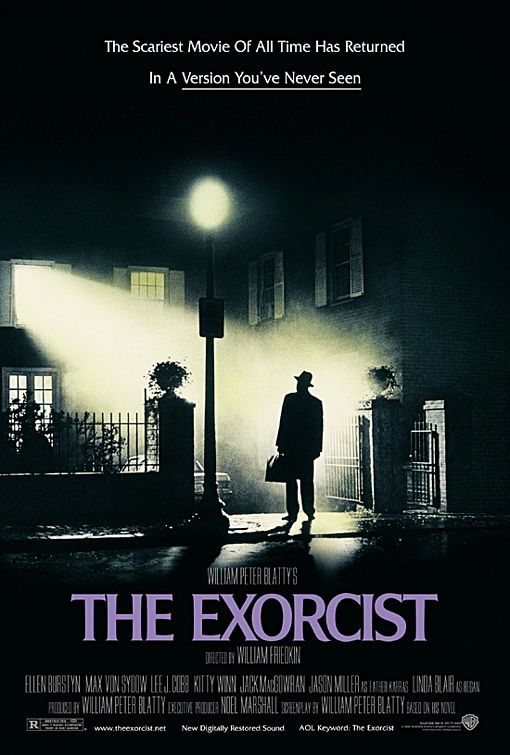
"Horror Movies as Modern Day Morality Tales – The Exorcist."


"Horror Movies as Modern Day Morality Tales – Friday the 13th and Halloween"


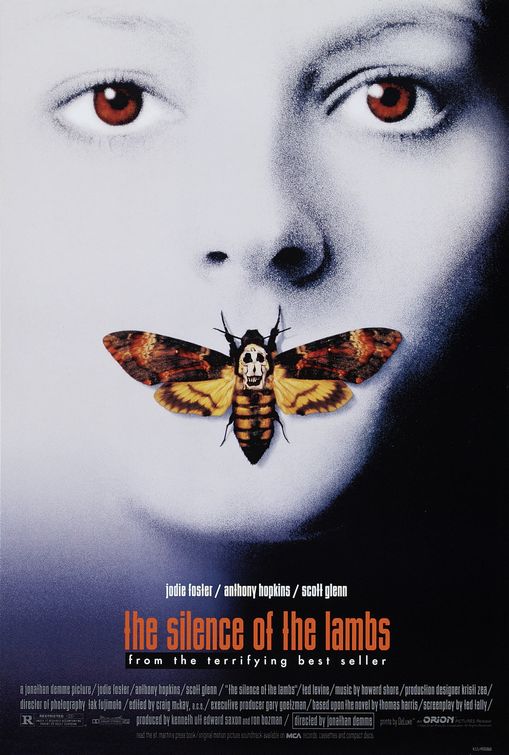
"Horror Movies as Modern Day Morality Tales – The Silence of the Lambs and Se7en."


"Horror Movies as Modern Day Morality Tales – Conclusions."

Monday, August 09, 2010

Gary K. Wolfe and Amelia Beamer: 21st Century Stories

21st Century Stories
by Gary K. Wolfe and Amelia Beamer
Foundation: The International Review of Science Fiction #103


...

Suffice to say that a bewildering array of terms has been suggested to describe recent fiction outside the traditional categories of the fantastic, and that some of these terms are being promoted and treated as actual literary movements. We’ve come a long way since Michael Swanwick, writing in Asimov’s in 1986, could note, “The generation I want to talk about hasn’t been named yet” (Swanwick 314). By now it’s been named with a vengeance. Let’s take slipstream as an example, since many of the stories that we’re discussing in this essay have been called slipstream. The original term, meaning a region of low pressure and forward suction in the wake of a fast-moving vehicle, provides an obvious source for the “piggybacking” that Clute referred to back in 1993. Jeff Prucher, in his Brave New Words: The Oxford Dictionary of Science Fiction, traces the first use of “slipstream” as a back-formation to a Bruce Sterling piece in SF Eye in 1989, where he proposes as shorthand for what he describes as “novels of Postmodern sensibility” (Prucher 189). But the word is also a parody of “mainstream”, according to Bruce Sterling in that same essay (in a column called Catscan). It’s difficult to trace when “mainstream” became a kind of derogatory code term among genre writers, but its first use in critical discourse about science fiction is likely an essay by Rosalie Moore, “Science Fiction and the Main Stream,” which appeared in Reginald Bretnor’s early critical anthology Modern Science Fiction: Its Meaning and Its Future, in 1953. To everyone else, it’s just general fiction—anything shelved in the Fiction & Literature section at your local chain bookstore.

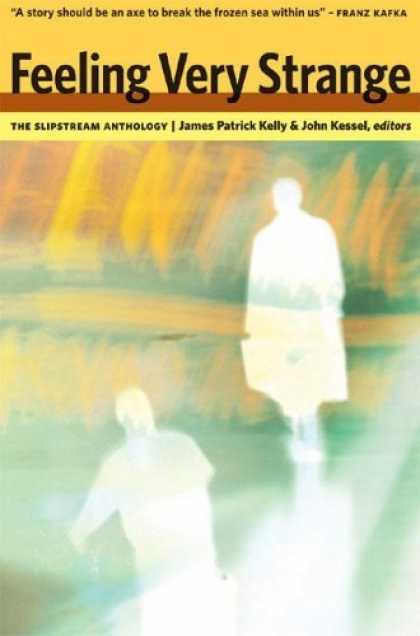
By 2003, in a column in Asimov’s, James Patrick Kelly could describe slipstream as “a type of writing that crosses genre boundaries in and out of science fiction” (Kelly 343), suggesting that it’s a conscious strategy on the part of a number of authors and identifying three in particular—Kelly Link, Karen Joy Fowler, and Carol Emshwiller—as the “muses” of the movement (351). And by 2006, it had all coalesced to the point where Kelly, with his collaborator John Kessel, could edit a slipstream anthology, Feeling Very Strange, only now they defined it as an effect rather than a genre, characterized by a violation of the tenets of realism, an abjuration of specific genre identity, “playful postmodernism,” and above all the quality of (another term from Sterling) “feeling very strange” (Kelly and Kessel, xii-xiii). In Kelly’s terms, slipstream is

a literary effect—in the same way that horror or comedy are literary effects achieved by many different kinds of dissimilar stories. What is that effect? We borrowed the term cognitive dissonance from the psychologists. When we are presented with two contradictory cognitions—impressions, feelings, beliefs—we experience cognitive dissonance, a kind of psychic discomfort that we normally try to ease by discounting one of the cognitions as false or illusory and promoting the other to reality… We think that what slipstream stories do is to embrace cognitive dissonance (Adams interview).


Kessel added, “Many people feel that the world doesn’t make sense according to the structures that held during the 20th century.” By way of example, he described a story by Mary Rickert, “You Have Never Been Here,” as follows: “It is both clearly written and profoundly disorienting. It does not resolve itself easily into any simple category. At times it seems like a dream. At times it seems like a dystopian fantasy. At times it seems to be a rational story told from the point of view of a madman. Just when you think you’ve got it figured out, it takes a left turn. Yet it does not feel arbitrary. This story makes me feel very strange” (Adams interview). Kelly and Kessel’s much-discussed anthology included not only the slipstream “muses” Link, Emshwiller, and Fowler, but also newer writers like Rickert and Benjamin Rosenbaum, writers with “mainstream” credentials like Michael Chabon and Jonathan Lethem, and comparative old-timers like Sterling and Howard Waldrop (not to mention Emshwiller herself, who had been doing something like this since the 1950s). Specific reference to any privileged association with science fiction in particular was omitted from this new definition. Slipstream was no longer viewed as an offshoot of genre SF, but as a mode of writing that might freely allude to all the genres of the fantastic, sometimes even within the same story.

To Read the Rest of the Essay

Monday, May 31, 2010

Green Cine Daily: Michael Jai White

Michael Jai White
GreenCine Daily


Actor and martial artist Michael Jai White (Spawn, The Dark Knight, HBO's Tyson) is the co-writer and eponymous superfly star of Black Dynamite -- a pitch-perfect, two-fisted and two-footed throwback to '70s blaxploitation, directed by Scott Sanders. Premiering in Sundance's "Park City at Midnight" section and already picked up for $2 million by Sony Pictures, the film follows a plot that seemed yanked straight from Fred Williamson's filmography:

When "The Man" murders his brother, pumps heroin into local orphanages, and floods the ghetto with adulterated malt liquor, Black Dynamite is the one hero willing to fight all the way from the blood-soaked city streets to the hallowed halls of the Honky House.


To Read the Rest of the Intro and Listen to the Podcast

Tuesday, April 06, 2010

Steven Shaviro: Kathryn Bigelow

Kathryn Bigelow
by Steven Shaviro
The Pinocchio Theory


Despite all the snarky comments I’ve been getting, both about the film itself and about the director’s two acceptance speeches, I remain unrepentetly thrilled that Kathryn Bigelow won the Best Director and Best Film Oscars for The Hurt Locker. There are just some times when, for me at least, rampant and delirious auteurism trumps everything. I have loved Bigelow’s films ever since I first saw Near Dark in 1987. My book The Cinematic Body (1993) begins with a discussion of Bigelow’s 1990 film Blue Steel; and I wrote a long article on Bigelow’s Strange Days (1995) for this volume. There are just certain directors — not many — who captivate my gaze, and won’t let it go. Bigelow and Abel Ferrara are the only two American directors of their (and my) generation to do so.

I think it might have something to do with a kind of sensory immersion. This is aesthetics, both in the narrower sense of vicarious ravishment by works of art, and in the larger sense of “aesthetics” as a sensibility, a play of the senses, a kind of heightened reception. Near Dark, of course, is a nocturnal film, both as its title indicates and because it is about vampires, for whom sunlight is literally killing. “The night, it’s so bright…” Has there ever been a movie that has so well captured the tonalities of dim light (including starlight and artificial neon light), the ways in which (semi-)darkness is a sensual medium, a tender, welcoming blanket, an atmosphere in which previously unspoken desires can become manifest? These desires include the murders which the vampires must perform in order to feed; but they also include those of a romance in which the woman is the active one, pursuing the man; and Jenny Wright and Adrian Pasdar are both utterly ravishing. Not to mention the great Lance Henriksen as leader of the vampire clan. And then there are the marvelous set pieces, like the scene in the tough country-and-western bar, where the vampires take down a bunch of hardass dudes, while The Cramps’ cover of “Fever” plays on the jukebox… Near Dark is one of the great films about nighttime; and this includes poetic visions of dawn and dusk, and also the scene in which the vampires face a daytime shootout from the cops, the bullet holes in their motel room letting in stabs of murderous sunbeams. The vampires of Near Dark are classic American drifters, unmoored from the social contract, left out of the promises of the American dream, with a “family” that does not conform to bourgeois suburban norms. And although Near Dark ends, as genre pictures must, with the triumph of daylight and of “normalcy,” those nocturnal hauntings are what the movie leaves behind in our minds and hearts.

Blue Steel is, in its own way, as nocturnal a movie as Near Dark; its palette is largely blue-black, with hard neon lighting. Many of its scenes take place in the daytime, but the night scenes are the ones that stick in the mind. Add to that its scary gun fetishism, and Jamie Lee Curtis as a female cop stalked by Ron Silver’s psycho. Curtis’ performance is wonderfully butch, but at the same time she displays more than a hint of wry humor about her situation. This happens even as that situation becomes more and more unbearable, as Silver in effect draws Curtis into a situation of unwanted intimacy and complicity. As I say in my book, “the visual becomes violently tactile” in the course of Blue Steel; “something has happened to the act of looking… Bigelow pushes fetishism and voyeuristic fascination to the point where they explode.” I’d only add that this excess itself becomes sensual, bathed as it is in the alternations of darkness and light.

Point Break is also dominated by the color blue. But it moves in yet another direction, as everything comes out of, and returns back to, the element of water. Bigelow shows us the ocean and the beach as they have never been shown before. The images from this film that remain most in my mind are all those telephoto lens shots of waves breaking on the shore. (Though the images of bank robbers in Presidential masks are also pretty wonderful — especially the shot of “Reagan” as cheerful incendiary). Surfing and skydiving are both modes of activity in which beautifully vapid male bodies give themselves over to the primordial elements. The homoerotic tension/attraction between Keanu Reeves and Patrick Swayze is itself immersed in the dynamics of waves and water. Surfer hedonism is taken up and transcended by the universal upswelling of a fluid dynamics.

To Read the Rest of the Essay

Sunday, November 15, 2009

Mikhail Bakhtin: Speech Genres and Other Late Essays

(Notes)

Bakhtin, Mikhail. Speech Genres and Other Late Essays. Trans. V.W. McGee. Austin: U of Texas P, 1986.

{MB—from Introduction by Vern W. McGee ix-xxiii}
In Bakhtin’s thought the place from which we speak plays an important role in determining what we say (x).

Working as always with a specular subject (a self derived from the other), he makes it clear that speakers always shape an utterance not only according to the object of discourse (what they are talking about) and their immediate addressee (whom they are speaking to), but also according to the particular image in which they model the belief they will be understood {MB—Bakhtin understands this image to be a higher power, an abstract concept, a discipline or body of knowledge, a political institution, humanity in general, etc…}, , a belief that is the a priori of all speech. (xviii)
A common theme running throughout is the need to exceed boundaries, while still recognizing that only through awareness of the very real restraints at work in mental and social life can we do so. (xix)

A note of caution is in order here: Bakhtin’s call to liberation is everywhere informed by a stern awareness of necessity’s central place in the biological limits of our perception, the structure of language, and the laws of society. Our very status as the subjects of our own lives depends on the necessary presence of other subjects. Thus, when Bakhtin says “we are suffocating in the captivity of narrow and homogeneous interpretations,” he is not suggesting there is some freedom beyond interpretation. All understanding is constrained by borders: freedom consists in knowing insofar as possible—for our ability to know is controlled by contextual factors larger then mere individual intention—what those borders are, so that they may be substituted by, translated into different borders. Speech genres provide a good example of this relative degree of freedom: the better we know possible variants of the genres that are appropriate to a given situation, the more choice we have among them. Up to a point we may play with speech genres, but we cannot avoid being generic. There is no pure spontaneity, for breaking frames depends on the existence of frames. (xix)

Bakhtin is arguing here that art is only one (if a fundamentally important) sphere of the larger activity of aesthetics, which encompasses as well most other aspects of life as lived by men and women who manifest their humanity by authoring utterances. Just as in the logosphere that is our home there are genres at work in all our speech, not just in art speech, so is there “everyday ritual,” ritual not confined merely to political or religious life (xx). {MB—end of introductory comments}

There exists a very strong, but one-sided and thus untrustworthy, idea that in order better to understand a foreign culture, one must enter into it, forgetting one’s own, and view the world through the eyes of this foreign culture. This idea, as I said, is one-sided. Of course, a certain entry as a living being into a foreign culture, the possibility of seeing through its eyes, is a necessary part of the process of understanding it; but if this were the only aspect of this understanding, it would merely be duplication and would not entail anything new or enriching. Creative understanding does not renounce itself, its own place in time, its own culture; and it forgets nothing. In order to understand, it is immensely important for the person who understands to be located outside the object of his or her creative understanding—in time, in space, in culture. For one cannot even really see one’s own exterior and comprehend it as a whole, and no mirrors or photographs can help; our real exterior can be seen and understood only by other people, because they are located outside us in space and because they are others. (Bakhtin: 6-7)

In the realm of culture, outsideness is a most powerful factor in understanding. It is only in the eyes of another culture that foreign culture reveals itself fully and profoundly (but not maximally fully), because there will be cultures that see and understand even more). A meaning only reveals its depths once it has encountered and come into contact with another, foreign meaning: they engage in a kind of dialogue, which surmounts the closedness and one-sideness of these particular meanings, these cultures. We raise new questions for a foreign culture, ones that it did not raise itself; we seek answers to our own questions in it; and the foreign culture responds to us by revealing to us its new aspects and new semantic depths. Without one’s own questions one cannot creatively understand anything other or foreign (but, of course, the questions must be serious and sincere). Such a dialogic encounter of two cultures does not result in merging or mixing. Each retains its own unity and open totality, but they are mutually enriched. (Bakhtin: 7)

{MB--Dialogical speakers} do not expect passive understanding that, so to speak, only duplicates his own idea in someone else’s mind. Rather, he expects response, agreement, sympathy, objection, execution, and so forth. (69)
Each rejoinder, regardless of how brief and abrupt, has a specific quality of completion that expresses a particular position of the speaker, to which one may respond or may assume, with respect to it, a responsive position. (72) {MB says—Bakhtin reminding us that all “utterances” are socially situated; see Holloway/Kneale 1999, 77}

Understanding is always dialogic to some degree. (Bakhtin, “The Problem of the Text”: 111)

No natural phenomenon has “meaning,” only signs (including words) have meaning. (Bakhtin, 113) {MB—Thus, if Nature has meaning, it is as a sign/symbol we have constructed/recognized, not as nature itself.)

Can languages and dialects (territorial, social jargons), language (functional) styles (say, familiar daily speech and scientific language and so forth), enter into these relationships, that is, can they speak with one another and so forth? Only if a nonlinguistic approach is taken toward them, that is, if they are transformed into a “world view” (or some language or speech sense of the world), into a “viewpoint,” into “social voices,” and so forth. (Bakhtin, “The Problem of the Text”: 119)
With such transformations the language acquires a unique “author,” a speaking subject, a collective bearer of speech (people, nation, occupation, social group, and so forth). (Bakhtin, “The Problem of the Text”: 119)