Showing posts with label Books. Show all posts

Tuesday, March 22, 2011

To the Best of Our Knowledge: Authenticity

Authenticity
To the Best of Our Knowledge

There's no question – we crave authenticity. You want "real" Chinese or Mexican food? Then make sure you find a restaurant that makes food the way it's made in the old country. Music lovers are also obsessed with authenticity - from folk and blues to rap...just consider the mantra of hip hop - "keeping it real." It's no different in politics. Think about our insatiable hunger for politicians who are genuine, not packaged. In this hour of To the Best of Our Knowledge we'll explore authenticity.

SEGMENT 1:


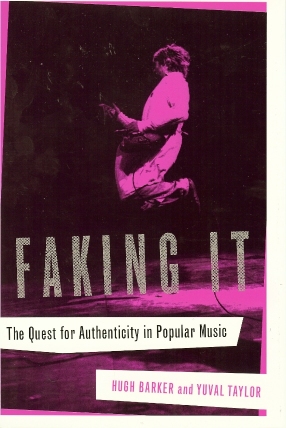
Cultural Critic Richard Todd looked at modern life and saw others telling what is and isn't real. He wrote a book called "The Thing Itself: On the Search for Authenticity." He tells Anne Strainchamps that authenticity is less a condition in itself than a desire. Sherman Alexie is a celebrated fiction writer who is also Spokane and strong opinions about what it means to be a real Indian. Steve Paulson asked him to read an excerpt from his story "The Search Engine." And, music critic Yuval Taylor tells Steve Paulson that authenticity in music is a complicated business. Taylor is the co-author (with Hugh Barker) of "Faking It: The Quest for Authenticity in Popular Music." And we hear examples, from Leadbelly to Punk.


SEGMENT 2:


Vikram Chandra touched off a bidding war among New York publishers for his new novel, "Sacred Games." But he writes in English, the language of the colonizer, and faces accusations that he's not really an Indian writer. Chandra talks with Jim Fleming about his personal history and sense of identity as a writer. And don't look for authenticity on your plate, either! That's the message of Barry Glassner's book, "The Gospel of Food." He talks with Steve Paulson about so-called "authentic" Chinese and Mexican food.


SEGMENT 3:


Alan Doyle, Bob Hallet and Sean McCann are the founding members of the band Great Big Sea. Their music has its roots in Newfoundland traditional folk music, but it rocks! They tells Jim Fleming why they combine folk and rock and how they approach their music. And we hear lots of it. The band's new album is called "The Hard and the Easy."

To Listen to the Episode

Friday, March 18, 2011

Will Potter: Green is the New Red (City Light Books, 2011)

Green is the New Red

Green Is the New Red -- Book Trailer from Will Potter on Vimeo.


To the Best of Our Knowledge: Caveman

Caveman
To the Best of Our Knowledge (Wisconsin Public Radio)

SEGMENT 1:


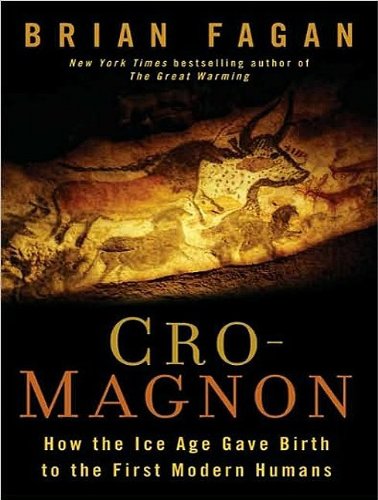
A recent study of DNA from Neanderthal bones changed everything we thought we knew. Paleo Anthropologist John Hawks tells Steve Paulson the new information reveals that modern humans are one to four percent Neanderthal. And Brian Fagan tells Jim Fleming the rest of us is something else - Cro-Magnon. In his book "Cro-Magnon: How the Ice Age Gave Birth to the First Modern Humans," he argues that they were just like us - anatomically modern humans.

SEGMENT 2:


Sir Ian McKellen is heard first, reading from the novel "Wolf Brother" by Michelle Paver. It's part of her "Chronicles of Ancient Darkness" series, set 6000 years ago. She tells Anne Strainchamps how she got interested in the Stone Age.

SEGMENT 3:


Not all cavemen are in the past. The Modern Caveman Movement involves men in urban gyms, grunting and sprinting on all fours, lifting heavy stones, and running barefoot. They're eating a Paleolithic diet of meat, often raw, with no grains or beans or bread or dairy. 72 year-old Arthur De Vany is an economics professor whose physical accomplishments could awe a 20 year-old. He tells Anne Strainchamps it's all about mimicking what our cavemen ancestors would have done. Harvard anthropologist Richard Wrangham says the big question is WHEN did we become human? He tells Steve Paulson it's clearly when we started cooking. Otherwise we would never have survived.

To Listen to the Episode

Sunday, March 13, 2011

Benjamin J. Dueholm: Rules of Misbehavior

Rules of Misbehavior: Dan Savage, the brilliant and foul-mouthed sex columnist, has become one of the most important ethicists in America. Are we screwed?
By Benjamin J. Dueholm
Washington Monthly

...

After twenty years of churning out “Savage Love,” the Seattle writer can lay a legitimate claim to being America’s most influential advice columnist. He is syndicated across the world in more than seventy newspapers—mainly alternative weeklies in the United States—with well over one million in total circulation. Online, he reaches millions more readers. He is a frequent contributor to the popular radio program This American Life, and a “Savage Love” television show on MTV is said to be in the works. His podcast has a higher iTunes ranking than those of Rachel Maddow or the NBC Nightly News, and his four books have sold briskly (a fifth is due out in March). And when it suits him, the range of his commentary has become increasingly broad. In the space of one column—the one where he announced his purchase of Ann Landers’s desk—Savage offered advice to a thirty-year-old woman who wanted to sleep with a seventeen-year-old coworker (“It would be illegal for you to GO AHEAD”), fielded a question from a man with a childbirth fetish, and then, for good measure, advised the Bush administration to take a harder stance on Saudi Arabia.

Savage’s ability to mobilize legions of readers has also matured beyond the lobbing of incendiary Google bombs. Last fall, a streak of suicides by gay teenagers across the country inspired Savage and his husband, Terry, to post a video testimonial on YouTube. The two men recounted their difficulties growing up bullied and harassed, then held up their adult lives—and happiness as a couple—as evidence that, for gay people living in America, “it gets better.” Savage encouraged other people to film their own testimonials and post them online under the heading of the “It Gets Better Project.” A torrent of videos poured in, first from Savage’s regular readers, then from various Hollywood celebrities, and then from leaders in Washington. Hillary Clinton was quickly followed by Nancy Pelosi and President Obama himself, who delivered the line, “Every day, it gets better” from the White House.

It’s not every day that a sitting president takes cues from a sex columnist who once licked Gary Bauer’s doorknob. But for all his prowess as an advice writer and viral activist, Savage’s most lasting influence on American culture may ultimately register in a deeper and more enduringly significant realm: ethics. While he built his following by talking without fear or euphemism about the technical aspects of intimate life, Savage has moved inexorably over the years toward focusing on the moral ones. In so doing, he has carved a unique place for himself in the culture’s discourse about sex. For years, there have been moralizing voices on the right standing athwart the rush of sexual freedoms yelling “Stop,” and there have been others whose policy is to remain nonjudgmental toward sex as a form of expression. Savage yields to no one in his sexual libertarianism, but he has not been content to relegate the ideas of right and wrong to cultural conservatives. Wading deep into the free-fire zone of modern sexuality, he has codified a remarkably systematic—and influential—set of ethics where traditional norms have fallen away. The question is, into what kind of world do his ethics lead us?


s he tells it in the introduction to his first book, Savage Love: Straight Answers from America’s Most Popular Sex Columnist, Savage grew up in a home crammed with newspapers and porn. His grandfather, in whose apartment he lived, was a sportswriter for two Chicago dailies. His older brother stashed away copies of Penthouse and Playboy in the bedroom. He attributes his trajectory toward the advice-giving business to the combined influence of Ann Landers and Xaviera Hollander, who wrote the “Call Me Madam” advice column for Penthouse. He also eavesdropped on his mother, whom he called “a one-woman support group” for neighbors with problems that couldn’t be taken to a priest. The sexual revolution was well and truly on, but in the Savage household, it seems, the distinctions of mid-century American propriety still held. Newspapers casually cluttered the front room, while dirty pictures lurked under the bed. There were problems for priests and problems for sympathetic neighbors, questions for Ann Landers and questions for Xaviera.

These distinctions will be at least vaguely familiar to most Americans over the age of thirty. Savage came of age in the Indian summer of American prudery. Before Savage was born, Alfred Kinsey had begun to vex the identification of moral and behavioral norms in a way that would reverberate through the coming decades. Upon close examination, the zoologist reported, it turned out that the sexual behavior of the human animal—the term is Kinsey’s, and the choice is significant—is a good deal more varied than previously assumed. According to Kinsey’s sensational research, Americans were a lot gayer, more prone to cheating, and more sadomasochistic than the Archdiocese or the Tribune would ever want to acknowledge. Perhaps it was not the conduct of a few on the margins that had failed our moral norms, these findings suggested. Perhaps it was our norms that had failed us.

The ground beneath American sexual conventions was shifting dramatically, but the tremors only registered in mainstream culture with a considerable lag. In a 1967 column, Ann Landers published a “teen sex test” that posed a series of questions (“Have you ever been kissed while in a reclining position?” “Ever gone all the way?”) and assigned points to each one according to its gravity. By tallying up their scores, teens could find out whether they were “pure as the driven snow,” “passionate and headed for trouble,” or “condemned.” As time went by, however, more and more kids drifted toward the “condemned” end of the scale, and Landers had to update the test—first in 1978, then again in 1996.

Landers made her accommodations, but she never did start addressing the emotional and practical difficulties of, say, having a husband who insists on dressing up as a woodland animal when making love—or who wants to deviate from strict monogamy with his wife’s consent. Indeed, it was long difficult to find any cultural medium that navigated successfully between bashfulness and outright smut. Unless, that is, you lived in a city with an alternative weekly. Here was a publication format with one foot in the Tribune and one in the tattoo parlor. No dirty pictures, most likely, but plenty of news and events from the counterculture, an uncensored style book, and a bunch of personal ads aimed at gay men, lesbians, and bisexuals, all available for free at bookstores, coffee houses, head shops, food co-ops, and bohemian-friendly bars. A better setting and a more receptive audience for Dan Savage’s style of advice giving could not have been designed.

What was rather less obvious in 1991, when Savage took his place in the advice game, were the ways in which the explosion of online culture would finally break down the wall between the papers and the porn stash. Once adherents of every kink and fetish could find chat rooms, support groups, specially tailored erotica, and even social networking sites, two things happened: the culture suddenly appeared more sex-drenched than ever, and alternative media sources like the ones that published “Savage Love” could no longer get by simply serving as a bulletin board and instruction manual for erotic explorers. Savage, for his part, seemed to relish this moment of creative destruction, which all but demanded the sex columnist to perform a higher function. To those correspondents who still simply wanted to know where to find other people who shared their special hankerings, or who inquired after the meaning of some obscure sexual term, Savage impatiently pointed out the existence of Google. Instead, in his second decade as a writer, he has increasingly addressed himself to those correspondents troubled by the questions of right and wrong on the new intimate frontier.

To Read the Entire Article

Sunday, March 06, 2011

Media Matters: Andre Schiffrin, Publisher of The New Press

Andre Schiffrin
Media Matters with Bob McChesney

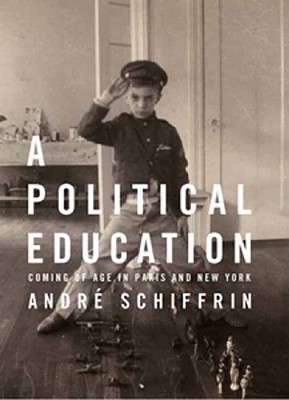
Andre Schiffrin has been a leading figure in the book publishing world for nearly 50 years. As head of Pantheon books Andre Schiffrin edited titles by Jean-Paul Sartre, Studs Terkel, Art Spiegelman, Noam Chomsky and Michel Foucault. In 1990 he resigned and set up the non-profit publishing house The New Press. Schiffrin has also written several of his own books, including A Political Education (Melville House), in which he examines socialist ideas in postwar America.

To Listen to the Conversation

Tuesday, March 01, 2011

Linda Greenhouse: The Rhetoric That Shaped The Abortion Debate

Linda Greenhouse: The Rhetoric That Shaped The Abortion Debate
Fresh Air (NPR)


Before the Supreme Court struck down many state laws restricting abortion in the 1973 landmark case Roe v. Wade, the Justices read briefs from both abortion-rights supporters and opponents.

Pulitzer Prize-winning journalist Linda Greenhouse has collected the best of these briefs — as well as important documents leading up to the decision — in a new book, Before Roe v. Wade: Voices that Shaped the Abortion Debate Before the Supreme Court's Ruling.

In an interview on Fresh Air, Greenhouse explains the arguments in favor of decriminalizing abortion — and the rhetoric used by both sides of the debate that continues to resonate more than 35 years after Roe.

After researching the book, Greenhouse says, she came away with a more nuanced understanding of how the abortion debate has affected so many other issues.

"What the research did indicate to me is how multifaceted the issue is and how the word [abortion] came over time to stand for so much more than the termination of a pregnancy," she says. "It really came to stand for a debate about the place of women in the world."

To Read More and To Listen to the Interview

Sunday, January 23, 2011

Skepchick: Girls, Violence and Dragon Tattoos

Girls, Violence and Dragon Tattoos
by Jen
Skepchick


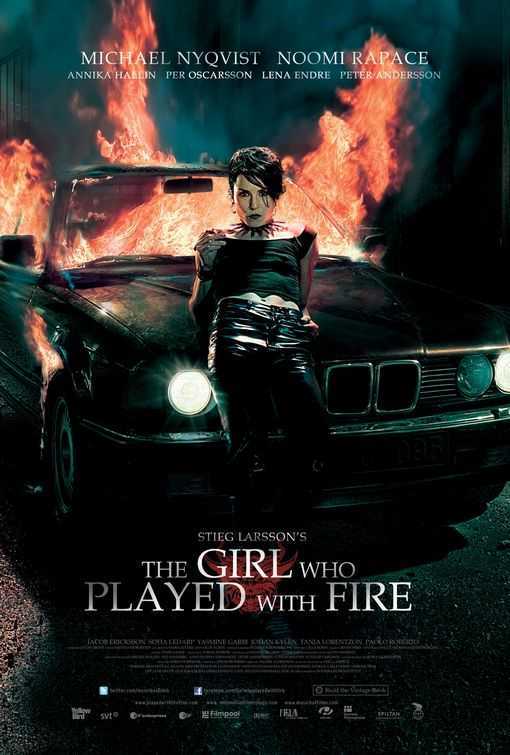
Like many another crime fiction junkie, I’m mildly obsessed with Steig Larsson’s Millennium trilogy. I pounced on the first book, The Girl with the Dragon Tattoo, when it first appeared in the States, and was rather thrilled to discover a good crime story with a startling unique and complex female character at its heart – an unfortunately rare occurrence. All too often, especially historically, women only occupy the backdrops of noir genre tales.

But beyond the story itself, the (anti-)heroine Lisbeth Salander has also seemed to find herself in the middle of a popular criticism debate about women, violence and the representation of both in art. The graphic depiction of both the violence – extremely sexual in nature – she is subject to and the violence she delivers in return has been the justification for critics to discuss whether or not her story deserves to be taken seriously or if it’s nothing but salacious drama only befitting the pulp from which tradition it springs.

Let’s say this immediately and clearly – misogynist imagery does not equal a misogynist work of art. That’s a lazy correlation too many readers, watchers and reviewers currently make about books, films and the like, and it’s simplistic and shallow. Rape scenes do not automatically mean sexual content is being using gratuitously. Descriptions of women being victimized do not immediately point to exploitation.

The impulse to label it as such is of course well-intended, and sometimes well-suited. It’s a sign of progress and, in general, a step in the right direction. But it’s not truly progress if it’s only an impulsive leap to the opposite end of the spectrum instead of a carefully considered conclusion about a terribly complicated and nuanced topic.

Let’s also be clear about this – it’s entirely possible for a book to be feminist without featuring a single feminist in it. Lisbeth Salander, for example, is not a feminist. She’s an extremely emotionally damaged individual focused on survival, although she seems to be at least on the path to improvement by the close of the trilogy. She’s a victim of systematic abuse and torture, and she’s committed to self-preservation and revenge by any means possible. She’s not a necessarily noble figure. She doesn’t have to be to prove Larsson’s point. The fact that she isn’t proves it even more successfully.

To Read the Rest of the Essays

Thursday, December 09, 2010

Robert Darnton: The Library -- Three Jermiads

The Library: Three Jeremiads
Robert Darnton
The New York Review of Books

...

Google represents the ultimate in business plans. By controlling access to information, it has made billions, which it is now investing in the control of the information itself. What began as Google Book Search is therefore becoming the largest library and book business in the world. Like all commercial enterprises, Google’s primary responsibility is to make money for its shareholders. Libraries exist to get books to readers—books and other forms of knowledge and entertainment, provided for free. The fundamental incompatibility of purpose between libraries and Google Book Search might be mitigated if Google could offer libraries access to its digitized database of books on reasonable terms. But the terms are embodied in a 368-page document known as the “settlement,” which is meant to resolve another conflict: the suit brought against Google by authors and publishers for alleged infringement of their copyrights.

Despite its enormous complexity, the settlement comes down to an agreement about how to divide a pie—the profits to be produced by Google Book Search: 37 percent will go to Google, 63 percent to the authors and publishers. And the libraries? They are not partners to the agreement, but many of them have provided, free of charge, the books that Google has digitized. They are being asked to buy back access to those books along with those of their sister libraries, in digitized form, for an “institutional subscription” price, which could escalate as disastrously as the price of journals. The subscription price will be set by a Book Rights Registry, which will represent the authors and publishers who have an interest in price increases. Libraries therefore fear what they call “cocaine pricing”—a strategy of beginning at a low rate and then, when customers are hooked, ratcheting up the price as high as it will go.

To become effective, the settlement must be approved by the district court in the Southern Federal District of New York. The Department of Justice has filed two memoranda with the court that raise the possibility, indeed the likelihood, that the settlement could give Google such an advantage over potential competitors as to violate antitrust laws. But the most important issue looming over the legal debate is one of public policy. Do we want to settle copyright questions by private litigation? And do we want to commercialize access to knowledge?

I hope that the answer to those questions will lead to my happy ending: a National Digital Library—or a Digital Public Library of America (DPLA), as some prefer to call it. Google demonstrated the possibility of transforming the intellectual riches of our libraries, books lying inert and underused on shelves, into an electronic database that could be tapped by anyone anywhere at any time. Why not adapt its formula for success to the public good—a digital library composed of virtually all the books in our greatest research libraries available free of charge to the entire citizenry, in fact, to everyone in the world?

To dismiss this goal as naive or utopian would be to ignore digital projects that have proven their worth and feasibility throughout the last twenty years. All major research libraries have digitized parts of their collections. Since 1995 the Digital Library Federation has worked to combine their catalogues or “metadata” into a general network. More ambitious enterprises such as the Internet Archive, Knowledge Commons, and Public.Resource .Org have attempted digitization on a larger scale. They may be dwarfed by Google, but several countries are now determined to out-Google Google by scanning the entire contents of their national libraries.

In December 2009 President Nicolas Sarkozy of France announced that he would make €750 million available for digitizing the French cultural “patrimony.” The National Library of the Netherlands aims to digitize within ten years every Dutch book, newspaper, and periodical produced from 1470 to the present. National libraries in Japan, Australia, Norway, and Finland are digitizing virtually all of their holdings; and Europeana, an effort to coordinate digital collections on an international scale, will have made over ten million objects—from libraries, archives, museums, and audiovisual holdings—freely accessible online by the end of 2010.

If these countries can create national digital libraries, why can’t the United States? Because of the cost, some would argue. Far more works exist in English than in Dutch or Japanese, and the Library of Congress alone contains 30 million volumes. Estimates of the cost of digitizing one page vary enormously, from ten cents (the figure cited by Brewster Kahle, who has digitized over a million books for the Internet Archive) to ten dollars, depending on the technology and the required quality. But it should be possible to digitize everything in the Library of Congress for less than Sarkozy’s €750 million—and the cost could be spread out over a decade.

The greatest obstacle is legal, not financial. Presumably, the DPLA would exclude books currently being marketed, but it would include millions of books that are out of print yet covered by copyright, especially those published between 1923 and 1964, a period when copyright coverage is most obscure, owing to the proliferation of “orphans”—books whose copyright holders have not been located. Congress would have to pass legislation to protect the DPLA from litigation concerning copyrighted, out-of-print books. The rights holders of those books would have to be compensated, yet many of them, especially among academic authors, might be willing to forgo compensation in order to give their books new life and greater diffusion in digitized form. Several authors protested against the commercial character of Google Book Search and expressed their readiness to make their work available free of charge in memoranda filed with the New York District Court.

Perhaps even Google itself could be enlisted in the cause. It has digitized about two million books in the public domain. It could turn them over to the DPLA as the foundation of a collection that would grow to include more recent books—at first those from the problematic period of 1923–1964, then those made available by their rights holders. Google would lose nothing by this generosity; each digitized book that it made available could, if other donors agree, be identified as a contribution from Google; and it might win admiration for its public-spiritedness.

Even if Google refused to cooperate, a coalition of foundations could provide enough to finance the DPLA, and a coalition of research libraries could provide the books. By working systematically through their holdings, a great collection could be formed. It would conform to the highest standards in its bibliographical apparatus, its scanning, its editorial decisions, and its commitment to preservation for the use of future generations.

Should the Google Book Search agreement not be upheld by the court, its unraveling would come at an extraordinary moment in the development of an information society. We have now reached a period of fluidity, uncertainty, and opportunity. Things have come undone, and they can be put together in new ways, subordinating private profit to the public good and providing everyone with access to a commonwealth of culture.

Would a Digital Public Library of America solve all the other problems—the inflation of journal prices, the economics of scholarly publishing, the unbalanced budgets of libraries, and the barriers to the careers of young scholars? No. Instead, it would open the way to a general transformation of the landscape in what we now call the information society. Rather than better business plans (not that they don’t matter), we need a new ecology, one based on the public good instead of private gain. This may not be a satisfactory conclusion. It’s not an answer to the problem of sustainability. It’s an appeal to change the system.

To Read the Entire Essay

Wednesday, December 01, 2010

Michael Azar: The stranger, the mother and the Algerian revolution -- A postcolonial reading of Albert Camus

The stranger, the mother and the Algerian revolution: A postcolonial reading of Albert Camus
by Michael Azar
Eurozine

The purely existential themes of The Stranger hide Camus' critique of the discriminatory nature of French rule in Algeria. Yet Camus never entirely renounced the civilizing premise of colonialism. The reason lies in his relation to his mother, writes Michael Azar on the fiftieth anniversary of Camus' death.


In The Myth of Sisyphus Albert Camus seeks his own answer to the question that Kierkegaard, Dostoevsky and Nietzsche have bequeathed to us: is it possible to live without God, without any hope of salvation as death looms? At first sight the outlook is bleak: we are, says Camus, thrust into existence as into an exile with no return. From the viewpoint of eternity, we are passions that can never be satisfied, cries that go unheard. Human beings and the world do not mix. He sums up man's tragic existence in one word: the absurd. It emerges from the fracture between the soul's desperate desire for clarity and the incomprehensibility of reality, the gap between our craving for meaning and the cold grave that awaits us. Camus understood early on that reason – the traditional weapon of philosophy – would always be powerless to address the futile, ill-fated game of existence.

Even so, the work essentially represents a manifesto for revolt and the ecstasy of life. It is a passionate revolt that answers the question of the meaning of life: if there is any raison d'être worthy of the name, it is born of a piece of trembling flesh. Desire, affection and generosity: these are the bread and wine of the mortal human being. Anyone who does not live to serve an immortal Creator must become a creator himself. The absurd man, as Camus calls his hero, transforms his days into a work of art, a defiant celebration of the battle which, as he knows from the outset, must eventually end in his death. Camus quotes Nietzsche: "It is not a question of eternal life but of being eternally alive."[1] It is the destiny of the absurd man to try to make something out of the nothingness, to grasp his life from death itself. Sisyphus shows us the way: happiness is the leap we make both with and in spite of our burden.

To Read the Rest of the Essay

Sunday, November 28, 2010

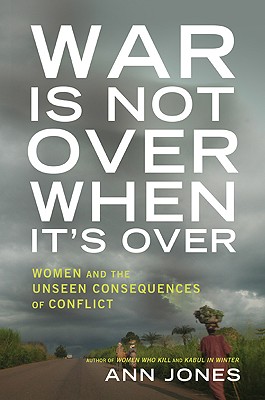
Progressive Radio Show: Ann Jones -- War Is Not Over When It's Over

Progressive Radio Show

Ann Jones, author of "War Is Not Over When It's Over."


To Listen to the Interview

To the Best of Our Knowledge: Boots on the Ground

Boots on the Ground
To the Best of Our Knowledge (Wisonsin Public Radio)

Iraq. April 6, 2004. This day marked the Marines' heaviest fighting since Vietnam and was the start of the Iraqi insurgency. By the end of the day more than 40 Marines and hundreds of Iraqis were dead. In this hour of To the Best of Our Knowledge, a day that transformed the war in Iraq. General Sanchez, commander of US forces that day, will give us his perspective. And, we'll talk with the Marines who were there about a day they'll never forget.

SEGMENT 1:


This hour takes a look back at one momentous day during the war in Iraq: April 6, 2004 saw the birth of the Iraqi insurgency and the heaviest fighting the U.S. Marines had encountered since Vietnam. Donovan Campbell commanded a platoon of Marines in Ramadi. He tells Steve Paulson that to understand the events of April 6, you have to know what went on the night before. He also tells the story in his memoir, "Joker One."

SEGMENT 2:

Lieutenant General Ricardo Sanchez served as Commander of Coalition Forces in Iraq from June 2003 to June 2004. He shared power with Paul Bremer, the Administrator of the Coalition Provisional Authority. Sanchez commanded Coalition Forces during the capture of Saddam Hussein, the revelation about Abu Ghraib and on April 6, 2004. His memoir is called "Wiser in Battle: A Soldier's Story." General Sanchez recalled his service in this candid discussion with Steve Paulson.

SEGMENT 3:

Steve Levin is the producer of a documentary film, "Jerabek," which follows the family of a young Marine killed in the ambush at ar-Ramadi on April 6, 2004. Levin talks with Anne Strainchamps about his film and its subject - Ryan Jerabek, his family and community. Also, journalist David Swanson was embedded in ar-Ramadi with Ryan Jerabek's unit the day Ryan died. He tells Jim Fleming the Marines knew that location was dangerous and resented having to patrol there every day at the same time. David Swanson is a staff photographer at the Philadelphia Inquirer. His war photography is available HERE.

To Listen to the Episodes and Access More

Radio West: Remembering Roald Dahl

Remembering Roald Dahl
Radio West (KUER:The University of Utah)


Tuesday marked the 20th anniversary of Roald Dahl's death, and Doug is joined by Dahl's biographer and friend Donald Sturrock. Roald Dahl is of course the creator of the children's classics "Charlie and the Chocolate Factory" and "James and the Giant Peach," and his own life was as funny, dark and fascinating as the fictional worlds he created. We'll talk about his story and about his evolution as a storyteller.

To Listen to the Episode

Saturday, November 27, 2010

John McManus -- Detecting Bull: How to Identify Bias and Junk Journalism in Print,Broadcast and on the Wild Web

John McManus -- Detecting Bull: How to Identify Bias and Junk Journalism in Print,Broadcast and on the Wild Web
Media Matters with Bob McChesney (WILL: Illinois Public Media)


John McManus directs Grade the News. A former newspaper reporter, journalism professor and media researcher, he has written extensively about media, particularly about how markets shape news. His book, Market-Driven Journalism: Let the Citizen Beware? won the Society of Professional Journalists' Research Prize in 1994. He earned his Ph.D. at Stanford University. His latest book is "Detecting Bull."

To Listen to the Conversation

Tuesday, November 02, 2010

Left Field Cinema: Terrence Malick -- The Thin Red Line

(Left Field Cinema, even when I disagree with Mike Dawson's analysis, is my favorite film analysis podcast. This is because of Dawson's historical contextualization of the filmmakers' place in film history, his analysis of the aesthetic components of the films, and his discussion of the political implications of the narrative. This episode is the best one he has done so far, and it led to my immediate purchase of the new Criterion edition of the film.)

Terrence Malick: The Thin Red Line
by Mike Dawson
Left Field Cinema


...

Malick has never been one to follow trends of time or location, although he has always worked for American cinema, his films bare little resemblance to those of his peers or even his own back catalogue. He deliberately changes genre, subject and time period from film to film; but in each case he deconstructs the romantic ideals of the subjects he’s chosen in distinctively Malickian ways. He has a head start in The Thin Red Line; James Jones was notorious for his anti-war/anti-military stance, his criticisms of the US military were toned down for Fred Zinnemann’s film adaptation of From Here to Eternity (1953), although the film remains powerful in its condemnation of the military attitudes and procedures, the systemic nature of military brutality is not conveyed in the film. Malick takes Jones’ story and characters and makes his own anti-war message, one that Jones might well have been proud of even if the finished film is far from faithful to novel and the mode of attack is far from Jones’ own methods. Malick’s film isn’t about World War II in particular - it’s about war in general. World War II had long been off the menu for critical attacks, the threat posed by Germany and Japan to the rest of the world means that in the eyes of most World War II was an entirely justified conflict, necessary to halt the advance of evil perpetrated by dictators and tyrants. However with an estimated seventy million dead there is more than enough pacifist justification to appose World War II or at least de-romanticise it. Wars will always continue to be fought so long as men are such fools as to go to them; this is a murky area as without opposition German and Japanese oppression and genocide would have continued unchecked, but then again as Welsh angrily states: “Property, the whole Goddamn thing’s about property!” Malick’s tactic is to portray a world of equals and contrasts, he sets the film in a lush and exotic landscape, and then watches as mankind decimates said landscape with artillery, grenades, and guns. All the while nature continues with its business, nature is not even aware of the abstract concept of property, some of the time Malick seems to count the native people living on the island amongst the natural world and outside of this conflict, they exist separate from the fighting which ensues around them as brilliantly illustrated in an early scene when a line of soldiers make their way towards the centre of the island, an elderly tribesman wonders past Sergeant Storm (John C. Riley), Storm watches him but the islander continues uninterested to the point of being unaware of what the soldiers are doing. In the BFI Companion to The Thin Red Line, Michel Chion states: “In contrast to [Andrei] Tarkovsky’s world, in which nature is also very present, with Malick nothing in nature ever gives any sign to human beings.” (12, Chion). Nature in Tarkovsky’s films is omnipresent, visceral and absolute, with air, fire, water, and earth constantly pushing his narratives in different directions or making comments on the actions of his characters. In Malick’s film nature is on a different plain, it exists in a different dimension to the artifice of man, it allows this petty little war over property but eventually it will re-conquer this island and indeed the rest of the world long after man has destroyed itself. Although there are examples where man effects nature in the film; a group of soldiers capturing a crocodile, reminding us of the opening shot of the film, the crocodile is tied up and lies still despite the men’s attempts to goad it - nature ignores them. Another example sees a small bird, which has been presumably scorched by artillery slowly crawling away from a burnt tree and trying to open its wings, even if man has ended this creature’s life it will continue onwards oblivious to what caused its injuries. In possibly the most single stunning image of the entire film a distinctive blue butterfly passes the length of the screen in slow motion as the soldiers plough into battle, the butterfly is unaffected by the carnage and ignorant of the reasons why this battle is even occurring. Chion again states: “The world we admire does not need to be looked at to be beautiful. The world does not cease to live because men are making war: the wind continues to blow, the grass to wave, the sun to appear and disappear behind the clouds and to brighten the colours of the world; the dawn continues to break.” (33, Chion) After Francis Ford Coppola’s Apocalypse Now (1979), Michael Cimino’s The Deer Hunter (1978) Oliver Stone’s Platoon (1986) and Stanley Kubrick’s Full Metal Jacket (1987) the anti-war movie had it’s teeth very firmly into the Vietnam War. Such an obviously pointless conflict with such a horrific loss of life for absolutely nothing, surely World War II can not be compared to the Vietnam War, but Malick strips away everything that was noble and righteous about World War II and leaves us with an empty battle for an island that no one really wants. He demonstrates the futility of this war via the ignorance of nature towards it. Will this be remembered in a thousand years? Probably not. Will this be remembered in a million years? Definitely not. Nature strives forward, at war with itself, the vines continue to ensnare the trees, the Crocodile continues to swim for food, the trees grow, the fruit falls. Colonel Tall (Nick Nolte) states at one point “Nature is cruel” he is of course wrong - man is cruel - nature is oblivious. Storm later tells Welsh in a quiet scene between the two men "I don't care about nothing anymore" to which Welsh replies "That sounds like bliss". Storm has seen the pointlessness of it all, Welsh believes it’s pointless but can’t help but apply some sort of metaphysical justification to it all - no matter how much he resists. Such justifications are truly the work of man and cloud us from the devastating truth. Unlike Spielberg or Marton, Malick does not celebrate war in any sense; he doesn’t celebrate the soldiers, the conflict, the ends or the means. Whilst Saving Private Ryan and Marton’s Thin Red Line do depict the horrors of war, young men meeting violent ends at the hands of other men. They do not depict the most horrific part of any war - the hopeless pointlessness of it all.

To Read the Entire Essay

To Listen to Part 1

To Listen to Part 2

To Listen to Part 3

Monday, November 01, 2010

The Verso Book of Dissent: From Spartacus to the Shoe-Thrower of Baghdad

Highly recommended... using this to keep my revolutionary spirit alive as I navigate the bureaucratic hoops of the tenure process ... my copy was only 14 bucks new.

The Verso Book of Dissent: From Spartacus to the Shoe-Thrower of Baghdad

Sunday, October 17, 2010

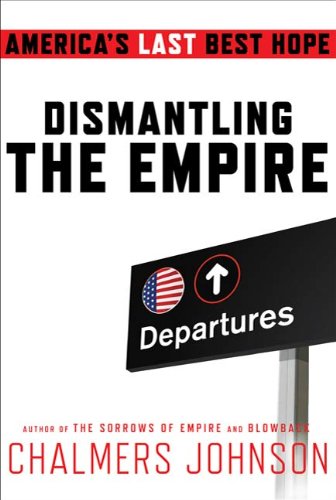
Chalmers Johnson: An Empire of Bases

An Empire of Bases
TomDispatch

Chalmers Johnson discusses how the US became an unprecedented empire of bases, as well as the topic of his new book "Dismantling the Empire."


To Listen to the Interview

Saturday, October 16, 2010

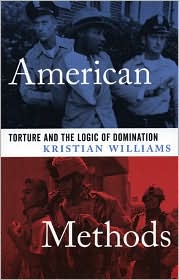
Kristian Williams: American Methods: Torture and the Logic of Domination

(Extra credit opportunity for HUM 121 students--watch the episode and write a response)

Kristian Williams: American Methods: Torture and the Logic of Domination
FORA TV (Originally broadcast on C-SPAN)


In American Methods author Kristian Williams argues that the U.S. Government has used torture as a method of social control and terror since the 1980s. Mr. Williams cites the 2004 Abu Ghraib prison incident, where American military personnel were investigated for the abuse of prisoners, as an example of traditional American torture. This event was hosted by Elliott Bay Book Company in Seattle, Washington.

Kristian Williams' writings have appeared in CounterPunch, Columbia Journalism Review, and We Are Everywhere: The Irresistible Rise of Global Anti-Capitalism. A member of Rose City Copwatch in Portland, Oregon, Williams also authored Our Enemies in Blue. There is no transcript for this program

To Watch the Episode

Tuesday, October 05, 2010

Salon Radio: Eric Boehlert -- Bloggers on the Bus -- How the Internet Changed Politics and the Press

Eric Boehlert's new book about political blogs
By Glenn Greenwald
Salon

Eric Boehlert has just released a truly superb, illuminating and entertaining new book: Bloggers on the Bus: How the Internet Changed Politics and the Press. As the title suggests, the book examines the impact which the blogosphere has had on both journalism and political activism, and it is, in my view, by far the best book yet to examine the rise of political blogs. Boehlert is my guest today on Salon Radio to talk about the issues raised by this new book.

In order to dispel stereotypes and myths propagated about bloggers (mostly by establishment journalists eager to demonize what they perceive as their competitors), Boehlert focuses on 8-10 bloggers, and writes in detail about their background and what brought them to blogging. There is a chapter that focuses heavily on the fight over FISA and telecom immunity, which also includes a discussion of the work I've done (and provides a lot more information and details about me than, frankly, I expected or desired). Today, Salon has published a partial excerpt from that chapter, and it thoroughly highlights how that fight was waged and what it reflects about the ability of bloggers and their readers to affect our political debates.

Boehlert's book is a very balanced and provocative examination of the role blogs now play, and he devotes an entire chapter -- perhaps the most interesting one -- to the acrimonious civil war that erupted during the Obama-Clinton primary fight. He also examines what role bloggers now play in light of Obama's victory. One of Boehlert's specialties, as a Senior Fellow at Media Matters and author of the equally excellent Lapdogs, is the profoundly corrupted establishment media, and the book does an excellent job of describing the dynamic between establishment journalists and blogs.

To Read the Transcript and/or Listen to the Interview

Wednesday, September 29, 2010

Charles Dickens: "It was the best of times, it was the worst of times..."

"It was the best of times, it was the worst of times, it was the age of wisdom, it was the age of foolishness, it was the epoch of belief, it was the epoch of incredulity, it was the season of Light, it was the season of Darkness, it was the spring of hope, it was the winter of despair, we had everything before us, we had nothing before us, we were all going direct to heaven, we were all going direct the other way - in short, the period was so far like the present period, that some of its noisiest authorities insisted on its being received, for good or for evil, in the superlative degree of comparison only."

Charles Dickens, A Tale of Two Cities (1859)