Showing posts with label Authenticity. Show all posts

Tuesday, March 22, 2011

To the Best of Our Knowledge: Authenticity

Authenticity
To the Best of Our Knowledge

There's no question – we crave authenticity. You want "real" Chinese or Mexican food? Then make sure you find a restaurant that makes food the way it's made in the old country. Music lovers are also obsessed with authenticity - from folk and blues to rap...just consider the mantra of hip hop - "keeping it real." It's no different in politics. Think about our insatiable hunger for politicians who are genuine, not packaged. In this hour of To the Best of Our Knowledge we'll explore authenticity.

SEGMENT 1:


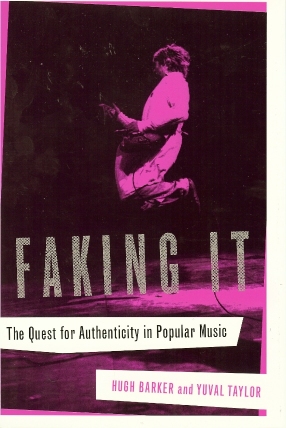
Cultural Critic Richard Todd looked at modern life and saw others telling what is and isn't real. He wrote a book called "The Thing Itself: On the Search for Authenticity." He tells Anne Strainchamps that authenticity is less a condition in itself than a desire. Sherman Alexie is a celebrated fiction writer who is also Spokane and strong opinions about what it means to be a real Indian. Steve Paulson asked him to read an excerpt from his story "The Search Engine." And, music critic Yuval Taylor tells Steve Paulson that authenticity in music is a complicated business. Taylor is the co-author (with Hugh Barker) of "Faking It: The Quest for Authenticity in Popular Music." And we hear examples, from Leadbelly to Punk.


SEGMENT 2:


Vikram Chandra touched off a bidding war among New York publishers for his new novel, "Sacred Games." But he writes in English, the language of the colonizer, and faces accusations that he's not really an Indian writer. Chandra talks with Jim Fleming about his personal history and sense of identity as a writer. And don't look for authenticity on your plate, either! That's the message of Barry Glassner's book, "The Gospel of Food." He talks with Steve Paulson about so-called "authentic" Chinese and Mexican food.


SEGMENT 3:


Alan Doyle, Bob Hallet and Sean McCann are the founding members of the band Great Big Sea. Their music has its roots in Newfoundland traditional folk music, but it rocks! They tells Jim Fleming why they combine folk and rock and how they approach their music. And we hear lots of it. The band's new album is called "The Hard and the Easy."

To Listen to the Episode

Wednesday, November 24, 2010

Scott Tobias: The New Cult Canon -- Donnie Darko (2001)

Donnie Darko
by Scott Tobias
The New Cult Canon (The A.V. Club)


In embarking on the mammoth, open-ended project that is The New Cult Canon, I face the scary and exhilarating prospect of a journey with no set course and no planned destination, but there was never a question that I'd be leaving port with Richard Kelly's Donnie Darko. To my mind, Donnie Darko is the quintessential cult movie of the last 20 years: Here was a much-hyped washout at Sundance that fell to a second-tier distributor (Newmarket), which released the film to middling reviews and feeble arthouse box-office (barely half a million when all was said and done). The film was left for dead until, miraculously, word of mouth started to swell and an audience steadily grew and rallied around it. The Pioneer Theater in New York ran it as a midnight movie for two years—this at a time when the midnight movie itself had long been left for dead. And DVD sales were so robust that Newmarket attempted to re-release the "Director's Cut" theatrically. (It tanked a second time, too.) The movie has inspired a level of obsession that separates cult phenomena from the everyday hits that wither past opening weekend.

I saw Donnie Darko three times in the theater: Once at the press screening, where I was apoplectic to find many of my fellow critics shrugging their shoulders; a second time during its two-week run here in Chicago, where I saw it with maybe five or six other people in the theater; and a third time at the Gene Siskel Film Center, where it kept coming back month after month to packed houses, including the near-soldout showing I attended. (And on a weeknight, no less!)

Why did I and so many others keep shuffling, zombie-like, to see this movie again and again in the theater? It certainly isn't perfect—films this crazily ambitious, from a first-time director no less, are rarely flawless—but Donnie Darko accomplishes perhaps the one thing I value most in cinema: It creates a world to get lost in, so particular and full of life that other concerns (in this case, an overstuffed mind-bender of a plot that has never quite cohered for me) fall by the wayside. And though I'll probably be defining cult movies a million different ways in this column, that's likely the common denominator, because once you have the ins and outs of the story figured out, what's the point of seeing a movie a second or third or hundredth time? The world of the film is paramount.

To Read the Rest of the Essay

Monday, July 05, 2010

Jonathan Rosenbaum: DVDs -- A New Form of Collective Cinephilia

DVDs: A New Form of Collective Cinephilia
by Jonathan Rosenbaum
Cineaste


...

For far too long, an absolutist either/or mentality has been ruling the debate about changes in global film culture brought about by DVDs (and much the same mentality has needlessly assumed that we have to “choose” between reading about film on paper or on the Internet). Presumably, one is forced to either go along with the doubts and demurrals of some of my favorite programmers and archivists, such as the Austrian Film Museum’s Alexander Horwath and the Cinematheque Ontario’s James Quandt, who stand up for original formats, or to embrace the more optimistic projections of bloggers such as myself and Girish Shambu, who tend to emphasize how many films can be seen nowadays on DVD over the diminished properties and quality of image and sound found in nontheatrical venues.

Perhaps the most detailed recent expression of the archivist position was voiced by Quandt in a roundtable on cinephilia in the Spring and Fall 2009 issue of Framework, as well as in an online interview with Michael Guillén on the latter’s blog, The Evening Class, where he maintains, “I think we’re all lying to ourselves... when we analyze a film on DVD [and] we act as if we’ve seen it and we haven’t…. What has been lost in the whole discussion is the fact that you are seeing a facsimile, sometimes a very good facsimile, but we’re fooling ourselves that we’re seeing the real thing. I fear that the real thing is going to be lost.” Among his more persuasive examples are the films of Robert Bresson (discussed in Framework) and Lisandro Alonso (discussed in his interview with Guillén). And even in Per-Olof Atrandberg’s pidgin English on the invaluable DVDBeaver Website, in a discussion of three separate DVD editions (American, English, and French) of Jacques Rivette’s Histoire de Marie et Julien, the same message comes through loud and clear: “Histoire de Marie et Julien is made for cinema distribution, and it’s there this film is at the best. Shot in dark scenes in low light (natural light), the DVD can’t capture the atmosphere. Where it should be black it becomes greenish and some scenes don’t function as well as in a cinema.”

As Quandt puts it, we tend to be far too accepting of degraded substitutes for theatrical 35mm screenings. But to some extent this has always been a major problem, and not something that only became an issue with DVDs. The first several times I saw Dreyer’s Day of Wrath, over roughly a quarter of a century, the quality of both the sound and the image was so inadequate, regardless of whether I was seeing the film in 16mm or (less often) 35mm, that I scarcely had a clue about the film’s greatness before I finally saw a restored, new print during a Paris rerelease in the late Eighties. And it’s very important to add that seeing the Criterion DVD is much closer to the latter experience than it is to the former. For that matter, the last time I saw Dreyer’s Vampyr, when I was showing it in a course at Chicago’s School of the Art Institute, I had a choice between showing an unsubtitled German print in 35mm and a subtitled DVD, and I had no problem with opting for the latter.

Surely the varieties of contemporary film viewing are already wide enough to encompass both kinds within the experiences of most cinephiles. Even those film lovers I know who live in remote rural outposts and depend mainly on digital viewing typically venture into cities periodically in order to view some films in more optimal form. I would argue, in fact, that what qualifies as “optimal” viewing can vary enormously from film to film and from one set of conditions to another. Although obviously all of us should see Eisenstein’s Ivan the Terrible in new 35mm prints, I’m not at all certain that all of us should forego the rich edifications of Yuri Tsivian and Joan Neuberger’s audiovisual essays about the film on Criterion’s DVD in exchange for that privilege. So we need to step away from absolutist positions about the future and make use of the best possible choices available to us in the present.

It’s also worth considering new and mostly untapped possibilities of ciné-clubs forming in which DVDs can be viewed in people’s homes or various storefronts—a collective form of film watching that could ideally combine some of the best features of traditional repertory, art-house, and film-club exhibition with some of the newer possibilities brought by DVDs and Internet film culture. It might be argued that this practice already exists and even flourishes with various agitprop documentaries by Robert Greenwald (e.g., Unprecedented: The 2000 Presidential Election, Uncovered: The Whole Truth About the Iraq War, Outfoxed: Rupert Murdoch’s War on Journalism, Unconstitutional, and Wal-Mart: The High Cost of Low Price) via Moveon.org. (Outfoxed, one should note, briefly became the top-selling DVD on Amazon in 2004 without a single theatrical showing.) Why this practice hasn’t become more popular with art movies and Hollywood revivals is difficult to fathom, unless one chalks it up to the general passivity of the audience in allowing the film industry and its various flacks (Peary’s beloved film critics, present company included) to preselect its consumer choices and thereby program its film culture. Or unless we accept the fact that viewers can be swayed in a different way when it comes to both DVDs and the Internet, even though they (again, present company included) haven’t yet figured out ways to make a nonprofit pastime out of it. One notable exception to this rule, which I’ve written about elsewhere (“Film Writing on the Web: Some Personal Reflections,” Film Quarterly, March 2007, Vol. 60, No. 3), is the network of small-town ciné-clubs in Córdoba, Argentina, organized by Roger Alan Koza, which includes fare as challenging as Kira Muratova’s Chekhov’s Motifs and boasts a combined membership of between 700 and 800 people; and I’m sure there must be other exceptions that I haven’t yet heard about.

Furthermore, as I wrote in Film Quarterly, “a model configuration might be touring ‘retrospectives’ on DVD in which the DVDs could be sold at the screenings (perhaps along with relevant books and/or pamphlets), in much the same way that CDs are now often sold by music groups in clubs between their sets. And if enough circuits for these retrospectives could become established in this fashion, this could ultimately finance the production of these packages.” Maybe this is a pie-eyed dream, especially if one starts worrying about copyrights and regional barriers set up between various digital formats—all of which are supposed to make us more interested in the money that other people, and often boring people at that, make out of our own interests than anything else. But it’s also possible that some version of this fantasy is already starting to happen, and not only or necessarily through some form of piracy. The paradox is that our “improved” media don’t necessarily guarantee that we know what’s already happening around us, even in our immediate vicinity.

To Read the Entire Essay

Thursday, June 10, 2010

Michael Benton: On Anarchism

1) As humans we all exist, but it is our essence that makes us unique. What you are (essence) is the result of your choices (your existence) rather than the reverse. Essence is not destiny. You are what you make yourself to be. Our lives are not given to us, but must be developed consciously with care/consideration.

2) Living in the moment is essential, but we also interact and adapt based on our past experiences and future expectations. Yes, we are fundamentally time-bound beings, but we are also, much, much more than that. Unlike measurable (quantative), "clock" time, "lived" time is qualitative: the "not yet," the "already," and the "present" differ among themselves in meaning/value. We need to be aware of all of these. The impetus of living in the "moment" is that we should not let the past hang on us like a weight causing us to drown, or allow the possibility of an uncertain future to intimidate us to the point of inaction. Remember the lessons of the past, recognize the possibilities of the future, in order to fully live in the present.

3) Anarchism is a person-centered philosophy. Its focus is on autonomy amidst the social and economic pressures of mass society for superficiality and conformism. It is our responsibility, as free and conscious beings, to create meaning out of life and to develop an authentic existence. It is also, in my opinion, in this regard, our duty to help others develop their response-ability to do the same (for me as a teacher this is the core of an anarchist pedagogy). In this anarchism is radically collective in orientation. We are cultivating autonomous, ethical and responsible individuals who care about their community. Anarchism does not discount other beings in this world... it is holistic, in the sense of recognizing that humans are just one set of beings that live and share in the development and continuation of the broader ecosphere.

4) Freedom = Responsibility. Anarchism is a philosophy of freedom. It requires that we step back and reflect/reassess on what we have been doing and what effect our thoughts/actions have on the world. In this sense we are more than just individuals, we are members of larger collectives and our personal ethics always extend beyond ourselves (anarchism is not vulgar egotism). In this we can only be as "responsible" as we are "free." Response-ability, the ability for people to respond to the problems of their society and the impetus for them to care beyond themselves, is only realized by free, authentic and ethical beings. Where there is mindless conformism, shallow consumerism, or brutal oppression, you will see a breakdown in the development of response-ability (both in the ruled/rulers... or, manipulated/manipulators).

5) Ethical considerations are the primary questions. We all understand ethics and freedom differently, this is a given, and thus we must bring each of our understandings into play and sharpen our ideas through open/free public discourse. In this we, as individuals, as a community, as a society, and as a global ecosystem, should consider ethical questions as primary steps to building a better world. An autonomous individual is responsible to develop and consider the authenticity of their own personal lives in relation to their society. My authenticity should not be at the expense of your opportunity to realize yourself (for example, we are not bloated ticks that feed off the misery of others in order to realize some twisted sense of self).

Thursday, February 25, 2010

Atticus Narain: Rethinking post-colonial representation after Slumdog Millionaire

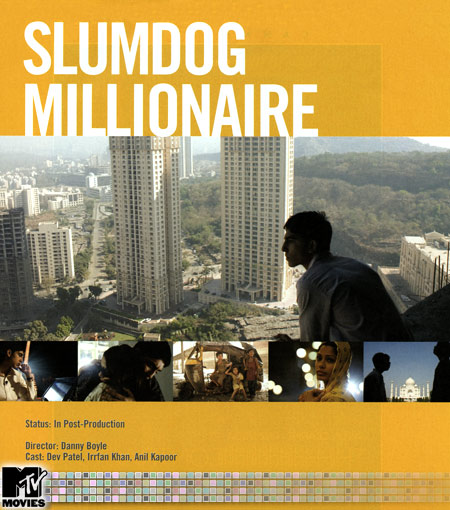
Rethinking post-colonial representation after Slumdog Millionaire
by Atticus Narain
Dark Matter


Sound bites: poverty porn, slum tourism, imperialist guilt flick, post-colonial inequalities continued, Bombay’s underbelly revealed- revelled, brilliant, feel good movie, accurate portrayal, gross misrepresentation, a visual Lonely Planet guide to Mumbai, an (anti-)Indian movie, Bollywood mania. On television Boyle takes questions from enthusiastic BrAsians; in The Guardian Rushdie laments the “impossibility on impossibility”; and angry Amitabh Bachchan writes back – sounds jealous; my own contribution would be Angelina Jolie and Madonna tussling at the Oscars over adopting the movie’s child actors.

The American and British film industries’ acclamation of Slumdog Millionaire has raised much media debate. Issues of authenticity, cultural ownership,‘burden of representation’, the nationality of its director, its content and stylistic aesthetics, and Eurocentric and/or re-Orientalist visions, have created a vast contact zone for analyzing cinema, identity, and nationalism. None of this is new of course – contention of where Kurosawa and Ray belong continues; Spike Lee’s criticism of Quentin Tarantino’s use of Afro-American linguistics replays these debates – albeit with different histories of race, empire and exploitation. Using child actors as allegories of post-colonial development is characteristic of new national cinemas. This is brilliantly done in Amir Naderi’s The Runner; Salam Bombay is a little geographically closer, and numerous Indian socials of the fifties and sixties deployed children as central to narrative development and critique.

Slumdog Millionaire does not confirm to the contexts of such debates usually associated with World – Third – Alternative – cinemas, certainly not in the political sense that these cinemas are often discussed. Every now and again a film’s popularity transcends the categories accorded them and is propelled to a much higher and holy accolade. Slumdog Millionaire is City of Joy for the twenty-first century, informed by an anthropological attempt at readdressing inequalities of representation by “giving” the camera to the Other and erasing the need for white protagonists – well almost. If Boyle’s ethnicity was different would all this discussion be taking place? What happened to Gurinder Chadha’s aesthetic and agenda? Forced to succumb to funding desires of reproducing the East for the West- Bride and Prejudice- or producing minority narratives that tick every possible identity ‘clash’? Gentle, unassuming, had never even been to India prior to filming, Boyle does it better!

To Read the Rest of the Essay