Showing posts with label Danny Boyle. Show all posts

Tuesday, November 23, 2010

Jeff Stiles: Trainspotting, or, Diacetylmorphine Hydrochloride and Absence of Meaningful Relationships

TRAINSPOTTING or, DIACETYLMORPHINE HYDROCHLORIDE and the ABSENCE of MEANINGFUL RELATIONSHIPS
by Jeff Stiles
ENG 282


Billed as Britain's answer to Pulp Fiction and slathered with an exaggerated level of hype, Trainspotting was seemingly bred to be a success. Ivine Welsh's book-- not much more than a fast-paced, more accessible Burroughs or Selby, Jr. imitation-- had made a few small waves, apparently catching the eye of greedy movie producers. Welsh, fortunately, had the moral forthrightness to hold off until someone came along that could turn his work into a stylish, exciting film instead of the typical dark and miserable drug epic it so easily could be (thinking of Sid and Nancy, Drugstore Cowboy, and so on). When the partnership of Andrew MacDonald, Danny Boyle and John Hodge approached him, they were trusted with the task at hand, despite having only made one feature, the competent but forgettable Shallow Grave. As production began, the film started picking up buzz, and those involved with Trainspotting saw an opportunity to piggy-back on the success of the American Pulp Fiction, which had successfully introduced to the world a type of “cool” cinema; exciting, fast-paced, and gritty films, with enough action to satisfy the general public and enough stylish wit to charm the intellectual elite. A cynic might look at this, in hindsight, as nothing but a product, a facsimile of a trend that would be short-lived, as all trends are. Somehow, though, a piece of entertainment was released that delivered monetarily, as well as artistically.

The film's best aspects are stacked carefully, and the disturbance of any of them may have pushed it past the line of trendy, over-stylized indie hackwork it straddled. Fortunately, Boyle and company had succeeded in compiling a miraculous crew for the job; the tremendous cast, a colorful yet gritty visual style provided by Boyle and his talented director of photography, Brian Tufano (and, of course, the film's art department, costume designers, et al), and perhaps the most necessary element, the brief but powerful script by Hodge. The screenplay gutted the book of many of its ancillary characters and sub-plots, allowing for a much tighter focus on the theme most important to Trainspotting-- while the obvious point of the film may be an exploration of the effects of heroin, the true theme of the story is the use of the drug as both a substitute and deterrent for the meaningful camaraderie that human beings crave.

The principle cast of characters are a lowly, backstabbing, shitty group of people, constantly one dollar away from slicing each others throats, despite the fact that they are all, for the most part, inseparable best friends. The film's narrator and main character, Renton, speaks of his mates with mild disgust, a group of people who are only associated with each other now due to familiarity. The most telling dialogue is in the film's final scene, as Renton walks away with the money he stole from Sick Boy, Begbie, and Spud.

“Now I've justified this to myself in all sorts of ways. It wasn't a big deal, just a minor betrayal. Or we'd outgrown each other, you know, that sort of thing. But let's face it, I ripped them off, my so called mates. But Begbie, I couldn't give a shit about him. And Sick Boy, well he'd done the same to me, if he'd only thought of it first.”

Renton goes on to admit guilt for ripping off the hopelessly naïve and comparatively innocent Spud, though the film does end with an uplifting glimpse of Spud discovering a portion of the money left for him after all. Spud, indeed, is the film's most sympathetic character, at times comedic relief, at times pathetically tragic. As the film begins, he is seen mostly as a goofy, dim-witted junkie. His antics include falling to the floor in a heroin-induced fit of giggles, shitting in his girlfriend's bed and flinging the crap all over the breakfast table, and showing up to a job interview hopped up on speed (a scene of solid, rapid-fire physical comedy by Ewan Bremner). Throughout, though, he's constantly berated by Begbie and portrayed as a cowardly, wiry drug addict. At the film's end, he is even seriously wounded by Begbie and refused a trip to the hospital, a refusal he apparently accepts with the integrity of an abused dog. Were it not for the narration that reveals a decent side to Renton, Spud would be the only redeemable person by the end of the film (except, perhaps, Diane, though considering her apparent knack for sleeping with random heroin addicts, she is probably on a Tommy-esque path to ruin).

The rest of the crew aren't quite so likable. The film's most relentlessly deplorable personalities are depicted by Sick Boy and Begbie, a smarmy chauvinist and violent psychopath, respectively. Sick Boy oozes a slimy kind of repulsiveness, clearly a distorted imitation of his idol James Bond, all the while engaging in cruel mind games with his friends (eg, quitting heroin just to prove he is more capable of doing it than Renton), conceiving of unscrupulous cash-grab schemes (the film's final drug deal, offering Diane a job as his prostitute), and, of course, shooting up copious amounts of heroin. Begbie (the film's protagonist, if there even is a human one) is booze-swilling, cigarette-devouring hypocrite, decrying the damage his friends are doing to their bodies with heroin. He is constantly on the verge of a violent assault and often, it seems, ruthlessly beats strangers in bars. To those near him, he is perhaps even more cruel-- he obviously needs to have control over his friends as badly as they need heroin in their veins, constantly intimidating them with threats of violence and his outrageous, loud outbursts.

Even Renton proves himself capable of deception, not only in the shady (yet justifiable) ripping-off of his best friends, but also in being responsible for the downfall of Tommy. Beginning the film as the story's only clean-cut, healthy character, Tommy devolves into a heroin/AIDS-addled corpse after a video of him having sex with his girlfriend is stolen by Renton, which in turn causes Tommy to be dumped, which in turn causes him to spiral into a depression, which in turn causes him to seek comfort in heroin, which is supplied to him by Renton for money to perpetuate his own heroin habit. Before all this, though, Renton and his friends also commit acts of petty criminality-- stealing prescription slips from his doctor, stealing a television from a nursing home, helping Begbie corner and beat an unassuming American tourist.

It's no stretch to assume that these characters would despise each other and themselves, and the few glimpses of actual generosity or friendship that we see-- Renton leaving Spud some money, the celebratory drinks shared upon completion of the final heist (a party that ends horribly, of course)-- are maybe the saddest parts of the film. These men, unable to communicate or show any real affection, turn to their artificial methods of coping (heroin, for the most part, but also explosive fits of rage and alcohol for Begbie). The film's ending, though, is uplifting, in that we see Renton not only attempting to shed his heroin habit, but also, perhaps more damaging, the people he had been surrounding himself with.

Tuesday, November 02, 2010

Thadeus Pettry: Response to Trainspotting

Trainspotting
by Thaddeus Pettry
ENG 282 Response


“Choose life. Choose a job. Choose a starter home. Choose dental insurance, leisure wear and matching luggage. Choose your future. But why would anyone want to do a thing like that?”

The film Trainspotting centers around a group of heroin addicted friends in the gloomy Scottish town of Edinburgh, and highlights the pleasures and struggles that come with their addictions. From the groups highest highs to their lowest lows, the makers of this film have taken the controversial topic of drug use and while not glamorizing it by any means, they have shown that this topic can be shown in an upbeat way, with the immediate pleasures of drug use being seen as well as the desperate lows which will always follow.

The topic of drug use and the drug users that make up this subculture is most often villified and looked down upon by most mainstream media outlets with the lows of drug use always being the topic, while the pleasures(which are just as real) are always ignored. This film takes on both sides of drug use and perfectly captures the feelings and emotions that drug users and the people they affect go through.

The tag line for the movie which is posted above really sets the tone for this film and this topic. To sum it up, you can either choose a regular suburban life which while stable and safe, can also be unrewarding and dull, or you can choose a different way of living, in this case, the life of a drug user. The main character of the film is Renton, whose highs and lows drive the movie, while the rest of the bunch each add their own unique touch to the issues of drug addiction and everything that surrounds addiction.

A period of the movie which I think captures the experience of being a drug user perfectly is the first montage when the group decides to get back on heroin and thus begin stealing and committing other crimes in order to get the money to support their habit. After the initial joys of this lifestyle are shown, the subsequent horrors that these acts have lead to, including the neglectful death of a baby, and ultimately, Renton's overdose and hellish battle with withdrawal are seen. While the immediate blissfulness of heroin is clearly shown as Renton and his friends inject themselves, the scenes which follow show that no matter how pleasurable this drug may be, the downside of heroin will always nullify any potential pleasure.

For this film to take on the controversial issue of drug use and clearly show both very different sides of drug use while still finding a way to be humorous throughout is a testament to the films makers, who show a great understanding of drug addiction which is rarely seen in modern media. This film is not anti-drugs, but is an open ended look on the gap between normal culture and subculture and how individuals become enveloped in this struggle. The viewer is left to decide his own feelings towards the subject, an idea which is rare in today's media whom take an all powerful and all knowing approach to anything outside the “normal” standards which they have set.

“So choose life. Choose a job. Choose a starter home. Choose dental insurance, leisure wear and matching luggage. Choose your future. But why would anyone want to do a thing like that?” The answer to the question is up to you.

Thursday, June 10, 2010

Sakuntala Banaji: Seduced ‘Outsiders’ versus Sceptical ‘Insiders’? -- Slumdog Millionaire through its Re/Viewers

Seduced ‘Outsiders’ versus Sceptical ‘Insiders’?: Slumdog Millionaire through its Re/Viewers
by Shakuntala Banaji,
Centre for the Study of Children, Youth & Media, UK
Participations


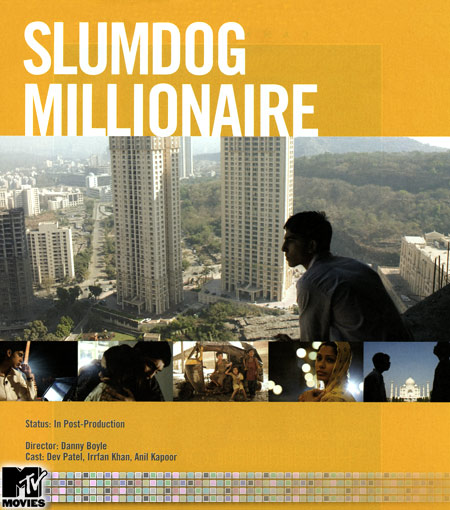
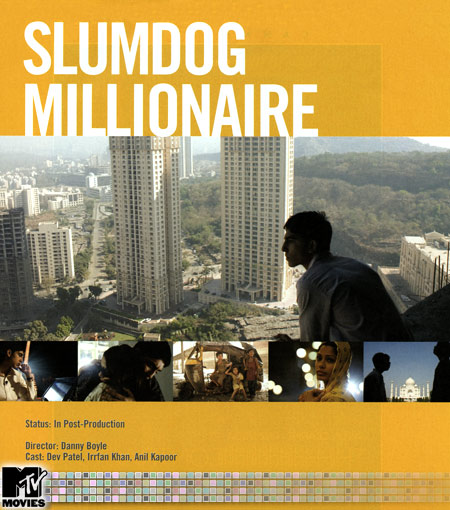
Slumdog Millionaire (Dir. Danny Boyle, 2008) is now best known for winning numerous Awards at the Baftas, Golden Globes and the Oscars. After being publicly championed by an unprecedented number of film critics, it caused something of a media sensation when celebrities in Bollywood and some (but not all) viewers in India publicly labeled it exploitative and unfair to India and Indians. Told in flashback from the point of view of a young man, the film narrates the story of two brothers from a shantytown in Bombay, who choose different pathways in life. In the opening sequence of the film, one of the brothers has reached the final of the much-vaunted TV quiz show, the Indian version of ‘Who wants to be a Millionaire’. Arrested, apparently for cheating, Jamal Malik ‘explains’ to his police interrogators how it is possible for someone like him, a slum child with little formal education, to know the answers to the most seemingly esoteric questions: he has learned the answers through bitter experience. And in the process of recounting these, he opens for the audience (what is displayed unashamedly by the film as) a window on the world of two Muslim children born in a Bombay shantytown in the 1980s. Via fast-paced sequences full of jump cuts – depicting communal riots, professional begging and child molesting gangsters – the boys and the camera travel across India and back again. They return in search of an old girlfriend as Bombay’s/Mumbai’s economy goes neo-liberal and gated communities spring up, isolating the rich from the poor. In tandem, the younger brother, Jamal, stays honest, innocent, hard-working and loyal – a tea-boy in a call centre; the older brother becomes a gangster’s lackey, corrupt and aggressive, taking the quickest possible route to what seems like financial success.

A viewing of the film during a year of media hype, followed by a series of random but heated discussions about it, crystallised into an urge to discover whether and how different kinds of knowledge and experience – about cinema, about Hindi cinema, about India, about Bombay, about urban poverty (Indian style) – played into critical responses to the film, by viewers or by established film critics. Saying that the same film and the same set of circumstances can call up wildly different even contradictory viewpoints from people, or from the same person at different times should no longer be much of a surprise. Meaning does not reside solely in media texts; this has been established over the decades via painstaking theoretical critique and empirical scholarship (see, among others, Austin 2002, Buckingham 1993, Barker and Brooks 1998, Mankekar 1999 and Staiger 1999). Although there are still those new to the subject who might write as though texts are all-powerful and hold ultimate sway, enough has been done to challenge a text-centric understanding of meaning and effects to obviate the necessity for another paper on this topic. What is interesting about people’s reactions to this particular film is not, in fact, the divergence of opinion per se. What is intriguing however is, first, the vehemence and types of the feelings called forth by what might seem a fairly prosaic rags to riches story, albeit set in a (to most Western audiences) exotic setting: delight and jubilation, inspiration, tears, disgust, anger and humiliation are only some of the emotions expressed by those who watched it. Second, and more confusingly, perhaps, it was read as an educational – almost an ethnographic – tale by some re/viewers, a contrast to Bollywood glitz and to the mawkish sentimentality of documentaries about India. Additionally, and more problematically, perhaps, opinions expressed about the film contained tropes of quasi-orientalist (Said 1978) or re-orientalist (Lau 2007) cultural and political discourse. Indeed, the quaint assumption of an ethnographic subject when a film or book happens to feature non-white and non-western protagonists is a classic feature of such discourse in relation to fiction genres. In a fascinating paper delivered on this subject, Ellen Dengel-Janic argues that ‘[w]hat the film negates and helps to mask in a pleasurable visual manner is a translocated fear of poverty and the abject…. the film’s appeal reflects not only the West’s exoticism of India, but also its repressed fear and paranoia of becoming abject and poor’ (2009: NP). But given the wide range of viewers who ultimately encountered the film, can such a critical reading be sustained? Understanding the combinations of circumstance and experience, contextual and technical knowledge and generic expectation that led to particular discourses or technical sequences in films being picked up and enjoyed or selectively critiqued has been the aim of much of my work on Hindi cinema to date (see Banaji 2006 and 2008) and remains at the core of this paper. However, even these combinations do not capture fully the investments people have in their judgments about films or indeed the complexity of the emotional and cultural histories that inflect these judgments.

To Read the Rest of the Essay

Thursday, February 25, 2010

Atticus Narain: Rethinking post-colonial representation after Slumdog Millionaire

Rethinking post-colonial representation after Slumdog Millionaire
by Atticus Narain
Dark Matter


Sound bites: poverty porn, slum tourism, imperialist guilt flick, post-colonial inequalities continued, Bombay’s underbelly revealed- revelled, brilliant, feel good movie, accurate portrayal, gross misrepresentation, a visual Lonely Planet guide to Mumbai, an (anti-)Indian movie, Bollywood mania. On television Boyle takes questions from enthusiastic BrAsians; in The Guardian Rushdie laments the “impossibility on impossibility”; and angry Amitabh Bachchan writes back – sounds jealous; my own contribution would be Angelina Jolie and Madonna tussling at the Oscars over adopting the movie’s child actors.

The American and British film industries’ acclamation of Slumdog Millionaire has raised much media debate. Issues of authenticity, cultural ownership,‘burden of representation’, the nationality of its director, its content and stylistic aesthetics, and Eurocentric and/or re-Orientalist visions, have created a vast contact zone for analyzing cinema, identity, and nationalism. None of this is new of course – contention of where Kurosawa and Ray belong continues; Spike Lee’s criticism of Quentin Tarantino’s use of Afro-American linguistics replays these debates – albeit with different histories of race, empire and exploitation. Using child actors as allegories of post-colonial development is characteristic of new national cinemas. This is brilliantly done in Amir Naderi’s The Runner; Salam Bombay is a little geographically closer, and numerous Indian socials of the fifties and sixties deployed children as central to narrative development and critique.

Slumdog Millionaire does not confirm to the contexts of such debates usually associated with World – Third – Alternative – cinemas, certainly not in the political sense that these cinemas are often discussed. Every now and again a film’s popularity transcends the categories accorded them and is propelled to a much higher and holy accolade. Slumdog Millionaire is City of Joy for the twenty-first century, informed by an anthropological attempt at readdressing inequalities of representation by “giving” the camera to the Other and erasing the need for white protagonists – well almost. If Boyle’s ethnicity was different would all this discussion be taking place? What happened to Gurinder Chadha’s aesthetic and agenda? Forced to succumb to funding desires of reproducing the East for the West- Bride and Prejudice- or producing minority narratives that tick every possible identity ‘clash’? Gentle, unassuming, had never even been to India prior to filming, Boyle does it better!

To Read the Rest of the Essay