Hollywood and the war machine: Empire examines the symbiotic relationship between the movie industry and the military-industrial complex.
Empire (Al Jazeera)
War is hell, but for Hollywood it has been a Godsend, providing the perfect dramatic setting against which courageous heroes win the hearts and minds of the movie going public.
The Pentagon recognises the power of these celluloid dreams and encourages Hollywood to create heroic myths; to rewrite history to suit its own strategy and as a recruiting tool to provide a steady flow of willing young patriots for its wars.
What does Hollywood get out of this 'deal with the devil'? Access to billions of dollars worth of military kit, from helicopters to aircraft carriers, enabling filmmakers to make bigger and more spectacular battle scenes, which in turn generate more box office revenue. Providing they accept the Pentagon's advice, even toe the party line and show the US military in a positive light.
So is it a case of art imitating life, or a sinister force using art to influence life and death - and the public perception of both?
Empire will examine Hollywood, the Pentagon, and war.
Joining us as guests: Oliver Stone, the eight times Academy Award-winning filmmaker; Michael Moore, the Academy Award-winning filmmaker; and Christopher Hedges, an author and the former Middle East bureau chief of the New York Times.
Our interviewees this week are: Phil Strub, US Department of Defense Film Liaison Unit; Julian Barnes, Pentagon correspondent, LA Times; David Robb, the author of Operation Hollywood; Prof Klaus Dodds, the author of Screening Terror; Matthew Alford, the author of Reel Power; Prof Melani McAlister, the author of Culture, Media, and US Interests in the Middle East.
To Watch the Documentary
Showing posts with label Nationalism. Show all posts
Showing posts with label Nationalism. Show all posts
Friday, February 18, 2011

Monday, January 31, 2011
Juan Cole: "Egypt is a Praetorian Regime"
Juan Cole: "Egypt is a Praetorian Regime"
Democracy Now
Hundreds of thousands have taken to the streets across Egypt today in the fourth day [from friday] of unprecedented protests against the 30-year rule of President Hosni Mubarak. We speak with University of Michigan professor of history Juan Cole. "The Arab world has seen, in the last three decades, a series of Arab nationalist regimes, relatively secular, which have become increasingly sclerotic," Cole says.
Juan Cole, professor of history at the University of Michigan. His writes regularly about Middle East issues on his blog, Informed Comment ... His most recent book is Engaging the Muslim World.
To Listen to the Episode
Democracy Now
Hundreds of thousands have taken to the streets across Egypt today in the fourth day [from friday] of unprecedented protests against the 30-year rule of President Hosni Mubarak. We speak with University of Michigan professor of history Juan Cole. "The Arab world has seen, in the last three decades, a series of Arab nationalist regimes, relatively secular, which have become increasingly sclerotic," Cole says.
Juan Cole, professor of history at the University of Michigan. His writes regularly about Middle East issues on his blog, Informed Comment ... His most recent book is Engaging the Muslim World.
To Listen to the Episode
Friday, June 25, 2010
Steven Erlanger: Racial Tinge Stains World Cup Exit in France
Racial Tinge Stains World Cup Exit in France
By STEVEN ERLANGER
The New York Times
After France was booted from this year’s World Cup on Tuesday without winning a match — amid scenes of selfishness, indifference and indiscipline — the French news media piled on about the humiliation to the country and the misbehavior of its players. There were calls for a complete restructuring of the French team: its management, its method for choosing players, its training.
But there is a more troubling aspect to the reaction to the defeat, which has focused on lack of patriotism, shared values and national honor on a team with many members who are black or brown and descended from immigrants.
The philosopher Alain Finkielkraut, who has often criticized the failures of French assimilation, compared the players to youths rioting in the banlieues, France’s suburban ghettos. “We now have proof that the French team is not a team at all, but a gang of hooligans that knows only the morals of the mafia,” he said in a radio interview.
While most politicians have talked carefully of values and patriotism, rather than immigration and race, some legislators blasted the players as “scum,” “little troublemakers” and “guys with chickpeas in their heads instead of a brain,” according to news reports.
Fadela Amara, the junior minister for the racially charged suburbs who was born to Algerian parents, warned on Tuesday that the reaction to the team’s loss had become racially charged.
“There is a tendency to ethnicize what has happened,” she told a gathering of President Nicolas Sarkozy’s governing party, according to news reports. “Everyone condemns the lower-class neighborhoods. People doubt that those of immigrant backgrounds are capable of respecting the nation.”
She criticized Mr. Sarkozy’s handling of a debate on “national identity,” warning that “all democrats and all republicans will be lost” in this ethnically tinged criticism about Les Bleus, the French team. “We’re building a highway for the National Front,” she said, in a reference to the far-right, anti-immigrant, anti-Muslim party founded by Jean-Marie Le Pen.
To Read the Rest of the Article
By STEVEN ERLANGER
The New York Times
After France was booted from this year’s World Cup on Tuesday without winning a match — amid scenes of selfishness, indifference and indiscipline — the French news media piled on about the humiliation to the country and the misbehavior of its players. There were calls for a complete restructuring of the French team: its management, its method for choosing players, its training.
But there is a more troubling aspect to the reaction to the defeat, which has focused on lack of patriotism, shared values and national honor on a team with many members who are black or brown and descended from immigrants.
The philosopher Alain Finkielkraut, who has often criticized the failures of French assimilation, compared the players to youths rioting in the banlieues, France’s suburban ghettos. “We now have proof that the French team is not a team at all, but a gang of hooligans that knows only the morals of the mafia,” he said in a radio interview.
While most politicians have talked carefully of values and patriotism, rather than immigration and race, some legislators blasted the players as “scum,” “little troublemakers” and “guys with chickpeas in their heads instead of a brain,” according to news reports.
Fadela Amara, the junior minister for the racially charged suburbs who was born to Algerian parents, warned on Tuesday that the reaction to the team’s loss had become racially charged.
“There is a tendency to ethnicize what has happened,” she told a gathering of President Nicolas Sarkozy’s governing party, according to news reports. “Everyone condemns the lower-class neighborhoods. People doubt that those of immigrant backgrounds are capable of respecting the nation.”
She criticized Mr. Sarkozy’s handling of a debate on “national identity,” warning that “all democrats and all republicans will be lost” in this ethnically tinged criticism about Les Bleus, the French team. “We’re building a highway for the National Front,” she said, in a reference to the far-right, anti-immigrant, anti-Muslim party founded by Jean-Marie Le Pen.
To Read the Rest of the Article
Sunday, June 13, 2010
White Power U.S.A.: The Rise of Right-Wing Militias
White Power U.S.A.
People and Power
Almost a year ago the inauguration of President Barack Obama was hailed as a turning point in US race relations. The country was said to be entering a new era of post-racial politics, on the path to a future of greater diversity and tolerance.
But while crowds flocked to Washington to witness the swearing in, others were refusing to join the party. Racially motivated threats against Obama rose to new heights in the first months of his presidency, with the US seeing nine high-profile race killings in 2009.
Meanwhile white supremacist and neo-Nazi groups claim their membership is growing and that visits to their websites are increasing.
Is the racial undercurrent that has long structured US politics reasserting itself?
Filmmakers Rick Rowley and Jacquie Soohen went inside the white nationalist movement to investigate.
Original Link
Also hosted at Big Noise Films
and a report on the documentary at Democracy Now
People and Power
Almost a year ago the inauguration of President Barack Obama was hailed as a turning point in US race relations. The country was said to be entering a new era of post-racial politics, on the path to a future of greater diversity and tolerance.
But while crowds flocked to Washington to witness the swearing in, others were refusing to join the party. Racially motivated threats against Obama rose to new heights in the first months of his presidency, with the US seeing nine high-profile race killings in 2009.
Meanwhile white supremacist and neo-Nazi groups claim their membership is growing and that visits to their websites are increasing.
Is the racial undercurrent that has long structured US politics reasserting itself?
Filmmakers Rick Rowley and Jacquie Soohen went inside the white nationalist movement to investigate.
Original Link
Also hosted at Big Noise Films
and a report on the documentary at Democracy Now
Sunday, May 30, 2010
Laurence W. Britt: 14 Characteristics of Fascism
(Images courtesy of a Sociological Tour Through Cyberspace)
"Fascism Anyone."
Laurence W. Britt
Free Inquiry 33.2 (Spring 2003)

For the purpose of this perspective, I will consider the following regimes: Nazi Germany, Fascist Italy, Franco’s Spain, Salazar’s Portugal, Papadopoulos’s Greece, Pinochet’s Chile, and Suharto’s Indonesia. To be sure, they constitute a mixed bag of national identities, cultures, developmental levels, and history. But they all followed the fascist or protofascist model in obtaining, expanding, and maintaining power. Further, all these regimes have been overthrown, so a more or less complete picture of their basic characteristics and abuses is possible.
Analysis of these seven regimes reveals fourteen common threads that link them in recognizable patterns of national behavior and abuse of power. These basic characteristics are more prevalent and intense in some regimes than in others, but they all share at least some level of similarity.
1. Powerful and continuing expressions of nationalism. From the prominent displays of flags and bunting to the ubiquitous lapel pins, the fervor to show patriotic nationalism, both on the part of the regime itself and of citizens caught up in its frenzy, was always obvious. Catchy slogans, pride in the military, and demands for unity were common themes in expressing this nationalism. It was usually coupled with a suspicion of things foreign that often bordered on xenophobia.
2. Disdain for the importance of human rights. The regimes themselves viewed human rights as of little value and a hindrance to realizing the objectives of the ruling elite. Through clever use of propaganda, the population was brought to accept these human rights abuses by marginalizing, even demonizing, those being targeted. When abuse was egregious, the tactic was to use secrecy, denial, and disinformation.
3. Identification of enemies/scapegoats as a unifying cause. The most significant common thread among these regimes was the use of scapegoating as a means to divert the people’s attention from other problems, to shift blame for failures, and to channel frustration in controlled directions. The methods of choice—relentless propaganda and disinformation—were usually effective. Often the regimes would incite “spontaneous” acts against the target scapegoats, usually communists, socialists, liberals, Jews, ethnic and racial minorities, traditional national enemies, members of other religions, secularists, homosexuals, and “terrorists.” Active opponents of these regimes were inevitably labeled as terrorists and dealt with accordingly.
4. The supremacy of the military/avid militarism. Ruling elites always identified closely with the military and the industrial infrastructure that supported it. A disproportionate share of national resources was allocated to the military, even when domestic needs were acute. The military was seen as an expression of nationalism, and was used whenever possible to assert national goals, intimidate other nations, and increase the power and prestige of the ruling elite.
5. Rampant sexism. Beyond the simple fact that the political elite and the national culture were male-dominated, these regimes inevitably viewed women as second-class citizens. They were adamantly anti-abortion and also homophobic. These attitudes were usually codified in Draconian laws that enjoyed strong support by the orthodox religion of the country, thus lending the regime cover for its abuses.
6. A controlled mass media. Under some of the regimes, the mass media were under strict direct control and could be relied upon never to stray from the party line. Other regimes exercised more subtle power to ensure media orthodoxy. Methods included the control of licensing and access to resources, economic pressure, appeals to patriotism, and implied threats. The leaders of the mass media were often politically compatible with the power elite. The result was usually success in keeping the general public unaware of the regimes’ excesses.
7. Obsession with national security. Inevitably, a national security apparatus was under direct control of the ruling elite. It was usually an instrument of oppression, operating in secret and beyond any constraints. Its actions were justified under the rubric of protecting “national security,” and questioning its activities was portrayed as unpatriotic or even treasonous.
8. Religion and ruling elite tied together. Unlike communist regimes, the fascist and protofascist regimes were never proclaimed as godless by their opponents. In fact, most of the regimes attached themselves to the predominant religion of the country and chose to portray themselves as militant defenders of that religion. The fact that the ruling elite’s behavior was incompatible with the precepts of the religion was generally swept under the rug. Propaganda kept up the illusion that the ruling elites were defenders of the faith and opponents of the “godless.” A perception was manufactured that opposing the power elite was tantamount to an attack on religion.
9. Power of corporations protected. Although the personal life of ordinary citizens was under strict control, the ability of large corporations to operate in relative freedom was not compromised. The ruling elite saw the corporate structure as a way to not only ensure military production (in developed states), but also as an additional means of social control. Members of the economic elite were often pampered by the political elite to ensure a continued mutuality of interests, especially in the repression of “have-not” citizens.
10. Power of labor suppressed or eliminated. Since organized labor was seen as the one power center that could challenge the political hegemony of the ruling elite and its corporate allies, it was inevitably crushed or made powerless. The poor formed an underclass, viewed with suspicion or outright contempt. Under some regimes, being poor was considered akin to a vice.
11. Disdain and suppression of intellectuals and the arts. Intellectuals and the inherent freedom of ideas and expression associated with them were anathema to these regimes. Intellectual and academic freedom were considered subversive to national security and the patriotic ideal. Universities were tightly controlled; politically unreliable faculty harassed or eliminated. Unorthodox ideas or expressions of dissent were strongly attacked, silenced, or crushed. To these regimes, art and literature should serve the national interest or they had no right to exist.
12. Obsession with crime and punishment. Most of these regimes maintained Draconian systems of criminal justice with huge prison populations. The police were often glorified and had almost unchecked power, leading to rampant abuse. “Normal” and political crime were often merged into trumped-up criminal charges and sometimes used against political opponents of the regime. Fear, and hatred, of criminals or “traitors” was often promoted among the population as an excuse for more police power.
13. Rampant cronyism and corruption. Those in business circles and close to the power elite often used their position to enrich themselves. This corruption worked both ways; the power elite would receive financial gifts and property from the economic elite, who in turn would gain the benefit of government favoritism. Members of the power elite were in a position to obtain vast wealth from other sources as well: for example, by stealing national resources. With the national security apparatus under control and the media muzzled, this corruption was largely unconstrained and not well understood by the general population.
14. Fraudulent elections. Elections in the form of plebiscites or public opinion polls were usually bogus. When actual elections with candidates were held, they would usually be perverted by the power elite to get the desired result. Common methods included maintaining control of the election machinery, intimidating and disenfranchising opposition voters, destroying or disallowing legal votes, and, as a last resort, turning to a judiciary beholden to the power elite.
Does any of this ring alarm bells? Of course not. After all, this is America, officially a democracy with the rule of law, a constitution, a free press, honest elections, and a well-informed public constantly being put on guard against evils. Historical comparisons like these are just exercises in verbal gymnastics. Maybe, maybe not.

Fascism Anyone

"Fascism Anyone."
Laurence W. Britt
Free Inquiry 33.2 (Spring 2003)
For the purpose of this perspective, I will consider the following regimes: Nazi Germany, Fascist Italy, Franco’s Spain, Salazar’s Portugal, Papadopoulos’s Greece, Pinochet’s Chile, and Suharto’s Indonesia. To be sure, they constitute a mixed bag of national identities, cultures, developmental levels, and history. But they all followed the fascist or protofascist model in obtaining, expanding, and maintaining power. Further, all these regimes have been overthrown, so a more or less complete picture of their basic characteristics and abuses is possible.
Analysis of these seven regimes reveals fourteen common threads that link them in recognizable patterns of national behavior and abuse of power. These basic characteristics are more prevalent and intense in some regimes than in others, but they all share at least some level of similarity.
1. Powerful and continuing expressions of nationalism. From the prominent displays of flags and bunting to the ubiquitous lapel pins, the fervor to show patriotic nationalism, both on the part of the regime itself and of citizens caught up in its frenzy, was always obvious. Catchy slogans, pride in the military, and demands for unity were common themes in expressing this nationalism. It was usually coupled with a suspicion of things foreign that often bordered on xenophobia.
2. Disdain for the importance of human rights. The regimes themselves viewed human rights as of little value and a hindrance to realizing the objectives of the ruling elite. Through clever use of propaganda, the population was brought to accept these human rights abuses by marginalizing, even demonizing, those being targeted. When abuse was egregious, the tactic was to use secrecy, denial, and disinformation.
3. Identification of enemies/scapegoats as a unifying cause. The most significant common thread among these regimes was the use of scapegoating as a means to divert the people’s attention from other problems, to shift blame for failures, and to channel frustration in controlled directions. The methods of choice—relentless propaganda and disinformation—were usually effective. Often the regimes would incite “spontaneous” acts against the target scapegoats, usually communists, socialists, liberals, Jews, ethnic and racial minorities, traditional national enemies, members of other religions, secularists, homosexuals, and “terrorists.” Active opponents of these regimes were inevitably labeled as terrorists and dealt with accordingly.
4. The supremacy of the military/avid militarism. Ruling elites always identified closely with the military and the industrial infrastructure that supported it. A disproportionate share of national resources was allocated to the military, even when domestic needs were acute. The military was seen as an expression of nationalism, and was used whenever possible to assert national goals, intimidate other nations, and increase the power and prestige of the ruling elite.
5. Rampant sexism. Beyond the simple fact that the political elite and the national culture were male-dominated, these regimes inevitably viewed women as second-class citizens. They were adamantly anti-abortion and also homophobic. These attitudes were usually codified in Draconian laws that enjoyed strong support by the orthodox religion of the country, thus lending the regime cover for its abuses.
6. A controlled mass media. Under some of the regimes, the mass media were under strict direct control and could be relied upon never to stray from the party line. Other regimes exercised more subtle power to ensure media orthodoxy. Methods included the control of licensing and access to resources, economic pressure, appeals to patriotism, and implied threats. The leaders of the mass media were often politically compatible with the power elite. The result was usually success in keeping the general public unaware of the regimes’ excesses.
7. Obsession with national security. Inevitably, a national security apparatus was under direct control of the ruling elite. It was usually an instrument of oppression, operating in secret and beyond any constraints. Its actions were justified under the rubric of protecting “national security,” and questioning its activities was portrayed as unpatriotic or even treasonous.
8. Religion and ruling elite tied together. Unlike communist regimes, the fascist and protofascist regimes were never proclaimed as godless by their opponents. In fact, most of the regimes attached themselves to the predominant religion of the country and chose to portray themselves as militant defenders of that religion. The fact that the ruling elite’s behavior was incompatible with the precepts of the religion was generally swept under the rug. Propaganda kept up the illusion that the ruling elites were defenders of the faith and opponents of the “godless.” A perception was manufactured that opposing the power elite was tantamount to an attack on religion.
9. Power of corporations protected. Although the personal life of ordinary citizens was under strict control, the ability of large corporations to operate in relative freedom was not compromised. The ruling elite saw the corporate structure as a way to not only ensure military production (in developed states), but also as an additional means of social control. Members of the economic elite were often pampered by the political elite to ensure a continued mutuality of interests, especially in the repression of “have-not” citizens.
10. Power of labor suppressed or eliminated. Since organized labor was seen as the one power center that could challenge the political hegemony of the ruling elite and its corporate allies, it was inevitably crushed or made powerless. The poor formed an underclass, viewed with suspicion or outright contempt. Under some regimes, being poor was considered akin to a vice.
11. Disdain and suppression of intellectuals and the arts. Intellectuals and the inherent freedom of ideas and expression associated with them were anathema to these regimes. Intellectual and academic freedom were considered subversive to national security and the patriotic ideal. Universities were tightly controlled; politically unreliable faculty harassed or eliminated. Unorthodox ideas or expressions of dissent were strongly attacked, silenced, or crushed. To these regimes, art and literature should serve the national interest or they had no right to exist.
12. Obsession with crime and punishment. Most of these regimes maintained Draconian systems of criminal justice with huge prison populations. The police were often glorified and had almost unchecked power, leading to rampant abuse. “Normal” and political crime were often merged into trumped-up criminal charges and sometimes used against political opponents of the regime. Fear, and hatred, of criminals or “traitors” was often promoted among the population as an excuse for more police power.
13. Rampant cronyism and corruption. Those in business circles and close to the power elite often used their position to enrich themselves. This corruption worked both ways; the power elite would receive financial gifts and property from the economic elite, who in turn would gain the benefit of government favoritism. Members of the power elite were in a position to obtain vast wealth from other sources as well: for example, by stealing national resources. With the national security apparatus under control and the media muzzled, this corruption was largely unconstrained and not well understood by the general population.
14. Fraudulent elections. Elections in the form of plebiscites or public opinion polls were usually bogus. When actual elections with candidates were held, they would usually be perverted by the power elite to get the desired result. Common methods included maintaining control of the election machinery, intimidating and disenfranchising opposition voters, destroying or disallowing legal votes, and, as a last resort, turning to a judiciary beholden to the power elite.
Does any of this ring alarm bells? Of course not. After all, this is America, officially a democracy with the rule of law, a constitution, a free press, honest elections, and a well-informed public constantly being put on guard against evils. Historical comparisons like these are just exercises in verbal gymnastics. Maybe, maybe not.
Fascism Anyone
Thursday, February 25, 2010
Atticus Narain: Rethinking post-colonial representation after Slumdog Millionaire
Rethinking post-colonial representation after Slumdog Millionaire
by Atticus Narain
Dark Matter
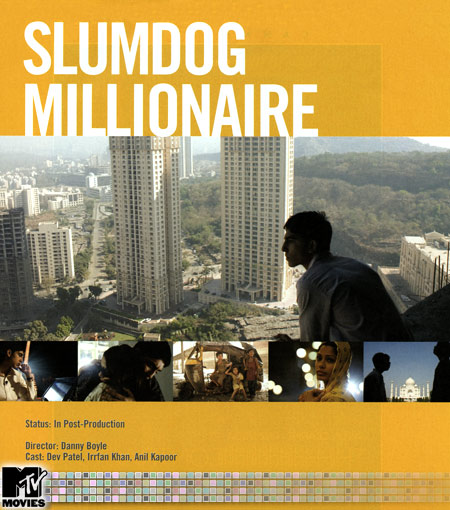
Sound bites: poverty porn, slum tourism, imperialist guilt flick, post-colonial inequalities continued, Bombay’s underbelly revealed- revelled, brilliant, feel good movie, accurate portrayal, gross misrepresentation, a visual Lonely Planet guide to Mumbai, an (anti-)Indian movie, Bollywood mania. On television Boyle takes questions from enthusiastic BrAsians; in The Guardian Rushdie laments the “impossibility on impossibility”; and angry Amitabh Bachchan writes back – sounds jealous; my own contribution would be Angelina Jolie and Madonna tussling at the Oscars over adopting the movie’s child actors.
The American and British film industries’ acclamation of Slumdog Millionaire has raised much media debate. Issues of authenticity, cultural ownership,‘burden of representation’, the nationality of its director, its content and stylistic aesthetics, and Eurocentric and/or re-Orientalist visions, have created a vast contact zone for analyzing cinema, identity, and nationalism. None of this is new of course – contention of where Kurosawa and Ray belong continues; Spike Lee’s criticism of Quentin Tarantino’s use of Afro-American linguistics replays these debates – albeit with different histories of race, empire and exploitation. Using child actors as allegories of post-colonial development is characteristic of new national cinemas. This is brilliantly done in Amir Naderi’s The Runner; Salam Bombay is a little geographically closer, and numerous Indian socials of the fifties and sixties deployed children as central to narrative development and critique.
Slumdog Millionaire does not confirm to the contexts of such debates usually associated with World – Third – Alternative – cinemas, certainly not in the political sense that these cinemas are often discussed. Every now and again a film’s popularity transcends the categories accorded them and is propelled to a much higher and holy accolade. Slumdog Millionaire is City of Joy for the twenty-first century, informed by an anthropological attempt at readdressing inequalities of representation by “giving” the camera to the Other and erasing the need for white protagonists – well almost. If Boyle’s ethnicity was different would all this discussion be taking place? What happened to Gurinder Chadha’s aesthetic and agenda? Forced to succumb to funding desires of reproducing the East for the West- Bride and Prejudice- or producing minority narratives that tick every possible identity ‘clash’? Gentle, unassuming, had never even been to India prior to filming, Boyle does it better!
To Read the Rest of the Essay
by Atticus Narain
Dark Matter
Sound bites: poverty porn, slum tourism, imperialist guilt flick, post-colonial inequalities continued, Bombay’s underbelly revealed- revelled, brilliant, feel good movie, accurate portrayal, gross misrepresentation, a visual Lonely Planet guide to Mumbai, an (anti-)Indian movie, Bollywood mania. On television Boyle takes questions from enthusiastic BrAsians; in The Guardian Rushdie laments the “impossibility on impossibility”; and angry Amitabh Bachchan writes back – sounds jealous; my own contribution would be Angelina Jolie and Madonna tussling at the Oscars over adopting the movie’s child actors.
The American and British film industries’ acclamation of Slumdog Millionaire has raised much media debate. Issues of authenticity, cultural ownership,‘burden of representation’, the nationality of its director, its content and stylistic aesthetics, and Eurocentric and/or re-Orientalist visions, have created a vast contact zone for analyzing cinema, identity, and nationalism. None of this is new of course – contention of where Kurosawa and Ray belong continues; Spike Lee’s criticism of Quentin Tarantino’s use of Afro-American linguistics replays these debates – albeit with different histories of race, empire and exploitation. Using child actors as allegories of post-colonial development is characteristic of new national cinemas. This is brilliantly done in Amir Naderi’s The Runner; Salam Bombay is a little geographically closer, and numerous Indian socials of the fifties and sixties deployed children as central to narrative development and critique.
Slumdog Millionaire does not confirm to the contexts of such debates usually associated with World – Third – Alternative – cinemas, certainly not in the political sense that these cinemas are often discussed. Every now and again a film’s popularity transcends the categories accorded them and is propelled to a much higher and holy accolade. Slumdog Millionaire is City of Joy for the twenty-first century, informed by an anthropological attempt at readdressing inequalities of representation by “giving” the camera to the Other and erasing the need for white protagonists – well almost. If Boyle’s ethnicity was different would all this discussion be taking place? What happened to Gurinder Chadha’s aesthetic and agenda? Forced to succumb to funding desires of reproducing the East for the West- Bride and Prejudice- or producing minority narratives that tick every possible identity ‘clash’? Gentle, unassuming, had never even been to India prior to filming, Boyle does it better!
To Read the Rest of the Essay
Subscribe to:
Posts (Atom)