Showing posts with label Hollywood. Show all posts

Tuesday, March 08, 2011

Robin Wood: Only (Dis)Connect; and Never Relaxez-Vous; or, I Can’t Sleep

Only (Dis)Connect; and Never Relaxez-Vous; or, ‘I Can’t Sleep’
by Robin Wood
Film International


...

Confessions of an Incompetent Film Critic

For people of my generation, who grew up in the 1940s/50s on an exclusive diet of classical Hollywood cinema (with the occasional British movie), the European ‘arthouse’ cinema always presented problems which linger on even today, a simple basic one being that of following the plot. This is not because the plot is necessarily complex or obscure, but, frequently, because of the way in which the characters are introduced and the action presented. When I grew up there was remarkably little serious criticism available (not much beyond the weekly reviews), and film studies courses in schools or universities were not even thought of. I was seventeen when I saw my first foreign language film (Torment/Frenzy [Hets, 1944], by Alf Sjöberg, from an early but already characteristic screenplay by Ingmar Bergman). I knew from the reviews that it would carry me far beyond anything I had seen previously, both in style and subject-matter, and my hand was trembling when I bought my ticket. I believe I had great difficulty following it (my first subtitles, not to mention extreme psychological disturbance). Fifty-five years later I still have the same problem when confronted with the films of Claire Denis (or Michael Haneke, or Hou Hsiao-Hsien…). The habits acquired during one’s formative years are never quite cast off; when I showed I Can’t Sleep to a graduate film group last year, my students corrected me over a number of details and pointed out many things I hadn’t noticed, although this was their first viewing of the film and I had already watched it three times. A classical Hollywood film – however intelligent and complex – is dependent on its surface level upon ‘popular’ appeal and its action must be fully comprehensible to a general audience at one viewing, covering all levels of educatedness from the illiterate to the university professor. (The same was of course true of the Elizabethan theatre – see, for example, the conventions of the soliloquy and the aside, wherein a character explains his/her motivation, reactions or thoughts to the audience). One of the cardinal rules was that every plot point must be doubly articulated, in both the action and the dialogue; another was the use of the cut to close-up that tells us ‘This character is important’; yet another, the presence of instantly recognizable stars or character actors. All of these Denis systematically denies us. It is a part of her great distinction that her films (and especially I Can’t Sleep, arguably her masterpiece to date) demand intense and continuous mental activity from the spectator: we are not to miss a single detail or to pass over a gesture or facial expression, even if it is shown in long shot within an ensemble, with no ‘helpful’ underlining and no ‘spelling out’ in dialogue.

It is the particular distinction of Denis’ cinema that sets it apart from – almost, indeed, in opposition to – the work of many of our most celebrated ‘arthouse’ directors: Bergman, for example, or Fellini or Antonioni. Their films are rooted in autobiography – not necessarily in any literal sense, but in terms of personal introspection – whereas Denis left autobiography behind with Chocolat, and even that film is notable for its poise and critical distance, its objectivity. Where Bergman or Fellini seems to be saying to us ‘Come with me and I’ll tell you my secrets, share my experiences – how I feel about things, my thoughts about existence’, Denis issues a very different invitation to the spectator: ‘Come with me and we’ll play a game, albeit a serious one. Let’s see how much you can notice in what I decide to show you, how you interpret what you see and hear, what connections you can make, how much can be explained and how much remains mysterious and uncertain, as so much in our lives remains unclear. I’ll allow you a certain leeway of interpretation, because I don’t always understand everything myself, not even my own creations, though I’ll be as precise as possible…’ A few examples from the film’s first ten minutes will illustrate various aspects of this.

To Read the Rest of the Essay

Friday, February 18, 2011

Empire: Hollywood and the War Machine

Hollywood and the war machine: Empire examines the symbiotic relationship between the movie industry and the military-industrial complex.
Empire (Al Jazeera)

War is hell, but for Hollywood it has been a Godsend, providing the perfect dramatic setting against which courageous heroes win the hearts and minds of the movie going public.

The Pentagon recognises the power of these celluloid dreams and encourages Hollywood to create heroic myths; to rewrite history to suit its own strategy and as a recruiting tool to provide a steady flow of willing young patriots for its wars.

What does Hollywood get out of this 'deal with the devil'? Access to billions of dollars worth of military kit, from helicopters to aircraft carriers, enabling filmmakers to make bigger and more spectacular battle scenes, which in turn generate more box office revenue. Providing they accept the Pentagon's advice, even toe the party line and show the US military in a positive light.

So is it a case of art imitating life, or a sinister force using art to influence life and death - and the public perception of both?

Empire will examine Hollywood, the Pentagon, and war.

Joining us as guests: Oliver Stone, the eight times Academy Award-winning filmmaker; Michael Moore, the Academy Award-winning filmmaker; and Christopher Hedges, an author and the former Middle East bureau chief of the New York Times.

Our interviewees this week are: Phil Strub, US Department of Defense Film Liaison Unit; Julian Barnes, Pentagon correspondent, LA Times; David Robb, the author of Operation Hollywood; Prof Klaus Dodds, the author of Screening Terror; Matthew Alford, the author of Reel Power; Prof Melani McAlister, the author of Culture, Media, and US Interests in the Middle East.

To Watch the Documentary

Monday, December 06, 2010

Sam Mithani: The Hollywood Left -- Cinematic Art and Activism in the 1930s

THE HOLLYWOOD LEFT: CINEMATIC ART AND ACTIVISM IN THE 1930s
by Sam Mithani

A Dissertation Presented to the
FACULTY OF THE GRADUATE SCHOOL
UNIVERSITY OF SOUTHERN CALIFORNIA
In Partial Fulfillment of the
Requirements for the Degree
DOCTOR OF PHILOSOPHY
(CINEMA-TELEVISION—CRITICAL STUDIES)
December 2007

ABSTRACT

The dissertation re-examines the Thirties in its artistic, cultural and political
specificity to place leftist cultural productions in their complex contexts, particularly the ideological. It concentrates on radical/proletarian fiction and Hollywood leftist cinema as expressions of prevalent “crisis” conditions, such the Great Depression and the New Deal, anti-Semitism, anticommunism, labor unionism, racism in the South, and the rise of fascism/Nazism. It demonstrates how the leftist favored genres in literature (proletarian fiction) and cinema (the social-problem film) underwent transformations in response to the changing national and global conditions, leftist political positions and debates on the inter-relations between art, ideology and culture. Working in the tradition of American social criticism, the Hollywood Left responded productively to the challenges by creating a vibrant cinematic counterdiscourse. Leftists strived to create a “popular Marxism” and a “leftist populism” by interpellating their critique within popular Hollywood genres, albeit subject to the commercial mandate of the studio system and its heavy-handed censorship apparatus. This contentious and creative engagement produced some of the most memorable “critical” works of Hollywood’s “Golden Age,” such as I am a Fugitive
from a Chain Gang, Fury and Dust Be My Destiny. The dissertation critically examines these films, compares them to the mainstream “populist cinema” of Frank Capra, and argues that the Hollywood Left creatively reworked this populism to fashion a far more critical, even abrasive, cinema, giving rise to the foundational works of American film noir. The dissertation also frames leftist cinema as a committed response to the remarkable changes in race, class, gender and ideology taking places within American culture. In particular, the totalitarian ideologies of fascism and Nazism presented grave challenges to democracy. The Hollywood Left led the filmic battle against these forces and produced energetic cinematic propaganda in films like Blockade (1938), Juarez (1939) and Confessions of a Nazi Spy (1939), which are the focus of this work. In essence the dissertation calls for a re-evaluation of the “Red Decade” as one of great cultural and artistic renaissance for American culture and the Left rather than one of disappointment, disillusion and disenchantment as has been popularized by conservative critics.

Chapter One: Dissertation premise, method and organization

Chapter Two: The “Red Decade” and its Influence on American
Cinema, Literature and Culture

Chapter Three: A “Marxist” Cinema in Hollywood? Leftist cultural
productions in their Social, Political and Cultural Contexts

Chapter Four: Antifascism, the Hollywood Left and the transformation
of the social-problem film

Chapter Five: Leftist anti-Nazism, Warner Bros. studios and the further
transformation of the social-problem film

Chapter Six: Further research on Leftist studies of the Thirties

To Read the Dissertation

Monday, October 11, 2010

Reel Injun: On the Trail of the Hollywood Indian (October 18 and 21)

(Extra credit opportunity for all of my students)

Reel Injun: On the Trail of the Hollywood Indian


Cree filmmaker Neil Diamond takes a look at the Hollywood Indian, exploring the portrayal of North American Natives through a century of cinema. Traveling through the heartland of America, and into the Canadian North, Diamond looks at how the myth of “the Injun” has influenced the world's understanding—and misunderstanding—of Natives. More information on the film.

Reel Injun Screenings

October 18, 2010 6:00 PM
Lexington Public Library, Central Branch
140 East Main Street
Lexington, KY 40507

October 21, 2010 3:30PM & 6:00PM
Fern Creek High School
9115 Fern Creek Road
Louisville, KY 40291

KET partners with the Louisville Film Society and the Lexington Public Library to host Community Cinema and hopes to include more cities across the state. If you would like to discuss the possibility of Community Cinema screenings in your Kentucky location, contact Sara O'Keefe at KET.

Friday, June 04, 2010

Jonathan Eig: A beautiful mind(fuck) -- Hollywood structures of identity

A beautiful mind(fuck): Hollywood structures of identity
by Jonathan Eig
Jump Cut


It has been more than sixty years since Toto tore the cover off the Wizard of Oz and more than forty since Sam Loomis unmasked Norman Bates. Narrative surprises about the identity of major characters are not new in Hollywood film. But three characteristics distinguish movies like The Sixth Sense, Fight Club, Memento, Mulholland Drive, and Donnie Darko from past, more typical, Hollywood identity-surprises.

First, in these films the character with the surprise invariably is the protagonist, as opposed to a supporting character who affects a more “normal” hero. The next two characteristics work in tandem. The hero in question does not know the true nature of his identity and so is not simply keeping a secret from us. And the audience does not know the backstory either. We are not let in on a secret the hero does not know. A sudden boomlet of movies intentionally lie to the audience and manipulate viewers’ emotional investment in the heroes. In critical circles, these movies have developed a trendy name: mindfucks.

The two Davids—Lynch and Fincher—are the modern-day champions of the mindfuck film, but they certainly owe a large debt to Luis Buñuel, who made a career out of yanking the rug out from under his audience. From the avant-garde Un Chien Andalou and the “is it real?” documentary Land Without Bread early in his career, right up until the final shot of The Discreet Charm of the Bourgeoisie and the double female lead in That Obscure Object of Desire, Buñuel played with our perceptions of his characters, simultaneously involving us in fictional lives and reminding us that what we are seeing is flickering light in the image of actors—a representation of a representation.

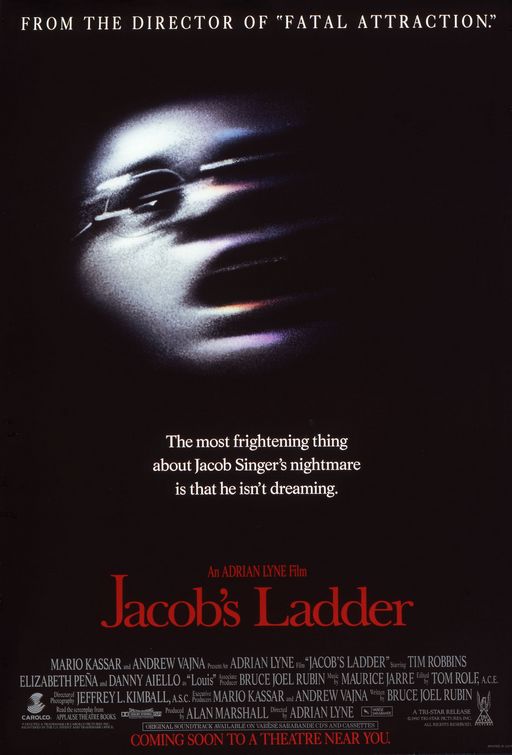
The current crop of Hollywood mindfucks from 1999-2001 no doubt has been fertilized by several successful “surprise” movies from the recent past. Both Neil Jordan’s The Crying Game (1992) and Bryan Singer’s The Usual Suspects (1994) boasted Oscar-winning screenplays and significant profits; artistic and financial success mark them as more widely seen than previous cult favorites like Terry Gilliam’s Brazil (1985)and Adrian Lyne’s Jacob’s Ladder (1990). But the heavy hitter in this recent history is M. Night Shyamalan’s The Sixth Sense (1999).

The Sixth Sense employs a plot device characteristic of all the recent mindfuck movies. At some point in the first act, after a character’s life is threatened, the story is either interrupted for a flashback to show how we arrived at this point (Fight Club and Memento) or the character appears to survive the threat. In The Sixth Sense, we will come to learn that Malcolm Crowe did not in fact survive, that at least part of his subsequent story has been illusory. That will be the big climactic surprise.

Such a narrative device did not originate with Shyamalan. Modern drama has paid plenty of attention to the nature of man’s life and death, from the mainstream of Thornton Wilder’s Our Town to the absurdism of Samuel Becket’s Endgame. Two earlier films employ an identical device: Robert Enrico’s Oscar-winning short La Riviere du Hibou (based on Ambrose Bierce’s story An Occurrence at Owl Creek Bridge and initially shown to a large American audience as part of The Twilight Zone1 television show in 1964) as well as Lyne’s Jacob’s Ladder. But neither led to similarly constructed movies nor did they generate $300 million dollar ticket sales in initial release, as The Sixth Sense did.

To Read the Rest of the Essay


Wednesday, June 02, 2010

Democracy Now: Pioneering African American Actress, Singer and Civil Rights Activist Lena Horne, 92, Dies

(This is from May 11th, I was listening to this episode on my walk to work today and was very moved by it)

Democracy Now

Pioneering African American Actress, Singer and Civil Rights Activist Lena Horne, 92, Dies

Lena Horne enjoyed a six-decade singing career on stage, television and in film. She was the first black woman to be signed to a long-term contract by a major Hollywood studio. She helped break racial boundaries by acting alongside white entertainers, but she was segregated on screen so producers could clip out her singing when the movies ran in the South. In the 1950s, she was blacklisted in part because of her friendship with Paul Robeson and W.E.B. Du Bois. In 1963, Lena Horne took part in the March on Washington alongside Harry Belafonte and Dick Gregory and was part of a group, which included authors James Baldwin and Lorraine Hansberry, that met with Attorney General Robert F. Kennedy to urge a more active approach to desegregation. We air a rare 1966 interview with Lena Horne from the Pacifica Radio Archives and speak to her biographer, James Gavin.

To Read/Listen/Watch the Episode


Part II: Singer and Civil Rights Activist Lena Horne Remembered

The pioneering African-American actress, singer, and civil rights activist has died at the age of 91. We speak with James Gavin, author of, Stormy Weather: The Life of Lena Horne, about her activism, her friendship with Harry Belafonte, President Obama’s remarks after her passing, and more.

To Read/Listen/Watch the Episode

Tuesday, April 27, 2010

Charlie Jane Anders: Michael Bay Finally Made An Art Movie

Michael Bay Finally Made An Art Movie
by Charlie Jane Anders
io9

...

Michael Bay understands that summer movies are about two things: male anxiety, and pure id. That's why he casts Shia LaBoeuf, that supreme avatar of pure male inadequacy, in the lead role. LaBoeuf projects a pathetic, wall-eyed dorkhood, when he's not babbling like a tumor removed from Woody Allen's prostate that somehow achieved sentience. I imagine the DVD of ROTF will include a whole disk of outtakes where they had to stop filming because LaBoeuf was drooling on camera. As it is, the film includes several extreme closeups of LaBoeuf's dazed stare.

Where was I? Oh yes. So LaBoeuf, who's actually a fine actor, is the stand-in for the male viewers' greatest fears about themselves. No matter how great a loser they might be, they can't be as losery a loser as Sam Witwicky. And yet, Sam has awesome giant robots stomping around telling him he's the most important awesome person ever. And he has the hottest girlfriend in the universe, Megan Fox, for whom banality is a huge aphrodisiac. The more pathetic Sam gets, the more Fox's lips pout and her nipples point, like little Irish setters.

To make matters more awesome for the insecure males in the audience, Sam actually tosses aside his giant robot fanclub and his walking-pinup girlfriend, so he can have a normal life. Of course, this only leads to other robots and hawt chicks (who turn out to be robots too) throwing themselves at him and telling him how important he is. In the end, everybody learns to appreciate Sam just a bit more than they already did, and a booming voice tells him he's earned the "matrix of leadership" through his courage and stuff.

And then there's the "id" part, which is the part where stuff blows up real good, and huge machines smash each other up. And every single performance is so ridiculous that it looks down on "over the top" as if from a great height. It's the part of your brain that thinks it would be awesome to see robots with giant dangling testicles, or hot chicks turning into robot tentacle monsters, or "ghetto" robots that talk in inept hip-hop slang and smash each other playfully, or funny Jewish men who talk about their "schmear" and randomly strip to their G-strings. Is that going too far? Then let's go 100 times farther than that and see what happens!

Transformers: ROTF is so long, you'll need to wear adult diapers to it. But the movie's pure celebration of the primal urge, and unfiltered living, will make you rejoice in your adult diapers. You'll relieve yourself in your seat with a savage joy, your barbaric yawp blending in with the crowd's screams of excitement.

And yet — and here's the part where I really think ROTF approaches "art movie" status — the movie's id overload reaches such crazy levels that the fabric of reality itself starts to break down. Michael Bay has boasted about how every single shot in the movie has so much stuff going on in it, it would take your PC since the dawn of time to render one frame. After a few hours of this assault, you feel the chair melt and the floor of the movie theater becomes an angry mirror into your soul. Nothing is solid, nothing is real, everything Transforms.

To Read the Rest of the Essay

Monday, February 22, 2010

Kevin L. Ferguson: Yuppie devil -- Villainy in Kathryn Bigelow’s Blue Steel

Yuppie devil: villainy in Kathryn Bigelow’s Blue Steel
by Kevin L. Ferguson
Jump Cut

“When Mephistopheles shows up wearing a gold Rolex he’s truly a creature for our age.”
— Janet Maslin


Film critic Janet Maslin must call forth the devil himself to explain the curious appeal of the yuppie to late-80s filmgoers. The yuppie devil at the end of the 80s, though, is more a crafty Mephistopheles than a fearsome Lucifer. A sly character with a keen sense for bargain and an eye for economy, this devil wears his gold Rolex in fashionable display and makes his pacts in public. No more magical, smoke-filled entrances, the devil at the end of the 80s confidently takes his seat at the head of the yuppie bargaining table. The devil’s public appearance as a yuppie points up the heartless greed of that decade, and so Mephistopheles’ gold watch indicates not only his proper place at the yuppie’s table, but also the culpability of those seated across from him (with their own Rolexes, Mont Blanc pens, and Ferragamos). Maslin’s article focuses on two films, Internal Affairs (dir. Mike Figgis, U.S., 1990) and Bad Influence (dir. Curtis Hanson, U.S., 1990), to demonstrate this new trend in late-80s Hollywood cinema, where the formerly successful yuppie was conflated with the newly fashionable serial killer to create the hybrid character of the psychotic, villainous yuppie devil.

In this essay, I want to reexamine a third film that Maslin mentions briefly, Kathryn Bigelow’s Blue Steel (U.S., 1990). Bigelow’s film is unusual since it simultaneously sustains and critiques the new trope of the yuppie devil. Furthermore, the film generated puzzled responses that allow us to see the ambivalent attitudes late-80s spectators held towards this new kind of yuppie villain. For example, even Maslin, in pointing out how yuppie devil films reveal the dangerous effects of “a decade of relative conscience-free complacency,” nonetheless mirrors this complacency by implicitly accepting the merging of yuppie and psycho tropes:

“When [Blue Steel] assumes that [its villain] automatically has the makings of a psychotic killer, it doesn’t imagine itself to be making any kind of leap.”[2]

The self-evident “obviousness” of Blue Steel’s yuppie devil makes the film worth revisiting since its ideological obviousness hides more complex cultural negotiations in the 1980s between economic power and filmic evil. Finally, since Blue Steel features a female heroine who must face the male yuppie devil, the film further questions the obviousness of assumed gender roles in late-80s imaginings of yuppie lifestyles. I will start by offering a reading of Blue Steel which argues that its yuppie devil was hastily dismissed, but is constructed in a significant visual relationship with that film’s heroine. I will then discuss the rapid transformation between 1984-1989 in U.S. popular culture representations of the yuppie from a success story to a symbol of evil.

As Maslin suggested, yuppie devil films like Blue Steel rely on a shared understanding of what the yuppie would signify to a late-80s audience. In that decade, the yuppie was a new figure in the popular imagination who reiterated an U.S. myth of economic success. The term was coined in 1983 and first popularized in 1984, which publications like Newsweek labeled “The Year of the Yuppie.” The word “yuppie,” which comes from mixing the acronym for “young urban professional” with “hippie” or “preppy,”[3] was initially used as a demographic label to describe Baby Boomers

“aged 29 to 35 who live in metropolitan areas, work in professional or managerial occupations, and have an income of at least $30,000 if they live alone.”[4]

Soon, though, “yuppie” became a pejorative description of a lifestyle, and yuppies were identified with a culture of wealth, conspicuous consumption, and conservative politics. Driving a BMW, working on Wall Street, exercising constantly, living in an expensively renovated loft in a gentrified neighborhood, or purchasing imported tarragon vinaigrette from an upscale gourmet store made one a yuppie. A backlash against the expensive, self-absorbed frivolity of the yuppie’s designer lifestyle quickly set in. By the end of the 1980s, the valueless yuppie lifestyle was a ready signifier for the selfish evil born of capitalism, and villains in films like Blue Steel could rely on this signification to scare audiences.

To Read the Rest of the Essay

Saturday, January 09, 2010

Jenny Kwok Wah Lau: Zhang Yimou's Hero -- China’s response to Hollywood globalization

Hero: China’s response to Hollywood globalization
by Jenny Kwok Wah Lau
Jump Cut


The 2002 film Hero, directed by the internationally renowned director Zhang Yimou, stormed through China with massive media coverage, vehement critical debates and audience response — both in print media and Internet. In the end, its box office receipts of 2.5 billion yuan out of 9 billion total revenue for all films in that year made it the top grossing film in the entire history of Chinese cinema up to that point. The coming of Hero signified the final institutionalization of a new era in Chinese filmmaking, one that single-mindedly pushes for market success. Thus, we need to ask what conditions in Chinese cinema affected the emergence of films such as Hero and what does that film's success mean for Chinese films' future?

To answer these questions we must begin from when the changes first started. Since the 1980s China has actively re-organized its film industry from a socialist to a semi-capitalist market system. 1982 marked the beginning of “outside” investment in film production. This so-called “outside” refers to sources extraneous to the China Film Bureau, such as private entities from China, Hong Kong, Taiwan, and some Western companies, which were allowed to participate in this once completely-enclosed filmmaking circle. In 1989 China abandoned the Film Bureau's monopoly of film distribution and allowed the establishment of private distribution companies.

The next ten years were a period of consolidation. By the end of the 90s all three phases of filmmaking — production, distribution, and exhibition — had very much opened to private investment. This process also partly prefigured China’s entry into the World Trade Organization (WTO), which was considered vital for China’s participation in world capitalism. After years of fierce negotiation, especially with the United States, whose approval or veto was decisive in the whole process, in December, 2001 China entered the WTO. China’s strong desire to get into the WTO was not unaccompanied by skeptics within China itself, including from the film community, which was facing economic hard times.

In fact, while the 90s saw the consolidation of a capitalist filmmaking system, they also saw a massive and debilitating slide in the size of the movie-going audience. Box office receipts declined from 1991's 23.6 billion yuan (1 U$ appr. = 7.8 yuan) to 2001's 8.4 billion yuan, a more than threefold drop in ten years. Furthermore, only 35% of the revenue during that time came from China-made films, the remaining 65% derived from Hollywood or other imported films. Meanwhile, film production also dropped throughout the 90s, from 167 films in 1992 to 80 films in 2001.[1]

Some film scholars in China blamed the drop in numbers on the shift to a capitalist system, and they doubted whether China could adapt to the pressure of the open market.[2] No doubt, system change did affect film production. For example, the more open system brought in popular films from other cinemas, such as from Hong Kong and Hollywood, which proved highly competitive in the local market. It also generated a large DVD market, part of which relied on piracy practices that seriously hurt the film industry. Nevertheless, it can also be argued that some of the pain that the Chinese film industry suffered during those years was partly self-inflicted by internal censorship.

Many of the best “artisan/cultural” films made during that period — such as, Judou (1990, Zhang Yimou), Farewell My Concubine (1993, Chan Kaige), Blue Kite (1994, Tian Zhanzhan), and To Live (1994, Zhang, Yimou) — were initially banned in China. Similarly, many of the 6th generation new wave films — such as Beijing Bastards (1994, Zhang Yuan), Postman (Ho Jianjun, 1995), Pickpocket (or Xiao Wu by Jia Zhangke, 1997, director of The World, 2004), and East Palace, West Palace (Zhang Yuan, 1997) — were potentially attractive to the new urban masses but not screened. Most of these directors suffered interference from the government and some were even banned from making films for a period of time.[3]

Instead of supporting these films, made in the tradition of artisan filmmaking, the government encouraged a new type of film called the “new mainstream,” through expeditious granting of shooting and screening permits. These films were mostly Hollywood imitations financed by private investments. By the late nineties, 70% of China’s production consisted of “new mainstream” films — such as Part A, Part B (Jiafang Yifang), Be There or Be Square (Bujian Busan) , and Shower (Xi Zao). These films were called the new mainstream as opposed to the “old mainstream” because the latter were “mainstream” by government design, intended as “educational” or “culturally or politically uplifting.” As the government strongly supported them, the films were guaranteed wide distribution. However, even though screened throughout China, the films had a disproportionately small viewership, mostly due to their traditional form and didactic content.[4] Examples include Jiao Yulu (Our Party’s Good Cadre, 1990, dir. Wang Jixin) and The Opium War (1997, dir. Xie Jin). In contrast, the “new mainstream” became the “real mainstream” in terms of popularity.

Thus, from the early 90s one can identify three major types of cinema in China: the artisan/cultural films, usually banned; the state-sponsored films (old mainstream), usually not popular; and the new mainstream entertainment, commercial and stylistically imitating Hollywood.

To Read the Rest of the Essay