Showing posts with label David Fincher. Show all posts

Sunday, March 06, 2011

Zadie Smith: Generation Why?

Generation Why?
by Zadie Smith
The New York Review of Books


How long is a generation these days? I must be in Mark Zuckerberg’s generation—there are only nine years between us—but somehow it doesn’t feel that way. This despite the fact that I can say (like everyone else on Harvard’s campus in the fall of 2003) that “I was there” at Facebook’s inception, and remember Facemash and the fuss it caused; also that tiny, exquisite movie star trailed by fan-boys through the snow wherever she went, and the awful snow itself, turning your toes gray, destroying your spirit, bringing a bloodless end to a squirrel on my block: frozen, inanimate, perfect—like the Blaschka glass flowers. Doubtless years from now I will misremember my closeness to Zuckerberg, in the same spirit that everyone in ’60s Liverpool met John Lennon.

At the time, though, I felt distant from Zuckerberg and all the kids at Harvard. I still feel distant from them now, ever more so, as I increasingly opt out (by choice, by default) of the things they have embraced. We have different ideas about things. Specifically we have different ideas about what a person is, or should be. I often worry that my idea of personhood is nostalgic, irrational, inaccurate. Perhaps Generation Facebook have built their virtual mansions in good faith, in order to house the People 2.0 they genuinely are, and if I feel uncomfortable within them it is because I am stuck at Person 1.0. Then again, the more time I spend with the tail end of Generation Facebook (in the shape of my students) the more convinced I become that some of the software currently shaping their generation is unworthy of them. They are more interesting than it is. They deserve better.

In The Social Network Generation Facebook gets a movie almost worthy of them, and this fact, being so unexpected, makes the film feel more delightful than it probably, objectively, is. From the opening scene it’s clear that this is a movie about 2.0 people made by 1.0 people (Aaron Sorkin and David Fincher, forty-nine and forty-eight respectively). It’s a talkie, for goodness’ sake, with as many words per minute as His Girl Friday. A boy, Mark, and his girl, Erica, sit at a little table in a Harvard bar, zinging each other, in that relentless Sorkin style made famous by The West Wing (though at no point does either party say “Walk with me”—for this we should be grateful).

But something is not right with this young man: his eye contact is patchy; he doesn’t seem to understand common turns of phrase or ambiguities of language; he is literal to the point of offense, pedantic to the point of aggression. (“Final clubs,” says Mark, correcting Erica, as they discuss those exclusive Harvard entities, “Not Finals clubs.”) He doesn’t understand what’s happening as she tries to break up with him. (“Wait, wait, this is real?”) Nor does he understand why. He doesn’t get that what he may consider a statement of fact might yet have, for this other person, some personal, painful import:

ERICA: I have to go study.

MARK: You don’t have to study.

ERICA: How do you know I don’t have to study?!

MARK: Because you go to B.U.!

Simply put, he is a computer nerd, a social “autistic”: a type as recognizable to Fincher’s audience as the cynical newshound was to Howard Hawks’s. To create this Zuckerberg, Sorkin barely need brush his pen against the page. We came to the cinema expecting to meet this guy and it’s a pleasure to watch Sorkin color in what we had already confidently sketched in our minds. For sometimes the culture surmises an individual personality, collectively. Or thinks it does. Don’t we all know why nerds do what they do? To get money, which leads to popularity, which leads to girls. Sorkin, confident of his foundation myth, spins an exhilarating tale of double rejection—spurned by Erica and the Porcellian, the Finaliest of the Final Clubs, Zuckerberg begins his spite-fueled rise to the top. Cue a lot of betrayal. A lot of scenes of lawyers’ offices and miserable, character-damning depositions. (“Your best friend is suing you!”) Sorkin has swapped the military types of A Few Good Men for a different kind of all-male community in a different uniform: GAP hoodies, North Face sweats.

To Read the Rest of the Essay

Friday, June 04, 2010

Jonathan Eig: A beautiful mind(fuck) -- Hollywood structures of identity

A beautiful mind(fuck): Hollywood structures of identity
by Jonathan Eig
Jump Cut


It has been more than sixty years since Toto tore the cover off the Wizard of Oz and more than forty since Sam Loomis unmasked Norman Bates. Narrative surprises about the identity of major characters are not new in Hollywood film. But three characteristics distinguish movies like The Sixth Sense, Fight Club, Memento, Mulholland Drive, and Donnie Darko from past, more typical, Hollywood identity-surprises.

First, in these films the character with the surprise invariably is the protagonist, as opposed to a supporting character who affects a more “normal” hero. The next two characteristics work in tandem. The hero in question does not know the true nature of his identity and so is not simply keeping a secret from us. And the audience does not know the backstory either. We are not let in on a secret the hero does not know. A sudden boomlet of movies intentionally lie to the audience and manipulate viewers’ emotional investment in the heroes. In critical circles, these movies have developed a trendy name: mindfucks.

The two Davids—Lynch and Fincher—are the modern-day champions of the mindfuck film, but they certainly owe a large debt to Luis Buñuel, who made a career out of yanking the rug out from under his audience. From the avant-garde Un Chien Andalou and the “is it real?” documentary Land Without Bread early in his career, right up until the final shot of The Discreet Charm of the Bourgeoisie and the double female lead in That Obscure Object of Desire, Buñuel played with our perceptions of his characters, simultaneously involving us in fictional lives and reminding us that what we are seeing is flickering light in the image of actors—a representation of a representation.

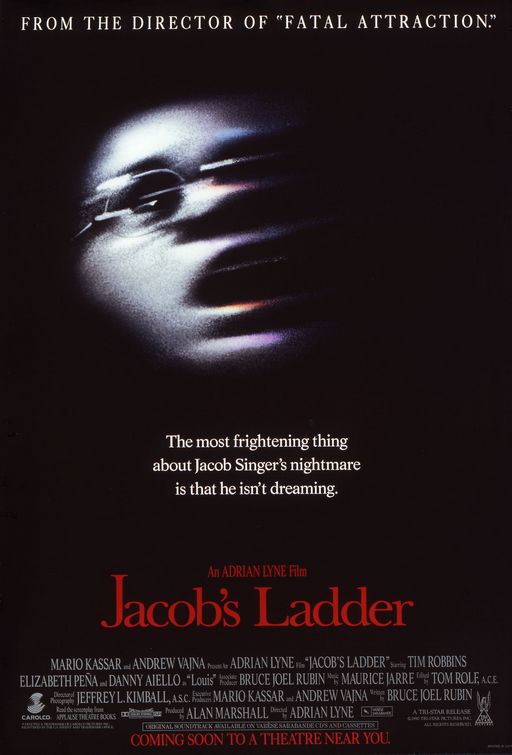
The current crop of Hollywood mindfucks from 1999-2001 no doubt has been fertilized by several successful “surprise” movies from the recent past. Both Neil Jordan’s The Crying Game (1992) and Bryan Singer’s The Usual Suspects (1994) boasted Oscar-winning screenplays and significant profits; artistic and financial success mark them as more widely seen than previous cult favorites like Terry Gilliam’s Brazil (1985)and Adrian Lyne’s Jacob’s Ladder (1990). But the heavy hitter in this recent history is M. Night Shyamalan’s The Sixth Sense (1999).

The Sixth Sense employs a plot device characteristic of all the recent mindfuck movies. At some point in the first act, after a character’s life is threatened, the story is either interrupted for a flashback to show how we arrived at this point (Fight Club and Memento) or the character appears to survive the threat. In The Sixth Sense, we will come to learn that Malcolm Crowe did not in fact survive, that at least part of his subsequent story has been illusory. That will be the big climactic surprise.

Such a narrative device did not originate with Shyamalan. Modern drama has paid plenty of attention to the nature of man’s life and death, from the mainstream of Thornton Wilder’s Our Town to the absurdism of Samuel Becket’s Endgame. Two earlier films employ an identical device: Robert Enrico’s Oscar-winning short La Riviere du Hibou (based on Ambrose Bierce’s story An Occurrence at Owl Creek Bridge and initially shown to a large American audience as part of The Twilight Zone1 television show in 1964) as well as Lyne’s Jacob’s Ladder. But neither led to similarly constructed movies nor did they generate $300 million dollar ticket sales in initial release, as The Sixth Sense did.

To Read the Rest of the Essay


Wednesday, June 02, 2010

Left Field Cinema: Misunderstood Modern Cinema -- Alien 3

Misunderstood Modern Cinema: Alien 3
Left Field Cinema


Underdogs of cinema. Belittled on release, marginalised through their re-releases, they have been unfairly dismissed, by critics and audiences. Most major franchises of film have an entry which does not necessarily live up to the expectations created by their predecessors; these entries however may still be superior films in their own right. The Alien series is no exception. Alien 3 is a pleasure to watch, either a crusty VHS pan scan 1993 edition on a dusty CRT television, or crisp 2003 special extended wide screen DVD on a HiDef LCD - the essentials are still present and correct. The extended version is a superior cut of the film, the extra/alternative sequences rid the audience of some prior confusion as to which character is which, and create a much richer atmosphere. The new opening scene features a wider establishing shot of the penal colony and creates a sense of location which was previously lacking in the ’93 theatrical release. However the ’93 release still stands on its own merits.

The production was troubled, the film however was not. Wide spread condemnation of the film had began long before its release, different scripts were in production and different directors were attached before finally settling on first timer David Fincher. Dismissing the superficial attacks made on the film prior to its release, Alien 3 was still savagely attacked by critics upon release. The numerous negative reviews emerged as a result of one of five major factors. One, most of the major characters from Aliens are brutally killed within the opening credits. Two, they downsized the action budget from Aliens. Three, the film is not scary. Four, that the characters appear too similar. Five that it’s too depressing.

To counter: firstly, there were no survivors from Alien to Aliens other than Ellen Ripley and a cat and no-one complained, the series had never been about its supporting characters it was always the tale of Ellen Ripley, her journey is at the centre of the first three films. Although James Cameron would have probably preferred to continue the Ripley/Hicks/Bishop/Newt dynamic the producers and Fincher felt differently and the logic is sound. Not just move away from Cameron’s second instalment but completely destroy whatever hope had been built up, otherwise Alien 3 would quite possibly become a direct extension of Aliens.

To Read the Essay

To Listen to it