Showing posts with label Social Media. Show all posts
Showing posts with label Social Media. Show all posts
Tuesday, March 22, 2011

Monday, March 21, 2011
Nick Fielding/Iain Cobain: US spy operation that manipulates social media: Military's 'sock puppet' software creates fake online identities
Revealed: US spy operation that manipulates social media: Military's 'sock puppet' software creates fake online identities to spread pro-American propaganda
Nick Fielding and Iain Cobain
Guardian
The US military is developing software that will let it secretly manipulate social media sites by using fake online personas to influence internet conversations and spread pro-American propaganda.
A Californian corporation has been awarded a contract with United States Central Command (Centcom), which oversees US armed operations in the Middle East and Central Asia, to develop what is described as an "online persona management service" that will allow one US serviceman or woman to control up to 10 separate identities based all over the world.
The project has been likened by web experts to China's attempts to control and restrict free speech on the internet. Critics are likely to complain that it will allow the US military to create a false consensus in online conversations, crowd out unwelcome opinions and smother commentaries or reports that do not correspond with its own objectives.
The discovery that the US military is developing false online personalities – known to users of social media as "sock puppets" – could also encourage other governments, private companies and non-government organisations to do the same.
The Centcom contract stipulates that each fake online persona must have a convincing background, history and supporting details, and that up to 50 US-based controllers should be able to operate false identities from their workstations "without fear of being discovered by sophisticated adversaries".
Centcom spokesman Commander Bill Speaks said: "The technology supports classified blogging activities on foreign-language websites to enable Centcom to counter violent extremist and enemy propaganda outside the US."
He said none of the interventions would be in English, as it would be unlawful to "address US audiences" with such technology, and any English-language use of social media by Centcom was always clearly attributed. The languages in which the interventions are conducted include Arabic, Farsi, Urdu and Pashto.
Centcom said it was not targeting any US-based web sites, in English or any other language, and specifically said it was not targeting Facebook or Twitter.
Once developed, the software could allow US service personnel, working around the clock in one location, to respond to emerging online conversations with any number of co-ordinated messages, blogposts, chatroom posts and other interventions. Details of the contract suggest this location would be MacDill air force base near Tampa, Florida, home of US Special Operations Command.
Centcom's contract requires for each controller the provision of one "virtual private server" located in the United States and others appearing to be outside the US to give the impression the fake personas are real people located in different parts of the world.
It also calls for "traffic mixing", blending the persona controllers' internet usage with the usage of people outside Centcom in a manner that must offer "excellent cover and powerful deniability".
The multiple persona contract is thought to have been awarded as part of a programme called Operation Earnest Voice (OEV), which was first developed in Iraq as a psychological warfare weapon against the online presence of al-Qaida supporters and others ranged against coalition forces. Since then, OEV is reported to have expanded into a $200m programme and is thought to have been used against jihadists across Pakistan, Afghanistan and the Middle East.
To Read the Rest of the Article
Nick Fielding and Iain Cobain
Guardian
The US military is developing software that will let it secretly manipulate social media sites by using fake online personas to influence internet conversations and spread pro-American propaganda.
A Californian corporation has been awarded a contract with United States Central Command (Centcom), which oversees US armed operations in the Middle East and Central Asia, to develop what is described as an "online persona management service" that will allow one US serviceman or woman to control up to 10 separate identities based all over the world.
The project has been likened by web experts to China's attempts to control and restrict free speech on the internet. Critics are likely to complain that it will allow the US military to create a false consensus in online conversations, crowd out unwelcome opinions and smother commentaries or reports that do not correspond with its own objectives.
The discovery that the US military is developing false online personalities – known to users of social media as "sock puppets" – could also encourage other governments, private companies and non-government organisations to do the same.
The Centcom contract stipulates that each fake online persona must have a convincing background, history and supporting details, and that up to 50 US-based controllers should be able to operate false identities from their workstations "without fear of being discovered by sophisticated adversaries".
Centcom spokesman Commander Bill Speaks said: "The technology supports classified blogging activities on foreign-language websites to enable Centcom to counter violent extremist and enemy propaganda outside the US."
He said none of the interventions would be in English, as it would be unlawful to "address US audiences" with such technology, and any English-language use of social media by Centcom was always clearly attributed. The languages in which the interventions are conducted include Arabic, Farsi, Urdu and Pashto.
Centcom said it was not targeting any US-based web sites, in English or any other language, and specifically said it was not targeting Facebook or Twitter.
Once developed, the software could allow US service personnel, working around the clock in one location, to respond to emerging online conversations with any number of co-ordinated messages, blogposts, chatroom posts and other interventions. Details of the contract suggest this location would be MacDill air force base near Tampa, Florida, home of US Special Operations Command.
Centcom's contract requires for each controller the provision of one "virtual private server" located in the United States and others appearing to be outside the US to give the impression the fake personas are real people located in different parts of the world.
It also calls for "traffic mixing", blending the persona controllers' internet usage with the usage of people outside Centcom in a manner that must offer "excellent cover and powerful deniability".
The multiple persona contract is thought to have been awarded as part of a programme called Operation Earnest Voice (OEV), which was first developed in Iraq as a psychological warfare weapon against the online presence of al-Qaida supporters and others ranged against coalition forces. Since then, OEV is reported to have expanded into a $200m programme and is thought to have been used against jihadists across Pakistan, Afghanistan and the Middle East.
To Read the Rest of the Article
Sunday, March 06, 2011
Zadie Smith: Generation Why?
Generation Why?
by Zadie Smith
The New York Review of Books
How long is a generation these days? I must be in Mark Zuckerberg’s generation—there are only nine years between us—but somehow it doesn’t feel that way. This despite the fact that I can say (like everyone else on Harvard’s campus in the fall of 2003) that “I was there” at Facebook’s inception, and remember Facemash and the fuss it caused; also that tiny, exquisite movie star trailed by fan-boys through the snow wherever she went, and the awful snow itself, turning your toes gray, destroying your spirit, bringing a bloodless end to a squirrel on my block: frozen, inanimate, perfect—like the Blaschka glass flowers. Doubtless years from now I will misremember my closeness to Zuckerberg, in the same spirit that everyone in ’60s Liverpool met John Lennon.
At the time, though, I felt distant from Zuckerberg and all the kids at Harvard. I still feel distant from them now, ever more so, as I increasingly opt out (by choice, by default) of the things they have embraced. We have different ideas about things. Specifically we have different ideas about what a person is, or should be. I often worry that my idea of personhood is nostalgic, irrational, inaccurate. Perhaps Generation Facebook have built their virtual mansions in good faith, in order to house the People 2.0 they genuinely are, and if I feel uncomfortable within them it is because I am stuck at Person 1.0. Then again, the more time I spend with the tail end of Generation Facebook (in the shape of my students) the more convinced I become that some of the software currently shaping their generation is unworthy of them. They are more interesting than it is. They deserve better.
In The Social Network Generation Facebook gets a movie almost worthy of them, and this fact, being so unexpected, makes the film feel more delightful than it probably, objectively, is. From the opening scene it’s clear that this is a movie about 2.0 people made by 1.0 people (Aaron Sorkin and David Fincher, forty-nine and forty-eight respectively). It’s a talkie, for goodness’ sake, with as many words per minute as His Girl Friday. A boy, Mark, and his girl, Erica, sit at a little table in a Harvard bar, zinging each other, in that relentless Sorkin style made famous by The West Wing (though at no point does either party say “Walk with me”—for this we should be grateful).
But something is not right with this young man: his eye contact is patchy; he doesn’t seem to understand common turns of phrase or ambiguities of language; he is literal to the point of offense, pedantic to the point of aggression. (“Final clubs,” says Mark, correcting Erica, as they discuss those exclusive Harvard entities, “Not Finals clubs.”) He doesn’t understand what’s happening as she tries to break up with him. (“Wait, wait, this is real?”) Nor does he understand why. He doesn’t get that what he may consider a statement of fact might yet have, for this other person, some personal, painful import:
ERICA: I have to go study.
MARK: You don’t have to study.
ERICA: How do you know I don’t have to study?!
MARK: Because you go to B.U.!
Simply put, he is a computer nerd, a social “autistic”: a type as recognizable to Fincher’s audience as the cynical newshound was to Howard Hawks’s. To create this Zuckerberg, Sorkin barely need brush his pen against the page. We came to the cinema expecting to meet this guy and it’s a pleasure to watch Sorkin color in what we had already confidently sketched in our minds. For sometimes the culture surmises an individual personality, collectively. Or thinks it does. Don’t we all know why nerds do what they do? To get money, which leads to popularity, which leads to girls. Sorkin, confident of his foundation myth, spins an exhilarating tale of double rejection—spurned by Erica and the Porcellian, the Finaliest of the Final Clubs, Zuckerberg begins his spite-fueled rise to the top. Cue a lot of betrayal. A lot of scenes of lawyers’ offices and miserable, character-damning depositions. (“Your best friend is suing you!”) Sorkin has swapped the military types of A Few Good Men for a different kind of all-male community in a different uniform: GAP hoodies, North Face sweats.
To Read the Rest of the Essay
by Zadie Smith
The New York Review of Books
How long is a generation these days? I must be in Mark Zuckerberg’s generation—there are only nine years between us—but somehow it doesn’t feel that way. This despite the fact that I can say (like everyone else on Harvard’s campus in the fall of 2003) that “I was there” at Facebook’s inception, and remember Facemash and the fuss it caused; also that tiny, exquisite movie star trailed by fan-boys through the snow wherever she went, and the awful snow itself, turning your toes gray, destroying your spirit, bringing a bloodless end to a squirrel on my block: frozen, inanimate, perfect—like the Blaschka glass flowers. Doubtless years from now I will misremember my closeness to Zuckerberg, in the same spirit that everyone in ’60s Liverpool met John Lennon.
At the time, though, I felt distant from Zuckerberg and all the kids at Harvard. I still feel distant from them now, ever more so, as I increasingly opt out (by choice, by default) of the things they have embraced. We have different ideas about things. Specifically we have different ideas about what a person is, or should be. I often worry that my idea of personhood is nostalgic, irrational, inaccurate. Perhaps Generation Facebook have built their virtual mansions in good faith, in order to house the People 2.0 they genuinely are, and if I feel uncomfortable within them it is because I am stuck at Person 1.0. Then again, the more time I spend with the tail end of Generation Facebook (in the shape of my students) the more convinced I become that some of the software currently shaping their generation is unworthy of them. They are more interesting than it is. They deserve better.
In The Social Network Generation Facebook gets a movie almost worthy of them, and this fact, being so unexpected, makes the film feel more delightful than it probably, objectively, is. From the opening scene it’s clear that this is a movie about 2.0 people made by 1.0 people (Aaron Sorkin and David Fincher, forty-nine and forty-eight respectively). It’s a talkie, for goodness’ sake, with as many words per minute as His Girl Friday. A boy, Mark, and his girl, Erica, sit at a little table in a Harvard bar, zinging each other, in that relentless Sorkin style made famous by The West Wing (though at no point does either party say “Walk with me”—for this we should be grateful).
But something is not right with this young man: his eye contact is patchy; he doesn’t seem to understand common turns of phrase or ambiguities of language; he is literal to the point of offense, pedantic to the point of aggression. (“Final clubs,” says Mark, correcting Erica, as they discuss those exclusive Harvard entities, “Not Finals clubs.”) He doesn’t understand what’s happening as she tries to break up with him. (“Wait, wait, this is real?”) Nor does he understand why. He doesn’t get that what he may consider a statement of fact might yet have, for this other person, some personal, painful import:
ERICA: I have to go study.
MARK: You don’t have to study.
ERICA: How do you know I don’t have to study?!
MARK: Because you go to B.U.!
Simply put, he is a computer nerd, a social “autistic”: a type as recognizable to Fincher’s audience as the cynical newshound was to Howard Hawks’s. To create this Zuckerberg, Sorkin barely need brush his pen against the page. We came to the cinema expecting to meet this guy and it’s a pleasure to watch Sorkin color in what we had already confidently sketched in our minds. For sometimes the culture surmises an individual personality, collectively. Or thinks it does. Don’t we all know why nerds do what they do? To get money, which leads to popularity, which leads to girls. Sorkin, confident of his foundation myth, spins an exhilarating tale of double rejection—spurned by Erica and the Porcellian, the Finaliest of the Final Clubs, Zuckerberg begins his spite-fueled rise to the top. Cue a lot of betrayal. A lot of scenes of lawyers’ offices and miserable, character-damning depositions. (“Your best friend is suing you!”) Sorkin has swapped the military types of A Few Good Men for a different kind of all-male community in a different uniform: GAP hoodies, North Face sweats.
To Read the Rest of the Essay
Tuesday, March 01, 2011
On the Media: The Personal and Global Impact of the Web; Our Future with Technology
On the Media (NPR)
The Personal Impact of the Web
This week On the Media brings you a version of our first ever live show - a look at the internet and how it's changing us. First up, what is the net doing to as individuals? Does it make us better and more connected to each other? Or does it degrade our real life social connections and leave us at the mercy of long distance bullies? Bob and Brooke hash it out, with help from psychologist Sherry Turkle, writer Conor Friedersdorf, and net researcher Lee Rainie.
To Listen to the Conversation
The Global Impact of the Internet
Is the internet helping to free people from oppressive governments or is it simply giving those authoritarian regimes another way to spy on dissidents? Ethan Zuckerman from Harvard’s Berkman Center for Internet and Society joins Brooke and Bob to discuss the internet’s role — for better or for worse — in uprisings from Iran to Egypt.
To Listen to the Conversation
Our Future with Technology
As computers become smarter (and smaller), there's a good chance that in the future, the lines between humans and computers will begin to blur. What does that mean for our essential humanness? Clive Thompson, Jamais Cascio, Jaron Lanier and Ray Kurzweil discuss a future where machines can think like humans and people become one with the web.
To Listen to the Episode
The Personal Impact of the Web
This week On the Media brings you a version of our first ever live show - a look at the internet and how it's changing us. First up, what is the net doing to as individuals? Does it make us better and more connected to each other? Or does it degrade our real life social connections and leave us at the mercy of long distance bullies? Bob and Brooke hash it out, with help from psychologist Sherry Turkle, writer Conor Friedersdorf, and net researcher Lee Rainie.
To Listen to the Conversation
The Global Impact of the Internet
Is the internet helping to free people from oppressive governments or is it simply giving those authoritarian regimes another way to spy on dissidents? Ethan Zuckerman from Harvard’s Berkman Center for Internet and Society joins Brooke and Bob to discuss the internet’s role — for better or for worse — in uprisings from Iran to Egypt.
To Listen to the Conversation
Our Future with Technology
As computers become smarter (and smaller), there's a good chance that in the future, the lines between humans and computers will begin to blur. What does that mean for our essential humanness? Clive Thompson, Jamais Cascio, Jaron Lanier and Ray Kurzweil discuss a future where machines can think like humans and people become one with the web.
To Listen to the Episode
Friday, February 25, 2011
Empire: Information wars -- How will governments deal with the information revolution?
Information wars: How will governments deal with the information revolution?
Empire (Al Jazeera)
Information is power and in the age of the information revolution, cyber and satellite communication is transforming our lives, reinventing the relationship between people and power.
New media, from WikiLeaks to Facebook, Twitter to YouTube, is persistently challenging the traditional flow of information, and cyber disobedience is exposing powerful governments.
Websites are now being treated like hostile territories; whistleblowers and leakers as terrorists, and hackers as insurgents.
Governments are scrambling to salvage their influence and take advantage of the new cyber and satellite media. From China to the Sudan, Egypt to Iran, despots and armies are tracking web activity and setting up Facebook accounts to spy on their citizens.
So is this the century of free information and expression as the cyber utopians predicted, or new methods of electronic oppression as the cyber sceptics warned?
Joining Marwan Bishara to discuss these issues are: Carl Bernstein, a Pulitzer Prize-winning investigative journalist; Amy Goodman, the host and executive producer of Democracy Now!; Professor Emily Bell, the director of digital journalism at Columbia University; Evgeny Morozov, the author of The Net Delusion: The Dark Side of Internet Freedom; Professor Clay Shirky, the author of Cognitive Surplus: Creativity and Generosity in a Connected Age.
Our interviewees are: Daniel Ellsberg, the Pentagon Papers whistleblower; Charlie Beckett, the director of Polis at London School of Economics; Jeremy Goldkorn, the founder of Danwei.org, and Pink Ke, the co-founder of antiwave.net
Empire (Al Jazeera)
Information is power and in the age of the information revolution, cyber and satellite communication is transforming our lives, reinventing the relationship between people and power.
New media, from WikiLeaks to Facebook, Twitter to YouTube, is persistently challenging the traditional flow of information, and cyber disobedience is exposing powerful governments.
Websites are now being treated like hostile territories; whistleblowers and leakers as terrorists, and hackers as insurgents.
Governments are scrambling to salvage their influence and take advantage of the new cyber and satellite media. From China to the Sudan, Egypt to Iran, despots and armies are tracking web activity and setting up Facebook accounts to spy on their citizens.
So is this the century of free information and expression as the cyber utopians predicted, or new methods of electronic oppression as the cyber sceptics warned?
Joining Marwan Bishara to discuss these issues are: Carl Bernstein, a Pulitzer Prize-winning investigative journalist; Amy Goodman, the host and executive producer of Democracy Now!; Professor Emily Bell, the director of digital journalism at Columbia University; Evgeny Morozov, the author of The Net Delusion: The Dark Side of Internet Freedom; Professor Clay Shirky, the author of Cognitive Surplus: Creativity and Generosity in a Connected Age.
Our interviewees are: Daniel Ellsberg, the Pentagon Papers whistleblower; Charlie Beckett, the director of Polis at London School of Economics; Jeremy Goldkorn, the founder of Danwei.org, and Pink Ke, the co-founder of antiwave.net
Thursday, February 24, 2011
Jacob Weisberg: Tech Revolutionaries -- The Arab Revolt shows that Google's and Twitter's corporate values are better than Facebook's
Tech Revolutionaries: The Arab Revolt shows that Google's and Twitter's corporate values are better than Facebook's.
By Jacob Weisberg
Slate
American technology companies have often faced tricky issues about how they operate in relation to authoritarian regimes in China, Russia, and elsewhere. But as revolution sweeps through the Middle East, three companies have found themselves central to the action in an unprecedented way. Google, Facebook, and Twitter are all confronting the kind of moral and political dilemmas that global corporations usually hope to avoid. Their differing reactions tell us a lot about their corporate values—in a deeper sense than that issue is usually talked about.
Google's response has been the most exemplary. From its earliest days, Google has asserted an unusual claim to ethical behavior—its slogan is "Don't Be Evil." The company has, on occasion, shown itself willing to forgo profits and take risks that others wouldn't to avoid violating its own principles. The best previous example was China, where Google pulled out of the search engine market instead of continuing to accede to government demands for censorship of results. There's a biographical explanation for this kind of corporate policy decision. The company's co-founder Sergey Brin's experience as a child of Jewish refuseniks living under Soviet tyranny has influenced the company's behavior.
In Egypt, Google went even further than it did in China by directly opposing an oppressive government. There has been no suggestion that Google authorized or encouraged Wael Ghonim to foster a revolution there. But, amazingly, Google did not distance itself from one of its executives trying to overthrow the Mubarak regime in his spare time. Google's CEO, Eric Schmidt, said recently that he was "very proud" of Ghonim, and the company has made clear that it would welcome him back to his old job. This was not all Google did. When Mubarak cut off Internet access, the company developed a workaround that allowed users to send Twitter messages over phone lines. YouTube, which Google owns, also created a hub to promote videos from protestors in Tahrir Square. This sort of activism has provoked Glenn Beck—and the Russian government—to charge Google with being in league with the Obama administration in supporting Egyptian revolution. In fact, Google has walked a fine line on this point, providing tools to help undermine tyranny without directly embracing any particular group of revolutionaries.
You can contrast this response with that of Facebook. Facebook's platform played the bigger role in Hosni Mubarak's downfall. It was the "We Are All Khaled Said" page Ghonim set up in June to memorialize a businessman who died in police custody that became the cradle of the revolution. But Facebook the company, unlike Google, has hardly embraced the honor. Last fall, it removed the crucial page rather than allowing the administrator to protect his identity. Sen. Richard Durbin of Illinois sent Facebook a letter requesting that it amend to its no-anonymity policy to protect democratic activists in the Middle East. Facebook said no. When the Tunisian government used a virus to obtain passwords of activists, Facebook couched its response in terms of protecting user privacy, not challenging a vile regime.
Facebook is such a powerful organizing tool that the question of its attitude toward those who use its product is in some ways irrelevant. But it is worth pointing that the company has never shown any sign of having the kind of core commitment to liberty that Google does. Where Google voluntary pulled out of China, Facebook—which is blocked there—is desperate to get in. This, too, reflects the background and worldview of its founder. Mark Zuckerberg, a child of privilege, has never known a lack of political freedom. He has no obvious ideological leanings and his big outside investors include a radical libertarian and a junior oligarch. It is difficult to imagine Facebook—or most other technology companies, for that matter—passing up a major business opportunity because of concerns about human rights. Facebook's overriding objective is the much more typical one of expanding its market while avoiding bad PR and staying out of trouble with governments that set the rules.
To Read the Rest of the Essay
By Jacob Weisberg
Slate
American technology companies have often faced tricky issues about how they operate in relation to authoritarian regimes in China, Russia, and elsewhere. But as revolution sweeps through the Middle East, three companies have found themselves central to the action in an unprecedented way. Google, Facebook, and Twitter are all confronting the kind of moral and political dilemmas that global corporations usually hope to avoid. Their differing reactions tell us a lot about their corporate values—in a deeper sense than that issue is usually talked about.
Google's response has been the most exemplary. From its earliest days, Google has asserted an unusual claim to ethical behavior—its slogan is "Don't Be Evil." The company has, on occasion, shown itself willing to forgo profits and take risks that others wouldn't to avoid violating its own principles. The best previous example was China, where Google pulled out of the search engine market instead of continuing to accede to government demands for censorship of results. There's a biographical explanation for this kind of corporate policy decision. The company's co-founder Sergey Brin's experience as a child of Jewish refuseniks living under Soviet tyranny has influenced the company's behavior.
In Egypt, Google went even further than it did in China by directly opposing an oppressive government. There has been no suggestion that Google authorized or encouraged Wael Ghonim to foster a revolution there. But, amazingly, Google did not distance itself from one of its executives trying to overthrow the Mubarak regime in his spare time. Google's CEO, Eric Schmidt, said recently that he was "very proud" of Ghonim, and the company has made clear that it would welcome him back to his old job. This was not all Google did. When Mubarak cut off Internet access, the company developed a workaround that allowed users to send Twitter messages over phone lines. YouTube, which Google owns, also created a hub to promote videos from protestors in Tahrir Square. This sort of activism has provoked Glenn Beck—and the Russian government—to charge Google with being in league with the Obama administration in supporting Egyptian revolution. In fact, Google has walked a fine line on this point, providing tools to help undermine tyranny without directly embracing any particular group of revolutionaries.
You can contrast this response with that of Facebook. Facebook's platform played the bigger role in Hosni Mubarak's downfall. It was the "We Are All Khaled Said" page Ghonim set up in June to memorialize a businessman who died in police custody that became the cradle of the revolution. But Facebook the company, unlike Google, has hardly embraced the honor. Last fall, it removed the crucial page rather than allowing the administrator to protect his identity. Sen. Richard Durbin of Illinois sent Facebook a letter requesting that it amend to its no-anonymity policy to protect democratic activists in the Middle East. Facebook said no. When the Tunisian government used a virus to obtain passwords of activists, Facebook couched its response in terms of protecting user privacy, not challenging a vile regime.
Facebook is such a powerful organizing tool that the question of its attitude toward those who use its product is in some ways irrelevant. But it is worth pointing that the company has never shown any sign of having the kind of core commitment to liberty that Google does. Where Google voluntary pulled out of China, Facebook—which is blocked there—is desperate to get in. This, too, reflects the background and worldview of its founder. Mark Zuckerberg, a child of privilege, has never known a lack of political freedom. He has no obvious ideological leanings and his big outside investors include a radical libertarian and a junior oligarch. It is difficult to imagine Facebook—or most other technology companies, for that matter—passing up a major business opportunity because of concerns about human rights. Facebook's overriding objective is the much more typical one of expanding its market while avoiding bad PR and staying out of trouble with governments that set the rules.
To Read the Rest of the Essay
Sunday, February 20, 2011
Empire: Social networks, social revolution -- Youtube, Facebook and Twitter have become the new weapons of mass mobilisation
Social networks, social revolution: Youtube, Facebook and Twitter have become the new weapons of mass mobilisation.
Empire (Al Jazeera)
Information is power, but 21st century technology has unleashed an information revolution, and now the genie is out of the bottle.
Youtube, Facebook and Twitter have become the new weapons of mass mobilisation; geeks have taken on dictators; bloggers are dissidents; and social networks have become rallying forces for social justice.
As people around the world challenge authorities, from Iran to Tunisia, Egypt to Yemen, entire societies are being transformed as ordinary citizens see the difference, imagine the alternative, and come together to organise for a better future.
So, are social networks triggering social revolution? And where will the next domino fall?
Empire finds out.
Joining Marwan Bishara to discuss these issues are: Carl Bernstein, a Pulitzer Prize-winning investigative journalist; Amy Goodman, the host and executive producer of Democracy Now!; Professor Emily Bell, the director of digital journalism at Columbia University; Evgeny Morozov, the author of The Net Delusion: The Dark Side of Internet Freedom; Professor Clay Shirky, the author of Cognitive Surplus: Creativity and Generosity in a Connected Age.
Link to more resources
Empire (Al Jazeera)
Information is power, but 21st century technology has unleashed an information revolution, and now the genie is out of the bottle.
Youtube, Facebook and Twitter have become the new weapons of mass mobilisation; geeks have taken on dictators; bloggers are dissidents; and social networks have become rallying forces for social justice.
As people around the world challenge authorities, from Iran to Tunisia, Egypt to Yemen, entire societies are being transformed as ordinary citizens see the difference, imagine the alternative, and come together to organise for a better future.
So, are social networks triggering social revolution? And where will the next domino fall?
Empire finds out.
Joining Marwan Bishara to discuss these issues are: Carl Bernstein, a Pulitzer Prize-winning investigative journalist; Amy Goodman, the host and executive producer of Democracy Now!; Professor Emily Bell, the director of digital journalism at Columbia University; Evgeny Morozov, the author of The Net Delusion: The Dark Side of Internet Freedom; Professor Clay Shirky, the author of Cognitive Surplus: Creativity and Generosity in a Connected Age.
Link to more resources
Wednesday, February 02, 2011
CrimethInc: Egypt Today, Tomorrow the World
Egypt Today, Tomorrow the World
CrimethInc
What is happening—first in Tunisia and now in Egypt—is the beginning of the wave of full-scale revolutions that will inevitably follow the global financial crisis of 2008. Taking place in the wake of the failed “War on Terror,” these revolutions combine the latent force of massive numbers of unemployed youth with the dynamism of modern communication networks. They signal the conclusion of the decade of counter-revolution that followed September 11, 2001. Although they continue the exploration of new technologies and decentralized forms of organization initiated by the anti-globalization movement, the form and scale of these new revolutions is unprecedented. Largely anonymous groups are using the ubiquitous World Wide Web to spark leaderless rebellions against the pharaohs of the global empire of capital.
The self-styled rulers of the world are truly at a loss as to how to understand the new social and technological forces at play; the aging dictator Mubarak is a perfect example of this, but he is hardly the only one of his kind. One can almost smell the fear, not only amongst the despots of China and Saudi Arabia but also the supposed leaders of representative democracies. The contortions the US government has been going through are the most grotesque of all; it isn’t lost on the Egyptian people that the bullets striking down their comrades came from the USA. Egypt receives $1.3 billion dollars of military aid from the US every year. The suppression of “democracy” in the Middle East has been a deliberate policy of the US government: they know popular sentiment would never support their agenda as the military enforcement of global capitalism.
The best efforts of Mubarak’s dying regime to put its fingers in the ears of the world have not silenced the people on the streets of Cairo. Even blocking cell phones and trying to turn off the entire Internet have proved futile. For generations, Arabs and Africans have been silenced, represented by various colonial governments and portrayed as “primitive” and “terrorist” in Europe and the US. Now the people of Egypt are speaking in thunderous unison for freedom—not for political Islam, as demagogues from Iran to Israel would have the world believe. In doing so, they are realizing the ideals to which the US government pays only hypocritical lip service.
Today, the common condition from Egypt to Tunisia is approaching universal unemployment—especially among the younger generations, which comprise the vast majority of population. This is increasingly the case in the United States and Europe as well. Unemployment is no accident, but the inevitable result of the last thirty years of capitalism. Capitalism reached its internal limits at the end of the 1970s; now the factories of every industry produce ever more commodities, while increasing automation renders workers less and less necessary. The only way to make profits off these commodities is to eliminate workers or pay them next to nothing. To discipline the skyrocketing unemployed population and prevent revolt, the police wage a never-ending war on the population. We live in a world overflowing with cheap shit, in which human life is the cheapest of all.
In these conditions, people have nothing to left to lose. Nothing, that is, but their dignity—and it turns out they will not surrender that. It was precisely this innermost core of dignity that led Mohammed Bouazizi to light himself on fire rather than face humiliation at the hands of the police, who in seizing his fruit-selling cart took away the only way he could feed his family. The blaze lit by Mohammed Bouazizi has spread, carried by other unemployed people who thereby transform themselves from abject beggars into world-historical heroes. The people of Egypt are not only burning police cars, they are organizing popular committees to clean the police and other trash off the street, and the streets of Cairo have never felt safer.
It is not surprising that a wave of revolutions should begin now. Not since the days of pharaohs and monarchs has the world been controlled by as senseless a force as the global financial market. As capitalists became less and less able to produce profit from industrial production over the past decades, they had to invent means of profiting based on expected future returns. But in a world of increasingly cheap commodities and poor consumers, how could capitalists keep people buying stuff and still make a profit? They had to invent a way for consumers to continue buying even when they weren’t paid living wages: thus the invention of mass debt. When the sale of real goods can no longer produce profit, profits must be made on increasingly fantastic expected future returns—in other words, on finance.
Yet like any house of cards, debt cannot be built up forever. Eventually, someone wants to be paid back—and so the entire house of cards collapsed under its own weight in 2008. The financial crisis signals a deeper metaphysical crisis of our present order: capitalism is unable to provide for the real material needs of the global population. The high poverty rates in Egypt are not simply the result of mismanagement by Mubarak, but the inevitable consequence of the contradictions of our era.
Their eyes hopelessly clouded by their own ideology and lack of vision, heads of state can only stand dumb and surprised as the crisis goes on and on. They lamely hope to re-start the financial markets through “austerity” or “green” capitalism, refusing to consider systemic change despite the fact that the system cannot even deliver jobs and affordable commodities to people—much less a good life. Just as it took an era of revolution to overthrow the divine right of kings, it will take new revolutions to overthrow the divine right of things: the power of financial capital and its puppet dictators.
Revolutions are never brought about by technology, but rather by the collective action of human beings who radically transform their relationships with each other and the world they share. However, one cannot deny what an important role the World Wide Web has played in Egypt and Tunisia. Especially among cybernetically skilled and predominantly unemployed youth, it enabled people to call for and participate in mass mobilizations without any need of leaders. The demonstrations in Egypt on January 25 were called for by a Facebook page called “We Are All Khaled Said,” named for a victim of police brutality much like Alexis Grigoropoulos in Greece. The page itself was set up by the anonymous “El-Shaheed”—that is, “martyr” in Arabic. Meanwhile, youth throughout the world are mobilizing as Anonymous; in the battle over Wikileaks and more recently in actions against the Tunisian government, Anonymous has showed itself to be a potent new international with an awakening political maturity beyond the message boards of 4chan. Demonstrators’ ability to communicate with large numbers of people and react immediately to events via mobile phones, Twitter, and Facebook is swiftly making previous forms of Leftist and industrial-based political organization obsolete, along with other hierarchical formations such as political Islam.
To Read the Entire Essay
CrimethInc
What is happening—first in Tunisia and now in Egypt—is the beginning of the wave of full-scale revolutions that will inevitably follow the global financial crisis of 2008. Taking place in the wake of the failed “War on Terror,” these revolutions combine the latent force of massive numbers of unemployed youth with the dynamism of modern communication networks. They signal the conclusion of the decade of counter-revolution that followed September 11, 2001. Although they continue the exploration of new technologies and decentralized forms of organization initiated by the anti-globalization movement, the form and scale of these new revolutions is unprecedented. Largely anonymous groups are using the ubiquitous World Wide Web to spark leaderless rebellions against the pharaohs of the global empire of capital.
The self-styled rulers of the world are truly at a loss as to how to understand the new social and technological forces at play; the aging dictator Mubarak is a perfect example of this, but he is hardly the only one of his kind. One can almost smell the fear, not only amongst the despots of China and Saudi Arabia but also the supposed leaders of representative democracies. The contortions the US government has been going through are the most grotesque of all; it isn’t lost on the Egyptian people that the bullets striking down their comrades came from the USA. Egypt receives $1.3 billion dollars of military aid from the US every year. The suppression of “democracy” in the Middle East has been a deliberate policy of the US government: they know popular sentiment would never support their agenda as the military enforcement of global capitalism.
The best efforts of Mubarak’s dying regime to put its fingers in the ears of the world have not silenced the people on the streets of Cairo. Even blocking cell phones and trying to turn off the entire Internet have proved futile. For generations, Arabs and Africans have been silenced, represented by various colonial governments and portrayed as “primitive” and “terrorist” in Europe and the US. Now the people of Egypt are speaking in thunderous unison for freedom—not for political Islam, as demagogues from Iran to Israel would have the world believe. In doing so, they are realizing the ideals to which the US government pays only hypocritical lip service.
Today, the common condition from Egypt to Tunisia is approaching universal unemployment—especially among the younger generations, which comprise the vast majority of population. This is increasingly the case in the United States and Europe as well. Unemployment is no accident, but the inevitable result of the last thirty years of capitalism. Capitalism reached its internal limits at the end of the 1970s; now the factories of every industry produce ever more commodities, while increasing automation renders workers less and less necessary. The only way to make profits off these commodities is to eliminate workers or pay them next to nothing. To discipline the skyrocketing unemployed population and prevent revolt, the police wage a never-ending war on the population. We live in a world overflowing with cheap shit, in which human life is the cheapest of all.
In these conditions, people have nothing to left to lose. Nothing, that is, but their dignity—and it turns out they will not surrender that. It was precisely this innermost core of dignity that led Mohammed Bouazizi to light himself on fire rather than face humiliation at the hands of the police, who in seizing his fruit-selling cart took away the only way he could feed his family. The blaze lit by Mohammed Bouazizi has spread, carried by other unemployed people who thereby transform themselves from abject beggars into world-historical heroes. The people of Egypt are not only burning police cars, they are organizing popular committees to clean the police and other trash off the street, and the streets of Cairo have never felt safer.
It is not surprising that a wave of revolutions should begin now. Not since the days of pharaohs and monarchs has the world been controlled by as senseless a force as the global financial market. As capitalists became less and less able to produce profit from industrial production over the past decades, they had to invent means of profiting based on expected future returns. But in a world of increasingly cheap commodities and poor consumers, how could capitalists keep people buying stuff and still make a profit? They had to invent a way for consumers to continue buying even when they weren’t paid living wages: thus the invention of mass debt. When the sale of real goods can no longer produce profit, profits must be made on increasingly fantastic expected future returns—in other words, on finance.
Yet like any house of cards, debt cannot be built up forever. Eventually, someone wants to be paid back—and so the entire house of cards collapsed under its own weight in 2008. The financial crisis signals a deeper metaphysical crisis of our present order: capitalism is unable to provide for the real material needs of the global population. The high poverty rates in Egypt are not simply the result of mismanagement by Mubarak, but the inevitable consequence of the contradictions of our era.
Their eyes hopelessly clouded by their own ideology and lack of vision, heads of state can only stand dumb and surprised as the crisis goes on and on. They lamely hope to re-start the financial markets through “austerity” or “green” capitalism, refusing to consider systemic change despite the fact that the system cannot even deliver jobs and affordable commodities to people—much less a good life. Just as it took an era of revolution to overthrow the divine right of kings, it will take new revolutions to overthrow the divine right of things: the power of financial capital and its puppet dictators.
Revolutions are never brought about by technology, but rather by the collective action of human beings who radically transform their relationships with each other and the world they share. However, one cannot deny what an important role the World Wide Web has played in Egypt and Tunisia. Especially among cybernetically skilled and predominantly unemployed youth, it enabled people to call for and participate in mass mobilizations without any need of leaders. The demonstrations in Egypt on January 25 were called for by a Facebook page called “We Are All Khaled Said,” named for a victim of police brutality much like Alexis Grigoropoulos in Greece. The page itself was set up by the anonymous “El-Shaheed”—that is, “martyr” in Arabic. Meanwhile, youth throughout the world are mobilizing as Anonymous; in the battle over Wikileaks and more recently in actions against the Tunisian government, Anonymous has showed itself to be a potent new international with an awakening political maturity beyond the message boards of 4chan. Demonstrators’ ability to communicate with large numbers of people and react immediately to events via mobile phones, Twitter, and Facebook is swiftly making previous forms of Leftist and industrial-based political organization obsolete, along with other hierarchical formations such as political Islam.
To Read the Entire Essay
Tuesday, February 01, 2011
Democracy Now Reports on Egypt Uprising: 2/1/11
Millions Against Mubarak: Democracy Now!’s Sharif Abdel Kouddous Reports Live from Tahrir Amid Massive Protest
One week after the unprecedented popular uprising began in Egypt, more than two million people descend on Tahrir Square in Cairo, defying the military curfew, to demand regime change in the country. The Egyptian army has declared they will not use force and have recognized the "legitimate grievances" of the people. We speak to Sharif Abdel Kouddous, senior producer at Democracy Now!, live from Tahrir Square. "I am standing in an ocean of people... They are demanding with one voice for the President Mubarak to step down," Kouddous says.
"Mubarak is Our Berlin Wall": Egyptian Columnist Mona Eltahawy on How the Youth Drove the Uprising in Cairo and Implications for Democracy in the Region
The uprising in Egypt is a popular movement for democracy, but some media outlets are mainly missing the point, according to our guest, Egyptian columnist and commentator Mona Eltahawy. She urges the media to use the terms "uprising" and "revolt" rather than "chaos" and "unrest" when reporting on the events in Egypt.
Media Blackout in Egypt and the U.S.: Al Jazeera Forced Off the Air by Mubarak, Telecommunications Companies Block Its Expansion in the United States
Reporters from Al Jazeera, the Arabic-language news network, have been arrested and forced off the air by President Hosni Mubarak. "This regime, which couldn’t find the time to protect Egypt’s priceless relics in the National Museum in Cairo, found the time to drag journalists through the streets ... and found time to shut down Al Jazeera," says Mohamed Abdel Dayem of the Committee to Protect Journalists. Meanwhile, Al Jazeera English is broadcast to more than 200 million homes around the world, but it’s hardly available in the United States. Critics have called it a media blackout by U.S. cable and satellite providers. We speak to Tony Burman of Al Jazeera English.
Digital Darkness: U.S., U.K. Companies Help Egyptian Regime Shut Down Telecommunications and Identify Dissident Voices
Doing the regime’s bidding, British-based Vodafone shut down Egypt’s phone and internet service. The American company called Narus — owned by Boeing — sold Egypt the surveillance technology that helped identify dissident voices. We are joined by Tim Karr of Free Press and CUNY Professor C.W. Anderson. Karr outlines how communications was shut down in Egypt and discusses the Protecting Cyberspace as a National Asset Act, a proposed Senate bill that could lay the foundation for blocking communications in the United States in the case of a "national threat." Anderson traces the activist roots of Twitter to U.S. protests at the 2004 Republican and Democratic conventions.
One week after the unprecedented popular uprising began in Egypt, more than two million people descend on Tahrir Square in Cairo, defying the military curfew, to demand regime change in the country. The Egyptian army has declared they will not use force and have recognized the "legitimate grievances" of the people. We speak to Sharif Abdel Kouddous, senior producer at Democracy Now!, live from Tahrir Square. "I am standing in an ocean of people... They are demanding with one voice for the President Mubarak to step down," Kouddous says.
"Mubarak is Our Berlin Wall": Egyptian Columnist Mona Eltahawy on How the Youth Drove the Uprising in Cairo and Implications for Democracy in the Region
The uprising in Egypt is a popular movement for democracy, but some media outlets are mainly missing the point, according to our guest, Egyptian columnist and commentator Mona Eltahawy. She urges the media to use the terms "uprising" and "revolt" rather than "chaos" and "unrest" when reporting on the events in Egypt.
Media Blackout in Egypt and the U.S.: Al Jazeera Forced Off the Air by Mubarak, Telecommunications Companies Block Its Expansion in the United States
Reporters from Al Jazeera, the Arabic-language news network, have been arrested and forced off the air by President Hosni Mubarak. "This regime, which couldn’t find the time to protect Egypt’s priceless relics in the National Museum in Cairo, found the time to drag journalists through the streets ... and found time to shut down Al Jazeera," says Mohamed Abdel Dayem of the Committee to Protect Journalists. Meanwhile, Al Jazeera English is broadcast to more than 200 million homes around the world, but it’s hardly available in the United States. Critics have called it a media blackout by U.S. cable and satellite providers. We speak to Tony Burman of Al Jazeera English.
Digital Darkness: U.S., U.K. Companies Help Egyptian Regime Shut Down Telecommunications and Identify Dissident Voices
Doing the regime’s bidding, British-based Vodafone shut down Egypt’s phone and internet service. The American company called Narus — owned by Boeing — sold Egypt the surveillance technology that helped identify dissident voices. We are joined by Tim Karr of Free Press and CUNY Professor C.W. Anderson. Karr outlines how communications was shut down in Egypt and discusses the Protecting Cyberspace as a National Asset Act, a proposed Senate bill that could lay the foundation for blocking communications in the United States in the case of a "national threat." Anderson traces the activist roots of Twitter to U.S. protests at the 2004 Republican and Democratic conventions.
Friday, January 28, 2011
Timothy Karr: One U.S. Corporation's Role in Egypt's Brutal Crackdown
(via Literaghost)
One U.S. Corporation's Role in Egypt's Brutal Crackdown
by Timothy Karr
Huffington Post
The open Internet's role in popular uprising is now undisputed. Look no further than Egypt, where the Mubarak regime today reportedly shut down Internet and cell phone communications -- a troubling predictor of the fierce crackdown that has followed.
What's even more troubling is news that one American company is aiding Egypt's harsh response through sales of technology that makes this repression possible.
The Internet's favorite offspring -- Twitter, Facebook and YouTube -- are now heralded on CNN, BBC and Fox News as flag-bearers for a new era of citizen journalism and activism. (More and more these same news organizations have abandoned their own, more traditional means of newsgathering to troll social media for breaking information.)
But the open Internet's power cuts both ways: The tools that connect, organize and empower protesters can also be used to hunt them down.
Telecom Egypt, the nation's dominant phone and Internet service provider, is a state-run enterprise, which made it easy on Friday morning for authorities to pull the plug and plunge much of the nation into digital darkness.
Moreover, Egypt also has the ability to spy on Internet and cell phone users, by opening their communication packets and reading their contents. Iran used similar methods during the 2009 unrest to track, imprison and in some cases, "disappear" truckloads of cyber-dissidents.
The companies that profit from sales of this technology need to be held to a higher standard. One in particular is an American firm, Narus of Sunnyvale, Calif., which has sold Telecom Egypt "real-time traffic intelligence" equipment.
Narus, now owned by Boeing, was founded in 1997 by Israeli security experts to create and sell mass surveillance systems for governments and large corporate clients.
To Read the Rest of the Article
One U.S. Corporation's Role in Egypt's Brutal Crackdown
by Timothy Karr
Huffington Post
The open Internet's role in popular uprising is now undisputed. Look no further than Egypt, where the Mubarak regime today reportedly shut down Internet and cell phone communications -- a troubling predictor of the fierce crackdown that has followed.
What's even more troubling is news that one American company is aiding Egypt's harsh response through sales of technology that makes this repression possible.
The Internet's favorite offspring -- Twitter, Facebook and YouTube -- are now heralded on CNN, BBC and Fox News as flag-bearers for a new era of citizen journalism and activism. (More and more these same news organizations have abandoned their own, more traditional means of newsgathering to troll social media for breaking information.)
But the open Internet's power cuts both ways: The tools that connect, organize and empower protesters can also be used to hunt them down.
Telecom Egypt, the nation's dominant phone and Internet service provider, is a state-run enterprise, which made it easy on Friday morning for authorities to pull the plug and plunge much of the nation into digital darkness.
Moreover, Egypt also has the ability to spy on Internet and cell phone users, by opening their communication packets and reading their contents. Iran used similar methods during the 2009 unrest to track, imprison and in some cases, "disappear" truckloads of cyber-dissidents.
The companies that profit from sales of this technology need to be held to a higher standard. One in particular is an American firm, Narus of Sunnyvale, Calif., which has sold Telecom Egypt "real-time traffic intelligence" equipment.
Narus, now owned by Boeing, was founded in 1997 by Israeli security experts to create and sell mass surveillance systems for governments and large corporate clients.
To Read the Rest of the Article
Global Voices: Egypt Protests 2011
Egypt Protests 2011
Global Voices
Inspired by the Tunisian uprising that overthrew longtime president Ben Ali, Egyptian citizens and activists organized mass protests on January 25 calling for economic reform and an end to President Hosni Mubarak's 30-year rule. Expectations ran high, and so did public tension as thousands demonstrated in Cairo and other cities, as well as in front of Egyptian embassies abroad. On January 25, Twitter was blocked and mobile phones were cut off, but news of arrests and police repression still circulated online (hashtag #Jan25). Early on January 28, however, the Internet was widely cut off throughout Egypt, shortly before the day's protests were to begin.
At least two protesters and one security officer have died, and many more are reported injured by tear gas and in clashes with police.
January 25 is a public holiday in Egypt marking the anniversary of a 1952 incident when the Egyptian police stood by the people in resistance against the British occupation.
To Access the Archive of Citizen Media Reports, Photos and Videos
Global Voices
Inspired by the Tunisian uprising that overthrew longtime president Ben Ali, Egyptian citizens and activists organized mass protests on January 25 calling for economic reform and an end to President Hosni Mubarak's 30-year rule. Expectations ran high, and so did public tension as thousands demonstrated in Cairo and other cities, as well as in front of Egyptian embassies abroad. On January 25, Twitter was blocked and mobile phones were cut off, but news of arrests and police repression still circulated online (hashtag #Jan25). Early on January 28, however, the Internet was widely cut off throughout Egypt, shortly before the day's protests were to begin.
At least two protesters and one security officer have died, and many more are reported injured by tear gas and in clashes with police.
January 25 is a public holiday in Egypt marking the anniversary of a 1952 incident when the Egyptian police stood by the people in resistance against the British occupation.
To Access the Archive of Citizen Media Reports, Photos and Videos
Tuesday, January 25, 2011
Guardian: Protests in Egypt and unrest in Middle East – as it happened
Protests in Egypt and unrest in Middle East – as it happened
by Haroon Siddique, Paul Owen and Adam Gabbatt
Guardian (United Kingdom)
12.30am:
• Tens of thousands of anti-government protesters have clashed with police in Cairo and other cities in the largest demonstration in Egypt in a generation. Demonstrators want an end to the authoritarian president Hosni Mubarak's near 30 years of power.
• Three people have been killed in the protests. Reports say two protesters were killed in Suez, while a police officer died after being hit by a rock in Cairo. An Egyptian official said one protester died of respiratory problems after inhaling tear gas, while another was hit by a rock.
• Waves of protesters filled Cairo's central Tahrir Square, vowing to remain in place until the government fell, however police used tear gas and rubber bullets to clear the area at around 1am. Protesters fled to side streets and bridges across the river Nile, some pledging to continue protesting on Wednesday.
• The Egyptian government has reportedly blocked Twitter – which protester used to coordinate movements – and shut down mobile phone and internet networks. Elsewhere unconfirmed reports suggest Mubarak's son, Gamal Mubarak – who is unpopular in Egypt – has fled to the UK with other family members.
10.58pm: Tim Marshall, who is reporting in Egypt for Sky News, tweets:
@ITwitius Cairo Protestors split up and chased towards bridges and side streets. Sirens everywhere. Occasional tear gas still being fired.
10.19pm: My colleague Jack Shenker is still on the ground in Cairo, but reports that his phone access has been blocked, as has internet access in many areas. Here's his latest file from the Egyptian capital:
As midnight approaches in Cairo thousands of protesters are still occupying the Tahrir Square, vowing to remain in place until the government falls. News has reached Egyptians here of deaths in Suez and the capital, as well as unconfirmed reports that Gamal Mubarak – the president's wildly unpopular son and presumed heir apparent – has fled to London, and they appear more determined than ever to hold their ground.
"We will stay here all night, all week if necessary," said Youssef Hisham, a 25 year old filmmaker. "There are too many people on the streets for the police to charge – if they did, it would be a massacre. I came here today not as the representative of any political party, but simply in the name of Egypt. We have liberated the heart of the country, and Mubarak now knows that his people want him gone."
As fresh waves of protesters broke through police cordons to join the throng in Tahrir, a festival atmosphere took hold – groups were cheered as they arrived carrying blankets and food, and demonstrators pooled money together to buy water and other supplies. "The atmosphere is simply amazing – everyone is so friendly, there's no anger, no harassment, just solidarity and remarkable energy," added Hisham.
Drums were banged and fires started as night moved in; having established their lines, hundreds of security forces stayed put and kept their distance, although alarmingly police snipers were seen to be taking up position on nearby buildings. "They are waiting for numbers to dwindle, and then they will switch off the street lights and charge," warned Ahmed Salah, a veteran activist.
"We must hold Tahrir through the night and tomorrow, so that every corner of Egypt can take us as an inspiration and rise up in revolt," claimed Salah. "It's a matter of life and death now – what happens over the next 24 hours will be vital to the history of this country. It's a very emotional moment for me."
Pamphlets widely distributed amongst protesters declared that 'the spark of intifada' had been launched in Egypt. "We have started an uprising with the will of the people, the people who have suffered for thirty years under oppression, injustice and poverty," read the Arabic-language texts. "Egyptians have proven today that they are capable of taking freedom by force and destroying despotism."
They went on to call for the immediate removal of President Mubarak and his government, and urged Egyptians nationwide to begin a wave of strikes, sit-ins and demonstrations across the country until these demands were met. "Long live the struggle of the Egyptian people," the pamphlets ended.
9.29pm: The We are all Khaled Said Facebook group which I linked to earlier is reporting that the two civilians killed are Suliman Saber Ali and Mustafa Reda.
This is unconfirmed as yet.
8.27pm: An Egyptian interior ministry official has confirmed reports that two protesters and one policeman have been killed in demonstrations in Cairo and Suez.
The unnamed official, speaking to AP, said the two protesters were killed in Suez. The official said one of them had respiratory problems and died as a result of tear gas inhalation, while the other was killed by a rock thrown during the protest.
The policeman died during the protest in Cairo after being hit on the head by a rock, the official said.
8.10pm: Reuters is reporting that three people have been killed during protests in Egypt – two in Suez and one in Cairo.
State television also said a security officer died in central Cairo in a square where thousands of protesters had gathered and clashed with police.
A medical source in a Suez hospital said the two bodies had arrived there. Sources blamed rubber bullets.
An Interior Ministry official in Cairo said he had no information about the deaths in Suez but was checking.
The sources said more than 60 people in Suez suffered the effects of inhaling teargas.
7.20pm: The video journalist Mohamed Abdelfattah has posted some distressing tweets – using the Twitter for Blackberry app – from the scene of the protests, where he says he has been arrested. Here's some of his posts – all filed within minutes of each other and presented here in chronological order.
@mfatta7 Tear gas
@mfatta7 I'm suffocating
@mfatta7 We r trapped inside a building
@mfatta7 Armored vehicles outside
@mfatta7 Help we r suffocating
@mfatta7 I will be arrested
@mfatta7 Help !!!
@mfatta7 Arrested
@mfatta7 Ikve been beaten alot
7.01pm: There are reports that Twitter has been blocked in Egypt in a bid to quell the demonstrations. The protests have been organised in part throught Twitter and Facebook, but TechCrunch says the Twitter website and mobile site have been blocked in the country.
Demonstrators are still able to use third party applications – like Tweetdeck and Hootsuite – however, the US technology website reports. Facebook is still working in Egypt, however, with the group We Are all Khaled Said posting updates every fifteen minutes or so.
Khaled Said was an Egyptian activist who died in 2010, allegedly at the hands of police. One of the recent updates on the group reported that restaurants in Tahrir square – where thousands of protesters are gathered as night falls – are giving away free food to protesters.
To Read the Rest of the Timeline
by Haroon Siddique, Paul Owen and Adam Gabbatt
Guardian (United Kingdom)
12.30am:
• Tens of thousands of anti-government protesters have clashed with police in Cairo and other cities in the largest demonstration in Egypt in a generation. Demonstrators want an end to the authoritarian president Hosni Mubarak's near 30 years of power.
• Three people have been killed in the protests. Reports say two protesters were killed in Suez, while a police officer died after being hit by a rock in Cairo. An Egyptian official said one protester died of respiratory problems after inhaling tear gas, while another was hit by a rock.
• Waves of protesters filled Cairo's central Tahrir Square, vowing to remain in place until the government fell, however police used tear gas and rubber bullets to clear the area at around 1am. Protesters fled to side streets and bridges across the river Nile, some pledging to continue protesting on Wednesday.
• The Egyptian government has reportedly blocked Twitter – which protester used to coordinate movements – and shut down mobile phone and internet networks. Elsewhere unconfirmed reports suggest Mubarak's son, Gamal Mubarak – who is unpopular in Egypt – has fled to the UK with other family members.
10.58pm: Tim Marshall, who is reporting in Egypt for Sky News, tweets:
@ITwitius Cairo Protestors split up and chased towards bridges and side streets. Sirens everywhere. Occasional tear gas still being fired.
10.19pm: My colleague Jack Shenker is still on the ground in Cairo, but reports that his phone access has been blocked, as has internet access in many areas. Here's his latest file from the Egyptian capital:
As midnight approaches in Cairo thousands of protesters are still occupying the Tahrir Square, vowing to remain in place until the government falls. News has reached Egyptians here of deaths in Suez and the capital, as well as unconfirmed reports that Gamal Mubarak – the president's wildly unpopular son and presumed heir apparent – has fled to London, and they appear more determined than ever to hold their ground.
"We will stay here all night, all week if necessary," said Youssef Hisham, a 25 year old filmmaker. "There are too many people on the streets for the police to charge – if they did, it would be a massacre. I came here today not as the representative of any political party, but simply in the name of Egypt. We have liberated the heart of the country, and Mubarak now knows that his people want him gone."
As fresh waves of protesters broke through police cordons to join the throng in Tahrir, a festival atmosphere took hold – groups were cheered as they arrived carrying blankets and food, and demonstrators pooled money together to buy water and other supplies. "The atmosphere is simply amazing – everyone is so friendly, there's no anger, no harassment, just solidarity and remarkable energy," added Hisham.
Drums were banged and fires started as night moved in; having established their lines, hundreds of security forces stayed put and kept their distance, although alarmingly police snipers were seen to be taking up position on nearby buildings. "They are waiting for numbers to dwindle, and then they will switch off the street lights and charge," warned Ahmed Salah, a veteran activist.
"We must hold Tahrir through the night and tomorrow, so that every corner of Egypt can take us as an inspiration and rise up in revolt," claimed Salah. "It's a matter of life and death now – what happens over the next 24 hours will be vital to the history of this country. It's a very emotional moment for me."
Pamphlets widely distributed amongst protesters declared that 'the spark of intifada' had been launched in Egypt. "We have started an uprising with the will of the people, the people who have suffered for thirty years under oppression, injustice and poverty," read the Arabic-language texts. "Egyptians have proven today that they are capable of taking freedom by force and destroying despotism."
They went on to call for the immediate removal of President Mubarak and his government, and urged Egyptians nationwide to begin a wave of strikes, sit-ins and demonstrations across the country until these demands were met. "Long live the struggle of the Egyptian people," the pamphlets ended.
9.29pm: The We are all Khaled Said Facebook group which I linked to earlier is reporting that the two civilians killed are Suliman Saber Ali and Mustafa Reda.
This is unconfirmed as yet.
8.27pm: An Egyptian interior ministry official has confirmed reports that two protesters and one policeman have been killed in demonstrations in Cairo and Suez.
The unnamed official, speaking to AP, said the two protesters were killed in Suez. The official said one of them had respiratory problems and died as a result of tear gas inhalation, while the other was killed by a rock thrown during the protest.
The policeman died during the protest in Cairo after being hit on the head by a rock, the official said.
8.10pm: Reuters is reporting that three people have been killed during protests in Egypt – two in Suez and one in Cairo.
State television also said a security officer died in central Cairo in a square where thousands of protesters had gathered and clashed with police.
A medical source in a Suez hospital said the two bodies had arrived there. Sources blamed rubber bullets.
An Interior Ministry official in Cairo said he had no information about the deaths in Suez but was checking.
The sources said more than 60 people in Suez suffered the effects of inhaling teargas.
7.20pm: The video journalist Mohamed Abdelfattah has posted some distressing tweets – using the Twitter for Blackberry app – from the scene of the protests, where he says he has been arrested. Here's some of his posts – all filed within minutes of each other and presented here in chronological order.
@mfatta7 Tear gas
@mfatta7 I'm suffocating
@mfatta7 We r trapped inside a building
@mfatta7 Armored vehicles outside
@mfatta7 Help we r suffocating
@mfatta7 I will be arrested
@mfatta7 Help !!!
@mfatta7 Arrested
@mfatta7 Ikve been beaten alot
7.01pm: There are reports that Twitter has been blocked in Egypt in a bid to quell the demonstrations. The protests have been organised in part throught Twitter and Facebook, but TechCrunch says the Twitter website and mobile site have been blocked in the country.
Demonstrators are still able to use third party applications – like Tweetdeck and Hootsuite – however, the US technology website reports. Facebook is still working in Egypt, however, with the group We Are all Khaled Said posting updates every fifteen minutes or so.
Khaled Said was an Egyptian activist who died in 2010, allegedly at the hands of police. One of the recent updates on the group reported that restaurants in Tahrir square – where thousands of protesters are gathered as night falls – are giving away free food to protesters.
To Read the Rest of the Timeline
Saturday, January 22, 2011
On the Media: Tunisia's Twitter Revolution?; Tunisian Blogger Lina Ben Mhenni
On the Media (New York City: WNYC)
Tunisia's Twitter Revolution?
Demonstrators flooded the streets in Tunisia this week calling for an end to corruption and ousting President Zine El Abidine Ben Ali. Many have attributed the wave of protests to the rise of the internet and social media in a country notorious for its censorship but Foreign Policy blogger Marc Lynch says it’s not that simple. He says the internet, social media and satellite channels like Al Jazeera have collectively transformed the information landscape in the Arab world.
To Listen to the Episode
Tunisian Blogger Lina Ben Mhenni
Blogging in Tunisia has traditionally been a risky business. Online activists have been subject to harassment, imprisonment and targeted “phishing” attacks by the government in the past. But this week's turmoil has ushered in a period of relative openness. Lina Ben Mhenni runs the blog A Tunisian Girl, which, until now, was banned in her own country. During the protests, she risked her safety, criticized the government on her blog and published images of the dead.
To Listen to the Episode
Tunisia's Twitter Revolution?
Demonstrators flooded the streets in Tunisia this week calling for an end to corruption and ousting President Zine El Abidine Ben Ali. Many have attributed the wave of protests to the rise of the internet and social media in a country notorious for its censorship but Foreign Policy blogger Marc Lynch says it’s not that simple. He says the internet, social media and satellite channels like Al Jazeera have collectively transformed the information landscape in the Arab world.
To Listen to the Episode
Tunisian Blogger Lina Ben Mhenni
Blogging in Tunisia has traditionally been a risky business. Online activists have been subject to harassment, imprisonment and targeted “phishing” attacks by the government in the past. But this week's turmoil has ushered in a period of relative openness. Lina Ben Mhenni runs the blog A Tunisian Girl, which, until now, was banned in her own country. During the protests, she risked her safety, criticized the government on her blog and published images of the dead.
To Listen to the Episode
Wednesday, March 31, 2010
Konrad Ng: “You Offend Me You Offend My Family” -- Justin Lin and Asian American Cinema and Social Media in the Digital Age
“You Offend Me You Offend My Family”: Justin Lin and Asian American Cinema and Social Media in the Digital Age
by Konrad Ng
Flow TV
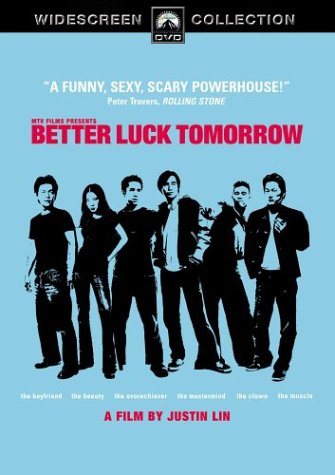
In “Talking About a Revolution (for a Digital Age),” New York Times film critic Manohla Dargis reflects on the evolution of American independent cinema in the wake of its “Hollywood hangover.” She contends that starting in 1993, the emergence of a “studio-indie infrastructure” transformed American independent cinema into a micro Hollywood industry that allowed some filmmakers to go “from Sundance to Scorsese.” However, she contends, this studio-indie film system has been “rocked by seismic changes – including downsized companies and emerging technologies” and giving way to a leaner, non-studio version of independent cinema. Dargis states that American independent cinema is being shaped by the rise of an interactive, digitally assisted “Do-it-yourself” (D.Y.I.) film culture. She points to how digital media forms of self-distribution and promotion have enhanced independent cinema’s important connection with audiences to create “a more complex, interactive and personalized relationship.” She states that the vitality of American independent cinema also depends on “the cultivation of younger patrons who are used to receiving much if not all of their entertainment at home and on hand-held devices” and making them into “active participants in the movie and its meaning.” For Dargis, the ebb of Hollywood’s role in independent cinema means that youthfulness and digital D.Y.I. interactivity are forming the conditions for American independent cinema’s next generation of iconic films and filmmakers.
Manohla Dargis’s article prompts me to think about filmmaker Justin Lin. Lin’s young film career is characteristic of the studio-indie age before its current malaise. Lin went to great lengths, personal sacrifice and debt to make his solo debut feature film, Better Luck Tomorrow, a film that premiered at the 2003 Sundance Film Festival to critical acclaim, a distribution deal with MTV Films and eventually, work as a director for studios such as Universal Pictures and Touchstone Pictures. My interest in Lin lies not in discussing his merits as a filmmaker. Rather, I am interested in how Lin’s trajectory embodies a set of digital age D.Y.I. generational tactics and strategies that emerged in a tradition of American cinema that has rarely found studio traction during independent cinema’s Hollywood bubble: Asian American cinema. After Lin made his Hollywood films, Annapolis (2006) and The Fast and the Furious: Tokyo Drift (2006), he returned to the world of the independent cinema to make the film, Finishing the Game (2007). The promotional campaigns for Better Luck Tomorrow and Finishing the Game embody the practices of digital age independent cinema culture discussed by Dargis, but Lin’s strategy is both unique and instructive, I suggest, for its form of Asian American political and cultural engagement. The strategies behind Lin’s films reveal aims that went beyond simply “breaking out” as most independent films aspire to do. Instead, Lin’s films became platforms for community organizing and engagement that sought to impact the meaning of Asian America in American film history and popular culture.
To be sure, both films are notable for how they critically explore race and representation and both took refuge in the lean, but creatively free world of independent cinema. Better Luck Tomorrow tells the story of a group of high school students who use their status as academic overachievers to mask and enable their illicit activities. Finishing the Game is a mockumentary about the search for an actor to replace Bruce Lee after his unexpected death during the filming of Game of Death (1978). When considered through the lens of Asian American representation, each film becomes a provocative commentary on stereotypes, genre and cinema. As non-studio productions, Lin maintained a creative commitment to an Asian American agenda that included, among other objectives, introducing a range of multi-dimensional Asian American characters and showing how Asian America is a commercially viable audience and source of cinema. This creative independence and ethical imperative became inter-articulated with the political and cultural tactics behind the digital D.Y.I. promotional campaigns for the films. I want to save a fuller discussion of Justin Lin for another time and focus on just some of the practices that emerged from Lin’s films. My tack in exploring this topic is to study selected new media activities as part of a larger example of Asian American community organizing and political engagement in the digital age. In this regard, Lin is a pioneering figure.
To Read the Rest of the Essay

by Konrad Ng
Flow TV
In “Talking About a Revolution (for a Digital Age),” New York Times film critic Manohla Dargis reflects on the evolution of American independent cinema in the wake of its “Hollywood hangover.” She contends that starting in 1993, the emergence of a “studio-indie infrastructure” transformed American independent cinema into a micro Hollywood industry that allowed some filmmakers to go “from Sundance to Scorsese.” However, she contends, this studio-indie film system has been “rocked by seismic changes – including downsized companies and emerging technologies” and giving way to a leaner, non-studio version of independent cinema. Dargis states that American independent cinema is being shaped by the rise of an interactive, digitally assisted “Do-it-yourself” (D.Y.I.) film culture. She points to how digital media forms of self-distribution and promotion have enhanced independent cinema’s important connection with audiences to create “a more complex, interactive and personalized relationship.” She states that the vitality of American independent cinema also depends on “the cultivation of younger patrons who are used to receiving much if not all of their entertainment at home and on hand-held devices” and making them into “active participants in the movie and its meaning.” For Dargis, the ebb of Hollywood’s role in independent cinema means that youthfulness and digital D.Y.I. interactivity are forming the conditions for American independent cinema’s next generation of iconic films and filmmakers.
Manohla Dargis’s article prompts me to think about filmmaker Justin Lin. Lin’s young film career is characteristic of the studio-indie age before its current malaise. Lin went to great lengths, personal sacrifice and debt to make his solo debut feature film, Better Luck Tomorrow, a film that premiered at the 2003 Sundance Film Festival to critical acclaim, a distribution deal with MTV Films and eventually, work as a director for studios such as Universal Pictures and Touchstone Pictures. My interest in Lin lies not in discussing his merits as a filmmaker. Rather, I am interested in how Lin’s trajectory embodies a set of digital age D.Y.I. generational tactics and strategies that emerged in a tradition of American cinema that has rarely found studio traction during independent cinema’s Hollywood bubble: Asian American cinema. After Lin made his Hollywood films, Annapolis (2006) and The Fast and the Furious: Tokyo Drift (2006), he returned to the world of the independent cinema to make the film, Finishing the Game (2007). The promotional campaigns for Better Luck Tomorrow and Finishing the Game embody the practices of digital age independent cinema culture discussed by Dargis, but Lin’s strategy is both unique and instructive, I suggest, for its form of Asian American political and cultural engagement. The strategies behind Lin’s films reveal aims that went beyond simply “breaking out” as most independent films aspire to do. Instead, Lin’s films became platforms for community organizing and engagement that sought to impact the meaning of Asian America in American film history and popular culture.
To be sure, both films are notable for how they critically explore race and representation and both took refuge in the lean, but creatively free world of independent cinema. Better Luck Tomorrow tells the story of a group of high school students who use their status as academic overachievers to mask and enable their illicit activities. Finishing the Game is a mockumentary about the search for an actor to replace Bruce Lee after his unexpected death during the filming of Game of Death (1978). When considered through the lens of Asian American representation, each film becomes a provocative commentary on stereotypes, genre and cinema. As non-studio productions, Lin maintained a creative commitment to an Asian American agenda that included, among other objectives, introducing a range of multi-dimensional Asian American characters and showing how Asian America is a commercially viable audience and source of cinema. This creative independence and ethical imperative became inter-articulated with the political and cultural tactics behind the digital D.Y.I. promotional campaigns for the films. I want to save a fuller discussion of Justin Lin for another time and focus on just some of the practices that emerged from Lin’s films. My tack in exploring this topic is to study selected new media activities as part of a larger example of Asian American community organizing and political engagement in the digital age. In this regard, Lin is a pioneering figure.
To Read the Rest of the Essay
Subscribe to:
Posts (Atom)