Showing posts with label Law. Show all posts

Wednesday, March 09, 2011

Michelle Chen: State Budget Battles Converge on Prison Labor Force

State Budget Battles Converge on Prison Labor Force
by Michelle Chen
In These Times

Prison isn't just about doing hard time. For many, it's about working full-time, too. These days, state governments seem ready to squeeze their captive workforces to plug budget gaps on the cheap.

From the chain gang to the gulag, labor in the prison population predates our modern labor regulations and to this day, remains relatively untouched by the legal protections afforded to regular workers. So in most states, prison work has come to be seen as a hybrid between conscript labor and rehabilitation, putting otherwise “idle” inmates to work on farms, manufacturing plants, and janitorial jobs.

The New York Times reports that in many areas, laborers in prison jump suits are a growing presence at many public work sites, suggesting that they're being used to alleviate fiscal pressures now eroding common public sector services:

[O]fficials are expanding the practice to combat cuts in federal financing and dwindling tax revenue, using prisoners to paint vehicles, clean courthouses, sweep campsites and perform many other services done before the recession by private contractors or government employees.

In New Jersey, inmates on roadkill patrol clean deer carcasses from highways. Georgia inmates tend municipal graveyards. In Ohio, they paint their own cells. In California, prison officials hope to expand existing programs, including one in which wet-suit-clad inmates repair leaky public water tanks. There are no figures on how many prisoners have been enrolled in new or expanded programs nationwide, but experts in criminal justice have taken note of the increase.


As we reported in December, prison labor conditions have sparked some noteworthy revolts. A wave of strikes rocked several prisons in Georgia late last year, touching off a national campaign for the dignified treatment of prison workers.

The uprisings shed light on how vulnerable inmates are when the prison-industrial complex operates not just as a warden and dictator but a boss as well, marshalling the labor of thousands with little oversight. The Georgia inmates drafted a list of grievances ranging from abusive treatment and work without wages.

The inmates' direct actions resonated with civil rights groups who have pointed out disturbing continuities between the era of slavery and the racialization of imprisonment, and by extension, the industries tied to it. The mass incarceration of black men, and their punitive deployment—explicitly sanctioned under the Constitution—in the dregs of industrial capitalism, speaks loud and clear to the theory of prison as America's “new Jim Crow.”

Allegations that prison guards severely beat an inmate protester in retaliation underscore the inequality endemic to this labor system, even though the programs are typically endorsed as a form of rehabilitation and self-help.

Of course, today's prison labor is more regulated and considerably less brutal than the post-Civil War convict-lease system—a regression to slavery disguised as a criminal penalty. (Some reforms were enacted during the Great Depression to prevent downward-spiraling competition between “free labor” and incarcerated workers.)

Yet the institutional parallels are striking. From the late-19th through the early 20th century, southern states, including Georgia, turned to prison labor as a release valve for dealing with fiscal crisis, and the white supremacist power structure, through “leases” with the private sector, enabled forced labor, torture and abuse on a massive scale.

To Read the Rest of the Essay

Sunday, March 06, 2011

Media Matters: Lisa Graves, Executive Director for The Center for Media and Democracy

Lisa Graves, Executive Director for The Center for Media and Democracy
Media Matters with Bob McChesney (WILL: Illinois Public Media)

Lisa Graves is the Executive Director of the Center for Media and Democracy, the publisher of PR Watch, SourceWatch, and BanksterUSA. She joined the Center in mid-2009. She previously served as a senior advisor in all three branches of the federal government, as a leading strategist on civil liberties advocacy, and as an adjunct professor (at George Washington University Law School). She has written articles for a number of publications and also served as Managing Editor of the Cornell Law Review.

To Listen to the Conversation

Wednesday, March 02, 2011

John Nichols: Why a Wisconsin Sheriff Refuses to Serve as Governor Walker's 'Palace Guard'

(via Literaghost)

Why a Wisconsin Sheriff Refuses to Serve as Governor Walker's 'Palace Guard'
by John Nichols
The Nation

No one has worked harder—and smarter—to keep the peace in Madison during the dispute over Governor Scott Walker’s attempt to crush public employee unions than Dane County Sheriff Dave Mahoney.

A veteran lawman who came up through the ranks of the sheriff’s department in the state’s second- largest county before being elected sheriff in 2006, he’s hugely popular in the capital county—winning re-election in 2010 with 71 percent of the vote. He’s also hugely respected, as a key contributor to the work of the Governor’s Council on Domestic Violence, the Governor’s Council on Wisconsin Homeland Security, the Wisconsin Supreme Court Task Force on Mental Health and Criminal Justice System, Wisconsin law-enforcement groups and the National Sheriff’s Association.

That respect has served Sheriff Mahoney as he has worked long hours to help coordinate the response of various law-enforcement agencies to demonstrations that have attracted over 100,000 people, round-the-clock sleep-ins and sit-ins at the state Capitol and even clashing rallies between a small Tea Party contingent and a very large union crowd.

There has been no serious violence, no serious destruction and no serious arrests.

So you would think that Governor Walker and his aides—as well as their media echo chamber—would be hailing Sheriff Mahoney.

Of course, you would think wrong.

Sheriff Mahoney’s determination to preserve the peace, protect demonstrators and officials and respect basic liberties has earned him the scorn of those who are calling for an aggressive crackdown on dissent.

As the governor and his aides have attempted to limit access to the state Capitol—which the Wisconsin constitution says must remain open to all citizens—Sheriff Mahoney has steadily argued that he and his deputies are present both to maintain public safety and to defend the right of citizens to assemble and petition for the redress of grievances.

As Walker’s lawless approach has gone to extremes, culminating in a failure by the governor’s Department of Administration to obey an order from a Dane County Judge that the Capitol be opened, Sheriff Mahoney has become more explicit in his objections.

The sheriff objected when Dane County deputies, who have been frontline officers from the start of the recent protests, were the doors of the Capitol were not opened. Finally, he pulled his officers from the scene.

“When asked to stand guard at the doors that duty was turned over to the Wisconsin State Patrol because our deputies would not stand and be palace guards,” said Sheriff Mahoney. “I refused to put deputy sheriffs in a position to be palace guards.”

The sheriff and I have walked through the Capitol several times in recent days and he has reflected again and again on the importance of respecting the Constitution and maintaining a free and open space for honest debate and dissent.

“I smile everyday at what I am seeing take place in this building,” the lawman told me as we walked amid throngs of protesters on Sunday, before Walker’s administration ordered an aggressive crackdown on dissent.

The crowds have been noisy and passionate, he said, as might be expected when issues of such consequence are at stake. But they have also been responsible and respectful.”They’ve helped law-enforcement agencies to keep the peace, and we have helped to assure that they can exercise their First Amendment rights,” the sheriff explains.

To Read the Rest of the Article

The Story of Citizens United v. FEC

(via Danny Mayer and Democracy is For People)

In under nine minutes, Annie Leonard explains:

* The history of “corporate personhood” in America.

* The dangers of allowing disproportionate corporate influence over our lives.

* Why a constitutional amendment is the best way to defend our democracy from an all-out assault by corporations motivated solely by an unquenchable thirst for profits.


The Story of Stuff

Tuesday, March 01, 2011

Linda Greenhouse: The Rhetoric That Shaped The Abortion Debate

Linda Greenhouse: The Rhetoric That Shaped The Abortion Debate
Fresh Air (NPR)


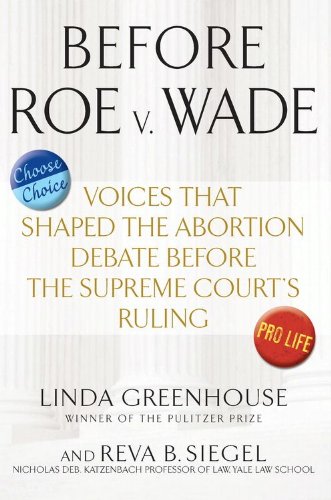
Before the Supreme Court struck down many state laws restricting abortion in the 1973 landmark case Roe v. Wade, the Justices read briefs from both abortion-rights supporters and opponents.

Pulitzer Prize-winning journalist Linda Greenhouse has collected the best of these briefs — as well as important documents leading up to the decision — in a new book, Before Roe v. Wade: Voices that Shaped the Abortion Debate Before the Supreme Court's Ruling.

In an interview on Fresh Air, Greenhouse explains the arguments in favor of decriminalizing abortion — and the rhetoric used by both sides of the debate that continues to resonate more than 35 years after Roe.

After researching the book, Greenhouse says, she came away with a more nuanced understanding of how the abortion debate has affected so many other issues.

"What the research did indicate to me is how multifaceted the issue is and how the word [abortion] came over time to stand for so much more than the termination of a pregnancy," she says. "It really came to stand for a debate about the place of women in the world."

To Read More and To Listen to the Interview

Monday, February 28, 2011

In Their Words

From Feministing

"The words from this video were taken directly from the legal complaint against the Pentagon over their failure to respond to the sexual harassment, sexual assault and rape that the 15 plantiffs (and so many more) experienced while in the military."

Friday, February 25, 2011

Emptywheel: Spain Will Investigate Gitmo Torture

Spain Will Investigate Gitmo Torture
Emptywheel

The High Court in Spain has decided that it can proceed with its investigation of the torture that Lahcen Ikassrien alleges he suffered at Gitmo.

A Spanish court Friday agreed to investigate a complaint by a Moroccan who said he was tortured while in the US detention camp in Guantanamo Bay, Cuba, judicial sources said.

The National Court said it was competent to take the case as the complainant, Lahcen Ikassrien, has been living in Spain for 13 years.

[snip]

The judges Friday rejected an appeal by prosecutors who sought to have the case thrown out on the grounds that Ikassrien did not have sufficient links with Spain.


Here’s what the Center for Constitutional Rights has to say about the news:

This is a monumental decision that will enable a Spanish judge to continue a case on the “authorized and systematic plan of torture and ill treatment” by U.S. officials at Guantanamo. Geoffrey Miller, the former commanding officer at Guantánamo, has already been implicated, and the case will surely move up the chain of command. Since the U.S. government has not only failed to investigate the illegal actions of its own officials and, according to diplomatic cables released by WikiLeaks, also sought to interfere in the Spanish judicial process and stop the case from proceeding, this will be the first real investigation of the U.S. torture program. This is a victory for accountability and a blow against impunity. The Center for Constitutional Rights applauds the Spanish courts for not bowing to political pressure and for undertaking what may be the most important investigation in decades.


As always, it pays to be skeptical that the US won’t still find a way to quash this investigation. But given the exposure WikiLeaks gave DOJ’s prior interventions with Spanish officials, they may have overplayed their hand.Also note, this is not the case that implicates the 6 lawyers who approved torture. I suspect that the pending suits against John Yoo and others might give the DOJ the ability to claim that crime is still being investigated here in the states.

Link to the Report and To Access More Resources

Thursday, February 24, 2011

Michael Hastings: Another Runaway General -- Army Deploys Psy-Ops on U.S. Senators

Another Runaway General: Army Deploys Psy-Ops on U.S. Senators
By Michael Hastings
Rolling Stone

The U.S. Army illegally ordered a team of soldiers specializing in "psychological operations" to manipulate visiting American senators into providing more troops and funding for the war, Rolling Stone has learned – and when an officer tried to stop the operation, he was railroaded by military investigators.

The orders came from the command of Lt. Gen. William Caldwell, a three-star general in charge of training Afghan troops – the linchpin of U.S. strategy in the war. Over a four-month period last year, a military cell devoted to what is known as "information operations" at Camp Eggers in Kabul was repeatedly pressured to target visiting senators and other VIPs who met with Caldwell. When the unit resisted the order, arguing that it violated U.S. laws prohibiting the use of propaganda against American citizens, it was subjected to a campaign of retaliation.

"My job in psy-ops is to play with people’s heads, to get the enemy to behave the way we want them to behave," says Lt. Colonel Michael Holmes, the leader of the IO unit, who received an official reprimand after bucking orders. "I’m prohibited from doing that to our own people. When you ask me to try to use these skills on senators and congressman, you’re crossing a line."

The list of targeted visitors was long, according to interviews with members of the IO team and internal documents obtained by Rolling Stone. Those singled out in the campaign included senators John McCain, Joe Lieberman, Jack Reed, Al Franken and Carl Levin; Rep. Steve Israel of the House Appropriations Committee; Adm. Mike Mullen of the Joint Chiefs of Staff; the Czech ambassador to Afghanistan; the German interior minister, and a host of influential think-tank analysts.

The incident offers an indication of just how desperate the U.S. command in Afghanistan is to spin American civilian leaders into supporting an increasingly unpopular war. According to the Defense Department’s own definition, psy-ops – the use of propaganda and psychological tactics to influence emotions and behaviors – are supposed to be used exclusively on "hostile foreign groups." Federal law forbids the military from practicing psy-ops on Americans, and each defense authorization bill comes with a "propaganda rider" that also prohibits such manipulation. "Everyone in the psy-ops, intel, and IO community knows you’re not supposed to target Americans," says a veteran member of another psy-ops team who has run operations in Iraq and Afghanistan. "It’s what you learn on day one."

When Holmes and his four-man team arrived in Afghanistan in November 2009, their mission was to assess the effects of U.S. propaganda on the Taliban and the local Afghan population. But the following month, Holmes began receiving orders from Caldwell’s staff to direct his expertise on a new target: visiting Americans. At first, the orders were administered verbally. According to Holmes, who attended at least a dozen meetings with Caldwell to discuss the operation, the general wanted the IO unit to do the kind of seemingly innocuous work usually delegated to the two dozen members of his public affairs staff: compiling detailed profiles of the VIPs, including their voting records, their likes and dislikes, and their "hot-button issues." In one email to Holmes, Caldwell’s staff also wanted to know how to shape the general’s presentations to the visiting dignitaries, and how best to "refine our messaging."

To Read the Rest of the Essay

Glenn Greenwald: Obama Withdraws Support for Anti-LGBT Defense of Marriage Act

Obama Withdraws Support for Anti-LGBT Defense of Marriage Act
Democracy Now

The U.S. Department of Justice has announced it will no longer defend the 1996 Defense of Marriage Act, which bars federal recognition of same-sex marriages. Glenn Greenwald, a constitutional law attorney and legal blogger for Salon.com, who is openly gay, talks about the significance of this decision and how DOMA affected his own choice to live in Brazil with his partner, a Brazilian national. "This is one of those rare instances where I think true and unqualified praise is deserved for the White House," Greenwald says.

To Watch/Listen/Read

Wednesday, February 23, 2011

Silas House: My Polluted Kentucky Home

My Polluted Kentucky Home
By SILAS HOUSE
The New York Times

Berea, Ky.

LAST weekend I joined 19 other Kentuckians in a sit-in at the office of Gov. Steve Beshear. We were there to protest his support of mountaintop removal, a technique used by coal-mining companies that, as its name implies, involves blasting away the tops of mountains and hills to get at the coal seams beneath them.

Since it was first used in 1970, mountaintop removal has destroyed some 500 mountains and poisoned at least 1,200 miles of rivers and streams across the Appalachian coal-mining region. Yet Governor Beshear is so committed to the practice that he recently allied with the Kentucky Coal Association in a suit against the Environmental Protection Agency to block more stringent regulations of it. In court his administration’s lawyers referred to public opposition as simply “an unwarranted burden.”

The news media and the rest of the country typically think of mountaintop removal as an environmental problem. But it’s a human crisis as well, scraping away not just coal but also the freedoms of Appalachian residents, people who have always been told they are of less value than the resources they live above.

Over the past six years I’ve visited dozens of people who live at the edge of mountaintop removal sites. They bathe their children in water that has arsenic levels as high as 130 times what the E.P.A. deems safe to drink.

Their roads are routinely destroyed by overloaded trucks; their air is clouded with pollutants. Their schools sit below ponds holding billions of gallons of sludge. Their children lose sleep worrying that the sludge dams will break, releasing the sludge down upon them. It happened 40 years ago at Buffalo Creek, W.Va., killing 125 people, and it could happen again today.

It’s a horrible way to live. And yet, as it does in many other impoverished quarters of America, the news too often avoids covering Appalachia as if it were a no man’s land.

When a 3-year-old Virginia boy was crushed to death in his crib after a half-ton boulder was accidentally (and illegally) dislodged by a mining company, it barely made the national news. Many people around here believe the omission reflected that the child lived in a trailer home in the heart of coal country.

In 2000, 306 million gallons of sludge — 30 times more than the volume of oil spilled by the Exxon Valdez — buried parts of Martin County, Ky., as deep as 5 feet. Yet hardly anyone outside the region remembers the disaster, if they ever heard about it.

More recently, my friend Judy’s grandson was playing in a creek when he was suddenly surrounded by dozens of dead fish. Tests later proved that a coal company was releasing polyacrylamide — a cancer-causing agent used to prepare coal for burning — into the creek. When Judy complained to the state, no one replied. She recently died of brain cancer.

I’ve heard dozens of stories like these, but they rarely make it beyond the mountains. Is it any wonder then that Appalachian residents feel invisible?

In fact, invisible is how we’ve been taught to think of ourselves since coal was first discovered here. When I was little, teachers would stand over my desk and tell me that I had to change my accent if I wanted to get ahead in the world. Never mind that I had nearly perfect grammar and spelling.

We were also told the success of the mines mattered above all else, that if we complained about the dust, noise and disrespect pumped out by the mine in our community, people would lose jobs.

To Read the Rest of the Commentary

Monday, February 21, 2011

5 Ways You Can Fight Citizens United: The Story of Citizens United v FEC - How we the people can reclaim our democracy

5 Ways You Can Fight Citizens United: The Story of Citizens United v FEC - How we the people can reclaim our democracy.
by Annie Leonard and Allison Cook
Yes!

We never expected to be writing an article with this title. Aren’t united citizens a good thing? Civil Rights movement? Egypt? Madison?

Yes, but that’s not the kind of people power we’re talking about here. What we want to fight is the disastrous 2010 Supreme Court Citizens United v Federal Election Commission (FEC) decision. Ironically, “Citizens United” is the name of a conservative advocacy group which receives corporate funding and works to promote increased rights for corporations. The Citizens United v. FEC case originally dealt with the question of whether or not airing Citizens United’s documentary about Hillary Clinton was an advocacy ad, and therefore subject to existing restrictions on election ads under the McCain-Feingold law.

Whether your passion is protecting the environment or creating green jobs or improving public education—or really any other issue on which corporate interests are blocking real solutions—this is your campaign too.But in a brazen act of judicial activism, the court decided to consider the much broader issue of corporate spending to influence elections, which wasn’t even presented in the original case. In a decision that stunned democracy advocates and trampled a number of campaign finance laws, a slim five-Justice majority ruled that corporations—including for-profit corporations—do indeed have a right to spend as much money as they want to elect or defeat candidates in our elections.

This decision effectively grants corporations the same First Amendment Free Speech protections granted to real live people.

The catch is that corporations obviously are not people. Someone get the Supreme Court a biology textbook! There are some really big, and really significant, differences. For starters, people are part of the biological system; we need clear air and water, a healthy environment, a stable climate to thrive. Corporations are legal entities, created by people, and have no such biological needs and thus no inherent reason to safeguard the environment.

People make decisions based on a constant balancing of many interests, including love for our families and communities, compassion, kindness, desire for a better world, as well as economic and material interests. Corporations don’t have families and communities, nor hearts with which to love them. As Justice Stevens said in his dissenting opinion, “corporations have no consciences, no beliefs, no feelings, no thoughts and no desires.” Instead, corporations—by both law and the demands of the market—are under enormous pressure to focus on one thing: maximizing profit.

To Read the Rest of the Essay

Naomi Klein: Goldstone's Legacy for Israel

Goldstone's Legacy for Israel
by Naomi Klein
The Nation

This essay is adapted from the introduction to The Goldstone Report: The Legacy of the Landmark Investigation of the Gaza Conflict (Nation Books).

A sprawling crime scene. That is what Gaza felt like when I visited in the summer of 2009, six months after the Israeli attack. Evidence of criminality was everywhere—the homes and schools that lay in rubble, the walls burned pitch black by white phosphorus, the children’s bodies still unhealed for lack of medical care. But where were the police? Who was documenting these crimes, interviewing the witnesses, protecting the evidence from tampering?

For months it seemed that there would be no investigation. Many Gazans I met on that trip appeared as traumatized by the absence of an international investigation as by the attacks. They explained that even in the darkest days of the Israeli onslaught, they had comforted themselves with the belief that, this time, Israel had gone too far. Mona al-Shawa, head of the Women’s Unit at the Palestinian Centre for Human Rights, told me that Gazans took great solace from news of pro-Palestinian protesters filling the streets of London and Toronto. “People called it war crimes,” she recalled. “We felt we were not alone in the world.” It seemed to follow from these expressions of outrage that there would be serious consequences for the attacks—criminal trials for the perpetrators, sentences. And under the glare of international investigation, Israel would surely have to lift the brutal embargo that had kept Gaza sealed off from the world since Hamas came to power. Those who really dared to dream convinced themselves that, out of the lawlessness and carnage, a just peace would emerge at last.

But six months later, an almost unbearable realization had set in: the cavalry wasn’t coming. Despite all the righteous indignation, Israel had not been forced to change its behavior in any way. Gaza’s borders were still sealed, only now the blockade was keeping out desperately needed rebuilding supplies in addition to many necessities of life. (It would take Israel’s lethal attack last year on a humanitarian aid flotilla for a debate about the siege to begin in earnest.) Even worse, the people I met were acutely aware that they could find themselves trapped under Israeli air bombardment again tomorrow, for any arbitrary excuse of Israel’s choosing. The message sent by the paralysis of the international legal system was terrifying: Israel enjoyed complete impunity. There was no recourse.

Then, out of nowhere, a representative of the law showed up. His name was Justice Richard Goldstone, and he was leading a fact-finding mission for the United Nations. His mandate was to assess whether war crimes had been committed in the context of the attack. I happened to be in Gaza City when Justice Goldstone was wrapping up his public hearings and met several people who had testified before him, as well as others who had opened their homes to the mission, showing the scars left by Israeli weapons and sharing photographs of family members killed in the attacks. Finally some light seemed to be shining on this rubble-choked strip of land. But it was faint, and many Gazans remained skeptical that justice would follow. If the attacks had failed to provoke action, they reasoned, what hope was there that words in a report would awaken the world? This caution, it turns out, was a wise form of self-preservation.

The attempts to block, then sabotage, then bury the Goldstone Report began before a single word had been written. The Israeli government rejected the original decision by the UN Human Rights Council to investigate allegations of war crimes during the Gaza attack. The council was hopelessly biased, Israel claimed, and the January 12, 2009, resolution creating the fact-finding mission was, according to Israel’s ministry of foreign affairs, “one-sided and irrelevant.” It is true that the original mandate of the mission called only for an investigation of violations committed “by the occupying Power, Israel, against the Palestinian people.” But when Justice Goldstone took the top job and announced that the mandate had been expanded to include possible crimes committed by Palestinians “whether before, during or after” the attacks, Israel flatly refused to acknowledge this new reality. “There is no formal expansion of the mandate,” foreign ministry spokesman Yossi Levy insisted, against abundant evidence to the contrary. He added, “We will not cooperate with the mission, because its duty is not to find the truth but to find semi-judicial ways to attack Israel.”

When it became clear that the mission would proceed despite this obstructionism, the Israeli government switched to a new strategy: doing almost everything in its considerable power to sabotage Goldstone’s work. To this end, the Israeli government refused to allow the UN team to travel inside Israel. That meant that to get into Gaza, members had to go through Egypt. It also meant that Goldstone’s investigators could not travel to Sderot and Ashkelon to hear from Israeli victims of Qassam rocket attacks—critical testimony if the mission was to fulfill its mandate to investigate crimes on all sides. Israel’s strategy was transparent enough: it would force Goldstone to produce a one-sided report, which it would then enthusiastically dismiss for being one-sided.

It didn’t work. To get around the government roadblocks, Goldstone flew Israelis to Geneva so he could hear their testimony in person. When the report came out, it reflected the scale of the crimes committed by each side, concentrating mostly on Israel’s actions, including attacks on houses, hospitals and mosques that together killed scores of people, as well as attacks on civilian infrastructure such as water installations, agricultural facilities and factories. But the report did not give Hamas a pass. Goldstone concluded that the launching of rockets and mortars into populated areas “where there is no intended military target”—a practice used by Hamas’s military wing as well as by other armed Palestinian groups—“indicates the commission of an indiscriminate attack on the civilian population of southern Israel, a war crime, and may amount to crimes against humanity.” He also accused Hamas of “extrajudicial executions” in the Gaza Strip and the Palestinian Authority of repression and possibly torture in the West Bank.

The Goldstone Report is a serious, fair-minded and extremely disturbing document—which is precisely why the Israeli strategy since its publication has been to talk about pretty much everything except the substance of the report. Distractions have ranged from further posturing about the UN’s bias, to smear campaigns about Justice Goldstone’s personal history, to claims that the report is an integral part of a grand conspiracy to deny Israel’s right to exist. Dore Gold, a former Israeli ambassador and top political adviser, said the report was “the most serious and vicious indictment of the State of Israel bearing the seal of the United Nations” since the UN equated Zionism with racism in 1975 and “an assault on Israeli society as a whole,” while Prime Minister Benjamin Netanyahu explained that “there are three primary threats facing us today: the nuclear threat, the missile threat and what I call the Goldstone threat.” The phrase “blood libel” was thrown around with great promiscuity, disgracefully equating the Goldstone Report with the anti-Semitic trials of the Middle Ages in which Jews were accused of drinking the blood of Christian children. (For some reason this seems to be a problem only when Sarah Palin abuses the term.)

Given this kind of incitement from the top, it’s little wonder that the 72-year-old judge was very nearly prevented from attending his grandson’s bar mitzvah in a Johannesburg suburb, with the synagogue worried about violence breaking out. “I could not believe that political anger against him—which people had every right to express—had evolved into an uncontrolled and unconscionable rage that sought to violate the spirit of one of the most sacred aspects of formal Jewish tradition,” observed noted South African judge Albie Sachs.

Israel has no shortage of critics, many of them Jewish. So what was it about Goldstone that ignited this conflagration? The likeliest answer lies in the particular rhetorical techniques Israel’s leaders reliably employ to defend their actions. For decades, Israeli officials have deflected any and all human rights criticisms by claiming that Israel was being unfairly “singled out” by those who claim to care about international law but who look the other way when equally serious crimes are committed by other states. The problem posed by Goldstone was that his record as a judge on the world stage made it impossible for Israel to make this claim with any credibility.

Goldstone began his judicial career as one of a handful of liberal judges serving on the South African bench during the apartheid era. Though required to enforce the country’s brutal discriminatory laws, these judges were also able to chip away at the system from within, helping to loosen the grip of apartheid in its final years. A 1982 ruling by Goldstone, for instance, blocked judges from evicting blacks and “coloreds” from their homes to make way for whites-only neighborhoods without considering whether suitable alternative accommodations could be found, a requirement that made it virtually impossible to enforce the much-hated Group Areas Act. As apartheid weakened, Goldstone began playing a more activist role, exposing a system of extrajudicial death squads within South Africa’s police and military—crimes that eventually came before the country’s Truth and Reconciliation Commission.

To Read the Rest of the Essay

Sunday, February 20, 2011

Glenn Greenwald: U.S. Justice v. The World

U.S. Justice v. the world
by Glenn Greenwald
Salon

In March, 2002, American citizen Jose Padilla was arrested in Chicago and publicly accused by then-Attorney-General John Ashcroft of being "The Dirty Bomber." Shortly thereafter, he was transferred to a military brig in South Carolina, where he was held for almost two years completely incommunicado (charged with no crime and denied all access to the outside world, including even a lawyer) and was brutally tortured, both physically and psychologically. All of this -- including the torture -- was carried out pursuant to orders from President Bush, Secretary Rumsfeld and other high-ranking officials. Just as the Supreme Court was about to hear Padilla's plea to be charged or released -- and thus finally decide if the President has the power to imprison American citizens on U.S. soil with no charges of any kind -- the Government indicted him in a federal court on charges far less serious than Ashcroft had touted years earlier, causing the Supreme Court to dismiss Padilla's arguments as "moot"; Padilla was then convicted and sentenced to 17 years in prison.

Padilla -- like so many other War on Terror detainees -- has spent years in American courts trying unsuccessfully to hold accountable the high-level government officials responsible for his abuse and lawless imprisonment (which occurred for years prior to his indictment). Not only has Padilla (and all other detainees) failed to obtain redress for what was done to them, but worse, they have been entirely denied even the right to have their cases heard in court. That's because the U.S. Government has invented -- and federal courts have dutifully accepted -- a whole slew of legal doctrines which have only one purpose: to insulate the country's most powerful political officials from legal accountability even when they commit the most egregious crimes, such as imprisoning incommunicado and torturing an American citizen arrested and detained on U.S. soil.

Yesterday, in South Carolina, an Obama-appointed federal judge dismissed a lawsuit brought by Padilla against former Bush officials Donald Rumsfeld, John Ashcroft, Paul Wolfowitz and others. That suit alleges that those officials knowingly violated Padilla's Constitutional rights by ordering his due-process-free detention and torture. In dismissing Padilla's lawsuit, the court's opinion relied on the same now-depressingly-familiar weapons routinely used by our political class to immunize itself from judicial scrutiny: national security would be undermined by allowing Padilla to sue; "government officials could be distracted from their vital duties to attend depositions or respond to other discovery requests"; "a trial on the merits would be an international spectacle with Padilla, a convicted terrorist, summoning America's present and former leaders to a federal courthouse to answer his charges"; the litigation would risk disclosure of vital state secrets; and "discovery procedures could be used by our enemies to obtain valuable intelligence."

In other words, our political officials are Too Important, and engaged in far Too Weighty Matters in Keeping Us Safe, to subject them to the annoyance of the rule of law. It's much more important to allow them to Fight The Terrorists without restraints than to bother them with claims that they broke the law and violated the rights guaranteed by the U.S. Constitution. That's the mentality that has resulted in full-scale immunity for both political and now private-sector elites in a whole slew of lawbreaking scandals -- from Obama's refusal to investigate Bush-era crimes or high-level Wall Street criminality to retroactive immunity for lawbreaking telecoms and legal protection for defrauding mortgage banks. With very few exceptions -- yesterday's ruling, for instance, brushed aside a contrary decision from a Bush-43-appointed federal judge in California last year that refused to dismiss Padilla's lawsuit against John Yoo for having authorized his torture (that decision is on appeal) -- Executive Branch officials and the federal judiciary have conspired to ensure that the former are shielded from judicial scrutiny even for the most blatant and horrifying crimes.

To Read the Rest of the Report

Friday, February 18, 2011

AlterNet: Lawmakers Flee Wisconsin Capitol, State Police Pursue; Protests Swell to 30,000

Lawmakers Flee Wisconsin Capitol, State Police Pursue; Protests Swell to 30,000

As up to 30,000 protesters overwhelmed the state capitol building in Wisconsin today, Democratic Senators hit the road, reportedly with State Police officers in pursuit. The Dems split in order to deprive Republicans the necessary quorum for taking a vote on Gov. Scott Walker's bill to strip benefits and collective bargaining rights from state workers.

One state senator told the Milwaukee Journal Sentinel that he believed all had left the state (h/t Lila Shapiro, The Huffington Post). From the Journal Sentinel:

In a telephone interview, Senate Minority Leader Mark Miller (D-Monona) declined to give his location but acknowledged that at least one other Democrat was with him. He said that law enforcement would be able to compel him and his members to the Senate floor if they are located in Wisconsin.

"I can tell you this - we're not all in one place," Miller said. "This is a watershed moment unlike any that we have experienced in our political lifetimes. The people have shown that the government has gone too far . . .  We are prepared to do what is necessary to make sure that this bill gets the consideration it needs."


UPDATE: According to Newsradio 620 WTMJ, "Democratic Senator Jon Erpenbach confirmed that he and all of his Democratic colleagues boarded a bus and left the state."

Lest you actually believe (and I know you know better) that Gov. Walker's war on the public workers in his state is simply about, as he says, balancing Wisconsin's budget, please note that Walker is just one among many of Wisconsin's Koch-sponsored politicians, and the Koch brothers are hell-bent on destroying the labor movement once and for all.

During his election campaign, Walker received the maximum $15,000 contribution from Koch Industries, according to Think Progress, and support worth untold hundreds of thousands from the Koch-funded astroturf group, Americans For Prosperity. AlterNet recently reported the role of Republican National Committee Chairman Reince Priebus and Americans For Prosperity in a vote-caging scheme apparently designed to suppress the votes of African-Americans and college students in Milwaukee, and told you of the gaggle of Koch-sponsored politicians who individually graced the podium at last weekend's Conservative Political Action Conference (including several from Wisconsin: Rep. Paul Ryan and Sen. Ron Johnson). Rep. Michele Bachmann, also a Koch favorite from next-door Minnesota, kicked off the conference.

To Read the Rest of the Article

Thursday, February 10, 2011

Bush’s Shrinking World: George W. Bush Cancels Europe Trip as Human Rights Lawyers Threaten Legal Action over Torture

Bush’s Shrinking World: George W. Bush Cancels Europe Trip as Human Rights Lawyers Threaten Legal Action over Torture
Democracy Now

Former President George W. Bush has been forced to cancel a planned trip to Switzerland after human rights attorneys threatened to take legal action against him for sanctioning the use of torture. The Center for Constitutional Rights said they had planned to bring a complaint on behalf of two men who were tortured by U.S. interrogators and held at the military base at Guantánamo Bay, Cuba. "It was disappointing that we’re not able to actually prosecute him," says CCR legal director Bill Quigley. "But I think it has shown worldwide that even though he was the president of the United States, if you engage in torture... there are consequences."

To Watch/Listen/Read

Tuesday, January 25, 2011

Michael Ratner: Obama's National Security State

Obama’s national security state: Interview with Michael Ratner
by Anthony Arnove
International Socialist Review

Michael Ratner is president of the Center for Constitutional Rights (CCR) and is adjunct professor of law at Columbia University Law School. Ratner has also been a lecturer of international human rights litigation at the Yale Law School and the Columbia School of Law, president of the National Lawyers Guild, legal director of the Center for Constitutional Rights, and radio co-host for the civil rights show Law and Disorder. Ratner serves on the board of The Culture Project in New York City and is vice-president of the board of Voices of a People’s History of the United States. He spoke to Anthony Arnove, a member of the ISR editorial board and author of the book Iraq: The Logic of Withdrawal.

LET’S START with the Obama administration’s policies on habeas corpus and on torture. As a presidential candidate, Obama said he would close Guantánamo, said he believed in habeas corpus rights, and was critical of President Bush. What’s been his practice since he came to office?

MY OFFICE, CCR, is one of the legal groups that represents many of the Guantánamo detainees and brings these writs of habeas corpus. That is a fancy way of saying, “Let’s go to court, and see if there’s any evidence to hold the person.” The expectations of the team of lawyers representing the detainees was very high that Guantánamo would actually close, that Obama would do it. There were probably a little over 300 people in Guantánamo when he took office. It’s down to maybe 200-some now. But we expected better—and now it may go on for years. We really thought that Obama wouldn’t fight us in court on the rights of the detainees, that he would get the detainees either to another country or he would charge and try them. And of course, it hasn’t worked out that way at all, and it’s a deep disappointment. In fact a lot of the habeas lawyers signed a letter supporting Obama saying his election would actually be good for our clients. Obama’s effort to close it seemingly got off to a somewhat quick start. Obama, within two days of being in office, signed an executive order, which is essentially a presidential order, which said that Guantánamo would be closed in a year. Of course, as we speak now, it’s more than a year and a half after that order, and it is not near closed. Obama’s commitment has been abandoned. And he made a number of other promises that have not been met about secret detention sites, military commissions, and the like.

Obama has put new clothes on the Bush doctrine toward “enemy combatants,” but the underlying lawlessness of the doctrine is the same. In particular, imagine this: you go to court on behalf of someone in Guantánamo, and the judge has to decide whether there is sufficient evidence to hold him. What Bush said was they can be held as “enemy combatants,” and he gave the term a vague definition, such as that the person was hostile to the United States or picked up arms against the United States or belonged to a group that was hostile to the United States. If there was “evidence” those detainees could be held in prison indefinitely, essentially a form of preventive detention. We had hoped Obama would get rid of that entire preventive detention scheme. CCR’s view is there should not be a preventive detention scheme—it’s illegal and immoral. What you must do, and what is legally necessary, is to charge someone with a crime, and hold them only if they’re convicted. The rule is simple: charge and try people with crimes, or release them. There are not any other valid legal choices.

I considered this preventive detention scheme to be one of the worst hallmarks of the Bush administration. Sadly, this intolerable preventive detention scheme has continued, and you could say continued with a vengeance, under Obama. He has repeatedly stated that he is continuing the preventive detention scheme. He said that at his major speech on Guantánamo in May 2009. He has repeated it again and again. We expect at least fifty of the Guantánamo people to be held under a scheme in which they’re preventively detained, which is to say they are never charged with a crime. They’re held in a prison right now in Guantánamo, or perhaps could be taken somewhere else. Now the somewhere else could be this prison the U.S. government is trying to buy in Illinois. For now, Congress is stopping that, as Congress, including many Democrats, wants to keep Guantánamo opened. It passed legislation prohibiting the spending of any money to buy or refurbish a prison in the United States for this purpose. Our view is that moving Guantánamo from an offshore location to a U.S. continental location makes no difference to our clients. In fact, it could be worse if the process is exactly the same, if they’re still held in preventive detention and if the administration then considers the problem solved. The effort to repackage Guantánamo in Illinois is a transparent attempt to close Guantánamo while keeping it open in Illinois. So what’s the difference? They’re just moving the Bush scheme from an island to the continent.

So as to closing Guantánamo, and particularly on this issue of habeas corpus and preventive detention, Obama has been a disaster. And Obama has followed the Bush policy on its limitations as to the power of judges to release Guantánamo detainees. When you win a habeas corpus case in the court, the court says, “Well, even under the Obama definition,” which is roughly the same as a Bush definition of enemy combatant, “there’s no evidence that your client was hostile to the United States in the way in which the U.S. claims. The evidence is fallacious. It’s no good. And therefore, I order your client released.” The Bush administration took the position that, yes, the judge could find that a detainee shouldn’t be held, but the judge had no right to release him because that was a foreign policy matter up to the president. So you had a system of law that had no power. No matter what the court decided, the president could decide differently. You might ask, “What happened to checks and balances under our Constitution and what happened to the independence of the judiciary?” Well, the president made himself the boss.

We had hoped Obama would do better, but that’s not the case. We’ve won a number of habeas cases before federal judges in Washington, D.C. They’ve said, “As to your client, there’s no evidence to hold him.” The Uighurs, Muslims from Western China, are the classic example of that. They can’t be sent back to China because it is likely they will be tortured in China. Therefore, the judge says, “I’m going to release them.” Fine, they should be released to the United States. And of course, the Obama administration then asserts that a federal court has no right to release the detainees into the United States even if they are utterly innocent. So our clients, even though many of them have been found to not fit any definition of an enemy combatant are still sitting in Guantánamo.

So Obama is the same as Bush regarding the use of preventive detention. He’s the same regarding his refusal to accept that a federal judge has the authority to release a detainee who is innocent. Now think about that. If a federal judge doesn’t have the right to release someone from custody, what kind of a state are we talking about? Is that a democratic state with protections for the individual? Or is it essentially a police state where the executive overrides a court decision and says, “I’m going to keep you in prison?” So to say I’m disappointed, disappointed would not be the right word for me. I didn’t have high expectations. I never have for the executive. But after eight and a half years of litigation, win after win in the courts, and after Obama’s promises, his actions regarding Guantánamo are repugnant: repugnant for those wrongly tortured and jailed—and repugnant to fundamental precepts of liberty that have taken a thousand years to establish.

The fight continues. The lawyers, and sadly the clients, are deep in the trenches and no one seems to give a damn about it. In fact, you could almost say Obama is one thing, but of course the Congress is, I wouldn’t say another thing, but it is so right wing on these issues, so nasty and draconian, that the slightest effort to bring a Guantánamo detainee to the United States brings out the nativism and antediluvian Republicans and Democrats, which constitute a majority. The Democratic Congress actually passed a law saying no Guantánamo detainee could be brought to the United States, even if the detainee was jailed, much less released.

Some people say, well, “Obama is caught by the right-wingers in Congress. And what can you do about it?” But of course, many Democrats, obviously a majority of them, go along with these punitive policies. The Democrats apparently don’t want to appear weak on national security or perhaps they really believe in preventive detention or that a Uighur is a danger in America. They think if they appear weak on what they consider national security that somehow they’re going to lose the next election. And so they almost outdo the Republicans on these issues with Guantánamo and the like.

We now have the spectacle of a Democratic president selling out the Constitution and with it the lives of innocents at Guantánamo and the freedom of future generations as these special laws become the laws for all of us.

To Read the Rest of the Interview

Saturday, January 22, 2011

Jameel Jaffer: Subpoenas and Online Service Providers

Subpoenas and Online Service Providers
On the Media (New York City: WNYC)

There are two kinds of subpoenas that federal law enforcement can serve on internet service providers and online communications companies if they want to spy on a users' email or Twitter account. Both kinds frequently have gag-orders attached - which means, users are none the wiser that their account has been breached. And both types of subpoenas are being served to ISPs at an unprecedented rate. The ACLU's Jameel Jaffer explains why what you don't know can hurt you.

To Listen to the Episode

Sunday, January 16, 2011

Mary Bottari: What Does Wikileaks have on Bank of America?

What Does Wikileaks have on Bank of America?
By Mary Bottari
Campaign for America's Future

WikiLeaks founder Julian Assange is promising to unleash a cache of secret documents from the hard drive of a U.S. megabank executive. In 2009, he told Computer World that the bank was Bank of America (BofA). In 2010, he told Forbes that the information was significant enough to "take down a bank or two," but that he needed time to lay out the information in a more user-friendly format.

Recent new reports suggest that BofA is now moving into high gear on damage control, creating a "war room" and buying up hundreds of derogatory Internet domain names including BankofAmericaSucks.com and BrianMoynihanblows.com (BofA's CEO).

Before the big banks start calling for Assange's internment at Guantanamo, the question worth considering is what does Wikileaks have on America's largest bank?

Legal Liability for Toxic Mortgages

BofA is already under the gun, defending itself from multiple lawsuits from private investors as well as Fannie and Freddie demanding that the bank buy back billions worth of toxic mortgages-backed securities. The firm stopped issuing subprime mortgages in 2001, but it kept underwriting subprime mortgage-backed securities for many years. In September 2009, for example, BofA underwrote $239 million worth of securities backed by subprime loans. BofA has reserved $4.4 billion for these "put back" lawsuits. If Assange has emails showing that top executives at BofA knew they were peddling toxic dreck to investors, it would rock the firm and give tremendous ammunition to the army of lawyers already knocking on BofA's door.

Reckless and Illegal Foreclosures

BofA is at the heart of the robo-signing scandal and has wrongfully foreclosed on countless American families. One poor woman returned to a vacation home to find it locked, all her possessions gone -- including the ashes of her late husband. How could such a mistake be made? A BofA employee deposed in February 2010 said that she signed as many as 8,000 foreclosure documents a month without reviewing them, in violation of the law. Mounting questions about the fraudulent and illegal foreclosure practices at the big banks and mortgage service companies prompted BofA to temporarily halt foreclosures nationwide in October 2010. If Wikileaks can document that top BofA officials have a callous disregard for legal processes and constitutionally protected property rights, BofA's mounting legal liability may not be sustainable.

Countrywide Headaches

In 2008, BofA acquired Countrywide, one of the most aggressive and fraudulent lenders during the housing bubble. The result has been a trainwreck of liability and lawsuits for the megabank that now has over 1.3 million customers in foreclosure. To settle the lawsuits with Illinois, California and eight other states over predatory lending, BofA came up with an $8.4 billion loan relief plan for those holding Countrywide mortgages. In June, 2010 BofA paid $108 million to settle a Federal Trade Commission case that charged Countrywide with having extracted excessive fees out of borrowers facing foreclosure. BofA paid $600 million in August 2010 to settle shareholder claims that Countrywide had concealed the riskiness of its lending standards. There is no end in sight for these suits. In June 2010 the State of Illinois sued Countrywide again, this time over racial discrimination in its lending practices. Wikileaks could have further documentation of Countrywide's illegal and reckless underwriting practices or ongoing fraud at BofA.

To Read the Rest of the Article

Tuesday, January 11, 2011

Ed Yohnka: A "Near-Death Experience" for Death Penalty Abolition in Illinois

A "Near-Death Experience" for Death Penalty Abolition in Illinois
Blog of Rights (ACLU)
by Ed Yohnka

On Thursday afternoon, the Illinois House of Representatives was a raucous place — with talk of a deal on a tax increase, Medicaid reform and proposed budget cuts all sweeping around the chamber, members created a cacophony of sound that echoed around the huge chamber. But late in the afternoon, as the House began to consider Senate Bill 3539 — a measure to end Illinois' broken death penalty system — the chamber became hushed. Every member seemed to grasp the importance of the debate, coming after a decade in which the State of Illinois has operated under a death penalty moratorium because so many innocent men were released from death row.

Rep. Karen Yarbrough and other supporters made clear, concise points in favor of repeal. They noted that the state has spent more than $100 million over the past decade prosecuting death penalty cases, despite the fact that no one has been executed. They also made clear that the death penalty is not a deterrent and that supporting the death penalty means accepting the very real possibility that the state of Illinois will execute an innocent person. Perhaps most compelling were the voices of several previous supporters of the death penalty — including Reps. Susan Mendoza, Paul Froehlich and Mike Boland — who said that they no longer could support the risk of executing the innocent. It was compelling and moving.

Opponents of the bill trotted out two familiar but ultimately empty arguments. First they suggested that the only appropriate penalty for those who committed heinous crimes is the death penalty and relied repeatedly on gruesome references to murders in Illinois. These repeal opponents also pushed the notion that law enforcement needed the death penalty as a "tool" to coerce suspects to confess to particular acts. Yet one of the sad realities in Illinois is that we have seen a host of false confessions; confessions elicited by law enforcement using such "tools."

To Read the Rest of the Report