(via Unwelcome Guests)
Vicente Rafael - Translation in Wartime
Arcade (Stanford University)
Vicente L. Rafael is Professor of History and Southeast Asian Studies at the University of Washington. Renowned for the reach, breadth, and robust cosmopolitanism of his scholarship, Rafael works across three languages and three centuries of modern empire. The author of numerous books, including The Promise of the Foreign (2005), White Love and Other Events in Filipino History (2000), and Contracting Colonialism (1993), Rafael focuses on modernity, nationalism, colonialism, and post-colonialism in global history and for the global present.
Rafael’s lecture will inquire into the historical, political, and pragmatic relationship between translation and empire. Drawing attention to the complex ethics of translation practices, he examines how iterations of translation consolidate and confound imperial projects. Through a consideration of the language initiatives and policies attending the so-called War on Terror, Rafael probes the ways in which the demand for translation induces and intensifies the war of meanings, the confusion of address, and the crisis of identities in U.S.–occupied Iraq.
This talk was delivered on January 31, 2008 at the University of Washington. This file is made available courtesy of the Walter Chapin Simpson Center for the Humanities at the University of Washington.
To Listen to the Presentation
Showing posts with label War on Terror. Show all posts
Showing posts with label War on Terror. Show all posts
Monday, March 14, 2011

Sunday, March 13, 2011
To the Best of Our Knowledge: Architects of War
Architects of War
To The Best of Our Knowledge (Wisconsin Public Radio)
On March 20, 2003, the US invaded Iraq. More than 6 years later we're still there. What happened? Were we prepared? In this hour of To the Best of Our Knowledge, we'll talk with the planners of the war in Iraq. From Neoconservatives, to Department of Defense officials. From members of the Iraqi government to military personnel. Will their preparations lead us to peace or … more war?
SEGMENT 1:

After a quick look back at Neo-conservative Richard Perle's 2003 justification for war with Iraq, Steve Paulson talks with Douglas Feith about decision-making in the wake of 9/ll. Feith is a leading neo-conservative intellectual, who was Under Secretary of Defense for Policy under Donald Rumsfeld, and one of the architects of the Bush Administration's war on terrorism. He is the author of "War and Decision: Inside the Pentagon at the Dawn of the War on Terrorism." Also, Colonel David Lapan is Director of Public Affairs for the U.S. Marine Corps and was one of the architects of the Defense Department's Embedded Media Program. Jim Fleming caught up with him one hectic day at the Pentagon and they talked about the merits of the embed program.
SEGMENT 2:

David Kilcullen is the author of "The Accidental Guerilla: Fighting Small Wars in the Midst of a Big One." Kilcullen was a top military advisor to General Petraeus during the troop surge in Iraq. He tells Anne Strainchamps that most counter-insurgency efforts fail because foreign armies usually galvanize opposition from local people. Also, Ali Allawi was Minister of Trade and Minister of Defense in the Interim Iraqi Governing Council in 2003 and 2004. He resigned his position as Minister of Finance in the Iraqi Transitional Government because he was frustrated by the political infighting. Allawi recalls his experiences and reflects on the present situation during this conversation with Steve Paulson. Allawi's book is called "The Occupation of Iraq: Winning the War: Losing the Peace."

SEGMENT 3:

Journalist Thomas Ricks writes for The Washington Post and has won two Pulitzer Prizes. He's also the author of books called "Fiasco" and "The Gamble," both about the war in Iraq. He talks with Jim Fleming about how close the U.S. came to losing the war in Iraq on November 19, 2004 in a town called Haditha, 150 miles north of Baghdad.
To Listen to the Episode
To The Best of Our Knowledge (Wisconsin Public Radio)
On March 20, 2003, the US invaded Iraq. More than 6 years later we're still there. What happened? Were we prepared? In this hour of To the Best of Our Knowledge, we'll talk with the planners of the war in Iraq. From Neoconservatives, to Department of Defense officials. From members of the Iraqi government to military personnel. Will their preparations lead us to peace or … more war?
SEGMENT 1:
After a quick look back at Neo-conservative Richard Perle's 2003 justification for war with Iraq, Steve Paulson talks with Douglas Feith about decision-making in the wake of 9/ll. Feith is a leading neo-conservative intellectual, who was Under Secretary of Defense for Policy under Donald Rumsfeld, and one of the architects of the Bush Administration's war on terrorism. He is the author of "War and Decision: Inside the Pentagon at the Dawn of the War on Terrorism." Also, Colonel David Lapan is Director of Public Affairs for the U.S. Marine Corps and was one of the architects of the Defense Department's Embedded Media Program. Jim Fleming caught up with him one hectic day at the Pentagon and they talked about the merits of the embed program.
SEGMENT 2:
David Kilcullen is the author of "The Accidental Guerilla: Fighting Small Wars in the Midst of a Big One." Kilcullen was a top military advisor to General Petraeus during the troop surge in Iraq. He tells Anne Strainchamps that most counter-insurgency efforts fail because foreign armies usually galvanize opposition from local people. Also, Ali Allawi was Minister of Trade and Minister of Defense in the Interim Iraqi Governing Council in 2003 and 2004. He resigned his position as Minister of Finance in the Iraqi Transitional Government because he was frustrated by the political infighting. Allawi recalls his experiences and reflects on the present situation during this conversation with Steve Paulson. Allawi's book is called "The Occupation of Iraq: Winning the War: Losing the Peace."
SEGMENT 3:
Journalist Thomas Ricks writes for The Washington Post and has won two Pulitzer Prizes. He's also the author of books called "Fiasco" and "The Gamble," both about the war in Iraq. He talks with Jim Fleming about how close the U.S. came to losing the war in Iraq on November 19, 2004 in a town called Haditha, 150 miles north of Baghdad.
To Listen to the Episode
Friday, February 25, 2011
Anti-terrorism and uprisings: North African leaders have worked with the West against Islamists and migrants - becoming more repressive as a result.
Anti-terrorism and uprisings: North African leaders have worked with the West against Islamists and migrants - becoming more repressive as a result.
by Yasmine Ryan
Al Jazeera
The string of uprisings in North Africa have laid bare Western governments' relationships with regimes in the region, which pro-democracy activists argue have long been fixated on anti-terrorism, immigration and oil.
Muammar Gaddafi, the Libyan leader, appears to be on the brink of joining Tunisia's Zine El Abidine Ben Ali and Egypt's Hosni Mubarak - both ousted by their own people. In Algeria, meanwhile, Abdelaziz Bouteflika's government is holding firm, clamping down on protests and carrying out limited reforms in a bid to lull anti-regime rage.
The four men have co-operated to varying degrees with the West in the post 9/11 era, offering their services against the perceived twin menaces of political Islam and migration from the African continent to Europe.
Salima Ghezali, a well-known Algerian journalist and rights activist, says that politicians have used these supposed threats to justify state violence. Elites in the West, she argues, have attempted to distract voters by playing up threats to security, whilst sidestepping debate on their economies. Their counterparts in the developing world have used the same arguments to draw attention away from "institutional chaos".
"It is this chaos which is provoking and fuelling the anger of the people," she says.
By focusing on security, leaders have found a means to legitimise state violence, withhold rights and freedoms and neglect political and social management, Ghezali says. "Violence has even become a means of social and political advancement. Murderers have become heroes and hold power in public institutions."
Jeremy Keenan, a professorial research associate at the School of Oriental and African Studies in London, agrees that the uprisings are, in some way, related to the prevalence of anti-terrorist policy.
"I think that whole 'war on terror' syndrome has had a potentially significant role in what we're seeing today," Keenan says. "These states have become more repressive in the knowledge that they have the backing of the West."
Demographic disconnect
Many youthful protesters are no longer willing to swallow their leaders’ use of anti-colonialist ideology to justify their political power.
Far from fighting imperialism, these leaders, their opponents say, have been complicit with the West: Acting as its torturers, buying its arms and patrolling the Mediterranean Sea to stem the tides of young people desperate to flee their homelands. All were partners in the CIA's controversial 'extraordinary rendition programme' and Libya has been a pro-active partner in a secretive Rome-Tripoli deal, signed in 2009, to intercept boats carrying migrants. In return for the sea patrols, Italy pledged to pay Libya $7bn over 20 years.
"The young generation of Algerians, and the not-so-young, don’t have any illusions about the convictions of their leaders," Ghezali explains.
Despite being sceptical of their leaders' ideological leanings, Ghezali says the youth do still respect authentic symbols of the Algerian War of Independence. Anti-government protesters in Libya have taken to waving the pre-Gaddafi, post-independence flag - a reference to the country's struggle against colonial rule.
With the exception of Ben Ali, all of these leaders have been in government since before most of their people were born. Bouteflika, for example, first became a minister in 1962, yet rules over a country where the average age is 27, according to the CIA World Factbook. Gaddafi took power in 1969, while the average Libyan is just 24.
Playing the 'Islamist card'
The region's leaders have repeatedly tried to portray the current wave of uprisings as somehow terrorist-related.
In a recently released report, Martin Scheinin, the UN special rapporteur on the protection of human rights while countering terrorism, details how Tunisia's counterterrorism laws and policies played a central part in the former government's crushing of political opposition.
And, as Scheinin notes in an interview with Al Jazeera, this was the very language Ben Ali turned to when he responded to the Tunisian uprising.
"I think it is important that when the people started to revolt in Tunisia, the initial reaction by the president and by the government was to say this is terrorists," the UN Rapporteur says.
Ben Ali accused demonstrators in the centre of the country of "unpardonable terrorist acts" on January 10, two days after Tunisian security forces had begun deliberately killing protesters in the centre of the country. The Libyan leader's son, Saadi Gaddafi, told the Financial Times on Wednesday that bombing in the east of Libya was necessary because "thousands" of al-Qaeda fighters were taking control of the region. His father elaborated on these allegations in a speech on Thursday night, accusing Osama bin Laden of brainwashing, and even drugging, the country's youth.
Ghezali points to Gaddafi's most recent threats to end his co-operation on immigration, as well as his attempts to blame protests on al-Qaeda, as a particularly "ludicrous" example of what has become a standard form of blackmail.
Tunisian activists interviewed by Al Jazeera cited ending corruption and tyranny and the right to employment, democracy and freedom of expression as the motivations that drove their uprising, while Libyans likewise dismissed Gaddafi's assertion that Osama bin Laden was working to incite dissent against his rule.
Keenan says that the absence of Islamist ideology in the protest movements has underlined the extent to which the "Islamist card" has been overplayed by politicians and the media. "These revolts have nothing much to do with Islamism, they are to do with young people fighting for their rights.
"All of these countries, to varying degrees, have exaggerated the menace of terrorism," says the author of The Dark Sahara: America's War on Terror in Africa.
To Read the Rest of the Article
by Yasmine Ryan
Al Jazeera
The string of uprisings in North Africa have laid bare Western governments' relationships with regimes in the region, which pro-democracy activists argue have long been fixated on anti-terrorism, immigration and oil.
Muammar Gaddafi, the Libyan leader, appears to be on the brink of joining Tunisia's Zine El Abidine Ben Ali and Egypt's Hosni Mubarak - both ousted by their own people. In Algeria, meanwhile, Abdelaziz Bouteflika's government is holding firm, clamping down on protests and carrying out limited reforms in a bid to lull anti-regime rage.
The four men have co-operated to varying degrees with the West in the post 9/11 era, offering their services against the perceived twin menaces of political Islam and migration from the African continent to Europe.
Salima Ghezali, a well-known Algerian journalist and rights activist, says that politicians have used these supposed threats to justify state violence. Elites in the West, she argues, have attempted to distract voters by playing up threats to security, whilst sidestepping debate on their economies. Their counterparts in the developing world have used the same arguments to draw attention away from "institutional chaos".
"It is this chaos which is provoking and fuelling the anger of the people," she says.
By focusing on security, leaders have found a means to legitimise state violence, withhold rights and freedoms and neglect political and social management, Ghezali says. "Violence has even become a means of social and political advancement. Murderers have become heroes and hold power in public institutions."
Jeremy Keenan, a professorial research associate at the School of Oriental and African Studies in London, agrees that the uprisings are, in some way, related to the prevalence of anti-terrorist policy.
"I think that whole 'war on terror' syndrome has had a potentially significant role in what we're seeing today," Keenan says. "These states have become more repressive in the knowledge that they have the backing of the West."
Demographic disconnect
Many youthful protesters are no longer willing to swallow their leaders’ use of anti-colonialist ideology to justify their political power.
Far from fighting imperialism, these leaders, their opponents say, have been complicit with the West: Acting as its torturers, buying its arms and patrolling the Mediterranean Sea to stem the tides of young people desperate to flee their homelands. All were partners in the CIA's controversial 'extraordinary rendition programme' and Libya has been a pro-active partner in a secretive Rome-Tripoli deal, signed in 2009, to intercept boats carrying migrants. In return for the sea patrols, Italy pledged to pay Libya $7bn over 20 years.
"The young generation of Algerians, and the not-so-young, don’t have any illusions about the convictions of their leaders," Ghezali explains.
Despite being sceptical of their leaders' ideological leanings, Ghezali says the youth do still respect authentic symbols of the Algerian War of Independence. Anti-government protesters in Libya have taken to waving the pre-Gaddafi, post-independence flag - a reference to the country's struggle against colonial rule.
With the exception of Ben Ali, all of these leaders have been in government since before most of their people were born. Bouteflika, for example, first became a minister in 1962, yet rules over a country where the average age is 27, according to the CIA World Factbook. Gaddafi took power in 1969, while the average Libyan is just 24.
Playing the 'Islamist card'
The region's leaders have repeatedly tried to portray the current wave of uprisings as somehow terrorist-related.
In a recently released report, Martin Scheinin, the UN special rapporteur on the protection of human rights while countering terrorism, details how Tunisia's counterterrorism laws and policies played a central part in the former government's crushing of political opposition.
And, as Scheinin notes in an interview with Al Jazeera, this was the very language Ben Ali turned to when he responded to the Tunisian uprising.
"I think it is important that when the people started to revolt in Tunisia, the initial reaction by the president and by the government was to say this is terrorists," the UN Rapporteur says.
Ben Ali accused demonstrators in the centre of the country of "unpardonable terrorist acts" on January 10, two days after Tunisian security forces had begun deliberately killing protesters in the centre of the country. The Libyan leader's son, Saadi Gaddafi, told the Financial Times on Wednesday that bombing in the east of Libya was necessary because "thousands" of al-Qaeda fighters were taking control of the region. His father elaborated on these allegations in a speech on Thursday night, accusing Osama bin Laden of brainwashing, and even drugging, the country's youth.
Ghezali points to Gaddafi's most recent threats to end his co-operation on immigration, as well as his attempts to blame protests on al-Qaeda, as a particularly "ludicrous" example of what has become a standard form of blackmail.
Tunisian activists interviewed by Al Jazeera cited ending corruption and tyranny and the right to employment, democracy and freedom of expression as the motivations that drove their uprising, while Libyans likewise dismissed Gaddafi's assertion that Osama bin Laden was working to incite dissent against his rule.
Keenan says that the absence of Islamist ideology in the protest movements has underlined the extent to which the "Islamist card" has been overplayed by politicians and the media. "These revolts have nothing much to do with Islamism, they are to do with young people fighting for their rights.
"All of these countries, to varying degrees, have exaggerated the menace of terrorism," says the author of The Dark Sahara: America's War on Terror in Africa.
To Read the Rest of the Article
Sunday, February 20, 2011
Glenn Greenwald: U.S. Justice v. The World
U.S. Justice v. the world
by Glenn Greenwald
Salon
In March, 2002, American citizen Jose Padilla was arrested in Chicago and publicly accused by then-Attorney-General John Ashcroft of being "The Dirty Bomber." Shortly thereafter, he was transferred to a military brig in South Carolina, where he was held for almost two years completely incommunicado (charged with no crime and denied all access to the outside world, including even a lawyer) and was brutally tortured, both physically and psychologically. All of this -- including the torture -- was carried out pursuant to orders from President Bush, Secretary Rumsfeld and other high-ranking officials. Just as the Supreme Court was about to hear Padilla's plea to be charged or released -- and thus finally decide if the President has the power to imprison American citizens on U.S. soil with no charges of any kind -- the Government indicted him in a federal court on charges far less serious than Ashcroft had touted years earlier, causing the Supreme Court to dismiss Padilla's arguments as "moot"; Padilla was then convicted and sentenced to 17 years in prison.
Padilla -- like so many other War on Terror detainees -- has spent years in American courts trying unsuccessfully to hold accountable the high-level government officials responsible for his abuse and lawless imprisonment (which occurred for years prior to his indictment). Not only has Padilla (and all other detainees) failed to obtain redress for what was done to them, but worse, they have been entirely denied even the right to have their cases heard in court. That's because the U.S. Government has invented -- and federal courts have dutifully accepted -- a whole slew of legal doctrines which have only one purpose: to insulate the country's most powerful political officials from legal accountability even when they commit the most egregious crimes, such as imprisoning incommunicado and torturing an American citizen arrested and detained on U.S. soil.
Yesterday, in South Carolina, an Obama-appointed federal judge dismissed a lawsuit brought by Padilla against former Bush officials Donald Rumsfeld, John Ashcroft, Paul Wolfowitz and others. That suit alleges that those officials knowingly violated Padilla's Constitutional rights by ordering his due-process-free detention and torture. In dismissing Padilla's lawsuit, the court's opinion relied on the same now-depressingly-familiar weapons routinely used by our political class to immunize itself from judicial scrutiny: national security would be undermined by allowing Padilla to sue; "government officials could be distracted from their vital duties to attend depositions or respond to other discovery requests"; "a trial on the merits would be an international spectacle with Padilla, a convicted terrorist, summoning America's present and former leaders to a federal courthouse to answer his charges"; the litigation would risk disclosure of vital state secrets; and "discovery procedures could be used by our enemies to obtain valuable intelligence."
In other words, our political officials are Too Important, and engaged in far Too Weighty Matters in Keeping Us Safe, to subject them to the annoyance of the rule of law. It's much more important to allow them to Fight The Terrorists without restraints than to bother them with claims that they broke the law and violated the rights guaranteed by the U.S. Constitution. That's the mentality that has resulted in full-scale immunity for both political and now private-sector elites in a whole slew of lawbreaking scandals -- from Obama's refusal to investigate Bush-era crimes or high-level Wall Street criminality to retroactive immunity for lawbreaking telecoms and legal protection for defrauding mortgage banks. With very few exceptions -- yesterday's ruling, for instance, brushed aside a contrary decision from a Bush-43-appointed federal judge in California last year that refused to dismiss Padilla's lawsuit against John Yoo for having authorized his torture (that decision is on appeal) -- Executive Branch officials and the federal judiciary have conspired to ensure that the former are shielded from judicial scrutiny even for the most blatant and horrifying crimes.
To Read the Rest of the Report
by Glenn Greenwald
Salon
In March, 2002, American citizen Jose Padilla was arrested in Chicago and publicly accused by then-Attorney-General John Ashcroft of being "The Dirty Bomber." Shortly thereafter, he was transferred to a military brig in South Carolina, where he was held for almost two years completely incommunicado (charged with no crime and denied all access to the outside world, including even a lawyer) and was brutally tortured, both physically and psychologically. All of this -- including the torture -- was carried out pursuant to orders from President Bush, Secretary Rumsfeld and other high-ranking officials. Just as the Supreme Court was about to hear Padilla's plea to be charged or released -- and thus finally decide if the President has the power to imprison American citizens on U.S. soil with no charges of any kind -- the Government indicted him in a federal court on charges far less serious than Ashcroft had touted years earlier, causing the Supreme Court to dismiss Padilla's arguments as "moot"; Padilla was then convicted and sentenced to 17 years in prison.
Padilla -- like so many other War on Terror detainees -- has spent years in American courts trying unsuccessfully to hold accountable the high-level government officials responsible for his abuse and lawless imprisonment (which occurred for years prior to his indictment). Not only has Padilla (and all other detainees) failed to obtain redress for what was done to them, but worse, they have been entirely denied even the right to have their cases heard in court. That's because the U.S. Government has invented -- and federal courts have dutifully accepted -- a whole slew of legal doctrines which have only one purpose: to insulate the country's most powerful political officials from legal accountability even when they commit the most egregious crimes, such as imprisoning incommunicado and torturing an American citizen arrested and detained on U.S. soil.
Yesterday, in South Carolina, an Obama-appointed federal judge dismissed a lawsuit brought by Padilla against former Bush officials Donald Rumsfeld, John Ashcroft, Paul Wolfowitz and others. That suit alleges that those officials knowingly violated Padilla's Constitutional rights by ordering his due-process-free detention and torture. In dismissing Padilla's lawsuit, the court's opinion relied on the same now-depressingly-familiar weapons routinely used by our political class to immunize itself from judicial scrutiny: national security would be undermined by allowing Padilla to sue; "government officials could be distracted from their vital duties to attend depositions or respond to other discovery requests"; "a trial on the merits would be an international spectacle with Padilla, a convicted terrorist, summoning America's present and former leaders to a federal courthouse to answer his charges"; the litigation would risk disclosure of vital state secrets; and "discovery procedures could be used by our enemies to obtain valuable intelligence."
In other words, our political officials are Too Important, and engaged in far Too Weighty Matters in Keeping Us Safe, to subject them to the annoyance of the rule of law. It's much more important to allow them to Fight The Terrorists without restraints than to bother them with claims that they broke the law and violated the rights guaranteed by the U.S. Constitution. That's the mentality that has resulted in full-scale immunity for both political and now private-sector elites in a whole slew of lawbreaking scandals -- from Obama's refusal to investigate Bush-era crimes or high-level Wall Street criminality to retroactive immunity for lawbreaking telecoms and legal protection for defrauding mortgage banks. With very few exceptions -- yesterday's ruling, for instance, brushed aside a contrary decision from a Bush-43-appointed federal judge in California last year that refused to dismiss Padilla's lawsuit against John Yoo for having authorized his torture (that decision is on appeal) -- Executive Branch officials and the federal judiciary have conspired to ensure that the former are shielded from judicial scrutiny even for the most blatant and horrifying crimes.
To Read the Rest of the Report
Sunday, December 12, 2010
TomDispatch: Karen Greenberg -- Gitmo 2.0
Gitmo 2.0
TomDispatch
Karen Greenberg, of the NYU School of Law, discusses the future of Guantanamo detainees. (music: Wyclef Jean & Celia Cruz)
To Listen to the Interview
TomDispatch
Karen Greenberg, of the NYU School of Law, discusses the future of Guantanamo detainees. (music: Wyclef Jean & Celia Cruz)
To Listen to the Interview
Thursday, November 04, 2010
Common Sense with Dan Carlin: Droning on about Pakistan
Show 166 - Droning on about Pakistan
Common Sense with Dan Carlin
Should the U.S. expand unmanned military drone attacks into Pakistan's cities as part of the War on Terror? Dan discusses the ramifications of that while also discussing marijuana and climate change.
Notes:
1.“In Retrospect” by Robert S. McNamara
2.“U.S. Considering drone attacks on Pakistani city of 850,000: report” by The Raw Story, December 14, 2009.
3.“U.S. Mulls Predator strikes in Pakistani cities: report” by Agence France-Presse (AFP), December 14, 2009.
4.“Widening the Pakistan Drone War: On To-Do List, Or Nixed?” by Nathan Hodge for Wired magazine, December 14, 2009.
5.“Our friend! Our enemy!” by The Nation (Pakistan), December 16, 2009.
6.“Obama resisting drone strikes in Quetta” by the Daily Times (Pakistan), December 15, 2009.
7.“Pak warns of fallout as U.S. Seeks to extend drone strike: Report” by The Economic Times (India), December 14, 2009.
8.“Up to 56,000 more contractors likely for Afghanistan, congressional agency says” by Walter Pincus for The Washington Post, December 16, 2009.
9.“The Great War for Civilisation” by Robert Fisk
10.“The climate-change travesty” by George Will for The Washington Post, December 6, 2009.
To Listen to the Archive
Common Sense with Dan Carlin
Should the U.S. expand unmanned military drone attacks into Pakistan's cities as part of the War on Terror? Dan discusses the ramifications of that while also discussing marijuana and climate change.
Notes:
1.“In Retrospect” by Robert S. McNamara
2.“U.S. Considering drone attacks on Pakistani city of 850,000: report” by The Raw Story, December 14, 2009.
3.“U.S. Mulls Predator strikes in Pakistani cities: report” by Agence France-Presse (AFP), December 14, 2009.
4.“Widening the Pakistan Drone War: On To-Do List, Or Nixed?” by Nathan Hodge for Wired magazine, December 14, 2009.
5.“Our friend! Our enemy!” by The Nation (Pakistan), December 16, 2009.
6.“Obama resisting drone strikes in Quetta” by the Daily Times (Pakistan), December 15, 2009.
7.“Pak warns of fallout as U.S. Seeks to extend drone strike: Report” by The Economic Times (India), December 14, 2009.
8.“Up to 56,000 more contractors likely for Afghanistan, congressional agency says” by Walter Pincus for The Washington Post, December 16, 2009.
9.“The Great War for Civilisation” by Robert Fisk
10.“The climate-change travesty” by George Will for The Washington Post, December 6, 2009.
To Listen to the Archive
Tuesday, October 05, 2010
Glenn Greenwald: War on Terror Logic
(Extra credit opportunity for HUM 121 students--read entire essay, watch Rachel Maddow video, and write a response)
War on Terror logic
By Glenn Greenwald
Salon
The U.S. war in (against) Pakistan continues to escalate, as Pakistanis attacked NATO tankers carrying fuel through their country to soldiers in Afghanistan last night, killing three people, an attack that was in retaliation for vastly increased U.S. drone strikes in Pakistan this month, which were ordered in alleged response to reports of increased Terrorist threats aimed at Europe, which, in turn, were in retaliation for the escalating wars in Afghanistan and Pakistan (as evidenced by the large numbers of individuals of Afghan descent involved in these plots). Jim White -- in a post this morning entitled "Stuck in Feedback Loop: Drone Strikes Provoke Terrorists Who Provoke More Drone Strikes" -- documents exactly the process at play here:
What a surprise: bombing Muslims more and more causes more and more Muslims to want to bomb the countries responsible. That, of course, has long been the perverse "logic" driving the War on Terror. The very idea that we're going to reduce Terrorism by more intensively bombing more Muslim countries is one of the most patently absurd, self-contradicting premises that exists. It's exactly like announcing that the cure for lung cancer is to quadruple the number of cigarettes one smokes each day. But that's been the core premise (at least the stated one) of our foreign policy for the last decade: we're going to stop Terrorism by doing more and more of exactly the things that cause it (and see this very good Economist article on the ease with which drones allow a nation's leaders to pretend to its citizenry that they are not really at war -- as we're doing with Pakistan).
Speaking of counter-productive U.S. actions in Pakistan, this Washington Post article from Friday discusses the possibility that a coup could be engineered in that country to overthrow the current Government and replace it with one that is friendlier to U.S. interests:
The article does not say that the U.S. is actively involved in those efforts, but it's very difficult to imagine American military and intelligence officials simply sitting passively by as a coup is underway in a country (like Pakistan) where we are so invested, just keeping their fingers crossed that it results in a new government "better positioned to support U.S. policies." Whatever else is true, it's very easy to imagine how such a coup -- resulting in a more U.S.-friendly government -- will be perceived in that country and around the Muslim world. That perception is unlikely to help reduce the threat of Terrorism.
To Read the Rest of the Essay, Access More Resources, and Watch a Rachel Maddow Commentary
War on Terror logic
By Glenn Greenwald
Salon
The U.S. war in (against) Pakistan continues to escalate, as Pakistanis attacked NATO tankers carrying fuel through their country to soldiers in Afghanistan last night, killing three people, an attack that was in retaliation for vastly increased U.S. drone strikes in Pakistan this month, which were ordered in alleged response to reports of increased Terrorist threats aimed at Europe, which, in turn, were in retaliation for the escalating wars in Afghanistan and Pakistan (as evidenced by the large numbers of individuals of Afghan descent involved in these plots). Jim White -- in a post this morning entitled "Stuck in Feedback Loop: Drone Strikes Provoke Terrorists Who Provoke More Drone Strikes" -- documents exactly the process at play here:
The situation in Pakistan appears to have reached a point where a positive feedback loop prompts continued escalation on both sides. The US sees drone attacks as its primary weapon and has stepped up such attacks in the belief that they will create more security for military actions in Afghanistan and disrupt planning of terrorist attacks on the West. Instead, the attacks appear to enrage the surviving targets, recruit more to their ranks and lead to more attacks.
What a surprise: bombing Muslims more and more causes more and more Muslims to want to bomb the countries responsible. That, of course, has long been the perverse "logic" driving the War on Terror. The very idea that we're going to reduce Terrorism by more intensively bombing more Muslim countries is one of the most patently absurd, self-contradicting premises that exists. It's exactly like announcing that the cure for lung cancer is to quadruple the number of cigarettes one smokes each day. But that's been the core premise (at least the stated one) of our foreign policy for the last decade: we're going to stop Terrorism by doing more and more of exactly the things that cause it (and see this very good Economist article on the ease with which drones allow a nation's leaders to pretend to its citizenry that they are not really at war -- as we're doing with Pakistan).
Speaking of counter-productive U.S. actions in Pakistan, this Washington Post article from Friday discusses the possibility that a coup could be engineered in that country to overthrow the current Government and replace it with one that is friendlier to U.S. interests:
U.S. officials pointed to recent signs that Pakistan's powerful army and opposition parties are positioning themselves to install a new civilian government to replace President Asif Ali Zardari and his prime minister in the coming months. . . . U.S. officials indicated that the administration has begun to contemplate the effects of a change, engineered through Zardari's resignation as head of his political party, the dissolution of the current coalition government, or a call for new elections under the Pakistani constitution, rather than any overt action by the military. Some suggested that a new, constitutionally-approved government that was more competent and popular, and had strong military backing, might be better positioned to support U.S. policies.
The article does not say that the U.S. is actively involved in those efforts, but it's very difficult to imagine American military and intelligence officials simply sitting passively by as a coup is underway in a country (like Pakistan) where we are so invested, just keeping their fingers crossed that it results in a new government "better positioned to support U.S. policies." Whatever else is true, it's very easy to imagine how such a coup -- resulting in a more U.S.-friendly government -- will be perceived in that country and around the Muslim world. That perception is unlikely to help reduce the threat of Terrorism.
To Read the Rest of the Essay, Access More Resources, and Watch a Rachel Maddow Commentary
Monday, July 26, 2010
Democracy Now: The New Pentagon Papers -- WikiLeaks Releases 90,000+ Secret Military Documents Painting Devastating Picture of Afghanistan War
The New Pentagon Papers: WikiLeaks Releases 90,000+ Secret Military Documents Painting Devastating Picture of Afghanistan War
Democracy Now
It’s one of the biggest leaks in US military history. More than 90,000 internal records of US military actions in Afghanistan over the past six years have been published by the whistleblower website WikiLeaks. The documents provide a devastating portrait of the war in Afghanistan, revealing how coalition forces have killed hundreds of civilians in unreported incidents, how a secret black ops special forces unit hunts down targets for assassination or detention without trial, how Taliban attacks have soared, and how Pakistan is fueling the insurgency. We host a roundtable discussion with independent British journalist Stephen Grey; Pentagon Papers whistleblower, Daniel Ellsberg; former State Department official in Afghanistan, Matthew Hoh; independent journalist Rick Rowley; and investigative historian Gareth Porter.
To Watch/Listen/Read
Democracy Now
It’s one of the biggest leaks in US military history. More than 90,000 internal records of US military actions in Afghanistan over the past six years have been published by the whistleblower website WikiLeaks. The documents provide a devastating portrait of the war in Afghanistan, revealing how coalition forces have killed hundreds of civilians in unreported incidents, how a secret black ops special forces unit hunts down targets for assassination or detention without trial, how Taliban attacks have soared, and how Pakistan is fueling the insurgency. We host a roundtable discussion with independent British journalist Stephen Grey; Pentagon Papers whistleblower, Daniel Ellsberg; former State Department official in Afghanistan, Matthew Hoh; independent journalist Rick Rowley; and investigative historian Gareth Porter.
To Watch/Listen/Read
Wikileaks: Kabul War Diary
Excerpt from the Intro:
WikiLeaks today released over 75,000 secret US military reports covering the war in Afghanistan.
The Afghan War Diary an extraordinary secret compendium of over 91,000 reports covering the war in Afghanistan from 2004 to 2010. The reports describe the majority of lethal military actions involving the United States military. They include the number of persons internally stated to be killed, wounded, or detained during each action, together with the precise geographical location of each event, and the military units involved and major weapon systems used.
The Afghan War Diary is the most significant archive about the reality of war to have ever been released during the course of a war. The deaths of tens of thousands is normally only a statistic but the archive reveals the locations and the key events behind each most of these deaths. We hope its release will lead to a comprehensive understanding of the war in Afghanistan and provide the raw ingredients necessary to change its course.
Most entries have been written by soldiers and intelligence officers listening to reports radioed in from front line deployments. However the reports also contain related information from Marines intelligence, US Embassies, and reports about corruption and development activity across Afghanistan.
Each report consists of the time and precise geographic location of an event that the US Army considers significant. It includes several additional standardized fields: The broad type of the event (combat, non-combat, propaganda, etc.); the category of the event as classified by US Forces, how many were detained, wounded, and killed from civilian, allied, host nation, and enemy forces; the name of the reporting unit and a number of other fields, the most significant of which is the summary - an English language description of the events that are covered in the report.
The Diary is available on the web and can be viewed in chronological order and by by over 100 categories assigned by the US Forces such as: "escalation of force", "friendly-fire", "development meeting", etc. The reports can also be viewed by our "severity" measure-the total number of people killed, injured or detained. All incidents have been placed onto a map of Afghanistan and can be viewed on Google Earth limited to a particular window of time or place. In this way the unfolding of the last six years of war may be seen.
The material shows that cover-ups start on the ground. When reporting their own activities US Units are inclined to classify civilian kills as insurgent kills, downplay the number of people killed or otherwise make excuses for themselves. The reports, when made about other US Military units are more likely to be truthful, but still down play criticism. Conversely, when reporting on the actions of non-US ISAF forces the reports tend to be frank or critical and when reporting on the Taliban or other rebel groups, bad behavior is described in comprehensive detail. The behavior of the Afghan Army and Afghan authorities are also frequently described.
Kabul War Diary (To Read the Rest of the Intro and Access the Reports)
WikiLeaks today released over 75,000 secret US military reports covering the war in Afghanistan.
The Afghan War Diary an extraordinary secret compendium of over 91,000 reports covering the war in Afghanistan from 2004 to 2010. The reports describe the majority of lethal military actions involving the United States military. They include the number of persons internally stated to be killed, wounded, or detained during each action, together with the precise geographical location of each event, and the military units involved and major weapon systems used.
The Afghan War Diary is the most significant archive about the reality of war to have ever been released during the course of a war. The deaths of tens of thousands is normally only a statistic but the archive reveals the locations and the key events behind each most of these deaths. We hope its release will lead to a comprehensive understanding of the war in Afghanistan and provide the raw ingredients necessary to change its course.
Most entries have been written by soldiers and intelligence officers listening to reports radioed in from front line deployments. However the reports also contain related information from Marines intelligence, US Embassies, and reports about corruption and development activity across Afghanistan.
Each report consists of the time and precise geographic location of an event that the US Army considers significant. It includes several additional standardized fields: The broad type of the event (combat, non-combat, propaganda, etc.); the category of the event as classified by US Forces, how many were detained, wounded, and killed from civilian, allied, host nation, and enemy forces; the name of the reporting unit and a number of other fields, the most significant of which is the summary - an English language description of the events that are covered in the report.
The Diary is available on the web and can be viewed in chronological order and by by over 100 categories assigned by the US Forces such as: "escalation of force", "friendly-fire", "development meeting", etc. The reports can also be viewed by our "severity" measure-the total number of people killed, injured or detained. All incidents have been placed onto a map of Afghanistan and can be viewed on Google Earth limited to a particular window of time or place. In this way the unfolding of the last six years of war may be seen.
The material shows that cover-ups start on the ground. When reporting their own activities US Units are inclined to classify civilian kills as insurgent kills, downplay the number of people killed or otherwise make excuses for themselves. The reports, when made about other US Military units are more likely to be truthful, but still down play criticism. Conversely, when reporting on the actions of non-US ISAF forces the reports tend to be frank or critical and when reporting on the Taliban or other rebel groups, bad behavior is described in comprehensive detail. The behavior of the Afghan Army and Afghan authorities are also frequently described.
Kabul War Diary (To Read the Rest of the Intro and Access the Reports)
Friday, July 23, 2010
David Andrews: Reframing Standard Operating Procedure: Errol Morris and the creative treatment of Abu Ghraib
(What i appreciate about SOP is that it is problematizing our [perceived] direct truth correspondence with images [in particular photographs, videos and films] in an age when we should always be skeptical of that relationship... )
Reframing Standard Operating Procedure: Errol Morris and the creative treatment of Abu Ghraib
Jump Cut

...
Janet Walker, a trauma studies scholar, noted in counterpoint that the discussion might profit if we supplemented trauma studies’ primary focus on victim trauma with a similar focus on “perpetrator trauma”—an expansion that might be linked to the kind of spectator trauma that Nichols touches on in his own paper. Like Sobchack’s comment, Walker’s comment was mainly a response to Kahana’s paper, which posited a tradition of films in which real “soldiers give testimony about their . . . violent actions, carried out in the midst of war,” actions they can never forget. Standard Operating Procedure fits this category, Walker (still alluding to Kahana) noted, in its “presentation of psychologically charged veteran interviews as simultaneously confessional and exculpatory.”[30]
At this point, my own trauma has everything to do with personal experience, not documentary practice. I am a U.S. liberal who lived through the Bush-Cheney era. Like Morris, I feel a great deal of guilt over what happened in those years (and over what may still be happening now, for all we know). It is predictable, then, that after watching Standard Operating Procedure, my own moral center fixed on Morris’ haunting précis: the guards weren’t innocent, but they were scapegoats.[31] No matter how morally superior we feel, the guards had few choices within a machine whose policies standardized abuse and enforced obedience in its ranks. As Kleinhans notes, one “incontrovertibly true” fact of torture is that it is only
“the exceptional person who refuses to torture, especially under the conditions of military organization.”[32]
The guards may not have been exceptional people (do “the best and brightest” typically end up as enlistees in the U.S. military?) but they were people working in a situation not of their own making. They acted badly and were treated badly: they were perpetrators and victims. This means that the greatest responsibility lies with those who created the situation that ran away from the guards: the military higher-ups, the Bush administration, and the electorate.
And if we, as liberals, fall into the trap of not listening to the guards or to Morris, if we refuse to see the guards as people whose “free will” was constrained by the same machine that constrained us all, we may end up simply repeating the actions of the Bush administration, which protected itself by blaming the scandal on a few bad apples. After all, apart from the extravagant abuses—the human pyramid, the masturbating detainees—the actions of the guards were, practically speaking, unavoidable. If the guards hadn’t put the detainees in stress positions or otherwise “softened” them up, how would the guards have been treated? Would they have been demoted, discharged, court-martialed?
And what about us, the symbolic warriors who were paying for all this and increasingly knew what we were paying for as its elements were repeated at “black sites” or outsourced through rendition—what were our choices? We could have stopped paying our taxes and gone to jail or fled abroad. But how many of us could actually have done this? Haven’t we all had responsibilities that have held us in place as investors in the larger machine of the nation? (Henry David Thoreau, we should remember, was unattached, childless, and jobless when he refused to pay poll taxes so as to resist the expansionist Mexican War.) Many of us probably had the same grim, awful sense that I had during the 9/11 disaster: what was happening to us was just a particle of what the Bush administration would do in our name in retribution. And many of us probably wanted to resist this end. But we did not, mostly could not. This is not to exonerate us or the guards. It is to see ourselves in the guards, whose situation we helplessly helped create.
To Read the Entire Introduction and to Access the Other Essays
Reframing Standard Operating Procedure: Errol Morris and the creative treatment of Abu Ghraib
Jump Cut
...
Janet Walker, a trauma studies scholar, noted in counterpoint that the discussion might profit if we supplemented trauma studies’ primary focus on victim trauma with a similar focus on “perpetrator trauma”—an expansion that might be linked to the kind of spectator trauma that Nichols touches on in his own paper. Like Sobchack’s comment, Walker’s comment was mainly a response to Kahana’s paper, which posited a tradition of films in which real “soldiers give testimony about their . . . violent actions, carried out in the midst of war,” actions they can never forget. Standard Operating Procedure fits this category, Walker (still alluding to Kahana) noted, in its “presentation of psychologically charged veteran interviews as simultaneously confessional and exculpatory.”[30]
At this point, my own trauma has everything to do with personal experience, not documentary practice. I am a U.S. liberal who lived through the Bush-Cheney era. Like Morris, I feel a great deal of guilt over what happened in those years (and over what may still be happening now, for all we know). It is predictable, then, that after watching Standard Operating Procedure, my own moral center fixed on Morris’ haunting précis: the guards weren’t innocent, but they were scapegoats.[31] No matter how morally superior we feel, the guards had few choices within a machine whose policies standardized abuse and enforced obedience in its ranks. As Kleinhans notes, one “incontrovertibly true” fact of torture is that it is only
“the exceptional person who refuses to torture, especially under the conditions of military organization.”[32]
The guards may not have been exceptional people (do “the best and brightest” typically end up as enlistees in the U.S. military?) but they were people working in a situation not of their own making. They acted badly and were treated badly: they were perpetrators and victims. This means that the greatest responsibility lies with those who created the situation that ran away from the guards: the military higher-ups, the Bush administration, and the electorate.
And if we, as liberals, fall into the trap of not listening to the guards or to Morris, if we refuse to see the guards as people whose “free will” was constrained by the same machine that constrained us all, we may end up simply repeating the actions of the Bush administration, which protected itself by blaming the scandal on a few bad apples. After all, apart from the extravagant abuses—the human pyramid, the masturbating detainees—the actions of the guards were, practically speaking, unavoidable. If the guards hadn’t put the detainees in stress positions or otherwise “softened” them up, how would the guards have been treated? Would they have been demoted, discharged, court-martialed?
And what about us, the symbolic warriors who were paying for all this and increasingly knew what we were paying for as its elements were repeated at “black sites” or outsourced through rendition—what were our choices? We could have stopped paying our taxes and gone to jail or fled abroad. But how many of us could actually have done this? Haven’t we all had responsibilities that have held us in place as investors in the larger machine of the nation? (Henry David Thoreau, we should remember, was unattached, childless, and jobless when he refused to pay poll taxes so as to resist the expansionist Mexican War.) Many of us probably had the same grim, awful sense that I had during the 9/11 disaster: what was happening to us was just a particle of what the Bush administration would do in our name in retribution. And many of us probably wanted to resist this end. But we did not, mostly could not. This is not to exonerate us or the guards. It is to see ourselves in the guards, whose situation we helplessly helped create.
To Read the Entire Introduction and to Access the Other Essays
Monday, July 19, 2010
Democracy Now: "Top Secret America" Washington Post Investigation Reveals Massive, Unmanageable, Outsourced US Intelligence System
"Top Secret America" Washington Post Investigation Reveals Massive, Unmanageable, Outsourced US Intelligence System
Democracy Now
An explosive investigative series published in the Washington Post today begins, "The top-secret world the government created in response to the terrorist attacks of Sept. 11, 2001, has become so large, so unwieldy and so secretive that no one knows how much money it costs, how many people it employs, how many programs exist within it or exactly how many agencies do the same work." Among the findings: An estimated 854,000 people hold top-secret security clearances. More than 1,200 government organizations and nearly 2,000 private companies work on programs related to counterterrorism, homeland security and intelligence in 10,000 locations. We speak with one of the co-authors of the series, Bill Arkin.
To Watch/Listen/Read
Tim Shorrock Asks Why It Took the Washington Post So Long to Investigate the US Intelligence System
Democracy Now
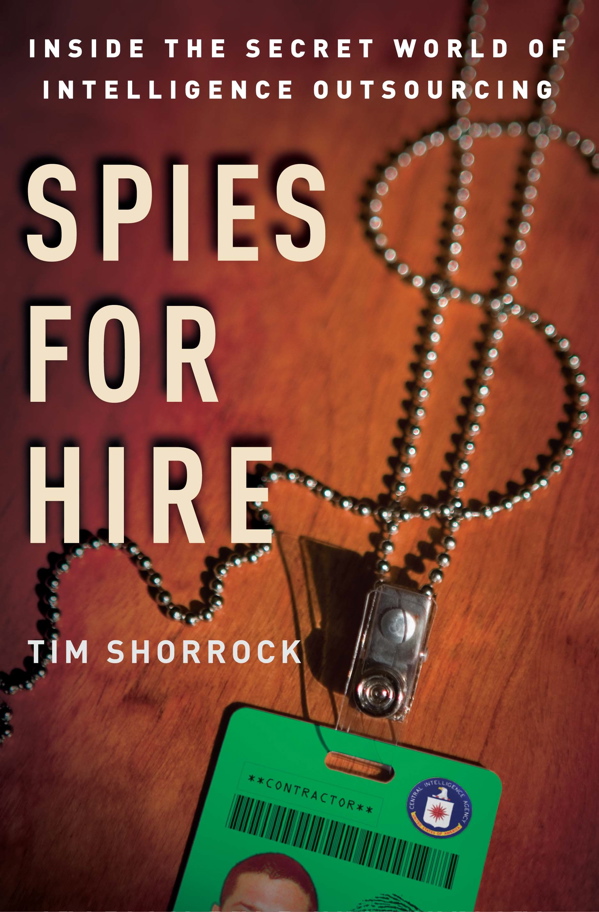
"With all due respect to the Washington Post, Dana Priest and Bill Arkin are very good reporters, we have to ask, why did it take them seven years to do this story?" says Tim Shorrock, an investigative journalist and author of Spies for Hire: The Secret World of Intelligence Outsourcing. "Anyone who’s been covering intelligence or national security in Washington knows that intelligence has been privatized to an incredible extent."
To Watch/Listen/Read
Democracy Now
An explosive investigative series published in the Washington Post today begins, "The top-secret world the government created in response to the terrorist attacks of Sept. 11, 2001, has become so large, so unwieldy and so secretive that no one knows how much money it costs, how many people it employs, how many programs exist within it or exactly how many agencies do the same work." Among the findings: An estimated 854,000 people hold top-secret security clearances. More than 1,200 government organizations and nearly 2,000 private companies work on programs related to counterterrorism, homeland security and intelligence in 10,000 locations. We speak with one of the co-authors of the series, Bill Arkin.
To Watch/Listen/Read
Tim Shorrock Asks Why It Took the Washington Post So Long to Investigate the US Intelligence System
Democracy Now
"With all due respect to the Washington Post, Dana Priest and Bill Arkin are very good reporters, we have to ask, why did it take them seven years to do this story?" says Tim Shorrock, an investigative journalist and author of Spies for Hire: The Secret World of Intelligence Outsourcing. "Anyone who’s been covering intelligence or national security in Washington knows that intelligence has been privatized to an incredible extent."
To Watch/Listen/Read
Democracy Now: Tom Engelhardt on "The American Way of War: How Bush’s Wars Became Obama’s"
Tom Engelhardt on "The American Way of War: How Bush’s Wars Became Obama’s"
Democracy Now

We discuss the latest in the ongoing US war in Afghanistan, the longest-running war in American history, with Tom Engelhardt, creator and editor of the website TomDispatch and author of The American Way of War: How Bush’s Wars Became Obama’s. Engelhardt says the US war in Afghanistan has troubling parallels with the Soviet occupation of Afghanistan of the 1980s.
To Watch/Listen/Read
Democracy Now
We discuss the latest in the ongoing US war in Afghanistan, the longest-running war in American history, with Tom Engelhardt, creator and editor of the website TomDispatch and author of The American Way of War: How Bush’s Wars Became Obama’s. Engelhardt says the US war in Afghanistan has troubling parallels with the Soviet occupation of Afghanistan of the 1980s.
To Watch/Listen/Read
Wednesday, July 07, 2010
Democracy Now: Michael Moore on His Life, His Films and His Activism
Michael Moore on His Life, His Films and His Activism
Democracy Now

In a Democracy Now! special broadcast, we spend the hour with one of the most famous independent filmmakers in the world: Michael Moore. For the past twenty years, Michael has been one of the most politically active, provocative and successful documentary filmmakers in the business. His films include Roger and me; Fahrenheit 9/11; Bowling for Columbine, for which he won the Academy Award; and his latest, Capitalism: A Love Story.
To Watch/Listen/Read the Episode

Democracy Now
In a Democracy Now! special broadcast, we spend the hour with one of the most famous independent filmmakers in the world: Michael Moore. For the past twenty years, Michael has been one of the most politically active, provocative and successful documentary filmmakers in the business. His films include Roger and me; Fahrenheit 9/11; Bowling for Columbine, for which he won the Academy Award; and his latest, Capitalism: A Love Story.
To Watch/Listen/Read the Episode
Thursday, April 01, 2010
Amy Goodman: The Obscenity of War
The Obscenity of War
by Amy Goodman
Common Dreams
President Barack Obama has just returned from his first trip as commander in chief to Afghanistan. The U.S.-led invasion and occupation of that country are now in their ninth year, amid increasing comparisons to Vietnam.
Daniel Ellsberg, whom Henry Kissinger once called "the most dangerous man in America," leaked the Pentagon Papers in 1971. Ellsberg, who was a top Pentagon analyst, photocopied this secret, 7,000-page history of the U.S. role in Vietnam and released it to the press, helping to end the Vietnam War.
"President Obama is taking every symbolic step he can to nominate this as Obama's war," Ellsberg told me recently. He cites the "Eikenberry memos," written by U.S. Ambassador to Afghanistan Karl Eikenberry, which were leaked, then printed last January by The New York Times.
Ellsberg said: "Eikenberry's cables read like a summary of the Pentagon Papers of Afghanistan. ... Just change the place names from ‘Saigon' to ‘Kabul' ... and they read almost exactly the same."
The Eikenberry memos recommend policies opposite those of Gens. David Petraeus and Stanley McChrystal, who advocated for the surge and a counterinsurgency campaign in Afghanistan. Eikenberry wrote that President Hamid Karzai is "not an adequate strategic partner," and that "sending additional forces will delay the day when Afghans will take over, and make it difficult, if not impossible, to bring our people home on a reasonable timetable." Petraeus and McChrystal prevailed. The military will launch a major campaign in June in Afghanistan's second-largest city, Kandahar. Meanwhile, with shocking candor, McChrystal said in a video conference this week, regarding the number of civilians killed by the U.S. military, "We have shot an amazing number of people, but to my knowledge, none has ever proven to be a threat." U.S. troop fatalities, meanwhile, are occurring now at twice the rate of one year ago.
Tavis Smiley has a PBS special this week on one of the most powerful, and overlooked, speeches given by the Rev. Martin Luther King Jr. The address was made on April 4, 1967, exactly one year to the day before King was assassinated. The civil rights leader titled his speech "Beyond Vietnam," and controversially called the U.S. government "the greatest purveyor of violence in the world today."
The press vilified King. Time magazine called the speech "demagogic slander that sounded like a script for Radio Hanoi." Smiley told me: "Most Americans, I think, know the ‘I Have a Dream' speech. Some Americans know the ‘Mountaintop' speech given the night before he was assassinated in Memphis. But most Americans do not know this ‘Beyond Vietnam' speech." Smiley added, "If you replace the words Iraq for Vietnam, Afghanistan for Vietnam, Pakistan for Vietnam, this speech is so relevant today."
To Read the Rest of the Essay
by Amy Goodman
Common Dreams
President Barack Obama has just returned from his first trip as commander in chief to Afghanistan. The U.S.-led invasion and occupation of that country are now in their ninth year, amid increasing comparisons to Vietnam.
Daniel Ellsberg, whom Henry Kissinger once called "the most dangerous man in America," leaked the Pentagon Papers in 1971. Ellsberg, who was a top Pentagon analyst, photocopied this secret, 7,000-page history of the U.S. role in Vietnam and released it to the press, helping to end the Vietnam War.
"President Obama is taking every symbolic step he can to nominate this as Obama's war," Ellsberg told me recently. He cites the "Eikenberry memos," written by U.S. Ambassador to Afghanistan Karl Eikenberry, which were leaked, then printed last January by The New York Times.
Ellsberg said: "Eikenberry's cables read like a summary of the Pentagon Papers of Afghanistan. ... Just change the place names from ‘Saigon' to ‘Kabul' ... and they read almost exactly the same."
The Eikenberry memos recommend policies opposite those of Gens. David Petraeus and Stanley McChrystal, who advocated for the surge and a counterinsurgency campaign in Afghanistan. Eikenberry wrote that President Hamid Karzai is "not an adequate strategic partner," and that "sending additional forces will delay the day when Afghans will take over, and make it difficult, if not impossible, to bring our people home on a reasonable timetable." Petraeus and McChrystal prevailed. The military will launch a major campaign in June in Afghanistan's second-largest city, Kandahar. Meanwhile, with shocking candor, McChrystal said in a video conference this week, regarding the number of civilians killed by the U.S. military, "We have shot an amazing number of people, but to my knowledge, none has ever proven to be a threat." U.S. troop fatalities, meanwhile, are occurring now at twice the rate of one year ago.
Tavis Smiley has a PBS special this week on one of the most powerful, and overlooked, speeches given by the Rev. Martin Luther King Jr. The address was made on April 4, 1967, exactly one year to the day before King was assassinated. The civil rights leader titled his speech "Beyond Vietnam," and controversially called the U.S. government "the greatest purveyor of violence in the world today."
The press vilified King. Time magazine called the speech "demagogic slander that sounded like a script for Radio Hanoi." Smiley told me: "Most Americans, I think, know the ‘I Have a Dream' speech. Some Americans know the ‘Mountaintop' speech given the night before he was assassinated in Memphis. But most Americans do not know this ‘Beyond Vietnam' speech." Smiley added, "If you replace the words Iraq for Vietnam, Afghanistan for Vietnam, Pakistan for Vietnam, this speech is so relevant today."
To Read the Rest of the Essay
Saturday, March 13, 2010
Petra Bartosiewicz: The Intelligence Factory -- How America Makes its Enemies Disappear
The intelligence factory: How America makes its enemies disappear
By Petra Bartosiewicz
Harper's
...
As the “global war on terror” enters its ninth year, under the leadership of its second commander in chief, certain ongoing assumptions have gained the force of common wisdom. One of them, as Barack Obama explained in a major policy speech last May, is that we have entered a “new era” that will “present new challenges to our application of the law” and require “new tools to protect the American people.” Another, as Obama made clear in the same speech, is that the purpose of these new tools and laws is “to prevent attacks instead of simply prosecuting those who try to carry them out.” These positions are appealing, but they fail to address what might be thought of as an underlying economic disequilibrium. The continued political appetite for a global war on terror has led to a commodification of “actionable intelligence,” which is a product, chiefly, of human prisoners like Aafia Siddiqui. Because this war, by definition, has no physical or temporal boundaries, the demand for such intelligence has no limit. But the world contains a relatively small number of terrorists and an even smaller number of terrorist plots. Our demand for intelligence far outstrips the supply of prisoners. Where the United States itself has been unable to meet that demand, therefore, it has embraced a solution that is the essence of globalization. We outsource the work to countries, like Pakistan, whose political circumstances allow them to produce prisoners with far greater efficiency.
What the CIA and the FBI understand as an acquisition solution, however, others see as a human-rights debacle. Just as thousands of political dissidents, suspected criminals, and enemies of the state were “disappeared” from Latin America over the course of several decades of CIA-funded dirty wars, so too have hundreds of “persons of interest” around the world begun to disappear as a consequence of the global war on terror, which in many ways has become a globalized version of those earlier, regional failures of democracy.
Many individual cases are well known. Binyam Mohamed, an alleged conspirator in Jose Padilla’s now debunked “dirty bomb plot,” was arrested in Karachi in 2002 and flown by the CIA to Morocco, where he was tortured for eighteen months. He eventually emerged into the non-covert prison system, as a detainee at Guantánamo, and was released earlier this year without charge. Maher Arar, a Canadian citizen, was arrested at New York City’s John F. Kennedy Airport in 2002 while on his way home from a vacation, flown by the CIA to a Syrian prison, held in a coffin-size cell for nearly a year, and then released, also without charges. Saud Memon, a Pakistani businessman rumored to own the plot of land where the Wall Street Journal reporter Daniel Pearl was murdered, was arrested in 2003, held by the United States at an unknown location until 2006, then “released” to Pakistan, where in April 2007 he finally emerged, badly beaten and weighing just eighty pounds, on the doorstep of his Karachi home. He died a few weeks later.
The total number of men and women who have been kidnapped and imprisoned for U.S. intelligence-gathering purposes is difficult to determine. Apart from Iraq and Afghanistan, the main theaters of combat, Pakistan is our primary source of publicly known detainees—researchers at Seton Hall University estimated in 2006 that two thirds of the prisoners at Guantánamo were arrested in Pakistan or by Pakistani authorities—and so it is reasonable to assume that the country is also a major supplier of ghost detainees. Human Rights Watch has tracked enforced disappearances in Pakistan since before 2001. The group’s counterterrorism director, Joanne Mariner, told me that the number of missing persons in the country grew “to a flood” as U.S. counterterrorism operations peaked between 2002 and 2004. In that same three-year period, U.S. aid to Pakistan totaled $4.7 billion, up from $9.1 million in the three years prior to the U.S. invasion of Afghanistan. Correlation does not prove causation, of course, but Pakistan’s former president, Pervez Musharraf, did claim in his 2006 memoir, In the Line of Fire, that his country had delivered 369 Al Qaeda suspects to the United States for “millions of dollars” in bounties (a boast he neatly elides in the Urdu edition). It is reasonable to suspect this figure is on the low side.
One reason estimates are so inconclusive, of course, is that the business of disappearance is inherently ambiguous. Missing-person reports filed in Pakistan rarely claim that the detained individual was picked up by the CIA or the FBI. Instead, the detainee is almost always arrested by “city police” or “civilian clothed men” or unidentified “secret agency personnel” who arrive in “unmarked vehicles.” The secretary-general of the Pakistani NGO Human Rights Commission, Ibn Abdur Rehman, described the process. “A man is picked up at his house, brought to the police station,” he said. “The family comes with him and are told, ‘He’ll be released in an hour, go home.’ They come back in an hour and are told, ‘Sorry, he’s been handed off to the intelligence people and taken to Islamabad.’ After that, the individual is never heard from again. When the family tries to file a missing-person report, the police won’t take it, and no one admits to having custody of the person.” Some of the disappeared pass directly to U.S. custody and reappear months or years later at Guantánamo or Bagram air base. Others remain captives of Pakistan’s multiple intelligence agencies or are shipped to places like Uzbekistan, whose torture policies are well known. Others simply vanish, their fate revealed only by clerical errors, or when they turn up dead.
Most of the arrests and detentions take place under the auspices of Pakistan’s Inter-Services Intelligence (ISI), which the CIA helped expand in the 1980s largely in order to wage a proxy war against Soviet forces in Afghanistan (where the ISI continues to wield considerable influence). The agency has evolved into a powerful institution with its own agendas and alliances—it has long pursued ethnic separatists in the Baluchistan region, for instance, where the Human Rights Commission estimates that at least 600 individuals have disappeared—and the result is that the CIA itself often has little knowledge of the provenance or purpose of a given arrest.
Such may be the case with Siddiqui. To my knowledge, the only current or former U.S. official to comment publicly on the significance of her capture was John Kiriakou, a retired CIA officer who gained notoriety in 2007 when he told ABC News that the CIA waterboarding of Abu Zubaydah, an Al Qaeda lieutenant, produced life-saving intelligence in less than a minute. Although Justice Department memos later revealed that Zubaydah was waterboarded eighty-three times, Kiriakou’s comments did much to foster acceptance of the practice among the American public—and his description of Siddiqui seemed calibrated to achieve a similar effect. In 2008 he told ABC News, which had hired him as a consultant after his waterboarding interview, “I don’t think we’ve captured anybody as important and as well connected as she since 2003. We knew that she had been planning, or at least involved in the planning of, a wide variety of different operations.” When I called Kiriakou to ask him about those operations, though, he said the extent of his knowledge was that Siddiqui’s name “had popped up an awful lot” while he was in Pakistan searching for Zubaydah in 2002, and that “the FBI talked about her so often that I thought she must be a big fish.” After he left Pakistan, he forgot all about Siddiqui until ABC called for an interview. “I actually had to Google as to remember who she was,” he said.
To Read the Rest of the Essay
By Petra Bartosiewicz
Harper's
...
As the “global war on terror” enters its ninth year, under the leadership of its second commander in chief, certain ongoing assumptions have gained the force of common wisdom. One of them, as Barack Obama explained in a major policy speech last May, is that we have entered a “new era” that will “present new challenges to our application of the law” and require “new tools to protect the American people.” Another, as Obama made clear in the same speech, is that the purpose of these new tools and laws is “to prevent attacks instead of simply prosecuting those who try to carry them out.” These positions are appealing, but they fail to address what might be thought of as an underlying economic disequilibrium. The continued political appetite for a global war on terror has led to a commodification of “actionable intelligence,” which is a product, chiefly, of human prisoners like Aafia Siddiqui. Because this war, by definition, has no physical or temporal boundaries, the demand for such intelligence has no limit. But the world contains a relatively small number of terrorists and an even smaller number of terrorist plots. Our demand for intelligence far outstrips the supply of prisoners. Where the United States itself has been unable to meet that demand, therefore, it has embraced a solution that is the essence of globalization. We outsource the work to countries, like Pakistan, whose political circumstances allow them to produce prisoners with far greater efficiency.
What the CIA and the FBI understand as an acquisition solution, however, others see as a human-rights debacle. Just as thousands of political dissidents, suspected criminals, and enemies of the state were “disappeared” from Latin America over the course of several decades of CIA-funded dirty wars, so too have hundreds of “persons of interest” around the world begun to disappear as a consequence of the global war on terror, which in many ways has become a globalized version of those earlier, regional failures of democracy.
Many individual cases are well known. Binyam Mohamed, an alleged conspirator in Jose Padilla’s now debunked “dirty bomb plot,” was arrested in Karachi in 2002 and flown by the CIA to Morocco, where he was tortured for eighteen months. He eventually emerged into the non-covert prison system, as a detainee at Guantánamo, and was released earlier this year without charge. Maher Arar, a Canadian citizen, was arrested at New York City’s John F. Kennedy Airport in 2002 while on his way home from a vacation, flown by the CIA to a Syrian prison, held in a coffin-size cell for nearly a year, and then released, also without charges. Saud Memon, a Pakistani businessman rumored to own the plot of land where the Wall Street Journal reporter Daniel Pearl was murdered, was arrested in 2003, held by the United States at an unknown location until 2006, then “released” to Pakistan, where in April 2007 he finally emerged, badly beaten and weighing just eighty pounds, on the doorstep of his Karachi home. He died a few weeks later.
The total number of men and women who have been kidnapped and imprisoned for U.S. intelligence-gathering purposes is difficult to determine. Apart from Iraq and Afghanistan, the main theaters of combat, Pakistan is our primary source of publicly known detainees—researchers at Seton Hall University estimated in 2006 that two thirds of the prisoners at Guantánamo were arrested in Pakistan or by Pakistani authorities—and so it is reasonable to assume that the country is also a major supplier of ghost detainees. Human Rights Watch has tracked enforced disappearances in Pakistan since before 2001. The group’s counterterrorism director, Joanne Mariner, told me that the number of missing persons in the country grew “to a flood” as U.S. counterterrorism operations peaked between 2002 and 2004. In that same three-year period, U.S. aid to Pakistan totaled $4.7 billion, up from $9.1 million in the three years prior to the U.S. invasion of Afghanistan. Correlation does not prove causation, of course, but Pakistan’s former president, Pervez Musharraf, did claim in his 2006 memoir, In the Line of Fire, that his country had delivered 369 Al Qaeda suspects to the United States for “millions of dollars” in bounties (a boast he neatly elides in the Urdu edition). It is reasonable to suspect this figure is on the low side.
One reason estimates are so inconclusive, of course, is that the business of disappearance is inherently ambiguous. Missing-person reports filed in Pakistan rarely claim that the detained individual was picked up by the CIA or the FBI. Instead, the detainee is almost always arrested by “city police” or “civilian clothed men” or unidentified “secret agency personnel” who arrive in “unmarked vehicles.” The secretary-general of the Pakistani NGO Human Rights Commission, Ibn Abdur Rehman, described the process. “A man is picked up at his house, brought to the police station,” he said. “The family comes with him and are told, ‘He’ll be released in an hour, go home.’ They come back in an hour and are told, ‘Sorry, he’s been handed off to the intelligence people and taken to Islamabad.’ After that, the individual is never heard from again. When the family tries to file a missing-person report, the police won’t take it, and no one admits to having custody of the person.” Some of the disappeared pass directly to U.S. custody and reappear months or years later at Guantánamo or Bagram air base. Others remain captives of Pakistan’s multiple intelligence agencies or are shipped to places like Uzbekistan, whose torture policies are well known. Others simply vanish, their fate revealed only by clerical errors, or when they turn up dead.
Most of the arrests and detentions take place under the auspices of Pakistan’s Inter-Services Intelligence (ISI), which the CIA helped expand in the 1980s largely in order to wage a proxy war against Soviet forces in Afghanistan (where the ISI continues to wield considerable influence). The agency has evolved into a powerful institution with its own agendas and alliances—it has long pursued ethnic separatists in the Baluchistan region, for instance, where the Human Rights Commission estimates that at least 600 individuals have disappeared—and the result is that the CIA itself often has little knowledge of the provenance or purpose of a given arrest.
Such may be the case with Siddiqui. To my knowledge, the only current or former U.S. official to comment publicly on the significance of her capture was John Kiriakou, a retired CIA officer who gained notoriety in 2007 when he told ABC News that the CIA waterboarding of Abu Zubaydah, an Al Qaeda lieutenant, produced life-saving intelligence in less than a minute. Although Justice Department memos later revealed that Zubaydah was waterboarded eighty-three times, Kiriakou’s comments did much to foster acceptance of the practice among the American public—and his description of Siddiqui seemed calibrated to achieve a similar effect. In 2008 he told ABC News, which had hired him as a consultant after his waterboarding interview, “I don’t think we’ve captured anybody as important and as well connected as she since 2003. We knew that she had been planning, or at least involved in the planning of, a wide variety of different operations.” When I called Kiriakou to ask him about those operations, though, he said the extent of his knowledge was that Siddiqui’s name “had popped up an awful lot” while he was in Pakistan searching for Zubaydah in 2002, and that “the FBI talked about her so often that I thought she must be a big fish.” After he left Pakistan, he forgot all about Siddiqui until ABC called for an interview. “I actually had to Google as to remember who she was,” he said.
To Read the Rest of the Essay
Thursday, March 11, 2010
Mark Benjamin: Waterboarding for Dummies
Waterboarding for dummies: Internal CIA documents reveal a meticulous protocol that was far more brutal than Dick Cheney's "dunk in the water"
By Mark Benjamin
Salon
Self-proclaimed waterboarding fan Dick Cheney called it a no-brainer in a 2006 radio interview: Terror suspects should get a "a dunk in the water." But recently released internal documents reveal the controversial "enhanced interrogation" practice was far more brutal on detainees than Cheney's description sounds, and was administered with meticulous cruelty.
Interrogators pumped detainees full of so much water that the CIA turned to a special saline solution to minimize the risk of death, the documents show. The agency used a gurney "specially designed" to tilt backwards at a perfect angle to maximize the water entering the prisoner's nose and mouth, intensifying the sense of choking – and to be lifted upright quickly in the event that a prisoner stopped breathing.
The documents also lay out, in chilling detail, exactly what should occur in each two-hour waterboarding "session." Interrogators were instructed to start pouring water right after a detainee exhaled, to ensure he inhaled water, not air, in his next breath. They could use their hands to "dam the runoff" and prevent water from spilling out of a detainee's mouth. They were allowed six separate 40-second "applications" of liquid in each two-hour session – and could dump water over a detainee's nose and mouth for a total of 12 minutes a day. Finally, to keep detainees alive even if they inhaled their own vomit during a session – a not-uncommon side effect of waterboarding – the prisoners were kept on a liquid diet. The agency recommended Ensure Plus.
"This is revolting and it is deeply disturbing," said Dr. Scott Allen, co-director of the Center for Prisoner Health and Human Rights at Brown University who has reviewed all of the documents for Physicians for Human Rights. "The so-called science here is a total departure from any ethics or any legitimate purpose. They are saying, ‘This is how risky and harmful the procedure is, but we are still going to do it.' It just sounds like lunacy," he said. "This fine-tuning of torture is unethical, incompetent and a disgrace to medicine."
To Read the Rest of the Article
By Mark Benjamin
Salon
Self-proclaimed waterboarding fan Dick Cheney called it a no-brainer in a 2006 radio interview: Terror suspects should get a "a dunk in the water." But recently released internal documents reveal the controversial "enhanced interrogation" practice was far more brutal on detainees than Cheney's description sounds, and was administered with meticulous cruelty.
Interrogators pumped detainees full of so much water that the CIA turned to a special saline solution to minimize the risk of death, the documents show. The agency used a gurney "specially designed" to tilt backwards at a perfect angle to maximize the water entering the prisoner's nose and mouth, intensifying the sense of choking – and to be lifted upright quickly in the event that a prisoner stopped breathing.
The documents also lay out, in chilling detail, exactly what should occur in each two-hour waterboarding "session." Interrogators were instructed to start pouring water right after a detainee exhaled, to ensure he inhaled water, not air, in his next breath. They could use their hands to "dam the runoff" and prevent water from spilling out of a detainee's mouth. They were allowed six separate 40-second "applications" of liquid in each two-hour session – and could dump water over a detainee's nose and mouth for a total of 12 minutes a day. Finally, to keep detainees alive even if they inhaled their own vomit during a session – a not-uncommon side effect of waterboarding – the prisoners were kept on a liquid diet. The agency recommended Ensure Plus.
"This is revolting and it is deeply disturbing," said Dr. Scott Allen, co-director of the Center for Prisoner Health and Human Rights at Brown University who has reviewed all of the documents for Physicians for Human Rights. "The so-called science here is a total departure from any ethics or any legitimate purpose. They are saying, ‘This is how risky and harmful the procedure is, but we are still going to do it.' It just sounds like lunacy," he said. "This fine-tuning of torture is unethical, incompetent and a disgrace to medicine."
To Read the Rest of the Article
Monday, February 22, 2010
CNN: McChrystal apologizes as airstrike kills dozens in Afghanistan
McChrystal apologizes as airstrike kills dozens in Afghanistan
CNN
The head of U.S. forces in Afghanistan, General Stanley McChrystal, expressed regret Monday after more than two dozen civilians were killed in a NATO airstrike.
Twenty-seven civilians died and 14 others were wounded in the incident Sunday in the central Daikondi province, according to the Afghan Interior Ministry.
Ground forces at the scene found women and children among the casualties, the Afghan government and NATO's International Security Assistance Force (ISAF) said in a joint statement.
The U.S military told CNN Pentagon Correspondent Barbara Starr they "accept" the Afghan government's death toll. ISAF said it had ordered an immediate investigation into the incident, while the Afghan cabinet called the attack "unjustifiable."
"We are extremely saddened by the tragic loss of innocent lives," said McChrystal, who spoke to President Hamid Karzai Sunday evening to express his sorrow and regret over the incident.
"I have made it clear to our forces that we are here to protect the Afghan people, and inadvertently killing or injuring civilians undermines their trust and confidence in our mission. We will re-double our efforts to regain that trust."
Commanders ordered the daylight NATO airstrike because they had specific intelligence that a group of Taliban in vehicles was heading towards coalition forces on the ground, according to a senior U.S. military official.
To Read the Rest of the Report
CNN
The head of U.S. forces in Afghanistan, General Stanley McChrystal, expressed regret Monday after more than two dozen civilians were killed in a NATO airstrike.
Twenty-seven civilians died and 14 others were wounded in the incident Sunday in the central Daikondi province, according to the Afghan Interior Ministry.
Ground forces at the scene found women and children among the casualties, the Afghan government and NATO's International Security Assistance Force (ISAF) said in a joint statement.
The U.S military told CNN Pentagon Correspondent Barbara Starr they "accept" the Afghan government's death toll. ISAF said it had ordered an immediate investigation into the incident, while the Afghan cabinet called the attack "unjustifiable."
"We are extremely saddened by the tragic loss of innocent lives," said McChrystal, who spoke to President Hamid Karzai Sunday evening to express his sorrow and regret over the incident.
"I have made it clear to our forces that we are here to protect the Afghan people, and inadvertently killing or injuring civilians undermines their trust and confidence in our mission. We will re-double our efforts to regain that trust."
Commanders ordered the daylight NATO airstrike because they had specific intelligence that a group of Taliban in vehicles was heading towards coalition forces on the ground, according to a senior U.S. military official.
To Read the Rest of the Report
Saturday, February 20, 2010
Bill Moyers Journal: Glenn Greenwald on Afghanistan, Government Secrecy,and the Economy
Glenn Greenwald
Bill Moyers Journal
Bill Moyers conducts a Web exclusive interview with Glenn Greenwald, about Afghanistan, government secrecy, the economy and his challenge to the editorial staff of THE WASHINGTON POST to justify their argument that the U.S. should borrow money for war but not for health care.
Glenn Greenwald is a former constitutional lawyer and currently a contributing writer at Salon.com, where he maintains the highly popular political and legal blog Unclaimed Territory. He is also the author of three books: the NEW YORK TIMES-bestsellers HOW WOULD A PATRIOT ACT? (2006) and TRAGIC LEGACY (2007), and his 2008 release, GREAT AMERICAN HYPOCRITES.
Greenwald began his blog in October 2005. With a daily readership in excess of 100,000, and ranked in Technorati's Top 50 most-cited blogs, Greenwald has become one of the Web's most influential political writers, with one of the Internet's largest and most loyal readerships. In September 2008, NEW YORK MAGAZINE named him one of America's 40 most popular and widely-cited political pundits.
His work has been cited by numerous members of Congress and in Congressional reports; his journalism has been quoted by THE NEW YORK TIMES, THE WASHINGTON POST, THE LOS ANGELES TIMES and multiple other publications; and he has regularly appeared on THE RACHEL MADDOW SHOW, DEMOCRACY NOW with Amy Goodman, various NPR and C-SPAN shows, and numerous other shows.
To Listen to the Conversation and access more resources
Bill Moyers Journal
Bill Moyers conducts a Web exclusive interview with Glenn Greenwald, about Afghanistan, government secrecy, the economy and his challenge to the editorial staff of THE WASHINGTON POST to justify their argument that the U.S. should borrow money for war but not for health care.
Glenn Greenwald is a former constitutional lawyer and currently a contributing writer at Salon.com, where he maintains the highly popular political and legal blog Unclaimed Territory. He is also the author of three books: the NEW YORK TIMES-bestsellers HOW WOULD A PATRIOT ACT? (2006) and TRAGIC LEGACY (2007), and his 2008 release, GREAT AMERICAN HYPOCRITES.
Greenwald began his blog in October 2005. With a daily readership in excess of 100,000, and ranked in Technorati's Top 50 most-cited blogs, Greenwald has become one of the Web's most influential political writers, with one of the Internet's largest and most loyal readerships. In September 2008, NEW YORK MAGAZINE named him one of America's 40 most popular and widely-cited political pundits.
His work has been cited by numerous members of Congress and in Congressional reports; his journalism has been quoted by THE NEW YORK TIMES, THE WASHINGTON POST, THE LOS ANGELES TIMES and multiple other publications; and he has regularly appeared on THE RACHEL MADDOW SHOW, DEMOCRACY NOW with Amy Goodman, various NPR and C-SPAN shows, and numerous other shows.
To Listen to the Conversation and access more resources
Friday, February 19, 2010
Subscribe to:
Posts (Atom)