25. Prisoners Still Brutalized at Gitmo
by Scott Macky and Peter Phillips
Project Censored
In Guantánamo, the notorious but seldom-discussed thug squad, officially known as the Immediate Reaction Force (IRF), deployed by the US military remains very much active. Inside the walls of Guantánamo, the prisoners know the squad as the Extreme Repression Force.
In reality, IRF is an extrajudicial terror squad, the existence of which has been documented since the early days of Guantánamo. IRF has rarely been mentioned in the United States media or in congressional inquiries into torture. On paper, IRF teams are made up of five military police officers who are on constant standby to respond to emergencies. “The IRF team is intended to be used primarily as a forced-extraction team, specializing in the extraction of a detainee who is combative, resistive, or if [there is] the possibility of a weapon . . . in the cell at the time of the extraction,” according to a declassified copy of the Standard Operating Procedures (SOP) for Camp Delta at Guantánamo. The document was signed on March 27, 2003, by Major General Geoffrey Miller, the man credited with eventually “Gitmoizing” Abu Ghraib and other US-run prisons.
When an IRF team is called in, its members are dressed in full riot gear, which some prisoners and their attorneys have compared to “Darth Vader” suits. Each officer is assigned a body part of the prisoner to restrain: head, right arm, left arm, left leg, right leg. According to the SOP document, the teams are to give verbal warnings to prisoners before storming the cell: “Prior to the use of the IRF team, an interpreter will be used to tell the detainee of the discipline measures to be taken against him and ask whether he intends to resist. Regardless of his answer, his recent behavior and demeanor should be taken into account in determining the validity of his answer.” The IRF team is authorized to spray the detainee in the face with mace twice before entering the cell.
To Read the Rest ofthe Report
Showing posts with label Prisons. Show all posts
Showing posts with label Prisons. Show all posts
Sunday, March 13, 2011

Wednesday, March 09, 2011
Michelle Chen: State Budget Battles Converge on Prison Labor Force
State Budget Battles Converge on Prison Labor Force
by Michelle Chen
In These Times
Prison isn't just about doing hard time. For many, it's about working full-time, too. These days, state governments seem ready to squeeze their captive workforces to plug budget gaps on the cheap.
From the chain gang to the gulag, labor in the prison population predates our modern labor regulations and to this day, remains relatively untouched by the legal protections afforded to regular workers. So in most states, prison work has come to be seen as a hybrid between conscript labor and rehabilitation, putting otherwise “idle” inmates to work on farms, manufacturing plants, and janitorial jobs.
The New York Times reports that in many areas, laborers in prison jump suits are a growing presence at many public work sites, suggesting that they're being used to alleviate fiscal pressures now eroding common public sector services:
As we reported in December, prison labor conditions have sparked some noteworthy revolts. A wave of strikes rocked several prisons in Georgia late last year, touching off a national campaign for the dignified treatment of prison workers.
The uprisings shed light on how vulnerable inmates are when the prison-industrial complex operates not just as a warden and dictator but a boss as well, marshalling the labor of thousands with little oversight. The Georgia inmates drafted a list of grievances ranging from abusive treatment and work without wages.
The inmates' direct actions resonated with civil rights groups who have pointed out disturbing continuities between the era of slavery and the racialization of imprisonment, and by extension, the industries tied to it. The mass incarceration of black men, and their punitive deployment—explicitly sanctioned under the Constitution—in the dregs of industrial capitalism, speaks loud and clear to the theory of prison as America's “new Jim Crow.”
Allegations that prison guards severely beat an inmate protester in retaliation underscore the inequality endemic to this labor system, even though the programs are typically endorsed as a form of rehabilitation and self-help.
Of course, today's prison labor is more regulated and considerably less brutal than the post-Civil War convict-lease system—a regression to slavery disguised as a criminal penalty. (Some reforms were enacted during the Great Depression to prevent downward-spiraling competition between “free labor” and incarcerated workers.)
Yet the institutional parallels are striking. From the late-19th through the early 20th century, southern states, including Georgia, turned to prison labor as a release valve for dealing with fiscal crisis, and the white supremacist power structure, through “leases” with the private sector, enabled forced labor, torture and abuse on a massive scale.
To Read the Rest of the Essay
by Michelle Chen
In These Times
Prison isn't just about doing hard time. For many, it's about working full-time, too. These days, state governments seem ready to squeeze their captive workforces to plug budget gaps on the cheap.
From the chain gang to the gulag, labor in the prison population predates our modern labor regulations and to this day, remains relatively untouched by the legal protections afforded to regular workers. So in most states, prison work has come to be seen as a hybrid between conscript labor and rehabilitation, putting otherwise “idle” inmates to work on farms, manufacturing plants, and janitorial jobs.
The New York Times reports that in many areas, laborers in prison jump suits are a growing presence at many public work sites, suggesting that they're being used to alleviate fiscal pressures now eroding common public sector services:
[O]fficials are expanding the practice to combat cuts in federal financing and dwindling tax revenue, using prisoners to paint vehicles, clean courthouses, sweep campsites and perform many other services done before the recession by private contractors or government employees.
In New Jersey, inmates on roadkill patrol clean deer carcasses from highways. Georgia inmates tend municipal graveyards. In Ohio, they paint their own cells. In California, prison officials hope to expand existing programs, including one in which wet-suit-clad inmates repair leaky public water tanks. There are no figures on how many prisoners have been enrolled in new or expanded programs nationwide, but experts in criminal justice have taken note of the increase.
As we reported in December, prison labor conditions have sparked some noteworthy revolts. A wave of strikes rocked several prisons in Georgia late last year, touching off a national campaign for the dignified treatment of prison workers.
The uprisings shed light on how vulnerable inmates are when the prison-industrial complex operates not just as a warden and dictator but a boss as well, marshalling the labor of thousands with little oversight. The Georgia inmates drafted a list of grievances ranging from abusive treatment and work without wages.
The inmates' direct actions resonated with civil rights groups who have pointed out disturbing continuities between the era of slavery and the racialization of imprisonment, and by extension, the industries tied to it. The mass incarceration of black men, and their punitive deployment—explicitly sanctioned under the Constitution—in the dregs of industrial capitalism, speaks loud and clear to the theory of prison as America's “new Jim Crow.”
Allegations that prison guards severely beat an inmate protester in retaliation underscore the inequality endemic to this labor system, even though the programs are typically endorsed as a form of rehabilitation and self-help.
Of course, today's prison labor is more regulated and considerably less brutal than the post-Civil War convict-lease system—a regression to slavery disguised as a criminal penalty. (Some reforms were enacted during the Great Depression to prevent downward-spiraling competition between “free labor” and incarcerated workers.)
Yet the institutional parallels are striking. From the late-19th through the early 20th century, southern states, including Georgia, turned to prison labor as a release valve for dealing with fiscal crisis, and the white supremacist power structure, through “leases” with the private sector, enabled forced labor, torture and abuse on a massive scale.
To Read the Rest of the Essay
Sunday, March 06, 2011
David Kaiser and Lovisa Stannow: Prison Rape and the Government
Prison Rape and the Government
by David Kaiser and Lovisa Stannow.
The New York Review of Books

Back in 1998, Jan Lastocy was serving time for attempted embezzlement in a Michigan prison. Her job was working at a warehouse for a nearby men’s prison. She got along well with two of the corrections officers who supervised her, but she thought the third was creepy. “He was always talking about how much power he had,” she said, “how he liked being able to write someone a ticket just for looking at him funny.” Then, one day, he raped her.
Jan wanted to tell someone, but the warden had made it clear that she would always believe an officer’s word over an inmate’s, and didn’t like “troublemakers.” If Jan had gone to the officers she trusted, they would have had to repeat her story to the same warden. Jan was only a few months away from release to a halfway house. She was desperate to get out of prison, to return to her husband and children. So she kept quiet—and the officer raped her again, and again. There were plenty of secluded places in the huge warehouse, behind piles of crates or in the freezer. Three or four times a week he would assault her, from June all the way through December, and the whole time she was too terrified to report the attacks. Later, she would be tormented by guilt for not speaking out, because the same officer went on to rape other women at the prison. In a poem, Jan wrote:
For all these reasons, a large majority of inmates who have been sexually abused by staff or by other inmates never report it.1 And corrections officials, with some brave exceptions, have historically taken advantage of this reluctance to downplay or even deny the problem. According to a recent report by the Bureau of Justice Statistics (BJS), a branch of the Department of Justice, there were only 7,444 official allegations of sexual abuse in detention in 2008, and of those, only 931 were substantiated. These are absurdly low figures. But perhaps more shocking is that even when authorities confirmed that corrections staff had sexually abused inmates in their care, only 42 percent of those officers had their cases referred to prosecution; only 23 percent were arrested, and only 3 percent charged, indicted, or convicted. Fifteen percent were actually allowed to keep their jobs.
How many people are really victimized every year? Recent BJS studies using a “snapshot” technique have found that, of those incarcerated on the days the surveys were administered, about 90,000 had been abused in the previous year, but as we have argued previously,2 those numbers were also misleadingly low. Finally, in January, the Justice Department published its first plausible estimates. In 2008, it now says, more than 216,600 people were sexually abused in prisons and jails and, in the case of at least 17,100 of them, in juvenile detention. Overall, that’s almost six hundred people a day—twenty-five an hour.
The department divides sexual abuse in detention into four categories. Most straightforward, and most common, is rape by force or the threat of force. An estimated 69,800 inmates suffered this in 2008.3 The second category, “nonconsensual sexual acts involving pressure,” includes 36,100 inmates coerced by such means as blackmail, offers of protection, and demanded payment of a jailhouse “debt.” This is still rape by any reasonable standard.
An estimated 65,700 inmates, including 6,800 juveniles, had sex with staff “willingly.” But it is illegal in all fifty states for corrections staff to have any sexual contact with inmates. Since staff can inflict punishments including behavioral reports that may extend the time people serve, solitary confinement, loss of even the most basic privileges such as showering, and (legally or not) violence, it is often impossible for inmates to say no.4 Finally, the department estimates that there were 45,000 victims of “abusive sexual contacts” in 2008: unwanted touching by another inmate “of the inmate’s buttocks, thigh, penis, breasts, or vagina in a sexual way.” Overall, most victims were abused not by other inmates but, like Jan, by corrections staff: agents of our government, paid with our taxes, whose job it is to keep inmates safe.
All the numbers we have cited count people who were abused, not instances of abuse. People raped behind bars cannot escape their attackers, though. They must live in constant fear, their trauma renewed every time they see their assailants. Between half and two thirds of those who claim sexual abuse in adult facilities say it happened more than once; previous BJS studies suggest that victims endure an average of three to five attacks each per year.5
We believe that the department’s estimate probably remains too low. It is based on extensive surveys conducted by the BJS in which inmates were able to report abuse anonymously. Some inmates probably fabricated such reports, creating “false positives,” and some who had been abused probably decided not to report it, creating “false negatives.” Since it is impossible to know how many errors of either kind there were, the department chose simply to take the BJS results at face value.
In our opinion, the surveys were effectively designed to discourage false reporting, which would usually be done with the intent of creating trouble for the accused perpetrator or in hopes of being moved to a different facility. The surveys therefore simply didn’t take names—of victims or perpetrators. (The surveys’ authors also devised a number of ways to check for and discount false claims.) On the other hand, inmates would be likely not to report real abuse from shame, or because it was too painful, or out of fear that those guaranteeing their anonymity could not be trusted—and no survey could be designed to overcome those considerations effectively. Moreover, the department’s estimate does not include the many people who are sexually abused in, for example, the Department of Homeland Security’s immigration detention facilities, in police lockups, or by their probation and parole officers.
Even the department’s estimate is of epidemic numbers, however. It shows that there is a human rights crisis in our own country. The people raped in our prisons are our fellow citizens, family members, and neighbors. And when they’re released, as 95 percent of them will be eventually, they bring their trauma home with them, back to our communities.
The notion that rape is inevitable in our prisons is, as the Justice Department says, “not only incorrect but incompatible with American values.” After all, the government has extraordinary control over the lives of people whom it locks up and keeps under surveillance every hour of every day. Preventing sexual abuse in detention is primarily a matter of management. The policies needed are, for the most part, straightforward: for example, considering characteristics that make an inmate especially vulnerable when deciding where to house him, such as homosexuality or a history of prior abuse. Well-run prisons have adopted such policies already, and their rates of sexual assault are dramatically lower than the national average. But for too long, too many facilities have failed to take these basic measures.
To Read the Rest of the Review Essay
by David Kaiser and Lovisa Stannow.
The New York Review of Books
Back in 1998, Jan Lastocy was serving time for attempted embezzlement in a Michigan prison. Her job was working at a warehouse for a nearby men’s prison. She got along well with two of the corrections officers who supervised her, but she thought the third was creepy. “He was always talking about how much power he had,” she said, “how he liked being able to write someone a ticket just for looking at him funny.” Then, one day, he raped her.
Jan wanted to tell someone, but the warden had made it clear that she would always believe an officer’s word over an inmate’s, and didn’t like “troublemakers.” If Jan had gone to the officers she trusted, they would have had to repeat her story to the same warden. Jan was only a few months away from release to a halfway house. She was desperate to get out of prison, to return to her husband and children. So she kept quiet—and the officer raped her again, and again. There were plenty of secluded places in the huge warehouse, behind piles of crates or in the freezer. Three or four times a week he would assault her, from June all the way through December, and the whole time she was too terrified to report the attacks. Later, she would be tormented by guilt for not speaking out, because the same officer went on to rape other women at the prison. In a poem, Jan wrote:
These are a few of the reasons why prisoners fear reporting rape.
Fear of being written up and possibly losing good time.
Fear of retaliation.
Fear of feeling that no one will believe them.
Fear of feeling that no one really cares.
For all these reasons, a large majority of inmates who have been sexually abused by staff or by other inmates never report it.1 And corrections officials, with some brave exceptions, have historically taken advantage of this reluctance to downplay or even deny the problem. According to a recent report by the Bureau of Justice Statistics (BJS), a branch of the Department of Justice, there were only 7,444 official allegations of sexual abuse in detention in 2008, and of those, only 931 were substantiated. These are absurdly low figures. But perhaps more shocking is that even when authorities confirmed that corrections staff had sexually abused inmates in their care, only 42 percent of those officers had their cases referred to prosecution; only 23 percent were arrested, and only 3 percent charged, indicted, or convicted. Fifteen percent were actually allowed to keep their jobs.
How many people are really victimized every year? Recent BJS studies using a “snapshot” technique have found that, of those incarcerated on the days the surveys were administered, about 90,000 had been abused in the previous year, but as we have argued previously,2 those numbers were also misleadingly low. Finally, in January, the Justice Department published its first plausible estimates. In 2008, it now says, more than 216,600 people were sexually abused in prisons and jails and, in the case of at least 17,100 of them, in juvenile detention. Overall, that’s almost six hundred people a day—twenty-five an hour.
The department divides sexual abuse in detention into four categories. Most straightforward, and most common, is rape by force or the threat of force. An estimated 69,800 inmates suffered this in 2008.3 The second category, “nonconsensual sexual acts involving pressure,” includes 36,100 inmates coerced by such means as blackmail, offers of protection, and demanded payment of a jailhouse “debt.” This is still rape by any reasonable standard.
An estimated 65,700 inmates, including 6,800 juveniles, had sex with staff “willingly.” But it is illegal in all fifty states for corrections staff to have any sexual contact with inmates. Since staff can inflict punishments including behavioral reports that may extend the time people serve, solitary confinement, loss of even the most basic privileges such as showering, and (legally or not) violence, it is often impossible for inmates to say no.4 Finally, the department estimates that there were 45,000 victims of “abusive sexual contacts” in 2008: unwanted touching by another inmate “of the inmate’s buttocks, thigh, penis, breasts, or vagina in a sexual way.” Overall, most victims were abused not by other inmates but, like Jan, by corrections staff: agents of our government, paid with our taxes, whose job it is to keep inmates safe.
All the numbers we have cited count people who were abused, not instances of abuse. People raped behind bars cannot escape their attackers, though. They must live in constant fear, their trauma renewed every time they see their assailants. Between half and two thirds of those who claim sexual abuse in adult facilities say it happened more than once; previous BJS studies suggest that victims endure an average of three to five attacks each per year.5
We believe that the department’s estimate probably remains too low. It is based on extensive surveys conducted by the BJS in which inmates were able to report abuse anonymously. Some inmates probably fabricated such reports, creating “false positives,” and some who had been abused probably decided not to report it, creating “false negatives.” Since it is impossible to know how many errors of either kind there were, the department chose simply to take the BJS results at face value.
In our opinion, the surveys were effectively designed to discourage false reporting, which would usually be done with the intent of creating trouble for the accused perpetrator or in hopes of being moved to a different facility. The surveys therefore simply didn’t take names—of victims or perpetrators. (The surveys’ authors also devised a number of ways to check for and discount false claims.) On the other hand, inmates would be likely not to report real abuse from shame, or because it was too painful, or out of fear that those guaranteeing their anonymity could not be trusted—and no survey could be designed to overcome those considerations effectively. Moreover, the department’s estimate does not include the many people who are sexually abused in, for example, the Department of Homeland Security’s immigration detention facilities, in police lockups, or by their probation and parole officers.
Even the department’s estimate is of epidemic numbers, however. It shows that there is a human rights crisis in our own country. The people raped in our prisons are our fellow citizens, family members, and neighbors. And when they’re released, as 95 percent of them will be eventually, they bring their trauma home with them, back to our communities.
The notion that rape is inevitable in our prisons is, as the Justice Department says, “not only incorrect but incompatible with American values.” After all, the government has extraordinary control over the lives of people whom it locks up and keeps under surveillance every hour of every day. Preventing sexual abuse in detention is primarily a matter of management. The policies needed are, for the most part, straightforward: for example, considering characteristics that make an inmate especially vulnerable when deciding where to house him, such as homosexuality or a history of prior abuse. Well-run prisons have adopted such policies already, and their rates of sexual assault are dramatically lower than the national average. But for too long, too many facilities have failed to take these basic measures.
To Read the Rest of the Review Essay
Tuesday, February 08, 2011
Democracy Now Reports on Egyptian Uprising: February 7th and 8th
February 8th
“People Are Determined to Stay Until Mubarak Leaves”: Democracy Now!’s Sharif Abdel Kouddous Reports in Cairo on Day 15 of the Egyptian Pro-Democracy Protests
The pro-democracy protests in Egypt have entered their third week as demonstrators are holding another massive protest in Tahrir Square. While Egyptian President Hosni Mubarak is refusing to resign, the German magazine Der Spiegel is reporting that preparations are underway for him to possibly leave Egypt and visit Germany for an "extended medical check-up." Human Rights Watch is reporting 297 people have died over the past two weeks of protests, an estimate far higher than the Egyptian government has acknowledged.
Asmaa Mahfouz & the YouTube Video that Helped Spark the Egyptian Uprising
Three weeks ago today, 26-year-old Egyptian activist Asmaa Mahfouz posted a video online urging people to protest the “corrupt government” of Hosni Mubarak by rallying in Tahrir Square on January 25. Her moving call ultimately helped inspire Egypt’s uprising. "I, a girl, am going down to Tahrir Square, and I will stand alone. And I’ll hold up a banner. Perhaps people will show some honor,” Mahfouz said. "Don’t think you can be safe anymore. None of us are. Come down with us and demand your rights, my rights, your family’s rights. I am going down on January 25th and will say no to corruption, no to this regime." [includes rush transcript]
“The Heroes are the Ones in the Street”: Google Exec and Facebook Activist Wael Ghonim on His Release After 12 Days in Egyptian Jail
Twelve days after being snatched from the streets of Cairo, Wael Ghonim was released Monday from secret detention. He is being hailed as a hero by the pro-democracy movement for administrating a Facebook page key to organizing Egypt’s unprecedented pro-democracy uprising. In his first interview after being released, Ghonim told Egyptian TV, “I never put my live in danger while I was typing away on the internet. The heroes are the ones in the streets. This revolution belongs to the internet youth.”
Shooting the Messenger: Egyptian Journalist Shot Dead by Sniper While Covering Cairo Protests
The only journalist known to have been killed during the Egyptian uprising was honored Monday in Cairo. Ahmed Mohamed Mahmoud was a reporter for the state-owned newspaper Al Ta’awun. He was shot on January 28 when he tried to use his phone to film riot police as they fired tear gas canisters at protesters. He spent a week in the hospital before he died on February 4. On Monday, journalists, family and friends held a symbolic funeral in Cairo, marching from the Journalists’ Syndicate to Tahrir Square holding an empty coffin. We speak to Al Jazeera English producer and writer Laila Al-Arian, who has just returned from Cairo, where she interviewed Mahmoud’s widow.
Detained Al Jazeera Journalist: '[The Military] Viewed So Many of Us as Prisoners of War. Our Hands were Tied Behind Our Back with Cables. Our Eyes were Blindfolded.'
Ayman Mohyeldin, the Cairo bureau chief for Al Jazeera English, was detained by Egyptian police and held for seven hours. Inside the jail, Mohyeldin witnessed rampant police abuse. "We saw the military slap detainees, we saw them kick detainees, we saw them punch them," Mohyeldin said. "One of the soldiers that I was observing had with him a small Taser gun." He also talks about how the Mubarak regime has attempted to silence Al Jazeera. Despite its journalists being arrested and threatened, its offices set on fire and its satellite system cut off, Al Jazeera’s news coverage of the popular uprising has been unchallenged by other news outlets and is battling Egypt’s pro-Mubarak TV outlets for delivering truth to Egyptians. “I think Al Jazeera Arabic and Al Jazeera English have something important to offer. They’re offering the viewers around the world a context that may sometimes be missing from a lot of Western and foreign media,” Mohyeldin says, who was detained by security forces for questioning on Sunday. “More importantly, they’re offering the viewers a view of this country that I think is very hard to get in the absence of less and less media. So, if they were to take Al Jazeera off the air and silence us completely, it would be a great disservice to humanity, and particularly to information.”
February 7th
Protests Demanding Mubarak’s Resignation Grow Stronger, Despite Some Government Concessions
Newly-appointed Egyptian vice president Omar Suleiman held talks on Sunday with opposition groups in Cairo in an attempt to stem the anti-government protests that continue across the country. Suleiman agreed to several major concessions, including ending the country’s decades-old emergency laws (he did not say when), allowing a free press (even as another Al Jazeera reporter was arrested), and creating a constitutional reform committee. The top demand of demonstrators--the immediate removal of President Hosni Mubarak-was not addressed. Protests continue today across Egypt, and tens of thousands of demonstrators have held their ground in Tahrir Square amidst a heavy military presence. We go to Cairo to speak with Democracy Now! senior producer Sharif Abdel Kouddous and Hossam Bahgat, an Egyptian human rights activist.
"The Empire’s Bagman:" Obama Egypt Envoy Frank Wisner Says Mubarak Should Stay
The official U.S. response to events unfolding in Egypt remains mixed. Over the weekend, the Obama administration distanced itself from U.S. “crisis envoy” to Egypt Frank Wisner after he issued a statement in support of President Hosni Mubarak. Revealing a possible conflict of interest, British journalist Robert Fisk recently reported Wisner works for the law firm Patton Boggs, which openly boasts that it advises "the Egyptian military, the Egyptian Economic Development Agency, and has handled arbitrations and litigation on the [Mubarak] government’s behalf in Europe and the U.S." We are joined by Trinity College Professor Vijay Prashad, who has written about Wisner’s history with the U.S. Department of State and his close relationship with Mubarak.
Media Crackdown: Democracy Now!’s Sharif Abdel Kouddous Reports from Tahrir Square on the Systematic Targeting of Journalists in Egypt
Reporting on the Egyptian uprising has been not only difficult, but even dangerous for many domestic and foreign journalists. Tactics used against media workers include cutting phone lines, repeated arrests and detention, harassment, the seizure of equipment and intimidation. The first fatality of a journalist was also reported last week. Democracy Now! senior producer Sharif Abdel Kouddous speaks with journalists in Cairo’s Tahrir Square. He also visits a media tent set up by activists to collect reports from people on the streets.
“People Are Determined to Stay Until Mubarak Leaves”: Democracy Now!’s Sharif Abdel Kouddous Reports in Cairo on Day 15 of the Egyptian Pro-Democracy Protests
The pro-democracy protests in Egypt have entered their third week as demonstrators are holding another massive protest in Tahrir Square. While Egyptian President Hosni Mubarak is refusing to resign, the German magazine Der Spiegel is reporting that preparations are underway for him to possibly leave Egypt and visit Germany for an "extended medical check-up." Human Rights Watch is reporting 297 people have died over the past two weeks of protests, an estimate far higher than the Egyptian government has acknowledged.
Asmaa Mahfouz & the YouTube Video that Helped Spark the Egyptian Uprising
Three weeks ago today, 26-year-old Egyptian activist Asmaa Mahfouz posted a video online urging people to protest the “corrupt government” of Hosni Mubarak by rallying in Tahrir Square on January 25. Her moving call ultimately helped inspire Egypt’s uprising. "I, a girl, am going down to Tahrir Square, and I will stand alone. And I’ll hold up a banner. Perhaps people will show some honor,” Mahfouz said. "Don’t think you can be safe anymore. None of us are. Come down with us and demand your rights, my rights, your family’s rights. I am going down on January 25th and will say no to corruption, no to this regime." [includes rush transcript]
“The Heroes are the Ones in the Street”: Google Exec and Facebook Activist Wael Ghonim on His Release After 12 Days in Egyptian Jail
Twelve days after being snatched from the streets of Cairo, Wael Ghonim was released Monday from secret detention. He is being hailed as a hero by the pro-democracy movement for administrating a Facebook page key to organizing Egypt’s unprecedented pro-democracy uprising. In his first interview after being released, Ghonim told Egyptian TV, “I never put my live in danger while I was typing away on the internet. The heroes are the ones in the streets. This revolution belongs to the internet youth.”
Shooting the Messenger: Egyptian Journalist Shot Dead by Sniper While Covering Cairo Protests
The only journalist known to have been killed during the Egyptian uprising was honored Monday in Cairo. Ahmed Mohamed Mahmoud was a reporter for the state-owned newspaper Al Ta’awun. He was shot on January 28 when he tried to use his phone to film riot police as they fired tear gas canisters at protesters. He spent a week in the hospital before he died on February 4. On Monday, journalists, family and friends held a symbolic funeral in Cairo, marching from the Journalists’ Syndicate to Tahrir Square holding an empty coffin. We speak to Al Jazeera English producer and writer Laila Al-Arian, who has just returned from Cairo, where she interviewed Mahmoud’s widow.
Detained Al Jazeera Journalist: '[The Military] Viewed So Many of Us as Prisoners of War. Our Hands were Tied Behind Our Back with Cables. Our Eyes were Blindfolded.'
Ayman Mohyeldin, the Cairo bureau chief for Al Jazeera English, was detained by Egyptian police and held for seven hours. Inside the jail, Mohyeldin witnessed rampant police abuse. "We saw the military slap detainees, we saw them kick detainees, we saw them punch them," Mohyeldin said. "One of the soldiers that I was observing had with him a small Taser gun." He also talks about how the Mubarak regime has attempted to silence Al Jazeera. Despite its journalists being arrested and threatened, its offices set on fire and its satellite system cut off, Al Jazeera’s news coverage of the popular uprising has been unchallenged by other news outlets and is battling Egypt’s pro-Mubarak TV outlets for delivering truth to Egyptians. “I think Al Jazeera Arabic and Al Jazeera English have something important to offer. They’re offering the viewers around the world a context that may sometimes be missing from a lot of Western and foreign media,” Mohyeldin says, who was detained by security forces for questioning on Sunday. “More importantly, they’re offering the viewers a view of this country that I think is very hard to get in the absence of less and less media. So, if they were to take Al Jazeera off the air and silence us completely, it would be a great disservice to humanity, and particularly to information.”
February 7th
Protests Demanding Mubarak’s Resignation Grow Stronger, Despite Some Government Concessions
Newly-appointed Egyptian vice president Omar Suleiman held talks on Sunday with opposition groups in Cairo in an attempt to stem the anti-government protests that continue across the country. Suleiman agreed to several major concessions, including ending the country’s decades-old emergency laws (he did not say when), allowing a free press (even as another Al Jazeera reporter was arrested), and creating a constitutional reform committee. The top demand of demonstrators--the immediate removal of President Hosni Mubarak-was not addressed. Protests continue today across Egypt, and tens of thousands of demonstrators have held their ground in Tahrir Square amidst a heavy military presence. We go to Cairo to speak with Democracy Now! senior producer Sharif Abdel Kouddous and Hossam Bahgat, an Egyptian human rights activist.
"The Empire’s Bagman:" Obama Egypt Envoy Frank Wisner Says Mubarak Should Stay
The official U.S. response to events unfolding in Egypt remains mixed. Over the weekend, the Obama administration distanced itself from U.S. “crisis envoy” to Egypt Frank Wisner after he issued a statement in support of President Hosni Mubarak. Revealing a possible conflict of interest, British journalist Robert Fisk recently reported Wisner works for the law firm Patton Boggs, which openly boasts that it advises "the Egyptian military, the Egyptian Economic Development Agency, and has handled arbitrations and litigation on the [Mubarak] government’s behalf in Europe and the U.S." We are joined by Trinity College Professor Vijay Prashad, who has written about Wisner’s history with the U.S. Department of State and his close relationship with Mubarak.
Media Crackdown: Democracy Now!’s Sharif Abdel Kouddous Reports from Tahrir Square on the Systematic Targeting of Journalists in Egypt
Reporting on the Egyptian uprising has been not only difficult, but even dangerous for many domestic and foreign journalists. Tactics used against media workers include cutting phone lines, repeated arrests and detention, harassment, the seizure of equipment and intimidation. The first fatality of a journalist was also reported last week. Democracy Now! senior producer Sharif Abdel Kouddous speaks with journalists in Cairo’s Tahrir Square. He also visits a media tent set up by activists to collect reports from people on the streets.
Monday, January 31, 2011
Sharif Abdel Kouddous: Live From Egypt -- The Rebellion Grows Stronger
[This is a report from Sunday, Democracy Now is providing live streaming of reports from Egypt. The UK Guardian is also providing some excellent live updates in the format of a streaming timeline: "Egypt protests - live updates"]
Live From Egypt: The Rebellion Grows Stronger
By Sharif Abdel Kouddous
Democracy Now
Cairo, Egypt—In the second day of defiance of a military curfew, more than 150,000 protesters packed into Tahrir Square Sunday to call on President Hosni Mubarak to step down. The mood was celebratory and victorious. For most, it was not a question of if, but when, Mubarak would leave.
Military tanks have been stationed at entrance points around the square with soldiers forming barricades across streets and alleyways. In another departure from ordinary Cairo life, people quickly formed orderly queues to get through the army checkpoints. Soldiers frisked people and checked their identification cards. One soldier said they were making sure no one with police or state security credentials could enter.
Reports are widespread that many of the looters in Cairo are, in fact, remnants of the police and state security forces that were forced into a full retreat during Friday’s mass street revolt. In addition, hundreds, perhaps thousands, of prisoners were released from prisons in Fayyoum and Tora. Many believe it’s all part of an organized campaign by the regime to create lawlessness in the city in a last gasp attempt to maintain its grip on power. The headline of Al-Masry Al-Youm today blared: "Conspiracy by Interior Ministry to Foment Chaos."
But those concerns largely evaporate inside Tahrir Square where a blossoming of mass public political expression is taking place. Never before during Mubarak’s reign have so many gathered in one place in popular protest. Tens of thousands of people clapped in unison and chanted slogans ranging from the serious and patriotic to humorous rhymes filled with biting wit. Many had spent the night in the square and scores planned to stay longer.
A helicopter hovered overhead and two military fighter jets made repeated flybys, coming in at a lower altitude each time until the noise became deafening. Whatever the intended message, the crowd was not intimidated. They cheered, held up victory signs and waved in defiance. After emerging victorious in Friday’s battle with the interior ministry’s forces, there is little that can quell the enthusiasm of the Egyptian people or their full-throated call for change.
Mubarak’s attempt to placate the mass uprising by naming two of his top party officials, Omar Suleiman, the country’s infamous intelligence chief, as his first Vice President and Ahmed Shafik, a former Air Force commander, as Prime Minister have been met with strong opposition amongst the protesters.
"Omar Suleiman is not an option. The people are chanting against him today," said Nazly Hussein, a 30 year-old protester in Tahrir. "People want to bring down the system...I don’t think anyone is going home until the president and everyone around him leaves."
Mohamed El Baradei–the Nobel Peace laureate and former head of the International Atomic Energy Agency–arrived in Tahrir Square today to address the crowds. Baradei’s reputation is beyond reproach and he commands respect amongst most Egyptians but many say he has lived outside of the country for too long and criticize him for not taking part in earlier street protests. Nevertheless, some are calling on him to be included in some type of transitional government.
The one unifying theme, however, remains Mubarak. Everyone wants him out and it is difficult to imagine what iota of support he holds in any segment of Egyptian society save for his very small inner circle. And so, the people wait. It turns out six days of revolt will not be enough to overturn thirty years in power. But patience is wearing thin.
One man who is sure Mubarak’s time is up is my uncle Mohamed Abd El Qudoos [Arabic is phonetic and the English spelling of our last name varies within the family]. A leading opposition protester, Mohamed is the head of the Freedom Committee in the Press Syndicate, which has ties to the Muslim Brotherhood. He has been arrested countless times over the years by police and state security forces for leading small-scale demonstrations. Last week he was arrested on Tuesday and then arrested again during Friday’s uprising. A picture of him being dragged away by plainclothes police was shown on international news outlets across the globe. He was eventually released and able to join Saturday’s protests. In Tahrir Square Sunday, dozens of people came to pay tribute to his struggle. They shook his hand, kissed him hello and took pictures with him.
"This is a dream come true," Mohamed said, sitting in the middle of the packed square in his standard attire: suit, flag and megaphone. "Remember when I would stand on the steps of the press syndicate to protest? I would stand alone. Now look at everyone. They are all here."
Sharif Abdel Kouddous is a senior producer for the radio/TV show Democracy Now.
Link
Live From Egypt: The Rebellion Grows Stronger
By Sharif Abdel Kouddous
Democracy Now
Cairo, Egypt—In the second day of defiance of a military curfew, more than 150,000 protesters packed into Tahrir Square Sunday to call on President Hosni Mubarak to step down. The mood was celebratory and victorious. For most, it was not a question of if, but when, Mubarak would leave.
Military tanks have been stationed at entrance points around the square with soldiers forming barricades across streets and alleyways. In another departure from ordinary Cairo life, people quickly formed orderly queues to get through the army checkpoints. Soldiers frisked people and checked their identification cards. One soldier said they were making sure no one with police or state security credentials could enter.
Reports are widespread that many of the looters in Cairo are, in fact, remnants of the police and state security forces that were forced into a full retreat during Friday’s mass street revolt. In addition, hundreds, perhaps thousands, of prisoners were released from prisons in Fayyoum and Tora. Many believe it’s all part of an organized campaign by the regime to create lawlessness in the city in a last gasp attempt to maintain its grip on power. The headline of Al-Masry Al-Youm today blared: "Conspiracy by Interior Ministry to Foment Chaos."
But those concerns largely evaporate inside Tahrir Square where a blossoming of mass public political expression is taking place. Never before during Mubarak’s reign have so many gathered in one place in popular protest. Tens of thousands of people clapped in unison and chanted slogans ranging from the serious and patriotic to humorous rhymes filled with biting wit. Many had spent the night in the square and scores planned to stay longer.
A helicopter hovered overhead and two military fighter jets made repeated flybys, coming in at a lower altitude each time until the noise became deafening. Whatever the intended message, the crowd was not intimidated. They cheered, held up victory signs and waved in defiance. After emerging victorious in Friday’s battle with the interior ministry’s forces, there is little that can quell the enthusiasm of the Egyptian people or their full-throated call for change.
Mubarak’s attempt to placate the mass uprising by naming two of his top party officials, Omar Suleiman, the country’s infamous intelligence chief, as his first Vice President and Ahmed Shafik, a former Air Force commander, as Prime Minister have been met with strong opposition amongst the protesters.
"Omar Suleiman is not an option. The people are chanting against him today," said Nazly Hussein, a 30 year-old protester in Tahrir. "People want to bring down the system...I don’t think anyone is going home until the president and everyone around him leaves."
Mohamed El Baradei–the Nobel Peace laureate and former head of the International Atomic Energy Agency–arrived in Tahrir Square today to address the crowds. Baradei’s reputation is beyond reproach and he commands respect amongst most Egyptians but many say he has lived outside of the country for too long and criticize him for not taking part in earlier street protests. Nevertheless, some are calling on him to be included in some type of transitional government.
The one unifying theme, however, remains Mubarak. Everyone wants him out and it is difficult to imagine what iota of support he holds in any segment of Egyptian society save for his very small inner circle. And so, the people wait. It turns out six days of revolt will not be enough to overturn thirty years in power. But patience is wearing thin.
One man who is sure Mubarak’s time is up is my uncle Mohamed Abd El Qudoos [Arabic is phonetic and the English spelling of our last name varies within the family]. A leading opposition protester, Mohamed is the head of the Freedom Committee in the Press Syndicate, which has ties to the Muslim Brotherhood. He has been arrested countless times over the years by police and state security forces for leading small-scale demonstrations. Last week he was arrested on Tuesday and then arrested again during Friday’s uprising. A picture of him being dragged away by plainclothes police was shown on international news outlets across the globe. He was eventually released and able to join Saturday’s protests. In Tahrir Square Sunday, dozens of people came to pay tribute to his struggle. They shook his hand, kissed him hello and took pictures with him.
"This is a dream come true," Mohamed said, sitting in the middle of the packed square in his standard attire: suit, flag and megaphone. "Remember when I would stand on the steps of the press syndicate to protest? I would stand alone. Now look at everyone. They are all here."
Sharif Abdel Kouddous is a senior producer for the radio/TV show Democracy Now.
Link
Tuesday, January 25, 2011
Michael Ratner: Obama's National Security State
Obama’s national security state: Interview with Michael Ratner
by Anthony Arnove
International Socialist Review
Michael Ratner is president of the Center for Constitutional Rights (CCR) and is adjunct professor of law at Columbia University Law School. Ratner has also been a lecturer of international human rights litigation at the Yale Law School and the Columbia School of Law, president of the National Lawyers Guild, legal director of the Center for Constitutional Rights, and radio co-host for the civil rights show Law and Disorder. Ratner serves on the board of The Culture Project in New York City and is vice-president of the board of Voices of a People’s History of the United States. He spoke to Anthony Arnove, a member of the ISR editorial board and author of the book Iraq: The Logic of Withdrawal.
LET’S START with the Obama administration’s policies on habeas corpus and on torture. As a presidential candidate, Obama said he would close Guantánamo, said he believed in habeas corpus rights, and was critical of President Bush. What’s been his practice since he came to office?
MY OFFICE, CCR, is one of the legal groups that represents many of the Guantánamo detainees and brings these writs of habeas corpus. That is a fancy way of saying, “Let’s go to court, and see if there’s any evidence to hold the person.” The expectations of the team of lawyers representing the detainees was very high that Guantánamo would actually close, that Obama would do it. There were probably a little over 300 people in Guantánamo when he took office. It’s down to maybe 200-some now. But we expected better—and now it may go on for years. We really thought that Obama wouldn’t fight us in court on the rights of the detainees, that he would get the detainees either to another country or he would charge and try them. And of course, it hasn’t worked out that way at all, and it’s a deep disappointment. In fact a lot of the habeas lawyers signed a letter supporting Obama saying his election would actually be good for our clients. Obama’s effort to close it seemingly got off to a somewhat quick start. Obama, within two days of being in office, signed an executive order, which is essentially a presidential order, which said that Guantánamo would be closed in a year. Of course, as we speak now, it’s more than a year and a half after that order, and it is not near closed. Obama’s commitment has been abandoned. And he made a number of other promises that have not been met about secret detention sites, military commissions, and the like.
Obama has put new clothes on the Bush doctrine toward “enemy combatants,” but the underlying lawlessness of the doctrine is the same. In particular, imagine this: you go to court on behalf of someone in Guantánamo, and the judge has to decide whether there is sufficient evidence to hold him. What Bush said was they can be held as “enemy combatants,” and he gave the term a vague definition, such as that the person was hostile to the United States or picked up arms against the United States or belonged to a group that was hostile to the United States. If there was “evidence” those detainees could be held in prison indefinitely, essentially a form of preventive detention. We had hoped Obama would get rid of that entire preventive detention scheme. CCR’s view is there should not be a preventive detention scheme—it’s illegal and immoral. What you must do, and what is legally necessary, is to charge someone with a crime, and hold them only if they’re convicted. The rule is simple: charge and try people with crimes, or release them. There are not any other valid legal choices.
I considered this preventive detention scheme to be one of the worst hallmarks of the Bush administration. Sadly, this intolerable preventive detention scheme has continued, and you could say continued with a vengeance, under Obama. He has repeatedly stated that he is continuing the preventive detention scheme. He said that at his major speech on Guantánamo in May 2009. He has repeated it again and again. We expect at least fifty of the Guantánamo people to be held under a scheme in which they’re preventively detained, which is to say they are never charged with a crime. They’re held in a prison right now in Guantánamo, or perhaps could be taken somewhere else. Now the somewhere else could be this prison the U.S. government is trying to buy in Illinois. For now, Congress is stopping that, as Congress, including many Democrats, wants to keep Guantánamo opened. It passed legislation prohibiting the spending of any money to buy or refurbish a prison in the United States for this purpose. Our view is that moving Guantánamo from an offshore location to a U.S. continental location makes no difference to our clients. In fact, it could be worse if the process is exactly the same, if they’re still held in preventive detention and if the administration then considers the problem solved. The effort to repackage Guantánamo in Illinois is a transparent attempt to close Guantánamo while keeping it open in Illinois. So what’s the difference? They’re just moving the Bush scheme from an island to the continent.
So as to closing Guantánamo, and particularly on this issue of habeas corpus and preventive detention, Obama has been a disaster. And Obama has followed the Bush policy on its limitations as to the power of judges to release Guantánamo detainees. When you win a habeas corpus case in the court, the court says, “Well, even under the Obama definition,” which is roughly the same as a Bush definition of enemy combatant, “there’s no evidence that your client was hostile to the United States in the way in which the U.S. claims. The evidence is fallacious. It’s no good. And therefore, I order your client released.” The Bush administration took the position that, yes, the judge could find that a detainee shouldn’t be held, but the judge had no right to release him because that was a foreign policy matter up to the president. So you had a system of law that had no power. No matter what the court decided, the president could decide differently. You might ask, “What happened to checks and balances under our Constitution and what happened to the independence of the judiciary?” Well, the president made himself the boss.
We had hoped Obama would do better, but that’s not the case. We’ve won a number of habeas cases before federal judges in Washington, D.C. They’ve said, “As to your client, there’s no evidence to hold him.” The Uighurs, Muslims from Western China, are the classic example of that. They can’t be sent back to China because it is likely they will be tortured in China. Therefore, the judge says, “I’m going to release them.” Fine, they should be released to the United States. And of course, the Obama administration then asserts that a federal court has no right to release the detainees into the United States even if they are utterly innocent. So our clients, even though many of them have been found to not fit any definition of an enemy combatant are still sitting in Guantánamo.
So Obama is the same as Bush regarding the use of preventive detention. He’s the same regarding his refusal to accept that a federal judge has the authority to release a detainee who is innocent. Now think about that. If a federal judge doesn’t have the right to release someone from custody, what kind of a state are we talking about? Is that a democratic state with protections for the individual? Or is it essentially a police state where the executive overrides a court decision and says, “I’m going to keep you in prison?” So to say I’m disappointed, disappointed would not be the right word for me. I didn’t have high expectations. I never have for the executive. But after eight and a half years of litigation, win after win in the courts, and after Obama’s promises, his actions regarding Guantánamo are repugnant: repugnant for those wrongly tortured and jailed—and repugnant to fundamental precepts of liberty that have taken a thousand years to establish.
The fight continues. The lawyers, and sadly the clients, are deep in the trenches and no one seems to give a damn about it. In fact, you could almost say Obama is one thing, but of course the Congress is, I wouldn’t say another thing, but it is so right wing on these issues, so nasty and draconian, that the slightest effort to bring a Guantánamo detainee to the United States brings out the nativism and antediluvian Republicans and Democrats, which constitute a majority. The Democratic Congress actually passed a law saying no Guantánamo detainee could be brought to the United States, even if the detainee was jailed, much less released.
Some people say, well, “Obama is caught by the right-wingers in Congress. And what can you do about it?” But of course, many Democrats, obviously a majority of them, go along with these punitive policies. The Democrats apparently don’t want to appear weak on national security or perhaps they really believe in preventive detention or that a Uighur is a danger in America. They think if they appear weak on what they consider national security that somehow they’re going to lose the next election. And so they almost outdo the Republicans on these issues with Guantánamo and the like.
We now have the spectacle of a Democratic president selling out the Constitution and with it the lives of innocents at Guantánamo and the freedom of future generations as these special laws become the laws for all of us.
To Read the Rest of the Interview
by Anthony Arnove
International Socialist Review
Michael Ratner is president of the Center for Constitutional Rights (CCR) and is adjunct professor of law at Columbia University Law School. Ratner has also been a lecturer of international human rights litigation at the Yale Law School and the Columbia School of Law, president of the National Lawyers Guild, legal director of the Center for Constitutional Rights, and radio co-host for the civil rights show Law and Disorder. Ratner serves on the board of The Culture Project in New York City and is vice-president of the board of Voices of a People’s History of the United States. He spoke to Anthony Arnove, a member of the ISR editorial board and author of the book Iraq: The Logic of Withdrawal.
LET’S START with the Obama administration’s policies on habeas corpus and on torture. As a presidential candidate, Obama said he would close Guantánamo, said he believed in habeas corpus rights, and was critical of President Bush. What’s been his practice since he came to office?
MY OFFICE, CCR, is one of the legal groups that represents many of the Guantánamo detainees and brings these writs of habeas corpus. That is a fancy way of saying, “Let’s go to court, and see if there’s any evidence to hold the person.” The expectations of the team of lawyers representing the detainees was very high that Guantánamo would actually close, that Obama would do it. There were probably a little over 300 people in Guantánamo when he took office. It’s down to maybe 200-some now. But we expected better—and now it may go on for years. We really thought that Obama wouldn’t fight us in court on the rights of the detainees, that he would get the detainees either to another country or he would charge and try them. And of course, it hasn’t worked out that way at all, and it’s a deep disappointment. In fact a lot of the habeas lawyers signed a letter supporting Obama saying his election would actually be good for our clients. Obama’s effort to close it seemingly got off to a somewhat quick start. Obama, within two days of being in office, signed an executive order, which is essentially a presidential order, which said that Guantánamo would be closed in a year. Of course, as we speak now, it’s more than a year and a half after that order, and it is not near closed. Obama’s commitment has been abandoned. And he made a number of other promises that have not been met about secret detention sites, military commissions, and the like.
Obama has put new clothes on the Bush doctrine toward “enemy combatants,” but the underlying lawlessness of the doctrine is the same. In particular, imagine this: you go to court on behalf of someone in Guantánamo, and the judge has to decide whether there is sufficient evidence to hold him. What Bush said was they can be held as “enemy combatants,” and he gave the term a vague definition, such as that the person was hostile to the United States or picked up arms against the United States or belonged to a group that was hostile to the United States. If there was “evidence” those detainees could be held in prison indefinitely, essentially a form of preventive detention. We had hoped Obama would get rid of that entire preventive detention scheme. CCR’s view is there should not be a preventive detention scheme—it’s illegal and immoral. What you must do, and what is legally necessary, is to charge someone with a crime, and hold them only if they’re convicted. The rule is simple: charge and try people with crimes, or release them. There are not any other valid legal choices.
I considered this preventive detention scheme to be one of the worst hallmarks of the Bush administration. Sadly, this intolerable preventive detention scheme has continued, and you could say continued with a vengeance, under Obama. He has repeatedly stated that he is continuing the preventive detention scheme. He said that at his major speech on Guantánamo in May 2009. He has repeated it again and again. We expect at least fifty of the Guantánamo people to be held under a scheme in which they’re preventively detained, which is to say they are never charged with a crime. They’re held in a prison right now in Guantánamo, or perhaps could be taken somewhere else. Now the somewhere else could be this prison the U.S. government is trying to buy in Illinois. For now, Congress is stopping that, as Congress, including many Democrats, wants to keep Guantánamo opened. It passed legislation prohibiting the spending of any money to buy or refurbish a prison in the United States for this purpose. Our view is that moving Guantánamo from an offshore location to a U.S. continental location makes no difference to our clients. In fact, it could be worse if the process is exactly the same, if they’re still held in preventive detention and if the administration then considers the problem solved. The effort to repackage Guantánamo in Illinois is a transparent attempt to close Guantánamo while keeping it open in Illinois. So what’s the difference? They’re just moving the Bush scheme from an island to the continent.
So as to closing Guantánamo, and particularly on this issue of habeas corpus and preventive detention, Obama has been a disaster. And Obama has followed the Bush policy on its limitations as to the power of judges to release Guantánamo detainees. When you win a habeas corpus case in the court, the court says, “Well, even under the Obama definition,” which is roughly the same as a Bush definition of enemy combatant, “there’s no evidence that your client was hostile to the United States in the way in which the U.S. claims. The evidence is fallacious. It’s no good. And therefore, I order your client released.” The Bush administration took the position that, yes, the judge could find that a detainee shouldn’t be held, but the judge had no right to release him because that was a foreign policy matter up to the president. So you had a system of law that had no power. No matter what the court decided, the president could decide differently. You might ask, “What happened to checks and balances under our Constitution and what happened to the independence of the judiciary?” Well, the president made himself the boss.
We had hoped Obama would do better, but that’s not the case. We’ve won a number of habeas cases before federal judges in Washington, D.C. They’ve said, “As to your client, there’s no evidence to hold him.” The Uighurs, Muslims from Western China, are the classic example of that. They can’t be sent back to China because it is likely they will be tortured in China. Therefore, the judge says, “I’m going to release them.” Fine, they should be released to the United States. And of course, the Obama administration then asserts that a federal court has no right to release the detainees into the United States even if they are utterly innocent. So our clients, even though many of them have been found to not fit any definition of an enemy combatant are still sitting in Guantánamo.
So Obama is the same as Bush regarding the use of preventive detention. He’s the same regarding his refusal to accept that a federal judge has the authority to release a detainee who is innocent. Now think about that. If a federal judge doesn’t have the right to release someone from custody, what kind of a state are we talking about? Is that a democratic state with protections for the individual? Or is it essentially a police state where the executive overrides a court decision and says, “I’m going to keep you in prison?” So to say I’m disappointed, disappointed would not be the right word for me. I didn’t have high expectations. I never have for the executive. But after eight and a half years of litigation, win after win in the courts, and after Obama’s promises, his actions regarding Guantánamo are repugnant: repugnant for those wrongly tortured and jailed—and repugnant to fundamental precepts of liberty that have taken a thousand years to establish.
The fight continues. The lawyers, and sadly the clients, are deep in the trenches and no one seems to give a damn about it. In fact, you could almost say Obama is one thing, but of course the Congress is, I wouldn’t say another thing, but it is so right wing on these issues, so nasty and draconian, that the slightest effort to bring a Guantánamo detainee to the United States brings out the nativism and antediluvian Republicans and Democrats, which constitute a majority. The Democratic Congress actually passed a law saying no Guantánamo detainee could be brought to the United States, even if the detainee was jailed, much less released.
Some people say, well, “Obama is caught by the right-wingers in Congress. And what can you do about it?” But of course, many Democrats, obviously a majority of them, go along with these punitive policies. The Democrats apparently don’t want to appear weak on national security or perhaps they really believe in preventive detention or that a Uighur is a danger in America. They think if they appear weak on what they consider national security that somehow they’re going to lose the next election. And so they almost outdo the Republicans on these issues with Guantánamo and the like.
We now have the spectacle of a Democratic president selling out the Constitution and with it the lives of innocents at Guantánamo and the freedom of future generations as these special laws become the laws for all of us.
To Read the Rest of the Interview
Friday, January 21, 2011
Uprising Radio: Hedges, Shiva, and Scheer on Liberalism, Economy, and Corporate Domination
Hedges, Shiva, and Scheer on Liberalism, Economy, and Corporate Domination
Uprising Radio (Los Angeles: KPFK/Pacifica Radio)
Veteran journalist and author Chris Hedges says in his latest book, The Death of the Liberal Class, that American liberalism is dying. Surveying the current political state of affairs, Hedges makes the case that progressive institutions that have largely represented the interests of the poor, the working class, and the middle class— such as universities, the press, trade unions and the liberal Church—are being dismantled. Hedges makes the analogy with Tsarist Russia, Germany and Yugoslavia as he points out the enormous consequences that the fall of the middle class could have on the rest of American society. Chris Hedges spoke just 6 days ago about his new book at the Sanctuary for Independent Media in New York.
Chris Hedges is a columnist for Truthdig.com, and spent nearly two decades as a foreign correspondent in Central America, the Middle East, Africa and the Balkans. He has reported from more than 50 countries and has worked for The Christian Science Monitor, National Public Radio, The Dallas Morning News and The New York Times, for which he was a foreign correspondent for 15 years. Hedges is a senior fellow at The Nation Institute in New York City and has taught at Columbia University, New York University and Princeton University. He currently teaches inmates at a correctional facility in New Jersey. He has written nine books, including “Empire of Illusion: The End of Literacy and the Triumph of Spectacle” (2009), “I Don’t Believe in Atheists” (2008) and the best-selling “American Fascists: The Christian Right and the War on America” (2008). His book “War Is a Force That Gives Us Meaning” (2003) was a finalist for the National Book Critics Circle Award for Nonfiction.
* * *
Vandana Shiva, environmental activist, physicist, author, and founder of Navdanya. Her books include Water Wars; Privatization, Pollution, and Profit, Earth Democracy; Justice, Sustainability, and Peace, and her latest, Soil Not Oil. A winner of the Right Livlihood Award, known as the alternative Nobel Prize, Vandana Shiva is one of the most well known international advocate for the protection of our commons. She spoke recently at a fundraiser for Navdanya here in Los Angeles.
Shiva participated in the nonviolent Chipko movement during the 1970s. The movement, some of whose main participants were women, adopted the approach of forming human circles around trees to prevent their felling. She is one of the leaders of the International Forum on Globalization. She is featured in the documentaries, The Corporation, Dirt! The Movie, and FLOW: For the Love of Water.
* * *
In his new book, The Great American Stickup, author, journalist, and political watchdog Robert Scheer untangles the history of political maneuvering and financial deregulation that led to the financial crash. Scheer does not spare Former President Bill Clinton, President Barack Obama, or the media from blame. The book is an entertaining history and astute analysis of the free-market frenzy and lazy regulatory response that resulted in what Scheer calls “The Great American Stickup.”
Robert Scheer is founder and editor-in-chief of the progressive online news site Truthdig.com. His column is nationally syndicated in publications such as the San Francisco Chronicle and The Nation. He is a professor of communications at the University of Southern California. His earlier books include Playing President: My Close Encounters with Nixon, Carter, Bush I, Reagan and Clinton – and How They Did Not Prepare Me for George W. Bush, and The Pornography of Power: How Defense Hawks Hijacked 9/11 and Weakened America. Scheer’s latest book, The Great American Stickup: How Reagan Republicans and Clinton Democrats Enriched Wall Street While Mugging Main Street was published on September 7 of this year. Robert Scheer worked for the LA Times for 17 years, but was let go by the paper in 2005 and replaced with rightwing journalists, Joel Stein and Jonah Goldberg.
To Listen to the Episode
Uprising Radio (Los Angeles: KPFK/Pacifica Radio)
Veteran journalist and author Chris Hedges says in his latest book, The Death of the Liberal Class, that American liberalism is dying. Surveying the current political state of affairs, Hedges makes the case that progressive institutions that have largely represented the interests of the poor, the working class, and the middle class— such as universities, the press, trade unions and the liberal Church—are being dismantled. Hedges makes the analogy with Tsarist Russia, Germany and Yugoslavia as he points out the enormous consequences that the fall of the middle class could have on the rest of American society. Chris Hedges spoke just 6 days ago about his new book at the Sanctuary for Independent Media in New York.
Chris Hedges is a columnist for Truthdig.com, and spent nearly two decades as a foreign correspondent in Central America, the Middle East, Africa and the Balkans. He has reported from more than 50 countries and has worked for The Christian Science Monitor, National Public Radio, The Dallas Morning News and The New York Times, for which he was a foreign correspondent for 15 years. Hedges is a senior fellow at The Nation Institute in New York City and has taught at Columbia University, New York University and Princeton University. He currently teaches inmates at a correctional facility in New Jersey. He has written nine books, including “Empire of Illusion: The End of Literacy and the Triumph of Spectacle” (2009), “I Don’t Believe in Atheists” (2008) and the best-selling “American Fascists: The Christian Right and the War on America” (2008). His book “War Is a Force That Gives Us Meaning” (2003) was a finalist for the National Book Critics Circle Award for Nonfiction.
* * *
Vandana Shiva, environmental activist, physicist, author, and founder of Navdanya. Her books include Water Wars; Privatization, Pollution, and Profit, Earth Democracy; Justice, Sustainability, and Peace, and her latest, Soil Not Oil. A winner of the Right Livlihood Award, known as the alternative Nobel Prize, Vandana Shiva is one of the most well known international advocate for the protection of our commons. She spoke recently at a fundraiser for Navdanya here in Los Angeles.
Shiva participated in the nonviolent Chipko movement during the 1970s. The movement, some of whose main participants were women, adopted the approach of forming human circles around trees to prevent their felling. She is one of the leaders of the International Forum on Globalization. She is featured in the documentaries, The Corporation, Dirt! The Movie, and FLOW: For the Love of Water.
* * *
In his new book, The Great American Stickup, author, journalist, and political watchdog Robert Scheer untangles the history of political maneuvering and financial deregulation that led to the financial crash. Scheer does not spare Former President Bill Clinton, President Barack Obama, or the media from blame. The book is an entertaining history and astute analysis of the free-market frenzy and lazy regulatory response that resulted in what Scheer calls “The Great American Stickup.”
Robert Scheer is founder and editor-in-chief of the progressive online news site Truthdig.com. His column is nationally syndicated in publications such as the San Francisco Chronicle and The Nation. He is a professor of communications at the University of Southern California. His earlier books include Playing President: My Close Encounters with Nixon, Carter, Bush I, Reagan and Clinton – and How They Did Not Prepare Me for George W. Bush, and The Pornography of Power: How Defense Hawks Hijacked 9/11 and Weakened America. Scheer’s latest book, The Great American Stickup: How Reagan Republicans and Clinton Democrats Enriched Wall Street While Mugging Main Street was published on September 7 of this year. Robert Scheer worked for the LA Times for 17 years, but was let go by the paper in 2005 and replaced with rightwing journalists, Joel Stein and Jonah Goldberg.
To Listen to the Episode
Monday, January 03, 2011
Another World is Possible: Michelle Alexander -- The New Jim Crow: Mass Incarceration in the Age of Colorblindness
The New Jim Crow: Mass Incarceration in the Age of Colorblindness by Michelle Alexander
Another World is Possible
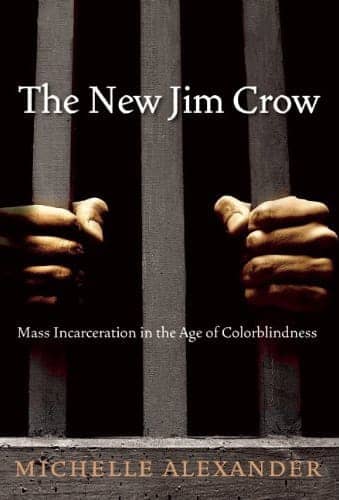
Michelle Alexander argues that mass incarceration of people of color in the US constitutes the newest structure of racialized social control, replacing slavery and Jim Crow to create an African American undercaste. She argues that the vastly disproportionate imprisonment (and the resultant disenfranchisement and exclusion from numerous aspects of mainstream society such as education and employment) of African Americans constitutes the single most important impediment to equality and civil rights in the US.
To Listen to An Audio Podcast of the Book (Broken into parts--scan down the page)
Another World is Possible
Michelle Alexander argues that mass incarceration of people of color in the US constitutes the newest structure of racialized social control, replacing slavery and Jim Crow to create an African American undercaste. She argues that the vastly disproportionate imprisonment (and the resultant disenfranchisement and exclusion from numerous aspects of mainstream society such as education and employment) of African Americans constitutes the single most important impediment to equality and civil rights in the US.
To Listen to An Audio Podcast of the Book (Broken into parts--scan down the page)
Sunday, December 12, 2010
TomDispatch: Karen Greenberg -- Gitmo 2.0
Gitmo 2.0
TomDispatch
Karen Greenberg, of the NYU School of Law, discusses the future of Guantanamo detainees. (music: Wyclef Jean & Celia Cruz)
To Listen to the Interview
TomDispatch
Karen Greenberg, of the NYU School of Law, discusses the future of Guantanamo detainees. (music: Wyclef Jean & Celia Cruz)
To Listen to the Interview
Friday, October 29, 2010
Laura Sullivan: Prison Economics Help Drive Arizona Immigration Law
Prison Economics Help Drive Ariz. Immigration Law
by Laura Sullivan
NPR
Last year, two men showed up in Benson, Ariz., a small desert town 60 miles from the Mexico border, offering a deal.
Glenn Nichols, the Benson city manager, remembers the pitch.
"The gentleman that's the main thrust of this thing has a huge turquoise ring on his finger," Nichols said. "He's a great big huge guy and I equated him to a car salesman."
What he was selling was a prison for women and children who were illegal immigrants.
"They talk [about] how positive this was going to be for the community," Nichols said, "the amount of money that we would realize from each prisoner on a daily rate."
But Nichols wasn't buying. He asked them how would they possibly keep a prison full for years — decades even — with illegal immigrants?
"They talked like they didn't have any doubt they could fill it," Nichols said.
That's because prison companies like this one had a plan — a new business model to lock up illegal immigrants. And the plan became Arizona's immigration law.
Behind-The-Scenes Effort To Draft, Pass The Law
The law is being challenged in the courts. But if it's upheld, it requires police to lock up anyone they stop who cannot show proof they entered the country legally.
Shaping State Laws With Little Scrutiny
Among hundreds of bills drafted by an alliance of business, lawmakers: Arizona's immigration law.
When it was passed in April, it ignited a fire storm. Protesters chanted about racial profiling. Businesses threatened to boycott the state.
Supporters were equally passionate, calling it a bold positive step to curb illegal immigration.
But while the debate raged, few people were aware of how the law came about.
NPR spent the past several months analyzing hundreds of pages of campaign finance reports, lobbying documents and corporate records. What they show is a quiet, behind-the-scenes effort to help draft and pass Arizona Senate Bill 1070 by an industry that stands to benefit from it: the private prison industry.
The law could send hundreds of thousands of illegal immigrants to prison in a way never done before. And it could mean hundreds of millions of dollars in profits to private prison companies responsible for housing them.
He also sits on a American Legislative Exchange Council (ALEC) task force, a group that helped shape the law. Arizona state Sen. Russell Pearce says the bill was his idea. He says it's not about prisons. It's about what's best for the country.
"Enough is enough," Pearce said in his office, sitting under a banner reading "Let Freedom Reign." "People need to focus on the cost of not enforcing our laws and securing our border. It is the Trojan horse destroying our country and a republic cannot survive as a lawless nation."
To Read the Rest of the Report and/or Listen to it
by Laura Sullivan
NPR
Last year, two men showed up in Benson, Ariz., a small desert town 60 miles from the Mexico border, offering a deal.
Glenn Nichols, the Benson city manager, remembers the pitch.
"The gentleman that's the main thrust of this thing has a huge turquoise ring on his finger," Nichols said. "He's a great big huge guy and I equated him to a car salesman."
What he was selling was a prison for women and children who were illegal immigrants.
"They talk [about] how positive this was going to be for the community," Nichols said, "the amount of money that we would realize from each prisoner on a daily rate."
But Nichols wasn't buying. He asked them how would they possibly keep a prison full for years — decades even — with illegal immigrants?
"They talked like they didn't have any doubt they could fill it," Nichols said.
That's because prison companies like this one had a plan — a new business model to lock up illegal immigrants. And the plan became Arizona's immigration law.
Behind-The-Scenes Effort To Draft, Pass The Law
The law is being challenged in the courts. But if it's upheld, it requires police to lock up anyone they stop who cannot show proof they entered the country legally.
Shaping State Laws With Little Scrutiny
Among hundreds of bills drafted by an alliance of business, lawmakers: Arizona's immigration law.
When it was passed in April, it ignited a fire storm. Protesters chanted about racial profiling. Businesses threatened to boycott the state.
Supporters were equally passionate, calling it a bold positive step to curb illegal immigration.
But while the debate raged, few people were aware of how the law came about.
NPR spent the past several months analyzing hundreds of pages of campaign finance reports, lobbying documents and corporate records. What they show is a quiet, behind-the-scenes effort to help draft and pass Arizona Senate Bill 1070 by an industry that stands to benefit from it: the private prison industry.
The law could send hundreds of thousands of illegal immigrants to prison in a way never done before. And it could mean hundreds of millions of dollars in profits to private prison companies responsible for housing them.
He also sits on a American Legislative Exchange Council (ALEC) task force, a group that helped shape the law. Arizona state Sen. Russell Pearce says the bill was his idea. He says it's not about prisons. It's about what's best for the country.
"Enough is enough," Pearce said in his office, sitting under a banner reading "Let Freedom Reign." "People need to focus on the cost of not enforcing our laws and securing our border. It is the Trojan horse destroying our country and a republic cannot survive as a lawless nation."
To Read the Rest of the Report and/or Listen to it
Saturday, October 16, 2010
Kristian Williams: American Methods: Torture and the Logic of Domination
(Extra credit opportunity for HUM 121 students--watch the episode and write a response)
Kristian Williams: American Methods: Torture and the Logic of Domination
FORA TV (Originally broadcast on C-SPAN)
In American Methods author Kristian Williams argues that the U.S. Government has used torture as a method of social control and terror since the 1980s. Mr. Williams cites the 2004 Abu Ghraib prison incident, where American military personnel were investigated for the abuse of prisoners, as an example of traditional American torture. This event was hosted by Elliott Bay Book Company in Seattle, Washington.
Kristian Williams' writings have appeared in CounterPunch, Columbia Journalism Review, and We Are Everywhere: The Irresistible Rise of Global Anti-Capitalism. A member of Rose City Copwatch in Portland, Oregon, Williams also authored Our Enemies in Blue. There is no transcript for this program
To Watch the Episode
Kristian Williams: American Methods: Torture and the Logic of Domination
FORA TV (Originally broadcast on C-SPAN)
In American Methods author Kristian Williams argues that the U.S. Government has used torture as a method of social control and terror since the 1980s. Mr. Williams cites the 2004 Abu Ghraib prison incident, where American military personnel were investigated for the abuse of prisoners, as an example of traditional American torture. This event was hosted by Elliott Bay Book Company in Seattle, Washington.
Kristian Williams' writings have appeared in CounterPunch, Columbia Journalism Review, and We Are Everywhere: The Irresistible Rise of Global Anti-Capitalism. A member of Rose City Copwatch in Portland, Oregon, Williams also authored Our Enemies in Blue. There is no transcript for this program
To Watch the Episode
Monday, July 26, 2010
Linda Williams: “Cluster fuck” -- The forcible frame in Errol Morris’s Standard Operating Procedure
“Cluster fuck”: the forcible frame in Errol Morris’s Standard Operating Procedure
by Linda Williams
Jump Cut

Morris’s contextualization and constant reframing of the photos, qua photos, makes it possible for us to realize that the human pyramid and the simultaneously orchestrated masturbations were most likely not the worst or even the true crimes of the U.S. military and “other governmental agencies”—code for the CIA and other groups whose presence in the prison never formed part of the official record and who could thus apparently act with impunity—at Abu Ghraib.
When Susan Sontag wrote not long after their publication that these “photographs are us,”[19] she meant that we as a nation are responsible for what they show: the corruption, waste, and immorality of our occupation of Iraq (26).[20] But I suggest that they are also “us” because we recognize in them a familiar spirit of play, however perverted, that seeks distraction—even something called “fun”—in the very midst of horror. Kracauer writes of the mass ornament:
This disclosure “in distraction,” he adds, “is therefore of moral significance.”[21] What is “legitimate,” then, about the photos framed by this film is that with the aid of the Interrotron Morris makes us see how such photos could have made sense to these soldiers “on the ground” who craved a higher vantage point that would dissociate them from the prisoners with whom they lived. The photos were a legitimate expression of the frustration of their own impotency, their own inability to act successfully as soldiers, their pathetic imitation of “norms” that utterly failed to tell them their duty. Both the framed photos and Morris’s extravagant (re)enactments of what might have occurred are the ornamental cluster fucks of this misguided war
The most important ethical lesson of the film, however, may be to discourage us from judging Harman, England, or any of the cast of characters from any higher ground, as Pack would do and as the military tribunal did. The value of the film, rather, is to have shown us what it was like to be there on the ground aspiring to be somewhere else, somewhere higher.
In Regarding the Pain of Others, Sontag argues that pictures cannot provide their own interpretations; they need captions to provide context.[22] This may not be an accurate assessment of all photos, but it seems patently true of these almost too obviously self-incriminating ones of Abu Ghraib. On first seeing these pictures, few people thought they needed further explanations or a frame of reference. In Morris’s film it is the interviews and the imaginative enactments of possible acts that provide the rich captions to complicate each photo.
Judith Butler challenges Sontag, writing that we do not always need a caption to understand that a political background is formulated and renewed through the work of a frame:
This, I argue is what Morris’s film does. It asks us to interpret the interpretation, to witness the witnesses. But it does so not only by citing the photos that so “forcibly” framed these acts of inhumanity but also by reframing and contextualizing them, showing us how very delimited these frames were, how much of “the visual field,” as Butler puts it, is “ruled out” (952).
The photos of Abu Ghraib pointed to and were often themselves evidence of crimes. But they are not the smoking guns they seemed to be. They suggest that “straight photographs” must always be considered in light of what we know about the situation of their taking and that very often, as in the torture-death of al-Jamadi, the real incriminating photo does not exist. Had the military prosecution that focused so intensely only on the little guys pursued the larger “primary framework” that set the conditions for what we see in these pictures, rather than assume, as the Guantánamo alum Pack does, that nakedness and stress positions were to be expected, then we might have gotten to the bottom of the torture that took place under the direct auspices of the “other government agencies.” Such a trial might have discovered whose decision it was to keep prisoners naked and shackled, whose decision it was to hold prisoners indefinitely and drive them to despair. But that would have been another movie.
To Read the Entire Essay
by Linda Williams
Jump Cut
Morris’s contextualization and constant reframing of the photos, qua photos, makes it possible for us to realize that the human pyramid and the simultaneously orchestrated masturbations were most likely not the worst or even the true crimes of the U.S. military and “other governmental agencies”—code for the CIA and other groups whose presence in the prison never formed part of the official record and who could thus apparently act with impunity—at Abu Ghraib.
When Susan Sontag wrote not long after their publication that these “photographs are us,”[19] she meant that we as a nation are responsible for what they show: the corruption, waste, and immorality of our occupation of Iraq (26).[20] But I suggest that they are also “us” because we recognize in them a familiar spirit of play, however perverted, that seeks distraction—even something called “fun”—in the very midst of horror. Kracauer writes of the mass ornament:
“Here, in pure externality the audience encounters itself. Its own reality is revealed in the fragmented sequence of splendid sense impressions.”
This disclosure “in distraction,” he adds, “is therefore of moral significance.”[21] What is “legitimate,” then, about the photos framed by this film is that with the aid of the Interrotron Morris makes us see how such photos could have made sense to these soldiers “on the ground” who craved a higher vantage point that would dissociate them from the prisoners with whom they lived. The photos were a legitimate expression of the frustration of their own impotency, their own inability to act successfully as soldiers, their pathetic imitation of “norms” that utterly failed to tell them their duty. Both the framed photos and Morris’s extravagant (re)enactments of what might have occurred are the ornamental cluster fucks of this misguided war
The most important ethical lesson of the film, however, may be to discourage us from judging Harman, England, or any of the cast of characters from any higher ground, as Pack would do and as the military tribunal did. The value of the film, rather, is to have shown us what it was like to be there on the ground aspiring to be somewhere else, somewhere higher.
In Regarding the Pain of Others, Sontag argues that pictures cannot provide their own interpretations; they need captions to provide context.[22] This may not be an accurate assessment of all photos, but it seems patently true of these almost too obviously self-incriminating ones of Abu Ghraib. On first seeing these pictures, few people thought they needed further explanations or a frame of reference. In Morris’s film it is the interviews and the imaginative enactments of possible acts that provide the rich captions to complicate each photo.
Judith Butler challenges Sontag, writing that we do not always need a caption to understand that a political background is formulated and renewed through the work of a frame:
“Whenever and wherever the photograph yields up its own forcible frame to visual scrutiny and interpretation, it opens up the restrictions of interpreting reality to critical scrutiny . . . we come to interpret that interpretation that has been imposed upon us.”[23]
This, I argue is what Morris’s film does. It asks us to interpret the interpretation, to witness the witnesses. But it does so not only by citing the photos that so “forcibly” framed these acts of inhumanity but also by reframing and contextualizing them, showing us how very delimited these frames were, how much of “the visual field,” as Butler puts it, is “ruled out” (952).
The photos of Abu Ghraib pointed to and were often themselves evidence of crimes. But they are not the smoking guns they seemed to be. They suggest that “straight photographs” must always be considered in light of what we know about the situation of their taking and that very often, as in the torture-death of al-Jamadi, the real incriminating photo does not exist. Had the military prosecution that focused so intensely only on the little guys pursued the larger “primary framework” that set the conditions for what we see in these pictures, rather than assume, as the Guantánamo alum Pack does, that nakedness and stress positions were to be expected, then we might have gotten to the bottom of the torture that took place under the direct auspices of the “other government agencies.” Such a trial might have discovered whose decision it was to keep prisoners naked and shackled, whose decision it was to hold prisoners indefinitely and drive them to despair. But that would have been another movie.
To Read the Entire Essay
Friday, July 23, 2010
David Andrews: Reframing Standard Operating Procedure: Errol Morris and the creative treatment of Abu Ghraib
(What i appreciate about SOP is that it is problematizing our [perceived] direct truth correspondence with images [in particular photographs, videos and films] in an age when we should always be skeptical of that relationship... )
Reframing Standard Operating Procedure: Errol Morris and the creative treatment of Abu Ghraib
Jump Cut

...
Janet Walker, a trauma studies scholar, noted in counterpoint that the discussion might profit if we supplemented trauma studies’ primary focus on victim trauma with a similar focus on “perpetrator trauma”—an expansion that might be linked to the kind of spectator trauma that Nichols touches on in his own paper. Like Sobchack’s comment, Walker’s comment was mainly a response to Kahana’s paper, which posited a tradition of films in which real “soldiers give testimony about their . . . violent actions, carried out in the midst of war,” actions they can never forget. Standard Operating Procedure fits this category, Walker (still alluding to Kahana) noted, in its “presentation of psychologically charged veteran interviews as simultaneously confessional and exculpatory.”[30]
At this point, my own trauma has everything to do with personal experience, not documentary practice. I am a U.S. liberal who lived through the Bush-Cheney era. Like Morris, I feel a great deal of guilt over what happened in those years (and over what may still be happening now, for all we know). It is predictable, then, that after watching Standard Operating Procedure, my own moral center fixed on Morris’ haunting précis: the guards weren’t innocent, but they were scapegoats.[31] No matter how morally superior we feel, the guards had few choices within a machine whose policies standardized abuse and enforced obedience in its ranks. As Kleinhans notes, one “incontrovertibly true” fact of torture is that it is only
“the exceptional person who refuses to torture, especially under the conditions of military organization.”[32]
The guards may not have been exceptional people (do “the best and brightest” typically end up as enlistees in the U.S. military?) but they were people working in a situation not of their own making. They acted badly and were treated badly: they were perpetrators and victims. This means that the greatest responsibility lies with those who created the situation that ran away from the guards: the military higher-ups, the Bush administration, and the electorate.
And if we, as liberals, fall into the trap of not listening to the guards or to Morris, if we refuse to see the guards as people whose “free will” was constrained by the same machine that constrained us all, we may end up simply repeating the actions of the Bush administration, which protected itself by blaming the scandal on a few bad apples. After all, apart from the extravagant abuses—the human pyramid, the masturbating detainees—the actions of the guards were, practically speaking, unavoidable. If the guards hadn’t put the detainees in stress positions or otherwise “softened” them up, how would the guards have been treated? Would they have been demoted, discharged, court-martialed?
And what about us, the symbolic warriors who were paying for all this and increasingly knew what we were paying for as its elements were repeated at “black sites” or outsourced through rendition—what were our choices? We could have stopped paying our taxes and gone to jail or fled abroad. But how many of us could actually have done this? Haven’t we all had responsibilities that have held us in place as investors in the larger machine of the nation? (Henry David Thoreau, we should remember, was unattached, childless, and jobless when he refused to pay poll taxes so as to resist the expansionist Mexican War.) Many of us probably had the same grim, awful sense that I had during the 9/11 disaster: what was happening to us was just a particle of what the Bush administration would do in our name in retribution. And many of us probably wanted to resist this end. But we did not, mostly could not. This is not to exonerate us or the guards. It is to see ourselves in the guards, whose situation we helplessly helped create.
To Read the Entire Introduction and to Access the Other Essays
Reframing Standard Operating Procedure: Errol Morris and the creative treatment of Abu Ghraib
Jump Cut
...
Janet Walker, a trauma studies scholar, noted in counterpoint that the discussion might profit if we supplemented trauma studies’ primary focus on victim trauma with a similar focus on “perpetrator trauma”—an expansion that might be linked to the kind of spectator trauma that Nichols touches on in his own paper. Like Sobchack’s comment, Walker’s comment was mainly a response to Kahana’s paper, which posited a tradition of films in which real “soldiers give testimony about their . . . violent actions, carried out in the midst of war,” actions they can never forget. Standard Operating Procedure fits this category, Walker (still alluding to Kahana) noted, in its “presentation of psychologically charged veteran interviews as simultaneously confessional and exculpatory.”[30]
At this point, my own trauma has everything to do with personal experience, not documentary practice. I am a U.S. liberal who lived through the Bush-Cheney era. Like Morris, I feel a great deal of guilt over what happened in those years (and over what may still be happening now, for all we know). It is predictable, then, that after watching Standard Operating Procedure, my own moral center fixed on Morris’ haunting précis: the guards weren’t innocent, but they were scapegoats.[31] No matter how morally superior we feel, the guards had few choices within a machine whose policies standardized abuse and enforced obedience in its ranks. As Kleinhans notes, one “incontrovertibly true” fact of torture is that it is only
“the exceptional person who refuses to torture, especially under the conditions of military organization.”[32]
The guards may not have been exceptional people (do “the best and brightest” typically end up as enlistees in the U.S. military?) but they were people working in a situation not of their own making. They acted badly and were treated badly: they were perpetrators and victims. This means that the greatest responsibility lies with those who created the situation that ran away from the guards: the military higher-ups, the Bush administration, and the electorate.
And if we, as liberals, fall into the trap of not listening to the guards or to Morris, if we refuse to see the guards as people whose “free will” was constrained by the same machine that constrained us all, we may end up simply repeating the actions of the Bush administration, which protected itself by blaming the scandal on a few bad apples. After all, apart from the extravagant abuses—the human pyramid, the masturbating detainees—the actions of the guards were, practically speaking, unavoidable. If the guards hadn’t put the detainees in stress positions or otherwise “softened” them up, how would the guards have been treated? Would they have been demoted, discharged, court-martialed?
And what about us, the symbolic warriors who were paying for all this and increasingly knew what we were paying for as its elements were repeated at “black sites” or outsourced through rendition—what were our choices? We could have stopped paying our taxes and gone to jail or fled abroad. But how many of us could actually have done this? Haven’t we all had responsibilities that have held us in place as investors in the larger machine of the nation? (Henry David Thoreau, we should remember, was unattached, childless, and jobless when he refused to pay poll taxes so as to resist the expansionist Mexican War.) Many of us probably had the same grim, awful sense that I had during the 9/11 disaster: what was happening to us was just a particle of what the Bush administration would do in our name in retribution. And many of us probably wanted to resist this end. But we did not, mostly could not. This is not to exonerate us or the guards. It is to see ourselves in the guards, whose situation we helplessly helped create.
To Read the Entire Introduction and to Access the Other Essays
Friday, June 11, 2010
Democracy Now: After First Reunion in 10 Months, Mothers of 3 Jailed US Hikers in Iran on Visiting Their Children and Continuing the Fight for Release
(I was really impressed by the actions and words of the three imprisoned hikers--inspiring to me, the level of passion, intellectualism and creativity of people who have every right to be bitter, broken, or fearful......)
After First Reunion in 10 Months, Mothers of 3 Jailed US Hikers in Iran on Visiting Their Children and Continuing the Fight for Their Release
Democracy Now
The mothers of the three American hikers jailed in Iran have returned to the United States after seeing their imprisoned children for the first time in ten months. Shane Bauer, Sarah Shourd and Josh Fattal were detained in July after straying across Iran’s border during a hiking trip in northern Iraq. The mothers of the three jailed hikers—Cindy Hickey, Nora Shourd, and Laura Fattal—join us to discuss their visit with their children and their continued fight for their release.
To Read/Listen/Watch
After First Reunion in 10 Months, Mothers of 3 Jailed US Hikers in Iran on Visiting Their Children and Continuing the Fight for Their Release
Democracy Now
The mothers of the three American hikers jailed in Iran have returned to the United States after seeing their imprisoned children for the first time in ten months. Shane Bauer, Sarah Shourd and Josh Fattal were detained in July after straying across Iran’s border during a hiking trip in northern Iraq. The mothers of the three jailed hikers—Cindy Hickey, Nora Shourd, and Laura Fattal—join us to discuss their visit with their children and their continued fight for their release.
To Read/Listen/Watch
Friday, April 23, 2010
Bill Moyers Journal: Bryan Stevenson and Michelle Alexander -- Are We Living in Marting Luther King Jr.'s America?
Bryan Stevenson and Michelle Alexander
Bill Moyers Journal

On April 4, 1968, Dr. Martin Luther King, Jr. was assassinated on the balcony of the Lorraine Motel. This week, BILL MOYERS JOURNAL observes the anniversary of King's murder by examining America in light of his dream. What would he think of our country today and where would he focus his fight against inequality and injustice?
Two talented lawyers who've dedicated their careers to fighting inequality, Michelle Alexander and Bryan Stevenson, join Bill Moyers on the JOURNAL to examine justice and injustice in America 42 years after King's death.
Alexander believes that King would be deeply troubled by the remaining inequality in America. As she tells Bill Moyers, "I think Martin Luther King would be thrilled by some of the individual progress of African Americans, but stunned, absolutely stunned and saddened, by the state of African Americans as a whole today."
Stevenson adds that to reach King's dream, America must address the causes of poverty, "I think in America, the opposite of poverty is justice. I think there are structures and systems that have created poverty, and have made that poverty so permanent, that until we think in a more just way about how to deal with poverty in this country, we're never gonna make the progress that Dr. King envisioned."
Both believe that America's policies of mass incarceration continue the cycle of poverty. America is the largest jailer on the planet, with 2.3 million people behind bars. But the policy of mass imprisonment, unique among industrialized nations, disproportianatetly affects minorities, especially African American men. One in 100 adults in America is behind bars, but one in nine African American men aged 20 to 34 is behind bars. Much of this arises from the "war on drugs." According to Human Rights Watch, African American adults have been arrested at a rate 2.8 to 5.5 times higher than white adults in every year from 1980 to 2007. Yet, according to government statistics, African Americans and whites have similar rates of illicit drug use and dealing.
A consequence of this disparity, and America's harsh treatment of lawbreakers, according to Alexander, is a population of people living in conditions shockingly like African Americans experienced under Jim Crow:
Stevenson points out that these are not inevitable policies:
To Listen to the Episode and Access More Resources
More:
Reflections on King's Dreams
U.S. Prisons and Drug Laws
Bill Moyers Journal
On April 4, 1968, Dr. Martin Luther King, Jr. was assassinated on the balcony of the Lorraine Motel. This week, BILL MOYERS JOURNAL observes the anniversary of King's murder by examining America in light of his dream. What would he think of our country today and where would he focus his fight against inequality and injustice?
Two talented lawyers who've dedicated their careers to fighting inequality, Michelle Alexander and Bryan Stevenson, join Bill Moyers on the JOURNAL to examine justice and injustice in America 42 years after King's death.
Alexander believes that King would be deeply troubled by the remaining inequality in America. As she tells Bill Moyers, "I think Martin Luther King would be thrilled by some of the individual progress of African Americans, but stunned, absolutely stunned and saddened, by the state of African Americans as a whole today."
Stevenson adds that to reach King's dream, America must address the causes of poverty, "I think in America, the opposite of poverty is justice. I think there are structures and systems that have created poverty, and have made that poverty so permanent, that until we think in a more just way about how to deal with poverty in this country, we're never gonna make the progress that Dr. King envisioned."
Both believe that America's policies of mass incarceration continue the cycle of poverty. America is the largest jailer on the planet, with 2.3 million people behind bars. But the policy of mass imprisonment, unique among industrialized nations, disproportianatetly affects minorities, especially African American men. One in 100 adults in America is behind bars, but one in nine African American men aged 20 to 34 is behind bars. Much of this arises from the "war on drugs." According to Human Rights Watch, African American adults have been arrested at a rate 2.8 to 5.5 times higher than white adults in every year from 1980 to 2007. Yet, according to government statistics, African Americans and whites have similar rates of illicit drug use and dealing.
A consequence of this disparity, and America's harsh treatment of lawbreakers, according to Alexander, is a population of people living in conditions shockingly like African Americans experienced under Jim Crow:
Today in communities of color across America, large majorities of African American men have been branded criminals, felons for life. And as a result, many are denied the right to vote, automatically excluded from juries, and legally discriminated against in employment, housing, access to public education-- public benefits. Many of the forms of discrimination we thought we left behind in the Jim Crow Era are legal again, once you've been branded a criminal.
Stevenson points out that these are not inevitable policies:
We didn't have to incarcerate people for 10, 20, 30, 40 years for simple possession of marijuana, for drug use. We didn't have to do that. We made choices around that. And now the consequences are devastating. I think they're not only devastating from a political perspective, but — I think this is the way I think it relates to Jim Crow, as well — it's also been devastating within communities of color. Right now, for black men in the United States, there's a 32 percent chance you're going to jail or prison. In poor communities and minority communities, urban communities, rural communities, it could be 60 percent or 70 percent. You're born, you're a ten-year-old kid. There's a 70 percent chance that you're going to go to jail and prison. What does that do to you?
To Listen to the Episode and Access More Resources
More:
Reflections on King's Dreams
U.S. Prisons and Drug Laws
Saturday, March 13, 2010
Petra Bartosiewicz: The Intelligence Factory -- How America Makes its Enemies Disappear
The intelligence factory: How America makes its enemies disappear
By Petra Bartosiewicz
Harper's
...
As the “global war on terror” enters its ninth year, under the leadership of its second commander in chief, certain ongoing assumptions have gained the force of common wisdom. One of them, as Barack Obama explained in a major policy speech last May, is that we have entered a “new era” that will “present new challenges to our application of the law” and require “new tools to protect the American people.” Another, as Obama made clear in the same speech, is that the purpose of these new tools and laws is “to prevent attacks instead of simply prosecuting those who try to carry them out.” These positions are appealing, but they fail to address what might be thought of as an underlying economic disequilibrium. The continued political appetite for a global war on terror has led to a commodification of “actionable intelligence,” which is a product, chiefly, of human prisoners like Aafia Siddiqui. Because this war, by definition, has no physical or temporal boundaries, the demand for such intelligence has no limit. But the world contains a relatively small number of terrorists and an even smaller number of terrorist plots. Our demand for intelligence far outstrips the supply of prisoners. Where the United States itself has been unable to meet that demand, therefore, it has embraced a solution that is the essence of globalization. We outsource the work to countries, like Pakistan, whose political circumstances allow them to produce prisoners with far greater efficiency.
What the CIA and the FBI understand as an acquisition solution, however, others see as a human-rights debacle. Just as thousands of political dissidents, suspected criminals, and enemies of the state were “disappeared” from Latin America over the course of several decades of CIA-funded dirty wars, so too have hundreds of “persons of interest” around the world begun to disappear as a consequence of the global war on terror, which in many ways has become a globalized version of those earlier, regional failures of democracy.
Many individual cases are well known. Binyam Mohamed, an alleged conspirator in Jose Padilla’s now debunked “dirty bomb plot,” was arrested in Karachi in 2002 and flown by the CIA to Morocco, where he was tortured for eighteen months. He eventually emerged into the non-covert prison system, as a detainee at Guantánamo, and was released earlier this year without charge. Maher Arar, a Canadian citizen, was arrested at New York City’s John F. Kennedy Airport in 2002 while on his way home from a vacation, flown by the CIA to a Syrian prison, held in a coffin-size cell for nearly a year, and then released, also without charges. Saud Memon, a Pakistani businessman rumored to own the plot of land where the Wall Street Journal reporter Daniel Pearl was murdered, was arrested in 2003, held by the United States at an unknown location until 2006, then “released” to Pakistan, where in April 2007 he finally emerged, badly beaten and weighing just eighty pounds, on the doorstep of his Karachi home. He died a few weeks later.
The total number of men and women who have been kidnapped and imprisoned for U.S. intelligence-gathering purposes is difficult to determine. Apart from Iraq and Afghanistan, the main theaters of combat, Pakistan is our primary source of publicly known detainees—researchers at Seton Hall University estimated in 2006 that two thirds of the prisoners at Guantánamo were arrested in Pakistan or by Pakistani authorities—and so it is reasonable to assume that the country is also a major supplier of ghost detainees. Human Rights Watch has tracked enforced disappearances in Pakistan since before 2001. The group’s counterterrorism director, Joanne Mariner, told me that the number of missing persons in the country grew “to a flood” as U.S. counterterrorism operations peaked between 2002 and 2004. In that same three-year period, U.S. aid to Pakistan totaled $4.7 billion, up from $9.1 million in the three years prior to the U.S. invasion of Afghanistan. Correlation does not prove causation, of course, but Pakistan’s former president, Pervez Musharraf, did claim in his 2006 memoir, In the Line of Fire, that his country had delivered 369 Al Qaeda suspects to the United States for “millions of dollars” in bounties (a boast he neatly elides in the Urdu edition). It is reasonable to suspect this figure is on the low side.
One reason estimates are so inconclusive, of course, is that the business of disappearance is inherently ambiguous. Missing-person reports filed in Pakistan rarely claim that the detained individual was picked up by the CIA or the FBI. Instead, the detainee is almost always arrested by “city police” or “civilian clothed men” or unidentified “secret agency personnel” who arrive in “unmarked vehicles.” The secretary-general of the Pakistani NGO Human Rights Commission, Ibn Abdur Rehman, described the process. “A man is picked up at his house, brought to the police station,” he said. “The family comes with him and are told, ‘He’ll be released in an hour, go home.’ They come back in an hour and are told, ‘Sorry, he’s been handed off to the intelligence people and taken to Islamabad.’ After that, the individual is never heard from again. When the family tries to file a missing-person report, the police won’t take it, and no one admits to having custody of the person.” Some of the disappeared pass directly to U.S. custody and reappear months or years later at Guantánamo or Bagram air base. Others remain captives of Pakistan’s multiple intelligence agencies or are shipped to places like Uzbekistan, whose torture policies are well known. Others simply vanish, their fate revealed only by clerical errors, or when they turn up dead.
Most of the arrests and detentions take place under the auspices of Pakistan’s Inter-Services Intelligence (ISI), which the CIA helped expand in the 1980s largely in order to wage a proxy war against Soviet forces in Afghanistan (where the ISI continues to wield considerable influence). The agency has evolved into a powerful institution with its own agendas and alliances—it has long pursued ethnic separatists in the Baluchistan region, for instance, where the Human Rights Commission estimates that at least 600 individuals have disappeared—and the result is that the CIA itself often has little knowledge of the provenance or purpose of a given arrest.
Such may be the case with Siddiqui. To my knowledge, the only current or former U.S. official to comment publicly on the significance of her capture was John Kiriakou, a retired CIA officer who gained notoriety in 2007 when he told ABC News that the CIA waterboarding of Abu Zubaydah, an Al Qaeda lieutenant, produced life-saving intelligence in less than a minute. Although Justice Department memos later revealed that Zubaydah was waterboarded eighty-three times, Kiriakou’s comments did much to foster acceptance of the practice among the American public—and his description of Siddiqui seemed calibrated to achieve a similar effect. In 2008 he told ABC News, which had hired him as a consultant after his waterboarding interview, “I don’t think we’ve captured anybody as important and as well connected as she since 2003. We knew that she had been planning, or at least involved in the planning of, a wide variety of different operations.” When I called Kiriakou to ask him about those operations, though, he said the extent of his knowledge was that Siddiqui’s name “had popped up an awful lot” while he was in Pakistan searching for Zubaydah in 2002, and that “the FBI talked about her so often that I thought she must be a big fish.” After he left Pakistan, he forgot all about Siddiqui until ABC called for an interview. “I actually had to Google as to remember who she was,” he said.
To Read the Rest of the Essay
By Petra Bartosiewicz
Harper's
...
As the “global war on terror” enters its ninth year, under the leadership of its second commander in chief, certain ongoing assumptions have gained the force of common wisdom. One of them, as Barack Obama explained in a major policy speech last May, is that we have entered a “new era” that will “present new challenges to our application of the law” and require “new tools to protect the American people.” Another, as Obama made clear in the same speech, is that the purpose of these new tools and laws is “to prevent attacks instead of simply prosecuting those who try to carry them out.” These positions are appealing, but they fail to address what might be thought of as an underlying economic disequilibrium. The continued political appetite for a global war on terror has led to a commodification of “actionable intelligence,” which is a product, chiefly, of human prisoners like Aafia Siddiqui. Because this war, by definition, has no physical or temporal boundaries, the demand for such intelligence has no limit. But the world contains a relatively small number of terrorists and an even smaller number of terrorist plots. Our demand for intelligence far outstrips the supply of prisoners. Where the United States itself has been unable to meet that demand, therefore, it has embraced a solution that is the essence of globalization. We outsource the work to countries, like Pakistan, whose political circumstances allow them to produce prisoners with far greater efficiency.
What the CIA and the FBI understand as an acquisition solution, however, others see as a human-rights debacle. Just as thousands of political dissidents, suspected criminals, and enemies of the state were “disappeared” from Latin America over the course of several decades of CIA-funded dirty wars, so too have hundreds of “persons of interest” around the world begun to disappear as a consequence of the global war on terror, which in many ways has become a globalized version of those earlier, regional failures of democracy.
Many individual cases are well known. Binyam Mohamed, an alleged conspirator in Jose Padilla’s now debunked “dirty bomb plot,” was arrested in Karachi in 2002 and flown by the CIA to Morocco, where he was tortured for eighteen months. He eventually emerged into the non-covert prison system, as a detainee at Guantánamo, and was released earlier this year without charge. Maher Arar, a Canadian citizen, was arrested at New York City’s John F. Kennedy Airport in 2002 while on his way home from a vacation, flown by the CIA to a Syrian prison, held in a coffin-size cell for nearly a year, and then released, also without charges. Saud Memon, a Pakistani businessman rumored to own the plot of land where the Wall Street Journal reporter Daniel Pearl was murdered, was arrested in 2003, held by the United States at an unknown location until 2006, then “released” to Pakistan, where in April 2007 he finally emerged, badly beaten and weighing just eighty pounds, on the doorstep of his Karachi home. He died a few weeks later.
The total number of men and women who have been kidnapped and imprisoned for U.S. intelligence-gathering purposes is difficult to determine. Apart from Iraq and Afghanistan, the main theaters of combat, Pakistan is our primary source of publicly known detainees—researchers at Seton Hall University estimated in 2006 that two thirds of the prisoners at Guantánamo were arrested in Pakistan or by Pakistani authorities—and so it is reasonable to assume that the country is also a major supplier of ghost detainees. Human Rights Watch has tracked enforced disappearances in Pakistan since before 2001. The group’s counterterrorism director, Joanne Mariner, told me that the number of missing persons in the country grew “to a flood” as U.S. counterterrorism operations peaked between 2002 and 2004. In that same three-year period, U.S. aid to Pakistan totaled $4.7 billion, up from $9.1 million in the three years prior to the U.S. invasion of Afghanistan. Correlation does not prove causation, of course, but Pakistan’s former president, Pervez Musharraf, did claim in his 2006 memoir, In the Line of Fire, that his country had delivered 369 Al Qaeda suspects to the United States for “millions of dollars” in bounties (a boast he neatly elides in the Urdu edition). It is reasonable to suspect this figure is on the low side.
One reason estimates are so inconclusive, of course, is that the business of disappearance is inherently ambiguous. Missing-person reports filed in Pakistan rarely claim that the detained individual was picked up by the CIA or the FBI. Instead, the detainee is almost always arrested by “city police” or “civilian clothed men” or unidentified “secret agency personnel” who arrive in “unmarked vehicles.” The secretary-general of the Pakistani NGO Human Rights Commission, Ibn Abdur Rehman, described the process. “A man is picked up at his house, brought to the police station,” he said. “The family comes with him and are told, ‘He’ll be released in an hour, go home.’ They come back in an hour and are told, ‘Sorry, he’s been handed off to the intelligence people and taken to Islamabad.’ After that, the individual is never heard from again. When the family tries to file a missing-person report, the police won’t take it, and no one admits to having custody of the person.” Some of the disappeared pass directly to U.S. custody and reappear months or years later at Guantánamo or Bagram air base. Others remain captives of Pakistan’s multiple intelligence agencies or are shipped to places like Uzbekistan, whose torture policies are well known. Others simply vanish, their fate revealed only by clerical errors, or when they turn up dead.
Most of the arrests and detentions take place under the auspices of Pakistan’s Inter-Services Intelligence (ISI), which the CIA helped expand in the 1980s largely in order to wage a proxy war against Soviet forces in Afghanistan (where the ISI continues to wield considerable influence). The agency has evolved into a powerful institution with its own agendas and alliances—it has long pursued ethnic separatists in the Baluchistan region, for instance, where the Human Rights Commission estimates that at least 600 individuals have disappeared—and the result is that the CIA itself often has little knowledge of the provenance or purpose of a given arrest.
Such may be the case with Siddiqui. To my knowledge, the only current or former U.S. official to comment publicly on the significance of her capture was John Kiriakou, a retired CIA officer who gained notoriety in 2007 when he told ABC News that the CIA waterboarding of Abu Zubaydah, an Al Qaeda lieutenant, produced life-saving intelligence in less than a minute. Although Justice Department memos later revealed that Zubaydah was waterboarded eighty-three times, Kiriakou’s comments did much to foster acceptance of the practice among the American public—and his description of Siddiqui seemed calibrated to achieve a similar effect. In 2008 he told ABC News, which had hired him as a consultant after his waterboarding interview, “I don’t think we’ve captured anybody as important and as well connected as she since 2003. We knew that she had been planning, or at least involved in the planning of, a wide variety of different operations.” When I called Kiriakou to ask him about those operations, though, he said the extent of his knowledge was that Siddiqui’s name “had popped up an awful lot” while he was in Pakistan searching for Zubaydah in 2002, and that “the FBI talked about her so often that I thought she must be a big fish.” After he left Pakistan, he forgot all about Siddiqui until ABC called for an interview. “I actually had to Google as to remember who she was,” he said.
To Read the Rest of the Essay
Democracy Now: Ignoring Torture Claims and Questionable Evidence, New York Jury Convicts Pakistani Scientist Aafia Siddiqui
Ignoring Torture Claims and Questionable Evidence, New York Jury Convicts Pakistani Scientist Aafia Siddiqui
Democracy Now
A New York jury has convicted the US-educated Pakistani neuroscientist Aafia Siddiqui of attempted murder for shooting at US forces while jailed in Afghanistan in 2008. None of the Americans were injured, but Siddiqui was shot and wounded while in US custody. Human rights groups have long alleged that Siddiqui was forcibly disappeared by Pakistani authorities in 2003 and interrogated and tortured at the behest of the United States. In her testimony, Siddiqui claimed to have been held in a US secret prison. We speak to Siddiqui family spokesperson Tina Foster of the International Justice Network and Petra Bartosiewicz, an independent journalist who has been closely following Siddiqui’s case.
Guests:
Tina Foster, Executive Director of the International Justice Network and the spokesperson for Aafia Siddiqui’s family.
Petra Bartosiewicz, independent journalist who wrote about Aafia Siddiqui in the November 2009 edition of Harper’s Magazine and covered the trial with daily dispatches for the website Cage Prisoners. She is also working on a book titled The Best Terrorists We Could Find, an investigation of terrorism trials in the US since 9/11.
To Read/Listen/Watch
Democracy Now
A New York jury has convicted the US-educated Pakistani neuroscientist Aafia Siddiqui of attempted murder for shooting at US forces while jailed in Afghanistan in 2008. None of the Americans were injured, but Siddiqui was shot and wounded while in US custody. Human rights groups have long alleged that Siddiqui was forcibly disappeared by Pakistani authorities in 2003 and interrogated and tortured at the behest of the United States. In her testimony, Siddiqui claimed to have been held in a US secret prison. We speak to Siddiqui family spokesperson Tina Foster of the International Justice Network and Petra Bartosiewicz, an independent journalist who has been closely following Siddiqui’s case.
Guests:
Tina Foster, Executive Director of the International Justice Network and the spokesperson for Aafia Siddiqui’s family.
Petra Bartosiewicz, independent journalist who wrote about Aafia Siddiqui in the November 2009 edition of Harper’s Magazine and covered the trial with daily dispatches for the website Cage Prisoners. She is also working on a book titled The Best Terrorists We Could Find, an investigation of terrorism trials in the US since 9/11.
To Read/Listen/Watch
Thursday, March 11, 2010
Mark Benjamin: Waterboarding for Dummies
Waterboarding for dummies: Internal CIA documents reveal a meticulous protocol that was far more brutal than Dick Cheney's "dunk in the water"
By Mark Benjamin
Salon
Self-proclaimed waterboarding fan Dick Cheney called it a no-brainer in a 2006 radio interview: Terror suspects should get a "a dunk in the water." But recently released internal documents reveal the controversial "enhanced interrogation" practice was far more brutal on detainees than Cheney's description sounds, and was administered with meticulous cruelty.
Interrogators pumped detainees full of so much water that the CIA turned to a special saline solution to minimize the risk of death, the documents show. The agency used a gurney "specially designed" to tilt backwards at a perfect angle to maximize the water entering the prisoner's nose and mouth, intensifying the sense of choking – and to be lifted upright quickly in the event that a prisoner stopped breathing.
The documents also lay out, in chilling detail, exactly what should occur in each two-hour waterboarding "session." Interrogators were instructed to start pouring water right after a detainee exhaled, to ensure he inhaled water, not air, in his next breath. They could use their hands to "dam the runoff" and prevent water from spilling out of a detainee's mouth. They were allowed six separate 40-second "applications" of liquid in each two-hour session – and could dump water over a detainee's nose and mouth for a total of 12 minutes a day. Finally, to keep detainees alive even if they inhaled their own vomit during a session – a not-uncommon side effect of waterboarding – the prisoners were kept on a liquid diet. The agency recommended Ensure Plus.
"This is revolting and it is deeply disturbing," said Dr. Scott Allen, co-director of the Center for Prisoner Health and Human Rights at Brown University who has reviewed all of the documents for Physicians for Human Rights. "The so-called science here is a total departure from any ethics or any legitimate purpose. They are saying, ‘This is how risky and harmful the procedure is, but we are still going to do it.' It just sounds like lunacy," he said. "This fine-tuning of torture is unethical, incompetent and a disgrace to medicine."
To Read the Rest of the Article
By Mark Benjamin
Salon
Self-proclaimed waterboarding fan Dick Cheney called it a no-brainer in a 2006 radio interview: Terror suspects should get a "a dunk in the water." But recently released internal documents reveal the controversial "enhanced interrogation" practice was far more brutal on detainees than Cheney's description sounds, and was administered with meticulous cruelty.
Interrogators pumped detainees full of so much water that the CIA turned to a special saline solution to minimize the risk of death, the documents show. The agency used a gurney "specially designed" to tilt backwards at a perfect angle to maximize the water entering the prisoner's nose and mouth, intensifying the sense of choking – and to be lifted upright quickly in the event that a prisoner stopped breathing.
The documents also lay out, in chilling detail, exactly what should occur in each two-hour waterboarding "session." Interrogators were instructed to start pouring water right after a detainee exhaled, to ensure he inhaled water, not air, in his next breath. They could use their hands to "dam the runoff" and prevent water from spilling out of a detainee's mouth. They were allowed six separate 40-second "applications" of liquid in each two-hour session – and could dump water over a detainee's nose and mouth for a total of 12 minutes a day. Finally, to keep detainees alive even if they inhaled their own vomit during a session – a not-uncommon side effect of waterboarding – the prisoners were kept on a liquid diet. The agency recommended Ensure Plus.
"This is revolting and it is deeply disturbing," said Dr. Scott Allen, co-director of the Center for Prisoner Health and Human Rights at Brown University who has reviewed all of the documents for Physicians for Human Rights. "The so-called science here is a total departure from any ethics or any legitimate purpose. They are saying, ‘This is how risky and harmful the procedure is, but we are still going to do it.' It just sounds like lunacy," he said. "This fine-tuning of torture is unethical, incompetent and a disgrace to medicine."
To Read the Rest of the Article
Saturday, February 27, 2010
Standard Operating Procedure (USA: Errol Morris, 2008)
(Extra-Credit opportunity for my students--watch and write a 600+ response)
Standard Operating Procedure: Synopsis
by Errol Morris
Is it possible for a photograph to change the world? Photographs taken by soldiers in Abu Ghraib prison changed the war in Iraq and changed America’s image of itself. Yet, a central mystery remains. Did the notorious Abu Ghraib photographs constitute evidence of systematic abuse by the American military, or were they documenting the aberrant behavior of a few “bad apples”?
We set out to examine the context of these photographs. Why were they taken? What was happening outside the frame? We talked directly to the soldiers who took the photographs and who were in the photographs. Who are these people? What were they thinking? Over two years of investigation, we amassed a million and a half words of interview transcript, thousands of pages of unredacted reports, and hundreds of photographs.
The story of Abu Ghraib is still shrouded in moral ambiguity, but it is clear what happened there. The Abu Ghraib photographs serve as both an expose and a coverup. An expose, because the photographs offer us a glimpse of the horror of Abu Ghraib; and a coverup because they convinced journalists and readers they had seen everything, that there was no need to look further. In recent news reports, we have learned about the destruction of the Abu Zubaydah interrogation tapes. A coverup. It has been front page news. But the coverup at Abu Ghraib involved thousands of prisoners and hundreds of soldiers. We are still learning about the extent of it. Many journalists have asked about “the smoking gun” of Abu Ghraib. It is the wrong question. As Philip Gourevitch has commented, Abu Ghraib is the smoking gun. The underlying question that we still have not resolved, four years after the scandal: how could American values become so compromised that Abu Ghraib—and the subsequent coverup—could happen?
Link to the Synopsis
To watch the entire documentary online:
Standard Operating Procedure: Synopsis
by Errol Morris
Is it possible for a photograph to change the world? Photographs taken by soldiers in Abu Ghraib prison changed the war in Iraq and changed America’s image of itself. Yet, a central mystery remains. Did the notorious Abu Ghraib photographs constitute evidence of systematic abuse by the American military, or were they documenting the aberrant behavior of a few “bad apples”?
We set out to examine the context of these photographs. Why were they taken? What was happening outside the frame? We talked directly to the soldiers who took the photographs and who were in the photographs. Who are these people? What were they thinking? Over two years of investigation, we amassed a million and a half words of interview transcript, thousands of pages of unredacted reports, and hundreds of photographs.
The story of Abu Ghraib is still shrouded in moral ambiguity, but it is clear what happened there. The Abu Ghraib photographs serve as both an expose and a coverup. An expose, because the photographs offer us a glimpse of the horror of Abu Ghraib; and a coverup because they convinced journalists and readers they had seen everything, that there was no need to look further. In recent news reports, we have learned about the destruction of the Abu Zubaydah interrogation tapes. A coverup. It has been front page news. But the coverup at Abu Ghraib involved thousands of prisoners and hundreds of soldiers. We are still learning about the extent of it. Many journalists have asked about “the smoking gun” of Abu Ghraib. It is the wrong question. As Philip Gourevitch has commented, Abu Ghraib is the smoking gun. The underlying question that we still have not resolved, four years after the scandal: how could American values become so compromised that Abu Ghraib—and the subsequent coverup—could happen?
Link to the Synopsis
To watch the entire documentary online:
Saturday, February 13, 2010
Anand Gopal: Obama’s Secret Prisons: Night Raids, Hidden Detention Centers, the “Black Jail,” and the Dogs of War in Afghanistan
Obama’s Secret Prisons: Night Raids, Hidden Detention Centers, the “Black Jail,” and the Dogs of War in Afghanistan
By Anand Gopal
The American Empire Project
One quiet, wintry night last year in the eastern Afghan town of Khost, a young government employee named Ismatullah simply vanished. He had last been seen in the town’s bazaar with a group of friends. Family members scoured Khost’s dust-doused streets for days. Village elders contacted Taliban commanders in the area who were wont to kidnap government workers, but they had never heard of the young man. Even the governor got involved, ordering his police to round up nettlesome criminal gangs that sometimes preyed on young bazaar-goers for ransom.
But the hunt turned up nothing. Spring and summer came and went with no sign of Ismatullah. Then one day, long after the police and village elders had abandoned their search, a courier delivered a neat, handwritten note on Red Cross stationary to the family. In it, Ismatullah informed them that he was in Bagram, an American prison more than 200 miles away. U.S. forces had picked him up while he was on his way home from the bazaar, the terse letter stated, and he didn’t know when he would be freed.
Sometime in the last few years, Pashtun villagers in Afghanistan’s rugged heartland began to lose faith in the American project. Many of them can point to the precise moment of this transformation, and it usually took place in the dead of the night, when most of the country was fast asleep. In the secretive U.S. detentions process, suspects are usually nabbed in the darkness and then sent to one of a number of detention areas on military bases, often on the slightest suspicion and without the knowledge of their families.
This process has become even more feared and hated in Afghanistan than coalition airstrikes. The night raids and detentions, little known or understood outside of these Pashtun villages, are slowly turning Afghans against the very forces they greeted as liberators just a few years ago.
One Dark Night in November
It was the 19th of November 2009, at 3:15 am. A loud blast awoke the villagers of a leafy neighborhood outside Ghazni city, a town of ancient provenance in the country’s south. A team of U.S. soldiers burst through the front gate of the home of Majidullah Qarar, the spokesman for the Minister of Agriculture. Qarar was in Kabul at the time, but his relatives were home, four of whom were sleeping in the family’s one-room guesthouse. One of them, Hamidullah, who sold carrots at the local bazaar, ran towards the door of the guesthouse. He was immediately shot, but managed to crawl back inside, leaving a trail of blood behind him. Then Azim, a baker, darted towards his injured cousin. He, too, was shot and crumpled to the floor. The fallen men cried out to the two relatives remaining in the room, but they -- both children -- refused to move, glued to their beds in silent horror.
The foreign soldiers, most of them tattooed and bearded, then went on to the main compound. They threw clothes on the floor, smashed dinner plates, and forced open closets. Finally, they found the man they were looking for: Habib-ur-Rahman, a computer programmer and government employee. Rahman was responsible for converting Microsoft Windows from English to the local Pashto language so that government offices could use the software. He had spent time in Kuwait, and the Afghan translator accompanying the soldiers said they were acting on a tip that Rahman was a member of al-Qaeda.
They took the barefoot Rahman and a cousin of his to a helicopter some distance away and transported them to a small American base in a neighboring province for interrogation. After two days, U.S. forces released Rahman’s cousin. But Rahman has not been seen or heard from since.
“We’ve called his phone, but it doesn’t answer,” says his cousin Qarar, the spokesman for the agriculture minister. Using his powerful connections, Qarar enlisted local police, parliamentarians, the governor, and even the agriculture minister himself in the search for his cousin, but they turned up nothing. Government officials who independently investigated the scene in the aftermath of the raid and corroborated the claims of the family also pressed for an answer as to why two of Qarar’s family members were killed. American forces issued a statement saying that the dead were “enemy militants [that] demonstrated hostile intent.”
Weeks after the raid, the family remains bitter. “Everyone in the area knew we were a family that worked for the government,” Qarar says. “Rahman couldn’t even leave the city because if the Taliban caught him in the countryside they would have killed him.”
Beyond the question of Rahman’s guilt or innocence, however, it’s how he was taken that has left such a residue of hate and anger among his family. “Did they have to kill my cousins? Did they have to destroy our house?” Qarar asks. “They knew where Rahman worked. Couldn’t they have at least tried to come with a warrant in the daytime? We would have forced Rahman to comply.”
“I used to go on TV and argue that people should support this government and the foreigners,” he adds. “But I was wrong. Why should anyone do so? I don’t care if I get fired for saying it, but that’s the truth.”
The Dogs of War
Night raids are only the first step in the American detention process in Afghanistan. Suspects are usually sent to one among a series of prisons on U.S. military bases around the country. There are officially nine such jails, called Field Detention Sites in military parlance. They are small holding areas, often just a clutch of cells divided by plywood, and are mainly used for prisoner interrogation.
In the early years of the war, these were but way stations for those en route to Bagram prison, a facility with a notorious reputation for abusive behavior. As a spotlight of international attention fell on Bagram in recent years, wardens there cleaned up their act and the mistreatment of prisoners began to shift to the little-noticed Field Detention Sites.
Of the 24 former detainees interviewed for this story, 17 claim to have been abused at or en route to these sites. Doctors, government officials, and the Afghan Independent Human Rights Commission, a body tasked with investigating abuse claims, corroborate 12 of these claims.
To Read the Rest of the Article
By Anand Gopal
The American Empire Project
One quiet, wintry night last year in the eastern Afghan town of Khost, a young government employee named Ismatullah simply vanished. He had last been seen in the town’s bazaar with a group of friends. Family members scoured Khost’s dust-doused streets for days. Village elders contacted Taliban commanders in the area who were wont to kidnap government workers, but they had never heard of the young man. Even the governor got involved, ordering his police to round up nettlesome criminal gangs that sometimes preyed on young bazaar-goers for ransom.
But the hunt turned up nothing. Spring and summer came and went with no sign of Ismatullah. Then one day, long after the police and village elders had abandoned their search, a courier delivered a neat, handwritten note on Red Cross stationary to the family. In it, Ismatullah informed them that he was in Bagram, an American prison more than 200 miles away. U.S. forces had picked him up while he was on his way home from the bazaar, the terse letter stated, and he didn’t know when he would be freed.
Sometime in the last few years, Pashtun villagers in Afghanistan’s rugged heartland began to lose faith in the American project. Many of them can point to the precise moment of this transformation, and it usually took place in the dead of the night, when most of the country was fast asleep. In the secretive U.S. detentions process, suspects are usually nabbed in the darkness and then sent to one of a number of detention areas on military bases, often on the slightest suspicion and without the knowledge of their families.
This process has become even more feared and hated in Afghanistan than coalition airstrikes. The night raids and detentions, little known or understood outside of these Pashtun villages, are slowly turning Afghans against the very forces they greeted as liberators just a few years ago.
One Dark Night in November
It was the 19th of November 2009, at 3:15 am. A loud blast awoke the villagers of a leafy neighborhood outside Ghazni city, a town of ancient provenance in the country’s south. A team of U.S. soldiers burst through the front gate of the home of Majidullah Qarar, the spokesman for the Minister of Agriculture. Qarar was in Kabul at the time, but his relatives were home, four of whom were sleeping in the family’s one-room guesthouse. One of them, Hamidullah, who sold carrots at the local bazaar, ran towards the door of the guesthouse. He was immediately shot, but managed to crawl back inside, leaving a trail of blood behind him. Then Azim, a baker, darted towards his injured cousin. He, too, was shot and crumpled to the floor. The fallen men cried out to the two relatives remaining in the room, but they -- both children -- refused to move, glued to their beds in silent horror.
The foreign soldiers, most of them tattooed and bearded, then went on to the main compound. They threw clothes on the floor, smashed dinner plates, and forced open closets. Finally, they found the man they were looking for: Habib-ur-Rahman, a computer programmer and government employee. Rahman was responsible for converting Microsoft Windows from English to the local Pashto language so that government offices could use the software. He had spent time in Kuwait, and the Afghan translator accompanying the soldiers said they were acting on a tip that Rahman was a member of al-Qaeda.
They took the barefoot Rahman and a cousin of his to a helicopter some distance away and transported them to a small American base in a neighboring province for interrogation. After two days, U.S. forces released Rahman’s cousin. But Rahman has not been seen or heard from since.
“We’ve called his phone, but it doesn’t answer,” says his cousin Qarar, the spokesman for the agriculture minister. Using his powerful connections, Qarar enlisted local police, parliamentarians, the governor, and even the agriculture minister himself in the search for his cousin, but they turned up nothing. Government officials who independently investigated the scene in the aftermath of the raid and corroborated the claims of the family also pressed for an answer as to why two of Qarar’s family members were killed. American forces issued a statement saying that the dead were “enemy militants [that] demonstrated hostile intent.”
Weeks after the raid, the family remains bitter. “Everyone in the area knew we were a family that worked for the government,” Qarar says. “Rahman couldn’t even leave the city because if the Taliban caught him in the countryside they would have killed him.”
Beyond the question of Rahman’s guilt or innocence, however, it’s how he was taken that has left such a residue of hate and anger among his family. “Did they have to kill my cousins? Did they have to destroy our house?” Qarar asks. “They knew where Rahman worked. Couldn’t they have at least tried to come with a warrant in the daytime? We would have forced Rahman to comply.”
“I used to go on TV and argue that people should support this government and the foreigners,” he adds. “But I was wrong. Why should anyone do so? I don’t care if I get fired for saying it, but that’s the truth.”
The Dogs of War
Night raids are only the first step in the American detention process in Afghanistan. Suspects are usually sent to one among a series of prisons on U.S. military bases around the country. There are officially nine such jails, called Field Detention Sites in military parlance. They are small holding areas, often just a clutch of cells divided by plywood, and are mainly used for prisoner interrogation.
In the early years of the war, these were but way stations for those en route to Bagram prison, a facility with a notorious reputation for abusive behavior. As a spotlight of international attention fell on Bagram in recent years, wardens there cleaned up their act and the mistreatment of prisoners began to shift to the little-noticed Field Detention Sites.
Of the 24 former detainees interviewed for this story, 17 claim to have been abused at or en route to these sites. Doctors, government officials, and the Afghan Independent Human Rights Commission, a body tasked with investigating abuse claims, corroborate 12 of these claims.
To Read the Rest of the Article
Subscribe to:
Posts (Atom)