Showing posts with label Poverty. Show all posts

Sunday, March 20, 2011

David Korten: Agenda for a New Economy: From Phantom Wealth to Real Wealth

David Korten: Agenda for a New Economy -- From Phantom Wealth to Real Wealth
Needs No Introduction


Once a "very conservative republican," David Korten holds an MBA and PhD From Stanford Business School and worked for five and a half years as a faculty member of the Harvard University Graduate School of Business. After spending a number of years working in the global South, believing that all these low-income countries needed was to adopt America's capitalist system in order to resolve poverty, his perspective changed and he began to recognize the way in which our current economic system functions (and thrives) based on inequality, environmental destruction and social conflict.

Realizing that our global economy was based on the premise that individual greed is the path to collective prosperity and that this concept was completely flawed, David Korten came full circle and became an advocate for an economic system that is life-centred and community-based.

He has since authored several books, including: When Corporations Rule the World and The Great Turning: From Empire to Earth Community. His newest book and the title of this talk is called Agenda for a New Economy: From Phantom Wealth to Real Wealth, which argues for an end to the corrupt, phantom-wealth Wall Street money system. It must be replaced by a Main Street money system that favours life values over financial values, roots power in people and community, and supports local resilience and self-organization. This talk took place on October 29, 2010 at the Bronson Centre in Ottawa.

Listen to the Presentation

Sunday, March 06, 2011

NPR: Coal Reignites A Mighty Battle Of Labor History

Coal Reignites A Mighty Battle Of Labor History
NPR

A Coal-Fired Country

West Virginia's been called the Saudi Arabia of coal. It produces more than a third of all the coal mined in the U.S. More than half the energy Americans use is powered by burning those black rocks. The lights in your house, your TV, maybe the computer you're reading this story on — they all work thanks to coal.

The other thing about West Virginia is its poverty rate, one of the highest in America, even though coal prices just hit a 15-year high.

Almost a quarter of the people in Logan County live below the poverty level. They're people left behind by the changes in technology and technique that have allowed coal companies to earn more money and hire fewer miners.

This story, though, is only partially about jobs. It's really about history — the battle over what to remember and whether to remember it at all.

A Firefight To Organize

No one has the exact details of what happened here in late August/early September 1921, but the basic story says around 10,000 coal miners took up arms against the private militias employed by West Virginia's Stone Mountain Mining Co. For five days they fought for the right to organize — to join unions.

The Baldwin-Felts detectives hired by the coal companies in West Virginia were referred to as the "Death Special" by miners.

"From all the artifacts found here, there had to be hundreds of men up here," King says. "I mean, there's probably thousands of shell cases scattered around here."

As many as 100 men died in the fighting. It got so bad that President Harding sent a detachment of federal troops to crush the rebellion.

None of this happened in a vacuum. Tension had been building for years. Just a year before, union-busting mercenaries, who worked for a private agency called Baldwin-Felts, shot and killed the pro-union mayor of the nearby town of Matewan.

At the time, most states had laws against organizing. It didn't help that Harding's administration was decidedly anti-labor.

The worry was the unions would bog down industry and put the brakes on America's rapid economic growth.

The problem for the wage earners, at least in Logan County, was that they didn't have a whole lot of options.

A Company Town

"They had the yellow-dog contract which said that, basically, if you took a job at this mine, you could not associate with anyone in the union, you couldn't join," says Doug Estepp, a local historian who runs tours of the area. "You were basically fired, blacklisted and evicted — and probably beaten on the way out by the guards just for good measure."

The coal companies owned your house, they paid you in credits that could only be spent on highly inflated food at the company-owned store, and if you complained about safety, you were fired.

The private security men from Baldwin-Felts would threaten, beat and sometimes murder agitators — all with impunity.

And so it all came to a head in late August 1921. The miners of Logan and Mingo counties had had enough.

To Listent to the Episode

Monday, February 21, 2011

The Student Poverty Song (Nova Scotia, Canada)

[Needs to be adapted for American students whose debt will no doubt be much higher--dig it!]

Saturday, February 19, 2011

Richard Eskow: We're Better off Than Egypt -- Right? Let's Take a Look; Dave Johnson: Nine Pictures Of The Extreme Income/Wealth Gap

From Richard Eskow: "We're Better off Than Egypt -- Right? Let's Take a Look."

Imagine: A government run by and for the rich and powerful. Leaders who lecture others about "sacrifice" and deficits while cutting taxes for corporations and the wealthy. A system so corrupt that rich executives can break the law without fear of being punished. Increasing poverty and hardship even as the stock market rises. And now, a nation caught between a broken political system and a populist movement that could be hijacked by religious extremists at any moment.

Here's the reality: Income inequality is actually greater in the United States than it is in Egypt. Politicians here have close financial ties to big corporations, both personally and through their campaigns. Corporate lawbreakers often do go unpunished. Poverty and unemployment statistics for US minorities are surprisingly similar to Egypt's.


From Dave Johnson: "Nine Pictures Of The Extreme Income/Wealth Gap"

The top 1% took in 23.5% of all of the country’s income in 2007. In 1979 they only took in 8.9%.

It is concentrating at the expense of the rest of us. Between 1979 and 2008, the top 5% of American families saw their real incomes increase 73%, according to Census data. Over the same period, the lowest-income fifth (20% of us) saw a decrease in real income of 4.1%. The rest were just stagnant or saw very little increase. This is why people are borrowing more and more, falling further and further behind. (From the Working Group on Extreme Inequality)

Income VS Wealth

There are a few people who make hundreds of millions of income in a single year. Some people make more than $1 billion in a year But that is in a single year. If you make vast sums every year, after a while it starts to add up. (And then there is the story of inherited wealth, passed down and growing for generation after generation...)

Top 1% owns more than 90% of us combined. "In 2007, the latest year for which figures are available from the Federal Reserve Board, the richest 1% of U.S. households owned 33.8% of the nation’s private wealth. That’s more than the combined wealth of the bottom 90 percent." (Also from the Working Group on Extreme Inequality)

400 people have as much wealth as half of our population. The combined net worth of the Forbes 400 wealthiest Americans in 2007: $1.5 trillion. The combined net worth of the poorest 50% of American households: $1.6 trillion.

Tuesday, February 15, 2011

A Reply to a Mass Email That All We Need to Do Is Remove the Current Elected Officials and Our Political System Will Be Fixed

[My response to a mass email sent by a relative trying to convince people that what need to do is to get rid of the current elected representatives and that will solve our current social/economic problems]

I would like to encourage you all to reconsider what the problem is here. You can do whatever you want to your elected officials, but they are not really the true problem. I would encourage you to look into the recent Supreme Court decision on "Citizen United vs the US" and consider the implications of unregulated corporate cash influx into our so-called democratic elections. The problem is the unchecked flow of corporate money in our democracy and the dependence of our elected officials on that money to get elected (and re-elected). Get rid of many as you want, the new ones will still be dependent on the same masters.....

Take, for instance, the Tea Party, which is corporate funded and is not about dismantling the current system. What they are about is deregulating the social system in order to continue to benefit our country's elites (this is not to discount the legitimate worries of the Tea Party masses, this is to say they are being misled by their corporate funded leadership). The first thing newly elected Tea Party Senator Rand Paul did here in KY was to seek to continue the tax cuts Bush had temporarily instituted for those that make over 250,000 dollars.

A current report from Democracy Now lets us know how bad it is for working people who have lost their jobs and/or have seen their wages frozen/cut these past few years:

Food banks across the country are serving a record number of people and many agencies are struggling to meet the demand ahead of Thanksgiving. In Texas, the Montgomery County Food Bank served a record 31,000 people last month. The Washington Post reports the demand for meals at the Arlington Food Assistance Center in Virginia
has jumped 50 percent in the past two years. In the Washington DC area, the Capital Area Food Bank is on pace to distribute a record 30 million pounds of food this year, an increase of more than 10 percent since 2009. According to the U.S. Department of Agriculture, the number of families seeking assistance from food pantries jumped from 3.9 million in 2007 to 5.6 million last year. The number of U.S.
households deemed "food insecure" also exceeded 50 million last year, amounting to a record 14.7 percent.


... and then this report comes out in the NY Times about all-time record corporate profits last quarter:

Corporate Profits Were the Highest on Record Last Quarter

Record "profits" for the few through the exploitation of workers. Record "growth" for corporations through systemic economic disparity and extreme poverty for the majority of workers. Currently 1 in 7 families in America are at or below the poverty line ($22,000 for a family of four), in KY it is 1 in 4. This is disturbing to me.

Michael

Monday, January 31, 2011

Democracy Now: 1/31/11 Reports on Egyptian Uprising

Democracy Now!’s Sharif Abdel Kouddous Live from Egypt: The Rebellion Grows Stronger

Massive protests in Egypt have entered their seventh day as tens of thousands pack into Tahrir Square in Cairo. Protesters are vowing to stay in the streets until President Hosni Mubarak resigns. A general strike was called for today, and a "million man march" is being organized for Tuesday. We speak with Democracy Now! senior producer Sharif Abdel Kouddous, who is in Cairo. "This is a popular uprising across all segments of society," Kouddous says. "People are so fed up with Mubarak, it’s hard to describe. They curse him. They want him to step down. And they will not leave the streets of Cairo, the streets of Egypt, until he does."


Repression and Poverty Underpin the Uprising in Egypt

Recent events in Egypt could be an opportunity for the United States to support the people of Egypt, but no Obama administration official has recommended publicly that President Hosni Mubarak should step down. We speak with Samer Shehata, assistant professor of Arab politics at Georgetown University, about the U.S.-backed Mubarak regime and the record inflation and poverty that underpin the ongoing protests. "In Egypt, from 2004 until the present, the government and its reforms were applauded in Washington by World Bank, the IMF and U.S. officials," Shehata says. "But what all of that masked was what was going on at the level of real people and ordinary lives." [includes rush transcript]


Made in the U.S.A.: Tear Gas, Tanks, Helicopters, Rifles and Fighter Planes in Egypt Funded and Built Largely by U.S. Defense Department and American Corporations

The United States has given billion dollars of military aid to Egypt over the last decades. Lockheed Martin, Boeing and General Electric have provided tanks, missiles, engines and more to the Hosni Mubarak regime. Following the massive popular uprising, U.S. foreign aid continues to flow to Egypt, although the Obama administration has placed the program under review. We speak with William Hartung, author of Prophets of War: Lockheed Martin and the Making of the Military-Industrial Complex, and Samer Shehata, assistant professor of Arab politics at Georgetown University.


Leading Egyptian Feminist, Nawal El Saadawi: "Women and Girls are Beside Boys in the Streets"

Renowned feminist and human rights activist Nawal El Saadawi was a political prisoner and exiled from Egypt for years. Now she has returned to Cairo, and she joins us to discuss the role of women during the last seven days of unprecedented protests. "Women and girls are beside boys in the streets," El Saadawi says. "We are calling for justice, freedom and equality, and real democracy and a new constitution, no discrimination between men and women, no discrimination between Muslims and Christians, to change the system... and to have a real democracy."

Sunday, January 23, 2011

Göran Therborn: The Killing Fields of Inequality

The killing fields of inequality
by Göran Therborn
Eurozine

There are three main ways of distinguishing between difference and inequality. First, a difference may be horizontal, without anything or anybody being higher or lower, better or worse, whereas an inequality is always vertical, or involves ranking. Secondly, differences are matters of taste and/or of categorisation only. An inequality, on the other hand, is not just a categorisation; it is something that violates a moral norm of equality among human beings. (To argue this is not to presuppose any norm of complete equality, but to point to a difference that is too big and/or has an undeserved direction, i.e. the wrong people getting the best rewards.) Thirdly, for a difference to become an inequality it must also be abolishable. The greater physical prowess of the average 20-year-old in comparison with the average 60-year-old is not an inequality. But the different social life-chances of women as compared to men, or of black working-class boys in comparison with white bankers boys, have come to be seen as inequalities. In one sentence: inequalities are avoidable, morally unjustified, hierarchical differences.

There are (at least) three fundamentally different kinds of inequality, and all of them are destructive of human lives and of human societies.

There is inequality of health and death, which we may call vital inequality. True, we are all mortal and physically vulnerable, and in some sense our life-tree is decided by some inscrutable lottery. However, hard evidence is piling up that health and longevity are distributed with clearly visible social patterns. Children in poor countries and poor classes die more often before the age of one, and between the age of one and five, than children in rich countries and rich classes. Low-status people in Britain die more often before retirement age than high-status people, and if they survive have shorter lives in retirement. A retired British male bank or insurance employee, for instance, can look forward to seven to eight more years of retirement life than a retired employee of Whitbread or Tesco (Financial Times, 20/21.10.07). Vital inequality, which we can measure relatively easily through life expectancy and survival rates, is literally destroying millions of human lives in the world every year.

Existential inequality hits you as a person. It restricts the freedom of action of certain categories of persons, for instance of women in public spaces and spheres, as in Victorian and Edwardian Britain, and as in some countries still today. Existential inequality means denial of (equal) recognition and respect, and is a potent generator of humiliations, for black people, (Amer-)Indians, women in patriarchal societies, poor immigrants, low castes and stigmatised ethnic groups. It is important to note here that existential inequality does not only take the form of blatant discrimination; it also operates effectively through more subtle status hierarchies.

Thirdly, there is material or resource inequality, meaning that human actors have very different resources to draw upon. We can distinguish two aspects here. The first is inequality of access – to education, career tracks and social contacts, to what is called "social capital". In conventional mainstream discussions this aspect is often referred to as "inequality of opportunity". The second is inequality of rewards, often referred to as inequality of outcome. This is the most frequently used measure of inequality – the distribution of income, sometimes also of wealth.

These three kinds of inequality interact with and influence each other. But it is useful to distinguish between them because, as well as having different types of effects on people, the different kinds of inequality have different trajectories in different periods – which means that they are governed by different causal mechanisms.

Inequality can be produced in four basic ways. First there is distantiation – some people are running ahead and/or others falling behind. Secondly there is the mechanism of exclusion – through which a barrier is erected making it impossible, or at least more difficult, for certain categories of people to access a good life. Thirdly, the institutions of hierarchy mean that societies and organisations are constituted as ladders, with some people perched on top and others below. Finally, there is exploitation, in which the riches of the rich derive from the toil and the subjection of the poor and the disadvantaged.

The historical importance of these mechanisms in generating the configuration of the modern world is hotly disputed. Are current inequalities primarily a product of North Atlantic nations forging ahead, through scientific and industrial innovations? Or are they rather an effect of exclusion, for example the British empire's hindering of Indian industry from developing? Did the "modern world system" after 1500 spawn a world hierarchy of a core, a semi-periphery, and periphery? Or was the rise of the West mainly driven by armed exploitation, by the plunder of American metals, by plantation slavery, and by forced and underpaid commodity production in the South? The debate remains unfinished, both because of the ambiguity of the evidence – there is empirical support for all four mechanisms, but it is difficult to weigh them in relation to each other – and because of the high moral historical stakes involved.

In this article, however, we shall look into the ways in which current inequalities are being produced.

To Read the Rest of the Essay

Monday, January 17, 2011

Richard Eskow: Today's Visionary, Not Yesterday's Celebrity -- Martin Luther King, Jr's Words with Contemporary Images

Today's Visionary, Not Yesterday's Celebrity: Martin Luther King, Jr's Words with Contemporary Images
By Richard Eskow
Campaign for America's Future

A lot of people in the media are so afraid of offending anyone with controversial truths that they can't even tell the truth about the man whose holiday we're celebrating this weekend. Their coverage could give you the impression that the purpose of Martin Luther King, Jr's life was simply to make everybody in this country feel good about themselves - so good, in fact, that we deserve a day off just for having the wisdom to be born American.

You might be forgiven for thinking that everybody liked and admired Dr. King while he was alive - except maybe for a few angry old white people down South, who later realized the errors of their ways and were very sorry. The media have been so reluctant to convey Dr. King's true message that Glenn Beck can claim to have inherited his mantle and millions of people believe him. They're so afraid of telling his truth that a Pentagon official can claim that the recipient of the Nobel Peace Prize, the spiritual heir to Gandhi's mantle of nonviolence, would have supported the wars in Iraq and Afghanistan.

In this fame-addicted age, this activist and challenger of comfortable ideals has been presented as just another celebrity. And these days "celebrity" is another word for "commodity." Dr. King: Didn't they use his picture for one of those Apple ads? Or was it Nike? Didn't he have his picture taken with movie stars and singers? Future generations may come to believe he was famous just for being famous - you know, like Heidi Montag.

This weekend Dr. King's name will be spoken by politicians and business leaders who would probably despise what he would have had to say about 21st Century America. They'll try to appropriate his name and memory to ensure their own well-being. They hope to domesticate his moral challenge in order to protect their own ambition.

Fortunately, Martin Luther King left his words behind. In his honor, here are ten quotes from Dr. King, illustrated with images from today's events to show their continued meaning. If they don't manage to comfort the afflicted on this national holiday - and at least unsettle the comfortable - they're followed by a slide show with even more quotes.

To Read the Ten Quotes with the Images and the Meanings

Martin Luther King Jr.: We've Got to Begin to Ask Questions About the Whole Society

...And one day we must ask the question, “Why are there forty million poor people in America?” And when you begin to ask that question, you are raising questions about the economic system, about a broader distribution of wealth. When you ask that question, you begin to question the capitalistic economy. And I'm simply saying that more and more, we've got to begin to ask questions about the whole society...

Martin Luther King on racism, poverty, capitalism, and other big questions

The Southern Christian Leadership Conference Presidential Address: August 16, 1967

Friday, January 14, 2011

On Being: Evolving Faith

Evolving Faith
On Being

At the turn of the year, we look at how American culture's encounter with religious ideas and people has evolved in the past decade — and this radio project with it.

Featuring clips from:

Globalization and the Rise of Religion
(released: 5/19/2005)
Experts once predicted that as the world grew more modern, religion would decline. Precisely the opposite has proven true. Two leading thinkers, Boston University sociologist Peter Berger and Harvard Business School's Rosabeth Moss Kanter, discuss why religion of all kinds is increasingly shaping discussions of world politics and the global economy and political order.

The Spirit of Islam
(released: 10/19/2001)
We experience the religious thought and spiritual vitality of two Muslims — male and female — both American and both with roots in ancient Islamic cultural, intellectual, and spiritual traditions. They reveal how sound, music, and poetry offer a window into the subtleties and humanity of Islamic religious experience.

Evolution and Wonder
(released: 7/20/2006)
From the Scopes Trial to school board controversies in our day, Charles Darwin and his theory of evolution are portrayed as a refutal of the very idea of God. With Darwin biographer James Moore, we learn about the world in which Darwin formulated his ideas and how he took religion seriously.

The Soul in Depression
(released: 1/17/2003)
We explore the spiritual aspect of clinical depression and its aftermath with author Andrew Solomon, Quaker author and educator Parker Palmer, and poet and psychologist Anita Barrows.

No More Taking Sides
(released: 12/14/2006)
Robi Damelin lost her son David to a Palestinian sniper. Ali Abu Awwad lost his older brother Yousef to an Israeli soldier. But, instead of clinging to traditional ideologies and turning their pain into more violence, they've decided to understand the other side by sharing their pain and their humanity.

Joe Carter and the Legacy of the African-American Spiritual
(released: 5/9/2003)
The spiritual is the source from which gospel, jazz, blues, and hip-hop evolved. It was born in the American South, created by slaves, bards whose names history never recorded. We celebrate the life of Joe Carter, who explored the meaning of the Negro spiritual in word and song — through its hidden meanings, as well as its beauty, lament, and hope.

Seeing Poverty after Katrina
(released: 9/15/2005)
Hurricane Katrina brought urban poverty in America into all of our living rooms. In this program, David Hilfiker tells the story of how poverty and racial isolation came to be in cities across America. He lives creatively and realistically with questions many of us began to ask in the wake of Hurricane Katrina.

Repossessing Virtue
(released: 5/14/2009)
Many are grappling with the shame that comes in American culture with the loss of a job, and many are seeking community in old places and new. For some, economic instability — a kind of life on the edge — is not new. They've been cultivating virtues of patience, self-examination, service and good humor that might help us all. We feature the voices of our listeners.

A History of Doubt
(released: 12/11/2003)
Poet and historian Jennifer Michael Hecht has published a sweeping, lyrical history of the world's great doubters, and she shows that the act of questioning, as much as the act of believing, has changed the world.

Desmond Tutu's God of Surprises
(released: 4/29/2010)
An intimate and joyous conversation with the Nobel laureate on how his understanding of God and humanity has unfolded — from the Truth and Reconciliation Commission through the violence that marks South Africa today, and even in his friendship with the Dalai Lama.

Whale Songs and Elephant Loves
(released: 2/1/2007)
Trained as a musician, acoustic biologist Katy Payne was first to discover that humpback whales compose ever-changing song to communicate, and first to understand that elephants communicate with one another across long distances by infrasound. We hear what she has learned about life in this world from two of its largest and most mysterious creatures.

The Spiritual Audacity of Abraham Joshua Heschel
(released: 6/5/2008)
Born into an esteemed Hasidic family in Poland in 1907, Heschel became a public intellectual and a provocative leader in 1960s America on race, war, and interreligious encounter. We explore his teachings and his legacy for people in our time.

The Body's Grace
(released: 10/5/2006)
An unusual take on the mind-body connection with author and yoga teacher Matthew Sanford. He's been a paraplegic since the age of 13. He shares his wisdom for us all on knowing the strength and grace of our bodies even in the face of illness, aging, and death.

Planting the Future
(released: 4/6/2006)
A 2004 Nobel Peace Prize recipient and native Kenyan, Wangari Maathai was the first African woman to win the award. She is founder of the Green Belt Movement — a grassroots organization that empowers African women to improve their lives and conserve the environment through planting trees.

The Meaning of Faith
(released: 4/11/2003)
We examine what it means to be a person of faith with a diverse group of religious writers and thinkers. Born-again Christian and writer Anne Lamott says "Faith is a verb," while Buddhist teacher Sharon Salzberg calls faith "an opening of the heart." Rabbi Lawrence Kushner and Muslim theologian Omid Safi examine why it is so difficult — and so important — to talk about faith in our time.

To Listen to the Retrospective Episode and to Listen to the Featured Episodes

Tuesday, November 23, 2010

A Reply to a Mass Email That All We Need to Do Is Remove the Current Elected Officials and Our Political System Will Be Fixed

[My response to a mass email sent by a relative trying to convince people that what need to do is to get rid of the current elected representatives and that will solve our current social/economic problems]

I would like to encourage you all to reconsider what the problem is here. You can do whatever you want to your elected officials, but they are not really the true problem. I would encourage you to look into the recent Supreme Court decision on "Citizen United vs the US" and consider the implications of unregulated corporate cash influx into our so-called democratic elections. The problem is the unchecked flow of corporate money in our democracy and the dependence of our elected officials on that money to get elected (and re-elected). Get rid of many as you want, the new ones will still be dependent on the same masters.....

Take, for instance, the Tea Party, which is corporate funded and is not about dismantling the current system. What they are about is deregulating the social system in order to continue to benefit our country's elites (this is not to discount the legitimate worries of the Tea Party masses, this is to say they are being misled by their corporate funded leadership). The first thing newly elected Tea Party Senator Rand Paul did here in KY was to seek to continue the tax cuts Bush had temporarily instituted for those that make over 250,000 dollars.

A current report from Democracy Now lets us know how bad it is for working people who have lost their jobs and/or have seen their wages frozen/cut these past few years:

Food banks across the country are serving a record number of people and many agencies are struggling to meet the demand ahead of Thanksgiving. In Texas, the Montgomery County Food Bank served a record 31,000 people last month. The Washington Post reports the demand for meals at the Arlington Food Assistance Center in Virginia
has jumped 50 percent in the past two years. In the Washington DC area, the Capital Area Food Bank is on pace to distribute a record 30 million pounds of food this year, an increase of more than 10 percent since 2009. According to the U.S. Department of Agriculture, the number of families seeking assistance from food pantries jumped from 3.9 million in 2007 to 5.6 million last year. The number of U.S.
households deemed "food insecure" also exceeded 50 million last year, amounting to a record 14.7 percent.


... and then this report comes out today in the NY Times about all-time record corporate profits last quarter:

Corporate Profits Were the Highest on Record Last Quarter

Record "profits" for the few through the exploitation of workers. Record "growth" for corporations through systemic economic disparity and extreme poverty for the majority of workers. Currently 1 in 7 families in America are at or below the poverty line ($22,000 for a family of four), in KY it is 1 in 4. This is disturbing to me.

Michael

PS: On my flight to California this Christmas should I go for the full body X-Ray
contamination or a full body grope by TSA airport security ;)

Monday, November 15, 2010

Democracy Now: Arundhati Roy on Obama’s Wars, Poverty and India’s Maoist Rebels

Acclaimed Indian Author Arundhati Roy on Obama’s Wars, Poverty and India’s Maoist Rebels
Democracy Now

Maoist rebels in India called for a strike Monday to protest President Obama’s visit. The Indian media reports Maoists blew up a new school building and killed four persons in the eastern Indian states of Orissa and Bihar. We speak with author and essayist Arundhati Roy about the struggle of the Maoist rebels in India and her assessment of President Obama.

To Listen/Watch/Read

Friday, September 10, 2010

Allison Kilkenny: David Brooks and the centuries of magical thinking

David Brooks and the centuries of magical thinking
by Allison Kilkenny
Unreported

...

Now, he argues that we are the middle of a “jobless recovery,” whatever that means. At first, I assumed he was talking about the people who wrecked the economy receiving fat bonuses, while the starving masses squirrel away food stamps. You know, “the right people” are recovering – prospering, even – while the undesirables suffocate under a mountain of debt and disease. After all, there’s not enough money for universal health care, but there’s enough cash to supply two ongoing military occupations.

Or perhaps Bobo was referring to America’s two tier justice system where the underclass forever toil and barely scrape by, occasionally bearing the full brunt of the courts, which imprison and enslave the working class for petty theft and drug-dealing, while the CEO of a company that dumped millions of gallons of oil into the Gulf, along with poisonous chemical dispersants, gets to go yachting with his buddies.

Alas, Bobo appears to be talking about magical thinking. He writes, “After decades of affluence, the U.S. has drifted away from the hardheaded practical mentality that built the nation’s wealth in the first place.” In his revised history of the United States, sometime around 1800, the economy simply “took off.” Like a miracle.

Actually, the country’s wealth came from slave labor. Eli Whitney invented the cotton gin in 1793, and the invention revolutionized the cotton industry. Suddenly, the industry could produce fifty times as much cotton as it could previously, but they needed people to run the gins. Hence, the need for a whole lot of slaves, the actual human beings responsible for the labor and influx of sweet, sweet cash.

The 1800s were also the time of the robber barons, a disparaging term applied to the individuals who dominated industries and amassed lavish fortunes utilizing anti-competitive practices. Railroad tycoons like Jay Gould and Russell Sage were famous for preying on average citizens in order to extort their savings in shady speculations, not unlike the considerably more complex housing bubble deals that wrecked the economy this time around. (Railroads were also built using slave labor, and did not simply “take off”).

So let’s be clear: The reason the economy “took off” in the 1800s was because of slave labor, and it only really “took off” for the right players, like robber barons, who lied, cheated, swindled, bullied, and intimidated in order to hoard the wealth.

It’s true that poorer farmers were able to move to more fertile land in the Midwest during this time, but only because of government-created national roads and waterways like the Cumberland Pike and Erie Canal – the very kind of big gumbent projects Conservatives are currently fighting tooth and nail not to build right now.

Bobo addresses none of this, and instead declares that the nation’s brilliant minds have gone Galt (!!!)

America’s brightest minds have been abandoning industry and technical enterprise in favor of more prestigious but less productive fields like law, finance, consulting and nonprofit activism.
I always knew the decline of America could somehow be pegged on nonprofit activism. I just couldn’t clearly see the path. But now I do. Thank you, David.

Apparently, “less productive” doesn’t entail the personal wealth of the Galts themselves. Lawyers and Wall Street tycoons make a shitload of money, though I agree that their fields don’t generate mass wealth. However, that’s really more a problem of regulation – another bête noire of Conservatives. It’s not enough to hope and pray that a few good egg Harvard grads go up to Alaska to pioneer that small manufacturing company in Akron Brooks created out of thin air. Even if they go do that nobel thing, their classmates won’t. They’ll go work at Goldman Sachs, and continue America’s rich tradition of pirate-like thieving. For that reason, the financial industry still needs to be strongly (sorry, Republicans) regulated.

Bobo claims Americans’ crushing debt on their desire to emulate the Huxtables rather than the Kramdens. The truth is, wages have been stagnant in the U.S. for thirty years, and the industrial sector has been completely gutted as corporations ship their operations oversees to exploit slave labor. Health care costs have gone soaring, and many people are just one illness away from bankruptcy. Americans have literally been surviving on cheap credit, which also appears to be at an end now that the housing market melted down and student credit seems like it will be the next bubble to burst.

Yet, corporations’ most elite players are thriving. That’s not because of their ingenuity or brilliance, but rather because of nepotism, inheritance, and a keen ability to exploit slave labor.

To Read the Rest of the Essay

Wednesday, August 18, 2010

Alex Zuckerman: The Hill -- Winter's Bone

The Hill: Winter's Bone
by Alex Zuckerman
The Chances We Take


The nature of the film industry has relegated rural America to a symbolic representation of itself. Coastal elites retire to the back country only to make some larger political point about the country as a whole. Small-town poverty is far less compelling than urban decay, if only for its less compelling visual elements. While films like The Deer Hunter and Harlan County, PA made heroes of the heartland, they did so to score political points. White trash are never just allowed to be white trash - they are forced to stand for something more, and usually come off as cartoonish or pathetic. Debra Granik's Winter's Bone avoids these cliches, instead revealing a compelling narrative set in an undiscovered country. A double-winner at this year's Sundance Film Festival, Winter's Bone brings a regional familiarity and genuine soul that proves why small, smart independents remain indispensable to American film.

Jennifer Lawrence plays Ree Dolly, a 17-year-old girl saddled with caring for her two younger siblings and catatonic mother. When the Sheriff (Garrett Dillahunt) informs her that her dad Jessup has skipped out on his bond, the meager existence eked out by the Dollys is threatened. Her family and home hanging in the balance, Ree must find her father, dead or alive. She sets out on foot across a landscape last seen in John Hillcoat's adaptation of The Road; burned out cars dot decaying forests, while weeds over take derelict houses.

To Read the Rest of Response

Saturday, July 03, 2010

Johann Hari: How Goldman gambled on starvation

How Goldman gambled on starvation
by Johann Hari
The Independent (UK)

Speculators set up a casino where the chips were the stomachs of millions. What does it say about our system that we can so casually inflict so much pain?

By now, you probably think your opinion of Goldman Sachs and its swarm of Wall Street allies has rock-bottomed at raw loathing. You're wrong. There's more. It turns out that the most destructive of all their recent acts has barely been discussed at all. Here's the rest. This is the story of how some of the richest people in the world – Goldman, Deutsche Bank, the traders at Merrill Lynch, and more – have caused the starvation of some of the poorest people in the world.

It starts with an apparent mystery. At the end of 2006, food prices across the world started to rise, suddenly and stratospherically. Within a year, the price of wheat had shot up by 80 per cent, maize by 90 per cent, rice by 320 per cent. In a global jolt of hunger, 200 million people – mostly children – couldn't afford to get food any more, and sank into malnutrition or starvation. There were riots in more than 30 countries, and at least one government was violently overthrown. Then, in spring 2008, prices just as mysteriously fell back to their previous level. Jean Ziegler, the UN Special Rapporteur on the Right to Food, calls it "a silent mass murder", entirely due to "man-made actions."

Earlier this year I was in Ethiopia, one of the worst-hit countries, and people there remember the food crisis as if they had been struck by a tsunami. "My children stopped growing," a woman my age called Abiba Getaneh, told me. "I felt like battery acid had been poured into my stomach as I starved. I took my two daughters out of school and got into debt. If it had gone on much longer, I think my baby would have died."

Most of the explanations we were given at the time have turned out to be false. It didn't happen because supply fell: the International Grain Council says global production of wheat actually increased during that period, for example. It isn't because demand grew either: as Professor Jayati Ghosh of the Centre for Economic Studies in New Delhi has shown, demand actually fell by 3 per cent. Other factors – like the rise of biofuels, and the spike in the oil price – made a contribution, but they aren't enough on their own to explain such a violent shift.

To understand the biggest cause, you have to plough through some concepts that will make your head ache – but not half as much as they made the poor world's stomachs ache.

For over a century, farmers in wealthy countries have been able to engage in a process where they protect themselves against risk. Farmer Giles can agree in January to sell his crop to a trader in August at a fixed price. If he has a great summer, he'll lose some cash, but if there's a lousy summer or the global price collapses, he'll do well from the deal. When this process was tightly regulated and only companies with a direct interest in the field could get involved, it worked.

To Read the Entire Article

Thursday, June 10, 2010

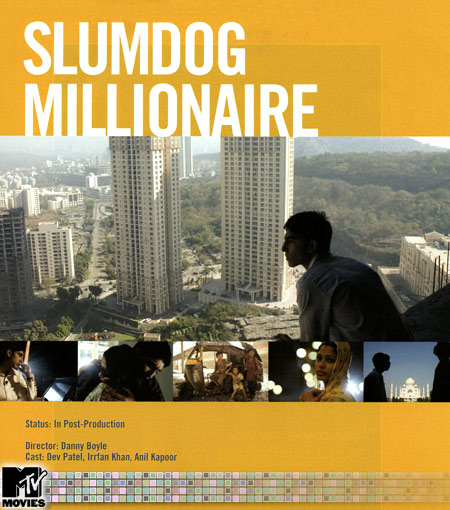
Sakuntala Banaji: Seduced ‘Outsiders’ versus Sceptical ‘Insiders’? -- Slumdog Millionaire through its Re/Viewers

Seduced ‘Outsiders’ versus Sceptical ‘Insiders’?: Slumdog Millionaire through its Re/Viewers
by Shakuntala Banaji,
Centre for the Study of Children, Youth & Media, UK
Participations


Slumdog Millionaire (Dir. Danny Boyle, 2008) is now best known for winning numerous Awards at the Baftas, Golden Globes and the Oscars. After being publicly championed by an unprecedented number of film critics, it caused something of a media sensation when celebrities in Bollywood and some (but not all) viewers in India publicly labeled it exploitative and unfair to India and Indians. Told in flashback from the point of view of a young man, the film narrates the story of two brothers from a shantytown in Bombay, who choose different pathways in life. In the opening sequence of the film, one of the brothers has reached the final of the much-vaunted TV quiz show, the Indian version of ‘Who wants to be a Millionaire’. Arrested, apparently for cheating, Jamal Malik ‘explains’ to his police interrogators how it is possible for someone like him, a slum child with little formal education, to know the answers to the most seemingly esoteric questions: he has learned the answers through bitter experience. And in the process of recounting these, he opens for the audience (what is displayed unashamedly by the film as) a window on the world of two Muslim children born in a Bombay shantytown in the 1980s. Via fast-paced sequences full of jump cuts – depicting communal riots, professional begging and child molesting gangsters – the boys and the camera travel across India and back again. They return in search of an old girlfriend as Bombay’s/Mumbai’s economy goes neo-liberal and gated communities spring up, isolating the rich from the poor. In tandem, the younger brother, Jamal, stays honest, innocent, hard-working and loyal – a tea-boy in a call centre; the older brother becomes a gangster’s lackey, corrupt and aggressive, taking the quickest possible route to what seems like financial success.

A viewing of the film during a year of media hype, followed by a series of random but heated discussions about it, crystallised into an urge to discover whether and how different kinds of knowledge and experience – about cinema, about Hindi cinema, about India, about Bombay, about urban poverty (Indian style) – played into critical responses to the film, by viewers or by established film critics. Saying that the same film and the same set of circumstances can call up wildly different even contradictory viewpoints from people, or from the same person at different times should no longer be much of a surprise. Meaning does not reside solely in media texts; this has been established over the decades via painstaking theoretical critique and empirical scholarship (see, among others, Austin 2002, Buckingham 1993, Barker and Brooks 1998, Mankekar 1999 and Staiger 1999). Although there are still those new to the subject who might write as though texts are all-powerful and hold ultimate sway, enough has been done to challenge a text-centric understanding of meaning and effects to obviate the necessity for another paper on this topic. What is interesting about people’s reactions to this particular film is not, in fact, the divergence of opinion per se. What is intriguing however is, first, the vehemence and types of the feelings called forth by what might seem a fairly prosaic rags to riches story, albeit set in a (to most Western audiences) exotic setting: delight and jubilation, inspiration, tears, disgust, anger and humiliation are only some of the emotions expressed by those who watched it. Second, and more confusingly, perhaps, it was read as an educational – almost an ethnographic – tale by some re/viewers, a contrast to Bollywood glitz and to the mawkish sentimentality of documentaries about India. Additionally, and more problematically, perhaps, opinions expressed about the film contained tropes of quasi-orientalist (Said 1978) or re-orientalist (Lau 2007) cultural and political discourse. Indeed, the quaint assumption of an ethnographic subject when a film or book happens to feature non-white and non-western protagonists is a classic feature of such discourse in relation to fiction genres. In a fascinating paper delivered on this subject, Ellen Dengel-Janic argues that ‘[w]hat the film negates and helps to mask in a pleasurable visual manner is a translocated fear of poverty and the abject…. the film’s appeal reflects not only the West’s exoticism of India, but also its repressed fear and paranoia of becoming abject and poor’ (2009: NP). But given the wide range of viewers who ultimately encountered the film, can such a critical reading be sustained? Understanding the combinations of circumstance and experience, contextual and technical knowledge and generic expectation that led to particular discourses or technical sequences in films being picked up and enjoyed or selectively critiqued has been the aim of much of my work on Hindi cinema to date (see Banaji 2006 and 2008) and remains at the core of this paper. However, even these combinations do not capture fully the investments people have in their judgments about films or indeed the complexity of the emotional and cultural histories that inflect these judgments.

To Read the Rest of the Essay

Friday, April 23, 2010

Bill Moyers Journal: Bryan Stevenson and Michelle Alexander -- Are We Living in Marting Luther King Jr.'s America?

Bryan Stevenson and Michelle Alexander
Bill Moyers Journal


On April 4, 1968, Dr. Martin Luther King, Jr. was assassinated on the balcony of the Lorraine Motel. This week, BILL MOYERS JOURNAL observes the anniversary of King's murder by examining America in light of his dream. What would he think of our country today and where would he focus his fight against inequality and injustice?

Two talented lawyers who've dedicated their careers to fighting inequality, Michelle Alexander and Bryan Stevenson, join Bill Moyers on the JOURNAL to examine justice and injustice in America 42 years after King's death.

Alexander believes that King would be deeply troubled by the remaining inequality in America. As she tells Bill Moyers, "I think Martin Luther King would be thrilled by some of the individual progress of African Americans, but stunned, absolutely stunned and saddened, by the state of African Americans as a whole today."

Stevenson adds that to reach King's dream, America must address the causes of poverty, "I think in America, the opposite of poverty is justice. I think there are structures and systems that have created poverty, and have made that poverty so permanent, that until we think in a more just way about how to deal with poverty in this country, we're never gonna make the progress that Dr. King envisioned."

Both believe that America's policies of mass incarceration continue the cycle of poverty. America is the largest jailer on the planet, with 2.3 million people behind bars. But the policy of mass imprisonment, unique among industrialized nations, disproportianatetly affects minorities, especially African American men. One in 100 adults in America is behind bars, but one in nine African American men aged 20 to 34 is behind bars. Much of this arises from the "war on drugs." According to Human Rights Watch, African American adults have been arrested at a rate 2.8 to 5.5 times higher than white adults in every year from 1980 to 2007. Yet, according to government statistics, African Americans and whites have similar rates of illicit drug use and dealing.

A consequence of this disparity, and America's harsh treatment of lawbreakers, according to Alexander, is a population of people living in conditions shockingly like African Americans experienced under Jim Crow:

Today in communities of color across America, large majorities of African American men have been branded criminals, felons for life. And as a result, many are denied the right to vote, automatically excluded from juries, and legally discriminated against in employment, housing, access to public education-- public benefits. Many of the forms of discrimination we thought we left behind in the Jim Crow Era are legal again, once you've been branded a criminal.

Stevenson points out that these are not inevitable policies:

We didn't have to incarcerate people for 10, 20, 30, 40 years for simple possession of marijuana, for drug use. We didn't have to do that. We made choices around that. And now the consequences are devastating. I think they're not only devastating from a political perspective, but — I think this is the way I think it relates to Jim Crow, as well — it's also been devastating within communities of color. Right now, for black men in the United States, there's a 32 percent chance you're going to jail or prison. In poor communities and minority communities, urban communities, rural communities, it could be 60 percent or 70 percent. You're born, you're a ten-year-old kid. There's a 70 percent chance that you're going to go to jail and prison. What does that do to you?


To Listen to the Episode and Access More Resources

More:

Reflections on King's Dreams

U.S. Prisons and Drug Laws

Bill Moyers Journal: Richard Wilkinson and Kate Pickett -- American Inequality

(Moyers essay on American Inequality)

American Inequality
Bill Moyers Journal


In his closing essay for the April 2, 2010 JOURNAL, Bill Moyers references several works on inequality in America. Among these is THE SPIRIT LEVEL: WHY GREATER EQUALITY MAKES SOCIETIES STRONGER by Richard Wilkinson and Kate Pickett, who together have spent more than 50 years studying how inequality affects the health of a population.

Bill Moyers talked to them about their work.

To Listen to the Episode

Wednesday, March 17, 2010

Charles Bowden: The War Next Door -- Adam Smith's invisible hand meets magical realism on the border

The War Next Door: Adam Smith's invisible hand meets magical realism on the border
by Charles Bowden
High Country News

...

The Mexican border functions as a drum that both the left and the right like to thump. For the left, it means imperialism. They decry the death of migrants, the newly built wall and the tens of thousands of armed agents patrolling the line. The right sees the border as the only thing separating us from the disintegration of our national security. They decry migrants (illegal invaders), violence spilling over the border and, in certain zany moments, see Islamic terrorists crossing the desert and leaving a litter of prayer rugs.

The migration of the Mexican poor is the largest human movement across a border on the planet. It was triggered by the destruction of peasant agriculture at the hands of the North American Free Trade Agreement, by the corruption of the Mexican state, by the growing violence in Mexico, and exacerbated by the millions of Mexicans working illegally in the U.S. who send money home to finance their families' trips north. It should be seen as a natural shift of a species. We need ecologists on the border; the politicians have become pointless.

The drug industry is the second-largest source of foreign currency in Mexico, just behind oil. It earns somewhere between $30 billion and $50 billion a year -- no one really knows, including the people in the industry. It also creates enormous numbers of jobs in the U.S.: We spend billions a year on narcs, maintain the world's largest prison industry, which is absolutely dependent on the intake of drug felons, and we have about 20,000 agents on the border who feed off drug importation. The rehab industry is also a source of a large number of jobs since many well-heeled defendants pick mandatory treatment over prison. Many county and local police departments now get fat off of RICO suits based on drug offenses.

The official line of the U.S. government, one most recently voiced by Secretary of State Hillary Clinton, is that drug consumers in the United States are responsible for drug murders in Mexico. Only someone who is drugged could believe this claim. The sole source of the enormous amount of money in the drug business and the accompanying violence is the U.S. prohibition of drug use by its citizens. Since President Richard Nixon proclaimed the War on Drugs 40 years ago, there have been two notable accomplishments: Drugs are cheaper than ever, and they are of much higher quality. But then, NAFTA was promoted by presidents George H.W. Bush and Bill Clinton as something that would buoy up the Mexican economy and reduce or end illegal immigration -- two claims that now are clearly refuted by facts.

The left seeks open borders or No More Deaths, the latter a protest of the 500 or so migrant deaths per year -- a rather low fatality rate, considering that at least a half-million Mexicans move illegally across the border each year. But the left seldom if ever mentions the slaughter in Mexico during the last three years that has left 17,000 citizens dead, a killing of Mexicans by Mexicans. The right constantly speaks of fortifying the border, as if this could stop a human tide lashed northward by misery. And, of course, the right promotes draconian drug laws even though the failure of such laws is increasingly apparent.

On the border, Adam Smith meets magical realism. Here the market tenets of supply and demand, the basic engine of both the migration and the drug industry, are supposed to be overturned magically by a police state. Consider one simple number: The border is 1,900 miles long. If two people slipped through each mile in a 24-hour period, that would amount to 3,800 people a day. That adds up to 1,387,000 people a year. Or consider this: One bridge from Juarez to El Paso handles 600,000 semi-trucks a year. One semi with a freight load of 24 tons could probably tote enough heroin to satisfy the U.S. market for a year. Add to the mix the inevitable corruption of the police agencies: A few months ago, a Border Patrol agent in southern Arizona was busted for running dope in his official car for 500 bucks a load.

Few discussions about the border come from facts. Most discussions of the border come from fears. We seem to prefer slogans and fantasies: free trade, "just say no," gigantic walls.

To Read the Entire Essay


More resources:

Also in High Country News: Julian Cardona's photodocumentary "Failed State"