Showing posts with label Orientalism. Show all posts

Thursday, June 10, 2010

Sakuntala Banaji: Seduced ‘Outsiders’ versus Sceptical ‘Insiders’? -- Slumdog Millionaire through its Re/Viewers

Seduced ‘Outsiders’ versus Sceptical ‘Insiders’?: Slumdog Millionaire through its Re/Viewers
by Shakuntala Banaji,
Centre for the Study of Children, Youth & Media, UK
Participations
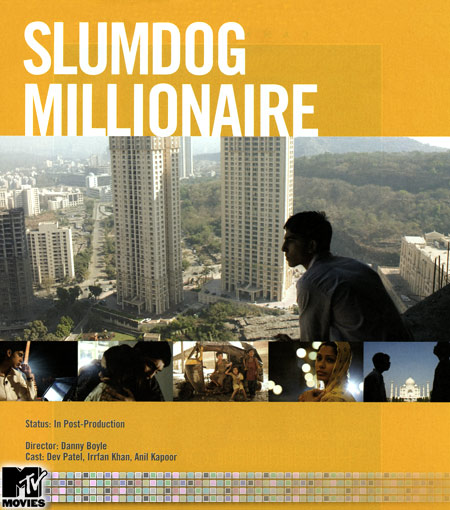


Slumdog Millionaire (Dir. Danny Boyle, 2008) is now best known for winning numerous Awards at the Baftas, Golden Globes and the Oscars. After being publicly championed by an unprecedented number of film critics, it caused something of a media sensation when celebrities in Bollywood and some (but not all) viewers in India publicly labeled it exploitative and unfair to India and Indians. Told in flashback from the point of view of a young man, the film narrates the story of two brothers from a shantytown in Bombay, who choose different pathways in life. In the opening sequence of the film, one of the brothers has reached the final of the much-vaunted TV quiz show, the Indian version of ‘Who wants to be a Millionaire’. Arrested, apparently for cheating, Jamal Malik ‘explains’ to his police interrogators how it is possible for someone like him, a slum child with little formal education, to know the answers to the most seemingly esoteric questions: he has learned the answers through bitter experience. And in the process of recounting these, he opens for the audience (what is displayed unashamedly by the film as) a window on the world of two Muslim children born in a Bombay shantytown in the 1980s. Via fast-paced sequences full of jump cuts – depicting communal riots, professional begging and child molesting gangsters – the boys and the camera travel across India and back again. They return in search of an old girlfriend as Bombay’s/Mumbai’s economy goes neo-liberal and gated communities spring up, isolating the rich from the poor. In tandem, the younger brother, Jamal, stays honest, innocent, hard-working and loyal – a tea-boy in a call centre; the older brother becomes a gangster’s lackey, corrupt and aggressive, taking the quickest possible route to what seems like financial success.

A viewing of the film during a year of media hype, followed by a series of random but heated discussions about it, crystallised into an urge to discover whether and how different kinds of knowledge and experience – about cinema, about Hindi cinema, about India, about Bombay, about urban poverty (Indian style) – played into critical responses to the film, by viewers or by established film critics. Saying that the same film and the same set of circumstances can call up wildly different even contradictory viewpoints from people, or from the same person at different times should no longer be much of a surprise. Meaning does not reside solely in media texts; this has been established over the decades via painstaking theoretical critique and empirical scholarship (see, among others, Austin 2002, Buckingham 1993, Barker and Brooks 1998, Mankekar 1999 and Staiger 1999). Although there are still those new to the subject who might write as though texts are all-powerful and hold ultimate sway, enough has been done to challenge a text-centric understanding of meaning and effects to obviate the necessity for another paper on this topic. What is interesting about people’s reactions to this particular film is not, in fact, the divergence of opinion per se. What is intriguing however is, first, the vehemence and types of the feelings called forth by what might seem a fairly prosaic rags to riches story, albeit set in a (to most Western audiences) exotic setting: delight and jubilation, inspiration, tears, disgust, anger and humiliation are only some of the emotions expressed by those who watched it. Second, and more confusingly, perhaps, it was read as an educational – almost an ethnographic – tale by some re/viewers, a contrast to Bollywood glitz and to the mawkish sentimentality of documentaries about India. Additionally, and more problematically, perhaps, opinions expressed about the film contained tropes of quasi-orientalist (Said 1978) or re-orientalist (Lau 2007) cultural and political discourse. Indeed, the quaint assumption of an ethnographic subject when a film or book happens to feature non-white and non-western protagonists is a classic feature of such discourse in relation to fiction genres. In a fascinating paper delivered on this subject, Ellen Dengel-Janic argues that ‘[w]hat the film negates and helps to mask in a pleasurable visual manner is a translocated fear of poverty and the abject…. the film’s appeal reflects not only the West’s exoticism of India, but also its repressed fear and paranoia of becoming abject and poor’ (2009: NP). But given the wide range of viewers who ultimately encountered the film, can such a critical reading be sustained? Understanding the combinations of circumstance and experience, contextual and technical knowledge and generic expectation that led to particular discourses or technical sequences in films being picked up and enjoyed or selectively critiqued has been the aim of much of my work on Hindi cinema to date (see Banaji 2006 and 2008) and remains at the core of this paper. However, even these combinations do not capture fully the investments people have in their judgments about films or indeed the complexity of the emotional and cultural histories that inflect these judgments.

To Read the Rest of the Essay

Wednesday, May 26, 2010

Sam Aranke: Anti-Authoritarians and Decolonizing the Everyday

Anti-Authoritarians and Decolonizing the Everyday
by Sam Aranke
Friendly Fire Collective

...

It was both the economic and the cultural that determined the colonial project. Colonialism refers to a historical moment where the “Oriental-European relationship was determined by an unstoppable European expansion in search of markets, resources, and colonies, and finally because Orientalism had accomplished its self-metamorphosis from a scholarly discourse to an imperial institution” . The cultural products that came out of this time crystallized into forms of knowledge that we rely on today—we can only think of the books we are required to read in school like Jane Eyre, the historical figures we are required to know like Christopher Columbus, or the references we have imbedded in our too-common cultural history (“the sun never sets on the British Empire”). This is the living residue of a colonial past that seems so far removed from our everyday experiences; but in reality, we are surrounded by these cultural legacies.

Thinking in terms of the postcolonial allows us to think through “difference” in a more productive way. Postcolonial scholarship often details the complexities of difference. Often this type of scholarship details the histories that we wish to ignore: from the complicated collaboration between native elite and colonial magistrates to the conflicted desire of many colonized subjects to imitate those that oppressed them. Or, (dare I say it), they even criticize Third World Liberation movements and figures, many of whom we often romanticize within our own movements. We can only think of Frantz Fanon in his early writings during decolonization in French-controlled Algeria or the more contemporary work of the Subaltern Studies Collective around British Colonialism in India. They demand that we critically negotiate between the history of the past and the history of the present. They ask for a more critical engagement with history—one that complicates our desires to simplify the totality of history in order to look at difference within our communities in a more generative way.

This is where anti-authoritarians come in. A struggle against hierarchy and capitalism is a struggle that accounts for these colonial legacies within our current postcolonial moment. In order to really dismantle the role of authority in our society, we have to look both internally, within ourselves, and externally, within our communities. “Difference” within our communities becomes more generative and nuanced, it is not a simple glossing of race, gender, sexuality, etc. Here, I mean that the way we even talk about difference within our political work needs to do two difficult tasks at once: 1) deconstruct the ways in which these differences are stabilized and 2) creating accountability within our communities in order to ensure a space where anti-authoritarianism is even possible. It requires talking about difference differently. This means transparently talking about and maintaining the complexities of difference as a social construction. In many ways, this means giving up the comfort of silence. Sometimes, this also means giving up the comfort of difference in order to destabilize its power and give evidence of its colonial origins. If we start to think of our work as decolonizing the everyday, then we can begin to think about how we are all subject to the overwhelming presence of colonial and neocolonial domination.

A thoughtful engagement with postcolonial theory could potentially give us a more complicated framework to address anti-authoritarianism. By complicated, I don’t want to suggest that things aren’t confusing and complex already. We are bombarded daily with the complexities of the current global order and the positions that it forces us into. I just believe that framing our analysis within the narrative of “decolonizing the everyday” opens up an entire set of possibilities. This type of framing forces us to deal with the contradictions, complexities, and difficulties of our various desires, interests, and identities as anti authoritarians. These are questions we grapple with everyday.

What would antiwar organizing look like if it started talking about the Military Industrial Complex’s infiltration of our minds and bodies as well as its global violations around the world? What if we started to realize that the war is already home and has been vis-à-vis patriarchy, racism, and homophobia? Or, what if we connected these various sites of war through the framework of the everyday colonial encounters that the current dominant system forces us to swallow, internalize, and re-enact? An active anti-authoritarianism confronts these internal forces of colonization and actively connects their origins with the presence of external colonial forces. If we work to break down these hierarchies within our minds, bodies, and communities than we will be sure to decolonize our lives. It is the living presence of various colonial histories that attempts to repress this vision. Thinking in terms of postcoloniality allows us to work with our complexities in a constructive way. Decolonizing our lives is working towards an active vision for a new world.

To Read the Rest of the Essay