Showing posts with label Reception Studies. Show all posts

Saturday, November 20, 2010

Left Field Cinema: Memento in Relation to Reception Theory

Analysis: Memento in Relation to Reception Theory
by Mike Dawson
Left Field Cinema


Based on a short story, Memento Mori, by Jonah Nolan, Memento is structurally a very different kind film, a film which attempts a type of narrative very few directors had employed before. Guy Pierce plays an insurance investigator Leonard Shelby who is wounded during an attack on him and his wife and now suffers a rare and memory disorder called anterograde memory loss. This means that he has no short-term memory. He remembers everything from before the attack, but after that he won’t remember anything more than about five minutes at a time. The last thing he recalls is his wife dying and as a result has been on a quest for revenge ever since. He isn’t a hero, more of a delusional anti hero. Leonard’s vendetta is the only driving force left in his life now. There are problems with Leonard’s revenge lead search however. He can never be sure whom to trust, he relies on notes that he makes to himself on Polaroid pictures of people, and a series of tattoos across his body for very serious information which he can’t afford to forget. He believes that he can achieve his goal with out memory because it’s unreliable. “Memory can change the shape of a room or the colour of a car. It’s interpretation not a record.” Another problem with Leonard’s revenge is that he’ll never remember it. He’ll never know the satisfaction beyond the few minutes he retains the memory. He maybe able to take a picture to document it but he won’t remember it. This problem Leonard counters by arguing that just because he can’t remember doesn’t mean that his actions don’t have meaning or that what he does in his life isn’t important. However when Leonard avenges his wife, the last thing he’ll remember will still be her death. Towards the end of the film it is revealed that Leonard has already avenged his wife over a year earlier, and didn’t remember doing it. Since then has been manipulated into being an unwitting patsy by everyone around him including most interestingly - himself. In the startling final scene it is revealed that he has been removing and manipulating evidence to give himself a bigger puzzle to solve, and to steer himself towards killing Teddy who has also been manipulating him. It is through this plot twist that the one of the central messages of Memento is revealed. Revenge is a pointless exercise; vengeance begets vengeance. Leonard can’t remember his revenge and so he keeps on going. He wrongfully kills Jimmy Grantz because he was manipulated by Teddy, as a result Natalie uses him as well sleeping with him and playing games with his mind; games he won’t remember. Sight and Sound had this to say about the film in their November 2000 issue “Drawing from the rich metafictional possibilities inherent in the detective genre, Memento delivers, in Leonard Shelby, a character who, while he considers himself an investigator, is actually - and all at once - a proficient killer and the perfect patsy: fuelled by his lust for revenge, he’ll take out anybody with the initials that fit; dependent on others to provide clues to the identity of his wife’s killer, he’s also the victim of countless set-ups, the seemingly unwitting cog in the duplicitous maneuverings of those around him."

People manipulate themselves. People can make themselves remember what they want to remember, or make themselves believe what they want to believe. An individual’s recollection is not restricted to what was physically seen, heard, felt, tasted or smelt; memory can be moulded by those who own it. Like prolific liars who often begin to believe their own lies in order to sustain an illusion to those around them. Throughout the film there is a prolonged flash back sequence where Leonard explains the story of Sammy Jankis a man with a similar condition as himself who he investigated before he lost his memory. Sammy didn’t get any insurance money because Leonard felt that his condition was psychological not physical. Sammy’s wife was a diabetic and Sammy could give her an insulin injection with no problem. Sammy’s wife eventually tested him, getting him to give her the same insulin jab over and over again until she fell into a coma. The second revelation in the final scene is that Sammy’s story is actually Leonard’s, that he conditioned himself to remember Sammy’s fictional case, because he didn’t want to remember the truth. That it was his wife had diabetes and she survived the assault and she tested Leonard and misled him to give her and overdose of insulin.

“Memento, delves into the dark black side of the soul brining us face to face with the part of man which no one talks about; our delusions. The lies we tell ourselves, although never out loud, which allow us to go on with the daily routine. Leaving us to wonder, is it our own manipulation which silently drives our motives pulling us towards the eventual outcome like a strong undertow in waist deep water.” (Karten, 2000)

“Ultimately, Memento stands on its own as a thriller, but it also works as a profound tragedy, stunning in its portrayal of a man teetering on the edge, though he doesn’t even know it. It asks some serious questions about how we know what to believe, since our senses and our memory all lie to us. And in the end, Memento gives us our answer: We simply believe what we choose to.” (Null, 2001)

Leonard conditions himself to remember the story. He simply believes what he wants to believe. Remembers what he wants to remember. It is a comment on how people manipulate themselves, and choose to remember what they want to remember.

To Read the Rest of the Analysis

To Listen to the Analysis

Thursday, June 10, 2010

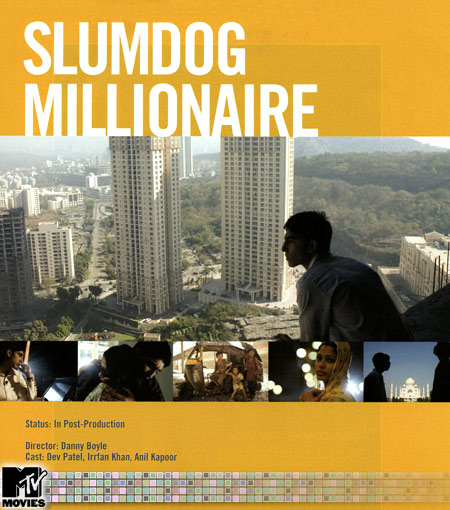
Sakuntala Banaji: Seduced ‘Outsiders’ versus Sceptical ‘Insiders’? -- Slumdog Millionaire through its Re/Viewers

Seduced ‘Outsiders’ versus Sceptical ‘Insiders’?: Slumdog Millionaire through its Re/Viewers
by Shakuntala Banaji,
Centre for the Study of Children, Youth & Media, UK
Participations


Slumdog Millionaire (Dir. Danny Boyle, 2008) is now best known for winning numerous Awards at the Baftas, Golden Globes and the Oscars. After being publicly championed by an unprecedented number of film critics, it caused something of a media sensation when celebrities in Bollywood and some (but not all) viewers in India publicly labeled it exploitative and unfair to India and Indians. Told in flashback from the point of view of a young man, the film narrates the story of two brothers from a shantytown in Bombay, who choose different pathways in life. In the opening sequence of the film, one of the brothers has reached the final of the much-vaunted TV quiz show, the Indian version of ‘Who wants to be a Millionaire’. Arrested, apparently for cheating, Jamal Malik ‘explains’ to his police interrogators how it is possible for someone like him, a slum child with little formal education, to know the answers to the most seemingly esoteric questions: he has learned the answers through bitter experience. And in the process of recounting these, he opens for the audience (what is displayed unashamedly by the film as) a window on the world of two Muslim children born in a Bombay shantytown in the 1980s. Via fast-paced sequences full of jump cuts – depicting communal riots, professional begging and child molesting gangsters – the boys and the camera travel across India and back again. They return in search of an old girlfriend as Bombay’s/Mumbai’s economy goes neo-liberal and gated communities spring up, isolating the rich from the poor. In tandem, the younger brother, Jamal, stays honest, innocent, hard-working and loyal – a tea-boy in a call centre; the older brother becomes a gangster’s lackey, corrupt and aggressive, taking the quickest possible route to what seems like financial success.

A viewing of the film during a year of media hype, followed by a series of random but heated discussions about it, crystallised into an urge to discover whether and how different kinds of knowledge and experience – about cinema, about Hindi cinema, about India, about Bombay, about urban poverty (Indian style) – played into critical responses to the film, by viewers or by established film critics. Saying that the same film and the same set of circumstances can call up wildly different even contradictory viewpoints from people, or from the same person at different times should no longer be much of a surprise. Meaning does not reside solely in media texts; this has been established over the decades via painstaking theoretical critique and empirical scholarship (see, among others, Austin 2002, Buckingham 1993, Barker and Brooks 1998, Mankekar 1999 and Staiger 1999). Although there are still those new to the subject who might write as though texts are all-powerful and hold ultimate sway, enough has been done to challenge a text-centric understanding of meaning and effects to obviate the necessity for another paper on this topic. What is interesting about people’s reactions to this particular film is not, in fact, the divergence of opinion per se. What is intriguing however is, first, the vehemence and types of the feelings called forth by what might seem a fairly prosaic rags to riches story, albeit set in a (to most Western audiences) exotic setting: delight and jubilation, inspiration, tears, disgust, anger and humiliation are only some of the emotions expressed by those who watched it. Second, and more confusingly, perhaps, it was read as an educational – almost an ethnographic – tale by some re/viewers, a contrast to Bollywood glitz and to the mawkish sentimentality of documentaries about India. Additionally, and more problematically, perhaps, opinions expressed about the film contained tropes of quasi-orientalist (Said 1978) or re-orientalist (Lau 2007) cultural and political discourse. Indeed, the quaint assumption of an ethnographic subject when a film or book happens to feature non-white and non-western protagonists is a classic feature of such discourse in relation to fiction genres. In a fascinating paper delivered on this subject, Ellen Dengel-Janic argues that ‘[w]hat the film negates and helps to mask in a pleasurable visual manner is a translocated fear of poverty and the abject…. the film’s appeal reflects not only the West’s exoticism of India, but also its repressed fear and paranoia of becoming abject and poor’ (2009: NP). But given the wide range of viewers who ultimately encountered the film, can such a critical reading be sustained? Understanding the combinations of circumstance and experience, contextual and technical knowledge and generic expectation that led to particular discourses or technical sequences in films being picked up and enjoyed or selectively critiqued has been the aim of much of my work on Hindi cinema to date (see Banaji 2006 and 2008) and remains at the core of this paper. However, even these combinations do not capture fully the investments people have in their judgments about films or indeed the complexity of the emotional and cultural histories that inflect these judgments.

To Read the Rest of the Essay