Bush’s Shrinking World: George W. Bush Cancels Europe Trip as Human Rights Lawyers Threaten Legal Action over Torture
Democracy Now
Former President George W. Bush has been forced to cancel a planned trip to Switzerland after human rights attorneys threatened to take legal action against him for sanctioning the use of torture. The Center for Constitutional Rights said they had planned to bring a complaint on behalf of two men who were tortured by U.S. interrogators and held at the military base at Guantánamo Bay, Cuba. "It was disappointing that we’re not able to actually prosecute him," says CCR legal director Bill Quigley. "But I think it has shown worldwide that even though he was the president of the United States, if you engage in torture... there are consequences."
To Watch/Listen/Read
Showing posts with label Lawyers. Show all posts
Showing posts with label Lawyers. Show all posts
Thursday, February 10, 2011

Tuesday, February 08, 2011
Robert Fisk: US envoy's business link to Egypt
US envoy's business link to Egypt: Obama scrambles to limit damage after Frank Wisner makes robust call for Mubarak to remain in place as leader.
By Robert Fisk
Consortium News
Mr Wisner's astonishing remarks – "President Mubarak's continued leadership is critical: it's his opportunity to write his own legacy" – shocked the democratic opposition in Egypt and called into question Mr Obama's judgement, as well as that of Secretary of State Hillary Clinton.
The US State Department and Mr Wisner himself have now both claimed that his remarks were made in a "personal capacity". But there is nothing "personal" about Mr Wisner's connections with the litigation firm Patton Boggs, which openly boasts that it advises "the Egyptian military, the Egyptian Economic Development Agency, and has handled arbitrations and litigation on the [Mubarak] government's behalf in Europe and the US". Oddly, not a single journalist raised this extraordinary connection with US government officials – nor the blatant conflict of interest it appears to represent.
Mr Wisner is a retired State Department 36-year career diplomat – he served as US ambassador to Egypt, Zambia, the Philippines and India under eight American presidents. In other words, he was not a political appointee. But it is inconceivable Hillary Clinton did not know of his employment by a company that works for the very dictator which Mr Wisner now defends in the face of a massive democratic opposition in Egypt.
So why on earth was he sent to talk to Mubarak, who is in effect a client of Mr Wisner's current employers?
Patton Boggs states that its attorneys "represent some of the leading Egyptian commercial families and their companies" and "have been involved in oil and gas and telecommunications infrastructure projects on their behalf". One of its partners served as chairman of the US-Egyptian Chamber of Commerce promoting foreign investment in the Egyptian economy. The company has also managed contractor disputes in military-sales agreements arising under the US Foreign Military Sales Act. Washington gives around $1.3bn (£800m) a year to the Egyptian military.
Mr Wisner joined Patton Boggs almost two years ago – more than enough time for both the White House and the State Department to learn of his company's intimate connections with the Mubarak regime. The New York Times ran a glowing profile of Mr Wisner in its pages two weeks ago – but mysteriously did not mention his ties to Egypt.
Nicholas Noe, an American political researcher now based in Beirut, has spent weeks investigating Mr Wisner's links to Patton Boggs. Mr Noe is also a former researcher for Hillary Clinton and questions the implications of his discoveries.
"The key problem with Wisner being sent to Cairo at the behest of Hillary," he says, "is the conflict-of-interest aspect... More than this, the idea that the US is now subcontracting or 'privatising' crisis management is another problem. Do the US lack diplomats?
"Even in past examples where presidents have sent someone 'respected' or 'close' to a foreign leader in order to lubricate an exit," Mr Noe adds, "the envoys in question were not actually paid by the leader they were supposed to squeeze out!"
To Read the Rest of the Article
By Robert Fisk
Consortium News
Mr Wisner's astonishing remarks – "President Mubarak's continued leadership is critical: it's his opportunity to write his own legacy" – shocked the democratic opposition in Egypt and called into question Mr Obama's judgement, as well as that of Secretary of State Hillary Clinton.
The US State Department and Mr Wisner himself have now both claimed that his remarks were made in a "personal capacity". But there is nothing "personal" about Mr Wisner's connections with the litigation firm Patton Boggs, which openly boasts that it advises "the Egyptian military, the Egyptian Economic Development Agency, and has handled arbitrations and litigation on the [Mubarak] government's behalf in Europe and the US". Oddly, not a single journalist raised this extraordinary connection with US government officials – nor the blatant conflict of interest it appears to represent.
Mr Wisner is a retired State Department 36-year career diplomat – he served as US ambassador to Egypt, Zambia, the Philippines and India under eight American presidents. In other words, he was not a political appointee. But it is inconceivable Hillary Clinton did not know of his employment by a company that works for the very dictator which Mr Wisner now defends in the face of a massive democratic opposition in Egypt.
So why on earth was he sent to talk to Mubarak, who is in effect a client of Mr Wisner's current employers?
Patton Boggs states that its attorneys "represent some of the leading Egyptian commercial families and their companies" and "have been involved in oil and gas and telecommunications infrastructure projects on their behalf". One of its partners served as chairman of the US-Egyptian Chamber of Commerce promoting foreign investment in the Egyptian economy. The company has also managed contractor disputes in military-sales agreements arising under the US Foreign Military Sales Act. Washington gives around $1.3bn (£800m) a year to the Egyptian military.
Mr Wisner joined Patton Boggs almost two years ago – more than enough time for both the White House and the State Department to learn of his company's intimate connections with the Mubarak regime. The New York Times ran a glowing profile of Mr Wisner in its pages two weeks ago – but mysteriously did not mention his ties to Egypt.
Nicholas Noe, an American political researcher now based in Beirut, has spent weeks investigating Mr Wisner's links to Patton Boggs. Mr Noe is also a former researcher for Hillary Clinton and questions the implications of his discoveries.
"The key problem with Wisner being sent to Cairo at the behest of Hillary," he says, "is the conflict-of-interest aspect... More than this, the idea that the US is now subcontracting or 'privatising' crisis management is another problem. Do the US lack diplomats?
"Even in past examples where presidents have sent someone 'respected' or 'close' to a foreign leader in order to lubricate an exit," Mr Noe adds, "the envoys in question were not actually paid by the leader they were supposed to squeeze out!"
To Read the Rest of the Article
Tuesday, January 25, 2011
Michael Ratner: Obama's National Security State
Obama’s national security state: Interview with Michael Ratner
by Anthony Arnove
International Socialist Review
Michael Ratner is president of the Center for Constitutional Rights (CCR) and is adjunct professor of law at Columbia University Law School. Ratner has also been a lecturer of international human rights litigation at the Yale Law School and the Columbia School of Law, president of the National Lawyers Guild, legal director of the Center for Constitutional Rights, and radio co-host for the civil rights show Law and Disorder. Ratner serves on the board of The Culture Project in New York City and is vice-president of the board of Voices of a People’s History of the United States. He spoke to Anthony Arnove, a member of the ISR editorial board and author of the book Iraq: The Logic of Withdrawal.
LET’S START with the Obama administration’s policies on habeas corpus and on torture. As a presidential candidate, Obama said he would close Guantánamo, said he believed in habeas corpus rights, and was critical of President Bush. What’s been his practice since he came to office?
MY OFFICE, CCR, is one of the legal groups that represents many of the Guantánamo detainees and brings these writs of habeas corpus. That is a fancy way of saying, “Let’s go to court, and see if there’s any evidence to hold the person.” The expectations of the team of lawyers representing the detainees was very high that Guantánamo would actually close, that Obama would do it. There were probably a little over 300 people in Guantánamo when he took office. It’s down to maybe 200-some now. But we expected better—and now it may go on for years. We really thought that Obama wouldn’t fight us in court on the rights of the detainees, that he would get the detainees either to another country or he would charge and try them. And of course, it hasn’t worked out that way at all, and it’s a deep disappointment. In fact a lot of the habeas lawyers signed a letter supporting Obama saying his election would actually be good for our clients. Obama’s effort to close it seemingly got off to a somewhat quick start. Obama, within two days of being in office, signed an executive order, which is essentially a presidential order, which said that Guantánamo would be closed in a year. Of course, as we speak now, it’s more than a year and a half after that order, and it is not near closed. Obama’s commitment has been abandoned. And he made a number of other promises that have not been met about secret detention sites, military commissions, and the like.
Obama has put new clothes on the Bush doctrine toward “enemy combatants,” but the underlying lawlessness of the doctrine is the same. In particular, imagine this: you go to court on behalf of someone in Guantánamo, and the judge has to decide whether there is sufficient evidence to hold him. What Bush said was they can be held as “enemy combatants,” and he gave the term a vague definition, such as that the person was hostile to the United States or picked up arms against the United States or belonged to a group that was hostile to the United States. If there was “evidence” those detainees could be held in prison indefinitely, essentially a form of preventive detention. We had hoped Obama would get rid of that entire preventive detention scheme. CCR’s view is there should not be a preventive detention scheme—it’s illegal and immoral. What you must do, and what is legally necessary, is to charge someone with a crime, and hold them only if they’re convicted. The rule is simple: charge and try people with crimes, or release them. There are not any other valid legal choices.
I considered this preventive detention scheme to be one of the worst hallmarks of the Bush administration. Sadly, this intolerable preventive detention scheme has continued, and you could say continued with a vengeance, under Obama. He has repeatedly stated that he is continuing the preventive detention scheme. He said that at his major speech on Guantánamo in May 2009. He has repeated it again and again. We expect at least fifty of the Guantánamo people to be held under a scheme in which they’re preventively detained, which is to say they are never charged with a crime. They’re held in a prison right now in Guantánamo, or perhaps could be taken somewhere else. Now the somewhere else could be this prison the U.S. government is trying to buy in Illinois. For now, Congress is stopping that, as Congress, including many Democrats, wants to keep Guantánamo opened. It passed legislation prohibiting the spending of any money to buy or refurbish a prison in the United States for this purpose. Our view is that moving Guantánamo from an offshore location to a U.S. continental location makes no difference to our clients. In fact, it could be worse if the process is exactly the same, if they’re still held in preventive detention and if the administration then considers the problem solved. The effort to repackage Guantánamo in Illinois is a transparent attempt to close Guantánamo while keeping it open in Illinois. So what’s the difference? They’re just moving the Bush scheme from an island to the continent.
So as to closing Guantánamo, and particularly on this issue of habeas corpus and preventive detention, Obama has been a disaster. And Obama has followed the Bush policy on its limitations as to the power of judges to release Guantánamo detainees. When you win a habeas corpus case in the court, the court says, “Well, even under the Obama definition,” which is roughly the same as a Bush definition of enemy combatant, “there’s no evidence that your client was hostile to the United States in the way in which the U.S. claims. The evidence is fallacious. It’s no good. And therefore, I order your client released.” The Bush administration took the position that, yes, the judge could find that a detainee shouldn’t be held, but the judge had no right to release him because that was a foreign policy matter up to the president. So you had a system of law that had no power. No matter what the court decided, the president could decide differently. You might ask, “What happened to checks and balances under our Constitution and what happened to the independence of the judiciary?” Well, the president made himself the boss.
We had hoped Obama would do better, but that’s not the case. We’ve won a number of habeas cases before federal judges in Washington, D.C. They’ve said, “As to your client, there’s no evidence to hold him.” The Uighurs, Muslims from Western China, are the classic example of that. They can’t be sent back to China because it is likely they will be tortured in China. Therefore, the judge says, “I’m going to release them.” Fine, they should be released to the United States. And of course, the Obama administration then asserts that a federal court has no right to release the detainees into the United States even if they are utterly innocent. So our clients, even though many of them have been found to not fit any definition of an enemy combatant are still sitting in Guantánamo.
So Obama is the same as Bush regarding the use of preventive detention. He’s the same regarding his refusal to accept that a federal judge has the authority to release a detainee who is innocent. Now think about that. If a federal judge doesn’t have the right to release someone from custody, what kind of a state are we talking about? Is that a democratic state with protections for the individual? Or is it essentially a police state where the executive overrides a court decision and says, “I’m going to keep you in prison?” So to say I’m disappointed, disappointed would not be the right word for me. I didn’t have high expectations. I never have for the executive. But after eight and a half years of litigation, win after win in the courts, and after Obama’s promises, his actions regarding Guantánamo are repugnant: repugnant for those wrongly tortured and jailed—and repugnant to fundamental precepts of liberty that have taken a thousand years to establish.
The fight continues. The lawyers, and sadly the clients, are deep in the trenches and no one seems to give a damn about it. In fact, you could almost say Obama is one thing, but of course the Congress is, I wouldn’t say another thing, but it is so right wing on these issues, so nasty and draconian, that the slightest effort to bring a Guantánamo detainee to the United States brings out the nativism and antediluvian Republicans and Democrats, which constitute a majority. The Democratic Congress actually passed a law saying no Guantánamo detainee could be brought to the United States, even if the detainee was jailed, much less released.
Some people say, well, “Obama is caught by the right-wingers in Congress. And what can you do about it?” But of course, many Democrats, obviously a majority of them, go along with these punitive policies. The Democrats apparently don’t want to appear weak on national security or perhaps they really believe in preventive detention or that a Uighur is a danger in America. They think if they appear weak on what they consider national security that somehow they’re going to lose the next election. And so they almost outdo the Republicans on these issues with Guantánamo and the like.
We now have the spectacle of a Democratic president selling out the Constitution and with it the lives of innocents at Guantánamo and the freedom of future generations as these special laws become the laws for all of us.
To Read the Rest of the Interview
by Anthony Arnove
International Socialist Review
Michael Ratner is president of the Center for Constitutional Rights (CCR) and is adjunct professor of law at Columbia University Law School. Ratner has also been a lecturer of international human rights litigation at the Yale Law School and the Columbia School of Law, president of the National Lawyers Guild, legal director of the Center for Constitutional Rights, and radio co-host for the civil rights show Law and Disorder. Ratner serves on the board of The Culture Project in New York City and is vice-president of the board of Voices of a People’s History of the United States. He spoke to Anthony Arnove, a member of the ISR editorial board and author of the book Iraq: The Logic of Withdrawal.
LET’S START with the Obama administration’s policies on habeas corpus and on torture. As a presidential candidate, Obama said he would close Guantánamo, said he believed in habeas corpus rights, and was critical of President Bush. What’s been his practice since he came to office?
MY OFFICE, CCR, is one of the legal groups that represents many of the Guantánamo detainees and brings these writs of habeas corpus. That is a fancy way of saying, “Let’s go to court, and see if there’s any evidence to hold the person.” The expectations of the team of lawyers representing the detainees was very high that Guantánamo would actually close, that Obama would do it. There were probably a little over 300 people in Guantánamo when he took office. It’s down to maybe 200-some now. But we expected better—and now it may go on for years. We really thought that Obama wouldn’t fight us in court on the rights of the detainees, that he would get the detainees either to another country or he would charge and try them. And of course, it hasn’t worked out that way at all, and it’s a deep disappointment. In fact a lot of the habeas lawyers signed a letter supporting Obama saying his election would actually be good for our clients. Obama’s effort to close it seemingly got off to a somewhat quick start. Obama, within two days of being in office, signed an executive order, which is essentially a presidential order, which said that Guantánamo would be closed in a year. Of course, as we speak now, it’s more than a year and a half after that order, and it is not near closed. Obama’s commitment has been abandoned. And he made a number of other promises that have not been met about secret detention sites, military commissions, and the like.
Obama has put new clothes on the Bush doctrine toward “enemy combatants,” but the underlying lawlessness of the doctrine is the same. In particular, imagine this: you go to court on behalf of someone in Guantánamo, and the judge has to decide whether there is sufficient evidence to hold him. What Bush said was they can be held as “enemy combatants,” and he gave the term a vague definition, such as that the person was hostile to the United States or picked up arms against the United States or belonged to a group that was hostile to the United States. If there was “evidence” those detainees could be held in prison indefinitely, essentially a form of preventive detention. We had hoped Obama would get rid of that entire preventive detention scheme. CCR’s view is there should not be a preventive detention scheme—it’s illegal and immoral. What you must do, and what is legally necessary, is to charge someone with a crime, and hold them only if they’re convicted. The rule is simple: charge and try people with crimes, or release them. There are not any other valid legal choices.
I considered this preventive detention scheme to be one of the worst hallmarks of the Bush administration. Sadly, this intolerable preventive detention scheme has continued, and you could say continued with a vengeance, under Obama. He has repeatedly stated that he is continuing the preventive detention scheme. He said that at his major speech on Guantánamo in May 2009. He has repeated it again and again. We expect at least fifty of the Guantánamo people to be held under a scheme in which they’re preventively detained, which is to say they are never charged with a crime. They’re held in a prison right now in Guantánamo, or perhaps could be taken somewhere else. Now the somewhere else could be this prison the U.S. government is trying to buy in Illinois. For now, Congress is stopping that, as Congress, including many Democrats, wants to keep Guantánamo opened. It passed legislation prohibiting the spending of any money to buy or refurbish a prison in the United States for this purpose. Our view is that moving Guantánamo from an offshore location to a U.S. continental location makes no difference to our clients. In fact, it could be worse if the process is exactly the same, if they’re still held in preventive detention and if the administration then considers the problem solved. The effort to repackage Guantánamo in Illinois is a transparent attempt to close Guantánamo while keeping it open in Illinois. So what’s the difference? They’re just moving the Bush scheme from an island to the continent.
So as to closing Guantánamo, and particularly on this issue of habeas corpus and preventive detention, Obama has been a disaster. And Obama has followed the Bush policy on its limitations as to the power of judges to release Guantánamo detainees. When you win a habeas corpus case in the court, the court says, “Well, even under the Obama definition,” which is roughly the same as a Bush definition of enemy combatant, “there’s no evidence that your client was hostile to the United States in the way in which the U.S. claims. The evidence is fallacious. It’s no good. And therefore, I order your client released.” The Bush administration took the position that, yes, the judge could find that a detainee shouldn’t be held, but the judge had no right to release him because that was a foreign policy matter up to the president. So you had a system of law that had no power. No matter what the court decided, the president could decide differently. You might ask, “What happened to checks and balances under our Constitution and what happened to the independence of the judiciary?” Well, the president made himself the boss.
We had hoped Obama would do better, but that’s not the case. We’ve won a number of habeas cases before federal judges in Washington, D.C. They’ve said, “As to your client, there’s no evidence to hold him.” The Uighurs, Muslims from Western China, are the classic example of that. They can’t be sent back to China because it is likely they will be tortured in China. Therefore, the judge says, “I’m going to release them.” Fine, they should be released to the United States. And of course, the Obama administration then asserts that a federal court has no right to release the detainees into the United States even if they are utterly innocent. So our clients, even though many of them have been found to not fit any definition of an enemy combatant are still sitting in Guantánamo.
So Obama is the same as Bush regarding the use of preventive detention. He’s the same regarding his refusal to accept that a federal judge has the authority to release a detainee who is innocent. Now think about that. If a federal judge doesn’t have the right to release someone from custody, what kind of a state are we talking about? Is that a democratic state with protections for the individual? Or is it essentially a police state where the executive overrides a court decision and says, “I’m going to keep you in prison?” So to say I’m disappointed, disappointed would not be the right word for me. I didn’t have high expectations. I never have for the executive. But after eight and a half years of litigation, win after win in the courts, and after Obama’s promises, his actions regarding Guantánamo are repugnant: repugnant for those wrongly tortured and jailed—and repugnant to fundamental precepts of liberty that have taken a thousand years to establish.
The fight continues. The lawyers, and sadly the clients, are deep in the trenches and no one seems to give a damn about it. In fact, you could almost say Obama is one thing, but of course the Congress is, I wouldn’t say another thing, but it is so right wing on these issues, so nasty and draconian, that the slightest effort to bring a Guantánamo detainee to the United States brings out the nativism and antediluvian Republicans and Democrats, which constitute a majority. The Democratic Congress actually passed a law saying no Guantánamo detainee could be brought to the United States, even if the detainee was jailed, much less released.
Some people say, well, “Obama is caught by the right-wingers in Congress. And what can you do about it?” But of course, many Democrats, obviously a majority of them, go along with these punitive policies. The Democrats apparently don’t want to appear weak on national security or perhaps they really believe in preventive detention or that a Uighur is a danger in America. They think if they appear weak on what they consider national security that somehow they’re going to lose the next election. And so they almost outdo the Republicans on these issues with Guantánamo and the like.
We now have the spectacle of a Democratic president selling out the Constitution and with it the lives of innocents at Guantánamo and the freedom of future generations as these special laws become the laws for all of us.
To Read the Rest of the Interview
Sunday, January 16, 2011
Mary Bottari: What Does Wikileaks have on Bank of America?
What Does Wikileaks have on Bank of America?
By Mary Bottari
Campaign for America's Future
WikiLeaks founder Julian Assange is promising to unleash a cache of secret documents from the hard drive of a U.S. megabank executive. In 2009, he told Computer World that the bank was Bank of America (BofA). In 2010, he told Forbes that the information was significant enough to "take down a bank or two," but that he needed time to lay out the information in a more user-friendly format.
Recent new reports suggest that BofA is now moving into high gear on damage control, creating a "war room" and buying up hundreds of derogatory Internet domain names including BankofAmericaSucks.com and BrianMoynihanblows.com (BofA's CEO).
Before the big banks start calling for Assange's internment at Guantanamo, the question worth considering is what does Wikileaks have on America's largest bank?
Legal Liability for Toxic Mortgages
BofA is already under the gun, defending itself from multiple lawsuits from private investors as well as Fannie and Freddie demanding that the bank buy back billions worth of toxic mortgages-backed securities. The firm stopped issuing subprime mortgages in 2001, but it kept underwriting subprime mortgage-backed securities for many years. In September 2009, for example, BofA underwrote $239 million worth of securities backed by subprime loans. BofA has reserved $4.4 billion for these "put back" lawsuits. If Assange has emails showing that top executives at BofA knew they were peddling toxic dreck to investors, it would rock the firm and give tremendous ammunition to the army of lawyers already knocking on BofA's door.
Reckless and Illegal Foreclosures
BofA is at the heart of the robo-signing scandal and has wrongfully foreclosed on countless American families. One poor woman returned to a vacation home to find it locked, all her possessions gone -- including the ashes of her late husband. How could such a mistake be made? A BofA employee deposed in February 2010 said that she signed as many as 8,000 foreclosure documents a month without reviewing them, in violation of the law. Mounting questions about the fraudulent and illegal foreclosure practices at the big banks and mortgage service companies prompted BofA to temporarily halt foreclosures nationwide in October 2010. If Wikileaks can document that top BofA officials have a callous disregard for legal processes and constitutionally protected property rights, BofA's mounting legal liability may not be sustainable.
Countrywide Headaches
In 2008, BofA acquired Countrywide, one of the most aggressive and fraudulent lenders during the housing bubble. The result has been a trainwreck of liability and lawsuits for the megabank that now has over 1.3 million customers in foreclosure. To settle the lawsuits with Illinois, California and eight other states over predatory lending, BofA came up with an $8.4 billion loan relief plan for those holding Countrywide mortgages. In June, 2010 BofA paid $108 million to settle a Federal Trade Commission case that charged Countrywide with having extracted excessive fees out of borrowers facing foreclosure. BofA paid $600 million in August 2010 to settle shareholder claims that Countrywide had concealed the riskiness of its lending standards. There is no end in sight for these suits. In June 2010 the State of Illinois sued Countrywide again, this time over racial discrimination in its lending practices. Wikileaks could have further documentation of Countrywide's illegal and reckless underwriting practices or ongoing fraud at BofA.
To Read the Rest of the Article
By Mary Bottari
Campaign for America's Future
WikiLeaks founder Julian Assange is promising to unleash a cache of secret documents from the hard drive of a U.S. megabank executive. In 2009, he told Computer World that the bank was Bank of America (BofA). In 2010, he told Forbes that the information was significant enough to "take down a bank or two," but that he needed time to lay out the information in a more user-friendly format.
Recent new reports suggest that BofA is now moving into high gear on damage control, creating a "war room" and buying up hundreds of derogatory Internet domain names including BankofAmericaSucks.com and BrianMoynihanblows.com (BofA's CEO).
Before the big banks start calling for Assange's internment at Guantanamo, the question worth considering is what does Wikileaks have on America's largest bank?
Legal Liability for Toxic Mortgages
BofA is already under the gun, defending itself from multiple lawsuits from private investors as well as Fannie and Freddie demanding that the bank buy back billions worth of toxic mortgages-backed securities. The firm stopped issuing subprime mortgages in 2001, but it kept underwriting subprime mortgage-backed securities for many years. In September 2009, for example, BofA underwrote $239 million worth of securities backed by subprime loans. BofA has reserved $4.4 billion for these "put back" lawsuits. If Assange has emails showing that top executives at BofA knew they were peddling toxic dreck to investors, it would rock the firm and give tremendous ammunition to the army of lawyers already knocking on BofA's door.
Reckless and Illegal Foreclosures
BofA is at the heart of the robo-signing scandal and has wrongfully foreclosed on countless American families. One poor woman returned to a vacation home to find it locked, all her possessions gone -- including the ashes of her late husband. How could such a mistake be made? A BofA employee deposed in February 2010 said that she signed as many as 8,000 foreclosure documents a month without reviewing them, in violation of the law. Mounting questions about the fraudulent and illegal foreclosure practices at the big banks and mortgage service companies prompted BofA to temporarily halt foreclosures nationwide in October 2010. If Wikileaks can document that top BofA officials have a callous disregard for legal processes and constitutionally protected property rights, BofA's mounting legal liability may not be sustainable.
Countrywide Headaches
In 2008, BofA acquired Countrywide, one of the most aggressive and fraudulent lenders during the housing bubble. The result has been a trainwreck of liability and lawsuits for the megabank that now has over 1.3 million customers in foreclosure. To settle the lawsuits with Illinois, California and eight other states over predatory lending, BofA came up with an $8.4 billion loan relief plan for those holding Countrywide mortgages. In June, 2010 BofA paid $108 million to settle a Federal Trade Commission case that charged Countrywide with having extracted excessive fees out of borrowers facing foreclosure. BofA paid $600 million in August 2010 to settle shareholder claims that Countrywide had concealed the riskiness of its lending standards. There is no end in sight for these suits. In June 2010 the State of Illinois sued Countrywide again, this time over racial discrimination in its lending practices. Wikileaks could have further documentation of Countrywide's illegal and reckless underwriting practices or ongoing fraud at BofA.
To Read the Rest of the Article
Tuesday, August 17, 2010
Julian Assange Responds to Increasing US Government Attacks on WikiLeaks
Julian Assange Responds to Increasing US Government Attacks on WikiLeaks
Democracy Now
... WikiLeaks published the massive archive of classified military records about the war in Afghanistan, but the fallout in Washington and beyond is far from over. Justice Department lawyers are reportedly exploring whether WikiLeaks and its founder Julian Assange could be charged with violating the Espionage Act of 1917 for publishing the classified Afghan war documents. Meanwhile, investigators in the Army’s criminal division have reportedly questioned two students in Boston about their ties to WikiLeaks and Private First Class Bradley Manning, a leading suspect in the leak. We speak with WikiLeaks founder, Julian Assange.
To Watch/Read/Listen
More:
Wikileaks
Democracy Now
... WikiLeaks published the massive archive of classified military records about the war in Afghanistan, but the fallout in Washington and beyond is far from over. Justice Department lawyers are reportedly exploring whether WikiLeaks and its founder Julian Assange could be charged with violating the Espionage Act of 1917 for publishing the classified Afghan war documents. Meanwhile, investigators in the Army’s criminal division have reportedly questioned two students in Boston about their ties to WikiLeaks and Private First Class Bradley Manning, a leading suspect in the leak. We speak with WikiLeaks founder, Julian Assange.
To Watch/Read/Listen
More:
Wikileaks
Sunday, May 09, 2010
Bill Moyers Journal: Theodore Olsen and David Boies -- Marriage Equality
Theodore Olsen and David Boies
Bill Moyers Journal (PBS)
The quest for marriage equality has created some unlikely allies in attorneys Theodore Olson, a conservative, and David Boies, a liberal. Long well-known within the field of law, the two became nationally famous as the opposing counsels in Bush v. Gore, the Supreme Court case that halted the Florida recount, and resolved the 2000 Presidential election in favor of George W. Bush.
Now the two lawyers, both veterans of multiple Supreme Court cases, have mounted a well-financed legal challenge to Proposition 8, California's 2008 ballot initiative that put an end to same-sex marriage in that state. The case could make it as far as the Supreme Court and define the debate on same-sex marriage for years to come.
... Olson and Boies join Bill Moyers to discuss why the issue of same-sex marriage is so important, why they chose to pursue the matter in the courts, even against the wishes of some in the LGBT community, and why conservatives and liberals must come together to solve the big issues facing the country.
The case they've brought, Perry et al v. Schwarzenegger et al, has created a major stir, with some advocates of same-sex marriage worried that they are bringing the case too soon, that a loss at the Supreme Court could set back the movement for same-sex marriage by years. Olson argues that waiting for civil rights is not an option:
And on the other side, conservatives have argued that courts shouldn't be involved in this issue, that it's an improper use of "judicial activism." Boies points out that, to the contrary, protecting fundamental rights is a primary role of the court:
David Boies
David Boies is the founder and chairman of Boies, Schiller & Flexner LLP and is widely regarded as one of the nation's preeminent trial lawyers. He has been named "Lawyer of the Year," by the NATIONAL LAW JOURNAL, runner-up for "Person of the Year," by TIME magazine, The antitrust Lawyer of the Year by the New York Bar Association, and "Commercial Litigator of the Year" by WHO'S WHO.
Mr. Boies is perhaps best known for serving as lead counsel for former Vice-President Al Gore in connection with the litigation relating to the 2000 Presidential election and for serving as special trial counsel for the United States Department of Justice in its successful antitrust suit against Microsoft. In addition, from 1991 to 1993, Mr. Boies was counsel to the Federal Deposit Insurance Corporation in its litigation to recover losses for failed savings and loan associations. Mr. Boies also served as chief counsel and staff director of the United States Senate Antitrust Subcommittee in 1978 and chief counsel and staff director of the United States Senate Judiciary Committee in 1979.
Recent cases include Mr. Boies' successful representation of American Express in its Antitrust case against Visa and MasterCard in which American Express received a record-breaking $4 billion recovery, Mr. Boies' successful defense of Lloyd's of London in the World Trade Center insurance litigation, Mr. Boies's successful defense of NASCAR in Antitrust litigation charging NASCAR with monopolizing the market for championship auto racing, and the representation of Maurice R. "Hank" Greenberg and the C.V. Starr Companies in connection with regulatory and civil litigations.
Mr. Boies is the author of numerous publications including COURTING JUSTICE, published by Miramax in 2004, and PUBLIC CONTROL OF BUSINESS, published by Little Brown in 1977. He has taught courses at New York University Law School and Cardozo Law School.
Mr. Boies received honorary LL.D. degrees from the University of Redlands, and from New York Law School, the Lifetime Achievement Award from the LD Access Foundation, the Outstanding Learning Disabled Achievers Award from the Lab School of Washington, D.C., and the William Brennan Award from the University of Virginia. He is a fellow of the American College of Trial Lawyers and the International Academy of Trial Lawyers, and a trustee of St. Luke's/Roosevelt Hospital Medical Center and of Continuum Health Partners, Inc.
Theodore Olson
Theodore B. Olson is a partner in Gibson, Dunn & Crutcher's Washington, D.C. office; a member of the firm's executive committee, co-chair of the appellate and Constitutional law group and the firm's crisis management team.
Mr. Olson was solicitor general of the United States during the period 2001-2004. From 1981-1984 he was assistant attorney general in charge of the Office of Legal Counsel in the U.S. Department of Justice. Except for those two intervals, he has been a lawyer with Gibson, Dunn & Crutcher in Los Angeles and Washington, D.C. since 1965.
Mr. Olson is one of the nation's premier appellate and United States Supreme Court advocates. He has argued 56 cases in the Supreme Court, including Bush v. Palm Beach County Canvassing Board and Bush v. Gore, stemming from the 2000 presidential election; prevailing in over 75% of those arguments. Mr. Olson's practice is concentrated on appellate and Constitutional law, federal legislation, media and commercial disputes, and assisting clients with strategies for the containment, management and resolution of major legal crises occurring at the federal/state, criminal/civil and domestic/international levels. He has handled cases at all levels of state and federal court systems throughout the United States, and in international tribunals. Mr. Olson's Supreme Court arguments have included cases involving separation of powers; federalism; voting rights; the First Amendment; the equal protection and due process clauses; sentencing; jury trial rights; punitive damages; takings of property and just compensation; the commerce clause; taxation; immigration; criminal law; copyright; antitrust; securities; telecommunications; the environment; the internet; and other federal Constitutional and statutory questions.
Mr. Olson has served as private counsel to two Presidents, Ronald W. Reagan and George W. Bush, in addition to serving those two Presidents in high-level positions in the Department of Justice. He has twice received the United States Department of Justice's Edmund J. Randolph Award, named for the first attorney general, its highest award for public service and leadership. He has also been awarded the Department of Defense's highest civilian award for his advocacy in the courts of the United States, including the Supreme Court, on behalf of that department. He was a visiting scholar at the National Constitution Center in 2007.
Mr. Olson served in the President's Privacy and Civil Liberties Oversight Board from 2006 to 2008. He is co-chair of the Knight Commission on the Information Needs of Communities in a Democracy. He is also a member of the board of trustees on the Ronald Reagan Presidential Foundation and a member of The steering committee on The Sandra Day O'Connor Project on the State of the Judiciary.
Mr. Olson is a fellow of both the American College of Trial Lawyers and the American Academy of Appellate Lawyers. The NATIONAL LAW JOURNAL has repeatedly listed him as one of America's Most Influential Lawyers. THE AMERICAN LAWYER and LEGAL TIMES have characterized Mr. Olson as one of America's leading advocates. In December of 2007, WASHINGTONIAN magazine listed him as number one on its list of the finest lawyers in the nation's capital. THE NEW YORK TIMES columnist William Safire has described Mr. Olson as this generation's "most persuasive advocate" before the Supreme Court and "the most effective solicitor general" in decades. Mr. Olson received his law degree in 1965 from the University of California at Berkeley (Boalt Hall) where he was a member of the CALIFORNIA LAW REVIEW and Order of the Coif. He received his bachelor's degree from the University of the Pacific, where he was recognized as the outstanding graduating student in both forensics and journalism. Mr. Olson has written and lectured extensively on appellate advocacy, oral communication in the courtroom, civil justice reform, punitive damages, and Constitutional and administrative law.
To Watch the Episode
More Resources:
Bill Moyers Journal: Marriage Equality
Bill Moyers Journal (PBS)
The quest for marriage equality has created some unlikely allies in attorneys Theodore Olson, a conservative, and David Boies, a liberal. Long well-known within the field of law, the two became nationally famous as the opposing counsels in Bush v. Gore, the Supreme Court case that halted the Florida recount, and resolved the 2000 Presidential election in favor of George W. Bush.
Now the two lawyers, both veterans of multiple Supreme Court cases, have mounted a well-financed legal challenge to Proposition 8, California's 2008 ballot initiative that put an end to same-sex marriage in that state. The case could make it as far as the Supreme Court and define the debate on same-sex marriage for years to come.
... Olson and Boies join Bill Moyers to discuss why the issue of same-sex marriage is so important, why they chose to pursue the matter in the courts, even against the wishes of some in the LGBT community, and why conservatives and liberals must come together to solve the big issues facing the country.
The case they've brought, Perry et al v. Schwarzenegger et al, has created a major stir, with some advocates of same-sex marriage worried that they are bringing the case too soon, that a loss at the Supreme Court could set back the movement for same-sex marriage by years. Olson argues that waiting for civil rights is not an option:
In the first place, someone was going to challenge Proposition 8 in California. Some lawyer, representing two people, was going to bring this challenge. We felt that if a challenge was going to be brought, it should be brought with a well-financed, capable effort, by people who knew what they were doing in the courts. Secondly, when people said, 'Maybe you should be waiting. Maybe you should wait until there's more popular support.' Our answer to that was, 'Well, when is that going to happen? How long do you want people to wait? How long do you want people to be deprived of their Constitutional rights in California?'
And on the other side, conservatives have argued that courts shouldn't be involved in this issue, that it's an improper use of "judicial activism." Boies points out that, to the contrary, protecting fundamental rights is a primary role of the court:
Conservatives, just like liberals, rely on the Supreme Court to protect the rule of law, to protect our liberties, to look at a law and decide whether or not it fits within the Constitution. And I think the point that's really important here, when you're thinking about judicial activism, is that this is not a new right. Nobody is saying, 'Go find in the Constitution the right to get married.' Everybody, unanimous Supreme Court, says there's a right to get married, a fundamental right to get married. The question is whether you can discriminate against certain people based on their sexual orientation. And the issue of prohibiting discrimination has never in my view been looked as a test of judicial activism. That's not liberal, that's not conservative. That's not Republican or Democrat. That's simply an American Constitutional civil right.
David Boies
David Boies is the founder and chairman of Boies, Schiller & Flexner LLP and is widely regarded as one of the nation's preeminent trial lawyers. He has been named "Lawyer of the Year," by the NATIONAL LAW JOURNAL, runner-up for "Person of the Year," by TIME magazine, The antitrust Lawyer of the Year by the New York Bar Association, and "Commercial Litigator of the Year" by WHO'S WHO.
Mr. Boies is perhaps best known for serving as lead counsel for former Vice-President Al Gore in connection with the litigation relating to the 2000 Presidential election and for serving as special trial counsel for the United States Department of Justice in its successful antitrust suit against Microsoft. In addition, from 1991 to 1993, Mr. Boies was counsel to the Federal Deposit Insurance Corporation in its litigation to recover losses for failed savings and loan associations. Mr. Boies also served as chief counsel and staff director of the United States Senate Antitrust Subcommittee in 1978 and chief counsel and staff director of the United States Senate Judiciary Committee in 1979.
Recent cases include Mr. Boies' successful representation of American Express in its Antitrust case against Visa and MasterCard in which American Express received a record-breaking $4 billion recovery, Mr. Boies' successful defense of Lloyd's of London in the World Trade Center insurance litigation, Mr. Boies's successful defense of NASCAR in Antitrust litigation charging NASCAR with monopolizing the market for championship auto racing, and the representation of Maurice R. "Hank" Greenberg and the C.V. Starr Companies in connection with regulatory and civil litigations.
Mr. Boies is the author of numerous publications including COURTING JUSTICE, published by Miramax in 2004, and PUBLIC CONTROL OF BUSINESS, published by Little Brown in 1977. He has taught courses at New York University Law School and Cardozo Law School.
Mr. Boies received honorary LL.D. degrees from the University of Redlands, and from New York Law School, the Lifetime Achievement Award from the LD Access Foundation, the Outstanding Learning Disabled Achievers Award from the Lab School of Washington, D.C., and the William Brennan Award from the University of Virginia. He is a fellow of the American College of Trial Lawyers and the International Academy of Trial Lawyers, and a trustee of St. Luke's/Roosevelt Hospital Medical Center and of Continuum Health Partners, Inc.
Theodore Olson
Theodore B. Olson is a partner in Gibson, Dunn & Crutcher's Washington, D.C. office; a member of the firm's executive committee, co-chair of the appellate and Constitutional law group and the firm's crisis management team.
Mr. Olson was solicitor general of the United States during the period 2001-2004. From 1981-1984 he was assistant attorney general in charge of the Office of Legal Counsel in the U.S. Department of Justice. Except for those two intervals, he has been a lawyer with Gibson, Dunn & Crutcher in Los Angeles and Washington, D.C. since 1965.
Mr. Olson is one of the nation's premier appellate and United States Supreme Court advocates. He has argued 56 cases in the Supreme Court, including Bush v. Palm Beach County Canvassing Board and Bush v. Gore, stemming from the 2000 presidential election; prevailing in over 75% of those arguments. Mr. Olson's practice is concentrated on appellate and Constitutional law, federal legislation, media and commercial disputes, and assisting clients with strategies for the containment, management and resolution of major legal crises occurring at the federal/state, criminal/civil and domestic/international levels. He has handled cases at all levels of state and federal court systems throughout the United States, and in international tribunals. Mr. Olson's Supreme Court arguments have included cases involving separation of powers; federalism; voting rights; the First Amendment; the equal protection and due process clauses; sentencing; jury trial rights; punitive damages; takings of property and just compensation; the commerce clause; taxation; immigration; criminal law; copyright; antitrust; securities; telecommunications; the environment; the internet; and other federal Constitutional and statutory questions.
Mr. Olson has served as private counsel to two Presidents, Ronald W. Reagan and George W. Bush, in addition to serving those two Presidents in high-level positions in the Department of Justice. He has twice received the United States Department of Justice's Edmund J. Randolph Award, named for the first attorney general, its highest award for public service and leadership. He has also been awarded the Department of Defense's highest civilian award for his advocacy in the courts of the United States, including the Supreme Court, on behalf of that department. He was a visiting scholar at the National Constitution Center in 2007.
Mr. Olson served in the President's Privacy and Civil Liberties Oversight Board from 2006 to 2008. He is co-chair of the Knight Commission on the Information Needs of Communities in a Democracy. He is also a member of the board of trustees on the Ronald Reagan Presidential Foundation and a member of The steering committee on The Sandra Day O'Connor Project on the State of the Judiciary.
Mr. Olson is a fellow of both the American College of Trial Lawyers and the American Academy of Appellate Lawyers. The NATIONAL LAW JOURNAL has repeatedly listed him as one of America's Most Influential Lawyers. THE AMERICAN LAWYER and LEGAL TIMES have characterized Mr. Olson as one of America's leading advocates. In December of 2007, WASHINGTONIAN magazine listed him as number one on its list of the finest lawyers in the nation's capital. THE NEW YORK TIMES columnist William Safire has described Mr. Olson as this generation's "most persuasive advocate" before the Supreme Court and "the most effective solicitor general" in decades. Mr. Olson received his law degree in 1965 from the University of California at Berkeley (Boalt Hall) where he was a member of the CALIFORNIA LAW REVIEW and Order of the Coif. He received his bachelor's degree from the University of the Pacific, where he was recognized as the outstanding graduating student in both forensics and journalism. Mr. Olson has written and lectured extensively on appellate advocacy, oral communication in the courtroom, civil justice reform, punitive damages, and Constitutional and administrative law.
To Watch the Episode
More Resources:
Bill Moyers Journal: Marriage Equality
Friday, April 23, 2010
Bill Moyers Journal: Bryan Stevenson and Michelle Alexander -- Are We Living in Marting Luther King Jr.'s America?
Bryan Stevenson and Michelle Alexander
Bill Moyers Journal

On April 4, 1968, Dr. Martin Luther King, Jr. was assassinated on the balcony of the Lorraine Motel. This week, BILL MOYERS JOURNAL observes the anniversary of King's murder by examining America in light of his dream. What would he think of our country today and where would he focus his fight against inequality and injustice?
Two talented lawyers who've dedicated their careers to fighting inequality, Michelle Alexander and Bryan Stevenson, join Bill Moyers on the JOURNAL to examine justice and injustice in America 42 years after King's death.
Alexander believes that King would be deeply troubled by the remaining inequality in America. As she tells Bill Moyers, "I think Martin Luther King would be thrilled by some of the individual progress of African Americans, but stunned, absolutely stunned and saddened, by the state of African Americans as a whole today."
Stevenson adds that to reach King's dream, America must address the causes of poverty, "I think in America, the opposite of poverty is justice. I think there are structures and systems that have created poverty, and have made that poverty so permanent, that until we think in a more just way about how to deal with poverty in this country, we're never gonna make the progress that Dr. King envisioned."
Both believe that America's policies of mass incarceration continue the cycle of poverty. America is the largest jailer on the planet, with 2.3 million people behind bars. But the policy of mass imprisonment, unique among industrialized nations, disproportianatetly affects minorities, especially African American men. One in 100 adults in America is behind bars, but one in nine African American men aged 20 to 34 is behind bars. Much of this arises from the "war on drugs." According to Human Rights Watch, African American adults have been arrested at a rate 2.8 to 5.5 times higher than white adults in every year from 1980 to 2007. Yet, according to government statistics, African Americans and whites have similar rates of illicit drug use and dealing.
A consequence of this disparity, and America's harsh treatment of lawbreakers, according to Alexander, is a population of people living in conditions shockingly like African Americans experienced under Jim Crow:
Stevenson points out that these are not inevitable policies:
To Listen to the Episode and Access More Resources
More:
Reflections on King's Dreams
U.S. Prisons and Drug Laws
Bill Moyers Journal
On April 4, 1968, Dr. Martin Luther King, Jr. was assassinated on the balcony of the Lorraine Motel. This week, BILL MOYERS JOURNAL observes the anniversary of King's murder by examining America in light of his dream. What would he think of our country today and where would he focus his fight against inequality and injustice?
Two talented lawyers who've dedicated their careers to fighting inequality, Michelle Alexander and Bryan Stevenson, join Bill Moyers on the JOURNAL to examine justice and injustice in America 42 years after King's death.
Alexander believes that King would be deeply troubled by the remaining inequality in America. As she tells Bill Moyers, "I think Martin Luther King would be thrilled by some of the individual progress of African Americans, but stunned, absolutely stunned and saddened, by the state of African Americans as a whole today."
Stevenson adds that to reach King's dream, America must address the causes of poverty, "I think in America, the opposite of poverty is justice. I think there are structures and systems that have created poverty, and have made that poverty so permanent, that until we think in a more just way about how to deal with poverty in this country, we're never gonna make the progress that Dr. King envisioned."
Both believe that America's policies of mass incarceration continue the cycle of poverty. America is the largest jailer on the planet, with 2.3 million people behind bars. But the policy of mass imprisonment, unique among industrialized nations, disproportianatetly affects minorities, especially African American men. One in 100 adults in America is behind bars, but one in nine African American men aged 20 to 34 is behind bars. Much of this arises from the "war on drugs." According to Human Rights Watch, African American adults have been arrested at a rate 2.8 to 5.5 times higher than white adults in every year from 1980 to 2007. Yet, according to government statistics, African Americans and whites have similar rates of illicit drug use and dealing.
A consequence of this disparity, and America's harsh treatment of lawbreakers, according to Alexander, is a population of people living in conditions shockingly like African Americans experienced under Jim Crow:
Today in communities of color across America, large majorities of African American men have been branded criminals, felons for life. And as a result, many are denied the right to vote, automatically excluded from juries, and legally discriminated against in employment, housing, access to public education-- public benefits. Many of the forms of discrimination we thought we left behind in the Jim Crow Era are legal again, once you've been branded a criminal.
Stevenson points out that these are not inevitable policies:
We didn't have to incarcerate people for 10, 20, 30, 40 years for simple possession of marijuana, for drug use. We didn't have to do that. We made choices around that. And now the consequences are devastating. I think they're not only devastating from a political perspective, but — I think this is the way I think it relates to Jim Crow, as well — it's also been devastating within communities of color. Right now, for black men in the United States, there's a 32 percent chance you're going to jail or prison. In poor communities and minority communities, urban communities, rural communities, it could be 60 percent or 70 percent. You're born, you're a ten-year-old kid. There's a 70 percent chance that you're going to go to jail and prison. What does that do to you?
To Listen to the Episode and Access More Resources
More:
Reflections on King's Dreams
U.S. Prisons and Drug Laws
Thursday, March 11, 2010
Democracy Now: William Kunstler: Disturbing the Universe -- New Documentary Examines Life, Legacy of Famed Radical Attorney
“William Kunstler: Disturbing the Universe”: New Documentary Examines Life, Legacy of Famed Radical Attorney
Democracy Now
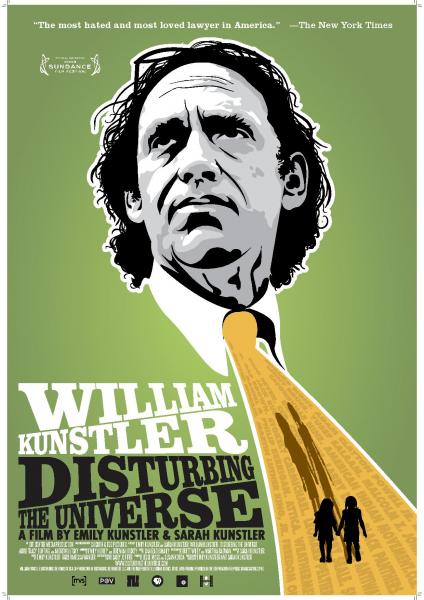
A new documentary looks at a man once described as the most hated and most loved lawyer in America: the late William Kunstler. We play excerpts of William Kunstler: Disturbing the Universe and speak to the film’s co-directors, Kunstler’s daughters Emily and Sarah Kunstler.
Emily Kunstler and Sarah Kunstler, co-directors of the new documentary William Kunstler: Disturbing the Universe. They run Off Center Media, a production company that produces documentaries exposing injustice in the criminal justice system.
To Read/Listen/Watch
Democracy Now
A new documentary looks at a man once described as the most hated and most loved lawyer in America: the late William Kunstler. We play excerpts of William Kunstler: Disturbing the Universe and speak to the film’s co-directors, Kunstler’s daughters Emily and Sarah Kunstler.
Emily Kunstler and Sarah Kunstler, co-directors of the new documentary William Kunstler: Disturbing the Universe. They run Off Center Media, a production company that produces documentaries exposing injustice in the criminal justice system.
To Read/Listen/Watch
Tuesday, February 09, 2010
Misleading, Fear-Mongering Emails, Pt. 1: Constitutional Lawyer Has Read The Entire Healthcare Bill
(Fact Check debunks this email in their report "Health Care Overhaul: Constitutional?".)
A retired Constitutional lawyer has read the entire proposed healthcare bill. Read his conclusions and pass this on as you wish. This is stunning!
Please take the time to read this and forward it out as you see fit.
Thanks--
The Truth About the Health Care Bills - Michael Connelly, Ret. Constitutional Attorney
Well, I have done it! I have read the entire text of proposed House Bill 3200: The Affordable Health Care Choices Act of 2009. I studied it with particular emphasis from my area of expertise, constitutional law.
I was frankly concerned that parts of the proposed law that were being discussed might be unconstitutional. What I found was far worse than what I had heard or expected.
To begin with, much of what has been said about the law and its implications is in fact true, despite what the Democrats and the media are saying. The law does provide for rationing of health care, particularly where senior citizens and other classes of citizens are involved, free health care for illegal immigrants, free abortion services, and probably forced participation in abortions by members of the medical profession.
The Bill will also eventually force private insurance companies out of business, and put everyone into a government run system. All decisions about personal health care will ultimately be made by federal bureaucrats, and most of them will not be health care professionals.
Hospital admissions, payments to physicians, and allocations of necessary medical devices will be strictly controlled by the government.
However, as scary as all of that is, it just scratches the surface. In fact, I have concluded that this legislation really has no intention of providing affordable health care choices. Instead it is a convenient cover for the most massive transfer of power to the Executive Branch of government that has ever occurred, or even been contemplated If this law or a similar one is adopted, major portions of the Constitution of the United States will effectively have been destroyed.
The first thing to go will be the masterfully crafted balance of power between the Executive, Legislative, and Judicial branches of the U.S. Government. The Congress will be transferring to the Obama Administration authority in a number of different areas over the lives of the American people, and the businesses they own.
The irony is that the Congress doesn't have any authority to legislate in most of those areas to begin with! I defy anyone to read the text of the U.S. Constitution and find any authority granted to the members of Congress to regulate health care.
This legislation also provides for access, by the appointees of the Obama administration, of all of your personal healthcare direct violation of the specific provisions of the 4th Amendment to the Constitution information, your personal financial information, and the information of your employer, physician, and hospital. All of this is a protecting against unreasonable searches and seizures. You can also forget about the right to privacy. That will have been legislated into
oblivion regardless of what the 3rd and 4th Amendments may provide.
If you decide not to have healthcare insurance, or if you have private insurance that is not deemed acceptable to the Health Choices Administrator appointed by Obama, there will be a tax imposed on you. It is called a tax instead of a fine because of the intent to avoid application of the due process clause of the 5th Amendment.However that doesn't work because since there is nothing in the law that allows you to contest or appeal the imposition of the tax, it is definitely depriving someone of property without the due process of law.
So, there are three of those pesky amendments that the far left hate so much, out the original ten in the Bill of Rights, that are effectively nullified by this law It doesn't stop there though.
The 9th Amendment that provides: The enumeration in the Constitution, of certain rights, shall not be construed to deny or disparage others retained by the people;
The 10th Amendment states: The powers not delegated to the United States by the Constitution, nor prohibited by it to the States, are preserved to the States respectively, or to the people. Under the provisions of this piece of Congressional handiwork neither the people nor the states are going to have any rights or powers at all in many areas that once were theirs to control.
I could write many more pages about this legislation, but I think you get the idea. This is not about health care; it is about seizing power and limiting rights. Article 6 of the Constitution requires the members of both houses of Congress to "be bound by oath or affirmation to support the Constitution." If I was a member of Congress I would not be able to vote for this legislation or anything like it, without feeling I was violating that sacred oath or affirmation. If I voted for it anyway, I would hope the American people would hold me accountable.
For those who might doubt the nature of this threat, I suggest they consult the source, the US Constitution, and Bill of Rights. There you can see exactly what we are about to have taken from us.
Michael Connelly
Retired attorney,
Constitutional Law Instructor
Carrollton , Texas
AFTER HAVING READ THIS, PLEASE FORWARD.....
If you don't care about our constitution, or your rights under it, just do nothing.
WE MUST HOLD CONGRESS ACCOUNTABLE BEFORE IT IS TOO LATE.
A retired Constitutional lawyer has read the entire proposed healthcare bill. Read his conclusions and pass this on as you wish. This is stunning!
Please take the time to read this and forward it out as you see fit.
Thanks--
The Truth About the Health Care Bills - Michael Connelly, Ret. Constitutional Attorney
Well, I have done it! I have read the entire text of proposed House Bill 3200: The Affordable Health Care Choices Act of 2009. I studied it with particular emphasis from my area of expertise, constitutional law.
I was frankly concerned that parts of the proposed law that were being discussed might be unconstitutional. What I found was far worse than what I had heard or expected.
To begin with, much of what has been said about the law and its implications is in fact true, despite what the Democrats and the media are saying. The law does provide for rationing of health care, particularly where senior citizens and other classes of citizens are involved, free health care for illegal immigrants, free abortion services, and probably forced participation in abortions by members of the medical profession.
The Bill will also eventually force private insurance companies out of business, and put everyone into a government run system. All decisions about personal health care will ultimately be made by federal bureaucrats, and most of them will not be health care professionals.
Hospital admissions, payments to physicians, and allocations of necessary medical devices will be strictly controlled by the government.
However, as scary as all of that is, it just scratches the surface. In fact, I have concluded that this legislation really has no intention of providing affordable health care choices. Instead it is a convenient cover for the most massive transfer of power to the Executive Branch of government that has ever occurred, or even been contemplated If this law or a similar one is adopted, major portions of the Constitution of the United States will effectively have been destroyed.
The first thing to go will be the masterfully crafted balance of power between the Executive, Legislative, and Judicial branches of the U.S. Government. The Congress will be transferring to the Obama Administration authority in a number of different areas over the lives of the American people, and the businesses they own.
The irony is that the Congress doesn't have any authority to legislate in most of those areas to begin with! I defy anyone to read the text of the U.S. Constitution and find any authority granted to the members of Congress to regulate health care.
This legislation also provides for access, by the appointees of the Obama administration, of all of your personal healthcare direct violation of the specific provisions of the 4th Amendment to the Constitution information, your personal financial information, and the information of your employer, physician, and hospital. All of this is a protecting against unreasonable searches and seizures. You can also forget about the right to privacy. That will have been legislated into
oblivion regardless of what the 3rd and 4th Amendments may provide.
If you decide not to have healthcare insurance, or if you have private insurance that is not deemed acceptable to the Health Choices Administrator appointed by Obama, there will be a tax imposed on you. It is called a tax instead of a fine because of the intent to avoid application of the due process clause of the 5th Amendment.However that doesn't work because since there is nothing in the law that allows you to contest or appeal the imposition of the tax, it is definitely depriving someone of property without the due process of law.
So, there are three of those pesky amendments that the far left hate so much, out the original ten in the Bill of Rights, that are effectively nullified by this law It doesn't stop there though.
The 9th Amendment that provides: The enumeration in the Constitution, of certain rights, shall not be construed to deny or disparage others retained by the people;
The 10th Amendment states: The powers not delegated to the United States by the Constitution, nor prohibited by it to the States, are preserved to the States respectively, or to the people. Under the provisions of this piece of Congressional handiwork neither the people nor the states are going to have any rights or powers at all in many areas that once were theirs to control.
I could write many more pages about this legislation, but I think you get the idea. This is not about health care; it is about seizing power and limiting rights. Article 6 of the Constitution requires the members of both houses of Congress to "be bound by oath or affirmation to support the Constitution." If I was a member of Congress I would not be able to vote for this legislation or anything like it, without feeling I was violating that sacred oath or affirmation. If I voted for it anyway, I would hope the American people would hold me accountable.
For those who might doubt the nature of this threat, I suggest they consult the source, the US Constitution, and Bill of Rights. There you can see exactly what we are about to have taken from us.
Michael Connelly
Retired attorney,
Constitutional Law Instructor
Carrollton , Texas
AFTER HAVING READ THIS, PLEASE FORWARD.....
If you don't care about our constitution, or your rights under it, just do nothing.
WE MUST HOLD CONGRESS ACCOUNTABLE BEFORE IT IS TOO LATE.
Subscribe to:
Posts (Atom)