(An important primer for anyone trying to understand the mainstream media's coverage of the Bush Administration's case for the War in Iraq. What is so valuable about this paticular special report is the extensive interviews with the actual reporters/journalists/talking-heads who covered the war and their personal reflections on their reporting on the war.)
Buying the War: How Did the Mainstream Press Get it So Wrong?
Bill Moyers Journal (PBS) Special Report
[Seven] years ago on May 1, President Bush landed on the aircraft carrier USS Lincoln wearing a flight suit and delivered a speech in front of a giant "Mission Accomplished" banner. He was hailed by media stars as a "breathtaking" example of presidential leadership in toppling Saddam Hussein. Despite profound questions over the failure to locate weapons of mass destruction and the increasing violence in Baghdad, many in the press confirmed the White House's claim that the war was won. MSNBC's Chris Matthews declared, "We're all neo-cons now;" NPR's Bob Edwards said, "The war in Iraq is essentially over;" and Fortune magazine's Jeff Birnbaum said, "It is amazing how thorough the victory in Iraq really was in the broadest context."
How did the mainstream press get it so wrong? How did the evidence disputing the existence of weapons of mass destruction and the link between Saddam Hussein to 9-11 continue to go largely unreported? "What the conservative media did was easy to fathom; they had been cheerleaders for the White House from the beginning and were simply continuing to rally the public behind the President — no questions asked. How mainstream journalists suspended skepticism and scrutiny remains an issue of significance that the media has not satisfactorily explored," says Moyers. "How the administration marketed the war to the American people has been well covered, but critical questions remain: How and why did the press buy it, and what does it say about the role of journalists in helping the public sort out fact from propaganda?"
"Buying the War" includes interviews with Dan Rather, formerly of CBS; Tim Russert of MEET THE PRESS; Bob Simon of 60 MINUTES; Walter Isaacson, former president of CNN; and John Walcott, Jonathan Landay and Warren Strobel of Knight Ridder newspapers, which was acquired by The McClatchy Company in 2006.
In "Buying the War" Bill Moyers and producer Kathleen Hughes document the reporting of Walcott, Landay and Strobel, the Knight Ridder team that burrowed deep into the intelligence agencies to try and determine whether there was any evidence for the Bush Administration's case for war. "Many of the things that were said about Iraq didn't make sense," says Walcott. "And that really prompts you to ask, 'Wait a minute. Is this true? Does everyone agree that this is true? Does anyone think this is not true?'"
In the run-up to war, skepticism was a rarity among journalists inside the Beltway. Journalist Bob Simon of 60 MINUTES, who was based in the Middle East, questioned the reporting he was seeing and reading. "I mean we knew things or suspected things that perhaps the Washington press corps could not suspect. For example, the absurdity of putting up a connection between Saddam Hussein and Al Qaeda," he tells Moyers. "Saddam...was a total control freak. To introduce a wild card like Al Qaeda in any sense was just something he would not do. So I just didn't believe it for an instant." The program analyzes the stream of unchecked information from administration sources and Iraqi defectors to the mainstream print and broadcast press, which was then seized upon and amplified by an army of pundits. While almost all the claims would eventually prove to be false, the drumbeat of misinformation about WMDs went virtually unchallenged by the media. THE NEW YORK TIMES reported on Iraq's "worldwide hunt for materials to make an atomic bomb," but according to Landay, claims by the administration about the possibility of nuclear weapons were highly questionable. Yet, his story citing the "lack of hard evidence of Iraqi weapons" got little play. In fact, throughout the media landscape, stories challenging the official view were often pushed aside while the administration's claims were given prominence. "From August 2002 until the war was launched in March of 2003 there were about 140 front page pieces in THE WASHINGTON POST making the administration's case for war," says Howard Kurtz, the POST's media critic. "But there was only a handful of stories that ran on the front page that made the opposite case. Or, if not making the opposite case, raised questions."
"Buying the War" examines the press coverage in the lead-up to the war as evidence of a paradigm shift in the role of journalists in democracy and asks, four years after the invasion, what's changed? "More and more the media become, I think, common carriers of administration statements and critics of the administration," says THE WASHINGTON POST's Walter Pincus. "We've sort of given up being independent on our own."
To Watch/Listen to the Special Report and to Access Background Resources
Showing posts with label Bill Moyers. Show all posts
Showing posts with label Bill Moyers. Show all posts
Saturday, January 15, 2011

Sunday, May 23, 2010
Bill Moyers Journal: John Nichols & Terry O'Neill on Health Care Reform
John Nichols & Terry O'Neill on Health Care Reform
Bill Moyers Journal
The Patient Protection and Affordable Care Act is now law — but the battle over health care reform is far from over. Already at least 14 state attorneys general have filed lawsuits in state courts charging that the mandate for individuals to buy health insurance is unconstitutional. The Republican Party has vowed to make health care reform the central issue in their bid to gain Democratic seats in the mid-term elections. Stalwart advocates of a single-payer system are also unhappy with the outcome — calling the bill "a false promise of reform" and "wimpy."
John Nichols of THE NATION and Terry O'Neill of the National Organization of Women (NOW), have looked over the final legislation and made their assessments. Nichols suggests that while the act is deeply flawed, it has moved the national conversation to a new, more positive, place. No longer is there a question about whether to reform health care, but how to reform it — and it is very difficult, notes Nichols, to move backward along that path:
Terry O'Neill is not as sanguine: "My organization looked at the entire bill at the end of the day when it was passed. And we concluded that on balance, despite the good things that are in the bill, the bill actually is bad for women." As part of a deal to win pro-life Democratic votes, President Obama signed an Executive Order which "requires adequate enforcement mechanism to ensure that Federal funds are not used for abortion services." According to O'Neill and other pro-choice groups, it is, in fact, an extension of the Hyde Amendment (which originally only applied to Medicaid funds) and "A Tragic Setback for Women's Rights."
But the blanket restriction on use the federal funds for abortion services is not the only problem O'Neill sees with the bill. She notes that it also does not ameliorate gender and age bias in insurance coverage and delivers 32 million new customers to the insurance industry.
John Nichols
John Nichols, author and political journalist has been writing the "Online Beat" for THE NATION magazine since 1999. Nichols also serves as Washington correspondent for THE NATION, as well as the associate editor of the CAPITAL TIMES, the daily newspaper in Madison, Wisconsin and a contributing writer for THE PROGRESSIVE and IN THESE TIMES.
Along with fellow author Robert McChesney, Nichols co-founded the media-reform group Free Press. Nichols has also authored several books, including JEWS FOR BUCHANAN, which analyzed the recount vote of 2000, and DICK: THE MAN WHO IS PRESIDENT, his best-selling biography of Vice President Dick Cheney. Nichols most recent book, THE GENIUS OF IMPEACHMENT, argues that impeachment is an essential instrument of America's democratic system.
Terry O'Neill
Terry O'Neill, a feminist attorney, professor and activist for social justice, was elected president of NOW in June 2009. She is also president of the NOW Foundation and chair of the NOW Political Action Committees, and serves as the principal spokesperson for all three entities.
A former law professor, O'Neill taught at Tulane in New Orleans and at the University of California at Davis, where her courses included feminist legal theory and international women's rights law, in addition to corporate law and legal ethics. She has testified before committees in the Maryland House of Delegates and has written federal amicus briefs on abortion rights for Louisiana NOW, Planned Parenthood and the American Civil Liberties Union.
O'Neill worked on such historic campaigns as Hillary Clinton's campaign for the Democratic presidential nomination, Barack Obama's presidential campaign, and the campaign leading to the election of Louisiana's first woman U.S. senator, Mary Landrieu.
To Listen/Watch the Episode and to Access More Resources
Bill Moyers Journal
The Patient Protection and Affordable Care Act is now law — but the battle over health care reform is far from over. Already at least 14 state attorneys general have filed lawsuits in state courts charging that the mandate for individuals to buy health insurance is unconstitutional. The Republican Party has vowed to make health care reform the central issue in their bid to gain Democratic seats in the mid-term elections. Stalwart advocates of a single-payer system are also unhappy with the outcome — calling the bill "a false promise of reform" and "wimpy."
John Nichols of THE NATION and Terry O'Neill of the National Organization of Women (NOW), have looked over the final legislation and made their assessments. Nichols suggests that while the act is deeply flawed, it has moved the national conversation to a new, more positive, place. No longer is there a question about whether to reform health care, but how to reform it — and it is very difficult, notes Nichols, to move backward along that path:
For 100 years...we tried to take this vacant site and dig a hole, put a foundation, and start some construction. That's what's happened. The fact of the matter is it's best to understand the health care legislation that was passed on Sunday as the beginning of a construction project. And that's why some people fought so hard against it, because they understood. Once you begin that project, it is very unlikely that we're going to fill the hole in, tear down all the construction.
Terry O'Neill is not as sanguine: "My organization looked at the entire bill at the end of the day when it was passed. And we concluded that on balance, despite the good things that are in the bill, the bill actually is bad for women." As part of a deal to win pro-life Democratic votes, President Obama signed an Executive Order which "requires adequate enforcement mechanism to ensure that Federal funds are not used for abortion services." According to O'Neill and other pro-choice groups, it is, in fact, an extension of the Hyde Amendment (which originally only applied to Medicaid funds) and "A Tragic Setback for Women's Rights."
But the blanket restriction on use the federal funds for abortion services is not the only problem O'Neill sees with the bill. She notes that it also does not ameliorate gender and age bias in insurance coverage and delivers 32 million new customers to the insurance industry.
John Nichols
John Nichols, author and political journalist has been writing the "Online Beat" for THE NATION magazine since 1999. Nichols also serves as Washington correspondent for THE NATION, as well as the associate editor of the CAPITAL TIMES, the daily newspaper in Madison, Wisconsin and a contributing writer for THE PROGRESSIVE and IN THESE TIMES.
Along with fellow author Robert McChesney, Nichols co-founded the media-reform group Free Press. Nichols has also authored several books, including JEWS FOR BUCHANAN, which analyzed the recount vote of 2000, and DICK: THE MAN WHO IS PRESIDENT, his best-selling biography of Vice President Dick Cheney. Nichols most recent book, THE GENIUS OF IMPEACHMENT, argues that impeachment is an essential instrument of America's democratic system.
Terry O'Neill
Terry O'Neill, a feminist attorney, professor and activist for social justice, was elected president of NOW in June 2009. She is also president of the NOW Foundation and chair of the NOW Political Action Committees, and serves as the principal spokesperson for all three entities.
A former law professor, O'Neill taught at Tulane in New Orleans and at the University of California at Davis, where her courses included feminist legal theory and international women's rights law, in addition to corporate law and legal ethics. She has testified before committees in the Maryland House of Delegates and has written federal amicus briefs on abortion rights for Louisiana NOW, Planned Parenthood and the American Civil Liberties Union.
O'Neill worked on such historic campaigns as Hillary Clinton's campaign for the Democratic presidential nomination, Barack Obama's presidential campaign, and the campaign leading to the election of Louisiana's first woman U.S. senator, Mary Landrieu.
To Listen/Watch the Episode and to Access More Resources
Tuesday, May 18, 2010
Bill Moyers & Michael Winship: Chevron's "Crude" Attempt to Suppress Free Speech
Chevron's "Crude" Attempt to Suppress Free Speech
by Bill Moyers & Michael Winship
Bill Moyers Journal

Even as headlines and broadcast news are dominated by BP's fire-ravaged, sunken offshore rig and the ruptured well gushing a reported 210,000 gallons of oil per day into the Gulf of Mexico, there's another important story involving Big Oil and pollution - one that shatters not only the environment but the essential First Amendment right of journalists to tell truth and shame the devil.
(Have you read, by the way, that after the surviving, dazed and frightened workers were evacuated from that burning platform, they were met by lawyers from the drilling giant Transocean with forms to sign stating they had not been injured and had no first-hand knowledge of what had happened?! So much for the corporate soul.)
But our story is about another petrochemical giant - Chevron - and a major threat to independent journalism. In New York last Thursday, Federal Judge Lewis A. Kaplan ordered documentary producer and director Joe Berlinger to turn over to Chevron more than 600 hours of raw footage used to create a film titled CRUDE: THE REAL PRICE OF OIL.
Released last year, it's the story of how 30,000 Ecuadorians rose up to challenge the pollution of their bodies, livestock, rivers and wells from Texaco's drilling for oil there, a rainforest disaster that has been described as the Amazon's Chernobyl. When Chevron acquired Texaco in 2001 and attempted to dismiss claims that it was now responsible, the indigenous people and their lawyers fought back in court.
Some of the issues and nuances of Berlinger's case are admittedly complex, but they all boil down to this: Chevron is trying to avoid responsibility and hopes to find in the unused footage - material the filmmaker did not utilize in the final version of his documentary - evidence helpful to the company in fending off potential damages of $27.3 billion.
This is a serious matter for reporters, filmmakers and frankly, everyone else. Tough, investigative reporting without fear or favor - already under siege by severe cutbacks and the shutdown of newspapers and other media outlets - is vital to the public awareness and understanding essential to a democracy. As Michael Moore put it, "The chilling effect of this is, [to] someone like me, if something like this is upheld, the next whistleblower at the next corporation is going to think twice about showing me some documents if that information has to be turned over to the corporation that they're working for."
In an open letter on Joe Berlinger's behalf, signed by many in the non-fiction film business (including the two of us), the Independent Documentary Association described Chevron's case as a "fishing expedition" and wrote that, "At the heart of journalism lies the trust between the interviewer and his or her subject. Individuals who agree to be interviewed by the news media are often putting themselves at great risk, especially in the case of television news and documentary film where the subject's identity and voice are presented in the final report.
To Read the Rest of the Essay
by Bill Moyers & Michael Winship
Bill Moyers Journal
Even as headlines and broadcast news are dominated by BP's fire-ravaged, sunken offshore rig and the ruptured well gushing a reported 210,000 gallons of oil per day into the Gulf of Mexico, there's another important story involving Big Oil and pollution - one that shatters not only the environment but the essential First Amendment right of journalists to tell truth and shame the devil.
(Have you read, by the way, that after the surviving, dazed and frightened workers were evacuated from that burning platform, they were met by lawyers from the drilling giant Transocean with forms to sign stating they had not been injured and had no first-hand knowledge of what had happened?! So much for the corporate soul.)
But our story is about another petrochemical giant - Chevron - and a major threat to independent journalism. In New York last Thursday, Federal Judge Lewis A. Kaplan ordered documentary producer and director Joe Berlinger to turn over to Chevron more than 600 hours of raw footage used to create a film titled CRUDE: THE REAL PRICE OF OIL.
Released last year, it's the story of how 30,000 Ecuadorians rose up to challenge the pollution of their bodies, livestock, rivers and wells from Texaco's drilling for oil there, a rainforest disaster that has been described as the Amazon's Chernobyl. When Chevron acquired Texaco in 2001 and attempted to dismiss claims that it was now responsible, the indigenous people and their lawyers fought back in court.
Some of the issues and nuances of Berlinger's case are admittedly complex, but they all boil down to this: Chevron is trying to avoid responsibility and hopes to find in the unused footage - material the filmmaker did not utilize in the final version of his documentary - evidence helpful to the company in fending off potential damages of $27.3 billion.
This is a serious matter for reporters, filmmakers and frankly, everyone else. Tough, investigative reporting without fear or favor - already under siege by severe cutbacks and the shutdown of newspapers and other media outlets - is vital to the public awareness and understanding essential to a democracy. As Michael Moore put it, "The chilling effect of this is, [to] someone like me, if something like this is upheld, the next whistleblower at the next corporation is going to think twice about showing me some documents if that information has to be turned over to the corporation that they're working for."
In an open letter on Joe Berlinger's behalf, signed by many in the non-fiction film business (including the two of us), the Independent Documentary Association described Chevron's case as a "fishing expedition" and wrote that, "At the heart of journalism lies the trust between the interviewer and his or her subject. Individuals who agree to be interviewed by the news media are often putting themselves at great risk, especially in the case of television news and documentary film where the subject's identity and voice are presented in the final report.
To Read the Rest of the Essay
Saturday, May 01, 2010
Bill Moyers Journal: Justice for Sale; Jeffrey Toobin; Buying the Bench
Bill Moyers Journal (PBS)
Justice for Sale
How would you feel if you were in court and knew that the opposing lawyer had contributed money to the judge's campaign fund? This is not an improbable hypothetical question, but could be a commonplace occurrence in the 21 states where judges must raise money to campaign for their seats — often from people with business before the court.
Though many states have elected judges since their founding, in the past 30 years, judicial elections have morphed from low-key affairs to big money campaigns. From 1999-2008, judicial candidates raised $200.4 million, more than double the $85.4 million raised in the previous decade (1989-1998).
Because of the costs of running such a campaign, critics contend that judges have had to become politicians and fundraisers rather than jurists. In a poll by Justice at Stake, 97% of elected state Supreme Court justices said they were under pressure to raise money during their election years.
According to retired Supreme Court Justice Sandra Day O'Connor, of all the fallout from the Citizens United decision, the most dangerous may be in judicial elections. These often low-profile affairs have become extraordinarily expensive in recent years, as interest groups have sought to shape the court in their favor by electing judges who share their views. With 87% of state judges facing election, the Citizens United case could have profound effects on the nation's court system. In remarks to Georgetown University law students, O'Connor said, "This rise in judicial campaigning makes last week's opinion in Citizens United a problem for an independent judiciary. No state can possibly benefit from having that much money injected into a political campaign."
This week the JOURNAL revisits "Justice for Sale," a 1999 documentary about the impact of money on judicial elections in three states — Pennsylvania, Texas and Louisiana. To create the documentary — produced by Steve Talbot and Sheila Kaplan — Bill Moyers collaborated with public television's acclaimed documentary series FRONTLINE and the Center for Investigative Reporting.
To Listen to the Episode and Access More Resources
Jeffrey Toobin
A late February 2010 ABC NEWS/WASHINGTON POST poll found that 80 percent of Americans on both sides of the aisle oppose the Supreme Court's ruling on campaign finance in Citizens United v. FEC. Sixty-five percent of those asked "strongly" oppose it. Legal analyst Jeffrey Toobin contends that, indeed, the ruling's potential to harm democracy runs very deep:
Biography
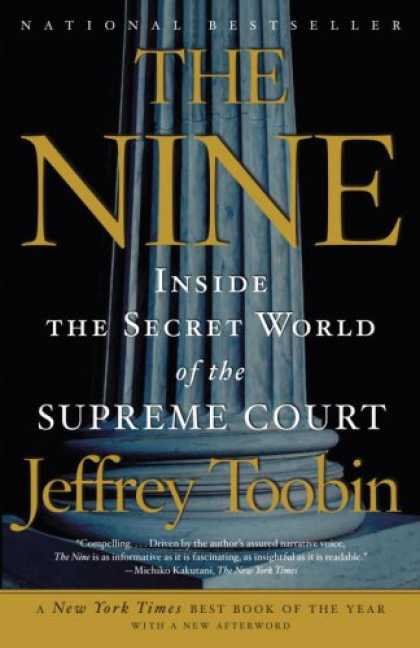
Jeffrey Toobin is a staff writer at THE NEW YORKER and a senior analyst for CNN. He is a well-known legal journalist and has written profiles of Supreme Court Justices Stephen Breyer, Anthony Kennedy, and Clarence Thomas for THE NEW YORKER. His most recent book, THE NINE: INSIDE THE SECRET WORLD OF THE SUPREME COURT, spent more than four months on THE NEW YORK TIMES best-seller list and was named one of the ten best books of the year by THE NEW YORK TIMES BOOK REVIEW, TIME, NEWSWEEK, FORTUNE, ENTERTAINMENT WEEKLY, and the ECONOMIST. His other books include TOO CLOSE TO CALL: THE 36-DAY BATTLE TO DECIDE THE 2000 ELECTION and A VAST CONSPIRACY: THE REAL STORY OF THE SEX SCANDAL THAT NEARLY BROUGHT DOWN A PRESIDENT, and THE RUN OF HIS LIFE: THE PEOPLE v. O.J. SIMPSON.
Before joining THE NEW YORKER in 1993, Toobin served as an Assistant United States Attorney in Brooklyn, New York. He also served as an associate counsel in the Office of Independent Counsel Lawrence E. Walsh, an experience that provided the basis for his first book, OPENING ARGUMENTS: A YOUNG LAWYER'S FIRST CASE — UNITED STATES V. OLIVER NORTH.
To Listen to the Episode and Access More Resources
More resources:
Bill Moyers: Buying the Bench
Justice for Sale
How would you feel if you were in court and knew that the opposing lawyer had contributed money to the judge's campaign fund? This is not an improbable hypothetical question, but could be a commonplace occurrence in the 21 states where judges must raise money to campaign for their seats — often from people with business before the court.
Though many states have elected judges since their founding, in the past 30 years, judicial elections have morphed from low-key affairs to big money campaigns. From 1999-2008, judicial candidates raised $200.4 million, more than double the $85.4 million raised in the previous decade (1989-1998).
Because of the costs of running such a campaign, critics contend that judges have had to become politicians and fundraisers rather than jurists. In a poll by Justice at Stake, 97% of elected state Supreme Court justices said they were under pressure to raise money during their election years.
According to retired Supreme Court Justice Sandra Day O'Connor, of all the fallout from the Citizens United decision, the most dangerous may be in judicial elections. These often low-profile affairs have become extraordinarily expensive in recent years, as interest groups have sought to shape the court in their favor by electing judges who share their views. With 87% of state judges facing election, the Citizens United case could have profound effects on the nation's court system. In remarks to Georgetown University law students, O'Connor said, "This rise in judicial campaigning makes last week's opinion in Citizens United a problem for an independent judiciary. No state can possibly benefit from having that much money injected into a political campaign."
This week the JOURNAL revisits "Justice for Sale," a 1999 documentary about the impact of money on judicial elections in three states — Pennsylvania, Texas and Louisiana. To create the documentary — produced by Steve Talbot and Sheila Kaplan — Bill Moyers collaborated with public television's acclaimed documentary series FRONTLINE and the Center for Investigative Reporting.
To Listen to the Episode and Access More Resources
Jeffrey Toobin
A late February 2010 ABC NEWS/WASHINGTON POST poll found that 80 percent of Americans on both sides of the aisle oppose the Supreme Court's ruling on campaign finance in Citizens United v. FEC. Sixty-five percent of those asked "strongly" oppose it. Legal analyst Jeffrey Toobin contends that, indeed, the ruling's potential to harm democracy runs very deep:
I think judicial elections are really the untold story of Citizens United, the untold implication. Because when the decision happened, a lot of people said, 'Okay. This means that Exxon will spend millions of dollars to defeat Barack Obama when he runs for re-election.' I don't think there's any chance of that at all. That's too high profile. There's too much money available from other sources in a presidential race. But judicial elections are really a national scandal that few people really know about. Because corporations in particular, and labor unions to a lesser extent, have such tremendous interest in who's on state supreme courts and even lower state courts that that's where they're going to put their money and their energy because they'll get better bang for their buck there.
Biography
Jeffrey Toobin is a staff writer at THE NEW YORKER and a senior analyst for CNN. He is a well-known legal journalist and has written profiles of Supreme Court Justices Stephen Breyer, Anthony Kennedy, and Clarence Thomas for THE NEW YORKER. His most recent book, THE NINE: INSIDE THE SECRET WORLD OF THE SUPREME COURT, spent more than four months on THE NEW YORK TIMES best-seller list and was named one of the ten best books of the year by THE NEW YORK TIMES BOOK REVIEW, TIME, NEWSWEEK, FORTUNE, ENTERTAINMENT WEEKLY, and the ECONOMIST. His other books include TOO CLOSE TO CALL: THE 36-DAY BATTLE TO DECIDE THE 2000 ELECTION and A VAST CONSPIRACY: THE REAL STORY OF THE SEX SCANDAL THAT NEARLY BROUGHT DOWN A PRESIDENT, and THE RUN OF HIS LIFE: THE PEOPLE v. O.J. SIMPSON.
Before joining THE NEW YORKER in 1993, Toobin served as an Assistant United States Attorney in Brooklyn, New York. He also served as an associate counsel in the Office of Independent Counsel Lawrence E. Walsh, an experience that provided the basis for his first book, OPENING ARGUMENTS: A YOUNG LAWYER'S FIRST CASE — UNITED STATES V. OLIVER NORTH.
To Listen to the Episode and Access More Resources
More resources:
Bill Moyers: Buying the Bench
Tuesday, April 27, 2010
Bill Moyers Journal: Jon Stewart
Jon Stewart
Bill Moyers Journal
Why do so many get their news and analysis from his fake news show?
The NEW YORK TIMES declared that when Jon Stewart took over as anchor of Comedy Central's THE DAILY SHOW, he "breathed new life into a show that hadn't even seemed to need it." In 2003, Stewart said of his role hosting the show, "Liberal and conservative have lost their meaning in America. I represent the distracted center." As declared on the show's site, "THE DAILY SHOW WITH JON STEWART is the most important television show ever, with the most important guests, hosts, and news - current event news, pop culture news, sports news, entertainment news - of all time."
For the past eight years, Stewart and "The Daily Show" have received 18 Emmy Award nominations and won nine. Jon himself was nominated for Outstanding Individual Performance in a Variety or Music Program in 2002, 2003, 2005 and again last year in 2006. In 2004, "The Daily Show with Jon Stewart" was also honored by the Television Critics Association by winning for Outstanding Achievement in News and Information, beating out traditional news shows in the category. In 2003 and 2005, Jon won for Individual Achievement in Comedy and the show won in 2003 for Outstanding Achievement in Comedy. In 2001, "The Daily Show with Jon Stewart" also received the prestigious Peabody Award for its "Indecision 2000" campaign coverage and again in 2005 for "Indecision 2004."
To Watch the Episode
Bill Moyers Journal
Why do so many get their news and analysis from his fake news show?
The NEW YORK TIMES declared that when Jon Stewart took over as anchor of Comedy Central's THE DAILY SHOW, he "breathed new life into a show that hadn't even seemed to need it." In 2003, Stewart said of his role hosting the show, "Liberal and conservative have lost their meaning in America. I represent the distracted center." As declared on the show's site, "THE DAILY SHOW WITH JON STEWART is the most important television show ever, with the most important guests, hosts, and news - current event news, pop culture news, sports news, entertainment news - of all time."
For the past eight years, Stewart and "The Daily Show" have received 18 Emmy Award nominations and won nine. Jon himself was nominated for Outstanding Individual Performance in a Variety or Music Program in 2002, 2003, 2005 and again last year in 2006. In 2004, "The Daily Show with Jon Stewart" was also honored by the Television Critics Association by winning for Outstanding Achievement in News and Information, beating out traditional news shows in the category. In 2003 and 2005, Jon won for Individual Achievement in Comedy and the show won in 2003 for Outstanding Achievement in Comedy. In 2001, "The Daily Show with Jon Stewart" also received the prestigious Peabody Award for its "Indecision 2000" campaign coverage and again in 2005 for "Indecision 2004."
To Watch the Episode
Monday, April 26, 2010
Bill Moyers Journal: Buying the War -- How Did the Mainstream Press Get it So Wrong?
(An important primer for anyone trying to understand the mainstream media's coverage of the Bush Administration's case for the War in Iraq. What is so valuable about this paticular special report is the extensive interviews with the actual reporters/journalists/talking-heads who covered the war and their personal reflections on their reporting on the war.)
Buying the War: How Did the Mainstream Press Get it So Wrong?
Bill Moyers Journal (PBS) Special Report
[Five] years ago on May 1, President Bush landed on the aircraft carrier USS Lincoln wearing a flight suit and delivered a speech in front of a giant "Mission Accomplished" banner. He was hailed by media stars as a "breathtaking" example of presidential leadership in toppling Saddam Hussein. Despite profound questions over the failure to locate weapons of mass destruction and the increasing violence in Baghdad, many in the press confirmed the White House's claim that the war was won. MSNBC's Chris Matthews declared, "We're all neo-cons now;" NPR's Bob Edwards said, "The war in Iraq is essentially over;" and Fortune magazine's Jeff Birnbaum said, "It is amazing how thorough the victory in Iraq really was in the broadest context."
How did the mainstream press get it so wrong? How did the evidence disputing the existence of weapons of mass destruction and the link between Saddam Hussein to 9-11 continue to go largely unreported? "What the conservative media did was easy to fathom; they had been cheerleaders for the White House from the beginning and were simply continuing to rally the public behind the President — no questions asked. How mainstream journalists suspended skepticism and scrutiny remains an issue of significance that the media has not satisfactorily explored," says Moyers. "How the administration marketed the war to the American people has been well covered, but critical questions remain: How and why did the press buy it, and what does it say about the role of journalists in helping the public sort out fact from propaganda?"
"Buying the War" includes interviews with Dan Rather, formerly of CBS; Tim Russert of MEET THE PRESS; Bob Simon of 60 MINUTES; Walter Isaacson, former president of CNN; and John Walcott, Jonathan Landay and Warren Strobel of Knight Ridder newspapers, which was acquired by The McClatchy Company in 2006.
In "Buying the War" Bill Moyers and producer Kathleen Hughes document the reporting of Walcott, Landay and Strobel, the Knight Ridder team that burrowed deep into the intelligence agencies to try and determine whether there was any evidence for the Bush Administration's case for war. "Many of the things that were said about Iraq didn't make sense," says Walcott. "And that really prompts you to ask, 'Wait a minute. Is this true? Does everyone agree that this is true? Does anyone think this is not true?'"
In the run-up to war, skepticism was a rarity among journalists inside the Beltway. Journalist Bob Simon of 60 MINUTES, who was based in the Middle East, questioned the reporting he was seeing and reading. "I mean we knew things or suspected things that perhaps the Washington press corps could not suspect. For example, the absurdity of putting up a connection between Saddam Hussein and Al Qaeda," he tells Moyers. "Saddam...was a total control freak. To introduce a wild card like Al Qaeda in any sense was just something he would not do. So I just didn't believe it for an instant." The program analyzes the stream of unchecked information from administration sources and Iraqi defectors to the mainstream print and broadcast press, which was then seized upon and amplified by an army of pundits. While almost all the claims would eventually prove to be false, the drumbeat of misinformation about WMDs went virtually unchallenged by the media. THE NEW YORK TIMES reported on Iraq's "worldwide hunt for materials to make an atomic bomb," but according to Landay, claims by the administration about the possibility of nuclear weapons were highly questionable. Yet, his story citing the "lack of hard evidence of Iraqi weapons" got little play. In fact, throughout the media landscape, stories challenging the official view were often pushed aside while the administration's claims were given prominence. "From August 2002 until the war was launched in March of 2003 there were about 140 front page pieces in THE WASHINGTON POST making the administration's case for war," says Howard Kurtz, the POST's media critic. "But there was only a handful of stories that ran on the front page that made the opposite case. Or, if not making the opposite case, raised questions."
"Buying the War" examines the press coverage in the lead-up to the war as evidence of a paradigm shift in the role of journalists in democracy and asks, four years after the invasion, what's changed? "More and more the media become, I think, common carriers of administration statements and critics of the administration," says THE WASHINGTON POST's Walter Pincus. "We've sort of given up being independent on our own."
To Watch/Listen to the Special Report and to Access Background Resources
Buying the War: How Did the Mainstream Press Get it So Wrong?
Bill Moyers Journal (PBS) Special Report
[Five] years ago on May 1, President Bush landed on the aircraft carrier USS Lincoln wearing a flight suit and delivered a speech in front of a giant "Mission Accomplished" banner. He was hailed by media stars as a "breathtaking" example of presidential leadership in toppling Saddam Hussein. Despite profound questions over the failure to locate weapons of mass destruction and the increasing violence in Baghdad, many in the press confirmed the White House's claim that the war was won. MSNBC's Chris Matthews declared, "We're all neo-cons now;" NPR's Bob Edwards said, "The war in Iraq is essentially over;" and Fortune magazine's Jeff Birnbaum said, "It is amazing how thorough the victory in Iraq really was in the broadest context."
How did the mainstream press get it so wrong? How did the evidence disputing the existence of weapons of mass destruction and the link between Saddam Hussein to 9-11 continue to go largely unreported? "What the conservative media did was easy to fathom; they had been cheerleaders for the White House from the beginning and were simply continuing to rally the public behind the President — no questions asked. How mainstream journalists suspended skepticism and scrutiny remains an issue of significance that the media has not satisfactorily explored," says Moyers. "How the administration marketed the war to the American people has been well covered, but critical questions remain: How and why did the press buy it, and what does it say about the role of journalists in helping the public sort out fact from propaganda?"
"Buying the War" includes interviews with Dan Rather, formerly of CBS; Tim Russert of MEET THE PRESS; Bob Simon of 60 MINUTES; Walter Isaacson, former president of CNN; and John Walcott, Jonathan Landay and Warren Strobel of Knight Ridder newspapers, which was acquired by The McClatchy Company in 2006.
In "Buying the War" Bill Moyers and producer Kathleen Hughes document the reporting of Walcott, Landay and Strobel, the Knight Ridder team that burrowed deep into the intelligence agencies to try and determine whether there was any evidence for the Bush Administration's case for war. "Many of the things that were said about Iraq didn't make sense," says Walcott. "And that really prompts you to ask, 'Wait a minute. Is this true? Does everyone agree that this is true? Does anyone think this is not true?'"
In the run-up to war, skepticism was a rarity among journalists inside the Beltway. Journalist Bob Simon of 60 MINUTES, who was based in the Middle East, questioned the reporting he was seeing and reading. "I mean we knew things or suspected things that perhaps the Washington press corps could not suspect. For example, the absurdity of putting up a connection between Saddam Hussein and Al Qaeda," he tells Moyers. "Saddam...was a total control freak. To introduce a wild card like Al Qaeda in any sense was just something he would not do. So I just didn't believe it for an instant." The program analyzes the stream of unchecked information from administration sources and Iraqi defectors to the mainstream print and broadcast press, which was then seized upon and amplified by an army of pundits. While almost all the claims would eventually prove to be false, the drumbeat of misinformation about WMDs went virtually unchallenged by the media. THE NEW YORK TIMES reported on Iraq's "worldwide hunt for materials to make an atomic bomb," but according to Landay, claims by the administration about the possibility of nuclear weapons were highly questionable. Yet, his story citing the "lack of hard evidence of Iraqi weapons" got little play. In fact, throughout the media landscape, stories challenging the official view were often pushed aside while the administration's claims were given prominence. "From August 2002 until the war was launched in March of 2003 there were about 140 front page pieces in THE WASHINGTON POST making the administration's case for war," says Howard Kurtz, the POST's media critic. "But there was only a handful of stories that ran on the front page that made the opposite case. Or, if not making the opposite case, raised questions."
"Buying the War" examines the press coverage in the lead-up to the war as evidence of a paradigm shift in the role of journalists in democracy and asks, four years after the invasion, what's changed? "More and more the media become, I think, common carriers of administration statements and critics of the administration," says THE WASHINGTON POST's Walter Pincus. "We've sort of given up being independent on our own."
To Watch/Listen to the Special Report and to Access Background Resources
Friday, April 23, 2010
Bill Moyers Journal: Bryan Stevenson and Michelle Alexander -- Are We Living in Marting Luther King Jr.'s America?
Bryan Stevenson and Michelle Alexander
Bill Moyers Journal

On April 4, 1968, Dr. Martin Luther King, Jr. was assassinated on the balcony of the Lorraine Motel. This week, BILL MOYERS JOURNAL observes the anniversary of King's murder by examining America in light of his dream. What would he think of our country today and where would he focus his fight against inequality and injustice?
Two talented lawyers who've dedicated their careers to fighting inequality, Michelle Alexander and Bryan Stevenson, join Bill Moyers on the JOURNAL to examine justice and injustice in America 42 years after King's death.
Alexander believes that King would be deeply troubled by the remaining inequality in America. As she tells Bill Moyers, "I think Martin Luther King would be thrilled by some of the individual progress of African Americans, but stunned, absolutely stunned and saddened, by the state of African Americans as a whole today."
Stevenson adds that to reach King's dream, America must address the causes of poverty, "I think in America, the opposite of poverty is justice. I think there are structures and systems that have created poverty, and have made that poverty so permanent, that until we think in a more just way about how to deal with poverty in this country, we're never gonna make the progress that Dr. King envisioned."
Both believe that America's policies of mass incarceration continue the cycle of poverty. America is the largest jailer on the planet, with 2.3 million people behind bars. But the policy of mass imprisonment, unique among industrialized nations, disproportianatetly affects minorities, especially African American men. One in 100 adults in America is behind bars, but one in nine African American men aged 20 to 34 is behind bars. Much of this arises from the "war on drugs." According to Human Rights Watch, African American adults have been arrested at a rate 2.8 to 5.5 times higher than white adults in every year from 1980 to 2007. Yet, according to government statistics, African Americans and whites have similar rates of illicit drug use and dealing.
A consequence of this disparity, and America's harsh treatment of lawbreakers, according to Alexander, is a population of people living in conditions shockingly like African Americans experienced under Jim Crow:
Stevenson points out that these are not inevitable policies:
To Listen to the Episode and Access More Resources
More:
Reflections on King's Dreams
U.S. Prisons and Drug Laws
Bill Moyers Journal
On April 4, 1968, Dr. Martin Luther King, Jr. was assassinated on the balcony of the Lorraine Motel. This week, BILL MOYERS JOURNAL observes the anniversary of King's murder by examining America in light of his dream. What would he think of our country today and where would he focus his fight against inequality and injustice?
Two talented lawyers who've dedicated their careers to fighting inequality, Michelle Alexander and Bryan Stevenson, join Bill Moyers on the JOURNAL to examine justice and injustice in America 42 years after King's death.
Alexander believes that King would be deeply troubled by the remaining inequality in America. As she tells Bill Moyers, "I think Martin Luther King would be thrilled by some of the individual progress of African Americans, but stunned, absolutely stunned and saddened, by the state of African Americans as a whole today."
Stevenson adds that to reach King's dream, America must address the causes of poverty, "I think in America, the opposite of poverty is justice. I think there are structures and systems that have created poverty, and have made that poverty so permanent, that until we think in a more just way about how to deal with poverty in this country, we're never gonna make the progress that Dr. King envisioned."
Both believe that America's policies of mass incarceration continue the cycle of poverty. America is the largest jailer on the planet, with 2.3 million people behind bars. But the policy of mass imprisonment, unique among industrialized nations, disproportianatetly affects minorities, especially African American men. One in 100 adults in America is behind bars, but one in nine African American men aged 20 to 34 is behind bars. Much of this arises from the "war on drugs." According to Human Rights Watch, African American adults have been arrested at a rate 2.8 to 5.5 times higher than white adults in every year from 1980 to 2007. Yet, according to government statistics, African Americans and whites have similar rates of illicit drug use and dealing.
A consequence of this disparity, and America's harsh treatment of lawbreakers, according to Alexander, is a population of people living in conditions shockingly like African Americans experienced under Jim Crow:
Today in communities of color across America, large majorities of African American men have been branded criminals, felons for life. And as a result, many are denied the right to vote, automatically excluded from juries, and legally discriminated against in employment, housing, access to public education-- public benefits. Many of the forms of discrimination we thought we left behind in the Jim Crow Era are legal again, once you've been branded a criminal.
Stevenson points out that these are not inevitable policies:
We didn't have to incarcerate people for 10, 20, 30, 40 years for simple possession of marijuana, for drug use. We didn't have to do that. We made choices around that. And now the consequences are devastating. I think they're not only devastating from a political perspective, but — I think this is the way I think it relates to Jim Crow, as well — it's also been devastating within communities of color. Right now, for black men in the United States, there's a 32 percent chance you're going to jail or prison. In poor communities and minority communities, urban communities, rural communities, it could be 60 percent or 70 percent. You're born, you're a ten-year-old kid. There's a 70 percent chance that you're going to go to jail and prison. What does that do to you?
To Listen to the Episode and Access More Resources
More:
Reflections on King's Dreams
U.S. Prisons and Drug Laws
Bill Moyers Journal: Richard Wilkinson and Kate Pickett -- American Inequality
(Moyers essay on American Inequality)
American Inequality
Bill Moyers Journal

In his closing essay for the April 2, 2010 JOURNAL, Bill Moyers references several works on inequality in America. Among these is THE SPIRIT LEVEL: WHY GREATER EQUALITY MAKES SOCIETIES STRONGER by Richard Wilkinson and Kate Pickett, who together have spent more than 50 years studying how inequality affects the health of a population.
Bill Moyers talked to them about their work.
To Listen to the Episode
American Inequality
Bill Moyers Journal
In his closing essay for the April 2, 2010 JOURNAL, Bill Moyers references several works on inequality in America. Among these is THE SPIRIT LEVEL: WHY GREATER EQUALITY MAKES SOCIETIES STRONGER by Richard Wilkinson and Kate Pickett, who together have spent more than 50 years studying how inequality affects the health of a population.
Bill Moyers talked to them about their work.
To Listen to the Episode
Thursday, February 25, 2010
Bill Moyers Journal: Buying the Bench; Justice for Sale; Jeffrey Toobin on the Supreme Court and the 'Citizens United' Case
(Here is the true threat of the Supreme Court Citizens United decision to remove limits on corporate spending in elections----the elections of judges)
Bill Moyers Journal
Buying the Bench
by Bill Moyers
BILL MOYERS: Over the course of a long career in journalism, I've covered this story of money in politics more than any other. From time to time, I've been hopeful about a change for the better, but truth is, it just keeps getting uglier every year.
Those who write the checks keep buying the results they want at the expense of the public. As a reputedly self-governing democracy, we desperately need to address the problems that we've created for ourselves, but money makes impossible the reforms that might save us.
Nothing in this country seems to be working to anyone's satisfaction except the wealth machine that rewards those who game the system. Unless we break their grip on our political institution, their power to buy the agenda they want no matter the cost to everyone else, we're finished as a functioning democracy.
To Listen Bill Moyers Entire Audio Essay
Justice for Sale
How would you feel if you were in court and knew that the opposing lawyer had contributed money to the judge's campaign fund? This is not an improbable hypothetical question, but could be a commonplace occurrence in the 21 states where judges must raise money to campaign for their seats — often from people with business before the court.
Though many states have elected judges since their founding, in the past 30 years, judicial elections have morphed from low-key affairs to big money campaigns. From 1999-2008, judicial candidates raised $200.4 million, more than double the $85.4 million raised in the previous decade (1989-1998).
Because of the costs of running such a campaign, critics contend that judges have had to become politicians and fundraisers rather than jurists. In a poll by Justice at Stake, 97% of elected state Supreme Court justices said they were under pressure to raise money during their election years.
According to retired Supreme Court Justice Sandra Day O'Connor, of all the fallout from the Citizens United decision, the most dangerous may be in judicial elections. These often low-profile affairs have become extraordinarily expensive in recent years, as interest groups have sought to shape the court in their favor by electing judges who share their views. With 87% of state judges facing election, the Citizens United case could have profound effects on the nation's court system. In remarks to Georgetown University law students, O'Connor said, "This rise in judicial campaigning makes last week's opinion in Citizens United a problem for an independent judiciary. No state can possibly benefit from having that much money injected into a political campaign."
This week the JOURNAL revisits "Justice for Sale," a 1999 documentary about the impact of money on judicial elections in three states — Pennsylvania, Texas and Louisiana. To create the documentary — produced by Steve Talbot and Sheila Kaplan — Bill Moyers collaborated with public television's acclaimed documentary series FRONTLINE and the Center for Investigative Reporting.
To Listen to this Episode
Jeffrey Toobin
A late February 2010 ABC NEWS/WASHINGTON POST poll found that 80 percent of Americans on both sides of the aisle oppose the Supreme Court's ruling on campaign finance in Citizens United v. FEC. Sixty-five percent of those asked "strongly" oppose it. Legal analyst Jeffrey Toobin contends that, indeed, the ruling's potential to harm democracy runs very deep:
Listen to the Interview
Bill Moyers Journal
Buying the Bench
by Bill Moyers
BILL MOYERS: Over the course of a long career in journalism, I've covered this story of money in politics more than any other. From time to time, I've been hopeful about a change for the better, but truth is, it just keeps getting uglier every year.
Those who write the checks keep buying the results they want at the expense of the public. As a reputedly self-governing democracy, we desperately need to address the problems that we've created for ourselves, but money makes impossible the reforms that might save us.
Nothing in this country seems to be working to anyone's satisfaction except the wealth machine that rewards those who game the system. Unless we break their grip on our political institution, their power to buy the agenda they want no matter the cost to everyone else, we're finished as a functioning democracy.
To Listen Bill Moyers Entire Audio Essay
Justice for Sale
How would you feel if you were in court and knew that the opposing lawyer had contributed money to the judge's campaign fund? This is not an improbable hypothetical question, but could be a commonplace occurrence in the 21 states where judges must raise money to campaign for their seats — often from people with business before the court.
Though many states have elected judges since their founding, in the past 30 years, judicial elections have morphed from low-key affairs to big money campaigns. From 1999-2008, judicial candidates raised $200.4 million, more than double the $85.4 million raised in the previous decade (1989-1998).
Because of the costs of running such a campaign, critics contend that judges have had to become politicians and fundraisers rather than jurists. In a poll by Justice at Stake, 97% of elected state Supreme Court justices said they were under pressure to raise money during their election years.
According to retired Supreme Court Justice Sandra Day O'Connor, of all the fallout from the Citizens United decision, the most dangerous may be in judicial elections. These often low-profile affairs have become extraordinarily expensive in recent years, as interest groups have sought to shape the court in their favor by electing judges who share their views. With 87% of state judges facing election, the Citizens United case could have profound effects on the nation's court system. In remarks to Georgetown University law students, O'Connor said, "This rise in judicial campaigning makes last week's opinion in Citizens United a problem for an independent judiciary. No state can possibly benefit from having that much money injected into a political campaign."
This week the JOURNAL revisits "Justice for Sale," a 1999 documentary about the impact of money on judicial elections in three states — Pennsylvania, Texas and Louisiana. To create the documentary — produced by Steve Talbot and Sheila Kaplan — Bill Moyers collaborated with public television's acclaimed documentary series FRONTLINE and the Center for Investigative Reporting.
To Listen to this Episode
Jeffrey Toobin
A late February 2010 ABC NEWS/WASHINGTON POST poll found that 80 percent of Americans on both sides of the aisle oppose the Supreme Court's ruling on campaign finance in Citizens United v. FEC. Sixty-five percent of those asked "strongly" oppose it. Legal analyst Jeffrey Toobin contends that, indeed, the ruling's potential to harm democracy runs very deep:
I think judicial elections are really the untold story of Citizens United, the untold implication. Because when the decision happened, a lot of people said, 'Okay. This means that Exxon will spend millions of dollars to defeat Barack Obama when he runs for re-election.' I don't think there's any chance of that at all. That's too high profile. There's too much money available from other sources in a presidential race. But judicial elections are really a national scandal that few people really know about. Because corporations in particular, and labor unions to a lesser extent, have such tremendous interest in who's on state supreme courts and even lower state courts that that's where they're going to put their money and their energy because they'll get better bang for their buck there.
Listen to the Interview
Saturday, February 06, 2010
Bill Moyers Journal Special Feature: Money and Politics
Special Feature: Money and Politics
Bill Moyers Journal
Government brought to you by the letter K Street and the number $X Billion?
Bill Moyers has spent years digging into the complex and controversial relationship between money and politics in America. As JOURNAL guest Robert Kaiser, author of SO DAMN MUCH MONEY, THE TRIUMPH OF LOBBYING AND THE CORROSION OF AMERICAN GOVERMMENT, noted: "There's a wonderful quote about it from Bob Dole, from 1983 or '2. Where he says, 'you know, poor people don't contribute to campaigns.' And there it was. You know, 30 years ago, the whole story is right in that phrase."
We've collected many of those reports in our special video player. Here you'll find an in-depth investigation into the world of disgraced lobbyist Jack Abramoff in CAPITOL CRIMES as well as analysis of campaign finance reform and the Citizens United v. FEC Supreme Court case. You can explore and share JOURNAL, NOW WITH BILL MOYERS and MOYERS ON AMERICA coverage of money and politics in the video player below. You'll also find online tools — like the Sunlight Foundation's Party Time (tracking campaign fundraising parties) and The Center for Responsive Politics' documentation of the bi-partisan revolving door between politics and lobbying.
To Watch the Special Documentary Series
Bill Moyers Journal
Government brought to you by the letter K Street and the number $X Billion?
Bill Moyers has spent years digging into the complex and controversial relationship between money and politics in America. As JOURNAL guest Robert Kaiser, author of SO DAMN MUCH MONEY, THE TRIUMPH OF LOBBYING AND THE CORROSION OF AMERICAN GOVERMMENT, noted: "There's a wonderful quote about it from Bob Dole, from 1983 or '2. Where he says, 'you know, poor people don't contribute to campaigns.' And there it was. You know, 30 years ago, the whole story is right in that phrase."
We've collected many of those reports in our special video player. Here you'll find an in-depth investigation into the world of disgraced lobbyist Jack Abramoff in CAPITOL CRIMES as well as analysis of campaign finance reform and the Citizens United v. FEC Supreme Court case. You can explore and share JOURNAL, NOW WITH BILL MOYERS and MOYERS ON AMERICA coverage of money and politics in the video player below. You'll also find online tools — like the Sunlight Foundation's Party Time (tracking campaign fundraising parties) and The Center for Responsive Politics' documentation of the bi-partisan revolving door between politics and lobbying.
To Watch the Special Documentary Series
Bill Moyers Journal: After Citizen United
After Citizen United
with Lawrence Lessig and Nick Gillespie
Bill Moyers Journal
Last month, the Supreme Court significantly weakened existing campaign finance laws. The Court's ruling in Citizen's United v. FEC — the latest and most sweeping of a long string of court defeats for the existing campaign finance regulations — leaves the legal and financial landscape of elections in a state of great uncertainty. Lawmakers, attorneys and legal experts have been scrambling to shape responses to the ruling at both state and federal levels of government. Some are trying to address the ruling with narrow legislative fixes while other groups are hoping to use the general opposition to the ruling to pass sweeping reforms.
To Listen/View the Episode and Access More Resources
More Resources:
Bill Moyers Journal Special Feature: Money and Politics
with Lawrence Lessig and Nick Gillespie
Bill Moyers Journal
Last month, the Supreme Court significantly weakened existing campaign finance laws. The Court's ruling in Citizen's United v. FEC — the latest and most sweeping of a long string of court defeats for the existing campaign finance regulations — leaves the legal and financial landscape of elections in a state of great uncertainty. Lawmakers, attorneys and legal experts have been scrambling to shape responses to the ruling at both state and federal levels of government. Some are trying to address the ruling with narrow legislative fixes while other groups are hoping to use the general opposition to the ruling to pass sweeping reforms.
To Listen/View the Episode and Access More Resources
More Resources:
Bill Moyers Journal Special Feature: Money and Politics
Subscribe to:
Posts (Atom)