Showing posts with label Judicial Branch. Show all posts

Saturday, May 01, 2010

Bill Moyers Journal: Justice for Sale; Jeffrey Toobin; Buying the Bench

Bill Moyers Journal (PBS)

Justice for Sale

How would you feel if you were in court and knew that the opposing lawyer had contributed money to the judge's campaign fund? This is not an improbable hypothetical question, but could be a commonplace occurrence in the 21 states where judges must raise money to campaign for their seats — often from people with business before the court.

Though many states have elected judges since their founding, in the past 30 years, judicial elections have morphed from low-key affairs to big money campaigns. From 1999-2008, judicial candidates raised $200.4 million, more than double the $85.4 million raised in the previous decade (1989-1998).

Because of the costs of running such a campaign, critics contend that judges have had to become politicians and fundraisers rather than jurists. In a poll by Justice at Stake, 97% of elected state Supreme Court justices said they were under pressure to raise money during their election years.

According to retired Supreme Court Justice Sandra Day O'Connor, of all the fallout from the Citizens United decision, the most dangerous may be in judicial elections. These often low-profile affairs have become extraordinarily expensive in recent years, as interest groups have sought to shape the court in their favor by electing judges who share their views. With 87% of state judges facing election, the Citizens United case could have profound effects on the nation's court system. In remarks to Georgetown University law students, O'Connor said, "This rise in judicial campaigning makes last week's opinion in Citizens United a problem for an independent judiciary. No state can possibly benefit from having that much money injected into a political campaign."

This week the JOURNAL revisits "Justice for Sale," a 1999 documentary about the impact of money on judicial elections in three states — Pennsylvania, Texas and Louisiana. To create the documentary — produced by Steve Talbot and Sheila Kaplan — Bill Moyers collaborated with public television's acclaimed documentary series FRONTLINE and the Center for Investigative Reporting.

To Listen to the Episode and Access More Resources

Jeffrey Toobin

A late February 2010 ABC NEWS/WASHINGTON POST poll found that 80 percent of Americans on both sides of the aisle oppose the Supreme Court's ruling on campaign finance in Citizens United v. FEC. Sixty-five percent of those asked "strongly" oppose it. Legal analyst Jeffrey Toobin contends that, indeed, the ruling's potential to harm democracy runs very deep:

I think judicial elections are really the untold story of Citizens United, the untold implication. Because when the decision happened, a lot of people said, 'Okay. This means that Exxon will spend millions of dollars to defeat Barack Obama when he runs for re-election.' I don't think there's any chance of that at all. That's too high profile. There's too much money available from other sources in a presidential race. But judicial elections are really a national scandal that few people really know about. Because corporations in particular, and labor unions to a lesser extent, have such tremendous interest in who's on state supreme courts and even lower state courts that that's where they're going to put their money and their energy because they'll get better bang for their buck there.


Biography

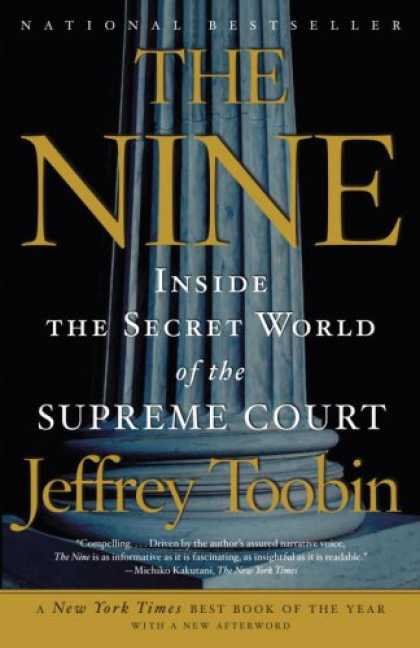
Jeffrey Toobin is a staff writer at THE NEW YORKER and a senior analyst for CNN. He is a well-known legal journalist and has written profiles of Supreme Court Justices Stephen Breyer, Anthony Kennedy, and Clarence Thomas for THE NEW YORKER. His most recent book, THE NINE: INSIDE THE SECRET WORLD OF THE SUPREME COURT, spent more than four months on THE NEW YORK TIMES best-seller list and was named one of the ten best books of the year by THE NEW YORK TIMES BOOK REVIEW, TIME, NEWSWEEK, FORTUNE, ENTERTAINMENT WEEKLY, and the ECONOMIST. His other books include TOO CLOSE TO CALL: THE 36-DAY BATTLE TO DECIDE THE 2000 ELECTION and A VAST CONSPIRACY: THE REAL STORY OF THE SEX SCANDAL THAT NEARLY BROUGHT DOWN A PRESIDENT, and THE RUN OF HIS LIFE: THE PEOPLE v. O.J. SIMPSON.

Before joining THE NEW YORKER in 1993, Toobin served as an Assistant United States Attorney in Brooklyn, New York. He also served as an associate counsel in the Office of Independent Counsel Lawrence E. Walsh, an experience that provided the basis for his first book, OPENING ARGUMENTS: A YOUNG LAWYER'S FIRST CASE — UNITED STATES V. OLIVER NORTH.

To Listen to the Episode and Access More Resources

More resources:

Bill Moyers: Buying the Bench

Sunday, February 28, 2010

Revolution By the Book: Mountain Justice Dispatch #2

Mountain Justice Dispatch #2
Revolution By the Book

Escalating Sanctions against Mountaintop Removal Protesters

“Protesters Occupy Marfork Coal Co.’s Office in Response to Mounting Violations,” said a press release from the protesters’ supporters at Climate Ground Zero on Thursday morning, Feb. 18.

A news release from Massey Energy, Marfork’s parent company, told rather a different story: “Environmental Terrorists Invade Marfork Coal Company Office…. Three criminals clad in fatigues and carrying chains invaded a company office and chained themselves to chairs in the lobby. A terrified receptionist went into shock and was transported by ambulance to a local hospital…. One of the criminals, Mike Roselle, was a founding member of Earth First!, which is considered by many to be a domestic terrorist group…. These domestic terrorists are part of an anti-coal group that wants to shut down mining in Appalachia and destroy West Virginia’s economy.”

Massey’s “news release” doesn’t specify who those “many” are who consider Mike and his colleagues to be “domestic terrorists.” But even right-wing activist Ron Arnold, who’s written an entire book on “ecoterrorism,” asserts that “Roselle may be a terrible pain in the ass, but he’s no terrorist.” Writing shortly after Mike’s first trespassing arrest on Massey property, at Marfork’s Bee Tree strip mine site a year ago, Arnold scolded those who would “dilute” the meaning of the word terrorism by applying it to nonviolent protest.

“Face it,” he wrote, “what he did was civil disobedience, not terrorism.”

The claim that “a terrified receptionist went into shock” is equally puzzling. “She was definitely startled when we came in,” says Joe Hamsher, one of the three protesters arrested that day. But soon “she calmed down. She was even laughing.”

Protests are not a new experience for Massey workers. Since February of last year, more than 130 arrests have been made at civil-disobedience actions protesting mountaintop-removal (MTR) strip mining for coal in West Virginia. Several of those actions have targeted Marfork, which has begun blasting at its Bee Tree MTR site a short distance from its enormous Brushy Fork impoundment, which holds billions of gallons of liquid coal waste up above the Coal River valley. Anti-MTR activists and local residents are concerned that blasting so close to the impoundment, which is built over abandoned underground coal mine tunnels, risks catastrophic flooding that by Massey’s own estimate could kill close to a thousand people.

The only violence or threats of violence at any of these actions have been directed at the protesters, not vice versa. For example, at a protest rally at the front gate of Massey’s Goals Coal facility last June, a Massey supporter slapped anti-MTR activist Judy Bonds hard enough that she couldn’t move her neck properly for days. Most recently, in January, workers at Marfork’s Bee Tree site blared multiple airhorns, day and night, at three protesters sitting in trees there, risking permanent damage to the protesters’ hearing. At a previous tree sit, last summer, a sitter was threatened with gang rape.

“We were definitely not much of a threat to her,” Joe Hamsher says, referring to the receptionist at the Marfork office. “I mean, we were locked down.” Joe, the first of the three to enter the building that morning, announced “this is a protest,” then immediately sat down and locked himself to a chair. (That’s why they were carrying chains.)

To Read the Rest of the Report

Thursday, February 25, 2010

Bill Moyers Journal: Buying the Bench; Justice for Sale; Jeffrey Toobin on the Supreme Court and the 'Citizens United' Case

(Here is the true threat of the Supreme Court Citizens United decision to remove limits on corporate spending in elections----the elections of judges)

Bill Moyers Journal

Buying the Bench
by Bill Moyers

BILL MOYERS: Over the course of a long career in journalism, I've covered this story of money in politics more than any other. From time to time, I've been hopeful about a change for the better, but truth is, it just keeps getting uglier every year.

Those who write the checks keep buying the results they want at the expense of the public. As a reputedly self-governing democracy, we desperately need to address the problems that we've created for ourselves, but money makes impossible the reforms that might save us.

Nothing in this country seems to be working to anyone's satisfaction except the wealth machine that rewards those who game the system. Unless we break their grip on our political institution, their power to buy the agenda they want no matter the cost to everyone else, we're finished as a functioning democracy.

To Listen Bill Moyers Entire Audio Essay

Justice for Sale

How would you feel if you were in court and knew that the opposing lawyer had contributed money to the judge's campaign fund? This is not an improbable hypothetical question, but could be a commonplace occurrence in the 21 states where judges must raise money to campaign for their seats — often from people with business before the court.

Though many states have elected judges since their founding, in the past 30 years, judicial elections have morphed from low-key affairs to big money campaigns. From 1999-2008, judicial candidates raised $200.4 million, more than double the $85.4 million raised in the previous decade (1989-1998).

Because of the costs of running such a campaign, critics contend that judges have had to become politicians and fundraisers rather than jurists. In a poll by Justice at Stake, 97% of elected state Supreme Court justices said they were under pressure to raise money during their election years.

According to retired Supreme Court Justice Sandra Day O'Connor, of all the fallout from the Citizens United decision, the most dangerous may be in judicial elections. These often low-profile affairs have become extraordinarily expensive in recent years, as interest groups have sought to shape the court in their favor by electing judges who share their views. With 87% of state judges facing election, the Citizens United case could have profound effects on the nation's court system. In remarks to Georgetown University law students, O'Connor said, "This rise in judicial campaigning makes last week's opinion in Citizens United a problem for an independent judiciary. No state can possibly benefit from having that much money injected into a political campaign."

This week the JOURNAL revisits "Justice for Sale," a 1999 documentary about the impact of money on judicial elections in three states — Pennsylvania, Texas and Louisiana. To create the documentary — produced by Steve Talbot and Sheila Kaplan — Bill Moyers collaborated with public television's acclaimed documentary series FRONTLINE and the Center for Investigative Reporting.

To Listen to this Episode

Jeffrey Toobin

A late February 2010 ABC NEWS/WASHINGTON POST poll found that 80 percent of Americans on both sides of the aisle oppose the Supreme Court's ruling on campaign finance in Citizens United v. FEC. Sixty-five percent of those asked "strongly" oppose it. Legal analyst Jeffrey Toobin contends that, indeed, the ruling's potential to harm democracy runs very deep:

I think judicial elections are really the untold story of Citizens United, the untold implication. Because when the decision happened, a lot of people said, 'Okay. This means that Exxon will spend millions of dollars to defeat Barack Obama when he runs for re-election.' I don't think there's any chance of that at all. That's too high profile. There's too much money available from other sources in a presidential race. But judicial elections are really a national scandal that few people really know about. Because corporations in particular, and labor unions to a lesser extent, have such tremendous interest in who's on state supreme courts and even lower state courts that that's where they're going to put their money and their energy because they'll get better bang for their buck there.


Listen to the Interview