Foundry Workers Strike to Save Their Healthcare
by David Bacon
In These Times
Berkeley, Calif.—A strike of more than 450 workers in one of the largest foundries on the west coast brought production to a halt Sunday night, at Pacific Steel Castings. The work stoppage, which began at midnight, has continued with round-the-clock picketing at the factory gates in West Berkeley.
Local 164B of the Glass, Molders, Pottery, Plastics and Allied Workers International Union (GMP) has been negotiating a new labor agreement at Pacific Steel for several months. The old agreement expired on Sunday night.
The strike was caused by demands from the company's owners for concessions and takeaway proposals in contract negotiations. Those include:
■ requiring workers to pay at least 20% of the cost of their medical insurance, amounting to about $300 per month per employee.
■ a wage freeze for the first two years of the agreement, and tiny raises after that.
■ eliminating the ability of workers to use their seniority to bid for overtime, allowing criteria including speedup, discrimination and favoritism.
"All eight other foundries in the Bay Area have agreed to a fair contract," said Ignacio De La Fuente, GMP international vice-president. "Workers at Pacific Steel haven't had a raise in the last two years, in order to help the company pay for increases in health plan costs. Pacific Steel is now alone among the rest in trying to make its workers give back $300 a month."
The $300/month would mean an approximately 10 percent cut in wages for most workers at the foundry.
Joel Soto, a member of the union's negotiating committee, has worked eight years at Pacific Steel, and has a wife, 2-year-old child and another on the way. Soto said, "We've been trying to save money for a house. If we have to give up $300 a month, we'll have to continue renting. My wife and I both support our parents, and that $300 cut is what we're able to give them now that they're old. And with my wife pregnant, we can't do without that medical care."
Benito Navarro has 10 years at the foundry, and a wife and son. "That $300 is what I pay for my car to get to work. I'm the only one in my family working, so if we don't have that money, I'll have to give up the car. But I'd rather eat than drive."
On both Monday and Tuesday dozens of Berkeley police, with helmets and face shields, shoved and hit strikers as they attempted to help the company bring trucks full of castings out of its struck facility. On Tuesday, one striker, Norma Garcia, who is seven months pregnant, was struck in the abdomen and taken to a hospital.
To Read the Rest of the Article
Showing posts with label Police Brutality. Show all posts
Showing posts with label Police Brutality. Show all posts
Wednesday, March 23, 2011

Monday, February 21, 2011
Guardian: Libya in crisis - live updates
Libya in crisis - live updates
• Two Libyan fighter land in Malta seeking political asylum
• Libya denies reports Gaddafi is on way to Venezuela
• Ambassadors resign in China, India, Indonesia and Poland
• UN sec gen Ban Ki Moon says violence 'must stop immediately'
To Access the Guardian Live Reports Page
• Two Libyan fighter land in Malta seeking political asylum
• Libya denies reports Gaddafi is on way to Venezuela
• Ambassadors resign in China, India, Indonesia and Poland
• UN sec gen Ban Ki Moon says violence 'must stop immediately'
To Access the Guardian Live Reports Page
Sunday, February 20, 2011
Thursday, February 10, 2011
Democracy Now Reports on the Egyptian Revolution: February 9th/10th
Democracy Now
February 10th
Striking Egyptian Workers Fuel the Uprising After 10 Years of Labor Organizing
Egypt’s pro-democracy uprising is surging after striking workers joined in the protests nationwide. Thousands of Egyptian workers walked off the job Wednesday demanding better wages and benefits. Strikes were reported in Cairo, Alexandria, Luxor and the Suez Canal. We speak to Stanford University Professor Joel Beinin, who, as the former director of Middle East Studies at the American University in Cairo, has closely studied the Egyptian labor movement for years. “This is huge, because there has been for the last 10 years an enormous wave of labor protests in Egypt,” Beinin says. “In the last few days what you’ve seen is tens of thousands of workers linking their economic demands to the political demand that the Mubarak regime step aside.”
Defying Regime Threats, Thousands of Workers Join Protesters in Tahrir Square
February 9th
After Record-Level Turnout in Tahrir, Egyptian Protests Spread to Parliament, Cabinet Buildings; Labor Unions Launch Strikes Nationwide
Egypt’s pro-democracy uprising is seizing new momentum one day after hundreds of thousands turned out for one of the largest protests in Cairo’s Tahrir Square to date. A gathering of protesters led to the evacuation of the Egyptian cabinet building today, and tent camps are also being set up outside the Egyptian parliament. Egypt’s labor movement has launched new strikes across the country, with an estimated 10,000 workers taking part. Democracy Now! senior producer Sharif Abdel Kouddous interviews a demonstrator outside the Egyptian parliament building.
“We Are Writing History by Our Blood”: Egyptian Physician on Why Protests Won’t End Until Mubarak Resigns
Democracy Now! senior producer Sharif Abdel Kouddous speaks to Egyptian physician Dr. Ali El Mashad in Cairo’s Tahrir Square over the weekend. Dr. Mashad describes being injured in the streets and bleeding from the head. “We are writing history by our blood,” he says. Mashad says he will not stop demonstrating until Mubarak leaves office.
Human Rights Watch: 300 Deaths, Massive Detentions and Abuse under Mubarak Regime Crackdown
Human Rights Watch is reporting that at least 302 people have died in Egypt since pro-Mubarak forces launched a violent response to the popular uprising last month. The group says at least 232 people have died in Cairo, 52 in Alexandria, and 18 in Suez, but warns the actual death toll could be far higher. We speak with Human Rights Watch researcher Heba Morayef, who has been monitoring the situation on the ground since the protests began.
“People Are Taking Care of Each Other”: Democracy Now!’s Anjali Kamat Camps with Protesters Overnight in Tahrir Square
Democracy Now! correspondent Anjali Kamat reports on the festive atmosphere in Tahrir Square last night following a record-level turnout of protesters: “People are really taking care of each other very well, giving each other food, water and blankets. It was a very moving experience,” Kamat says.
“The Great Tragedy is Obama Chose Not to Hold Out His Hand”: Robert Fisk on the Gap Between U.S. Rhetoric and Action in the Egyptian Uprising
The longtime Middle East correspondent of The Independent newspaper in London joins us from Cairo to talk about the popular uprising ongoing across Egypt, its regional implications, and how Obama should respond. “[The protesters] are asking for nothing less than Americans accept in their own lives,” Fisk says.
February 10th
Striking Egyptian Workers Fuel the Uprising After 10 Years of Labor Organizing
Egypt’s pro-democracy uprising is surging after striking workers joined in the protests nationwide. Thousands of Egyptian workers walked off the job Wednesday demanding better wages and benefits. Strikes were reported in Cairo, Alexandria, Luxor and the Suez Canal. We speak to Stanford University Professor Joel Beinin, who, as the former director of Middle East Studies at the American University in Cairo, has closely studied the Egyptian labor movement for years. “This is huge, because there has been for the last 10 years an enormous wave of labor protests in Egypt,” Beinin says. “In the last few days what you’ve seen is tens of thousands of workers linking their economic demands to the political demand that the Mubarak regime step aside.”
Defying Regime Threats, Thousands of Workers Join Protesters in Tahrir Square
February 9th
After Record-Level Turnout in Tahrir, Egyptian Protests Spread to Parliament, Cabinet Buildings; Labor Unions Launch Strikes Nationwide
Egypt’s pro-democracy uprising is seizing new momentum one day after hundreds of thousands turned out for one of the largest protests in Cairo’s Tahrir Square to date. A gathering of protesters led to the evacuation of the Egyptian cabinet building today, and tent camps are also being set up outside the Egyptian parliament. Egypt’s labor movement has launched new strikes across the country, with an estimated 10,000 workers taking part. Democracy Now! senior producer Sharif Abdel Kouddous interviews a demonstrator outside the Egyptian parliament building.
“We Are Writing History by Our Blood”: Egyptian Physician on Why Protests Won’t End Until Mubarak Resigns
Democracy Now! senior producer Sharif Abdel Kouddous speaks to Egyptian physician Dr. Ali El Mashad in Cairo’s Tahrir Square over the weekend. Dr. Mashad describes being injured in the streets and bleeding from the head. “We are writing history by our blood,” he says. Mashad says he will not stop demonstrating until Mubarak leaves office.
Human Rights Watch: 300 Deaths, Massive Detentions and Abuse under Mubarak Regime Crackdown
Human Rights Watch is reporting that at least 302 people have died in Egypt since pro-Mubarak forces launched a violent response to the popular uprising last month. The group says at least 232 people have died in Cairo, 52 in Alexandria, and 18 in Suez, but warns the actual death toll could be far higher. We speak with Human Rights Watch researcher Heba Morayef, who has been monitoring the situation on the ground since the protests began.
“People Are Taking Care of Each Other”: Democracy Now!’s Anjali Kamat Camps with Protesters Overnight in Tahrir Square
Democracy Now! correspondent Anjali Kamat reports on the festive atmosphere in Tahrir Square last night following a record-level turnout of protesters: “People are really taking care of each other very well, giving each other food, water and blankets. It was a very moving experience,” Kamat says.
“The Great Tragedy is Obama Chose Not to Hold Out His Hand”: Robert Fisk on the Gap Between U.S. Rhetoric and Action in the Egyptian Uprising
The longtime Middle East correspondent of The Independent newspaper in London joins us from Cairo to talk about the popular uprising ongoing across Egypt, its regional implications, and how Obama should respond. “[The protesters] are asking for nothing less than Americans accept in their own lives,” Fisk says.
Sunday, February 06, 2011
Squad Mekhennet and Nicholas Kulish: 2 Detained Reporters Saw Egytpian Police’s Methods
2 Detained Reporters Saw Police’s Methods
By SOUAD MEKHENNET and NICHOLAS KULISH
The New York Times
CAIRO — We had been detained by Egyptian authorities, handed over to the country’s dreaded Mukhabarat, the secret police, and interrogated. They left us all night in a cold room, on hard orange plastic stools, under fluorescent lights.
But our discomfort paled in comparison to the dull whacks and the screams of pain by Egyptian people that broke the stillness of the night. In one instance, between the cries of suffering, an officer said in Arabic, “You are talking to journalists? You are talking badly about your country?”
A voice, also in Arabic, answered: “You are committing a sin. You are committing a sin.”
We — Souad Mekhennet, Nicholas Kulish and a driver, who is not a journalist and was not involved in the demonstrations — were detained Thursday afternoon while driving into Cairo. We were stopped at a checkpoint and thus began a 24-hour journey through Egyptian detention, ending with — we were told by the soldiers who delivered us there — the secret police. When asked, they declined to identify themselves.
Captivity was terrible. We felt powerless — uncertain about where and how long we would be held. But the worst part had nothing to do with our treatment. It was seeing — and in particular hearing through the walls of this dreadful facility — the abuse of Egyptians at the hands of their own government.
For one day, we were trapped in the brutal maze where Egyptians are lost for months or even years. Our detainment threw into haunting relief the abuses of security services, the police, the secret police and the intelligence service, and explained why they were at the forefront of complaints made by the protesters.
Many journalists shared this experience, and many were kept in worse conditions — some suffering from injuries as well.
According to the Committee to Protect Journalists, over the period we were held there were 30 detentions of journalists, 26 assaults and 8 instances of equipment being seized. We saw a journalist with his head bandaged and others brought in with jackets thrown over their heads as they were led by armed men.
In the morning, we could hear the strained voice of a man with a French accent calling out in English: “Where am I? What is happening to me? Answer me. Answer me.”
This prompted us into action — pressing to be released with more urgency, and indeed fear, than before. A plainclothes officer who said his name was Marwan gestured to us. “Come to the door,” he said, “and look out.”
We saw more than 20 people, Westerners and Egyptians, blindfolded and handcuffed. The room had been empty when we arrived the evening before.
“We could be treating you a lot worse,” he said in a flat tone, the facts speaking for themselves. Marwan said Egyptians were being held in the thousands. During the night we heard them being beaten, screaming after every blow.
We were on our way back to Cairo after reporting about the demonstrations from Alexandria for The Times. We were traveling with journalists from the German public television station ZDF, a normal practice in such conditions — safety in numbers.
At the outskirts of Cairo, we were stopped at what looked like a civilian checkpoint.
We had been through many checkpoints without problems, but after the driver opened our trunk a tremendous uproar began. They saw a large black bag with an orange ZDF microphone poking out. In the tense environment, television crews had been attacked and accused of creating anti-Egyptian propaganda. We had been in the middle of a near-riot with the same crew the day before.
The crowd shouted and banged on the car, pulling the doors open. The ZDF crew in the other car managed to drive off, while we were stuck. Instead of dragging us out as we expected, two men pushed their way into the backseat. We were relieved that they were taking us from the crowd, until one pulled out his police identification. Rather than helping us escape, he was now detaining us.
The officer gave the driver directions to an impromptu police station in the Sharabiya district of Cairo, on the roof of a lumber warehouse. The officer in charge there, who identified himself as Ehab, said they were the secret police.
They searched the ZDF bags and found much more than just a camera. “We have a woman with a German passport of Arab origin and an American in a car with camera, satellite equipment and $10,000,” he said. “This is very suspicious. I think they need to be checked.”
Anxiety turned to anticipation when we were driven to a military base. The military had been the closest thing Egypt had to a guarantor of stability and we thought once we explained who we were and provided documentation we would be allowed to go to our hotel.
In a strange exchange that only made sense later, Ms. Mekhennet asked a soldier, “Where are you taking us?” The soldier answered: “My heart goes out to you. I’m sorry.”
To Read the Rest of the Report
By SOUAD MEKHENNET and NICHOLAS KULISH
The New York Times
CAIRO — We had been detained by Egyptian authorities, handed over to the country’s dreaded Mukhabarat, the secret police, and interrogated. They left us all night in a cold room, on hard orange plastic stools, under fluorescent lights.
But our discomfort paled in comparison to the dull whacks and the screams of pain by Egyptian people that broke the stillness of the night. In one instance, between the cries of suffering, an officer said in Arabic, “You are talking to journalists? You are talking badly about your country?”
A voice, also in Arabic, answered: “You are committing a sin. You are committing a sin.”
We — Souad Mekhennet, Nicholas Kulish and a driver, who is not a journalist and was not involved in the demonstrations — were detained Thursday afternoon while driving into Cairo. We were stopped at a checkpoint and thus began a 24-hour journey through Egyptian detention, ending with — we were told by the soldiers who delivered us there — the secret police. When asked, they declined to identify themselves.
Captivity was terrible. We felt powerless — uncertain about where and how long we would be held. But the worst part had nothing to do with our treatment. It was seeing — and in particular hearing through the walls of this dreadful facility — the abuse of Egyptians at the hands of their own government.
For one day, we were trapped in the brutal maze where Egyptians are lost for months or even years. Our detainment threw into haunting relief the abuses of security services, the police, the secret police and the intelligence service, and explained why they were at the forefront of complaints made by the protesters.
Many journalists shared this experience, and many were kept in worse conditions — some suffering from injuries as well.
According to the Committee to Protect Journalists, over the period we were held there were 30 detentions of journalists, 26 assaults and 8 instances of equipment being seized. We saw a journalist with his head bandaged and others brought in with jackets thrown over their heads as they were led by armed men.
In the morning, we could hear the strained voice of a man with a French accent calling out in English: “Where am I? What is happening to me? Answer me. Answer me.”
This prompted us into action — pressing to be released with more urgency, and indeed fear, than before. A plainclothes officer who said his name was Marwan gestured to us. “Come to the door,” he said, “and look out.”
We saw more than 20 people, Westerners and Egyptians, blindfolded and handcuffed. The room had been empty when we arrived the evening before.
“We could be treating you a lot worse,” he said in a flat tone, the facts speaking for themselves. Marwan said Egyptians were being held in the thousands. During the night we heard them being beaten, screaming after every blow.
We were on our way back to Cairo after reporting about the demonstrations from Alexandria for The Times. We were traveling with journalists from the German public television station ZDF, a normal practice in such conditions — safety in numbers.
At the outskirts of Cairo, we were stopped at what looked like a civilian checkpoint.
We had been through many checkpoints without problems, but after the driver opened our trunk a tremendous uproar began. They saw a large black bag with an orange ZDF microphone poking out. In the tense environment, television crews had been attacked and accused of creating anti-Egyptian propaganda. We had been in the middle of a near-riot with the same crew the day before.
The crowd shouted and banged on the car, pulling the doors open. The ZDF crew in the other car managed to drive off, while we were stuck. Instead of dragging us out as we expected, two men pushed their way into the backseat. We were relieved that they were taking us from the crowd, until one pulled out his police identification. Rather than helping us escape, he was now detaining us.
The officer gave the driver directions to an impromptu police station in the Sharabiya district of Cairo, on the roof of a lumber warehouse. The officer in charge there, who identified himself as Ehab, said they were the secret police.
They searched the ZDF bags and found much more than just a camera. “We have a woman with a German passport of Arab origin and an American in a car with camera, satellite equipment and $10,000,” he said. “This is very suspicious. I think they need to be checked.”
Anxiety turned to anticipation when we were driven to a military base. The military had been the closest thing Egypt had to a guarantor of stability and we thought once we explained who we were and provided documentation we would be allowed to go to our hotel.
In a strange exchange that only made sense later, Ms. Mekhennet asked a soldier, “Where are you taking us?” The soldier answered: “My heart goes out to you. I’m sorry.”
To Read the Rest of the Report
Firedoglake: Police Brutality Alive and Well in Houston: Teen Battered [Video]
[The video is amazing for so clearly capturing six officers brutalizing a 15 year old in broad daylight and being broadcast on TV news (and available in this link), but what is also very disturbing is the Houston Mayor Annise Parker's attempts to defend the police brutality, her attempt to suppress the video, and her attempt to threaten community activist Quannel X (awesome in the video) for releasing it to the media.]
Firedoglake: Police Brutality Alive and Well in Houston: Teen Battered [Video]
Firedoglake: Police Brutality Alive and Well in Houston: Teen Battered [Video]
Tuesday, November 23, 2010
John Conroy: A Torture Story Without End; Waterboarding and Torture; Neal Desai: Newspapers and "Waterboarding"
On the Media (NPR)
For Reporter John Conroy, A Torture Story Without End
[In July], former police commander Jon Burge was convicted after 30 years of accusations that he’d tortured dozens of suspects on Chicago’s South Side. It should have been the satisfying culmination of decades of single-minded investigative reporting on the story by longtime Chicago reporter John Conroy. But as Conroy explains, not all is as it appears to be.
To Listen/Read the Episode
Waterboarding and Torture
On the Media has discussed the semantic, political and ethical debate over torture and waterboarding since 9/11/2001. Brooke returns to some of the voices we've heard from on the subject and appraises where we stand in 2010.
To Listen/Read the Episode
Newspapers and "Waterboarding"
When details emerged during the Bush Administration about so-called "harsh interrogation techniques," news organizations debated whether they should classify waterboarding as torture. A recent study from the Shorenstein Center at Harvard took a look back at the coverage and found that four of the largest newspapers did not classify it as torture after 2004, even though for the previous century they had. Neal Desai, the main author of the paper, explains how they found this dramatic shift.
To Listen/Read the Episode
For Reporter John Conroy, A Torture Story Without End
[In July], former police commander Jon Burge was convicted after 30 years of accusations that he’d tortured dozens of suspects on Chicago’s South Side. It should have been the satisfying culmination of decades of single-minded investigative reporting on the story by longtime Chicago reporter John Conroy. But as Conroy explains, not all is as it appears to be.
To Listen/Read the Episode
Waterboarding and Torture
On the Media has discussed the semantic, political and ethical debate over torture and waterboarding since 9/11/2001. Brooke returns to some of the voices we've heard from on the subject and appraises where we stand in 2010.
To Listen/Read the Episode
Newspapers and "Waterboarding"
When details emerged during the Bush Administration about so-called "harsh interrogation techniques," news organizations debated whether they should classify waterboarding as torture. A recent study from the Shorenstein Center at Harvard took a look back at the coverage and found that four of the largest newspapers did not classify it as torture after 2004, even though for the previous century they had. Neal Desai, the main author of the paper, explains how they found this dramatic shift.
To Listen/Read the Episode
Monday, November 01, 2010
Keeanga-Yamahtta Taylor: Black Power Revolt of the 1960s
Black Power Revolt of the 1960s
With Keeanga-Yamahtta Taylor
We Are Many
Link to the Video
With Keeanga-Yamahtta Taylor
We Are Many
Black Power Revolt of the 1960's - Keeanga-Yamahtta Taylor from RedReel on Vimeo.
Link to the Video
Saturday, October 16, 2010
Kristian Williams: American Methods: Torture and the Logic of Domination
(Extra credit opportunity for HUM 121 students--watch the episode and write a response)
Kristian Williams: American Methods: Torture and the Logic of Domination
FORA TV (Originally broadcast on C-SPAN)
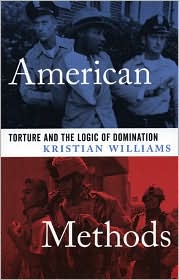
In American Methods author Kristian Williams argues that the U.S. Government has used torture as a method of social control and terror since the 1980s. Mr. Williams cites the 2004 Abu Ghraib prison incident, where American military personnel were investigated for the abuse of prisoners, as an example of traditional American torture. This event was hosted by Elliott Bay Book Company in Seattle, Washington.
Kristian Williams' writings have appeared in CounterPunch, Columbia Journalism Review, and We Are Everywhere: The Irresistible Rise of Global Anti-Capitalism. A member of Rose City Copwatch in Portland, Oregon, Williams also authored Our Enemies in Blue. There is no transcript for this program
To Watch the Episode
Kristian Williams: American Methods: Torture and the Logic of Domination
FORA TV (Originally broadcast on C-SPAN)
In American Methods author Kristian Williams argues that the U.S. Government has used torture as a method of social control and terror since the 1980s. Mr. Williams cites the 2004 Abu Ghraib prison incident, where American military personnel were investigated for the abuse of prisoners, as an example of traditional American torture. This event was hosted by Elliott Bay Book Company in Seattle, Washington.
Kristian Williams' writings have appeared in CounterPunch, Columbia Journalism Review, and We Are Everywhere: The Irresistible Rise of Global Anti-Capitalism. A member of Rose City Copwatch in Portland, Oregon, Williams also authored Our Enemies in Blue. There is no transcript for this program
To Watch the Episode
Saturday, September 04, 2010
Toronto G20 Legal Fallout
Toronto G20 Legal Fallout
InfoShop (Prepared by CrimeThinc.)
What kind of world do the G20 leaders want to create? They showed us a sneak preview at the G20 summit in Toronto last June: a billion-dollar security budget, 20,000 security personnel, secret laws, pre-dawn house raids, indiscriminate attacks with batons, tear gas, and rubber bullets. Over 1100 people were arrested, most of whom were never charged.
If this is the future, who can blame people for resisting?
Since the G20 protests, we’ve waited breathlessly for a comprehensive account of the charges and investigations stemming from the summit. Despairing of finding one, we finally prepared this report. It’s not all-inclusive; there is a tremendous amount to keep up with, and many important details are still being forcefully withheld.
To Read the Entire Report and Access More Resources
InfoShop (Prepared by CrimeThinc.)
What kind of world do the G20 leaders want to create? They showed us a sneak preview at the G20 summit in Toronto last June: a billion-dollar security budget, 20,000 security personnel, secret laws, pre-dawn house raids, indiscriminate attacks with batons, tear gas, and rubber bullets. Over 1100 people were arrested, most of whom were never charged.
If this is the future, who can blame people for resisting?
Since the G20 protests, we’ve waited breathlessly for a comprehensive account of the charges and investigations stemming from the summit. Despairing of finding one, we finally prepared this report. It’s not all-inclusive; there is a tremendous amount to keep up with, and many important details are still being forcefully withheld.
To Read the Entire Report and Access More Resources
Tuesday, July 27, 2010
Democracy Now: Jury Convicts Chicago Police Commander Jon Burge of Lying About Torture
Jury Convicts Chicago Police Commander Jon Burge of Lying About Torture
Democracy Now
Decades after torture allegations were first leveled against former Chicago police commander Jon Burge, a federal jury has found him guilty of lying about torturing prisoners into making confessions. Burge has long been accused of overseeing the systematic torture of more than 100 African American men. Two years ago federal prosecutors finally brought charges against Burge—not for torture, but for lying about it. On Monday afternoon, after a five-week trial, Jon Burge was found guilty on all counts of perjury and obstruction of justice for lying about the abuse. He could face up to forty-five years in prison.
To Watch/Listen/Read
Democracy Now
Decades after torture allegations were first leveled against former Chicago police commander Jon Burge, a federal jury has found him guilty of lying about torturing prisoners into making confessions. Burge has long been accused of overseeing the systematic torture of more than 100 African American men. Two years ago federal prosecutors finally brought charges against Burge—not for torture, but for lying about it. On Monday afternoon, after a five-week trial, Jon Burge was found guilty on all counts of perjury and obstruction of justice for lying about the abuse. He could face up to forty-five years in prison.
To Watch/Listen/Read
Monday, July 26, 2010
Toronto Police Arrest Over 600 in Crackdown Outside G20 Summit; Naomi Klein - The Real Crime Scene Was Inside the G20 Summit
(Reports on the June G20 Summit in Toronto, The Protests, and the Police Violence)
Democracy Now
Toronto Police Arrest Over 600 in Crackdown Outside G20 Summit
Canadian police have arrested over 600 people in Toronto in a police crackdown on protests at the G20 summit. Riot police used batons, plastic bullets and tear gas for the first time in the city’s history. More than 19,000 security personnel were deployed in Toronto, and a nearly four-mile-long security wall was erected around the G20 summit site at the Toronto Convention Center. The security price tag for the summit is estimated at around $1 billion. Franklin Lopez of the Vancouver Media Co-op filed this report from the streets of Toronto.
Naomi Klein: The Real Crime Scene Was Inside the G20 Summit
As thousands protested in the streets of Toronto, inside the G20 summit world leaders agreed to a controversial goal of cutting government deficits in half by 2013. We speak with journalist Naomi Klein. "What actually happened at the summit is that the global elites just stuck the bill for their drunken binge with the world’s poor, with the people that are most vulnerable," Klein says.
Journalist Describes Being Beaten, Arrested by Canadian Police While Covering G20 Protest
Among the hundreds of people arrested at the G20 protests in Toronto were a number of journalists. Jesse Rosenfeld is a freelance reporter who was on assignment for The Guardian newspaper of London. He is also a journalist with the Alternative Media Center. He was arrested and detained by Canadian police on Saturday evening covering a protest in front of the Novotel Hotel.
Democracy Now
Toronto Police Arrest Over 600 in Crackdown Outside G20 Summit
Canadian police have arrested over 600 people in Toronto in a police crackdown on protests at the G20 summit. Riot police used batons, plastic bullets and tear gas for the first time in the city’s history. More than 19,000 security personnel were deployed in Toronto, and a nearly four-mile-long security wall was erected around the G20 summit site at the Toronto Convention Center. The security price tag for the summit is estimated at around $1 billion. Franklin Lopez of the Vancouver Media Co-op filed this report from the streets of Toronto.
Naomi Klein: The Real Crime Scene Was Inside the G20 Summit
As thousands protested in the streets of Toronto, inside the G20 summit world leaders agreed to a controversial goal of cutting government deficits in half by 2013. We speak with journalist Naomi Klein. "What actually happened at the summit is that the global elites just stuck the bill for their drunken binge with the world’s poor, with the people that are most vulnerable," Klein says.
Journalist Describes Being Beaten, Arrested by Canadian Police While Covering G20 Protest
Among the hundreds of people arrested at the G20 protests in Toronto were a number of journalists. Jesse Rosenfeld is a freelance reporter who was on assignment for The Guardian newspaper of London. He is also a journalist with the Alternative Media Center. He was arrested and detained by Canadian police on Saturday evening covering a protest in front of the Novotel Hotel.
Friday, July 16, 2010
The Real News Network: G20 Reports of Police Brutality -- "THEY ARE NEVER GOING TO GET INSIDE MY HEAD"; "WE ASKED THEM FOR MERCY...THEY LAUGHED AT US"
The Real News Network
Highly recommended! Clear videos of the abuse this peaceful protestor suffered, of her being hit/slammed/cuffed and thrown into an umarked van with plainclothes police, and testimony of the beating and sexual threats she received from these police officers.
This was reported in mainstream news (CNN/CBC/Toronto Star), now... hear her story in her own words--very inspiring testimong from an intelligent, brave activist:
"THEY ARE NEVER GOING TO GET INSIDE MY HEAD"
Another good description from a (non-protesting) citizen swept up in the police raids--interesting the lessons being taught by the police state to everyday citizens (not to mention activists)
"G20: WE ASKED THEM FOR MERCY... THEY LAUGHED AT US"
Highly recommended! Clear videos of the abuse this peaceful protestor suffered, of her being hit/slammed/cuffed and thrown into an umarked van with plainclothes police, and testimony of the beating and sexual threats she received from these police officers.
This was reported in mainstream news (CNN/CBC/Toronto Star), now... hear her story in her own words--very inspiring testimong from an intelligent, brave activist:
"THEY ARE NEVER GOING TO GET INSIDE MY HEAD"
Another good description from a (non-protesting) citizen swept up in the police raids--interesting the lessons being taught by the police state to everyday citizens (not to mention activists)
"G20: WE ASKED THEM FOR MERCY... THEY LAUGHED AT US"
Wednesday, July 14, 2010
George Ciccariello-Maher: Oakland's Verdict -- In the Oscar Grant Movement, Steel Sharpens Steel
Oakland's Verdict: In the Oscar Grant Movement, Steel Sharpens Steel
By GEORGE CICCARIELLO-MAHER
Counterpunch

Oakland.
For the fourth time in less than two years, Oakland has become a surreal scene. As though fleeing a tsunami, thousands have packed into their cars in a mass exodus from the downtown area, and are sitting in twenty blocks of traffic headed north on Broadway. The jury in the murder trial of Johannes Mehserle, the transit cop who shot and killed Oscar Grant some eighteen months ago, has reached a verdict, which will be read in a few short minutes.
The response by the Oakland Police Department and the thousands of other officers drafted into an ironically-titled “mutual aid” scheme has been predictably overblown: alarms have been triggered in major buildings downtown to force evacuations, and the fear of God has been struck into the heart of every corporate and government employee in a ten-block radius. The police, it seems, are expecting a war, and are preparing accordingly.
Nonprofits: Velvet Glove of the State
But as I have said previously, this was never just about the police, as a powerful alliance had emerged between nonprofit and local city leaders whose sole objective seemed to be heading off a repeat of last year’s rebellions by co-opting the anger of the people at the verdict. Instead of a well-orchestrated symphony of hegemonic control, however, this alliance yielded a cacophony of clumsy embarrassment that discredited all involved. Here is how it played out:
Absent for the preceding 18 months while community members busily demanded and worked for justice, a whole host of state, business, and nonprofit institutions jerked into motion in the face of the impending verdict. Their clumsiness was immediately transparent in a staged press conference thrown together at the last minute by Mayor Ron Dellums with the participation of city leaders and the Oakland Police. In desperate need of some degree of legitimacy, the Mayor’s office drafted three members of the Laney College Black Student Union, who were trotted out and expected to parrot the official line: Peace without Justice.
While the measure was partially successful in providing the barest façade of unity (for example, in the uncritical coverage by the Oakland Tribune), the reality was that this co-optation attempt was a partial victory at best: the three young men took turns attacking the police for their threatening preparations and distinguishing between property destruction and violence, while Dellums squirmed and OPD chief Anthony Batts stared on in icy silence. Afterward, all three young men angrily confessed to feeling “used” by the Mayor and city officials.
Simultaneously, a whole host of nonprofits with nominally radical roots drew increasingly closer to the city and pushed the same line. The Urban Peace Movement, for example, teamed up with Youth Uprising to push the slogan “Violence is Not Justice” a now-notorious Public Service Announcement which was as ill-conceived as the Mayor’s press conference. In the PSA, the violent murder of Oscar Grant is explicitly equated to the property destruction that followed, and the nonprofit-state alliance becomes absolutely clear in interviews with OPD as well as San Francisco District Attorney Kamala Harris. Once released, the PSA was explosively polarizing, even within the nonprofit community, where many well-meaning activists take economic refuge.
Similarly polarizing was the next effort by the nonprofits and local government, one aimed more directly at the community-planned day-of-verdict event. A local, democratic, grassroots organization known as the Oakland Assembly had planned for months a gathering on the day of the verdict, one which would privilege the voices of the young people of color most affected by police violence, but this did not stop nonprofits and local city officials from attempting to upstage the community by holding their own event less than a block away, in front of City Hall, and demanding that community organizers join the official event.
Community organizers quickly denounced this and other efforts by nonprofits and city officials to co-opt the popular movement for justice in a press conference that was largely ignored by a media looking for sensationalistic stories of impending violence. Community calls for freedom of speech and assembly to be respected were taken up by some in the nonprofit community who did not buy into the city’s intimidation campaign and attempt to police movements, and once it became clear that the Oakland Assembly would not participate, the city-sponsored event collapsed.
“My Son Was Murdered!”
As the slow stampede of commuters continues to pour out of Oakland, we receive word of a verdict: involuntary manslaughter, which some had been predicting from day one. While it was initially unclear, the jury did in fact add a weapons enhancement, but it remains to be seen whether or not Judge Robert Perry will allow the seemingly contradictory conclusion--an involuntary killing alongside the purportedly voluntary use of a firearm--to stand. As though expecting that his final sentencing would prove controversial, Perry scheduled it for a full month later, on August 6th, but to add insult to injury, a defense motion was granted which postpones sentencing indefinitely.
In a clearly emotional response to the media after the verdict, Oscar Grant’s mother Wanda Johnson responded to the verdict in the most unambiguous of terms:
Grant’s uncle Cephus “Bobby” Johnson expressed a sentiment similar to Wanda’s, that the family had been “slapped in the face by this system that has denied us true justice.”
In a nauseating parallel to the Youth Uprising PSA, the Director of that same organization, Olis Simmons, took Bobby’s statement as an opportunity to turn the violence of the state once again back toward its victims. Knowing perfectly what she was playing into, she told that mouthpiece of reaction in the Bay, the San Francisco Chronicle, of her disappointment at Bobby’s words: “Damn… He just opened the door. Kicked it open. I don’t think he meant to, but he did it.” Thus from mourning uncle, Oscar Grant’s uncle Bobby is symbolically transformed into violent aggressor. This tactic, so long used by abusers of all stripes, is called blaming the victim, and it is reprehensible.
To Read the Rest of the Article
By GEORGE CICCARIELLO-MAHER
Counterpunch
Oakland.
For the fourth time in less than two years, Oakland has become a surreal scene. As though fleeing a tsunami, thousands have packed into their cars in a mass exodus from the downtown area, and are sitting in twenty blocks of traffic headed north on Broadway. The jury in the murder trial of Johannes Mehserle, the transit cop who shot and killed Oscar Grant some eighteen months ago, has reached a verdict, which will be read in a few short minutes.
The response by the Oakland Police Department and the thousands of other officers drafted into an ironically-titled “mutual aid” scheme has been predictably overblown: alarms have been triggered in major buildings downtown to force evacuations, and the fear of God has been struck into the heart of every corporate and government employee in a ten-block radius. The police, it seems, are expecting a war, and are preparing accordingly.
Nonprofits: Velvet Glove of the State
But as I have said previously, this was never just about the police, as a powerful alliance had emerged between nonprofit and local city leaders whose sole objective seemed to be heading off a repeat of last year’s rebellions by co-opting the anger of the people at the verdict. Instead of a well-orchestrated symphony of hegemonic control, however, this alliance yielded a cacophony of clumsy embarrassment that discredited all involved. Here is how it played out:
Absent for the preceding 18 months while community members busily demanded and worked for justice, a whole host of state, business, and nonprofit institutions jerked into motion in the face of the impending verdict. Their clumsiness was immediately transparent in a staged press conference thrown together at the last minute by Mayor Ron Dellums with the participation of city leaders and the Oakland Police. In desperate need of some degree of legitimacy, the Mayor’s office drafted three members of the Laney College Black Student Union, who were trotted out and expected to parrot the official line: Peace without Justice.
While the measure was partially successful in providing the barest façade of unity (for example, in the uncritical coverage by the Oakland Tribune), the reality was that this co-optation attempt was a partial victory at best: the three young men took turns attacking the police for their threatening preparations and distinguishing between property destruction and violence, while Dellums squirmed and OPD chief Anthony Batts stared on in icy silence. Afterward, all three young men angrily confessed to feeling “used” by the Mayor and city officials.
Simultaneously, a whole host of nonprofits with nominally radical roots drew increasingly closer to the city and pushed the same line. The Urban Peace Movement, for example, teamed up with Youth Uprising to push the slogan “Violence is Not Justice” a now-notorious Public Service Announcement which was as ill-conceived as the Mayor’s press conference. In the PSA, the violent murder of Oscar Grant is explicitly equated to the property destruction that followed, and the nonprofit-state alliance becomes absolutely clear in interviews with OPD as well as San Francisco District Attorney Kamala Harris. Once released, the PSA was explosively polarizing, even within the nonprofit community, where many well-meaning activists take economic refuge.
Similarly polarizing was the next effort by the nonprofits and local government, one aimed more directly at the community-planned day-of-verdict event. A local, democratic, grassroots organization known as the Oakland Assembly had planned for months a gathering on the day of the verdict, one which would privilege the voices of the young people of color most affected by police violence, but this did not stop nonprofits and local city officials from attempting to upstage the community by holding their own event less than a block away, in front of City Hall, and demanding that community organizers join the official event.
Community organizers quickly denounced this and other efforts by nonprofits and city officials to co-opt the popular movement for justice in a press conference that was largely ignored by a media looking for sensationalistic stories of impending violence. Community calls for freedom of speech and assembly to be respected were taken up by some in the nonprofit community who did not buy into the city’s intimidation campaign and attempt to police movements, and once it became clear that the Oakland Assembly would not participate, the city-sponsored event collapsed.
“My Son Was Murdered!”
As the slow stampede of commuters continues to pour out of Oakland, we receive word of a verdict: involuntary manslaughter, which some had been predicting from day one. While it was initially unclear, the jury did in fact add a weapons enhancement, but it remains to be seen whether or not Judge Robert Perry will allow the seemingly contradictory conclusion--an involuntary killing alongside the purportedly voluntary use of a firearm--to stand. As though expecting that his final sentencing would prove controversial, Perry scheduled it for a full month later, on August 6th, but to add insult to injury, a defense motion was granted which postpones sentencing indefinitely.
In a clearly emotional response to the media after the verdict, Oscar Grant’s mother Wanda Johnson responded to the verdict in the most unambiguous of terms:
My son was murdered!
He was murdered!
He was murdered!
He was murdered!
My son was murdered!
And the law has not held the officer accountable…
Grant’s uncle Cephus “Bobby” Johnson expressed a sentiment similar to Wanda’s, that the family had been “slapped in the face by this system that has denied us true justice.”
In a nauseating parallel to the Youth Uprising PSA, the Director of that same organization, Olis Simmons, took Bobby’s statement as an opportunity to turn the violence of the state once again back toward its victims. Knowing perfectly what she was playing into, she told that mouthpiece of reaction in the Bay, the San Francisco Chronicle, of her disappointment at Bobby’s words: “Damn… He just opened the door. Kicked it open. I don’t think he meant to, but he did it.” Thus from mourning uncle, Oscar Grant’s uncle Bobby is symbolically transformed into violent aggressor. This tactic, so long used by abusers of all stripes, is called blaming the victim, and it is reprehensible.
To Read the Rest of the Article
Wednesday, April 21, 2010
Seeing Red Radio: Haiti, Melvin Jones III, MLK and Tony Cliff 2.2
Haiti, Melvin Jones III, MLK and Tony Cliff 2.2
Seeing Red Radio
This week we look at the hidden history of Haiti and the devastation exacted by global capital long before the earthquake struck, juxtaposing Pat Robertson’s hateful words with the “curse” inflicted by the World Bank and others. Also, horrific video is released of a white Springfield, MA police officer beating an African-American man while he was subdued by other officers, we’ll examine the racist legacy of the officer in question and the city’s infamously brutal police department. The last half-hour includes two talks from the Seeing Red archives: Martin Luther King speaking about protest and SWP founder Tony Cliff on the revolutionary party.
Audio montage includes clips from Blackbox Radio, Al Jazeera, Raj Patel, Naomi Klein and Pat Robertson
What You’re Not Hearing about Haiti (But Should Be) by Carl Lindskoog
Obama Received $20 Million from Healthcare Industry in 2008 Campaign by Brad Jacobson
Tea Party Convention Squeezes Fans
Frustrated With Government Lies, Mexican Electricians Declare Wildcat Actions by Kristin Bricker
Savage Police Brutality Revealed by Gary Lapon
Audio of Paul Robeson Interview
Music:
Lafayette Afro-Rock Band – Hihache
Gift of Gab & Lateef – Kalakuta Show
Leadbelly – Bourgeois Blues
Sharon Jones & the Dap-Kings – Stop Payin’ Taxes
Background music from John Zorn, Bad Plus, Utah Philips & Ani DiFranco and others
To Listen to the Episode
Seeing Red Radio
This week we look at the hidden history of Haiti and the devastation exacted by global capital long before the earthquake struck, juxtaposing Pat Robertson’s hateful words with the “curse” inflicted by the World Bank and others. Also, horrific video is released of a white Springfield, MA police officer beating an African-American man while he was subdued by other officers, we’ll examine the racist legacy of the officer in question and the city’s infamously brutal police department. The last half-hour includes two talks from the Seeing Red archives: Martin Luther King speaking about protest and SWP founder Tony Cliff on the revolutionary party.
Audio montage includes clips from Blackbox Radio, Al Jazeera, Raj Patel, Naomi Klein and Pat Robertson
What You’re Not Hearing about Haiti (But Should Be) by Carl Lindskoog
Obama Received $20 Million from Healthcare Industry in 2008 Campaign by Brad Jacobson
Tea Party Convention Squeezes Fans
Frustrated With Government Lies, Mexican Electricians Declare Wildcat Actions by Kristin Bricker
Savage Police Brutality Revealed by Gary Lapon
Audio of Paul Robeson Interview
Music:
Lafayette Afro-Rock Band – Hihache
Gift of Gab & Lateef – Kalakuta Show
Leadbelly – Bourgeois Blues
Sharon Jones & the Dap-Kings – Stop Payin’ Taxes
Background music from John Zorn, Bad Plus, Utah Philips & Ani DiFranco and others
To Listen to the Episode
Subscribe to:
Posts (Atom)