Showing posts with label Crime. Show all posts

Sunday, March 20, 2011

Dave Johnson: Koch Industries And Native-American Reservation Oil Theft

Koch And Native-American Reservation Oil Theft
By Dave Johnson
Campaign for America's Future

Just what is this Koch Industries? Should it be called a "company?" If so we need to re-think the idea of what a company and a business is supposed to be. Even the brother of Koch Industries owners David and Charles Koch called the company an "organized crime" operation.

Koch money is a key driver of the conservative movement. Almost every conservative-movement rock you turn over has Koch money crawling around under it. As the movement becomes more and more of a pay-to-play operation conservatives of every stripe do more and more to protect and enrich the Koch operation. This has included blocking, disrupting and avoiding official investigations of accusations. It also includes funding front groups to advance the political and financial interests of the company and its owners.

Theft Of Oil From Reservations

Oppose The Future has the story of how Koch Oil was caught stealing oil from an Indian Reservation, reduding or removing the incomes of so many poor residents.

At some point in 1987, Thurmon Parton’s royalty checks for the three oil wells he inherited from his mother suddenly dropped from $3,000 a month to a little over $1,000. He and his sister, Arnita Gonzalez, members of the Caddo tribe, lived near Gracemont, Oklahoma, a town of a few hundred people on a small grid on the prairie.

Those modest royalties were the only source of income each of them had.

. . . What happened to Mr. Parton, Ms. Gonzales and Ms. Limpy had nothing to do with the wells or how they were producing. Their oil was being stolen. And all of the evidence pointed to the same culprit: Koch Oil, a division of Koch Industries.


This is an important story today because it helps us understand the nature of the Koch operation, which has so much influence over our politics and even livelihoods today. It also helps us understand why our government not only appears to be influenced, but often to be outright corrupted. From the story,

In the spring of 1989, a Special Committee on Investigations of the United States Senate’s Select Committee on Indian Affairs was formed to look into concerns that the path to tribal self-rule was impeded by fraud, corruption and mismanagement from all sides.

... Within a span of months, the Special Committee determined that “Koch [Oil] was engaged in systematic theft, stealing millions in Oklahoma alone.” BLM, even with a tip that Koch was behaving improperly, hadn’t done a thing.


Oppose The Future lays out the story and details of the oil theft. There is also story of the years following.

"A Broad Pattern Of Criminal Behavior"

Back in 1996 Business Week looked into the relationship between then-Senator and Presidential Candidate Bob Dole and Koch Industries and an apparent pattern of influence by the company, in BOB DOLE'S OIL-PATCH PALS. Here are some excerpts from their investigation, [emphasis added]

Koch has had a history of run-ins with the Justice Dept. and other federal agencies. In 1989, a special congressional committee looked into charges that Koch had routinely removed more oil from storage tanks on Indian tribal lands ... Dole tried to influence the Senate committee to soft-pedal the probe. Nevertheless, after a yearlong investigation, the committee said in its final report, "Koch Oil, the largest purchaser of Indian oil in the country, is the most dramatic example of an oil company stealing by deliberate mismeasurement and fraudulent reporting." The report triggered a grand jury probe. The inquiry was dropped in March, 1992, which provoked outrage by congressional investigators.

Then in April, 1995, the Justice Dept. filed a $55 million civil suit against Koch for causing more than 300 oil spills over a five-year period. Dole and other Senators, however, sponsored a bill ... that critics charge would help Koch defend itself ... legal sources say the government's ultimate goal is to use evidence in the two actions to establish that Koch has engaged in a broad pattern of criminal behavior.

... From Apr. 19, 1991, through Nov. 2, 1992, David Koch and the Koch Industries political action committee together contributed $7,000 to Nickles' campaign war chest. Around the same time, [Oklahoma Republican Senator Don] Nickles sponsored Timothy D. Leonard, an old friend of Nickles, for the post of U.S. Attorney in Oklahoma City. ... nitially, questions were raised in the U.S. attorney's office about whether Leonard should recuse himself because Koch Industries purchased oil from wells in which Leonard and his family had royalty interests ... Then-Deputy Attorney General William P. Barr granted him a waiver to participate in the case ... In March, 1992, after an 18-month investigation, the U.S. Attorney's office terminated the grand jury probe and informed Koch it anticipated no indictments. ... As the grand jury investigation was winding down, Nickles sponsored Leonard for a federal judgeship. He was nominated by President Bush in November, 1991, and confirmed by the Senate the following August.


Business week lays out the evidence in detail. The timing, with Republican administration/committee/agency/department after administration/committee/agency/department impeding and/or dropping investigations into Koch activities is also clear.

To Read the Rest of the Report

Monday, February 28, 2011

Government Report: U.S. Has Wasted Tens Of Billions Of Dollars On Contractors In Iraq And Afghanistan

Report: U.S. Has Wasted Tens Of Billions Of Dollars On Contractors In Iraq And Afghanistan
by Susan Crabtree
Talking Points Memo

A new report from a bipartisan commission set up to scrutinize the unprecedented use of contractors in Iraq and Afghanistan concludes that the United States has wasted tens of billions of the nearly $177 billion that has been spent on those contracts and grants since 2002.

The report, titled "At What Risk? Correcting Over-reliance on Contractors in Contingency Operations," said its estimate may even understate the problem because it may not take into full account ill-conceived projects, poor planning and oversight by the U.S. government, as well as criminal behavior and blatant corruption by both government and contractor employees.

"For many years," the report says, "the government has abdicated its contracting responsibilities - too often using contractors as the default mechanism ... without consideration for the resources needed to manage them."

The commission, chaired by Michael Thibault, former deputy director of the Defense Contract Audit Agency, and former Rep. Chris Shays (R-CT) holds a hearing Monday to review the new report's findings.

About 200,000 contractor employees are working in Iraq and Afghanistan -- a number roughly equal to the American military forces deployed there, according to the report. Their work includes guarding bases, building facilities, providing food and laundry services, escorting supply and personnel movements, and translating local languages.

To Read the Rest of the Essay

Wednesday, February 23, 2011

Move On: Top 10 Shocking Attacks from the GOP's War on Women

(From Move On -- sources are at the end of the list.)

Top 10 Shocking Attacks from the GOP's War on Women

1) Republicans not only want to reduce women's access to abortion care, they're actually trying to redefine rape. After a major backlash, they promised to stop. But they haven't yet. Shocker.

2) A state legislator in Georgia wants to change the legal term for victims of rape, stalking, and domestic violence to "accuser." But victims of other less gendered crimes, like burglary, would remain "victims."

3) In South Dakota, Republicans proposed a bill that could make it legal to murder a doctor who provides abortion care. (Yep, for real.)

4) Republicans want to cut nearly a billion dollars of food and other aid to low-income pregnant women, mothers, babies, and kids.

5) In Congress, Republicans have a bill that would let hospitals allow a woman to die rather than perform an abortion necessary to save her life.

6) Maryland Republicans ended all county money for a low-income kids' preschool program. Why? No need, they said. Women should really be home with the kids, not out working.

7) And at the federal level, Republicans want to cut that same program, Head Start, by $1 billion. That means over 200,000 kids could lose their spots in preschool.

8) Two-thirds of the elderly poor are women, and Republicans are taking aim at them too. A spending bill would cut funding for employment services, meals, and housing for senior citizens.

9) Congress just voted for a Republican amendment to cut all federal funding from Planned Parenthood health centers, one of the most trusted providers of basic health care and family planning in our country.

10) And if that wasn't enough, Republicans are pushing to eliminate all funds for the only federal family planning program. (For humans. But Republican Dan Burton has a bill to provide contraception for wild horses. You can't make this stuff up).

Sources:

1. "'Forcible Rape' Language Remains In Bill To Restrict Abortion Funding," The Huffington Post, February 9, 2011

"Extreme Abortion Coverage Ban Introduced," Center for American Progress, January 20, 2011

2. "Georgia State Lawmaker Seeks To Redefine Rape Victims As 'Accusers,'" The Huffington Post, February 4, 2011

3. "South Dakota bill would legalize killing abortion doctors," Salon, February 15, 2011

4. "House GOP Proposes Cuts to Scores of Sacred Cows," National Journal, February 9, 2011

5. "New GOP Bill Would Allow Hospitals To Let Women Die Instead Of Having An Abortion," Talking Points Memo, February 4, 2011

6. "Republican Officials Cut Head Start Funding, Saying Women Should be Married and Home with Kids," Think Progress, February 16, 2011

7. "Bye Bye, Big Bird. Hello, E. Coli," The New Republic, Feburary 12, 2011

8. "House GOP spending cuts will devastate women, families and economy," The Hill, February 16, 2011

9. "House passes measure stripping Planned Parenthood funding," MSNBC, February 18,2011

"GOP Spending Plan: X-ing Out Title X Family Planning Funds," Wall Street Journal, February 9, 2011

10. Ibid.

"Birth Control for Horses, Not for Women," Blog for Choice, February 17, 2011

Tuesday, February 22, 2011

Matt Taibbi: Why Isn't Wall Street in Jail?

[Courtesy of Democracy Now's interview with Taibbi]

Why Isn't Wall Street in Jail? Financial crooks brought down the world's economy — but the feds are doing more to protect them than to prosecute them
by Matt Taibbi
Rolling Stone

Over drinks at a bar on a dreary, snowy night in Washington this past month, a former Senate investigator laughed as he polished off his beer.

"Everything's fucked up, and nobody goes to jail," he said. "That's your whole story right there. Hell, you don't even have to write the rest of it. Just write that."

I put down my notebook. "Just that?"

"That's right," he said, signaling to the waitress for the check. "Everything's fucked up, and nobody goes to jail. You can end the piece right there."

Nobody goes to jail. This is the mantra of the financial-crisis era, one that saw virtually every major bank and financial company on Wall Street embroiled in obscene criminal scandals that impoverished millions and collectively destroyed hundreds of billions, in fact, trillions of dollars of the world's wealth — and nobody went to jail. Nobody, that is, except Bernie Madoff, a flamboyant and pathological celebrity con artist, whose victims happened to be other rich and famous people.

...

Here's how regulation of Wall Street is supposed to work. To begin with, there's a semigigantic list of public and quasi-public agencies ostensibly keeping their eyes on the economy, a dense alphabet soup of banking, insurance, S&L, securities and commodities regulators like the Federal Reserve, the Federal Deposit Insurance Corp. (FDIC), the Office of the Comptroller of the Currency (OCC) and the Commodity Futures Trading Commission (CFTC), as well as supposedly "self-regulating organizations" like the New York Stock Exchange. All of these outfits, by law, can at least begin the process of catching and investigating financial criminals, though none of them has prosecutorial power.

The major federal agency on the Wall Street beat is the Securities and Exchange Commission. The SEC watches for violations like insider trading, and also deals with so-called "disclosure violations" — i.e., making sure that all the financial information that publicly traded companies are required to make public actually jibes with reality. But the SEC doesn't have prosecutorial power either, so in practice, when it looks like someone needs to go to jail, they refer the case to the Justice Department. And since the vast majority of crimes in the financial services industry take place in Lower Manhattan, cases referred by the SEC often end up in the U.S. Attorney's Office for the Southern District of New York. Thus, the two top cops on Wall Street are generally considered to be that U.S. attorney — a job that has been held by thunderous prosecutorial personae like Robert Morgenthau and Rudy Giuliani — and the SEC's director of enforcement.

The relationship between the SEC and the DOJ is necessarily close, even symbiotic. Since financial crime-fighting requires a high degree of financial expertise — and since the typical drug-and-terrorism-obsessed FBI agent can't balance his own checkbook, let alone tell a synthetic CDO from a credit default swap — the Justice Department ends up leaning heavily on the SEC's army of 1,100 number-crunching investigators to make their cases. In theory, it's a well-oiled, tag-team affair: Billionaire Wall Street Asshole commits fraud, the NYSE catches on and tips off the SEC, the SEC works the case and delivers it to Justice, and Justice perp-walks the Asshole out of Nobu, into a Crown Victoria and off to 36 months of push-ups, license-plate making and Salisbury steak.

That's the way it's supposed to work. But a veritable mountain of evidence indicates that when it comes to Wall Street, the justice system not only sucks at punishing financial criminals, it has actually evolved into a highly effective mechanism for protecting financial criminals. This institutional reality has absolutely nothing to do with politics or ideology — it takes place no matter who's in office or which party's in power. To understand how the machinery functions, you have to start back at least a decade ago, as case after case of financial malfeasance was pursued too slowly or not at all, fumbled by a government bureaucracy that too often is on a first-name basis with its targets. Indeed, the shocking pattern of nonenforcement with regard to Wall Street is so deeply ingrained in Washington that it raises a profound and difficult question about the very nature of our society: whether we have created a class of people whose misdeeds are no longer perceived as crimes, almost no matter what those misdeeds are. The SEC and the Justice Department have evolved into a bizarre species of social surgeon serving this nonjailable class, expert not at administering punishment and justice, but at finding and removing criminal responsibility from the bodies of the accused.

The systematic lack of regulation has left even the country's top regulators frustrated. Lynn Turner, a former chief accountant for the SEC, laughs darkly at the idea that the criminal justice system is broken when it comes to Wall Street. "I think you've got a wrong assumption — that we even have a law-enforcement agency when it comes to Wall Street," he says.

To Read the Entire Essay

Monday, February 21, 2011

Danny Schecter: US Economics -- One Big Ponzi Scheme

US economics: One big Ponzi scheme: While Bernie Madoff languishes in jail, bankers continue to profit as the poor lose their homes and hope.
by Danny Schecter
Al Jazeera

Thank you, Bernie, for breaking your silence - even if you are still clinging to that cover-up mode you adopted since you took the entirety of the blame for your crimes.

What is clear is that ripping off the rich is punished far more severely than ripping off the poor. The lengthy sentence you were given spared countless other greedsters and goniffs from facing the music - what music there is.

In an interview - with a reporter from The New York Times who is writing a book to cash in on a man who has already cashed out - we learn, in the vaguest terms, that Mr M believes the banks he did his crooked business with "should have known" his figures did not figure. Keeping with the deceit that has served him well over the years, he names no names.

That said, how right he may be. There were many who should have known and done something about it. The Securities and Exchange Commission (SEC) and other regulators for one. Perhaps The New York Times for another. Remember, it was Madoff's confession to his sons that started him on his way to his new 12' x 12' home from home - in a federal correctional institute, where he may dream of his seized penthouse, homes and yachts - rather than any press expose.

For years, he went undetected by business journalists, who knew - or should have known - what he was up to. There are even questions about the speed with which he was sentenced, preventing him from being tried - a process which, through diligent cross-examination, would have brought us more information on the details of his dirty deals.

Do not believe all you read

Even The New York Times interview is being disputed, reports the New York Post: "The trustee representing thousands of Bernard Madoff's victims disputed a report that he personally grilled the Ponzi monster in prison."

"There has been no direct communication between them," said David Sheehan, the chief counsel for the court-appointed trustee, Irving Picard, after The New York Times reported that Picard and Madoff had met over the summer.

"The Times later changed a quote from Madoff and altered some text online that had implied Picard personally visited Bernie in the Butner, NC, lockup where he is serving a 150-year sentence. Picard did not dispute that his legal team met with Madoff."

Madoff is also still not coming clean about the web of alliances he had internationally, as well as in New York. We live in a global economy after all. We now know of Swiss and Austrian connections - but what about Israel, where this ingratiating handler was well known for his connections with Jewish philanthropists and institutions? So far, that story has yet to be told.

At the same time, the people investigating Madoff are making a small fortune. According to the Financial Times: "The army of lawyers and consultants helping to recover funds from Bernard Madoff's $19.6bn fraud stand to earn more than $1.3bn in fees, according to new figures that detail the cost of liquidating the huge Ponzi scheme."

The comments of readers to The Times appear to be more insightful than the paper’s own reports. Here is one from Texas: "I actually, sort of, feel sorry for this man. He was just doing what many investment firms were doing at the same time. He has been imprisoned as a scapegoat - yet many people since then - and to this day - are doing the same thing. Where are the indictments against the thousands of other people who did the same thing - and knowingly led this country into financial disaster?"

Banks close ranks

The best reporting on this subject is not in the mainstream press but in a music magazine, Rolling Stone, where Matt Taibbi investigates why the whole of Wall Street is not in jail: "Financial crooks brought down the world’s economy - but the feds are doing more to protect them than to prosecute them," he charges.

Madoff also believes the banks who serviced him did not want to know about his Ponzi scheme which, unfortunately, is probably true - and an attitude coming not just from the banks.

The Times report added: "He spoke with great intensity and fluency about his dealings with various banks and hedge funds, pointing to their 'willful blindness' and their failure to examine discrepancies between his regulatory filings and other information available to them.

"'They had to know,' Mr Madoff said. 'But the attitude was sort of: "If you’re doing something wrong, we don’t want to know."'"

Yves Smith of NakedCapitalism.com quips: "This sounds credible - but it also seems more than a tad self-serving."

Andrew Leonard asks in Salon: "Should we trust him? After all, if there is one thing we know about Bernie Madoff, it is that he is one hell of a liar. But as evidence emerges that bank executives were exchanging emails wondering about Madoff’s amazing investment record, the possibility that the banks were purposefully looking the other way is not inconceivable."

The truth is that many of us still do not really want to know - because, if we did, we would have to do something about it.

By their actions, both Democrats and Republicans clearly appear to prefer the most simplistic understandings - or misunderstandings.

To Read the Rest of the Commentary

Sunday, February 20, 2011

Glenn Greenwald: U.S. Justice v. The World

U.S. Justice v. the world
by Glenn Greenwald
Salon

In March, 2002, American citizen Jose Padilla was arrested in Chicago and publicly accused by then-Attorney-General John Ashcroft of being "The Dirty Bomber." Shortly thereafter, he was transferred to a military brig in South Carolina, where he was held for almost two years completely incommunicado (charged with no crime and denied all access to the outside world, including even a lawyer) and was brutally tortured, both physically and psychologically. All of this -- including the torture -- was carried out pursuant to orders from President Bush, Secretary Rumsfeld and other high-ranking officials. Just as the Supreme Court was about to hear Padilla's plea to be charged or released -- and thus finally decide if the President has the power to imprison American citizens on U.S. soil with no charges of any kind -- the Government indicted him in a federal court on charges far less serious than Ashcroft had touted years earlier, causing the Supreme Court to dismiss Padilla's arguments as "moot"; Padilla was then convicted and sentenced to 17 years in prison.

Padilla -- like so many other War on Terror detainees -- has spent years in American courts trying unsuccessfully to hold accountable the high-level government officials responsible for his abuse and lawless imprisonment (which occurred for years prior to his indictment). Not only has Padilla (and all other detainees) failed to obtain redress for what was done to them, but worse, they have been entirely denied even the right to have their cases heard in court. That's because the U.S. Government has invented -- and federal courts have dutifully accepted -- a whole slew of legal doctrines which have only one purpose: to insulate the country's most powerful political officials from legal accountability even when they commit the most egregious crimes, such as imprisoning incommunicado and torturing an American citizen arrested and detained on U.S. soil.

Yesterday, in South Carolina, an Obama-appointed federal judge dismissed a lawsuit brought by Padilla against former Bush officials Donald Rumsfeld, John Ashcroft, Paul Wolfowitz and others. That suit alleges that those officials knowingly violated Padilla's Constitutional rights by ordering his due-process-free detention and torture. In dismissing Padilla's lawsuit, the court's opinion relied on the same now-depressingly-familiar weapons routinely used by our political class to immunize itself from judicial scrutiny: national security would be undermined by allowing Padilla to sue; "government officials could be distracted from their vital duties to attend depositions or respond to other discovery requests"; "a trial on the merits would be an international spectacle with Padilla, a convicted terrorist, summoning America's present and former leaders to a federal courthouse to answer his charges"; the litigation would risk disclosure of vital state secrets; and "discovery procedures could be used by our enemies to obtain valuable intelligence."

In other words, our political officials are Too Important, and engaged in far Too Weighty Matters in Keeping Us Safe, to subject them to the annoyance of the rule of law. It's much more important to allow them to Fight The Terrorists without restraints than to bother them with claims that they broke the law and violated the rights guaranteed by the U.S. Constitution. That's the mentality that has resulted in full-scale immunity for both political and now private-sector elites in a whole slew of lawbreaking scandals -- from Obama's refusal to investigate Bush-era crimes or high-level Wall Street criminality to retroactive immunity for lawbreaking telecoms and legal protection for defrauding mortgage banks. With very few exceptions -- yesterday's ruling, for instance, brushed aside a contrary decision from a Bush-43-appointed federal judge in California last year that refused to dismiss Padilla's lawsuit against John Yoo for having authorized his torture (that decision is on appeal) -- Executive Branch officials and the federal judiciary have conspired to ensure that the former are shielded from judicial scrutiny even for the most blatant and horrifying crimes.

To Read the Rest of the Report

Tuesday, February 01, 2011

Nick Baumann: The House GOP's Plan to Redefine Rape

The House GOP's Plan to Redefine Rape
by Nick Baumann
Mother Jones
...

"This bill takes us back to a time when just saying 'no' wasn't enough to qualify as rape," says Steph Sterling, a lawyer and senior adviser to the National Women's Law Center. Laurie Levenson, a former assistant US attorney and expert on criminal law at Loyola Law School in Los Angeles, notes that the new bill's authors are "using language that's not particularly clear, and some people are going to lose protection." Other types of rapes that would no longer be covered by the exemption include rapes in which the woman was drugged or given excessive amounts of alcohol, rapes of women with limited mental capacity, and many date rapes. "There are a lot of aspects of rape that are not included," Levenson says.

As for the incest exception, the bill would only allow federally funded abortions if the woman is under 18.

The bill hasn't been carefully constructed, Levenson notes. The term "forcible rape" is not defined in the federal criminal code, and the bill's authors don't offer their own definition. In some states, there is no legal definition of "forcible rape," making it unclear whether any abortions would be covered by the rape exemption in those jurisdictions.

The main abortion-rights groups despise the Smith bill as a whole, but they are particularly outraged by its rape provisions. Tait Sye, a spokesman for Planned Parenthood Federation of America, calls the proposed changes "unacceptable." Donna Crane, the policy director of NARAL Pro-Choice America, says that making the "already narrow exceptions for public funding of abortion care for rape and incest survivors even more restrictive" is "unbelievably cruel and heartless."

"This bill goes far beyond current law," says Rep. Diana DeGette (D-Colo.), a co-chair of the congressional pro-choice caucus. The "re-definition" of the rape exception "is only one element" of an "extreme" bill, she adds, citing other provisions in the law that pro-abortion rights groups believe would lead to the end of private health insurance coverage for abortion.

"Somebody needs to look closely at this," Levenson says. "This is a bill that could have a dramatic effect on women, and language is important. It sure sounds like somebody didn't want [the exception to cover] all the different types of rape that are recognized under the law."

To Read the Entire Article

Thursday, January 13, 2011

Paul Connor: The Activist's Dilemma

The Activist's Dilemma: It’s time to start matching our sentiments to our actions.
by Paul Connor
Adbusters

It’s late, maybe 2, or 3 a.m. I’m scanning my email inbox for anything important I might have missed. I notice a message that lists the names of two famous activists – Bill McKibben and Naomi Klein – in its subject header. It’s a call to action, soliciting support for Tim DeChristopher, a climate change activist who faces ten years in jail after disrupting an auction of oil and gas leases in Utah. DeChristopher prevented the Bush administration from selling off 14 parcels of land for fossil fuel extraction by placing fake bids on them, and he is being prosecuted for this crime, despite the new US administration ruling that the land had been inappropriate for sale.

I’m interested in getting involved, because of the kind of activism practiced and the punishment of jail time, but also because I now want to know more about Tim DeChristopher.

On his website (bidder70.org) there is a video of DeChristopher speaking at a climate rally in Salt Lake City last October. An athletic-looking 26-year-old with a shaved head and intense eyes, he speaks loudly and succinctly, like a charismatic churchman in full swing. At times he even breaks into gospel song. And there is more than a hint of spirituality in his speech, too. He tells the small crowd of his own personal awakening – how every day since his action, despite knowing he may soon be behind bars, he has walked a little taller and felt a little freer. He also offers them a kind of salvation, declaring that it will be social struggle and activism that will make us the truly noble beings we were meant to be.

In an interview with Democracy Now, DeChristopher quotes the late US environmentalist Edward Abbey, who said that “sentiment without action is the ruin of the soul.” For much of his time as an activist on climate change, he explains, he felt a nagging disconnect between the scale of the issue and his response to it. But when he began to bid at the auction and risk imprisonment, he became profoundly calm.

I understand this. As a climate activist I have felt this disconnect … and also the feeling that comes from taking a stand. As I signed on to a never-ending parade of online petitions, wrote letters to politicians and chose ‘eco-friendly’ options at the local supermarket, I felt that such token actions betrayed my true feelings about the importance of the issue. But there have also been times when my actions honestly represented my convictions.

Last September I was arrested for trespassing during a mass civil disobedience action against one of the world’s dirtiest coal power stations. On another occasion I fasted on water and salt outside Australia’s Parliament House from early November till mid-December, calling for action on climate change with Climate Justice Fast! – an international hunger strike I cofounded. On those occasions I experienced the feeling DeChristopher describes. Riding in the back of a police car after my arrest, I felt a warm contentment, and strangely enough, an enormous sense of freedom. Weak and hungry from my fast, I often puzzled the journalists who asked how I felt: I told them I felt very good indeed.

What I found, and what I believe Tim DeChristopher and Edward Abbey found, was that we cannot be at peace if our actions do not reflect what we truly believe. But when they do, our spirits soar. Then we’re alive and free.

This is no groundbreaking revelation. Mahatma Gandhi expressed the same feeling when he said that “happiness is when what you think, what you say and what you do are in harmony.” Yet while it is nothing new, there may be few ideas more urgently needed in our time.

In his 2008 book, The Freedom Paradox, Clive Hamilton argues that within free-market capitalism, corporate interests actively discourage us from acting in accord with the values, preferences and desires we would endorse after careful consideration. Very few of us, he writes, would, upon deep reflection, say that it is our innermost desire in life to work incredibly hard at a job we dislike in order to possess the latest consumer products. Yet this is precisely the life our society encourages. From early childhood onward, advertisers expertly instill within us a set of values, preferences and desires that are not our own, but those that corporations wish us to have. As a result, our true ideals become increasingly neglected and stigmatized. This denial of our moral selves, Hamilton believes, can largely explain the discontent increasingly prevalent in affluent societies.

To Read the Rest of the Essay

Saturday, November 27, 2010

Torturing Democracy

Torturing Democracy

Documentary showing how at the request of the Bush administration, the legal staff pushed the envelope and redefined torture in an attempt to stay out of trouble. No war crimes for this administration and so far with help from their friends, they have gotten away with it.


Maximilian Forte's study guides and archive of resources for the documentary.

Saturday, October 16, 2010

Armond White: Revival of the Fittest

(ENG 282 students--this is a highly recommended film that is one of your options for outside viewing responses)

Revival of the Fittest
by Armond White
Criterion Collection


Revanche begins with a reflection of trees in a lake at twilight. They’re seen upside down—an image of nature reversed—yet the earth is eerily calm. This almost otherworldly illusion arouses a viewer’s awareness of perspective, which is then disturbed by the splash of an object tossed into the middle of the lake. Widening ripples shatter the impression of stillness, and a genuine sense of mystery sets in. Such an intimation of the supernatural typifies Austrian writer-director Götz Spielmann’s unique vision in this film.

Although Revanche is Spielmann’s first film to be released in the United States, it is actually his fifth overall, so his style and tone come to us fully developed. He began his career as a playwright, yet Revanche is thoroughly cinematic in story, look, and pace. Its chronicle of underworld desperation and domestic loyalties observes a plain, uncontrived natural universe whose immanence and splendor are depicted realistically, mysteriously, classically. This is the story of several seemingly unrelated characters whose interconnectedness evokes the quizzical, unknowable facts of existence and announces the potential of faith.

Spielmann’s arrival on the American film scene is exciting for the way Revanche opposes the contemporary trend toward dark pessimism with a vision that contemplates light and, conditionally, belief. At one point, a repentant character is asked, “What would your God say?” and she answers, “He’d understand.” Revanche’s plot resembles classic film noir yet ultimately renovates it: Alex (Johannes Krisch), a strapping ex-convict working as a bouncer at the Cinderella, a bar/brothel in Vienna, schemes to escape that mean world, along with Tamara (Irina Potapenko), a Ukrainian immigrant working there as a stripper and prostitute, by robbing a bank and investing the money in a friend’s bar. An unforeseen turn of events reconnects Alex to his estranged grandfather, Hausner (Hannes Thanheiser), an elderly farmer in a small village, and to the rural life Alex escaped. These events also irrevocably tie Alex’s and Tamara’s fates to those of a couple living near Hausner’s farm, policeman Robert (Andreas Lust) and housewife Susanne (Ursula Strauss). Moving from city to country allows Spielmann to poignantly contrast the experiences of the two couples.

But these characters’ relationships go deeper than dramatic coincidence. By giving both couples equal narrative weight, Spielmann shows striking commonalities among seemingly different people. When Robert complains of being cursed with bad luck, he echoes Alex’s earlier cry of desperation. Each of the four main characters becomes involved in a form of retaliation against life’s unfairness (Revanche is German for “revenge,” as well as “second chance,” as in a rematch). Spielmann’s classical unities and timeless storytelling verities avoid sentimentality and thus seem fresh.

Like that disturbing image of an upside-down lakefront, Spielmann’s charac­ters change our perspective on the world and life as movies conventionally present them. The spiritual conflicts of the dead-end urban underground, where gangsters and hookers deceive and exploit one another, extend to the peaceful-looking countryside, where people live in neat houses and work in respectable professions. Bringing together urban and rural struggle, Spielmann balances mankind’s philosophical quandaries and daily strife, searching for meaning in our shared fate.

To Read the Rest of the Essay

Thursday, September 09, 2010

Intelligence Squared U.S.: Has The Cyberwar Threat Been Exaggerated?

Has The Cyberwar Threat Been Exaggerated?
Intelligence Squared U.S. (NPR)

As succeeding presidential administrations and leaders in the Pentagon devote increasing resources to defending U.S. computer networks and planning for potential cyber warfare, some observers are questioning whether the cyber threat has been overstated.

While risks do exist, they say, most of them don't truly rise to the level of war. And framing the debate in war terms could provide justification for the U.S. intelligence community to assert greater authority over what people can do on the Internet, they argue.

But those who warn of the country's cyber vulnerabilities argue that criminals, hackers and other nations pose a great threat to disrupt and destroy the data networks the U.S. relies on so heavily — and strong defenses are essential.

Those debating were:

FOR THE MOTION

Marc Rotenberg is executive director of the Electronic Privacy Information Center in Washington, D.C. He teaches information privacy law at Georgetown University Law Center and has testified before Congress on many issues, including access to information, encryption policy, consumer protection, computer security and communications privacy. He testified before the 9/11 Commission on "Security and Liberty: Protecting Privacy, Preventing Terrorism." He has served on several national and international advisory panels, including the expert panel on cryptography policy and computer security for the Organization for Economic Cooperation and Development.

Bruce Schneier is an internationally renowned security technologist, referred to by The Economist as a "security guru." He is the author of nine books — including the best-sellers Beyond Fear, Secrets and Lies and Applied Cryptography — as well as hundreds of articles and essays, and many more academic papers. His influential newsletter Crypto-Gram and his blog Schneier on Security are read by more than 250,000 people. Schneier is the chief security technology officer of BT.

AGAINST THE MOTION

John M. "Mike" McConnell, a retired vice admiral, is executive vice president and leader of the national security business for Booz Allen Hamilton and is a member of the firm's leadership team. McConnell previously served from 2007-09 as U.S. director of national intelligence, a position of Cabinet rank under presidents George W. Bush and Barack Obama. As DNI, he served as the principal intelligence adviser to the president and as a member of the U.S. National Security Council. McConnell's career has spanned more than 40 years, focusing on international developments and foreign intelligence issues, including 29 years as a career intelligence officer in the U.S. Navy.

Jonathan Zittrain is professor of law at Harvard Law School, where he co-founded its Berkman Center for Internet & Society, and is a member of the Board of Trustees of the Internet Society. Previously, he was professor of Internet governance and regulation at Oxford University. He performed the first large-scale tests of Internet filtering in China and Saudi Arabia in 2002, and now as part of the OpenNet Initiative, he has co-edited a study of Internet filtering by national governments, "Access Denied: The Practice and Policy of Global Internet Filtering."

To Listen to the Debate

Sunday, September 05, 2010

On the Media: For the Love of Books

For the Love of Books
On the Media (NPR)


The thingness of books is a sensual experience of sight, smell and feel. That’s why people obsess over old books, and why they steal them. In The Man Who Loved Books Too Much, Allison Hoover Bartlett profiles John Gilkey, a man for whom books were building blocks for a whole new identity.

To Listen/Read

Sunday, August 22, 2010

Max Blumenthal: Days of Rage

Days of Rage -- The Noxious Transformation of the Conservative Movement into a Rabid Fringe
By Max Blumenthal
AlterNet

...

The experiments in "Terror Management Theory" of Sheldon Solomon, professor of psychology at Skidmore College, Jeff Greenberg, professor of psychologist at the Unviersity of Arizona, and Tom Pyszczynski, professor of psychology at the University of Colorado, have demonstrated the connection between fear of death and intensification of conservative attitudes. The findings help explain the effectiveness of the death panel rumor and insinuations by conservative figures that Obama was not truly American and somehow sympathetic to Islamic terrorists. Indeed, these seemingly irrational smears were guided by tactical reasoning, calculated to agitate voters with constant reminders of their own mortality. Whether or not Independents responded, the rhetoric of death kept the Tea Party crowd in a persistent state of panic and rage, ensuring a standing army ready to fan out to rallies and town halls at the first sign of liberal malfeasance.

Obama's first year in office was marked by more than raucous protests; there were several disturbing murders committed by far-right extremists. In April 2009, a 22-year-old neo-Nazi wannabe named Richard Poplawsi mowed down a SWAT team of Pittsburgh cops, killing three. Poplawski's best friend told reporters the young killer "grew angry recently over fears Obama would outlaw guns." Later it was discovered that Poplawski had posted a video clip to a neo-Nazi Web site portraying Fox's Glenn Beck contemplating the existence of concentration camps. (After a characteristically thorough investigation, Beck conceded they were not real.) On another occasion, the killer posted a video promoting Tea Party rallies. A month after the Pittsburgh bloodbath, Scott Roeder, a supporter of the militant anti-abortion group Operation Rescue, shot Dr. George Tiller to death while he prayed at his church in Wichita, Kansas. Tiller was declared fair game by the anti-abortion movement because of his role as Kansas's only late-term abortion provider. During at least 28 episodes of Bill O'Reilly's "O'Reilly Factor," O'Reilly had referred to Tiller as "Tiller the baby killer," a criminal guilty of "Nazi stuff." "I wouldn't want to be [Tiller] if there is a Judgment Day," O'Reilly proclaimed.

In August 2009, a middle-aged professional named George Sodini walked into a health club in suburban Pittsburgh and gunned down three women. The mainstream press explained Sodini's motives away by homing in on passages in his online diaries describing his loneliness, inability to convince women to have sex with him, and descent into chronic masturbation. Nearly every major media outlet omitted or ignored a long deranged entry in which Sodini projected his sexual frustration onto Obama, whom he seemed to view as a symbol of black male virility and predation.

The day after Obama's election victory, Sodini wrote: "Good luck to Obama! He will be successful. The liberal media LOVES him. Amerika has chosen The Black Man. Good! In light of this I got ideas outside of Obama's plans for the economy and such. Here it is: Every black man should get a young white girl … Kinda a reverse indentured servitude thing. Every daddy know when he sends his little girl to college, she be … real good. I saw it. 'Not my little girl', daddy says! (Yeah right!!) Black dudes have thier [sic] choice of best white?? [ellipses in original]."

In another posting to an anti-Clinton forum in 1994, during the height of the Republicans' Whitewater investigation, Sodini revealed that he had purchased a bumper sticker reading, "Stop Socialism, Impeach Clinton," from a National Review ad. A year later, Sodini ranted on an anti-government militia site, "I am convinced that more drastic action is required to bring the country back to the Constitutional order that it was 200 years ago. I don't think any group of political leaders will achieve this for us." Whether or not Sodini's murder spree was motivated by his political passions, he was pathologically death-driven and fixated on the phantasmagoria of right-wing imagery. In his final diary entry, Sodini proclaimed, "Death lives!"

More than any other media figure of the Obama era, Glenn Beck encouraged the campaign of racial demonization and conspiracy that consumed the Tea Party "Patriots." During a broadcast of "Fox and Friends," Beck opined that Obama "has exposed himself over and over and over again as a guy who has a deep-seated hatred for white people, or the white culture." As evidence, Beck pointed to White House green-jobs czar Van Jones, an African American former community organizer who was eventually forced to resign as a direct result of Beck's crusade. From there, Beck targeted another black Obama adviser, Valerie Jarrett, highlighting her ties to ACORN while upholding her and Jones as evidence of Obama's "socialist" agenda. In another broadcast, Beck played an audio clip of unidentified African Americans referring to "Obama money" as they collected welfare checks in Detroit. Then he showed footage of members of a Kansas City-based youth group practicing a step show, a traditional African-American group dance apparently unfamiliar enough to Beck and his transfixed audience that he felt at liberty to claim the footage as evidence that "Obama's SS" was being trained across inner-city America.

In September 2009, Beck relentlessly targeted ACORN, the Right's new favorite hobgoblin, admitting that he intended to use the poor people's advocacy group to distract his viewers from the health care debate. "Trust me," Beck said, "Everybody now says they're going to be talking about health care. I don't think so." (His statement was reminiscent of Rush Limbaugh's scandal-mongering remark during the early Clinton administration: "Whitewater is about health care.") Beck promptly cued up a series of hidden camera videos shot by conservative youth activists James O'Keefe and Hannah Giles inside ACORN field offices. In the videos, O'Keefe baited African-American staffers into making statements explaining that Giles, who claimed she was a prostitute, could obtain low-income housing. O'Keefe edited in images of himself clad in an outlandish pimp costume to create the impression that he was dressed that way during the meetings with ACORN; however, Giles later admitted her partner had lied about wearing his costume to further incriminate ACORN. In the end, ACORN was exonerated of all criminal wrongdoing while in a separate incident O'Keefe was arrested and charged with a federal crime after he and several conservative pals disguised themselves as telephone repairmen and attempted to wiretap phone lines in the office of Senator Mary Landrieu of Louisiana. Like Ryan Sorba, O'Keefe and his posse were movement cadres paid and directed by well-funded conservative outfits; O'Keefe had been trained by the Leadership Institute, the right-wing youth group that nurtured leading lights like Jack Abramoff, Karl Rove, Ralph Reed, and Jeff Gannon.

While O'Keefe and his buddies plea-bargained with prosecutors, Beck basked in his formula for success. His show earned the highest ratings at Fox News, topping network franchises like O'Reilly and Sean Hannity. In the process, Beck's opinions became firmly implanted in the nervous systems of Tea Party activists. "Glenn Beck has taught us everything we know," a demonstrator at the 9-12 rally told me. "He's opened our eyes to so much."

But unlike the right-wing radio warhorses who helped usher in Newt Gingrich's Republican counter-revolution of 1994, Beck was not an authentic product of the movement. When Rush Limbaugh first began dominating the AM airwaves, Beck was mired in the world of mid-level commercial radio, delivering corny yarns about lesbians and celebrity trash in hopes of becoming the next Howard Stern. By night, as he has tirelessly recounted, he medicated his anxiety with cocaine and alcohol, destroying his first marriage in the process. "We remember Glenn from the womanizing, the drinking, the drugs. Everybody who knew him at the time saw what a complete mess he was," a shock jock from Tampa, Florida, who called himself Bubba the Love Sponge remarked to me during a broadcast of his nationally syndicated show.

Like Dusty Rhodes, the pseudo-populist demagogue of Elia Kazan's 1957 film, A Face in the Crowd, Beck was a self-destructive drifter who might have been crumpled up with a bottle of Mad Dog 20/20 in an alleyway or been locked away in a prison cell had fame not found him first. Beck was only able to stabilize his life when he made his escape from freedom, marrying a conservative Mormon, converting to her religion, and transmuting his urge to abuse drugs into conservative radio diatribes. When Beck first broke into television on CNN's Headline News Channel, he struggled to articulate a coherent political worldview. If he distinguished himself from other big-time conservative hosts in any way, he did so through strained and often snide attempts at humor, remnants of his failed radio career. Nevertheless, with help from his liberal agent, Matthew Hiltzik, Beck snagged a primetime slot at Fox News in early 2009. Around this same time, Beck began promoting the work of an arcane Mormon conspiracy-peddler named W. Cleon Skousen, whom he described as his political lodestar. Suddenly, Beck had something more to offer than irritable mental gestures.

To Read the Rest of the Essay

Wednesday, July 14, 2010

George Ciccariello-Maher: Oakland's Verdict -- In the Oscar Grant Movement, Steel Sharpens Steel

Oakland's Verdict: In the Oscar Grant Movement, Steel Sharpens Steel
By GEORGE CICCARIELLO-MAHER
Counterpunch


Oakland.

For the fourth time in less than two years, Oakland has become a surreal scene. As though fleeing a tsunami, thousands have packed into their cars in a mass exodus from the downtown area, and are sitting in twenty blocks of traffic headed north on Broadway. The jury in the murder trial of Johannes Mehserle, the transit cop who shot and killed Oscar Grant some eighteen months ago, has reached a verdict, which will be read in a few short minutes.

The response by the Oakland Police Department and the thousands of other officers drafted into an ironically-titled “mutual aid” scheme has been predictably overblown: alarms have been triggered in major buildings downtown to force evacuations, and the fear of God has been struck into the heart of every corporate and government employee in a ten-block radius. The police, it seems, are expecting a war, and are preparing accordingly.

Nonprofits: Velvet Glove of the State

But as I have said previously, this was never just about the police, as a powerful alliance had emerged between nonprofit and local city leaders whose sole objective seemed to be heading off a repeat of last year’s rebellions by co-opting the anger of the people at the verdict. Instead of a well-orchestrated symphony of hegemonic control, however, this alliance yielded a cacophony of clumsy embarrassment that discredited all involved. Here is how it played out:

Absent for the preceding 18 months while community members busily demanded and worked for justice, a whole host of state, business, and nonprofit institutions jerked into motion in the face of the impending verdict. Their clumsiness was immediately transparent in a staged press conference thrown together at the last minute by Mayor Ron Dellums with the participation of city leaders and the Oakland Police. In desperate need of some degree of legitimacy, the Mayor’s office drafted three members of the Laney College Black Student Union, who were trotted out and expected to parrot the official line: Peace without Justice.

While the measure was partially successful in providing the barest façade of unity (for example, in the uncritical coverage by the Oakland Tribune), the reality was that this co-optation attempt was a partial victory at best: the three young men took turns attacking the police for their threatening preparations and distinguishing between property destruction and violence, while Dellums squirmed and OPD chief Anthony Batts stared on in icy silence. Afterward, all three young men angrily confessed to feeling “used” by the Mayor and city officials.

Simultaneously, a whole host of nonprofits with nominally radical roots drew increasingly closer to the city and pushed the same line. The Urban Peace Movement, for example, teamed up with Youth Uprising to push the slogan “Violence is Not Justice” a now-notorious Public Service Announcement which was as ill-conceived as the Mayor’s press conference. In the PSA, the violent murder of Oscar Grant is explicitly equated to the property destruction that followed, and the nonprofit-state alliance becomes absolutely clear in interviews with OPD as well as San Francisco District Attorney Kamala Harris. Once released, the PSA was explosively polarizing, even within the nonprofit community, where many well-meaning activists take economic refuge.

Similarly polarizing was the next effort by the nonprofits and local government, one aimed more directly at the community-planned day-of-verdict event. A local, democratic, grassroots organization known as the Oakland Assembly had planned for months a gathering on the day of the verdict, one which would privilege the voices of the young people of color most affected by police violence, but this did not stop nonprofits and local city officials from attempting to upstage the community by holding their own event less than a block away, in front of City Hall, and demanding that community organizers join the official event.

Community organizers quickly denounced this and other efforts by nonprofits and city officials to co-opt the popular movement for justice in a press conference that was largely ignored by a media looking for sensationalistic stories of impending violence. Community calls for freedom of speech and assembly to be respected were taken up by some in the nonprofit community who did not buy into the city’s intimidation campaign and attempt to police movements, and once it became clear that the Oakland Assembly would not participate, the city-sponsored event collapsed.

“My Son Was Murdered!”

As the slow stampede of commuters continues to pour out of Oakland, we receive word of a verdict: involuntary manslaughter, which some had been predicting from day one. While it was initially unclear, the jury did in fact add a weapons enhancement, but it remains to be seen whether or not Judge Robert Perry will allow the seemingly contradictory conclusion--an involuntary killing alongside the purportedly voluntary use of a firearm--to stand. As though expecting that his final sentencing would prove controversial, Perry scheduled it for a full month later, on August 6th, but to add insult to injury, a defense motion was granted which postpones sentencing indefinitely.

In a clearly emotional response to the media after the verdict, Oscar Grant’s mother Wanda Johnson responded to the verdict in the most unambiguous of terms:

My son was murdered!
He was murdered!
He was murdered!
He was murdered!
My son was murdered!
And the law has not held the officer accountable…


Grant’s uncle Cephus “Bobby” Johnson expressed a sentiment similar to Wanda’s, that the family had been “slapped in the face by this system that has denied us true justice.”

In a nauseating parallel to the Youth Uprising PSA, the Director of that same organization, Olis Simmons, took Bobby’s statement as an opportunity to turn the violence of the state once again back toward its victims. Knowing perfectly what she was playing into, she told that mouthpiece of reaction in the Bay, the San Francisco Chronicle, of her disappointment at Bobby’s words: “Damn… He just opened the door. Kicked it open. I don’t think he meant to, but he did it.” Thus from mourning uncle, Oscar Grant’s uncle Bobby is symbolically transformed into violent aggressor. This tactic, so long used by abusers of all stripes, is called blaming the victim, and it is reprehensible.

To Read the Rest of the Article

Wednesday, June 09, 2010

Democracy Now: Trial Begins for Ex-Chicago Police Lt. Accused of Torturing More than 100 African American Men

Trial Begins for Ex-Chicago Police Lt. Accused of Torturing More than 100 African American Men
Democracy Now

A former police commander accused of overseeing the torture of more than 100 African American men goes on trial today in Chicago. Former Lieutenant Jon Burge is accused of lying when he denied in a civil lawsuit that he and other detectives had tortured anyone. He faces a maximum of forty-five years in prison if convicted of all charges. The accusations of torture date back forty years, but Burge has avoided prosecution until now. For nearly two decades, beginning in 1971, Burge was at the epicenter of what has been described as the systematic torture of dozens of black men to coerce confessions. In total, more than 100 people in Chicago say they were subjected to abuse, including having guns forced into their mouths, suffocation with bags placed over their heads, and electric shocks inflicted to their genitals. We speak to attorney Flint Taylor and torture victim Darrell Cannon.

Guests:

Flint Taylor, attorney with the People’s Law Office in Chicago. He has represented many of the torture victims and was directly involved in spearheading the special prosecutor’s investigation.

Darrell Cannon, one of dozens of men to come forward with allegations of abuse at the hands of the Chicago police. Darrell says police tortured him in 1983 and forced him to confess to a murder he didn’t commit. He spent more than twenty years in prison, but after a hearing on his tortured confession, prosecutors dismissed his case in 2004. He was released three years later.

To Read/Listen/Watch

Monday, June 07, 2010

Amy Goodman: Alleged Chicago Police Torturer’s Overdue Day in Court

Alleged Chicago Torturer’s Overdue Day in Court
by Amy Goodman
Democracy Now

Burge rose in the ranks to become a commander in Chicago’s South Side, called Area 2. Electric shocks to the genitals, mock executions, suffocation with bags over the head, beatings and painful stress positions are among the torture techniques that Burge and police officers under his command are accused of using to extract confessions in Chicago, mostly from African-American men.

To Listen to the Report

Thursday, June 03, 2010

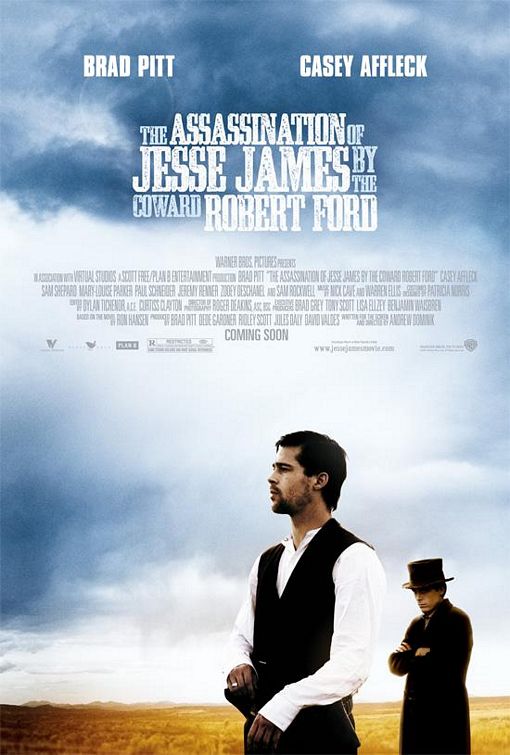
Left Field Cinema: American Masterpiece -- The Assassination of Jesse James by the Coward Robert Ford

American Masterpiece: The Assassination of Jesse James by the Coward Robert Ford
by Mike Dawson
Left Field Cinema


Perhaps it is a little unfair that Andrew Dominik’s sophomore cinematic offering has been frequently compared to the work of Terrance Malick. For such grand comparisons often result in disappointment for the viewer with the revelation that although they are not ill founded they are not entirely accurate either. Along with statements that the makers of The Blair Witch Project suffered upon release like “the greatest horror movie ever made” they raise the bar to such a significant height that even the most accomplished director would feel the weight of expectation crippling them where they stand. Malick is considered by many to be a lyrical genius, a modern American auteur and the greatest director working in the United States today; he is a colossus in the world of film with unquestionable artistic integrity. Dominik by comparison is a relative unknown New Zealander with 2000’s Chopper as his only previous film; in this sense he is in many ways like Malick, taking an extended seven-year absence before releasing this follow-up. Chopper was met with general critical acclaim, and yet he is still considered an unusual choice to direct a film about such a significant American legend. In actuality Dominik is perfect for the challenge, as with previous films dealing with either significant events in American history or commenting on the psyche of the nation – an outsider does it best. United 93, American Beauty and the like work better because of there is a more objective foreigner at the helm who can look at the events from the outside.

The story of the film follows the last days of the life of notorious gunslinger and outlaw Jesse James, multiple murderer, criminal, and fugitive. He and his brother worked with a small gang and successfully robbed banks and trains for many years, only the brothers remain alive from the original gang, and the elder brother Frank James has had enough of his younger siblings peculiar attitude and decides to leave this world behind. Sam Shepard is coldly menacing in the few scenes he is present, but without words or extended screen time manages to conjure a sense of dread, that the dark days are coming. What follows is the drifting of Jesse, constantly paranoid about who will try to capture or kill him, and aware that his greatest enemies are very probably the ones closest to him. The films second act is very passive, setting the criminal minds in play and switching perspective between our two titular characters, and other subordinates. Jesse then begins to kill the remaining members of his gang one by one as and when he deems them disloyal, whilst his gang attempt to decipher his next move, and are constantly aware that with Jesse often comes death. In the gang is the other titular character, nineteen year old Robert Ford, another younger brother, and a borderline fantasist. He has been obsessed with Jesse James from a young age and is determined to get as close to his hero as he can. As his canonised image of Jesse begins to be unraveled he is left crushed with the knowledge that his life has been wasted idolising a bully, a sociopath, and a madman. As the truth comes to light, so to do Robert’s murderous impulses, leading to climax which is reached as much through fate as it is though callous manipulation with an almost suicidal streak in Jesse’s choices.

To Read the Rest of the Essay

To Listen to It

Monday, May 31, 2010

Frontline: The Wounded Platoon

The Wounded Platoon
Frontline (PBS)

Third Platoon, Charlie Company. What happened to them in Iraq, and what happened when they came home...

...

In The Wounded Platoon, FRONTLINE reveals a military mental health system overwhelmed with soldiers suffering psychological injuries from the surge -- at Fort Carson the rate of PTSD diagnosis has risen 4,000 percent since 2002 -- and the widespread use of prescription psychiatric drugs both at home and in combat. "Everybody was on Ambien, everybody. It was hard to find somebody that wasn't taking Ambien," says the 3rd Platoon's medic, Ryan "Doc" Krebbs. "It helps you sleep, and it also f***s you up. It gets you pretty high." After returning home, Krebbs was also prescribed the antipsychotic medication Seroquel, on which he would purposefully overdose in a suicide attempt. "I thought that my time in this place was over, and I'd already done what I was supposed to do, and I didn't want to live anymore."

Before the Iraq war, American soldiers in combat zones did not take psychiatric medications, but by the time of the surge more than 20,000 U.S. troops in Afghanistan and Iraq were taking antidepressants and sleeping pills. These drugs enable the Army to keep soldiers with post-traumatic stress disorder on the battlefield. "What I use medications for is to treat very specific side effects," Army psychiatrist Col. George Brandt tells FRONTLINE. "I don't want somebody in a helplessness mode in a combat environment. I want to make sure I don't have someone with suicidal thoughts where everyone is armed."

Kenny Eastridge, who is now serving time for the murder of Kevin Shields and other crimes, tells FRONTLINE that he sought help for mental health problems from a combat stress center on Forward Operating Base Falcon. "I was having a total mental breakdown. Every day we were getting in battles and never having a break. It seemed like, it was just crazy," he says. "They put me on all kinds of meds, and I was still going out on missions. They had me on Ambien, Remeron, Lexapro, Celexa, all kind of different stuff."

Despite the warnings that patients on these medications should be closely monitored for side effects, Eastridge was sent to a remote combat outpost for weeks at a time with no medical supervision or mental health provision. He says he ran out of medication and was also smoking marijuana and taking Valium. In dramatic footage filmed by other members of the 3rd Platoon, FRONTLINE shows Eastridge behaving erratically, wandering into Iraqi homes, lying in their beds, and trying to hug local women and men.

Fort Carson's hospital remains understaffed with almost a quarter of its psychiatry positions unfilled. The 3rd's battalion, which has been reflagged as the 2-12 Infantry, is about to return home from a year of intense combat in Afghanistan. "We're all wondering what's going to happen," says Colorado Springs psychotherapist Robert Alvarez. "It's a scary thought, you know, what's going to happen in this community. Are we going to have more murders? Are we going to have more suicides, or are we going to have more crime? I think the answer to that is probably yes."

To Watch the Episode

Tuesday, May 25, 2010

Allison Kilkenny: White domestic terrorists slip off media’s radar

White domestic terrorists slip off media’s radar
by Allison Kilkenny
True/Slant

I guess bombs aren’t sexy enough to warrant national attention anymore. At least, not if the terrorists planting the bombs are white. Here are a couple stories that failed to attract significant coverage, and let me emphasize that these are just two examples I scooped up. One need only spend an afternoon exploring SPLC’s website to observe the surge in far right extremism, so undoubtedly, there are many similar examples.

A firearms and explosives expert suspected of involvement with two white supremacist brothers in the sending of a bomb to the office of a municipal diversity officer was sentenced to 6½ years in prison in Missouri on Tuesday.

Robert Joos Jr. is an anti-government crazy person, and also the pastor of a church of “apocalyptic Christians.” He was convicted in January for possessing firearms and explosives. He and his accomplices, twin brothers Dennis and Daniel Mahon, were indicted for delivering a bomb to diversity officer Don Logan, a black man, who needed extensive surgery for injuries to his hands and arms. Logan’s secretary also suffered injuries to her face and eyes.

To Read the Rest of the Hyperlinked Article

Ed Howard: The Bad Lieutenant — Port of Call: New Orleans

The Bad Lieutenant — Port of Call: New Orleans
by Ed Howard
Only the Cinema


It's been literally decades since Werner Herzog has made a truly satisfying fictional film. It seems obvious that, since at least the late 1980s, the director's interest has increasingly turned towards documentary and pseudo-documentary, while his fiction features have become less and less frequent, and more and more uneven. The Bad Lieutenant — Port of Call: New Orleans is, then, an unexpected revitalization of Herzog's instincts for fiction, a non-remake of the sex-drugs-and-violence-packed 1992 Abel Ferrara film Bad Lieutenant. Herzog's supposed remake, made with absolutely no knowledge of Ferrara's original and with only the most tenuous of connections — there's a lieutenant! and he's bad! — takes the basic premise of a corrupt cop and spins it out into a ludicrous (a)morality tale about the delicate balance between good and evil that exists within this addled New Orleans cop. Terence McDonagh (Nicolas Cage) is dirty in nearly every way. He's a drug addict who steals and snorts prodigious amounts of drugs, balancing heroin and coke and prescription painkillers. He sleeps with (and provides drugs to) the prostitute Frankie (Eva Mendes) and intimidates and rips off her clients whenever he encounters them. He stalks drunken and drugged-up kids coming out of clubs, holding them up for their stashes. He's an outrageous and lunatic figure, representing a wackier and goofier variation on Harvey Keitel's drugged-up psychopath in Ferrara's original film.

Herzog's first ingenious move was casting Nicolas Cage in this part and fully exploiting the actor's tendency towards over-the-top melodramatics. Cage's performance is something truly strange and unique, the work of an actor pouring all of his seemingly worst qualities into a character and really making him come alive. McDonagh's collapse, his moral degradation, is eloquently conveyed in every aspect of Cage's performance, from his permanent crooked slouch (evidence of the on-the-job injury that set him off on his painkiller addiction) to his twitchy mannerisms to the tortured cadences of his speech, shifting from drawled mumbling to coked-up hyperactivity with a moment's notice. For such a bizarre, purposefully overblown performance, Cage never forsakes the subtleties that suggest his character as fully as the more obvious gestures do. It'd be tempting to call this a "bad" performance, and it often seems like one in its superficial aspects. But Cage's oddball speech rhythms and over-emphasized facial tics only contribute to the unease generated by the character of McDonagh, by his unpredictable vacillations between hero cop, drug dropout and borderline psycho. It is, in its weird way, a disarmingly subtle performance.

Of course, the obvious gestures get most of the attention here, and with good reason. The film rolls out one nutty premise after another, right from the opening in which — after a few moody, blood-red-lit shots of a snake winding through a flooded jail cell — McDonagh and his partner Stevie (Val Kilmer) take bets about how long it will take for the rising water to drown a trapped prisoner. This comes only a few minutes after an onscreen title announces that the film takes place in the aftermath of Hurricane Katrina; the cops' irreverent attitude towards their responsibilities thus suggests a satirical perspective on the response of various US institutions and authorities to this tragedy. Of course, such social consciousness is not common in Herzog, and the remainder of the film addresses such issues only obliquely, in the form of the not-so-subtle markers of race and class that are constantly defining and limiting these characters. The incident that triggers the plot is the murder of a family of Senegalese immigrants, apparently a drug crime, and one of the film's looniest contrivances — and that's really saying something — is the fact that the police immediately make this crime a high priority. Herzog underlines the absurdity of it all, announcing the film's undeniable status as fantasy: the police captain tells his men that this crime will be their big concern and that any amount of overtime is justified, as if the police always dedicate such attention to the murders of black illegal immigrants who were tangentially involved in the drug trade.

Race is continually an unsettling presence in this film, particularly in a scene where McDonagh is confronted by a relative of the murdered family, who delivers a completely unfettered expression of grief that's nearly embarrassing in its nakedness and uncontrolled despair. Her performance is as unhinged as Cage's, and the meeting between them is a vortex for all of the film's ungainly and often ugly emotions: a black woman's grief and a white cop's frazzled guilt and half-functioning desire to do good. The caricaturing of this women makes the scene especially uncomfortable, but at the same time her pain and anger are palpable; like many things in this film, it's a potent combination of the awkwardly stylized and the startlingly real.

To Read the Rest of the Essay