Showing posts with label Gandhi. Show all posts

Saturday, March 19, 2011

Open Source with Chris Lydon: Mustafa Barghouti -- Is there Room for Gandhi in Palestine?

Mustafa Barghouti: Is there Room for Gandhi in Palestine?
Open Source (Watson Institute for International Studies: Brown University)

Ask Palestinians why there is no Gandhi in their movement, and often the answer comes: but there are several, and Mustafa Barghouti should be recognized more widely as one of them.

A medical doctor, born in Jerusalem in 1954, trained both in the old Soviet Union and in the US, he is the advocate of a strong, non-violent push to a two-state deal with Israel. He got his break in the show biz of American opinion last Fall on the Daily Show. His B. D. S. campaign this Spring in the world press and on American campuses stands for Boycott, Divestment and Sanctions to bring the pressure of international attention and law on the Israeli government.

Mustafa Barghouti has set his own course in the famous Barghouti family and in Palestinian politics. With Edward Said and others in 2002, Mustafa Barghouti helped found the Palestinian National Initiative. He was the Initiative’s candidate (and ran second to Mahmood Abbas) to succeed Yasir Arafat as president of the Palestinian Authority in 2005. His Initiative banner waves for “a truly democratic and independent ‘third way’ for the large majority of silent and unrepresented Palestinian voters, who favour neither the autocracy and corruption of the governing Fatah party, nor the fundamentalism of Hamas.” In a long conversation at Brown’s Watson Institute yesterday, Dr. Barghouti seemed a model of the old virtues: patience, long-suffering, gentleness and a certain deep enthusiasm.

There isn’t any place in the world where apartheid is so systematic as it is today in Palestine… You are talking about a situation where we the Palestinians are prevented from using all our main roads because they are exclusive for Israelis and Israeli Army and Israeli settlers. This did not happen even during the segregation time in the [United] States. People could not use the same bus or same restaurant. But here you can’t use the same road even. I am an elected Member of Parliament. I ran for president in Palestine; I was second in the presidential race. I was born in Jerusalem. I worked as medical doctor, as a cardiologist, in a very important hospital in Jerusalem for 15 years. And since five years I am prevented, like 98 percent of the Palestinians, from entering Jerusalem. If I am caught in Jerusalem, I could be sentenced to seven years in jail.

This is unbelievable. You have a situation where a husband and a wife cannot be together. If a husband is from Jerusalem and his wife is from the West Bank, or the opposite, they cannot live together. Because if the husband or the wife comes to the West Bank they lose their ID, they lose their residency. And the wife or the husband from the other side cannot be granted citizenship in Jerusalem. We have never seen a situation where a country occupies a city like East Jerusalem and then declares the citizens of the city — who have lived there for hundreds, and some of the families for thousands of years — “temporary residents.” And if one of them goes out to study at Brown for five years for instance, they would lose their residency. This is what you see are acts of ethnic cleansing.

There isn’t a place in the world where officially the policy is, if I have a person with a heart attack and I need to get him to a hospital in Jerusalem or in Israel, I have to get a military permit from a coordinator in the military headquarters. And this can take hours or days, or it can not be granted at all. I’ve had patients die in front of my eyes because I could not get them through the checkpoints. We had 80 women who had to give birth at checkpoints, and 30 of them lost their babies. And to me, the fact that a woman cannot give birth in a dignified manner, and having to give birth in front of foreign soldiers out in the street, is equal to the utmost injustice. Tell me, where does that happen anywhere in the world? And this is happening by a country that is claiming that it is a democracy and that it is civilized. And by people that have had suffering in the past. I mean, that’s what amazes me, you know. People who understand how terrible it is to be discriminated against…

So we ask ourselves: how do we make the Israelis change their minds? How do we convince them to stop the oppressive system which is hurting our future and their future? …We have to make their system of occupation painful; and we have to make their system of occupation costly. This can be done through only two ways: either you turn to violence, which I totally disagree with, I don’t believe in and I think is counterproductive; or you turn to non-violence and mobilizing international pressures on Israel, as people did in the case of the apartheid system in South Africa. If it wasn’t for the divestment sanctions campaign in the 80s and 90s we would never have seen the apartheid system fall apart in South Africa, simply because the balance of forces between the regime and the people is so big in the interest of the regime. We have the same situation in Palestine. That’s why I speak about divestment and sanctions to encourage non-violence. This is the only way we make non-violent resistance succeed, by having an international component, especially in the United States. We are not talking about boycotting Israel, or Israeli people. We are talking about boycotting occupation and about divestment from occupation and military industry that is exploiting people, that is destroying people’s lives and that is consolidating an apartheid system. So we are calling for divestment from occupation and apartheid and injustice…

Let’s say we have a Palestinian state and an Israel state. This will make many Israelis calmer because they will not be afraid about the Jewish nature of Israel as a state, although 20 percent of its citizens are Palestinian today. Eventually there will be cooperation between the Palestinian state and the Israeli state, economically, say. I don’t see a problem with us and Israel joining the European Union together, for instance. But Israel has to answer a bigger question.

I mean, Israel is not an island in the ocean. Israel is an island in the Middle East. What we have so far is an Israeli government that is always in conflict with others. They seek conflict, in my opinion, and they use this conflict to justify oppression of Palestinians, and to justify a lack of solutions to the Palestinian-Israeli conflict. First it was the Soviet Union: they could not make a solution because a Palestinian state would be closer to the Soviet Union, for instance – or with Egypt which was at that time closer to the Soviet Union. Then it was the problem of Egypt and Syria, and then they had peace with Egypt and ceasefire with Syria. They had a problem with Iraq. Today they speak about Iran. Tomorrow if Iran is no problem they probably will start speaking about Azerbaijan. They keep looking for an external justification for a problem that’s internal.

Many Israelis speak of this. And they ask: in a globalized world when you have economic cooperation, why does Israel want us not to be a democracy? Why did they kill twice already our best experiences developing a democratic system – once in 1976 when we had the first municipatlity elections, and they didn’t like the results. At the time there was no Hamas; at that time Israel was cooperating with Islamic parties against the secular national democratic groups like us. And they killed the results of the 2006 elections which were praised by the United States and the world community as the best democratic elections in the Middle East. You see, I see racism here. Why are Israelis entitled to democracy and Palestinians are not? The question is why are they afraid of us being a democracy? Because we will have a government that cannot be manipulated?


To Listen to the Conversation

Thursday, January 13, 2011

Paul Connor: The Activist's Dilemma

The Activist's Dilemma: It’s time to start matching our sentiments to our actions.
by Paul Connor
Adbusters

It’s late, maybe 2, or 3 a.m. I’m scanning my email inbox for anything important I might have missed. I notice a message that lists the names of two famous activists – Bill McKibben and Naomi Klein – in its subject header. It’s a call to action, soliciting support for Tim DeChristopher, a climate change activist who faces ten years in jail after disrupting an auction of oil and gas leases in Utah. DeChristopher prevented the Bush administration from selling off 14 parcels of land for fossil fuel extraction by placing fake bids on them, and he is being prosecuted for this crime, despite the new US administration ruling that the land had been inappropriate for sale.

I’m interested in getting involved, because of the kind of activism practiced and the punishment of jail time, but also because I now want to know more about Tim DeChristopher.

On his website (bidder70.org) there is a video of DeChristopher speaking at a climate rally in Salt Lake City last October. An athletic-looking 26-year-old with a shaved head and intense eyes, he speaks loudly and succinctly, like a charismatic churchman in full swing. At times he even breaks into gospel song. And there is more than a hint of spirituality in his speech, too. He tells the small crowd of his own personal awakening – how every day since his action, despite knowing he may soon be behind bars, he has walked a little taller and felt a little freer. He also offers them a kind of salvation, declaring that it will be social struggle and activism that will make us the truly noble beings we were meant to be.

In an interview with Democracy Now, DeChristopher quotes the late US environmentalist Edward Abbey, who said that “sentiment without action is the ruin of the soul.” For much of his time as an activist on climate change, he explains, he felt a nagging disconnect between the scale of the issue and his response to it. But when he began to bid at the auction and risk imprisonment, he became profoundly calm.

I understand this. As a climate activist I have felt this disconnect … and also the feeling that comes from taking a stand. As I signed on to a never-ending parade of online petitions, wrote letters to politicians and chose ‘eco-friendly’ options at the local supermarket, I felt that such token actions betrayed my true feelings about the importance of the issue. But there have also been times when my actions honestly represented my convictions.

Last September I was arrested for trespassing during a mass civil disobedience action against one of the world’s dirtiest coal power stations. On another occasion I fasted on water and salt outside Australia’s Parliament House from early November till mid-December, calling for action on climate change with Climate Justice Fast! – an international hunger strike I cofounded. On those occasions I experienced the feeling DeChristopher describes. Riding in the back of a police car after my arrest, I felt a warm contentment, and strangely enough, an enormous sense of freedom. Weak and hungry from my fast, I often puzzled the journalists who asked how I felt: I told them I felt very good indeed.

What I found, and what I believe Tim DeChristopher and Edward Abbey found, was that we cannot be at peace if our actions do not reflect what we truly believe. But when they do, our spirits soar. Then we’re alive and free.

This is no groundbreaking revelation. Mahatma Gandhi expressed the same feeling when he said that “happiness is when what you think, what you say and what you do are in harmony.” Yet while it is nothing new, there may be few ideas more urgently needed in our time.

In his 2008 book, The Freedom Paradox, Clive Hamilton argues that within free-market capitalism, corporate interests actively discourage us from acting in accord with the values, preferences and desires we would endorse after careful consideration. Very few of us, he writes, would, upon deep reflection, say that it is our innermost desire in life to work incredibly hard at a job we dislike in order to possess the latest consumer products. Yet this is precisely the life our society encourages. From early childhood onward, advertisers expertly instill within us a set of values, preferences and desires that are not our own, but those that corporations wish us to have. As a result, our true ideals become increasingly neglected and stigmatized. This denial of our moral selves, Hamilton believes, can largely explain the discontent increasingly prevalent in affluent societies.

To Read the Rest of the Essay

Saturday, October 16, 2010

Mohatama Gandhi: On Civil Resistance

An out-and-out civil resister argues to himself, that a state allows personal freedom only in so far as the citizen submits to its regulations. Submission to the state law is the price a citizen pays for his personal liberty. Submission, therefore, to a state wholly or largely unjust is an immoral barter for liberty. A citizen who thus realizes the evil nature of a state is not satisfied to live on its sufferance. Thus considered, civil resistance is a most powerful expression of a soul's anguish and an eloquent protest against the continuance of an evil state.

-- Mohatama Gandhi

Friday, September 10, 2010

Rajni Bakshi: A Choice of 9/11s

A choice of 9/11s
by Rajni Bakshi
Open Democracy

Whatever else may be beyond our control, we are all free to choose which 9/11 moves us most deeply.

It may well be the oddest date in history.

However much they dominate our present, the human missiles of 2001 don’t have a unique claim on 9/11.

It was on September 11, 1906, that Mohandas Karamchand Gandhi first articulated the concept of ‘satyagraha’, non-violent resistance, at a public meeting in South Africa. His rigorous application of this philosophy over the next 40 years earned Gandhi the title of Mahatma – great soul. It also gave the modern world a powerful new political tool for dealing with conflict and hurt.

It was on September 11, 1893 that an Indian monk, Swami Vivekananda, was overwhelmed by a three minute standing ovation at the World Parliament of Religions in Chicago. Reverberations of his appeal for universal brotherhood persist today beside the buzz of protest and counter-protest over Park51.

It was on September 11, 1609 that Henry Hudson became the first European to set foot on an island which natives called ‘Menatay’ – our present day Manhattan. Hudson’s landing, somewhere in the vicinity of today’s Ground Zero, was a precursor to European settlements and mass death of native populations.

A collage of all four 9/11s can potentially serve as a map quest – showing us different pathways to resolving the tussle between co-existence and conflict, faith and reason.

Reflecting on this combination of stories is one possible way of picking our way through the tangled web of complications triggered by the plans for a mosque at 51 Park Place in Lower Manhattan.

To Read the Rest of the Essays

Sunday, March 14, 2010

To the Best of Our Knowledge: Give Peace a Chance

Give Peace a Chance
To the Best of Our Knowledge (Wisconsin Public Radio)
Host: Steve Paulson

When asked what he thought about Western civilization, Gandhi once famously said: I think it's a good idea. Gandhi's form of extreme nonviolence led to the civilized retreat of the British from the Indian sub-continent. But does non-violence still have the right stuff to effect social change in today's world? In this hour of To the Best of Our Knowledge, some new ideas about a very old subject - non-violence. And, could nonviolence have prevented World War II?

SEGMENT 1:


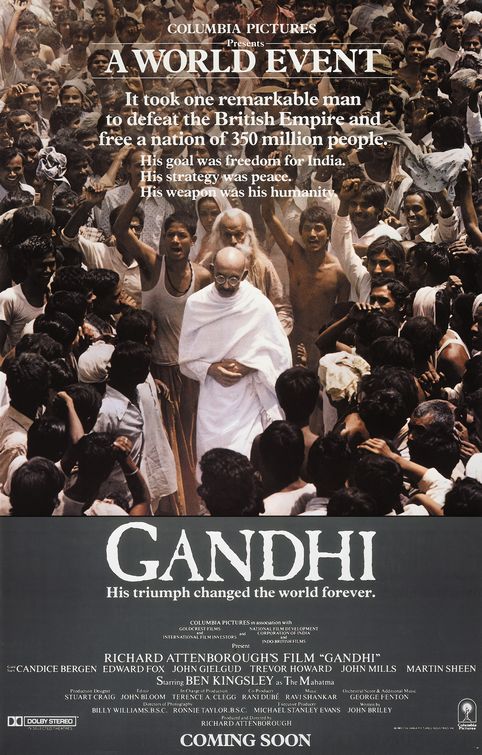
Satish Kumar is a peace activist who lives in Devon, England, and he's the author of "The Buddha and the Terrorist." A former Jain monk, he still follows Gandhi's principles of non-violence. Kumar tells Jim Fleming about some of the people he met on his 8,000 mile walk for peace, and why he thinks violence is an obsolete weapon. Also, Reihan Salam critiqued the movie "Gandhi" for Slate Magazine in an article called "Meet the Hindustani Malcolm X." Salam tells Steve Paulson that David Attenborough's bio-pic may have been about an Indian man, but it was a thoroughly Western movie.

>

SEGMENT 2:


Mark Kurlansky is the author of "Nonviolence: Twenty-Five Lessons in the History of a Dangerous Idea." In constructing his history of non-violence, Kurlansky looks at history with a revisionist's eye and tells Steve Paulson that WWII might not have been necessary ...

SEGMENT 3:


Andrew Carroll is the Founder of the Legacy Project whose latest book is "Grace under Fire: Letters of Faith in Times of War." The Legacy Project collects and publishes letters from combatants and their families and friends, and others who have been touched by the experience of war.

To Listen to the Episode