Japan Facing Biggest Catastrophe Since Dawn of Nuclear Age
Democracy Now
Japan remains in a state of emergency three days after a devastating earthquake and tsunami hit the country. An estimated 10,000 people have died, and Japan is facing the worst nuclear crisis since the atomic bombing of Hiroshima and Nagasaki. On Monday, a second explosion hit the Fukushima Daiichi nuclear plant, and a third reactor lost its cooling system, raising fears of a meltdown. Radiation levels have been detected as far as 100 miles away. Dozens of people have tested positive for radiation exposure, and hundreds of thousands of have been evacuated, with the number expected to rise.
Yurika Ayukawa, Professor of Climate, Energy, and Environment at Chiba University of Commerce in Japan. She is formerly with the Citizens’ Nuclear Information Center.
Harvey Wasserman, longtime anti-nuclear activist and the editor of nukefree.org. He is also a senior adviser to GreenPeace USA and the author of the book SOLARTOPIA! Our Green-Powered Earth.
Kevin Kamps, specialist in nuclear waste at the nuclear watchdog, Beyond Nuclear. Last year he was in Japan assessing the state of its nuclear facilities.
Arnie Gundersen, nuclear industry executive for many years before blowing the whistle on the company he worked for in 1990, when he found inappropriately stored radioactive material. He is now chief engineer at Fairewinds Associates.
Japan Al Jazeera English report on Minami Sanriku,
Watch/Listen/Read
Showing posts with label Natural Disasters. Show all posts
Showing posts with label Natural Disasters. Show all posts
Monday, March 14, 2011

Guardian: Japan tsunami and nuclear alert - live coverage
Japan tsunami and nuclear alert - live coverage
The Guardian (United Kingdom)
• Nuclear fuel rods 'highly likely' to be melting already
• Death toll estimated at 10,000 in one prefecture
• Reports of 2,000 bodies washed ashore in Miyagi
To Access Live Reports
The Guardian (United Kingdom)
• Nuclear fuel rods 'highly likely' to be melting already
• Death toll estimated at 10,000 in one prefecture
• Reports of 2,000 bodies washed ashore in Miyagi
To Access Live Reports
Sunday, August 29, 2010
Rebecca Solnit: In New Orleans, Kindness Trumped Chaos: Lessons of dedication, solidarity, love, and recovery, five years after Katrina.
In New Orleans, Kindness Trumped Chaos: Lessons of dedication, solidarity, love, and recovery, five years after Katrina.
by Rebecca Solnit
Common Dreams

The taxi driver called me "girlfriend" and "sweetheart" with the familiar sweetness of New Orleanians, so I figured I could ask a few personal questions. He was from the Lower Ninth Ward, one of the neighborhoods inundated by Katrina--a mostly poor, mostly black edge of the city isolated and imperiled by two manmade canals--and it had taken him three and a half years to return to New Orleans. He still wasn't in his neighborhood, but he was back in the city, and his family was back, and they were determined to come back all the way.
What happened in the aftermath of Hurricane Katrina is more remarkable than almost anyone has told. More than a million volunteers came to New Orleans to gut houses, rebuild, and stand in solidarity with the people who endured not just a hurricane but a deluge of Bush Administration incompetence and institutionalized racism at all levels of government, which temporarily turned the drowned city into a prison. Supplies were not allowed in by a panicky government; people were not allowed out, and a wholly unnatural crisis ensued.
Even so, an astounding wave of solidarity and empathy arose. At Hurricanehousing.org more than 200,000 people volunteered to shelter evacuees, often in their own homes. And then there were those legions of volunteers, many of them white, working in a city that had been two-thirds black.
I have again and again met passionate young activists who intended to come for a week or a month and never left. In the Lower Ninth, my taxi driver's neighborhood, things looked better than even six months before. Brad Pitt's Make It Right Foundation now has dozens of solar-powered homes, built on stilts for the next inundation, scattered across the lowlands of the neighborhood. New businesses have opened on St. Claude Avenue, the main thoroughfare, and children play in the once-abandoned streets.
It's hard to say that there is a recipe for solidarity across race and class lines. During crises, the official reaction from government and media is often widespread fear--based on a belief that in the absence of institutional authority people revert to Hobbesian selfishness and violence, or just feckless conduct. Scholars Lee Clarke and Karon Chess call this fear of the public, particularly the poor and nonwhite public, "elite panic." Because these "elites" shape reaction as well as opinion, their beliefs can be deadly.
But the truth is that most people are altruistic, resourceful, and constructive during crisis. A disaster is actually threatening to elites, not because the response is selfish but because it often unfolds like a revolution, in which the status quo has evaporated.
Civil society improvises its own systems of survival--community kitchens, clinics, neighborhood councils, and networks of volunteers and survivors--often decentralized and deeply empowering for the individuals involved. What gets called recovery can constitute the counter-revolution--the taking back of power.
Perhaps the biggest question for a disaster like Katrina is to what extent this transformed sense of self and society lasts and matters: Can it be a foundation for a stronger civil society, more solidarity, and grassroots power? It has been so in many ways in New Orleans, with groups like the Common Ground Clinic--a free health clinic that was started days after the hurricane and is still going strong five years later.
To Read the Rest of the Essay
by Rebecca Solnit
Common Dreams
The taxi driver called me "girlfriend" and "sweetheart" with the familiar sweetness of New Orleanians, so I figured I could ask a few personal questions. He was from the Lower Ninth Ward, one of the neighborhoods inundated by Katrina--a mostly poor, mostly black edge of the city isolated and imperiled by two manmade canals--and it had taken him three and a half years to return to New Orleans. He still wasn't in his neighborhood, but he was back in the city, and his family was back, and they were determined to come back all the way.
What happened in the aftermath of Hurricane Katrina is more remarkable than almost anyone has told. More than a million volunteers came to New Orleans to gut houses, rebuild, and stand in solidarity with the people who endured not just a hurricane but a deluge of Bush Administration incompetence and institutionalized racism at all levels of government, which temporarily turned the drowned city into a prison. Supplies were not allowed in by a panicky government; people were not allowed out, and a wholly unnatural crisis ensued.
Even so, an astounding wave of solidarity and empathy arose. At Hurricanehousing.org more than 200,000 people volunteered to shelter evacuees, often in their own homes. And then there were those legions of volunteers, many of them white, working in a city that had been two-thirds black.
I have again and again met passionate young activists who intended to come for a week or a month and never left. In the Lower Ninth, my taxi driver's neighborhood, things looked better than even six months before. Brad Pitt's Make It Right Foundation now has dozens of solar-powered homes, built on stilts for the next inundation, scattered across the lowlands of the neighborhood. New businesses have opened on St. Claude Avenue, the main thoroughfare, and children play in the once-abandoned streets.
It's hard to say that there is a recipe for solidarity across race and class lines. During crises, the official reaction from government and media is often widespread fear--based on a belief that in the absence of institutional authority people revert to Hobbesian selfishness and violence, or just feckless conduct. Scholars Lee Clarke and Karon Chess call this fear of the public, particularly the poor and nonwhite public, "elite panic." Because these "elites" shape reaction as well as opinion, their beliefs can be deadly.
But the truth is that most people are altruistic, resourceful, and constructive during crisis. A disaster is actually threatening to elites, not because the response is selfish but because it often unfolds like a revolution, in which the status quo has evaporated.
Civil society improvises its own systems of survival--community kitchens, clinics, neighborhood councils, and networks of volunteers and survivors--often decentralized and deeply empowering for the individuals involved. What gets called recovery can constitute the counter-revolution--the taking back of power.
Perhaps the biggest question for a disaster like Katrina is to what extent this transformed sense of self and society lasts and matters: Can it be a foundation for a stronger civil society, more solidarity, and grassroots power? It has been so in many ways in New Orleans, with groups like the Common Ground Clinic--a free health clinic that was started days after the hurricane and is still going strong five years later.
To Read the Rest of the Essay
Wednesday, August 11, 2010
Gwynne Dyer on "Climate Wars: The Fight for Survival as the World Overheats"; A Debate on Geoengineering: Vandana Shiva vs. Gwynne Dyer
Democracy Now
Gwynne Dyer on "Climate Wars: The Fight for Survival as the World Overheats"
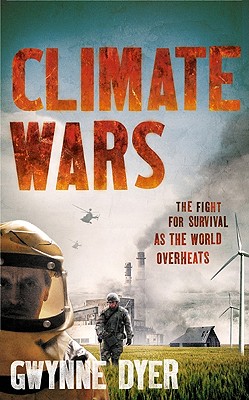
As a heat wave from Boston to Baghdad to Beijing sets record-breaking temperatures in cities across the world, a new analysis says the world is headed for an average temperature rise that far exceeds pledges at the Copenhagen climate conference last year. We speak with geopolitical analyst and columnist Gwynne Dyer about his new book, "Climate Wars: The Fight for Survival as the World Overheats."
To Watch/Listen/Read
A Debate on Geoengineering: Vandana Shiva vs. Gwynne Dyer
Supporters of geoengineering have proposed radical ways to alter the planet to decrease the level of greenhouse gas emissions. Proposals include creating artificial volcanoes to pollute the atmosphere with sulfur particles, fertilizing the oceans and placing sun-deflecting aluminum foil in the sky. But opposition is growing to geoengineering. We host a debate between Indian environmentalist, scientist, philosopher and eco-feminist, Vandana Shiva, and geopolitical analyst and columnist, Gwynne Dyer.
To Watch/Listen/Read
Gwynne Dyer on "Climate Wars: The Fight for Survival as the World Overheats"
As a heat wave from Boston to Baghdad to Beijing sets record-breaking temperatures in cities across the world, a new analysis says the world is headed for an average temperature rise that far exceeds pledges at the Copenhagen climate conference last year. We speak with geopolitical analyst and columnist Gwynne Dyer about his new book, "Climate Wars: The Fight for Survival as the World Overheats."
To Watch/Listen/Read
A Debate on Geoengineering: Vandana Shiva vs. Gwynne Dyer
Supporters of geoengineering have proposed radical ways to alter the planet to decrease the level of greenhouse gas emissions. Proposals include creating artificial volcanoes to pollute the atmosphere with sulfur particles, fertilizing the oceans and placing sun-deflecting aluminum foil in the sky. But opposition is growing to geoengineering. We host a debate between Indian environmentalist, scientist, philosopher and eco-feminist, Vandana Shiva, and geopolitical analyst and columnist, Gwynne Dyer.
To Watch/Listen/Read
Tuesday, August 10, 2010
Meterologist Jeff Masters on Extreme Weather Trends Across the Globe
Meterologist: Record Heat Wave in Russia Could Kill Tens of Thousands
Democracy Now
Wildfires across Russia. Devastating floods in Pakistan. Deadly landslides and flash floods in India and China. Heat wave across the United States. Severe drought in Niger. Taken together, scientists warn the events match predictions for extreme climate events caused by global warming. This year is on track to be the warmest since reliable temperature records began over a century ago, mainly due to a buildup of greenhouse gases from fossil fuels. We speak to Jeff Masters, co-founder and director of meteorology for Weather Underground, a weather information website.
To Watch/Listen/Read
Thursday, June 03, 2010
Wednesday, April 21, 2010
Seeing Red Radio: Haiti, Melvin Jones III, MLK and Tony Cliff 2.2
Haiti, Melvin Jones III, MLK and Tony Cliff 2.2
Seeing Red Radio
This week we look at the hidden history of Haiti and the devastation exacted by global capital long before the earthquake struck, juxtaposing Pat Robertson’s hateful words with the “curse” inflicted by the World Bank and others. Also, horrific video is released of a white Springfield, MA police officer beating an African-American man while he was subdued by other officers, we’ll examine the racist legacy of the officer in question and the city’s infamously brutal police department. The last half-hour includes two talks from the Seeing Red archives: Martin Luther King speaking about protest and SWP founder Tony Cliff on the revolutionary party.
Audio montage includes clips from Blackbox Radio, Al Jazeera, Raj Patel, Naomi Klein and Pat Robertson
What You’re Not Hearing about Haiti (But Should Be) by Carl Lindskoog
Obama Received $20 Million from Healthcare Industry in 2008 Campaign by Brad Jacobson
Tea Party Convention Squeezes Fans
Frustrated With Government Lies, Mexican Electricians Declare Wildcat Actions by Kristin Bricker
Savage Police Brutality Revealed by Gary Lapon
Audio of Paul Robeson Interview
Music:
Lafayette Afro-Rock Band – Hihache
Gift of Gab & Lateef – Kalakuta Show
Leadbelly – Bourgeois Blues
Sharon Jones & the Dap-Kings – Stop Payin’ Taxes
Background music from John Zorn, Bad Plus, Utah Philips & Ani DiFranco and others
To Listen to the Episode
Friday, February 19, 2010
Democracy Now: A Paradise Built in Hell -- Rebecca Solnit on “The Extraordinary Communities that Arise in Disaster”
A Paradise Built in Hell: Rebecca Solnit on “The Extraordinary Communities that Arise in Disaster”
Democracy Now

We speak with author, historian and activist Rebecca Solnit about her latest book that examines Hurricane Katrina and other disasters. A Paradise Built in Hell: The Extraordinary Communities that Arise in Disaster chronicles both the crimes of the vigilantes and the powerful during Katrina, as well as the numerous instances of altruism, generosity and courage displayed by the vast majority of people who lived through this catastrophe.
To Read/Listen/Watch
More on this book:
Brooklyn Rail: Community Centering
Democracy Now
We speak with author, historian and activist Rebecca Solnit about her latest book that examines Hurricane Katrina and other disasters. A Paradise Built in Hell: The Extraordinary Communities that Arise in Disaster chronicles both the crimes of the vigilantes and the powerful during Katrina, as well as the numerous instances of altruism, generosity and courage displayed by the vast majority of people who lived through this catastrophe.
To Read/Listen/Watch
Brooklyn Rail: Community Centering
Sunday, January 24, 2010
Chloe Cockburn: Black People "Loot;" White People "Find"
Comparison of two media reports of Katrina Hurricane victims:

Black People "Loot;" White People "Find"
by Chloe Cockburn
ACLU
In the aftermath of the earthquake, there have been numerous reports of dangerous looting in the capital. The Washington Post has a video showing people "looting" a shop, as stated in the caption. The items taken appear to be food and supplies. There is no violence on the camera. But the violent connotation of the word remains.
In contrast to international news of looting in Haiti, local reports indicate that in reality, there is not massive violence or unrest. Partners in Health recently stated that "Our team on the ground reaffirms that the reports of violence on the streets of Port-au-Prince have been grossly exaggerated and have become a major obstacle to mounting the response needed to save tens of thousands of lives each day.” United Nations officials in Haiti have criticized reporters for sensationalizing the earthquake aftermath, exaggerating looting reports, noting that the situation among civilians was calm. In a New York Times op-ed, Haitian novelist and Port-au-Prince resident Evelyne Trouillot wrote, "Many of us Haitians are offended by the coverage of the earthquake. Once more, a natural disaster serves as an occasion to showcase the impoverishment, to exaggerate the scenes of violence that are common to any catastrophe of this type."
Law professor Guy-Uriel Charles recently wrote a CNN column calling out this practice as a description “void of empathy” and one that relies on and perpetuates racial stereotypes. This message needs to be repeated. Not only does the “looting” moniker wrongly disparage and degrade the local people, it also springs from assumptions about black people and their relation to poverty and property. When the news camera captures footage of a Haitian man taking rice, what does it show? Theft? Survival? What if that man is white? In the aftermath of Katrina, a famous juxtaposition of AP images showed that black people "loot," and white people "find." A "looter" is the other, a criminal undeserving of help. This perspective threatens to undermine the relief effort and the future work of rebuilding. Dehumanizing people has consequences.
Link to the Hyperlinked Report
Saturday, January 23, 2010
Rebecca Solnit: When the Media is the Disaster -- Covering Haiti
When the Media Is the Disaster: Covering Haiti
Rebecca Solnit
Z-Net

...
If Words Could Kill
We need to banish the word "looting" from the English language. It incites madness and obscures realities.
"Loot," the noun and the verb, is a word of Hindi origin meaning the spoils of war or other goods seized roughly. As historian Peter Linebaugh points out, "At one time loot was the soldier's pay." It entered the English language as a good deal of loot from India entered the English economy, both in soldiers' pockets and as imperial seizures.
After years of interviewing survivors of disasters, and reading first-hand accounts and sociological studies from such disasters as the London Blitz and the Mexico City earthquake of 1985, I don't believe in looting. Two things go on in disasters. The great majority of what happens you could call emergency requisitioning. Someone who could be you, someone in the kind of desperate circumstances I outlined above, takes necessary supplies to sustain human life in the absence of any alternative. Not only would I not call that looting, I wouldn't even call that theft.
Necessity is a defense for breaking the law in the United States and other countries, though it's usually applied more to, say, confiscating the car keys of a drunk driver than feeding hungry children. Taking things you don't need is theft under any circumstances. It is, says the disaster sociologist Enrico Quarantelli, who has been studying the subject for more than half a century, vanishingly rare in most disasters.
Personal gain is the last thing most people are thinking about in the aftermath of a disaster. In that phase, the survivors are almost invariably more altruistic and less attached to their own property, less concerned with the long-term questions of acquisition, status, wealth, and security, than just about anyone not in such situations imagines possible. (The best accounts from Haiti of how people with next to nothing have patiently tried to share the little they have and support those in even worse shape than them only emphasize this disaster reality.) Crime often drops in the wake of a disaster.
The media are another matter. They tend to arrive obsessed with property (and the headlines that assaults on property can make). Media outlets often call everything looting and thereby incite hostility toward the sufferers as well as a hysterical overreaction on the part of the armed authorities. Or sometimes the journalists on the ground do a good job and the editors back in their safe offices cook up the crazy photo captions and the wrongheaded interpretations and emphases.
They also deploy the word panic wrongly. Panic among ordinary people in crisis is profoundly uncommon. The media will call a crowd of people running from certain death a panicking mob, even though running is the only sensible thing to do. In Haiti, they continue to report that food is being withheld from distribution for fear of "stampedes." Do they think Haitians are cattle?
The belief that people in disaster (particularly poor and nonwhite people) are cattle or animals or just crazy and untrustworthy regularly justifies spending far too much energy and far too many resources on control -- the American military calls it "security" -- rather than relief. A British-accented voiceover on CNN calls people sprinting to where supplies are being dumped from a helicopter a "stampede" and adds that this delivery "risks sparking chaos." The chaos already exists, and you can't blame it on these people desperate for food and water. Or you can, and in doing so help convince your audience that they're unworthy and untrustworthy.
Back to looting: of course you can consider Haiti's dire poverty and failed institutions a long-term disaster that changes the rules of the game. There might be people who are not only interested in taking the things they need to survive in the next few days, but things they've never been entitled to own or things they may need next month. Technically that's theft, but I'm not particularly surprised or distressed by it; the distressing thing is that even before the terrible quake they led lives of deprivation and desperation.
In ordinary times, minor theft is often considered a misdemeanor. No one is harmed. Unchecked, minor thefts could perhaps lead to an environment in which there were more thefts and so forth, and a good argument can be made that, in such a case, the tide needs to be stemmed. But it's not particularly significant in a landscape of terrible suffering and mass death.
A number of radio hosts and other media personnel are still upset that people apparently took TVs after Hurricane Katrina hit New Orleans in August 2005. Since I started thinking about, and talking to people about, disaster aftermaths I've heard a lot about those damned TVs. Now, which matters more to you, televisions or human life? People were dying on rooftops and in overheated attics and freeway overpasses, they were stranded in all kinds of hideous circumstances on the Gulf Coast in 2005 when the mainstream media began to obsess about looting, and the mayor of New Orleans and the governor of Louisiana made the decision to focus on protecting property, not human life.
A gang of white men on the other side of the river from New Orleans got so worked up about property crimes that they decided to take the law into their own hands and began shooting. They seem to have considered all black men criminals and thieves and shot a number of them. Some apparently died; there were bodies bloating in the September sun far from the region of the floods; one good man trying to evacuate the ruined city barely survived; and the media looked away. It took me months of nagging to even get the story covered. This vigilante gang claimed to be protecting property, though its members never demonstrated that their property was threatened. They boasted of killing black men. And they shared values with the mainstream media and the Louisiana powers that be.
Somehow, when the Bush administration subcontracted emergency services -- like providing evacuation buses in Hurricane Katrina -- to cronies who profited even while providing incompetent, overpriced, and much delayed service at the moment of greatest urgency, we didn't label that looting.
Or when a lot of wealthy Wall Street brokers decide to tinker with a basic human need like housing.... Well, you catch my drift.
Woody Guthrie once sang that "some will rob you with a six-gun, and some with a fountain pen." The guys with the six guns (or machetes or sharpened sticks) make for better photographs, and the guys with the fountain pens not only don't end up in jail, they end up in McMansions with four-car garages and, sometimes, in elected -- or appointed -- office.
Learning to See in Crises
Last Christmas a priest, Father Tim Jones of York, started a ruckus in Britain when he said in a sermon that shoplifting by the desperate from chain stores might be acceptable behavior. Naturally, there was an uproar. Jones told the Associated Press: "The point I'm making is that when we shut down every socially acceptable avenue for people in need, then the only avenue left is the socially unacceptable one."
The response focused almost entirely on why shoplifting is wrong, but the claim was also repeatedly made that it doesn't help. In fact, food helps the hungry, a fact so bald it's bizarre to even have to state it. The means by which it arrives is a separate matter. The focus remained on shoplifting, rather than on why there might be people so desperate in England's green and pleasant land that shoplifting might be their only option, and whether unnecessary human suffering is itself a crime of sorts.
Right now, the point is that people in Haiti need food, and for all the publicity, the international delivery system has, so far, been a visible dud. Under such circumstances, breaking into a U.N. food warehouse -- food assumedly meant for the poor of Haiti in a catastrophic moment -- might not be "violence," or "looting," or "law-breaking." It might be logic. It might be the most effective way of meeting a desperate need.
Why were so many people in Haiti hungry before the earthquake? Why do we have a planet that produces enough food for all and a distribution system that ensures more than a billion of us don't have a decent share of that bounty? Those are not questions whose answers should be long delayed.
Even more urgently, we need compassion for the sufferers in Haiti and media that tell the truth about them.
To Read the Entire Essay
Rebecca Solnit
Z-Net
...
If Words Could Kill
We need to banish the word "looting" from the English language. It incites madness and obscures realities.
"Loot," the noun and the verb, is a word of Hindi origin meaning the spoils of war or other goods seized roughly. As historian Peter Linebaugh points out, "At one time loot was the soldier's pay." It entered the English language as a good deal of loot from India entered the English economy, both in soldiers' pockets and as imperial seizures.
After years of interviewing survivors of disasters, and reading first-hand accounts and sociological studies from such disasters as the London Blitz and the Mexico City earthquake of 1985, I don't believe in looting. Two things go on in disasters. The great majority of what happens you could call emergency requisitioning. Someone who could be you, someone in the kind of desperate circumstances I outlined above, takes necessary supplies to sustain human life in the absence of any alternative. Not only would I not call that looting, I wouldn't even call that theft.
Necessity is a defense for breaking the law in the United States and other countries, though it's usually applied more to, say, confiscating the car keys of a drunk driver than feeding hungry children. Taking things you don't need is theft under any circumstances. It is, says the disaster sociologist Enrico Quarantelli, who has been studying the subject for more than half a century, vanishingly rare in most disasters.
Personal gain is the last thing most people are thinking about in the aftermath of a disaster. In that phase, the survivors are almost invariably more altruistic and less attached to their own property, less concerned with the long-term questions of acquisition, status, wealth, and security, than just about anyone not in such situations imagines possible. (The best accounts from Haiti of how people with next to nothing have patiently tried to share the little they have and support those in even worse shape than them only emphasize this disaster reality.) Crime often drops in the wake of a disaster.
The media are another matter. They tend to arrive obsessed with property (and the headlines that assaults on property can make). Media outlets often call everything looting and thereby incite hostility toward the sufferers as well as a hysterical overreaction on the part of the armed authorities. Or sometimes the journalists on the ground do a good job and the editors back in their safe offices cook up the crazy photo captions and the wrongheaded interpretations and emphases.
They also deploy the word panic wrongly. Panic among ordinary people in crisis is profoundly uncommon. The media will call a crowd of people running from certain death a panicking mob, even though running is the only sensible thing to do. In Haiti, they continue to report that food is being withheld from distribution for fear of "stampedes." Do they think Haitians are cattle?
The belief that people in disaster (particularly poor and nonwhite people) are cattle or animals or just crazy and untrustworthy regularly justifies spending far too much energy and far too many resources on control -- the American military calls it "security" -- rather than relief. A British-accented voiceover on CNN calls people sprinting to where supplies are being dumped from a helicopter a "stampede" and adds that this delivery "risks sparking chaos." The chaos already exists, and you can't blame it on these people desperate for food and water. Or you can, and in doing so help convince your audience that they're unworthy and untrustworthy.
Back to looting: of course you can consider Haiti's dire poverty and failed institutions a long-term disaster that changes the rules of the game. There might be people who are not only interested in taking the things they need to survive in the next few days, but things they've never been entitled to own or things they may need next month. Technically that's theft, but I'm not particularly surprised or distressed by it; the distressing thing is that even before the terrible quake they led lives of deprivation and desperation.
In ordinary times, minor theft is often considered a misdemeanor. No one is harmed. Unchecked, minor thefts could perhaps lead to an environment in which there were more thefts and so forth, and a good argument can be made that, in such a case, the tide needs to be stemmed. But it's not particularly significant in a landscape of terrible suffering and mass death.
A number of radio hosts and other media personnel are still upset that people apparently took TVs after Hurricane Katrina hit New Orleans in August 2005. Since I started thinking about, and talking to people about, disaster aftermaths I've heard a lot about those damned TVs. Now, which matters more to you, televisions or human life? People were dying on rooftops and in overheated attics and freeway overpasses, they were stranded in all kinds of hideous circumstances on the Gulf Coast in 2005 when the mainstream media began to obsess about looting, and the mayor of New Orleans and the governor of Louisiana made the decision to focus on protecting property, not human life.
A gang of white men on the other side of the river from New Orleans got so worked up about property crimes that they decided to take the law into their own hands and began shooting. They seem to have considered all black men criminals and thieves and shot a number of them. Some apparently died; there were bodies bloating in the September sun far from the region of the floods; one good man trying to evacuate the ruined city barely survived; and the media looked away. It took me months of nagging to even get the story covered. This vigilante gang claimed to be protecting property, though its members never demonstrated that their property was threatened. They boasted of killing black men. And they shared values with the mainstream media and the Louisiana powers that be.
Somehow, when the Bush administration subcontracted emergency services -- like providing evacuation buses in Hurricane Katrina -- to cronies who profited even while providing incompetent, overpriced, and much delayed service at the moment of greatest urgency, we didn't label that looting.
Or when a lot of wealthy Wall Street brokers decide to tinker with a basic human need like housing.... Well, you catch my drift.
Woody Guthrie once sang that "some will rob you with a six-gun, and some with a fountain pen." The guys with the six guns (or machetes or sharpened sticks) make for better photographs, and the guys with the fountain pens not only don't end up in jail, they end up in McMansions with four-car garages and, sometimes, in elected -- or appointed -- office.
Learning to See in Crises
Last Christmas a priest, Father Tim Jones of York, started a ruckus in Britain when he said in a sermon that shoplifting by the desperate from chain stores might be acceptable behavior. Naturally, there was an uproar. Jones told the Associated Press: "The point I'm making is that when we shut down every socially acceptable avenue for people in need, then the only avenue left is the socially unacceptable one."
The response focused almost entirely on why shoplifting is wrong, but the claim was also repeatedly made that it doesn't help. In fact, food helps the hungry, a fact so bald it's bizarre to even have to state it. The means by which it arrives is a separate matter. The focus remained on shoplifting, rather than on why there might be people so desperate in England's green and pleasant land that shoplifting might be their only option, and whether unnecessary human suffering is itself a crime of sorts.
Right now, the point is that people in Haiti need food, and for all the publicity, the international delivery system has, so far, been a visible dud. Under such circumstances, breaking into a U.N. food warehouse -- food assumedly meant for the poor of Haiti in a catastrophic moment -- might not be "violence," or "looting," or "law-breaking." It might be logic. It might be the most effective way of meeting a desperate need.
Why were so many people in Haiti hungry before the earthquake? Why do we have a planet that produces enough food for all and a distribution system that ensures more than a billion of us don't have a decent share of that bounty? Those are not questions whose answers should be long delayed.
Even more urgently, we need compassion for the sufferers in Haiti and media that tell the truth about them.
To Read the Entire Essay
Thursday, January 21, 2010
Andrew N. Flood: Haiti - a history of intervention, occupation and resistance
Haiti - a history of intervention, occupation and resistance
by Andrew N. Flood
Anarchist Writers
As predictions for the death toll from the Haitian earthquakes rise over 200,000, ABC News have reported that planes carrying medical equipment and relief supplies are having to compete with soldiers for the valuable slots at Port-au-Prince airport which was taken over by the US military after the quake. Since the start of the great anti-slavery republican insurrection nearly 220 years ago, Haiti has been presented as a dangerous place incapable of running its own affairs and requiring foreign intervention. Yet the reality is its people were the first enslaved population to deliver themselves from slavery and also carried out what was only the third successful republican insurrection on the planet. The threat of this good example was rewarded with centuries of invasion, blackmail, the robbery of Haiti's natural resources and the impoverishment of its people. This articles summarizes that history of intervention and the resistance to it in order to put into context what is happening in Haiti after the quake.
This is not an academic exercise. The propaganda methods that were used during the Haitian revolution to frighten off support for the rebels from radical organisations elsewhere - like the London Corresponding Society - continue to be used to the present day. Right after the earthquake, Time Magazine was writing, "As Haitian and international officials try to coordinate an effective relief response to what is probably the worst disaster to ever hit the western hemisphere's poorest country, they'll need to be mindful of the human rats that come out of the capital's woodwork at times like these", under the scary headline 'Will Criminal Gangs Take Control in Haiti's Chaos?' Yet aid workers on the ground, in contrast, were reporting the stoicism and solidarity of the people in desperate conditions and even the UN Commander said the streets were safer than before the quake. An Irish doctor from Médecins Sans Frontières confirmed on radio that they were working in Cité Soleil were operating unguarded and unhampered inspite of the areas reputation. This idea of Haiti as riddled with (poor, black) terror gangs waiting to pounce on naive (white) visitors goes back to the rebellion and, in the context of the earthquake, is resulting in additional deaths, as has been made clear by a London Times' article titled 'Fear of the poor is hampering Haiti rescue.'
Conquest, slavery and resistance
Foreign intervention goes back to the time before the Haitian revolution. Haiti is the western 1/3 of an island which Columbus came across on his first voyage to the Americas and claimed for Spain, ignoring the fact it was already populated by an estimated 4-500,000 Taino people. He called the island Hispaniola, the people who lived there called it Haiti - the name that was restored when the republic was declared. Columbus had heard there was a lot of gold on the island so he left 39 of his crew there who built a fort with Taino help called La Navidad, the crew were ordered to explore the island and gather gold. He recorded that "I have ordered a tower and fortress to be constructed and, a large cellar, not because I believe there is any necessity on account of [the natives] .. I am certain the people I have with me could subjugate all this island … as the population are naked and without arms and very cowardly." However, when he returned the following year on his second voyage he discovered the fortress destroyed with the corpses of his men on the beach as the Taino population had risen up against them in response to mistreatment, which included the kidnapping of Taino women.
His second voyage included 17 ships and 1200 settlers and with this force Columbus demanded that every Taino over the age of 14 deliver a hawks bell full of gold every three months. If they failed to do so they had their hands cut off and were left to bleed to death. On or before 1511 a Taino Cacique (chief) called Hatuey left Hispaniola for Cuba with 400 others in canoes to warn the people that a Spanish expedition was under way to conquer them. Bartolomé de Las Casas the radical Spanish priest who had previously been a plantation owner in Hispaniola wrote that Hatuey showed them a basket of gold and jewels and told them "Here is the God the Spaniards worship. For these they fight and kill; for these they persecute us and that is why we have to throw them into the sea... They tell us, these tyrants, that they adore a God of peace and equality, and yet they usurp our land and make us their slaves. They speak to us of an immortal soul and of their eternal rewards and punishments, and yet they rob our belongings, seduce our women, violate our daughters." Hautey bust in CubaHatuey conducted a guerrilla war against the Spaniards before being captured and burned alive on February 2 1512. In 1522 another Taino Cacique led a revolt of as many as 3000 in the Bahoruco mountains on Hispaniola itself which forced a treaty from the Spaniards.
Within 30 years so many (up to 90%) of the Taino had been worked to death in the gold mines or died of starvation or disease that the Spanish started transporting enslaved Africans to replace them. This was the pattern across the Spanish-occupied Caribbean; according to Bartolomé de Las Casas "it was a general rule among Spaniards to be cruel, not just cruel, but extraordinarily cruel so that harsh and bitter treatment would prevent Indians from daring to think of themselves as human beings. As they saw themselves each day perishing by the cruel and inhuman treatment of the Spaniards, crushed to the earth by the horses, cut in pieces by swords, eaten and torn by dogs, many buried alive and suffering all kinds of exquisite tortures." The Tainos however were never completely wiped out, a couple of hundred survivors set up free settlements with escaped Africans in the mountains. The first significant insurrection of enslaved African also occurred in 1522 when Wolof people on the sugar plantation of Columbus's son rose with many escaping to the mountains after the rebellion. These 'Maroon' communities continued to resist the Spanish, by the 1530s Plantation owners had to travel in large armed groups. They referred to the communities as Cimarrones or 'wild animals', a striking similarity to Time Magazine's use of the term "human rats" for Haitians today.
To Read the Rest of the History
Monday, January 18, 2010
Richard Kim: IMF to Haiti -- Freeze Public Wages
IMF to Haiti: Freeze Public Wages
by Richard Kim
The Nation
Since a devastating earthquake rocked Haiti on Tuesday--killing tens of thousands of people--there's been a lot of well-intentioned chatter and twitter about how to help Haiti. Folks have been donating millions of dollars to Wyclef Jean's Yele Haiti (by texting "YELE" to 501501) or to the Red Cross (by texting "HAITI" to 90999) or to Paul Farmer's extraordinary Partners in Health, among other organizations. I hope these donations continue to pour in, along with more money, food, water, medicine, equipment and doctors and nurses from nations around the world. The Obama administration has pledged at least $100 million in aid and has already sent thousands of soldiers and relief workers. That's a decent start.
But it's also time to stop having a conversation about charity and start having a conversation about justice--about recovery, responsibility and fairness. What the world should be pondering instead is: What is Haiti owed?
Haiti's vulnerability to natural disasters, its food shortages, poverty, deforestation and lack of infrastructure, are not accidental. To say that it is the poorest nation in the Western hemisphere is to miss the point; Haiti was made poor--by France, the United States, Great Britain, other Western powers and by the IMF and the World Bank.
Now, in its attempts to help Haiti, the IMF is pursuing the same kinds of policies that made Haiti a geography of precariousness even before the quake. To great fanfare, the IMF announced a new $100 million loan to Haiti on Thursday. In one crucial way, the loan is a good thing; Haiti is in dire straits and needs a massive cash infusion. But the new loan was made through the IMF's extended credit facility, to which Haiti already has $165 million in debt. Debt relief activists tell me that these loans came with conditions, including raising prices for electricity, refusing pay increases to all public employees except those making minimum wage and keeping inflation low. They say that the new loans would impose these same conditions. In other words, in the face of this latest tragedy, the IMF is still using crisis and debt as leverage to compel neoliberal reforms.
For Haiti, this is history repeated. As historians have documented, the impoverishment of Haiti began in the earliest decades of its independence, when Haiti's slaves and free gens de couleur rallied to liberate the country from the French in 1804. But by 1825, Haiti was living under a new kind of bondage--external debt. In order to keep the French and other Western powers from enforcing an embargo, it agreed to pay 150 million francs in reparations to French slave owners (yes, that's right, freed slaves were forced to compensate their former masters for their liberty). In order to do that, they borrowed millions from French banks and then from the US and Germany. As Alex von Tunzelmann pointed out, "by 1900, it [Haiti] was spending 80 percent of its national budget on repayments."
It took Haiti 122 years, but in 1947 the nation paid off about 60 percent, or 90 million francs, of this debt (it was able to negotiate a reduction in 1838). In 2003, then-President Aristide called on France to pay restitution for this sum--valued in 2003 dollars at over $21 billion. A few months later, he was ousted in a coup d'etat; he claims he left the country under armed pressure from the US.
Then of course there are the structural adjustment policies imposed by the IMF and World Bank in the 1990s. In 1995, for example, the IMF forced Haiti to cut its rice tariff from 35 percent to 3 percent, leading to a massive increase in rice-dumping, the vast majority of which came from the United States. As a 2008 Jubilee USA report notes, although the country had once been a net exporter of rice, "by 2005, three out of every four plates of rice eaten in Haiti came from the US." During this period, USAID invested heavily in Haiti, but this "charity" came not in the form of grants to develop Haiti's agricultural infrastructure, but in direct food aid, furthering Haiti's dependence on foreign assistance while also funneling money back to US agribusiness.
A 2008 report from the Center for International Policy points out that in 2003, Haiti spent $57.4 million to service its debt, while total foreign assistance for education, health care and other services was a mere $39.21 million. In other words, under a system of putative benevolence, Haiti paid back more than it received.
To Read the Rest of this Post
Subscribe to:
Posts (Atom)