Showing posts with label Directors. Show all posts

Thursday, January 27, 2011

Friday, June 11, 2010

Brannon M. Hannock: A Community of Characters – the Narrative Self in the Films of Wes Anderson

A Community of Characters – the Narrative Self in the Films of Wes Anderson
By Brannon M. Hancock
Journal of Religion and Film


In his 1999 article "If I Can Dream: The Everlasting Boyhoods of Wes Anderson,” Mark Olsen dubbed the young filmmaker the beginning of a movement he called "the New Sincerity.” Olsen hints at the possible criteria for the New Sincerity when he notes that:

Unlike many writer-directors of his generation, Wes Anderson does not view his characters from some distant Olympus of irony. He stands beside them – or rather, just behind them – cheering them on as they chase their miniaturist renditions of the American Dream. The characters who inhabit Anderson's cinematic universe, a Middle West of the Imagination, embody both sides of William Carlos Williams' famous edict that the pure products of America go crazy, being, for the most part, both purely American and slightly crazy. Though some might label his people losers, or even invoke that generational curse, slackers, they are in fact ambitious.2

The New Sincerity is an apt phrase, and while it never caught on as a new movement in film, other recent titles come to mind: P. T. Anderson's (no known relation to Wes, by the way) Punch-Drunk Love, Todd Luiso's Love Liza, Sofia Coppola's Lost in Translation, Michel Gondry's Eternal Sunshine of the Spotless Mind (by screenwriter Charlie Kaufman), Zach Braff's stunning debut Garden State, and Jared Hess' Napoleon Dynamite – quirky films that have reminded audiences of their own humanity, of the love and pain and confusion and ecstasy that one feels in the most outlandish and the most commonplace of circumstances. No matter how ridiculous their actions, characters in these films are treated not with pity or irony but with respect and admiration. As Olsen points out, Wes Anderson "is immune to the urge to be down,”3 and the same could be said for the others mentioned above, who eschew the kind of dark, Tarantino-derived edge that seems to proliferate amongst many young filmmakers.

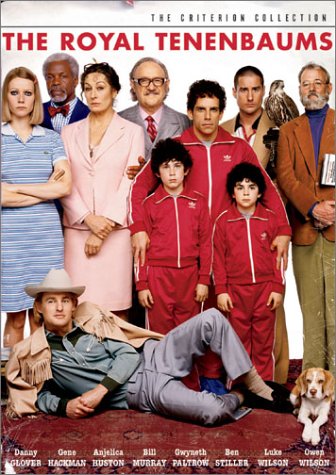
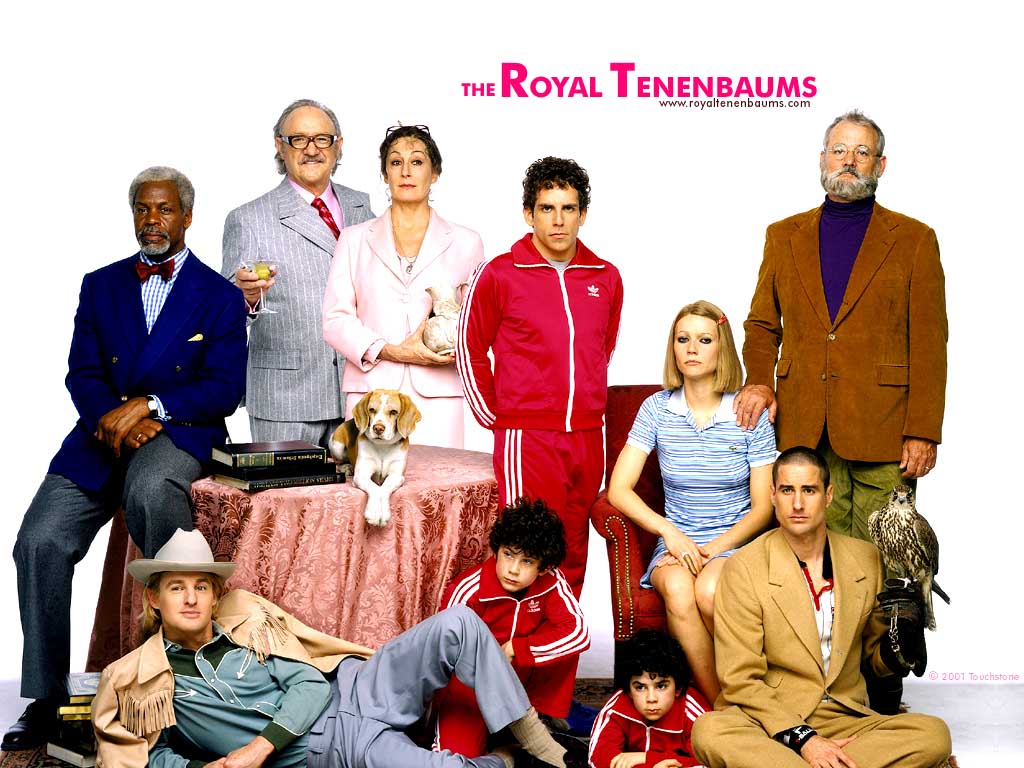
I would like to explore the value of Wes Anderson's films for theological reflection by focusing on the characters that populate his mythopoetic worlds in Bottle Rocket, Rushmore and The Royal Tenenbaums. I will attend to two qualities common to the central characters across Anderson's first three films.4 The first of these qualities I call the abilitytoimaginatively construct, or reconstruct, their own reality. The second might be described as the characters' recognition thatauthentic being or personhood is found only in communion, which is to say in radical inter-relationship with others through participation in a particular community of character(s). Once we have examined these characteristics of Anderson's films, I will conclude by suggesting why Anderson's unique vision, as embodied by his uncanny characters, might teach us something important about what it means, in the first instance, to be, and what it means to be in communion.

Collaboration – Wes and Owen (or, where two or more are gathered...)

I feel as though I should begin by correcting myself, for it is slightly misleading to describe these three films as " Anderson's.” More accurately, they are collaborations between writer-director Anderson and writer-actor Owen Wilson, who has since become widely known for his roles in films such as Zoolander and Armageddon. Anderson and Wilson became acquainted in 1989, where the two then-college-sophomores were enrolled in a lack-lustre playwriting course at the University of Texas at Austin5 (where Anderson went on to earn a degree in Philosophy.6) Both were compulsive cinephiles and storytellers, and soon a creative partnership formed which led to the screenplay for Bottle Rocket. Bottle Rocket and its follow-up Rushmore were both filmed in their native Texas, and both projects involved many friends and relatives from "back home” as cast and crew, including Owen Wilson's two brothers, Luke and Andrew. In a sense, the community of characters within the films mirrors the external community collaborating to produce the films. In this way Anderson and Wilson have much in common with their characters, finding within this creative community the fulfillment and identification that their characters seek within their own fictional communities.

In his foreword to the screenplay for Rushmore, producer James L. Brooks notes that "Wes and Owen are Texans and so their endless fascination with the ol' game of life...is very often concealed behind tight-lipped rhetoric with a distinct sense of the absurd, the joke of it all, which they exhibit whenever there is danger in the air.”7 The danger is the cutthroat man's-world of Hollywood, and Anderson and Wilson are boys brimming with enthusiasm running headlong into it. They are boys with stories to tell, and the stories are their own. They might be dreamers, like their slightly-off-kilter but always empathetic protagonists, but as Bottle Rocket's Mr. Henry reminds us, "The world needs dreamers.”

To Read the Rest of the Essay


Monday, June 07, 2010

Michael Sicinski: 25 Songs of Innocence & Experience -- Spike Jonze, Wes Anderson and the Post-Boomer

25 Songs of Innocence & Experience: Spike Jonze, Wes Anderson and the Post-Boomer
By Michael Sicinski
Cinema Scope


...

Seen as entries onto this broad canvas, the stakes change significantly. While Fantastic Mr. Fox is by any reasonable measure the “better” film, it succeeds, in part, by sticking to Dahl’s world of wily animals, who are cute and funny, as compared to the revolting human farmers Boggis, Bunce, and Bean (“one fat, one short, one lean…”). The adult Mr. and Mrs. Fox (Meryl Streep), the lawyer Mr. Badger (Bill Murray), Fox’s opossum friend Kylie (Wally Wolodarsky)—all become “kids” because they’re implicitly pitted against human “adults.” This is by no means to sell Anderson’s film short: in fact, in addition to its ample formal and comedic virtues, Mr. Fox is also a remarkably anarchistic response to the global financial crisis. Spinning off from Dahl’s original tale, Anderson turns the farmers into captains of British agribusiness, and the animals who steal from them are moral heroes by any measure. Contrast this with Dahl’s rather discomfiting validation of Willy Wonka’s corporate chocolate manufacturing and his reliance on colonial Oompa-Loompa labour, a conundrum no film adaptation has been able to, er, outfox.; or, elsewhere in the kiddie-lit pantheon, with Robert C. O’Brien’s Mrs. Frisby and the Rats of NIMH and Don Bluth’s more mystical adaptation The Secret of NIMH (1982), in which the colony of intelligent rats and mice feel a moral charge not to steal from a farmer, but rather to enact the Plan (echoes of Lenin no doubt intentional) in order to generate electricity and a self-sufficient society. Lodged safely between the poles of individual enterprise and a nascent vulpine/mustelid socialist alliance, Mr. Fox is winning in large part because it is a Robin Hood story with a typically charming Clooney rogue at its centre. (What’s more, the underground lairs and warrens of Fox and his friends at last provide Anderson with an incontestably apposite rationale for the enclosed, in-frame-only movie worlds he prefers.)

But despite Anderson’s clear triumphs, I would argue that Where the Wild Things Are is the more radical of the two films, due to the fact that Jonze and (hipster alert!) co-screenwriter Dave Eggers chose to zero in on Sendak’s most enduring truth: childhood as a space of uncontrolled emotional danger, a makeshift field of creation and destruction. A handheld, white-and-beige prologue shows us the world of Max (Max Records, a preternaturally gifted first-time actor) from the low angles of the little brother, of the lonely child, of the kid learning to deal with divorce. The sequence in which Max lies under the desk while his mother (Catherine Keener) tries to complete some late work is spot-on and heartbreaking. After Max fails in his competition for his mother’s attention with her boyfriend (Mark Ruffalo), Max bites her and runs, then sails, off to the island of the Wild Things. While Jonze and Eggers have for the most part patterned their creature designs very closely after Sendak’s original renderings, on the narrative level they have quite explicitly made them monsters from Max’s id, an interpretive move for which they have taken a great deal of heat. (One notable critic referred to the film as “Where the Emo Things Are.”)

But look more closely, and it’s evident that Wild Things is a film which not only explores a young boy’s subjectivity but takes it very seriously, regarding it with deep empathy yet refusing to treat it as sacrosanct. Following the post-boomer tendency to hold “childhood” as a suspended term, one with uncertain frontiers and semiotic contours yet to be defined, Wild Things populates Max’s new world (“you are the owner of this world….except for that…and that…”) with bizarre creatures themselves suspended between childhood and adulthood. That is, they embody Max’s “juvenile investigations” (to borrow Freud’s term) about the adult world—he knows Judith (Catherine O’Hara) and Ira (Forest Whitaker) are “in love,” but what does that mean beyond inseparability? And what does it mean that Carol (James Gandolfini) loves and misses K.W. (Lauren Ambrose), but that Max, “the king,” cannot repair their bond? Likewise, in terms of Jonze’s set design and mise en scène, Wild Things foregrounds things ramshackle and tentative. Most notably, the massive twig-fort resembles the architecture of Gaudí or Boullée from a distance, but up close is so porous as to essentially be all interior, a proper structural analogue for a purely psychological space.

It’s possible that one’s reaction to Wild Things may depend in part on one’s position relative to the question of divorce itself. Post-boomers who have had to steel themselves against the very experience they underwent may well find the film mawkish, whereas parents, identifying less with Max than with the desire to protect him, might come away from the film with somewhat different emotional centres having been activated. Max’s relationships with unstable Carol, paranoid Judith, or insecure Alexander (Paul Dano) can and will scan as too-convenient, even schematic Jungian gestures. However one’s scansion of the film is mitigated significantly if it is weighed against the daily observation of a living child’s development, wherein distinctions between peer-group struggles and the fitful formation of a coherent subjectivity are blurry at best. Every social interaction is always also a laboratory for the articulation of self—and that too, it seems to me, is “not just for kids.”

Despite its rather obvious missteps (the science teacher’s speech; Karen O’s too-cool-for-school soundtrack), Where the Wild Thing Are describes the complex and multi-directional arc of a young mind at work, embracing and then eventually shunning his own most destructive tendencies, only to discover that, in a kind of psychological catharsis of the sort that art therapists only dream of, every last bit of himself is completely lovable and worthy of acceptance. It may be pat or overly contrived; I don’t know. But as a member of the post-boomer generation and a struggling parent myself, I found the conclusion of Wild Things both tender and reassuring, since it spoke directly to the experience that we—Jonze, Anderson, all of us—have so clearly taken from our own childhoods. It is not within our power to reunite our parents, but with time and great difficulty, we can make ourselves whole. Whether that prepares us for bequeathing an entirely different set of lessons is harder to tell.

To Read the Entire Essay

Scott Tobias: Gateway to Geekery -- Michael Haneke

Gateway to Geekery: Michael Haneke
by Scott Tobias
The A.V. Club


Geek obsession: The films of Austrian director Michael Haneke

Why it’s daunting: From the beginning, Haneke has been a polarizing figure on the international scene, a moralist whose cold appraisals of man’s basest instincts are a far cry from the gentle humanism that tends to win plaudits and awards. He isn’t given to cutting his dark visions with a sliver of hope, and the audience isn’t spared from his scolding—even at its most direct, in the case of 1997’s Funny Games and its 2007 English-language remake.

Possible gateway: Caché

Why: Even after 15 years of lobbing grenades on the festival circuit, where the battle lines between his supporters and detractors had been firmly drawn, Haneke didn’t achieve a real breakthrough success—commercially, and to some extent critically—until his 2005 thriller Caché. And there’s a reason for that: It’s the most accessible and conventionally satisfying film of his career, while also crisply synthesizing his long-running themes and proving again that no director alive can suck the air out of the room quite like Haneke. For Haneke neophytes, it’s both the perfect way to ease into his work—the word “ease” being extremely relative—and a solid primer on what to expect from him.

With echoes of the first two reels of David Lynch’s Lost Highway, the film begins with a Parisian couple (Daniel Auteuil and Juliette Binoche) receiving a videotape that’s nothing but a long static shot of the outside of their apartment. As new tapes arrive on the porch—some wrapped in disturbing, child-like drawings—the images start to open up into a voyeuristic narrative that stretches back into Auteuil’s past. From there, Haneke deepens a precisely calibrated thriller with a sharp critique of bourgeois arrogance and a politically charged allegory on French-Algerian relations.

Alive with the threat of home invasion, dark secrets, and a malevolent voyeur, Caché sustains an air of such unbearable tension that something as minor as a joke at a dinner party leads to the film’s second-biggest jolt. (The biggest will be obvious to anyone who’s seen it.) It also ends on an image of such ambiguity that fans have looked at it literally frame by frame to figure out exactly what happens. Like Haneke’s other work, it’s blunt and unsparing, but it leaves something for viewers to mull over.

To Read the Rest of the Profile

Sunday, June 06, 2010

Jennifer Wachtell: Hal Ashby -- The Director's Director

The Director's Director
by Jennifer Wachtell
Good
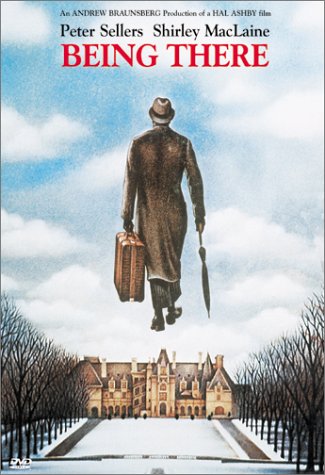


Hal Ashby's movies captured a messy, post-1960s America in alternately hilarious and poignant ways. Here, Wes Anderson, Judd Apatow, Alexander Payne, David O. Russell, and Jason Schwartzman talk about their favorites.

In the 1970s, Hal Ashby made a series of films so brilliant and yet so utterly different from one another that if you didn’t know who the director was, you might not think they were made by the same person. His films move effortlessly from the lavish mansion in Being There, a comic and prescient look at the effects of television on America, to the grim Veterans’ Administration Hospital and boardwalks of Venice Beach, California, in Coming Home. At his best, Ashby was able to make the personal political and the political personal, with humor and without boring the audience.

It is not surprising that Ashby’s films feel relevant at the moment, since our fragmented political climate isn’t that different from the post-Vietnam-and-Watergate years in which they were made. But unlike their latter-day counterparts, Ashby’s movies take on complicated subject matter without being reductive, telling stories through human relationships with no clean resolution. There is more said about American politics in Being There or about the women’s movement in Shampoo than in so many of the films that take on those subject matters directly.

During the late 1960s in Hollywood, the studios realized that there was something going on in the country that their corporate cultures didn’t entirely understand, and that as a result, their movies were out of sync with younger audiences. Then along came the indie hit Easy Rider, and it became clear to executives that they might need to open things up and look for ideas in new places.

Hal Ashby was a beneficiary of this new freedom, but he wasn’t a kid fresh out of film school. He had hitchhiked to California, away from his Mormon family in Utah and what must have been a difficult childhood—there were financial problems, his parents divorced, and his father committed suicide when Ashby was 12.

He had come up through the studio system, starting as a copyboy at Universal, a job he got through the unemployment office. He later worked as an apprentice editor, an especially arduous task before computers, and gradually became the editor on movies such as The Loved One and the original Thomas Crown Affair. He was said to be obsessed with his work, to the point of sleeping in the cutting room for days on end, and it took a physical toll.

Ashby did find the time to become politically active, and was an early supporter of the civil-rights and antiwar movements. He had been married and divorced three times by the 1960s, and in keeping with the era, he switched from heavy drinking to smoking a lot of pot.

In 1967, at the age of 38, Ashby was threatening to leave editing behind when he won an Oscar for In the Heat of the Night. In a fortunate twist of fate, Norman Jewison, for whom Ashby had edited several films, dropped out of directing The Landlord, and helped Ashby step into the project. Finally, at 40, Ashby had started his new career as a director, a rare transition for an editor, especially at his age. He seemed to enter this period of his career with a renewed openness and an experimental spirit. He used his difficult background to emphatically tell the stories of people who live on the edges of society.

Ashby never received the acclaim enjoyed by contemporaries like Francis Ford Coppola or Martin Scorsese—even though he made a bunch of the best films of that period. A few things worked against him: His material was so varied and his touch so light that his body of work isn’t easy to categorize.

The important critics of his day, such as Pauline Kael, didn’t love his work, and he was regarded as difficult to work with because of his strong antiauthoritarian streak. Sadly, his work fell off after the 1970s—some say because of drugs—and he died relatively young, of cancer, in 1988, before he could rebound and find his place again.

We asked some of the writers and directors who have been influenced by his work to tell us about their favorite Hal Ashby movies. Here’s what they had to say.

To Read the Commentaries

Thursday, June 03, 2010

Matt Zoller Seitz: The Substance of Style, Pts. 1-5

The Substance of Style, Pt 1: Wes Anderson and his pantheon of heroes (Schulz, Welles, Truffaut)
by Matt Zoller Seitz
Moving Image Source


This is the first in a five-part series of video essays analyzing the key influences on Wes Anderson’s style. Part 2 covers Martin Scorsese, Richard Lester, and Mike Nichols. Part 3 covers Hal Ashby. Part 4 covers J.D. Salinger. Part 5 is an annotated version of the prologue to The Royal Tenenbaums.

With just five features in 13 years, Wes Anderson has established himself as the most influential American filmmaker of the post-Baby Boom generation. Supremely confident in his knowledge of film history and technique, he's a classic example of the sort of filmmaker that the Cahiers du cinéma critics labeled an auteur—an artist who imprints his personality and preoccupations on each work so strongly that, whatever the contributions of his collaborators, he deserves to be considered the primary author of the film. This series examines some of Anderson's many cinematic influences and his attempt to meld them into a striking, uniquely personal sensibility.

After the release of his second film, Rushmore, in 1998, it became obvious that Anderson was, love him or hate him, an idiosyncratic filmmaker worth discussing. In the decade-plus since then, dissecting Anderson's influences, and Anderson's influence on others, has become a bit of a parlor sport among cinephiles. Sight and Sound and Film Comment have been particularly rich resources. More recently, the Onion A.V. Club contributed a couple of playful, astute lists. Anderson himself has gotten into the act by paying tribute to his heroes in interviews and magazine articles.

This series will take the process a step further, juxtaposing Anderson's cultural influences against his films onscreen, the better to show how he integrates a staggeringly diverse array of source material into a recognizable, and widely imitated, whole. It will examine some, but certainly not all, of Anderson's evident inspirations. Along the way, it may incidentally illuminate why Anderson-esque movies—from Garden State to Son of Rambow—can seem, no matter what their virtues or pleasures, a weak substitute for the real thing.

Anderson’s scavenger-hunt aesthetic stands him in good company, alongside Quentin Tarantino, David Gordon Green, James Gray, and the other Anderson, P.T. But what makes Wes Anderson distinctive is the sheer range of art that has fed his imagination—not just recent American and foreign films, but films from 30, 50, even 70 years ago, plus newspaper comics, illustrations, and fiction. The spectrum of influence gives his work a diversity of tone that his imitators typically lack. It is a style of substance.

To Watch the Video Essay and Access all Five Parts


Sunday, May 09, 2010

The Marketplace of Ideas: Peter Brunette on Austrian Filmmaker Michael Haneke

Peter Brunette on Austrian Director Michael Haneke
The Marketplace of Ideas (KCSB: Santa Monica)


Colin Marshall talks to Peter Brunette, Reynolds Professor of Film Studies and director of the Film Studies program at Wake Forest University. The author of books on such beloved filmmakers as Michelangelo Antonioni, Wong Kar-Wai and Roberto Rossellini, Brunette has now written a book on Austrian cinematic provocateur Michael Haneke. The latest published entry in the University of Illinois Press’ “Contemporary Film Directors” series, Michael Haneke examines in depth the art of and the ideas behind the auteur’s theatrical releases, from late-1980s and early-1990s works such as The Seventh Continent and Benny’s Video through his newest and best-known pictures Caché and The White Ribbon.

To Listen to the Episode (MP3)

Tuesday, April 06, 2010

Steven Shaviro: Kathryn Bigelow

Kathryn Bigelow
by Steven Shaviro
The Pinocchio Theory


Despite all the snarky comments I’ve been getting, both about the film itself and about the director’s two acceptance speeches, I remain unrepentetly thrilled that Kathryn Bigelow won the Best Director and Best Film Oscars for The Hurt Locker. There are just some times when, for me at least, rampant and delirious auteurism trumps everything. I have loved Bigelow’s films ever since I first saw Near Dark in 1987. My book The Cinematic Body (1993) begins with a discussion of Bigelow’s 1990 film Blue Steel; and I wrote a long article on Bigelow’s Strange Days (1995) for this volume. There are just certain directors — not many — who captivate my gaze, and won’t let it go. Bigelow and Abel Ferrara are the only two American directors of their (and my) generation to do so.

I think it might have something to do with a kind of sensory immersion. This is aesthetics, both in the narrower sense of vicarious ravishment by works of art, and in the larger sense of “aesthetics” as a sensibility, a play of the senses, a kind of heightened reception. Near Dark, of course, is a nocturnal film, both as its title indicates and because it is about vampires, for whom sunlight is literally killing. “The night, it’s so bright…” Has there ever been a movie that has so well captured the tonalities of dim light (including starlight and artificial neon light), the ways in which (semi-)darkness is a sensual medium, a tender, welcoming blanket, an atmosphere in which previously unspoken desires can become manifest? These desires include the murders which the vampires must perform in order to feed; but they also include those of a romance in which the woman is the active one, pursuing the man; and Jenny Wright and Adrian Pasdar are both utterly ravishing. Not to mention the great Lance Henriksen as leader of the vampire clan. And then there are the marvelous set pieces, like the scene in the tough country-and-western bar, where the vampires take down a bunch of hardass dudes, while The Cramps’ cover of “Fever” plays on the jukebox… Near Dark is one of the great films about nighttime; and this includes poetic visions of dawn and dusk, and also the scene in which the vampires face a daytime shootout from the cops, the bullet holes in their motel room letting in stabs of murderous sunbeams. The vampires of Near Dark are classic American drifters, unmoored from the social contract, left out of the promises of the American dream, with a “family” that does not conform to bourgeois suburban norms. And although Near Dark ends, as genre pictures must, with the triumph of daylight and of “normalcy,” those nocturnal hauntings are what the movie leaves behind in our minds and hearts.

Blue Steel is, in its own way, as nocturnal a movie as Near Dark; its palette is largely blue-black, with hard neon lighting. Many of its scenes take place in the daytime, but the night scenes are the ones that stick in the mind. Add to that its scary gun fetishism, and Jamie Lee Curtis as a female cop stalked by Ron Silver’s psycho. Curtis’ performance is wonderfully butch, but at the same time she displays more than a hint of wry humor about her situation. This happens even as that situation becomes more and more unbearable, as Silver in effect draws Curtis into a situation of unwanted intimacy and complicity. As I say in my book, “the visual becomes violently tactile” in the course of Blue Steel; “something has happened to the act of looking… Bigelow pushes fetishism and voyeuristic fascination to the point where they explode.” I’d only add that this excess itself becomes sensual, bathed as it is in the alternations of darkness and light.

Point Break is also dominated by the color blue. But it moves in yet another direction, as everything comes out of, and returns back to, the element of water. Bigelow shows us the ocean and the beach as they have never been shown before. The images from this film that remain most in my mind are all those telephoto lens shots of waves breaking on the shore. (Though the images of bank robbers in Presidential masks are also pretty wonderful — especially the shot of “Reagan” as cheerful incendiary). Surfing and skydiving are both modes of activity in which beautifully vapid male bodies give themselves over to the primordial elements. The homoerotic tension/attraction between Keanu Reeves and Patrick Swayze is itself immersed in the dynamics of waves and water. Surfer hedonism is taken up and transcended by the universal upswelling of a fluid dynamics.

To Read the Rest of the Essay