Showing posts with label Chile. Show all posts

Thursday, June 24, 2010

Nicola Marzano: The Art of Hunger -- Re-Defining Third Cinema

The Art of Hunger: Re-Defining Third Cinema
by NICOLA MARZANO
16:9


This article tries to address established notions of Third Cinema theory and its filmmakers from developing and post-colonial nations. The Third Cinema movement called for a politicized
film-making practice in Africa, Asia and Latin America, since its first appearance during the 60’s and 70’s, taking on board issues of race, class, religion, and national integrity.

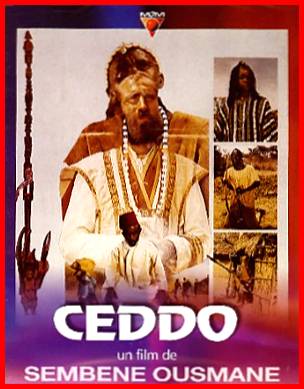
The films investigated in this paper, from directors like Sembène, Getino, Solanas and Guzman, are amongst the most culturally significant and politically sophisticated from this movement and denote the adoption of an independent, often oppositional, stance towards
commercial genres and mainstream cinema.

Third Cinema has posed – and continues to pose – difficult and challenging questions. These questions, then, are crucial to this article, an article that focuses on Third Cinema in an inclusive fashion, studying films from Argentina, Chile, Senegal, and even England. Suggesting new methodologies and subtle refinements of existing ones, this article aims at rereading the entire phenomenon of film-making in a fast-vanishing 'Third World'.

Coming to terms with Third Cinema

There is an endless debate about Third Cinema and its strategies in offering valuable tools for documenting social reality. From the 70’s onwards, appreciation of its value and aesthetics has been unfolded through controversial approaches and different views on this radical form of cinema.

The idea of Third Cinema was conceived in the 1960s as a set of radical manifestos and low-budget experimental movies by a group of Latin American filmmakers, who defined a ’cinema of opposition’ to Hollywood and European models. Possibly, this new form of expression came from three different areas of the world: Asia, Africa, and Latin America. At the time these three zones were labelled ‘Third World’ (sometimes they, or at least some of them, still are).

Even though scholars like Willemen explained how the notion of Third Cinema was most emphatically not Third World Cinema, these two concepts have often been confused either intentionally or accidentally (Willemen 1991: 3).

To Read the Rest of the Essay
Tuesday, March 23, 2010

Andy Beckett: Santiago Dreaming

Santiago dreaming
When Pinochet's military overthrew the Chilean government 30 years ago, they discovered a revolutionary communication system, a 'socialist internet' connecting the whole country. Its creator? An eccentric scientist from Surrey. Andy Beckett on the forgotten story of Stafford Beer
The Guardian

During the early 70s, in the wealthy commuter backwater of West Byfleet in Surrey, a small but rather remarkable experiment took place. In the potting shed of a house called Firkins, a teenager named Simon Beer, using bits of radios and pieces of pink and green cardboard, built a series of electrical meters for measuring public opinion. His concept - users of his meters would turn a dial to indicate how happy or unhappy they were with any political proposal - was strange and ambitious enough. And it worked. Yet what was even more jolting was his intended market: not Britain, but Chile.

Unlike West Byfleet, Chile was in revolutionary ferment. In the capital Santiago, the beleaguered but radical marxist government of Salvador Allende, hungry for innovations of all kinds, was employing Simon Beer's father, Stafford, to conduct a much larger technological experiment of which the meters were only a part. This was known as Project Cybersyn, and nothing like it had been tried before, or has been tried since.

Stafford Beer attempted, in his words, to "implant" an electronic "nervous system" in Chilean society. Voters, workplaces and the government were to be linked together by a new, interactive national communications network, which would transform their relationship into something profoundly more equal and responsive than before - a sort of socialist internet, decades ahead of its time.

When the Allende administration was deposed in a military coup, the 30th anniversary of which falls this Thursday, exactly how far Beer and his British and Chilean collaborators had got in constructing their hi-tech utopia was soon forgotten. In the many histories of the endlessly debated, frequently mythologised Allende period, Project Cybersyn hardly gets a footnote. Yet the personalities involved, the amount they achieved, the scheme's optimism and ambition and perhaps, in the end, its impracticality, contain important truths about the most tantalising leftwing government of the late 20th century.

To Read the Rest of the Article