Ronald Reagan, Enabler of Atrocities
By Robert Parry
Consortium News
When you’re listening to the many tributes to President Ronald Reagan, often for his talent making Americans feel better about themselves, you might want to spend a minute thinking about the many atrocities in Latin America and elsewhere that Reagan aided, covered up or shrugged off in his inimitable "aw shucks" manner.
After all, the true measure of a president shouldn’t be his style or how he made us feel but rather what he did with his extraordinary power, what were the consequences for real people, either for good or ill.
Yet, even as the United States celebrates Reagan’s centennial birthday and lavishes praise on his supposed accomplishments, very little time has been spent reflecting on the unnecessary bloodbaths that Reagan enabled in many parts of the world.
Those grisly deaths and ugly tortures get whisked away as if they were just small necessities in Reagan’s larger success “winning the Cold War” – even though the competition between the United States and the Soviet Union was already winding down before Reagan arrived on the national scene. [See Consortiumnews.com’s “Reagan’s ‘Tear Down This Wall’ Myth.”]
Yet, Reagan’s Cold War obsessions helped unleash right-wing “death squads” and murderous militaries on the common people in many parts of the Third World, but nowhere worse than in Latin America.
In the 1970s and 1980s, as Latin American security forces were sharpening themselves into finely honed killing machines, Reagan was there as an ardent defender, making excuses for the atrocities, and sending money and equipment to make the forces even more lethal.
To Read the Rest of the Essay
Showing posts with label Argentina. Show all posts
Showing posts with label Argentina. Show all posts
Tuesday, February 08, 2011

Monday, September 20, 2010
Thursday, August 12, 2010
Friday, July 16, 2010
Michael Warren: Argentina Gay Marriage Law -- First Country In Latin America To Approve Same Sex Marriage
Argentina Gay Marriage Law: First Country In Latin America To Approve Same Sex Marriage
by Michael Warren
Huffington Post
BUENOS AIRES, Argentina — Argentina became the first Latin American nation to legalize gay marriage Thursday, granting same-sex couples all the legal rights, responsibilities and protections that marriage brings to heterosexuals.
The law's passage – a priority for President Cristina Fernandez's government – has inspired activists to push for similar laws in other countries, and a wave of gay weddings are expected in Buenos Aires. Some gay business leaders are predicting an economic ripple effect from an increase in tourism among gays and lesbians who will see Argentina as an even more attractive destination.
But it also carries political risks for Fernandez and her husband, former President Nestor Kirchner. The vote divided their governing coalition, and while gay rights have strong support in the capital, anti-gay feelings still run strong in much of Argentine society, where the vast majority of people are Roman Catholic.
"From today onward, Argentina is a more just and democratic country," said Maria Rachid, president of the Argentine Lesbian, Gay, Bisexual and Transgender federation. The law "not only recognizes the rights of our families, but also the possibility of having access to health care, to leave a pension, to leave our assets to the people with whom we have shared many years of life, including our children," she said.
To Read the Rest of the Essay
by Michael Warren
Huffington Post
BUENOS AIRES, Argentina — Argentina became the first Latin American nation to legalize gay marriage Thursday, granting same-sex couples all the legal rights, responsibilities and protections that marriage brings to heterosexuals.
The law's passage – a priority for President Cristina Fernandez's government – has inspired activists to push for similar laws in other countries, and a wave of gay weddings are expected in Buenos Aires. Some gay business leaders are predicting an economic ripple effect from an increase in tourism among gays and lesbians who will see Argentina as an even more attractive destination.
But it also carries political risks for Fernandez and her husband, former President Nestor Kirchner. The vote divided their governing coalition, and while gay rights have strong support in the capital, anti-gay feelings still run strong in much of Argentine society, where the vast majority of people are Roman Catholic.
"From today onward, Argentina is a more just and democratic country," said Maria Rachid, president of the Argentine Lesbian, Gay, Bisexual and Transgender federation. The law "not only recognizes the rights of our families, but also the possibility of having access to health care, to leave a pension, to leave our assets to the people with whom we have shared many years of life, including our children," she said.
To Read the Rest of the Essay
Thursday, June 24, 2010
Nicola Marzano: The Art of Hunger -- Re-Defining Third Cinema
The Art of Hunger: Re-Defining Third Cinema
by NICOLA MARZANO
16:9

This article tries to address established notions of Third Cinema theory and its filmmakers from developing and post-colonial nations. The Third Cinema movement called for a politicized
film-making practice in Africa, Asia and Latin America, since its first appearance during the 60’s and 70’s, taking on board issues of race, class, religion, and national integrity.
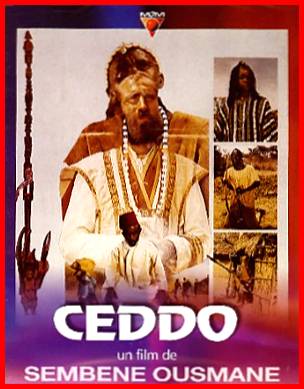
The films investigated in this paper, from directors like Sembène, Getino, Solanas and Guzman, are amongst the most culturally significant and politically sophisticated from this movement and denote the adoption of an independent, often oppositional, stance towards
commercial genres and mainstream cinema.
Third Cinema has posed – and continues to pose – difficult and challenging questions. These questions, then, are crucial to this article, an article that focuses on Third Cinema in an inclusive fashion, studying films from Argentina, Chile, Senegal, and even England. Suggesting new methodologies and subtle refinements of existing ones, this article aims at rereading the entire phenomenon of film-making in a fast-vanishing 'Third World'.
Coming to terms with Third Cinema
There is an endless debate about Third Cinema and its strategies in offering valuable tools for documenting social reality. From the 70’s onwards, appreciation of its value and aesthetics has been unfolded through controversial approaches and different views on this radical form of cinema.
The idea of Third Cinema was conceived in the 1960s as a set of radical manifestos and low-budget experimental movies by a group of Latin American filmmakers, who defined a ’cinema of opposition’ to Hollywood and European models. Possibly, this new form of expression came from three different areas of the world: Asia, Africa, and Latin America. At the time these three zones were labelled ‘Third World’ (sometimes they, or at least some of them, still are).
Even though scholars like Willemen explained how the notion of Third Cinema was most emphatically not Third World Cinema, these two concepts have often been confused either intentionally or accidentally (Willemen 1991: 3).
To Read the Rest of the Essay
by NICOLA MARZANO
16:9
This article tries to address established notions of Third Cinema theory and its filmmakers from developing and post-colonial nations. The Third Cinema movement called for a politicized
film-making practice in Africa, Asia and Latin America, since its first appearance during the 60’s and 70’s, taking on board issues of race, class, religion, and national integrity.
The films investigated in this paper, from directors like Sembène, Getino, Solanas and Guzman, are amongst the most culturally significant and politically sophisticated from this movement and denote the adoption of an independent, often oppositional, stance towards
commercial genres and mainstream cinema.
Third Cinema has posed – and continues to pose – difficult and challenging questions. These questions, then, are crucial to this article, an article that focuses on Third Cinema in an inclusive fashion, studying films from Argentina, Chile, Senegal, and even England. Suggesting new methodologies and subtle refinements of existing ones, this article aims at rereading the entire phenomenon of film-making in a fast-vanishing 'Third World'.
Coming to terms with Third Cinema
There is an endless debate about Third Cinema and its strategies in offering valuable tools for documenting social reality. From the 70’s onwards, appreciation of its value and aesthetics has been unfolded through controversial approaches and different views on this radical form of cinema.
The idea of Third Cinema was conceived in the 1960s as a set of radical manifestos and low-budget experimental movies by a group of Latin American filmmakers, who defined a ’cinema of opposition’ to Hollywood and European models. Possibly, this new form of expression came from three different areas of the world: Asia, Africa, and Latin America. At the time these three zones were labelled ‘Third World’ (sometimes they, or at least some of them, still are).
Even though scholars like Willemen explained how the notion of Third Cinema was most emphatically not Third World Cinema, these two concepts have often been confused either intentionally or accidentally (Willemen 1991: 3).
To Read the Rest of the Essay
Saturday, January 16, 2010
All Songs Considered: GlobalFEST 2010 -- A World Music Showcase
GlobalFEST 2010: A World Music Showcase
All Songs Considered (NPR)
Alif Naaba

All Songs Considered host Bob Boilen talks with Banning Eyre (Afropop) and Rob Weisberg (WFMU's Trans Pacific Sound Paradise) about some of the standout artists at this year's GlobalFEST. The annual world-music and cultural festival, held each winter in New York City, is a brief but intense one-day event featuring more than a dozen international bands and artists. This year's showcase included club music from Argentina, Colombian roots music, traditional songs from Ireland, Romanian hybrid blues and much more. Hear concert highlights on this edition of All Songs Considered.
Caravan Palace

To Listen to the Episode
Nguyên Lê

All Songs Considered (NPR)
Alif Naaba
All Songs Considered host Bob Boilen talks with Banning Eyre (Afropop) and Rob Weisberg (WFMU's Trans Pacific Sound Paradise) about some of the standout artists at this year's GlobalFEST. The annual world-music and cultural festival, held each winter in New York City, is a brief but intense one-day event featuring more than a dozen international bands and artists. This year's showcase included club music from Argentina, Colombian roots music, traditional songs from Ireland, Romanian hybrid blues and much more. Hear concert highlights on this edition of All Songs Considered.
Caravan Palace
To Listen to the Episode
Nguyên Lê
Subscribe to:
Comments (Atom)