Showing posts with label Paris. Show all posts

Wednesday, March 23, 2011

Radio Open Source: Graham Robb's Paris -- 18 Arrested Explosions

Graham Robb's Paris: 18 Arrested Explosions
By Chris Lydon
Radio Open Source


Graham Robb is making France and the French irresistible again. With an entirely unconventional gift for historically-informed tale-spinning, his Parisians delivers nearly a score of long anecdotes about famous people in real scenes beyond imagining.

Here is Hitler on a tourist sweep through depopulated boulevards of Paris at dawn on a weekend in June, 1940 — thinking out loud with Albert Speer about how the Paris effect might be reproduced in Berlin.

There are Miles Davis and the singer Juliette Greco in love in 1949, and in guileless conversations about “existentialisme” with Jean-Paul Sartre and Simone de Beauvoir at the Cafe de Flore.

Then there is the assassination attempt that Francois Mitterand stage-managed against himself in 1957 — perhaps in a sort of homage to the “miracle” that saved Charles de Gaulle from great bursts of gunfire inside the Cathedral of Notre Dame in 1944. Mitterand, who liked being known as “the Fox,” survived even the exposure of his own hoax — because, Graham Robb suggests, the French like a trickster and a touch of criminality at the top.

My favorite Robb character, from the 1830s, is the arch-criminal and escape artist Vidocq, a master of disguises who hid himself on Paris streets as a trash pile, who conspired with the cops and built the first private detective agency known to the world.

What is Graham Robb up to? In his fragmentary episodes, he seems to be telling us something of the non-linear course of events in general. His “explosive fragments,” I observe, remind me of David Shields’ ideal for the modern “lyric essay”: an explosion on every page. Yes, but no, Graham Robb rejoins:

Yes, it’s nice to have explosive fragments, but it’s also nice to just arrest the explosion at a particular moment and see exactly what’s going on at the moment of impact, the moment of destruction, and just take a lot more time to look at things which are just flashing past. It’s not a search engine kind of history. It’s almost the opposite. It’s the single fragment kind of history, and how much you can discover in one particular thing if you stop and look at it and go into it as deeply as possible, instead of skimming over the surface and collecting impressions.


Parisians extends the project of Robb’s breakthrough, The Discovery of France, the fruit of 4 years and 14,000 miles on a bicycle, in which Robb reintroduced France as, until yesterday, anything but a single, sovereign culture. He found a new planet at every bike resting spot, “a vast encyclopedia of micro-civilizations” in sum. His France is a nation of villages where, when the Eiffel Tower went up in 1889, only about 20 percent of the population spoke French. The short form of Parisians is: out with old notions of order, majesty and the grandeur of Paris; in with the ragged, the jagged, the forgotten personal perspectives, the violent and the out-and-out weird. Robb’s stress on fragmentation seems deliberately set against the national impulse in President Sarkozy’s politics — against Sarko’s famous contempt for the riotous, car-burning brown-skinned racaille, or scum, of Paris’s near suburbs.

It’s a bit ironic that Sarkozy started a debate on a national identity, because he is stressing the rifts that there are in French and Parisian society. He’s a very Parisian president. The biggest rift in France is between Paris and the provinces…. And there is also the rift between bourgeois Paris, white Paris and so-called immigrant Paris which very often isn’t immigrant at all, they’re French too. Sarkozy’s exploited that old fear that probably goes way back to the time of the Gauls… It’s the fear of what lies beyond in the hinterland, and that fear is more virulent than ever in Paris. And even today, if you tell some Parisians that you’ve been to Clichy-sous-Bois or one of the other northern suburbs, they won’t believe you. They won’t believe that you can go there and talk to people and come back alive.


To Listen to the Coversation

Tuesday, January 04, 2011

Worldview: Shakespeare and Company Bookshop -- Parisian mecca of bookshops survives in era of Amazon

Parisian mecca of bookshops survives in era of Amazon
Worldview

Over the past decade I’ve watched the iconic cultural places in our city disappear one by one. Places like Maxwell Street and Halsted, the birthplace of Chicago jazz and blues and a hangout for writers like Nelson Algren, destroyed and rebuilt with a glossy soulless exterior.

I just assumed it was the same story everywhere. That’s when I found out Shakespeare & Company Bookshop was still open for business. I’d first heard about the shop when I began reading Earnest Hemingway’s work. When I got into Kerouac, there it was again. Many of the Beats hung out there and slept amongst the bookshelves.

These were the two generations more than any other in American literature that made me want to be a writer, so I decided to drop in during my trip to Paris this past summer.

Shakespeare & Company sits in a small stone courtyard just across the Seine from the Notre Dame Cathedral.

A sign scribbled in chalk near the entrance reads, "Some People call me the Don Quixote of the French Quarter because my head is so far up in the clouds that I can imagine all of us Angels in Paradise."

It finishes with the line, “I have been doing this for fifty years, now it is my daughter’s turn.”

The message is dated January 2004. That’s when George Whitman handed over his beloved bookshop to his then-24-year-old daughter Sylvia. His daughter is named after the shop’s original owner, an American expatriate named Sylvia Beach who first opened Shakespeare & Company’s doors in the early 20th century.

Upon entering the bookshop, I didn’t have to look far to find Sylvia Whitman, perched at her desk just inside the shop’s left-side entrance where the antique books are sold. Sylvia is a fair-skinned, bright-eyed, 29-year-old businesswoman. She grew up in the apartment above the shop, where authors like Lawrence Durrrell regularly visited.

“Running around without shoes on, hiding in corners and being read stories upon stories upon stories. It was a fairy tale childhood,” Whitman said.

While many independent bookstores have closed their doors because of declining sales, Sylvia has maintained Shakespeare & Company’s loyal customer base and its legacy.

“I’ve tried to keep the atmosphere and the philosophy that Dad created, so we still have writers sleeping in the bookshop,” she said.

To Listen to the Episode

Friday, December 10, 2010

Guardian: Bettencourt feud ends but battle rumbles on for Sarkozy

Bettencourt feud ends but battle rumbles on for Sarkozy: L'Oréal heiress and daughter settle court fight, but French elite still on edge after saga exposes gulf with rest of France
by Angelique Chrisafis
Guardian

The cast list and plot twists were almost too bizarre to be true: an octogenarian billionaire; an eccentric dandy who peed in her flowerbeds and took gifts worth almost a billion euros; politicians who came to dinner and left with envelopes of cash; and a disgruntled butler who hid a tape-recorder in the drawing room.

The family feud that has torn apart one of France's richest dynasties officially ended this week when the Bettencourts, heirs to the L'Oréal cosmetics empire, signed a surprise truce between warring mother and daughter. But France is still reeling from what the spat has revealed about the nation.

It has renewed accusations that Nicolas Sarkozy's France is an oligarchy, where the president's coterie of extraordinarily wealthy business friends enjoy special privileges in exchange for financial support. Judges continue to investigate allegations of illegal political party funding, influence peddling, conflict of interest, tax evasion and phone-tapping of the media that have arisen from the Bettencourt case.

These inquiries into potential political corruption could prove damaging to Sarkozy and his bid for re-election in 2012. Already the case has caused outrage by exposing the widening gulf between the super-rich elite and rest of France. And the upstairs-downstairs Bettencourt story – described by several newspapers as "the nation's soap opera" – is now likely to inspire a round of films.

The drama unfolded in the Bettencourts' €30m mansion, secluded behind poplar trees in the rich Paris suburb of Neuilly-sur-Seine, known as Sarkozy's fiefdom after his time as mayor. Here, Liliane Bettencourt, 88, the richest woman in France, is waited on by 17 staff, including chambermaids, cooks, hairdressers, nurses and a beautician who undertakes the daily "preparation of her skin" before her makeup is applied. Works by artists from Matisse to Braque line the walls. Meals are served on antique porcelain and the dogs eat only fresh fish.

Bettencourt, whose fortune exceeds €17bn (£14bn), was once France's poor little rich girl. Her mother died when she was five, leaving her alone with her workaholic father, Eugène Schueller, a chemist and one-time Nazi sympathiser who made a fortune as the inventor of modern hair dye and founder of L'Oréal. His daughter went on to marry the politician André Bettencourt, who died in 2007. After his death, their daughter, Françoise Bettencourt-Meyers, decided to take legal action against her mother's eccentric best friend, the photographer and artist François-Marie Banier.

Banier already had a history of friendships with rich widows when he became Bettencourt's confidant and court jester. The one-time golden boy of 1970s Paris had partied with celebrities from Salvador Dalí and Yves Saint-Laurent to Kate Moss. But some of Bettencourt's domestic staff were horrified by his style. One reported that Banier urinated in the flowerbeds and called Bettencourt a "bitch", another told how he grabbed a lipstick from her saying it was an "ugly" shade. Bettencourt said he made her laugh and she gave him almost €1bn worth of gifts, including paintings and a salary from L'Oréal. Her daughter filed a court case suing Banier for exploiting her mother's frail mental state.

Then secret recordings made by Bettencourt's butler threatened to engulf France's ruling political class. The tapes included her financial adviser instructing the confused Bettencourt to sign cheques for politicians, including Sarkozy. Eric Woerth, the budget minister and treasurer of the president's party, was described as "a friend" to whom she should give money. Woerth's wife, Florence, was employed in the team that managed Bettencourt's riches, a potential conflict of interest given that her husband was in charge of collecting tax. The tapes also revealed nearly €80m hidden in Swiss accounts, as well as the secret ownership of Arros, a private island in the Seychelles, which appeared to have been promised to Banier.

To Read the Rest of the Article

Tuesday, August 10, 2010

Nicholas Sammond: "Hidden," or Fear of a Black Planet

(Comparative analysis of Haneke's Cache; the French banlieues riots, Jeremiah Wright's sermons, Gate's arrest in his home, Obama's speeches, and the rise of militias in the US)

"Hidden," or fear of a black planet
by Nicholas Sammond
Jump Cut


On July 23, 2009, Harvard professor Henry Louis Gates, who is African American, was arrested on the front porch of his home in Cambridge Massachusetts, on charges of disorderly conduct. The professor had yelled at the white police officer who was responding to a neighbor’s call about a suspicious looking man (Gates himself) trying to break into Gates’ home. The charges were soon dropped. Several days later, when asked about the arrest, President Barack Obama suggested that the Cambridge Police Department had acted “stupidly,” setting off a storm of media criticism. Regretting his words, President Obama invited Gates and the arresting officer to join him for a beer and a private conversation about the incident. The President and his aides described the event as a “teachable moment” about race, without specifying exactly who was teaching whom or what might actually be learned.

This empty moment of racial panic and its containment recalls the day in Barack Obama’s 2008 presidential campaign when he had to repudiate the words of his onetime mentor, the Reverend Jeremiah Wright, after it came out that Wright had earlier delivered sermons critical of the United States. While the speech that Obama gave was moving and beautifully crafted, it reduced Wright’s complex commentaries on the history of racial oppression and its current expressions to a “teachable moment” about those who cling to outmoded ideas of race and those who do not. Wright’s sermons had been much more than that. They had explored the relationship between racism and colonialism, and between U.S. foreign and domestic policies, in interesting and troubling ways. Given that Barack Obama then reduced them to caricature in order to call for a postracial capitalist United States, “teachable moment” would seem to mean “forgetting.” This brief essay explores three distinct but related moments of race and its erasure, one of which is the Jeremiah Wright incident, with an eye to reclaiming teachable moments from the dustbin of history.

Caché: beheading the chicken

Michael Haneke’s Caché ("Hidden," France 2005) is a story about urban bourgeois anxiety. Georges and Anne Laurent (Daniel Auteuil and Juliette Binoche) are a successful couple with a handsome teenage son, living in a stylish townhouse in Paris. Georges hosts a television talk show; Anne is a player in the Parisian literary scene. Their life is elegant, graceful, and good. Then, someone begins to videotape their home and to leave the tapes—sometimes accompanied by bloody, childish, violent drawings—on their doorstep. The mystery of who is behind this is never fully resolved, but it reveals discord in the marriage and the family. This seeming invasion of the Laurents’ privacy also spurs Georges to relive a childhood trauma surrounding the betrayal of his boyhood playmate and foster brother, Majid (Maurice Bénichou), an orphan of the brutal 1961 massacre of peaceful Algerian protesters by the French police.

Though we will not learn much of this till later in the film, from its very beginning Caché imposes on us a question that makes this information seem like a series of clues that will help us solve the mystery. The film’s first establishing shot shows a building seen from street level. By convention, we are to understand that both the scene and our relationship to it as neutral observers has been established. But then the shot goes on, and on, and on. We are presented with a decision. Is this an establishing shot or a point of view shot? If a POV, then whose? In an intervening shot from a different angle a man comes out of the same building and looks up the street. Then we are back in the first shot…which then shudders, and the bars of a tape rewinding appear on the screen. We discover we are watching a videotape of the Laurent home…playing on the television in the living room of that home.

This is the question we are offered: “Who’s watching?” It’s the one the film asks us to address. It’s also the wrong question. Although it persists throughout the film and is never fully answered, it obscures the very real relationship between the Laurents’ comfort and security and the eventual immiseration of Majid and his son (Walid Afkir).

A series of scenes describes the problem in miniature. After the film has been going on for a while, we have learned some things. We know that someone is watching the Laurent family. We know that the observation throws the family into crisis and that Anne may be romantically involved with a close friend. We come to know that Georges suspects his boyhood playmate, Majid—whom he coldly betrayed to secure his mother’s love all for himself—of being the voyeur. The scene is set.

To Read the Rest of the Essay

Tuesday, July 27, 2010

Ian Buchanan: Bernardo Bertolucci's The Dreamers; Kristin Ross' May 68 & Its Afterlives; Deleuze & Guattari's Anti-Oedipus

(If you would like a broad note form introduction to D & G's Anti-Oedipus: Capitalism and Schizophrenia check out my attempt of carving out meaning from this difficult, but powerful theoretical text.)
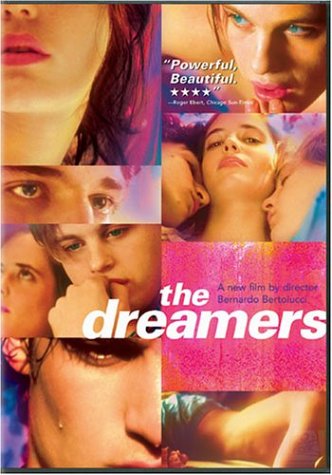


Bernardo Bertolucci's highly stylized film about May '68, The Dreamers (2003), is a vivid illustration of the narrow, exclusively Parisian image of the events that has to be overturned if we are to see things in their proper historical light. Bertolucci depicts May '68 as a student protest, which is how it began, but its significance to history derives from the fact that it soon became a nationwide protest involving more than 9 million striking workers. The effects of the strikes are made apparent to us in the film in the form of mounds of uncollected garbage mouldering in stairwells and on street corners, but the striking workers themselves are never shown. Moreover, Bertolucci makes it seem the student protests began in the privileged cloisters of the Latin Quarter, and not, as was actually the case, in the functionalist towers of the new universities in the outlying immigrant slum areas of Nanterre and Vincennes, where students were provided 'with a direct "lived" lesson in uneven development.' According to the great Marxist philosopher Henri Lefebvre, it was this daily 'experience' of the callousness of the state that radicalized the students and provided the catalyst for their connection to workers' movements. Secondly, through the vehicle of its twin brother and sister protagonists Isabelle (Eva Green) and Theo (Louis Garrel), both in their late teens or early twenties and still living at home with their relatively well-to-do parents, it depicts the students who took part in May '68 as naive, self-absorbed and perverted. Cocooned in their own fantasy world concocted from fragments of movies and books, Isabelle and Theo are a postmodern version of Ulrich and Agathe. They meet an American exchange student, Matthew (Michael Pitt), and invite him to join them. When their parents go away, they are able to indulge their whims uninhibitedly and the scene is set for a cliched romp through the three staples of 1960s counterculture, namely, sex, drugs, and rock 'n' roll. They take bubble baths together and get stoned on hash; Matthew and Isabelle make love on the kitchen floor while Theo fries an egg and looks on with Brechtian disinterest; they drink papa's fine wine straight from the bottle and debate movies and politics long into the night as though nothing else mattered. They ignore the world outside.


Mathhew soon upsets their idyllic universe by accusing them both of being unwordly: Isabelle because she's never been out on a real 'date' and Theo because of his starry-eyed romanticization of the Chinese Red Guards. It all begins when Isabelle demands that he shave his pubic hair as a sign of love. He refuses because the demand is in his view nothing but a silly game, an infantilizing gesture that proves their disconnection from the reality of what is going on around them. He tells them both 'there's something going on out there, I can feel it,' but neither Isabelle nor Theo seem to care. Their political awakening comes soon enough though in the form of a brick thrown through their apartment window. The brick literally shatters their world, but also save their lives too. Awakening after another of their orgiastic episodes, Isabelle finds a cheque written by her parents and realizes they must have been in the apartment and therefore witnessed their dishabille state and perhaps guessed at their decadent behavior -- the three of them are naked, sleeping side by side in a tent Isabelle erected in the living room. Mortally ashamed, Isabelle decides to kill herself and Theo and Matthew as well, so she switches on the gas and lays down between the two boys and readies herself for death. It is at this point that the window is broken. The intrusion of the street into their self-enclosed fantasy world is thus presented as a life-saving event. The brick breaks the spell of self-indulgence they've all been under and suddenly both Isabelle and Theo realize something is going on outside and that it does concern them, does interest them, and is more important than their fantasy world. The three of them rush first to the balcony to witness the events below and then to the street to join in. But here the happy trio split up because only Isabelle and Theo are willing to take part. Mathhew, a self-proclaimed pacifist, turns his back on them. Matthew recoils in horror when he sees Theo with a Molotov cocktail in his hands and refuses to join them when they rush hand in hand towards the fray. Bertolucci's last act then is to make May '68 an exclusively French affair, but also wrongheaded and needlessly violent.
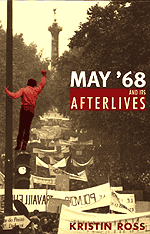


Kristin Ross's account of May '68 takes us in precisely the opposite direction to Bertolucci. She is anxious that we see that May '68 was not just a student protest, and that those involved were anything but naive (in the sense of being unaware of history) and perhaps most importantly that it was part of a longer chain of events that stretched far beyond Paris. To begin with, Ross argues for an enlargement of the timeframe in which the events are considered, not just beyond the month of May itself, which as she shows (and Bertolucci's film exemplifies) restricts the events to a limited series of goings-on at the Sorbonne, but back two decades to the start of the Algerian War. This, in turn, enables her to argue that May '68 was not a great cultural reform, a push toward modernisation, or the dawning sun of a new individualism. It was above all not a revolt on the part of the sociological category "youth". It was rather the revolt of a broad cross-section of workers and students of all ages who had grown up with and witnessed the sickening brutality of the Gaullist regime's failed attempt to deny Algeria its independence. 'Algeria defined a fracture in French society, in its identity, by creating a break between the official "humanist" discourse of that society and French practices occurring in Algeria and occasionally within France as well.' It was impossible to reconcile the ideal of a benevolent welfare state espoused by France's leaders with the truncheon-wielding reality of the hegemonic state, except perhaps in oedipal terms by casting President de Gaulle in the role of the father and relegating the protesters to the rank of children. Anti-Oedipus is of course directed against this pseudo-psychoanalytic account of the events and indeed Deleuze and Guattari argue that it was precisely the example of Algeria that makes it clear that politics cannot be reduced to an oedipal struggle. 'It is strange', they write, 'that we had to wait for the dreams of the colonised peoples in order to see that, on the vertices of the pseudo triangle, mommy was dancing with the missionary, daddy was being fucked by the tax collector, while the self was being beaten by the white man.' (AO, 105-9/114)


What Fanon's work showed us, Deleuze and Guattari go on to suggest, is that every subject is directly coupled to elements of their:


historical situation -- the soldier, the cop, the occupier, the collaborator, the radical, the resister, the boss, the boss's wife -- who constantly break all triangulations, and who prevent the entire situation from falling back on the familial complex and becoming internalised in it. (AO, 107/116)


As Belden Fields writes, the Algerian War was crucial stimulus for the radicalization of French students in the 1960s because it delegitimized the structures of the state. 'The educational system, for instance, came to be viewed as a conduit funneling young people into military bureaucracies, whether public or private, to earn a living as a supporting cog in a system of repressive privilege'. Jean-Paul Belmondo, 'the doomed anti-hero' of Jean-Luc Goddard's path-breaking film of 1960, A bout de souffle [Breathless], is usually taken as the 'screen representative of that young generation of Frenchmen condemned to serve, suffer, and even die in Algeria'. This perceived lack of control over their own destiny, even among the relatively privileged classes to which the majority of students actually belonged, coupled with the oppressive archaism of the educational system itself, and indeed the state structure as a whole, generated among radicalized youth a powerful sense of empathy with all victims of the state. The students saw themselves as being in solidarity with factory workers, despite the fact that their destiny was to be the managers who would one day have to 'manage' these selfsame workers. In other words, in spite of the fact that their class interests were different, the students and the workers were nonetheless able to find a point of common interest in their dispute with the state. The usual divide and conquer tactics the state relies on to stratify the population and ensure that precisely this type of connection between strata doesn't occur failed spectacularly. It failed because the state was unable, at least in the first instance, to present itself as something other than a huge, oppressive monolithic edifice determined to stamp out dissent with an iron fist. Unfortunately, the French Communist Party, still a very strong and widely supported institution, was tarnished by its 'pragmatic response to the war -- the party line, that the war should be ended by negotiated settlement, was strictly enforced, with the result that it too came to be seen as ossified and antiquated and of little relevance to the needs of the present generation. Deleuze and Guattari clearly shared this view; their frequent anti-reformist remarks should be seen as directed at the French Communist Party.

Ross's second move is to argue for an enlargement of the geographical framework in which the events are considered, not just beyond the Latin Quarter to the outer suburbs of Paris, but beyond France altogether to still another of its former colonies, namely Vietnam, which having rid itself of its French masters in the 1950s was then in the process of expelling the American pretenders:

In its battle with the United States, with the worldwide political and cultural domination the United States had exerted since the end of World War II, Vietnam made possible a merging of the themes of anti-imperialism and anti-capitalism ...


In fact, the events themselves were sparked by an incident -- a window of the American Express building on rue Scribe in Paris was broken -- that occurred as part of a student protest against the war in Veitnam on 20 March 1968. The irruption of student protest at Nanterre two days later was in part provoked by the heavy-handedness of the police response to the anti-Vietnam march. The students at Nantarre rallied themselves under the banner of 'Mouvement du 22 mars', deliberately recalling Castro's 'July 26th Movement' commemorating the attack on Moncada fortress and start of the insurrection against Batista. 'Vietnam thus both launched the action in the streets as well as brought under one umbrella a number of groups ... as well as previously unaffiliated militants working together. For the protesters, students and workers alike, Vietnam made manifest processes that were thought to be merely latent in the West. For one thing, it revealed both the inherent violence of the postmodern capitalist state and the lengths to which it is prepared to go in order to preserve its power. It demonstrated a willingness on the part of the powerful to use violence against the powerless to defend the status quo. Vietnam also revealed the vulnerability of the super state and its susceptibility to a 'revolution from below'. Sartre, for one, was convinced that the true origin of May '68 was Vietnam because the example of Vietnamese guerrillas winning a war against a vastly superior force, albeit at the cost of an enormous loss of life, extended the domain of the possible for Western intellectuals who otherwise thought of themselves as powerless in the face of the state.

More concretely, French workers whose livelihoods were threatened by a process we know today as globalization, the process whereby local markets are forcibly opened to global competitors, saw themselves as victims of American imperialism too. Deleuze and Guattari were keenly aware of the high cost the structural adjustments (to use the purposefully dry language of economists):

If we look at today's [1972] situation, power necessarily has a global or total vision. What I mean is that every form of repression today [repression actuelles], and they are multiple, is easily totalised, systematised from the point of view of power: the racist repression against immigrants, the repression in factories, the repression in schools and teaching, and the repression of youth in general. We mustn't look for the unity of these forms of repression only in reaction to May '68, but more so in a concerted preparation and organisation concerning our immediate future. Capitalism in France is dropping its liberal, paternalistic mask of full employment; it desperately needs a 'reserve' of unemployed workers. It's from this vantage point that unity can be found in the forms of repression I already mentioned; the limitation of immigration, once it's understood we're leaving the hardest and lowest paying jobs to them; the repression in factories, because now it's all about once again giving the French a taste for hard work; the struggle against youth and the repression in schools and teaching, because police repression must be all the more active now that there is less need for young people on the job market. (DI, 210/294)


On this point, Ross argues that the geographical boundary of the events of May needs to be widened to encompass Italy because the political convulsions wrought by the first stages of globalization were in Europe nowhere felt more keenly. The striking Fiat workers' slogan 'Vietnam is in our factories!' made the connection to American imperialism explicit. This is, then, Ross's third move: she argues for a redefinition of the sociological frame in which the events are considered. May '68 would not have been the event it was if the protest action had been confined to either the students or the workers or even the farmers. It was the fact that these groups, as well as many others, found it possible and necessary to link up with each other that resulted in the extraordinary event we know as May '68. But, and this is Ross's main point, none of these groups -- students, workers, farmers, etc. -- can be treated as pre-existing, self-contained, homogeneous entities. As for the encounters between these heterogeneous groups, they obviously cannot be treated in the same way that one might regard the actions of states agreeing by treaty to work together for the sake of a common interest. Ross suggests that the process might better be described as 'cultural contamination' and argues that it 'was encounters with people different from themselves -- and not the glow of shared identity -- that allowed a dream of change to flourish'. Ross's purpose, however, is not to assert the primacy of the individual, or indeed the primacy of differences, two moves which as [Fredric] Jameson has shown in his various critiques of Anglo-American cultural studies lead inexorably to political paralysis. By repudiating both the collective and the same under the utterly misconceived banner of 'anti-totalization', cultural studies has for all practical intents and purposes divested itself of two of the most basic prerequisites for politics, namely the potential for a common action and the identification of a common aim. Well aware of the pitfalls of valorizing the individual at the expense of the collective, the different at the expense of the same, Ross argues for an approach to the sociological dimension of May '68 that is perfectly attuned to Deleuze and Guattari's work.

Buchanan, Ian. Deleuze and Guattari's Anti-Oedipus. NY: Continuum, 2008: 13-19.