Saturday, September 03, 2011

Jacques Ranciere: Political Dissensus

Political dissensus is not a discussion between speaking people who would confront their interests and values. It is a conflict about who speaks and who does not speak, about what has to be heard as the voice of pain and what has to be heard as an argument on justice. And this is also what 'class war' means: not the conflict between groups which have opposite economic interests, but the conflict about what an 'interest' is, the struggle between those who set themselves as able to manage social interests and those who are supposed to be only able to reproduce their life. (2)

Ranciere, Jacques. "The Thinking of Dissensus." Reading Ranciere. ed. Paul Bowman and Richard Stamp. NY: Continuum, 2011: 1-17.

Electric Sheep Magazine: Kosmos – Polish and Russian Sci-Fi cinema

Kosmos – Polish and Russian Sci-Fi cinema
Electric Sheep Magazine Podcast (Resonance FM: United Kingdom)


Electric Sheep Magazine editor Virginie Sélavy talks to Russian scholar Sergei Kapterev (Institute of Cinema Art in Moscow) about Soviet science fiction and the connection between SF cinema and politics, the impact of the space race and the Cold War period, and Roger Corman’s re-edits of popular Soviet SF films.

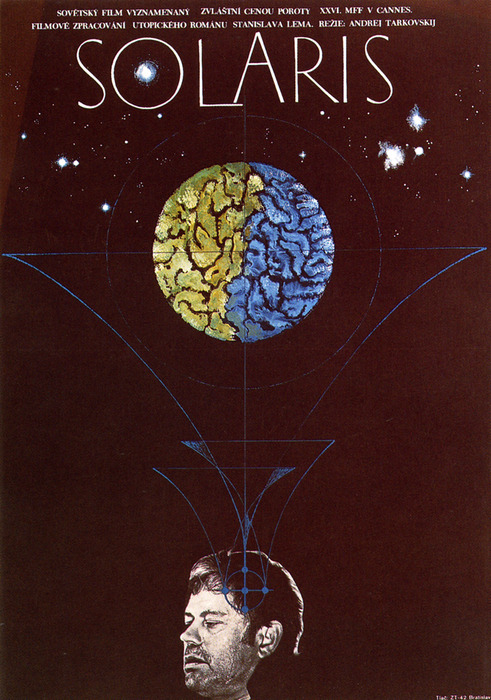
Plus, in a Q and A recorded at SCI-FI-LONDON, April, 2010, Alex Fitch talks to Polish poster designer Andrzej Klimowski and SF writer / journalist Wojciech Orlinski about cinematic adaptations of the work of Stanislaw Lem from Steven Soderbergh and Andrei Tarkovsky’s adaptations of Solaris to more offbeat films such as Edward Zebrowski’s The Hospital of Transfiguration.

To Listen to the Interviews

Contropotere: Nessuna Speranza Nessuna Paura

Energy: Peace and Conflict Studies Archive

Ayukawa, Yurika. "Japan Facing Biggest Catastrophe Since Dawn of Nuclear Age." Democracy Now (March 14, 2011)

Barker, Holly, et al. "The Secret, Silent Poisoning (Nuclear Victims in Peace and War)." Unwelcome Guests #616 (August 11, 2012)

Boardman, William. " 14 Things You Need to Know About the Horrifying Arkansas Oil Spill: The situation remains fluid, as it were, with potential impacts possible from local to global." AlterNet (April 8, 2013)

Bruggers, James. "Natural gas liquids pipeline planned for Kentucky." Louisville Courier-Journal (May 22, 2013)

"Chernobyl 25 Years On." Eurozine (April 22, 2011: Archive of Essays)

Connor, Kevin and Justin Elliott. "Energy Nominee Ernest Moniz Criticized for Backing Fracking & Nuclear Power; Ties to BP, GE, Saudis." Democracy Now (March 26, 2013)

Crum, Travis. Marchers scale Blair Mountain: Protesters rally at Labor's 'Gettysburg,' vow mountaintop-removal fight." West Virginia Gazette-Mail (June 11, 2011)

Dorr, Gary, et al. "Cowboy Indian Alliance Protests Keystone XL Pipeline in D.C. After Latest Obama Admin Delay." Democracy Now (April 28, 2014)

The Editorial Board. "The Koch Attack on Solar Energy." The New York Times (April 27, 2014)

Goodman, Amy, et al. "Poisoned Water, Fossil Fuels." Making Contact (May 22, 2012)

Haney, Bill and Robert F. Kennedy, Jr. "The Fight over Coal Mining is a “Fight About Democracy”: New Documentary with Robert Kennedy, Jr. Chronicles Campaign to Halt Mountaintop Removal." Democracy Now (May 23, 2011)

Horn, Steve. "MSNBC's (GE's) Dylan Ratigan Show "Firewater?" Series: Natural Gas Industry-Media Complex Exposed." PR Watch

Hounsell, Steve. "Biodiversity Primer." Alternatives (November 24, 2010)

Into Eternity Making Contact (March 18, 2014) ["Our world is generating more and more nuclear waste, but have no permanent place to dispose of it. But the nation of Finland has a plan. They’re building an underground cave, to hold thousands of tones of nuclear waste, for at least 100 thousand years. On this edition, we hear excerpts of the film, “Into Eternity”, which explores the logistical and philosophical quandaries around the construction of something that if it works, might very well outlast the entire human race."]

Landman, Anne. "What Happened to Media Coverage of Fukushima?" Common Dreams (June 24, 2011)

Merchant, Brian. "93 Harvard Faculty Members Call on the University to Divest from Fossil Fuels." Motherboard (April 10, 2014)

---. "A Drone's Eye View of the Latest Oil Train Explosion." Motherboard (May 1, 2014)

"Mountain Mobilization shuts down largest mountaintop removal mine." RAMPS Media (July 28, 2012)

Peterson, Erica. "Law Firm Says Inbreeding Skews Data Linking Mountaintop Removal to Birth Defects." WFPL (July 11, 2011)

Potter, Will. "From Tim DeChristopher to Tar Sands Protests, the Environmental Movement Steps Up Civil Disobedience." Green is the New Red (September 2, 2011)

Sharber, Dan. "World on Fire: Capitalism, the Environment, and Our Future." We Are Many (October 24, 2012)

Sigal, Clancy. "Blair Mountain and labor's living history." The Guardian (November 11, 2011)

Ward, Chip. "How the ‘peaceful atom’ became a serial killer." Grist (March 27, 2011)

Will Potter: From Tim DeChristopher to Tar Sands Protests, the Environmental Movement Steps Up Civil Disobedience

From Tim DeChristopher to Tar Sands Protests, the Environmental Movement Steps Up Civil Disobedience
by Will Potter
Green is the New Red

One month ago, environmental activist Tim DeChristopher was sentenced to two years in prison for non-violent disobedience. The sentence was harsher than those handed down to people who burned churches and threatened black leaders. It was a sentence intended — like so many disproportionate sentences against activists — to send a message. But what message?

Environmental activists could have responded to this case in the way that corporations and politicians (who called DeChristopher an “eco-terrorist”) had intended. They could have scaled back their organizing to only milquetoast tactics that are 100% “safe”; they could have responded with fear.

Instead, we’re seeing something quite different as attention has shifted to the creation of the Keystone XL pipeline, which would draw oil from that tar sands of Canada to East Texas (this NPR story has a good overview). Already, more than 800 people been arrested for non-violent civil disobedience in Washington, D.C. Some of the arrests that have made headlines have included a top NASA climate scientist, Jim Hansen.

What has been even more inspirational is the response of young people who have been radicalized by both the sentencing of Tim DeChristopher and the Obama administration’s deference to corporate interests. A letter from student groups and youth leaders at the Tar Sands Action said in part:

Big corporations are using their financial influence to corrupt our democracy and deepen their pockets at the expense of Americans. And it’s not just related to energy and the environment; they are threatening the very foundations of our democracy, working to disenfranchise voters, attack workers’ rights and the middle class…The Keystone XL decision is a significant test of President Obama’s commitment to our generation, but it’s not the only one.

To Read the Rest of the Post and to Access Hyperlinked Resources

Contropotere: Zona Luce

via Thomas M.

Marisa Novara: On Pedestrians and Democracy

On Pedestrians and Democracy
by Marisa Novara
Metro Planning

I’ve been thinking a lot about democracy lately (and its not because of debates between Republican presidential candidates). It’s a different take on democracy, and it’s courtesy of Enrique Peñalosa, former mayor of Bogotá, Colombia. He used the word liberally in his remarks to the Chicago City Council’s Committee on Pedestrian Safety on August 17th. While he was in town that day to help MPC unveil its Bus Rapid Transit study and recommendations for a 10-route network, we couldn’t pass up the chance to arrange for him to address Alderman Margaret Laurino’s (39th Ward) committee. Although ‘address’ may be too passive a word – it’s more accurate to say that he regaled, cajoled, preached, implored - whichever word you choose, the man is passionate about the importance of democratic transportation decision-making to support the many ways people get around. A sampling of his thoughts:

“Quality sidewalks and protected bicycle paths are not cute architectural features; they are a right, unless we believe that only those with access to a car have the right to safe individual mobility.”

“A protected bicycle way is a symbol of democracy. It shows that a citizen on a $30 bicycle is equally important as one in a $30,000 car.”

“Parking is not a constitutional right.”

As mayor, Peñalosa added miles of bicycle and pedestrian highways, replaced parking spaces with pedestrian sidewalks, and spearheaded a voter-approved referendum that established the first Thursday of every February as a city-wide car-free day. His efforts not only made Bogota more pedestrian-friendly, but as he put it, more democratic.

Bogotá is not the only city to take a stand for pedestrians and cyclists. Shanghai and Paris also converted roads into pedestrian-only destinations. In 2000, Shanghai transformed a one-mile stretch of Nanjing Road, a declining retail destination, into a pedestrian thoroughfare by renovating more than 40 buildings, landscaping and improving the streetscape. As a result of these transformations, Nanjing Road is now the busiest commercial district in Shanghai, a major tourist destination, and home to more than 600 businesses.

To Read the Rest of the Essay

From the Depths: The Last Transmission

(thanks to Jane G.)

From the Depths: Let the Black Flag Fly

Friday, September 02, 2011

Roger Bybee: The Great Corporate Tax Swindle

The Great Corporate Tax Swindle: Dozens of Companies Pay CEO More Than IRS
By Roger Bybee
In These Times

America's CEOs are truly in a league of their own when it comes to pay and power.

Total CEO pay at the largest 292 corporations averaged 325 times what the average worker made in 2010, a far higher ratio than in any other Western nation. This figure had actually declined from an incredible 525 times the typical worker’s wage in 2000. But the CEOs of the Top 100 are truly in another stratosphere. They averaged an astounding 1,723 times what their workers earned in 2007, according to Les Leopold’s excellent book, The Looting of America.

The Washington, D.C.-based think tank Institute for Policy Studies has come up with a different, but equally stunning, way of gauging CEO pay by making a simple comparison. For its new report, Executive Excess 2011, the IPS placed the compensation packages of America's Top 100 CEOs alongside the tax bills of their corporations, and discovered that

Of last year’s 100 highest-paid U.S. corporate chief executives, 25 took home more in CEO pay than their company paid in 2010 federal corporate income taxes.

U.S. corporations and their stooges in Congress, including some Democrats, frequently whine that the U.S. corporate tax rate is far too high for U.S. firms to remain competitive. In fact, the multitude of loopholes mean that the official 35% tax rate is almost never imposed. Corporate tax rates for U.S. firms are actually among the lowest among the 30 advanced nations belonging to the Organization of Economic Cooperation and Development, reports Citizens for Tax Justice:

According to a 2007 study by the Bush Treasury Department, between 2000-2005 US corporations paid only 13.4% of their profits in corporate income taxes, well below the Organization of Economic Cooperation and Development (OECD) average of 16.1%.

Just in case those figures are too complex for the average congressperson to comprehend, the IPS study offers some very memorable facts:

To Read the Rest of the Report and To Access Hyperlinked Resources

Thursday, September 01, 2011

Radio Open Source: Graham Robb's Paris - 18 Arrested Explosions

Graham Robb's Paris: 18 Arrested Explosions
Radio Open Source (Brown University: Watson Institute for International Studies)


Graham Robb is making France and the French irresistible again. With an entirely unconventional gift for historically-informed tale-spinning, his Parisians delivers nearly a score of long anecdotes about famous people in real scenes beyond imagining.

Here is Hitler on a tourist sweep through depopulated boulevards of Paris at dawn on a weekend in June, 1940 — thinking out loud with Albert Speer about how the Paris effect might be reproduced in Berlin.

There are Miles Davis and the singer Juliette Greco in love in 1949, and in guileless conversations about “existentialisme” with Jean-Paul Sartre and Simone de Beauvoir at the Cafe de Flore.

Then there is the assassination attempt that Francois Mitterand stage-managed against himself in 1957 — perhaps in a sort of homage to the “miracle” that saved Charles de Gaulle from great bursts of gunfire inside the Cathedral of Notre Dame in 1944. Mitterand, who liked being known as “the Fox,” survived even the exposure of his own hoax — because, Graham Robb suggests, the French like a trickster and a touch of criminality at the top.

My favorite Robb character, from the 1830s, is the arch-criminal and escape artist Vidocq, a master of disguises who hid himself on Paris streets as a trash pile, who conspired with the cops and built the first private detective agency known to the world.

What is Graham Robb up to? In his fragmentary episodes, he seems to be telling us something of the non-linear course of events in general. His “explosive fragments,” I observe, remind me of David Shields’ ideal for the modern “lyric essay”: an explosion on every page. Yes, but no, Graham Robb rejoins:

Yes, it’s nice to have explosive fragments, but it’s also nice to just arrest the explosion at a particular moment and see exactly what’s going on at the moment of impact, the moment of destruction, and just take a lot more time to look at things which are just flashing past. It’s not a search engine kind of history. It’s almost the opposite. It’s the single fragment kind of history, and how much you can discover in one particular thing if you stop and look at it and go into it as deeply as possible, instead of skimming over the surface and collecting impressions.

Parisians extends the project of Robb’s breakthrough, The Discovery of France, the fruit of 4 years and 14,000 miles on a bicycle, in which Robb reintroduced France as, until yesterday, anything but a single, sovereign culture. He found a new planet at every bike resting spot, “a vast encyclopedia of micro-civilizations” in sum. His France is a nation of villages where, when the Eiffel Tower went up in 1889, only about 20 percent of the population spoke French. The short form of Parisians is: out with old notions of order, majesty and the grandeur of Paris; in with the ragged, the jagged, the forgotten personal perspectives, the violent and the out-and-out weird. Robb’s stress on fragmentation seems deliberately set against the national impulse in President Sarkozy’s politics — against Sarko’s famous contempt for the riotous, car-burning brown-skinned racaille, or scum, of Paris’s near suburbs.

It’s a bit ironic that Sarkozy started a debate on a national identity, because he is stressing the rifts that there are in French and Parisian society. He’s a very Parisian president. The biggest rift in France is between Paris and the provinces…. And there is also the rift between bourgeois Paris, white Paris and so-called immigrant Paris which very often isn’t immigrant at all, they’re French too. Sarkozy’s exploited that old fear that probably goes way back to the time of the Gauls… It’s the fear of what lies beyond in the hinterland, and that fear is more virulent than ever in Paris. And even today, if you tell some Parisians that you’ve been to Clichy-sous-Bois or one of the other northern suburbs, they won’t believe you. They won’t believe that you can go there and talk to people and come back alive.

To Listen to this Episode

Dub Investigation: Fire In This Town

Dub Investigation - Fire in the Town by Dub Investigation

The F Word: Robert Jensen -- Pornography as a mirror: do we want to look?

Pornography as a mirror: do we want to look? Featuring an interview with Robert Jensen.
The F Word (Vancouver, Canada)


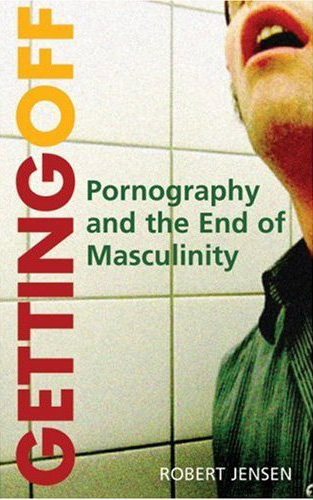
In Robert Jensen's book, Getting Off: Pornography and the End of Masculinity, he wrote: "Mirrors can be dangerous, and pornography is a mirror. Pornography as a mirror shows us how men see women." While feminists have been fighting the pornography industry since the '70s, it feels as though we face even more difficult challenges than before. We face a backlash not only from dominant discourse, popular culture, and of course, the users and makers of pornography, but also from some of those who might identify as third-wave feminists. Pornography has been incorporated into mainstream culture in such a way that many see it as an essential part of our culture; so where do we go from here?

Your host, Meghan Murphy, explores these issues and more with Robert Jensen, professor of journalism at the University of Texas. Robert has done extensive research, writing, and speaking on pornography and its impact on manhood, masculinity and violence against women.

To Listen to the Interview

The F Word: Exploring prostitution and abolition -- Activism, events and debates

Exploring prostitution and abolition: Activism, events and debates
F Word (Vancouver, Canada)

Meghan Murphy explores issues and debates around prostitution, specifically looking at the abolition argument -- the idea that we identify trafficking and prostitution as violence against women. Featuring interviews with Trisha Baptie, who is the the executive director of Honour Consulting & Ministries and a founding member of EVE: Formerly Exploited Voices Educating, as well as two of the women involved in the making of a documentary called Our Lives to Fight For, a film which aims to break down myths about prostitution and decriminalization and argues for a Canadianized version of the Nordic Model.

To Listen to the Episode

Ampasound: Riot

Wednesday, August 31, 2011

Feministing: Domestic violence - still not chic, artistic or cutting edge

Domestic violence: still not chic, artistic or cutting edge
by Lori
Feministing


To Read Responses/Critiques to the Ad

Films We Would Like to See: #5 The Skin I Live In (Spain: Pedro Almodovar, 2011)

ENG 102: Fall 2011 Student Websites

I recommend you check out:

Everything is Gravy to see the possibilities for your website (design) and some good responses.

11am class:

Class Voting for Subject: Drugs

Michael Keene

Maggie Cohen

Amy Cook

Kylie Marshall-Bonn

Andrew Goins

Morgan Webb

Amy Edgell

Steven Burt

Phil Flaga

Garrett Nutgrass

Arlene Johnson (link to the website is not working)

Anthoney Murray (put in grades: credit 2-4; no credit 5 and proposal)

Octavious Robinson (credit #4 and #5; incomplete #3; no credit response 2 and proposal)

Clay McDowell (no credit for responses #2, #3, #4, #5, and proposal)

sifting

Lauren Carnagie

Mon'Trace Pennington

Cameron Horseman

Kara Hutchinson

Alex Etienne

Josh Barkley

DA Wiglesworth

Keara Evans

2 PM Class:

Class Voting for Subject: Music

Krista Hurst

Sarah Phillips

Randy White

Dimitri Agtarap

Alex Nelson

Kristen Bowlds

Bailey Egan

Alan Wood

Allison Coleman

Mason Kirk (absent)

Adrian Collier

Chelsea Boston

Alec Goodhart

Dylan Jenkins

Chris Snider

Ramon Edmonds

Lindsey Petersen

Justin Peavler

Chris McKinney

Monica Sizemore

Amy Thornberry

Brad Cundiff

Class 3:30 PM

Class Voting for Subject: Religion/Faith/Spirituality

Philip Sharkey

Paige Fuller (three books on sexuality: Sexuality and Socialism; History of Sexuality; Sexual Communities)

James McCollum

Katie Beard

Angela White

Judston Hill

Chelsea Burrus

Sara Sanders

Cody Courtney

Anthony Rhodes

Reesor Reesor

Trey Becknell

Suanne Bartley

Ashley Simpson (Absent)

Amanda Rogers

Jonathan Livers

Marshonda Haynes

Jonathan Maupin

Ashtin Strelke

Kristy Watkins

Michael Hillard

Deena Stryker: Iceland's On-Going Revolution

Iceland's On-going Revolution
by Deena Stryker
Daily Kos

An Italian radio program's story about Iceland’s on-going revolution is a stunning example of how little our media tells us about the rest of the world. Americans may remember that at the start of the 2008 financial crisis, Iceland literally went bankrupt. The reasons were mentioned only in passing, and since then, this little-known member of the European Union fell back into oblivion.

As one European country after another fails or risks failing, imperiling the Euro, with repercussions for the entire world, the last thing the powers that be want is for Iceland to become an example. Here's why:

Five years of a pure neo-liberal regime had made Iceland, (population 320 thousand, no army), one of the richest countries in the world. In 2003 all the country’s banks were privatized, and in an effort to attract foreign investors, they offered on-line banking whose minimal costs allowed them to offer relatively high rates of return. The accounts, called IceSave, attracted many English and Dutch small investors. But as investments grew, so did the banks’ foreign debt. In 2003 Iceland’s debt was equal to 200 times its GNP, but in 2007, it was 900 percent. The 2008 world financial crisis was the coup de grace. The three main Icelandic banks, Landbanki, Kapthing and Glitnir, went belly up and were nationalized, while the Kroner lost 85% of its value with respect to the Euro. At the end of the year Iceland declared bankruptcy.

Contrary to what could be expected, the crisis resulted in Icelanders recovering their sovereign rights, through a process of direct participatory democracy that eventually led to a new Constitution. But only after much pain.

Geir Haarde, the Prime Minister of a Social Democratic coalition government, negotiated a two million one hundred thousand dollar loan, to which the Nordic countries added another two and a half million. But the foreign financial community pressured Iceland to impose drastic measures. The FMI and the European Union wanted to take over its debt, claiming this was the only way for the country to pay back Holland and Great Britain, who had promised to reimburse their citizens.

Protests and riots continued, eventually forcing the government to resign. Elections were brought forward to April 2009, resulting in a left-wing coalition which condemned the neoliberal economic system, but immediately gave in to its demands that Iceland pay off a total of three and a half million Euros. This required each Icelandic citizen to pay 100 Euros a month (or about $130) for fifteen years, at 5.5% interest, to pay off a debt incurred by private parties vis a vis other private parties. It was the straw that broke the reindeer’s back.

To Read the Rest of the Commentary

Fresh Air: Rachel Tabachnick - The Evangelicals Engaged In Spiritual Warfare

The Evangelicals Engaged In Spiritual Warfare
Fresh Air (WHYY: Philadelphia Public Radio)

An emerging Christian movement that seeks to take dominion over politics, business and culture in preparation for the end times and the return of Jesus, is becoming more of a presence in American politics. The leaders are considered apostles and prophets, gifted by God for this role.

The international "apostolic and prophetic" movement has been dubbed by its leading American architect, C. Peter Wagner, as the New Apostolic Reformation (NAR). Although the movement is larger than the network organized by Wagner — and not all members describe themselves as part of Wagner's NAR — the so-called apostles and prophets of the movement have identifiable ideology that separates them

Two ministries in the movement planned and orchestrated Texas Gov. Rick Perry's recent prayer rally, where apostles and prophets from around the nation spoke or appeared onstage. The event was patterned after The Call, held at locations around the globe and led by Lou Engle, who has served in the Apostolic Council of Prophetic Elders of the NAR. Other NAR apostles endorsed Perry's event, including two who lead a 50-state "prayer warrior" network. Thomas Muthee, the Kenyan pastor who anointed Sarah Palin at the Wasilla Assembly of God Church in 2005, while praying for Jesus to protect her from the spirit of witchcraft, is also part of this movement.

On Wednesday's Fresh Air, Rachel Tabachnick, who researches the political impact of the religious right, joins Terry Gross for a discussion about the growing movement and its influence and connections in the political world.

Tabachnick says the movement currently works with a variety of politicians and has a presence in all 50 states. It also has very strong opinions about the direction it wants the country to take. For the past several years, she says, the NAR has run a campaign to reclaim what it calls the "seven mountains of culture" from demonic influence. The "mountains" are arts and entertainment; business; family; government; media; religion; and education.

"They teach quite literally that these 'mountains' have fallen under the control of demonic influences in society," says Tabachnick. "And therefore, they must reclaim them for God in order to bring about the kingdom of God on Earth. ... The apostles teach what's called 'strategic level spiritual warfare' [because they believe that the] reason why there is sin and corruption and poverty on the Earth is because the Earth is controlled by a hierarchy of demons under the authority of Satan. So they teach not just evangelizing souls one by one, as we're accustomed to hearing about. They teach that they will go into a geographic region or a people group and conduct spiritual-warfare activities in order to remove the demons from the entire population. This is what they're doing that's quite fundamentally different than other evangelical groups."

To Read the Rest or Listen to the Episode

To the Best of Our Knowledge: Science and the Search for Meaning, Part Five -- Can Science be Sacred?

Science and the Search for Meaning, Part Five: Can Science be Sacred?
To the Best of Our Knowledge (Wisconsin Public Radio)

What if you don't believe in God, and the thought of church makes you queasy? Can you still experience the sacred? There's a growing movement of secular scientists who revel in the awe and wonder of nature. In fact, many consider this a religious experience – without God. We'll talk about the search for a science-based spirituality, and hear from a leading animist philosopher, in this hour of To the Best of Our Knowledge.

Steve Paulson on The Awe and Wonder Crowd
A growing number of secular scientists and philosophers are rejecting the term "atheist" in favor of a definition that acknowledges the wonder and mystery of the world around us.

Diana Beresford-Kroeger on the Power of Trees
Diana Beresford-Kroeger tells Anne Strainchamps that the lives of trees and human beings are inter-related all the way down to the molecular level.

Arthur Zajonc on The Contemplative Life
Arthur Zajonc tells Jim Fleming that Einstein's idea of god is common to many top scientists.

Birute Galdikas on Orangutans
We hear from orangutan researcher Birute Galdikas who talks about her experience in Borneo observing the lives orangutans and about the deep connections she shared with them.

David Abram on Becoming Animal
David Abrams tells Steve Paulson about his animistic beliefs and recounts a remarkable story about a shaman who could turn himself into a raven.

To Listen to the Episode

To the Best of Our Knowledge: The Soundtrack to War and Peace

The Soundtrack to War and Peace
To The Best of Our Knowledge (Wisconsin Public Radio)

"Music can change the world." It's been said so many times - I wonder if it means anything anymore. Can it? Really, can music change the world? Can a song bring about peace? Or, overthrow a government? In this hour of To the Best of Our Knowledge, we'll listen in on the soundtrack to war and peace. From Benin to Andalusia. From East LA to Sierra Leona. And, the politics behind Beethoven's 9th.

Black Nature on the Sierra Leone Refugee All-Stars
A young man named Black Nature is one of the Sierra Leone Refugee All-Stars. He tells how the group formed while fleeing from the brutality and bloodshed of their country's civil war.

Dwight Reynolds on Religious Tolerance
Dwight Reynolds talks with Steve Paulson about the history of religious tolerance in Al-Andalus and how it was reflected in the music of Moorish Spain.

Angelique Kidjo on Benin
Angelique Kidjo is "Africa's Diva" and its most celebrated female musician.

Beverly Lapp on "The Star Spangled Banner"
Essayist Beverly Lapp explains what "The Star Spangled Banner" means to her as a Mennonite.

Harvey Sachs on "The Ninth: Beethoven and the World in 1824"
Harvey Sachs and Jim Fleming talk about Beethoven's political leanings and philosophical aspirations and how they're reflected in his last symphony.

To Listen to this Episode

Tuesday, August 30, 2011

Mattias Stork: Chaos Cinema - The decline and fall of action filmmaking

Chaos Cinema Part 1 from Matthias Stork on Vimeo.


Chaos Cinema Part 2 from Matthias Stork on Vimeo.


Go to Press Play for source link and To Read it in Essay Form

More:

Matthew Cheney's Response/Critique

Hans-Georg Gadamer: The Importance of Listening

“Openness exists . . .not only for the person to whom one listens, but rather anyone who listens is fundamentally open. Without this kind of openness to one another there is no genuine human relationship. Belonging together always also means being able to listen to one another.”

--Hans-Georg Gadamer Truth and Method (Source)

Ian Christie: Before the Rain: Never-Ending Story

Before the Rain: Never-Ending Story
By Ian Christie
Current


Before the Rain brought a vision of “Balkan conflict” to the world that caused a sensation in the mid-1990s, winning the Golden Lion in Venice and an Academy Award nomination. Five years of increasingly horrific news from the former Yugoslavia, with fierce fighting and massacres in Croatia and Bosnia, made Milcho Manchevski’s searing yet lyrical film timely to a degree that few filmmakers have ever achieved. But this is far from a documentary treatment of Balkan violence, and the country that Manchevski put on the map—his native Macedonia—was in fact the only Balkan state at that time not to have been engulfed by war or ethnic conflict.

Manchevski had not set out to explain the devastating sequence of events that started in 1991, as federal Yugoslavia dissolved during the year that saw the Soviet Union itself fall apart. Having grown up in Skopje, he finished his film education in the United States, where he began to make a reputation in music videos during the eighties. And the arresting images and teasing dramatic structure of Before the Rain draw something from this experience. But if Manchevski belongs to the generation of filmmakers who have grown up with the pop poetry of music videos as part of their natural vocabulary, his other inspiration is surely the western—an impression confirmed by his equally ambitious second feature, Dust (2001).

Think of the westerns of Sam Peckinpah, elegiac tributes to a way of life being crushed by modernity. Or of Sergio Leone, whose films were once contemptuously known as “spaghetti westerns” but were actually baroque variations on the great American western tradition, and influenced postsixties filmmakers everywhere. Peckinpah and Leone dealt in myth rather than history, and weren’t afraid to use extreme violence for both artistic and realistic effect. The violence that rips through Before the Rain, on Macedonian hillsides and in a London restaurant, draws on such mentors for its impact. And when Manchevski insists that his film is not “about” Macedonia, or even just the Balkans, he’s surely aspiring to that same universality of late, great westerns such as Once Upon a Time in the West or The Wild Bunch. The figure that his hero, Aleksandar, cuts is already a romantic one in London but becomes very definitely a westerner back in Macedonia, as he returns to his old village, only to be immediately confronted by a gun-toting youngster.

To Read the Rest of the Essay

Maximum Rock N Roll Radio #1258

Maximum Rock N Roll Radio #1258

Intro song:
SLAUGHTER AND THE DOGS – Boston Babies

Sully kills it with his mustache and long hair
LOST KIDS – Radden Dig
UNNATURAL AXE – Brain Damage
NUBS – Job

Garret. Oi!
THE SCENE – High Numbers
THE OYSTERS – Headhunter
BUZZCOCKS – I Can’t Control Myself

Ian gets dusted
VICTIMS – TV Freak
PJ BONNEMAN – Jeg Kendte Dem Ikke

Peter, Adonis of Punk
CATHOLIC SPERMS – Sisters Are Worse
UNDEAD – Undead
OUT COLD – Help Me To Forget

Con, future ex-Husband, plays some shit
OUT COLD – Fuckhead
SATANS RATS – You Make Me Sick
SYMBOL SIX – Beverlywood
KNOTS – Action

Dominik gets internash on us
DISCOCKS – Gogo Discocks
COLERA – Subratos
SCREAMING URGE – Homework
VULPESS – Inkisizion

New Wave Dave, the voice of Boston
FRANKIE AND THE FLAMES – On Yer Bike
THE FIENDS – Asian White

Nick always looks pissed
VIVA LA RUE BAND – Bombs Away
SCIENTISTS – Frantic Romantic

Outro song:
TEENBEATS – Strength of the Nation

To Listen to the Episode

Stanley Aronowitz, Steve Williams and Rick Wolff: A Chronology of Capitalism

A Chronology of Capitalism
Making Contact (National Radio Project)

It’s a time of economic transition, and systems that may have seemed stable over the past few decades are proving to be far from it. But how did we get here? And how can we learn from the past, to build a more fair and just system in the future? While many politicians and pundits claim that no one saw the current economic collapse coming, in fact, we had plenty of warning, depending on who we listened to. This week, we hear from three people who’ve been sounding the alarm about capitalism’s house of cards for years, and in some cases, decades.

Featuring:

Steve Williams, POWER: People Organized to Win Employment Rights co-director and co-founder; Rick Wolff, University of Massachusetts at Amherst Economics Professor and author; Stanley Aronowitz, City University of NY Graduate Center Sociology & Urban Education Professor and author.

To Listen to the Episode

Andrew Klevan: Expressing the In-Between

Expressing the In-Between
by Andrew Klevan
LOLA

‘Cinema is that which is between things’
- Jean-Luc Godard (1)


Manny Farber says of the The Big Sleep (Howard Hawks, 1946, US): ‘[It] ignores all the conventions of the gangster film to feast on meaningless business and witty asides’. (2) One of the ‘fine moments’ in the film, he writes, is ‘no longer than a blink’: Philip Marlowe, played by Humphrey Bogart, looks up at a sign as he crosses the street from one store to another. In fact, Farber is probably mistaken. Marlowe does not appear to look up at a sign. Rather, he seems to be surveying the sky in response to loud claps of thunder. A few moments later, after more claps, the heavy rain nearly makes it possible for him to spend the afternoon sheltering in the Acme Bookstore with the sassy proprietor played by Dorothy Malone. Instead, disappointingly, work calls, and he must follow bad guy Geiger through the stormy night. Bogart’s gesture is therefore not strictly, in Farber’s terms, a piece of ‘meaningless business’ because it relates to the impending storm which is a feature of the narrative. Yet, the spirit of Farber’s point remains: the claps of thunder and Bogart’s gesture are incidental at this point. The thunder and rain could credibly begin while he is in the bookshop.

Farber’s mistake (written before the privilege of repeated scrutiny permitted by video recordings) does not undermine his deeper understanding of what the gesture adds. He talks about the film having ‘a life of its own that goes on beneath the story action ... All the unbelievable events ... are tied together by miserable time jumps, but, within each skit, there is a logic of space, a great idea of personality, gesture, where each person is’. (3) Moreover, there is another ‘unnecessary’ gesture, which Farber does not mention. It takes place on the other side of the street – and in the background of the shot – where Bogart slaps the top of a water hydrant. Crucially, he does not stop. He may be quickly taking stock, touching-base (for safety, superstitiously perhaps), while remaining on the move. In general, it suggests Marlowe’s fluency and ease in the city, and Bogart’s on the set. As he crosses the road, I sense the construction of the setting, all its elements intimately packed into the frame – the crossing cars, the comings and goings of people – creating oblivious busyness. Yet, the meticulousness of the staging does not determine the action; paradoxically it creates a living world, precisely brought to life (an ideal environment for all that ‘meaningless business’). This is partly because responsive performers like Bogart inhabit the world built for them; they live in it. (4) In Farber’s terms, both the gestures give us ‘a logic of space, a great idea of personality, where this person is’ – this street, here, now, between these two bookstores, looking up, just before it rains, crossing it, now, touching this hydrant, as he passes. (5)

The whole scene that follows, between Bogart and Malone, is like a ‘witty aside’ but given density by all ‘those tiny, mysterious interactions between the actor and the scene’. Bogart speedily delivers, ‘Would you have a Ben Hur eighteen sixty third edition with a duplicated line on page one sixteen?’; announces that he would rather get ‘wet inside’ with the ‘pretty good’ bottle of rye that he ‘just happens to have’ in his pocket; hovers his right hand over his waist, lightly drumming his digits; and later points two fingers towards his eyes to prompt Malone to remove her spectacles. Malone, meanwhile, unhurriedly folds her arms; nimbly manipulates the pencil, evidently sexual but in scholarly hands; precisely delivers her list of each aspect of Geiger’s appearance while she ambiguously moves her eyes up and down each aspect of Bogart’s; takes out those little white cups in the upper drawer of the desk; and removes the pin, carefully spreading her lower hair just enough for it to open up and sit more comfortably upon her shoulders (tightly bunched hair prudently unfurled rather than spectacularly released). All that is ‘mysterious’ lies in the performers’ interactions, made readily available to us, and not in a secretive dissolve that insinuates but ultimately hides very little. Malone remains just a ‘pal’ – her sexual disappointment represented in his comradely squeeze of her upper arm – and she never appears again in the film.

To Read the Rest of the Essay

The Black Angels: Bad Vibrations

Monday, August 29, 2011

STOCKTOWN X REE-BURTH

via Matsuli

STOCKTOWN X REE-BURTH from Stocktown on Vimeo.


Description: Exclusive clip from our series Stocktown X South Africa. We meet up with heavymetal band Ree-burth from Soweto South Africa.In this clip band singer Nathi tells us about their plan to start a rock festival in Soweto , The Rock Therapy show . During the recording of the interview, we asked the band to do a small jamsession for us and as they were setting up their instruments , Mr Funky Masike member of one of South Africas first black rock groups shows up unexpected and gives us an exklusive show.

John Bellamy Foster: Education and the Structural Crisis of Capital - The U.S. Case

Education and the Structural Crisis of Capital: The U.S. Case
by John Bellamy Foster
Monthly Review

...

The significance of such a broad political-economic approach to public education is that it allows us to perceive the underlying logic governing the development of capitalist schooling in the United States and elsewhere. Public education arose in the United States early in the nineteenth century. But the education system as we know it today only emerged, beginning in the late nineteenth and early twentieth centuries. Its modern development thus corresponds in time to the rise of monopoly capitalism, an economy dominated by giant corporations. It has been estimated that “between a quarter and a third” of all U.S. capital stock in manufacturing underwent consolidation through mergers and acquisitions between 1898 and 1902 alone. In the largest of these, the formation of U.S. steel in 1901, as many as 170 separate firms were brought together in a single year to create the first billion-dollar corporation, controlling 65 percent of the steel industry. This represented the great era of corporate concentration, marking the rise of big-business capitalism.11

A key element in the evolution and stabilization of this new stage of accumulation, lay in the opportunity it afforded for what Marx called “the real,” as opposed to the “formal subsumption of labour under capital.”12 In nineteenth-century capitalism, workers were in a position to retain within their own ranks the knowledge of how the work was done, and therefore exercised a considerable degree of control over the labor process. Hence, control of the labor process by owners and managers was often more formal than real. As corporations and their workforces and factories got bigger with the rise of monopoly capitalism, however, it became possible to extend the division of labor, and therefore to exercise greater top-down managerial control. This took the form of the new system of scientific management, or “Taylorism,” within concentrated industry. Control of the conception of the labor process was systematically removed from the workers and monopolized by management. Henceforth, according to this managerial logic, workers were merely to execute commands from above, with their every movement governed down to the smallest detail.13

The chief result of the introduction of scientific management into industry, as Harry Braverman explained in 1974 in Labor and Monopoly Capital, was the degradation of working conditions for most workers. Increasingly, monopoly capitalist society was characterized by a polarization of skill, with only a limited demand for a relatively small number of highly skilled workers, as compared with masses of unskilled workers. The corporate-designed education system was constructed with the aim of producing workers tracked to these different labor-market segments. But scientific management was also seen as a way of directing the labor process within the schools themselves—subjecting teachers to new forms of corporate management.

Scientific management first became a widely known concept in the United States after Louis Brandeis, arguing before the Interstate Commerce Commission in 1910, publicly extolled the magic of efficiency engineers in increasing corporate profits. This was followed in 1911 by the publication of Frederick Winslow Taylor’s Principles of Scientific Management, initially as installments in American Magazine. Scientific management and efficiency experts soon became the rage among corporate executives and public officials alike, quickly spreading to the administration of public schools, where standards, testing, and Taylorized schools became the defining principles for a new utopia: the corporate-model school system. Thus, efficiency expert Harrington Emerson gave a speech to the High School Teachers Association of New York City in 1911, which he entitled “Scientific Management and High School Efficiency.” The last seven of his twelve principles were: standard records, planning, standard conditions, standardized operations, standard instructions, standard schedules, and efficiency reward.14 In 1913 Franklin Bobbitt, a specialist in educational administration at the University of Chicago, wrote in The Supervision of City Schools:

The worker must be kept supplied with detailed instructions as to the work to be done, the standards to be reached, the methods to be employed, and the appliances to be used….Teachers cannot be permitted to follow caprice in method. When a method which is clearly superior to all other methods has been discovered, it alone can be employed. To neglect this function and to excuse one’s negligence by claiming the value of the freedom of the teacher was perhaps justifiable under our earlier empiricism, when the supervisors were merely promoted teachers and on the scientific side at least knew little more about standards and methods than the rank and file.

For Bobbitt, “the teacher’s freedom is necessarily narrowly limited,” due to the need for standardized, efficient methods. Bobbitt went on to suggest that students working on penmanship should be tested “by stop-watch as to speed…to determine which of the modes of distributing the sixty minutes of time for teaching the writing is superior.”15 Likewise, Ellwood Cubberley, an influential educational administrator, and superintendent of San Francisco’s public schools, wrote in 1916 in his Public School Administration: “Our schools are, in a sense, factories in which the raw products (children) are to be shaped and fashioned into products to meet the various demands of life.”16

For Joseph S. Taylor, district superintendent of schools in New York City, writing in 1912:

(1) The state as employer must cooperate with the teacher as employee, for the latter does not always understand the science of education; (2) the state provides experts who supervise the teacher, and suggest the processes that are most efficacious and economical; (3) the task system obtains in the school as well as in the shop, each grade being a measured quantity of work to be accomplished in a given term; (4) every teacher who accomplishes the task receives a bonus, not in money, but in the form of a rating which may have money value; (5) those who are unable to do the work are eliminated.17

The primary means by which the efficiency of teachers was to be evaluated under this system was through the testing of their students. Heavy emphasis was thus placed, beginning just prior to the First World War, on developing rigid standards accompanied by standardized tests. The National Education Association (NEA) established a Committee on Tests and Standards of Efficiency in Schools and School Systems in 1911. This coincided with the movement to carry out IQ testing, and various thinly disguised racist forms of assessment.18

This early attempt to create a corporate-dominated, standardized education system was seeded by the new philanthropic, tax-free foundations that arose in the period. Millionaire industrialists like Andrew Carnegie, John D. Rockefeller, and Henry Ford established private foundations, designed to employ philanthropic financing to leverage major social changes, circumventing the role of government. The Carnegie Foundation was a leading force in both the eugenics and testing movements. It invested $6,424,000 in testing up through 1954. In 1965 it initiated the development of the testing program, the National Assessment of Educational Progress (NAEP). The Rockefeller Foundation, for its part, contributed heavily to the creation of the Educational Testing Service in the 1930s and ’40s.

To Read the Entire Essay

Smog: "Hit the Ground Running"

The Flaw (United Kingdom: David Singleton, 2011)

Pro Publica Podcast: T. Christian Miller on the ‘Invisible Wounds of War’

T. Christian Miller on the ‘Invisible Wounds of War’
Pro Publica Podcast

ProPublica’s T. Christian Miller joins the podcast this week to discuss his recent article on Iraq veteran Brock Savelkoul whose mild traumatic brain injury led him to attempt “suicide by cop.” Savelkoul along with four other soldiers in the blast have become a case study in a growing epidemic among America’s troops who experience a dangerous combination of concussions and post-traumatic stress disorder.

To Listen to the Episode

The Wild Parrots of Telegraph Hill (USA: Judy Irving, 2003)

Watched this in a few sections this weekend as I worked around the house and graded papers -- a fascinating documentary, I started off thinking wow this is a kind of kooky guy and by the end I was deeply moved by his efforts/life/journey/knowledge and also cared about this group of parrots. Highly recommended.

To the Best of Our Knowledge: David Foster Wallace

David Foster Wallace
To the Best of Our Knowledge (Wisconsin Public Radio)


When David Foster Wallace committed suicide in September of 2008, there was a tsunami of grief. Readers, fellow writers and critics poured out their grief in tributes and memories online and in print. The response might have caught you by surprise if you weren't paying attention all along. Wallace's hyper-intimate, cerebral writing style and his witty, sincere persona helped make him a spokesperson for his generation. In this hour of To the Best of Our Knowledge, the life and work of David Foster Wallace.

To Listen to the Episode

Sunday, August 28, 2011

Radio West: Mitchell Zuckoff - Lost in Shangri-La

Lost in Shangri-La
Radio West (University of Utah - Public Radio)


Doug talks to Mitchell Zuckoff, author of the book Lost in Shangri-La. In 1945, a site seeing plane of American soldiers crashed in a remote, mysterious valley in Dutch New Guinea. The local tribe was rumored to be head-hunters and had never before been in contact with white people. But the three survivors were caught between the valley and the Japanese enemy. Zuckoff joins us to tell the story of the time they spent with the Dani tribesmen and the daring rescue that brought them home.

To Listen to the Episode

Fleet Foxes: Helplessness Blues

Fear, Inc.: The Roots of the Islamophobia Network in America


Center For American Progress: Fear, Inc. - The Roots of the Islamophobia Network in America

Haroon Moghul: Who Gets Paid to Make America Hate? The Roots of the Islamophobia Network

Radio West: Rick Perry and Conservative Christian Politics

Rick Perry and Conservative Christian Politics
Radio West (KUER: University of Utah - Public Radio)

Texas Governor Rick Perry is shaking up the GOP Presidential race. Within 3 days of entering, a Rasmussen poll already showed him with a double digit lead over Romney and Bachmann. Perry's appealing to the Evangelical Christian vote with a massive prayer rally earlier this month and his vocal skepticism on issues like evolution. Monday, we're talking about Perry's faith and about his relationship to the New Apostolic Reformation - a conservative Christian movement with clear political goals.

To Listen to the Episode

More resources:

Forrest Wilder: Rick Perry's Army of God

Films We Would Like To See #4: Rum Diary (USA: Bruce Robinson, 2011)

Saturday, August 27, 2011

Making Contact: The War Dance of the Winnemem Wintu

The War Dance of the Winnemem Wintu
Making Contact (National Radio Project)

The genocide of Native Americans was one of the largest mass killings in human history. Very few tribes survived and were able to maintain their languages and traditions, and for many, the threat to their culture continues even to this day. On this edition, Making Contact trainee producers Rachel Gelfand and Michael Preston bring us the story of the Winnemem Wintu, a small Indian tribe in Northern California, and tell the story of their struggle to prevent the flooding of the sacred land they have called home for centuries.
Featuring:

Caleen Sisk-Franco, Winnemem Wintu spiritual leader and chief; Mark Franco, Winnemem Wintu tribal headman and spokesperson; Jill Ward, Heleen Sisk and Sarah Haase, Winnemem Wintu tribal members; Debbie Davis, Environmental Justice Coalition water analyst; Jonas Minton, Planning and Conservation League water policy advisor for Sacramento; Sarah Woolf, Westlands Water District spokesperson.

To Listen to the Episode

Friday, August 26, 2011

Radio West: Diarmaid MacCulloch - Christianity, The First 3,000 Years

Christianity - The First 3,000 Years
Radio West (KUER: The University of Utah - Public Radio)


One third of the planet, some two billion people are Christian. Though we tend to think of Christianity as a particularly Western religion, the historian Diarmaid MacCulloch says that its history is a history of the world. Wednesday, MacCulloch joins us to explain how this global exchange of ideas has shaped politics, sex and every aspect of human society.

To Listen to the Episode

Music: Peace and Conflict Studies Archive

Billet, Alexander. "Pussy Riot for the 99 percent: on the growing campaign to free jailed Russian feminist punk rock collective Pussy Riot." Socialist Worker (July 30, 2012: reposted on Dialogic with relevant videos)

Bragg, Billy. "British Rocker on Norway Attacks, Activism & His Song on Murdoch, “Never Buy The Sun” Democracy Now (August 1, 2011)

Brewer, Adam. "Memories of a Lifetime." Appalachian Media Institute (2011)

Crass: There Is No Authority But Yourself (Netherlands: Alexander Oey, 2006: 70 mins) [Available online]

Crosby, David and Graham Nash. "Legendary Folk Duo Crosby & Nash on Soundtracking Movements from the 1960s to Occupy Wall Street." Democracy Now (November 11. 2011)

D, Davey. "On the 10th Anniversary of the Iraq War We Recall key Anti-War Hip Hop Songs." Davey D's Hip Hop Corner (March 19, 2013)

DebGod. "Pussy Riot Is On Trial Today." Skepchick (July 30, 2012)

DJ Monk One. "The Last Thing I Learned From Gil Scott Heron." Ill Doctrine (June 23, 2011)

"Facing Time." To the Best Of Our Knowledge (October 10, 2010)

Fallana, Dia, et al. "Growin’ Up, Comin’ Out, Speakin’ Proud." Making Contact (June 10, 2009)

Fowler, Robert. "Artifact: A musician’s struggle against a giant corporation." World Socialist Web Site (November 19, 2012)

Gaunson, Stephen. "Cocksucker Blues: The Rolling Stones and Some Notes on Robert Frank." Senses of Cinema #56 (2010)

Gogol Bordello. "Immiganiada (We Comin Rougher)." (Official Video for the song: 2010)

Harburg, Ernie. "A Tribute to Blacklisted Lyricist Yip Harburg: The Man Who Put the Rainbow in The Wizard of Oz." Democracy Now (December 26, 2011)

Hinton, Stephen. "The Love/Hate Relationship Between Friedrich Nietzsche and Richard Wagner." Entitled Opinions (November 30, 2011)

Kalami, Proshot. "No One Knows About Persian Cinema: B. Ghobadi’s Songscape of Revolt." Cinemascope #16 (2011)

Madrid, Fabrizio Mejía. "The Mystery of the Parakeet, the Rooster, and the Nanny Goat." Words Without Borders (March 2012)

Maher, Stephen. "Springsteen’s Wrecking Ball and the Plague of the 99%." Monthly Review (December 1, 2012)

Makana. "Occupy Honolulu: Hawaiian Musician Makana Performs Protest Song to World Leaders at APEC Summit." Democracy Now (November 14, 2011)

McFerrin, Bobby. "Catching Song." On Being (February 27, 2014)

Mudd, Martin. "Proper Propaganda: Information Age by Dead Prez." North of Center (December 6, 2012)

Peaches. "Free Pussy Riot." Vimeo (August 14, 2012)

"Straight Outta Chevy Chase." Radiolab (April 1, 2014) ["Over the past 40 years, hip-hop music has gone from underground phenomenon to global commodity. But as The New Yorker's Andrew Marantz explains, massive commercial success is a tightrope walk for any genre of popular music, and especially one built on authenticity and “realness.” Hip-hop constantly runs the risk of becoming a watered-down imitation of its former self - just, you know, pop music. Andrew introduces us to Peter Rosenberg, a guy who takes this doomsday scenario very seriously. Peter is a DJ at Hot 97, New York City’s iconic hip-hop station, and a vocal booster of what he calls “real” hip-hop. But as a Jewish fellow from suburban Maryland, he's also the first to admit that he's an unlikely arbiter for what is and what isn't hip-hop. With the help of Ali Shaheed Muhammad of A Tribe Called Quest and NPR's Frannie Kelley, we explore the strange ways that hip-hop deals with that age-old question: are you in or are you out?"]

Thompson, Ahimir 'Questlove.' "Questlove on Police Racial Profiling, Hip-Hop, Michele Bachmann & Soul Train’s Lasting Influence." Democracy Now (September 2, 2013)

Rachman, Paul. "Acclaimed Filmmaker and Founder of Slamdance." Spoiler Alert Radio (August 27, 2012)

Rage Against The Machine - Revolution In The Head And The Art Of Protest (USA: Chrome Dreams, 2010: 105 mins)

Rich, Nathaniel. "Authenticity All Right: Lee Friedlander’s New Orleans." New York Review of Books (May 16, 2014)

Samson, J.D. "Pussy Riot Members Sentenced to 2 Years for Anti-Putin Protest; Feminist Rocker JD Samson Responds." Democracy Now (August 17, 2012)

Smith, Eli. "Woody Guthrie – 100th Centennial Celebration." Law and Disorder (July 9, 2012)

"The Soundtrack to War and Peace." To the Best of Our Knowledge (October 1, 2010)

Stewart, Jon. "Def Tone Poetry Jam." The Daily Show (May 11, 2011)

Sylvia, John. "All the Argument We Need." Pop Culture and Philosophy (June 10, 2009)

Tofts, Darren. "In My Time of Dying: The Premature Death of a Film Classic." LOLA #1 (2011)

"Travel." To the Best of Our Knowledge (July 19, 2009)

Villoro, Juan. "Violence and Drug Trafficking in Mexico." Words Without Borders (March 2012)

"Why Indonesian Kids are Crazy for Punk." Global Post (December 2011)

Wisniewiski, Matthew. "Wisconsin 'Budget Repair Bill' Protest (Video set to Arcade Fire's song "Rebellion")." YouTube (February 15-17, 2011)

"Words and Music: Our 60 Favorite Music Books." Pitchfork (July 11, 2011)

Zander, Ben. "'Rite of Spring' Revival." Radio Open Source (April 22, 2014)

Radiohead: "All I Need"; John Sylvia: All the Argument We Need


John Sylvia: All the Argument We Need

from

Christopher Ryan and Cacilda Jethá: Confusion Mistaken for Knowledge

It was early spring, 1519. Hernán Cortés and his men had just arrived off the coast of the Mexican mainland. The conquistador ordered his men to bring one of the natives to the deck of the ship, where Cortés asked him the name of this exotic place they'd found. The man responded, "Ma c’ubah than," which the Spanish heard as Yucatan. Close enough. Cortés proclaimed that from that day onward, Yucatan and any gold it contained belonged to the King and Queen of Spain, and so on.

Four and a half centuries later, in the 1970s, linguists researching archaic Mayan dialects concluded that Ma c’ubah than meant "I do not understand you."

Each spring, thousands of American university students celebrate with wet T-shirt contests, foam parties, and Jell-O wrestling on the beautiful beaches of the I Do Not Understand You Peninsula.

But confusion mistaken for knowledge isn't limited to spring break. We all fall into this trap. (one night, over dinner, a close friend mentioned that her favorite Beatles song is "Hey Dude.") Despite their years of training, even scientific types slip into thinking they are observing something when in fact they are simply projecting their biases and ignorance. What trips up the scientists is the same cognitive failing we all share: it's hard to be certain about what we think we know, but don't really. Having misread the map, we're sure we know where we are. In the face of evidence to the contrary, most of us tend to go with our gut, but the gut can be an unreliable guide. (19-20)

Thursday, August 25, 2011

Democracy Now: Pioneering Internet Archivists Brewster Kahle and Rick Prelinger on Preservation in the Digital Age

Pioneering Internet Archivists Brewster Kahle and Rick Prelinger on Preservation in the Digital Age
Democracy Now

Internet archivists Brewster Kahle and Rick Prelinger discuss their efforts to build both a physical and digital library of every book ever published. "The idea is we can build a Library of Alexandria version two," says Kahle. "It costs us about 10 cents a page, or about $30 a book, to photograph and then make it accessible and searchable for anybody." The archivists also discuss their home movie project. "Home movies are astonishing, because they’re personal, not corporate, expression," says Prelinger. "They’re individuals witnessing history, not simply great events, but also history everyday life." The movies are being contributed by families and rescued from estate sales, among other sources.

Guests:

Brewster Kahle, computer engineer, internet entrepreneur, activist and digital librarian. Brewster is the founder of the Internet Archive and the Open Content Alliance, a group of organizations committed to making a permanent, publicly accessible archive of digitized texts. He also is trying to preserve a physical copy of every book ever published — he has already collected over half a million books. Brewster has received a number of awards, including the Zoia Horn Intellectual Freedom Award in 2010. Utne Reader named him one of "50 Visionaries Changing Your World.”

Rick Prelinger, an archivist, writer and filmmaker. He is the founder of the Prelinger Archives, a collection of 60,000 advertising, educational, industrial, and amateur films acquired by the Library of Congress in 2002 after 20 years’ operation. Rick has partnered with the Internet Archive to make close to 2,000 films from Prelinger Archives available online for free viewing, downloading and reuse.

To Watch/Listen/Read

Democracy Now: The 9/11 TV News Archive -- 3,000 Hours of Video News Coverage of 2001 Attacks Posted Online

The 9/11 TV News Archive: 3,000 Hours of Video News Coverage of 2001 Attacks Posted Online
Democracy Now

As the nation prepares to mark the 10th anniversary of the September 11 attacks, a pair of leading internet archivists are launching an ambitious project called "Understanding 9/11: A Television News Archive," which catalogs 3,000 hours of domestic and international TV news footage from 20 channels from the week around September 11, 2001. Television news coverage of the September 11 attacks and their aftermath not only documented one of the most important events in mass memory but also influenced public perception. We feature excerpts of coverage from the global archive and speak with its organizers, Brewster Kahle and Rick Prelinger. Kahle is an internet entrepreneur, activist, digital librarian and founder of the Internet Archive and the Open Content Alliance, a group of organizations committed to making a permanent, publicly accessible archive of digitized texts. Prelinger is an archivist, writer, filmmaker and founder of the Prelinger Archives, a collection of 60,000 advertising, educational, industrial and amateur films acquired by the Library of Congress in 2002 after 20 years’ operation. "[9/11] was a major event that was really a television event. People really understood this through television," says Kahle. He adds that seeing "how people are starting to come to grips with it really shaped how we saw the whole event."

To Watch/Listen/Read

Films We Would Like To See #3: City of Life and Death (China/Hong: Chuan Lu, 2009)

Films We Would Like to See In Lexington #2: Hysteria (United Kingdom: Tanya Wexler, 2011)

Wednesday, August 24, 2011

John Feffer: Governments Kill

Governments Kill
By John Feffer
Institute for Policy Studies

We make a bargain with our governments. We pay taxes and expect a set of government services in return. And in return for a guarantee of some measure of security, we grant the government a monopoly on legitimate violence. In theory, then, we forswear mob rule and paramilitary organizations, we occasionally accept the death penalty as an appropriate punishment, we delegate the responsibility to declare and prosecute war to our legislative and executive branches, and we put guns into the hands of the army and the police.

Governments, in other words, kill on our behalf. This arrangement is a form of social contract, which means that governments are basically contract killers. Some states, like Nazi Germany, use the tremendous power of arms and bureaucracy to transform their territories into slaughterhouses. Regimes that are merely authoritarian can be equally brutal but display a greater selectivity in their tyranny. In our more decorous democracies, meanwhile, we perfume our conversations with words like "justice" and "national security" to mask the odor of death.

Americans have never been entirely comfortable with this bargain. We have a long tradition of taking the law into our own hands, beginning with our own hallowed revolution. During the Reconstruction period, lynch mobs were a continuation of the Civil War by other means. More recently, a variety of paramilitary organizations have flourished, from the racist Posse Comitatus chapters that sprang up in the late 1960s to more recent anti-immigrant militias like the Minutemen. Even suburban soccer moms have zealously defended their "right" to bear arms. On the other side of the spectrum, meanwhile, a broad-based coalition has challenged the government's "right" to kill citizens through the death penalty. And an equally diverse movement has protested the government's waging of wars overseas.

It would perhaps be naïve to expect that a government, invested with the exclusive legal power to kill people, would use that power only within the borders of the country that it administrates. At some point in the distant future, a world government might assume the privilege of the monopoly on legitimate violence and discipline individual countries for their violent outbursts -- in the same way that individual governments currently sanction their citizens if they fire off submachine guns in malls. For the time being, however, we live in a semi-regulated environment in which governments use violence to secure their borders and, occasionally, territories that lie beyond.

States committing acts of violence were much in the news this week, particularly in the Middle East. Turkish forces have been bombing targets in northern Iraq for a week after a series of attacks by Kurdish rebels in southeastern Turkey. Israeli aircraft launched raids in Gaza after coordinated attacks along the Israeli-Egypt border left eight Israelis dead. The Syrian government continues to crack down on protesters, with a death toll passing 2,200 after several months of resistance. And NATO forces bombed selected targets around Tripoli as rebel forces streamed into the Libyan capital for a final assault on Moammar Gaddafi's stronghold.

Quick test: which of these uses of violence are legitimate?

Some people treat the issue as they would a sports game, always rooting for the home team no matter how dirty they might play. If you support Israel, then Israeli actions are by definition right. Pacifists also have a simple answer: there are no legitimate uses of state violence. But states are unlikely to adopt pacifism unless forced to (as the United States forced Japan after World War II). Aside from the partisan and the pacifist arguments, those who support the legitimate use of state violence will claim self-defense or promise the prevention of a greater violence like genocide. But these, too, are tricky justifications. Turkey believes that it is acting in self-defense, but so do the Libyan and Syrian governments. And military intervention to stop genocide – the stated purpose of NATO's action against Libya – can have mixed motives, and it is not easy to define genocide before the fact.

One popular way of determining the legitimacy of these exercises of violence is to invoke democracy. Democratic governments, as opposed to authoritarian regimes, legitimately use violence because there has been an opportunity for citizens to freely form a social contract with the government. Turkey and Israel are democratic countries, and thus their use of force is legitimate. Ditto with NATO’s attack on Libyan targets. Democratic countries use violence in a self-limited way. As political philosopher John Keane writes in Violence and Democracy, "Ideally conceived, democracies understand themselves as systems of lawful power-sharing, whose actors are attuned to the dangers of violence – and to the mutual benefits of non-violence." As such, Keane argues, democracies progressively "democratize violence" by subjecting it to rules, procedures, consent. When democracies use violence overseas, they only do so against undemocratic forces such as tyrants or terrorist groups. Democracies, according to one of the few postulates of international relations, don't go to war with one another.

To Read the Rest of the Essay

Dale Maharidge -- Someplace Like America

Dale Maharidge -- Someplace Like America
University of California Press Blog


... Dale Maharidge, author of Someplace Like America: Tales from the New Great Depression, talks about his experiences reporting on working-class America for the last three decades. Maharidge describes the emerging class of “new homeless” in the country, the symbolic significance of Youngstown, Ohio, and why Bruce Springsteen took interest in the project.

He also talks about the practice of “immersion journalism,” which has landed Maharidge in some dangerous situations over the years: ending up in a de facto slave camp in Texas, getting a gun pulled on him, and living in an abandoned grain elevator for three days. Finally, he speaks about the attack on unions in Wisconsin, and why this story is more important than ever.

To Listen to the Interview

More resources:

New film inspired by Something Like America

Democracy Now: Phyllis Bennis - As Fighting Continues in Tripoli, A Look at Role of the U.S., NATO and Oil Firms in Libya Uprising

As Fighting Continues in Tripoli, A Look at Role of the U.S., NATO and Oil Firms in Libya Uprising
Democracy Now

Fighting continues in parts of Tripoli, the capital of Libya, where rebels are reportedly battling with Muammar Gaddafi’s forces outside his heavily fortified compound. Reports by the Libyan Rebel Council that Gaddafi’s son, Saif al-Islam, had been captured were contradicted late Monday when he emerged amongst supporters in front of foreign journalists in Tripoli. The International Criminal Court had claimed he had been in the custody of anti-Gaddafi fighters for the past 24 hours. The rebels have also claimed that two of Gaddafi’s other sons were detained but have provided no evidence. Meanwhile, details have emerged that U.S. and NATO forces played a key role in the Libyan rebel push into Tripoli, carrying out 17 Predator drone strikes and 38 air strikes since August 10. Overall, the U.S. has carried out 1,210 air strikes and 101 Predator drone strikes in Libya since April 1. NATO says it will keep up pressure on Gaddafi and that its "mission is not over yet." We are joined by Phyllis Bennis, who is a fellow at the Institute for Policy Studies.

Phyllis Bennis, a fellow at the Institute for Policy Studies. She’s written several books, including Challenging Empire: How People, Governments, and the U.N. Defy U.S. Power and Understanding the Palestinian-Israeli Conflict: A Primer.

To Watch/Listen/Read

Making Contact: A Report Back from the World Water Forum

A Report Back from the World Water Forum
Making Contact (National Radio Project)

One billion people lack access to safe drinking water, and at least thirty one countries are now facing water scarcity. Those are some of the problems that corporate ministers and government officials converged on Istanbul to talk about last March. Or was it? On this edition, we’ll hear from organizers who are working for the right to water on a global level. They tell us about the failures of private water management, and alternatives to corporate control.

Featuring:

Jeff Conant, Food and Water Watch International research and communications coordinator; Margarita Lopez, Union of Public Service Workers in Colombia president; Mary Ann Manahan, Focus on the Global South research associate; Al-Hassan Adam, Africa Water Network coordinator; Maude Barlow, The Council of Canadians National chairperson; Winona Hauter, Food and Water Watch executive director.

To Listen to the Episode

Tom Waits' Private Listening Party: Bad as Me

Tuesday, August 23, 2011

Great Directors: Doug Cummings on Krzysztof Kieslowski

Krzysztof Kieslowski
by Doug Cummings
Senses of Cinema


A filmmaker preoccupied with similarities and paradoxes, Krzysztof Kieslowski’s own career seems to have slowly inverted over the years from one centered on political realities to one of effervescent abstraction. Upon closer examination, however, both ends of his career focus on human individuals struggling to reconcile daily life with its cultural myths—be they Communist propaganda, Biblical proverbs, or French revolutionary slogans. If the people and characters of his films are rarely explicitly aware of their ideological projects, the viewers often are, through Kieslowski’s considerable filmmaking savvy and marketing conceits. A powerful storyteller, Kieslowski undermined the ordered world of his documentary descriptions and high-concept anthologies with the complex, often disillusioning lives of his central protagonists—a dialectical portrait of life oscillating between pessimistic deconstruction and an affection for human resilience.

After World War II, due to his father’s ongoing struggle with tuberculosis, Kieslowski’s family moved through many small towns and sanatoria in the Regained Territories of Communist Poland. With very little money to spare (his mother was an office clerk), Kieslowski’s parents would send him and his sister to sanatoria for children (“preventoria”) to take advantage of the free room and board. For his part, Kieslowski, who also suffered from weak lungs, remembered spending a lot of time in bed, reading books and learning that “there was more to life than material things which you can touch or buy in shops.” (1)

A non-committed student, Kieslowski simply wanted to begin a career. His father persuaded him to enrol in the local firemen’s college during his teenage years—a trick of reverse psychology which exposed him to a difficult profession and successfully ignited his desire for an education.

Kieslowski’s father finally succumbed to illness and died at the age of 47. A distant uncle directed the College for Theatre Technicians in Warsaw, so Kieslowski enrolled. He subsequently fell in love with the theatre and decided to become a director, but in order to enter the program, first had to complete studies in another field. He chose film directing because he thought it would be related to the theatre, but failed his entrance exams to Lódz Film School two successive years in a row. During this time, he starved himself and faked psychological instability to avoid military service, which reminded him of the regimented life of the firemen’s college. He supported his family through various jobs, from office positions to theatrical tailoring (where he met many actors who would later work for him), and dabbled in poetry and drawing.

After his third annual attempt, Kieslowski was finally admitted to the school. Lódz had been one of the few Polish towns spared from bombardment during the war. The film school was founded in 1948 for Stalinist propaganda, but it had developed a reputation for its liberal curriculum, which included rare screenings of international cinema and courses in film theory, as well as the production of fiction and documentary films. The school launched the careers of such filmmakers as Andrzej Munk, Andrzej Wajda, Roman Polanski, Krzyzstof Zanussi, and Jerzy Skolimowski.

The Lódz curriculum was certainly Kieslowski’s first serious exposure to cinema. “A number of films have stayed in my memory simply because they’re beautiful,” he later recalled. “I always said that I never wanted to be anybody’s assistant but that if, for example, Ken Loach were to ask me, then I’d willingly make him coffee. I saw Kes at film school and I knew then that I’d willingly make coffee for him.” (2)

Three Colors: White

In what was to be one of several key disillusionments which would affect the course of his career (including the firemen’s college, he would also abandon documentary filmmaking and, ultimately, filmmaking altogether before the end of his life), Kieslowski was no longer enthused by the theatre—a golden age beginning in 1956 had, according to him, petered out by 1962. (3) His training at Lódz thus became the foundation for his career. (Several of his student films are now available on the Region 1 DVD of White.)

After writing a thesis entitled “Reality and the Documentary Film” which proposed that reality was stranger—and much more dramatic—than fiction, he graduated in 1968, during a time of heated political dissent and resistance. Internal rivalries within the Party prompted an ideological clampdown on cultural events and the resulting student demonstrations, violently repressed, were blamed on Zionist instigators. Many Jews were expelled from Poland, including members of the intelligentsia and even some of the faculty at Lódz Film School.

To Read the Rest of the Essay

Ideas: How To Think About Science #7 - Arthur Zajonc on Goethe Way of Knowing and the Discoveries of Modern Physics

Episode 7 - Arthur Zajonc
Ideas (Canada: CBC)

One of Arthur Zajonc's inspirations is the great German poet Goethe. Goethe died nearly two centuries ago. Arthur Zajonc works at the cutting edge of contemporary quantum physics. But it is the old poet, Zajonc thinks, who can best show us how we ought to contemplate the puzzling discoveries of modern physics. In this episode, physicist Arthur Zajonc talks to David Cayley about Goethe's way of knowing, about the philosophical challenge of contemporary physics, and about the role of contemplation in science. And since his name so closely resembles the name of his subject, you also hear many unintentional rhymes as Zajonc discusses science.

To Listen to the Episode