(via Ryan Goodrich)
Taking over the streets of Athens
by Filkaler
Last Hours
Biggest general strike yet paralyses Greece
Tens of thousands of trade unionists and anti-capitalists demonstrated, bringing the centre of Athens to a standstill. The protest was perhaps twice the size of the one during the general strike of 24 February. Many locals compared it to the mass action in 2001 which defeated a government attempt to cut pensions.
Protesters chanted “Make the bosses pay” and “Where has all the money gone?”
Union leaders hailed today’s general strike as a complete success. Public services ground to a halt in all major cities from Alexandroupoli in the north to Sitia in the south. Public and private sector workers both joined the action.
“The prime minister has just returned from a tour of world leaders – including Nicolas Sarkozy in France, Angela Merkal in Germany and Barack Obama”
“They all congratulated him for his courageous neoliberal reforms which has seen outrageous attacks on peoples pensions, wages and job security. But now he has to face the anger of the Greek people and these strikes are just the beginning.”
Greek workers are stepping up their resistance to austerity measures being enforced by the European Union.
Riot police attempted to split the demonstration, but were met by fierce resistance. Skirmishes continued until the end when they were seen off from the area surrounding Athens Polytechnic.
To Access More Reports and Photographs
Wednesday, March 17, 2010

John Nichols: Iceland Busts the Banksters -- In a symbolic decision, democracy trumps capital as Icelanders say "no" to big bank bailouts
Iceland Busts the Banksters: In a symbolic decision, democracy trumps capital as Icelanders say "no" to big bank bailouts.
by John Nichols
Yes! Magazine
What if Americans had been asked whether they wanted to bail out big bankers and Wall Street speculators?
How many would have voted "no"?
A measure of patriotism feeds the hope that they would have made their opposition known as resoundingly as have the voters of Iceland, who on Saturday rejected demands by the United Kingdom and the Netherlands—working hand-in-hand with the rapacious International Monetary Fund—that the people of the tiny island nation cover losses triggered by the failure of a private bank.
A "yes" vote on Saturday's referendum would have saddled each citizen of Iceland with $16,400 of debt, with the money to be paid to compensate the British and Dutch governments for expenditures to cover depositor losses stemming from the failure of the Icelandic bank Icesave.
The overall debt of $5.3 billion, or 45 percent of Iceland's economic output for last year, would have impoverished the country.
As Icelandic President Olafur R. Grimsson explained this week: "Ordinary people, farmers and fishermen, taxpayers, doctors, nurses, teachers, (were) being asked to shoulder through their taxes a burden that was created by irresponsible greedy bankers."
Fortunately, Iceland is a democracy. So those farmers and fishermen, taxpayers, doctors, nurses, teachers got to decide whether they were inclined to pay for a bank bailout.
They shouted "no" as loudly as that word could be uttered.
An early analysis suggests that roughly 98 percent of the Icelanders who cast valid ballots rejected the "deal."
To Read the Rest of the Article
by John Nichols
Yes! Magazine
What if Americans had been asked whether they wanted to bail out big bankers and Wall Street speculators?
How many would have voted "no"?
A measure of patriotism feeds the hope that they would have made their opposition known as resoundingly as have the voters of Iceland, who on Saturday rejected demands by the United Kingdom and the Netherlands—working hand-in-hand with the rapacious International Monetary Fund—that the people of the tiny island nation cover losses triggered by the failure of a private bank.
A "yes" vote on Saturday's referendum would have saddled each citizen of Iceland with $16,400 of debt, with the money to be paid to compensate the British and Dutch governments for expenditures to cover depositor losses stemming from the failure of the Icelandic bank Icesave.
The overall debt of $5.3 billion, or 45 percent of Iceland's economic output for last year, would have impoverished the country.
As Icelandic President Olafur R. Grimsson explained this week: "Ordinary people, farmers and fishermen, taxpayers, doctors, nurses, teachers, (were) being asked to shoulder through their taxes a burden that was created by irresponsible greedy bankers."
Fortunately, Iceland is a democracy. So those farmers and fishermen, taxpayers, doctors, nurses, teachers got to decide whether they were inclined to pay for a bank bailout.
They shouted "no" as loudly as that word could be uttered.
An early analysis suggests that roughly 98 percent of the Icelanders who cast valid ballots rejected the "deal."
To Read the Rest of the Article
Charles Bowden: The War Next Door -- Adam Smith's invisible hand meets magical realism on the border
The War Next Door: Adam Smith's invisible hand meets magical realism on the border
by Charles Bowden
High Country News
...
The Mexican border functions as a drum that both the left and the right like to thump. For the left, it means imperialism. They decry the death of migrants, the newly built wall and the tens of thousands of armed agents patrolling the line. The right sees the border as the only thing separating us from the disintegration of our national security. They decry migrants (illegal invaders), violence spilling over the border and, in certain zany moments, see Islamic terrorists crossing the desert and leaving a litter of prayer rugs.
The migration of the Mexican poor is the largest human movement across a border on the planet. It was triggered by the destruction of peasant agriculture at the hands of the North American Free Trade Agreement, by the corruption of the Mexican state, by the growing violence in Mexico, and exacerbated by the millions of Mexicans working illegally in the U.S. who send money home to finance their families' trips north. It should be seen as a natural shift of a species. We need ecologists on the border; the politicians have become pointless.
The drug industry is the second-largest source of foreign currency in Mexico, just behind oil. It earns somewhere between $30 billion and $50 billion a year -- no one really knows, including the people in the industry. It also creates enormous numbers of jobs in the U.S.: We spend billions a year on narcs, maintain the world's largest prison industry, which is absolutely dependent on the intake of drug felons, and we have about 20,000 agents on the border who feed off drug importation. The rehab industry is also a source of a large number of jobs since many well-heeled defendants pick mandatory treatment over prison. Many county and local police departments now get fat off of RICO suits based on drug offenses.
The official line of the U.S. government, one most recently voiced by Secretary of State Hillary Clinton, is that drug consumers in the United States are responsible for drug murders in Mexico. Only someone who is drugged could believe this claim. The sole source of the enormous amount of money in the drug business and the accompanying violence is the U.S. prohibition of drug use by its citizens. Since President Richard Nixon proclaimed the War on Drugs 40 years ago, there have been two notable accomplishments: Drugs are cheaper than ever, and they are of much higher quality. But then, NAFTA was promoted by presidents George H.W. Bush and Bill Clinton as something that would buoy up the Mexican economy and reduce or end illegal immigration -- two claims that now are clearly refuted by facts.
The left seeks open borders or No More Deaths, the latter a protest of the 500 or so migrant deaths per year -- a rather low fatality rate, considering that at least a half-million Mexicans move illegally across the border each year. But the left seldom if ever mentions the slaughter in Mexico during the last three years that has left 17,000 citizens dead, a killing of Mexicans by Mexicans. The right constantly speaks of fortifying the border, as if this could stop a human tide lashed northward by misery. And, of course, the right promotes draconian drug laws even though the failure of such laws is increasingly apparent.
On the border, Adam Smith meets magical realism. Here the market tenets of supply and demand, the basic engine of both the migration and the drug industry, are supposed to be overturned magically by a police state. Consider one simple number: The border is 1,900 miles long. If two people slipped through each mile in a 24-hour period, that would amount to 3,800 people a day. That adds up to 1,387,000 people a year. Or consider this: One bridge from Juarez to El Paso handles 600,000 semi-trucks a year. One semi with a freight load of 24 tons could probably tote enough heroin to satisfy the U.S. market for a year. Add to the mix the inevitable corruption of the police agencies: A few months ago, a Border Patrol agent in southern Arizona was busted for running dope in his official car for 500 bucks a load.
Few discussions about the border come from facts. Most discussions of the border come from fears. We seem to prefer slogans and fantasies: free trade, "just say no," gigantic walls.
To Read the Entire Essay
More resources:
Also in High Country News: Julian Cardona's photodocumentary "Failed State"
by Charles Bowden
High Country News
...
The Mexican border functions as a drum that both the left and the right like to thump. For the left, it means imperialism. They decry the death of migrants, the newly built wall and the tens of thousands of armed agents patrolling the line. The right sees the border as the only thing separating us from the disintegration of our national security. They decry migrants (illegal invaders), violence spilling over the border and, in certain zany moments, see Islamic terrorists crossing the desert and leaving a litter of prayer rugs.
The migration of the Mexican poor is the largest human movement across a border on the planet. It was triggered by the destruction of peasant agriculture at the hands of the North American Free Trade Agreement, by the corruption of the Mexican state, by the growing violence in Mexico, and exacerbated by the millions of Mexicans working illegally in the U.S. who send money home to finance their families' trips north. It should be seen as a natural shift of a species. We need ecologists on the border; the politicians have become pointless.
The drug industry is the second-largest source of foreign currency in Mexico, just behind oil. It earns somewhere between $30 billion and $50 billion a year -- no one really knows, including the people in the industry. It also creates enormous numbers of jobs in the U.S.: We spend billions a year on narcs, maintain the world's largest prison industry, which is absolutely dependent on the intake of drug felons, and we have about 20,000 agents on the border who feed off drug importation. The rehab industry is also a source of a large number of jobs since many well-heeled defendants pick mandatory treatment over prison. Many county and local police departments now get fat off of RICO suits based on drug offenses.
The official line of the U.S. government, one most recently voiced by Secretary of State Hillary Clinton, is that drug consumers in the United States are responsible for drug murders in Mexico. Only someone who is drugged could believe this claim. The sole source of the enormous amount of money in the drug business and the accompanying violence is the U.S. prohibition of drug use by its citizens. Since President Richard Nixon proclaimed the War on Drugs 40 years ago, there have been two notable accomplishments: Drugs are cheaper than ever, and they are of much higher quality. But then, NAFTA was promoted by presidents George H.W. Bush and Bill Clinton as something that would buoy up the Mexican economy and reduce or end illegal immigration -- two claims that now are clearly refuted by facts.
The left seeks open borders or No More Deaths, the latter a protest of the 500 or so migrant deaths per year -- a rather low fatality rate, considering that at least a half-million Mexicans move illegally across the border each year. But the left seldom if ever mentions the slaughter in Mexico during the last three years that has left 17,000 citizens dead, a killing of Mexicans by Mexicans. The right constantly speaks of fortifying the border, as if this could stop a human tide lashed northward by misery. And, of course, the right promotes draconian drug laws even though the failure of such laws is increasingly apparent.
On the border, Adam Smith meets magical realism. Here the market tenets of supply and demand, the basic engine of both the migration and the drug industry, are supposed to be overturned magically by a police state. Consider one simple number: The border is 1,900 miles long. If two people slipped through each mile in a 24-hour period, that would amount to 3,800 people a day. That adds up to 1,387,000 people a year. Or consider this: One bridge from Juarez to El Paso handles 600,000 semi-trucks a year. One semi with a freight load of 24 tons could probably tote enough heroin to satisfy the U.S. market for a year. Add to the mix the inevitable corruption of the police agencies: A few months ago, a Border Patrol agent in southern Arizona was busted for running dope in his official car for 500 bucks a load.
Few discussions about the border come from facts. Most discussions of the border come from fears. We seem to prefer slogans and fantasies: free trade, "just say no," gigantic walls.
To Read the Entire Essay
More resources:
Also in High Country News: Julian Cardona's photodocumentary "Failed State"
Democracy Now: Charles Bowden on “The War Next Door”
Charles Bowden on “The War Next Door”
Democracy Now

In the Mexican border city of Ciudad Juárez, a US consular employee and her husband were shot dead on Saturday while driving in their SUV. In a separate incident nearby, the husband of a Mexican employee at the US consulate was shot dead. The shootings are believed to be the first deadly attacks on US officials and their families by Mexico’s powerful drug organizations. We go to the US-Mexico border to speak with reporter Charles Bowden. “There is no serious War on Drugs,” Bowden writes. “Rather, there is violence, nourished by the money to be made from drugs. And there are U.S. industries whose primary lifeblood comes from fighting a war on drugs.”
Guest:
Charles Bowden, reporter who has extensively covered the drug violence in Mexico. He is author of the forthcoming book, Murder City: Ciudad Juárez and the Global Economy’s New Killing Fields. His latest article for High Country News is called The War Next Door.
To Watch/Listen/Read
Democracy Now
In the Mexican border city of Ciudad Juárez, a US consular employee and her husband were shot dead on Saturday while driving in their SUV. In a separate incident nearby, the husband of a Mexican employee at the US consulate was shot dead. The shootings are believed to be the first deadly attacks on US officials and their families by Mexico’s powerful drug organizations. We go to the US-Mexico border to speak with reporter Charles Bowden. “There is no serious War on Drugs,” Bowden writes. “Rather, there is violence, nourished by the money to be made from drugs. And there are U.S. industries whose primary lifeblood comes from fighting a war on drugs.”
Guest:
Charles Bowden, reporter who has extensively covered the drug violence in Mexico. He is author of the forthcoming book, Murder City: Ciudad Juárez and the Global Economy’s New Killing Fields. His latest article for High Country News is called The War Next Door.
To Watch/Listen/Read
Tuesday, March 16, 2010
Johann Hari: The Wrong Kind of Green
The Wrong Kind of Green
By Johann Hari
The Nation
Why did America's leading environmental groups jet to Copenhagen and lobby for policies that will lead to the faster death of the rainforests--and runaway global warming? Why are their lobbyists on Capitol Hill dismissing the only real solutions to climate change as "unworkable" and "unrealistic," as though they were just another sooty tentacle of Big Coal?
At first glance, these questions will seem bizarre. Groups like Conservation International are among the most trusted "brands" in America, pledged to protect and defend nature. Yet as we confront the biggest ecological crisis in human history, many of the green organizations meant to be leading the fight are busy shoveling up hard cash from the world's worst polluters--and burying science-based environmentalism in return. Sometimes the corruption is subtle; sometimes it is blatant. In the middle of a swirl of bogus climate scandals trumped up by deniers, here is the real Climategate, waiting to be exposed.
I have spent the past few years reporting on how global warming is remaking the map of the world. I have stood in half-dead villages on the coast of Bangladesh while families point to a distant place in the rising ocean and say, "Do you see that chimney sticking up? That's where my house was... I had to [abandon it] six months ago." I have stood on the edges of the Arctic and watched glaciers that have existed for millenniums crash into the sea. I have stood on the borders of dried-out Darfur and heard refugees explain, "The water dried up, and so we started to kill each other for what was left."
While I witnessed these early stages of ecocide, I imagined that American green groups were on these people's side in the corridors of Capitol Hill, trying to stop the Weather of Mass Destruction. But it is now clear that many were on a different path--one that began in the 1980s, with a financial donation.
Environmental groups used to be funded largely by their members and wealthy individual supporters. They had only one goal: to prevent environmental destruction. Their funds were small, but they played a crucial role in saving vast tracts of wilderness and in pushing into law strict rules forbidding air and water pollution. But Jay Hair--president of the National Wildlife Federation from 1981 to 1995--was dissatisfied. He identified a huge new source of revenue: the worst polluters.
Hair found that the big oil and gas companies were happy to give money to conservation groups. Yes, they were destroying many of the world's pristine places. Yes, by the late 1980s it had become clear that they were dramatically destabilizing the climate--the very basis of life itself. But for Hair, that didn't make them the enemy; he said they sincerely wanted to right their wrongs and pay to preserve the environment. He began to suck millions from them, and in return his organization and others, like The Nature Conservancy (TNC), gave them awards for "environmental stewardship."
Companies like Shell and British Petroleum (BP) were delighted. They saw it as valuable "reputation insurance": every time they were criticized for their massive emissions of warming gases, or for being involved in the killing of dissidents who wanted oil funds to go to the local population, or an oil spill that had caused irreparable damage, they wheeled out their shiny green awards, purchased with "charitable" donations, to ward off the prospect of government regulation. At first, this behavior scandalized the environmental community. Hair was vehemently condemned as a sellout and a charlatan. But slowly, the other groups saw themselves shrink while the corporate-fattened groups swelled--so they, too, started to take the checks.
Christine MacDonald, an idealistic young environmentalist, discovered how deeply this cash had transformed these institutions when she started to work for Conservation International in 2006. She told me, "About a week or two after I started, I went to the big planning meeting of all the organization's media teams, and they started talking about this supposedly great new project they were running with BP. But I had read in the newspaper the day before that the EPA [Environmental Protection Agency] had condemned BP for running the most polluting plant in the whole country.... But nobody in that meeting, or anywhere else in the organization, wanted to talk about it. It was a taboo. You weren't supposed to ask if BP was really green. They were 'helping' us, and that was it."
She soon began to see--as she explains in her whistleblowing book Green Inc.--how this behavior has pervaded almost all the mainstream green organizations. They take money, and in turn they offer praise, even when the money comes from the companies causing environmental devastation. To take just one example, when it was revealed that many of IKEA's dining room sets were made from trees ripped from endangered forests, the World Wildlife Fund leapt to the company's defense, saying--wrongly--that IKEA "can never guarantee" this won't happen. Is it a coincidence that WWF is a "marketing partner" with IKEA, and takes cash from the company?
Likewise, the Sierra Club was approached in 2008 by the makers of Clorox bleach, who said that if the Club endorsed their new range of "green" household cleaners, they would give it a percentage of the sales. The Club's Corporate Accountability Committee said the deal created a blatant conflict of interest--but took it anyway. Executive director Carl Pope defended the move in an e-mail to members, in which he claimed that the organization had carried out a serious analysis of the cleaners to see if they were "truly superior." But it hadn't. The Club's Toxics Committee co-chair, Jessica Frohman, said, "We never approved the product line." Beyond asking a few questions, the committee had done nothing to confirm that the product line was greener than its competitors' or good for the environment in any way.
The green groups defend their behavior by saying they are improving the behavior of the corporations. But as these stories show, the pressure often flows the other way: the addiction to corporate cash has changed the green groups at their core. As MacDonald says, "Not only do the largest conservation groups take money from companies deeply implicated in environmental crimes; they have become something like satellite PR offices for the corporations that support them."
It has taken two decades for this corrupting relationship to become the norm among the big green organizations. Imagine this happening in any other sphere, and it becomes clear how surreal it is. It is as though Amnesty International's human rights reports came sponsored by a coalition of the Burmese junta, Dick Cheney and Robert Mugabe. For environmental groups to take funding from the very people who are destroying the environment is preposterous--yet it is now taken for granted.
This pattern was bad enough when it affected only a lousy household cleaning spray, or a single rare forest. But today, the stakes are unimaginably higher. We are living through a brief window of time in which we can still prevent runaway global warming. We have emitted so many warming gases into the atmosphere that the world's climate scientists say we are close to the climate's "point of no return." Up to 2 degrees Celsius of warming, all sorts of terrible things happen--we lose the islands of the South Pacific, we set in train the loss of much of Florida and Bangladesh, terrible drought ravages central Africa--but if we stop the emissions of warming gases, we at least have a fifty-fifty chance of stabilizing the climate at this higher level. This is already an extraordinary gamble with human safety, and many climate scientists say we need to aim considerably lower: 1.5 degrees or less.
To Read the Rest of the Essay
By Johann Hari
The Nation
Why did America's leading environmental groups jet to Copenhagen and lobby for policies that will lead to the faster death of the rainforests--and runaway global warming? Why are their lobbyists on Capitol Hill dismissing the only real solutions to climate change as "unworkable" and "unrealistic," as though they were just another sooty tentacle of Big Coal?
At first glance, these questions will seem bizarre. Groups like Conservation International are among the most trusted "brands" in America, pledged to protect and defend nature. Yet as we confront the biggest ecological crisis in human history, many of the green organizations meant to be leading the fight are busy shoveling up hard cash from the world's worst polluters--and burying science-based environmentalism in return. Sometimes the corruption is subtle; sometimes it is blatant. In the middle of a swirl of bogus climate scandals trumped up by deniers, here is the real Climategate, waiting to be exposed.
I have spent the past few years reporting on how global warming is remaking the map of the world. I have stood in half-dead villages on the coast of Bangladesh while families point to a distant place in the rising ocean and say, "Do you see that chimney sticking up? That's where my house was... I had to [abandon it] six months ago." I have stood on the edges of the Arctic and watched glaciers that have existed for millenniums crash into the sea. I have stood on the borders of dried-out Darfur and heard refugees explain, "The water dried up, and so we started to kill each other for what was left."
While I witnessed these early stages of ecocide, I imagined that American green groups were on these people's side in the corridors of Capitol Hill, trying to stop the Weather of Mass Destruction. But it is now clear that many were on a different path--one that began in the 1980s, with a financial donation.
Environmental groups used to be funded largely by their members and wealthy individual supporters. They had only one goal: to prevent environmental destruction. Their funds were small, but they played a crucial role in saving vast tracts of wilderness and in pushing into law strict rules forbidding air and water pollution. But Jay Hair--president of the National Wildlife Federation from 1981 to 1995--was dissatisfied. He identified a huge new source of revenue: the worst polluters.
Hair found that the big oil and gas companies were happy to give money to conservation groups. Yes, they were destroying many of the world's pristine places. Yes, by the late 1980s it had become clear that they were dramatically destabilizing the climate--the very basis of life itself. But for Hair, that didn't make them the enemy; he said they sincerely wanted to right their wrongs and pay to preserve the environment. He began to suck millions from them, and in return his organization and others, like The Nature Conservancy (TNC), gave them awards for "environmental stewardship."
Companies like Shell and British Petroleum (BP) were delighted. They saw it as valuable "reputation insurance": every time they were criticized for their massive emissions of warming gases, or for being involved in the killing of dissidents who wanted oil funds to go to the local population, or an oil spill that had caused irreparable damage, they wheeled out their shiny green awards, purchased with "charitable" donations, to ward off the prospect of government regulation. At first, this behavior scandalized the environmental community. Hair was vehemently condemned as a sellout and a charlatan. But slowly, the other groups saw themselves shrink while the corporate-fattened groups swelled--so they, too, started to take the checks.
Christine MacDonald, an idealistic young environmentalist, discovered how deeply this cash had transformed these institutions when she started to work for Conservation International in 2006. She told me, "About a week or two after I started, I went to the big planning meeting of all the organization's media teams, and they started talking about this supposedly great new project they were running with BP. But I had read in the newspaper the day before that the EPA [Environmental Protection Agency] had condemned BP for running the most polluting plant in the whole country.... But nobody in that meeting, or anywhere else in the organization, wanted to talk about it. It was a taboo. You weren't supposed to ask if BP was really green. They were 'helping' us, and that was it."
She soon began to see--as she explains in her whistleblowing book Green Inc.--how this behavior has pervaded almost all the mainstream green organizations. They take money, and in turn they offer praise, even when the money comes from the companies causing environmental devastation. To take just one example, when it was revealed that many of IKEA's dining room sets were made from trees ripped from endangered forests, the World Wildlife Fund leapt to the company's defense, saying--wrongly--that IKEA "can never guarantee" this won't happen. Is it a coincidence that WWF is a "marketing partner" with IKEA, and takes cash from the company?
Likewise, the Sierra Club was approached in 2008 by the makers of Clorox bleach, who said that if the Club endorsed their new range of "green" household cleaners, they would give it a percentage of the sales. The Club's Corporate Accountability Committee said the deal created a blatant conflict of interest--but took it anyway. Executive director Carl Pope defended the move in an e-mail to members, in which he claimed that the organization had carried out a serious analysis of the cleaners to see if they were "truly superior." But it hadn't. The Club's Toxics Committee co-chair, Jessica Frohman, said, "We never approved the product line." Beyond asking a few questions, the committee had done nothing to confirm that the product line was greener than its competitors' or good for the environment in any way.
The green groups defend their behavior by saying they are improving the behavior of the corporations. But as these stories show, the pressure often flows the other way: the addiction to corporate cash has changed the green groups at their core. As MacDonald says, "Not only do the largest conservation groups take money from companies deeply implicated in environmental crimes; they have become something like satellite PR offices for the corporations that support them."
It has taken two decades for this corrupting relationship to become the norm among the big green organizations. Imagine this happening in any other sphere, and it becomes clear how surreal it is. It is as though Amnesty International's human rights reports came sponsored by a coalition of the Burmese junta, Dick Cheney and Robert Mugabe. For environmental groups to take funding from the very people who are destroying the environment is preposterous--yet it is now taken for granted.
This pattern was bad enough when it affected only a lousy household cleaning spray, or a single rare forest. But today, the stakes are unimaginably higher. We are living through a brief window of time in which we can still prevent runaway global warming. We have emitted so many warming gases into the atmosphere that the world's climate scientists say we are close to the climate's "point of no return." Up to 2 degrees Celsius of warming, all sorts of terrible things happen--we lose the islands of the South Pacific, we set in train the loss of much of Florida and Bangladesh, terrible drought ravages central Africa--but if we stop the emissions of warming gases, we at least have a fifty-fifty chance of stabilizing the climate at this higher level. This is already an extraordinary gamble with human safety, and many climate scientists say we need to aim considerably lower: 1.5 degrees or less.
To Read the Rest of the Essay
Democracy Now: The Real Climategate -- Conservation Groups Align with World’s Worst Polluters
The Real Climategate: Conservation Groups Align with World’s Worst Polluters
Democracy Now

Major environmental groups are coming under criticism from within their own ranks for taking positions that some say are antithetical to their stated missions of saving the planet. In the latest issue of The Nation magazine, the British journalist Johann Hari writes, “As we confront the biggest ecological crisis in human history, many of the green organizations meant to be leading the fight are busy shoveling up hard cash from the world’s worst polluters—and burying science-based environmentalism in return…In the middle of a swirl of bogus climate scandals trumped up by deniers, here is the real Climategate.”
Guests:
Johann Hari, columnist for the London Independent. His article for The Nation is called ‘The Wrong Kind of Green’
Christine MacDonald, journalist who used to work for Conservation International, or CI. She is the author of Green, Inc.: An Environmental Insider Reveals How a Good Cause Has Gone Bad.
To Watch/Listen/Read
Democracy Now
Major environmental groups are coming under criticism from within their own ranks for taking positions that some say are antithetical to their stated missions of saving the planet. In the latest issue of The Nation magazine, the British journalist Johann Hari writes, “As we confront the biggest ecological crisis in human history, many of the green organizations meant to be leading the fight are busy shoveling up hard cash from the world’s worst polluters—and burying science-based environmentalism in return…In the middle of a swirl of bogus climate scandals trumped up by deniers, here is the real Climategate.”
Guests:
Johann Hari, columnist for the London Independent. His article for The Nation is called ‘The Wrong Kind of Green’
Christine MacDonald, journalist who used to work for Conservation International, or CI. She is the author of Green, Inc.: An Environmental Insider Reveals How a Good Cause Has Gone Bad.
To Watch/Listen/Read
Disclosure: CFP -- Family, Sex, and Law (7/1/10)
SUBMISSION DEADLINE: July 1st, 2010
The editorial collective of disClosure seeks submissions that explore FAMILY, SEX, AND Law as they are understood in a variety of areas and disciplines. Possible topics might include:
*Divorce
*Sex and Love Work
*Sex & Affect(ion)
*Law & Marriage
*The Business of Marriage
*Queering Family
*Family Medicine/The
*Medicalized Family
*Sexuality and Empire
*Family, Sex, and Migration
*Rethinking Childhood/
*Old Age
*Family and Trauma
*The Post-Nuclear Family
*Sex and Surveillance
*Family Secrets
*Trafficking Women
*Marriage/Sex/Family in Popular Culture
disClosure is a blind refereed journal produced in conjunction with the Committee on Social Theory at the University of Kentucky. We welcome submissions from all theoretical perspectives and genres (scholarly articles, interviews, reviews, short fiction, poetry, artwork) and from authors and artists (academically affiliated or not) concerned with social theory.
SUBMISSION INFORMATION:
Scholarly Articles, Essays, Poetry, and Fiction: Please submit electronically in Word format to disclosurejournal@gmail.com. Submissions should be double-spaced with no more than 10,000 words. Manuscripts, notes, and bibliographies should follow Chicago format, where applicable.
Book Reviews: Please submit electronically in Word format to disclosurejournal@gmail.com. These should be approximately 1,000 words and should review works published no earlier than 2007.
Art and other graphic materials: Artists should submit digital or camera-ready material. Electronic submissions should be accompanied by a hard copy. Art cannot be returned, so do not send originals. Do not submit material that has been half-toned for publication (e.g., pictures in books or catalogues). All art will be published in B&W, so please submit accordingly.
Authors are responsible for securing copyright and fair-use notices and must submit them prior to disClosure publication. All material accepted by disClosure for publication becomes property of the journal. disClosure is not responsible for loss or damage resulting from submission.
Inquiries and Submissions:
Jeffrey Zamostny and Rebecca Lane
disclosurejournal@gmail.com
Art and Other Graphic Materials:
disClosure
C/O Naomi Norasak/Jeffrey Zamostny/Rebecca Lane
1613 Patterson Office Tower
University of Kentucky
Lexington, KY 40506-0027
The editorial collective of disClosure seeks submissions that explore FAMILY, SEX, AND Law as they are understood in a variety of areas and disciplines. Possible topics might include:
*Divorce
*Sex and Love Work
*Sex & Affect(ion)
*Law & Marriage
*The Business of Marriage
*Queering Family
*Family Medicine/The
*Medicalized Family
*Sexuality and Empire
*Family, Sex, and Migration
*Rethinking Childhood/
*Old Age
*Family and Trauma
*The Post-Nuclear Family
*Sex and Surveillance
*Family Secrets
*Trafficking Women
*Marriage/Sex/Family in Popular Culture
disClosure is a blind refereed journal produced in conjunction with the Committee on Social Theory at the University of Kentucky. We welcome submissions from all theoretical perspectives and genres (scholarly articles, interviews, reviews, short fiction, poetry, artwork) and from authors and artists (academically affiliated or not) concerned with social theory.
SUBMISSION INFORMATION:
Scholarly Articles, Essays, Poetry, and Fiction: Please submit electronically in Word format to disclosurejournal@gmail.com. Submissions should be double-spaced with no more than 10,000 words. Manuscripts, notes, and bibliographies should follow Chicago format, where applicable.
Book Reviews: Please submit electronically in Word format to disclosurejournal@gmail.com. These should be approximately 1,000 words and should review works published no earlier than 2007.
Art and other graphic materials: Artists should submit digital or camera-ready material. Electronic submissions should be accompanied by a hard copy. Art cannot be returned, so do not send originals. Do not submit material that has been half-toned for publication (e.g., pictures in books or catalogues). All art will be published in B&W, so please submit accordingly.
Authors are responsible for securing copyright and fair-use notices and must submit them prior to disClosure publication. All material accepted by disClosure for publication becomes property of the journal. disClosure is not responsible for loss or damage resulting from submission.
Inquiries and Submissions:
Jeffrey Zamostny and Rebecca Lane
disclosurejournal@gmail.com
Art and Other Graphic Materials:
disClosure
C/O Naomi Norasak/Jeffrey Zamostny/Rebecca Lane
1613 Patterson Office Tower
University of Kentucky
Lexington, KY 40506-0027
James C. McKinley Jr.: Texas Conservatives Win Curriculum Change
(Dialogic recommends James Loewen's Lies My Teacher Told Me: Everything Your American History Textbook Got Wrong as a good prep for the history of this American school textbook misinformation/disinformation/propaganda effort and Texas' inordinate influence on national textbook adoption policies. Report via Michael Marchman.)

Texas Conservatives Win Curriculum Change
By JAMES C. McKINLEY Jr.
The New York Times
AUSTIN, Tex. — After three days of turbulent meetings, the Texas Board of Education on Friday approved a social studies curriculum that will put a conservative stamp on history and economics textbooks, stressing the superiority of American capitalism, questioning the Founding Fathers’ commitment to a purely secular government and presenting Republican political philosophies in a more positive light.
The vote was 10 to 5 along party lines, with all the Republicans on the board voting for it.
The board, whose members are elected, has influence beyond Texas because the state is one of the largest buyers of textbooks. In the digital age, however, that influence has diminished as technological advances have made it possible for publishers to tailor books to individual states.
In recent years, board members have been locked in an ideological battle between a bloc of conservatives who question Darwin’s theory of evolution and believe the Founding Fathers were guided by Christian principles, and a handful of Democrats and moderate Republicans who have fought to preserve the teaching of Darwinism and the separation of church and state.
Since January, Republicans on the board have passed more than 100 amendments to the 120-page curriculum standards affecting history, sociology and economics courses from elementary to high school. The standards were proposed by a panel of teachers.
“We are adding balance,” said Dr. Don McLeroy, the leader of the conservative faction on the board, after the vote. “History has already been skewed. Academia is skewed too far to the left.”
Battles over what to put in science and history books have taken place for years in the 20 states where state boards must adopt textbooks, most notably in California and Texas. But rarely in recent history has a group of conservative board members left such a mark on a social studies curriculum.
Efforts by Hispanic board members to include more Latino figures as role models for the state’s large Hispanic population were consistently defeated, prompting one member, Mary Helen Berlanga, to storm out of a meeting late Thursday night, saying, “They can just pretend this is a white America and Hispanics don’t exist.”
To Read the Rest of the Article
More reports:
(via Betsy Taylor) Huffington Post: Texas Textbook MASSACRE -- 'Ultraconservatives' Approve Radical Changes To State Education Curriculum which provides this nugget: "The Board removed Thomas Jefferson from the Texas curriculum's world history standards on Enlightenment thinking, 'replacing him with religious right icon John Calvin.'”
Texas Conservatives Win Curriculum Change
By JAMES C. McKINLEY Jr.
The New York Times
AUSTIN, Tex. — After three days of turbulent meetings, the Texas Board of Education on Friday approved a social studies curriculum that will put a conservative stamp on history and economics textbooks, stressing the superiority of American capitalism, questioning the Founding Fathers’ commitment to a purely secular government and presenting Republican political philosophies in a more positive light.
The vote was 10 to 5 along party lines, with all the Republicans on the board voting for it.
The board, whose members are elected, has influence beyond Texas because the state is one of the largest buyers of textbooks. In the digital age, however, that influence has diminished as technological advances have made it possible for publishers to tailor books to individual states.
In recent years, board members have been locked in an ideological battle between a bloc of conservatives who question Darwin’s theory of evolution and believe the Founding Fathers were guided by Christian principles, and a handful of Democrats and moderate Republicans who have fought to preserve the teaching of Darwinism and the separation of church and state.
Since January, Republicans on the board have passed more than 100 amendments to the 120-page curriculum standards affecting history, sociology and economics courses from elementary to high school. The standards were proposed by a panel of teachers.
“We are adding balance,” said Dr. Don McLeroy, the leader of the conservative faction on the board, after the vote. “History has already been skewed. Academia is skewed too far to the left.”
Battles over what to put in science and history books have taken place for years in the 20 states where state boards must adopt textbooks, most notably in California and Texas. But rarely in recent history has a group of conservative board members left such a mark on a social studies curriculum.
Efforts by Hispanic board members to include more Latino figures as role models for the state’s large Hispanic population were consistently defeated, prompting one member, Mary Helen Berlanga, to storm out of a meeting late Thursday night, saying, “They can just pretend this is a white America and Hispanics don’t exist.”
To Read the Rest of the Article
More reports:
(via Betsy Taylor) Huffington Post: Texas Textbook MASSACRE -- 'Ultraconservatives' Approve Radical Changes To State Education Curriculum which provides this nugget: "The Board removed Thomas Jefferson from the Texas curriculum's world history standards on Enlightenment thinking, 'replacing him with religious right icon John Calvin.'”
Nelson D. Schwartz: Junk Bond Avalanche Looms for Credit Markets
(via Brandon Absher)
Junk Bond Avalanche Looms for Credit Markets
By NELSON D. SCHWARTZ
The New York Times
When the Mayans envisioned the world coming to an end in 2012 — at least in the Hollywood telling — they didn’t count junk bonds among the perils that would lead to worldwide disaster.
Maybe they should have, because 2012 also is the beginning of a three-year period in which more than $700 billion in risky, high-yield corporate debt begins to come due, an extraordinary surge that some analysts fear could overload the debt markets.
With huge bills about to hit corporations and the federal government around the same time, the worry is that some companies will have trouble getting new loans, spurring defaults and a wave of bankruptcies.
The United States government alone will need to borrow nearly $2 trillion in 2012, to bridge the projected budget deficit for that year and to refinance existing debt.
Indeed, worries about the growth of national, or sovereign, debt prompted Moody’s Investors Service to warn on Monday that the United States and other Western nations were moving “substantially” closer to losing their top-notch Aaa credit ratings.
Sovereign debt aside, the approaching scramble for corporate financing could strain the broader economy as jobs are cut, consumer spending is scaled back and credit is tightened for both consumers and businesses.
The apocalyptic talk is not limited to perpetual bears and the rest of the doom-and-gloom crowd.
Even Moody’s, which is known for its sober public statements, is sounding the alarm.
“An avalanche is brewing in 2012 and beyond if companies don’t get out in front of this,” said Kevin Cassidy, a senior credit officer at Moody’s.
Private equity firms and many nonfinancial companies were able to borrow on easy terms until the credit crisis hit in 2007, but not until 2012 does the long-delayed reckoning begin for a series of leveraged buyouts and other deals that preceded the crisis.
To Read the Rest of the Article
Junk Bond Avalanche Looms for Credit Markets
By NELSON D. SCHWARTZ
The New York Times
When the Mayans envisioned the world coming to an end in 2012 — at least in the Hollywood telling — they didn’t count junk bonds among the perils that would lead to worldwide disaster.
Maybe they should have, because 2012 also is the beginning of a three-year period in which more than $700 billion in risky, high-yield corporate debt begins to come due, an extraordinary surge that some analysts fear could overload the debt markets.
With huge bills about to hit corporations and the federal government around the same time, the worry is that some companies will have trouble getting new loans, spurring defaults and a wave of bankruptcies.
The United States government alone will need to borrow nearly $2 trillion in 2012, to bridge the projected budget deficit for that year and to refinance existing debt.
Indeed, worries about the growth of national, or sovereign, debt prompted Moody’s Investors Service to warn on Monday that the United States and other Western nations were moving “substantially” closer to losing their top-notch Aaa credit ratings.
Sovereign debt aside, the approaching scramble for corporate financing could strain the broader economy as jobs are cut, consumer spending is scaled back and credit is tightened for both consumers and businesses.
The apocalyptic talk is not limited to perpetual bears and the rest of the doom-and-gloom crowd.
Even Moody’s, which is known for its sober public statements, is sounding the alarm.
“An avalanche is brewing in 2012 and beyond if companies don’t get out in front of this,” said Kevin Cassidy, a senior credit officer at Moody’s.
Private equity firms and many nonfinancial companies were able to borrow on easy terms until the credit crisis hit in 2007, but not until 2012 does the long-delayed reckoning begin for a series of leveraged buyouts and other deals that preceded the crisis.
To Read the Rest of the Article
Monday, March 15, 2010
Democracy Now: Eamon Javers on the Secret World of Corporate Espionage and Moonlighting CIA Operatives
Eamon Javers on the Secret World of Corporate Espionage and Moonlighting CIA Operatives
Democracy Now

The CIA is under fire following the news it’s allowing active-duty operatives to work for private companies on the side. The previously undisclosed “moonlighting” has granted wealthy private entities such as financial firms and hedge funds access to top-level intelligence officials. It’s said to be viewed internally as a means to prevent agency defections to the private sector. A CIA spokesperson said “moonlighting” operatives are required to submit detailed information on their outside employment. But few details have been revealed, including how long the policy has been in place and how many operatives have taken part. We speak to Eamon Javers, author of the new book Broker, Trader, Lawyer, Spy: The Secret World of Corporate Espionage.
To Watch/Listen/Read
Democracy Now
The CIA is under fire following the news it’s allowing active-duty operatives to work for private companies on the side. The previously undisclosed “moonlighting” has granted wealthy private entities such as financial firms and hedge funds access to top-level intelligence officials. It’s said to be viewed internally as a means to prevent agency defections to the private sector. A CIA spokesperson said “moonlighting” operatives are required to submit detailed information on their outside employment. But few details have been revealed, including how long the policy has been in place and how many operatives have taken part. We speak to Eamon Javers, author of the new book Broker, Trader, Lawyer, Spy: The Secret World of Corporate Espionage.
To Watch/Listen/Read
Democracy Now: David Price -- “The CIA Is Welcoming Itself Back onto American University Campuses”
David Price: “The CIA Is Welcoming Itself Back onto American University Campuses”
Democracy Now
In the latest edition of CounterPunch magazine, the anthropologist David Price reveals the US intelligence community has established academic outposts at twenty-two US universities over the past four years. Government agencies, including the CIA, FBI, National Security Agency, Defense Intelligence Agency, and Homeland Security, have helped found “Intelligence Community Centers for Academic Excellence,” or ICCAEs—pronounced “Icky.” The ICCAEs aim to create a “systematic long-term program at universities and colleges to recruit and hire eligible talent for [intelligence community] agencies and components” and “increase the [intelligence recruiting] pipeline of students.”
Guest:
David Price, founding member of the Network of Concerned Anthropologists, which just published The Counter-Counterinsurgency Manual: Or Notes on Demilitarizing American Society. He is also an associate professor of anthropology at St. Martin’s University in Lacey, Washington, and the author of Anthropological Intelligence: The Deployment and Neglect of American Anthropology in the Second World War and Threatening Anthropology: McCarthyism and the FBI’s Surveillance of Activist Anthropologists.
To Watch/Listen/Read
Democracy Now
In the latest edition of CounterPunch magazine, the anthropologist David Price reveals the US intelligence community has established academic outposts at twenty-two US universities over the past four years. Government agencies, including the CIA, FBI, National Security Agency, Defense Intelligence Agency, and Homeland Security, have helped found “Intelligence Community Centers for Academic Excellence,” or ICCAEs—pronounced “Icky.” The ICCAEs aim to create a “systematic long-term program at universities and colleges to recruit and hire eligible talent for [intelligence community] agencies and components” and “increase the [intelligence recruiting] pipeline of students.”
Guest:
David Price, founding member of the Network of Concerned Anthropologists, which just published The Counter-Counterinsurgency Manual: Or Notes on Demilitarizing American Society. He is also an associate professor of anthropology at St. Martin’s University in Lacey, Washington, and the author of Anthropological Intelligence: The Deployment and Neglect of American Anthropology in the Second World War and Threatening Anthropology: McCarthyism and the FBI’s Surveillance of Activist Anthropologists.
To Watch/Listen/Read
Sunday, March 14, 2010
Glenn Greenwald: Presidential assassinations of U.S. citizens
Presidential assassinations of U.S. citizens
By Glenn Greenwald
Salon
...
Just think about this for a minute. Barack Obama, like George Bush before him, has claimed the authority to order American citizens murdered based solely on the unverified, uncharged, unchecked claim that they are associated with Terrorism and pose "a continuing and imminent threat to U.S. persons and interests." They're entitled to no charges, no trial, no ability to contest the accusations. Amazingly, the Bush administration's policy of merely imprisoning foreign nationals (along with a couple of American citizens) without charges -- based solely on the President's claim that they were Terrorists -- produced intense controversy for years. That, one will recall, was a grave assault on the Constitution. Shouldn't Obama's policy of ordering American citizens assassinated without any due process or checks of any kind -- not imprisoned, but killed -- produce at least as much controversy?
Obviously, if U.S. forces are fighting on an actual battlefield, then they (like everyone else) have the right to kill combatants actively fighting against them, including American citizens. That's just the essence of war. That's why it's permissible to kill a combatant engaged on a real battlefield in a war zone but not, say, torture them once they're captured and helplessly detained. But combat is not what we're talking about here. The people on this "hit list" are likely to be killed while at home, sleeping in their bed, driving in a car with friends or family, or engaged in a whole array of other activities. More critically still, the Obama administration -- like the Bush administration before it -- defines the "battlefield" as the entire world. So the President claims the power to order U.S. citizens killed anywhere in the world, while engaged even in the most benign activities carried out far away from any actual battlefield, based solely on his say-so and with no judicial oversight or other checks. That's quite a power for an American President to claim for himself.
As we well know from the last eight years, the authoritarians among us in both parties will, by definition, reflexively justify this conduct by insisting that the assassination targets are Terrorists and therefore deserve death. What they actually mean, however, is that the U.S. Government has accused them of being Terrorists, which (except in the mind of an authoritarian) is not the same thing as being a Terrorist. Numerous Guantanamo detainees accused by the U.S. Government of being Terrorists have turned out to be completely innocent, and the vast majority of federal judges who provided habeas review to detainees have found an almost complete lack of evidence to justify the accusations against them, and thus ordered them released. That includes scores of detainees held while the U.S. Government insisted that only the "Worst of the Worst" remained at the camp.
To Read the Rest
By Glenn Greenwald
Salon
...
Just think about this for a minute. Barack Obama, like George Bush before him, has claimed the authority to order American citizens murdered based solely on the unverified, uncharged, unchecked claim that they are associated with Terrorism and pose "a continuing and imminent threat to U.S. persons and interests." They're entitled to no charges, no trial, no ability to contest the accusations. Amazingly, the Bush administration's policy of merely imprisoning foreign nationals (along with a couple of American citizens) without charges -- based solely on the President's claim that they were Terrorists -- produced intense controversy for years. That, one will recall, was a grave assault on the Constitution. Shouldn't Obama's policy of ordering American citizens assassinated without any due process or checks of any kind -- not imprisoned, but killed -- produce at least as much controversy?
Obviously, if U.S. forces are fighting on an actual battlefield, then they (like everyone else) have the right to kill combatants actively fighting against them, including American citizens. That's just the essence of war. That's why it's permissible to kill a combatant engaged on a real battlefield in a war zone but not, say, torture them once they're captured and helplessly detained. But combat is not what we're talking about here. The people on this "hit list" are likely to be killed while at home, sleeping in their bed, driving in a car with friends or family, or engaged in a whole array of other activities. More critically still, the Obama administration -- like the Bush administration before it -- defines the "battlefield" as the entire world. So the President claims the power to order U.S. citizens killed anywhere in the world, while engaged even in the most benign activities carried out far away from any actual battlefield, based solely on his say-so and with no judicial oversight or other checks. That's quite a power for an American President to claim for himself.
As we well know from the last eight years, the authoritarians among us in both parties will, by definition, reflexively justify this conduct by insisting that the assassination targets are Terrorists and therefore deserve death. What they actually mean, however, is that the U.S. Government has accused them of being Terrorists, which (except in the mind of an authoritarian) is not the same thing as being a Terrorist. Numerous Guantanamo detainees accused by the U.S. Government of being Terrorists have turned out to be completely innocent, and the vast majority of federal judges who provided habeas review to detainees have found an almost complete lack of evidence to justify the accusations against them, and thus ordered them released. That includes scores of detainees held while the U.S. Government insisted that only the "Worst of the Worst" remained at the camp.
To Read the Rest
Democracy Now: Obama Administration -- US Forces Can Assassinate Americans Believed to Be Involved in Terrorist Activity
Obama Administration: US Forces Can Assassinate Americans Believed to Be Involved in Terrorist Activity
Democracy Now
The Obama administration has acknowledged it’s continuing a Bush-era policy authorizing the killing of US citizens abroad. The confirmation came from Director of National Intelligence Dennis Blair in congressional testimony last week. Blair said, “Being a US citizen will not spare an American from getting assassinated by military or intelligence operatives overseas if the individual is working with terrorists and planning to attack fellow Americans.” We speak to Rep. Dennis Kucinich and blogger and attorney Glenn Greenwald.
Rep. Dennis Kucinich (D-OH), last week he wrote a letter to Attorney General Eric Holder requesting an explanation of the Obama administration’s legal basis for the extrajudicial killing of US citizens.
Glenn Greenwald, constitutional law attorney and political and legal blogger for Salon.com. He wrote a widely circulated piece for Salon last week called ‘Presidential Assassinations of US Citizens’
To Watch/Listen/Read
Democracy Now
The Obama administration has acknowledged it’s continuing a Bush-era policy authorizing the killing of US citizens abroad. The confirmation came from Director of National Intelligence Dennis Blair in congressional testimony last week. Blair said, “Being a US citizen will not spare an American from getting assassinated by military or intelligence operatives overseas if the individual is working with terrorists and planning to attack fellow Americans.” We speak to Rep. Dennis Kucinich and blogger and attorney Glenn Greenwald.
Rep. Dennis Kucinich (D-OH), last week he wrote a letter to Attorney General Eric Holder requesting an explanation of the Obama administration’s legal basis for the extrajudicial killing of US citizens.
Glenn Greenwald, constitutional law attorney and political and legal blogger for Salon.com. He wrote a widely circulated piece for Salon last week called ‘Presidential Assassinations of US Citizens’
To Watch/Listen/Read
To the Best of Our Knowledge: Give Peace a Chance
Give Peace a Chance
To the Best of Our Knowledge (Wisconsin Public Radio)
Host: Steve Paulson
When asked what he thought about Western civilization, Gandhi once famously said: I think it's a good idea. Gandhi's form of extreme nonviolence led to the civilized retreat of the British from the Indian sub-continent. But does non-violence still have the right stuff to effect social change in today's world? In this hour of To the Best of Our Knowledge, some new ideas about a very old subject - non-violence. And, could nonviolence have prevented World War II?
SEGMENT 1:

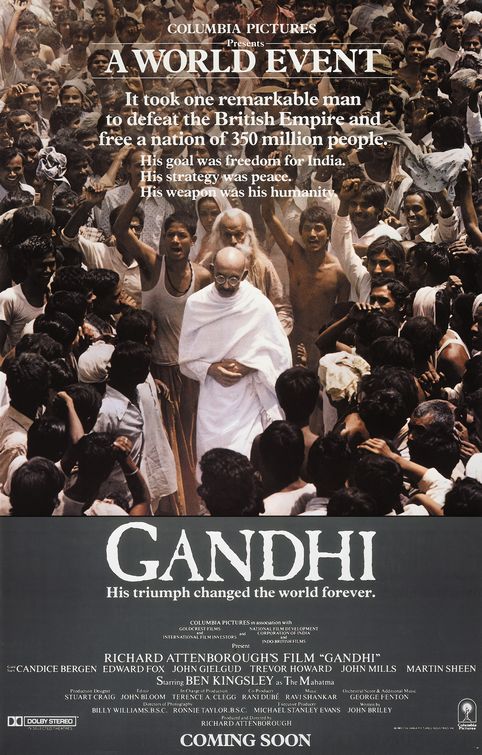
Satish Kumar is a peace activist who lives in Devon, England, and he's the author of "The Buddha and the Terrorist." A former Jain monk, he still follows Gandhi's principles of non-violence. Kumar tells Jim Fleming about some of the people he met on his 8,000 mile walk for peace, and why he thinks violence is an obsolete weapon. Also, Reihan Salam critiqued the movie "Gandhi" for Slate Magazine in an article called "Meet the Hindustani Malcolm X." Salam tells Steve Paulson that David Attenborough's bio-pic may have been about an Indian man, but it was a thoroughly Western movie.
 >
>
SEGMENT 2:

Mark Kurlansky is the author of "Nonviolence: Twenty-Five Lessons in the History of a Dangerous Idea." In constructing his history of non-violence, Kurlansky looks at history with a revisionist's eye and tells Steve Paulson that WWII might not have been necessary ...
SEGMENT 3:
Andrew Carroll is the Founder of the Legacy Project whose latest book is "Grace under Fire: Letters of Faith in Times of War." The Legacy Project collects and publishes letters from combatants and their families and friends, and others who have been touched by the experience of war.
To Listen to the Episode
To the Best of Our Knowledge (Wisconsin Public Radio)
Host: Steve Paulson
When asked what he thought about Western civilization, Gandhi once famously said: I think it's a good idea. Gandhi's form of extreme nonviolence led to the civilized retreat of the British from the Indian sub-continent. But does non-violence still have the right stuff to effect social change in today's world? In this hour of To the Best of Our Knowledge, some new ideas about a very old subject - non-violence. And, could nonviolence have prevented World War II?
SEGMENT 1:
Satish Kumar is a peace activist who lives in Devon, England, and he's the author of "The Buddha and the Terrorist." A former Jain monk, he still follows Gandhi's principles of non-violence. Kumar tells Jim Fleming about some of the people he met on his 8,000 mile walk for peace, and why he thinks violence is an obsolete weapon. Also, Reihan Salam critiqued the movie "Gandhi" for Slate Magazine in an article called "Meet the Hindustani Malcolm X." Salam tells Steve Paulson that David Attenborough's bio-pic may have been about an Indian man, but it was a thoroughly Western movie.
>SEGMENT 2:
Mark Kurlansky is the author of "Nonviolence: Twenty-Five Lessons in the History of a Dangerous Idea." In constructing his history of non-violence, Kurlansky looks at history with a revisionist's eye and tells Steve Paulson that WWII might not have been necessary ...
SEGMENT 3:
Andrew Carroll is the Founder of the Legacy Project whose latest book is "Grace under Fire: Letters of Faith in Times of War." The Legacy Project collects and publishes letters from combatants and their families and friends, and others who have been touched by the experience of war.
To Listen to the Episode
Tim Robey: David Cronenberg’s Disembodied Cinema
David Cronenberg’s Disembodied Cinema
By Tim Robey
The Point

The best word I’ve come across to describe David Cronenberg’s filmmaking style is “disembodied.” It was voiced as a criticism, but I think he’d own up to it. Whatever squelchy or peculiar or downright disgusting thing is going on in his pictures, the camera tends to exhibit an almost serene, floating detachment, like a severed head calmly looking down at its own twitching torso.
Detachment is hardly the same thing as disinterest, and if Cronenberg has shown us one thing in his now 40 year career, it’s that cinema can both squelch and think. He has a habit of reaching for Descartes in discussing his films, which consistently operate at this interface between the visceral and the cerebral. I suppose it’s possible to be put off by both sides of the equation—the chilly rigor of his tonal strategies could very well disconcert the casual viewer as much as, say, the bugs with talking anuses. But when you’ve got the hang of Cronenberg, his filmmaking comes to seem forensically exploratory, and engaged in brave and singular ways with the potentials, as well as the pathologies, of the human animal.
“Body horror” was the term coined to contextualize Cronenberg’s work in the 1970s and 1980s, the period of his career when he worked almost exclusively in the science fiction/horror genre. Like all such phrases, it’s a shortcut: there’s more to understand than just an obsession with mutation and organs falling off. Cronenberg’s great concern has always been the body—he calls it “the first fact of human existence”—but his films differ substantially from the other horror cinema of their era in exploring our anatomies from the inside out. Limbs are rarely under threat from chainsaws in his films—they are more likely to atrophy or multiply or go the way of an arthropod.
Even when he has reached across to other genres—as in his most recent picture, the London mob drama Eastern Promises (2007)—there’s a lingering interest in the totemic importance of physique. Every wound or scar stands as an entry on these gangsters’ curricula vitae. It’s notable that the film’s most heralded set piece is a knife fight in the chambers of a Turkish bath house, in which Viggo Mortensen’s hero combats two assailants while stark naked, a statuesque male nude contorted into a dance of death. Meanwhile, the ritual of gaining star tattoos, prized status symbols within the ranks of the Vory v Zakone, draws Cronenberg’s attention as an eroticized spectacle in itself, not just a cultural pointer. All this—Naked Lunch (1991) and M. Butterfly (1993) too—and he isn’t even gay.
Eastern Promises may be conceptually one of Cronenberg’s least ambitious films, but it has a kinky, perverse quality no other director could quite have approximated. No one else is quite like Cronenberg—not even his exact contemporary David Lynch, another freakshow auteur of passing resemblance but utterly distinct sensibility, or Atom Egoyan, another cerebral, bespectacled Canadian who has used a few of the same actors (Elias Koteas, Ian Holm, Sarah Polley, Don McKellar) in projects which do share a certain warped carnality with his compatriot’s. Cronenberg, like Lynch but not like Egoyan, has carved out his own genre. As he learned his craft throughout the 1970s and 1980s, developing greater skill and subtlety with actors, his films seemed to inform each other, even repeat each other, allowing roughly sketched ideas to evolve and gain emotional weight on increasingly broad canvases.
Cronenberg’s 1969 black and white featurette Stereo, made with funding obtained from the Canada Council under the pretense of writing a novel, is remarkable both in itself and as a testing ground for many of his key motifs. Though several shorts precede Stereo, he considers it his first finished, complete and autonomous film. There is the use of imposingly institutional modernist architecture—the movie was shot on the brutalist campus of the University of Toronto’s Scarborough College, a concrete prison which puts the small cast of characters on display, its dehumanizing bulk somehow exoticizing their every personal urge. They are test subjects, with Scarborough doubling as the Canadian Academy for Erotic Enquiry, a prototype for the scientific or medical institutions in Shivers (1975), Rabid (1977), The Brood (1979) and Scanners (1981). In all these subsequent films, the organizations fail, often cataclysmically, in their attempts to impose order on the human species. The more benign idea in Stereo, which feels like an experiment of Cronenberg’s own creation, is that the endowment of these volunteers with telepathic abilities will break down the heteronormative tyranny of the “obsolescent” family unit, encouraging them to fool around and form omnivorous sexual groupings.
The whole film is basically a pansexual orgy waiting to happen, its chances increased by the choice of lead actor, the dapper, overtly gay Ron Mlodzik, whose debonair gait in a black cloak, and expansive facial manner, are its funniest and most idiosyncratic assets.
Starting with Mlodzik, who reappeared in Cronenberg’s follow-up Crimes of the Future (1970), you can trace a line through the director’s male protagonists to see them consistently positioned as outsider figures, uncanny presences and the lodes of an alien sexuality which isn’t necessarily homosexual (but can be). Cronenberg’s men are both emotionally impenetrable, and all too often literally penetrated—like James Woods as the gutter-trawling TV exec Max Renn in Videodrome (1983), whose torso grows a vaginal slot into which videotapes or even firearms can be inserted, and Jude Law’s poor security guard Ted Pikul in eXistenZ (1997), who is queasy enough about having a game port installed in his lower spine before various organic appendages get lubricated and shoved up it. Jeff Goldblum, in the early stages of transformation in The Fly (1986), gains a bristling hormonal potency which makes him a demon in bed—in a good way, at least until his fingernails and ears start falling off. Meanwhile, the erotic possibilities in Naked Lunch and Crash (1996) proliferate, Stereo-like, between every cast member, not just along exclusively gay or straight lines: Holly Hunter + Rosanna Arquette + James Spader + Elias Koteas = six one-on-one copulations. There’s certainly an argument to be made that Cronenberg has done fuller justice to the permutations—the options—of how and who we fuck than any other living filmmaker, including such queer-cinema heroes as Haynes and Almodóvar. He is his own Academy for Erotic Inquiry.
To Read the Rest of the Essay

By Tim Robey
The Point
The best word I’ve come across to describe David Cronenberg’s filmmaking style is “disembodied.” It was voiced as a criticism, but I think he’d own up to it. Whatever squelchy or peculiar or downright disgusting thing is going on in his pictures, the camera tends to exhibit an almost serene, floating detachment, like a severed head calmly looking down at its own twitching torso.
Detachment is hardly the same thing as disinterest, and if Cronenberg has shown us one thing in his now 40 year career, it’s that cinema can both squelch and think. He has a habit of reaching for Descartes in discussing his films, which consistently operate at this interface between the visceral and the cerebral. I suppose it’s possible to be put off by both sides of the equation—the chilly rigor of his tonal strategies could very well disconcert the casual viewer as much as, say, the bugs with talking anuses. But when you’ve got the hang of Cronenberg, his filmmaking comes to seem forensically exploratory, and engaged in brave and singular ways with the potentials, as well as the pathologies, of the human animal.
“Body horror” was the term coined to contextualize Cronenberg’s work in the 1970s and 1980s, the period of his career when he worked almost exclusively in the science fiction/horror genre. Like all such phrases, it’s a shortcut: there’s more to understand than just an obsession with mutation and organs falling off. Cronenberg’s great concern has always been the body—he calls it “the first fact of human existence”—but his films differ substantially from the other horror cinema of their era in exploring our anatomies from the inside out. Limbs are rarely under threat from chainsaws in his films—they are more likely to atrophy or multiply or go the way of an arthropod.
Even when he has reached across to other genres—as in his most recent picture, the London mob drama Eastern Promises (2007)—there’s a lingering interest in the totemic importance of physique. Every wound or scar stands as an entry on these gangsters’ curricula vitae. It’s notable that the film’s most heralded set piece is a knife fight in the chambers of a Turkish bath house, in which Viggo Mortensen’s hero combats two assailants while stark naked, a statuesque male nude contorted into a dance of death. Meanwhile, the ritual of gaining star tattoos, prized status symbols within the ranks of the Vory v Zakone, draws Cronenberg’s attention as an eroticized spectacle in itself, not just a cultural pointer. All this—Naked Lunch (1991) and M. Butterfly (1993) too—and he isn’t even gay.
Eastern Promises may be conceptually one of Cronenberg’s least ambitious films, but it has a kinky, perverse quality no other director could quite have approximated. No one else is quite like Cronenberg—not even his exact contemporary David Lynch, another freakshow auteur of passing resemblance but utterly distinct sensibility, or Atom Egoyan, another cerebral, bespectacled Canadian who has used a few of the same actors (Elias Koteas, Ian Holm, Sarah Polley, Don McKellar) in projects which do share a certain warped carnality with his compatriot’s. Cronenberg, like Lynch but not like Egoyan, has carved out his own genre. As he learned his craft throughout the 1970s and 1980s, developing greater skill and subtlety with actors, his films seemed to inform each other, even repeat each other, allowing roughly sketched ideas to evolve and gain emotional weight on increasingly broad canvases.
Cronenberg’s 1969 black and white featurette Stereo, made with funding obtained from the Canada Council under the pretense of writing a novel, is remarkable both in itself and as a testing ground for many of his key motifs. Though several shorts precede Stereo, he considers it his first finished, complete and autonomous film. There is the use of imposingly institutional modernist architecture—the movie was shot on the brutalist campus of the University of Toronto’s Scarborough College, a concrete prison which puts the small cast of characters on display, its dehumanizing bulk somehow exoticizing their every personal urge. They are test subjects, with Scarborough doubling as the Canadian Academy for Erotic Enquiry, a prototype for the scientific or medical institutions in Shivers (1975), Rabid (1977), The Brood (1979) and Scanners (1981). In all these subsequent films, the organizations fail, often cataclysmically, in their attempts to impose order on the human species. The more benign idea in Stereo, which feels like an experiment of Cronenberg’s own creation, is that the endowment of these volunteers with telepathic abilities will break down the heteronormative tyranny of the “obsolescent” family unit, encouraging them to fool around and form omnivorous sexual groupings.
The whole film is basically a pansexual orgy waiting to happen, its chances increased by the choice of lead actor, the dapper, overtly gay Ron Mlodzik, whose debonair gait in a black cloak, and expansive facial manner, are its funniest and most idiosyncratic assets.
Starting with Mlodzik, who reappeared in Cronenberg’s follow-up Crimes of the Future (1970), you can trace a line through the director’s male protagonists to see them consistently positioned as outsider figures, uncanny presences and the lodes of an alien sexuality which isn’t necessarily homosexual (but can be). Cronenberg’s men are both emotionally impenetrable, and all too often literally penetrated—like James Woods as the gutter-trawling TV exec Max Renn in Videodrome (1983), whose torso grows a vaginal slot into which videotapes or even firearms can be inserted, and Jude Law’s poor security guard Ted Pikul in eXistenZ (1997), who is queasy enough about having a game port installed in his lower spine before various organic appendages get lubricated and shoved up it. Jeff Goldblum, in the early stages of transformation in The Fly (1986), gains a bristling hormonal potency which makes him a demon in bed—in a good way, at least until his fingernails and ears start falling off. Meanwhile, the erotic possibilities in Naked Lunch and Crash (1996) proliferate, Stereo-like, between every cast member, not just along exclusively gay or straight lines: Holly Hunter + Rosanna Arquette + James Spader + Elias Koteas = six one-on-one copulations. There’s certainly an argument to be made that Cronenberg has done fuller justice to the permutations—the options—of how and who we fuck than any other living filmmaker, including such queer-cinema heroes as Haynes and Almodóvar. He is his own Academy for Erotic Inquiry.
To Read the Rest of the Essay
Saturday, March 13, 2010
Robert Becker: Best Picture No Shill for War Hubris, Invasion or Empire - Robert Scheer Better at Politics than Film Criticism
(Courtesy of Danny Mayer)
Best Picture No Shill for War Hubris, Invasion or Empire - Robert Scheer Better at Politics than Film Criticism
by Robert Becker
The Smirking Chimp

...
What's brilliant about "Hurt Locker" is not just its compelling take on damaged soldiers but the enticing ambiguities, making it a telling Rorschach test. The director endorses bravery but not the mission, thus deflecting nonsense she's just a white-flag-waving traitor. U.S. Army advisers withdrew because Bigelow didn't appear pro-war enough. The director knew better, that audiences would be less engaged in experiencing the front lines when political lines in the sand are drawn (either gung ho or Scheer's).
Notably, on screen, this disposal team saves no lives or assures no American safety. Sustained, high tension makes the opposite point: no one here is safe, victory is an illusion, and justification for the occupation, AWOL. Sometimes what's not said or dramatized matters more than what so immediate, however well crafted.
My personal take: the movie presents menacing patterns of randomized violence. Dramatizing the life-long trauma of soldiers we fund, without redemptive trade-offs, questions militarized violence as solution. War here is mania, whether personal and/or political addiction, and that makes the movie qualify as both anti-war and anti-Iraq. Its opening moment quotes strident anti-war critic, Chris Hedges, on war as addiction (vs. honor), and the movie follows through with this dark view.
First hand, we experience unspeakable pain endured by sympathetic characters with little to show for it. The protagonist is brave but also an obsessed daredevil, dangerous to himself and his crew - no hero for our children or his, no exemplar for the glory of Yankee war-making. The one visible Army officer conspicuously rags on James' recklessness - without narrative offset. While Bigelow doesn't flesh in background Iraqis, nor does she detail Americans, except our team and one psychologist, foolishly getting himself blown up. Another non-hero. Yes, the movie presents Iraq as American-instigated dogfight, but neither side is honored, neither murderous insurgents, nor the more powerful, hubristic, occupying Americans.
Any Hollywood war movie not glorifying noble Americans in justified armed combat against a dastardly enemy is exceptional. If "Hurt Locker" was intended to promote positives about Iraq, count it an utter failure, from first to last scene. The movie's finale provides the simplest "statement" -- reinforcing Iraq as an endless, addictive drug for a crisis junkie doomed to tempt death, incapable of living with his own family in his home country. Imperial triumph, indeed.
To Read the Entire Essay
Best Picture No Shill for War Hubris, Invasion or Empire - Robert Scheer Better at Politics than Film Criticism
by Robert Becker
The Smirking Chimp
...
What's brilliant about "Hurt Locker" is not just its compelling take on damaged soldiers but the enticing ambiguities, making it a telling Rorschach test. The director endorses bravery but not the mission, thus deflecting nonsense she's just a white-flag-waving traitor. U.S. Army advisers withdrew because Bigelow didn't appear pro-war enough. The director knew better, that audiences would be less engaged in experiencing the front lines when political lines in the sand are drawn (either gung ho or Scheer's).
Notably, on screen, this disposal team saves no lives or assures no American safety. Sustained, high tension makes the opposite point: no one here is safe, victory is an illusion, and justification for the occupation, AWOL. Sometimes what's not said or dramatized matters more than what so immediate, however well crafted.
My personal take: the movie presents menacing patterns of randomized violence. Dramatizing the life-long trauma of soldiers we fund, without redemptive trade-offs, questions militarized violence as solution. War here is mania, whether personal and/or political addiction, and that makes the movie qualify as both anti-war and anti-Iraq. Its opening moment quotes strident anti-war critic, Chris Hedges, on war as addiction (vs. honor), and the movie follows through with this dark view.
First hand, we experience unspeakable pain endured by sympathetic characters with little to show for it. The protagonist is brave but also an obsessed daredevil, dangerous to himself and his crew - no hero for our children or his, no exemplar for the glory of Yankee war-making. The one visible Army officer conspicuously rags on James' recklessness - without narrative offset. While Bigelow doesn't flesh in background Iraqis, nor does she detail Americans, except our team and one psychologist, foolishly getting himself blown up. Another non-hero. Yes, the movie presents Iraq as American-instigated dogfight, but neither side is honored, neither murderous insurgents, nor the more powerful, hubristic, occupying Americans.
Any Hollywood war movie not glorifying noble Americans in justified armed combat against a dastardly enemy is exceptional. If "Hurt Locker" was intended to promote positives about Iraq, count it an utter failure, from first to last scene. The movie's finale provides the simplest "statement" -- reinforcing Iraq as an endless, addictive drug for a crisis junkie doomed to tempt death, incapable of living with his own family in his home country. Imperial triumph, indeed.
To Read the Entire Essay
Subscribe to:
Posts (Atom)