Free Documentaries
Some examples of the films available:
A Place Called Chiapas
Bannatyne Takes on Tobacco
Bastards of the Party
Christmas & Other Believes - The Pagan Roots
Dispatches: The Data Theft Scandal
Dispatches: The Great Green Smoke Screen
Ghosts of Abu Ghraib
Hoop Dreams
Immokalee: From Slavery to Freedom
McLibel
Mind Control: America's Secret War
Monopoly Men
On Our Watch - A Documentary About Genocide in Darfur
Reel Bad Arabs
Shake Hands with the Devil
The 11th Hour
The Betrayed
The Cost of a Coke
The Elephant in the Room
The New American Century
The PentaCon
The Second Gun: Who Really Killed Robert Kennedy?
The Vaccine Nation
The Weather Underground
Unreported World: Brazil Slum Warfare
Waco Rules of Engagement
War On Drugs, The Prison Industrial Complex
Who Killed the Electric Car
Thursday, March 04, 2010


Michael Dean Benton: Transperspective Waiting
(Part of a longer essay titled "Monsters, Spectres, and Differences: A Transperspective Waiting." In my mind, friendship is a radical engagement... )
I suffer from a Deleuzian stutter, or a Derrida-da-da, in which my language is stifled by my own personal ghosts. “We have lost the friend . . . the friend of the perhaps . . . of respectfully experiencing that friendship." So many dead, some institutionalized, and some just disappeared back into the void. “I will continue to begin again … and I’ll have to wander all alone in this long conversation that we were supposed to have together.”
These spectral visitors stay my hand reminding me that the only answers are in questions that produce more questions: “I know why you hardly sleep. Why you live alone and why night after night you sit at your computer. … I know because I was once looking for the same thing. … It’s the question that drives us."
They point out those that have escaped into the amnesia of recycled consumer pleasures, who can blame them for choosing the steak over the gruel? “Your soul is like an appendix! I don’t even use it!”
Still I am listening for the emergence of a being, another who escapes my comprehension, this listening requires a transition to a new dimension of understanding. I am listening to you: although I do not understand what you are saying, I am attentive to your silence amongst history’s mentions, I am attempting to understand and hear your intention. Which does not mean: I comprehend you, or that I know you … No, I am listening to you as someone that I do not truly know … with you but not as you … I reside in a realm of absolute silence in order to hear what you have to say or what is left unsaid or what reverberates from the unknown. I quest for new words, for new meanings, for new modes of understandings that will bridge this river of silence … for an alliance of possibilities that will not reduce the Other to an item of property or a subject to be mastered. This unspeakable silence is a rift that shatters the boundaries of my life in order to produce a conflagration of nothingness that sears the forest of my consciousness clearing the way for new growths. Perhaps, as the borders of my psyche that restrain my various selves breaks-up there will be the productive explosion of new life spreading across my interior landscape. Chaos enters my realm and produces … impossibilities. “Perhaps the impossible is the only chance of something new, of some new philosophy of the new … Perhaps friendship, if there is such a thing, must honor [faire droit] what appears impossible here." Where are the friends that ask questions of the dominant and seek the impossible?
Sources:
Jacques Derrida’s eulogy for Gilles Deleuze: “I’ll Have to Wander Alone.”
The character Trinity speaking to Neo in the movie The Matrix
Michael Kelso on That 70s Show
Jacques Derrida's Politics of Friendship
Sprinkled throughout:
Personal Pain Suffered By Thivai at Various Times
Additional inspiration:
Rebecca Saunders course "Mourning of Modernity"
I suffer from a Deleuzian stutter, or a Derrida-da-da, in which my language is stifled by my own personal ghosts. “We have lost the friend . . . the friend of the perhaps . . . of respectfully experiencing that friendship." So many dead, some institutionalized, and some just disappeared back into the void. “I will continue to begin again … and I’ll have to wander all alone in this long conversation that we were supposed to have together.”
These spectral visitors stay my hand reminding me that the only answers are in questions that produce more questions: “I know why you hardly sleep. Why you live alone and why night after night you sit at your computer. … I know because I was once looking for the same thing. … It’s the question that drives us."
They point out those that have escaped into the amnesia of recycled consumer pleasures, who can blame them for choosing the steak over the gruel? “Your soul is like an appendix! I don’t even use it!”
Still I am listening for the emergence of a being, another who escapes my comprehension, this listening requires a transition to a new dimension of understanding. I am listening to you: although I do not understand what you are saying, I am attentive to your silence amongst history’s mentions, I am attempting to understand and hear your intention. Which does not mean: I comprehend you, or that I know you … No, I am listening to you as someone that I do not truly know … with you but not as you … I reside in a realm of absolute silence in order to hear what you have to say or what is left unsaid or what reverberates from the unknown. I quest for new words, for new meanings, for new modes of understandings that will bridge this river of silence … for an alliance of possibilities that will not reduce the Other to an item of property or a subject to be mastered. This unspeakable silence is a rift that shatters the boundaries of my life in order to produce a conflagration of nothingness that sears the forest of my consciousness clearing the way for new growths. Perhaps, as the borders of my psyche that restrain my various selves breaks-up there will be the productive explosion of new life spreading across my interior landscape. Chaos enters my realm and produces … impossibilities. “Perhaps the impossible is the only chance of something new, of some new philosophy of the new … Perhaps friendship, if there is such a thing, must honor [faire droit] what appears impossible here." Where are the friends that ask questions of the dominant and seek the impossible?
Sources:
Jacques Derrida’s eulogy for Gilles Deleuze: “I’ll Have to Wander Alone.”
The character Trinity speaking to Neo in the movie The Matrix
Michael Kelso on That 70s Show
Jacques Derrida's Politics of Friendship
Sprinkled throughout:
Personal Pain Suffered By Thivai at Various Times
Additional inspiration:
Rebecca Saunders course "Mourning of Modernity"
Creative Screenwriting: Discussing District 9 with Writer-Director Neil Blomkamp, Actor Sharlto Copley, and Producer Peter Jackson
Peter Jackson - District 9 Comic-Con Q&A
Creative Screenwriting
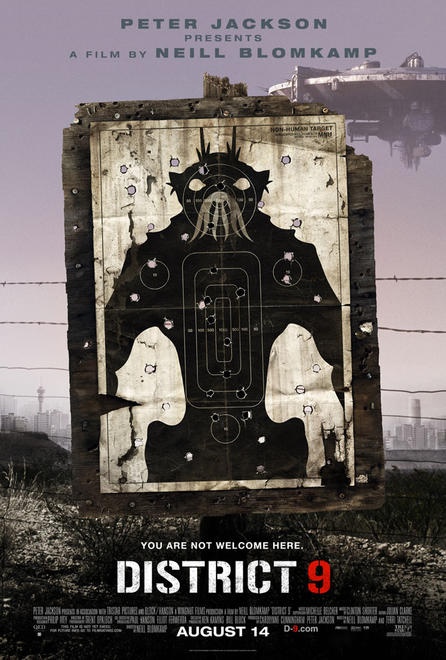
The District 9 panel at 2009's Comic-Con featuring; producer Peter Jackson, writer-director Neil Blomkamp and star Sharlto Copley
To Listen to the Interviews
Creative Screenwriting
The District 9 panel at 2009's Comic-Con featuring; producer Peter Jackson, writer-director Neil Blomkamp and star Sharlto Copley
To Listen to the Interviews
Eve Ensler: "You Tell Me How to be a Girl in 2010" and "I Am An Emotional Creature"
Waking up to sunshine coming in my window (finally!) this morning I clicked on a podcast and the first thing I heard was Eve Ensler's monologue "You Tell Me How To Be a Girl in 2010" ..... beautiful, powerful, important poem
On the Point (WUBR)

To Listen to Eve Ensler perform "You Tell Me How to be a Girl in 2010" and "I Am An Emotional Creature"
On the Point (WUBR)
To Listen to Eve Ensler perform "You Tell Me How to be a Girl in 2010" and "I Am An Emotional Creature"
Wednesday, March 03, 2010
Music of the Folk at Gumbo Ya Ya's (Downtown Lexington: 3/4)
Music of the folk at Gumbo Ya Ya’s
North of Center
If there’s anything the past several years have reminded us of, it’s that when things get screwy, it’s the folk who always get fucked: Ninth-warders in New Orleans, holler residents in Appalachia, prison inmates, gypsies across Europe, refugees in Haiti, Iraq, Afghanistan and other locales of natural and human destruction, and the list goes on.
This Thursday night (March 4) at Gumbo Ya Ya’s some damn fine musicians will be coming together to play and share some of the wonderful music that has arisen through these all-too-common fucked-folk experiences: songs of love, anger, resistance and humor played through a variety of intersecting instruments, dialects and experiences.
Right now, on tap to play songs new and old are Karly Higgins of the Clack Mountain String Band (mountain folk), Chris Sullivan and Warren Byrom of the Swells and Big Maracas (New Orleans, Cuban and Brazilian folk), and Wes Houp (desparate country blues folk). If you feel you can contribute your unique voice, please join the fray.
Things will be loose, as good music often is.
Show is free. Doors open at 8:00 PM. Music should start sometime around 9:00. If you’re hungry, $5 will get you a refillable bowl of Ya Ya’s goodies (with at least one veggie option). If you’re thirsty, there will be $2 Abitas.
The downtown Gumbo Ya Ya’s is located on Main Street in the same building as the old A1A (and 2nd Dame location).
For those interested in getting the whole folk treatment, head on down to Bluegrass Community and Technical College at 5:00 to watch The U.S. vs. John Lennon, a documentary about the working class politics of the former Beatle. Wes Houp will talk and play a couple songs after the movie. Viewing is located in BCTC’s Oswald Auditorium, located directly in front of UK’s Commonwealth Stadium. Film starts at 5:15.
North of Center
If there’s anything the past several years have reminded us of, it’s that when things get screwy, it’s the folk who always get fucked: Ninth-warders in New Orleans, holler residents in Appalachia, prison inmates, gypsies across Europe, refugees in Haiti, Iraq, Afghanistan and other locales of natural and human destruction, and the list goes on.
This Thursday night (March 4) at Gumbo Ya Ya’s some damn fine musicians will be coming together to play and share some of the wonderful music that has arisen through these all-too-common fucked-folk experiences: songs of love, anger, resistance and humor played through a variety of intersecting instruments, dialects and experiences.
Right now, on tap to play songs new and old are Karly Higgins of the Clack Mountain String Band (mountain folk), Chris Sullivan and Warren Byrom of the Swells and Big Maracas (New Orleans, Cuban and Brazilian folk), and Wes Houp (desparate country blues folk). If you feel you can contribute your unique voice, please join the fray.
Things will be loose, as good music often is.
Show is free. Doors open at 8:00 PM. Music should start sometime around 9:00. If you’re hungry, $5 will get you a refillable bowl of Ya Ya’s goodies (with at least one veggie option). If you’re thirsty, there will be $2 Abitas.
The downtown Gumbo Ya Ya’s is located on Main Street in the same building as the old A1A (and 2nd Dame location).
For those interested in getting the whole folk treatment, head on down to Bluegrass Community and Technical College at 5:00 to watch The U.S. vs. John Lennon, a documentary about the working class politics of the former Beatle. Wes Houp will talk and play a couple songs after the movie. Viewing is located in BCTC’s Oswald Auditorium, located directly in front of UK’s Commonwealth Stadium. Film starts at 5:15.
Palestinian activist Hanan Ashrawi (University of Kentucky: 3/23/10)
(Extra-credit opportunity for my students, attend and write a 600+ word response. Courtesy of Richard Becker)
A free public lecture featuring Palestinian activist Hanan Ashrawi has been scheduled for 7:30 p.m. March 23, 2010, at the Singletary Center for the Arts.
Ashrawi has served as an elected member of the Palestinian Legislative Council, Jerusalem District. In 2009, she was elected a member of the Executive Committee of the Palestine Liberation Organization (PLO), making history as the first woman to hold a seat in this executive body. Ashrawi's academic career spanned several decades in which she served as a faculty member, chair in the Department of English and Dean of the Faculty at Birzeit University on the West Bank. From 1991 through 1993, she served as the official spokesperson of the Palestinian Delegation to the Middle East Peace Process and a member of both the Leadership/Guidance and Executive Committees of the Delegation.
With the signing of the peace accords by Yasser Arafat and Yitzhak Rabin in 1993 and the establishment of Palestinian self-rule, Ashrawi headed the Preparatory Committee of the Palestinian Independent Commission for Citizens' Rights in Jerusalem and was the founder and commissioner general of that committee until 1995. From 1996 through 1998, she served as minister of higher education and research. In August of 1998, she founded the Palestinian Initiative for the Promotion of Global Dialogue and Democracy (MIFTAH) and has served as the Executive Committee chairperson of that organization since that time.
Tickets for Ashrawi's public talk are available through the Singletary Center Ticket Office or by going to the Singletary Center for the Arts (SCFA) Web site at www.uky.edu/SCFA. No phone orders will be accepted. There is a limit of four tickets per person using the SCFA Web site. Tickets are free.
A free public lecture featuring Palestinian activist Hanan Ashrawi has been scheduled for 7:30 p.m. March 23, 2010, at the Singletary Center for the Arts.
Ashrawi has served as an elected member of the Palestinian Legislative Council, Jerusalem District. In 2009, she was elected a member of the Executive Committee of the Palestine Liberation Organization (PLO), making history as the first woman to hold a seat in this executive body. Ashrawi's academic career spanned several decades in which she served as a faculty member, chair in the Department of English and Dean of the Faculty at Birzeit University on the West Bank. From 1991 through 1993, she served as the official spokesperson of the Palestinian Delegation to the Middle East Peace Process and a member of both the Leadership/Guidance and Executive Committees of the Delegation.
With the signing of the peace accords by Yasser Arafat and Yitzhak Rabin in 1993 and the establishment of Palestinian self-rule, Ashrawi headed the Preparatory Committee of the Palestinian Independent Commission for Citizens' Rights in Jerusalem and was the founder and commissioner general of that committee until 1995. From 1996 through 1998, she served as minister of higher education and research. In August of 1998, she founded the Palestinian Initiative for the Promotion of Global Dialogue and Democracy (MIFTAH) and has served as the Executive Committee chairperson of that organization since that time.
Tickets for Ashrawi's public talk are available through the Singletary Center Ticket Office or by going to the Singletary Center for the Arts (SCFA) Web site at www.uky.edu/SCFA. No phone orders will be accepted. There is a limit of four tickets per person using the SCFA Web site. Tickets are free.
CounterSpin: Robert McChesney and John Nichols on The Death and Life of American Journalism
Robert McChesney and John Nichols on The Death and Life of American Journalism
CounterSpin
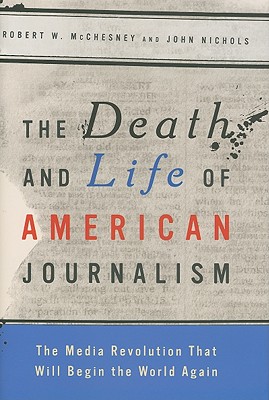
A special look at the state of the media in America. Every week on CounterSpin we talk mostly about what the media are getting wrong. But the big story inside the news industry is the collapse of the business itself. What are the implications for citizens? What can we do about it? And how concerned should we be about the failures of corporate owners that have done so little to promote good journalism in the first place? We'll talk about all that and more with our guests Robert McChesney and John Nichols, co-authors of the new book The Death and Life of American Journalism: the Media Revolution That Will Begin the World Again.
To Listen to the Conversation
CounterSpin
A special look at the state of the media in America. Every week on CounterSpin we talk mostly about what the media are getting wrong. But the big story inside the news industry is the collapse of the business itself. What are the implications for citizens? What can we do about it? And how concerned should we be about the failures of corporate owners that have done so little to promote good journalism in the first place? We'll talk about all that and more with our guests Robert McChesney and John Nichols, co-authors of the new book The Death and Life of American Journalism: the Media Revolution That Will Begin the World Again.
To Listen to the Conversation
Tuesday, March 02, 2010
Panopticon
(I suggest that you immediately listen to "aptgangr" because it is now one of my favorite songs. Courtesy of Chuck McIntyre)
Panopticon
from the page:
Panopticon
from the page:
anarcho pagan black metal.focused on spreading propaganda,anarchism,paganism,releasing emotion and identifying the common thread of humanity between all cultures.its time to put our differences aside and recognize a common enemy. this project has been made possible by the many who came before me,who's wisdom has shaped my perspective. this project is inspired by all the many voices who have encouraged me along the way.I humbly thank you for the inspiration you provide. for detailed song explanations and political banter,please see the blogs and or the releases themelves. the intent of panopticon is the exchange of information and opinion.
Chris Hedges: Ralph Nader Was Right About Barack Obama
(Courtesy of Michael Marchman and Patrick Smith)
Ralph Nader Was Right About Barack Obama
by Chris Hedges
TruthDig
We owe Ralph Nader and Cynthia McKinney an apology. They were right about Barack Obama. They were right about the corporate state. They had the courage of their convictions and they stood fast despite wholesale defections and ridicule by liberals and progressives.
Obama lies as cravenly, if not as crudely, as George W. Bush. He promised us that the transfer of $12.8 trillion in taxpayer money to Wall Street would open up credit and lending to the average consumer. The Federal Deposit Insurance Corp. (FDIC), however, admitted last week that banks have reduced lending at the sharpest pace since 1942. As a senator, Obama promised he would filibuster amendments to the FISA Reform Act that retroactively made legal the wiretapping and monitoring of millions of American citizens without warrant; instead he supported passage of the loathsome legislation. He told us he would withdraw American troops from Iraq, close the detention facility at Guantánamo, end torture, restore civil liberties such as habeas corpus and create new jobs. None of this has happened.
He is shoving a health care bill down our throats that would give hundreds of billions of taxpayer dollars to the private health insurance industry in the form of subsidies, and force millions of uninsured Americans to buy insurers’ defective products. These policies would come with ever-rising co-pays, deductibles and premiums and see most of the seriously ill left bankrupt and unable to afford medical care. Obama did nothing to halt the collapse of the Copenhagen climate conference, after promising meaningful environmental reform, and has left us at the mercy of corporations such as ExxonMobil. He empowers Israel’s brutal apartheid state. He has expanded the war in Afghanistan and Pakistan, where hundreds of civilians, including entire families, have been slaughtered by sophisticated weapons systems such as the Hellfire missile, which sucks the air out of victims’ lungs. And he is delivering war and death to Yemen, Somalia and perhaps Iran.
The illegal wars and occupations, the largest transference of wealth upward in American history and the egregious assault on civil liberties, all begun under George W. Bush, raise only a flicker of tepid protest from liberals when propagated by the Democrats. Liberals, unlike the right wing, are emotionally disabled. They appear not to feel. The tea-party protesters, the myopic supporters of Sarah Palin, the veterans signing up for Oath Keepers and the myriad of armed patriot groups have swept into their ranks legions of disenfranchised workers, angry libertarians, John Birchers and many who, until now, were never politically active. They articulate a legitimate rage. Yet liberals continue to speak in the bloodless language of issues and policies, and leave emotion and anger to the protofascists.
To Read the Rest of the Essay
Ralph Nader Was Right About Barack Obama
by Chris Hedges
TruthDig
We owe Ralph Nader and Cynthia McKinney an apology. They were right about Barack Obama. They were right about the corporate state. They had the courage of their convictions and they stood fast despite wholesale defections and ridicule by liberals and progressives.
Obama lies as cravenly, if not as crudely, as George W. Bush. He promised us that the transfer of $12.8 trillion in taxpayer money to Wall Street would open up credit and lending to the average consumer. The Federal Deposit Insurance Corp. (FDIC), however, admitted last week that banks have reduced lending at the sharpest pace since 1942. As a senator, Obama promised he would filibuster amendments to the FISA Reform Act that retroactively made legal the wiretapping and monitoring of millions of American citizens without warrant; instead he supported passage of the loathsome legislation. He told us he would withdraw American troops from Iraq, close the detention facility at Guantánamo, end torture, restore civil liberties such as habeas corpus and create new jobs. None of this has happened.
He is shoving a health care bill down our throats that would give hundreds of billions of taxpayer dollars to the private health insurance industry in the form of subsidies, and force millions of uninsured Americans to buy insurers’ defective products. These policies would come with ever-rising co-pays, deductibles and premiums and see most of the seriously ill left bankrupt and unable to afford medical care. Obama did nothing to halt the collapse of the Copenhagen climate conference, after promising meaningful environmental reform, and has left us at the mercy of corporations such as ExxonMobil. He empowers Israel’s brutal apartheid state. He has expanded the war in Afghanistan and Pakistan, where hundreds of civilians, including entire families, have been slaughtered by sophisticated weapons systems such as the Hellfire missile, which sucks the air out of victims’ lungs. And he is delivering war and death to Yemen, Somalia and perhaps Iran.
The illegal wars and occupations, the largest transference of wealth upward in American history and the egregious assault on civil liberties, all begun under George W. Bush, raise only a flicker of tepid protest from liberals when propagated by the Democrats. Liberals, unlike the right wing, are emotionally disabled. They appear not to feel. The tea-party protesters, the myopic supporters of Sarah Palin, the veterans signing up for Oath Keepers and the myriad of armed patriot groups have swept into their ranks legions of disenfranchised workers, angry libertarians, John Birchers and many who, until now, were never politically active. They articulate a legitimate rage. Yet liberals continue to speak in the bloodless language of issues and policies, and leave emotion and anger to the protofascists.
To Read the Rest of the Essay
Monday, March 01, 2010
Sebastian Jones: The Media-Lobbying Complex
The Media-Lobbying Complex
By Sebastian Jones
The Nation
President Obama spent most of December 4 touring Allentown, Pennsylvania, meeting with local workers and discussing the economic crisis. A few hours later, the state's former governor, Tom Ridge, was on MSNBC's Hardball With Chris Matthews, offering up his own recovery plan. There were "modest things" the White House might try, like cutting taxes or opening up credit for small businesses, but the real answer was for the president to "take his green agenda and blow it out of the box." The first step, Ridge explained, was to "create nuclear power plants." Combined with some waste coal and natural gas extraction, you would have an "innovation setter" that would "create jobs, create exports."
As Ridge counseled the administration to "put that package together," he sure seemed like an objective commentator. But what viewers weren't told was that since 2005, Ridge has pocketed $530,659 in executive compensation for serving on the board of Exelon, the nation's largest nuclear power company. As of March 2009, he also held an estimated $248,299 in Exelon stock, according to SEC filings.
Moments earlier, retired general and "NBC Military Analyst" Barry McCaffrey told viewers that the war in Afghanistan would require an additional "three- to ten-year effort" and "a lot of money." Unmentioned was the fact that DynCorp paid McCaffrey $182,309 in 2009 alone. The government had just granted DynCorp a five-year deal worth an estimated $5.9 billion to aid American forces in Afghanistan. The first year is locked in at $644 million, but the additional four options are subject to renewal, contingent on military needs and political realities.
In a single hour, two men with blatant, undisclosed conflicts of interest had appeared on MSNBC. The question is, was this an isolated oversight or business as usual? Evidence points to the latter. In 2003 The Nation exposed McCaffrey's financial ties to military contractors he had promoted on-air on several cable networks; in 2008 David Barstow wrote a Pulitzer Prize-winning series for the New York Times about the Pentagon's use of former military officers--many lobbying or consulting for military contractors--to get their talking points on television in exchange for access to decision-makers; and in 2009 bloggers uncovered how ex-Newsweek writer Richard Wolffe had guest-hosted Countdown With Keith Olbermann while working at a large PR firm specializing in "strategies for managing corporate reputation."
These incidents represent only a fraction of the covert corporate influence peddling on cable news, a four-month investigation by The Nation has found. Since 2007 at least seventy-five registered lobbyists, public relations representatives and corporate officials--people paid by companies and trade groups to manage their public image and promote their financial and political interests--have appeared on MSNBC, Fox News, CNN, CNBC and Fox Business Network with no disclosure of the corporate interests that had paid them. Many have been regulars on more than one of the cable networks, turning in dozens--and in some cases hundreds--of appearances.
For lobbyists, PR firms and corporate officials, going on cable television is a chance to promote clients and their interests on the most widely cited source of news in the United States. These appearances also generate good will and access to major players inside the Democratic and Republican parties. For their part, the cable networks, eager to fill time and afraid of upsetting the political elite, have often looked the other way. At times, the networks have even disregarded their own written ethics guidelines. Just about everyone involved is heavily invested in maintaining the current system, with the exception of the viewer.
To Read the Rest of the Article
More:
Democracy Now: “The Media-Lobbying Complex”: Investigation Exposes Undisclosed Corporate Ties of Network Political Pundits
By Sebastian Jones
The Nation
President Obama spent most of December 4 touring Allentown, Pennsylvania, meeting with local workers and discussing the economic crisis. A few hours later, the state's former governor, Tom Ridge, was on MSNBC's Hardball With Chris Matthews, offering up his own recovery plan. There were "modest things" the White House might try, like cutting taxes or opening up credit for small businesses, but the real answer was for the president to "take his green agenda and blow it out of the box." The first step, Ridge explained, was to "create nuclear power plants." Combined with some waste coal and natural gas extraction, you would have an "innovation setter" that would "create jobs, create exports."
As Ridge counseled the administration to "put that package together," he sure seemed like an objective commentator. But what viewers weren't told was that since 2005, Ridge has pocketed $530,659 in executive compensation for serving on the board of Exelon, the nation's largest nuclear power company. As of March 2009, he also held an estimated $248,299 in Exelon stock, according to SEC filings.
Moments earlier, retired general and "NBC Military Analyst" Barry McCaffrey told viewers that the war in Afghanistan would require an additional "three- to ten-year effort" and "a lot of money." Unmentioned was the fact that DynCorp paid McCaffrey $182,309 in 2009 alone. The government had just granted DynCorp a five-year deal worth an estimated $5.9 billion to aid American forces in Afghanistan. The first year is locked in at $644 million, but the additional four options are subject to renewal, contingent on military needs and political realities.
In a single hour, two men with blatant, undisclosed conflicts of interest had appeared on MSNBC. The question is, was this an isolated oversight or business as usual? Evidence points to the latter. In 2003 The Nation exposed McCaffrey's financial ties to military contractors he had promoted on-air on several cable networks; in 2008 David Barstow wrote a Pulitzer Prize-winning series for the New York Times about the Pentagon's use of former military officers--many lobbying or consulting for military contractors--to get their talking points on television in exchange for access to decision-makers; and in 2009 bloggers uncovered how ex-Newsweek writer Richard Wolffe had guest-hosted Countdown With Keith Olbermann while working at a large PR firm specializing in "strategies for managing corporate reputation."
These incidents represent only a fraction of the covert corporate influence peddling on cable news, a four-month investigation by The Nation has found. Since 2007 at least seventy-five registered lobbyists, public relations representatives and corporate officials--people paid by companies and trade groups to manage their public image and promote their financial and political interests--have appeared on MSNBC, Fox News, CNN, CNBC and Fox Business Network with no disclosure of the corporate interests that had paid them. Many have been regulars on more than one of the cable networks, turning in dozens--and in some cases hundreds--of appearances.
For lobbyists, PR firms and corporate officials, going on cable television is a chance to promote clients and their interests on the most widely cited source of news in the United States. These appearances also generate good will and access to major players inside the Democratic and Republican parties. For their part, the cable networks, eager to fill time and afraid of upsetting the political elite, have often looked the other way. At times, the networks have even disregarded their own written ethics guidelines. Just about everyone involved is heavily invested in maintaining the current system, with the exception of the viewer.
To Read the Rest of the Article
More:
Democracy Now: “The Media-Lobbying Complex”: Investigation Exposes Undisclosed Corporate Ties of Network Political Pundits
CounterSpin: Sebastian Jones on Media-Lobbying Complex, Ibrahim Hooper on Islamville TV report
CounterSpin
Sebastian Jones on Media-Lobbying Complex
Paid-for pundits. If you've ever wondered who the so-called experts pontificating on cable news channels really are, a new investigation published in the Nation magazine gives you some answers. Reporter Sebastian Jones will join us to talk about the secret corporate PR spinners and lobbyists who pose as pundits—without viewers knowing who they're actually working for.
Ibrahim Hooper on Islamville TV report
Did a local Nashville TV newscast, which featured extremist anti-Muslim propaganda and warnings about the terrorist among us, spark a vandalism attack on an area mosque? Many Nashvillians, including many in the city's Muslim community think so. We'll talk with CAIR's Ibrahim Cooper about anti-Muslim attacks and media responsibility.
To Listen to the Program
Sebastian Jones on Media-Lobbying Complex
Paid-for pundits. If you've ever wondered who the so-called experts pontificating on cable news channels really are, a new investigation published in the Nation magazine gives you some answers. Reporter Sebastian Jones will join us to talk about the secret corporate PR spinners and lobbyists who pose as pundits—without viewers knowing who they're actually working for.
Ibrahim Hooper on Islamville TV report
Did a local Nashville TV newscast, which featured extremist anti-Muslim propaganda and warnings about the terrorist among us, spark a vandalism attack on an area mosque? Many Nashvillians, including many in the city's Muslim community think so. We'll talk with CAIR's Ibrahim Cooper about anti-Muslim attacks and media responsibility.
To Listen to the Program
Common Sense with Dan Carlin: #167 The Big Clip Show
(This is a great series of clips that gives a good sense of why I value Dan Carlin's commentaries and why I listen to his podcast--even if he is naive in thinking he is non-partisan ;)
Show 167 - The Big Clip Show
Common Sense with Dan Carlin
This ... year-ending edition of the show contains clips from past episodes on a variety of topics. From Iran to Obama, torture to energy this show has a little of a lot.
Notes:
1.Clip from Common Sense show #127 “Great Expectations” (released 6/10/2008)
2.Clip from Common Sense show #137 “A Vote for None” (released 10/30/2008)
3.Clip from Common Sense show #152 “Sick Politics” (released 5/21/2009)
4.Clip from Common Sense show #126 “The Way You Play The Game” (released 5/27/2008)
5.Clip from Common Sense show #77 “Mushrooms and Onions” (released 12/29/2006)
6.Clip from Common Sense show #39 “Iranicide” (released 3/14/2006)
7.Clip from Common Sense show #106 “M.P.F.E.” (released 9/14/2007)
To Listen to the Year-End Retrospective
Show 167 - The Big Clip Show
Common Sense with Dan Carlin
This ... year-ending edition of the show contains clips from past episodes on a variety of topics. From Iran to Obama, torture to energy this show has a little of a lot.
Notes:
1.Clip from Common Sense show #127 “Great Expectations” (released 6/10/2008)
2.Clip from Common Sense show #137 “A Vote for None” (released 10/30/2008)
3.Clip from Common Sense show #152 “Sick Politics” (released 5/21/2009)
4.Clip from Common Sense show #126 “The Way You Play The Game” (released 5/27/2008)
5.Clip from Common Sense show #77 “Mushrooms and Onions” (released 12/29/2006)
6.Clip from Common Sense show #39 “Iranicide” (released 3/14/2006)
7.Clip from Common Sense show #106 “M.P.F.E.” (released 9/14/2007)
To Listen to the Year-End Retrospective
Marge Piercy: The Low Road
(Quoted in We Are Everywhere and Howard Zinn's The People Speak)
The Low Road
What can they do to you?
Whatever they want..
They can set you up, bust you,
they can break your fingers,
burn your brain with electricity,
blur you with drugs till you
can’t walk, can’t remember.
they can take away your children,
wall up your lover;
they can do anything you can’t stop them doing.
How can you stop them?
Alone you can fight, you can refuse.
You can take whatever revenge you can
But they roll right over you.
But two people fighting back to back
can cut through a mob
a snake-dancing fire
can break a cordon,
termites can bring down a mansion
Two people can keep each other sane
can give support, conviction,
love, massage, hope, sex.
Three people are a delegation
a cell, a wedge.
With four you can play games
and start a collective.
With six you can rent a whole house
have pie for dinner with no seconds
and make your own music.
Thirteen makes a circle,
a hundred fill a hall.
A thousand have solidarity
and your own newsletter;
ten thousand community
and your own papers;
a hundred thousand,
a network of communities;
a million our own world.
It goes one at a time.
It starts when you care to act.
It starts when you do it again
after they say no.
It starts when you say we
and know who you mean;
and each day you mean
one more.
- Marge Piercy
The Low Road
What can they do to you?
Whatever they want..
They can set you up, bust you,
they can break your fingers,
burn your brain with electricity,
blur you with drugs till you
can’t walk, can’t remember.
they can take away your children,
wall up your lover;
they can do anything you can’t stop them doing.
How can you stop them?
Alone you can fight, you can refuse.
You can take whatever revenge you can
But they roll right over you.
But two people fighting back to back
can cut through a mob
a snake-dancing fire
can break a cordon,
termites can bring down a mansion
Two people can keep each other sane
can give support, conviction,
love, massage, hope, sex.
Three people are a delegation
a cell, a wedge.
With four you can play games
and start a collective.
With six you can rent a whole house
have pie for dinner with no seconds
and make your own music.
Thirteen makes a circle,
a hundred fill a hall.
A thousand have solidarity
and your own newsletter;
ten thousand community
and your own papers;
a hundred thousand,
a network of communities;
a million our own world.
It goes one at a time.
It starts when you care to act.
It starts when you do it again
after they say no.
It starts when you say we
and know who you mean;
and each day you mean
one more.
- Marge Piercy
Peace and Conflict Studies, Part 3: The Garden (USA: Scott Hamilton Kennedy, 2008)
(Students: you need to post in the comments a response to this documentary. People/Themes/Topics raised in this documentary and in our discussions of it can be used to develop a term paper project. This documentary is an example of Zinn's People's History projects. You can get your grade for Leon lane's assignment here )
Official Website
Watching this film today reminded me of this report I saw last week and emphasized the value of community gardens for our collective knowledge about the world:
Jamie Oliver's Food Revolution: First Graders Can't Identify Fruits, Veggies
and another that spoke to our disconnect from the process of food-production as a result of large-scale agri-businesses dominating our food practices:
William Neuman: Bribes Let Tomato Vendor Sell Tainted Food
and the classic statement from the hunter-conservationist Aldo Leopold on the consequences of this lack-of-knowledge about the web-of-life:
Aldo Leopold: Thinking Like a Mountain
One of the most important and influential writers on the need for us to re-connect with the land and build strong communities is Kentucky native Wendell Berry
A great article that looks at our disconnect from the "stories" of the processes/beings that lead to the products we consume (including food): Rebecca Solnit: The Silence of the Lambswool Cardigan
Extending the politics of food and communal relations to our interaction with our fellow animals, I reflected on the The Politics of Meat
Samuel (I think that was his name) in actively supporting and joining the Latino gardeners in their fight to keep their gardens stated that he was a Black Panther. I'm not sure if you are familiar with the Black Panthers so here is a history of the organization.
I mentioned The Garden is playing in the Lexington One World Film Festival that started this weekend--check out the other films.
Zack de la Rocha is seen playing at a fundraiser at the South Central Garden and this song from Rage Against the Machine seemed relevant to the themes of the documentary: "Ashes in the Fall"
Terr Bruckner just sent a message about a BCTC Library Resource online that may be of use for some of your projects: Women's History
Extra Credit Opportunities (attend and write a 600+ word response)
1)
Dear All,
Wanted to let you know that Rev. John Dear, S. J. (Jesuit priest) will be speaking at the UK Newman Center on Thursday, March 4 at 7:30 p.m. Rev. Dear was nominated for the 2008 Nobel Peace Prize by Archbishop Desmond Tutu. His talk on Thursday night is entitled “Following the nonviolent Jesus in a world of violence and war.”
The abstract of the talk: Fr. John Dear will share reflections about the world of violence and war, the life of creative nonviolence and peace, Jesus’ active nonviolence, and how we can become contemplatives, activists, and prophets of peace and justice to work for a new world without war, poverty, nuclear weapons or global warming.
One note – he has been arrested over 75 times in acts of civil disobedience against war and nuclear weapons.
Take care,
Rebecca Glasscock
2)
PALESTINIAN ACTIVIST HANAN ASHRAWI TO VISIT
LEXINGTON, UK
A free public lecture featuring Palestinian activist Hanan Ashrawi has been scheduled for the evening of March 23, 2010, at the University of Kentucky. Ashrawi has served as an elected member of the Palestinian Legislative Council, Jerusalem District. In 2009, she was elected a member of the Executive Committee of the Palestine Liberation Organization (PLO), making history as the first woman to hold a seat in this executive body. Ashrawi’s academic career spanned several decades in which she served as a faculty member, chair in the Department of English and Dean of the Faculty at Birzeit University on the West Bank. From 1991 through 1993, she served as the official spokesperson of the Palestinian Delegation to the Middle East Peace Process and a member of both the Leadership/Guidance and Executive Committees of the Delegation.
With the signing of the peace accords by Yasser Arafat and Yitzhak Rabin in 1993 and the establishment of Palestinian self-rule, Ashrawi headed the Preparatory Committee of the Palestinian Independent Commission for Citizens' Rights in Jerusalem, and was the founder and commissioner general of that committee until 1995. From 1996 through 1998, she served as minister of higher education and research. In August of 1998, she founded the Palestinian Initiative for the Promotion of Global Dialogue and Democracy (MIFTAH), and has served as the Executive Committee chairperson of that organization since that time.
Tickets for Ashrawi’s public talk are available through the Singletary Center Ticket Office or by going to the SCFA website. No phone orders accepted. There is a limit of FOUR tickets per person using the SCFA website. Schools and community groups may contact Richard Greissman, at (859) 257-2471 or richard.greissman@uky.edu, for more information about group seating. Tickets are free.
As students ask question and/or make comments I will add more information in this post...
Official Website
Watching this film today reminded me of this report I saw last week and emphasized the value of community gardens for our collective knowledge about the world:
Jamie Oliver's Food Revolution: First Graders Can't Identify Fruits, Veggies
and another that spoke to our disconnect from the process of food-production as a result of large-scale agri-businesses dominating our food practices:
William Neuman: Bribes Let Tomato Vendor Sell Tainted Food
and the classic statement from the hunter-conservationist Aldo Leopold on the consequences of this lack-of-knowledge about the web-of-life:
Aldo Leopold: Thinking Like a Mountain
One of the most important and influential writers on the need for us to re-connect with the land and build strong communities is Kentucky native Wendell Berry
A great article that looks at our disconnect from the "stories" of the processes/beings that lead to the products we consume (including food): Rebecca Solnit: The Silence of the Lambswool Cardigan
Extending the politics of food and communal relations to our interaction with our fellow animals, I reflected on the The Politics of Meat
Samuel (I think that was his name) in actively supporting and joining the Latino gardeners in their fight to keep their gardens stated that he was a Black Panther. I'm not sure if you are familiar with the Black Panthers so here is a history of the organization.
I mentioned The Garden is playing in the Lexington One World Film Festival that started this weekend--check out the other films.
Zack de la Rocha is seen playing at a fundraiser at the South Central Garden and this song from Rage Against the Machine seemed relevant to the themes of the documentary: "Ashes in the Fall"
Terr Bruckner just sent a message about a BCTC Library Resource online that may be of use for some of your projects: Women's History
Extra Credit Opportunities (attend and write a 600+ word response)
1)
Dear All,
Wanted to let you know that Rev. John Dear, S. J. (Jesuit priest) will be speaking at the UK Newman Center on Thursday, March 4 at 7:30 p.m. Rev. Dear was nominated for the 2008 Nobel Peace Prize by Archbishop Desmond Tutu. His talk on Thursday night is entitled “Following the nonviolent Jesus in a world of violence and war.”
The abstract of the talk: Fr. John Dear will share reflections about the world of violence and war, the life of creative nonviolence and peace, Jesus’ active nonviolence, and how we can become contemplatives, activists, and prophets of peace and justice to work for a new world without war, poverty, nuclear weapons or global warming.
One note – he has been arrested over 75 times in acts of civil disobedience against war and nuclear weapons.
Take care,
Rebecca Glasscock
2)
PALESTINIAN ACTIVIST HANAN ASHRAWI TO VISIT
LEXINGTON, UK
A free public lecture featuring Palestinian activist Hanan Ashrawi has been scheduled for the evening of March 23, 2010, at the University of Kentucky. Ashrawi has served as an elected member of the Palestinian Legislative Council, Jerusalem District. In 2009, she was elected a member of the Executive Committee of the Palestine Liberation Organization (PLO), making history as the first woman to hold a seat in this executive body. Ashrawi’s academic career spanned several decades in which she served as a faculty member, chair in the Department of English and Dean of the Faculty at Birzeit University on the West Bank. From 1991 through 1993, she served as the official spokesperson of the Palestinian Delegation to the Middle East Peace Process and a member of both the Leadership/Guidance and Executive Committees of the Delegation.
With the signing of the peace accords by Yasser Arafat and Yitzhak Rabin in 1993 and the establishment of Palestinian self-rule, Ashrawi headed the Preparatory Committee of the Palestinian Independent Commission for Citizens' Rights in Jerusalem, and was the founder and commissioner general of that committee until 1995. From 1996 through 1998, she served as minister of higher education and research. In August of 1998, she founded the Palestinian Initiative for the Promotion of Global Dialogue and Democracy (MIFTAH), and has served as the Executive Committee chairperson of that organization since that time.
Tickets for Ashrawi’s public talk are available through the Singletary Center Ticket Office or by going to the SCFA website
As students ask question and/or make comments I will add more information in this post...
Sunday, February 28, 2010
Revolution By the Book: Mountain Justice Dispatch #2
Mountain Justice Dispatch #2
Revolution By the Book
Escalating Sanctions against Mountaintop Removal Protesters
“Protesters Occupy Marfork Coal Co.’s Office in Response to Mounting Violations,” said a press release from the protesters’ supporters at Climate Ground Zero on Thursday morning, Feb. 18.
A news release from Massey Energy, Marfork’s parent company, told rather a different story: “Environmental Terrorists Invade Marfork Coal Company Office…. Three criminals clad in fatigues and carrying chains invaded a company office and chained themselves to chairs in the lobby. A terrified receptionist went into shock and was transported by ambulance to a local hospital…. One of the criminals, Mike Roselle, was a founding member of Earth First!, which is considered by many to be a domestic terrorist group…. These domestic terrorists are part of an anti-coal group that wants to shut down mining in Appalachia and destroy West Virginia’s economy.”
Massey’s “news release” doesn’t specify who those “many” are who consider Mike and his colleagues to be “domestic terrorists.” But even right-wing activist Ron Arnold, who’s written an entire book on “ecoterrorism,” asserts that “Roselle may be a terrible pain in the ass, but he’s no terrorist.” Writing shortly after Mike’s first trespassing arrest on Massey property, at Marfork’s Bee Tree strip mine site a year ago, Arnold scolded those who would “dilute” the meaning of the word terrorism by applying it to nonviolent protest.
“Face it,” he wrote, “what he did was civil disobedience, not terrorism.”
The claim that “a terrified receptionist went into shock” is equally puzzling. “She was definitely startled when we came in,” says Joe Hamsher, one of the three protesters arrested that day. But soon “she calmed down. She was even laughing.”
Protests are not a new experience for Massey workers. Since February of last year, more than 130 arrests have been made at civil-disobedience actions protesting mountaintop-removal (MTR) strip mining for coal in West Virginia. Several of those actions have targeted Marfork, which has begun blasting at its Bee Tree MTR site a short distance from its enormous Brushy Fork impoundment, which holds billions of gallons of liquid coal waste up above the Coal River valley. Anti-MTR activists and local residents are concerned that blasting so close to the impoundment, which is built over abandoned underground coal mine tunnels, risks catastrophic flooding that by Massey’s own estimate could kill close to a thousand people.
The only violence or threats of violence at any of these actions have been directed at the protesters, not vice versa. For example, at a protest rally at the front gate of Massey’s Goals Coal facility last June, a Massey supporter slapped anti-MTR activist Judy Bonds hard enough that she couldn’t move her neck properly for days. Most recently, in January, workers at Marfork’s Bee Tree site blared multiple airhorns, day and night, at three protesters sitting in trees there, risking permanent damage to the protesters’ hearing. At a previous tree sit, last summer, a sitter was threatened with gang rape.
“We were definitely not much of a threat to her,” Joe Hamsher says, referring to the receptionist at the Marfork office. “I mean, we were locked down.” Joe, the first of the three to enter the building that morning, announced “this is a protest,” then immediately sat down and locked himself to a chair. (That’s why they were carrying chains.)
To Read the Rest of the Report
Revolution By the Book
Escalating Sanctions against Mountaintop Removal Protesters
“Protesters Occupy Marfork Coal Co.’s Office in Response to Mounting Violations,” said a press release from the protesters’ supporters at Climate Ground Zero on Thursday morning, Feb. 18.
A news release from Massey Energy, Marfork’s parent company, told rather a different story: “Environmental Terrorists Invade Marfork Coal Company Office…. Three criminals clad in fatigues and carrying chains invaded a company office and chained themselves to chairs in the lobby. A terrified receptionist went into shock and was transported by ambulance to a local hospital…. One of the criminals, Mike Roselle, was a founding member of Earth First!, which is considered by many to be a domestic terrorist group…. These domestic terrorists are part of an anti-coal group that wants to shut down mining in Appalachia and destroy West Virginia’s economy.”
Massey’s “news release” doesn’t specify who those “many” are who consider Mike and his colleagues to be “domestic terrorists.” But even right-wing activist Ron Arnold, who’s written an entire book on “ecoterrorism,” asserts that “Roselle may be a terrible pain in the ass, but he’s no terrorist.” Writing shortly after Mike’s first trespassing arrest on Massey property, at Marfork’s Bee Tree strip mine site a year ago, Arnold scolded those who would “dilute” the meaning of the word terrorism by applying it to nonviolent protest.
“Face it,” he wrote, “what he did was civil disobedience, not terrorism.”
The claim that “a terrified receptionist went into shock” is equally puzzling. “She was definitely startled when we came in,” says Joe Hamsher, one of the three protesters arrested that day. But soon “she calmed down. She was even laughing.”
Protests are not a new experience for Massey workers. Since February of last year, more than 130 arrests have been made at civil-disobedience actions protesting mountaintop-removal (MTR) strip mining for coal in West Virginia. Several of those actions have targeted Marfork, which has begun blasting at its Bee Tree MTR site a short distance from its enormous Brushy Fork impoundment, which holds billions of gallons of liquid coal waste up above the Coal River valley. Anti-MTR activists and local residents are concerned that blasting so close to the impoundment, which is built over abandoned underground coal mine tunnels, risks catastrophic flooding that by Massey’s own estimate could kill close to a thousand people.
The only violence or threats of violence at any of these actions have been directed at the protesters, not vice versa. For example, at a protest rally at the front gate of Massey’s Goals Coal facility last June, a Massey supporter slapped anti-MTR activist Judy Bonds hard enough that she couldn’t move her neck properly for days. Most recently, in January, workers at Marfork’s Bee Tree site blared multiple airhorns, day and night, at three protesters sitting in trees there, risking permanent damage to the protesters’ hearing. At a previous tree sit, last summer, a sitter was threatened with gang rape.
“We were definitely not much of a threat to her,” Joe Hamsher says, referring to the receptionist at the Marfork office. “I mean, we were locked down.” Joe, the first of the three to enter the building that morning, announced “this is a protest,” then immediately sat down and locked himself to a chair. (That’s why they were carrying chains.)
To Read the Rest of the Report
Matt Taibi: Flat N All That -- Thomas Friedman’s greenish ways
(Matt Taibi won the Association of Alternative Newsweeklies award for best rant with this devastating takedown of New York Time's columnist Thomas Friedman's hypocritical turn to environmentalism, absurd writing style and just plain idiotic statements.)
Flat N All That: Thomas Friedman’s greenish ways.
By Matt Taibbi
New York Press
When some time ago a friend of mine told me that Thomas Friedman’s new book, Hot, Flat, and Crowded, was going to be a kind of environmentalist clarion call against American consumerism, I almost died laughing.
Beautiful, I thought. Just when you begin to lose faith in America’s ability to fall for absolutely anything—just when you begin to think we Americans as a race might finally outgrow the lovable credulousness that leads us to fork over our credit card numbers to every half-baked TV pitchman hawking a magic dick-enlarging pill, or a way to make millions on the Internet while sitting at home and pounding doughnuts— along comes Thomas Friedman, porn-stached resident of a positively obscene 114,000 11,400 square foot suburban Maryland mega-monstro-mansion and husband to the heir of one of the largest shopping-mall chains in the world, reinventing himself as an oracle of anti-consumerist conservationism.
Where does a man who needs his own offshore drilling platform just to keep the east wing of his house heated get the balls to write a book chiding America for driving energy inefficient automobiles? Where does a guy whose family bulldozed 2.1 million square feet of pristine Hawaiian wilderness to put a Gap, an Old Navy, a Sears, an Abercrombie and even a motherfucking Foot Locker in paradise get off preaching to the rest of us about the need for a “Green Revolution”? Well, he’ll explain it all to you in 438 crisply written pages for just $27.95, $30.95 if you have the misfortune to be Canadian.
I’ve been unhealthily obsessed with Thomas Friedman for more than a decade now. For most of that time, I just thought he was funny. And admittedly, what I thought was funniest about him was the kind of stuff that only another writer would really care about—in particular his tortured use of the English language. Like George W. Bush with his Bushisms, Friedman came up with lines so hilarious you couldn’t make them up even if you were trying—and when you tried to actually picture the “illustrative” figures of speech he offered to explain himself, what you often ended up with was pure physical comedy of the Buster Keaton/Three Stooges school, with whole nations and peoples slipping and falling on the misplaced banana peels of his literary endeavors.
Remember Friedman’s take on Bush’s Iraq policy? “It’s OK to throw out your steering wheel,” he wrote, “as long as you remember you’re driving without one.” Picture that for a minute. Or how about Friedman’s analysis of America’s foreign policy outlook last May:
First of all, how can any single person be in three holes at once? Secondly, what the fuck is he talking about? If you’re supposed to stop digging when you’re in one hole, why should you dig more in three? How does that even begin to make sense? It’s stuff like this that makes me wonder if the editors over at the New York Times editorial page spend their afternoons dropping acid or drinking rubbing alcohol. Sending a line like that into print is the journalism equivalent of a security guard at a nuke plant waving a pair of mullahs in explosive vests through the front gate. It should never, ever happen.
To Read the Rest of the Essay
Flat N All That: Thomas Friedman’s greenish ways.
By Matt Taibbi
New York Press
When some time ago a friend of mine told me that Thomas Friedman’s new book, Hot, Flat, and Crowded, was going to be a kind of environmentalist clarion call against American consumerism, I almost died laughing.
Beautiful, I thought. Just when you begin to lose faith in America’s ability to fall for absolutely anything—just when you begin to think we Americans as a race might finally outgrow the lovable credulousness that leads us to fork over our credit card numbers to every half-baked TV pitchman hawking a magic dick-enlarging pill, or a way to make millions on the Internet while sitting at home and pounding doughnuts— along comes Thomas Friedman, porn-stached resident of a positively obscene 114,000 11,400 square foot suburban Maryland mega-monstro-mansion and husband to the heir of one of the largest shopping-mall chains in the world, reinventing himself as an oracle of anti-consumerist conservationism.
Where does a man who needs his own offshore drilling platform just to keep the east wing of his house heated get the balls to write a book chiding America for driving energy inefficient automobiles? Where does a guy whose family bulldozed 2.1 million square feet of pristine Hawaiian wilderness to put a Gap, an Old Navy, a Sears, an Abercrombie and even a motherfucking Foot Locker in paradise get off preaching to the rest of us about the need for a “Green Revolution”? Well, he’ll explain it all to you in 438 crisply written pages for just $27.95, $30.95 if you have the misfortune to be Canadian.
I’ve been unhealthily obsessed with Thomas Friedman for more than a decade now. For most of that time, I just thought he was funny. And admittedly, what I thought was funniest about him was the kind of stuff that only another writer would really care about—in particular his tortured use of the English language. Like George W. Bush with his Bushisms, Friedman came up with lines so hilarious you couldn’t make them up even if you were trying—and when you tried to actually picture the “illustrative” figures of speech he offered to explain himself, what you often ended up with was pure physical comedy of the Buster Keaton/Three Stooges school, with whole nations and peoples slipping and falling on the misplaced banana peels of his literary endeavors.
Remember Friedman’s take on Bush’s Iraq policy? “It’s OK to throw out your steering wheel,” he wrote, “as long as you remember you’re driving without one.” Picture that for a minute. Or how about Friedman’s analysis of America’s foreign policy outlook last May:
The first rule of holes is when you’re in one, stop digging.When you’re in three, bring a lot of shovels.
First of all, how can any single person be in three holes at once? Secondly, what the fuck is he talking about? If you’re supposed to stop digging when you’re in one hole, why should you dig more in three? How does that even begin to make sense? It’s stuff like this that makes me wonder if the editors over at the New York Times editorial page spend their afternoons dropping acid or drinking rubbing alcohol. Sending a line like that into print is the journalism equivalent of a security guard at a nuke plant waving a pair of mullahs in explosive vests through the front gate. It should never, ever happen.
To Read the Rest of the Essay

Subscribe to:
Posts (Atom)