The Next Civil War
by Bob Burnett
Common Dreams
The Civil War ranks as the most costly of US wars, with 625,000 deaths and a comparable number of injuries. Now the Republican Party is stoking the fires of insurrection and for thousands of right-wing zealots a new civil war seems a political necessity. As increasing numbers of Democratic politicians are threatened, how long will it be before domestic terrorists use their weapons?
The first Civil War was precipitated by a dispute regarding slavery and states' rights. It was inflamed by volatile rhetoric and widespread use of guns.
The looming civil war reincarnates the debate about states' rights. Immediately after President Obama signed Healthcare Reform into law, several state Attorney Generals filed lawsuits arguing the Federal government violated the Constitution.
Rather than slavery, the new civil war is being waged over the necessity to guarantee human rights for all Americans - whether or not every citizen deserves healthcare. Many Republicans feel this is not a legitimate use of government power, that it infringes on the sacred "free market."
In the run up to the first Civil War, passions were inflamed by fiery rhetoric from secessionist politicians such as Jefferson Davis. The impending civil war is being fed by mass-media personalities, such as Rush Limbaugh and Glenn Beck, who routinely feed their listeners blatant falsehoods. The success of these demagogues was revealed in a March 23rd Louis Harris poll of Republicans: 67 percent "believe that Obama is a socialist." 57 percent "believe that Obama is a Muslim." 45 percent believe that Obama "was not born in the United States and so is not eligible to be president." 38 percent of Republicans say the President is "doing many of the things that Hitler did." And, 24 percent believe Obama "may be the Antichrist."
To Read the Rest of the Commentary
Saturday, April 03, 2010

Noam Chomsky: Globalization Marches On -- Growing popular outrage has not challenged corporate power.
Globalization Marches On: Growing popular outrage has not challenged corporate power.
by Noam Chomsky
Commond Dreams
...
Bringing Obama to Heel
Popular anger finally evoked a rhetorical shift from the administration, which responded with charges about greedy bankers. "I did not run for office to be helping out a bunch of fat-cat bankers on Wall Street," Obama told 60 Minutes in December. This kind of rhetoric was accompanied with some policy suggestions that the financial industry doesn't like (e.g., the Volcker Rule, which would bar banks receiving government support from engaging in speculative activity unrelated to basic bank activities) and proposals to set up an independent regulatory agency to protect consumers.
Since Obama was supposed to be their man in Washington, the principal architects of government policy wasted little time delivering their instructions: Unless Obama fell back into line, they would shift funds to the political opposition. "If the president doesn't become a little more balanced and centrist in his approach, then he will likely lose" the support of Wall Street, Kelly S. King, a board member of the lobbying group Financial Services Roundtable, told the New York Times in early February. Securities and investment businesses gave the Democratic Party a record $89 million during the 2008 campaign.
Three days later, Obama informed the press that bankers are fine "guys," singling out the chairmen of the two biggest players, JP Morgan Chase and Goldman Sachs: "I, like most of the American people, don't begrudge people success or wealth. That's part of the free-market system," the president said. (Or at least "free markets" as interpreted by state capitalist doctrine.)
That turnabout is a revealing snapshot of Smith's maxim in action.
The architects of policy are also at work on a real shift of power: from the global work force to transnational capital.
Economist and China specialist Martin Hart-Landsberg explores the dynamic in a recent Monthly Review article. China has become an assembly plant for a regional production system. Japan, Taiwan and other advanced Asian economies export high-tech parts and components to China, which assembles and exports the finished products.
The Spoils of Power
The growing U.S. trade deficit with China has aroused concern. Less noticed is that the U.S. trade deficit with Japan and the rest of Asia has sharply declined as this new regional production system takes shape. U.S. manufacturers are following the same course, providing parts and components for China to assemble and export, mostly back to the United States. For the financial institutions, retail giants, and the owners and managers of manufacturing industries closely related to this nexus of power, these developments are heaven sent.
And well understood. In 2007, Ralph Gomory, head of the Alfred P. Sloan Foundation, testified before Congress, "In this new era of globalization, the interests of companies and countries have diverged. In contrast with the past, what is good for America's global corporations is no longer necessarily good for the American people."
Consider IBM. According to Business Week, by the end of 2008, more than 70 percent of IBM's work force of 400,000 was abroad. In 2009 IBM reduced its U.S. employment by another 8 percent.
For the work force, the outcome may be "grievous," in accordance with Smith's maxim, but it is fine for the principal architects of policy. Current research indicates that about one-fourth of U.S. jobs will be "offshorable" within two decades, and for those jobs that remain, security and decent pay will decline because of the increased competition from replaced workers.
This pattern follows 30 years of stagnation or decline for the majority as wealth poured into few pockets, leading to what has probably become the greatest inequality between the haves and the have-nots since the end of American slavery.
While China is becoming the world's assembly plant and export platform, Chinese workers are suffering along with the rest of the global work force. This is an unsurprising outcome of a system designed to concentrate wealth and power and to set working people in competition with one another worldwide.
Globally, workers' share in national income has declined in many countries-dramatically so in China, leading to growing unrest in that highly inegalitarian society.
So we have another significant shift in global power: from the general population to the principal architects of the global system, a process aided by the undermining of functioning democracy in the United States and other of the Earth's most powerful states.
The future depends on how much the great majority is willing to endure, and whether that great majority will collectively offer a constructive response to confront the problems at the core of the state capitalist system of domination and control.
If not, the results might be grim, as history more than amply reveals.
To Read the Entire Essay
by Noam Chomsky
Commond Dreams
...
Bringing Obama to Heel
Popular anger finally evoked a rhetorical shift from the administration, which responded with charges about greedy bankers. "I did not run for office to be helping out a bunch of fat-cat bankers on Wall Street," Obama told 60 Minutes in December. This kind of rhetoric was accompanied with some policy suggestions that the financial industry doesn't like (e.g., the Volcker Rule, which would bar banks receiving government support from engaging in speculative activity unrelated to basic bank activities) and proposals to set up an independent regulatory agency to protect consumers.
Since Obama was supposed to be their man in Washington, the principal architects of government policy wasted little time delivering their instructions: Unless Obama fell back into line, they would shift funds to the political opposition. "If the president doesn't become a little more balanced and centrist in his approach, then he will likely lose" the support of Wall Street, Kelly S. King, a board member of the lobbying group Financial Services Roundtable, told the New York Times in early February. Securities and investment businesses gave the Democratic Party a record $89 million during the 2008 campaign.
Three days later, Obama informed the press that bankers are fine "guys," singling out the chairmen of the two biggest players, JP Morgan Chase and Goldman Sachs: "I, like most of the American people, don't begrudge people success or wealth. That's part of the free-market system," the president said. (Or at least "free markets" as interpreted by state capitalist doctrine.)
That turnabout is a revealing snapshot of Smith's maxim in action.
The architects of policy are also at work on a real shift of power: from the global work force to transnational capital.
Economist and China specialist Martin Hart-Landsberg explores the dynamic in a recent Monthly Review article. China has become an assembly plant for a regional production system. Japan, Taiwan and other advanced Asian economies export high-tech parts and components to China, which assembles and exports the finished products.
The Spoils of Power
The growing U.S. trade deficit with China has aroused concern. Less noticed is that the U.S. trade deficit with Japan and the rest of Asia has sharply declined as this new regional production system takes shape. U.S. manufacturers are following the same course, providing parts and components for China to assemble and export, mostly back to the United States. For the financial institutions, retail giants, and the owners and managers of manufacturing industries closely related to this nexus of power, these developments are heaven sent.
And well understood. In 2007, Ralph Gomory, head of the Alfred P. Sloan Foundation, testified before Congress, "In this new era of globalization, the interests of companies and countries have diverged. In contrast with the past, what is good for America's global corporations is no longer necessarily good for the American people."
Consider IBM. According to Business Week, by the end of 2008, more than 70 percent of IBM's work force of 400,000 was abroad. In 2009 IBM reduced its U.S. employment by another 8 percent.
For the work force, the outcome may be "grievous," in accordance with Smith's maxim, but it is fine for the principal architects of policy. Current research indicates that about one-fourth of U.S. jobs will be "offshorable" within two decades, and for those jobs that remain, security and decent pay will decline because of the increased competition from replaced workers.
This pattern follows 30 years of stagnation or decline for the majority as wealth poured into few pockets, leading to what has probably become the greatest inequality between the haves and the have-nots since the end of American slavery.
While China is becoming the world's assembly plant and export platform, Chinese workers are suffering along with the rest of the global work force. This is an unsurprising outcome of a system designed to concentrate wealth and power and to set working people in competition with one another worldwide.
Globally, workers' share in national income has declined in many countries-dramatically so in China, leading to growing unrest in that highly inegalitarian society.
So we have another significant shift in global power: from the general population to the principal architects of the global system, a process aided by the undermining of functioning democracy in the United States and other of the Earth's most powerful states.
The future depends on how much the great majority is willing to endure, and whether that great majority will collectively offer a constructive response to confront the problems at the core of the state capitalist system of domination and control.
If not, the results might be grim, as history more than amply reveals.
To Read the Entire Essay
Friday, April 02, 2010
Scott Saul: A Body on the Gears -- On Mario Savio
A Body on the Gears: On Mario Savio
By Scott Saul
The Nation

In the fall of 1964, with the Free Speech Movement roiling the campus of the University of California, Berkeley, 21-year-old Mario Savio felt, with some pride of ownership, that "this little place had become...one of the central places on the planet." Four years later, Savio was falling off the map--living a few miles from campus in the West Berkeley flats, working on the assembly line of an electrical parts firm and caring with his wife for their infant son, who'd been born with severe developmental problems. The man the New York Times had dubbed "the archangel of student revolt" was finding shelter in quiet anonymity. Even the FBI, which named Savio one of fifteen "key activists" in early 1968 and investigated his bank accounts, phone accounts and workplace, concluded in a report that maybe he wasn't such a key activist anymore.
Yet the distinctiveness of Mario Savio--the particular tone and accent he lent to the New Left in its first years--is disclosed in a small set of details from this same FBI report. Savio, it seems, had taken to listing his phone number under false names (or what the Bureau called "aliases") in order to avoid harassing calls. In the phone book, Mario Savio was by turns José Martí, Wallace Stevens and David Bohm--which is to say, a late-nineteenth-century Cuban revolutionary-exile and poet who admired the US tradition of free speech yet scourged American imperialism; a Modernist poet who married philosophy and imagination ("We seek/The poem of pure reality, untouched/By trope or deviation, straight to the word"); and a theoretical physicist who, after helping Robert Oppenheimer develop the atomic bomb, defied the House Committee on Un-American Activities and lost his professorship at Princeton as a result.
The assortment of names plots the wide arc of Savio's ambitions and identifies the tensions he struggled to master. Savio was a revolutionary and civil libertarian, logician and poet, scientific observer and self-aware partisan--and in his heyday a virtuosic extemporizer who seemed not so much to perform all these identities as to incarnate them. He was, in short, an icon of possibility for his generation of student activists; and so it's a great historical riddle, tinged with pathos, why he was, in Berkeley in 1964, the lightning rod of his time and, almost immediately afterward, a man who couldn't conduct the energy he'd summoned.
Robert Cohen dedicates much of Freedom's Orator, his absorbing and even-keeled biography of Savio, to this very question, peeling back the layers of myth that have enveloped Savio and the Free Speech Movement while substantiating their achievement. By necessity Freedom's Orator is a dual biography of a man and his movement, and almost half the book follows less than four months of Savio's life, the pivotal fall semester of 1964. The FSM ran what we might call a textbook student-activist campaign in that interval--if we overlook the fact that the textbook didn't exist yet. President Nixon's 1970 Commission on Campus Unrest termed militant student protest "the Berkeley invention," and rightly so, since the FSM pioneered the use of civil rights strategies of direct action in a university setting, demonstrating how such disruptive tactics could mobilize a majority of students and even win the sympathies of a formerly passive faculty.
The FSM had the benefit of a cadre of experienced organizers, many seasoned like Savio in civil rights work, and a university administration that couldn't shoot straight. What began as a seemingly minor dispute over civil liberties on campus--could students hand out political literature on a twenty-six-foot strip of land owned by the university?--spiraled quickly into a battle royal in which the meaning of the university and American liberalism seemed to be at stake. The central events have since passed into '60s legend: the seizure of a police car, wherein thousands of students surrounded a police cruiser holding an arrested civil rights activist, immobilizing it for thirty-two hours while speaker after speaker used the car's roof as their podium; the December 2 sit-in, wherein almost 800 students were arrested after occupying Sproul Hall, the central administrative building, to protest disciplinary action against four movement leaders; and the December 7 Greek Theatre incident, wherein Savio walked onstage to speak to the assembled student body and was immediately grabbed at his throat and arms by police and dragged offstage--an administration fiasco that UC president Clark Kerr called "an accident that looked like fascism."
In all these events, Savio played no small part in the theater of protest. It was he who first mounted the roof of the police car, taking off his shoes so as not to dent it--a quite sincere act of decorum, though not one that prevented him from comparing the police to Adolph Eichmann (they all "had a job to do"). It was Savio who, before the sit-in, famously urged students to put their "bodies upon the gears and upon the wheels, upon the levers, upon all the apparatus, and...make [the machine] stop"--updating Luddism for the age of the Organization Man. And it was Savio who, at the Greek Theatre, publicly offered his own body to the cause, making his "machine" speech seem much more than mere metaphor.
Savio's gift for decisive action earned him the admiration of many students but the queasy attention of many faculty and administrators: it was one thing to read Sartre and Camus in philosophy class and quite another to apply existential ideas of moral engagement to the Berkeley campus, which they considered a far cry from France under German occupation. Intellectual historian Henry May, who chaired Berkeley's history department at the time, offered this revealing assessment:
Always extreme but never sectarian, at times Messianic--and to adult ears--often skirting the edges of the ridiculous--Savio is the only leader who seems to represent a new genre.... In terms of religious and quasi-religious precedent, modern existentialism seems closer than Tolstoyan non-violence. What Savio was demanding [in his "machine" speech] was something like an existentialist acte gratuit, a gesture of self-identification.
Despite his condescension, May was correct to emphasize how a kind of existential humanism--one that saw alienation as a tragic face of modern life, large bureaucracies as the machinery of quiet death and individual rebellion as a profound form of self-fulfillment--suffused Savio's rhetoric. His "machine" speech turned on the sense that men and women, by their nature, revolt against being turned into "a bunch of raw materials," to be "bought by some clients of the university, be they the government, be they the industry, be they organized labor, be they anyone!" "We're human beings!" he ended emphatically.
Just a few years later, Savio's recourse to ideas of universal human nature would seem imprecise if not presumptuous: how could one person--especially a young white American college student, bound seemingly for a life of middle-class prosperity--speak for every man and woman around the globe? Then again, why not? At the time, Savio's language tapped into a deep reservoir of aspiration and emotion, calling together all those "people who have not learned to compromise, who for example have come to the university to learn to question, to grow, to learn." In some quarters, such people would be known simply as "nerds"--and in fact, one sociological study of Berkeley undergraduates in 1964 concluded that a key variable separating FSM supporters from their opponents was GPA. (More than half of those with a GPA of B+ or better were self-designated radicals, while only one-tenth were conservatives.) Savio's rhetoric allowed these young people to recognize themselves as a community with higher motives than liberals like Clark Kerr, who was not only the UC president but also the nation's foremost labor-management negotiator, and therefore an expert in the art of compromise. Savio's nerds, by contrast, were proudly impractical: they were those who would "die rather than be standardized, replaceable, and irrelevant."
To Read the Rest of the Review Essay
By Scott Saul
The Nation
In the fall of 1964, with the Free Speech Movement roiling the campus of the University of California, Berkeley, 21-year-old Mario Savio felt, with some pride of ownership, that "this little place had become...one of the central places on the planet." Four years later, Savio was falling off the map--living a few miles from campus in the West Berkeley flats, working on the assembly line of an electrical parts firm and caring with his wife for their infant son, who'd been born with severe developmental problems. The man the New York Times had dubbed "the archangel of student revolt" was finding shelter in quiet anonymity. Even the FBI, which named Savio one of fifteen "key activists" in early 1968 and investigated his bank accounts, phone accounts and workplace, concluded in a report that maybe he wasn't such a key activist anymore.
Yet the distinctiveness of Mario Savio--the particular tone and accent he lent to the New Left in its first years--is disclosed in a small set of details from this same FBI report. Savio, it seems, had taken to listing his phone number under false names (or what the Bureau called "aliases") in order to avoid harassing calls. In the phone book, Mario Savio was by turns José Martí, Wallace Stevens and David Bohm--which is to say, a late-nineteenth-century Cuban revolutionary-exile and poet who admired the US tradition of free speech yet scourged American imperialism; a Modernist poet who married philosophy and imagination ("We seek/The poem of pure reality, untouched/By trope or deviation, straight to the word"); and a theoretical physicist who, after helping Robert Oppenheimer develop the atomic bomb, defied the House Committee on Un-American Activities and lost his professorship at Princeton as a result.
The assortment of names plots the wide arc of Savio's ambitions and identifies the tensions he struggled to master. Savio was a revolutionary and civil libertarian, logician and poet, scientific observer and self-aware partisan--and in his heyday a virtuosic extemporizer who seemed not so much to perform all these identities as to incarnate them. He was, in short, an icon of possibility for his generation of student activists; and so it's a great historical riddle, tinged with pathos, why he was, in Berkeley in 1964, the lightning rod of his time and, almost immediately afterward, a man who couldn't conduct the energy he'd summoned.
Robert Cohen dedicates much of Freedom's Orator, his absorbing and even-keeled biography of Savio, to this very question, peeling back the layers of myth that have enveloped Savio and the Free Speech Movement while substantiating their achievement. By necessity Freedom's Orator is a dual biography of a man and his movement, and almost half the book follows less than four months of Savio's life, the pivotal fall semester of 1964. The FSM ran what we might call a textbook student-activist campaign in that interval--if we overlook the fact that the textbook didn't exist yet. President Nixon's 1970 Commission on Campus Unrest termed militant student protest "the Berkeley invention," and rightly so, since the FSM pioneered the use of civil rights strategies of direct action in a university setting, demonstrating how such disruptive tactics could mobilize a majority of students and even win the sympathies of a formerly passive faculty.
The FSM had the benefit of a cadre of experienced organizers, many seasoned like Savio in civil rights work, and a university administration that couldn't shoot straight. What began as a seemingly minor dispute over civil liberties on campus--could students hand out political literature on a twenty-six-foot strip of land owned by the university?--spiraled quickly into a battle royal in which the meaning of the university and American liberalism seemed to be at stake. The central events have since passed into '60s legend: the seizure of a police car, wherein thousands of students surrounded a police cruiser holding an arrested civil rights activist, immobilizing it for thirty-two hours while speaker after speaker used the car's roof as their podium; the December 2 sit-in, wherein almost 800 students were arrested after occupying Sproul Hall, the central administrative building, to protest disciplinary action against four movement leaders; and the December 7 Greek Theatre incident, wherein Savio walked onstage to speak to the assembled student body and was immediately grabbed at his throat and arms by police and dragged offstage--an administration fiasco that UC president Clark Kerr called "an accident that looked like fascism."
In all these events, Savio played no small part in the theater of protest. It was he who first mounted the roof of the police car, taking off his shoes so as not to dent it--a quite sincere act of decorum, though not one that prevented him from comparing the police to Adolph Eichmann (they all "had a job to do"). It was Savio who, before the sit-in, famously urged students to put their "bodies upon the gears and upon the wheels, upon the levers, upon all the apparatus, and...make [the machine] stop"--updating Luddism for the age of the Organization Man. And it was Savio who, at the Greek Theatre, publicly offered his own body to the cause, making his "machine" speech seem much more than mere metaphor.
Savio's gift for decisive action earned him the admiration of many students but the queasy attention of many faculty and administrators: it was one thing to read Sartre and Camus in philosophy class and quite another to apply existential ideas of moral engagement to the Berkeley campus, which they considered a far cry from France under German occupation. Intellectual historian Henry May, who chaired Berkeley's history department at the time, offered this revealing assessment:
Always extreme but never sectarian, at times Messianic--and to adult ears--often skirting the edges of the ridiculous--Savio is the only leader who seems to represent a new genre.... In terms of religious and quasi-religious precedent, modern existentialism seems closer than Tolstoyan non-violence. What Savio was demanding [in his "machine" speech] was something like an existentialist acte gratuit, a gesture of self-identification.
Despite his condescension, May was correct to emphasize how a kind of existential humanism--one that saw alienation as a tragic face of modern life, large bureaucracies as the machinery of quiet death and individual rebellion as a profound form of self-fulfillment--suffused Savio's rhetoric. His "machine" speech turned on the sense that men and women, by their nature, revolt against being turned into "a bunch of raw materials," to be "bought by some clients of the university, be they the government, be they the industry, be they organized labor, be they anyone!" "We're human beings!" he ended emphatically.
Just a few years later, Savio's recourse to ideas of universal human nature would seem imprecise if not presumptuous: how could one person--especially a young white American college student, bound seemingly for a life of middle-class prosperity--speak for every man and woman around the globe? Then again, why not? At the time, Savio's language tapped into a deep reservoir of aspiration and emotion, calling together all those "people who have not learned to compromise, who for example have come to the university to learn to question, to grow, to learn." In some quarters, such people would be known simply as "nerds"--and in fact, one sociological study of Berkeley undergraduates in 1964 concluded that a key variable separating FSM supporters from their opponents was GPA. (More than half of those with a GPA of B+ or better were self-designated radicals, while only one-tenth were conservatives.) Savio's rhetoric allowed these young people to recognize themselves as a community with higher motives than liberals like Clark Kerr, who was not only the UC president but also the nation's foremost labor-management negotiator, and therefore an expert in the art of compromise. Savio's nerds, by contrast, were proudly impractical: they were those who would "die rather than be standardized, replaceable, and irrelevant."
To Read the Rest of the Review Essay
John Nichols: Socialism? Not Quite, Say the Socialists
Socialism? Not Quite, Say the Socialists
by John Nichols
Common Dreams
...
What seriously surprises her is that the health-care reform legislation that's been passed by Congress would be characterized by anyone who knows anything about economics or politics or history as "socialist."
"I'm afraid it's not socialized medicine," she says of the plan, which maintains private health-insurance companies, pharmaceutical companies, hospitals and nursing homes - most of which saw their stock values rise after the legislation was enacted.
Indeed, the Socialist Party stands in opposition to President Obama's approach.
"This is not a healthcare reform bill," says Socialist Party USA co-chair Billy Wharton, "It is instead a corporate restructuring of the American healthcare system designed to enhance the profits of private health insurance companies disguised with the language of reform"
As the Socialists note:
Wharton argues, as would any self-respecting Socialist, that "public funds would be better spent in creating a national single-payer system. Democratic socialists see such a system of open access to care as one part of a larger transition toward making health-care a guaranteed human right for all."
That's a far cry from anything the Democrat in the White House has proposed. Indeed, as Wharton wrote in his recent Washington Post piece -- titled "Obama's No Socialist. I Should Know" -- "The funny thing is, of course, that socialists know that Barack Obama is not one of us. Not only is he not a socialist, he may in fact not even be a liberal. Socialists understand him more as a hedge-fund Democrat -- one of a generation of neo-liberal politicians firmly committed to free-market policies."
So Myrtle Kastner is amused, and perhaps a little thankful to Limbaugh, Beck and the others who keep talking about "socialism." She's hoping that young people, in particular, will want to learn more.
And what will she tell them?
"I know they call Obama's plan ‘socialist,'" says Kastner. "But if the point is to make sure everyone has health care and that costs are kept down, Socialists really could have come up with something better."
To Read the Entire Article
More:
Bill Wharton: Obama's No Socialist, I Should Know
by John Nichols
Common Dreams
...
What seriously surprises her is that the health-care reform legislation that's been passed by Congress would be characterized by anyone who knows anything about economics or politics or history as "socialist."
"I'm afraid it's not socialized medicine," she says of the plan, which maintains private health-insurance companies, pharmaceutical companies, hospitals and nursing homes - most of which saw their stock values rise after the legislation was enacted.
Indeed, the Socialist Party stands in opposition to President Obama's approach.
"This is not a healthcare reform bill," says Socialist Party USA co-chair Billy Wharton, "It is instead a corporate restructuring of the American healthcare system designed to enhance the profits of private health insurance companies disguised with the language of reform"
As the Socialists note:
The bill passed by the House (March 21) would mandate all Americans to purchase health insurance coverage or face a fine. It would also create health insurance exchanges, an idea crafted by the right-wing Heritage Foundation, where people would purchase insurance from private companies. Those not eligible for Medicaid but who still could not afford to purchase insurance would receive public funds from the federal government to purchase bare bones coverage insurance plans from private insurers.
(Socialists) opposes this restructuring on the grounds that the mandates allow private insurers to use the coercive power of the state to enhance their private profits. Insurance credits will serve as a public subsidy to private companies. It is yet another case of public money that could be used for necessary social programs being funneled towards companies that engage in practices that are abusive and detrimental to the overall society.
Wharton argues, as would any self-respecting Socialist, that "public funds would be better spent in creating a national single-payer system. Democratic socialists see such a system of open access to care as one part of a larger transition toward making health-care a guaranteed human right for all."
That's a far cry from anything the Democrat in the White House has proposed. Indeed, as Wharton wrote in his recent Washington Post piece -- titled "Obama's No Socialist. I Should Know" -- "The funny thing is, of course, that socialists know that Barack Obama is not one of us. Not only is he not a socialist, he may in fact not even be a liberal. Socialists understand him more as a hedge-fund Democrat -- one of a generation of neo-liberal politicians firmly committed to free-market policies."
So Myrtle Kastner is amused, and perhaps a little thankful to Limbaugh, Beck and the others who keep talking about "socialism." She's hoping that young people, in particular, will want to learn more.
And what will she tell them?
"I know they call Obama's plan ‘socialist,'" says Kastner. "But if the point is to make sure everyone has health care and that costs are kept down, Socialists really could have come up with something better."
To Read the Entire Article
More:
Bill Wharton: Obama's No Socialist, I Should Know
Journal of Aesthetics & Protest #7: Conversations and Theory in Practice
Journal of Aesthetics & Protest
Conversations and Theory in
practice. go practice!!!
issue 7editorial
Green is the New Red: An Interview with Journalist Will Potter: by Dara Greenwald
Food Justice Now! by Mark Vallianatos
Two Notes on Art and Class (Composition)
Never Art/work! by Stevphen Shukaitis & Erika Biddle
The Power Class: by Michael Parker
Notes for an Artist Run Credit League: by InCUBATE
Protests Past and Protest Futures: a conversation with Benj Gerdes, Gavin Grindon and Rodrigo Nunes
The Aaron Burr Society: by Jim Costanzo
Between Art and Anarchism; Horizontalism in New Social Practices: Revolutionary Autonomous Communities and Artists For Social Justice: by Sue Bell Yank
Gathering The Fruit Together: a conversation on gleaning with Hynden Walch and Asiya Wadud
The Free Store: by Salem Collo-Julin
Clump Camp, Real World and the web 2.0 Social Remix: a conversation with tobias c. van Veen, Kate Rich and Kayle Brandon
The Participant: Scenes from Time Banking: by Elana Mann
A Conversation: Scott Berzofsky(Participation Park Baltimore) & Jennifer Renteria
(Starlite Swap Meet LA)Coop 57; It Is Possible To Undertake Projects Outside The Market: by Amy Franceschini
web Special* Welcome to the Cultural Goodwill Revolution: On Class Composition in the Age of Classless Struggle: by Marc J Legerweb
Special* gardens of utopia: by Jennifer Breckner, Robin Hewlett, Mark Tribe
A critical look at issue seven: by our intern Lucy Dinnen
To Read Issue #7
Conversations and Theory in
practice. go practice!!!
issue 7editorial
Green is the New Red: An Interview with Journalist Will Potter: by Dara Greenwald
Food Justice Now! by Mark Vallianatos
Two Notes on Art and Class (Composition)
Never Art/work! by Stevphen Shukaitis & Erika Biddle
The Power Class: by Michael Parker
Notes for an Artist Run Credit League: by InCUBATE
Protests Past and Protest Futures: a conversation with Benj Gerdes, Gavin Grindon and Rodrigo Nunes
The Aaron Burr Society: by Jim Costanzo
Between Art and Anarchism; Horizontalism in New Social Practices: Revolutionary Autonomous Communities and Artists For Social Justice: by Sue Bell Yank
Gathering The Fruit Together: a conversation on gleaning with Hynden Walch and Asiya Wadud
The Free Store: by Salem Collo-Julin
Clump Camp, Real World and the web 2.0 Social Remix: a conversation with tobias c. van Veen, Kate Rich and Kayle Brandon
The Participant: Scenes from Time Banking: by Elana Mann
A Conversation: Scott Berzofsky(Participation Park Baltimore) & Jennifer Renteria
(Starlite Swap Meet LA)Coop 57; It Is Possible To Undertake Projects Outside The Market: by Amy Franceschini
web Special* Welcome to the Cultural Goodwill Revolution: On Class Composition in the Age of Classless Struggle: by Marc J Legerweb
Special* gardens of utopia: by Jennifer Breckner, Robin Hewlett, Mark Tribe
A critical look at issue seven: by our intern Lucy Dinnen
To Read Issue #7
Thursday, April 01, 2010
Amy Goodman: The Obscenity of War
The Obscenity of War
by Amy Goodman
Common Dreams
President Barack Obama has just returned from his first trip as commander in chief to Afghanistan. The U.S.-led invasion and occupation of that country are now in their ninth year, amid increasing comparisons to Vietnam.
Daniel Ellsberg, whom Henry Kissinger once called "the most dangerous man in America," leaked the Pentagon Papers in 1971. Ellsberg, who was a top Pentagon analyst, photocopied this secret, 7,000-page history of the U.S. role in Vietnam and released it to the press, helping to end the Vietnam War.
"President Obama is taking every symbolic step he can to nominate this as Obama's war," Ellsberg told me recently. He cites the "Eikenberry memos," written by U.S. Ambassador to Afghanistan Karl Eikenberry, which were leaked, then printed last January by The New York Times.
Ellsberg said: "Eikenberry's cables read like a summary of the Pentagon Papers of Afghanistan. ... Just change the place names from ‘Saigon' to ‘Kabul' ... and they read almost exactly the same."
The Eikenberry memos recommend policies opposite those of Gens. David Petraeus and Stanley McChrystal, who advocated for the surge and a counterinsurgency campaign in Afghanistan. Eikenberry wrote that President Hamid Karzai is "not an adequate strategic partner," and that "sending additional forces will delay the day when Afghans will take over, and make it difficult, if not impossible, to bring our people home on a reasonable timetable." Petraeus and McChrystal prevailed. The military will launch a major campaign in June in Afghanistan's second-largest city, Kandahar. Meanwhile, with shocking candor, McChrystal said in a video conference this week, regarding the number of civilians killed by the U.S. military, "We have shot an amazing number of people, but to my knowledge, none has ever proven to be a threat." U.S. troop fatalities, meanwhile, are occurring now at twice the rate of one year ago.
Tavis Smiley has a PBS special this week on one of the most powerful, and overlooked, speeches given by the Rev. Martin Luther King Jr. The address was made on April 4, 1967, exactly one year to the day before King was assassinated. The civil rights leader titled his speech "Beyond Vietnam," and controversially called the U.S. government "the greatest purveyor of violence in the world today."
The press vilified King. Time magazine called the speech "demagogic slander that sounded like a script for Radio Hanoi." Smiley told me: "Most Americans, I think, know the ‘I Have a Dream' speech. Some Americans know the ‘Mountaintop' speech given the night before he was assassinated in Memphis. But most Americans do not know this ‘Beyond Vietnam' speech." Smiley added, "If you replace the words Iraq for Vietnam, Afghanistan for Vietnam, Pakistan for Vietnam, this speech is so relevant today."
To Read the Rest of the Essay
by Amy Goodman
Common Dreams
President Barack Obama has just returned from his first trip as commander in chief to Afghanistan. The U.S.-led invasion and occupation of that country are now in their ninth year, amid increasing comparisons to Vietnam.
Daniel Ellsberg, whom Henry Kissinger once called "the most dangerous man in America," leaked the Pentagon Papers in 1971. Ellsberg, who was a top Pentagon analyst, photocopied this secret, 7,000-page history of the U.S. role in Vietnam and released it to the press, helping to end the Vietnam War.
"President Obama is taking every symbolic step he can to nominate this as Obama's war," Ellsberg told me recently. He cites the "Eikenberry memos," written by U.S. Ambassador to Afghanistan Karl Eikenberry, which were leaked, then printed last January by The New York Times.
Ellsberg said: "Eikenberry's cables read like a summary of the Pentagon Papers of Afghanistan. ... Just change the place names from ‘Saigon' to ‘Kabul' ... and they read almost exactly the same."
The Eikenberry memos recommend policies opposite those of Gens. David Petraeus and Stanley McChrystal, who advocated for the surge and a counterinsurgency campaign in Afghanistan. Eikenberry wrote that President Hamid Karzai is "not an adequate strategic partner," and that "sending additional forces will delay the day when Afghans will take over, and make it difficult, if not impossible, to bring our people home on a reasonable timetable." Petraeus and McChrystal prevailed. The military will launch a major campaign in June in Afghanistan's second-largest city, Kandahar. Meanwhile, with shocking candor, McChrystal said in a video conference this week, regarding the number of civilians killed by the U.S. military, "We have shot an amazing number of people, but to my knowledge, none has ever proven to be a threat." U.S. troop fatalities, meanwhile, are occurring now at twice the rate of one year ago.
Tavis Smiley has a PBS special this week on one of the most powerful, and overlooked, speeches given by the Rev. Martin Luther King Jr. The address was made on April 4, 1967, exactly one year to the day before King was assassinated. The civil rights leader titled his speech "Beyond Vietnam," and controversially called the U.S. government "the greatest purveyor of violence in the world today."
The press vilified King. Time magazine called the speech "demagogic slander that sounded like a script for Radio Hanoi." Smiley told me: "Most Americans, I think, know the ‘I Have a Dream' speech. Some Americans know the ‘Mountaintop' speech given the night before he was assassinated in Memphis. But most Americans do not know this ‘Beyond Vietnam' speech." Smiley added, "If you replace the words Iraq for Vietnam, Afghanistan for Vietnam, Pakistan for Vietnam, this speech is so relevant today."
To Read the Rest of the Essay
Wednesday, March 31, 2010
Konrad Ng: “You Offend Me You Offend My Family” -- Justin Lin and Asian American Cinema and Social Media in the Digital Age
“You Offend Me You Offend My Family”: Justin Lin and Asian American Cinema and Social Media in the Digital Age
by Konrad Ng
Flow TV
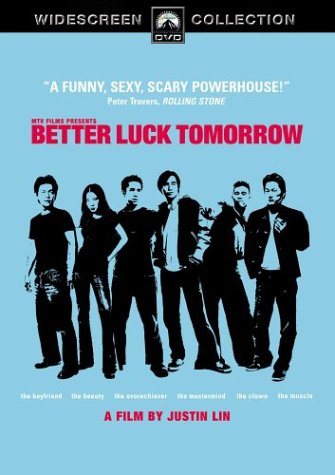
In “Talking About a Revolution (for a Digital Age),” New York Times film critic Manohla Dargis reflects on the evolution of American independent cinema in the wake of its “Hollywood hangover.” She contends that starting in 1993, the emergence of a “studio-indie infrastructure” transformed American independent cinema into a micro Hollywood industry that allowed some filmmakers to go “from Sundance to Scorsese.” However, she contends, this studio-indie film system has been “rocked by seismic changes – including downsized companies and emerging technologies” and giving way to a leaner, non-studio version of independent cinema. Dargis states that American independent cinema is being shaped by the rise of an interactive, digitally assisted “Do-it-yourself” (D.Y.I.) film culture. She points to how digital media forms of self-distribution and promotion have enhanced independent cinema’s important connection with audiences to create “a more complex, interactive and personalized relationship.” She states that the vitality of American independent cinema also depends on “the cultivation of younger patrons who are used to receiving much if not all of their entertainment at home and on hand-held devices” and making them into “active participants in the movie and its meaning.” For Dargis, the ebb of Hollywood’s role in independent cinema means that youthfulness and digital D.Y.I. interactivity are forming the conditions for American independent cinema’s next generation of iconic films and filmmakers.
Manohla Dargis’s article prompts me to think about filmmaker Justin Lin. Lin’s young film career is characteristic of the studio-indie age before its current malaise. Lin went to great lengths, personal sacrifice and debt to make his solo debut feature film, Better Luck Tomorrow, a film that premiered at the 2003 Sundance Film Festival to critical acclaim, a distribution deal with MTV Films and eventually, work as a director for studios such as Universal Pictures and Touchstone Pictures. My interest in Lin lies not in discussing his merits as a filmmaker. Rather, I am interested in how Lin’s trajectory embodies a set of digital age D.Y.I. generational tactics and strategies that emerged in a tradition of American cinema that has rarely found studio traction during independent cinema’s Hollywood bubble: Asian American cinema. After Lin made his Hollywood films, Annapolis (2006) and The Fast and the Furious: Tokyo Drift (2006), he returned to the world of the independent cinema to make the film, Finishing the Game (2007). The promotional campaigns for Better Luck Tomorrow and Finishing the Game embody the practices of digital age independent cinema culture discussed by Dargis, but Lin’s strategy is both unique and instructive, I suggest, for its form of Asian American political and cultural engagement. The strategies behind Lin’s films reveal aims that went beyond simply “breaking out” as most independent films aspire to do. Instead, Lin’s films became platforms for community organizing and engagement that sought to impact the meaning of Asian America in American film history and popular culture.
To be sure, both films are notable for how they critically explore race and representation and both took refuge in the lean, but creatively free world of independent cinema. Better Luck Tomorrow tells the story of a group of high school students who use their status as academic overachievers to mask and enable their illicit activities. Finishing the Game is a mockumentary about the search for an actor to replace Bruce Lee after his unexpected death during the filming of Game of Death (1978). When considered through the lens of Asian American representation, each film becomes a provocative commentary on stereotypes, genre and cinema. As non-studio productions, Lin maintained a creative commitment to an Asian American agenda that included, among other objectives, introducing a range of multi-dimensional Asian American characters and showing how Asian America is a commercially viable audience and source of cinema. This creative independence and ethical imperative became inter-articulated with the political and cultural tactics behind the digital D.Y.I. promotional campaigns for the films. I want to save a fuller discussion of Justin Lin for another time and focus on just some of the practices that emerged from Lin’s films. My tack in exploring this topic is to study selected new media activities as part of a larger example of Asian American community organizing and political engagement in the digital age. In this regard, Lin is a pioneering figure.
To Read the Rest of the Essay

by Konrad Ng
Flow TV
In “Talking About a Revolution (for a Digital Age),” New York Times film critic Manohla Dargis reflects on the evolution of American independent cinema in the wake of its “Hollywood hangover.” She contends that starting in 1993, the emergence of a “studio-indie infrastructure” transformed American independent cinema into a micro Hollywood industry that allowed some filmmakers to go “from Sundance to Scorsese.” However, she contends, this studio-indie film system has been “rocked by seismic changes – including downsized companies and emerging technologies” and giving way to a leaner, non-studio version of independent cinema. Dargis states that American independent cinema is being shaped by the rise of an interactive, digitally assisted “Do-it-yourself” (D.Y.I.) film culture. She points to how digital media forms of self-distribution and promotion have enhanced independent cinema’s important connection with audiences to create “a more complex, interactive and personalized relationship.” She states that the vitality of American independent cinema also depends on “the cultivation of younger patrons who are used to receiving much if not all of their entertainment at home and on hand-held devices” and making them into “active participants in the movie and its meaning.” For Dargis, the ebb of Hollywood’s role in independent cinema means that youthfulness and digital D.Y.I. interactivity are forming the conditions for American independent cinema’s next generation of iconic films and filmmakers.
Manohla Dargis’s article prompts me to think about filmmaker Justin Lin. Lin’s young film career is characteristic of the studio-indie age before its current malaise. Lin went to great lengths, personal sacrifice and debt to make his solo debut feature film, Better Luck Tomorrow, a film that premiered at the 2003 Sundance Film Festival to critical acclaim, a distribution deal with MTV Films and eventually, work as a director for studios such as Universal Pictures and Touchstone Pictures. My interest in Lin lies not in discussing his merits as a filmmaker. Rather, I am interested in how Lin’s trajectory embodies a set of digital age D.Y.I. generational tactics and strategies that emerged in a tradition of American cinema that has rarely found studio traction during independent cinema’s Hollywood bubble: Asian American cinema. After Lin made his Hollywood films, Annapolis (2006) and The Fast and the Furious: Tokyo Drift (2006), he returned to the world of the independent cinema to make the film, Finishing the Game (2007). The promotional campaigns for Better Luck Tomorrow and Finishing the Game embody the practices of digital age independent cinema culture discussed by Dargis, but Lin’s strategy is both unique and instructive, I suggest, for its form of Asian American political and cultural engagement. The strategies behind Lin’s films reveal aims that went beyond simply “breaking out” as most independent films aspire to do. Instead, Lin’s films became platforms for community organizing and engagement that sought to impact the meaning of Asian America in American film history and popular culture.
To be sure, both films are notable for how they critically explore race and representation and both took refuge in the lean, but creatively free world of independent cinema. Better Luck Tomorrow tells the story of a group of high school students who use their status as academic overachievers to mask and enable their illicit activities. Finishing the Game is a mockumentary about the search for an actor to replace Bruce Lee after his unexpected death during the filming of Game of Death (1978). When considered through the lens of Asian American representation, each film becomes a provocative commentary on stereotypes, genre and cinema. As non-studio productions, Lin maintained a creative commitment to an Asian American agenda that included, among other objectives, introducing a range of multi-dimensional Asian American characters and showing how Asian America is a commercially viable audience and source of cinema. This creative independence and ethical imperative became inter-articulated with the political and cultural tactics behind the digital D.Y.I. promotional campaigns for the films. I want to save a fuller discussion of Justin Lin for another time and focus on just some of the practices that emerged from Lin’s films. My tack in exploring this topic is to study selected new media activities as part of a larger example of Asian American community organizing and political engagement in the digital age. In this regard, Lin is a pioneering figure.
To Read the Rest of the Essay
H. Porter Abbott: Hayden White on the Etymology of "Narrative"
Hayden White pointed out in his book The Content of the Form that the word “narrative” goes back to the ancient Sanskrit “gna,” a root term that means “know,” and that it comes down to us through Latin words for both “knowing” (“gnarus”) and “telling” (“narro”). This etymology catches the two sides of narrative. It is a universal tool for knowing as well as telling, for absorbing knowledge as well as expressing it. This knowledge, moreover, is not necessarily static. Narrative can be, and often is, an instrument that provokes active thinking and helps us work through problems, even as we tell about them or hear them being told. But, finally, it is also important to note that narrative can be used to deliver false information; it can be used to keep us in darkness and even encourage us to do things we should not do. This too must be kept in mind. (10-11)
Abbott, H. Porter. The Cambridge Introduction to Literature. 2nd Edition. Cambridge UP, 2008.
Abbott, H. Porter. The Cambridge Introduction to Literature. 2nd Edition. Cambridge UP, 2008.
The Baptist Cowboy
(via my Mom :)
THE BAPTIST COWBOY
A cowboy, who just moved to Idaho from Texas , walks into a bar and orders three mugs of Bud. He sits in the back of the room, drinking a sip out of each one in turn. When he finishes them, he comes back to the bar and orders three more.
The bartender approaches and tells the cowboy, "You know, a mug goes flat after I draw it. It would taste better if you bought one at a time."
The cowboy replies, "Well, you see, I have two brothers. One is in Arizona , the other is in Colorado . When we all left our home in Texas , we promised that we'd drink this way to remember the days when we drank together. So I'm drinking one beer for each of my brothers and one for myself."
The bartender admits that this is a nice custom, and leaves it there.
The cowboy becomes a regular in the bar, and always drinks the same way. He orders three mugs and drinks them in turn
One day; he comes in and only orders two mugs. All the regulars take notice and fall silent. When he comes back to the bar for the second round, the bartender says, "I don't want to intrude on your grief, but I wanted to offer my condolences on your loss."
The cowboy looks quite puzzled for a moment, then light dawns in his eyes and he laughs.
"Oh, no, everybody's just fine," he explains, "It's just that my wife and I joined the Baptist Church and I had to quit drinking."
"Hasn't affected my brothers though.."
THE BAPTIST COWBOY
A cowboy, who just moved to Idaho from Texas , walks into a bar and orders three mugs of Bud. He sits in the back of the room, drinking a sip out of each one in turn. When he finishes them, he comes back to the bar and orders three more.
The bartender approaches and tells the cowboy, "You know, a mug goes flat after I draw it. It would taste better if you bought one at a time."
The cowboy replies, "Well, you see, I have two brothers. One is in Arizona , the other is in Colorado . When we all left our home in Texas , we promised that we'd drink this way to remember the days when we drank together. So I'm drinking one beer for each of my brothers and one for myself."
The bartender admits that this is a nice custom, and leaves it there.
The cowboy becomes a regular in the bar, and always drinks the same way. He orders three mugs and drinks them in turn
One day; he comes in and only orders two mugs. All the regulars take notice and fall silent. When he comes back to the bar for the second round, the bartender says, "I don't want to intrude on your grief, but I wanted to offer my condolences on your loss."
The cowboy looks quite puzzled for a moment, then light dawns in his eyes and he laughs.
"Oh, no, everybody's just fine," he explains, "It's just that my wife and I joined the Baptist Church and I had to quit drinking."
"Hasn't affected my brothers though.."
Intelligence Squared U.S.: Should The U.S. Scale Back Relations With Israel?
Should The U.S. Scale Back Relations With Israel?
Intelligence Squared U.S. (NPR)
The special relationship between the United States and Israel is based on a history of shared intelligence, military cooperation and a reverence for the Holy Land held by many in the United States.
But does America's close relationship with Israel come at too high a cost in the Muslim world? Should the U.S. consider stepping back from that relationship?
...
The debate, held Feb. 9, was moderated by John Donvan, correspondent for ABC News' Nightline. Those debating were:
FOR THE MOTION
Roger Cohen joined The New York Times in 1990. He was a foreign correspondent for more than a decade before becoming acting foreign editor on Sept. 11, 2001, and foreign editor six months later. Since 2004 he has written a column for the Times-owned International Herald Tribune, first for the news pages and then, since 2007, for the op-ed page. In 2009, he was named a columnist of the Times.
Rashid Khalidi is the Edward Said professor of Arab studies at Columbia University. He was president of the Middle East Studies Association and was an adviser to the Palestinian delegation to the 1991-93 Arab-Israeli peace negotiations. Khalidi is the author of six books, including Sowing Crisis: The Cold War and American Dominance in the Middle East, The Iron Cage: The Story of the Palestinian Struggle for Statehood and Palestinian Identity: The Construction of Modern National Consciousness.
AGAINST THE MOTION
Stuart Eizenstat has held a number of key senior positions in three U.S. administrations, including chief White House domestic policy adviser to President Jimmy Carter (1977-81); U.S. ambassador to the European Union, undersecretary of commerce for international trade, undersecretary of state for economic, business and agricultural affairs and deputy secretary of the Treasury in the Clinton administration (1993-2001). Eizenstat is currently a partner at the law firm Covington & Burling LLP.
Itamar Rabinovich is Israel's former ambassador to the United States and was chief negotiator with Syria in the mid-1990s. He is the incumbent of the Ettinger Chair of Contemporary Middle Eastern History of Tel Aviv University and recently completed an eight-year term as the president of the university, where he has been a faculty member since 1971. He is currently a distinguished global professor at New York University and visiting professor at the Kennedy School of Government at Harvard University.
To Listen to the Debate
Intelligence Squared U.S. (NPR)
The special relationship between the United States and Israel is based on a history of shared intelligence, military cooperation and a reverence for the Holy Land held by many in the United States.
But does America's close relationship with Israel come at too high a cost in the Muslim world? Should the U.S. consider stepping back from that relationship?
...
The debate, held Feb. 9, was moderated by John Donvan, correspondent for ABC News' Nightline. Those debating were:
FOR THE MOTION
Roger Cohen joined The New York Times in 1990. He was a foreign correspondent for more than a decade before becoming acting foreign editor on Sept. 11, 2001, and foreign editor six months later. Since 2004 he has written a column for the Times-owned International Herald Tribune, first for the news pages and then, since 2007, for the op-ed page. In 2009, he was named a columnist of the Times.
Rashid Khalidi is the Edward Said professor of Arab studies at Columbia University. He was president of the Middle East Studies Association and was an adviser to the Palestinian delegation to the 1991-93 Arab-Israeli peace negotiations. Khalidi is the author of six books, including Sowing Crisis: The Cold War and American Dominance in the Middle East, The Iron Cage: The Story of the Palestinian Struggle for Statehood and Palestinian Identity: The Construction of Modern National Consciousness.
AGAINST THE MOTION
Stuart Eizenstat has held a number of key senior positions in three U.S. administrations, including chief White House domestic policy adviser to President Jimmy Carter (1977-81); U.S. ambassador to the European Union, undersecretary of commerce for international trade, undersecretary of state for economic, business and agricultural affairs and deputy secretary of the Treasury in the Clinton administration (1993-2001). Eizenstat is currently a partner at the law firm Covington & Burling LLP.
Itamar Rabinovich is Israel's former ambassador to the United States and was chief negotiator with Syria in the mid-1990s. He is the incumbent of the Ettinger Chair of Contemporary Middle Eastern History of Tel Aviv University and recently completed an eight-year term as the president of the university, where he has been a faculty member since 1971. He is currently a distinguished global professor at New York University and visiting professor at the Kennedy School of Government at Harvard University.
To Listen to the Debate
Tuesday, March 30, 2010
Arielle Klagsbrun: Washington University (St. Louis) Students Protest Peabody and Tell Them to Get Out of their University
WashU Students Protest Peabody and Tell Them to Get Out of their University
by Arielle Klagsbrun
It's Getting Hot In Here
After months of working on-campus to rename the Consortium for C!#@n Coal Utilization, here at Washington University, we decided to take our concerns to the source: the corporate headquarters of Peabody Energy in downtown St. Louis. Since our flashmob against our administration’s coal-sponsored “America’s Energy Future” Conference, a unanimous Student Union Senate Resolution calling for the renaming of the Consortium and a meeting with the head honchos of the Consortium have not yet yielded our goal – to remove the misleading term “c!#@n coal” from the Consortium’s name – we decided to take our concerns downtown.
This past Friday, March 26, 2010, over fifty Washington University students and St. Louis community members gathered outside of Peabody Energy to protest the company’s business practices. WashU senior Todd Zimmer laid out our demands for the crowd and for Peabody executives. “We want an end to dirty energy,” he said, “we want an end to lies about c!#@n coal, … And we want an end to the relationship between Washington University and Peabody Energy.” Many St. Louis employees emerged from their office buildings to hear our chants of “C!#@n coal, hell no, that’s a lie, it’s got to go,” and “coal, coal, no solution, we are sick of your pollution,” accompanied by a drum set, full-size banners, and signs held by protesters.
While there were many police officers – both city and Peabody security – the protest remained wholly non-violent. We had expected the Peabody security contingent; earlier this week, after the protest was advertised on Facebook and in pamphlets, an anonymous Peabody employee leaked us an internal memo. This memo alerted employees about the protest, telling them to avoid the front entrance, and described us as “anti-everything” activists.
WashU senior Jennifer Marienau dispelled this notion. “We are not anti-everything,” she told the group in a speech, “We’re not anti-community. We’re not anti-solution. We’re for people power, not destructive power.” We students ended our peaceful demonstration with a die-in. With each iteration of the chant, “No joke, coal kills!” members of the protest went fell to the ground in a symbolic representation of the millions endangered by Peabody’s dirty practices and significant contributions to climate change.
Our protest was part of the People’s Settlement, a week of action highlighting the unethical behavior of corporations in St. Louis that continually to place profits over people. Peabody certainly qualifies as one of these unscrupulous corporations. This is a company whose subsidiaries engage in the destructive and dangerous practice of mountaintop removal. This is a company that has heavily funded efforts to block all climate legislation up to this point, and is now suing the EPA over its right to regulate greenhouse gases under the Clean Air Act. This is a company that has adamantly denied the reality of climate change, while developing their dishonest c!#@n coal marketing campaign. This is a company that recently blackmailed St. Louis, threatening to abandon the city and move its jobs elsewhere, unless it received $10 million for “office improvements.”
To Read the Rest of the Article
by Arielle Klagsbrun
It's Getting Hot In Here
After months of working on-campus to rename the Consortium for C!#@n Coal Utilization, here at Washington University, we decided to take our concerns to the source: the corporate headquarters of Peabody Energy in downtown St. Louis. Since our flashmob against our administration’s coal-sponsored “America’s Energy Future” Conference, a unanimous Student Union Senate Resolution calling for the renaming of the Consortium and a meeting with the head honchos of the Consortium have not yet yielded our goal – to remove the misleading term “c!#@n coal” from the Consortium’s name – we decided to take our concerns downtown.
This past Friday, March 26, 2010, over fifty Washington University students and St. Louis community members gathered outside of Peabody Energy to protest the company’s business practices. WashU senior Todd Zimmer laid out our demands for the crowd and for Peabody executives. “We want an end to dirty energy,” he said, “we want an end to lies about c!#@n coal, … And we want an end to the relationship between Washington University and Peabody Energy.” Many St. Louis employees emerged from their office buildings to hear our chants of “C!#@n coal, hell no, that’s a lie, it’s got to go,” and “coal, coal, no solution, we are sick of your pollution,” accompanied by a drum set, full-size banners, and signs held by protesters.
While there were many police officers – both city and Peabody security – the protest remained wholly non-violent. We had expected the Peabody security contingent; earlier this week, after the protest was advertised on Facebook and in pamphlets, an anonymous Peabody employee leaked us an internal memo. This memo alerted employees about the protest, telling them to avoid the front entrance, and described us as “anti-everything” activists.
WashU senior Jennifer Marienau dispelled this notion. “We are not anti-everything,” she told the group in a speech, “We’re not anti-community. We’re not anti-solution. We’re for people power, not destructive power.” We students ended our peaceful demonstration with a die-in. With each iteration of the chant, “No joke, coal kills!” members of the protest went fell to the ground in a symbolic representation of the millions endangered by Peabody’s dirty practices and significant contributions to climate change.
Our protest was part of the People’s Settlement, a week of action highlighting the unethical behavior of corporations in St. Louis that continually to place profits over people. Peabody certainly qualifies as one of these unscrupulous corporations. This is a company whose subsidiaries engage in the destructive and dangerous practice of mountaintop removal. This is a company that has heavily funded efforts to block all climate legislation up to this point, and is now suing the EPA over its right to regulate greenhouse gases under the Clean Air Act. This is a company that has adamantly denied the reality of climate change, while developing their dishonest c!#@n coal marketing campaign. This is a company that recently blackmailed St. Louis, threatening to abandon the city and move its jobs elsewhere, unless it received $10 million for “office improvements.”
To Read the Rest of the Article
"Resistance Cinema and Political Theory" (Carnegie Center for Literacy and Learning: May 2010)
I'm teaching a new film course "Resistance Cinema and Political Theory" (or vice versa) at the Carnegie Center for Literacy and Learning the month of May (Mondays 5:30-7:30) For more info and to register
Andy Kroll: JP Morgan’s War on Nature
JPMorgan’s War on Nature: How the Wall Street darling underwrites environmental Armageddon.
by Andy Kroll
Mother Jones
Unlike virtually all of its competitors, JPMorgan Chase steeled itself early for the collapse of the subprime market and emerged from the rubble of the global financial meltdown with both its balance sheet and reputation intact. But the storied firm stands alone among its Wall Street rivals in another area, too. JPMorgan backstops one of the most destructive mining practices in the world: mountaintop removal coal mining. And it continues to do so even as other major banks have cut ties to this practice.
"Chase is the single largest remaining player in this game," says Scott Edwards, advocacy director for the Waterkeeper Alliance, an environmental advocacy group comprised of lawyers, scientists, and activists, among others. "They just absolutely refuse to take responsibility for their role in this absolutely devastating industry."
Mountaintop removal (MTR) mining, focused in Appalachian states like West Virginia, Tennessee, and Kentucky, involves deforesting huge swaths of land and blasting the summits off of mountains to expose the black veins of coal underneath. The waste and rubble from the demolition is then dumped into nearby rivers and streams, burying local water sources in toxic byproducts, choking off tributaries that feed into larger rivers, and wiping out plants and wildlife, according to numerous scientific studies. Despite the mining industry's claims, there are no successful ways to mitigate the effects of MTR, according to Margaret Palmer of the University of Maryland Center for Environmental Science. The effects on the nearby environment, she says, are long lasting and often irreversible.
The impact of MTR mining is global, too. When mining companies deforest a mountaintop before demolition, they engage in a practice that overall contributes 25 to 30 percent of greenhouse gas emissions each year. Between 1992 and 2012, MTR will have leveled 7 percent of Appalachian forests in areas studied by the Environmental Protection Agency (EPA).
Nonetheless, over the past 17 years, JPMorgan Chase has helped to underwrite nearly 20 bond or loan deals, worth a combined $8.5 trillion, for some of the biggest players in the MTR mining business, according to data from Bloomberg. Other large banks have either halted financing companies engaging in the practice outright or signaled their intent to do so. In December 2008, for instance, Bank of America publicly announced plans to "phase out financing of companies whose predominant method of extracting coal is through mountain top removal." Wells Fargo has cut ties with coal giant Massey Energy. And a Credit Suisse official says the bank has a "global mining policy" that ensures "we explicitly do not finance the extraction of coal in a mountaintop removal setting." But JPMorgan continues to back the practice.
By underwriting MTR, JPMorgan ties itself to some of the nation's biggest polluters. Take Massey Energy, which leads the nation in MTR mining. In 2008, the company extracted more than 21 million tons of coal using mountaintop removal mining, according to opensourcecoal.org, an online database for coal production statistics. That same year, JPMorgan acted as lead manager on a $690 million bond offering by Massey, according to financial records.
Over the past decade, Massey has mined nearly 190 million tons of coal in Appalachia using mountaintop removal, according to opensourcecoal.org—and it has essentially disregarded the law and surrounding landscape to do so. Between 2000 and 2006, Massey violated the Clean Water Act more than 4,500 times by dumping sediment and leftover mining waste into rivers in Kentucky and West Virginia, the EPA said in 2008. (Environmental groups say the EPA's tally is a lowball figure; they estimate that the true number of violations is more than 12,000.) As a result of these breaches of the law, the company agreed to pay the EPA a $20 million settlement.
To Read the Rest of the Article
by Andy Kroll
Mother Jones
Unlike virtually all of its competitors, JPMorgan Chase steeled itself early for the collapse of the subprime market and emerged from the rubble of the global financial meltdown with both its balance sheet and reputation intact. But the storied firm stands alone among its Wall Street rivals in another area, too. JPMorgan backstops one of the most destructive mining practices in the world: mountaintop removal coal mining. And it continues to do so even as other major banks have cut ties to this practice.
"Chase is the single largest remaining player in this game," says Scott Edwards, advocacy director for the Waterkeeper Alliance, an environmental advocacy group comprised of lawyers, scientists, and activists, among others. "They just absolutely refuse to take responsibility for their role in this absolutely devastating industry."
Mountaintop removal (MTR) mining, focused in Appalachian states like West Virginia, Tennessee, and Kentucky, involves deforesting huge swaths of land and blasting the summits off of mountains to expose the black veins of coal underneath. The waste and rubble from the demolition is then dumped into nearby rivers and streams, burying local water sources in toxic byproducts, choking off tributaries that feed into larger rivers, and wiping out plants and wildlife, according to numerous scientific studies. Despite the mining industry's claims, there are no successful ways to mitigate the effects of MTR, according to Margaret Palmer of the University of Maryland Center for Environmental Science. The effects on the nearby environment, she says, are long lasting and often irreversible.
The impact of MTR mining is global, too. When mining companies deforest a mountaintop before demolition, they engage in a practice that overall contributes 25 to 30 percent of greenhouse gas emissions each year. Between 1992 and 2012, MTR will have leveled 7 percent of Appalachian forests in areas studied by the Environmental Protection Agency (EPA).
Nonetheless, over the past 17 years, JPMorgan Chase has helped to underwrite nearly 20 bond or loan deals, worth a combined $8.5 trillion, for some of the biggest players in the MTR mining business, according to data from Bloomberg. Other large banks have either halted financing companies engaging in the practice outright or signaled their intent to do so. In December 2008, for instance, Bank of America publicly announced plans to "phase out financing of companies whose predominant method of extracting coal is through mountain top removal." Wells Fargo has cut ties with coal giant Massey Energy. And a Credit Suisse official says the bank has a "global mining policy" that ensures "we explicitly do not finance the extraction of coal in a mountaintop removal setting." But JPMorgan continues to back the practice.
By underwriting MTR, JPMorgan ties itself to some of the nation's biggest polluters. Take Massey Energy, which leads the nation in MTR mining. In 2008, the company extracted more than 21 million tons of coal using mountaintop removal mining, according to opensourcecoal.org, an online database for coal production statistics. That same year, JPMorgan acted as lead manager on a $690 million bond offering by Massey, according to financial records.
Over the past decade, Massey has mined nearly 190 million tons of coal in Appalachia using mountaintop removal, according to opensourcecoal.org—and it has essentially disregarded the law and surrounding landscape to do so. Between 2000 and 2006, Massey violated the Clean Water Act more than 4,500 times by dumping sediment and leftover mining waste into rivers in Kentucky and West Virginia, the EPA said in 2008. (Environmental groups say the EPA's tally is a lowball figure; they estimate that the true number of violations is more than 12,000.) As a result of these breaches of the law, the company agreed to pay the EPA a $20 million settlement.
To Read the Rest of the Article
Keith Halladay: The Present Ammunition Shortage -- An Observation
The present ammunition shortage: an observation
By Keith Halladay
North of Center
The CCI 22 Long Rifle “Stinger” round leaves a rifle muzzle, according to the manufacturer, at 1640 feet per second, making it one of the fastest 22-caliber bullets available. Since a good part of the fun of shooting is trying new loads, in early January I took a bit of Christmas money, logged into my account at the Cabela’s online store, and began to place an order for 500 rounds of the stuff.
As I clicked through the checkout screens a message appeared to inform me that the Stingers were on backorder, and that Cabela’s was expecting a fresh shipment on March 15. “Eh,” I thought, “don’t need it now,” and I placed the order anyway.
The appointed day arrived, and while slogging through the morning email I logged back in to Cabela’s to see if my ammo had been shipped. It had not. In fact, a new message had replaced the old one: “This item is backordered. Estimate 8-9 weeks for delivery.” Confused, I called the company and spoke to a representative who told me that indeed the new shipment had arrived, but that it was of insufficient quantity to satisfy all the outstanding orders.
Now, this is 22 ammo. It’s fancy and comes in a hard plastic box instead of the mini-milk jug of bulk plinking rounds, but it’s still 22 ammo. Some rifle cartridges are tough to find, sure, but these rounds are produced by the billions, and yet were subject to multiple backorders at not only Cabela’s but all the major online retailers.
So the next day I called my gun-nut friend, who stays current with paramilitary-oriented web sites and those sorts of things, and asked, exasperated, “who in Great Caesar’s ghost is buying up all the 22 ammo?”
He chortled. “It’s Obama, man! The rednecks are buying up all the ammunition because they think he’s gonna take their guns!”
“But it’s 22 ammo,” I cried. “What do they think they’re gonna do with a bleeping 22 if they come in with tanks and helicopters?”
“I think they think that they have to get it while they still can,” he replied. “It happens every time a Democrat is elected—the rednecks buy up all the ammo and there are massive shortages. That’s why prices are so high too.”
Now, it should be noted that there are competing theories about the real cause of the present shortage. One might think, for instance, that the protracted wars in Iraq and Afghanistan have hampered some manufacturers’ abilities to provide for both military and retail consumers. Yet this cannot be the case, for the two rifle calibers most used by the U.S. armed forces, the 5.56 and 7.62 NATO cartridges, are among the easiest to find both online and in brick-and-mortar outlets. Another possibility, one especially popular among weapon hoarders, is that the government is deliberately restricting the manufacture and sale of ammunition and cartridge primers (the cap-like thing on the end of a cartridge that, when struck by the gun’s hammer, detonates the gunpowder). The idea here is that Obama (and the United Nations, in most versions), knowing outright firearms confiscation would be a tough go, figure that if there’s no ammo, then mission accomplished.
An intriguing argument to be sure, but one that, like most nutty right-wing conspiracy theories, doesn’t hold water. That we’ve been in the midst of a nationwide shortage of most types of ammunition is clear; for months the shelves at the local Wal-Marts have been nearly barren of anything but a few scattered boxes of the less-popular calibers. But it’s no conspiracy—just a whole bunch of folks buying a whole bunch of bullets, and manufacturers are struggling to keep pace. The latest Cabela’s catalog carries a bold-print notice about “unprecedented demand” and “limited availability.” And Hornady, another ammunition manufacturer, on its web site claims that they are “breaking their own production records in an attempt to keep up with customer demand.”
Link to the Rest of the Article
By Keith Halladay
North of Center
The CCI 22 Long Rifle “Stinger” round leaves a rifle muzzle, according to the manufacturer, at 1640 feet per second, making it one of the fastest 22-caliber bullets available. Since a good part of the fun of shooting is trying new loads, in early January I took a bit of Christmas money, logged into my account at the Cabela’s online store, and began to place an order for 500 rounds of the stuff.
As I clicked through the checkout screens a message appeared to inform me that the Stingers were on backorder, and that Cabela’s was expecting a fresh shipment on March 15. “Eh,” I thought, “don’t need it now,” and I placed the order anyway.
The appointed day arrived, and while slogging through the morning email I logged back in to Cabela’s to see if my ammo had been shipped. It had not. In fact, a new message had replaced the old one: “This item is backordered. Estimate 8-9 weeks for delivery.” Confused, I called the company and spoke to a representative who told me that indeed the new shipment had arrived, but that it was of insufficient quantity to satisfy all the outstanding orders.
Now, this is 22 ammo. It’s fancy and comes in a hard plastic box instead of the mini-milk jug of bulk plinking rounds, but it’s still 22 ammo. Some rifle cartridges are tough to find, sure, but these rounds are produced by the billions, and yet were subject to multiple backorders at not only Cabela’s but all the major online retailers.
So the next day I called my gun-nut friend, who stays current with paramilitary-oriented web sites and those sorts of things, and asked, exasperated, “who in Great Caesar’s ghost is buying up all the 22 ammo?”
He chortled. “It’s Obama, man! The rednecks are buying up all the ammunition because they think he’s gonna take their guns!”
“But it’s 22 ammo,” I cried. “What do they think they’re gonna do with a bleeping 22 if they come in with tanks and helicopters?”
“I think they think that they have to get it while they still can,” he replied. “It happens every time a Democrat is elected—the rednecks buy up all the ammo and there are massive shortages. That’s why prices are so high too.”
Now, it should be noted that there are competing theories about the real cause of the present shortage. One might think, for instance, that the protracted wars in Iraq and Afghanistan have hampered some manufacturers’ abilities to provide for both military and retail consumers. Yet this cannot be the case, for the two rifle calibers most used by the U.S. armed forces, the 5.56 and 7.62 NATO cartridges, are among the easiest to find both online and in brick-and-mortar outlets. Another possibility, one especially popular among weapon hoarders, is that the government is deliberately restricting the manufacture and sale of ammunition and cartridge primers (the cap-like thing on the end of a cartridge that, when struck by the gun’s hammer, detonates the gunpowder). The idea here is that Obama (and the United Nations, in most versions), knowing outright firearms confiscation would be a tough go, figure that if there’s no ammo, then mission accomplished.
An intriguing argument to be sure, but one that, like most nutty right-wing conspiracy theories, doesn’t hold water. That we’ve been in the midst of a nationwide shortage of most types of ammunition is clear; for months the shelves at the local Wal-Marts have been nearly barren of anything but a few scattered boxes of the less-popular calibers. But it’s no conspiracy—just a whole bunch of folks buying a whole bunch of bullets, and manufacturers are struggling to keep pace. The latest Cabela’s catalog carries a bold-print notice about “unprecedented demand” and “limited availability.” And Hornady, another ammunition manufacturer, on its web site claims that they are “breaking their own production records in an attempt to keep up with customer demand.”
Link to the Rest of the Article
Mike Davis: Labor War in the Mojave Desert
Labor War in the Mojave
By Mike Davis
The Nation
The biggest hole in California, with the exception of the current state budget, is Rio Tinto's huge open-pit mine at the town of Boron, near Edwards Air Force Base, eighty miles northeast of Los Angeles.
Seen from Google Earth, it is easy to imagine that the 700-foot-deep crater was blasted out of the Mojave Desert by an errant asteroid or comet. From the vantage point of Highway 58, however, the landscape is enigmatic: a mile-long rampart of ochre earth and gray mudstone, terminating at what looks like a giant chemical refinery.
At night, when a driver's mind is most prone to legends of the desert, the complex's intense illumination is startling, even slightly extraterrestrial, like the sinister off-world mining colony in Aliens.
Terri Judd's labor owns part of this eerie landscape--or rather its void. She's a third-generation borax miner, as deeply rooted in the high desert as one of the native Joshua trees. Every working morning for the past thirteen years, she has bundled her long red hair under a hard hat, climbed up the ladder of a giant Le Tourneau wheel loader and turned on its 1,600-horsepower Detroit Diesel engine. Her air-conditioned cab perches almost treetop height above custom-made, twelve-foot-high tires that cost $30,000 each. She operates this leviathan with delicate manipulations of two joysticks, more high-skill video game than Mad Max.
In a regular twelve-and-a-half-hour shift, she ceaselessly repeats the same mechanical calisthenic: lowering her twenty-foot-wide bucket, deftly scooping up twenty-five to thirty tons of borax ore, then delivering the load to one of the mine's plants to be made into boric acid or granulated for eventual use in dozens of industrial applications, from fiberglass surfboards to HD display screens.
Each year 1 million tons of borax products are fed into hopper cars (800 of which are permanently assigned to the mine) and hauled to the LA harbor for shipment to China and other industrializing countries hungry for the caustic residue of the Mojave's ancient lakes. The Boron pit, which replaced an underground mine, produces almost half the world's supply of refined borates.
Strip-mining the Mojave may not be everyone's cup of tea, but Terri--a combat veteran of Operation Desert Storm and a single mom--flat-out loves her job. "What can I say? We get to play with the big toys. I guess I was always a tomboy. I preferred Tonkas to Barbies, socket wrenches to dollhouses."
But she doesn't play alone: Big Brother is looking over her shoulder, evaluating her performance. "In effect, the boss rides with me. The GPS in my loader can be monitored not only from the plant but from Rio Tinto's US headquarters in Denver, or, for that matter, from the global head office in London."
Peeping Toms, however, don't normally perturb Terri. "There are no slackers in the pit. Our productivity is sky-high because borax mining is our family history." Indeed, a Boron workforce shrunk to less than 40 percent of its 1980 size produces record outputs despite a rapidly aging plant; an ornery, dipping ore body; and an increasingly remote and hostile management.
I
Terri acknowledges that her devotion to the mine has been an act of unrequited love. In last year's contract negotiations, Rio Tinto (the British-Australian multinational acquired its Boron facility, U.S. Borax, in 1968 and renamed it Rio Tinto Borax) stunned members of the International Longshore and Warehouse Union, ILWU, Local 30 (Boron), by demanding abolition of the contractually enshrined seniority system and the surrender of any worker voice in the labor process.
According to Dean Gehring, the latest in a succession of recent mine managers, international competition compels a drastic switch to "high-performance teams that have the flexibility to do many different jobs, and we need to reward and promote our top performers. The old contract doesn't allow us to do that."
The company wants a contract that would allow it to capriciously promote or demote; to outsource union jobs; to convert full-time to part-time positions with little or no benefits; to reorganize shift schedules without warning; to eliminate existing work rules; to cut holidays, sick leave and pension payments; to impose involuntary overtime; and to heavily penalize the union if workers file grievances against the company with the National Labor Relations Board.
Rio Tinto, in essence, claims the right to rule by divine whim, to blatantly discriminate against and even fire employees for felonies like "failing to have or maintain satisfactory inter-personal relationships with Company personnel, client personnel, contractor, and visitors."
"The company's proposal," union negotiators emphasize, "would destroy our union, lower our living standards, and give Borax total control over our jobs." On January 30, Local 30 members unanimously rejected the concessions demanded by Rio Tinto.
The company deadline expired the next morning, when Terri Judd set off for work as usual with her lunchbox and thermos. At the locked front gate she and other day-shift workers encountered a phalanx of nervous Kern County sheriff's deputies in full riot gear. Inside the plant, an elite "strike security team" hired by Rio Tinto had taken control of operations.
Delaware-based J.R. Gettier & Associates brags that it is the Home Depot of unionbusting, a one-stop source for security planners, armed guards, legal experts, industrial spies and, most important, highly skilled replacement workers. It even has staff who can operate Terri's giant loader.
The Gettier mercenaries wore sneers and dark glasses as they pushed their convoy past a crowd of angry Local 30 members. "Being locked out," says Terri, "is different from going on strike. Initially there's disbelief that the company is actually serious about booting you out the door. Hey, my granddad worked in this mine. But then you see that caravan of scabs coming to take your jobs, and the betrayal cuts like a knife in your heart."
To Read the Rest of the Article
More resources:
Democracy Now: Labor Struggle in Boron: Union Workers in CA Town Locked Out by Mining Giant Rio Tinto After Stalled Contract Talks
By Mike Davis
The Nation
The biggest hole in California, with the exception of the current state budget, is Rio Tinto's huge open-pit mine at the town of Boron, near Edwards Air Force Base, eighty miles northeast of Los Angeles.
Seen from Google Earth, it is easy to imagine that the 700-foot-deep crater was blasted out of the Mojave Desert by an errant asteroid or comet. From the vantage point of Highway 58, however, the landscape is enigmatic: a mile-long rampart of ochre earth and gray mudstone, terminating at what looks like a giant chemical refinery.
At night, when a driver's mind is most prone to legends of the desert, the complex's intense illumination is startling, even slightly extraterrestrial, like the sinister off-world mining colony in Aliens.
Terri Judd's labor owns part of this eerie landscape--or rather its void. She's a third-generation borax miner, as deeply rooted in the high desert as one of the native Joshua trees. Every working morning for the past thirteen years, she has bundled her long red hair under a hard hat, climbed up the ladder of a giant Le Tourneau wheel loader and turned on its 1,600-horsepower Detroit Diesel engine. Her air-conditioned cab perches almost treetop height above custom-made, twelve-foot-high tires that cost $30,000 each. She operates this leviathan with delicate manipulations of two joysticks, more high-skill video game than Mad Max.
In a regular twelve-and-a-half-hour shift, she ceaselessly repeats the same mechanical calisthenic: lowering her twenty-foot-wide bucket, deftly scooping up twenty-five to thirty tons of borax ore, then delivering the load to one of the mine's plants to be made into boric acid or granulated for eventual use in dozens of industrial applications, from fiberglass surfboards to HD display screens.
Each year 1 million tons of borax products are fed into hopper cars (800 of which are permanently assigned to the mine) and hauled to the LA harbor for shipment to China and other industrializing countries hungry for the caustic residue of the Mojave's ancient lakes. The Boron pit, which replaced an underground mine, produces almost half the world's supply of refined borates.
Strip-mining the Mojave may not be everyone's cup of tea, but Terri--a combat veteran of Operation Desert Storm and a single mom--flat-out loves her job. "What can I say? We get to play with the big toys. I guess I was always a tomboy. I preferred Tonkas to Barbies, socket wrenches to dollhouses."
But she doesn't play alone: Big Brother is looking over her shoulder, evaluating her performance. "In effect, the boss rides with me. The GPS in my loader can be monitored not only from the plant but from Rio Tinto's US headquarters in Denver, or, for that matter, from the global head office in London."
Peeping Toms, however, don't normally perturb Terri. "There are no slackers in the pit. Our productivity is sky-high because borax mining is our family history." Indeed, a Boron workforce shrunk to less than 40 percent of its 1980 size produces record outputs despite a rapidly aging plant; an ornery, dipping ore body; and an increasingly remote and hostile management.
I
Terri acknowledges that her devotion to the mine has been an act of unrequited love. In last year's contract negotiations, Rio Tinto (the British-Australian multinational acquired its Boron facility, U.S. Borax, in 1968 and renamed it Rio Tinto Borax) stunned members of the International Longshore and Warehouse Union, ILWU, Local 30 (Boron), by demanding abolition of the contractually enshrined seniority system and the surrender of any worker voice in the labor process.
According to Dean Gehring, the latest in a succession of recent mine managers, international competition compels a drastic switch to "high-performance teams that have the flexibility to do many different jobs, and we need to reward and promote our top performers. The old contract doesn't allow us to do that."
The company wants a contract that would allow it to capriciously promote or demote; to outsource union jobs; to convert full-time to part-time positions with little or no benefits; to reorganize shift schedules without warning; to eliminate existing work rules; to cut holidays, sick leave and pension payments; to impose involuntary overtime; and to heavily penalize the union if workers file grievances against the company with the National Labor Relations Board.
Rio Tinto, in essence, claims the right to rule by divine whim, to blatantly discriminate against and even fire employees for felonies like "failing to have or maintain satisfactory inter-personal relationships with Company personnel, client personnel, contractor, and visitors."
"The company's proposal," union negotiators emphasize, "would destroy our union, lower our living standards, and give Borax total control over our jobs." On January 30, Local 30 members unanimously rejected the concessions demanded by Rio Tinto.
The company deadline expired the next morning, when Terri Judd set off for work as usual with her lunchbox and thermos. At the locked front gate she and other day-shift workers encountered a phalanx of nervous Kern County sheriff's deputies in full riot gear. Inside the plant, an elite "strike security team" hired by Rio Tinto had taken control of operations.
Delaware-based J.R. Gettier & Associates brags that it is the Home Depot of unionbusting, a one-stop source for security planners, armed guards, legal experts, industrial spies and, most important, highly skilled replacement workers. It even has staff who can operate Terri's giant loader.
The Gettier mercenaries wore sneers and dark glasses as they pushed their convoy past a crowd of angry Local 30 members. "Being locked out," says Terri, "is different from going on strike. Initially there's disbelief that the company is actually serious about booting you out the door. Hey, my granddad worked in this mine. But then you see that caravan of scabs coming to take your jobs, and the betrayal cuts like a knife in your heart."
To Read the Rest of the Article
More resources:
Democracy Now: Labor Struggle in Boron: Union Workers in CA Town Locked Out by Mining Giant Rio Tinto After Stalled Contract Talks
Monday, March 29, 2010
Sublett: Why We're Winning
Why We’re Winning.
By Sublett of the BAAM Newsletter
Decentralize TV
A curious property evident in the discussion of insurrection in the United States is that it gets more respect the further it occurs from home. Anarchists who would never dream of complaining that the Thessaloniki Food not Bombs is being neglected while its members amuse themselves burning banks, who could never conceive of suggesting that the Somali pirates stop seizing ships for ransom in order to start a bike repair collective, have no problem criticizing their own friends and comrades for shortchanging local projects to attend semi-annual mass mobilizations. This is a shame, because a look at the broader picture reveals that summit demos are taking an ongoing toll on the ruling class, even when they are tactically unsuccessful.
Just for starters, any city hosting a summit has to impose de facto martial law for the duration of the meetings. Miles-long steel security fences, bag searches on the subway, black helicopters in the sky, armor-clad riot cops on every corner, among other measures, make a mockery of the myth of “civil rights.” By employing such repressive tactics just to keep a few summit delegates from being confronted by those they claim to be helping, authority reveals its true nature, undisguised by the usual lies and propaganda. People who claim that we should abandon summit protests because we can never replicate the WTO (World Trade Organization) riots in Seattle are missing this point. While it’s true that the cops will never again allow themselves to be defeated on the street the way they were in Seattle, the things they have to do to win in the short term erode the perceived legitimacy of the entire ruling system in the medium term. If all they had to do was stop the protests they could just shoot the protesters. But since they must also maintain the illusion of freedom of assembly and freedom of speech, their problem is complicated immensely. They have no good options, so it’s not a matter of whether we will win, only of how.
Their situation becomes all the worse when, after turning the host city into a militarized encampment for a week, the cops can’t even stop a few kids in black from breaking windows. The resulting frustration often leads them to attack and arrest defenseless groups and individuals who have minimal connection to the protests, further compounding their problems when the videos hit Youtube. Then to justify their own brutality, the cops make an example of a handful of protest organizers by hitting them with ridiculously inflated charges, usually for actions that most people would consider perfectly innocuous. As an added bonus, the lawsuits generated by blatantly unconstitutional arrests and searches strain city budgets, consume prosecutors’ time, and extend their PR nightmare. For authoritarians, the only thing worse than appearing brutal and repressive is appearing brutal and repressive and ineffectual. Cops, by their nature, will fall into this trap every time, as long as we show up and set it for them.
While not every big demo conforms to the above pattern exactly, the dynamic was illustrated to perfection at the G-20 protests in Pittsburgh September 24 and 25. The city imported 3,000 outside cops and 2,500 National Guard troops to augment its meager force of 877. In addition, the Pittsburgh municipal government launched a fear mongering campaign aimed at demonizing protesters, only to see it blow up in their faces when many businesses and schools drank a little too much Kool-Aid and shut down and boarded up for the week rather than face the black-clad hordes. The army of cops kept an unpermitted march of at most 2,000 from getting anywhere near the convention on the 24th, but couldn’t stop protesters from escaping back eastward and damaging stores in the Shadyside shopping district. Later that night, a Bash Back! march broke more windows in Oakland, even attacking some in a police substation. Despite being substantially outnumbered, both actions sustained minimal arrests. Unlike their counterparts at the Republican National Convention (RNC) in St. Paul, Minnesota in September 2008, Pittsburgh cops didn’t retaliate by attacking permitted events. They did, however, beat, teargas and arrest protesters at an impromptu rally against police brutality, of all things, including a number of University of Pittsburgh students who were only hanging out watching. While this sort of behavior is routinely ignored in low-income communities of color, it generated an enormous amount of bad publicity for the police when applied to majority-white college students with video cameras.
And sure enough, as if following a script, the Pennsylvania cops found innocent people to scapegoat for their own incompetence. They arrested two members of the Tin Can Comms Collective, Elliot Madison and Michael Wallschlaeger, for broadcasting updates about police activity over Twitter. The two are charged, as of this writing, with hindering apprehension or prosecution, criminal use of a communications facility, and possession of instruments of crime. A week later, Madison’s home in New York was raided by the FBI, who seized stuffed animals, Buffy the Vampire Slayer DVDs, and a picture of Curious George, among other incriminating items. The feds then tied Obama even more tightly to the case by launching a grand jury investigation of Madison and his wife. Madison and Wallschlaeger’s case is reminiscent of that of the RNC 8, eight anarchists who are being prosecuted under the Minnesota Patriot Act for helping organize protests against the RNC. But unlike the RNC 8, whose case has only been covered heavily in Minnesota, Madison and Wallschlaeger’s arrests were featured prominently nationwide. Jokes about “Twerrorism” began circulating almost immediately after their arrests, and many commentators pointed out the hypocrisy of the Obama administration supporting the use of Twitter by protesters in Iran while repressing the same thing in Pittsburgh. The incident tarnished Obama’s reputation as a supporter of civil rights, and future developments in the case will only exacerbate that problem.
But wait, there’s more. The Daily Show covered the anarchist protesters at the G-20—twice, no less. John Oliver’s “Tea Partiers Advise G20 Protesters” segment was a particularly biting attack on the disparity in police response between right-wing and left-wing protests. And, lest anybody be tempted to dismiss The Daily Show as mere comedy, a 2007 University of Louisiana study found it to contain as much, if not more, actual news than the average television news program, and at least one poll has shown Jon Stewart to be the United States’ most trusted newscaster. Not to mention he’s a lot funnier than Walter Cronkite ever was.
To Read the Rest of the Essay
By Sublett of the BAAM Newsletter
Decentralize TV
A curious property evident in the discussion of insurrection in the United States is that it gets more respect the further it occurs from home. Anarchists who would never dream of complaining that the Thessaloniki Food not Bombs is being neglected while its members amuse themselves burning banks, who could never conceive of suggesting that the Somali pirates stop seizing ships for ransom in order to start a bike repair collective, have no problem criticizing their own friends and comrades for shortchanging local projects to attend semi-annual mass mobilizations. This is a shame, because a look at the broader picture reveals that summit demos are taking an ongoing toll on the ruling class, even when they are tactically unsuccessful.
Just for starters, any city hosting a summit has to impose de facto martial law for the duration of the meetings. Miles-long steel security fences, bag searches on the subway, black helicopters in the sky, armor-clad riot cops on every corner, among other measures, make a mockery of the myth of “civil rights.” By employing such repressive tactics just to keep a few summit delegates from being confronted by those they claim to be helping, authority reveals its true nature, undisguised by the usual lies and propaganda. People who claim that we should abandon summit protests because we can never replicate the WTO (World Trade Organization) riots in Seattle are missing this point. While it’s true that the cops will never again allow themselves to be defeated on the street the way they were in Seattle, the things they have to do to win in the short term erode the perceived legitimacy of the entire ruling system in the medium term. If all they had to do was stop the protests they could just shoot the protesters. But since they must also maintain the illusion of freedom of assembly and freedom of speech, their problem is complicated immensely. They have no good options, so it’s not a matter of whether we will win, only of how.
Their situation becomes all the worse when, after turning the host city into a militarized encampment for a week, the cops can’t even stop a few kids in black from breaking windows. The resulting frustration often leads them to attack and arrest defenseless groups and individuals who have minimal connection to the protests, further compounding their problems when the videos hit Youtube. Then to justify their own brutality, the cops make an example of a handful of protest organizers by hitting them with ridiculously inflated charges, usually for actions that most people would consider perfectly innocuous. As an added bonus, the lawsuits generated by blatantly unconstitutional arrests and searches strain city budgets, consume prosecutors’ time, and extend their PR nightmare. For authoritarians, the only thing worse than appearing brutal and repressive is appearing brutal and repressive and ineffectual. Cops, by their nature, will fall into this trap every time, as long as we show up and set it for them.
While not every big demo conforms to the above pattern exactly, the dynamic was illustrated to perfection at the G-20 protests in Pittsburgh September 24 and 25. The city imported 3,000 outside cops and 2,500 National Guard troops to augment its meager force of 877. In addition, the Pittsburgh municipal government launched a fear mongering campaign aimed at demonizing protesters, only to see it blow up in their faces when many businesses and schools drank a little too much Kool-Aid and shut down and boarded up for the week rather than face the black-clad hordes. The army of cops kept an unpermitted march of at most 2,000 from getting anywhere near the convention on the 24th, but couldn’t stop protesters from escaping back eastward and damaging stores in the Shadyside shopping district. Later that night, a Bash Back! march broke more windows in Oakland, even attacking some in a police substation. Despite being substantially outnumbered, both actions sustained minimal arrests. Unlike their counterparts at the Republican National Convention (RNC) in St. Paul, Minnesota in September 2008, Pittsburgh cops didn’t retaliate by attacking permitted events. They did, however, beat, teargas and arrest protesters at an impromptu rally against police brutality, of all things, including a number of University of Pittsburgh students who were only hanging out watching. While this sort of behavior is routinely ignored in low-income communities of color, it generated an enormous amount of bad publicity for the police when applied to majority-white college students with video cameras.
And sure enough, as if following a script, the Pennsylvania cops found innocent people to scapegoat for their own incompetence. They arrested two members of the Tin Can Comms Collective, Elliot Madison and Michael Wallschlaeger, for broadcasting updates about police activity over Twitter. The two are charged, as of this writing, with hindering apprehension or prosecution, criminal use of a communications facility, and possession of instruments of crime. A week later, Madison’s home in New York was raided by the FBI, who seized stuffed animals, Buffy the Vampire Slayer DVDs, and a picture of Curious George, among other incriminating items. The feds then tied Obama even more tightly to the case by launching a grand jury investigation of Madison and his wife. Madison and Wallschlaeger’s case is reminiscent of that of the RNC 8, eight anarchists who are being prosecuted under the Minnesota Patriot Act for helping organize protests against the RNC. But unlike the RNC 8, whose case has only been covered heavily in Minnesota, Madison and Wallschlaeger’s arrests were featured prominently nationwide. Jokes about “Twerrorism” began circulating almost immediately after their arrests, and many commentators pointed out the hypocrisy of the Obama administration supporting the use of Twitter by protesters in Iran while repressing the same thing in Pittsburgh. The incident tarnished Obama’s reputation as a supporter of civil rights, and future developments in the case will only exacerbate that problem.
But wait, there’s more. The Daily Show covered the anarchist protesters at the G-20—twice, no less. John Oliver’s “Tea Partiers Advise G20 Protesters” segment was a particularly biting attack on the disparity in police response between right-wing and left-wing protests. And, lest anybody be tempted to dismiss The Daily Show as mere comedy, a 2007 University of Louisiana study found it to contain as much, if not more, actual news than the average television news program, and at least one poll has shown Jon Stewart to be the United States’ most trusted newscaster. Not to mention he’s a lot funnier than Walter Cronkite ever was.
To Read the Rest of the Essay
Doyle Canning and Patrick Reinsborough: Changing the Story -- Story-Based Strategies for Direct Action Design
Changing the Story: Story-Based Strategies for Direct Action Design
By Doyle Canning and Patrick Reinsborough, smartMeme Strategy and Training Project
In the Middle of the Whirlwind
Direct Action as Storytelling
Direct action is an age-old, common sense method of communal problem solving. Direct action is (quite simply) people organizing ourselves to make the changes we want to see in the world – whether it’s a community putting up their own radio transmitter to give voice to local residents, or mass civil disobedience to shut down a corporate war profiteer. Direct action is a good catch all term for any action where people step out of their scripted roles (be it as consumers, “good citizens” or apathetic spectators) and challenge the dominant expectation of obedience. When a direct action intervention is effective, it shifts power relationships in the moment it is happening, as well as builds lasting movement by leaving an imprint in our imaginations of new possibilities.
Every direct action is indeed part of the larger story that people powered movements are collectively (re)telling ourselves – and those whom we are inviting to join us — about the ability of ordinary people to organize, to govern ourselves, and to create change. Mass actions that are mobilizing large numbers of people to engage in direct action are an attempt to build a collaborative power for change that is compelling enough to confront and transform the coercive power of oppressive systems. Effective mass actions can build movement through alliances and organization, as well as reframe possibilities by effectively employing story-based strategies that can shift the assumptions underpinning our political status quo.
Narrative Power Analysis
A narrative analysis of power is the simple (but radical) recognition that humans understand the world (and our role in it) through stories, and thus all power relations have a narrative dimension. Stories are embedded with power– the power to explain and justify the status quo as well as the power to make change imaginable and necessary. Which stories define the cultural norms? Which stories are used to make meaning and shape our world? Who is portrayed as the main character, and whose story is ignored or erased? These questions are the narrative components of the physical relationships of power and privilege, the unequal access to resources, and denials of self-determination that define much of the global system.
Although the coercive aspects of physical, brute-force power are often more familiar and visible (police brutality, military occupation, economic intimidation etc.) narrative power can be equally coercive. The mythologies of Plymouth Rock, Manifest Destiny, Ellis Island and the American Dream are the pop-cultural histories that still haunt much of the political discourse today. Powerful interests routinely use propaganda, information warfare and the alluring buzz of the global advertising and marketing complex to de-mobilize social movements. When we are working to change the dominant stories about race, immigration, war and protecting the planet, these narratives are already in people’s heads acting as filters to our social change messages and often times limiting people’s sense of what is possible.
Telling a good story can provide new information, but more importantly it can also be help change attitudes and assumptions by reframing an issue or engaging people’s values to mobilize them to take action. Movements and campaigns that are pushing for sweeping changes in current policies must first and foremost win in the realm of ideas by changing the story that the public has around an issue. This means critically applying a narrative power analysis to identify the underlying assumptions that need to shift, and then telling a story that can challenge and change those assumptions.
Direct Action at the Point of Assumption
Across the planet people from all walks of life are taking action to intervene in the systems of domination and control. These interventions come at many places – from the point of destruction where resource extraction is devastating intact ecosystems, indigenous lands and local communities, to the point of production where workers are organizing in the sweatshops and factories of the world. Solidarity actions spring up at the point of consumption where the products that are made from unjust processes are sold, and inevitably communities of all types take direct actions at the point of decision to confront the decision makers who have the power to make the changes they need.
All of these physical points of intervention (and many more) are essential. However, our direct actions must do more than just temporarily disrupt business as usual because business as usual is a lot more than any one corporate meeting, event or specific destructive policy. Business as usual is a product of an elite world-view that defines the norms and priorities of the system and the parameters of the possible. Beyond the economic and political connections of the global system, business as usual is a dominant story told by the power holders that justifies their actions. A story-based strategy ensures that as we are intervening at a physical point of intervention (say the carefully stage managed spectacle of a modern political parties’ national convention) that we must be intervening in the power holder’s story as well.
To Read the Rest of the Essay
By Doyle Canning and Patrick Reinsborough, smartMeme Strategy and Training Project
In the Middle of the Whirlwind
Direct Action as Storytelling
Direct action is an age-old, common sense method of communal problem solving. Direct action is (quite simply) people organizing ourselves to make the changes we want to see in the world – whether it’s a community putting up their own radio transmitter to give voice to local residents, or mass civil disobedience to shut down a corporate war profiteer. Direct action is a good catch all term for any action where people step out of their scripted roles (be it as consumers, “good citizens” or apathetic spectators) and challenge the dominant expectation of obedience. When a direct action intervention is effective, it shifts power relationships in the moment it is happening, as well as builds lasting movement by leaving an imprint in our imaginations of new possibilities.
Every direct action is indeed part of the larger story that people powered movements are collectively (re)telling ourselves – and those whom we are inviting to join us — about the ability of ordinary people to organize, to govern ourselves, and to create change. Mass actions that are mobilizing large numbers of people to engage in direct action are an attempt to build a collaborative power for change that is compelling enough to confront and transform the coercive power of oppressive systems. Effective mass actions can build movement through alliances and organization, as well as reframe possibilities by effectively employing story-based strategies that can shift the assumptions underpinning our political status quo.
Narrative Power Analysis
A narrative analysis of power is the simple (but radical) recognition that humans understand the world (and our role in it) through stories, and thus all power relations have a narrative dimension. Stories are embedded with power– the power to explain and justify the status quo as well as the power to make change imaginable and necessary. Which stories define the cultural norms? Which stories are used to make meaning and shape our world? Who is portrayed as the main character, and whose story is ignored or erased? These questions are the narrative components of the physical relationships of power and privilege, the unequal access to resources, and denials of self-determination that define much of the global system.
Although the coercive aspects of physical, brute-force power are often more familiar and visible (police brutality, military occupation, economic intimidation etc.) narrative power can be equally coercive. The mythologies of Plymouth Rock, Manifest Destiny, Ellis Island and the American Dream are the pop-cultural histories that still haunt much of the political discourse today. Powerful interests routinely use propaganda, information warfare and the alluring buzz of the global advertising and marketing complex to de-mobilize social movements. When we are working to change the dominant stories about race, immigration, war and protecting the planet, these narratives are already in people’s heads acting as filters to our social change messages and often times limiting people’s sense of what is possible.
Telling a good story can provide new information, but more importantly it can also be help change attitudes and assumptions by reframing an issue or engaging people’s values to mobilize them to take action. Movements and campaigns that are pushing for sweeping changes in current policies must first and foremost win in the realm of ideas by changing the story that the public has around an issue. This means critically applying a narrative power analysis to identify the underlying assumptions that need to shift, and then telling a story that can challenge and change those assumptions.
Direct Action at the Point of Assumption
Across the planet people from all walks of life are taking action to intervene in the systems of domination and control. These interventions come at many places – from the point of destruction where resource extraction is devastating intact ecosystems, indigenous lands and local communities, to the point of production where workers are organizing in the sweatshops and factories of the world. Solidarity actions spring up at the point of consumption where the products that are made from unjust processes are sold, and inevitably communities of all types take direct actions at the point of decision to confront the decision makers who have the power to make the changes they need.
All of these physical points of intervention (and many more) are essential. However, our direct actions must do more than just temporarily disrupt business as usual because business as usual is a lot more than any one corporate meeting, event or specific destructive policy. Business as usual is a product of an elite world-view that defines the norms and priorities of the system and the parameters of the possible. Beyond the economic and political connections of the global system, business as usual is a dominant story told by the power holders that justifies their actions. A story-based strategy ensures that as we are intervening at a physical point of intervention (say the carefully stage managed spectacle of a modern political parties’ national convention) that we must be intervening in the power holder’s story as well.
To Read the Rest of the Essay
John Vidal: Billionaires and Mega-Corporations Behind Immense Land Grab in Africa
Billionaires and Mega-Corporations Behind Immense Land Grab in Africa
By John Vidal, Mail & Guardian
AlterNet
Awassa, Ethiopia -- We turned off the main road to Awassa, talked our way past security guards and drove a mile across empty land before we found what will soon be Ethiopia's largest greenhouse. Nestling below an escarpment of the Rift Valley, the development is far from finished, but the plastic and steel structure already stretches over 50 acres* -- the size of 20 soccer fields.
The farm manager shows us millions of tomatoes, peppers and other vegetables being grown in 1,500 foot rows in computer controlled conditions. Spanish engineers are building the steel structure, Dutch technology minimises water use from two bore-holes and 1,000 women pick and pack 50 tons of food a day. Within 24 hours, it has been driven 200 miles to Addis Ababa and flown 1,000 miles to the shops and restaurants of Dubai, Jeddah and elsewhere in the Middle East.
Ethiopia is one of the hungriest countries in the world with more than 13-million people needing food aid, but paradoxically the government is offering at least 7.5 million acres of its most fertile land to rich countries and some of the world's most wealthy individuals to export food for their own populations.
The 2,500 acres of land which contain the Awassa greenhouses are leased for 99 years to a Saudi billionaire businessman, Ethiopian-born Sheikh Mohammed al-Amoudi, one of the 50 richest men in the world. His Saudi Star company plans to spend up to $2-billion acquiring and developing 1.25 million acres of land in Ethiopia in the next few years. So far, it has bought four farms and is already growing wheat, rice, vegetables and flowers for the Saudi market. It expects eventually to employ more than 10,000 people.
But Ethiopia is only one of 20 or more African countries where land is being bought or leased for intensive agriculture on an immense scale in what may be the greatest change of ownership since the colonial era.
Land rush
An Observer investigation estimates that up to 125 million acres of land -- an area more than double the size of the UK -- has been acquired in the last few years or is in the process of being negotiated by governments and wealthy investors working with state subsidies. The data used was collected by Grain, the International Institute for Environment and Development, the International Land Coalition, ActionAid and other non-governmental groups.
The land rush, which is still accelerating, has been triggered by the worldwide food shortages which followed the sharp oil price rises in 2008, growing water shortages and the European Union's insistence that 10% of all transport fuel must come from plant-based biofuels by 2015.
In many areas the deals have led to evictions, civil unrest and complaints of "land grabbing".
The experience of Nyikaw Ochalla, an indigenous Anuak from the Gambella region of Ethiopia now living in Britain but who is in regular contact with farmers in his region, is typical. He said: "All of the land in the Gambella region is utilised. Each community has and looks after its own territory and the rivers and farmlands within it. It is a myth propagated by the government and investors to say that there is waste land or land that is not utilised in Gambella.
"The foreign companies are arriving in large numbers, depriving people of land they have used for centuries. There is no consultation with the indigenous population. The deals are done secretly. The only thing the local people see is people coming with lots of tractors to invade their lands.
"All the land round my family village of Illia has been taken over and is being cleared. People now have to work for an Indian company. Their land has been compulsorily taken and they have been given no compensation. People cannot believe what is happening. Thousands of people will be affected and people will go hungry."
To Read the Rest of the Article
By John Vidal, Mail & Guardian
AlterNet
Awassa, Ethiopia -- We turned off the main road to Awassa, talked our way past security guards and drove a mile across empty land before we found what will soon be Ethiopia's largest greenhouse. Nestling below an escarpment of the Rift Valley, the development is far from finished, but the plastic and steel structure already stretches over 50 acres* -- the size of 20 soccer fields.
The farm manager shows us millions of tomatoes, peppers and other vegetables being grown in 1,500 foot rows in computer controlled conditions. Spanish engineers are building the steel structure, Dutch technology minimises water use from two bore-holes and 1,000 women pick and pack 50 tons of food a day. Within 24 hours, it has been driven 200 miles to Addis Ababa and flown 1,000 miles to the shops and restaurants of Dubai, Jeddah and elsewhere in the Middle East.
Ethiopia is one of the hungriest countries in the world with more than 13-million people needing food aid, but paradoxically the government is offering at least 7.5 million acres of its most fertile land to rich countries and some of the world's most wealthy individuals to export food for their own populations.
The 2,500 acres of land which contain the Awassa greenhouses are leased for 99 years to a Saudi billionaire businessman, Ethiopian-born Sheikh Mohammed al-Amoudi, one of the 50 richest men in the world. His Saudi Star company plans to spend up to $2-billion acquiring and developing 1.25 million acres of land in Ethiopia in the next few years. So far, it has bought four farms and is already growing wheat, rice, vegetables and flowers for the Saudi market. It expects eventually to employ more than 10,000 people.
But Ethiopia is only one of 20 or more African countries where land is being bought or leased for intensive agriculture on an immense scale in what may be the greatest change of ownership since the colonial era.
Land rush
An Observer investigation estimates that up to 125 million acres of land -- an area more than double the size of the UK -- has been acquired in the last few years or is in the process of being negotiated by governments and wealthy investors working with state subsidies. The data used was collected by Grain, the International Institute for Environment and Development, the International Land Coalition, ActionAid and other non-governmental groups.
The land rush, which is still accelerating, has been triggered by the worldwide food shortages which followed the sharp oil price rises in 2008, growing water shortages and the European Union's insistence that 10% of all transport fuel must come from plant-based biofuels by 2015.
In many areas the deals have led to evictions, civil unrest and complaints of "land grabbing".
The experience of Nyikaw Ochalla, an indigenous Anuak from the Gambella region of Ethiopia now living in Britain but who is in regular contact with farmers in his region, is typical. He said: "All of the land in the Gambella region is utilised. Each community has and looks after its own territory and the rivers and farmlands within it. It is a myth propagated by the government and investors to say that there is waste land or land that is not utilised in Gambella.
"The foreign companies are arriving in large numbers, depriving people of land they have used for centuries. There is no consultation with the indigenous population. The deals are done secretly. The only thing the local people see is people coming with lots of tractors to invade their lands.
"All the land round my family village of Illia has been taken over and is being cleared. People now have to work for an Indian company. Their land has been compulsorily taken and they have been given no compensation. People cannot believe what is happening. Thousands of people will be affected and people will go hungry."
To Read the Rest of the Article
Sunday, March 28, 2010
Grit TV: Arundhati Roy -- Becoming Internal Security Threats
(via Truthout)
Grit TV
Grit TV
Novelist, activist, journalist, internal security threat? Arundhati Roy joins us for a special conversation about her journey into the forest in the heart of India to talk to Maoist revolutionaries.
Roy talks with Laura about resistance and struggle, war and colonialism, how you can't fire bullets at an ideology, and why we should all become internal security threats.
Jesse McKinley: Legal-Marijuana Advocates Focus on a New Green
Legal-Marijuana Advocates Focus on a New Green
By JESSE McKINLEY
The New York Times
SAN FRANCISCO — Perhaps only in California could a group of marijuana smokers call themselves fiscal realists.
And yet, faced with a $20 billion deficit, strained state services and regular legislative paralysis, voters in California are now set to consider a single-word solution to help ease some of the state’s money troubles: legalize.
On Wednesday, the California secretary of state certified a November vote on a ballot measure that would legalize, tax and regulate marijuana, a plan that advocates say could raise $1.4 billion and save precious law enforcement and prison resources.
Indeed, unlike previous efforts at legalization — including a failed 1972 measure in California — the 2010 campaign will not dwell on assertions of marijuana’s harmlessness or its social acceptance, but rather on cold cash.
“We need the tax money,” said Richard Lee, founder of Oaksterdam University, a trade school for marijuana growers, in Oakland, who backed the ballot measure’s successful petition drive. “Second, we need the tax savings on police and law enforcement, and have that law enforcement directed towards real crime.”
Supporters are hoping to raise $10 million to $20 million for the campaign, primarily on the Internet, with national groups planning to urge marijuana fans to contribute $4.20 at a time, a nod to 420, a popular shorthand for the drug.
The law would permit licensed retailers to sell up to one ounce at a time. Those sales would be a new source of sales tax revenue for the state.
Opponents, however, scoff at the notion that legalizing marijuana could somehow help with the state’s woes. They tick off a list of social ills — including tardiness and absenteeism in the workplace — that such an act would contribute to.
“We just don’t think any good is going to come from this,” said John Standish, president of the California Peace Officers Association, whose 3,800 members include police chiefs and sheriffs. “It’s not going to better society. It’s going to denigrate it.”
To Read the Rest of the Article
By JESSE McKINLEY
The New York Times
SAN FRANCISCO — Perhaps only in California could a group of marijuana smokers call themselves fiscal realists.
And yet, faced with a $20 billion deficit, strained state services and regular legislative paralysis, voters in California are now set to consider a single-word solution to help ease some of the state’s money troubles: legalize.
On Wednesday, the California secretary of state certified a November vote on a ballot measure that would legalize, tax and regulate marijuana, a plan that advocates say could raise $1.4 billion and save precious law enforcement and prison resources.
Indeed, unlike previous efforts at legalization — including a failed 1972 measure in California — the 2010 campaign will not dwell on assertions of marijuana’s harmlessness or its social acceptance, but rather on cold cash.
“We need the tax money,” said Richard Lee, founder of Oaksterdam University, a trade school for marijuana growers, in Oakland, who backed the ballot measure’s successful petition drive. “Second, we need the tax savings on police and law enforcement, and have that law enforcement directed towards real crime.”
Supporters are hoping to raise $10 million to $20 million for the campaign, primarily on the Internet, with national groups planning to urge marijuana fans to contribute $4.20 at a time, a nod to 420, a popular shorthand for the drug.
The law would permit licensed retailers to sell up to one ounce at a time. Those sales would be a new source of sales tax revenue for the state.
Opponents, however, scoff at the notion that legalizing marijuana could somehow help with the state’s woes. They tick off a list of social ills — including tardiness and absenteeism in the workplace — that such an act would contribute to.
“We just don’t think any good is going to come from this,” said John Standish, president of the California Peace Officers Association, whose 3,800 members include police chiefs and sheriffs. “It’s not going to better society. It’s going to denigrate it.”
To Read the Rest of the Article
Saturday, March 27, 2010
John Nichols: Banking for the People
Banking for the People
By John Nichols
The Nation
That's a question that a growing number of candidates and legislators across the country are answering with proposals to create state-owned banks. Though these initiatives borrow from an old model--North Dakota has run a successful state bank since 1919--they are a response to a new reality: the hundreds of billions of public dollars plowed into big banks by the federal bailout have done little to free credit for job creation or economic development in recession-ravaged communities. So, taking a cue from Nobel Prize-winning economist Joseph Stiglitz and other critics of private-bank bailouts, latter-day populists are proposing to put public money to work for the public good.
Oregon Democratic gubernatorial candidate Bill Bradbury is calling for the creation of a Bank of Oregon, which would keep money in the state and invest in sustainable development. "It is time to declare economic sovereignty from the multinational banks that are responsible for much of our current economic crisis," says the former State Senate president and secretary of state. "Every year we ship over a billion dollars in Oregon taxpayer dollars to out-of-state and multinational banks in the form of deposits, only to see that money invested elsewhere. It's time to put our money to work for Oregonians."
Michigan's Virg Bernero, a leading candidate for the Democratic nomination for governor in that hard-hit state, is another public-banking proponent. "We can break the credit crunch and beat Wall Street at their own game by keeping our money right here in Michigan and investing it to retool our economy and create jobs," says the populist mayor of Lansing. In Illinois, Green Party gubernatorial nominee Rich Whitney, who won 10 percent of the statewide vote in 2006, proposes depositing all state tax revenues and pension contributions in a state bank. "Instead of using state funds as a means to further enrich private banks, a state-owned bank could earn additional revenue for the state while at the same time help spur economic development in Illinois," he argues.
It is not just candidates who are talking up bold remedies to the challenges created and perpetuated by "too big to fail" banks. Legislators from Vermont to Virginia, from Michigan to Washington State, are proposing to start state banks. They take inspiration from the Bank of North Dakota, created ninety-one years ago by radical Non-Partisan Leaguers to serve as the depository for all state tax collections and fees. The nation's only state-owned bank avoided subprime lending and the derivatives markets during the recent real estate bubble and now has $4 billion under management. It maintains the faith of its founders and, in the words of bank president Eric Hardmeyer, continues to "plow those deposits back into the state of North Dakota in the form of loans. We invest back into the state in economic development type of activities." What that means, according to Ellen Brown, author of the book Web of Debt, is that North Dakota has avoided the credit freeze "by creating its own credit [and] leading the nation in establishing state economic sovereignty."
That sounds good to Massachusetts Senate president Therese Murray, who wants her state to look into creating its own bank. Washington House finance committee vice chair Bob Hasegawa, a Seattle Democrat, has formally proposed a State Bank of Washington. "Imagine financing student aid, infrastructure, industry and community development. Imagine providing access to capital for small businesses, or otherwise leveraging our resources instead of having to do it with tax incentives," he says. "Imagine keeping our resources local instead of exporting them as profits, never to be seen again--that's what this bank could do."
To Read the Rest
By John Nichols
The Nation
That's a question that a growing number of candidates and legislators across the country are answering with proposals to create state-owned banks. Though these initiatives borrow from an old model--North Dakota has run a successful state bank since 1919--they are a response to a new reality: the hundreds of billions of public dollars plowed into big banks by the federal bailout have done little to free credit for job creation or economic development in recession-ravaged communities. So, taking a cue from Nobel Prize-winning economist Joseph Stiglitz and other critics of private-bank bailouts, latter-day populists are proposing to put public money to work for the public good.
Oregon Democratic gubernatorial candidate Bill Bradbury is calling for the creation of a Bank of Oregon, which would keep money in the state and invest in sustainable development. "It is time to declare economic sovereignty from the multinational banks that are responsible for much of our current economic crisis," says the former State Senate president and secretary of state. "Every year we ship over a billion dollars in Oregon taxpayer dollars to out-of-state and multinational banks in the form of deposits, only to see that money invested elsewhere. It's time to put our money to work for Oregonians."
Michigan's Virg Bernero, a leading candidate for the Democratic nomination for governor in that hard-hit state, is another public-banking proponent. "We can break the credit crunch and beat Wall Street at their own game by keeping our money right here in Michigan and investing it to retool our economy and create jobs," says the populist mayor of Lansing. In Illinois, Green Party gubernatorial nominee Rich Whitney, who won 10 percent of the statewide vote in 2006, proposes depositing all state tax revenues and pension contributions in a state bank. "Instead of using state funds as a means to further enrich private banks, a state-owned bank could earn additional revenue for the state while at the same time help spur economic development in Illinois," he argues.
It is not just candidates who are talking up bold remedies to the challenges created and perpetuated by "too big to fail" banks. Legislators from Vermont to Virginia, from Michigan to Washington State, are proposing to start state banks. They take inspiration from the Bank of North Dakota, created ninety-one years ago by radical Non-Partisan Leaguers to serve as the depository for all state tax collections and fees. The nation's only state-owned bank avoided subprime lending and the derivatives markets during the recent real estate bubble and now has $4 billion under management. It maintains the faith of its founders and, in the words of bank president Eric Hardmeyer, continues to "plow those deposits back into the state of North Dakota in the form of loans. We invest back into the state in economic development type of activities." What that means, according to Ellen Brown, author of the book Web of Debt, is that North Dakota has avoided the credit freeze "by creating its own credit [and] leading the nation in establishing state economic sovereignty."
That sounds good to Massachusetts Senate president Therese Murray, who wants her state to look into creating its own bank. Washington House finance committee vice chair Bob Hasegawa, a Seattle Democrat, has formally proposed a State Bank of Washington. "Imagine financing student aid, infrastructure, industry and community development. Imagine providing access to capital for small businesses, or otherwise leveraging our resources instead of having to do it with tax incentives," he says. "Imagine keeping our resources local instead of exporting them as profits, never to be seen again--that's what this bank could do."
To Read the Rest
Friday, March 26, 2010
Thursday, March 25, 2010
Presentation for Joe Strummer: The Future is Unwritten
Punk Rock Warlord 1952 - 2002

The documentary is framed by the radio show London Calling that Joe Strummer hosted. Here is a link to MP3s of some of the shows.
Punk (the political thread) was influenced by the political activism of 1960s/1970s, especially the sense that another world could be created if only people would cast off their ideological chains.
However they viewed this utopian possibility as having been co-opted by global capitalism and the radical power of rock music as having been turned into a tool for brainwashing the people to becoming mindless consumers. Punks rejected the excesses of mainstream rock in which corporate created musicians where to be treated like "GODS" and the mindlessly corporate produced music that was disconnected from the realities of the people who listened to their music. Here is a Youtube video of a contemporary band that celebrates the excess that punk was rejecting:
Rock n Roll was originally powerfully subversive and the corporate system had co-opted it for consumerism. Punk was played by and for working class youths, many of them living on the streets, or squatting, or crashing where they could. Early innovators of Punk looked back to the earlier garage-style rock (sometimes referred to retrospectively as proto-punk) like Iggy Pop/Stooges for its no-holds, kick ass attitude and shocking performances (Iggy Pop would roll in broken glass from bottles thrown on stage, dive into crowds from the stage, strip off his clothes, etc...):
I Wanna Be Your Dog
Search and Destroy
Iggy and the Stooges live performance 1970
Punk rock musical style:
Fast, hard-edged music. Short songs, without electronic/computer enhancement.
Lyrics are very political (Clash) or reflect a nihilistic outlook (Sex Pistols "No Future") or seizing enjoyment of the moment.
Early Punk Songs:
Sex Pistols "Anarchy in the UK" (nihilistic stripped down punk)
Clash "London Calling"
Ramones "Blitzkrieg Bop"
Richard Hell & the Voidoids "Blank Generation"
X-Ray Spex "Oh Bondage, Up Yours"
Dead Kennedys "Holiday in Cambodia"
Some Cultural Influences:
Some Cultural Influences on Punk:
1916-1922: Dada
Dada or Dadaism is a cultural movement that began in Zürich, Switzerland, during World War I and peaked from 1916 to 1922. The movement primarily involved visual arts, literature—poetry, art manifestoes, art theory—theatre, and graphic design, and concentrated its anti-war politics through a rejection of the prevailing standards in art through anti-art cultural works. Its purpose was to ridicule what its participants considered to be the meaninglessness of the modern world. In addition to being anti-war, dada was also anti-bourgeois and anarchistic in nature.
Dada activities included public gatherings, demonstrations, and publication of art/literary journals; passionate coverage of art, politics, and culture were topics often discussed in a variety of media. The movement influenced later styles like the avant-garde and downtown music movements, and groups including surrealism, Nouveau réalisme, pop art, Fluxus and punk rock.
1957 – 1972: Situationism
The Situationist International (SI) was a restricted group of international revolutionaries founded in 1957, and which had its peak in its influence on the unprecedented general wildcat strikes of May 1968 in France.
With their ideas rooted in Marxism and the 20th century European artistic avant-gardes, they advocated experiences of life being alternative to those admitted by the capitalist order, for the fulfillment of human primitive desires and the pursuing of a superior passional quality. For this purpose they suggested and experimented with the construction of situations, namely the setting up of environments favorable for the fulfillment of such desires. Using methods drawn from the arts, they developed a series of experimental fields of study for the construction of such situations, like unitary urbanism and psychogeography.
They fought against the main obstacle on the fulfillment of such superior passional living, identified by them in advanced capitalism. Their theoretical work peaked on the highly influential book The Society of the Spectacle by Guy Debord. Debord argued in 1967 that spectacular features like mass media and advertising have a central role in an advanced capitalist society, which is to show a fake reality in order to mask the real capitalist degradation of human life. To overthrow such a system, the Situationist International supported the May '68 revolts, and asked the workers to occupy the factories and to run them with direct democracy, through workers' councils composed by instantly revocable delegates.
After publishing in the last issue of the magazine an analysis of the May 1968 revolts, and the strategies that will need to be adopted in future revolutions, the SI was dissolved in 1972.
1960s – Present: Autonomism/Autonomen/Anarchism
Autonomism refers to a set of left-wing political and social movements and theories close to the socialist movement. Autonomism (autonomia), as an identifiable theoretical system, first emerged in Italy in the 1960s from workerist (operaismo) communism. Later, post-Marxist and anarchist tendencies became significant after influence from the Situationists, the failure of the Italian far-left movements in the 1970s and the emergence of a number of important theorists including Antonio Negri, who had contributed to the 1969 founding of Potere Operaio Marxist group, Mario Tronti, Paolo Virno, etc. It influenced the German and Dutch Autonomen, the worldwide Social Centre movement, and today is influential in Italy, France, and to a significantly lesser extent the English-speaking countries. Those who describe themselves as autonomists now vary from Marxists to post-structuralists and anarchists.
Squatting
Squatting consists of occupying an abandoned or unoccupied space or building, usually residential, that the squatter does not own, rent or otherwise have permission to use. According to author Robert Neuwirth, there are one billion squatters globally, that is, about one in every six people on the planet. Yet, according to Kesia Reeve, "squatting is largely absent from policy and academic debate and is rarely conceptualized, as a problem, as a symptom, or as a social or housing movement."
Anarchist Colin Ward comments: "Squatting is the oldest mode of tenure in the world, and we are all descended from squatters. This is as true of the Queen [of the United Kingdom] with her 176,000 acres (710 km2) as it is of the 54 per cent of householders in Britain who are owner-occupiers. They are all the ultimate recipients of stolen land, for to regard our planet as a commodity offends every conceivable principle of natural rights." "The country is riddled with empty houses and there are thousands of homeless people. When squatters logically put the two together the result can be electrifying, amazing and occasionally disastrous."
Besides being residences, some squats are used as social centres or host give-away shops, pirate radio stations or cafés. In Spanish-speaking countries, squatters receive several names, such as okupas in Spain or Argentina (from the verb ocupar meaning "to occupy"), or paracaidistas in Mexico (meaning "paratroopers", because they "parachute" themselves at unoccupied land).
The documentary is framed by the radio show London Calling that Joe Strummer hosted. Here is a link to MP3s of some of the shows.
Punk (the political thread) was influenced by the political activism of 1960s/1970s, especially the sense that another world could be created if only people would cast off their ideological chains.
However they viewed this utopian possibility as having been co-opted by global capitalism and the radical power of rock music as having been turned into a tool for brainwashing the people to becoming mindless consumers. Punks rejected the excesses of mainstream rock in which corporate created musicians where to be treated like "GODS" and the mindlessly corporate produced music that was disconnected from the realities of the people who listened to their music. Here is a Youtube video of a contemporary band that celebrates the excess that punk was rejecting:
Rock n Roll was originally powerfully subversive and the corporate system had co-opted it for consumerism. Punk was played by and for working class youths, many of them living on the streets, or squatting, or crashing where they could. Early innovators of Punk looked back to the earlier garage-style rock (sometimes referred to retrospectively as proto-punk) like Iggy Pop/Stooges for its no-holds, kick ass attitude and shocking performances (Iggy Pop would roll in broken glass from bottles thrown on stage, dive into crowds from the stage, strip off his clothes, etc...):
I Wanna Be Your Dog
Search and Destroy
Iggy and the Stooges live performance 1970
Punk rock musical style:
Fast, hard-edged music. Short songs, without electronic/computer enhancement.
Lyrics are very political (Clash) or reflect a nihilistic outlook (Sex Pistols "No Future") or seizing enjoyment of the moment.
Early Punk Songs:
Sex Pistols "Anarchy in the UK" (nihilistic stripped down punk)
Clash "London Calling"
Ramones "Blitzkrieg Bop"
Richard Hell & the Voidoids "Blank Generation"
X-Ray Spex "Oh Bondage, Up Yours"
Dead Kennedys "Holiday in Cambodia"
Some Cultural Influences:
Some Cultural Influences on Punk:
1916-1922: Dada
Dada or Dadaism is a cultural movement that began in Zürich, Switzerland, during World War I and peaked from 1916 to 1922. The movement primarily involved visual arts, literature—poetry, art manifestoes, art theory—theatre, and graphic design, and concentrated its anti-war politics through a rejection of the prevailing standards in art through anti-art cultural works. Its purpose was to ridicule what its participants considered to be the meaninglessness of the modern world. In addition to being anti-war, dada was also anti-bourgeois and anarchistic in nature.
Dada activities included public gatherings, demonstrations, and publication of art/literary journals; passionate coverage of art, politics, and culture were topics often discussed in a variety of media. The movement influenced later styles like the avant-garde and downtown music movements, and groups including surrealism, Nouveau réalisme, pop art, Fluxus and punk rock.
1957 – 1972: Situationism
The Situationist International (SI) was a restricted group of international revolutionaries founded in 1957, and which had its peak in its influence on the unprecedented general wildcat strikes of May 1968 in France.
With their ideas rooted in Marxism and the 20th century European artistic avant-gardes, they advocated experiences of life being alternative to those admitted by the capitalist order, for the fulfillment of human primitive desires and the pursuing of a superior passional quality. For this purpose they suggested and experimented with the construction of situations, namely the setting up of environments favorable for the fulfillment of such desires. Using methods drawn from the arts, they developed a series of experimental fields of study for the construction of such situations, like unitary urbanism and psychogeography.
They fought against the main obstacle on the fulfillment of such superior passional living, identified by them in advanced capitalism. Their theoretical work peaked on the highly influential book The Society of the Spectacle by Guy Debord. Debord argued in 1967 that spectacular features like mass media and advertising have a central role in an advanced capitalist society, which is to show a fake reality in order to mask the real capitalist degradation of human life. To overthrow such a system, the Situationist International supported the May '68 revolts, and asked the workers to occupy the factories and to run them with direct democracy, through workers' councils composed by instantly revocable delegates.
After publishing in the last issue of the magazine an analysis of the May 1968 revolts, and the strategies that will need to be adopted in future revolutions, the SI was dissolved in 1972.
1960s – Present: Autonomism/Autonomen/Anarchism
Autonomism refers to a set of left-wing political and social movements and theories close to the socialist movement. Autonomism (autonomia), as an identifiable theoretical system, first emerged in Italy in the 1960s from workerist (operaismo) communism. Later, post-Marxist and anarchist tendencies became significant after influence from the Situationists, the failure of the Italian far-left movements in the 1970s and the emergence of a number of important theorists including Antonio Negri, who had contributed to the 1969 founding of Potere Operaio Marxist group, Mario Tronti, Paolo Virno, etc. It influenced the German and Dutch Autonomen, the worldwide Social Centre movement, and today is influential in Italy, France, and to a significantly lesser extent the English-speaking countries. Those who describe themselves as autonomists now vary from Marxists to post-structuralists and anarchists.
Squatting
Squatting consists of occupying an abandoned or unoccupied space or building, usually residential, that the squatter does not own, rent or otherwise have permission to use. According to author Robert Neuwirth, there are one billion squatters globally, that is, about one in every six people on the planet. Yet, according to Kesia Reeve, "squatting is largely absent from policy and academic debate and is rarely conceptualized, as a problem, as a symptom, or as a social or housing movement."
Anarchist Colin Ward comments: "Squatting is the oldest mode of tenure in the world, and we are all descended from squatters. This is as true of the Queen [of the United Kingdom] with her 176,000 acres (710 km2) as it is of the 54 per cent of householders in Britain who are owner-occupiers. They are all the ultimate recipients of stolen land, for to regard our planet as a commodity offends every conceivable principle of natural rights." "The country is riddled with empty houses and there are thousands of homeless people. When squatters logically put the two together the result can be electrifying, amazing and occasionally disastrous."
Besides being residences, some squats are used as social centres or host give-away shops, pirate radio stations or cafés. In Spanish-speaking countries, squatters receive several names, such as okupas in Spain or Argentina (from the verb ocupar meaning "to occupy"), or paracaidistas in Mexico (meaning "paratroopers", because they "parachute" themselves at unoccupied land).
CFP: Steal Something From Work Day (March 30)
(via Comrades in Arms)
We're soliciting stories about workplace theft for a journal that will appear in early April, in honor of STEAL SOMETHING FROM WORK DAY. Obviously, they should be anonymous and fictionalized. A simple paragraph will suffice, though if one of you sends in the War and Peace of employee revenge, we won't complain.
Send stories to stealfromworkday@gmail.com. The deadline is this Tuesday, March 30.
We're soliciting stories about workplace theft for a journal that will appear in early April, in honor of STEAL SOMETHING FROM WORK DAY. Obviously, they should be anonymous and fictionalized. A simple paragraph will suffice, though if one of you sends in the War and Peace of employee revenge, we won't complain.
Send stories to stealfromworkday@gmail.com. The deadline is this Tuesday, March 30.
Wednesday, March 24, 2010
Laura Eldridge: 50 Years Later -- The Dark Side of Birth Control
(via Seven Stories Press)
50 Years Later: The Dark Side of Birth Control
by Laura Eldridge
AlterNet
As we get ready, in 2010, to celebrate the 50th anniversary of hormonal contraception in the United States, women have every right to stand up and cheer for a birth control option that has revolutionized how effective a contraceptive can be. "The Pill" and its descendants have indeed provided women with a unique tool that has changed the terms in which women control their social and professional choices.
Amidst all the applause, though, let us not oversimplify the history of a drug that has often coupled danger with opportunity, and indeed reinforced some serious inequities even as it promised to enhance women's rights. Today, 50 years later, ovulation suppression through hormonal drugs still harbors many adverse effects, which range from mood swings and diminished libido to fatalities from blood clots. The innovation itself emerged at the cost of experimentation on poor women, and came, in part, out of a desire to control the fertility of poor populations.
... Women have certainly seen their lives and opportunities transformed in the past fifty years. While the pill is one powerful player in this remarkable story, this revolution has occurred largely through the persistent efforts of women (in multiple contexts and conditions) on their own behalves. The pill did not create second wave feminism. And likewise, it did not create all the changes that that remarkable movement oversaw. Those things happened because courageous women were willing to sacrifice and fight over time for them. In recent years, the reproductive justice movement, powerfully led in many cases by feminists of color, has made the point that single-mindedly striving for the right to birth control and abortion ignores the complex power systems that too often dictate the terms in which women make decisions about their health in general and their reproductive and sexual health in particular.
And that brings us to the current moment. As the pill starts its second half-century, women find themselves dealing with many of the same old problems. Access to health care is deeply unequal: many go uninsured and many more lack basic education about their bodies and sexual health. While the shocking sterilization abuses of poor women and women of color that persisted into the nineteen eighties have been curtailed, the experience of Norplant in the nineteen nineties showed that new and potentially dangerous products are still marketed disproportionately to these women.
Doctors still pressure women to use pharmaceutical birth control and dismiss concerns about side effects and dangers revealing that while women have entered the medical profession, they have not been immune to perpetuating sexism and perhaps even more distressingly, drug company agendas.
Women have come to accept with little question that contraception should be their responsibility. Even in an age when HIV/AIDS has brought new relevance to condom use, women still struggle with partners who insist that it is better for them to bear the costs of contraception in their veins than cause sexual inconvenience. And of course all these years later there is still no "pill for men" or modern contraceptive equivalent for male bodies.
In fact there has been very little contraceptive innovation at all. Drug companies, burned by law suits with the pill, Dalkon Shield IUD and more recent devices such as Norplant have largely decided that the pill (and other hormonal contraceptives) are "good enough." Repackaging of the same old drugs--in the form of implants, injections, rings, patches and chewables--are sold as innovation and pills promising to eliminate periods show the way in which contraceptives are being subtly re-branded as lifestyle drugs.
Rarely in any contraceptive debate is the issue of respecting a woman's natural reproductive cycle raised. If men were asked to take a hormonal therapy that would cut off the healthy production of their sex cells, would they take it? Would they take it if it would reduce their sexual appetite and adversely affected their moods? Would they take it if it increased their risks of developing high blood pressure, metabolic problems, certain cancers and having a stroke? Maybe. Yet, women everyday take on these risks to suppress ovulation without ever considering whether they are loosing something essential when they do so.
The pill has indeed helped women to write heroic chapters in their histories. It has provided a contraceptive efficacy that was only a dream before, and other health benefits such as some protection against ovarian cancer and relief for women with severe menstrual distress. But it is not a silver bullet.
And even today it poses serious health questions and comes with a host of side effects. As we stand on this important anniversary, perhaps we need to do the thing that seems to be the hardest: to appreciate this remarkable innovation while also being honest about its limitations. To give credit to this exceptional tool while also frankly acknowledging the sometimes difficult histories that have allowed to it take its current position of prominence in the contraceptive landscape. We need, once again, to broaden the conversation, educating women to make responsible decisions about birth control that would respect other birth control choices. And even as we enjoy and use this amazing product, we need to keep pushing and fighting for something better.
Laura Eldridge is the author of In Our Control: The Complete Guide to Contraceptive Choices For Women, the first step in broadening the conversation about birth control to include, evaluate and promote all available alternatives to the Pill. She is also the editor, with the late Barbara Seaman, of the anthology The Body Politic: Dispatches from the Women's Health Revolution. Both books will be published in June by Seven Stories Press. The above article originally appeared in full at AlterNet.
50 Years Later: The Dark Side of Birth Control
by Laura Eldridge
AlterNet
As we get ready, in 2010, to celebrate the 50th anniversary of hormonal contraception in the United States, women have every right to stand up and cheer for a birth control option that has revolutionized how effective a contraceptive can be. "The Pill" and its descendants have indeed provided women with a unique tool that has changed the terms in which women control their social and professional choices.
Amidst all the applause, though, let us not oversimplify the history of a drug that has often coupled danger with opportunity, and indeed reinforced some serious inequities even as it promised to enhance women's rights. Today, 50 years later, ovulation suppression through hormonal drugs still harbors many adverse effects, which range from mood swings and diminished libido to fatalities from blood clots. The innovation itself emerged at the cost of experimentation on poor women, and came, in part, out of a desire to control the fertility of poor populations.
... Women have certainly seen their lives and opportunities transformed in the past fifty years. While the pill is one powerful player in this remarkable story, this revolution has occurred largely through the persistent efforts of women (in multiple contexts and conditions) on their own behalves. The pill did not create second wave feminism. And likewise, it did not create all the changes that that remarkable movement oversaw. Those things happened because courageous women were willing to sacrifice and fight over time for them. In recent years, the reproductive justice movement, powerfully led in many cases by feminists of color, has made the point that single-mindedly striving for the right to birth control and abortion ignores the complex power systems that too often dictate the terms in which women make decisions about their health in general and their reproductive and sexual health in particular.
And that brings us to the current moment. As the pill starts its second half-century, women find themselves dealing with many of the same old problems. Access to health care is deeply unequal: many go uninsured and many more lack basic education about their bodies and sexual health. While the shocking sterilization abuses of poor women and women of color that persisted into the nineteen eighties have been curtailed, the experience of Norplant in the nineteen nineties showed that new and potentially dangerous products are still marketed disproportionately to these women.
Doctors still pressure women to use pharmaceutical birth control and dismiss concerns about side effects and dangers revealing that while women have entered the medical profession, they have not been immune to perpetuating sexism and perhaps even more distressingly, drug company agendas.
Women have come to accept with little question that contraception should be their responsibility. Even in an age when HIV/AIDS has brought new relevance to condom use, women still struggle with partners who insist that it is better for them to bear the costs of contraception in their veins than cause sexual inconvenience. And of course all these years later there is still no "pill for men" or modern contraceptive equivalent for male bodies.
In fact there has been very little contraceptive innovation at all. Drug companies, burned by law suits with the pill, Dalkon Shield IUD and more recent devices such as Norplant have largely decided that the pill (and other hormonal contraceptives) are "good enough." Repackaging of the same old drugs--in the form of implants, injections, rings, patches and chewables--are sold as innovation and pills promising to eliminate periods show the way in which contraceptives are being subtly re-branded as lifestyle drugs.
Rarely in any contraceptive debate is the issue of respecting a woman's natural reproductive cycle raised. If men were asked to take a hormonal therapy that would cut off the healthy production of their sex cells, would they take it? Would they take it if it would reduce their sexual appetite and adversely affected their moods? Would they take it if it increased their risks of developing high blood pressure, metabolic problems, certain cancers and having a stroke? Maybe. Yet, women everyday take on these risks to suppress ovulation without ever considering whether they are loosing something essential when they do so.
The pill has indeed helped women to write heroic chapters in their histories. It has provided a contraceptive efficacy that was only a dream before, and other health benefits such as some protection against ovarian cancer and relief for women with severe menstrual distress. But it is not a silver bullet.
And even today it poses serious health questions and comes with a host of side effects. As we stand on this important anniversary, perhaps we need to do the thing that seems to be the hardest: to appreciate this remarkable innovation while also being honest about its limitations. To give credit to this exceptional tool while also frankly acknowledging the sometimes difficult histories that have allowed to it take its current position of prominence in the contraceptive landscape. We need, once again, to broaden the conversation, educating women to make responsible decisions about birth control that would respect other birth control choices. And even as we enjoy and use this amazing product, we need to keep pushing and fighting for something better.
Laura Eldridge is the author of In Our Control: The Complete Guide to Contraceptive Choices For Women, the first step in broadening the conversation about birth control to include, evaluate and promote all available alternatives to the Pill. She is also the editor, with the late Barbara Seaman, of the anthology The Body Politic: Dispatches from the Women's Health Revolution. Both books will be published in June by Seven Stories Press. The above article originally appeared in full at AlterNet.
Subscribe to:
Posts (Atom)