Butler, Johnnella E. “Reflections on Borderlands and the Color Line.” Power, Race, and Gender in Academe. eds. Shirley Geok-Lin Lim and Maria Herrera-Sobek. NY: The MLA, 2000: 8-31.
What is an American? What are new frameworks for community identity? How can the larger narrative for an inclusive civic culture and democracy be forged? . . . How do we encourage an American consciousness encompassing a cooperative, relational pluralism that connects, matrixlike, these merged entities with a mestiza consciousness to result in the American, the United States citizen, the America that Tocqueville projected, without the “tyranny of the majority” and binary individualism at the expense of community? … [How do we develop] ways of perceiving the relationships between and among people, our pasts, our pasts’ legacies, our present lives and struggles, our environments, disciplines, and texts. … How do we shape policies to encourage the best in human beings? How do we utilize scientific discovery and progress and technological advancement to the benefit of all human beings and our environment? How do we use our positions [of power] … to help the greatest number of [persons] become human beings who care about one another and their environment? How can we reveal the unity in diversity, the sameness in difference, and how can we engage long-term intractable differences and conflicts in ways productive to humans and not necessarily with the goal of winning and defeating? How can we live together with different moral positions without hatred, violence, or imposition and without permissiveness and amorality? How can we begin to understand that my freedom ends where your denial of freedom begins? Can we reconcile individualism with community and individual needs and desires with community needs and desires? (23-24)
Monday, May 17, 2010

Tuesday, May 11, 2010
Sunday, May 09, 2010
Michael J. Anderson: Histoire de Marie et Julien: Jacques Rivette's Material Ghost Story
Histoire de Marie et Julien: Jacques Rivette's Material Ghost Story
by Michael J. Anderson
Senses of Cinema

There is no such thing as morality in the films of Jacques Rivette. Nor could there be, given the particular logic that dictates the narrative structure of his films, namely that everything contained therein belongs to the category of fiction. In this way, Rivette has preserved a tradition in French film that commenced with Georges Méliès, achieved maturity in the serials of Louis Feuillade, and reached its apogee in the post-war work of Jean Cocteau. Like these forebears, Rivette avoids neat delineation between fact and fiction, and dream and reality, opting rather for a universe in which all thoughts, actions and events maintain the same degree of verisimilitude. Yet, unlike a figure such as Cocteau whose adoption of this technique can be understood in terms of a Surrealist critique of traditional moral codes and their rational basis, Rivette's assimilation of a similar idiom instead corresponds to a manifest interest in the narrative process. In this way, then, the work of Rivette is hermetic in its neglect of anything that might exist beyond the immediate contours of the film's fictional universe.
In the septuagenarian director and former critic's latest work, Histoire de Marie et Julien (Story of Marie and Julien) (2003), the ubiquitous presence of fiction moves beyond mere formal matrix, however, to become the actual subject of the art. The film surely represents a dissection of the process of fiction which is particular to cinematic art. Indeed, Rivette's narrative is shaped by a consideration of the three discrete stages of filmic creation: the conception of the idea (pre-production), its actualisation (production) and its final molding through the process of editing (post-production). Thus, Histoire de Marie et Julien is a film about filmmaking, which one is tempted to read nevertheless in terms broader than pure didacticism, which is to say a film that teaches its viewer about the nature of the art form. To be sure, Rivette's is a work that cues its audience to consider not only the creative layers of the process of narration, but also the creator's place within this construction, which naturally implies Rivette's function in the creation of this specific film. Hence, it would not be unreasonable to attach the tag of “personal” to Histoire de Marie et Julien given both the narrative's recourse to referencing the creator in the process of creation, and also the director's biography. Following a cineaste's education in Parisian cinemas during the late 1940s and early 1950s, Rivette wrote and later served as editor of Cahiers du cinéma (June 1963 to April 1965) before devoting himself full-time to filmmaking; in other words, he has spent the bulk of his adult life devoted to the medium.
Before commencing an examination of Rivette's rhetoric in Marie et Julien, it does need stating that a traditional analysis which details the plot and characterisations utilised in the narrative is of little use in talking about Rivette's film. Such accountings generally rely on the logic of causality and psychological penetrability which are both utterly inimical to Histoire de Marie et Julien. Ultimately, the film is an exceptionally complex one that offers its viewer a cogent exposition of the nature of filmic narrative that a recapitulation of plot and character would in no way illuminate. Thus, rather than tracing these elements of the film, the subsequent analysis will instead consider the more relevant exigencies of Rivette's thought as explicated by the form of his art. Certainly, Histoire de Marie et Julien is a work of substantial abstraction that demands of its audience both their active participation and also an eye to the manner in which the elaboration of narrative serves the discursive purposes of its author. The following, then, is less a straight recapitulation of plot and character than it is an introduction to the basic discourses at work in one of Rivette's most important (and difficult) films.
To Read the Rest of the Essay
by Michael J. Anderson
Senses of Cinema
There is no such thing as morality in the films of Jacques Rivette. Nor could there be, given the particular logic that dictates the narrative structure of his films, namely that everything contained therein belongs to the category of fiction. In this way, Rivette has preserved a tradition in French film that commenced with Georges Méliès, achieved maturity in the serials of Louis Feuillade, and reached its apogee in the post-war work of Jean Cocteau. Like these forebears, Rivette avoids neat delineation between fact and fiction, and dream and reality, opting rather for a universe in which all thoughts, actions and events maintain the same degree of verisimilitude. Yet, unlike a figure such as Cocteau whose adoption of this technique can be understood in terms of a Surrealist critique of traditional moral codes and their rational basis, Rivette's assimilation of a similar idiom instead corresponds to a manifest interest in the narrative process. In this way, then, the work of Rivette is hermetic in its neglect of anything that might exist beyond the immediate contours of the film's fictional universe.
In the septuagenarian director and former critic's latest work, Histoire de Marie et Julien (Story of Marie and Julien) (2003), the ubiquitous presence of fiction moves beyond mere formal matrix, however, to become the actual subject of the art. The film surely represents a dissection of the process of fiction which is particular to cinematic art. Indeed, Rivette's narrative is shaped by a consideration of the three discrete stages of filmic creation: the conception of the idea (pre-production), its actualisation (production) and its final molding through the process of editing (post-production). Thus, Histoire de Marie et Julien is a film about filmmaking, which one is tempted to read nevertheless in terms broader than pure didacticism, which is to say a film that teaches its viewer about the nature of the art form. To be sure, Rivette's is a work that cues its audience to consider not only the creative layers of the process of narration, but also the creator's place within this construction, which naturally implies Rivette's function in the creation of this specific film. Hence, it would not be unreasonable to attach the tag of “personal” to Histoire de Marie et Julien given both the narrative's recourse to referencing the creator in the process of creation, and also the director's biography. Following a cineaste's education in Parisian cinemas during the late 1940s and early 1950s, Rivette wrote and later served as editor of Cahiers du cinéma (June 1963 to April 1965) before devoting himself full-time to filmmaking; in other words, he has spent the bulk of his adult life devoted to the medium.
Before commencing an examination of Rivette's rhetoric in Marie et Julien, it does need stating that a traditional analysis which details the plot and characterisations utilised in the narrative is of little use in talking about Rivette's film. Such accountings generally rely on the logic of causality and psychological penetrability which are both utterly inimical to Histoire de Marie et Julien. Ultimately, the film is an exceptionally complex one that offers its viewer a cogent exposition of the nature of filmic narrative that a recapitulation of plot and character would in no way illuminate. Thus, rather than tracing these elements of the film, the subsequent analysis will instead consider the more relevant exigencies of Rivette's thought as explicated by the form of his art. Certainly, Histoire de Marie et Julien is a work of substantial abstraction that demands of its audience both their active participation and also an eye to the manner in which the elaboration of narrative serves the discursive purposes of its author. The following, then, is less a straight recapitulation of plot and character than it is an introduction to the basic discourses at work in one of Rivette's most important (and difficult) films.
To Read the Rest of the Essay
The Marketplace of Ideas: Peter Brunette on Austrian Filmmaker Michael Haneke
Peter Brunette on Austrian Director Michael Haneke
The Marketplace of Ideas (KCSB: Santa Monica)

Colin Marshall talks to Peter Brunette, Reynolds Professor of Film Studies and director of the Film Studies program at Wake Forest University. The author of books on such beloved filmmakers as Michelangelo Antonioni, Wong Kar-Wai and Roberto Rossellini, Brunette has now written a book on Austrian cinematic provocateur Michael Haneke. The latest published entry in the University of Illinois Press’ “Contemporary Film Directors” series, Michael Haneke examines in depth the art of and the ideas behind the auteur’s theatrical releases, from late-1980s and early-1990s works such as The Seventh Continent and Benny’s Video through his newest and best-known pictures Caché and The White Ribbon.
To Listen to the Episode (MP3)

The Marketplace of Ideas (KCSB: Santa Monica)
Colin Marshall talks to Peter Brunette, Reynolds Professor of Film Studies and director of the Film Studies program at Wake Forest University. The author of books on such beloved filmmakers as Michelangelo Antonioni, Wong Kar-Wai and Roberto Rossellini, Brunette has now written a book on Austrian cinematic provocateur Michael Haneke. The latest published entry in the University of Illinois Press’ “Contemporary Film Directors” series, Michael Haneke examines in depth the art of and the ideas behind the auteur’s theatrical releases, from late-1980s and early-1990s works such as The Seventh Continent and Benny’s Video through his newest and best-known pictures Caché and The White Ribbon.
To Listen to the Episode (MP3)
Micheal Benton: Mother's Day
I give thanks to my mother for teaching me to ask questions, for challenging me to be a man who is not afraid to be sensitive, to perceive how others feel, to fight against social injustices, and, most importantly... the power of collective action (she was a union activist) and that we can't do it alone.
In that spirit, I also give thanks to all mothers who do the same :)
In that spirit, I also give thanks to all mothers who do the same :)
Bill Moyers Journal: Theodore Olsen and David Boies -- Marriage Equality
Theodore Olsen and David Boies
Bill Moyers Journal (PBS)
The quest for marriage equality has created some unlikely allies in attorneys Theodore Olson, a conservative, and David Boies, a liberal. Long well-known within the field of law, the two became nationally famous as the opposing counsels in Bush v. Gore, the Supreme Court case that halted the Florida recount, and resolved the 2000 Presidential election in favor of George W. Bush.
Now the two lawyers, both veterans of multiple Supreme Court cases, have mounted a well-financed legal challenge to Proposition 8, California's 2008 ballot initiative that put an end to same-sex marriage in that state. The case could make it as far as the Supreme Court and define the debate on same-sex marriage for years to come.
... Olson and Boies join Bill Moyers to discuss why the issue of same-sex marriage is so important, why they chose to pursue the matter in the courts, even against the wishes of some in the LGBT community, and why conservatives and liberals must come together to solve the big issues facing the country.
The case they've brought, Perry et al v. Schwarzenegger et al, has created a major stir, with some advocates of same-sex marriage worried that they are bringing the case too soon, that a loss at the Supreme Court could set back the movement for same-sex marriage by years. Olson argues that waiting for civil rights is not an option:
And on the other side, conservatives have argued that courts shouldn't be involved in this issue, that it's an improper use of "judicial activism." Boies points out that, to the contrary, protecting fundamental rights is a primary role of the court:
David Boies
David Boies is the founder and chairman of Boies, Schiller & Flexner LLP and is widely regarded as one of the nation's preeminent trial lawyers. He has been named "Lawyer of the Year," by the NATIONAL LAW JOURNAL, runner-up for "Person of the Year," by TIME magazine, The antitrust Lawyer of the Year by the New York Bar Association, and "Commercial Litigator of the Year" by WHO'S WHO.
Mr. Boies is perhaps best known for serving as lead counsel for former Vice-President Al Gore in connection with the litigation relating to the 2000 Presidential election and for serving as special trial counsel for the United States Department of Justice in its successful antitrust suit against Microsoft. In addition, from 1991 to 1993, Mr. Boies was counsel to the Federal Deposit Insurance Corporation in its litigation to recover losses for failed savings and loan associations. Mr. Boies also served as chief counsel and staff director of the United States Senate Antitrust Subcommittee in 1978 and chief counsel and staff director of the United States Senate Judiciary Committee in 1979.
Recent cases include Mr. Boies' successful representation of American Express in its Antitrust case against Visa and MasterCard in which American Express received a record-breaking $4 billion recovery, Mr. Boies' successful defense of Lloyd's of London in the World Trade Center insurance litigation, Mr. Boies's successful defense of NASCAR in Antitrust litigation charging NASCAR with monopolizing the market for championship auto racing, and the representation of Maurice R. "Hank" Greenberg and the C.V. Starr Companies in connection with regulatory and civil litigations.
Mr. Boies is the author of numerous publications including COURTING JUSTICE, published by Miramax in 2004, and PUBLIC CONTROL OF BUSINESS, published by Little Brown in 1977. He has taught courses at New York University Law School and Cardozo Law School.
Mr. Boies received honorary LL.D. degrees from the University of Redlands, and from New York Law School, the Lifetime Achievement Award from the LD Access Foundation, the Outstanding Learning Disabled Achievers Award from the Lab School of Washington, D.C., and the William Brennan Award from the University of Virginia. He is a fellow of the American College of Trial Lawyers and the International Academy of Trial Lawyers, and a trustee of St. Luke's/Roosevelt Hospital Medical Center and of Continuum Health Partners, Inc.
Theodore Olson
Theodore B. Olson is a partner in Gibson, Dunn & Crutcher's Washington, D.C. office; a member of the firm's executive committee, co-chair of the appellate and Constitutional law group and the firm's crisis management team.
Mr. Olson was solicitor general of the United States during the period 2001-2004. From 1981-1984 he was assistant attorney general in charge of the Office of Legal Counsel in the U.S. Department of Justice. Except for those two intervals, he has been a lawyer with Gibson, Dunn & Crutcher in Los Angeles and Washington, D.C. since 1965.
Mr. Olson is one of the nation's premier appellate and United States Supreme Court advocates. He has argued 56 cases in the Supreme Court, including Bush v. Palm Beach County Canvassing Board and Bush v. Gore, stemming from the 2000 presidential election; prevailing in over 75% of those arguments. Mr. Olson's practice is concentrated on appellate and Constitutional law, federal legislation, media and commercial disputes, and assisting clients with strategies for the containment, management and resolution of major legal crises occurring at the federal/state, criminal/civil and domestic/international levels. He has handled cases at all levels of state and federal court systems throughout the United States, and in international tribunals. Mr. Olson's Supreme Court arguments have included cases involving separation of powers; federalism; voting rights; the First Amendment; the equal protection and due process clauses; sentencing; jury trial rights; punitive damages; takings of property and just compensation; the commerce clause; taxation; immigration; criminal law; copyright; antitrust; securities; telecommunications; the environment; the internet; and other federal Constitutional and statutory questions.
Mr. Olson has served as private counsel to two Presidents, Ronald W. Reagan and George W. Bush, in addition to serving those two Presidents in high-level positions in the Department of Justice. He has twice received the United States Department of Justice's Edmund J. Randolph Award, named for the first attorney general, its highest award for public service and leadership. He has also been awarded the Department of Defense's highest civilian award for his advocacy in the courts of the United States, including the Supreme Court, on behalf of that department. He was a visiting scholar at the National Constitution Center in 2007.
Mr. Olson served in the President's Privacy and Civil Liberties Oversight Board from 2006 to 2008. He is co-chair of the Knight Commission on the Information Needs of Communities in a Democracy. He is also a member of the board of trustees on the Ronald Reagan Presidential Foundation and a member of The steering committee on The Sandra Day O'Connor Project on the State of the Judiciary.
Mr. Olson is a fellow of both the American College of Trial Lawyers and the American Academy of Appellate Lawyers. The NATIONAL LAW JOURNAL has repeatedly listed him as one of America's Most Influential Lawyers. THE AMERICAN LAWYER and LEGAL TIMES have characterized Mr. Olson as one of America's leading advocates. In December of 2007, WASHINGTONIAN magazine listed him as number one on its list of the finest lawyers in the nation's capital. THE NEW YORK TIMES columnist William Safire has described Mr. Olson as this generation's "most persuasive advocate" before the Supreme Court and "the most effective solicitor general" in decades. Mr. Olson received his law degree in 1965 from the University of California at Berkeley (Boalt Hall) where he was a member of the CALIFORNIA LAW REVIEW and Order of the Coif. He received his bachelor's degree from the University of the Pacific, where he was recognized as the outstanding graduating student in both forensics and journalism. Mr. Olson has written and lectured extensively on appellate advocacy, oral communication in the courtroom, civil justice reform, punitive damages, and Constitutional and administrative law.
To Watch the Episode
More Resources:
Bill Moyers Journal: Marriage Equality
Bill Moyers Journal (PBS)
The quest for marriage equality has created some unlikely allies in attorneys Theodore Olson, a conservative, and David Boies, a liberal. Long well-known within the field of law, the two became nationally famous as the opposing counsels in Bush v. Gore, the Supreme Court case that halted the Florida recount, and resolved the 2000 Presidential election in favor of George W. Bush.
Now the two lawyers, both veterans of multiple Supreme Court cases, have mounted a well-financed legal challenge to Proposition 8, California's 2008 ballot initiative that put an end to same-sex marriage in that state. The case could make it as far as the Supreme Court and define the debate on same-sex marriage for years to come.
... Olson and Boies join Bill Moyers to discuss why the issue of same-sex marriage is so important, why they chose to pursue the matter in the courts, even against the wishes of some in the LGBT community, and why conservatives and liberals must come together to solve the big issues facing the country.
The case they've brought, Perry et al v. Schwarzenegger et al, has created a major stir, with some advocates of same-sex marriage worried that they are bringing the case too soon, that a loss at the Supreme Court could set back the movement for same-sex marriage by years. Olson argues that waiting for civil rights is not an option:
In the first place, someone was going to challenge Proposition 8 in California. Some lawyer, representing two people, was going to bring this challenge. We felt that if a challenge was going to be brought, it should be brought with a well-financed, capable effort, by people who knew what they were doing in the courts. Secondly, when people said, 'Maybe you should be waiting. Maybe you should wait until there's more popular support.' Our answer to that was, 'Well, when is that going to happen? How long do you want people to wait? How long do you want people to be deprived of their Constitutional rights in California?'
And on the other side, conservatives have argued that courts shouldn't be involved in this issue, that it's an improper use of "judicial activism." Boies points out that, to the contrary, protecting fundamental rights is a primary role of the court:
Conservatives, just like liberals, rely on the Supreme Court to protect the rule of law, to protect our liberties, to look at a law and decide whether or not it fits within the Constitution. And I think the point that's really important here, when you're thinking about judicial activism, is that this is not a new right. Nobody is saying, 'Go find in the Constitution the right to get married.' Everybody, unanimous Supreme Court, says there's a right to get married, a fundamental right to get married. The question is whether you can discriminate against certain people based on their sexual orientation. And the issue of prohibiting discrimination has never in my view been looked as a test of judicial activism. That's not liberal, that's not conservative. That's not Republican or Democrat. That's simply an American Constitutional civil right.
David Boies
David Boies is the founder and chairman of Boies, Schiller & Flexner LLP and is widely regarded as one of the nation's preeminent trial lawyers. He has been named "Lawyer of the Year," by the NATIONAL LAW JOURNAL, runner-up for "Person of the Year," by TIME magazine, The antitrust Lawyer of the Year by the New York Bar Association, and "Commercial Litigator of the Year" by WHO'S WHO.
Mr. Boies is perhaps best known for serving as lead counsel for former Vice-President Al Gore in connection with the litigation relating to the 2000 Presidential election and for serving as special trial counsel for the United States Department of Justice in its successful antitrust suit against Microsoft. In addition, from 1991 to 1993, Mr. Boies was counsel to the Federal Deposit Insurance Corporation in its litigation to recover losses for failed savings and loan associations. Mr. Boies also served as chief counsel and staff director of the United States Senate Antitrust Subcommittee in 1978 and chief counsel and staff director of the United States Senate Judiciary Committee in 1979.
Recent cases include Mr. Boies' successful representation of American Express in its Antitrust case against Visa and MasterCard in which American Express received a record-breaking $4 billion recovery, Mr. Boies' successful defense of Lloyd's of London in the World Trade Center insurance litigation, Mr. Boies's successful defense of NASCAR in Antitrust litigation charging NASCAR with monopolizing the market for championship auto racing, and the representation of Maurice R. "Hank" Greenberg and the C.V. Starr Companies in connection with regulatory and civil litigations.
Mr. Boies is the author of numerous publications including COURTING JUSTICE, published by Miramax in 2004, and PUBLIC CONTROL OF BUSINESS, published by Little Brown in 1977. He has taught courses at New York University Law School and Cardozo Law School.
Mr. Boies received honorary LL.D. degrees from the University of Redlands, and from New York Law School, the Lifetime Achievement Award from the LD Access Foundation, the Outstanding Learning Disabled Achievers Award from the Lab School of Washington, D.C., and the William Brennan Award from the University of Virginia. He is a fellow of the American College of Trial Lawyers and the International Academy of Trial Lawyers, and a trustee of St. Luke's/Roosevelt Hospital Medical Center and of Continuum Health Partners, Inc.
Theodore Olson
Theodore B. Olson is a partner in Gibson, Dunn & Crutcher's Washington, D.C. office; a member of the firm's executive committee, co-chair of the appellate and Constitutional law group and the firm's crisis management team.
Mr. Olson was solicitor general of the United States during the period 2001-2004. From 1981-1984 he was assistant attorney general in charge of the Office of Legal Counsel in the U.S. Department of Justice. Except for those two intervals, he has been a lawyer with Gibson, Dunn & Crutcher in Los Angeles and Washington, D.C. since 1965.
Mr. Olson is one of the nation's premier appellate and United States Supreme Court advocates. He has argued 56 cases in the Supreme Court, including Bush v. Palm Beach County Canvassing Board and Bush v. Gore, stemming from the 2000 presidential election; prevailing in over 75% of those arguments. Mr. Olson's practice is concentrated on appellate and Constitutional law, federal legislation, media and commercial disputes, and assisting clients with strategies for the containment, management and resolution of major legal crises occurring at the federal/state, criminal/civil and domestic/international levels. He has handled cases at all levels of state and federal court systems throughout the United States, and in international tribunals. Mr. Olson's Supreme Court arguments have included cases involving separation of powers; federalism; voting rights; the First Amendment; the equal protection and due process clauses; sentencing; jury trial rights; punitive damages; takings of property and just compensation; the commerce clause; taxation; immigration; criminal law; copyright; antitrust; securities; telecommunications; the environment; the internet; and other federal Constitutional and statutory questions.
Mr. Olson has served as private counsel to two Presidents, Ronald W. Reagan and George W. Bush, in addition to serving those two Presidents in high-level positions in the Department of Justice. He has twice received the United States Department of Justice's Edmund J. Randolph Award, named for the first attorney general, its highest award for public service and leadership. He has also been awarded the Department of Defense's highest civilian award for his advocacy in the courts of the United States, including the Supreme Court, on behalf of that department. He was a visiting scholar at the National Constitution Center in 2007.
Mr. Olson served in the President's Privacy and Civil Liberties Oversight Board from 2006 to 2008. He is co-chair of the Knight Commission on the Information Needs of Communities in a Democracy. He is also a member of the board of trustees on the Ronald Reagan Presidential Foundation and a member of The steering committee on The Sandra Day O'Connor Project on the State of the Judiciary.
Mr. Olson is a fellow of both the American College of Trial Lawyers and the American Academy of Appellate Lawyers. The NATIONAL LAW JOURNAL has repeatedly listed him as one of America's Most Influential Lawyers. THE AMERICAN LAWYER and LEGAL TIMES have characterized Mr. Olson as one of America's leading advocates. In December of 2007, WASHINGTONIAN magazine listed him as number one on its list of the finest lawyers in the nation's capital. THE NEW YORK TIMES columnist William Safire has described Mr. Olson as this generation's "most persuasive advocate" before the Supreme Court and "the most effective solicitor general" in decades. Mr. Olson received his law degree in 1965 from the University of California at Berkeley (Boalt Hall) where he was a member of the CALIFORNIA LAW REVIEW and Order of the Coif. He received his bachelor's degree from the University of the Pacific, where he was recognized as the outstanding graduating student in both forensics and journalism. Mr. Olson has written and lectured extensively on appellate advocacy, oral communication in the courtroom, civil justice reform, punitive damages, and Constitutional and administrative law.
To Watch the Episode
More Resources:
Bill Moyers Journal: Marriage Equality
Thursday, May 06, 2010
Will Bunch: The Taserification of America
The Taserification of America
by Will Bunch
Common Dreams
Unless you've been living in a Waziristan cave for the last 24 years, you've heard about the unfortunate misdemeanor-breaking dude who got Tasered at a Phillies game at Citizens Bank Park last night. My computer screen here in Center City went all a-Twitter about it even before all the electrons had even stopped flowing through 17-year-old suburban high school senior Steve Consalvi.
My gut instinct when I first learned of it was the same as I feel about it a day later: That while it wasn't exactly a Rodney King affair, clearly the officer had used excessive force. I've been watching baseball games for more than 40 years, and the drills is always the same. The fan isn't trying to do harm, just get attention; it used to be that the TV cameras never even showed a field-jumper for exactly that reason, back before ESPN needed an endless stream of fodder for its "Top 10 Plays."
People forget that the whole justification for police to get Tasers in the first place was to subdue potentially violent suspects in cases in the past in which they might have been tempted to use lethal force. But the notion that the cops would have pulled a gun and shot 17-year-old field jumper Steve Consalvi is absurd, which means the rationale for tasing him is...what? There's something oddly funny about zapping a fellow human for some reason, but Tasers are no joke to the loved ones of the estimated 50 people who died because of their use.
Consalvi didn't have the risk factors of most of those killed or injured -- he is young, health, and wasn't drunk or on drugs. But he still -- while committing a misdemeanor, let's remember -- was subjected to the brief, intense pain of 50,000 volts of electricty. There was a simpler, quainter time when causing pain to another person was called...violence.
I guess that quaint time was America before 9/11 -- after which for some reason we lost all sense of proportionality on how to respond to various levels of wrongdoing.
To Read the Rest of the Essay and Access Hyperlinks
by Will Bunch
Common Dreams
Unless you've been living in a Waziristan cave for the last 24 years, you've heard about the unfortunate misdemeanor-breaking dude who got Tasered at a Phillies game at Citizens Bank Park last night. My computer screen here in Center City went all a-Twitter about it even before all the electrons had even stopped flowing through 17-year-old suburban high school senior Steve Consalvi.
My gut instinct when I first learned of it was the same as I feel about it a day later: That while it wasn't exactly a Rodney King affair, clearly the officer had used excessive force. I've been watching baseball games for more than 40 years, and the drills is always the same. The fan isn't trying to do harm, just get attention; it used to be that the TV cameras never even showed a field-jumper for exactly that reason, back before ESPN needed an endless stream of fodder for its "Top 10 Plays."
People forget that the whole justification for police to get Tasers in the first place was to subdue potentially violent suspects in cases in the past in which they might have been tempted to use lethal force. But the notion that the cops would have pulled a gun and shot 17-year-old field jumper Steve Consalvi is absurd, which means the rationale for tasing him is...what? There's something oddly funny about zapping a fellow human for some reason, but Tasers are no joke to the loved ones of the estimated 50 people who died because of their use.
Consalvi didn't have the risk factors of most of those killed or injured -- he is young, health, and wasn't drunk or on drugs. But he still -- while committing a misdemeanor, let's remember -- was subjected to the brief, intense pain of 50,000 volts of electricty. There was a simpler, quainter time when causing pain to another person was called...violence.
I guess that quaint time was America before 9/11 -- after which for some reason we lost all sense of proportionality on how to respond to various levels of wrongdoing.
To Read the Rest of the Essay and Access Hyperlinks
Wednesday, May 05, 2010
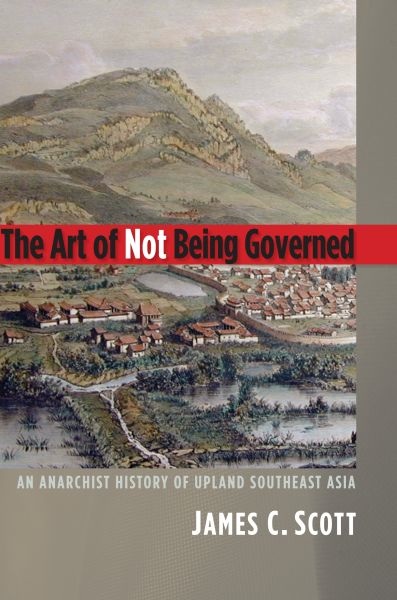
Pierre Clastres: Classification of People's Histories
It is said that the history of peoples who have a history is the history of class struggle. It might be said with at least as much truthfulness, that the history of peoples without history is a history of their struggles against the state.
--Pierre Clastres La société contre l'État
quoted in:
Tuesday, May 04, 2010
Monday, May 03, 2010


Saturday, May 01, 2010
Open Democracy: Fred Halliday, 1946-2010 -- a tribute; Fred Halliday: The World's Twelve Worst Ideas
Open Democracy: Fred Halliday, 1946-2010 -- a tribute
Which includes Fred Halliday's 2007 list of the The World's Twelve Worst Ideas
Open Democracy
Number twelve: Human behaviour can be predicted
In the name of a supposedly "scientific" criterion of knowledge, scholars are berated for not predicting the end of the cold war, the rise of Islam, 9/11 and much else besides. Yet many natural sciences – seismology, evolutionary biology - cannot predict with accuracy either. Human affairs themselves, even leaving aside the matter of human intention and will, allow of too many variables for such calculation. We will never be able to predict with certainty the outcome of a sports contest, the incidence of revolutions, the duration of passion or how long an individual will live.
Number eleven: The world is speeding up
This, a favourite trope of globalisation theorists, confuses acceleration in some areas, such as the transmission of knowledge, with the fact that large areas of human life continue to demand the same time as before: to conceive and bear a child, to learn a language, to grow up, to digest a meal, to enjoy a joke, to read a poem. It takes the same time to fly from London to New York as it did forty years ago, ditto to boil an egg or publish a book. Some activities – such as or driving around major western cities, getting through an airport, or dying - may take much longer.
Number ten: We have no need for history
In recent decades, large areas of intellectual and academic life - political thought and analysis, economics, philosophy - have jettisoned a concern with history. Yet it remains true that those who ignore history repeat it; as the recycling of unacknowledged cold-war premises by the Bush administration in Iraq has devastatingly shown.
Number nine: We live in a "post-feminist" epoch
The implication of this claim, supposedly analogous to such terms as "post-industrial", is that we have no more need for feminism, in politics, law, everyday life, because the major goals of that movement, articulated in the 1970s and 1980s, have been achieved. On all counts, this is a false claim: the "post-feminist" label serves not to register achievement of reforming goals, but the delegitimation of those goals themselves.
Number eight: Markets are a "natural" phenomenon which allow for the efficient allocation of resources and preferences
Markets are not "natural" but are the product of particular societies, value systems and patterns of state relation to the economy. They are not efficient allocators of goods, since they ignore the large area of human activity and need that is not covered by monetary values - from education and the provision of public works, to human happiness and fulfillment. In any case the pure market is a fantasy; the examples of the two most traded commodities in the contemporary world, oil and drugs, show how political, social and cartel factors override and distort the workings of supply and demand.
Number seven: Religion should again be allowed, when not encouraged, to play a role in political and social life
From the evangelicals of the United States, to the followers of Popes John Paul II and Benedict XVI, to the Islamists of the middle east, the claim about the benefits of religion is one of the great, and all too little challenged, impostures of our time. For centuries, those aspiring to freedom and democracy, be it in Europe or the middle east, fought to push back the influence of religion on public life. Secularism cannot guarantee freedom, but, against the claims of tradition and superstition, and the uses to which religion is put in modern political life, from California to Kuwait, it is an essential bulwark.
Number six: In the modern world, we do not need utopias
Dreaming, the aspiration to a better world and the imagination thereof, is a necessary part of the human condition.
Number five: We should welcome the spread of English as a world language
It is obviously of practical benefit that there is one common, functional, language of trade, air traffic control etc, but the actual domination of English in today's world has been accompanied by a tide of cultural arrogance that is itself debasing: a downgrading and neglect of other languages and cultures across the world, the general compounding of Anglo-Saxon political and social arrogance, and the introverted collapse of interest within English-speaking countries themselves in other peoples and languages, in sum, a triumph of banality over diversity. One small but universal example: the imposition on hotel staff across the world, with all its wonderful diversity of nomenclature, of name tags denoting the bearer as "Mike", "Johnny" and "Steve".
Number four: The world is divided into incomparable moral blocs, or civilisations
This view has been aptly termed (by Ernest Gellner) as "liberalism for the liberals, cannibalism for the cannibals". But a set of common values is indeed shared across the world: from democracy and human rights to the defence of national sovereignty and belief in the benefits of economic development. The implantation of these values is disputed, in all countries, but not the values themselves. Most states in the world, whatever their cultural or religious character, have signed the universalist United Nations declarations on human rights, starting with the 1948 universal declaration.
Number three: Diasporas have a legitimate role to play in national and international politics
The notion that emigrant or diaspora communities have a special insight into the problems of their homeland, or a special moral or political status in regard to them, is wholly unfounded. Emigrant ethnic communities play almost always a negative, backward, at once hysterical and obstructive, role in resolving the conflicts of their countries of origin: Armenians and Turks, Jews and Arabs, various strands of Irish, are prime examples on the inter-ethnic front, as are exiles in the United States in regard to resolving the problems of Cuba, or policymaking on Iran. English emigrants are less noted for any such political role, though their spasms of collective inebriation and conformist ghettoised lifestyles abroad do little to enhance the reputation of their home country.
Number two: The only thing "they" understand is force
This has been the guiding illusion of hegemonic and colonial thinking for several centuries. Oppressed peoples do not accept the imposition of solutions by force: they revolt. It is the oppressors who, in the end, have to accept the verdict of force, as European empires did in Latin America, Africa and Asia and as the United States is doing in Iraq today. The hubris of "mission accomplished" in May 2003 has been followed by ignominy.
Number one: The world's population problems, and the spread of Aids, can be solved without the use of condoms
This is not only the most dangerous, but also the most criminal, error of the modern world. Millions of people will suffer, and die premature and humiliating deaths, as a result of the policies pursued in this regard through the United Nations and related aid and public-health programmes. Indeed, there is no need to ask where the first mass murderers of the 21st century are; we already know, and their addresses besides: the Apostolic Palace, 0120 Vatican City, and 1600 Pennsylvania Avenue, Washington DC. Timely arrest and indictment would save many lives.
More resources:
Another favorite is The Revenge of Ideas: Karl Polyani and Susan Strange
Which includes Fred Halliday's 2007 list of the The World's Twelve Worst Ideas
Open Democracy
Number twelve: Human behaviour can be predicted
In the name of a supposedly "scientific" criterion of knowledge, scholars are berated for not predicting the end of the cold war, the rise of Islam, 9/11 and much else besides. Yet many natural sciences – seismology, evolutionary biology - cannot predict with accuracy either. Human affairs themselves, even leaving aside the matter of human intention and will, allow of too many variables for such calculation. We will never be able to predict with certainty the outcome of a sports contest, the incidence of revolutions, the duration of passion or how long an individual will live.
Number eleven: The world is speeding up
This, a favourite trope of globalisation theorists, confuses acceleration in some areas, such as the transmission of knowledge, with the fact that large areas of human life continue to demand the same time as before: to conceive and bear a child, to learn a language, to grow up, to digest a meal, to enjoy a joke, to read a poem. It takes the same time to fly from London to New York as it did forty years ago, ditto to boil an egg or publish a book. Some activities – such as or driving around major western cities, getting through an airport, or dying - may take much longer.
Number ten: We have no need for history
In recent decades, large areas of intellectual and academic life - political thought and analysis, economics, philosophy - have jettisoned a concern with history. Yet it remains true that those who ignore history repeat it; as the recycling of unacknowledged cold-war premises by the Bush administration in Iraq has devastatingly shown.
Number nine: We live in a "post-feminist" epoch
The implication of this claim, supposedly analogous to such terms as "post-industrial", is that we have no more need for feminism, in politics, law, everyday life, because the major goals of that movement, articulated in the 1970s and 1980s, have been achieved. On all counts, this is a false claim: the "post-feminist" label serves not to register achievement of reforming goals, but the delegitimation of those goals themselves.
Number eight: Markets are a "natural" phenomenon which allow for the efficient allocation of resources and preferences
Markets are not "natural" but are the product of particular societies, value systems and patterns of state relation to the economy. They are not efficient allocators of goods, since they ignore the large area of human activity and need that is not covered by monetary values - from education and the provision of public works, to human happiness and fulfillment. In any case the pure market is a fantasy; the examples of the two most traded commodities in the contemporary world, oil and drugs, show how political, social and cartel factors override and distort the workings of supply and demand.
Number seven: Religion should again be allowed, when not encouraged, to play a role in political and social life
From the evangelicals of the United States, to the followers of Popes John Paul II and Benedict XVI, to the Islamists of the middle east, the claim about the benefits of religion is one of the great, and all too little challenged, impostures of our time. For centuries, those aspiring to freedom and democracy, be it in Europe or the middle east, fought to push back the influence of religion on public life. Secularism cannot guarantee freedom, but, against the claims of tradition and superstition, and the uses to which religion is put in modern political life, from California to Kuwait, it is an essential bulwark.
Number six: In the modern world, we do not need utopias
Dreaming, the aspiration to a better world and the imagination thereof, is a necessary part of the human condition.
Number five: We should welcome the spread of English as a world language
It is obviously of practical benefit that there is one common, functional, language of trade, air traffic control etc, but the actual domination of English in today's world has been accompanied by a tide of cultural arrogance that is itself debasing: a downgrading and neglect of other languages and cultures across the world, the general compounding of Anglo-Saxon political and social arrogance, and the introverted collapse of interest within English-speaking countries themselves in other peoples and languages, in sum, a triumph of banality over diversity. One small but universal example: the imposition on hotel staff across the world, with all its wonderful diversity of nomenclature, of name tags denoting the bearer as "Mike", "Johnny" and "Steve".
Number four: The world is divided into incomparable moral blocs, or civilisations
This view has been aptly termed (by Ernest Gellner) as "liberalism for the liberals, cannibalism for the cannibals". But a set of common values is indeed shared across the world: from democracy and human rights to the defence of national sovereignty and belief in the benefits of economic development. The implantation of these values is disputed, in all countries, but not the values themselves. Most states in the world, whatever their cultural or religious character, have signed the universalist United Nations declarations on human rights, starting with the 1948 universal declaration.
Number three: Diasporas have a legitimate role to play in national and international politics
The notion that emigrant or diaspora communities have a special insight into the problems of their homeland, or a special moral or political status in regard to them, is wholly unfounded. Emigrant ethnic communities play almost always a negative, backward, at once hysterical and obstructive, role in resolving the conflicts of their countries of origin: Armenians and Turks, Jews and Arabs, various strands of Irish, are prime examples on the inter-ethnic front, as are exiles in the United States in regard to resolving the problems of Cuba, or policymaking on Iran. English emigrants are less noted for any such political role, though their spasms of collective inebriation and conformist ghettoised lifestyles abroad do little to enhance the reputation of their home country.
Number two: The only thing "they" understand is force
This has been the guiding illusion of hegemonic and colonial thinking for several centuries. Oppressed peoples do not accept the imposition of solutions by force: they revolt. It is the oppressors who, in the end, have to accept the verdict of force, as European empires did in Latin America, Africa and Asia and as the United States is doing in Iraq today. The hubris of "mission accomplished" in May 2003 has been followed by ignominy.
Number one: The world's population problems, and the spread of Aids, can be solved without the use of condoms
This is not only the most dangerous, but also the most criminal, error of the modern world. Millions of people will suffer, and die premature and humiliating deaths, as a result of the policies pursued in this regard through the United Nations and related aid and public-health programmes. Indeed, there is no need to ask where the first mass murderers of the 21st century are; we already know, and their addresses besides: the Apostolic Palace, 0120 Vatican City, and 1600 Pennsylvania Avenue, Washington DC. Timely arrest and indictment would save many lives.
More resources:
Another favorite is The Revenge of Ideas: Karl Polyani and Susan Strange
Counting the Beat: Music Alliance Pact, December 2009
New Zealand's Counting the Beat post of the international Music Alliance Pact December 2009 (I'm catching up).
You can download 33 songs, from 33 bands, from around the world and I recommend out of those songs these 17 tracks:
NEW ZEALAND:
Signer - +Kicks And Kicks
Bevan Smith is the musician who records as Signer. Smith started out as an indie-guitar fan but gave that up for psychedelic electronica and synths. His latest album, Next We Bring You The Fire, has a more ambient sound than earlier records, toning down some of the more leftfield noise elements. +Kicks And Kicks isn't that typical of the album - it's poppier and more rhythmic - but gives a good introduction to Signer's ability to create music which is accessible but slightly unsettling.
CANADA:
The Property Line - The Start
The Property Line have only been around a few months but they've been building quite a local following with their brand of psychedelia-tinged country-rock. Their EP (which is available for free download on their site) is pretty strong, and nowhere is it stronger than on The Start, in which the band infuses a little Sufjan into their sound, with absolutely stunning results.
CHINA:
Today - Before Ending
Before Ending is taken from Today's debut album which was released last year. They are searching for hope and happiness by watching everyone's love life as a third person. You won't feel lonely after listening to their songs. The band's new album, Live The Life, will be out soon.
COLOMBIA:
Miss Muffin - Bways 'n' Gyals
What happens if you put together Juan Valdez and Bob Marley? Well, the answer to this experiment can be given by Isabella Escobar aka Miss Muffin, the known name for this promising talent of Colombian reggae. Originating from Antioquia, with Caribbean blood, Miss Muffin has released Hear This, an album that explores in a curious manner the various possibilities of reggae.
ESTONIA:
Malcolm Lincoln - Me Iz Loaded With Zoul
Malcolm Lincoln has been active only for about a month so there's not much of a biography yet. The band is the brainchild of Robin Juhkental, who is joined by Madis Kubu aka Fretless Rämbu for live shows. Five more songs are downloadable here.
FINLAND:
Rex Willer - My Girl
Rex Willer is a five-piece indie band who recorded the excellent Inner Moray Scenes EP at their home studio earlier this year. Influenced by My Morning Jacket, Steely Dan and Death Cab For Cutie, they are driven by groovy bass lines and old-school keyboard sounds, without forgetting good guitar licks. Let yourself be caught by the irresistible melody of My Girl while Rex Willer finishes some new material due out early next year.
FRANCE:
Michael Wookey - Songs About Snow
At the age of 15, Michael Wookey was given a portable pump organ which belonged to his grandfather, who was an organist during World War II. This instrument inspired Michael to write some songs and start collecting obscure instruments. Now 26, he has released three albums and by using a portable studio, he has recorded in various sheds, basements and meat lockers. He now lives in the red light district of Paris. The French describe his music as folk baroque.
GREECE:
2-L8 - Excuse Me, But I Just Have To Explode (Part II)
2-L8's second release - He & She, Angry Enough To Keep Loving In The Dark Ages (download it for free here) - is a masterpiece of avant-garde music that truly haunts the mind. It's a passionate experience, leading the listener into excruciating catharsis - you look into the eyes of two lovers and see nothing but painful regret. It's exhilarating and rare to hear such florid arrangements based on sharp stringed instruments and theremin, trembling, frantically passionate vocals, desperate and bleak lyrics coupled with a sense of hope and all of them laced with uncompromising experimentation, true emotional resonance and weight. A total seductive triumph.
ICELAND:
Morðingjarnir - Manvisa
Punk-rock trio Morðingjarnir ("The Murderers") play fast and sharp three-to-four chord songs, often with some dark humour. Atli, Haukur and Helgi are influenced by Dead Kennedys and local punk heroes Fræbbblarnir. Manvisa is a song featured on their third album, Flóttinn Mikli, with guest vocals from Kata of the band Mammút.
INDIA:
The Mavyns - Greener Than The Sea
The Mavyns (pronounced "May-wins") are a rock act from Mumbai. Their music is a particularly refreshing take on the new British post-punk revival. Powered by piano-driven melodies and a charming disposition, the recently-formed quartet already look set for greater things. Greener Than The Sea makes no bones about its Beatles affectations culminating in a dizzying guitar romp. This live recording from an excellent recent set in the city is a definite sign of a career path that looks to be going only one way - up!
INDONESIA:
Tika & The Dissidents - Waltz Muram
Known as the diva from the indie scene in Indonesia, Tika has a beautiful voice and smart lyrics with influences ranging from swing and lounge music mashed with eclectic orchestration. I chose her and her band this month because I also want to promote Bahasa Indonesia, the official language of the country.
IRELAND:
O Emperor - Po
After an impressive appearance on Irish TV and some blog love from The Torture Garden, Cork band O Emperor are definitely on the 'ones to watch' list. Especially, though, after repeated plays of their debut single, Po, an unassuming number that reveals itself on multiple listens thanks to its snaking ephemeral guitar lick and a vocal that lodges in your brain for 24 hours at a time.
JAPAN:
Sonic Attack Blaster - 20000Volt
Sonic Attack Blaster, an alternative band from Tokyo's underground scene, call their music 'samurai rock'. Their songs actually have Japanese retro melody lines that give them an early-90s feel. Interesting and really rather weird. Their new album will be released in January.
NETHERLANDS:
The Very Sexuals - Bowie Eyes
Hallo from Holland! This is our first submission and we're happy to introduce The Very Sexuals. Starting out as a project between three or four other bands, this act have come together to produce an impressive, emotive and totally free album which has left listeners in dreamy shoegaze heaven since its release earlier this year. Be sure to download Bowie Eyes and look out for album number two in 2010.
PORTUGAL:
Noiserv - Melody Pops
Noiserv is one-man band David Santos, a very talented multi-instrumentalist from Lisbon. His self-released 2008 debut LP, One Hundred Miles From Thoughtlessness, was highly acclaimed by the mainstream Portuguese press. In May, Noiserv released a single through the Scottish label Autumn Ferment Records.
SOUTH KOREA:
Oh My Melodies - I Like It All
Oh My Melodies is the US-based solo project of Jiyoung Lee, vocalist of I Love JH. She now offers home-recorded electronic pop with sweet lyrics on the recently released EP So Lazy, which can be downloaded here. I Like It All is a catchy tune with a bit of synth that makes doing the chores seem like the most delightful task.
SWEDEN:
Symfoniorkestern - Tänd Eld På Dig Själv (För Det Du Tror På)
Wow, it was a no-brainer this month. Symfoniorkestern are a uniquely Swedish group. They are like an indie-rock band but with a grab-bag of unusual orchestration, lyrics in Swedish and lovely harmonies. The new EP, Tänd Eld På Dig Själv (För Det Du Tror På), is available here for free in its awesome, spellbinding entirety. The band spent a year and a half recording it - I only wish I could somehow give this review the same amount of care.
You can download 33 songs, from 33 bands, from around the world and I recommend out of those songs these 17 tracks:
NEW ZEALAND:
Signer - +Kicks And Kicks
Bevan Smith is the musician who records as Signer. Smith started out as an indie-guitar fan but gave that up for psychedelic electronica and synths. His latest album, Next We Bring You The Fire, has a more ambient sound than earlier records, toning down some of the more leftfield noise elements. +Kicks And Kicks isn't that typical of the album - it's poppier and more rhythmic - but gives a good introduction to Signer's ability to create music which is accessible but slightly unsettling.
CANADA:
The Property Line - The Start
The Property Line have only been around a few months but they've been building quite a local following with their brand of psychedelia-tinged country-rock. Their EP (which is available for free download on their site) is pretty strong, and nowhere is it stronger than on The Start, in which the band infuses a little Sufjan into their sound, with absolutely stunning results.
CHINA:
Today - Before Ending
Before Ending is taken from Today's debut album which was released last year. They are searching for hope and happiness by watching everyone's love life as a third person. You won't feel lonely after listening to their songs. The band's new album, Live The Life, will be out soon.
COLOMBIA:
Miss Muffin - Bways 'n' Gyals
What happens if you put together Juan Valdez and Bob Marley? Well, the answer to this experiment can be given by Isabella Escobar aka Miss Muffin, the known name for this promising talent of Colombian reggae. Originating from Antioquia, with Caribbean blood, Miss Muffin has released Hear This, an album that explores in a curious manner the various possibilities of reggae.
ESTONIA:
Malcolm Lincoln - Me Iz Loaded With Zoul
Malcolm Lincoln has been active only for about a month so there's not much of a biography yet. The band is the brainchild of Robin Juhkental, who is joined by Madis Kubu aka Fretless Rämbu for live shows. Five more songs are downloadable here.
FINLAND:
Rex Willer - My Girl
Rex Willer is a five-piece indie band who recorded the excellent Inner Moray Scenes EP at their home studio earlier this year. Influenced by My Morning Jacket, Steely Dan and Death Cab For Cutie, they are driven by groovy bass lines and old-school keyboard sounds, without forgetting good guitar licks. Let yourself be caught by the irresistible melody of My Girl while Rex Willer finishes some new material due out early next year.
FRANCE:
Michael Wookey - Songs About Snow
At the age of 15, Michael Wookey was given a portable pump organ which belonged to his grandfather, who was an organist during World War II. This instrument inspired Michael to write some songs and start collecting obscure instruments. Now 26, he has released three albums and by using a portable studio, he has recorded in various sheds, basements and meat lockers. He now lives in the red light district of Paris. The French describe his music as folk baroque.
GREECE:
2-L8 - Excuse Me, But I Just Have To Explode (Part II)
2-L8's second release - He & She, Angry Enough To Keep Loving In The Dark Ages (download it for free here) - is a masterpiece of avant-garde music that truly haunts the mind. It's a passionate experience, leading the listener into excruciating catharsis - you look into the eyes of two lovers and see nothing but painful regret. It's exhilarating and rare to hear such florid arrangements based on sharp stringed instruments and theremin, trembling, frantically passionate vocals, desperate and bleak lyrics coupled with a sense of hope and all of them laced with uncompromising experimentation, true emotional resonance and weight. A total seductive triumph.
ICELAND:
Morðingjarnir - Manvisa
Punk-rock trio Morðingjarnir ("The Murderers") play fast and sharp three-to-four chord songs, often with some dark humour. Atli, Haukur and Helgi are influenced by Dead Kennedys and local punk heroes Fræbbblarnir. Manvisa is a song featured on their third album, Flóttinn Mikli, with guest vocals from Kata of the band Mammút.
INDIA:
The Mavyns - Greener Than The Sea
The Mavyns (pronounced "May-wins") are a rock act from Mumbai. Their music is a particularly refreshing take on the new British post-punk revival. Powered by piano-driven melodies and a charming disposition, the recently-formed quartet already look set for greater things. Greener Than The Sea makes no bones about its Beatles affectations culminating in a dizzying guitar romp. This live recording from an excellent recent set in the city is a definite sign of a career path that looks to be going only one way - up!
INDONESIA:
Tika & The Dissidents - Waltz Muram
Known as the diva from the indie scene in Indonesia, Tika has a beautiful voice and smart lyrics with influences ranging from swing and lounge music mashed with eclectic orchestration. I chose her and her band this month because I also want to promote Bahasa Indonesia, the official language of the country.
IRELAND:
O Emperor - Po
After an impressive appearance on Irish TV and some blog love from The Torture Garden, Cork band O Emperor are definitely on the 'ones to watch' list. Especially, though, after repeated plays of their debut single, Po, an unassuming number that reveals itself on multiple listens thanks to its snaking ephemeral guitar lick and a vocal that lodges in your brain for 24 hours at a time.
JAPAN:
Sonic Attack Blaster - 20000Volt
Sonic Attack Blaster, an alternative band from Tokyo's underground scene, call their music 'samurai rock'. Their songs actually have Japanese retro melody lines that give them an early-90s feel. Interesting and really rather weird. Their new album will be released in January.
NETHERLANDS:
The Very Sexuals - Bowie Eyes
Hallo from Holland! This is our first submission and we're happy to introduce The Very Sexuals. Starting out as a project between three or four other bands, this act have come together to produce an impressive, emotive and totally free album which has left listeners in dreamy shoegaze heaven since its release earlier this year. Be sure to download Bowie Eyes and look out for album number two in 2010.
PORTUGAL:
Noiserv - Melody Pops
Noiserv is one-man band David Santos, a very talented multi-instrumentalist from Lisbon. His self-released 2008 debut LP, One Hundred Miles From Thoughtlessness, was highly acclaimed by the mainstream Portuguese press. In May, Noiserv released a single through the Scottish label Autumn Ferment Records.
SOUTH KOREA:
Oh My Melodies - I Like It All
Oh My Melodies is the US-based solo project of Jiyoung Lee, vocalist of I Love JH. She now offers home-recorded electronic pop with sweet lyrics on the recently released EP So Lazy, which can be downloaded here. I Like It All is a catchy tune with a bit of synth that makes doing the chores seem like the most delightful task.
SWEDEN:
Symfoniorkestern - Tänd Eld På Dig Själv (För Det Du Tror På)
Wow, it was a no-brainer this month. Symfoniorkestern are a uniquely Swedish group. They are like an indie-rock band but with a grab-bag of unusual orchestration, lyrics in Swedish and lovely harmonies. The new EP, Tänd Eld På Dig Själv (För Det Du Tror På), is available here for free in its awesome, spellbinding entirety. The band spent a year and a half recording it - I only wish I could somehow give this review the same amount of care.
Bill Moyers Journal: Justice for Sale; Jeffrey Toobin; Buying the Bench
Bill Moyers Journal (PBS)
Justice for Sale
How would you feel if you were in court and knew that the opposing lawyer had contributed money to the judge's campaign fund? This is not an improbable hypothetical question, but could be a commonplace occurrence in the 21 states where judges must raise money to campaign for their seats — often from people with business before the court.
Though many states have elected judges since their founding, in the past 30 years, judicial elections have morphed from low-key affairs to big money campaigns. From 1999-2008, judicial candidates raised $200.4 million, more than double the $85.4 million raised in the previous decade (1989-1998).
Because of the costs of running such a campaign, critics contend that judges have had to become politicians and fundraisers rather than jurists. In a poll by Justice at Stake, 97% of elected state Supreme Court justices said they were under pressure to raise money during their election years.
According to retired Supreme Court Justice Sandra Day O'Connor, of all the fallout from the Citizens United decision, the most dangerous may be in judicial elections. These often low-profile affairs have become extraordinarily expensive in recent years, as interest groups have sought to shape the court in their favor by electing judges who share their views. With 87% of state judges facing election, the Citizens United case could have profound effects on the nation's court system. In remarks to Georgetown University law students, O'Connor said, "This rise in judicial campaigning makes last week's opinion in Citizens United a problem for an independent judiciary. No state can possibly benefit from having that much money injected into a political campaign."
This week the JOURNAL revisits "Justice for Sale," a 1999 documentary about the impact of money on judicial elections in three states — Pennsylvania, Texas and Louisiana. To create the documentary — produced by Steve Talbot and Sheila Kaplan — Bill Moyers collaborated with public television's acclaimed documentary series FRONTLINE and the Center for Investigative Reporting.
To Listen to the Episode and Access More Resources
Jeffrey Toobin
A late February 2010 ABC NEWS/WASHINGTON POST poll found that 80 percent of Americans on both sides of the aisle oppose the Supreme Court's ruling on campaign finance in Citizens United v. FEC. Sixty-five percent of those asked "strongly" oppose it. Legal analyst Jeffrey Toobin contends that, indeed, the ruling's potential to harm democracy runs very deep:
Biography
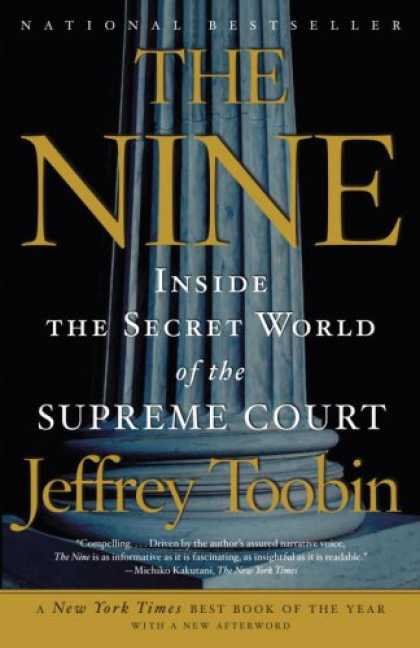
Jeffrey Toobin is a staff writer at THE NEW YORKER and a senior analyst for CNN. He is a well-known legal journalist and has written profiles of Supreme Court Justices Stephen Breyer, Anthony Kennedy, and Clarence Thomas for THE NEW YORKER. His most recent book, THE NINE: INSIDE THE SECRET WORLD OF THE SUPREME COURT, spent more than four months on THE NEW YORK TIMES best-seller list and was named one of the ten best books of the year by THE NEW YORK TIMES BOOK REVIEW, TIME, NEWSWEEK, FORTUNE, ENTERTAINMENT WEEKLY, and the ECONOMIST. His other books include TOO CLOSE TO CALL: THE 36-DAY BATTLE TO DECIDE THE 2000 ELECTION and A VAST CONSPIRACY: THE REAL STORY OF THE SEX SCANDAL THAT NEARLY BROUGHT DOWN A PRESIDENT, and THE RUN OF HIS LIFE: THE PEOPLE v. O.J. SIMPSON.
Before joining THE NEW YORKER in 1993, Toobin served as an Assistant United States Attorney in Brooklyn, New York. He also served as an associate counsel in the Office of Independent Counsel Lawrence E. Walsh, an experience that provided the basis for his first book, OPENING ARGUMENTS: A YOUNG LAWYER'S FIRST CASE — UNITED STATES V. OLIVER NORTH.
To Listen to the Episode and Access More Resources
More resources:
Bill Moyers: Buying the Bench
Justice for Sale
How would you feel if you were in court and knew that the opposing lawyer had contributed money to the judge's campaign fund? This is not an improbable hypothetical question, but could be a commonplace occurrence in the 21 states where judges must raise money to campaign for their seats — often from people with business before the court.
Though many states have elected judges since their founding, in the past 30 years, judicial elections have morphed from low-key affairs to big money campaigns. From 1999-2008, judicial candidates raised $200.4 million, more than double the $85.4 million raised in the previous decade (1989-1998).
Because of the costs of running such a campaign, critics contend that judges have had to become politicians and fundraisers rather than jurists. In a poll by Justice at Stake, 97% of elected state Supreme Court justices said they were under pressure to raise money during their election years.
According to retired Supreme Court Justice Sandra Day O'Connor, of all the fallout from the Citizens United decision, the most dangerous may be in judicial elections. These often low-profile affairs have become extraordinarily expensive in recent years, as interest groups have sought to shape the court in their favor by electing judges who share their views. With 87% of state judges facing election, the Citizens United case could have profound effects on the nation's court system. In remarks to Georgetown University law students, O'Connor said, "This rise in judicial campaigning makes last week's opinion in Citizens United a problem for an independent judiciary. No state can possibly benefit from having that much money injected into a political campaign."
This week the JOURNAL revisits "Justice for Sale," a 1999 documentary about the impact of money on judicial elections in three states — Pennsylvania, Texas and Louisiana. To create the documentary — produced by Steve Talbot and Sheila Kaplan — Bill Moyers collaborated with public television's acclaimed documentary series FRONTLINE and the Center for Investigative Reporting.
To Listen to the Episode and Access More Resources
Jeffrey Toobin
A late February 2010 ABC NEWS/WASHINGTON POST poll found that 80 percent of Americans on both sides of the aisle oppose the Supreme Court's ruling on campaign finance in Citizens United v. FEC. Sixty-five percent of those asked "strongly" oppose it. Legal analyst Jeffrey Toobin contends that, indeed, the ruling's potential to harm democracy runs very deep:
I think judicial elections are really the untold story of Citizens United, the untold implication. Because when the decision happened, a lot of people said, 'Okay. This means that Exxon will spend millions of dollars to defeat Barack Obama when he runs for re-election.' I don't think there's any chance of that at all. That's too high profile. There's too much money available from other sources in a presidential race. But judicial elections are really a national scandal that few people really know about. Because corporations in particular, and labor unions to a lesser extent, have such tremendous interest in who's on state supreme courts and even lower state courts that that's where they're going to put their money and their energy because they'll get better bang for their buck there.
Biography
Jeffrey Toobin is a staff writer at THE NEW YORKER and a senior analyst for CNN. He is a well-known legal journalist and has written profiles of Supreme Court Justices Stephen Breyer, Anthony Kennedy, and Clarence Thomas for THE NEW YORKER. His most recent book, THE NINE: INSIDE THE SECRET WORLD OF THE SUPREME COURT, spent more than four months on THE NEW YORK TIMES best-seller list and was named one of the ten best books of the year by THE NEW YORK TIMES BOOK REVIEW, TIME, NEWSWEEK, FORTUNE, ENTERTAINMENT WEEKLY, and the ECONOMIST. His other books include TOO CLOSE TO CALL: THE 36-DAY BATTLE TO DECIDE THE 2000 ELECTION and A VAST CONSPIRACY: THE REAL STORY OF THE SEX SCANDAL THAT NEARLY BROUGHT DOWN A PRESIDENT, and THE RUN OF HIS LIFE: THE PEOPLE v. O.J. SIMPSON.
Before joining THE NEW YORKER in 1993, Toobin served as an Assistant United States Attorney in Brooklyn, New York. He also served as an associate counsel in the Office of Independent Counsel Lawrence E. Walsh, an experience that provided the basis for his first book, OPENING ARGUMENTS: A YOUNG LAWYER'S FIRST CASE — UNITED STATES V. OLIVER NORTH.
To Listen to the Episode and Access More Resources
More resources:
Bill Moyers: Buying the Bench
Liz Goodwin: Arizona legislature bans ethnic-studies programs
(Arizona continues its slide into racist paranoia... )
Arizona legislature bans ethnic-studies programs
by Liz Goodwin
Yahoo News
Just a week after signing the country's toughest immigration bill into law, Arizona Gov. Jan Brewer now must decide whether to endorse another bill passed by her state legislature — one that outlaws ethnic-studies programs in public schools.
The bill forbids Arizona schools from using any curriculum that promotes "the overthrow of the United States government" or "resentment toward a race or class of people." It also disallows any curriculum that's "designed primarily for pupils of a particular ethnic group" or that seeks to "advocate ethnic solidarity instead of the treatment of pupils as individuals."
Arizona's superintendent for public instruction, Tom Horne, has said he's backing the measure because ethnic-studies programs encourage "ethnic chauvinism"; he's also suggested that such programs could breed secessionist sentiment among Hispanic students.
Republican state Sen. Jack Harper also voted for the bill, saying that certain Hispanic-themed ethnic-studies programs are "trying to say that somebody who came to this country illegally is somehow oppressed. That's crazy stuff."
But the legislation's opponents say that, if the bill is signed into law, the state, not the targeted programs, would be promoting a politicized curriculum. Democratic state Sen. Linda Lopez says the bill would target a Mexican-American studies program used in her home district of Tucson. She offered an amendment — which the legislature approved — mandating that Arizona schools adopt curricula that include discussions of incidents of genocide such as the Holocaust, so that such material would not be considered as promoting "ethnic resentment."
In another controversial shift in state education policy, the Wall Street Journal has reported that the Arizona Department of Education has begun telling principals to remove teachers who speak English with an accent from classes with students who are still learning English. Some school officials are complaining that the move will remove experienced teachers from classrooms that need them. Margaret Dugan, the state's deputy superintendent of schools, told the Journal the request is "politicizing the educational environment."
"Teachers should speak good grammar because kids pick up what they hear," Johanna Haver, an adviser to Arizona educators, told the Journal. "Where you draw the line is debatable."
The Education Department permits teachers who don't meet fluency standards to take classes to improve.
Link to the Article and More Resources
More on Jan Brewer and Arizona:
Arizona Governor Takes Away State Domestic Partner Benefits Says 'God Has Placed Me in This Powerful Position'
Arizona legislature bans ethnic-studies programs
by Liz Goodwin
Yahoo News
Just a week after signing the country's toughest immigration bill into law, Arizona Gov. Jan Brewer now must decide whether to endorse another bill passed by her state legislature — one that outlaws ethnic-studies programs in public schools.
The bill forbids Arizona schools from using any curriculum that promotes "the overthrow of the United States government" or "resentment toward a race or class of people." It also disallows any curriculum that's "designed primarily for pupils of a particular ethnic group" or that seeks to "advocate ethnic solidarity instead of the treatment of pupils as individuals."
Arizona's superintendent for public instruction, Tom Horne, has said he's backing the measure because ethnic-studies programs encourage "ethnic chauvinism"; he's also suggested that such programs could breed secessionist sentiment among Hispanic students.
Republican state Sen. Jack Harper also voted for the bill, saying that certain Hispanic-themed ethnic-studies programs are "trying to say that somebody who came to this country illegally is somehow oppressed. That's crazy stuff."
But the legislation's opponents say that, if the bill is signed into law, the state, not the targeted programs, would be promoting a politicized curriculum. Democratic state Sen. Linda Lopez says the bill would target a Mexican-American studies program used in her home district of Tucson. She offered an amendment — which the legislature approved — mandating that Arizona schools adopt curricula that include discussions of incidents of genocide such as the Holocaust, so that such material would not be considered as promoting "ethnic resentment."
In another controversial shift in state education policy, the Wall Street Journal has reported that the Arizona Department of Education has begun telling principals to remove teachers who speak English with an accent from classes with students who are still learning English. Some school officials are complaining that the move will remove experienced teachers from classrooms that need them. Margaret Dugan, the state's deputy superintendent of schools, told the Journal the request is "politicizing the educational environment."
"Teachers should speak good grammar because kids pick up what they hear," Johanna Haver, an adviser to Arizona educators, told the Journal. "Where you draw the line is debatable."
The Education Department permits teachers who don't meet fluency standards to take classes to improve.
Link to the Article and More Resources
More on Jan Brewer and Arizona:
Arizona Governor Takes Away State Domestic Partner Benefits Says 'God Has Placed Me in This Powerful Position'
May Day!: Imagining a Better World
Happy May Day! Imagining a better world on this revolutionary, sexual and fertile day! Remember, resistance is fertile! Solidarity workers of the world!
Eric Chase: The Brief Origins of May Day (IWW perspective on why it is important)

"Working Class Hero" by John Lennon
"Eyes On the Prize" by Mavis Staples
"99 and a 1/2" by Mavis Staples
School of the Seasons: Celebrating May Day A history of May Day that traces it back to the pagan celebration of sexuality and fertility through the early Christian reactionary attempt to associate it with Mary/chastity.

Eric Chase: The Brief Origins of May Day (IWW perspective on why it is important)
"Working Class Hero" by John Lennon
"Eyes On the Prize" by Mavis Staples
"99 and a 1/2" by Mavis Staples
School of the Seasons: Celebrating May Day A history of May Day that traces it back to the pagan celebration of sexuality and fertility through the early Christian reactionary attempt to associate it with Mary/chastity.
Friday, April 30, 2010
Peter Ludlow: Watching the Watchers -- Power and Politics in Second Life; Henry Jenkins: Choose Your Fictions Well
There comes a point where you have to recognize that technology has passed you by... and we wonder why it is so difficult to get people to pay attention to injustices in RL. These reports are like a massive pile up on the freeway and I cannot look away
Peter Ludlow: "Watching the Watchers: Power and Politics in Second Life (Part One)"
Peter Ludlow: "Watching the Watchers: Power and Politics in Second Life (Part Two)"
Henry Jenkins: "Choose Your Fictions Well."
Peter Ludlow: "Watching the Watchers: Power and Politics in Second Life (Part One)"
Peter Ludlow: "Watching the Watchers: Power and Politics in Second Life (Part Two)"
Henry Jenkins: "Choose Your Fictions Well."
Counting the Beats Podcast
My new favorite music podcast/website is New Zealand's Counting the Beats. It is a great resource for free downloads of great music from around the world!
BBC News: US military joins Gulf of Mexico oil spill effort
US military joins Gulf of Mexico oil spill effort
BBC News
The US military has joined efforts to stop an oil leak in the Gulf of Mexico as fears rise about its scale.
Five times as much oil as previously thought could be leaking from the well beneath where a rig exploded and sank last week, the US Coast Guard says.
Rear Admiral Mary Landry said 5,000 barrels a day were thought to be gushing into the sea off Louisiana.
The Department of Homeland Security has designated the spill as one of "national significance".
Homeland Security Secretary Janet Napolitano, who is to go to Louisiana to oversee operations, told reporters in Washington that this designation would allow resources to be ordered in from other areas of the US.
At the same briefing, a coastguard official said the oil slick was expected to wash ashore on the Gulf Coast on Friday.
And Deputy Secretary of the Department of the Interior David Hayes said the US government had ordered inspections of all deep-water oil wells in the Gulf of Mexico to see if anti-spill regulations were being followed.
To Read the Rest of the Report and Access Video
BBC News
The US military has joined efforts to stop an oil leak in the Gulf of Mexico as fears rise about its scale.
Five times as much oil as previously thought could be leaking from the well beneath where a rig exploded and sank last week, the US Coast Guard says.
Rear Admiral Mary Landry said 5,000 barrels a day were thought to be gushing into the sea off Louisiana.
The Department of Homeland Security has designated the spill as one of "national significance".
Homeland Security Secretary Janet Napolitano, who is to go to Louisiana to oversee operations, told reporters in Washington that this designation would allow resources to be ordered in from other areas of the US.
At the same briefing, a coastguard official said the oil slick was expected to wash ashore on the Gulf Coast on Friday.
And Deputy Secretary of the Department of the Interior David Hayes said the US government had ordered inspections of all deep-water oil wells in the Gulf of Mexico to see if anti-spill regulations were being followed.
To Read the Rest of the Report and Access Video
Bill Moyers Journal: Maxine Hong Kingston
Maxine Hong Kingston
Bill Moyers Journal

Bill Moyers Journal presents an illuminating interview with Maxine Hong Kingston, acclaimed author of many books including the award-winning The Woman Warrior and her latest book Veterans of War, Veterans of Peace. For the past 15 years, Kingston has been working with veterans - more than 500 soldiers from World War II, from Vietnam, and now, from Iraq - as well as other survivors of war to convert the horrors they experienced into the words and stories that Kingston believes will help them cope and survive.
To Listen to the Episode
Bill Moyers Journal
Bill Moyers Journal presents an illuminating interview with Maxine Hong Kingston, acclaimed author of many books including the award-winning The Woman Warrior and her latest book Veterans of War, Veterans of Peace. For the past 15 years, Kingston has been working with veterans - more than 500 soldiers from World War II, from Vietnam, and now, from Iraq - as well as other survivors of war to convert the horrors they experienced into the words and stories that Kingston believes will help them cope and survive.
To Listen to the Episode
Matthew C. Nisbet: Climate Change & Human Health
Earth Day's Untold Story: Climate Change & Human Health
by Matthew C. Nisbet
Framing Science
A Federal inter-agency report released today reviews eleven key categories of diseases and other health consequences that are occurring or will occur due to climate change. The report, A Human Health Perspective on Climate Change, provides a starting point for coordination of federal research to better understand climate's impact on human health. The recommendations of the working group include research to identify who will be most vulnerable, and what efforts will be most beneficial.
Not only does this report call attention to objectively serious risks of climate change, but on Earth Day, it also represents an important re-framing of climate change away from being defined as an environmental problem to one that extends to human health. As I noted last year at the journal Environment, reframing climate change as a public health problem potentially makes the complex issue more personally relevant by drawing connections to already familiar problems such as asthma, allergies, and infectious disease, while shifting the visualization of the issue away from remote arctic regions, peoples, and animals to more socially proximate neighbors and places such as suburbs and cities. In the process, the new focus is inclusive of the need for not just mitigation but also adaptation actions, while also bringing additional trusted communication partners into the fold on climate change, notably public health officials and leaders from minority and low-income communities who are the most at risk and the most vulnerable.
To Read the Rest of the Report and Access More Resources
by Matthew C. Nisbet
Framing Science
A Federal inter-agency report released today reviews eleven key categories of diseases and other health consequences that are occurring or will occur due to climate change. The report, A Human Health Perspective on Climate Change, provides a starting point for coordination of federal research to better understand climate's impact on human health. The recommendations of the working group include research to identify who will be most vulnerable, and what efforts will be most beneficial.
Not only does this report call attention to objectively serious risks of climate change, but on Earth Day, it also represents an important re-framing of climate change away from being defined as an environmental problem to one that extends to human health. As I noted last year at the journal Environment, reframing climate change as a public health problem potentially makes the complex issue more personally relevant by drawing connections to already familiar problems such as asthma, allergies, and infectious disease, while shifting the visualization of the issue away from remote arctic regions, peoples, and animals to more socially proximate neighbors and places such as suburbs and cities. In the process, the new focus is inclusive of the need for not just mitigation but also adaptation actions, while also bringing additional trusted communication partners into the fold on climate change, notably public health officials and leaders from minority and low-income communities who are the most at risk and the most vulnerable.
To Read the Rest of the Report and Access More Resources
Thursday, April 29, 2010
Fouad Pervez: Coverups in Afghanistan
Coverups in Afghanistan
By Fouad Pervez
Foreign Policy in Focus
The conflict in Afghanistan, which will enter its 10th year this fall, shows no signs of abating. The United States has expended substantial blood and treasure to try and stabilize the country. However, recent events suggest that U.S. efforts are problematic in themselves and that the chaos will only worsen. There are critical problems with accountability, transparency, and public scrutiny, all of which not only make it harder for the United States and NATO to shift away from unproductive policies. These also create serious domestic political issues in Afghanistan.
The recent news about the women killed in a botched raid on February 12 is emblematic of all the current woes in Afghanistan. The military finally admitted that U.S. Special Operations Forces were responsible for the deaths of three women, two of whom were pregnant, in a nighttime raid. They already admitted the same raid resulted in the deaths of two men, a policeman, and a prosecutor. More troubling is the accusation that the troops dug the bullets out of the women’s bodies to cover up the evidence. General McChrystal, the U.S. and NATO commander in Afghanistan, is now ordering an investigation of the raid.
This incident is a prime example of the current problems in the Afghanistan strategy. First, McChrystal launched an investigation only after the story of the alleged cover-up gained widespread media coverage. Officials from the U.S.-led NATO command have denied the tampering charge, though Afghan officials pointed out that NATO officials were perplexed by the evidence precisely because of the tampering. Afghan officials were unable to perform an autopsy on the bodies and were denied access to the bodies at the scene. There were also several bullets missing from the scene. Given the oddities surrounding the case in the first place, the Pentagon should have launched an investigation much earlier.
The initial Pentagon report claimed the men were insurgents, and that the women were found already dead, bound and gagged, possibly from an honor killing. Thus, it was filled with inaccuracies, if not outright lies. More than a dozen survivors, witnesses, and local investigators strongly disputed the Pentagon’s initial claims, too, but there was no investigation until the story finally got wider media coverage in the past week.
This incident follows the pattern of others. Many nighttime raids conducted in Afghanistan are based on poor intelligence and result in the deaths of many civilians. Yet there is little in the way of public accountability. No information is available about reprimands handed out to troops who kill civilians, intelligence officers who obtain poor information, or higher-up commanders who plan these botched raids. This incident is one of the few where any information about an investigation is even public. If they find the soldiers did indeed commit a crime, will they be punished? Given the track record, it seems unlikely. We may never even hear about the results.
To Read the Rest of the Article
By Fouad Pervez
Foreign Policy in Focus
The conflict in Afghanistan, which will enter its 10th year this fall, shows no signs of abating. The United States has expended substantial blood and treasure to try and stabilize the country. However, recent events suggest that U.S. efforts are problematic in themselves and that the chaos will only worsen. There are critical problems with accountability, transparency, and public scrutiny, all of which not only make it harder for the United States and NATO to shift away from unproductive policies. These also create serious domestic political issues in Afghanistan.
The recent news about the women killed in a botched raid on February 12 is emblematic of all the current woes in Afghanistan. The military finally admitted that U.S. Special Operations Forces were responsible for the deaths of three women, two of whom were pregnant, in a nighttime raid. They already admitted the same raid resulted in the deaths of two men, a policeman, and a prosecutor. More troubling is the accusation that the troops dug the bullets out of the women’s bodies to cover up the evidence. General McChrystal, the U.S. and NATO commander in Afghanistan, is now ordering an investigation of the raid.
This incident is a prime example of the current problems in the Afghanistan strategy. First, McChrystal launched an investigation only after the story of the alleged cover-up gained widespread media coverage. Officials from the U.S.-led NATO command have denied the tampering charge, though Afghan officials pointed out that NATO officials were perplexed by the evidence precisely because of the tampering. Afghan officials were unable to perform an autopsy on the bodies and were denied access to the bodies at the scene. There were also several bullets missing from the scene. Given the oddities surrounding the case in the first place, the Pentagon should have launched an investigation much earlier.
The initial Pentagon report claimed the men were insurgents, and that the women were found already dead, bound and gagged, possibly from an honor killing. Thus, it was filled with inaccuracies, if not outright lies. More than a dozen survivors, witnesses, and local investigators strongly disputed the Pentagon’s initial claims, too, but there was no investigation until the story finally got wider media coverage in the past week.
This incident follows the pattern of others. Many nighttime raids conducted in Afghanistan are based on poor intelligence and result in the deaths of many civilians. Yet there is little in the way of public accountability. No information is available about reprimands handed out to troops who kill civilians, intelligence officers who obtain poor information, or higher-up commanders who plan these botched raids. This incident is one of the few where any information about an investigation is even public. If they find the soldiers did indeed commit a crime, will they be punished? Given the track record, it seems unlikely. We may never even hear about the results.
To Read the Rest of the Article
Christian Struzan: You Want to Get Mad?
YOU WANT TO GET MAD?
We had eight years of Bush and Cheney, but now you get mad! You didn’t get mad ...when the Supreme Court stopped a legal recount and appointed a President. You didn’t get mad when Cheney allowed Energy company officials to dictate energy policy. You didn’t get mad when a covert CIA operative got ousted. You didn’t get mad when the Patriot Act got passed.. You didn’t get mad when we illegally invaded a country that posed no threat to us. You didn’t get mad when we spent over 600 billion(and counting) on said illegal war. You didn’t get mad when over 10 billion dollars just disappeared in Iraq. You didn’t get mad when you found out we were torturing people. You didn’t get mad when the government was illegally wiretapping Americans. You didn’t get mad when we didn’t catch Bin Laden. You didn’t get mad when you saw the horrible conditions at Walter Reed. You didn’t get mad when we let a major US city drown. You didn’t get mad when we gave a 900 billion tax break to the rich. You didn’t get mad when, using reconciliation; a trillion dollars of our tax dollars were redirected to insurance companies for Medicare Advantage which cost over 20 percent more for basically the same services that Medicare provides. You didn’t get mad when the deficit hit the trillion dollar mark, and our debt hit the thirteen trillion dollar mark. You finally got mad when the government decided that people in America deserved the right to see a doctor if they are sick. Yes, illegal wars, lies, corruption, torture, stealing your tax dollars to make the rich richer, are all okay with you, but helping other Americans… oh hell no. AND NOW YOU’RE MAD !
We had eight years of Bush and Cheney, but now you get mad! You didn’t get mad ...when the Supreme Court stopped a legal recount and appointed a President. You didn’t get mad when Cheney allowed Energy company officials to dictate energy policy. You didn’t get mad when a covert CIA operative got ousted. You didn’t get mad when the Patriot Act got passed.. You didn’t get mad when we illegally invaded a country that posed no threat to us. You didn’t get mad when we spent over 600 billion(and counting) on said illegal war. You didn’t get mad when over 10 billion dollars just disappeared in Iraq. You didn’t get mad when you found out we were torturing people. You didn’t get mad when the government was illegally wiretapping Americans. You didn’t get mad when we didn’t catch Bin Laden. You didn’t get mad when you saw the horrible conditions at Walter Reed. You didn’t get mad when we let a major US city drown. You didn’t get mad when we gave a 900 billion tax break to the rich. You didn’t get mad when, using reconciliation; a trillion dollars of our tax dollars were redirected to insurance companies for Medicare Advantage which cost over 20 percent more for basically the same services that Medicare provides. You didn’t get mad when the deficit hit the trillion dollar mark, and our debt hit the thirteen trillion dollar mark. You finally got mad when the government decided that people in America deserved the right to see a doctor if they are sick. Yes, illegal wars, lies, corruption, torture, stealing your tax dollars to make the rich richer, are all okay with you, but helping other Americans… oh hell no. AND NOW YOU’RE MAD !
Tuesday, April 27, 2010
Charlie Jane Anders: Michael Bay Finally Made An Art Movie
Michael Bay Finally Made An Art Movie
by Charlie Jane Anders
io9
...
Michael Bay understands that summer movies are about two things: male anxiety, and pure id. That's why he casts Shia LaBoeuf, that supreme avatar of pure male inadequacy, in the lead role. LaBoeuf projects a pathetic, wall-eyed dorkhood, when he's not babbling like a tumor removed from Woody Allen's prostate that somehow achieved sentience. I imagine the DVD of ROTF will include a whole disk of outtakes where they had to stop filming because LaBoeuf was drooling on camera. As it is, the film includes several extreme closeups of LaBoeuf's dazed stare.
Where was I? Oh yes. So LaBoeuf, who's actually a fine actor, is the stand-in for the male viewers' greatest fears about themselves. No matter how great a loser they might be, they can't be as losery a loser as Sam Witwicky. And yet, Sam has awesome giant robots stomping around telling him he's the most important awesome person ever. And he has the hottest girlfriend in the universe, Megan Fox, for whom banality is a huge aphrodisiac. The more pathetic Sam gets, the more Fox's lips pout and her nipples point, like little Irish setters.
To make matters more awesome for the insecure males in the audience, Sam actually tosses aside his giant robot fanclub and his walking-pinup girlfriend, so he can have a normal life. Of course, this only leads to other robots and hawt chicks (who turn out to be robots too) throwing themselves at him and telling him how important he is. In the end, everybody learns to appreciate Sam just a bit more than they already did, and a booming voice tells him he's earned the "matrix of leadership" through his courage and stuff.
And then there's the "id" part, which is the part where stuff blows up real good, and huge machines smash each other up. And every single performance is so ridiculous that it looks down on "over the top" as if from a great height. It's the part of your brain that thinks it would be awesome to see robots with giant dangling testicles, or hot chicks turning into robot tentacle monsters, or "ghetto" robots that talk in inept hip-hop slang and smash each other playfully, or funny Jewish men who talk about their "schmear" and randomly strip to their G-strings. Is that going too far? Then let's go 100 times farther than that and see what happens!
Transformers: ROTF is so long, you'll need to wear adult diapers to it. But the movie's pure celebration of the primal urge, and unfiltered living, will make you rejoice in your adult diapers. You'll relieve yourself in your seat with a savage joy, your barbaric yawp blending in with the crowd's screams of excitement.
And yet — and here's the part where I really think ROTF approaches "art movie" status — the movie's id overload reaches such crazy levels that the fabric of reality itself starts to break down. Michael Bay has boasted about how every single shot in the movie has so much stuff going on in it, it would take your PC since the dawn of time to render one frame. After a few hours of this assault, you feel the chair melt and the floor of the movie theater becomes an angry mirror into your soul. Nothing is solid, nothing is real, everything Transforms.
To Read the Rest of the Essay
by Charlie Jane Anders
io9
...
Michael Bay understands that summer movies are about two things: male anxiety, and pure id. That's why he casts Shia LaBoeuf, that supreme avatar of pure male inadequacy, in the lead role. LaBoeuf projects a pathetic, wall-eyed dorkhood, when he's not babbling like a tumor removed from Woody Allen's prostate that somehow achieved sentience. I imagine the DVD of ROTF will include a whole disk of outtakes where they had to stop filming because LaBoeuf was drooling on camera. As it is, the film includes several extreme closeups of LaBoeuf's dazed stare.
Where was I? Oh yes. So LaBoeuf, who's actually a fine actor, is the stand-in for the male viewers' greatest fears about themselves. No matter how great a loser they might be, they can't be as losery a loser as Sam Witwicky. And yet, Sam has awesome giant robots stomping around telling him he's the most important awesome person ever. And he has the hottest girlfriend in the universe, Megan Fox, for whom banality is a huge aphrodisiac. The more pathetic Sam gets, the more Fox's lips pout and her nipples point, like little Irish setters.
To make matters more awesome for the insecure males in the audience, Sam actually tosses aside his giant robot fanclub and his walking-pinup girlfriend, so he can have a normal life. Of course, this only leads to other robots and hawt chicks (who turn out to be robots too) throwing themselves at him and telling him how important he is. In the end, everybody learns to appreciate Sam just a bit more than they already did, and a booming voice tells him he's earned the "matrix of leadership" through his courage and stuff.
And then there's the "id" part, which is the part where stuff blows up real good, and huge machines smash each other up. And every single performance is so ridiculous that it looks down on "over the top" as if from a great height. It's the part of your brain that thinks it would be awesome to see robots with giant dangling testicles, or hot chicks turning into robot tentacle monsters, or "ghetto" robots that talk in inept hip-hop slang and smash each other playfully, or funny Jewish men who talk about their "schmear" and randomly strip to their G-strings. Is that going too far? Then let's go 100 times farther than that and see what happens!
Transformers: ROTF is so long, you'll need to wear adult diapers to it. But the movie's pure celebration of the primal urge, and unfiltered living, will make you rejoice in your adult diapers. You'll relieve yourself in your seat with a savage joy, your barbaric yawp blending in with the crowd's screams of excitement.
And yet — and here's the part where I really think ROTF approaches "art movie" status — the movie's id overload reaches such crazy levels that the fabric of reality itself starts to break down. Michael Bay has boasted about how every single shot in the movie has so much stuff going on in it, it would take your PC since the dawn of time to render one frame. After a few hours of this assault, you feel the chair melt and the floor of the movie theater becomes an angry mirror into your soul. Nothing is solid, nothing is real, everything Transforms.
To Read the Rest of the Essay
Rachel Maddow: Racist Roots of Arizona Law
Visit msnbc.com for breaking news, world news, and news about the economy
David Vine: Environmental Protection of Bases?
Environmental Protection of Bases?
By David Vine
Foreign Policy in Focus
Just weeks before today’s Earth Day, and for the second time in little more than a year, environmental groups have teamed with governments to create massive new marine protection areas across wide swaths of the world’s oceans. Both times, however, there’s been something (pardon the pun) fishy about these benevolent-sounding efforts at environmental protection.
Most recently, on April 1, the British government announced the creation of the world’s largest marine protection area in the Indian Ocean’s Chagos Archipelago, which would include a ban on commercial fishing in an area larger than California and twice the size of Britain. British Foreign Secretary David Miliband called it “a major step forward for protecting the oceans.
A representative for the Pew Charitable Trusts—which helped spearhead the effort along with groups including the Marine Conservation Society, the Royal Society for the Protection of Birds, and Greenpeace—compared the ecological diversity of the Chagos islands to the Galapagos and the Great Barrier Reef. The Pew representative described the establishment of the protected area as “a historic victory for global ocean conservation.” Indeed, this was the second such victory for Pew, which also supported the creation, in the waning days of the George W. Bush administration, of three large marine protection areas in the Pacific Ocean, around some of the Hawai’ian islands and the islands of Guam, Tinian, and Saipan.
The timing of the announcements for both the Indian Ocean and Pacific marine protection areas—on the eve of upcoming British parliamentary elections and in the days before Bush left office when he was trying to salvage a legacy—suggests that there’s more here than the celebratory announcements would suggest.
A Base Issue
Both marine protection areas provide safe homes for sea turtles, sharks, breeding sea birds, and coral reefs. But they are also home to major U.S. military bases. Chagos’s largest island, Diego Garcia, hosts a secretive billion-dollar Air Force and Navy base that has been part of the CIA’s extraordinary rendition program. The Pacific protection areas are home to U.S. bases on Guam, Tinian, Saipan, Rota, Farallon de Medinilla, Wake Island, and Johnston Island.
In both cases, the otherwise “pristine” protected environments carve out significant exceptions for the military. In Chagos, the British government has said, “We nor the US would want the creation of a marine protected area to have any impact on the operational capability of the base on Diego Garcia. For this reason…it may be necessary to consider the exclusion of Diego Garcia and its three-mile territorial waters.” In the Pacific, the Bush administration stressed that “nothing” in the protected areas “impairs or otherwise affects the activities of the U.S. Department of Defense.”
The incongruity of military bases in the middle of environmental protection areas is particularly acute since many military installations cause serious damage to local environments. As Miriam Pemberton and I warned in the wake of Bush’s announcement, “Such damage includes the blasting of pristine coral reefs, clear-cutting of virgin forests, deploying underwater sonar dangerous to marine life, leaching carcinogenic pollutants into the soil and seas from lax toxic waste storage and military accidents, and using land and sea for target practice, decimating ecosystems with exploded and unexploded munitions. Guam alone is home to 19 Superfund sites.”
Similarly, the base on Diego Garcia was built by blasting and dredging the island’s coral-lined lagoon, using bulldozers and chains to uproot coconut trees from the ground and paving a significant proportion of the island in asphalt. Since its construction, the island has seen more than one million gallons of jet fuel leaks, water fouled with diesel fuel sludge, the warehousing of depleted uranium-tipped bunker buster bombs, and the likely storage of nuclear weapons.
For all the benefits that marine protection areas might bring, governments are using environmentalism as a cover to protect the long-term life of environmentally harmful bases. The designation also helps governments hold onto strategic territories. Indeed, all of the Pacific and Indian Ocean islands involved are effectively colonies, including the Chagos Archipelago, which Britain refers to as the British Indian Ocean Territory and which was illegally detached from Mauritius during decolonization in the 1960s.
To Read the Rest of this Article
By David Vine
Foreign Policy in Focus
Just weeks before today’s Earth Day, and for the second time in little more than a year, environmental groups have teamed with governments to create massive new marine protection areas across wide swaths of the world’s oceans. Both times, however, there’s been something (pardon the pun) fishy about these benevolent-sounding efforts at environmental protection.
Most recently, on April 1, the British government announced the creation of the world’s largest marine protection area in the Indian Ocean’s Chagos Archipelago, which would include a ban on commercial fishing in an area larger than California and twice the size of Britain. British Foreign Secretary David Miliband called it “a major step forward for protecting the oceans.
A representative for the Pew Charitable Trusts—which helped spearhead the effort along with groups including the Marine Conservation Society, the Royal Society for the Protection of Birds, and Greenpeace—compared the ecological diversity of the Chagos islands to the Galapagos and the Great Barrier Reef. The Pew representative described the establishment of the protected area as “a historic victory for global ocean conservation.” Indeed, this was the second such victory for Pew, which also supported the creation, in the waning days of the George W. Bush administration, of three large marine protection areas in the Pacific Ocean, around some of the Hawai’ian islands and the islands of Guam, Tinian, and Saipan.
The timing of the announcements for both the Indian Ocean and Pacific marine protection areas—on the eve of upcoming British parliamentary elections and in the days before Bush left office when he was trying to salvage a legacy—suggests that there’s more here than the celebratory announcements would suggest.
A Base Issue
Both marine protection areas provide safe homes for sea turtles, sharks, breeding sea birds, and coral reefs. But they are also home to major U.S. military bases. Chagos’s largest island, Diego Garcia, hosts a secretive billion-dollar Air Force and Navy base that has been part of the CIA’s extraordinary rendition program. The Pacific protection areas are home to U.S. bases on Guam, Tinian, Saipan, Rota, Farallon de Medinilla, Wake Island, and Johnston Island.
In both cases, the otherwise “pristine” protected environments carve out significant exceptions for the military. In Chagos, the British government has said, “We nor the US would want the creation of a marine protected area to have any impact on the operational capability of the base on Diego Garcia. For this reason…it may be necessary to consider the exclusion of Diego Garcia and its three-mile territorial waters.” In the Pacific, the Bush administration stressed that “nothing” in the protected areas “impairs or otherwise affects the activities of the U.S. Department of Defense.”
The incongruity of military bases in the middle of environmental protection areas is particularly acute since many military installations cause serious damage to local environments. As Miriam Pemberton and I warned in the wake of Bush’s announcement, “Such damage includes the blasting of pristine coral reefs, clear-cutting of virgin forests, deploying underwater sonar dangerous to marine life, leaching carcinogenic pollutants into the soil and seas from lax toxic waste storage and military accidents, and using land and sea for target practice, decimating ecosystems with exploded and unexploded munitions. Guam alone is home to 19 Superfund sites.”
Similarly, the base on Diego Garcia was built by blasting and dredging the island’s coral-lined lagoon, using bulldozers and chains to uproot coconut trees from the ground and paving a significant proportion of the island in asphalt. Since its construction, the island has seen more than one million gallons of jet fuel leaks, water fouled with diesel fuel sludge, the warehousing of depleted uranium-tipped bunker buster bombs, and the likely storage of nuclear weapons.
For all the benefits that marine protection areas might bring, governments are using environmentalism as a cover to protect the long-term life of environmentally harmful bases. The designation also helps governments hold onto strategic territories. Indeed, all of the Pacific and Indian Ocean islands involved are effectively colonies, including the Chagos Archipelago, which Britain refers to as the British Indian Ocean Territory and which was illegally detached from Mauritius during decolonization in the 1960s.
To Read the Rest of this Article
"Snapped as the DW Horizon offshore drilling rig collapsed into the gulf of Mexico, killing 11 workers and pumping 42k barrels of oil a day into gulf"

via Patrick Bigger: "Snapped as the DW Horizon offshore drilling rig collapsed into the gulf of Mexico, killing 11 workers and pumping 42k barrels of oil a day into the gulf."
Tim Wise: The Pathology of White Privilege
Tim Wise - The Pathology of White Privilege
Wise provides a non-confrontational explanation of white privilege and the damage it does not only to people of color but to white people as well.
Kentucky Historical Society to Show “Stranger with a Camera,” Host Filmmaker Elizabeth Barret (April 27)
KHS to Show “Stranger with a Camera,” Host Filmmaker Elizabeth Barret
Date : Tuesday, April 27, 2010
Issued By : Kentucky Historical Society
Summary : The Kentucky Historical Society (KHS) film series will show "Stranger with a Camera" at 6:30 p.m. on Thursday, May 13 at the Thomas D. Clark Center for Kentucky History in Frankfort. Elizabeth Barret, the director of the documentary, will be in attendance at the showing.

Here is an earlier post I wrote about this documentary
Stranger With a Camera
Directed by Elizabeth Barret
Appalshop Films, 2000.
Highly recommended for its narrative structure and its meditation on media representation through the highly charged murder of a documentary filmmaker while he was filming in Appalachia. Barret, a native of the Appalachia region of Eastern Kentucky, self-reflectively attempts to represent what led up to the murder while at the same time understanding the impossibility of fully understanding these events. This is a great example of autoethnography in the Appalshop community-based filmmaking tradition. It led this reviewer to ponder what is the responsibility of the media (and researchers, governments, NGos, etc...) in representing cultures/communities.
Unfortunately it isn't available online or in most video stores, so trek on over to your nearby university or public library and see if they have a copy (if not request that they get one--most libraries are actually very cool about acquiring materials for patrons).
ITVS Site for the Documentary
PBS Site for the Documentary and Further Resources
NPR Interview with Elizabeth Barret
Austin Chronicle Review/Interview
The Media Interrogated in Stranger With a Camera
Appalshop site for the Documentary
Appalshop Films
Comparison of Blair Witch and Stranger with a Camera? (very good analysis)
Califronia Newsreel Review
INTERPRETING FILM: MEANING AND REPRESENTATION, CULTURE AND POLITICS, THE TRUMAN SHOW AND STRANGER WITH A CAMERA
Date : Tuesday, April 27, 2010
Issued By : Kentucky Historical Society
Summary : The Kentucky Historical Society (KHS) film series will show "Stranger with a Camera" at 6:30 p.m. on Thursday, May 13 at the Thomas D. Clark Center for Kentucky History in Frankfort. Elizabeth Barret, the director of the documentary, will be in attendance at the showing.
Here is an earlier post I wrote about this documentary
Stranger With a Camera
Directed by Elizabeth Barret
Appalshop Films, 2000.
Highly recommended for its narrative structure and its meditation on media representation through the highly charged murder of a documentary filmmaker while he was filming in Appalachia. Barret, a native of the Appalachia region of Eastern Kentucky, self-reflectively attempts to represent what led up to the murder while at the same time understanding the impossibility of fully understanding these events. This is a great example of autoethnography in the Appalshop community-based filmmaking tradition. It led this reviewer to ponder what is the responsibility of the media (and researchers, governments, NGos, etc...) in representing cultures/communities.
Unfortunately it isn't available online or in most video stores, so trek on over to your nearby university or public library and see if they have a copy (if not request that they get one--most libraries are actually very cool about acquiring materials for patrons).
ITVS Site for the Documentary
PBS Site for the Documentary and Further Resources
NPR Interview with Elizabeth Barret
Austin Chronicle Review/Interview
The Media Interrogated in Stranger With a Camera
Appalshop site for the Documentary
Appalshop Films
Comparison of Blair Witch and Stranger with a Camera? (very good analysis)
Califronia Newsreel Review
INTERPRETING FILM: MEANING AND REPRESENTATION, CULTURE AND POLITICS, THE TRUMAN SHOW AND STRANGER WITH A CAMERA
Bill Moyers Journal: Jon Stewart
Jon Stewart
Bill Moyers Journal
Why do so many get their news and analysis from his fake news show?
The NEW YORK TIMES declared that when Jon Stewart took over as anchor of Comedy Central's THE DAILY SHOW, he "breathed new life into a show that hadn't even seemed to need it." In 2003, Stewart said of his role hosting the show, "Liberal and conservative have lost their meaning in America. I represent the distracted center." As declared on the show's site, "THE DAILY SHOW WITH JON STEWART is the most important television show ever, with the most important guests, hosts, and news - current event news, pop culture news, sports news, entertainment news - of all time."
For the past eight years, Stewart and "The Daily Show" have received 18 Emmy Award nominations and won nine. Jon himself was nominated for Outstanding Individual Performance in a Variety or Music Program in 2002, 2003, 2005 and again last year in 2006. In 2004, "The Daily Show with Jon Stewart" was also honored by the Television Critics Association by winning for Outstanding Achievement in News and Information, beating out traditional news shows in the category. In 2003 and 2005, Jon won for Individual Achievement in Comedy and the show won in 2003 for Outstanding Achievement in Comedy. In 2001, "The Daily Show with Jon Stewart" also received the prestigious Peabody Award for its "Indecision 2000" campaign coverage and again in 2005 for "Indecision 2004."
To Watch the Episode
Bill Moyers Journal
Why do so many get their news and analysis from his fake news show?
The NEW YORK TIMES declared that when Jon Stewart took over as anchor of Comedy Central's THE DAILY SHOW, he "breathed new life into a show that hadn't even seemed to need it." In 2003, Stewart said of his role hosting the show, "Liberal and conservative have lost their meaning in America. I represent the distracted center." As declared on the show's site, "THE DAILY SHOW WITH JON STEWART is the most important television show ever, with the most important guests, hosts, and news - current event news, pop culture news, sports news, entertainment news - of all time."
For the past eight years, Stewart and "The Daily Show" have received 18 Emmy Award nominations and won nine. Jon himself was nominated for Outstanding Individual Performance in a Variety or Music Program in 2002, 2003, 2005 and again last year in 2006. In 2004, "The Daily Show with Jon Stewart" was also honored by the Television Critics Association by winning for Outstanding Achievement in News and Information, beating out traditional news shows in the category. In 2003 and 2005, Jon won for Individual Achievement in Comedy and the show won in 2003 for Outstanding Achievement in Comedy. In 2001, "The Daily Show with Jon Stewart" also received the prestigious Peabody Award for its "Indecision 2000" campaign coverage and again in 2005 for "Indecision 2004."
To Watch the Episode
True Literacy
(Reflection/compilation by Michael Dean Benton)
Words/concepts are defined through the context of their usage and their relation to/interaction with other words/concepts.
According to H.L. Goodall our "textual positions”--“language choices you make to represent what you see”--the selection and arrangement of verbs, nouns, adjectives, adverbs... also decisions of use or not using, humor, sarcasm, irony, and inventive analogies/metaphors, provide clues to the way in which you “see” the world and how you act in it. This writing is a sign of what you have lived through (experiences) and helps others to relate to you and your positions (or not).
Goodall, H.L. Writing the New Ethnography. Walnut Creek, CA: Rowman & Littlefield, 2000.
Furthermore, these words/concepts go through a process of social accretion in which the more they are used the more meanings attach themselves to our usage of these words/concepts.
Allan Irving and Ken Moffatt in their essay Intoxicated Midnight and Carnival Classrooms: The Professor as Poet state that:
As these words become weighted down with multiple meanings a paradoxical effect take place that causes language-users to assume that these words are stable in their meaning and these assumptions can easily lead to misunderstandings or manipulation:

Related Quotes:
In any case, I consider it to be an urgent task to disengage from concepts that are being deadened by routine use the meaning that they regain both from a re-examination of their history and from a reflexion on their subjective foundations.
That, no doubt, is the teacher’s prime function—the function from which all others proceed, and the one in which the price of experience is best inscribed. If this function is neglected, meaning is obscured in an action whose effects are entirely dependent on meaning, and the rules of psychoanalytic technique, by being reduced to mere recipes, rob the analytic experience of any status as knowledge and even of any criterion of reality. (Lacan, 33)
Burke’s four-part methodology—which he calls indexing—is designed to permit one to locate, describe, analyze, and interpret the four kinds of structure one finds in verbal works. These are structures of identifications, or what goes with what; structures of opposition and polarization, or what versus what; structures of progression, or what follows what; and structures of transformation, or what becomes what. (Rueckert, 235)
True literacy means examining one’s society, not simply manipulating surface features of text. (Schilb, 187)
[The "discourse city" would be] a new logic of ‘collaboration’ … [that] would celebrate four qualities of urban societies: it would allow for differentiation without exclusion; appreciate variety; encourage erotic attraction to novel, strange, and surprising encounters; and value publicity in public spaces … where people stand and sit together, interact or mingle or simply witness one another without becoming a unified community of ‘shared final ends’ (Miller, 285, 299)
Every educational system is a political means of maintaining or modifying the appropriateness of discourses with the knowledge and power they bring with them. (Foucault, 1972: 46)
Relations—thinking about our particular situation in the world map out the various relations that you interact through on a regular basis.
I identify myself in language, but only by losing myself in it like an object. What is realized in my history is not the past definite of what was, since it is no more, or even the present perfect of what has been in what I am, but the future anterior of what I shall have been for what I am in the process of becoming. (Lacan, 86)
What [was] ignored was the possibility that we live in multiple and fragmentary worlds, worlds that overlap, compete, and transform themselves continuously, worlds provided by family, ethnic community, neighborhood, profession, political affiliation, and so on. A more accurate portrayal of the modern condition, and perhaps of the postmodern and premodern conditions as well, would have emphasized the way identity is shaped by the voices of these multiple worlds in which we live, each of us an unstable, occasionally harmonious but more often cacophonous chorus of these voices or—to return to the spatial metaphor—a mosaic or quilt, made up of nits and pieces of past identities that were themselves assemblages of fragments. (Halloran, 114)
[The] American “individual,” rather than being an adventurer, is in reality most often a man or woman whose circle of reality is drawn no larger than family and friends. The individual has little interest, indeed, little energy, outside that circle. The American individual is a passive person, and monotonous space is what a society of passive individuals builds for itself. A bland environment assures people that nothing disturbing or demanding is happening ‘out there.’ You build neutrality in order to legitimate withdrawal. (Sennett, 65)
The expression and site of ideas [Foucault] calls discourse, is for him an active and dialogic, rather than a passive and monologic, process. Any discourse at any given moment in time is structured as much by the assumptions about what constitutes it as a discourse as by the boundaries of language itself. Discourse in a Foucauldian sense, then, combines linguistic utterance, whether spoken or written, with the underlying non-linguistic structures—such as the cultural, social and economic—through which utterances are realized or suppressed. Within education, for example, institutional practices control the access of individuals to various kinds of pedagogic discourse. (Clark, 4)
Clark, Urszula. War Words: Language, History and the Disciplining of English. NY: Esevier, 2001.
Foucault, Michel. The Archaeology of Knowledge. translated from the French by A.M. Sheridan Smith. NY: Harper & Row, 1972.
Halloran, Michael S. “Further Thoughts on the End of Rhetoric.” Defining the New Rhetorics. ed. Theresa Enos and Stuart C. Brown. Thousand Oaks, CA: Sage, 1993: 109-19.
Lacan, Jacques. “Function and Field of Language.” Ecrits. NY: W.W. Norton, 1977: 30-113.
Miller, Susan. “New Discourse City: An Alternative Model For Collaboration.” Writing With: New Directions in Collaborative Teaching, Learning, and Research. ed. Sally Barr Reagan, et al. Albany: State U of New York P, 1994: 284-99.
Rueckert, William H. Encounters With Kenneth Burke. Urbana: U of Illinois P, 1994.
Schilb, John. “Cultural Studies, Postmodernism, and Composition.” Contending With Words: Composition and Rhetoric in a Postmodern Age. ed. Patricia Harkin and John Schilb. NY: MLA, 1991: 173-188.
Sennett, Richard. The Conscience of the Eye: The Design and Social Life of Cities. NY: Norton, 1990.
Words/concepts are defined through the context of their usage and their relation to/interaction with other words/concepts.
According to H.L. Goodall our "textual positions”--“language choices you make to represent what you see”--the selection and arrangement of verbs, nouns, adjectives, adverbs... also decisions of use or not using, humor, sarcasm, irony, and inventive analogies/metaphors, provide clues to the way in which you “see” the world and how you act in it. This writing is a sign of what you have lived through (experiences) and helps others to relate to you and your positions (or not).
Goodall, H.L. Writing the New Ethnography. Walnut Creek, CA: Rowman & Littlefield, 2000.
Furthermore, these words/concepts go through a process of social accretion in which the more they are used the more meanings attach themselves to our usage of these words/concepts.
Allan Irving and Ken Moffatt in their essay Intoxicated Midnight and Carnival Classrooms: The Professor as Poet state that:
Dialogue in Bakhtin's view is more than just two people talking; the more a word is used in our speech the more contexts and nuances it gathers and the word's meanings proliferate with each encounter. Our utterances (another of Bakhtin's words) do not forget but rather carry fragments from all our previous speech acts as well as the significance from the current context and this includes even forms of intonation. All utterances are double-voiced, bringing meanings with them, perhaps trailing them, but spoken into the here and now into the ongoing dialogues of our lives. "Every word," Bakhtin wrote, "gives off the scent of a profession, a genre, a current, a party, a particular work, a particular person, a generation, an era, a day, and an hour. Every word smells of the context and contexts in which it has lived its intense social life."

As these words become weighted down with multiple meanings a paradoxical effect take place that causes language-users to assume that these words are stable in their meaning and these assumptions can easily lead to misunderstandings or manipulation:
Words are used as signs, as stand-ins, arbitrary and temporary, even as language reflects (and informs) the shifting values of the peoples whose minds it inhabits and glides through. We have faith in "meaning" the way we might believe in wolverines--putting trust in the occasional reports of others or on the authority of once seeing a pelt. But it is sometimes worth tracking these tricksters back (Snyder, 8)
Snyder, Gary. "The Etiquette of Freedom." The Practice of the Wild. NY: North Point Press, 1990: 3-24.
Related Quotes:
In any case, I consider it to be an urgent task to disengage from concepts that are being deadened by routine use the meaning that they regain both from a re-examination of their history and from a reflexion on their subjective foundations.
That, no doubt, is the teacher’s prime function—the function from which all others proceed, and the one in which the price of experience is best inscribed. If this function is neglected, meaning is obscured in an action whose effects are entirely dependent on meaning, and the rules of psychoanalytic technique, by being reduced to mere recipes, rob the analytic experience of any status as knowledge and even of any criterion of reality. (Lacan, 33)
Burke’s four-part methodology—which he calls indexing—is designed to permit one to locate, describe, analyze, and interpret the four kinds of structure one finds in verbal works. These are structures of identifications, or what goes with what; structures of opposition and polarization, or what versus what; structures of progression, or what follows what; and structures of transformation, or what becomes what. (Rueckert, 235)
True literacy means examining one’s society, not simply manipulating surface features of text. (Schilb, 187)
[The "discourse city" would be] a new logic of ‘collaboration’ … [that] would celebrate four qualities of urban societies: it would allow for differentiation without exclusion; appreciate variety; encourage erotic attraction to novel, strange, and surprising encounters; and value publicity in public spaces … where people stand and sit together, interact or mingle or simply witness one another without becoming a unified community of ‘shared final ends’ (Miller, 285, 299)
Every educational system is a political means of maintaining or modifying the appropriateness of discourses with the knowledge and power they bring with them. (Foucault, 1972: 46)
Relations—thinking about our particular situation in the world map out the various relations that you interact through on a regular basis.
I identify myself in language, but only by losing myself in it like an object. What is realized in my history is not the past definite of what was, since it is no more, or even the present perfect of what has been in what I am, but the future anterior of what I shall have been for what I am in the process of becoming. (Lacan, 86)
What [was] ignored was the possibility that we live in multiple and fragmentary worlds, worlds that overlap, compete, and transform themselves continuously, worlds provided by family, ethnic community, neighborhood, profession, political affiliation, and so on. A more accurate portrayal of the modern condition, and perhaps of the postmodern and premodern conditions as well, would have emphasized the way identity is shaped by the voices of these multiple worlds in which we live, each of us an unstable, occasionally harmonious but more often cacophonous chorus of these voices or—to return to the spatial metaphor—a mosaic or quilt, made up of nits and pieces of past identities that were themselves assemblages of fragments. (Halloran, 114)
[The] American “individual,” rather than being an adventurer, is in reality most often a man or woman whose circle of reality is drawn no larger than family and friends. The individual has little interest, indeed, little energy, outside that circle. The American individual is a passive person, and monotonous space is what a society of passive individuals builds for itself. A bland environment assures people that nothing disturbing or demanding is happening ‘out there.’ You build neutrality in order to legitimate withdrawal. (Sennett, 65)
The expression and site of ideas [Foucault] calls discourse, is for him an active and dialogic, rather than a passive and monologic, process. Any discourse at any given moment in time is structured as much by the assumptions about what constitutes it as a discourse as by the boundaries of language itself. Discourse in a Foucauldian sense, then, combines linguistic utterance, whether spoken or written, with the underlying non-linguistic structures—such as the cultural, social and economic—through which utterances are realized or suppressed. Within education, for example, institutional practices control the access of individuals to various kinds of pedagogic discourse. (Clark, 4)
Clark, Urszula. War Words: Language, History and the Disciplining of English. NY: Esevier, 2001.
Foucault, Michel. The Archaeology of Knowledge. translated from the French by A.M. Sheridan Smith. NY: Harper & Row, 1972.
Halloran, Michael S. “Further Thoughts on the End of Rhetoric.” Defining the New Rhetorics. ed. Theresa Enos and Stuart C. Brown. Thousand Oaks, CA: Sage, 1993: 109-19.
Lacan, Jacques. “Function and Field of Language.” Ecrits. NY: W.W. Norton, 1977: 30-113.
Miller, Susan. “New Discourse City: An Alternative Model For Collaboration.” Writing With: New Directions in Collaborative Teaching, Learning, and Research. ed. Sally Barr Reagan, et al. Albany: State U of New York P, 1994: 284-99.
Rueckert, William H. Encounters With Kenneth Burke. Urbana: U of Illinois P, 1994.
Schilb, John. “Cultural Studies, Postmodernism, and Composition.” Contending With Words: Composition and Rhetoric in a Postmodern Age. ed. Patricia Harkin and John Schilb. NY: MLA, 1991: 173-188.
Sennett, Richard. The Conscience of the Eye: The Design and Social Life of Cities. NY: Norton, 1990.
Monday, April 26, 2010
Bill Moyers Journal: Buying the War -- How Did the Mainstream Press Get it So Wrong?
(An important primer for anyone trying to understand the mainstream media's coverage of the Bush Administration's case for the War in Iraq. What is so valuable about this paticular special report is the extensive interviews with the actual reporters/journalists/talking-heads who covered the war and their personal reflections on their reporting on the war.)
Buying the War: How Did the Mainstream Press Get it So Wrong?
Bill Moyers Journal (PBS) Special Report
[Five] years ago on May 1, President Bush landed on the aircraft carrier USS Lincoln wearing a flight suit and delivered a speech in front of a giant "Mission Accomplished" banner. He was hailed by media stars as a "breathtaking" example of presidential leadership in toppling Saddam Hussein. Despite profound questions over the failure to locate weapons of mass destruction and the increasing violence in Baghdad, many in the press confirmed the White House's claim that the war was won. MSNBC's Chris Matthews declared, "We're all neo-cons now;" NPR's Bob Edwards said, "The war in Iraq is essentially over;" and Fortune magazine's Jeff Birnbaum said, "It is amazing how thorough the victory in Iraq really was in the broadest context."
How did the mainstream press get it so wrong? How did the evidence disputing the existence of weapons of mass destruction and the link between Saddam Hussein to 9-11 continue to go largely unreported? "What the conservative media did was easy to fathom; they had been cheerleaders for the White House from the beginning and were simply continuing to rally the public behind the President — no questions asked. How mainstream journalists suspended skepticism and scrutiny remains an issue of significance that the media has not satisfactorily explored," says Moyers. "How the administration marketed the war to the American people has been well covered, but critical questions remain: How and why did the press buy it, and what does it say about the role of journalists in helping the public sort out fact from propaganda?"
"Buying the War" includes interviews with Dan Rather, formerly of CBS; Tim Russert of MEET THE PRESS; Bob Simon of 60 MINUTES; Walter Isaacson, former president of CNN; and John Walcott, Jonathan Landay and Warren Strobel of Knight Ridder newspapers, which was acquired by The McClatchy Company in 2006.
In "Buying the War" Bill Moyers and producer Kathleen Hughes document the reporting of Walcott, Landay and Strobel, the Knight Ridder team that burrowed deep into the intelligence agencies to try and determine whether there was any evidence for the Bush Administration's case for war. "Many of the things that were said about Iraq didn't make sense," says Walcott. "And that really prompts you to ask, 'Wait a minute. Is this true? Does everyone agree that this is true? Does anyone think this is not true?'"
In the run-up to war, skepticism was a rarity among journalists inside the Beltway. Journalist Bob Simon of 60 MINUTES, who was based in the Middle East, questioned the reporting he was seeing and reading. "I mean we knew things or suspected things that perhaps the Washington press corps could not suspect. For example, the absurdity of putting up a connection between Saddam Hussein and Al Qaeda," he tells Moyers. "Saddam...was a total control freak. To introduce a wild card like Al Qaeda in any sense was just something he would not do. So I just didn't believe it for an instant." The program analyzes the stream of unchecked information from administration sources and Iraqi defectors to the mainstream print and broadcast press, which was then seized upon and amplified by an army of pundits. While almost all the claims would eventually prove to be false, the drumbeat of misinformation about WMDs went virtually unchallenged by the media. THE NEW YORK TIMES reported on Iraq's "worldwide hunt for materials to make an atomic bomb," but according to Landay, claims by the administration about the possibility of nuclear weapons were highly questionable. Yet, his story citing the "lack of hard evidence of Iraqi weapons" got little play. In fact, throughout the media landscape, stories challenging the official view were often pushed aside while the administration's claims were given prominence. "From August 2002 until the war was launched in March of 2003 there were about 140 front page pieces in THE WASHINGTON POST making the administration's case for war," says Howard Kurtz, the POST's media critic. "But there was only a handful of stories that ran on the front page that made the opposite case. Or, if not making the opposite case, raised questions."
"Buying the War" examines the press coverage in the lead-up to the war as evidence of a paradigm shift in the role of journalists in democracy and asks, four years after the invasion, what's changed? "More and more the media become, I think, common carriers of administration statements and critics of the administration," says THE WASHINGTON POST's Walter Pincus. "We've sort of given up being independent on our own."
To Watch/Listen to the Special Report and to Access Background Resources
Buying the War: How Did the Mainstream Press Get it So Wrong?
Bill Moyers Journal (PBS) Special Report
[Five] years ago on May 1, President Bush landed on the aircraft carrier USS Lincoln wearing a flight suit and delivered a speech in front of a giant "Mission Accomplished" banner. He was hailed by media stars as a "breathtaking" example of presidential leadership in toppling Saddam Hussein. Despite profound questions over the failure to locate weapons of mass destruction and the increasing violence in Baghdad, many in the press confirmed the White House's claim that the war was won. MSNBC's Chris Matthews declared, "We're all neo-cons now;" NPR's Bob Edwards said, "The war in Iraq is essentially over;" and Fortune magazine's Jeff Birnbaum said, "It is amazing how thorough the victory in Iraq really was in the broadest context."
How did the mainstream press get it so wrong? How did the evidence disputing the existence of weapons of mass destruction and the link between Saddam Hussein to 9-11 continue to go largely unreported? "What the conservative media did was easy to fathom; they had been cheerleaders for the White House from the beginning and were simply continuing to rally the public behind the President — no questions asked. How mainstream journalists suspended skepticism and scrutiny remains an issue of significance that the media has not satisfactorily explored," says Moyers. "How the administration marketed the war to the American people has been well covered, but critical questions remain: How and why did the press buy it, and what does it say about the role of journalists in helping the public sort out fact from propaganda?"
"Buying the War" includes interviews with Dan Rather, formerly of CBS; Tim Russert of MEET THE PRESS; Bob Simon of 60 MINUTES; Walter Isaacson, former president of CNN; and John Walcott, Jonathan Landay and Warren Strobel of Knight Ridder newspapers, which was acquired by The McClatchy Company in 2006.
In "Buying the War" Bill Moyers and producer Kathleen Hughes document the reporting of Walcott, Landay and Strobel, the Knight Ridder team that burrowed deep into the intelligence agencies to try and determine whether there was any evidence for the Bush Administration's case for war. "Many of the things that were said about Iraq didn't make sense," says Walcott. "And that really prompts you to ask, 'Wait a minute. Is this true? Does everyone agree that this is true? Does anyone think this is not true?'"
In the run-up to war, skepticism was a rarity among journalists inside the Beltway. Journalist Bob Simon of 60 MINUTES, who was based in the Middle East, questioned the reporting he was seeing and reading. "I mean we knew things or suspected things that perhaps the Washington press corps could not suspect. For example, the absurdity of putting up a connection between Saddam Hussein and Al Qaeda," he tells Moyers. "Saddam...was a total control freak. To introduce a wild card like Al Qaeda in any sense was just something he would not do. So I just didn't believe it for an instant." The program analyzes the stream of unchecked information from administration sources and Iraqi defectors to the mainstream print and broadcast press, which was then seized upon and amplified by an army of pundits. While almost all the claims would eventually prove to be false, the drumbeat of misinformation about WMDs went virtually unchallenged by the media. THE NEW YORK TIMES reported on Iraq's "worldwide hunt for materials to make an atomic bomb," but according to Landay, claims by the administration about the possibility of nuclear weapons were highly questionable. Yet, his story citing the "lack of hard evidence of Iraqi weapons" got little play. In fact, throughout the media landscape, stories challenging the official view were often pushed aside while the administration's claims were given prominence. "From August 2002 until the war was launched in March of 2003 there were about 140 front page pieces in THE WASHINGTON POST making the administration's case for war," says Howard Kurtz, the POST's media critic. "But there was only a handful of stories that ran on the front page that made the opposite case. Or, if not making the opposite case, raised questions."
"Buying the War" examines the press coverage in the lead-up to the war as evidence of a paradigm shift in the role of journalists in democracy and asks, four years after the invasion, what's changed? "More and more the media become, I think, common carriers of administration statements and critics of the administration," says THE WASHINGTON POST's Walter Pincus. "We've sort of given up being independent on our own."
To Watch/Listen to the Special Report and to Access Background Resources
Sunday, April 25, 2010
Scott Tobias: The New Cult Canon -- Morvern Callar (Lynne Ramsey, 2002)
The New Cult Canon: Morvern Callar
by Scott Tobias
The New Cult Canon

Lynne Ramsay's 2002 film Morvern Callar was the inspiration for this column, because for all its bleakness and deliberate frustrations, I can think of no cooler movie. It's a wonder that theaters didn't have doormen standing behind velvet ropes, determining who was hip enough to step into its world of enveloping disaffection. Based on Alan Warner's novel, which was part of a brief flowering of Scottish literature in the wake of Irvine Welsh's Trainspotting, the film is an adaptation with a high degree of difficulty. It's one thing to adapt someone like James M. Cain, whose steamroller plots are action-packed and give off a lot of surface heat; it's another to capture a character's internal life, which is usually the exclusive province of novels. Working with a plot that could fit comfortably on a cocktail napkin, Ramsay has to rely almost entirely on cinematic effects—and Samantha Morton's revelatory performance—to decipher a woman who's so deep in an existential funk that her behavior is always curious and sometimes extraordinarily callous.
Before getting into the movie itself, a few words on Ramsay: To my mind, Lynne Ramsay is one of the most talented filmmakers in the world, even though she only has two features to her credit, and nothing since Morvern Callar. Ramsay has a background in photography, and in her movies, it's clear that she's a photographer first and foremost. Each frame is immaculately composed, and unusually focused on the minute details that are more characteristic of photographers than film directors, who are usually concerned with the bigger picture. After making a series of acclaimed short films, Ramsay shot her stunning 1999 debut Ratcatcher, which might have been another piece of UK kitchen-sink miserablism if not for Ramsay's extraordinary eye for finding poetry in the everyday. (Incidentally, three of Ramsay's shorts are collected as bonus features on Criterion's Ratcatcher DVD.) Though Ratcatcher wallows in the horrific world of its 12-year-old protagonist—a Glaswegian apartment-dweller in the early '70s who lives in the stinking squalor of a garbage strike—it nonetheless has moments of real beauty. As I said in my review of the DVD, "Just when Ratcatcher seems overly content to bathe in Euro-art squalor, Ramsay counters with passages so breathtakingly lyrical and improbably optimistic that they shake off the oppressive pall that too often passes for hard realism."
In recent years, Ramsay has suffered some discouragement in getting her third film to the screen. She won the rights to Alice Sebold's The Lovely Bones while it was still an unpublished manuscript, and watched it slip away from her as the book became an unexpected phenomenon. True to form, Ramsay reportedly loved the grim premise for the book—about a little girl who's raped and killed, and then watches the aftermath from heaven—but disliked its second half, which she found too sentimental. She worked for more than a year to craft a screenplay more to her liking, but the rights eventually went to the all-powerful Peter Jackson, who's currently filming it for release next year. Ramsay was later attached to direct an adaptation of We Need To Talk About Kevin, Lionel Shriver's brilliant book about a mother grappling with her son's Columbine-like rampage. To me, it sounds like the ideal fit, but that project appears to have died on the vine, since I've heard nothing on it since 2006. So for now, there's only Ratcatcher and Morvern Callar, and hopefully a young filmmaker who isn't too discouraged to keep pushing new boulders up a hill.
For High Fidelity types like myself, the mix-tape has always been an important (if somewhat feeble) form of romantic expression, the pop-damaged equivalent of sending a bouquet of flowers. And Morvern Callar features the mix-tape to end all mix-tapes, with tracks from bands like The Velvet Underground, Can, Boards Of Canada, Broadcast, and Aphex Twin, among others. Morton's eponymous heroine receives her mix-tape in the cruelest fashion: As one in a series of Christmas gifts given by a boyfriend who has just committed suicide. (She also receives a leather jacket, a Walkman, and a lighter.)
As the film opens, Morvern is curled up on the floor next to her boyfriend's corpse, with Christmas lights pulsing like a disco around them. He's left her a note on her computer screen: He apologizes. He tells her he loves her. He encourages her to "be brave." He also leaves behind a completed novel and a list of possible publishers to solicit, as well as his ATM card for money to pay for the funeral. Clearly bruised by her boyfriend's cruel departure, Morvern doesn't follow through on the dead man's wishes, to put it mildly. She changes the byline on the novel to her name, and rather than using the cash from his bank account for a funeral, she buys tickets for her and her party-animal friend (and supermarket co-worker) Lanna (Kathleen McDermott) to vacation in Spain.
To Read the Rest of the Essay and View Film Clips
by Scott Tobias
The New Cult Canon
Lynne Ramsay's 2002 film Morvern Callar was the inspiration for this column, because for all its bleakness and deliberate frustrations, I can think of no cooler movie. It's a wonder that theaters didn't have doormen standing behind velvet ropes, determining who was hip enough to step into its world of enveloping disaffection. Based on Alan Warner's novel, which was part of a brief flowering of Scottish literature in the wake of Irvine Welsh's Trainspotting, the film is an adaptation with a high degree of difficulty. It's one thing to adapt someone like James M. Cain, whose steamroller plots are action-packed and give off a lot of surface heat; it's another to capture a character's internal life, which is usually the exclusive province of novels. Working with a plot that could fit comfortably on a cocktail napkin, Ramsay has to rely almost entirely on cinematic effects—and Samantha Morton's revelatory performance—to decipher a woman who's so deep in an existential funk that her behavior is always curious and sometimes extraordinarily callous.
Before getting into the movie itself, a few words on Ramsay: To my mind, Lynne Ramsay is one of the most talented filmmakers in the world, even though she only has two features to her credit, and nothing since Morvern Callar. Ramsay has a background in photography, and in her movies, it's clear that she's a photographer first and foremost. Each frame is immaculately composed, and unusually focused on the minute details that are more characteristic of photographers than film directors, who are usually concerned with the bigger picture. After making a series of acclaimed short films, Ramsay shot her stunning 1999 debut Ratcatcher, which might have been another piece of UK kitchen-sink miserablism if not for Ramsay's extraordinary eye for finding poetry in the everyday. (Incidentally, three of Ramsay's shorts are collected as bonus features on Criterion's Ratcatcher DVD.) Though Ratcatcher wallows in the horrific world of its 12-year-old protagonist—a Glaswegian apartment-dweller in the early '70s who lives in the stinking squalor of a garbage strike—it nonetheless has moments of real beauty. As I said in my review of the DVD, "Just when Ratcatcher seems overly content to bathe in Euro-art squalor, Ramsay counters with passages so breathtakingly lyrical and improbably optimistic that they shake off the oppressive pall that too often passes for hard realism."
In recent years, Ramsay has suffered some discouragement in getting her third film to the screen. She won the rights to Alice Sebold's The Lovely Bones while it was still an unpublished manuscript, and watched it slip away from her as the book became an unexpected phenomenon. True to form, Ramsay reportedly loved the grim premise for the book—about a little girl who's raped and killed, and then watches the aftermath from heaven—but disliked its second half, which she found too sentimental. She worked for more than a year to craft a screenplay more to her liking, but the rights eventually went to the all-powerful Peter Jackson, who's currently filming it for release next year. Ramsay was later attached to direct an adaptation of We Need To Talk About Kevin, Lionel Shriver's brilliant book about a mother grappling with her son's Columbine-like rampage. To me, it sounds like the ideal fit, but that project appears to have died on the vine, since I've heard nothing on it since 2006. So for now, there's only Ratcatcher and Morvern Callar, and hopefully a young filmmaker who isn't too discouraged to keep pushing new boulders up a hill.
For High Fidelity types like myself, the mix-tape has always been an important (if somewhat feeble) form of romantic expression, the pop-damaged equivalent of sending a bouquet of flowers. And Morvern Callar features the mix-tape to end all mix-tapes, with tracks from bands like The Velvet Underground, Can, Boards Of Canada, Broadcast, and Aphex Twin, among others. Morton's eponymous heroine receives her mix-tape in the cruelest fashion: As one in a series of Christmas gifts given by a boyfriend who has just committed suicide. (She also receives a leather jacket, a Walkman, and a lighter.)
As the film opens, Morvern is curled up on the floor next to her boyfriend's corpse, with Christmas lights pulsing like a disco around them. He's left her a note on her computer screen: He apologizes. He tells her he loves her. He encourages her to "be brave." He also leaves behind a completed novel and a list of possible publishers to solicit, as well as his ATM card for money to pay for the funeral. Clearly bruised by her boyfriend's cruel departure, Morvern doesn't follow through on the dead man's wishes, to put it mildly. She changes the byline on the novel to her name, and rather than using the cash from his bank account for a funeral, she buys tickets for her and her party-animal friend (and supermarket co-worker) Lanna (Kathleen McDermott) to vacation in Spain.
To Read the Rest of the Essay and View Film Clips
Tim Wise: Imagine If the Tea Party Were Black?
Imagine If the Tea Party Were Black?
by Tim Wise
Ephphatha Poetry
Let’s play a game, shall we? The name of the game is called “Imagine.” The way it’s played is simple: we’ll envision recent happenings in the news, but then change them up a bit. Instead of envisioning white people as the main actors in the scenes we’ll conjure - the ones who are driving the action - we’ll envision black folks or other people of color instead. The object of the game is to imagine the public reaction to the events or incidents, if the main actors were of color, rather than white. Whoever gains the most insight into the workings of race in America, at the end of the game, wins.
So let’s begin.
Imagine that hundreds of black protesters were to descend upon Washington DC and Northern Virginia, just a few miles from the Capitol and White House, armed with AK-47s, assorted handguns, and ammunition. And imagine that some of these protesters —the black protesters — spoke of the need for political revolution, and possibly even armed conflict in the event that laws they didn’t like were enforced by the government? Would these protester — these black protesters with guns — be seen as brave defenders of the Second Amendment, or would they be viewed by most whites as a danger to the republic? What if they were Arab-Americans? Because, after all, that’s what happened recently when white gun enthusiasts descended upon the nation’s capital, arms in hand, and verbally announced their readiness to make war on the country’s political leaders if the need arose.
Imagine that white members of Congress, while walking to work, were surrounded by thousands of angry black people, one of whom proceeded to spit on one of those congressmen for not voting the way the black demonstrators desired. Would the protesters be seen as merely patriotic Americans voicing their opinions, or as an angry, potentially violent, and even insurrectionary mob? After all, this is what white Tea Party protesters did recently in Washington.
Imagine that a rap artist were to say, in reference to a white president: “He’s a piece of shit and I told him to suck on my machine gun.” Because that’s what rocker Ted Nugent said recently about President Obama.
Imagine that a prominent mainstream black political commentator had long employed an overt bigot as Executive Director of his organization, and that this bigot regularly participated in black separatist conferences, and once assaulted a white person while calling them by a racial slur. When that prominent black commentator and his sister — who also works for the organization — defended the bigot as a good guy who was misunderstood and “going through a tough time in his life” would anyone accept their excuse-making? Would that commentator still have a place on a mainstream network? Because that’s what happened in the real world, when Pat Buchanan employed as Executive Director of his group, America’s Cause, a blatant racist who did all these things, or at least their white equivalents: attending white separatist conferences and attacking a black woman while calling her the n-word.
Imagine that a black radio host were to suggest that the only way to get promoted in the administration of a white president is by “hating black people,” or that a prominent white person had only endorsed a white presidential candidate as an act of racial bonding, or blamed a white president for a fight on a school bus in which a black kid was jumped by two white kids, or said that he wouldn’t want to kill all conservatives, but rather, would like to leave just enough—“living fossils” as he called them—“so we will never forget what these people stood for.” After all, these are things that Rush Limbaugh has said, about Barack Obama’s administration, Colin Powell’s endorsement of Barack Obama, a fight on a school bus in Belleville, Illinois in which two black kids beat up a white kid, and about liberals, generally.
Imagine that a black pastor, formerly a member of the U.S. military, were to declare, as part of his opposition to a white president’s policies, that he was ready to “suit up, get my gun, go to Washington, and do what they trained me to do.” This is, after all, what Pastor Stan Craig said recently at a Tea Party rally in Greenville, South Carolina.
To Read the Rest of the Post
by Tim Wise
Ephphatha Poetry
Let’s play a game, shall we? The name of the game is called “Imagine.” The way it’s played is simple: we’ll envision recent happenings in the news, but then change them up a bit. Instead of envisioning white people as the main actors in the scenes we’ll conjure - the ones who are driving the action - we’ll envision black folks or other people of color instead. The object of the game is to imagine the public reaction to the events or incidents, if the main actors were of color, rather than white. Whoever gains the most insight into the workings of race in America, at the end of the game, wins.
So let’s begin.
Imagine that hundreds of black protesters were to descend upon Washington DC and Northern Virginia, just a few miles from the Capitol and White House, armed with AK-47s, assorted handguns, and ammunition. And imagine that some of these protesters —the black protesters — spoke of the need for political revolution, and possibly even armed conflict in the event that laws they didn’t like were enforced by the government? Would these protester — these black protesters with guns — be seen as brave defenders of the Second Amendment, or would they be viewed by most whites as a danger to the republic? What if they were Arab-Americans? Because, after all, that’s what happened recently when white gun enthusiasts descended upon the nation’s capital, arms in hand, and verbally announced their readiness to make war on the country’s political leaders if the need arose.
Imagine that white members of Congress, while walking to work, were surrounded by thousands of angry black people, one of whom proceeded to spit on one of those congressmen for not voting the way the black demonstrators desired. Would the protesters be seen as merely patriotic Americans voicing their opinions, or as an angry, potentially violent, and even insurrectionary mob? After all, this is what white Tea Party protesters did recently in Washington.
Imagine that a rap artist were to say, in reference to a white president: “He’s a piece of shit and I told him to suck on my machine gun.” Because that’s what rocker Ted Nugent said recently about President Obama.
Imagine that a prominent mainstream black political commentator had long employed an overt bigot as Executive Director of his organization, and that this bigot regularly participated in black separatist conferences, and once assaulted a white person while calling them by a racial slur. When that prominent black commentator and his sister — who also works for the organization — defended the bigot as a good guy who was misunderstood and “going through a tough time in his life” would anyone accept their excuse-making? Would that commentator still have a place on a mainstream network? Because that’s what happened in the real world, when Pat Buchanan employed as Executive Director of his group, America’s Cause, a blatant racist who did all these things, or at least their white equivalents: attending white separatist conferences and attacking a black woman while calling her the n-word.
Imagine that a black radio host were to suggest that the only way to get promoted in the administration of a white president is by “hating black people,” or that a prominent white person had only endorsed a white presidential candidate as an act of racial bonding, or blamed a white president for a fight on a school bus in which a black kid was jumped by two white kids, or said that he wouldn’t want to kill all conservatives, but rather, would like to leave just enough—“living fossils” as he called them—“so we will never forget what these people stood for.” After all, these are things that Rush Limbaugh has said, about Barack Obama’s administration, Colin Powell’s endorsement of Barack Obama, a fight on a school bus in Belleville, Illinois in which two black kids beat up a white kid, and about liberals, generally.
Imagine that a black pastor, formerly a member of the U.S. military, were to declare, as part of his opposition to a white president’s policies, that he was ready to “suit up, get my gun, go to Washington, and do what they trained me to do.” This is, after all, what Pastor Stan Craig said recently at a Tea Party rally in Greenville, South Carolina.
To Read the Rest of the Post
Subscribe to:
Posts (Atom)