Unconventional Wisdom: An Interview with Doug Henwood
by Bhaskar Sunkara
The Activist
Brooklyn-based Doug Henwood has been among the few articulate voices on what Perry Anderson likes to call “the vanquished left.” Doug has been publishing an irreplaceable newsletter, Left Business Observer, which examines politics and economics with a scientific rigor and without the moral exhortations or hyperbolic spasms of his contemporaries, since 1986. He also hosts Behind the News, a syndicated weekly radio program that features economic commentary and interviews with activists, journalists and academics.
...
BS: What electoral policies should the U.S. left be pursuing? Or are we already focused too much on electoral efforts?
DH: I’d say we’re focused too much on electoral efforts. To me, the most promising thing would be to organize around very specific issues, like living wage or single-payer campaigns – things that have great potential appeal and can unite a lot of constituencies in a common struggle. I wouldn’t rule out electoral politics, of course – you don’t want to give up on the state. But nothing higher than the House. When you get to the Senate, and especially the presidential level, you’re on the bourgeoisie’s terrain. None of the third-party or insurgent Dem campaigns – Jackson, Nader, Kucinich, McKinney, whatever – has ever broken away from the cult of personality trap and become an occasion for a real national organizing effort. A presidential campaign just isn’t the place to do that sort of thing, something that the last 20 or 30 years has pretty conclusively proved. It’s best to organize independent movements and parties that might, if we’re lucky, force the higher-ups to take notice. I was impressed, in reading that debased bit of political gossip Game Change, to learn how bent out of shape Hillary Clinton was by the complaints of the antiwar movement. She was really concerned, and her husband spent hours in the King David Hotel, of all places, writing a devious letter on her behalf, meant to defuse the opposition’s threat. It was all bullshit, of course, but it shows that an active left can have an influence even on the most centrist of Dems. That lesson seems to have been lost, at least until now, in relation to the Obama administration, whose various offenses have been denied, excused, or indulged by unions, peaceniks, greens, and other people who should be behaving better.
BS: You’ve been publishing your quasi-monthly Left Business Observer for more than 23 years. Do you have any insights on the viability of traditional print publication versus online-only models for the left?
DH: Actually monthly, now, please! Thanks to my wonderful wife and counseling editrix, Liza Featherstone. And LBO comes out via Acrobat as well as on paper. As for medium, I haven’t solved the problem that plagues everyone in the media these days: how to deal with an audience that now expects to get everything for free, even though it costs more than nothing to produce serious news and analysis. LBO is doing pretty well, but the circulation is still small. While there are some good online outlets, too many of them are just parasites on the newsgathering efforts of the old media, and when those old media die, it could devolve into a giant circle jerk. We all have to figure out how to sustain professional journalism in a post-print world.
BS: Accumulation and its discontents: is there a specifically Marxist understanding of the current economic crisis that you subscribe to?
DH: Mine, of course, which is that the bourgeoisie launched a successful war on a troublesome working class in the late 1970s and early 1980s. That assault – wage-cutting, speedup, deregulation, outsourcing, union-busting, cutbacks in the welfare state, all the familiar stuff gathered under the name of neoliberalism – created a problem for a system dependent on high levels of mass consumption both to maintain aggregate demand and to secure its political legitimacy. Why put up with the volatility and tsurris of American life if there’s no promise of plentiful gadgetry and upward mobility? So the answer was to counter the downdraft of falling wages with rising borrowing, via credit cards and mortgages. That model seemed to hit a wall in the recent economic crisis, but there’s no real recognition of that fact, and no new model for accumulation. In orthodox terms, the U.S. would be ready for a serious austerity program, but our ruling class is afraid to push too hard on that, at least for now. So I think we’re going to stumble along for some time until some new economic and political model emerges. Or if one doesn’t emerge, maybe we’ll just fall apart.
BS: Is the U.S. economy in permanent decline? What of “late” capitalism in general? Can leftists even make such pronouncements anymore?
DH: I always thought “late” capitalism was an overly optimistic term. The system is remarkably resilient. But I do think that the U.S. is somewhere along a long decline, at least relative to the outside world. It’s something that’s going to play out over decades, however, and there doesn’t yet look to be a plausible heir to the hegemon position. China’s still too poor, not to mention politically, militarily, and culturally weak. And the Greek crisis has shown that the EU isn’t really ready for prime time either. It’s been amazing to watch Germany being unable to step up to the role of imperial leadership in Europe, much less on a world scale. To be dominant, a power has to spend, and Germany is too anally retentive to do that.
BS: The populist Main Street, Wall Street dichotomy is all the rage these days. What to make of it?
DH: Mixed bag. There is an opposition between the masses and the financial elite, of course, but there are many complicating factors. First, as the excellent Sam Gindin likes to point out, a crucial part of neoliberalism has been bringing the working class into the circuits of financial capital, through increased reliance on things like 401(k)’s and other defined-contribution retirement schemes, replacing the traditional defined-benefit kind. (If you’re lucky – about half of American workers have no retirement plan at all.) And second, that dichotomy has no room for real “productive” capital, the economy of goods and services, like office work, manufacturing, or retail. Because workers are paid less than the value of what they produce, that kind of labor generates profits for capital that are the ultimate roots of the games that finance plays. I’m old-fashioned enough to call it exploitation. Since populism depends on a bogus notion of a “fair” profit, and just disdains unfairly high (measured how, I don’t know) returns, there’s little room for a class-based understanding of accumulation through unpaid labor.
BS: Your take on Walter Benn Michaels’ controversial critique of identity politics and the erstwhile anti-discriminatory spirit of neoliberalism?
DH: I think that Walter Benn Michaels doesn’t always phrase things to his advantage – he aims to provoke, which is an impulse I deeply understand, but he may end up putting people off who should really listen to what he has to say. The valuable core of it, to me, is that capitalism need not be racist or sexist – equal-opportunity exploitation is theoretically possible, and even a reality in some instances. Big capital usually supports affirmative action and is deeply committed to workplace diversity. Neoliberalism prides itself on at least a verbal commitment to an economically borderless world, and the free flow of people and ideas as well as capital. What capitalism can’t live with is an end to class exploitation. So you could have half the CEOs of the Fortune 500 be female, 12% or so black, etc., and you’d still have a massively lopsided distribution of income and power. That’s not to say that racism and sexism don’t exist, far from it, but it is to say that they’re not capitalism’s fault in any profound sense.
To Read the Rest of the Interview
Saturday, February 27, 2010


Infomania: Johnny Weir -- That's Gay
OK, obviously, since I don't have a TV, I dislike corporate culture in general, and I'm not a fan of non-participatory sports... I'm not an expert on the Olympics, but.... based upon this video, Johnny Weir is now my favorite Olympic athlete simply because of the confusion he causes the media commentators, corporate sponsors, and dunderhead macho athletes (Thanks Saul K. for the video--hope you are enjoying this week's Gender and Sexuality films!)
Standard Operating Procedure (USA: Errol Morris, 2008)
(Extra-Credit opportunity for my students--watch and write a 600+ response)
Standard Operating Procedure: Synopsis
by Errol Morris
Is it possible for a photograph to change the world? Photographs taken by soldiers in Abu Ghraib prison changed the war in Iraq and changed America’s image of itself. Yet, a central mystery remains. Did the notorious Abu Ghraib photographs constitute evidence of systematic abuse by the American military, or were they documenting the aberrant behavior of a few “bad apples”?
We set out to examine the context of these photographs. Why were they taken? What was happening outside the frame? We talked directly to the soldiers who took the photographs and who were in the photographs. Who are these people? What were they thinking? Over two years of investigation, we amassed a million and a half words of interview transcript, thousands of pages of unredacted reports, and hundreds of photographs.
The story of Abu Ghraib is still shrouded in moral ambiguity, but it is clear what happened there. The Abu Ghraib photographs serve as both an expose and a coverup. An expose, because the photographs offer us a glimpse of the horror of Abu Ghraib; and a coverup because they convinced journalists and readers they had seen everything, that there was no need to look further. In recent news reports, we have learned about the destruction of the Abu Zubaydah interrogation tapes. A coverup. It has been front page news. But the coverup at Abu Ghraib involved thousands of prisoners and hundreds of soldiers. We are still learning about the extent of it. Many journalists have asked about “the smoking gun” of Abu Ghraib. It is the wrong question. As Philip Gourevitch has commented, Abu Ghraib is the smoking gun. The underlying question that we still have not resolved, four years after the scandal: how could American values become so compromised that Abu Ghraib—and the subsequent coverup—could happen?
Link to the Synopsis
To watch the entire documentary online:
Standard Operating Procedure: Synopsis
by Errol Morris
Is it possible for a photograph to change the world? Photographs taken by soldiers in Abu Ghraib prison changed the war in Iraq and changed America’s image of itself. Yet, a central mystery remains. Did the notorious Abu Ghraib photographs constitute evidence of systematic abuse by the American military, or were they documenting the aberrant behavior of a few “bad apples”?
We set out to examine the context of these photographs. Why were they taken? What was happening outside the frame? We talked directly to the soldiers who took the photographs and who were in the photographs. Who are these people? What were they thinking? Over two years of investigation, we amassed a million and a half words of interview transcript, thousands of pages of unredacted reports, and hundreds of photographs.
The story of Abu Ghraib is still shrouded in moral ambiguity, but it is clear what happened there. The Abu Ghraib photographs serve as both an expose and a coverup. An expose, because the photographs offer us a glimpse of the horror of Abu Ghraib; and a coverup because they convinced journalists and readers they had seen everything, that there was no need to look further. In recent news reports, we have learned about the destruction of the Abu Zubaydah interrogation tapes. A coverup. It has been front page news. But the coverup at Abu Ghraib involved thousands of prisoners and hundreds of soldiers. We are still learning about the extent of it. Many journalists have asked about “the smoking gun” of Abu Ghraib. It is the wrong question. As Philip Gourevitch has commented, Abu Ghraib is the smoking gun. The underlying question that we still have not resolved, four years after the scandal: how could American values become so compromised that Abu Ghraib—and the subsequent coverup—could happen?
Link to the Synopsis
To watch the entire documentary online:
Huffington Post: UC San Diego -- Racial Tensions Boil Over
UC San Diego: Racial Tensions Boil Over
Huffington Post
Following a night of unrest at UC Berkeley, fresh protests have swelled at UC San Diego after a week plagued by racially charged incidents.
Last night, a noose was found hanging on a light in the campus library, according to the UC Regents (Live)blog. A female student today admitted that she and two others were responsible for placing the noose there.
According to the San Diego Union-Tribune, students gathered today at Aldrich Hall on campus to protest and were addressed by an administrator:
On his Facebook page, UC System President Mark Yudof wrote that this most recent event was "a despicable act of racial hatred."
This incident comes on the heels of another race-related campus controversy last week stemming from a party with a ghetto theme. News 10 reports:
To Read the Rest of the Article
Huffington Post
Following a night of unrest at UC Berkeley, fresh protests have swelled at UC San Diego after a week plagued by racially charged incidents.
Last night, a noose was found hanging on a light in the campus library, according to the UC Regents (Live)blog. A female student today admitted that she and two others were responsible for placing the noose there.
According to the San Diego Union-Tribune, students gathered today at Aldrich Hall on campus to protest and were addressed by an administrator:
"This is truly a dark day in the history of this university," Chancellor Marye Anne Fox told students gathered along Library Walk. "It's abhorrent and untenable."
On his Facebook page, UC System President Mark Yudof wrote that this most recent event was "a despicable act of racial hatred."
It has no place in civilized society and it will not be tolerated - not on this particular campus, not on any University of California campus. A full investigation is underway by both campus and law enforcement officials. We support it. Appalling acts of this sort cannot go unpunished.
This incident comes on the heels of another race-related campus controversy last week stemming from a party with a ghetto theme. News 10 reports:
Called the "Compton Cookout," attendees were urged to dress and act in a manner that school officials say perpetuated racist stereotypes. An invitation on Facebook urged female participants to dress as "ghetto chicks" and said chicken, watermelon and malt liquor would be served at the party.
To Read the Rest of the Article
Juliana Hanle: Yale University Dean’s Office Web site to host essays about sex
Dean’s Office Web site to host essays about sex
By Juliana Hanle
Yale Daily News
Even the Yale College Dean’s Office is interested in Yale’s sex scene.
With the overhaul of its Web site this coming summer, the Dean’s Office will post a new student-generated essay collection under the title “sex@yale.” The site will include 500- to 1,000-word essays by current undergraduates, allowing them to reflect anonymously on their sexual experiences at Yale and their impressions of the sexual culture here.
The Web site will not be password protected, so anyone can read it, said Melanie Boyd, director of undergraduate studies in Women’s Gender & Sexuality Studies and the new special advisor to the dean of Yale College on gender issues.
Laura Gottesdiener ’10, co-chair of the project’s editorial board, said she appreciates Yale’s progressiveness in supporting the initiative.
“The Dean’s Office wants it to be from the students, for the students and by the students,” she said.
The idea grew out of a meeting in October between Women’s Center board members and Dean of Freshman Affairs Raymond Ou. In the wake of the “Pre-season Scouting Report” scandal this past fall, in which unidentified students circulated an e-mail ranking the attractiveness of incoming female freshmen, administrators decided to consider ways to contribute positively to the sexual culture on campus, Boyd said.
Boyd said she wondered why Yale was no longer distributing pamphlets and holding lectures on sexuality, as it had done when the College first admitted women in 1969. In response, the Women’s Center and the Dean’s Office decided to create an online forum where students could understand the range of sexual experiences on campus.
“There’s a real need for students to have space to think about what happens to them and what they want to have happen,” Boyd said.
The Women’s Center intentionally ceded the project to Boyd’s jurisdiction because members of the center thought the project would gain a wider variety of participants if it distinguished itself from the Women’s Center, said Alice Buttrick ’10 and Rachel Achs ’10, the center’s former and current public relations coordinators, respectively.
To Read the Rest of the Article
By Juliana Hanle
Yale Daily News
Even the Yale College Dean’s Office is interested in Yale’s sex scene.
With the overhaul of its Web site this coming summer, the Dean’s Office will post a new student-generated essay collection under the title “sex@yale.” The site will include 500- to 1,000-word essays by current undergraduates, allowing them to reflect anonymously on their sexual experiences at Yale and their impressions of the sexual culture here.
The Web site will not be password protected, so anyone can read it, said Melanie Boyd, director of undergraduate studies in Women’s Gender & Sexuality Studies and the new special advisor to the dean of Yale College on gender issues.
Laura Gottesdiener ’10, co-chair of the project’s editorial board, said she appreciates Yale’s progressiveness in supporting the initiative.
“The Dean’s Office wants it to be from the students, for the students and by the students,” she said.
The idea grew out of a meeting in October between Women’s Center board members and Dean of Freshman Affairs Raymond Ou. In the wake of the “Pre-season Scouting Report” scandal this past fall, in which unidentified students circulated an e-mail ranking the attractiveness of incoming female freshmen, administrators decided to consider ways to contribute positively to the sexual culture on campus, Boyd said.
Boyd said she wondered why Yale was no longer distributing pamphlets and holding lectures on sexuality, as it had done when the College first admitted women in 1969. In response, the Women’s Center and the Dean’s Office decided to create an online forum where students could understand the range of sexual experiences on campus.
“There’s a real need for students to have space to think about what happens to them and what they want to have happen,” Boyd said.
The Women’s Center intentionally ceded the project to Boyd’s jurisdiction because members of the center thought the project would gain a wider variety of participants if it distinguished itself from the Women’s Center, said Alice Buttrick ’10 and Rachel Achs ’10, the center’s former and current public relations coordinators, respectively.
To Read the Rest of the Article
Friday, February 26, 2010
William Neuman: Bribes Let Tomato Vendor Sell Tainted Food
(Courtesy of Jane Garton)
Bribes Let Tomato Vendor Sell Tainted Food
by William Neuman
The New York Times
Robert Watson, a top ingredient buyer for Kraft Foods, needed $20,000 to pay his taxes. So he called a broker for a California tomato processor that for years had been paying him bribes to get its products into Kraft’s plants.
The check would soon be in the mail, the broker promised. “We’ll have to deduct it out of your commissions as we move forward,” he said, using a euphemism for bribes.
Days later, federal agents descended on Kraft’s offices near Chicago and confronted Mr. Watson. He admitted his role in a bribery scheme that has laid bare a startling vein of corruption in the food industry. And because the scheme also involved millions of pounds of tomato products with high levels of mold or other defects, the case has raised serious questions about how well food manufacturers safeguard the quality of their ingredients.
Over the last 14 months, Mr. Watson and three other purchasing managers, at Frito-Lay, Safeway and B&G Foods, have pleaded guilty to taking bribes. Five people connected to one of the nation’s largest tomato processors, SK Foods, have also admitted taking part in the scheme.
To Read the Rest of the Article
Bribes Let Tomato Vendor Sell Tainted Food
by William Neuman
The New York Times
Robert Watson, a top ingredient buyer for Kraft Foods, needed $20,000 to pay his taxes. So he called a broker for a California tomato processor that for years had been paying him bribes to get its products into Kraft’s plants.
The check would soon be in the mail, the broker promised. “We’ll have to deduct it out of your commissions as we move forward,” he said, using a euphemism for bribes.
Days later, federal agents descended on Kraft’s offices near Chicago and confronted Mr. Watson. He admitted his role in a bribery scheme that has laid bare a startling vein of corruption in the food industry. And because the scheme also involved millions of pounds of tomato products with high levels of mold or other defects, the case has raised serious questions about how well food manufacturers safeguard the quality of their ingredients.
Over the last 14 months, Mr. Watson and three other purchasing managers, at Frito-Lay, Safeway and B&G Foods, have pleaded guilty to taking bribes. Five people connected to one of the nation’s largest tomato processors, SK Foods, have also admitted taking part in the scheme.
To Read the Rest of the Article
Laura Maggi and Brendan McCarthy: Former police officer pleads guilty to Danziger Bridge shooting cover-up of stunning breadth
(Courtesy of Patrick Biggers)
Former police officer pleads guilty to Danziger Bridge shooting cover-up of stunning breadth
by Laura Maggi and Brendan McCarthy
NOLA
Admitting a cover-up of shocking breadth, a former New Orleans police supervisor pleaded guilty to a federal obstruction charge on Wednesday, confessing that he participated in a conspiracy to justify the shooting of six unarmed people after Hurricane Katrina that was hatched not long after police stopped firing their weapons.
The guilty plea of Lt. Michael Lohman, who retired from the department earlier this month, contains explosive details of the alleged cover-up and ramps up the legal pressure on police officers involved in the shooting and subsequent investigation. It's unclear when Lohman's cooperation with federal authorities began, but he presumably is prepared to testify against the officers he says helped him lie about the circumstances of a shooting he immediately deemed a "bad shoot."
Facts that Michael Lohman admitted to
Lohman, who pleaded guilty in federal court to conspiracy to obstruct justice, admits he failed to order the collection of evidence or canvassing of witnesses, helped craft police reports riddled with false information, participated in a plan to plant a gun under the bridge and lied to investigators who questioned police actions.
A spokesman for NOPD Superintendent Warren Riley said the chief did not have a comment about the guilty plea. Bob Young said Riley stands by the quote he made Tuesday, as news of the guilty plea broke. "We hope that justice is served," he said then.
A spokeswoman for Mayor Ray Nagin did not respond to a request for comment.
To Read the Rest of the Article, To access original documents, and read more reports on the cases
Former police officer pleads guilty to Danziger Bridge shooting cover-up of stunning breadth
by Laura Maggi and Brendan McCarthy
NOLA
Admitting a cover-up of shocking breadth, a former New Orleans police supervisor pleaded guilty to a federal obstruction charge on Wednesday, confessing that he participated in a conspiracy to justify the shooting of six unarmed people after Hurricane Katrina that was hatched not long after police stopped firing their weapons.
The guilty plea of Lt. Michael Lohman, who retired from the department earlier this month, contains explosive details of the alleged cover-up and ramps up the legal pressure on police officers involved in the shooting and subsequent investigation. It's unclear when Lohman's cooperation with federal authorities began, but he presumably is prepared to testify against the officers he says helped him lie about the circumstances of a shooting he immediately deemed a "bad shoot."
Facts that Michael Lohman admitted to
Lohman, who pleaded guilty in federal court to conspiracy to obstruct justice, admits he failed to order the collection of evidence or canvassing of witnesses, helped craft police reports riddled with false information, participated in a plan to plant a gun under the bridge and lied to investigators who questioned police actions.
A spokesman for NOPD Superintendent Warren Riley said the chief did not have a comment about the guilty plea. Bob Young said Riley stands by the quote he made Tuesday, as news of the guilty plea broke. "We hope that justice is served," he said then.
A spokeswoman for Mayor Ray Nagin did not respond to a request for comment.
To Read the Rest of the Article, To access original documents, and read more reports on the cases
Thursday, February 25, 2010
Bill Moyers Journal: Buying the Bench; Justice for Sale; Jeffrey Toobin on the Supreme Court and the 'Citizens United' Case
(Here is the true threat of the Supreme Court Citizens United decision to remove limits on corporate spending in elections----the elections of judges)
Bill Moyers Journal
Buying the Bench
by Bill Moyers
BILL MOYERS: Over the course of a long career in journalism, I've covered this story of money in politics more than any other. From time to time, I've been hopeful about a change for the better, but truth is, it just keeps getting uglier every year.
Those who write the checks keep buying the results they want at the expense of the public. As a reputedly self-governing democracy, we desperately need to address the problems that we've created for ourselves, but money makes impossible the reforms that might save us.
Nothing in this country seems to be working to anyone's satisfaction except the wealth machine that rewards those who game the system. Unless we break their grip on our political institution, their power to buy the agenda they want no matter the cost to everyone else, we're finished as a functioning democracy.
To Listen Bill Moyers Entire Audio Essay
Justice for Sale
How would you feel if you were in court and knew that the opposing lawyer had contributed money to the judge's campaign fund? This is not an improbable hypothetical question, but could be a commonplace occurrence in the 21 states where judges must raise money to campaign for their seats — often from people with business before the court.
Though many states have elected judges since their founding, in the past 30 years, judicial elections have morphed from low-key affairs to big money campaigns. From 1999-2008, judicial candidates raised $200.4 million, more than double the $85.4 million raised in the previous decade (1989-1998).
Because of the costs of running such a campaign, critics contend that judges have had to become politicians and fundraisers rather than jurists. In a poll by Justice at Stake, 97% of elected state Supreme Court justices said they were under pressure to raise money during their election years.
According to retired Supreme Court Justice Sandra Day O'Connor, of all the fallout from the Citizens United decision, the most dangerous may be in judicial elections. These often low-profile affairs have become extraordinarily expensive in recent years, as interest groups have sought to shape the court in their favor by electing judges who share their views. With 87% of state judges facing election, the Citizens United case could have profound effects on the nation's court system. In remarks to Georgetown University law students, O'Connor said, "This rise in judicial campaigning makes last week's opinion in Citizens United a problem for an independent judiciary. No state can possibly benefit from having that much money injected into a political campaign."
This week the JOURNAL revisits "Justice for Sale," a 1999 documentary about the impact of money on judicial elections in three states — Pennsylvania, Texas and Louisiana. To create the documentary — produced by Steve Talbot and Sheila Kaplan — Bill Moyers collaborated with public television's acclaimed documentary series FRONTLINE and the Center for Investigative Reporting.
To Listen to this Episode
Jeffrey Toobin
A late February 2010 ABC NEWS/WASHINGTON POST poll found that 80 percent of Americans on both sides of the aisle oppose the Supreme Court's ruling on campaign finance in Citizens United v. FEC. Sixty-five percent of those asked "strongly" oppose it. Legal analyst Jeffrey Toobin contends that, indeed, the ruling's potential to harm democracy runs very deep:
Listen to the Interview
Bill Moyers Journal
Buying the Bench
by Bill Moyers
BILL MOYERS: Over the course of a long career in journalism, I've covered this story of money in politics more than any other. From time to time, I've been hopeful about a change for the better, but truth is, it just keeps getting uglier every year.
Those who write the checks keep buying the results they want at the expense of the public. As a reputedly self-governing democracy, we desperately need to address the problems that we've created for ourselves, but money makes impossible the reforms that might save us.
Nothing in this country seems to be working to anyone's satisfaction except the wealth machine that rewards those who game the system. Unless we break their grip on our political institution, their power to buy the agenda they want no matter the cost to everyone else, we're finished as a functioning democracy.
To Listen Bill Moyers Entire Audio Essay
Justice for Sale
How would you feel if you were in court and knew that the opposing lawyer had contributed money to the judge's campaign fund? This is not an improbable hypothetical question, but could be a commonplace occurrence in the 21 states where judges must raise money to campaign for their seats — often from people with business before the court.
Though many states have elected judges since their founding, in the past 30 years, judicial elections have morphed from low-key affairs to big money campaigns. From 1999-2008, judicial candidates raised $200.4 million, more than double the $85.4 million raised in the previous decade (1989-1998).
Because of the costs of running such a campaign, critics contend that judges have had to become politicians and fundraisers rather than jurists. In a poll by Justice at Stake, 97% of elected state Supreme Court justices said they were under pressure to raise money during their election years.
According to retired Supreme Court Justice Sandra Day O'Connor, of all the fallout from the Citizens United decision, the most dangerous may be in judicial elections. These often low-profile affairs have become extraordinarily expensive in recent years, as interest groups have sought to shape the court in their favor by electing judges who share their views. With 87% of state judges facing election, the Citizens United case could have profound effects on the nation's court system. In remarks to Georgetown University law students, O'Connor said, "This rise in judicial campaigning makes last week's opinion in Citizens United a problem for an independent judiciary. No state can possibly benefit from having that much money injected into a political campaign."
This week the JOURNAL revisits "Justice for Sale," a 1999 documentary about the impact of money on judicial elections in three states — Pennsylvania, Texas and Louisiana. To create the documentary — produced by Steve Talbot and Sheila Kaplan — Bill Moyers collaborated with public television's acclaimed documentary series FRONTLINE and the Center for Investigative Reporting.
To Listen to this Episode
Jeffrey Toobin
A late February 2010 ABC NEWS/WASHINGTON POST poll found that 80 percent of Americans on both sides of the aisle oppose the Supreme Court's ruling on campaign finance in Citizens United v. FEC. Sixty-five percent of those asked "strongly" oppose it. Legal analyst Jeffrey Toobin contends that, indeed, the ruling's potential to harm democracy runs very deep:
I think judicial elections are really the untold story of Citizens United, the untold implication. Because when the decision happened, a lot of people said, 'Okay. This means that Exxon will spend millions of dollars to defeat Barack Obama when he runs for re-election.' I don't think there's any chance of that at all. That's too high profile. There's too much money available from other sources in a presidential race. But judicial elections are really a national scandal that few people really know about. Because corporations in particular, and labor unions to a lesser extent, have such tremendous interest in who's on state supreme courts and even lower state courts that that's where they're going to put their money and their energy because they'll get better bang for their buck there.
Listen to the Interview
Henriette Gunkel and Christiane König: ‘You are not welcome here’ -- post-apartheid negrophobia and real aliens in Blomkamp’s District 9
‘You are not welcome here’: post-apartheid negrophobia and real aliens in Blomkamp’s District 9
by Henriette Gunkel and Christiane König
DarkMatter
When District 9 (D9) was released in August 2009, the film was an immediate box office hit in several countries. This was much to the surprise of critics, reviewers and bloggers, who seemed astonished by the fact that a science fiction film with this impact could originate from South Africa. Internet forum discussions and an E-Symposium emerged as a response to the film, which continues to be the subject of controversial discussion.[1] While many celebrate the film in relation to the ‘generic’ genre of Science Fiction as a promising representative of a thriving African Cinema, others reject the film on the basis of its socio-political message, as yet another racist movie about Africa – with reference to the depiction of both ‘the Nigerians’ and the aliens.[2] In this article, we would like to move beyond a crudely metaphorical reading of representation (‘the aliens stand for X in reality’), and explore the degree to which the film foregrounds its own mediality. This focus moves us beyond a polarizing position that immediately rejects the film as racist, and allows us to engage with a complex and original text unlike so many other films that take ‘Africa’ as their subject.
From its first image, D9 is hyper-reflective on its own status as a medium. As viewers, we are confronted with a flamboyant play of remediation, as sketched out by Jay David Bolter and Richard Grusin.[3] There, the two strategies of immediacy (a medium makes itself transparent on the referent: ‘looking through’) and hypermediacy (a medium reflects on itself by differentiating itself from another: ‘looking at’) struggle in manifold ways to constitute a complexity not only of the narrative and its semiotic significance but also the overall status of the depicted. In D9, documentaries from the 1980s are used to depict the arrival of the aliens in South Africa. TV-reports are added, which not only show the (militant) conflicts between the local population and the aliens but also the struggles of the aliens with the local police over the following years. In interwoven faux documentaries ‘experts’ express their opinion concerning all social and political issues that the film raises within its course, culminating in a fictitious TV-report with a well-known news anchor man from the SABC network. Visual and aesthetic strategies from Hollywood movies, surveillance cameras and computer games complement and complicate this overloaded genre play.
This form of hypermediacy not only references surveillance societies and 24-hours news cycles but characterizes the film from its beginning as hybrid. As a hybrid the film systematically denies the viewer easy access to the authenticity of what is portrayed. By doing so the film unsettles dichotomies such as ‘us’ and ‘them’ as well as understandings of difference and identity. This needs to be understood as a strategy of subversion but more importantly as the productivity of the film itself. The reality that the film pretends to represent is in fact only produced through the film. In this way it becomes clear that the authenticity or putative origin of any identity (and therefore of any social reality depicted in the film) did not exist beforehand but is rather the effect of its positioning through media. Accordingly, it is important to look closely at the media strategies that are initiated through the film at particular moments and examine their purpose to either authenticate referents or to display their constructedness. We will return to these strategies throughout this article.
To Read the Rest of the Essay
by Henriette Gunkel and Christiane König
DarkMatter
When District 9 (D9) was released in August 2009, the film was an immediate box office hit in several countries. This was much to the surprise of critics, reviewers and bloggers, who seemed astonished by the fact that a science fiction film with this impact could originate from South Africa. Internet forum discussions and an E-Symposium emerged as a response to the film, which continues to be the subject of controversial discussion.[1] While many celebrate the film in relation to the ‘generic’ genre of Science Fiction as a promising representative of a thriving African Cinema, others reject the film on the basis of its socio-political message, as yet another racist movie about Africa – with reference to the depiction of both ‘the Nigerians’ and the aliens.[2] In this article, we would like to move beyond a crudely metaphorical reading of representation (‘the aliens stand for X in reality’), and explore the degree to which the film foregrounds its own mediality. This focus moves us beyond a polarizing position that immediately rejects the film as racist, and allows us to engage with a complex and original text unlike so many other films that take ‘Africa’ as their subject.
From its first image, D9 is hyper-reflective on its own status as a medium. As viewers, we are confronted with a flamboyant play of remediation, as sketched out by Jay David Bolter and Richard Grusin.[3] There, the two strategies of immediacy (a medium makes itself transparent on the referent: ‘looking through’) and hypermediacy (a medium reflects on itself by differentiating itself from another: ‘looking at’) struggle in manifold ways to constitute a complexity not only of the narrative and its semiotic significance but also the overall status of the depicted. In D9, documentaries from the 1980s are used to depict the arrival of the aliens in South Africa. TV-reports are added, which not only show the (militant) conflicts between the local population and the aliens but also the struggles of the aliens with the local police over the following years. In interwoven faux documentaries ‘experts’ express their opinion concerning all social and political issues that the film raises within its course, culminating in a fictitious TV-report with a well-known news anchor man from the SABC network. Visual and aesthetic strategies from Hollywood movies, surveillance cameras and computer games complement and complicate this overloaded genre play.
This form of hypermediacy not only references surveillance societies and 24-hours news cycles but characterizes the film from its beginning as hybrid. As a hybrid the film systematically denies the viewer easy access to the authenticity of what is portrayed. By doing so the film unsettles dichotomies such as ‘us’ and ‘them’ as well as understandings of difference and identity. This needs to be understood as a strategy of subversion but more importantly as the productivity of the film itself. The reality that the film pretends to represent is in fact only produced through the film. In this way it becomes clear that the authenticity or putative origin of any identity (and therefore of any social reality depicted in the film) did not exist beforehand but is rather the effect of its positioning through media. Accordingly, it is important to look closely at the media strategies that are initiated through the film at particular moments and examine their purpose to either authenticate referents or to display their constructedness. We will return to these strategies throughout this article.
To Read the Rest of the Essay
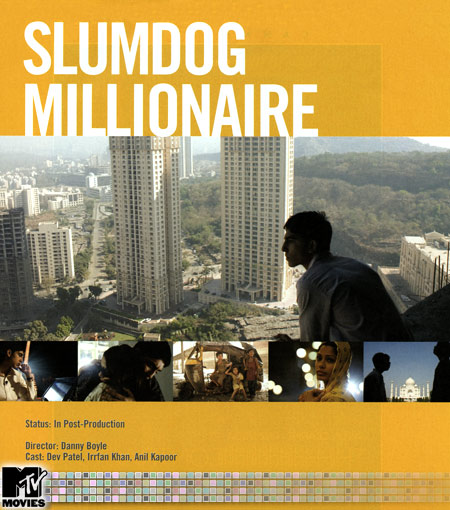
Atticus Narain: Rethinking post-colonial representation after Slumdog Millionaire
Rethinking post-colonial representation after Slumdog Millionaire
by Atticus Narain
Dark Matter
Sound bites: poverty porn, slum tourism, imperialist guilt flick, post-colonial inequalities continued, Bombay’s underbelly revealed- revelled, brilliant, feel good movie, accurate portrayal, gross misrepresentation, a visual Lonely Planet guide to Mumbai, an (anti-)Indian movie, Bollywood mania. On television Boyle takes questions from enthusiastic BrAsians; in The Guardian Rushdie laments the “impossibility on impossibility”; and angry Amitabh Bachchan writes back – sounds jealous; my own contribution would be Angelina Jolie and Madonna tussling at the Oscars over adopting the movie’s child actors.
The American and British film industries’ acclamation of Slumdog Millionaire has raised much media debate. Issues of authenticity, cultural ownership,‘burden of representation’, the nationality of its director, its content and stylistic aesthetics, and Eurocentric and/or re-Orientalist visions, have created a vast contact zone for analyzing cinema, identity, and nationalism. None of this is new of course – contention of where Kurosawa and Ray belong continues; Spike Lee’s criticism of Quentin Tarantino’s use of Afro-American linguistics replays these debates – albeit with different histories of race, empire and exploitation. Using child actors as allegories of post-colonial development is characteristic of new national cinemas. This is brilliantly done in Amir Naderi’s The Runner; Salam Bombay is a little geographically closer, and numerous Indian socials of the fifties and sixties deployed children as central to narrative development and critique.
Slumdog Millionaire does not confirm to the contexts of such debates usually associated with World – Third – Alternative – cinemas, certainly not in the political sense that these cinemas are often discussed. Every now and again a film’s popularity transcends the categories accorded them and is propelled to a much higher and holy accolade. Slumdog Millionaire is City of Joy for the twenty-first century, informed by an anthropological attempt at readdressing inequalities of representation by “giving” the camera to the Other and erasing the need for white protagonists – well almost. If Boyle’s ethnicity was different would all this discussion be taking place? What happened to Gurinder Chadha’s aesthetic and agenda? Forced to succumb to funding desires of reproducing the East for the West- Bride and Prejudice- or producing minority narratives that tick every possible identity ‘clash’? Gentle, unassuming, had never even been to India prior to filming, Boyle does it better!
To Read the Rest of the Essay
by Atticus Narain
Dark Matter
Sound bites: poverty porn, slum tourism, imperialist guilt flick, post-colonial inequalities continued, Bombay’s underbelly revealed- revelled, brilliant, feel good movie, accurate portrayal, gross misrepresentation, a visual Lonely Planet guide to Mumbai, an (anti-)Indian movie, Bollywood mania. On television Boyle takes questions from enthusiastic BrAsians; in The Guardian Rushdie laments the “impossibility on impossibility”; and angry Amitabh Bachchan writes back – sounds jealous; my own contribution would be Angelina Jolie and Madonna tussling at the Oscars over adopting the movie’s child actors.
The American and British film industries’ acclamation of Slumdog Millionaire has raised much media debate. Issues of authenticity, cultural ownership,‘burden of representation’, the nationality of its director, its content and stylistic aesthetics, and Eurocentric and/or re-Orientalist visions, have created a vast contact zone for analyzing cinema, identity, and nationalism. None of this is new of course – contention of where Kurosawa and Ray belong continues; Spike Lee’s criticism of Quentin Tarantino’s use of Afro-American linguistics replays these debates – albeit with different histories of race, empire and exploitation. Using child actors as allegories of post-colonial development is characteristic of new national cinemas. This is brilliantly done in Amir Naderi’s The Runner; Salam Bombay is a little geographically closer, and numerous Indian socials of the fifties and sixties deployed children as central to narrative development and critique.
Slumdog Millionaire does not confirm to the contexts of such debates usually associated with World – Third – Alternative – cinemas, certainly not in the political sense that these cinemas are often discussed. Every now and again a film’s popularity transcends the categories accorded them and is propelled to a much higher and holy accolade. Slumdog Millionaire is City of Joy for the twenty-first century, informed by an anthropological attempt at readdressing inequalities of representation by “giving” the camera to the Other and erasing the need for white protagonists – well almost. If Boyle’s ethnicity was different would all this discussion be taking place? What happened to Gurinder Chadha’s aesthetic and agenda? Forced to succumb to funding desires of reproducing the East for the West- Bride and Prejudice- or producing minority narratives that tick every possible identity ‘clash’? Gentle, unassuming, had never even been to India prior to filming, Boyle does it better!
To Read the Rest of the Essay
Seeing Red Radio: Noam Chomsky, Howard Zinn, Michael Parenti, Malcolm X, Billy Bragg, Utah Philips, Saul Williams, Masada, DJ Spooky, Fela Kuti
October’s Release from the Archive
Seeing Red Radio
A show slightly dated by the Bush references, but the new regime that pilots America’s Imperial Juggernaut has barely altered course. It includes sections of a Noam Chomsky talk ..., as well as Howard Zinn, Michael Parenti, Malcolm X and music by the likes of Billy Bragg, Utah Philips, Saul Williams, Masada, DJ Spooky, Fela Kuti and others.
Music:
Marching Song of the Covert Battalions – Billy Bragg
Pledge of Resistance – Saul Williams
World Turned Upside Down – Billy Bragg
VIP – Fela Kuti
to name a few…
To Listen to the Episode
Seeing Red Radio
A show slightly dated by the Bush references, but the new regime that pilots America’s Imperial Juggernaut has barely altered course. It includes sections of a Noam Chomsky talk ..., as well as Howard Zinn, Michael Parenti, Malcolm X and music by the likes of Billy Bragg, Utah Philips, Saul Williams, Masada, DJ Spooky, Fela Kuti and others.
Music:
Marching Song of the Covert Battalions – Billy Bragg
Pledge of Resistance – Saul Williams
World Turned Upside Down – Billy Bragg
VIP – Fela Kuti
to name a few…
To Listen to the Episode
Glenn Greenwald: Excessive bipartisanship and other matters
Excessive bipartisanship and other matters
By Glenn Greenwald
Salon
One of the strangest prongs of conventional Beltway wisdom is the lament that there is not enough bipartisanship. The opposite is true: many of the most damaging acts inflicted on the country by Washington are enacted on a fully bipartisan basis -- the most destructive political act of this generation, the invasion of Iraq, was fully bipartisan, as were most of the post-9/11 civil liberties abuses and other Bush-era initiatives-- and, at least in certain areas, the harmonious joining together of Republicans and Democrats continues unabated:
A mountain of evidence has emerged over the last several years documenting pervasive, systematic abuse of the Patriot Act powers. The proposed safeguards were extremely modest and would have provided minimal oversight on how those powers were exercised. Leading Democrats such as Dianne Feinstein spent all years ensuring that the proposed reforms were weakened to the point of virtual meaningless. But as weakened as they were, "some Republican senators objected" and might have called Democrats "soft on terror," so that was the end of that. The domestic surveillance law that Democrats spent years assailing as dangerously overbroad when out of power is renewed in full now that they are in power. That's the Beauty of Bipartisanship, and the last thing we need is more of it.
To read the rest of the post and to access hyperlinked resources
By Glenn Greenwald
Salon
One of the strangest prongs of conventional Beltway wisdom is the lament that there is not enough bipartisanship. The opposite is true: many of the most damaging acts inflicted on the country by Washington are enacted on a fully bipartisan basis -- the most destructive political act of this generation, the invasion of Iraq, was fully bipartisan, as were most of the post-9/11 civil liberties abuses and other Bush-era initiatives-- and, at least in certain areas, the harmonious joining together of Republicans and Democrats continues unabated:
Senate votes to extend Patriot Act
Democrats retreat from adding new privacy protections to the law
The Senate voted Wednesday to extend for a year key provisions of the nation's counterterrorism surveillance law that are scheduled to expire at the end of the month.
In agreeing to pass the bill, Senate Democrats retreated from adding new privacy protections to the USA Patriot Act.
The Senate approved the bill on a voice vote with no debate. It now goes to the House. . . .
Supporters say extending the law enables authorities to keep important tools in the fight against terrorism. It would also give Democrats some cover from Republican criticism that the Obama administration is soft on terrorism. . . . Some Democrats, however, had to forfeit new privacy protections they had sought for the law. . . .
"I would have preferred to add oversight and judicial review improvements to any extension of expiring provisions in the USA Patriot Act," said Sen. Patrick Leahy, D-Vt., chairman of the Senate Judiciary Committee. "But I understand some Republican senators objected."
A mountain of evidence has emerged over the last several years documenting pervasive, systematic abuse of the Patriot Act powers. The proposed safeguards were extremely modest and would have provided minimal oversight on how those powers were exercised. Leading Democrats such as Dianne Feinstein spent all years ensuring that the proposed reforms were weakened to the point of virtual meaningless. But as weakened as they were, "some Republican senators objected" and might have called Democrats "soft on terror," so that was the end of that. The domestic surveillance law that Democrats spent years assailing as dangerously overbroad when out of power is renewed in full now that they are in power. That's the Beauty of Bipartisanship, and the last thing we need is more of it.
To read the rest of the post and to access hyperlinked resources

Republican legislator Bob Marshall says disabled children are 'God's punishment' for abortion
(I should start a WTF archive... Courtesy of Gerald Adair)
Video: Republican legislator says disabled children are 'God's punishment' for abortion
Crooks and Liars
When a group of religious-right poobahs unveiled their effort in Virginia last week to attack Planned Parenthood and its funding, one of them -- a Republican legislator named Bob Marshal, as Josh at RightWingWatch reported -- declared that God punished women who've had abortions by giving them disabled children later:
To Read the Rest of the Post and to watch the video of Bob Marshall
Video: Republican legislator says disabled children are 'God's punishment' for abortion
Crooks and Liars
When a group of religious-right poobahs unveiled their effort in Virginia last week to attack Planned Parenthood and its funding, one of them -- a Republican legislator named Bob Marshal, as Josh at RightWingWatch reported -- declared that God punished women who've had abortions by giving them disabled children later:
“The number of children who are born subsequent to a first abortion with handicaps has increased dramatically. Why? Because when you abort the first born of any, nature takes its vengeance on the subsequent children,” said Marshall, a Republican.
“In the Old Testament, the first born of every being, animal and man, was dedicated to the Lord. There’s a special punishment Christians would suggest.”
To Read the Rest of the Post and to watch the video of Bob Marshall
Aldo Leopold: Thinking Like a Mountain
(Was reminded of one of my favorite environmental writings (by the hunter and conservationist) by Aldo Leopold after watching this news report in which the corporate chainstore Cabela's tries to justify there support of a "predator derby" ... Original news report courtesy of Jane Garton.)
Thinking Like a Mountain
By Aldo Leopold
A deep chesty bawl echoes from rimrock to rimrock, rolls down the mountain, and fades into the far blackness of the night. It is an outburst of wild defiant sorrow, and of contempt for all the adversities of the world. Every living thing (and perhaps many a dead one as well) pays heed to that call. To the deer it is a reminder of the way of all flesh, to the pine a forecast of midnight scuffles and of blood upon the snow, to the coyote a promise of gleanings to come, to the cowman a threat of red ink at the bank, to the hunter a challenge of fang against bullet. Yet behind these obvious and immediate hopes and fears there lies a deeper meaning, known only to the mountain itself. Only the mountain has lived long enough to listen objectively to the howl of a wolf.
Those unable to decipher the hidden meaning know nevertheless that it is there, for it is felt in all wolf country, and distinguishes that country from all other land. It tingles in the spine of all who hear wolves by night, or who scan their tracks by day. Even without sight or sound of wolf, it is implicit in a hundred small events: the midnight whinny of a pack horse, the rattle of rolling rocks, the bound of a fleeing deer, the way shadows lie under the spruces. Only the ineducable tyro can fail to sense the presence or absence of wolves, or the fact that mountains have a secret opinion about them.
My own conviction on this score dates from the day I saw a wolf die. We were eating lunch on a high rimrock, at the foot of which a turbulent river elbowed its way. We saw what we thought was a doe fording the torrent, her breast awash in white water. When she climbed the bank toward us and shook out her tail, we realized our error: it was a wolf. A half-dozen others, evidently grown pups, sprang from the willows and all joined in a welcoming melee of wagging tails and playful maulings. What was literally a pile of wolves writhed and tumbled in the center of an open flat at the foot of our rimrock.
In those days we had never heard of passing up a chance to kill a wolf. In a second we were pumping lead into the pack, but with more excitement than accuracy: how to aim a steep downhill shot is always confusing. When our rifles were empty, the old wolf was down, and a pup was dragging a leg into impassable slide-rocks.
We reached the old wolf in time to watch a fierce green fire dying in her eyes. I realized then, and have known ever since, that there was something new to me in those eyes - something known only to her and to the mountain. I was young then, and full of trigger-itch; I thought that because fewer wolves meant more deer, that no wolves would mean hunters' paradise. But after seeing the green fire die, I sensed that neither the wolf nor the mountain agreed with such a view.
Since then I have lived to see state after state extirpate its wolves. I have watched the face of many a newly wolfless mountain, and seen the south-facing slopes wrinkle with a maze of new deer trails. I have seen every edible bush and seedling browsed, first to anaemic desuetude, and then to death. I have seen every edible tree defoliated to the height of a saddlehorn. Such a mountain looks as if someone had given God a new pruning shears, and forbidden Him all other exercise. In the end the starved bones of the hoped-for deer herd, dead of its own too-much, bleach with the bones of the dead sage, or molder under the high-lined junipers.
I now suspect that just as a deer herd lives in mortal fear of its wolves, so does a mountain live in mortal fear of its deer. And perhaps with better cause, for while a buck pulled down by wolves can be replaced in two or three years, a range pulled down by too many deer may fail of replacement in as many decades. So also with cows. The cowman who cleans his range of wolves does not realize that he is taking over the wolf's job of trimming the herd to fit the range. He has not learned to think like a mountain. Hence we have dustbowls, and rivers washing the future into the sea.
image of deer skull: 5kWe all strive for safety, prosperity, comfort, long life, and dullness. The deer strives with his supple legs, the cowman with trap and poison, the statesman with pen, the most of us with machines, votes, and dollars, but it all comes to the same thing: peace in our time. A measure of success in this is all well enough, and perhaps is a requisite to objective thinking, but too much safety seems to yield only danger in the long run. Perhaps this is behind Thoreau's dictum: In wildness is the salvation of the world. Perhaps this is the hidden meaning in the howl of the wolf, long known among mountains, but seldom perceived among men.
Thinking Like a Mountain
By Aldo Leopold
A deep chesty bawl echoes from rimrock to rimrock, rolls down the mountain, and fades into the far blackness of the night. It is an outburst of wild defiant sorrow, and of contempt for all the adversities of the world. Every living thing (and perhaps many a dead one as well) pays heed to that call. To the deer it is a reminder of the way of all flesh, to the pine a forecast of midnight scuffles and of blood upon the snow, to the coyote a promise of gleanings to come, to the cowman a threat of red ink at the bank, to the hunter a challenge of fang against bullet. Yet behind these obvious and immediate hopes and fears there lies a deeper meaning, known only to the mountain itself. Only the mountain has lived long enough to listen objectively to the howl of a wolf.
Those unable to decipher the hidden meaning know nevertheless that it is there, for it is felt in all wolf country, and distinguishes that country from all other land. It tingles in the spine of all who hear wolves by night, or who scan their tracks by day. Even without sight or sound of wolf, it is implicit in a hundred small events: the midnight whinny of a pack horse, the rattle of rolling rocks, the bound of a fleeing deer, the way shadows lie under the spruces. Only the ineducable tyro can fail to sense the presence or absence of wolves, or the fact that mountains have a secret opinion about them.
My own conviction on this score dates from the day I saw a wolf die. We were eating lunch on a high rimrock, at the foot of which a turbulent river elbowed its way. We saw what we thought was a doe fording the torrent, her breast awash in white water. When she climbed the bank toward us and shook out her tail, we realized our error: it was a wolf. A half-dozen others, evidently grown pups, sprang from the willows and all joined in a welcoming melee of wagging tails and playful maulings. What was literally a pile of wolves writhed and tumbled in the center of an open flat at the foot of our rimrock.
In those days we had never heard of passing up a chance to kill a wolf. In a second we were pumping lead into the pack, but with more excitement than accuracy: how to aim a steep downhill shot is always confusing. When our rifles were empty, the old wolf was down, and a pup was dragging a leg into impassable slide-rocks.
We reached the old wolf in time to watch a fierce green fire dying in her eyes. I realized then, and have known ever since, that there was something new to me in those eyes - something known only to her and to the mountain. I was young then, and full of trigger-itch; I thought that because fewer wolves meant more deer, that no wolves would mean hunters' paradise. But after seeing the green fire die, I sensed that neither the wolf nor the mountain agreed with such a view.
Since then I have lived to see state after state extirpate its wolves. I have watched the face of many a newly wolfless mountain, and seen the south-facing slopes wrinkle with a maze of new deer trails. I have seen every edible bush and seedling browsed, first to anaemic desuetude, and then to death. I have seen every edible tree defoliated to the height of a saddlehorn. Such a mountain looks as if someone had given God a new pruning shears, and forbidden Him all other exercise. In the end the starved bones of the hoped-for deer herd, dead of its own too-much, bleach with the bones of the dead sage, or molder under the high-lined junipers.
I now suspect that just as a deer herd lives in mortal fear of its wolves, so does a mountain live in mortal fear of its deer. And perhaps with better cause, for while a buck pulled down by wolves can be replaced in two or three years, a range pulled down by too many deer may fail of replacement in as many decades. So also with cows. The cowman who cleans his range of wolves does not realize that he is taking over the wolf's job of trimming the herd to fit the range. He has not learned to think like a mountain. Hence we have dustbowls, and rivers washing the future into the sea.
image of deer skull: 5kWe all strive for safety, prosperity, comfort, long life, and dullness. The deer strives with his supple legs, the cowman with trap and poison, the statesman with pen, the most of us with machines, votes, and dollars, but it all comes to the same thing: peace in our time. A measure of success in this is all well enough, and perhaps is a requisite to objective thinking, but too much safety seems to yield only danger in the long run. Perhaps this is behind Thoreau's dictum: In wildness is the salvation of the world. Perhaps this is the hidden meaning in the howl of the wolf, long known among mountains, but seldom perceived among men.
Subscribe to:
Posts (Atom)