Act NOW! Proposed Louisville Coal Ash Pond Threatens Your Health and Water Share
5.7 Million Cubic Yards of Hazardous Coal Ash May Be Dumped At E.ON’s Cane Run Coal-Burning Power Plant. Action needed by March 13th!
Problem
E.ON’s Cane Run Power Station has applied for a Section 404 permit through the U.S. Army Corps of Engineers to add a 60-acre coal combustion waste (CCW) landfill adjacent to the power plant.
The current CCW pond on-site at the Cane Run Power Station is one of 44 classified by the U.S. Environmental Protection Agency as “high hazard” – meaning that a spill would result in significant damage or loss of life.
CCW is the solid waste left over from burning coal. CCW is a combination of waste from the coal plant’s air filters and the residue from coal boilers. The ashy part of the waste, called coal ash, contains concentrated pollutants, including many toxins known to cause cancer in humans.
The proposed permit would:
# allow 5.7 million cubic yards of CCW, which contains toxins known to be hazardous to human health, to be dumped on site. The U.S. EPA states that 1 in 50 adults and 1 in 100 children that live near CCW storage sites are at risk of developing cancer
# allow more than 3,000 feet of ephemeral and intermittent streams and 8 wetland areas to be filled
# allow use of an inferior containment liner that deteriorate over time, likely resulting in toxic chemicals leaching into groundwater
# ignore restoration requirements for 5 of the wetlands and require only minimal restoration for the other 3
# allow this waste to be dumped on land located at the end of the Ohio River floodwall, clearly in the river’s flood plain putting residents downstream at risk
--Find out more about the impacts coal ash can have on your community and health here.
--Louisville District Corps of Engineers Public Notice No. LRL-2010-35 is available for viewing here.
Cane Run Rd. Coal plant. (photo from Courier-Journal website)
Solution
Let the Army Corps of Engineers know that you oppose this permit!
**Please take action by March 13, 2010 deadline**
Action Needed:
Send an email requesting that the Army Corps deny this permit to:
lrl.regulatorypubliccomment@usace.army.mil
Put the permit # LRL 2010-35-mdh as the subject. Provide your physical mailing address and telephone number.
OR write to:
U.S. Army Corps of Engineers, Louisville
Romano Mazzoli Federal Building
600 Dr. Martin Luther King, Jr. Place
Louisville, KY 40202
A SAMPLE LETTER
Please deny E.ON’s request for a permit to expand Cane Run Power Station’s CCW landfill
U.S. Army Corps of Engineers, Louisville
Romano Mazzoli Federal Building
600 Dr. Martin Luther King, Jr. Place
Louisville, KY 40202
March 13, 2010
To Whom It May Concern:
Please support clean air and the health of Kentuckians by denying E.ON’s permit request to expand the Cane Run Power Station’s coal combustion waste landfill. Coal ash exposure puts our health at risk. The EPA estimates that up to 1 in 50 nearby residents could get cancer from exposure to contaminants in poorly stored coal ash. Other health effects may include damage to vital organs and the central nervous system, especially in children.
This permit is problematic for several reasons:
· The dump will not be properly contained, putting nearby residents and families at risk of health hazards and death.
· The permit allows over 3,000 feet of ephemeral and intermittent streams and 8 wetlands to be filled with 5.7 million cubic yards of coal combustion waste.
· Minimal restoration requirements for destroyed wetlands.
· The land selected for this expansion is not an extension of the existing landfill and is right outside the end of the Ohio River floodwall in the flood plain putting residents downstream at risk.
The Cane Run plant’s current coal ash pond already puts nearby residents at risk of death and serious health impacts. Enough is enough. Help Louisville lead the way toward better environmental standards. E.ON can invest in energy efficiency, weatherization, and renewable energies to reduce and eliminate the need for hazardous expansions like this permit request.
Thursday, March 11, 2010

ENG 102: The People Speak Pt. 2
Remember, your assignment is to develop a research project inspired from the documentary The People Speak and/or the book The Voices of the People's History of the United States
A People's History of the United States (on Google Books)
Watch more readings from the Voices of the People's History of the United States
Howard Zinn
Previous ENG 102 posts

Here is a list of the resources I'm going to be putting on reserve for you at the BCTC library circulation desk, in the HUM 220 section:
Crips and Bloods: Made in America
Mooney, James, ed. American Dissenters: Volume Two. Maplecrest, NY: Brandywine Press, 2005.
Includes chapters on:
Ida B. Wells-Barnett
Agrarianism
Henry George
Bill Haywood and the IWW
Thorstein Veblen
Emma Goldman
Upton Sinclair
Sinclair Lewis
Martin Luther King, Jr.
Students for a Democratic Society (SDS) and the Port Huron Statement
Reflections on Power and Self-Righteousness
The Battle in Seattle
The Arrogance of Ownership
Ruane, Kevin. War and Revolution in Vietnam, 1930-1975. Bristol, PN: UCL Press, 1998.
Buchheit, Paul, ed. American Wars: Illusions and Realities. Atlanta, GA: Clarity Press, 2008.
McCarthy, Timothy Patrick and John McMillian, eds. The Radical Reader: A Documentary History of the American Radical Tradition. NY: The New Press, 2003.
Also in regards to the documentary:
The Zinn Education Project
Zinn, Howard. A People's History of the United States: 1492 - Present. NY: Harper-Collins, 2003.
Howard Zinn on Democratic Education (Z Magazine)
Howard Zinn on Holy Wars (Democracy Now)
Anderson, Benedict. Imagined Communities: Reflections on the Origin and Spread of Nationalism. Brooklyn, NY: Verso, 1996.
Loewen, James. Lies My Teacher Told Me: Everything Your American History Textbook Got Wrong. NY: Touchstone, 2007.
Manufacturing Consent: Noam Chomsky and the Propaganda Model of the Media
and an ongoing archive of materials on Howard Zinn
A People's History of the United States (on Google Books)
Watch more readings from the Voices of the People's History of the United States
Howard Zinn
Previous ENG 102 posts
Here is a list of the resources I'm going to be putting on reserve for you at the BCTC library circulation desk, in the HUM 220 section:
Crips and Bloods: Made in America
Mooney, James, ed. American Dissenters: Volume Two. Maplecrest, NY: Brandywine Press, 2005.
Includes chapters on:
Ida B. Wells-Barnett
Agrarianism
Henry George
Bill Haywood and the IWW
Thorstein Veblen
Emma Goldman
Upton Sinclair
Sinclair Lewis
Martin Luther King, Jr.
Students for a Democratic Society (SDS) and the Port Huron Statement
Reflections on Power and Self-Righteousness
The Battle in Seattle
The Arrogance of Ownership
Ruane, Kevin. War and Revolution in Vietnam, 1930-1975. Bristol, PN: UCL Press, 1998.
Buchheit, Paul, ed. American Wars: Illusions and Realities. Atlanta, GA: Clarity Press, 2008.
McCarthy, Timothy Patrick and John McMillian, eds. The Radical Reader: A Documentary History of the American Radical Tradition. NY: The New Press, 2003.
Also in regards to the documentary:
The Zinn Education Project
Zinn, Howard. A People's History of the United States: 1492 - Present. NY: Harper-Collins, 2003.
Howard Zinn on Democratic Education (Z Magazine)
Howard Zinn on Holy Wars (Democracy Now)
Anderson, Benedict. Imagined Communities: Reflections on the Origin and Spread of Nationalism. Brooklyn, NY: Verso, 1996.
Loewen, James. Lies My Teacher Told Me: Everything Your American History Textbook Got Wrong. NY: Touchstone, 2007.
Manufacturing Consent: Noam Chomsky and the Propaganda Model of the Media
and an ongoing archive of materials on Howard Zinn
Democracy Now: William Kunstler: Disturbing the Universe -- New Documentary Examines Life, Legacy of Famed Radical Attorney
“William Kunstler: Disturbing the Universe”: New Documentary Examines Life, Legacy of Famed Radical Attorney
Democracy Now
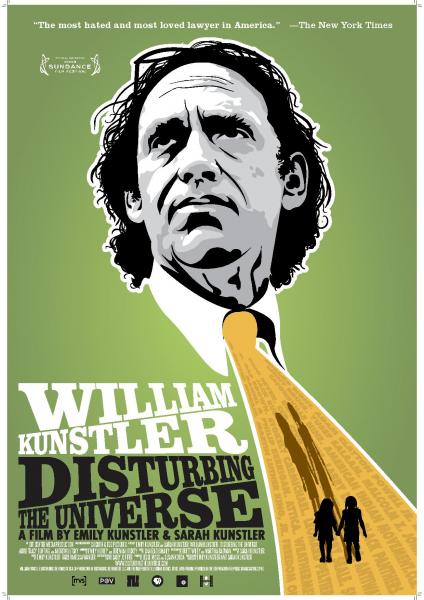
A new documentary looks at a man once described as the most hated and most loved lawyer in America: the late William Kunstler. We play excerpts of William Kunstler: Disturbing the Universe and speak to the film’s co-directors, Kunstler’s daughters Emily and Sarah Kunstler.
Emily Kunstler and Sarah Kunstler, co-directors of the new documentary William Kunstler: Disturbing the Universe. They run Off Center Media, a production company that produces documentaries exposing injustice in the criminal justice system.
To Read/Listen/Watch
Democracy Now
A new documentary looks at a man once described as the most hated and most loved lawyer in America: the late William Kunstler. We play excerpts of William Kunstler: Disturbing the Universe and speak to the film’s co-directors, Kunstler’s daughters Emily and Sarah Kunstler.
Emily Kunstler and Sarah Kunstler, co-directors of the new documentary William Kunstler: Disturbing the Universe. They run Off Center Media, a production company that produces documentaries exposing injustice in the criminal justice system.
To Read/Listen/Watch
Alexander Billet: The Children of Woody Guthrie -- An Interview with Antonino D'Ambrosio
The Children of Woody Guthrie: Interview with Antonino D'Ambrosio
by Alexander Billet
Socialist Worker

Never underestimate the ability for pop culture to water down its most firebrand figures--especially after they're dead. Luckily, there are people like Antonino D'Ambrosio. His book Let Fury Have the Hour: The Punk Rock Politics of Joe Strummer, released in 2003, is essential reading for anyone who wants to learn who the Clash front man really was. D'Ambrosio's new book A Heartbeat and a Guitar: Johnny Cash and the Making of Bitter Tears is a passionate examination of Cash's album protesting the conditions for Native peoples in the early 1960s.
Here, D'Ambrosio takes to Alexander Billet about the new book, his influences, and his thoughts on music and politics.
To Read the Interview

by Alexander Billet
Socialist Worker
Never underestimate the ability for pop culture to water down its most firebrand figures--especially after they're dead. Luckily, there are people like Antonino D'Ambrosio. His book Let Fury Have the Hour: The Punk Rock Politics of Joe Strummer, released in 2003, is essential reading for anyone who wants to learn who the Clash front man really was. D'Ambrosio's new book A Heartbeat and a Guitar: Johnny Cash and the Making of Bitter Tears is a passionate examination of Cash's album protesting the conditions for Native peoples in the early 1960s.
Here, D'Ambrosio takes to Alexander Billet about the new book, his influences, and his thoughts on music and politics.
To Read the Interview
Creative Screenwriting: Screenwriter Mark Boal about The Hurt Locker
The Hurt Locker Q&A
Creative Screenwriting Magazine
Senior Editor Jeff Goldsmith interviews screenwriter Mark Boal about The Hurt Locker.

To Listen to the Interview
Creative Screenwriting Magazine
Senior Editor Jeff Goldsmith interviews screenwriter Mark Boal about The Hurt Locker.
To Listen to the Interview
Wednesday, March 10, 2010
Democracy Now: A Tribute to Yip Harburg -- The Man Who Put the Rainbow in The Wizard of Oz and Songwriter of "Brother Can You Spare a Dime"
A Tribute to Yip Harburg: The Man Who Put the Rainbow in The Wizard of Oz
Democracy Now
His name might not be familiar to many, but his songs are sung by millions around the world. Today, a journey through the life and work of Yip Harburg, the Broadway lyricist who wrote such hits as “Brother, Can You Spare a Dime?” and who put the music into The Wizard of Oz. Born into poverty on the Lower East Side of Manhattan, Yip always included a strong social and political component to his work, fighting racism and poverty. A lifelong socialist, Yip was blacklisted and hounded throughout much of his life.
Taking us on today’s trip through the music and politics of Yip is his son, Ernie Harburg. First, we’re going to go through Yip’s early life, his collaboration with the Gershwin’s, through “Brother, Can You Spare a Dime?” Then we’re going to take an in-depth look at The Wizard of Oz. And finally, we’ll hear a medley of Yip Harburg’s Broadway songs and the politics of the times in which they were created.
To Read/Listen/Watch this Tribute
Democracy Now
His name might not be familiar to many, but his songs are sung by millions around the world. Today, a journey through the life and work of Yip Harburg, the Broadway lyricist who wrote such hits as “Brother, Can You Spare a Dime?” and who put the music into The Wizard of Oz. Born into poverty on the Lower East Side of Manhattan, Yip always included a strong social and political component to his work, fighting racism and poverty. A lifelong socialist, Yip was blacklisted and hounded throughout much of his life.
Taking us on today’s trip through the music and politics of Yip is his son, Ernie Harburg. First, we’re going to go through Yip’s early life, his collaboration with the Gershwin’s, through “Brother, Can You Spare a Dime?” Then we’re going to take an in-depth look at The Wizard of Oz. And finally, we’ll hear a medley of Yip Harburg’s Broadway songs and the politics of the times in which they were created.
To Read/Listen/Watch this Tribute
Monday, March 08, 2010
March 4th, 2010: Police Attack 880 Interstate Takeover
Police beat unarmed student protesters in California. They also do nothing to corporate media representatives and arrest independent media reporters:
Chris Hedges: Calling All Rebels
Calling All Rebels
by Chris Hedges
Common Dreams
How do we resist? How, if this descent is inevitable, as I believe it is, do we fight back? Why should we resist at all? Why not give in to cynicism and despair? Why not carve out as comfortable a niche as possible within the embrace of the corporate state and spend our lives attempting to satiate our private needs? The power elite, including most of those who graduate from our top universities and our liberal and intellectual classes, have sold out for personal comfort. Why not us?
The French moral philosopher Albert Camus argued that we are separated from each other. Our lives are meaningless. We cannot influence fate. We will all die and our individual being will be obliterated. And yet Camus wrote that "one of the only coherent philosophical positions is revolt. It is a constant confrontation between man and his obscurity. It is not aspiration, for it is devoid of hope. That revolt is the certainty of a crushing fate, without the resignation that ought to accompany it."
"A living man can be enslaved and reduced to the historic condition of an object," Camus warned. "But if he dies in refusing to be enslaved, he reaffirms the existence of another kind of human nature which refuses to be classified as an object."
The rebel, for Camus, stands with the oppressed-the unemployed workers being thrust into impoverishment and misery by the corporate state, the Palestinians in Gaza, the civilians in Iraq and Afghanistan, the disappeared who are held in our global black sites, the poor in our inner cities and depressed rural communities, immigrants and those locked away in our prison system. And to stand with them does not mean to collaborate with parties, such as the Democrats, who can mouth the words of justice while carrying out acts of oppression. It means open and direct defiance.
The power structure and its liberal apologists dismiss the rebel as impractical and see the rebel's outsider stance as counterproductive. They condemn the rebel for expressing anger at injustice. The elites and their apologists call for calm and patience. They use the hypocritical language of spirituality, compromise, generosity and compassion to argue that the only alternative is to accept and work with the systems of power. The rebel, however, is beholden to a moral commitment that makes it impossible to stand with the power elite. The rebel refuses to be bought off with foundation grants, invitations to the White House, television appearances, book contracts, academic appointments or empty rhetoric. The rebel is not concerned with self-promotion or public opinion. The rebel knows that, as Augustine wrote, hope has two beautiful daughters, anger and courage-anger at the way things are and the courage to see that they do not remain the way they are. The rebel is aware that virtue is not rewarded. The act of rebellion defines itself.
"You do not become a ‘dissident' just because you decide one day to take up this most unusual career," Vaclav Havel said when he battled the communist regime in Czechoslovakia. "You are thrown into it by your personal sense of responsibility, combined with a complex set of external circumstances. You are cast out of the existing structures and placed in a position of conflict with them. It begins as an attempt to do your work well, and ends with being branded an enemy of society. ... The dissident does not operate in the realm of genuine power at all. He is not seeking power. He has no desire for office and does not gather votes. He does not attempt to charm the public. He offers nothing and promises nothing. He can offer, if anything, only his own skin-and he offers it solely because he has no other way of affirming the truth he stands for. His actions simply articulate his dignity as a citizen, regardless of the cost."
Those in power have disarmed the liberal class. They do not argue that the current system is just or good, because they cannot, but they have convinced liberals that there is no alternative. But we are not slaves. We have a choice. We can refuse to be either a victim or an executioner. We have the moral capacity to say no, to refuse to cooperate. Any boycott or demonstration, any occupation or sit-in, any strike, any act of obstruction or sabotage, any refusal to pay taxes, any fast, any popular movement and any act of civil disobedience ignites the soul of the rebel and exposes the dead hand of authority. "There is beauty and there are the humiliated," Camus wrote. "Whatever difficulties the enterprise may present, I should like never to be unfaithful either to the second or the first."
"There is a time when the operation of the machine becomes so odious, makes you so sick at heart, that you can't take part; you can't even passively take part, and you've got to put your bodies upon the gears and upon the wheels, upon the levers, upon all the apparatus, and you've got to make it stop," Mario Savio said in 1964. "And you've got to indicate to the people who run it, to the people who own it, that unless you're free, the machine will be prevented from working at all."
The capacity to exercise moral autonomy, the capacity to refuse to cooperate, offers us the only route left to personal freedom and a life with meaning. Rebellion is its own justification. Those of us who come out of the religious left have no quarrel with Camus. Camus is right about the absurdity of existence, right about finding worth in the act of rebellion rather than some bizarre dream of an afterlife or Sunday School fantasy that God rewards the just and the good. "Oh my soul," the ancient Greek poet Pindar wrote, "do not aspire to immortal life, but exhaust the limits of the possible." We differ with Camus only in that we have faith that rebellion is not ultimately meaningless. Rebellion allows us to be free and independent human beings, but rebellion also chips away, however imperceptibly, at the edifice of the oppressor and sustains the dim flames of hope and love. And in moments of profound human despair these flames are never insignificant. They keep alive the capacity to be human. We must become, as Camus said, so absolutely free that "existence is an act of rebellion." Those who do not rebel in our age of totalitarian capitalism and who convince themselves that there is no alternative to collaboration are complicit in their own enslavement. They commit spiritual and moral suicide.
To Read the Entire Essay
by Chris Hedges
Common Dreams
How do we resist? How, if this descent is inevitable, as I believe it is, do we fight back? Why should we resist at all? Why not give in to cynicism and despair? Why not carve out as comfortable a niche as possible within the embrace of the corporate state and spend our lives attempting to satiate our private needs? The power elite, including most of those who graduate from our top universities and our liberal and intellectual classes, have sold out for personal comfort. Why not us?
The French moral philosopher Albert Camus argued that we are separated from each other. Our lives are meaningless. We cannot influence fate. We will all die and our individual being will be obliterated. And yet Camus wrote that "one of the only coherent philosophical positions is revolt. It is a constant confrontation between man and his obscurity. It is not aspiration, for it is devoid of hope. That revolt is the certainty of a crushing fate, without the resignation that ought to accompany it."
"A living man can be enslaved and reduced to the historic condition of an object," Camus warned. "But if he dies in refusing to be enslaved, he reaffirms the existence of another kind of human nature which refuses to be classified as an object."
The rebel, for Camus, stands with the oppressed-the unemployed workers being thrust into impoverishment and misery by the corporate state, the Palestinians in Gaza, the civilians in Iraq and Afghanistan, the disappeared who are held in our global black sites, the poor in our inner cities and depressed rural communities, immigrants and those locked away in our prison system. And to stand with them does not mean to collaborate with parties, such as the Democrats, who can mouth the words of justice while carrying out acts of oppression. It means open and direct defiance.
The power structure and its liberal apologists dismiss the rebel as impractical and see the rebel's outsider stance as counterproductive. They condemn the rebel for expressing anger at injustice. The elites and their apologists call for calm and patience. They use the hypocritical language of spirituality, compromise, generosity and compassion to argue that the only alternative is to accept and work with the systems of power. The rebel, however, is beholden to a moral commitment that makes it impossible to stand with the power elite. The rebel refuses to be bought off with foundation grants, invitations to the White House, television appearances, book contracts, academic appointments or empty rhetoric. The rebel is not concerned with self-promotion or public opinion. The rebel knows that, as Augustine wrote, hope has two beautiful daughters, anger and courage-anger at the way things are and the courage to see that they do not remain the way they are. The rebel is aware that virtue is not rewarded. The act of rebellion defines itself.
"You do not become a ‘dissident' just because you decide one day to take up this most unusual career," Vaclav Havel said when he battled the communist regime in Czechoslovakia. "You are thrown into it by your personal sense of responsibility, combined with a complex set of external circumstances. You are cast out of the existing structures and placed in a position of conflict with them. It begins as an attempt to do your work well, and ends with being branded an enemy of society. ... The dissident does not operate in the realm of genuine power at all. He is not seeking power. He has no desire for office and does not gather votes. He does not attempt to charm the public. He offers nothing and promises nothing. He can offer, if anything, only his own skin-and he offers it solely because he has no other way of affirming the truth he stands for. His actions simply articulate his dignity as a citizen, regardless of the cost."
Those in power have disarmed the liberal class. They do not argue that the current system is just or good, because they cannot, but they have convinced liberals that there is no alternative. But we are not slaves. We have a choice. We can refuse to be either a victim or an executioner. We have the moral capacity to say no, to refuse to cooperate. Any boycott or demonstration, any occupation or sit-in, any strike, any act of obstruction or sabotage, any refusal to pay taxes, any fast, any popular movement and any act of civil disobedience ignites the soul of the rebel and exposes the dead hand of authority. "There is beauty and there are the humiliated," Camus wrote. "Whatever difficulties the enterprise may present, I should like never to be unfaithful either to the second or the first."
"There is a time when the operation of the machine becomes so odious, makes you so sick at heart, that you can't take part; you can't even passively take part, and you've got to put your bodies upon the gears and upon the wheels, upon the levers, upon all the apparatus, and you've got to make it stop," Mario Savio said in 1964. "And you've got to indicate to the people who run it, to the people who own it, that unless you're free, the machine will be prevented from working at all."
The capacity to exercise moral autonomy, the capacity to refuse to cooperate, offers us the only route left to personal freedom and a life with meaning. Rebellion is its own justification. Those of us who come out of the religious left have no quarrel with Camus. Camus is right about the absurdity of existence, right about finding worth in the act of rebellion rather than some bizarre dream of an afterlife or Sunday School fantasy that God rewards the just and the good. "Oh my soul," the ancient Greek poet Pindar wrote, "do not aspire to immortal life, but exhaust the limits of the possible." We differ with Camus only in that we have faith that rebellion is not ultimately meaningless. Rebellion allows us to be free and independent human beings, but rebellion also chips away, however imperceptibly, at the edifice of the oppressor and sustains the dim flames of hope and love. And in moments of profound human despair these flames are never insignificant. They keep alive the capacity to be human. We must become, as Camus said, so absolutely free that "existence is an act of rebellion." Those who do not rebel in our age of totalitarian capitalism and who convince themselves that there is no alternative to collaboration are complicit in their own enslavement. They commit spiritual and moral suicide.
To Read the Entire Essay
WRFL Gets A New Tower --- More Power!!!
Subject: Tower Finally Here -Group Hug Everyone
Hello everyone,
After a decade of cutting red tape and raising funds, WRFL is finally boosting its power to 7900 watts on March 15th. This means that cities like Georgetown, Frankfort, Lawrenceburg and Paris, among others, will finally be able to get indie with it (na-na, na-na, na-na, na). Also, on April 23rd we are holding a celebration in honor of the new tower. The celebration will be held at Gumbo Ya-Ya's located on Main Street and will feature the band No Age. The event will be FREE. More bands to be named in the upcoming weeks so stay tuned.
Consider this a virtual hug from WRFL to everyone who has donated time and/or money to this expansion project over the past decade.
Hello everyone,
After a decade of cutting red tape and raising funds, WRFL is finally boosting its power to 7900 watts on March 15th. This means that cities like Georgetown, Frankfort, Lawrenceburg and Paris, among others, will finally be able to get indie with it (na-na, na-na, na-na, na). Also, on April 23rd we are holding a celebration in honor of the new tower. The celebration will be held at Gumbo Ya-Ya's located on Main Street and will feature the band No Age. The event will be FREE. More bands to be named in the upcoming weeks so stay tuned.
Consider this a virtual hug from WRFL to everyone who has donated time and/or money to this expansion project over the past decade.
ENG 102: The People Speaks, Pt. 1
This is the place for my ENG 102 students to post their responses/questions to the first half of the documentary The People Speaks
For more background on Howard Zinn check out this documentary about him and his work:
Ideas drawn from this documentary can also be used as inspiration for your research paper.
Here is the comment section for my Peace and Conflict Studies students who are also developing research projects from the Zinn book/documentary: Student examples
For more background on Howard Zinn check out this documentary about him and his work:
Ideas drawn from this documentary can also be used as inspiration for your research paper.
Here is the comment section for my Peace and Conflict Studies students who are also developing research projects from the Zinn book/documentary: Student examples
St. Patrick Day's Parade: Bike Ride (3/13/10)
Type:
Party - Holiday Party
Date:
Saturday, March 13, 2010
Time:
12:30pm - 2:00pm
Location:
Main St. and Midland Ave.
City/Town:
Lexington, KY
Description
Ride your bicycle in Lexington's 30th anniversary St Patrick's Parade. All people, bicycles, and festive attitudes are welcome.
Important Details
--Parade line-up begins at 12:30pm, between Main St. and Midland Ave.
--Parade starts at 1:00pm and will end in Lexington's Irish Green CentreLawn.
--Beer, concessions, and entertainment will be held in CentreLawn between 11am-7pm.
A "Tweed Ride" will accompany the parade where bicyclists will dress in vintage & whimsical clothing, ride bikes, and sport a dapper, buoyant attitude. This tweed ride nicely compliments the St. Patrick's Day Parade, because riders will showcase a historical style of dress that evokes the long tradition of Irish culture in the Bluegrass.
Lexrides.com is a community not-for-profit organization dedicated to promoting fun and eccentric events for all Lexington bicyclists.
Party - Holiday Party
Date:
Saturday, March 13, 2010
Time:
12:30pm - 2:00pm
Location:
Main St. and Midland Ave.
City/Town:
Lexington, KY
Description
Ride your bicycle in Lexington's 30th anniversary St Patrick's Parade. All people, bicycles, and festive attitudes are welcome.
Important Details
--Parade line-up begins at 12:30pm, between Main St. and Midland Ave.
--Parade starts at 1:00pm and will end in Lexington's Irish Green CentreLawn.
--Beer, concessions, and entertainment will be held in CentreLawn between 11am-7pm.
A "Tweed Ride" will accompany the parade where bicyclists will dress in vintage & whimsical clothing, ride bikes, and sport a dapper, buoyant attitude. This tweed ride nicely compliments the St. Patrick's Day Parade, because riders will showcase a historical style of dress that evokes the long tradition of Irish culture in the Bluegrass.
Lexrides.com is a community not-for-profit organization dedicated to promoting fun and eccentric events for all Lexington bicyclists.
Peter Singer: Let wild animals be wild
Let wild animals be wild: The killing of a SeaWorld trainer by an orca ought to make us rethink keeping animals in captivity for human amusement
by Peter Singer
The Guardian
Last month, at the SeaWorld amusement park in Florida, a whale grabbed a trainer, Dawn Brancheau, pulled her underwater and thrashed about with her. By the time rescuers arrived, Brancheau was dead.
The death of the trainer is a tragedy, and one can only have sympathy for her family. But the incident raises broader questions: was the attack deliberate? Did the whale, an orca named Tilikum and nicknamed Tilly, act out of stress at being held captive in a sterile concrete tank? Was he tired of being forced to perform to amuse the crowds? Is it right to keep such large animals in close confinement?
Tilly had been involved in two previous human deaths. In one episode, a trainer fell into the pool and Tilly and two other whales drowned him. In another, a man who appears to have entered the enclosure at night, when Sea World was closed, was found dead in the pool with Tilly. An autopsy showed that he had a bite mark. One of Tilly's offspring, sold to an amusement park in Spain, has also killed a trainer, as have orcas in other parks.
Richard Ellis, a marine conservationist at the American Museum of Natural History, believes that orcas are smart and would not do such a thing purely on impulse. "This was premeditated," he told the Associated Press.
We will never know exactly what was going on in Tilly's mind, but we do know that he has been in captivity since he was about two years old – he was captured off the coast of Iceland in 1983. Orcas are social mammals, and he would have been living with his mother and other relatives in a pod. It is reasonable to suppose that the sudden separation was traumatic for Tilly.
Moreover, the degree of confinement in an aquarium is extreme, for no tank, no matter how large, can come close to meeting the needs of animals who spend their lives in social groups swimming long distances in the ocean. Joyce Tischler, of the Animal Legal Defense Fund, described keeping a six-tonne orca in Sea World's tanks as akin to keeping a human in a bathtub for his entire life. David Phillips, director of the International Marine Mammal Project for the Earth Island Institute, which led the efforts to rehabilitate the orca Keiko – made famous by the movie Free Willy – said: "Orcas deserve a better fate than living in cramped pools."
But if we are pointing the finger at SeaWorld for what it does to its captive animals, we should also look more broadly at the way we confine performing animals. In most countries, it is possible to visit zoos and see bored animals pacing back and forth in cages, with nothing to do but wait for the next meal.
Circuses are even worse places for animals. Their living conditions are deplorable, especially in travelling circuses where cages have to be small so that they can go on the road. Training animals to perform tricks often involves starvation and cruelty. Undercover investigations have repeatedly shown animals being beaten and given electric shocks.
Several countries – among them Austria, Costa Rica, Denmark, Finland, India, Israel and Sweden – ban or severely restrict the use of wild animals in circuses. In Brazil, a movement to ban wild animals from circuses started after hungry lions managed to grab and devour a small boy.
Several major cities and many local governments around the world do not permit circuses with wild animals. Last year, Bolivia became the first country to ban all animals, wild or domestic, from circuses. That decision followed an undercover investigation by Animal Defenders International, which exposed shocking abuse of circus animals. Now the British government is holding a public online consultation on the use of animals in circuses. Many hope it will be a first step towards a ban.
Attempts to defend amusement parks and circuses on the grounds that they "educate" people about animals should not be taken seriously. Such enterprises are part of the commercial entertainment industry. The most important lesson they teach impressionable young minds is that it is acceptable to keep animals in captivity for human amusement. That is the opposite of the ethical attitude to animals that we should be seeking to impart to children.
To Read the Rest of the Essay
by Peter Singer
The Guardian
Last month, at the SeaWorld amusement park in Florida, a whale grabbed a trainer, Dawn Brancheau, pulled her underwater and thrashed about with her. By the time rescuers arrived, Brancheau was dead.
The death of the trainer is a tragedy, and one can only have sympathy for her family. But the incident raises broader questions: was the attack deliberate? Did the whale, an orca named Tilikum and nicknamed Tilly, act out of stress at being held captive in a sterile concrete tank? Was he tired of being forced to perform to amuse the crowds? Is it right to keep such large animals in close confinement?
Tilly had been involved in two previous human deaths. In one episode, a trainer fell into the pool and Tilly and two other whales drowned him. In another, a man who appears to have entered the enclosure at night, when Sea World was closed, was found dead in the pool with Tilly. An autopsy showed that he had a bite mark. One of Tilly's offspring, sold to an amusement park in Spain, has also killed a trainer, as have orcas in other parks.
Richard Ellis, a marine conservationist at the American Museum of Natural History, believes that orcas are smart and would not do such a thing purely on impulse. "This was premeditated," he told the Associated Press.
We will never know exactly what was going on in Tilly's mind, but we do know that he has been in captivity since he was about two years old – he was captured off the coast of Iceland in 1983. Orcas are social mammals, and he would have been living with his mother and other relatives in a pod. It is reasonable to suppose that the sudden separation was traumatic for Tilly.
Moreover, the degree of confinement in an aquarium is extreme, for no tank, no matter how large, can come close to meeting the needs of animals who spend their lives in social groups swimming long distances in the ocean. Joyce Tischler, of the Animal Legal Defense Fund, described keeping a six-tonne orca in Sea World's tanks as akin to keeping a human in a bathtub for his entire life. David Phillips, director of the International Marine Mammal Project for the Earth Island Institute, which led the efforts to rehabilitate the orca Keiko – made famous by the movie Free Willy – said: "Orcas deserve a better fate than living in cramped pools."
But if we are pointing the finger at SeaWorld for what it does to its captive animals, we should also look more broadly at the way we confine performing animals. In most countries, it is possible to visit zoos and see bored animals pacing back and forth in cages, with nothing to do but wait for the next meal.
Circuses are even worse places for animals. Their living conditions are deplorable, especially in travelling circuses where cages have to be small so that they can go on the road. Training animals to perform tricks often involves starvation and cruelty. Undercover investigations have repeatedly shown animals being beaten and given electric shocks.
Several countries – among them Austria, Costa Rica, Denmark, Finland, India, Israel and Sweden – ban or severely restrict the use of wild animals in circuses. In Brazil, a movement to ban wild animals from circuses started after hungry lions managed to grab and devour a small boy.
Several major cities and many local governments around the world do not permit circuses with wild animals. Last year, Bolivia became the first country to ban all animals, wild or domestic, from circuses. That decision followed an undercover investigation by Animal Defenders International, which exposed shocking abuse of circus animals. Now the British government is holding a public online consultation on the use of animals in circuses. Many hope it will be a first step towards a ban.
Attempts to defend amusement parks and circuses on the grounds that they "educate" people about animals should not be taken seriously. Such enterprises are part of the commercial entertainment industry. The most important lesson they teach impressionable young minds is that it is acceptable to keep animals in captivity for human amusement. That is the opposite of the ethical attitude to animals that we should be seeking to impart to children.
To Read the Rest of the Essay
Sunday, March 07, 2010
Democracy Now: Filmmaker Philippe Diaz on The End of Poverty?
Filmmaker Philippe Diaz on “The End of Poverty?"
Democracy Now

Earlier this year, the IMF and the World Bank warned that the financial crisis posed a serious challenge to reducing poverty. The World Bank predicted that the economic crisis could push another 53 million people in the global South into poverty. Well, according to the latest numbers from the United Nations, we’re now up to 2.7 billion people around the world who survive on less than two dollars a day, one billion of whom live on less than a dollar a day. Given the dire statistics and the widening gap between the rich and the poor, how can we see the eradication of poverty? That’s the central question of a new documentary called The End of Poverty?
To Read/Listen/Watch
Democracy Now
Earlier this year, the IMF and the World Bank warned that the financial crisis posed a serious challenge to reducing poverty. The World Bank predicted that the economic crisis could push another 53 million people in the global South into poverty. Well, according to the latest numbers from the United Nations, we’re now up to 2.7 billion people around the world who survive on less than two dollars a day, one billion of whom live on less than a dollar a day. Given the dire statistics and the widening gap between the rich and the poor, how can we see the eradication of poverty? That’s the central question of a new documentary called The End of Poverty?
To Read/Listen/Watch
Creative Screenwriting Magazine: 2010 Oscar Screenwriting Nominee Q&A
2010 Oscar Screenwriting Nominee Q&A
Creative Screenwriting Magazine
Senior Editor Jeff Goldsmith interviews Nick Hornby, Terri Tatchell, Armando Iannucci, Tony Roche, Simon Blackwell, Alessandro Camon, Geoffrey Fletcher, Pete Docter, Bob Peterson, Jason Reitman and Sheldon Turner about their Oscar Nominated Screenplays.
To Listen to the Panel
Creative Screenwriting Magazine
Senior Editor Jeff Goldsmith interviews Nick Hornby, Terri Tatchell, Armando Iannucci, Tony Roche, Simon Blackwell, Alessandro Camon, Geoffrey Fletcher, Pete Docter, Bob Peterson, Jason Reitman and Sheldon Turner about their Oscar Nominated Screenplays.
To Listen to the Panel
Allison Kilkenny: Normalizing the police state (and how it ends with taser-firing drones)
Normalizing the police state (and how it ends with taser-firing drones)
By ALLISON KILKENNY
True/Slant
Bob Herbert recently wrote about the overzealous enforcement of “peace officers” assigned to New York City schools. The officers are accused of detaining, searching, handcuffing, and arresting students for silly things like drawing on desks, or handling — not using, but handling — cell phones in school.
In one case, a safety officer kicked in the door of a stall in the boys’ bathroom, wounding a student’s head. The officer’s response to questioning about the matter was: “That’s life. It will stop bleeding.”
Another student, this time a 5-year-old, was shipped off to a hospital psychiatric ward for throwing a tantrum.
These absurd reactions to normal childhood behavior is all part of “Zero Tolerance.” Six-year-old Zachary Christie faced disciplinary action after bringing a Cub Scout utensil that can serve as a knife, fork, and spoon to school. Apparently, the state of Delaware is terrified of children shanking each other, and after all, it’s the era of Zero Tolerance.
Treating children as suspects is the new normal in American culture. There is something innately wrong with children. If they’re too chatty, they need to be medicated. If they’re too angry, they need to be suppressed by a “peace officer.” They are not to be trusted, and must be monitored at all times.
A school in Pennsylvania is accused of covertly activating webcams in school-issued laptops to spy on students. The accusations have generated a lot of outrage, but this is the logical conclusion of the country’s general movement toward a police state. If the NSA can wiretap citizens’ phones, the FBI can infiltrate protest groups, and the police can generally dominate and suppress any kind of protest, why shouldn’t schools be able to monitor student activity?
Americans have already accepted forms of police brutality (macing, sound cannons, tasering) as the inevitable punishments for exercising their First Amendment rights. They have already submitted to the bureaucratic requirements of permits (permits to gather, permits to use a bullhorn,) and the ridiculous spectacle of caged protests where activists are literally penned behind gates and cannot move from their designated locations as they “exercise” their “freedom of speech.”
When the protest spills past the acceptable parameters of activism, the police state shocks the citizenry back into submission. They taser, and mace, and deafen people until they stop fighting.
There hasn’t been too much fuss about this kind of oppression. Some guy got tasered when he asked John Kerry a question, but his fellow citizens mostly laughed about that. Jay Leno had a lot of fun with the “Don’t taze me, bro” stuff. Good times had by all.
To Read the Rest of the Article
By ALLISON KILKENNY
True/Slant
Bob Herbert recently wrote about the overzealous enforcement of “peace officers” assigned to New York City schools. The officers are accused of detaining, searching, handcuffing, and arresting students for silly things like drawing on desks, or handling — not using, but handling — cell phones in school.
In one case, a safety officer kicked in the door of a stall in the boys’ bathroom, wounding a student’s head. The officer’s response to questioning about the matter was: “That’s life. It will stop bleeding.”
Another student, this time a 5-year-old, was shipped off to a hospital psychiatric ward for throwing a tantrum.
These absurd reactions to normal childhood behavior is all part of “Zero Tolerance.” Six-year-old Zachary Christie faced disciplinary action after bringing a Cub Scout utensil that can serve as a knife, fork, and spoon to school. Apparently, the state of Delaware is terrified of children shanking each other, and after all, it’s the era of Zero Tolerance.
Treating children as suspects is the new normal in American culture. There is something innately wrong with children. If they’re too chatty, they need to be medicated. If they’re too angry, they need to be suppressed by a “peace officer.” They are not to be trusted, and must be monitored at all times.
A school in Pennsylvania is accused of covertly activating webcams in school-issued laptops to spy on students. The accusations have generated a lot of outrage, but this is the logical conclusion of the country’s general movement toward a police state. If the NSA can wiretap citizens’ phones, the FBI can infiltrate protest groups, and the police can generally dominate and suppress any kind of protest, why shouldn’t schools be able to monitor student activity?
Americans have already accepted forms of police brutality (macing, sound cannons, tasering) as the inevitable punishments for exercising their First Amendment rights. They have already submitted to the bureaucratic requirements of permits (permits to gather, permits to use a bullhorn,) and the ridiculous spectacle of caged protests where activists are literally penned behind gates and cannot move from their designated locations as they “exercise” their “freedom of speech.”
When the protest spills past the acceptable parameters of activism, the police state shocks the citizenry back into submission. They taser, and mace, and deafen people until they stop fighting.
There hasn’t been too much fuss about this kind of oppression. Some guy got tasered when he asked John Kerry a question, but his fellow citizens mostly laughed about that. Jay Leno had a lot of fun with the “Don’t taze me, bro” stuff. Good times had by all.
To Read the Rest of the Article
Electric Sheep Magazine Podcast: The Films of Sally Potter
The Films of Sally Potter
Sophie Mayer talks to director Sally Potter about her career so far.
Electric Sheep Magazine
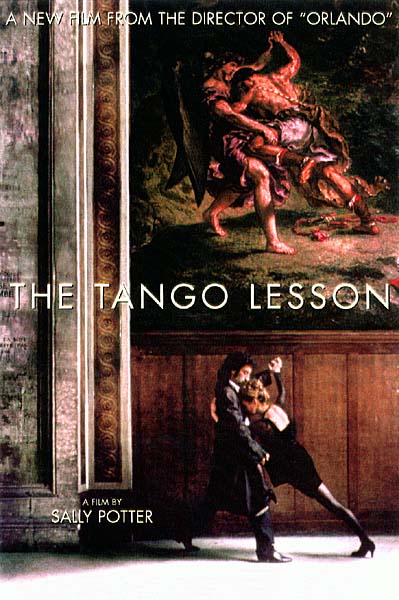
In an hour-long Q&A recorded at Cinephila West in Westbourne Grove, London, Sophie Mayer talks to director Sally Potter about her career, focusing on the films Orlando, The Tango Lesson and her new film Rage. Recorded and edited by Alex Fitch.

To Listen to the Conversation
Sophie Mayer talks to director Sally Potter about her career so far.
Electric Sheep Magazine
In an hour-long Q&A recorded at Cinephila West in Westbourne Grove, London, Sophie Mayer talks to director Sally Potter about her career, focusing on the films Orlando, The Tango Lesson and her new film Rage. Recorded and edited by Alex Fitch.
To Listen to the Conversation
Democracy Now: Harvard University Study -- Over 2,200 US Veterans Died in 2008 Due to Lack of Health Insurance
Study: Over 2,200 US Veterans Died in 2008 Due to Lack of Health Insurance
Democracy Now
On Veterans Day, a new study estimates four times as many US Army veterans died last year because they lacked health insurance than the total number of US soldiers who were killed in Iraq and Afghanistan in the same period. A research team at Harvard Medical School says 2,266 veterans under the age of sixty-five died in 2008 because they were uninsured. We speak to the report’s co-author, Dr. Steffie Woolhandler, professor of medicine at Harvard University and co-founder of Physicians for a National Health Program.
Guest:
Dr. Steffie Woolhandler, professor of medicine at Harvard University and a primary care physician in Cambridge. She is also a co-founder of Physicians for a National Health Program. She testified about uninsured veterans before Congress in 2007.
To Read/Listen/Watch and access more resources
Democracy Now
On Veterans Day, a new study estimates four times as many US Army veterans died last year because they lacked health insurance than the total number of US soldiers who were killed in Iraq and Afghanistan in the same period. A research team at Harvard Medical School says 2,266 veterans under the age of sixty-five died in 2008 because they were uninsured. We speak to the report’s co-author, Dr. Steffie Woolhandler, professor of medicine at Harvard University and co-founder of Physicians for a National Health Program.
Guest:
Dr. Steffie Woolhandler, professor of medicine at Harvard University and a primary care physician in Cambridge. She is also a co-founder of Physicians for a National Health Program. She testified about uninsured veterans before Congress in 2007.
To Read/Listen/Watch and access more resources
Etay Zwick: Predatory Habits -- How Wall Street Transformed Work in America
Predatory Habits: How Wall Street Transformed Work in America
By Etay Zwick
The Point
More than a century ago, Thorstein Veblen—American economist, sociologist and social critic—warned that the United States had developed a bizarre and debilitating network of social habits and economic institutions. Ascendant financial practices benefited a limited group at the expense of the greater society; yet paradoxically Americans deemed these practices necessary, even commendable. Far from lambasting the financiers plundering the nation’s resources, we lauded them as the finest members of society. Their instincts, wisdom and savoir faire were idealized, their avarice and chicanery promoted under the banners of patriotism and virtue.
Veblen, an inveterate reader of ethnographies, noticed a historical pattern that could illuminate America’s peculiar relationship with its economic institutions. Societies everywhere fall between two extremes. First, there are societies in which every person works, and no one is demeaned by his or her toil. In these societies, individuals pride themselves on their workmanship, and they exhibit a natural concern for the welfare of their entire community. As examples of such “productive” societies, Veblen mentions Native Americans, the Ainus of Japan, the Todas of the Nilgiri hills and the bushmen of Australia. Second, there are “barbarian” societies, in which a single dominant class (usually of warriors) seizes the wealth and produce of others through force or fraud—think ancient Vikings, Japanese shoguns and Polynesian tribesmen. Farmers labor for their livelihood and warriors expropriate the fruits of that labor. Exploitative elites take no part in the actual production of wealth; they live off the toil of others. Yet far from being judged criminal or indolent, they are revered by the rest of the community. In barbarian societies, nothing is as manly, as venerated, as envied, as the lives of warriors. Their every trait—their predatory practices, their dress, their sport, their gait, their speech—is held in high esteem by all.
Our world falls into the latter form. There remains a class that pillages, seizes and exploits in broad daylight—and with our envious approval. Who are the barbarian warriors today? According to Veblen, the modern barbarians live on Wall Street. They are the financiers summarily praised for their versatility, intelligence and courage in the face of an increasingly mysterious economy. Today a growing number of Americans feel at risk of economic despair; in a world of unsatisfying professional options and constant financial insecurity, the image of Wall Street life offers a sort of relief. It symbolizes the success possible in the modern world.
But in order to capitalize mortgage securities, expected future earnings and corporate debts, Wall Street elites must first capitalize on our personal insecurities. They make their exploits appear necessary, natural, even laudable. This is quite a feat, since in those moments when we suspend our faith in the financial sector and candidly examine its performance, we generally judge Wall Street’s behavior to be avaricious and destabilizing, immoral and imprudent. At the best of times, Wall Street provides white noise amidst entrepreneurs’ and workers’ attempts to actualize their ambitions and projects. We are still learning what happens at the worst of times.
The Myth of Finance
The myth of the financial sector goes something like this: only men and women equipped with the highest intelligence, the will to work death-defying hours and the most advanced technology can be entrusted with the sacred and mysterious task of ensuring the growth of the economy. Using complicated financial instruments, these elites (a) spread the risks involved in different ventures and (b) discipline firms to minimize costs—thus guaranteeing the best investments are extended sufficient credit. According to this myth, Wall Street is the economy’s private nutritionist, advising and assisting only the most motivated firms—and these fitter firms will provide jobs and pave the path to national prosperity. If the rest of us do not understand exactly why trading credit derivatives and commodity futures would achieve all this, this is because we are not as smart as the people working on Wall Street. Even Wall Street elites are happy to admit that they do not really know how the system works; such admissions only testify to the immensity of their noble task.
Many economists have tried to disabuse us of this myth. Twenty-five years before the recent financial crisis, Nobel Laureate James Tobin demonstrated that a very limited percent of the capital flow originating on Wall Street goes toward financing “real investments”—that is, investments in improving a firm’s production process. When large American corporations invest in new technology, they rely primarily on internal funds, not outside credit. The torrents of capital we see on Wall Street are devoted to a different purpose—speculation, gambling for capital gains. Finance’s second founding myth, that the stock market in particular is an “efficient” source for funding business ventures, simply doesn’t cohere with the history of American industrial development. When firms have needed to raise outside capital, they have generally issued debt—not stock. The stock market’s chief virtue has always been that it allows business elites to cash out of any enterprise by transferring ownership to other elites. Old owners then enjoy their new wealth, while new owners manage the same old corporation. The reality is that business elites promote the stock market far more than the stock market promotes economic growth.
Rather than foster growth, contemporary financial practices have primarily succeeded in exacerbating income inequality and creating singular forms of economic calamity. In the recent crisis, new instruments for expanding financial activity—justified at the time by reckless promises of universal homeownership—prompted a remarkable spiral of poverty, debt and downward mobility in America. The path from homeownership to homelessness, from apparent wealth and security to lack of basic shelter, is completely novel—as is the now steadily growing social group of “middle-class paupers.” (Ten percent of homeless people assisted by social service agencies last year lost their homes through bank foreclosures, according to the study “Foreclosure to Homelessness 2009.”) The homeless-through-foreclosure, having been persuaded by cheap credit to aspire to homeownership, were punished for unbefitting ambitions; any future pathway out of debt will be accompanied by new insecurities about the appropriateness of their life aspirations. Also novel in recent years is the extent to which economic “booms” no longer benefit average Americans. During the last economic “expansion” (between 2002 and 2007), fully two-thirds of all income gains flowed to the wealthiest one percent of the population. In 2007, the top 50 hedge and private equity managers averaged $588 million in annual compensation. On the other hand, the median income of ordinary Americans has dropped an average of $2,197 per year since 2000.
We habitually excuse Wall Street’s disproportionate earnings out of a sense that it helps American businesses thrive—but even corporations don’t quite benefit from Wall Street’s “services.” Consider the infamous merger between Daimler-Benz and Chrysler. In 1998, Goldman Sachs claimed that this merger would result in a $3 billion revenue gain. Stock prices responded extremely positively to the merger, which won the coveted Institutional Dealers’ Digest “Deal of the Year” Award. Only two years later, because of incongruities between the European and American parties, Chrysler lost $512 million in annual income, $1 billion in shareholder value in a single quarter, and was forced to lay off 26,000 workers. With the merger acknowledged as a failure, Chrysler was sold off from Daimler-Benz in 2007. Goldman Sachs, which had already made millions in windfall fees from the original merger, then walked away with millions more for advising the equity firm which now swooped in to pillage an ailing Chrysler. Bad advice seems to do little to tarnish Goldman’s golden reputation; after all, the firm can always point to its extraordinary profits as proof of talent and success. (Goldman Sachs ought to love the “bad publicity” it attracts nowadays; the headlines that reveal the billions made shorting housing and securities markets only solidify its status as Wall Street’s elite firm—capable of turning a profit even in times of economic crisis.)
The evidence suggests that Wall Street has assumed a negative relation to the economic interests of society at large. Many investment bankers are doubtless nice, hard-working people who give a lot of money to charity; nevertheless, they constitute a distinct class with interests diverging from society’s as a whole. This past year, unemployment skyrocketed from 6.2 to 10 percent. Meanwhile, Wall Street announced stock market gains of $4.6 trillion between March and October.
To Read the Rest of the Essay
By Etay Zwick
The Point
More than a century ago, Thorstein Veblen—American economist, sociologist and social critic—warned that the United States had developed a bizarre and debilitating network of social habits and economic institutions. Ascendant financial practices benefited a limited group at the expense of the greater society; yet paradoxically Americans deemed these practices necessary, even commendable. Far from lambasting the financiers plundering the nation’s resources, we lauded them as the finest members of society. Their instincts, wisdom and savoir faire were idealized, their avarice and chicanery promoted under the banners of patriotism and virtue.
Veblen, an inveterate reader of ethnographies, noticed a historical pattern that could illuminate America’s peculiar relationship with its economic institutions. Societies everywhere fall between two extremes. First, there are societies in which every person works, and no one is demeaned by his or her toil. In these societies, individuals pride themselves on their workmanship, and they exhibit a natural concern for the welfare of their entire community. As examples of such “productive” societies, Veblen mentions Native Americans, the Ainus of Japan, the Todas of the Nilgiri hills and the bushmen of Australia. Second, there are “barbarian” societies, in which a single dominant class (usually of warriors) seizes the wealth and produce of others through force or fraud—think ancient Vikings, Japanese shoguns and Polynesian tribesmen. Farmers labor for their livelihood and warriors expropriate the fruits of that labor. Exploitative elites take no part in the actual production of wealth; they live off the toil of others. Yet far from being judged criminal or indolent, they are revered by the rest of the community. In barbarian societies, nothing is as manly, as venerated, as envied, as the lives of warriors. Their every trait—their predatory practices, their dress, their sport, their gait, their speech—is held in high esteem by all.
Our world falls into the latter form. There remains a class that pillages, seizes and exploits in broad daylight—and with our envious approval. Who are the barbarian warriors today? According to Veblen, the modern barbarians live on Wall Street. They are the financiers summarily praised for their versatility, intelligence and courage in the face of an increasingly mysterious economy. Today a growing number of Americans feel at risk of economic despair; in a world of unsatisfying professional options and constant financial insecurity, the image of Wall Street life offers a sort of relief. It symbolizes the success possible in the modern world.
But in order to capitalize mortgage securities, expected future earnings and corporate debts, Wall Street elites must first capitalize on our personal insecurities. They make their exploits appear necessary, natural, even laudable. This is quite a feat, since in those moments when we suspend our faith in the financial sector and candidly examine its performance, we generally judge Wall Street’s behavior to be avaricious and destabilizing, immoral and imprudent. At the best of times, Wall Street provides white noise amidst entrepreneurs’ and workers’ attempts to actualize their ambitions and projects. We are still learning what happens at the worst of times.
The Myth of Finance
The myth of the financial sector goes something like this: only men and women equipped with the highest intelligence, the will to work death-defying hours and the most advanced technology can be entrusted with the sacred and mysterious task of ensuring the growth of the economy. Using complicated financial instruments, these elites (a) spread the risks involved in different ventures and (b) discipline firms to minimize costs—thus guaranteeing the best investments are extended sufficient credit. According to this myth, Wall Street is the economy’s private nutritionist, advising and assisting only the most motivated firms—and these fitter firms will provide jobs and pave the path to national prosperity. If the rest of us do not understand exactly why trading credit derivatives and commodity futures would achieve all this, this is because we are not as smart as the people working on Wall Street. Even Wall Street elites are happy to admit that they do not really know how the system works; such admissions only testify to the immensity of their noble task.
Many economists have tried to disabuse us of this myth. Twenty-five years before the recent financial crisis, Nobel Laureate James Tobin demonstrated that a very limited percent of the capital flow originating on Wall Street goes toward financing “real investments”—that is, investments in improving a firm’s production process. When large American corporations invest in new technology, they rely primarily on internal funds, not outside credit. The torrents of capital we see on Wall Street are devoted to a different purpose—speculation, gambling for capital gains. Finance’s second founding myth, that the stock market in particular is an “efficient” source for funding business ventures, simply doesn’t cohere with the history of American industrial development. When firms have needed to raise outside capital, they have generally issued debt—not stock. The stock market’s chief virtue has always been that it allows business elites to cash out of any enterprise by transferring ownership to other elites. Old owners then enjoy their new wealth, while new owners manage the same old corporation. The reality is that business elites promote the stock market far more than the stock market promotes economic growth.
Rather than foster growth, contemporary financial practices have primarily succeeded in exacerbating income inequality and creating singular forms of economic calamity. In the recent crisis, new instruments for expanding financial activity—justified at the time by reckless promises of universal homeownership—prompted a remarkable spiral of poverty, debt and downward mobility in America. The path from homeownership to homelessness, from apparent wealth and security to lack of basic shelter, is completely novel—as is the now steadily growing social group of “middle-class paupers.” (Ten percent of homeless people assisted by social service agencies last year lost their homes through bank foreclosures, according to the study “Foreclosure to Homelessness 2009.”) The homeless-through-foreclosure, having been persuaded by cheap credit to aspire to homeownership, were punished for unbefitting ambitions; any future pathway out of debt will be accompanied by new insecurities about the appropriateness of their life aspirations. Also novel in recent years is the extent to which economic “booms” no longer benefit average Americans. During the last economic “expansion” (between 2002 and 2007), fully two-thirds of all income gains flowed to the wealthiest one percent of the population. In 2007, the top 50 hedge and private equity managers averaged $588 million in annual compensation. On the other hand, the median income of ordinary Americans has dropped an average of $2,197 per year since 2000.
We habitually excuse Wall Street’s disproportionate earnings out of a sense that it helps American businesses thrive—but even corporations don’t quite benefit from Wall Street’s “services.” Consider the infamous merger between Daimler-Benz and Chrysler. In 1998, Goldman Sachs claimed that this merger would result in a $3 billion revenue gain. Stock prices responded extremely positively to the merger, which won the coveted Institutional Dealers’ Digest “Deal of the Year” Award. Only two years later, because of incongruities between the European and American parties, Chrysler lost $512 million in annual income, $1 billion in shareholder value in a single quarter, and was forced to lay off 26,000 workers. With the merger acknowledged as a failure, Chrysler was sold off from Daimler-Benz in 2007. Goldman Sachs, which had already made millions in windfall fees from the original merger, then walked away with millions more for advising the equity firm which now swooped in to pillage an ailing Chrysler. Bad advice seems to do little to tarnish Goldman’s golden reputation; after all, the firm can always point to its extraordinary profits as proof of talent and success. (Goldman Sachs ought to love the “bad publicity” it attracts nowadays; the headlines that reveal the billions made shorting housing and securities markets only solidify its status as Wall Street’s elite firm—capable of turning a profit even in times of economic crisis.)
The evidence suggests that Wall Street has assumed a negative relation to the economic interests of society at large. Many investment bankers are doubtless nice, hard-working people who give a lot of money to charity; nevertheless, they constitute a distinct class with interests diverging from society’s as a whole. This past year, unemployment skyrocketed from 6.2 to 10 percent. Meanwhile, Wall Street announced stock market gains of $4.6 trillion between March and October.
To Read the Rest of the Essay
Saturday, March 06, 2010
Creative Screenwriting Magazine: Live From Sundance - The Shock Doctrine Q&A with Robert Redford, Naomi Klein, Michael Winterbottom & Mat Whitecross
Live From Sundance - The Shock Doctrine Q&A
Creative Screenwriting Magazine
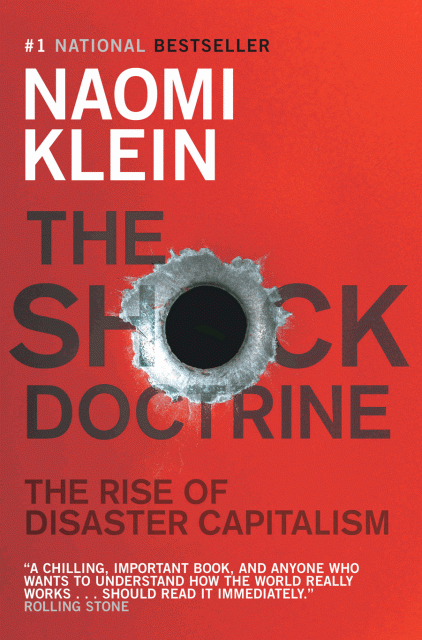
Senior Editor Jeff Goldsmith posts a Q&A live from the 2010 Sundance Film Festival featuring festival founder Robert Redford, author Naomi Klein and co-directors Michael Winterbottom & Mat Whitecross as they discuss The Shock Doctrine
To Listen to the Panel
Creative Screenwriting Magazine
Senior Editor Jeff Goldsmith posts a Q&A live from the 2010 Sundance Film Festival featuring festival founder Robert Redford, author Naomi Klein and co-directors Michael Winterbottom & Mat Whitecross as they discuss The Shock Doctrine
To Listen to the Panel
The Nation: Slide Show -- Students Protest Education Cuts
Slide Show: Students Protest Education Cuts
The Nation

With the economy struggling to recover, funding for public higher education has taken an inevitable hit. To close billion-dollar gaps in statewide funding, governors have asked their university systems to cut their budgets, causing ripple effects detrimental to students' lives. All options are on the table--tuition hikes, furloughs, job cuts, eliminating majors, eliminating student programs--and all options mean less money for education and less investment in students. In the slideshow that follows, The Nation offers a window into some of the states making those calls--and the student response. In Washington state, students are seeing double-digit tuition increases. In Nevada, students are petitioning the legislature to prevent financial exigency. In Minnesota, students are seeing their protests make actual change. Around the country, be it a protest or a walk out, the argument is the same: Think twice before depriving us, and your state, of our futures.
To Watch the Slideshow
The Nation
With the economy struggling to recover, funding for public higher education has taken an inevitable hit. To close billion-dollar gaps in statewide funding, governors have asked their university systems to cut their budgets, causing ripple effects detrimental to students' lives. All options are on the table--tuition hikes, furloughs, job cuts, eliminating majors, eliminating student programs--and all options mean less money for education and less investment in students. In the slideshow that follows, The Nation offers a window into some of the states making those calls--and the student response. In Washington state, students are seeing double-digit tuition increases. In Nevada, students are petitioning the legislature to prevent financial exigency. In Minnesota, students are seeing their protests make actual change. Around the country, be it a protest or a walk out, the argument is the same: Think twice before depriving us, and your state, of our futures.
To Watch the Slideshow
Stockholm International Peace Research Institute: Recent trends in military expenditure
Recent trends in military expenditure
Stockholm International Peace Research Institute (SIPRI)
World military expenditure is estimated to have been $1464 billion in 2008—a real-terms increase of 4 per cent over 2007 and of 45 per cent since 1999. This corresponded to 2.4 per cent of world gross domestic product (GDP) and $217 for each person in the world.
The subregion with the most rapid growth in military expenditure over the 10-year period 1999-2008 was Eastern Europe, at 174 per cent. The bulk of this growth (87 per cent) is accounted for by the Russian Federation. The other subregions with the largest increases since 1999 are North Africa (94 per cent), North America (66 per cent), East Asia (56 per cent), and the Middle East (56 per cent). The subregion with the lowest growth in military spending over the past 10 years was Western and Central Europe (5 per cent).
The USA’s military spending accounted for 41.5 per cent of the world total in 2008, followed by China with 5.8 per cent, and then France and the UK with 4.5 per cent each. During the eight-year presidency of George W. Bush, US military expenditure increased to the highest level in real terms since World War II, mostly due to the wars in Afghanistan and Iraq, and contributed to soaring budget deficits. These conflicts have been funded primarily through emergency supplemental appropriations outside the regular budgetary process, raising concerns regarding transparency and Congressional oversight, and have been financed primarily through borrowing. They will continue to require major budgetary resources in the near future, even supposing early withdrawals of US troops from Iraq.
China for the first time became the world’s second largest military spender in 2008, having increased its military spending almost threefold in real terms during the past decade. However, due to its rapid economic growth, the economic burden of military spending is still moderate, at 2.1 per cent of GDP.
In Western and Central Europe spending remained fairly flat in 2008. In Eastern Europe, Russia continued to increase spending, and is maintaining plans for further increases despite severe economic problems. Spending increased across most of Asia, with China, India, South Korea and Taiwan accounting for the bulk of the increase. Algeria’s spending increased by 18 per cent in real terms to $5.2 billion, the highest in Africa, driven by strong economic growth and a growing insurgency. In South America, Brazil continued to increase spending as it seeks greater regional power status
Military spending in the Middle East fell slightly in 2008, although this is probably temporary, with many countries in the region planning major arms purchases. In contrast, there was a large rise in Iraq, whose 2008 military budget was 133 per cent higher in real terms than their 2007 spending. While previously most funding for the Iraqi security forces came from the US, this has been increasingly replaced by domestic funding.
Link to the Report
Stockholm International Peace Research Institute (SIPRI)
World military expenditure is estimated to have been $1464 billion in 2008—a real-terms increase of 4 per cent over 2007 and of 45 per cent since 1999. This corresponded to 2.4 per cent of world gross domestic product (GDP) and $217 for each person in the world.
The subregion with the most rapid growth in military expenditure over the 10-year period 1999-2008 was Eastern Europe, at 174 per cent. The bulk of this growth (87 per cent) is accounted for by the Russian Federation. The other subregions with the largest increases since 1999 are North Africa (94 per cent), North America (66 per cent), East Asia (56 per cent), and the Middle East (56 per cent). The subregion with the lowest growth in military spending over the past 10 years was Western and Central Europe (5 per cent).
The USA’s military spending accounted for 41.5 per cent of the world total in 2008, followed by China with 5.8 per cent, and then France and the UK with 4.5 per cent each. During the eight-year presidency of George W. Bush, US military expenditure increased to the highest level in real terms since World War II, mostly due to the wars in Afghanistan and Iraq, and contributed to soaring budget deficits. These conflicts have been funded primarily through emergency supplemental appropriations outside the regular budgetary process, raising concerns regarding transparency and Congressional oversight, and have been financed primarily through borrowing. They will continue to require major budgetary resources in the near future, even supposing early withdrawals of US troops from Iraq.
China for the first time became the world’s second largest military spender in 2008, having increased its military spending almost threefold in real terms during the past decade. However, due to its rapid economic growth, the economic burden of military spending is still moderate, at 2.1 per cent of GDP.
In Western and Central Europe spending remained fairly flat in 2008. In Eastern Europe, Russia continued to increase spending, and is maintaining plans for further increases despite severe economic problems. Spending increased across most of Asia, with China, India, South Korea and Taiwan accounting for the bulk of the increase. Algeria’s spending increased by 18 per cent in real terms to $5.2 billion, the highest in Africa, driven by strong economic growth and a growing insurgency. In South America, Brazil continued to increase spending as it seeks greater regional power status
Military spending in the Middle East fell slightly in 2008, although this is probably temporary, with many countries in the region planning major arms purchases. In contrast, there was a large rise in Iraq, whose 2008 military budget was 133 per cent higher in real terms than their 2007 spending. While previously most funding for the Iraqi security forces came from the US, this has been increasingly replaced by domestic funding.
Link to the Report
Thursday, March 04, 2010
Michael Dean Benton: "Be Me, for Awhile" -- Ideological Becoming and Future Objectivity in Let the Right One In
"Be Me, for Awhile": Ideological Becoming and Future Objectivity in Let the Right One In
by Michael Dean Benton
[As for the controversy of the altered English translation on the current Magnolia DVD consult Icons of Frights thorough analysis and Jeffrey Wells conclusion that it is a case of the continual dumbing-it-down for the American consumer :P My inclination is that all Magnolia and Magnet film releases should be considered problematic.]
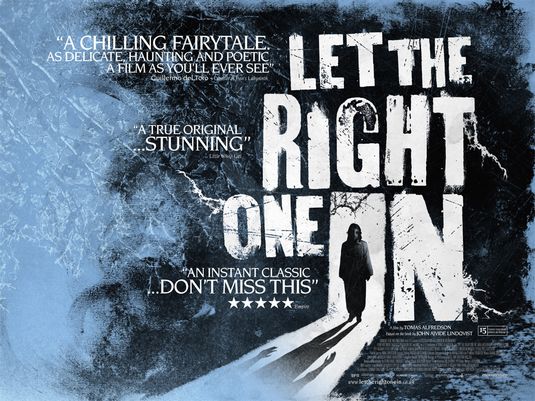
I'm working a lot with Bakhtin's conception of the dialogical process of ideological becoming, so I am always fascinated by how people learn new ways of being.
Film (or, if you prefer, art) in this sense can be a tool that allows us to step into the shoes of beings we do not know and for a time wonder how they may perceive the world. International film provides us with a plurality of voices (polylogical discourse) that can provide important counters to the dominant (possibly controlling) narratives of our own culture and/or perspectives. My critique of films, then, always involves a sense of the authenticity of the performative act. Does the film(makers) allow me to authentically experience a different/unique reality? That doesn't mean it has to be purely naturalistic/realism. What it does mean is that the film(makers) does not grossly manipulate the audience, that the film is open to interpretation, and, yet, the voices/actions of the characters are authentic. You may reply to this statement, that these distinctions would rest on a subjective analysis and thus would be open to interpretation, and I would say yes, exactly, let the dialogue begin!
Last night I watched the Swedish vampire film Let the Right One In for the second time. The film is a good example of what I am thinking of when I talk about ideological becoming. So let me explore a few of the aspects that I think relates to my sense of Bakhtin's concept of "ideological becoming." These are beginning notes:
1) Oskar is constantly bullied by his peers and is unable to develop his own authentic voice. We see him struggling to say something to defend himself against the sadistic trio that make his life hell, but he is unable to give "voice" to his pain/anger. A particularly pitiful scene is when he goes out into the frozen courtyard with the fetishistic knife and, in a manner reminiscent of Travis Bickle, acts out his revenge fantasies on a frozen telephone pole. This is a familiar character in the many post-Columbine teen revenge stories, an inarticulate, geeky, passive kid overwhelmed with the desire for revenge against aggressively conformist social peers who ignore or degrade him (and it is generally boys enacting these violent fantasies?). In this sense we can understand the "aggressively conformist social peers" as the dominant monologic discourse that seeks to control the narrative of reality and the maladjusted kid struggling to "authentically" challenge this controlling narrative. Sadly, this can often takes the route of mindless, destructive violence, in which "innocents," perhaps other struggling kids seeking their own authentic voice, are struck down by the random violence of the frustrated victim.

2) Destructive power. The bullies insist that Oskar is a pathetic animal not worthy of their respect. This is repeatedly acted out by them upon Oskar's being on a daily basis. They taunt him with pig-like noises, command him physically in a degrading manner, and violently beat on him. Oskar begins to internalize the "controlling" narrative of his oppressors, and his violent fantasies are re-enactments of the only source of power he recognizes--the physical violence of his torturers/oppressors.

3) Authentic engagement. In essence this film is about the human need to authentically connect with other beings. Eli becomes the representation of a powerful alternative to the controlling narrative of Oskar's torturers. Eli, a vampire, is a wise observer of her surroundings and of other people. She is also much more empathetic than any human we see in the film. She feels deeply the pain of Oskar and demonstrates her awareness of it when she repeats his words from earlier in the film when he was acting out his revenge fantasies in the frozen courtyard:
Eli the vampire is much more sympathetic than any of the other characters in the film. The sadistic trio of kids torture Oskar for no apparent reason other than they get off on this false power of controlling a weaker being. The group of addled adults that increasingly become central to the narrative are all grotesquely alienated from each other while fearfully huddling together, or, as in the case of semi-responsible authority figures, completely oblivious to the cruelties of the children in their care. Most of the adults use intoxicants to escape from their stark reality rather than develop an authentic sense of another way of being. This is also glimpsed in the ruins of the fractured marriage of Oskar's parents when his father shuns Oskar in order to mindlessly get drunk with a creepy friend.
When Eli suggests to Oskar "Be me, for a while" she is asking him to ideologically "become" her for awhile, to step into her shoes and see what she sees. To authentically open himself up to seeing from another position.

4) So how do we begin to develop a method of being and observing that resists the ordering tendencies of controlling narratives? How could we ever accomplish anything practical without attempts to “master” the essence of beings? How can we open up a space within which new forms of knowledge can be observed and formulated? One starting point is the development of a new form of objectivity that recognizes the benefits of the development of a radical transperspectivity:
This radical transperspectivity expresses a recognition of human sense of objectivity as “already” informed so that it can only authentically be developed through the attempt at developing many perspectives. In this way will one move closer toward an always out-of-reach objective sense. Of course this is a constantly evolving process in which we must continue to re-fresh our perspectives as our environments and our situations change. As Maurice Blanchot has argued, language and truth always simultaneously involves both a revealing and a reveiling. Exposure and masking are also the dual operation of all presentation and re-presentation. When we seek to understand the “essence” of a being we must clear a space through re-thinking our positions/situations. This openness allows for the “possibility” of unconcealment because we do not close up in our own solipsistic view, rather we desire to strive towards a Heideggerian entschlossen—a resolve to remain “un-closed” (Translator notes, “On The Essence of Truth”: 131). In order to remain “un-closed” we attempt to answer the Nietzschean call to resist the “Human, All Too Human” urge to “cling to what is readily available and controllable.” So, through the clearing away of objective traditions and the development of a transperspective we open up spaces that allow for the “essence of freedom to be thought” (“On the Essence of Truth”: 125). This is very important because only through the “freedom” to “be” will any “being” begin to reveal its “essence”. We are at a key point here because this freedom is produced through an engagement that “withdraws in the face of beings in order that they might reveal themselves with respect to what and how they are, and in order that presentative correspondence might take its standard from them.” This is the sublime moment that Bataille describes in The Impossible (1991): “As I was staring at the void in front of me, a touch – immediately violent and excessive – joined me to that void. I saw that void and saw nothing, but it, the void, was embracing me” (143). The void is the “clearing” space that will provide the freedom for unconcealment. This void terrifies many because it is the point when one must be secure with(in) themselves in order to “let beings be.” This openness to experience, this desire to rigorously interrogate one’s own beliefs, this desire for a “vision of excess”, leads to the moment in which we must be prepared for the “void” to look back at us. Through a radical “self-subversion” (Bataille) of subjectivity we can begin to prepare ourselves for this fateful experience when we stare into the void of our inner selves. By a new recognition of truth as involving concealment and errancy we enter a stage of “becoming” whereby it becomes possible to rethink our positions/conclusions. We gain another step in our becoming by examining what our own situated truth(s) cover or suppress. Hence, when we arrive at a truth we must have the courage and fortitude to uncover/expose what our truths conceal. In this we can begin to understand that as beings we are involved in a continual process of “becoming” and that our own sense of “becoming” rests upon our ability to clear a space for the “essence” of being to be revealed.
4) A final question: Why would the author of the source novel create this vampire in the manner he has (vaguely hinted at in one quick shot in the film) and why would it become so central to Eli's character? "Would you love me if I wasn't a girl?" This is a radical question that flies in the face of controlling narratives that seek to limit the way we interact with beings in our world. The question asks if Oskar is strong enough to reject the terroristic/monologic narrative that seeks to set limits upon our ability to love freely. Yes, love freely... You will only love what we tell you to love and you will only feel desire for what we say is proper for you to desire and you will only have sex within the limits we seek to impose on you. If you defy these controlling moral edicts, then your eternal soul will be damned forever, if you flaunt your defiance of this controlling narrative we may be forced to pre-empt God's future judgment and beat/kill you here-and-now.

5) "Be me, for awhile" ... powerful plea to step into another's shoes and experience the world as they do.
“Perhaps the impossible is the only chance of something new, of some new philosophy of the new … Perhaps friendship, if there is such a thing, must honor [faire droit] what appears impossible here” (Derrida,1998: 36).
I have no doubt ran off the road in my response to the film, perhaps you might help me to get back on track :)
by Michael Dean Benton
[As for the controversy of the altered English translation on the current Magnolia DVD consult Icons of Frights thorough analysis and Jeffrey Wells conclusion that it is a case of the continual dumbing-it-down for the American consumer :P My inclination is that all Magnolia and Magnet film releases should be considered problematic.]
I'm working a lot with Bakhtin's conception of the dialogical process of ideological becoming, so I am always fascinated by how people learn new ways of being.
Film (or, if you prefer, art) in this sense can be a tool that allows us to step into the shoes of beings we do not know and for a time wonder how they may perceive the world. International film provides us with a plurality of voices (polylogical discourse) that can provide important counters to the dominant (possibly controlling) narratives of our own culture and/or perspectives. My critique of films, then, always involves a sense of the authenticity of the performative act. Does the film(makers) allow me to authentically experience a different/unique reality? That doesn't mean it has to be purely naturalistic/realism. What it does mean is that the film(makers) does not grossly manipulate the audience, that the film is open to interpretation, and, yet, the voices/actions of the characters are authentic. You may reply to this statement, that these distinctions would rest on a subjective analysis and thus would be open to interpretation, and I would say yes, exactly, let the dialogue begin!
Last night I watched the Swedish vampire film Let the Right One In for the second time. The film is a good example of what I am thinking of when I talk about ideological becoming. So let me explore a few of the aspects that I think relates to my sense of Bakhtin's concept of "ideological becoming." These are beginning notes:
The monster is that uncertain cultural body in which is condensed an intriguing simultaneity or doubleness: like the ghost of Hamlet, it introjects the disturbing, repressed, but formative traumas or "pre-" into the sensory moment of "post-," binding the one irrevocably to the other. The monster commands, "Remember me": restore my fragmented body, piece me back together, allow the past its eternal return. The monster haunts; it does not simply bring past and present together, but destroys the boundary that demanded their twinned foreclosure. (Cohen, Jeffrey Jerome. Preface: In a Time of Monsters. Monster Theory: Reading Culture, 1996:ix-x)
1) Oskar is constantly bullied by his peers and is unable to develop his own authentic voice. We see him struggling to say something to defend himself against the sadistic trio that make his life hell, but he is unable to give "voice" to his pain/anger. A particularly pitiful scene is when he goes out into the frozen courtyard with the fetishistic knife and, in a manner reminiscent of Travis Bickle, acts out his revenge fantasies on a frozen telephone pole. This is a familiar character in the many post-Columbine teen revenge stories, an inarticulate, geeky, passive kid overwhelmed with the desire for revenge against aggressively conformist social peers who ignore or degrade him (and it is generally boys enacting these violent fantasies?). In this sense we can understand the "aggressively conformist social peers" as the dominant monologic discourse that seeks to control the narrative of reality and the maladjusted kid struggling to "authentically" challenge this controlling narrative. Sadly, this can often takes the route of mindless, destructive violence, in which "innocents," perhaps other struggling kids seeking their own authentic voice, are struck down by the random violence of the frustrated victim.
2) Destructive power. The bullies insist that Oskar is a pathetic animal not worthy of their respect. This is repeatedly acted out by them upon Oskar's being on a daily basis. They taunt him with pig-like noises, command him physically in a degrading manner, and violently beat on him. Oskar begins to internalize the "controlling" narrative of his oppressors, and his violent fantasies are re-enactments of the only source of power he recognizes--the physical violence of his torturers/oppressors.
3) Authentic engagement. In essence this film is about the human need to authentically connect with other beings. Eli becomes the representation of a powerful alternative to the controlling narrative of Oskar's torturers. Eli, a vampire, is a wise observer of her surroundings and of other people. She is also much more empathetic than any human we see in the film. She feels deeply the pain of Oskar and demonstrates her awareness of it when she repeats his words from earlier in the film when he was acting out his revenge fantasies in the frozen courtyard:
Oskar: Who are you?
Eli: I'm like you.
Oskar: What do you mean?
Eli: [accusing tone] What are you staring at? Well?
Eli: Are you looking at me?
Eli: [points her finger at Oskar] So scream! Squeal!
Eli: Those were the first words I heard you say.
Oskar: I don't kill people.
Eli: No, but you'd like to. If you could... To get revenge. Right?
Oskar: Yes.
Eli: Oskar, I do it because I have to.
Eli: Be me, for a while.
[pause]
Eli: Please Oskar... Be me, for a little while.
Eli the vampire is much more sympathetic than any of the other characters in the film. The sadistic trio of kids torture Oskar for no apparent reason other than they get off on this false power of controlling a weaker being. The group of addled adults that increasingly become central to the narrative are all grotesquely alienated from each other while fearfully huddling together, or, as in the case of semi-responsible authority figures, completely oblivious to the cruelties of the children in their care. Most of the adults use intoxicants to escape from their stark reality rather than develop an authentic sense of another way of being. This is also glimpsed in the ruins of the fractured marriage of Oskar's parents when his father shuns Oskar in order to mindlessly get drunk with a creepy friend.
When Eli suggests to Oskar "Be me, for a while" she is asking him to ideologically "become" her for awhile, to step into her shoes and see what she sees. To authentically open himself up to seeing from another position.
4) So how do we begin to develop a method of being and observing that resists the ordering tendencies of controlling narratives? How could we ever accomplish anything practical without attempts to “master” the essence of beings? How can we open up a space within which new forms of knowledge can be observed and formulated? One starting point is the development of a new form of objectivity that recognizes the benefits of the development of a radical transperspectivity:
… to see differently in this way for once, to want to see differently, is no small discipline and preparation of the intellect for its future “objectivity”—the latter understood not as “contemplation without interest” (which is a nonsensical absurdity), but as the ability to control one’s Pro and Con and to dispose of them, so that one knows how to employ a variety of perspectives and affective interpretations in the service of knowledge.
… There is only a perspective seeing, only a perspective “knowing”; and the more affects we allow to speak about one thing, the more eyes, different eyes, we can use to observe one thing, the more complete will our “concept” of this thing, our “objectivity,” be” (Nietzsche, On the Genealogy of Morals: 555).
This radical transperspectivity expresses a recognition of human sense of objectivity as “already” informed so that it can only authentically be developed through the attempt at developing many perspectives. In this way will one move closer toward an always out-of-reach objective sense. Of course this is a constantly evolving process in which we must continue to re-fresh our perspectives as our environments and our situations change. As Maurice Blanchot has argued, language and truth always simultaneously involves both a revealing and a reveiling. Exposure and masking are also the dual operation of all presentation and re-presentation. When we seek to understand the “essence” of a being we must clear a space through re-thinking our positions/situations. This openness allows for the “possibility” of unconcealment because we do not close up in our own solipsistic view, rather we desire to strive towards a Heideggerian entschlossen—a resolve to remain “un-closed” (Translator notes, “On The Essence of Truth”: 131). In order to remain “un-closed” we attempt to answer the Nietzschean call to resist the “Human, All Too Human” urge to “cling to what is readily available and controllable.” So, through the clearing away of objective traditions and the development of a transperspective we open up spaces that allow for the “essence of freedom to be thought” (“On the Essence of Truth”: 125). This is very important because only through the “freedom” to “be” will any “being” begin to reveal its “essence”. We are at a key point here because this freedom is produced through an engagement that “withdraws in the face of beings in order that they might reveal themselves with respect to what and how they are, and in order that presentative correspondence might take its standard from them.” This is the sublime moment that Bataille describes in The Impossible (1991): “As I was staring at the void in front of me, a touch – immediately violent and excessive – joined me to that void. I saw that void and saw nothing, but it, the void, was embracing me” (143). The void is the “clearing” space that will provide the freedom for unconcealment. This void terrifies many because it is the point when one must be secure with(in) themselves in order to “let beings be.” This openness to experience, this desire to rigorously interrogate one’s own beliefs, this desire for a “vision of excess”, leads to the moment in which we must be prepared for the “void” to look back at us. Through a radical “self-subversion” (Bataille) of subjectivity we can begin to prepare ourselves for this fateful experience when we stare into the void of our inner selves. By a new recognition of truth as involving concealment and errancy we enter a stage of “becoming” whereby it becomes possible to rethink our positions/conclusions. We gain another step in our becoming by examining what our own situated truth(s) cover or suppress. Hence, when we arrive at a truth we must have the courage and fortitude to uncover/expose what our truths conceal. In this we can begin to understand that as beings we are involved in a continual process of “becoming” and that our own sense of “becoming” rests upon our ability to clear a space for the “essence” of being to be revealed.
4) A final question: Why would the author of the source novel create this vampire in the manner he has (vaguely hinted at in one quick shot in the film) and why would it become so central to Eli's character? "Would you love me if I wasn't a girl?" This is a radical question that flies in the face of controlling narratives that seek to limit the way we interact with beings in our world. The question asks if Oskar is strong enough to reject the terroristic/monologic narrative that seeks to set limits upon our ability to love freely. Yes, love freely... You will only love what we tell you to love and you will only feel desire for what we say is proper for you to desire and you will only have sex within the limits we seek to impose on you. If you defy these controlling moral edicts, then your eternal soul will be damned forever, if you flaunt your defiance of this controlling narrative we may be forced to pre-empt God's future judgment and beat/kill you here-and-now.
5) "Be me, for awhile" ... powerful plea to step into another's shoes and experience the world as they do.
“Perhaps the impossible is the only chance of something new, of some new philosophy of the new … Perhaps friendship, if there is such a thing, must honor [faire droit] what appears impossible here” (Derrida,1998: 36).
I have no doubt ran off the road in my response to the film, perhaps you might help me to get back on track :)
Lexington Film League: Music Video Contest (May 1, 2010)
The Lexington Film League wants your Music Video!
We are accepting submissions for our Music Video Contest and Showcase from now until May 1, 2010.
Be creative and be unique! Submissions are open nationwide and to all ages.
Your video must have been made in the last three years and you must own, or have permission to use, the rights to the music.
The competition will culminate in a video showcase at Buster's Backroom & Billiards on Saturday, May 29. Doors will open at 6 pm and the video screenings will be followed by live music.
The grand prize winner of the competition will receive a guaranteed slot at Louisville's Flyover Film Festival during the weekend of June 11-13, 2010.
For more information please contact the Lexington Film League:
Kiley Lane, Sarah Wylie VanMeter, or Lucy Jones at lexfilmleague@gmail.com
or call 213-663-6566 (Lucy Jones' phone)
Send a high resolution file (QuickTime preferred) or DVD to:
LFL Music Video Contest
c/o Sarah Wylie VanMeter
1113 North Limestone
Lexington, KY 40505
There is an $8 submission fee per video.
Lexington Film League - Lexington just got a little more interesting.
__
www.lexingtonfilmleague.org
We are accepting submissions for our Music Video Contest and Showcase from now until May 1, 2010.
Be creative and be unique! Submissions are open nationwide and to all ages.
Your video must have been made in the last three years and you must own, or have permission to use, the rights to the music.
The competition will culminate in a video showcase at Buster's Backroom & Billiards on Saturday, May 29. Doors will open at 6 pm and the video screenings will be followed by live music.
The grand prize winner of the competition will receive a guaranteed slot at Louisville's Flyover Film Festival during the weekend of June 11-13, 2010.
For more information please contact the Lexington Film League:
Kiley Lane, Sarah Wylie VanMeter, or Lucy Jones at lexfilmleague@gmail.com
or call 213-663-6566 (Lucy Jones' phone)
Send a high resolution file (QuickTime preferred) or DVD to:
LFL Music Video Contest
c/o Sarah Wylie VanMeter
1113 North Limestone
Lexington, KY 40505
There is an $8 submission fee per video.
Lexington Film League - Lexington just got a little more interesting.
__
www.lexingtonfilmleague.org
Steve Inskeep: Former 'No Child Left Behind' Advocate Turns Critic
Former 'No Child Left Behind' Advocate Turns Critic
by Steve Inskeep
NPR
In 2005, former Assistant Secretary of Education Diane Ravitch wrote, "We should thank President George W. Bush and Congress for passing the No Child Left Behind Act ... All this attention and focus is paying off for younger students, who are reading and solving mathematics problems better than their parents' generation."
Four years later, Ravitch has changed her mind.
"I was known as a conservative advocate of many of these policies," Ravitch says. "But I've looked at the evidence and I've concluded they're wrong. They've put us on the wrong track. I feel passionately about the improvement of public education and I don't think any of this is going to improve public education."
Ravitch has written a book about what she sees as the failure of No Child Left Behind called The Death and Life of the Great American School System. She says one of her biggest concerns is the way the law requires school districts to use standardized testing.
Emphasis On Test Scores Led To Cheating, Dishonesty
"The basic strategy is measuring and punishing," Ravitch says of No Child Left Behind. "And it turns out as a result of putting so much emphasis on the test scores, there's a lot of cheating going on, there's a lot of gaming the system. Instead of raising standards it's actually lowered standards because many states have 'dumbed down' their tests or changed the scoring of their tests to say that more kids are passing than actually are."
Some states contend that 80 to 90 percent of their children are proficient readers and have math proficiency as well, Ravitch notes. But in the same states, only 25 to 30 of the children test at a proficient level on national tests such as the National Assessment of Educational Progress.
"Secretary (of Education Arne) Duncan often says we're lying to our kids," Ravitch says. "And we are lying to our kids."
To Read the Rest of the Episode
by Steve Inskeep
NPR
In 2005, former Assistant Secretary of Education Diane Ravitch wrote, "We should thank President George W. Bush and Congress for passing the No Child Left Behind Act ... All this attention and focus is paying off for younger students, who are reading and solving mathematics problems better than their parents' generation."
Four years later, Ravitch has changed her mind.
"I was known as a conservative advocate of many of these policies," Ravitch says. "But I've looked at the evidence and I've concluded they're wrong. They've put us on the wrong track. I feel passionately about the improvement of public education and I don't think any of this is going to improve public education."
Ravitch has written a book about what she sees as the failure of No Child Left Behind called The Death and Life of the Great American School System. She says one of her biggest concerns is the way the law requires school districts to use standardized testing.
Emphasis On Test Scores Led To Cheating, Dishonesty
"The basic strategy is measuring and punishing," Ravitch says of No Child Left Behind. "And it turns out as a result of putting so much emphasis on the test scores, there's a lot of cheating going on, there's a lot of gaming the system. Instead of raising standards it's actually lowered standards because many states have 'dumbed down' their tests or changed the scoring of their tests to say that more kids are passing than actually are."
Some states contend that 80 to 90 percent of their children are proficient readers and have math proficiency as well, Ravitch notes. But in the same states, only 25 to 30 of the children test at a proficient level on national tests such as the National Assessment of Educational Progress.
"Secretary (of Education Arne) Duncan often says we're lying to our kids," Ravitch says. "And we are lying to our kids."
To Read the Rest of the Episode
NPR: Broken Bells
(This is great music!)
First Listen: Broken Bells
NPR
Brian Burton, a.k.a. Danger Mouse, always seems to be working on something, but this feels different. Burton has teamed up with James Mercer, who's spent more than a decade leading his band The Shins, to form Broken Bells. As The Shins' lineup changes and the band switches to a new label, it's only natural that Mercer would want to try something new, and Broken Bells' self-titled debut feels like a fresh start.
Mercer and Burton met six years ago at a music festival, and each was a fan of the other's music. They kept in touch, but the timing wasn't right until last year. The Shins' latest record was long done and so were the tours, and for Danger Mouse, his band Gnarls Barkley was between records, as well. But this wasn't going to be just another production job for Danger Mouse, and for Mercer, this was to be more than a mere solo project. They both wanted a collaboration, they both enjoyed each other's ideas.
All of this becomes obvious when you spend time with Broken Bells' debut — available here in its entirety for the week leading up to its release on March 9. This is a smart pop record full of melody and invention. It's pretty and at times unorthodox, and it finds both Burton and Mercer drawing on each other's talents to make a record unique to each of them. This team is about to be a band — about to find its chemistry on the road — so these songs are sure to evolve further in the weeks and months to come.
To Read the Rest of the Description and to Listen to the Songs
First Listen: Broken Bells
NPR
Brian Burton, a.k.a. Danger Mouse, always seems to be working on something, but this feels different. Burton has teamed up with James Mercer, who's spent more than a decade leading his band The Shins, to form Broken Bells. As The Shins' lineup changes and the band switches to a new label, it's only natural that Mercer would want to try something new, and Broken Bells' self-titled debut feels like a fresh start.
Mercer and Burton met six years ago at a music festival, and each was a fan of the other's music. They kept in touch, but the timing wasn't right until last year. The Shins' latest record was long done and so were the tours, and for Danger Mouse, his band Gnarls Barkley was between records, as well. But this wasn't going to be just another production job for Danger Mouse, and for Mercer, this was to be more than a mere solo project. They both wanted a collaboration, they both enjoyed each other's ideas.
All of this becomes obvious when you spend time with Broken Bells' debut — available here in its entirety for the week leading up to its release on March 9. This is a smart pop record full of melody and invention. It's pretty and at times unorthodox, and it finds both Burton and Mercer drawing on each other's talents to make a record unique to each of them. This team is about to be a band — about to find its chemistry on the road — so these songs are sure to evolve further in the weeks and months to come.
To Read the Rest of the Description and to Listen to the Songs
Free Documentaries (Online)
Free Documentaries
Some examples of the films available:
A Place Called Chiapas
Bannatyne Takes on Tobacco
Bastards of the Party
Christmas & Other Believes - The Pagan Roots
Dispatches: The Data Theft Scandal
Dispatches: The Great Green Smoke Screen
Ghosts of Abu Ghraib
Hoop Dreams
Immokalee: From Slavery to Freedom
McLibel
Mind Control: America's Secret War
Monopoly Men
On Our Watch - A Documentary About Genocide in Darfur
Reel Bad Arabs
Shake Hands with the Devil
The 11th Hour
The Betrayed
The Cost of a Coke
The Elephant in the Room
The New American Century
The PentaCon
The Second Gun: Who Really Killed Robert Kennedy?
The Vaccine Nation
The Weather Underground
Unreported World: Brazil Slum Warfare
Waco Rules of Engagement
War On Drugs, The Prison Industrial Complex
Who Killed the Electric Car
Some examples of the films available:
A Place Called Chiapas
Bannatyne Takes on Tobacco
Bastards of the Party
Christmas & Other Believes - The Pagan Roots
Dispatches: The Data Theft Scandal
Dispatches: The Great Green Smoke Screen
Ghosts of Abu Ghraib
Hoop Dreams
Immokalee: From Slavery to Freedom
McLibel
Mind Control: America's Secret War
Monopoly Men
On Our Watch - A Documentary About Genocide in Darfur
Reel Bad Arabs
Shake Hands with the Devil
The 11th Hour
The Betrayed
The Cost of a Coke
The Elephant in the Room
The New American Century
The PentaCon
The Second Gun: Who Really Killed Robert Kennedy?
The Vaccine Nation
The Weather Underground
Unreported World: Brazil Slum Warfare
Waco Rules of Engagement
War On Drugs, The Prison Industrial Complex
Who Killed the Electric Car


Michael Dean Benton: Transperspective Waiting
(Part of a longer essay titled "Monsters, Spectres, and Differences: A Transperspective Waiting." In my mind, friendship is a radical engagement... )
I suffer from a Deleuzian stutter, or a Derrida-da-da, in which my language is stifled by my own personal ghosts. “We have lost the friend . . . the friend of the perhaps . . . of respectfully experiencing that friendship." So many dead, some institutionalized, and some just disappeared back into the void. “I will continue to begin again … and I’ll have to wander all alone in this long conversation that we were supposed to have together.”
These spectral visitors stay my hand reminding me that the only answers are in questions that produce more questions: “I know why you hardly sleep. Why you live alone and why night after night you sit at your computer. … I know because I was once looking for the same thing. … It’s the question that drives us."
They point out those that have escaped into the amnesia of recycled consumer pleasures, who can blame them for choosing the steak over the gruel? “Your soul is like an appendix! I don’t even use it!”
Still I am listening for the emergence of a being, another who escapes my comprehension, this listening requires a transition to a new dimension of understanding. I am listening to you: although I do not understand what you are saying, I am attentive to your silence amongst history’s mentions, I am attempting to understand and hear your intention. Which does not mean: I comprehend you, or that I know you … No, I am listening to you as someone that I do not truly know … with you but not as you … I reside in a realm of absolute silence in order to hear what you have to say or what is left unsaid or what reverberates from the unknown. I quest for new words, for new meanings, for new modes of understandings that will bridge this river of silence … for an alliance of possibilities that will not reduce the Other to an item of property or a subject to be mastered. This unspeakable silence is a rift that shatters the boundaries of my life in order to produce a conflagration of nothingness that sears the forest of my consciousness clearing the way for new growths. Perhaps, as the borders of my psyche that restrain my various selves breaks-up there will be the productive explosion of new life spreading across my interior landscape. Chaos enters my realm and produces … impossibilities. “Perhaps the impossible is the only chance of something new, of some new philosophy of the new … Perhaps friendship, if there is such a thing, must honor [faire droit] what appears impossible here." Where are the friends that ask questions of the dominant and seek the impossible?
Sources:
Jacques Derrida’s eulogy for Gilles Deleuze: “I’ll Have to Wander Alone.”
The character Trinity speaking to Neo in the movie The Matrix
Michael Kelso on That 70s Show
Jacques Derrida's Politics of Friendship
Sprinkled throughout:
Personal Pain Suffered By Thivai at Various Times
Additional inspiration:
Rebecca Saunders course "Mourning of Modernity"
I suffer from a Deleuzian stutter, or a Derrida-da-da, in which my language is stifled by my own personal ghosts. “We have lost the friend . . . the friend of the perhaps . . . of respectfully experiencing that friendship." So many dead, some institutionalized, and some just disappeared back into the void. “I will continue to begin again … and I’ll have to wander all alone in this long conversation that we were supposed to have together.”
These spectral visitors stay my hand reminding me that the only answers are in questions that produce more questions: “I know why you hardly sleep. Why you live alone and why night after night you sit at your computer. … I know because I was once looking for the same thing. … It’s the question that drives us."
They point out those that have escaped into the amnesia of recycled consumer pleasures, who can blame them for choosing the steak over the gruel? “Your soul is like an appendix! I don’t even use it!”
Still I am listening for the emergence of a being, another who escapes my comprehension, this listening requires a transition to a new dimension of understanding. I am listening to you: although I do not understand what you are saying, I am attentive to your silence amongst history’s mentions, I am attempting to understand and hear your intention. Which does not mean: I comprehend you, or that I know you … No, I am listening to you as someone that I do not truly know … with you but not as you … I reside in a realm of absolute silence in order to hear what you have to say or what is left unsaid or what reverberates from the unknown. I quest for new words, for new meanings, for new modes of understandings that will bridge this river of silence … for an alliance of possibilities that will not reduce the Other to an item of property or a subject to be mastered. This unspeakable silence is a rift that shatters the boundaries of my life in order to produce a conflagration of nothingness that sears the forest of my consciousness clearing the way for new growths. Perhaps, as the borders of my psyche that restrain my various selves breaks-up there will be the productive explosion of new life spreading across my interior landscape. Chaos enters my realm and produces … impossibilities. “Perhaps the impossible is the only chance of something new, of some new philosophy of the new … Perhaps friendship, if there is such a thing, must honor [faire droit] what appears impossible here." Where are the friends that ask questions of the dominant and seek the impossible?
Sources:
Jacques Derrida’s eulogy for Gilles Deleuze: “I’ll Have to Wander Alone.”
The character Trinity speaking to Neo in the movie The Matrix
Michael Kelso on That 70s Show
Jacques Derrida's Politics of Friendship
Sprinkled throughout:
Personal Pain Suffered By Thivai at Various Times
Additional inspiration:
Rebecca Saunders course "Mourning of Modernity"
Creative Screenwriting: Discussing District 9 with Writer-Director Neil Blomkamp, Actor Sharlto Copley, and Producer Peter Jackson
Peter Jackson - District 9 Comic-Con Q&A
Creative Screenwriting

The District 9 panel at 2009's Comic-Con featuring; producer Peter Jackson, writer-director Neil Blomkamp and star Sharlto Copley
To Listen to the Interviews
Creative Screenwriting
The District 9 panel at 2009's Comic-Con featuring; producer Peter Jackson, writer-director Neil Blomkamp and star Sharlto Copley
To Listen to the Interviews
Eve Ensler: "You Tell Me How to be a Girl in 2010" and "I Am An Emotional Creature"
Waking up to sunshine coming in my window (finally!) this morning I clicked on a podcast and the first thing I heard was Eve Ensler's monologue "You Tell Me How To Be a Girl in 2010" ..... beautiful, powerful, important poem
On the Point (WUBR)

To Listen to Eve Ensler perform "You Tell Me How to be a Girl in 2010" and "I Am An Emotional Creature"
On the Point (WUBR)
To Listen to Eve Ensler perform "You Tell Me How to be a Girl in 2010" and "I Am An Emotional Creature"
Wednesday, March 03, 2010
Music of the Folk at Gumbo Ya Ya's (Downtown Lexington: 3/4)
Music of the folk at Gumbo Ya Ya’s
North of Center
If there’s anything the past several years have reminded us of, it’s that when things get screwy, it’s the folk who always get fucked: Ninth-warders in New Orleans, holler residents in Appalachia, prison inmates, gypsies across Europe, refugees in Haiti, Iraq, Afghanistan and other locales of natural and human destruction, and the list goes on.
This Thursday night (March 4) at Gumbo Ya Ya’s some damn fine musicians will be coming together to play and share some of the wonderful music that has arisen through these all-too-common fucked-folk experiences: songs of love, anger, resistance and humor played through a variety of intersecting instruments, dialects and experiences.
Right now, on tap to play songs new and old are Karly Higgins of the Clack Mountain String Band (mountain folk), Chris Sullivan and Warren Byrom of the Swells and Big Maracas (New Orleans, Cuban and Brazilian folk), and Wes Houp (desparate country blues folk). If you feel you can contribute your unique voice, please join the fray.
Things will be loose, as good music often is.
Show is free. Doors open at 8:00 PM. Music should start sometime around 9:00. If you’re hungry, $5 will get you a refillable bowl of Ya Ya’s goodies (with at least one veggie option). If you’re thirsty, there will be $2 Abitas.
The downtown Gumbo Ya Ya’s is located on Main Street in the same building as the old A1A (and 2nd Dame location).
For those interested in getting the whole folk treatment, head on down to Bluegrass Community and Technical College at 5:00 to watch The U.S. vs. John Lennon, a documentary about the working class politics of the former Beatle. Wes Houp will talk and play a couple songs after the movie. Viewing is located in BCTC’s Oswald Auditorium, located directly in front of UK’s Commonwealth Stadium. Film starts at 5:15.
North of Center
If there’s anything the past several years have reminded us of, it’s that when things get screwy, it’s the folk who always get fucked: Ninth-warders in New Orleans, holler residents in Appalachia, prison inmates, gypsies across Europe, refugees in Haiti, Iraq, Afghanistan and other locales of natural and human destruction, and the list goes on.
This Thursday night (March 4) at Gumbo Ya Ya’s some damn fine musicians will be coming together to play and share some of the wonderful music that has arisen through these all-too-common fucked-folk experiences: songs of love, anger, resistance and humor played through a variety of intersecting instruments, dialects and experiences.
Right now, on tap to play songs new and old are Karly Higgins of the Clack Mountain String Band (mountain folk), Chris Sullivan and Warren Byrom of the Swells and Big Maracas (New Orleans, Cuban and Brazilian folk), and Wes Houp (desparate country blues folk). If you feel you can contribute your unique voice, please join the fray.
Things will be loose, as good music often is.
Show is free. Doors open at 8:00 PM. Music should start sometime around 9:00. If you’re hungry, $5 will get you a refillable bowl of Ya Ya’s goodies (with at least one veggie option). If you’re thirsty, there will be $2 Abitas.
The downtown Gumbo Ya Ya’s is located on Main Street in the same building as the old A1A (and 2nd Dame location).
For those interested in getting the whole folk treatment, head on down to Bluegrass Community and Technical College at 5:00 to watch The U.S. vs. John Lennon, a documentary about the working class politics of the former Beatle. Wes Houp will talk and play a couple songs after the movie. Viewing is located in BCTC’s Oswald Auditorium, located directly in front of UK’s Commonwealth Stadium. Film starts at 5:15.
Palestinian activist Hanan Ashrawi (University of Kentucky: 3/23/10)
(Extra-credit opportunity for my students, attend and write a 600+ word response. Courtesy of Richard Becker)
A free public lecture featuring Palestinian activist Hanan Ashrawi has been scheduled for 7:30 p.m. March 23, 2010, at the Singletary Center for the Arts.
Ashrawi has served as an elected member of the Palestinian Legislative Council, Jerusalem District. In 2009, she was elected a member of the Executive Committee of the Palestine Liberation Organization (PLO), making history as the first woman to hold a seat in this executive body. Ashrawi's academic career spanned several decades in which she served as a faculty member, chair in the Department of English and Dean of the Faculty at Birzeit University on the West Bank. From 1991 through 1993, she served as the official spokesperson of the Palestinian Delegation to the Middle East Peace Process and a member of both the Leadership/Guidance and Executive Committees of the Delegation.
With the signing of the peace accords by Yasser Arafat and Yitzhak Rabin in 1993 and the establishment of Palestinian self-rule, Ashrawi headed the Preparatory Committee of the Palestinian Independent Commission for Citizens' Rights in Jerusalem and was the founder and commissioner general of that committee until 1995. From 1996 through 1998, she served as minister of higher education and research. In August of 1998, she founded the Palestinian Initiative for the Promotion of Global Dialogue and Democracy (MIFTAH) and has served as the Executive Committee chairperson of that organization since that time.
Tickets for Ashrawi's public talk are available through the Singletary Center Ticket Office or by going to the Singletary Center for the Arts (SCFA) Web site at www.uky.edu/SCFA. No phone orders will be accepted. There is a limit of four tickets per person using the SCFA Web site. Tickets are free.
A free public lecture featuring Palestinian activist Hanan Ashrawi has been scheduled for 7:30 p.m. March 23, 2010, at the Singletary Center for the Arts.
Ashrawi has served as an elected member of the Palestinian Legislative Council, Jerusalem District. In 2009, she was elected a member of the Executive Committee of the Palestine Liberation Organization (PLO), making history as the first woman to hold a seat in this executive body. Ashrawi's academic career spanned several decades in which she served as a faculty member, chair in the Department of English and Dean of the Faculty at Birzeit University on the West Bank. From 1991 through 1993, she served as the official spokesperson of the Palestinian Delegation to the Middle East Peace Process and a member of both the Leadership/Guidance and Executive Committees of the Delegation.
With the signing of the peace accords by Yasser Arafat and Yitzhak Rabin in 1993 and the establishment of Palestinian self-rule, Ashrawi headed the Preparatory Committee of the Palestinian Independent Commission for Citizens' Rights in Jerusalem and was the founder and commissioner general of that committee until 1995. From 1996 through 1998, she served as minister of higher education and research. In August of 1998, she founded the Palestinian Initiative for the Promotion of Global Dialogue and Democracy (MIFTAH) and has served as the Executive Committee chairperson of that organization since that time.
Tickets for Ashrawi's public talk are available through the Singletary Center Ticket Office or by going to the Singletary Center for the Arts (SCFA) Web site at www.uky.edu/SCFA. No phone orders will be accepted. There is a limit of four tickets per person using the SCFA Web site. Tickets are free.
CounterSpin: Robert McChesney and John Nichols on The Death and Life of American Journalism
Robert McChesney and John Nichols on The Death and Life of American Journalism
CounterSpin
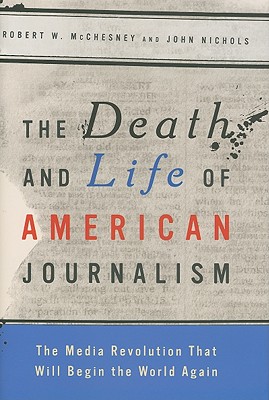
A special look at the state of the media in America. Every week on CounterSpin we talk mostly about what the media are getting wrong. But the big story inside the news industry is the collapse of the business itself. What are the implications for citizens? What can we do about it? And how concerned should we be about the failures of corporate owners that have done so little to promote good journalism in the first place? We'll talk about all that and more with our guests Robert McChesney and John Nichols, co-authors of the new book The Death and Life of American Journalism: the Media Revolution That Will Begin the World Again.
To Listen to the Conversation
CounterSpin
A special look at the state of the media in America. Every week on CounterSpin we talk mostly about what the media are getting wrong. But the big story inside the news industry is the collapse of the business itself. What are the implications for citizens? What can we do about it? And how concerned should we be about the failures of corporate owners that have done so little to promote good journalism in the first place? We'll talk about all that and more with our guests Robert McChesney and John Nichols, co-authors of the new book The Death and Life of American Journalism: the Media Revolution That Will Begin the World Again.
To Listen to the Conversation
Tuesday, March 02, 2010
Panopticon
(I suggest that you immediately listen to "aptgangr" because it is now one of my favorite songs. Courtesy of Chuck McIntyre)
Panopticon
from the page:
Panopticon
from the page:
anarcho pagan black metal.focused on spreading propaganda,anarchism,paganism,releasing emotion and identifying the common thread of humanity between all cultures.its time to put our differences aside and recognize a common enemy. this project has been made possible by the many who came before me,who's wisdom has shaped my perspective. this project is inspired by all the many voices who have encouraged me along the way.I humbly thank you for the inspiration you provide. for detailed song explanations and political banter,please see the blogs and or the releases themelves. the intent of panopticon is the exchange of information and opinion.
Chris Hedges: Ralph Nader Was Right About Barack Obama
(Courtesy of Michael Marchman and Patrick Smith)
Ralph Nader Was Right About Barack Obama
by Chris Hedges
TruthDig
We owe Ralph Nader and Cynthia McKinney an apology. They were right about Barack Obama. They were right about the corporate state. They had the courage of their convictions and they stood fast despite wholesale defections and ridicule by liberals and progressives.
Obama lies as cravenly, if not as crudely, as George W. Bush. He promised us that the transfer of $12.8 trillion in taxpayer money to Wall Street would open up credit and lending to the average consumer. The Federal Deposit Insurance Corp. (FDIC), however, admitted last week that banks have reduced lending at the sharpest pace since 1942. As a senator, Obama promised he would filibuster amendments to the FISA Reform Act that retroactively made legal the wiretapping and monitoring of millions of American citizens without warrant; instead he supported passage of the loathsome legislation. He told us he would withdraw American troops from Iraq, close the detention facility at Guantánamo, end torture, restore civil liberties such as habeas corpus and create new jobs. None of this has happened.
He is shoving a health care bill down our throats that would give hundreds of billions of taxpayer dollars to the private health insurance industry in the form of subsidies, and force millions of uninsured Americans to buy insurers’ defective products. These policies would come with ever-rising co-pays, deductibles and premiums and see most of the seriously ill left bankrupt and unable to afford medical care. Obama did nothing to halt the collapse of the Copenhagen climate conference, after promising meaningful environmental reform, and has left us at the mercy of corporations such as ExxonMobil. He empowers Israel’s brutal apartheid state. He has expanded the war in Afghanistan and Pakistan, where hundreds of civilians, including entire families, have been slaughtered by sophisticated weapons systems such as the Hellfire missile, which sucks the air out of victims’ lungs. And he is delivering war and death to Yemen, Somalia and perhaps Iran.
The illegal wars and occupations, the largest transference of wealth upward in American history and the egregious assault on civil liberties, all begun under George W. Bush, raise only a flicker of tepid protest from liberals when propagated by the Democrats. Liberals, unlike the right wing, are emotionally disabled. They appear not to feel. The tea-party protesters, the myopic supporters of Sarah Palin, the veterans signing up for Oath Keepers and the myriad of armed patriot groups have swept into their ranks legions of disenfranchised workers, angry libertarians, John Birchers and many who, until now, were never politically active. They articulate a legitimate rage. Yet liberals continue to speak in the bloodless language of issues and policies, and leave emotion and anger to the protofascists.
To Read the Rest of the Essay
Ralph Nader Was Right About Barack Obama
by Chris Hedges
TruthDig
We owe Ralph Nader and Cynthia McKinney an apology. They were right about Barack Obama. They were right about the corporate state. They had the courage of their convictions and they stood fast despite wholesale defections and ridicule by liberals and progressives.
Obama lies as cravenly, if not as crudely, as George W. Bush. He promised us that the transfer of $12.8 trillion in taxpayer money to Wall Street would open up credit and lending to the average consumer. The Federal Deposit Insurance Corp. (FDIC), however, admitted last week that banks have reduced lending at the sharpest pace since 1942. As a senator, Obama promised he would filibuster amendments to the FISA Reform Act that retroactively made legal the wiretapping and monitoring of millions of American citizens without warrant; instead he supported passage of the loathsome legislation. He told us he would withdraw American troops from Iraq, close the detention facility at Guantánamo, end torture, restore civil liberties such as habeas corpus and create new jobs. None of this has happened.
He is shoving a health care bill down our throats that would give hundreds of billions of taxpayer dollars to the private health insurance industry in the form of subsidies, and force millions of uninsured Americans to buy insurers’ defective products. These policies would come with ever-rising co-pays, deductibles and premiums and see most of the seriously ill left bankrupt and unable to afford medical care. Obama did nothing to halt the collapse of the Copenhagen climate conference, after promising meaningful environmental reform, and has left us at the mercy of corporations such as ExxonMobil. He empowers Israel’s brutal apartheid state. He has expanded the war in Afghanistan and Pakistan, where hundreds of civilians, including entire families, have been slaughtered by sophisticated weapons systems such as the Hellfire missile, which sucks the air out of victims’ lungs. And he is delivering war and death to Yemen, Somalia and perhaps Iran.
The illegal wars and occupations, the largest transference of wealth upward in American history and the egregious assault on civil liberties, all begun under George W. Bush, raise only a flicker of tepid protest from liberals when propagated by the Democrats. Liberals, unlike the right wing, are emotionally disabled. They appear not to feel. The tea-party protesters, the myopic supporters of Sarah Palin, the veterans signing up for Oath Keepers and the myriad of armed patriot groups have swept into their ranks legions of disenfranchised workers, angry libertarians, John Birchers and many who, until now, were never politically active. They articulate a legitimate rage. Yet liberals continue to speak in the bloodless language of issues and policies, and leave emotion and anger to the protofascists.
To Read the Rest of the Essay
Monday, March 01, 2010
Sebastian Jones: The Media-Lobbying Complex
The Media-Lobbying Complex
By Sebastian Jones
The Nation
President Obama spent most of December 4 touring Allentown, Pennsylvania, meeting with local workers and discussing the economic crisis. A few hours later, the state's former governor, Tom Ridge, was on MSNBC's Hardball With Chris Matthews, offering up his own recovery plan. There were "modest things" the White House might try, like cutting taxes or opening up credit for small businesses, but the real answer was for the president to "take his green agenda and blow it out of the box." The first step, Ridge explained, was to "create nuclear power plants." Combined with some waste coal and natural gas extraction, you would have an "innovation setter" that would "create jobs, create exports."
As Ridge counseled the administration to "put that package together," he sure seemed like an objective commentator. But what viewers weren't told was that since 2005, Ridge has pocketed $530,659 in executive compensation for serving on the board of Exelon, the nation's largest nuclear power company. As of March 2009, he also held an estimated $248,299 in Exelon stock, according to SEC filings.
Moments earlier, retired general and "NBC Military Analyst" Barry McCaffrey told viewers that the war in Afghanistan would require an additional "three- to ten-year effort" and "a lot of money." Unmentioned was the fact that DynCorp paid McCaffrey $182,309 in 2009 alone. The government had just granted DynCorp a five-year deal worth an estimated $5.9 billion to aid American forces in Afghanistan. The first year is locked in at $644 million, but the additional four options are subject to renewal, contingent on military needs and political realities.
In a single hour, two men with blatant, undisclosed conflicts of interest had appeared on MSNBC. The question is, was this an isolated oversight or business as usual? Evidence points to the latter. In 2003 The Nation exposed McCaffrey's financial ties to military contractors he had promoted on-air on several cable networks; in 2008 David Barstow wrote a Pulitzer Prize-winning series for the New York Times about the Pentagon's use of former military officers--many lobbying or consulting for military contractors--to get their talking points on television in exchange for access to decision-makers; and in 2009 bloggers uncovered how ex-Newsweek writer Richard Wolffe had guest-hosted Countdown With Keith Olbermann while working at a large PR firm specializing in "strategies for managing corporate reputation."
These incidents represent only a fraction of the covert corporate influence peddling on cable news, a four-month investigation by The Nation has found. Since 2007 at least seventy-five registered lobbyists, public relations representatives and corporate officials--people paid by companies and trade groups to manage their public image and promote their financial and political interests--have appeared on MSNBC, Fox News, CNN, CNBC and Fox Business Network with no disclosure of the corporate interests that had paid them. Many have been regulars on more than one of the cable networks, turning in dozens--and in some cases hundreds--of appearances.
For lobbyists, PR firms and corporate officials, going on cable television is a chance to promote clients and their interests on the most widely cited source of news in the United States. These appearances also generate good will and access to major players inside the Democratic and Republican parties. For their part, the cable networks, eager to fill time and afraid of upsetting the political elite, have often looked the other way. At times, the networks have even disregarded their own written ethics guidelines. Just about everyone involved is heavily invested in maintaining the current system, with the exception of the viewer.
To Read the Rest of the Article
More:
Democracy Now: “The Media-Lobbying Complex”: Investigation Exposes Undisclosed Corporate Ties of Network Political Pundits
By Sebastian Jones
The Nation
President Obama spent most of December 4 touring Allentown, Pennsylvania, meeting with local workers and discussing the economic crisis. A few hours later, the state's former governor, Tom Ridge, was on MSNBC's Hardball With Chris Matthews, offering up his own recovery plan. There were "modest things" the White House might try, like cutting taxes or opening up credit for small businesses, but the real answer was for the president to "take his green agenda and blow it out of the box." The first step, Ridge explained, was to "create nuclear power plants." Combined with some waste coal and natural gas extraction, you would have an "innovation setter" that would "create jobs, create exports."
As Ridge counseled the administration to "put that package together," he sure seemed like an objective commentator. But what viewers weren't told was that since 2005, Ridge has pocketed $530,659 in executive compensation for serving on the board of Exelon, the nation's largest nuclear power company. As of March 2009, he also held an estimated $248,299 in Exelon stock, according to SEC filings.
Moments earlier, retired general and "NBC Military Analyst" Barry McCaffrey told viewers that the war in Afghanistan would require an additional "three- to ten-year effort" and "a lot of money." Unmentioned was the fact that DynCorp paid McCaffrey $182,309 in 2009 alone. The government had just granted DynCorp a five-year deal worth an estimated $5.9 billion to aid American forces in Afghanistan. The first year is locked in at $644 million, but the additional four options are subject to renewal, contingent on military needs and political realities.
In a single hour, two men with blatant, undisclosed conflicts of interest had appeared on MSNBC. The question is, was this an isolated oversight or business as usual? Evidence points to the latter. In 2003 The Nation exposed McCaffrey's financial ties to military contractors he had promoted on-air on several cable networks; in 2008 David Barstow wrote a Pulitzer Prize-winning series for the New York Times about the Pentagon's use of former military officers--many lobbying or consulting for military contractors--to get their talking points on television in exchange for access to decision-makers; and in 2009 bloggers uncovered how ex-Newsweek writer Richard Wolffe had guest-hosted Countdown With Keith Olbermann while working at a large PR firm specializing in "strategies for managing corporate reputation."
These incidents represent only a fraction of the covert corporate influence peddling on cable news, a four-month investigation by The Nation has found. Since 2007 at least seventy-five registered lobbyists, public relations representatives and corporate officials--people paid by companies and trade groups to manage their public image and promote their financial and political interests--have appeared on MSNBC, Fox News, CNN, CNBC and Fox Business Network with no disclosure of the corporate interests that had paid them. Many have been regulars on more than one of the cable networks, turning in dozens--and in some cases hundreds--of appearances.
For lobbyists, PR firms and corporate officials, going on cable television is a chance to promote clients and their interests on the most widely cited source of news in the United States. These appearances also generate good will and access to major players inside the Democratic and Republican parties. For their part, the cable networks, eager to fill time and afraid of upsetting the political elite, have often looked the other way. At times, the networks have even disregarded their own written ethics guidelines. Just about everyone involved is heavily invested in maintaining the current system, with the exception of the viewer.
To Read the Rest of the Article
More:
Democracy Now: “The Media-Lobbying Complex”: Investigation Exposes Undisclosed Corporate Ties of Network Political Pundits
CounterSpin: Sebastian Jones on Media-Lobbying Complex, Ibrahim Hooper on Islamville TV report
CounterSpin
Sebastian Jones on Media-Lobbying Complex
Paid-for pundits. If you've ever wondered who the so-called experts pontificating on cable news channels really are, a new investigation published in the Nation magazine gives you some answers. Reporter Sebastian Jones will join us to talk about the secret corporate PR spinners and lobbyists who pose as pundits—without viewers knowing who they're actually working for.
Ibrahim Hooper on Islamville TV report
Did a local Nashville TV newscast, which featured extremist anti-Muslim propaganda and warnings about the terrorist among us, spark a vandalism attack on an area mosque? Many Nashvillians, including many in the city's Muslim community think so. We'll talk with CAIR's Ibrahim Cooper about anti-Muslim attacks and media responsibility.
To Listen to the Program
Sebastian Jones on Media-Lobbying Complex
Paid-for pundits. If you've ever wondered who the so-called experts pontificating on cable news channels really are, a new investigation published in the Nation magazine gives you some answers. Reporter Sebastian Jones will join us to talk about the secret corporate PR spinners and lobbyists who pose as pundits—without viewers knowing who they're actually working for.
Ibrahim Hooper on Islamville TV report
Did a local Nashville TV newscast, which featured extremist anti-Muslim propaganda and warnings about the terrorist among us, spark a vandalism attack on an area mosque? Many Nashvillians, including many in the city's Muslim community think so. We'll talk with CAIR's Ibrahim Cooper about anti-Muslim attacks and media responsibility.
To Listen to the Program
Common Sense with Dan Carlin: #167 The Big Clip Show
(This is a great series of clips that gives a good sense of why I value Dan Carlin's commentaries and why I listen to his podcast--even if he is naive in thinking he is non-partisan ;)
Show 167 - The Big Clip Show
Common Sense with Dan Carlin
This ... year-ending edition of the show contains clips from past episodes on a variety of topics. From Iran to Obama, torture to energy this show has a little of a lot.
Notes:
1.Clip from Common Sense show #127 “Great Expectations” (released 6/10/2008)
2.Clip from Common Sense show #137 “A Vote for None” (released 10/30/2008)
3.Clip from Common Sense show #152 “Sick Politics” (released 5/21/2009)
4.Clip from Common Sense show #126 “The Way You Play The Game” (released 5/27/2008)
5.Clip from Common Sense show #77 “Mushrooms and Onions” (released 12/29/2006)
6.Clip from Common Sense show #39 “Iranicide” (released 3/14/2006)
7.Clip from Common Sense show #106 “M.P.F.E.” (released 9/14/2007)
To Listen to the Year-End Retrospective
Show 167 - The Big Clip Show
Common Sense with Dan Carlin
This ... year-ending edition of the show contains clips from past episodes on a variety of topics. From Iran to Obama, torture to energy this show has a little of a lot.
Notes:
1.Clip from Common Sense show #127 “Great Expectations” (released 6/10/2008)
2.Clip from Common Sense show #137 “A Vote for None” (released 10/30/2008)
3.Clip from Common Sense show #152 “Sick Politics” (released 5/21/2009)
4.Clip from Common Sense show #126 “The Way You Play The Game” (released 5/27/2008)
5.Clip from Common Sense show #77 “Mushrooms and Onions” (released 12/29/2006)
6.Clip from Common Sense show #39 “Iranicide” (released 3/14/2006)
7.Clip from Common Sense show #106 “M.P.F.E.” (released 9/14/2007)
To Listen to the Year-End Retrospective
Marge Piercy: The Low Road
(Quoted in We Are Everywhere and Howard Zinn's The People Speak)
The Low Road
What can they do to you?
Whatever they want..
They can set you up, bust you,
they can break your fingers,
burn your brain with electricity,
blur you with drugs till you
can’t walk, can’t remember.
they can take away your children,
wall up your lover;
they can do anything you can’t stop them doing.
How can you stop them?
Alone you can fight, you can refuse.
You can take whatever revenge you can
But they roll right over you.
But two people fighting back to back
can cut through a mob
a snake-dancing fire
can break a cordon,
termites can bring down a mansion
Two people can keep each other sane
can give support, conviction,
love, massage, hope, sex.
Three people are a delegation
a cell, a wedge.
With four you can play games
and start a collective.
With six you can rent a whole house
have pie for dinner with no seconds
and make your own music.
Thirteen makes a circle,
a hundred fill a hall.
A thousand have solidarity
and your own newsletter;
ten thousand community
and your own papers;
a hundred thousand,
a network of communities;
a million our own world.
It goes one at a time.
It starts when you care to act.
It starts when you do it again
after they say no.
It starts when you say we
and know who you mean;
and each day you mean
one more.
- Marge Piercy
The Low Road
What can they do to you?
Whatever they want..
They can set you up, bust you,
they can break your fingers,
burn your brain with electricity,
blur you with drugs till you
can’t walk, can’t remember.
they can take away your children,
wall up your lover;
they can do anything you can’t stop them doing.
How can you stop them?
Alone you can fight, you can refuse.
You can take whatever revenge you can
But they roll right over you.
But two people fighting back to back
can cut through a mob
a snake-dancing fire
can break a cordon,
termites can bring down a mansion
Two people can keep each other sane
can give support, conviction,
love, massage, hope, sex.
Three people are a delegation
a cell, a wedge.
With four you can play games
and start a collective.
With six you can rent a whole house
have pie for dinner with no seconds
and make your own music.
Thirteen makes a circle,
a hundred fill a hall.
A thousand have solidarity
and your own newsletter;
ten thousand community
and your own papers;
a hundred thousand,
a network of communities;
a million our own world.
It goes one at a time.
It starts when you care to act.
It starts when you do it again
after they say no.
It starts when you say we
and know who you mean;
and each day you mean
one more.
- Marge Piercy
Peace and Conflict Studies, Part 3: The Garden (USA: Scott Hamilton Kennedy, 2008)
(Students: you need to post in the comments a response to this documentary. People/Themes/Topics raised in this documentary and in our discussions of it can be used to develop a term paper project. This documentary is an example of Zinn's People's History projects. You can get your grade for Leon lane's assignment here )
Official Website
Watching this film today reminded me of this report I saw last week and emphasized the value of community gardens for our collective knowledge about the world:
Jamie Oliver's Food Revolution: First Graders Can't Identify Fruits, Veggies
and another that spoke to our disconnect from the process of food-production as a result of large-scale agri-businesses dominating our food practices:
William Neuman: Bribes Let Tomato Vendor Sell Tainted Food
and the classic statement from the hunter-conservationist Aldo Leopold on the consequences of this lack-of-knowledge about the web-of-life:
Aldo Leopold: Thinking Like a Mountain
One of the most important and influential writers on the need for us to re-connect with the land and build strong communities is Kentucky native Wendell Berry
A great article that looks at our disconnect from the "stories" of the processes/beings that lead to the products we consume (including food): Rebecca Solnit: The Silence of the Lambswool Cardigan
Extending the politics of food and communal relations to our interaction with our fellow animals, I reflected on the The Politics of Meat
Samuel (I think that was his name) in actively supporting and joining the Latino gardeners in their fight to keep their gardens stated that he was a Black Panther. I'm not sure if you are familiar with the Black Panthers so here is a history of the organization.
I mentioned The Garden is playing in the Lexington One World Film Festival that started this weekend--check out the other films.
Zack de la Rocha is seen playing at a fundraiser at the South Central Garden and this song from Rage Against the Machine seemed relevant to the themes of the documentary: "Ashes in the Fall"
Terr Bruckner just sent a message about a BCTC Library Resource online that may be of use for some of your projects: Women's History
Extra Credit Opportunities (attend and write a 600+ word response)
1)
Dear All,
Wanted to let you know that Rev. John Dear, S. J. (Jesuit priest) will be speaking at the UK Newman Center on Thursday, March 4 at 7:30 p.m. Rev. Dear was nominated for the 2008 Nobel Peace Prize by Archbishop Desmond Tutu. His talk on Thursday night is entitled “Following the nonviolent Jesus in a world of violence and war.”
The abstract of the talk: Fr. John Dear will share reflections about the world of violence and war, the life of creative nonviolence and peace, Jesus’ active nonviolence, and how we can become contemplatives, activists, and prophets of peace and justice to work for a new world without war, poverty, nuclear weapons or global warming.
One note – he has been arrested over 75 times in acts of civil disobedience against war and nuclear weapons.
Take care,
Rebecca Glasscock
2)
PALESTINIAN ACTIVIST HANAN ASHRAWI TO VISIT
LEXINGTON, UK
A free public lecture featuring Palestinian activist Hanan Ashrawi has been scheduled for the evening of March 23, 2010, at the University of Kentucky. Ashrawi has served as an elected member of the Palestinian Legislative Council, Jerusalem District. In 2009, she was elected a member of the Executive Committee of the Palestine Liberation Organization (PLO), making history as the first woman to hold a seat in this executive body. Ashrawi’s academic career spanned several decades in which she served as a faculty member, chair in the Department of English and Dean of the Faculty at Birzeit University on the West Bank. From 1991 through 1993, she served as the official spokesperson of the Palestinian Delegation to the Middle East Peace Process and a member of both the Leadership/Guidance and Executive Committees of the Delegation.
With the signing of the peace accords by Yasser Arafat and Yitzhak Rabin in 1993 and the establishment of Palestinian self-rule, Ashrawi headed the Preparatory Committee of the Palestinian Independent Commission for Citizens' Rights in Jerusalem, and was the founder and commissioner general of that committee until 1995. From 1996 through 1998, she served as minister of higher education and research. In August of 1998, she founded the Palestinian Initiative for the Promotion of Global Dialogue and Democracy (MIFTAH), and has served as the Executive Committee chairperson of that organization since that time.
Tickets for Ashrawi’s public talk are available through the Singletary Center Ticket Office or by going to the SCFA website. No phone orders accepted. There is a limit of FOUR tickets per person using the SCFA website. Schools and community groups may contact Richard Greissman, at (859) 257-2471 or richard.greissman@uky.edu, for more information about group seating. Tickets are free.
As students ask question and/or make comments I will add more information in this post...
Official Website
Watching this film today reminded me of this report I saw last week and emphasized the value of community gardens for our collective knowledge about the world:
Jamie Oliver's Food Revolution: First Graders Can't Identify Fruits, Veggies
and another that spoke to our disconnect from the process of food-production as a result of large-scale agri-businesses dominating our food practices:
William Neuman: Bribes Let Tomato Vendor Sell Tainted Food
and the classic statement from the hunter-conservationist Aldo Leopold on the consequences of this lack-of-knowledge about the web-of-life:
Aldo Leopold: Thinking Like a Mountain
One of the most important and influential writers on the need for us to re-connect with the land and build strong communities is Kentucky native Wendell Berry
A great article that looks at our disconnect from the "stories" of the processes/beings that lead to the products we consume (including food): Rebecca Solnit: The Silence of the Lambswool Cardigan
Extending the politics of food and communal relations to our interaction with our fellow animals, I reflected on the The Politics of Meat
Samuel (I think that was his name) in actively supporting and joining the Latino gardeners in their fight to keep their gardens stated that he was a Black Panther. I'm not sure if you are familiar with the Black Panthers so here is a history of the organization.
I mentioned The Garden is playing in the Lexington One World Film Festival that started this weekend--check out the other films.
Zack de la Rocha is seen playing at a fundraiser at the South Central Garden and this song from Rage Against the Machine seemed relevant to the themes of the documentary: "Ashes in the Fall"
Terr Bruckner just sent a message about a BCTC Library Resource online that may be of use for some of your projects: Women's History
Extra Credit Opportunities (attend and write a 600+ word response)
1)
Dear All,
Wanted to let you know that Rev. John Dear, S. J. (Jesuit priest) will be speaking at the UK Newman Center on Thursday, March 4 at 7:30 p.m. Rev. Dear was nominated for the 2008 Nobel Peace Prize by Archbishop Desmond Tutu. His talk on Thursday night is entitled “Following the nonviolent Jesus in a world of violence and war.”
The abstract of the talk: Fr. John Dear will share reflections about the world of violence and war, the life of creative nonviolence and peace, Jesus’ active nonviolence, and how we can become contemplatives, activists, and prophets of peace and justice to work for a new world without war, poverty, nuclear weapons or global warming.
One note – he has been arrested over 75 times in acts of civil disobedience against war and nuclear weapons.
Take care,
Rebecca Glasscock
2)
PALESTINIAN ACTIVIST HANAN ASHRAWI TO VISIT
LEXINGTON, UK
A free public lecture featuring Palestinian activist Hanan Ashrawi has been scheduled for the evening of March 23, 2010, at the University of Kentucky. Ashrawi has served as an elected member of the Palestinian Legislative Council, Jerusalem District. In 2009, she was elected a member of the Executive Committee of the Palestine Liberation Organization (PLO), making history as the first woman to hold a seat in this executive body. Ashrawi’s academic career spanned several decades in which she served as a faculty member, chair in the Department of English and Dean of the Faculty at Birzeit University on the West Bank. From 1991 through 1993, she served as the official spokesperson of the Palestinian Delegation to the Middle East Peace Process and a member of both the Leadership/Guidance and Executive Committees of the Delegation.
With the signing of the peace accords by Yasser Arafat and Yitzhak Rabin in 1993 and the establishment of Palestinian self-rule, Ashrawi headed the Preparatory Committee of the Palestinian Independent Commission for Citizens' Rights in Jerusalem, and was the founder and commissioner general of that committee until 1995. From 1996 through 1998, she served as minister of higher education and research. In August of 1998, she founded the Palestinian Initiative for the Promotion of Global Dialogue and Democracy (MIFTAH), and has served as the Executive Committee chairperson of that organization since that time.
Tickets for Ashrawi’s public talk are available through the Singletary Center Ticket Office or by going to the SCFA website
As students ask question and/or make comments I will add more information in this post...
Subscribe to:
Posts (Atom)