What Every Environmentalist Needs to Know About Capitalism
Fred Magdoff and John Bellamy Foster
Monthly Review
...
Another Economic System Is Not Just Possible—It’s Essential
The foregoing analysis, if correct, points to the fact that the ecological crisis cannot be solved within the logic of the present system. The various suggestions for doing so have no hope of success. The system of world capitalism is clearly unsustainable in: (1) its quest for never ending accumulation of capital leading to production that must continually expand to provide profits; (2) its agriculture and food system that pollutes the environment and still does not allow universal access to a sufficient quantity and quality of food; (3) its rampant destruction of the environment; (4) its continually recreating and enhancing of the stratification of wealth within and between countries; and (5) its search for technological magic bullets as a way of avoiding the growing social and ecological problems arising from its own operations.
The transition to an ecological—which we believe must also be a socialist—economy will be a steep ascent and will not occur overnight. This is not a question of “storming the Winter Palace.” Rather, it is a dynamic, multifaceted struggle for a new cultural compact and a new productive system. The struggle is ultimately against the system of capital. It must begin, however, by opposing the logic of capital, endeavoring in the here and now to create in the interstices of the system a new social metabolism rooted in egalitarianism, community, and a sustainable relation to the earth. The basis for the creation of sustainable human development must arise from within the system dominated by capital, without being part of it, just as the bourgeoisie itself arose in the “pores” of feudal society.54 Eventually, these initiatives can become powerful enough to constitute the basis of a revolutionary new movement and society.
All over the world, such struggles in the interstices of capitalist society are now taking place, and are too numerous and too complex to be dealt with fully here. Indigenous peoples today, given a new basis as a result of the ongoing revolutionary struggle in Bolivia, are reinforcing a new ethic of responsibility to the earth. La Vía Campesina, a global peasant-farmer organization, is promoting new forms of ecological agriculture, as is Brazil’s MST (Movimento dos Trabalhadores Rurais Sem Terra), as are Cuba and Venezuela. Recently, Venezulean President Hugo Chávez stressed the social and environmental reasons to work to get rid of the oil-rentier model in Venezuela, a major oil exporter.55 The climate justice movement is demanding egalitarian and anti-capitalist solutions to the climate crisis. Everywhere radical, essentially anti-capitalist, strategies are emerging, based on other ethics and forms of organization, rather than the profit motive: ecovillages; the new urban environment promoted in Curitiba in Brazil and elsewhere; experiments in permaculture, and community-supported agriculture, farming and industrial cooperatives in Venezuela, etc. The World Social Forum has given voice to many of these aspirations. As leading U.S. environmentalist James Gustave Speth has stated: “The international social movement for change—which refers to itself as ‘the irresistible rise of global anti-capitalism’—is stronger than many may imagine and will grow stronger.”56
The reason that the opposition to the logic of capitalism—ultimately seeking to displace the system altogether—will grow more imposing is that there is no alternative, if the earth as we know it, and humanity itself, are to survive. Here, the aims of ecology and socialism will necessarily meet. It will become increasingly clear that the distribution of land as well as food, health care, housing, etc. should be based on fulfilling human needs and not market forces. This is, of course, easier said than done. But it means making economic decisions through democratic processes occurring at local, regional, and multiregional levels. We must face such issues as: (1) How can we supply everyone with basic human needs of food, water, shelter, clothing, health care, educational and cultural opportunities? (2) How much of the economic production should be consumed and how much invested? and (3) How should the investments be directed? In the process, people must find the best ways to carry on these activities with positive interactions with nature—to improve the ecosystem. New forms of democracy will be needed, with emphasis on our responsibilities to each other, to one’s own community as well as to communities around the world. Accomplishing this will, of course, require social planning at every level: local, regional, national, and international—which can only be successful to the extent that it is of and by, and not just ostensibly for, the people.57
An economic system that is democratic, reasonably egalitarian, and able to set limits on consumption will undoubtedly mean that people will live at a significantly lower level of consumption than what is sometimes referred to in the wealthy countries as a “middle class” lifestyle (which has never been universalized even in these societies). A simpler way of life, though “poorer” in gadgets and ultra-large luxury homes, can be richer culturally and in reconnecting with other people and nature, with people working the shorter hours needed to provide life’s essentials. A large number of jobs in the wealthy capitalist countries are nonproductive and can be eliminated, indicating that the workweek can be considerably shortened in a more rationally organized economy. The slogan, sometimes seen on bumper stickers, “Live Simply so that Others May Simply Live,” has little meaning in a capitalist society. Living a simple life, such as Helen and Scott Nearing did, demonstrating that it is possible to live a rewarding and interesting life while living simply, doesn’t help the poor under present circumstances.58 However, the slogan will have real importance in a society under social (rather than private) control, trying to satisfy the basic needs for all people.
Perhaps the Community Councils of Venezuela—where local people decide the priorities for social investment in their communities and receive the resources to implement them—are an example of planning for human needs at the local level. This is the way that such important needs as schools, clinics, roads, electricity, and running water can be met. In a truly transformed society, community councils can interact with regional and multiregional efforts. And the use of the surplus of society, after accounting for peoples’ central needs, must be based on their decisions.59
The very purpose of the new sustainable system, which is the necessary outcome of these innumerable struggles (necessary in terms of survival and the fulfillment of human potential), must be to satisfy the basic material and non-material needs of all the people, while protecting the global environment as well as local and regional ecosystems. The environment is not something “external” to the human economy, as our present ideology tells us; it constitutes the essential life support systems for all living creatures. To heal the “metabolic rift” between the economy and the environment means new ways of living, manufacturing, growing food, transportation and so forth.60 Such a society must be sustainable; and sustainability requires substantive equality, rooted in an egalitarian mode of production and consumption.
Concretely, people need to live closer to where they work, in ecologically designed housing built for energy efficiency as well as comfort, and in communities designed for public engagement, with sufficient places, such as parks and community centers, for coming together and recreation opportunities. Better mass transit within and between cities is needed to lessen the dependence on the use of the cars and trucks. Rail is significantly more energy efficient than trucks in moving freight (413 miles per gallon fuel per ton versus 155 miles for trucks) and causes fewer fatalities, while emitting lower amounts of greenhouse gases. One train can carry the freight of between 280 to 500 trucks. And it is estimated that one rail line can carry the same amount of people as numerous highway lanes.61 Industrial production needs to be based on ecological design principles of “cradle-to-cradle,” where products and buildings are designed for lower energy input, relying to as great degree as possible on natural lighting and heating/cooling, ease of construction as well as easy reuse, and ensuring that the manufacturing process produces little to no waste.62
Agriculture based on ecological principles and carried out by family farmers working on their own, or in cooperatives and with animals, reunited with the land that grows their food has been demonstrated to be not only as productive or more so than large-scale industrial production, but also to have less negative impact on local ecologies. In fact, the mosaic created by small farms interspersed with native vegetation is needed to preserve endangered species.63
A better existence for slum dwellers, approximately one-sixth of humanity, must be found. For the start, a system that requires a “planet of slums,” as Mike Davis has put it, has to be replaced by a system that has room for food, water, homes, and employment for all.64 For many, this may mean returning to farming, with adequate land and housing and other support provided.
Smaller cities may be needed, with people living closer to where their food is produced and industry more dispersed, and smaller scale.
Evo Morales, President of Bolivia, has captured the essence of the situation in his comments about changing from capitalism to a system that promotes “living well” instead of “living better.” As he put it at the Copenhagen Climate Conference in December 2009: “Living better is to exploit human beings. It’s plundering natural resources. It’s egoism and individualism. Therefore, in those promises of capitalism, there is no solidarity or complementarity. There’s no reciprocity. So that’s why we’re trying to think about other ways of living lives and living well, not living better. Living better is always at someone else’s expense. Living better is at the expense of destroying the environment.”65
The earlier experiences of transition to non-capitalist systems, especially in Soviet-type societies, indicate that this will not be easy, and that we need new conceptions of what constitutes socialism, sharply distinguished from those early abortive attempts. Twentieth-century revolutions typically arose in relatively poor, underdeveloped countries, which were quickly isolated and continually threatened from abroad. Such post-revolutionary societies usually ended up being heavily bureaucratic, with a minority in charge of the state effectively ruling over the remainder of the society. Many of the same hierarchical relations of production that characterize capitalism were reproduced. Workers remained proletarianized, while production was expanded for the sake of production itself. Real social improvements all too often existed side by side with extreme forms of social repression.66
Today we must strive to construct a genuine socialist system; one in which bureaucracy is kept in check, and power over production and politics truly resides with the people. Just as new challenges that confront us are changing in our time, so are the possibilities for the development of freedom and sustainability.
When Reverend Jeremiah Wright spoke to Monthly Review’s sixtieth anniversary gathering in September 2009, he kept coming back to the refrain “What about the people?” If there is to be any hope of significantly improving the conditions of the vast number of the world’s inhabitants—many of whom are living hopelessly under the most severe conditions—while also preserving the earth as a livable planet, we need a system that constantly asks: “What about the people?” instead of “How much money can I make?” This is necessary, not only for humans, but for all the other species that share the planet with us and whose fortunes are intimately tied to ours.
To Read the Entire Essay
Saturday, April 24, 2010

Nils Gilman: The Global Illicit Economy
A new class of global actors is playing an increasingly important role in globalization: smugglers, warlords, guerrillas, terrorists, gangs, and bandits of all stripes. Since the end of the Cold War, the global illicit economy has consistently grown at twice the rate of the licit global economy. Increasingly, illicit actors will represent not just an economic but a political force. As globalization hollows out traditional nation-states, what will fill the power vacuum in slums and hinterlands will be informal non-state governance structures. These zones will be globally connected, effectively run by local gangs, religious leaders, or quasi-tribal organizations – organizations that will govern without aspiring to statehood.
Friday, April 23, 2010

North of Center: The Right to the City -- Liberate CentrePointe
The right to the city: Liberate CentrePointe
North of Center editorial
Smirking Chimp
Note: CentrePointe is Lexington's most visible example of the fallout from the out-of-control real estate economy that flourished in cities the world over. Over a period of years, Developer Dudley Webb purchased an entire city block of dis-invested crumbling buildings at the center of downtown Lexington. The block was home to the only drugstore in downtown Lexington, a hat shop, at the time Lexington's only music venue, and some other dive bars and restaurants. A portion of the block consisted of buildings dating to the early 19th century and were part of the city's original commercial street.
In late 2008 after acquiring deed to all the buildings, Webb proclaimed the block beyond repair and suddenly razed it to nothing, despite vociferous public opposition. Webb argued that he needed to begin immediately the construction of a 35 story hotel/condo so that it would be ready to house tourists arriving for the World Equestrian Games, Lexington's version of the Olympics, which will be held here this September.
As expected, the shady financial funding fell through: a Middle-Eastern sheik funding the thing apparently died before Webb bulldozed the block, and the city later denied Webb public funds to help defray construction costs. And so Lexington is now left with a giant unused and fenced off space in the middle of downtown. This piece was written to call Lexingtonians to action and reclaim their city block.
The Right to the city:Liberate CentrePointe
Lexington is now entering its second summer growing season without breaking ground on the CentrePointe block. With the exception of some stealthy picnics, an Irish festival and a couple minutes—total—of stolen sports action on the lush grass, an entire downtown city block has been rendered off limits to an entire city for nearly one-and-a-half years, an urban dead zone with suburban lawn aesthetics.
For this pathetic state of affairs we should blame ourselves. We spent a good amount of time last summer imagining the CentrePointe of our dreams, but not so much time, as Herald Leader journalist Tom Eblen might say, doing something about it. When CentrePointe went out to pasture, so did we.
With that in mind, we call on Lexington residents to demand and claim their right to the block.
Follow the lead of those everyday artists who make the city come alive through their papered announcements stuck on wooden electric poles and abandoned magazine racks. Draw up your own plans for the CentrePointe block and staple, paste and etch them into the planks of the CentrePointe fences that keep you out. Paper the block alive once again with your poetry and prose, your cartoons and artist renderings. Record and inscribe the block’s past and its future, what it once was and what it can be.
One idea is easily discarded, torn down, forgotten. Twenty can carefully be swept under the grass clippings. But two-hundred, two-thousand ideas covering the CP fences? That is something else, something else altogether.
But we mustn’t stop with symbolic action. We must demand that the space be used productively. This year. And we should demand this in public and as loud and as often as possible.
Dudley Webb has already stated that he will not disturb the CentrePointe site until after the World Equestrian Games. The area is essentially rendered inert for the summer and part of fall. This is an unacceptable use of that central space. The best productive use of CentrePointe is not as an unusable and excessively large front lawn—its current situation. We demand more.
The rights of private property are not inviolable. They must be questioned, tested and at times even trampled upon. We–everyone but the small group of people who own the land–can no longer remain inactive on the false premise that unused Webb property is sacred.
We demand a public garden whose main purpose will be to help feed the poor, hungry and homeless–people whom many Lexingtonians finally discovered last week during the Creative Cities Summit when Bill Strickland spoke about his experiences in poor Pittsburgh. Such an idea for the block is surely something that city residents can support—at least those who have been talking in public and in print, on the campaign trail and in conference meetings, of the need to merge “creative” acts with issues of social justice. Having our community leaders support and lay the groundwork for such a venture—to demand and not just to ask for it to happen—could be quite a thing to see.
The public input of our civic, creative, agricultural and community leaders will be important as the rest of us—either with or without the support of those leaders (though hopefully with it)–begin to till the earth and plant our seeds. Our job is to do the most creative (and simple) of acts: doing. The immediate future of CentrePointe need not be decided by them. It can be decided by you.
Who will be the first to paper the fencing? Who will take the first soil sample? What farm groups will offer their time to utilize a 1-season garden in a place that is ground zero for public visibility? What politicians will offer political support? Who will transgress that most sacred of laws, private property, and demand that the city be run according to its inhabitants’ needs—and not the failed desires of its owners? What cultural centers will publicly endorse trespassing to do something they themselves know is right? What support networks–legal, social, economic–will we demand and work towards in this city, in this summer of growing?
_______
North of Center is a free bi-weekly paper located in coal-loving Lexington, KY. We cover sports, politics, music, film, and any other things that flow through the inner-Bluegrass region. If you're interested, we've now got a website: North of Center
Link
North of Center editorial
Smirking Chimp
Note: CentrePointe is Lexington's most visible example of the fallout from the out-of-control real estate economy that flourished in cities the world over. Over a period of years, Developer Dudley Webb purchased an entire city block of dis-invested crumbling buildings at the center of downtown Lexington. The block was home to the only drugstore in downtown Lexington, a hat shop, at the time Lexington's only music venue, and some other dive bars and restaurants. A portion of the block consisted of buildings dating to the early 19th century and were part of the city's original commercial street.
In late 2008 after acquiring deed to all the buildings, Webb proclaimed the block beyond repair and suddenly razed it to nothing, despite vociferous public opposition. Webb argued that he needed to begin immediately the construction of a 35 story hotel/condo so that it would be ready to house tourists arriving for the World Equestrian Games, Lexington's version of the Olympics, which will be held here this September.
As expected, the shady financial funding fell through: a Middle-Eastern sheik funding the thing apparently died before Webb bulldozed the block, and the city later denied Webb public funds to help defray construction costs. And so Lexington is now left with a giant unused and fenced off space in the middle of downtown. This piece was written to call Lexingtonians to action and reclaim their city block.
The Right to the city:Liberate CentrePointe
Lexington is now entering its second summer growing season without breaking ground on the CentrePointe block. With the exception of some stealthy picnics, an Irish festival and a couple minutes—total—of stolen sports action on the lush grass, an entire downtown city block has been rendered off limits to an entire city for nearly one-and-a-half years, an urban dead zone with suburban lawn aesthetics.
For this pathetic state of affairs we should blame ourselves. We spent a good amount of time last summer imagining the CentrePointe of our dreams, but not so much time, as Herald Leader journalist Tom Eblen might say, doing something about it. When CentrePointe went out to pasture, so did we.
With that in mind, we call on Lexington residents to demand and claim their right to the block.
Follow the lead of those everyday artists who make the city come alive through their papered announcements stuck on wooden electric poles and abandoned magazine racks. Draw up your own plans for the CentrePointe block and staple, paste and etch them into the planks of the CentrePointe fences that keep you out. Paper the block alive once again with your poetry and prose, your cartoons and artist renderings. Record and inscribe the block’s past and its future, what it once was and what it can be.
One idea is easily discarded, torn down, forgotten. Twenty can carefully be swept under the grass clippings. But two-hundred, two-thousand ideas covering the CP fences? That is something else, something else altogether.
But we mustn’t stop with symbolic action. We must demand that the space be used productively. This year. And we should demand this in public and as loud and as often as possible.
Dudley Webb has already stated that he will not disturb the CentrePointe site until after the World Equestrian Games. The area is essentially rendered inert for the summer and part of fall. This is an unacceptable use of that central space. The best productive use of CentrePointe is not as an unusable and excessively large front lawn—its current situation. We demand more.
The rights of private property are not inviolable. They must be questioned, tested and at times even trampled upon. We–everyone but the small group of people who own the land–can no longer remain inactive on the false premise that unused Webb property is sacred.
We demand a public garden whose main purpose will be to help feed the poor, hungry and homeless–people whom many Lexingtonians finally discovered last week during the Creative Cities Summit when Bill Strickland spoke about his experiences in poor Pittsburgh. Such an idea for the block is surely something that city residents can support—at least those who have been talking in public and in print, on the campaign trail and in conference meetings, of the need to merge “creative” acts with issues of social justice. Having our community leaders support and lay the groundwork for such a venture—to demand and not just to ask for it to happen—could be quite a thing to see.
The public input of our civic, creative, agricultural and community leaders will be important as the rest of us—either with or without the support of those leaders (though hopefully with it)–begin to till the earth and plant our seeds. Our job is to do the most creative (and simple) of acts: doing. The immediate future of CentrePointe need not be decided by them. It can be decided by you.
Who will be the first to paper the fencing? Who will take the first soil sample? What farm groups will offer their time to utilize a 1-season garden in a place that is ground zero for public visibility? What politicians will offer political support? Who will transgress that most sacred of laws, private property, and demand that the city be run according to its inhabitants’ needs—and not the failed desires of its owners? What cultural centers will publicly endorse trespassing to do something they themselves know is right? What support networks–legal, social, economic–will we demand and work towards in this city, in this summer of growing?
_______
North of Center is a free bi-weekly paper located in coal-loving Lexington, KY. We cover sports, politics, music, film, and any other things that flow through the inner-Bluegrass region. If you're interested, we've now got a website: North of Center
Link
Recommended Books
I'll slowly add previous recommendations as I come across them:
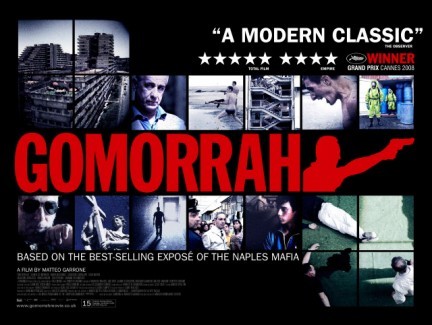
Saviano, Roberto. Gomorrah. NY: Picador, 2006.
Saviano, Roberto. Gomorrah. NY: Picador, 2006.
Wu Ming: New Italian Epic; Roberto Saviano: Gomorrah
(I recently read Gomorrah while traveling. It is a gripping expose of the Italian Camorra and resonates for anyone exploring the tangled web of the global economy--highly recommended!!!)
NEW ITALIAN EPIC: WE'RE GOING TO HAVE TO BE THE PARENTS
by Wu Ming
Opening talk @ the conference "The Italian Perspective on Metahistorical Fiction: The New Italian Epic", Institute of Germanic and Romance Studies, University of London, UK, October
2, 2008.
Wu Ming Founbdation

...
This is what I call the New Italian Epic. Its main characteristics are:
1. Ethical commitment to writing and storytelling, which means: a deep trust in the healing power of language and stories.
2. A sense of political necessity -- and you can choose between the broader and the stricter sense of the adjective "political".
3. The choice of stories that have a complex allegorical value. The initial choice may not even be intentional: the author may feel compelled to tell the story and later on understand what he was trying to say.
4. An explicit preoccupation for the loss of the future, with a propensity to use alternative history and alternative realities to force our gaze into imagining the future.
5. A subtle subversion of registers and language. "Subtle" because what's important is not language experimentation in and of itself; what's important is telling your story in what you feel is the best possible way.
6. A way of blending fiction and non-fiction that's different from the ones we've gotten used to (e.g. Hunter S. Thompson's "gonzo journalism"), a manner that I dare describe as "distinctly Italian", which produces "unidentified narrative objects".
7. Last but certainly not least, a "communitarian" use of the Internet to - as Genna himself put it - "share a hug with the reader".
Several books published in Italy in the past few years share all or many of these features. Each one is peculiar, and sometimes, if we judge by immediate appearances, a novel doesn't resemble the next in the slightest: different styles, different plots, different historical backdrops, seemingly different genres. And yet, if we go down deep enough, we'll see that all these books are in resonance with each other.
The most famous and successful of these works is of course Roberto Saviano's Gomorrah, which sold about a million and a half copies and triumphantly entered Italian popular culture. In Gomorrah the synthesis of non-fiction and auto-fiction is so subtle that it reaches uncanny heights. It looks like a powerful report on Naples' organized crime and the way it operates in the globalized economy, and certainly the state of things it describes is painfully real, but this is no ordinary piece of journalism. There are also autobiographical, introspective chapters. In many passages the prose is rather visionary. The "narrating I" frequently hallucinates and "hijacks" the points of view of other people, intentionally playing on the confusion between the author, the narrator and a "narrating I" that doesn't belong to any of them. Alessandro Vicenzi summarized this matter in the most simple and effective way:
As I said a few minutes ago, these works are different from the"non-fiction novels" and hyper-subjective news stories in the tradition of so-called "New Journalism" or "gonzo journalism". That kind of writing is now quite familiar, while these works are more disquieting. I believe that the most appropriate adjective is "uncanny". When the book was published in the English-speaking countries (unfortunately in a poor translation), reviewers got puzzled about it. Here's a passage from Rachel Donadio's review in The New York Times:
I guess Donadio never had such perplexities in reading a book by Hunter S. Thompson. Nobody ever cared about what was true and what was fictional in Thompson's writing. What's the difference here?
The difference is that Gomorrah is far from being an ironic piece of work. Gomorrah is d-e-a-d-l-y serious.
As you all probably know, "uncanny" is the way we translate into English a word Sigmund Freud used: "Unheimliche". Unheimliche is used for things that look repulsively strange and attractively familiar at the same time.
As happens in Genna's Medium, in Gomorrah too a troublesome relationship between the narrator and his father becomes strongly symbolic of something bigger. It casts light on the ambiguous "double-consciousness" several Southern Italians are painfully aware of. The narrator is the child of a culture that he cannot really renounce, and although he deeply despises the mafia and fights against it, he knows that the mafia is part of that culture, that it is consistent with that culture. In fact the nàrrator shares some deep conceptual frames with the people he denounces, and he admits it by sharing with us memories from his childhood, conversations with his father. To the narrator's eyes, the camorra is uncanny, it's repulsively strange and attractively familiar at the same time. Gomorrah is an unidentified narrative object about an unidentified feeling. The readers read their way through an "uncanny valley", and Saviano walks through another "uncanny valley": a larger one, a social one, an anthropological one.
"Uncanny valley" is a phrase coined by Japanese engineer Mori Masahiro in 1970. Mori's hypothesis is that when a robot looks and acts almost like a human being, this will cause a response of horror and rejection among humans. According to Mori, it's a case of the night being darker just before dawn, because as soon as the robot will look and act exactly like a human being, reactions among humans will be positive. He calls this period of revulsion "the uncanny valley", because it's a dip in a graph.
Now, forget about robots. I think this is a useful metaphor to describe the way an unidentified narrative object is perceived by attentive readers. There's a phase in which you start asking yourself: how is it possible that Saviano witnessed a scene like this? Mobsters using heroin addicts as guinea pigs to test newly arrived stuff, junkies collapsing after they shot up, people left to die? Where the hell was Saviano to see anything like this? Who's the narrating I? If this is undercover journalism, what is Saviano's cover? Where is he hidden? Is the narrator Saviano? Am I reading a piece of journalism or am I reading a novel disguised as a piece of journalism? You just entered the "uncanny valley" of the unidentified narrative object. Less attentive readers may never experience this, because they take everything for granted.
Anyway, it's just a dip in the graph, because you go on reading the book and gradually understand what Saviano is trying to do, and you not only accept it: you're moved by it, because this thing does the job very well, and doubts and revulsion are replaced by admiration.
My hypothesis is that many of those who criticized Gomorrah for its "ambiguity" and accused Saviano of "having confused things", never got over the dip, they stopped reading right in the middle of the "uncanny valley", and never got out of it.
Every "unidentified narrative object" has its "uncanny valley". In Medium, for example, it is located at the beginning of the second chapter, right after the funeral.
One of the most impressive things in Gomorrah is the scope, the scale of the book: the journey begins at the docks of Naples and in the destitute outskirts of that city, but then Saviano takes us to Russia, Bélarùs, Scotland, the United States, Spain, the Middle East, Hollywood, Colombia... Saviano's gaze makes incursions all over the world, because Italian organized crime makes business all over the world.
Nothing to be patriotic about.
To Read the Entire Essay
NEW ITALIAN EPIC: WE'RE GOING TO HAVE TO BE THE PARENTS
by Wu Ming
Opening talk @ the conference "The Italian Perspective on Metahistorical Fiction: The New Italian Epic", Institute of Germanic and Romance Studies, University of London, UK, October
2, 2008.
Wu Ming Founbdation
...
This is what I call the New Italian Epic. Its main characteristics are:
1. Ethical commitment to writing and storytelling, which means: a deep trust in the healing power of language and stories.
2. A sense of political necessity -- and you can choose between the broader and the stricter sense of the adjective "political".
3. The choice of stories that have a complex allegorical value. The initial choice may not even be intentional: the author may feel compelled to tell the story and later on understand what he was trying to say.
4. An explicit preoccupation for the loss of the future, with a propensity to use alternative history and alternative realities to force our gaze into imagining the future.
5. A subtle subversion of registers and language. "Subtle" because what's important is not language experimentation in and of itself; what's important is telling your story in what you feel is the best possible way.
6. A way of blending fiction and non-fiction that's different from the ones we've gotten used to (e.g. Hunter S. Thompson's "gonzo journalism"), a manner that I dare describe as "distinctly Italian", which produces "unidentified narrative objects".
7. Last but certainly not least, a "communitarian" use of the Internet to - as Genna himself put it - "share a hug with the reader".
Several books published in Italy in the past few years share all or many of these features. Each one is peculiar, and sometimes, if we judge by immediate appearances, a novel doesn't resemble the next in the slightest: different styles, different plots, different historical backdrops, seemingly different genres. And yet, if we go down deep enough, we'll see that all these books are in resonance with each other.
The most famous and successful of these works is of course Roberto Saviano's Gomorrah, which sold about a million and a half copies and triumphantly entered Italian popular culture. In Gomorrah the synthesis of non-fiction and auto-fiction is so subtle that it reaches uncanny heights. It looks like a powerful report on Naples' organized crime and the way it operates in the globalized economy, and certainly the state of things it describes is painfully real, but this is no ordinary piece of journalism. There are also autobiographical, introspective chapters. In many passages the prose is rather visionary. The "narrating I" frequently hallucinates and "hijacks" the points of view of other people, intentionally playing on the confusion between the author, the narrator and a "narrating I" that doesn't belong to any of them. Alessandro Vicenzi summarized this matter in the most simple and effective way:
Saviano indifferently uses police reports, judicial documents and personal experience, and describes the camorra adopting a first-person narrative, but the "I" of the novel isn't always the real Roberto Saviano. The book oscillates between objective accounts and literary renditions of facts. [...] If Saviano uses the first person to describe things he didn't actually witness it's because that is the most effective way of telling them, the most communicative one, the most absorbing one. [...] Saviano doesn't only jump over the barriers between fiction and non-fiction: he utterly ignores them. I don't know on what shelves bookshop clerks are putting Gomorrah now. I suspect that the success of the book allows them to overcome embarrassment and put the book in those displays of best-sellers at the entrance, where there are no particular genre distinctions.
As I said a few minutes ago, these works are different from the"non-fiction novels" and hyper-subjective news stories in the tradition of so-called "New Journalism" or "gonzo journalism". That kind of writing is now quite familiar, while these works are more disquieting. I believe that the most appropriate adjective is "uncanny". When the book was published in the English-speaking countries (unfortunately in a poor translation), reviewers got puzzled about it. Here's a passage from Rachel Donadio's review in The New York Times:
Far more problematic is the difficulty in pinning this book down. In Italy, Gomorrah was described as a "docufiction," suggesting that Saviano took liberties with his first-person accounts. [The American publisher] calls it a work of "investigative writing," a phrase that suggests careful lawyering. Some anecdotes are suspiciously perfect — the tailor who quits his job after seeing Angelina Jolie on television at the Oscars wearing a white suit he made in a Camorra sweatshop; the man who loves his AK-47 so much he makes a pilgrimage to Russia to visit its creator, Mikhail Kalashnikov. Did the author change any names? If so, readers aren’t informed. These are ot small matters, and should have been disclosed. But the emotional truth of Saviano’s account is unassailable. I could not get this brave book out of my head.
I guess Donadio never had such perplexities in reading a book by Hunter S. Thompson. Nobody ever cared about what was true and what was fictional in Thompson's writing. What's the difference here?
The difference is that Gomorrah is far from being an ironic piece of work. Gomorrah is d-e-a-d-l-y serious.
As you all probably know, "uncanny" is the way we translate into English a word Sigmund Freud used: "Unheimliche". Unheimliche is used for things that look repulsively strange and attractively familiar at the same time.
As happens in Genna's Medium, in Gomorrah too a troublesome relationship between the narrator and his father becomes strongly symbolic of something bigger. It casts light on the ambiguous "double-consciousness" several Southern Italians are painfully aware of. The narrator is the child of a culture that he cannot really renounce, and although he deeply despises the mafia and fights against it, he knows that the mafia is part of that culture, that it is consistent with that culture. In fact the nàrrator shares some deep conceptual frames with the people he denounces, and he admits it by sharing with us memories from his childhood, conversations with his father. To the narrator's eyes, the camorra is uncanny, it's repulsively strange and attractively familiar at the same time. Gomorrah is an unidentified narrative object about an unidentified feeling. The readers read their way through an "uncanny valley", and Saviano walks through another "uncanny valley": a larger one, a social one, an anthropological one.
"Uncanny valley" is a phrase coined by Japanese engineer Mori Masahiro in 1970. Mori's hypothesis is that when a robot looks and acts almost like a human being, this will cause a response of horror and rejection among humans. According to Mori, it's a case of the night being darker just before dawn, because as soon as the robot will look and act exactly like a human being, reactions among humans will be positive. He calls this period of revulsion "the uncanny valley", because it's a dip in a graph.
Now, forget about robots. I think this is a useful metaphor to describe the way an unidentified narrative object is perceived by attentive readers. There's a phase in which you start asking yourself: how is it possible that Saviano witnessed a scene like this? Mobsters using heroin addicts as guinea pigs to test newly arrived stuff, junkies collapsing after they shot up, people left to die? Where the hell was Saviano to see anything like this? Who's the narrating I? If this is undercover journalism, what is Saviano's cover? Where is he hidden? Is the narrator Saviano? Am I reading a piece of journalism or am I reading a novel disguised as a piece of journalism? You just entered the "uncanny valley" of the unidentified narrative object. Less attentive readers may never experience this, because they take everything for granted.
Anyway, it's just a dip in the graph, because you go on reading the book and gradually understand what Saviano is trying to do, and you not only accept it: you're moved by it, because this thing does the job very well, and doubts and revulsion are replaced by admiration.
My hypothesis is that many of those who criticized Gomorrah for its "ambiguity" and accused Saviano of "having confused things", never got over the dip, they stopped reading right in the middle of the "uncanny valley", and never got out of it.
Every "unidentified narrative object" has its "uncanny valley". In Medium, for example, it is located at the beginning of the second chapter, right after the funeral.
One of the most impressive things in Gomorrah is the scope, the scale of the book: the journey begins at the docks of Naples and in the destitute outskirts of that city, but then Saviano takes us to Russia, Bélarùs, Scotland, the United States, Spain, the Middle East, Hollywood, Colombia... Saviano's gaze makes incursions all over the world, because Italian organized crime makes business all over the world.
Nothing to be patriotic about.
To Read the Entire Essay
Bill Moyers Journal: Bryan Stevenson and Michelle Alexander -- Are We Living in Marting Luther King Jr.'s America?
Bryan Stevenson and Michelle Alexander
Bill Moyers Journal

On April 4, 1968, Dr. Martin Luther King, Jr. was assassinated on the balcony of the Lorraine Motel. This week, BILL MOYERS JOURNAL observes the anniversary of King's murder by examining America in light of his dream. What would he think of our country today and where would he focus his fight against inequality and injustice?
Two talented lawyers who've dedicated their careers to fighting inequality, Michelle Alexander and Bryan Stevenson, join Bill Moyers on the JOURNAL to examine justice and injustice in America 42 years after King's death.
Alexander believes that King would be deeply troubled by the remaining inequality in America. As she tells Bill Moyers, "I think Martin Luther King would be thrilled by some of the individual progress of African Americans, but stunned, absolutely stunned and saddened, by the state of African Americans as a whole today."
Stevenson adds that to reach King's dream, America must address the causes of poverty, "I think in America, the opposite of poverty is justice. I think there are structures and systems that have created poverty, and have made that poverty so permanent, that until we think in a more just way about how to deal with poverty in this country, we're never gonna make the progress that Dr. King envisioned."
Both believe that America's policies of mass incarceration continue the cycle of poverty. America is the largest jailer on the planet, with 2.3 million people behind bars. But the policy of mass imprisonment, unique among industrialized nations, disproportianatetly affects minorities, especially African American men. One in 100 adults in America is behind bars, but one in nine African American men aged 20 to 34 is behind bars. Much of this arises from the "war on drugs." According to Human Rights Watch, African American adults have been arrested at a rate 2.8 to 5.5 times higher than white adults in every year from 1980 to 2007. Yet, according to government statistics, African Americans and whites have similar rates of illicit drug use and dealing.
A consequence of this disparity, and America's harsh treatment of lawbreakers, according to Alexander, is a population of people living in conditions shockingly like African Americans experienced under Jim Crow:
Stevenson points out that these are not inevitable policies:
To Listen to the Episode and Access More Resources
More:
Reflections on King's Dreams
U.S. Prisons and Drug Laws
Bill Moyers Journal
On April 4, 1968, Dr. Martin Luther King, Jr. was assassinated on the balcony of the Lorraine Motel. This week, BILL MOYERS JOURNAL observes the anniversary of King's murder by examining America in light of his dream. What would he think of our country today and where would he focus his fight against inequality and injustice?
Two talented lawyers who've dedicated their careers to fighting inequality, Michelle Alexander and Bryan Stevenson, join Bill Moyers on the JOURNAL to examine justice and injustice in America 42 years after King's death.
Alexander believes that King would be deeply troubled by the remaining inequality in America. As she tells Bill Moyers, "I think Martin Luther King would be thrilled by some of the individual progress of African Americans, but stunned, absolutely stunned and saddened, by the state of African Americans as a whole today."
Stevenson adds that to reach King's dream, America must address the causes of poverty, "I think in America, the opposite of poverty is justice. I think there are structures and systems that have created poverty, and have made that poverty so permanent, that until we think in a more just way about how to deal with poverty in this country, we're never gonna make the progress that Dr. King envisioned."
Both believe that America's policies of mass incarceration continue the cycle of poverty. America is the largest jailer on the planet, with 2.3 million people behind bars. But the policy of mass imprisonment, unique among industrialized nations, disproportianatetly affects minorities, especially African American men. One in 100 adults in America is behind bars, but one in nine African American men aged 20 to 34 is behind bars. Much of this arises from the "war on drugs." According to Human Rights Watch, African American adults have been arrested at a rate 2.8 to 5.5 times higher than white adults in every year from 1980 to 2007. Yet, according to government statistics, African Americans and whites have similar rates of illicit drug use and dealing.
A consequence of this disparity, and America's harsh treatment of lawbreakers, according to Alexander, is a population of people living in conditions shockingly like African Americans experienced under Jim Crow:
Today in communities of color across America, large majorities of African American men have been branded criminals, felons for life. And as a result, many are denied the right to vote, automatically excluded from juries, and legally discriminated against in employment, housing, access to public education-- public benefits. Many of the forms of discrimination we thought we left behind in the Jim Crow Era are legal again, once you've been branded a criminal.
Stevenson points out that these are not inevitable policies:
We didn't have to incarcerate people for 10, 20, 30, 40 years for simple possession of marijuana, for drug use. We didn't have to do that. We made choices around that. And now the consequences are devastating. I think they're not only devastating from a political perspective, but — I think this is the way I think it relates to Jim Crow, as well — it's also been devastating within communities of color. Right now, for black men in the United States, there's a 32 percent chance you're going to jail or prison. In poor communities and minority communities, urban communities, rural communities, it could be 60 percent or 70 percent. You're born, you're a ten-year-old kid. There's a 70 percent chance that you're going to go to jail and prison. What does that do to you?
To Listen to the Episode and Access More Resources
More:
Reflections on King's Dreams
U.S. Prisons and Drug Laws
Bill Moyers Journal: Richard Wilkinson and Kate Pickett -- American Inequality
(Moyers essay on American Inequality)
American Inequality
Bill Moyers Journal

In his closing essay for the April 2, 2010 JOURNAL, Bill Moyers references several works on inequality in America. Among these is THE SPIRIT LEVEL: WHY GREATER EQUALITY MAKES SOCIETIES STRONGER by Richard Wilkinson and Kate Pickett, who together have spent more than 50 years studying how inequality affects the health of a population.
Bill Moyers talked to them about their work.
To Listen to the Episode
American Inequality
Bill Moyers Journal
In his closing essay for the April 2, 2010 JOURNAL, Bill Moyers references several works on inequality in America. Among these is THE SPIRIT LEVEL: WHY GREATER EQUALITY MAKES SOCIETIES STRONGER by Richard Wilkinson and Kate Pickett, who together have spent more than 50 years studying how inequality affects the health of a population.
Bill Moyers talked to them about their work.
To Listen to the Episode
The Daily Show with Jon Stewart: Tea America; Bernie Goldberg Fires Back; Go F--K Yourself
Huffington Post
| The Daily Show With Jon Stewart | Mon - Thurs 11p / 10c | |||
| Tea America | ||||
| ||||
| The Daily Show With Jon Stewart | Mon - Thurs 11p / 10c | |||
| Bernie Goldberg Fires Back | ||||
| ||||
Eric Nalder: Seattle computer security expert investigates police practices -- An 'urban golf' outing raises civil liberties questions
Local computer security expert investigates police practices: An 'urban golf' outing raises civil liberties questions
By ERIC NALDER
Seattle PI
A drunken street golf game with foam balls has led to a serious civil rights issue, pitting computer geeks against police practices.
Eric Rachner, a Seattle cyber security expert and one of the golf players, wasn't satisfied when the city dismissed charges against him after a possibly illegal arrest for refusing to provide identification.
Rachner discovered through sleuthing that police had withheld video-recorded evidence in his case.
Rachner also hired Seattle attorney Cleveland Stockmeyer to look at his case and probably others where arrests might have been illegal or where police claimed to have destroyed valuable arrest videos that weren't, in fact, erased.
"How many people are sitting in jail who asked for their tapes and were told no, they can't have them," says Stockmeyer. "I don't know. But I tell you we're going to freaking find out."
On a Saturday night in October 2008, Rachner was one of a sizeable group of "urban golfers" who were whacking the faux ball from bar to bar on city sidewalks, alleys and parking lots, imbibing more than keeping score.
Near the last "hole" a sliced shot hit a 22-year-old passerby in the face. The 1 ½-inch foam ball caused no harm other than a sting, but when the golfers laughed at and "heckled" the victim he called 9-1-1, the police report said. Seattle police responded in force.
While their colleagues would soon be investigating a shooting across town, the East Precinct sent four officers to spend an hour rounding up golfers.
"Twenty to thirty people are detained over a Styrofoam ball?" said Dan Kaminsky, an internationally famous Internet security expert himself, who was not arrested, but was among those detained for questioning. "This is ridiculous."
Rachner was wearing a faded t-shirt, jeans and leather jacket, and didn't remotely resemble the guy who misfired the ball, who wore English golfing duds, a Tattersall's hat and fake orange sideburns.
Confronted by officer Michele Letizia, Rachner politely declined to state his name. He also indicated where he kept his wallet with ID. The policeman removed the wallet from Rachner's pocket, but both men declined to open it. The officer expressed fear he could be accused of stealing cash.
Letizia threatened to arrest the 32-year-old Capitol Hill reveler for obstruction if he didn't provide his name as others had. The cop told Rachner that booking on a Saturday night could mean cell time until Monday. Rachner remained mum. Letizia arrested him, based on the refusal to provide ID, according to arrest and court documents.
With those facts, the arrest appears to have been illegal based on a 1982 Washington Supreme Court ruling, though a 2004 U.S. Supreme Court case makes the situation less clear-cut.
Custody for Rachner lasted two hours, not days, but a charge was leveled against him in Seattle Municipal Court for obstructing a public officer. Controversial laws known as obstruction, "stop and frisk" and "stop and identify" statutes have been abused in other cities like New York, studies and news stories show. An obstruction case cited in a 2008 Seattle Post-Intelligencer investigation ended with a federal jury hitting Seattle police with a six-figure penalty.
Rachner's criminal defense attorney sought dismissal of his gross misdemeanor charge, citing the Washington State Supreme Court decision that says arresting a person for nothing more than withholding identification is unconstitutional. One reason cited by the court: This practice allows police too much discretion to pick targets and punish with arrest. Also, the state constitution is more protective of these rights than the U.S. constitution.
But then-city attorney Tom Carr's office kept the prosecution going for half a year. William Ross, the former assistant city attorney who handled part of the case, acknowledged that it is illegal to arrest someone for nothing more than failure to give ID, but declined to discuss case details other than to say the office didn't abuse its authority.
When the arresting officer was asked recently in an interview whether the ID issue was the only reason he took Rachner into custody, he said "no". But he declined to address why his arrest reported cited ID as the only reason, and refused further comment.
Inconsistent memories are why every Seattle officer has a video camera in the squad car and a microphone on their uniform. Expanding in use nationally, they provide an unblinking witness and are automatically activated when the patrol car's flashing lights are turned on. Cops are often more protected than citizens by these videos, but are the police willing to produce the recordings when they might be in the wrong?
Rachner repeatedly tested that question, asking for the video and audio recordings of that night's arrest as part of pre-trial discovery and, separately, in requests under state public disclosure law. That part of the discovery request wasn't fulfilled and the SPD denied the first disclosure request because the criminal charge was pending, records show.
On the day last May when the city attorney dropped the charges because of unexplained "proof" problems -- nearly six months and more than $3,500 in defendant legal expenses after the incident -- Rachner filed another disclosure request for the recordings.
To Read the Rest of the Article
By ERIC NALDER
Seattle PI
A drunken street golf game with foam balls has led to a serious civil rights issue, pitting computer geeks against police practices.
Eric Rachner, a Seattle cyber security expert and one of the golf players, wasn't satisfied when the city dismissed charges against him after a possibly illegal arrest for refusing to provide identification.
Rachner discovered through sleuthing that police had withheld video-recorded evidence in his case.
Rachner also hired Seattle attorney Cleveland Stockmeyer to look at his case and probably others where arrests might have been illegal or where police claimed to have destroyed valuable arrest videos that weren't, in fact, erased.
"How many people are sitting in jail who asked for their tapes and were told no, they can't have them," says Stockmeyer. "I don't know. But I tell you we're going to freaking find out."
On a Saturday night in October 2008, Rachner was one of a sizeable group of "urban golfers" who were whacking the faux ball from bar to bar on city sidewalks, alleys and parking lots, imbibing more than keeping score.
Near the last "hole" a sliced shot hit a 22-year-old passerby in the face. The 1 ½-inch foam ball caused no harm other than a sting, but when the golfers laughed at and "heckled" the victim he called 9-1-1, the police report said. Seattle police responded in force.
While their colleagues would soon be investigating a shooting across town, the East Precinct sent four officers to spend an hour rounding up golfers.
"Twenty to thirty people are detained over a Styrofoam ball?" said Dan Kaminsky, an internationally famous Internet security expert himself, who was not arrested, but was among those detained for questioning. "This is ridiculous."
Rachner was wearing a faded t-shirt, jeans and leather jacket, and didn't remotely resemble the guy who misfired the ball, who wore English golfing duds, a Tattersall's hat and fake orange sideburns.
Confronted by officer Michele Letizia, Rachner politely declined to state his name. He also indicated where he kept his wallet with ID. The policeman removed the wallet from Rachner's pocket, but both men declined to open it. The officer expressed fear he could be accused of stealing cash.
Letizia threatened to arrest the 32-year-old Capitol Hill reveler for obstruction if he didn't provide his name as others had. The cop told Rachner that booking on a Saturday night could mean cell time until Monday. Rachner remained mum. Letizia arrested him, based on the refusal to provide ID, according to arrest and court documents.
With those facts, the arrest appears to have been illegal based on a 1982 Washington Supreme Court ruling, though a 2004 U.S. Supreme Court case makes the situation less clear-cut.
Custody for Rachner lasted two hours, not days, but a charge was leveled against him in Seattle Municipal Court for obstructing a public officer. Controversial laws known as obstruction, "stop and frisk" and "stop and identify" statutes have been abused in other cities like New York, studies and news stories show. An obstruction case cited in a 2008 Seattle Post-Intelligencer investigation ended with a federal jury hitting Seattle police with a six-figure penalty.
Rachner's criminal defense attorney sought dismissal of his gross misdemeanor charge, citing the Washington State Supreme Court decision that says arresting a person for nothing more than withholding identification is unconstitutional. One reason cited by the court: This practice allows police too much discretion to pick targets and punish with arrest. Also, the state constitution is more protective of these rights than the U.S. constitution.
But then-city attorney Tom Carr's office kept the prosecution going for half a year. William Ross, the former assistant city attorney who handled part of the case, acknowledged that it is illegal to arrest someone for nothing more than failure to give ID, but declined to discuss case details other than to say the office didn't abuse its authority.
When the arresting officer was asked recently in an interview whether the ID issue was the only reason he took Rachner into custody, he said "no". But he declined to address why his arrest reported cited ID as the only reason, and refused further comment.
Inconsistent memories are why every Seattle officer has a video camera in the squad car and a microphone on their uniform. Expanding in use nationally, they provide an unblinking witness and are automatically activated when the patrol car's flashing lights are turned on. Cops are often more protected than citizens by these videos, but are the police willing to produce the recordings when they might be in the wrong?
Rachner repeatedly tested that question, asking for the video and audio recordings of that night's arrest as part of pre-trial discovery and, separately, in requests under state public disclosure law. That part of the discovery request wasn't fulfilled and the SPD denied the first disclosure request because the criminal charge was pending, records show.
On the day last May when the city attorney dropped the charges because of unexplained "proof" problems -- nearly six months and more than $3,500 in defendant legal expenses after the incident -- Rachner filed another disclosure request for the recordings.
To Read the Rest of the Article
Thursday, April 22, 2010
Michael Benton: If language is a virus, then I'm going to create an epidemic (2.0)
(As always, for Laura)
She munches slowly a morpheme served up as he hungers for her taking the chance to sally the edges of abstraction as antidote to confusion and angst his struggle is for memory flowing through desire released in language initiating possibilities how will she receive my scribblings what will they mean is communication possible I recall her inner beauty standing now solitary I listen to the stillness of my world missing her laughter lacking a singing voice or a painter’s eye I offer up words as a humble offering walking alone along boulevards of color and light I play word games gathering winged thoughts that circle above me turning eros into pages that her passionate eyes might touch as time skips a beat, if, as William Burroughs states, language is a virus, then I am going to create an epidemic
She munches slowly a morpheme served up as he hungers for her taking the chance to sally the edges of abstraction as antidote to confusion and angst his struggle is for memory flowing through desire released in language initiating possibilities how will she receive my scribblings what will they mean is communication possible I recall her inner beauty standing now solitary I listen to the stillness of my world missing her laughter lacking a singing voice or a painter’s eye I offer up words as a humble offering walking alone along boulevards of color and light I play word games gathering winged thoughts that circle above me turning eros into pages that her passionate eyes might touch as time skips a beat, if, as William Burroughs states, language is a virus, then I am going to create an epidemic
Wednesday, April 21, 2010
UCLA African Studies Center: Discussion of the film Darfur Now
Discussion of the film Darfur Now
African Studies Center (UCLA)

Ted Braun, film director, Stephen Rapp, former chief prosecutor for the United Nations-International Criminal Tribunal for Rwanda, Edward Alpers, UCLA History Chair, along with UCLA alum and activist Adam Sterling... Executive Director of Sudan Divestment Task Force and subject in Darfur Now.
To Listen to the Panel
African Studies Center (UCLA)
Complexities can't be an excuse for not taking action.
Ted Braun, film director, Stephen Rapp, former chief prosecutor for the United Nations-International Criminal Tribunal for Rwanda, Edward Alpers, UCLA History Chair, along with UCLA alum and activist Adam Sterling... Executive Director of Sudan Divestment Task Force and subject in Darfur Now.
To Listen to the Panel
Seeing Red Radio: Haiti, Melvin Jones III, MLK and Tony Cliff 2.2
Haiti, Melvin Jones III, MLK and Tony Cliff 2.2
Seeing Red Radio
This week we look at the hidden history of Haiti and the devastation exacted by global capital long before the earthquake struck, juxtaposing Pat Robertson’s hateful words with the “curse” inflicted by the World Bank and others. Also, horrific video is released of a white Springfield, MA police officer beating an African-American man while he was subdued by other officers, we’ll examine the racist legacy of the officer in question and the city’s infamously brutal police department. The last half-hour includes two talks from the Seeing Red archives: Martin Luther King speaking about protest and SWP founder Tony Cliff on the revolutionary party.
Audio montage includes clips from Blackbox Radio, Al Jazeera, Raj Patel, Naomi Klein and Pat Robertson
What You’re Not Hearing about Haiti (But Should Be) by Carl Lindskoog
Obama Received $20 Million from Healthcare Industry in 2008 Campaign by Brad Jacobson
Tea Party Convention Squeezes Fans
Frustrated With Government Lies, Mexican Electricians Declare Wildcat Actions by Kristin Bricker
Savage Police Brutality Revealed by Gary Lapon
Audio of Paul Robeson Interview
Music:
Lafayette Afro-Rock Band – Hihache
Gift of Gab & Lateef – Kalakuta Show
Leadbelly – Bourgeois Blues
Sharon Jones & the Dap-Kings – Stop Payin’ Taxes
Background music from John Zorn, Bad Plus, Utah Philips & Ani DiFranco and others
To Listen to the Episode
Seeing Red Radio
This week we look at the hidden history of Haiti and the devastation exacted by global capital long before the earthquake struck, juxtaposing Pat Robertson’s hateful words with the “curse” inflicted by the World Bank and others. Also, horrific video is released of a white Springfield, MA police officer beating an African-American man while he was subdued by other officers, we’ll examine the racist legacy of the officer in question and the city’s infamously brutal police department. The last half-hour includes two talks from the Seeing Red archives: Martin Luther King speaking about protest and SWP founder Tony Cliff on the revolutionary party.
Audio montage includes clips from Blackbox Radio, Al Jazeera, Raj Patel, Naomi Klein and Pat Robertson
What You’re Not Hearing about Haiti (But Should Be) by Carl Lindskoog
Obama Received $20 Million from Healthcare Industry in 2008 Campaign by Brad Jacobson
Tea Party Convention Squeezes Fans
Frustrated With Government Lies, Mexican Electricians Declare Wildcat Actions by Kristin Bricker
Savage Police Brutality Revealed by Gary Lapon
Audio of Paul Robeson Interview
Music:
Lafayette Afro-Rock Band – Hihache
Gift of Gab & Lateef – Kalakuta Show
Leadbelly – Bourgeois Blues
Sharon Jones & the Dap-Kings – Stop Payin’ Taxes
Background music from John Zorn, Bad Plus, Utah Philips & Ani DiFranco and others
To Listen to the Episode
Tuesday, April 20, 2010
Otto Rene Castillo: Apolitical Intellectuals
APOLITICAL INTELLECTUALS
One day
the apolitical
intellectuals
of my country
will be interrogated
by the simplest
of our people.
They will be asked
what they did
when their nation died out
slowly,
like a sweet fire
small and alone.
No one will ask them
about their dress,
their long siestas
after lunch,
no one will want to know
about their sterile combats
with "the idea
of the nothing"
no one will care about
their higher financial learning.
They won't be questioned
on Greek mythology,
or regarding their self-disgust
when someone within them
begins to die
the coward's death.
They'll be asked nothing
about their absurd
justifications,
born in the shadow
of the total life.
On that day
the simple men will come.
Those who had no place
in the books and poems
of the apolitical intellectuals,
but daily delivered
their bread and milk,
their tortillas and eggs,
those who drove their cars,
who cared for their dogs and gardens
and worked for them,
and they'll ask:
"What did you do when the poor
suffered, when tenderness
and life
burned out of them?"
Apolitical intellectuals
of my sweet country,
you will not be able to answer.
A vulture of silence
will eat your gut.
Your own misery
will pick at your soul.
And you will be mute in your shame.
--Otto Rene Castillo
One day
the apolitical
intellectuals
of my country
will be interrogated
by the simplest
of our people.
They will be asked
what they did
when their nation died out
slowly,
like a sweet fire
small and alone.
No one will ask them
about their dress,
their long siestas
after lunch,
no one will want to know
about their sterile combats
with "the idea
of the nothing"
no one will care about
their higher financial learning.
They won't be questioned
on Greek mythology,
or regarding their self-disgust
when someone within them
begins to die
the coward's death.
They'll be asked nothing
about their absurd
justifications,
born in the shadow
of the total life.
On that day
the simple men will come.
Those who had no place
in the books and poems
of the apolitical intellectuals,
but daily delivered
their bread and milk,
their tortillas and eggs,
those who drove their cars,
who cared for their dogs and gardens
and worked for them,
and they'll ask:
"What did you do when the poor
suffered, when tenderness
and life
burned out of them?"
Apolitical intellectuals
of my sweet country,
you will not be able to answer.
A vulture of silence
will eat your gut.
Your own misery
will pick at your soul.
And you will be mute in your shame.
--Otto Rene Castillo
Seeing Red Radio: Black Panther Party, Zionist Racism in the Knesset and the Winnipeg General Strike
(Essential history of the BPP)
Black Panther Party, Zionist Racism in the Knesset and the Winnipeg General Strike
Seeing Red Radio
Seeing Red remembers the Black Panther Party, featuring the voices of Huey Newton, Bobby Seale, Bobby Rush, Fred Hampton and others. We follow with Israel’s right-wing coalition lashing out at Israeli Arabs in the Knesset with a trio of bills that would criminalize any commemoration of the Nakba, any refusal to recognize Israel as a “Jewish state”, and demand of Israeli Arabs to sign loyalty oaths or lose their citizenship. Finally, we remember the Winnipeg General Strike of 1919.
Israeli Parliament OKs Bill to Outlaw Denial of Israel as ‘Jewish State’ by Jason Ditz
In Israel, Democratic Rights in Peril by Daniel Rosenberg
World Bank Report Reveals Disparity of Water Supply to Palestinians by Rory McCarthy, The Guardian
90th Anniversary of the Winnipeg General Strike by Alex Grant
Music:
Panther – The Last Poets
Comrade’s Call – Dead Prez feat. M1
All Hid – Camille Yarborough
Let My People Go – Darongo
Message From a Black Man – Derrick Harriot
Socialism – Dillinger
If I Had a Rocket Launcher – Bruce Cockburn
To Listen to the Episode
Black Panther Party, Zionist Racism in the Knesset and the Winnipeg General Strike
Seeing Red Radio
Seeing Red remembers the Black Panther Party, featuring the voices of Huey Newton, Bobby Seale, Bobby Rush, Fred Hampton and others. We follow with Israel’s right-wing coalition lashing out at Israeli Arabs in the Knesset with a trio of bills that would criminalize any commemoration of the Nakba, any refusal to recognize Israel as a “Jewish state”, and demand of Israeli Arabs to sign loyalty oaths or lose their citizenship. Finally, we remember the Winnipeg General Strike of 1919.
Israeli Parliament OKs Bill to Outlaw Denial of Israel as ‘Jewish State’ by Jason Ditz
In Israel, Democratic Rights in Peril by Daniel Rosenberg
World Bank Report Reveals Disparity of Water Supply to Palestinians by Rory McCarthy, The Guardian
90th Anniversary of the Winnipeg General Strike by Alex Grant
Music:
Panther – The Last Poets
Comrade’s Call – Dead Prez feat. M1
All Hid – Camille Yarborough
Let My People Go – Darongo
Message From a Black Man – Derrick Harriot
Socialism – Dillinger
If I Had a Rocket Launcher – Bruce Cockburn
To Listen to the Episode
9500 Liberty (USA: Eric Byler and Annabel Park, 2009)
Full report on the documentary 9500 Liberty: 9-11 Not the Same as 7-11
Also check out:
Change: "Arizona: One Step Closer to a Police State"
Monday, April 19, 2010
UCLA African Studies Center: Stephen Lewis -- Promises in AIDS Fight Not Met
Promises in AIDS Fight Not Met
African Studies Center (UCLA)
Focusing on Africa, former UN envoy Stephen Lewis expresses amazement at the passivity of the international community as the HIV/AIDS epidemic traumatizes women, creates orphans, and continues on its decades-long path of devastation.
To Listen to the Speech
African Studies Center (UCLA)
Focusing on Africa, former UN envoy Stephen Lewis expresses amazement at the passivity of the international community as the HIV/AIDS epidemic traumatizes women, creates orphans, and continues on its decades-long path of devastation.
To Listen to the Speech
Seed Salon: Robert Trivers and Noam Chomsky
Seed Salon discussion between Robert Trivers and Noam Chomsky on deception. Very interesting examples and theories.
Seed Magazine: Michel Gondry and Robert Stickgold discuss dreams, filmmaking and the scientific method
Michel Gondry and Robert Stickgold discuss dreams, filmmaking and the scientific method


Claire Cain Miller: Out of the Loop in Silicon Valley
Out of the Loop in Silicon Valley
By CLAIRE CAIN MILLER
The New York Times
CANDACE FLEMING’S résumé boasts a double major in industrial engineering and English from Stanford, an M.B.A. from Harvard, a management position at Hewlett-Packard and experience as president of a small software company.
But when she was raising money for Crimson Hexagon, a start-up company she co-founded in 2007, she recalls one venture capitalist telling her that it didn’t matter that she didn’t have business cards, because all they would say was “Mom.”
Another potential backer invited her for a weekend yachting excursion by showing her a picture of himself on the boat — without clothes. When a third financier discovered that her husband was also a biking enthusiast, she says, he spent more time asking if riding affected her husband’s reproductive capabilities than he did focusing on her business plan.
Ultimately, none of the 30 venture firms she pitched financed her company. She finally raised $1.8 million in March 2008 from angel investors including Golden Seeds, a fund that emphasizes investing in start-ups led by women.
“I didn’t know things like this still happened,” says Ms. Fleming, 37. “But I know that, especially in risky times like the last couple years, some investors kind of retreat to investing via a template.” A company owned by a woman, she adds, “is just not the standard template.”
Though many people say that outright sexism is rare in the tech world these days, the barriers that Ms. Fleming encountered aren’t unusual. Tech communities in Silicon Valley and in other hubs — like New York, Austin, Tex., and Boston, where Ms. Fleming lives — pride themselves on operating as raw meritocracies ready to embrace anyone with a good idea, regardless of education, age or station in life.
For women, though, that narrative often unfolds differently.
Women own 40 percent of the private businesses in the United States, according to the Center for Women’s Business Research. But they create only 8 percent of the venture-backed tech start-ups, according to Astia, a nonprofit group that advises female entrepreneurs.
That disparity reaches beyond entrepreneurs. Women account for just 6 percent of the chief executives of the top 100 tech companies, and 22 percent of the software engineers at tech companies over all, according to the National Center for Women and Information Technology. And among venture capitalists, the population of financiers who control the purse strings for a majority of tech start-ups, just 14 percent are women, the National Venture Capital Association says.
That reality is even more complex when race is factored into the mix. Small percentages of workers in information technology are African-American, Asian or Hispanic, and that number is even smaller for women.
“It’s not like people are making an effort to exclude people, but I see very little diversity in the candidate pool,” says Aileen Lee, a partner at Kleiner Perkins Caufield & Byers, the big venture capital firm. She says this could reflect the different educational paths men and women follow in high school and college: men, for a variety of reasons, are more likely to pursue computer science and engineering degrees and subsequently rise through start-up or management ranks.
WOMEN now outnumber men at elite colleges, law schools, medical schools and in the overall work force. Yet a stark imbalance of the sexes persists in the high-tech world, where change typically happens at breakneck speed.
And analysts say more than social equity is at stake. A dearth of ideas and participation by women in the technology churn has business consequences as well.
The latest Web start-ups — for socializing, gaming and shopping — often attract more women than men as users. And many products from tech giants are aimed at women. But when Apple unveiled its new mobile computing device, it called it the iPad — a name that made many women wince with visions of feminine hygiene products.
Research indicates that investing in women as tech entrepreneurs is good for the bottom line. Venture-backed start-ups run by women use, on average, 40 percent less capital than start-ups run by men and are increasingly involved in successful initial public offerings of stock, according to a recent white paper by Cindy Padnos, a venture capitalist who compiled data from 100 studies on gender and tech entrepreneurship.
“When you have gender diversity in an organization, you have better innovation, and I don’t know where innovation is more important than in the high-tech world,” says Ms. Padnos, who recently founded Illuminate Ventures, which invests in start-ups led by women.
To Read the Rest of the Article
By CLAIRE CAIN MILLER
The New York Times
CANDACE FLEMING’S résumé boasts a double major in industrial engineering and English from Stanford, an M.B.A. from Harvard, a management position at Hewlett-Packard and experience as president of a small software company.
But when she was raising money for Crimson Hexagon, a start-up company she co-founded in 2007, she recalls one venture capitalist telling her that it didn’t matter that she didn’t have business cards, because all they would say was “Mom.”
Another potential backer invited her for a weekend yachting excursion by showing her a picture of himself on the boat — without clothes. When a third financier discovered that her husband was also a biking enthusiast, she says, he spent more time asking if riding affected her husband’s reproductive capabilities than he did focusing on her business plan.
Ultimately, none of the 30 venture firms she pitched financed her company. She finally raised $1.8 million in March 2008 from angel investors including Golden Seeds, a fund that emphasizes investing in start-ups led by women.
“I didn’t know things like this still happened,” says Ms. Fleming, 37. “But I know that, especially in risky times like the last couple years, some investors kind of retreat to investing via a template.” A company owned by a woman, she adds, “is just not the standard template.”
Though many people say that outright sexism is rare in the tech world these days, the barriers that Ms. Fleming encountered aren’t unusual. Tech communities in Silicon Valley and in other hubs — like New York, Austin, Tex., and Boston, where Ms. Fleming lives — pride themselves on operating as raw meritocracies ready to embrace anyone with a good idea, regardless of education, age or station in life.
For women, though, that narrative often unfolds differently.
Women own 40 percent of the private businesses in the United States, according to the Center for Women’s Business Research. But they create only 8 percent of the venture-backed tech start-ups, according to Astia, a nonprofit group that advises female entrepreneurs.
That disparity reaches beyond entrepreneurs. Women account for just 6 percent of the chief executives of the top 100 tech companies, and 22 percent of the software engineers at tech companies over all, according to the National Center for Women and Information Technology. And among venture capitalists, the population of financiers who control the purse strings for a majority of tech start-ups, just 14 percent are women, the National Venture Capital Association says.
That reality is even more complex when race is factored into the mix. Small percentages of workers in information technology are African-American, Asian or Hispanic, and that number is even smaller for women.
“It’s not like people are making an effort to exclude people, but I see very little diversity in the candidate pool,” says Aileen Lee, a partner at Kleiner Perkins Caufield & Byers, the big venture capital firm. She says this could reflect the different educational paths men and women follow in high school and college: men, for a variety of reasons, are more likely to pursue computer science and engineering degrees and subsequently rise through start-up or management ranks.
WOMEN now outnumber men at elite colleges, law schools, medical schools and in the overall work force. Yet a stark imbalance of the sexes persists in the high-tech world, where change typically happens at breakneck speed.
And analysts say more than social equity is at stake. A dearth of ideas and participation by women in the technology churn has business consequences as well.
The latest Web start-ups — for socializing, gaming and shopping — often attract more women than men as users. And many products from tech giants are aimed at women. But when Apple unveiled its new mobile computing device, it called it the iPad — a name that made many women wince with visions of feminine hygiene products.
Research indicates that investing in women as tech entrepreneurs is good for the bottom line. Venture-backed start-ups run by women use, on average, 40 percent less capital than start-ups run by men and are increasingly involved in successful initial public offerings of stock, according to a recent white paper by Cindy Padnos, a venture capitalist who compiled data from 100 studies on gender and tech entrepreneurship.
“When you have gender diversity in an organization, you have better innovation, and I don’t know where innovation is more important than in the high-tech world,” says Ms. Padnos, who recently founded Illuminate Ventures, which invests in start-ups led by women.
To Read the Rest of the Article
Dave Lindorff: I’m Not Shedding Any Tears for Daryl Gates
RedI’m Not Shedding Any Tears for Daryl Gates
by Dave Lindorff
Common Dreams
The former Los Angeles police chief, Daryl Gates, who died last Friday of cancer at his home in California, is being widely credited in mostly laudatory newspaper obituaries as the man who developed the idea of Special Weapons And Tactics (SWAT)units--those paramilitary police teams so loved by Hollywood filmmakers--who bring the art and weaponry of modern warfare into communities, breaking into houses with faces covered in ski masks, and carrying assault weapons in order to make arrests for often minor offenses, or blowing away people--often innocent people--in what the modern military calls "force escalation incidents."
But Gates was more than just the Sultan of SWAT.
He was also a proponent of the police-state tactic of massive surveillance and spying. Not that he invented it. As a deputy chief under Chief Ed Davis, and later as chief of police, Gates inherited the LAPD's notorious "Red Squad," known as the Public Disorder Intelligence Division (PDID), which had a sordid history going back into the 1920s, but he certainly expanded it dramatically.
I had my own experience with the PDID when I was an editor of the little alternative news weekly, the Los Angeles Vanguard, founded by myself and several other Los Angeles journalists in 1976, after the demise of the venerable Los Angeles Free Press. Our publication, which took on the issue of police brutality and especially the all-to-frequent shooting of unarmed citizens, very quickly became a special focus of the PDID. We learned, years after our publication had folded, that our volunteer staff had been infiltrated by a young PDID officer named Connie Milazzo, a woman just out of the Police Academy, who came to us posing as a journalist wannabe.
In a depositions taken by attorneys with the Southern California American Civil LIberties Union as part of a class action suit against the LAPD and the City of Los Angeles in the early 1980s, after Milazzo and other equally young Red Squad spies had been discovered infiltrating over 200 peaceful organizations in Los Angeles ranging from our newspaper to the local chapters of NOW, the Peace & Freedom Party, and even the office of City Councillor Zev Yaroslavsky, we learned that the PDID was gathering dossiers on literally thousands of local political activists, infiltrating and spying on protected political activities like peace demonstrations, anti-nuclear demonstrations and even political campaigns, and also engaging in provocateur activities, trying to encourage peaceful groups to cross the line into criminal actions.
To Read the Rest of the Remembrance
by Dave Lindorff
Common Dreams
The former Los Angeles police chief, Daryl Gates, who died last Friday of cancer at his home in California, is being widely credited in mostly laudatory newspaper obituaries as the man who developed the idea of Special Weapons And Tactics (SWAT)units--those paramilitary police teams so loved by Hollywood filmmakers--who bring the art and weaponry of modern warfare into communities, breaking into houses with faces covered in ski masks, and carrying assault weapons in order to make arrests for often minor offenses, or blowing away people--often innocent people--in what the modern military calls "force escalation incidents."
But Gates was more than just the Sultan of SWAT.
He was also a proponent of the police-state tactic of massive surveillance and spying. Not that he invented it. As a deputy chief under Chief Ed Davis, and later as chief of police, Gates inherited the LAPD's notorious "Red Squad," known as the Public Disorder Intelligence Division (PDID), which had a sordid history going back into the 1920s, but he certainly expanded it dramatically.
I had my own experience with the PDID when I was an editor of the little alternative news weekly, the Los Angeles Vanguard, founded by myself and several other Los Angeles journalists in 1976, after the demise of the venerable Los Angeles Free Press. Our publication, which took on the issue of police brutality and especially the all-to-frequent shooting of unarmed citizens, very quickly became a special focus of the PDID. We learned, years after our publication had folded, that our volunteer staff had been infiltrated by a young PDID officer named Connie Milazzo, a woman just out of the Police Academy, who came to us posing as a journalist wannabe.
In a depositions taken by attorneys with the Southern California American Civil LIberties Union as part of a class action suit against the LAPD and the City of Los Angeles in the early 1980s, after Milazzo and other equally young Red Squad spies had been discovered infiltrating over 200 peaceful organizations in Los Angeles ranging from our newspaper to the local chapters of NOW, the Peace & Freedom Party, and even the office of City Councillor Zev Yaroslavsky, we learned that the PDID was gathering dossiers on literally thousands of local political activists, infiltrating and spying on protected political activities like peace demonstrations, anti-nuclear demonstrations and even political campaigns, and also engaging in provocateur activities, trying to encourage peaceful groups to cross the line into criminal actions.
To Read the Rest of the Remembrance
Negar Mottahedeh: Green Is the New Green
Green is the New Green
by Negar Mottahedeh
The Negarponti Files

The Persian language blogosphere is a rich, varied and dynamic sphere of over 60,000 frequently updated blogs. In 2005, out of the 100 million blogs registered around the world, 700,000 were registered Persian blogs inside Iran and in the diaspora. With over 20 million Iranians connecting to the internet, and over 600,000 Iranians signed up on Facebook by the Presidential elections of the summer of 2009, the Iranian cyber community is by far the most dynamic community in the Middle East, and one that is unambiguously diverse. Of the over 60, 000 Persian language blogs, three quarters may be characterized as non-political in content, interested rather in questions of religion, poetry, and sexuality.

Shortly after Mahmoud Ahmadinejad’s election as president in June 2005, there were clear indications of a campaign for the centralization of state power over traditional media. During the first two years of Ahmadinejad’s presidency, more than 100 newspapers and other periodicals were banned. 70% of the press outlets were run by active supporters of Ahmadinejad. It is important to note that what remained of the opposition's news outlets was banned or put under strict surveillance in the aftermath of the June 12th Presidential elections in Iran in 2009. On the eve of the 2009 election, foreign reporters were either imprisoned or expelled from Iran. This, in part led to the rise of online “underground” papers, such as Kalam Sabz ( Green Word) and Khiaban (The Street), and more urgent uses of social media such as Facebook, Twitter and the Iranian social media site: Balatarin.com

...
The thousands of supporters the Green Movement on Twitter and Facebook became nodal points of information for what was happening on the ground, in the absence of foreign news agencies and independent media in Iran. Many of these supporters continued to help spread the news about various online and in-person campaigns. Others came to the aid of Iranian protesters by identifying safe havens for the wounded on Google maps as word spread that the wounded were being picked up and imprisoned by military forces upon their arrival to hospitals around Tehran.
To Read the Entire Post

by Negar Mottahedeh
The Negarponti Files
The Persian language blogosphere is a rich, varied and dynamic sphere of over 60,000 frequently updated blogs. In 2005, out of the 100 million blogs registered around the world, 700,000 were registered Persian blogs inside Iran and in the diaspora. With over 20 million Iranians connecting to the internet, and over 600,000 Iranians signed up on Facebook by the Presidential elections of the summer of 2009, the Iranian cyber community is by far the most dynamic community in the Middle East, and one that is unambiguously diverse. Of the over 60, 000 Persian language blogs, three quarters may be characterized as non-political in content, interested rather in questions of religion, poetry, and sexuality.
Shortly after Mahmoud Ahmadinejad’s election as president in June 2005, there were clear indications of a campaign for the centralization of state power over traditional media. During the first two years of Ahmadinejad’s presidency, more than 100 newspapers and other periodicals were banned. 70% of the press outlets were run by active supporters of Ahmadinejad. It is important to note that what remained of the opposition's news outlets was banned or put under strict surveillance in the aftermath of the June 12th Presidential elections in Iran in 2009. On the eve of the 2009 election, foreign reporters were either imprisoned or expelled from Iran. This, in part led to the rise of online “underground” papers, such as Kalam Sabz ( Green Word) and Khiaban (The Street), and more urgent uses of social media such as Facebook, Twitter and the Iranian social media site: Balatarin.com
...
The thousands of supporters the Green Movement on Twitter and Facebook became nodal points of information for what was happening on the ground, in the absence of foreign news agencies and independent media in Iran. Many of these supporters continued to help spread the news about various online and in-person campaigns. Others came to the aid of Iranian protesters by identifying safe havens for the wounded on Google maps as word spread that the wounded were being picked up and imprisoned by military forces upon their arrival to hospitals around Tehran.
To Read the Entire Post
Seeing Red Radio: The One-State Solution and the Truth behind the Employee Free Choice Act
The One-State Solution and the Truth behind the Employee Free Choice Act
Seeing Red Radio
The Two-State Solution is a non-starter with the Zionist regime of Netanyahu. On this edition of SRR we examine the proposal for a secular one-state that represents all of the people of historic Palestine. We also expose the heinous lies of pro-corporate opponents of the Employee Free Choice Act, including the glaring statistic that reveals the number of unfair labor practice filings with the National Labor Review Board against unions amounts to “only 42 cases of misconduct over seven decades—while there are nearly 30,000 unfair labor practices against workers by companies every year.” So much for “union intimidation”… We also commemorate the horrific end of the first acquisition of state power by the working class, the Paris Commune, when it was violently suppressed in 1871.
Return of the One-State Solution: The case for a single democratic secular state in historic Palestine by Phil Gasper
CBS 60 Minutes, Time Running Out For A Two-State Solution
Workers Face Increasing Abuse in Attempts to Form Unions by Seth Michaels
Music:
They’re Building a Wall & The Key – David Rovics
Cobracoustic – Cobra Skulls
There is Power in a Union – Utah Phillips
Let Them Eat War – Bad Religion
Return & Palestine – David Rovics
People Lead – Ben Harper
Song the Songbird Sings – David Rovics
Masters of War – Pearl Jam
After the Revolution – David Rovics
To Listen to the Episode
Seeing Red Radio
The Two-State Solution is a non-starter with the Zionist regime of Netanyahu. On this edition of SRR we examine the proposal for a secular one-state that represents all of the people of historic Palestine. We also expose the heinous lies of pro-corporate opponents of the Employee Free Choice Act, including the glaring statistic that reveals the number of unfair labor practice filings with the National Labor Review Board against unions amounts to “only 42 cases of misconduct over seven decades—while there are nearly 30,000 unfair labor practices against workers by companies every year.” So much for “union intimidation”… We also commemorate the horrific end of the first acquisition of state power by the working class, the Paris Commune, when it was violently suppressed in 1871.
Return of the One-State Solution: The case for a single democratic secular state in historic Palestine by Phil Gasper
CBS 60 Minutes, Time Running Out For A Two-State Solution
Workers Face Increasing Abuse in Attempts to Form Unions by Seth Michaels
Music:
They’re Building a Wall & The Key – David Rovics
Cobracoustic – Cobra Skulls
There is Power in a Union – Utah Phillips
Let Them Eat War – Bad Religion
Return & Palestine – David Rovics
People Lead – Ben Harper
Song the Songbird Sings – David Rovics
Masters of War – Pearl Jam
After the Revolution – David Rovics
To Listen to the Episode
Friday, April 09, 2010
Thursday, April 08, 2010
Voices of the Middle East and North Africa - Jerusalem, a modern history; also, in search of Iraq's artistic life
Jerusalem, a modern history; also, in search of Iraq's artistic life
Voices of the Middle East and North Africa
In tonight's program, Khalil Bendib speaks with Director of the Institute of Jerusalem Studies and Birzeit University Professor of sociology Salim Tamari about an essay published in the Jerusalem quarterly titled "Jerusalem's Ottoman modernity," in which he depicts a very different Jerusalem around the turn of the 20th century than the one we are familiar with today.
Later in the program, Malihe Razazan speaks with Hadani Ditmars, a co-editor of New Internationalist, who went to Iraq in February of this year to explore whatever is left of the art in post-invasion Iraq.
To Listen to the Episode
Voices of the Middle East and North Africa
In tonight's program, Khalil Bendib speaks with Director of the Institute of Jerusalem Studies and Birzeit University Professor of sociology Salim Tamari about an essay published in the Jerusalem quarterly titled "Jerusalem's Ottoman modernity," in which he depicts a very different Jerusalem around the turn of the 20th century than the one we are familiar with today.
Later in the program, Malihe Razazan speaks with Hadani Ditmars, a co-editor of New Internationalist, who went to Iraq in February of this year to explore whatever is left of the art in post-invasion Iraq.
To Listen to the Episode
Seeing Red Radio: Health Care & Financial “Reform”, Stop-Loss Hip-Hop, E. Jerusalem Building Boom and Arizona 2.3
Health Care & Financial “Reform”, Stop-Loss Hip-Hop, E. Jerusalem Building Boom and Arizona 2.3
Seeing Red Radio
Obama’s recently passed Health Care “Reform” Bill, and Christopher Dodd’s proposed Financial “Reform” legislation most recently exemplify the pro-corporate credentials of the Democratic party, solidifying their place as the US ruling class’ Team B. We then offer the hip-hop song that got Spc. Marc Hall imprisoned and facing a court martial, when he dared to call out the US Army’s disingenuous “stop-loss” policy, which forces members of the US Army to remain in the service beyond their contracted enlistments. We expose the the full extent of Israel’s plans for East Jerusalem, which seeks to effectively alter “facts on the ground”, and displace any hope of the “Peace Process”. We highlight the proposed legislation in Arizona which if passed will make every undocumented worker in the state a criminal “trespasser”. Lastly, we feature a day in Revolutionary History, March 25th, and remember the horror of one of America’s worst industrial disasters, the Triangle Shirtwaist Factory Fire.
Music:
Henry Geddes – Waiting for a State of Siege
Destroy Babylon feat. DXA – Shadow Army
Marc Hall – Stop Loss
David Rovics – Building a Wall
Ska P – Intifada
Immortal Technique – The Poverty of Philosophy
Background Music by T.P. Orchestre Poly-Rythmo de Cotonou
To Listen to the Episode
Seeing Red Radio
Obama’s recently passed Health Care “Reform” Bill, and Christopher Dodd’s proposed Financial “Reform” legislation most recently exemplify the pro-corporate credentials of the Democratic party, solidifying their place as the US ruling class’ Team B. We then offer the hip-hop song that got Spc. Marc Hall imprisoned and facing a court martial, when he dared to call out the US Army’s disingenuous “stop-loss” policy, which forces members of the US Army to remain in the service beyond their contracted enlistments. We expose the the full extent of Israel’s plans for East Jerusalem, which seeks to effectively alter “facts on the ground”, and displace any hope of the “Peace Process”. We highlight the proposed legislation in Arizona which if passed will make every undocumented worker in the state a criminal “trespasser”. Lastly, we feature a day in Revolutionary History, March 25th, and remember the horror of one of America’s worst industrial disasters, the Triangle Shirtwaist Factory Fire.
Music:
Henry Geddes – Waiting for a State of Siege
Destroy Babylon feat. DXA – Shadow Army
Marc Hall – Stop Loss
David Rovics – Building a Wall
Ska P – Intifada
Immortal Technique – The Poverty of Philosophy
Background Music by T.P. Orchestre Poly-Rythmo de Cotonou
To Listen to the Episode
Crisis and Resistance in the Neoliberal City : A Conversation with David Harvey, Max Rameau, Shiri Pasternak, and Esther Wang
Crisis and Resistance in the Neoliberal City : A Conversation with David Harvey, Max Rameau, Shiri Pasternak, and Esther Wang
Indy Reader
David Harvey: This foreclosure crisis, this financial crisis, has to be thought of as a crisis of the city, a crisis of urbanization – and if it’s a crisis of the city and of urbanization, then the solution has to be a reconfiguration of the city and a redirection of what urbanization is about. The pattern of this crisis is not anything new; and one of the things that happens in the U.S., and on the left in general, is that we seem sometimes to suffer from amnesia as to what has happened in the past. I would like to recall that the last biggest crisis period of capitalism, from around 1973 to 1982, was a deep crisis of urbanization. It began with the collapse of global property markets in the spring of 1973, leading to the bankruptcy of several financial institutions, followed of course by the Arab-Israeli war and the oil price hike (which everybody remembers more than they remember the property market crash). This was followed by a crisis of municipal finance and the disciplining of almost all cities, not only in the U.S., but around the world, to a new regime of financial terror, what I’d also call “neoliberal politics.” Understanding what this regime was about is crucial because it was part of the solution to the crisis of the 1970s, a solution which underpins the nature of the crisis we are currently in. This is a terribly important point to make, because how we come out of this crisis is almost certainly going to define the nature of the next crisis down the road – unless we decide to say, “To hell with capitalist crises! To hell with capitalism!”
In the 1970s it was clear that corporate America was in difficulty, economically and politically. Economically, it decided to try to get out of it by confronting and disciplining labor, big time, and it had a number of means to do that. First, it opened up immigration, for instance the 1965 Immigration Reform Act in this country. It’s very interesting to remember that in the 1960s and the 1970s the Germans were importing people from Turkey, the French were actually subsidizing bringing in immigrants from the Maghreb, Britain was of course accepting people from the ex-empire, and the Swedes were bringing in people from Yugoslavia. Immigration became one of the capitalist class’ main tools to try to solve the “problem” of the power of labor, the scarcity of labor, and the high level of wages. Second, they tried to use technological change to throw people out of work as much as possible, through labor-saving innovations. The third was the invention of interesting politicians with names like Reagan and Thatcher, whose main mission was of course to screw labor and destroy labor organization – they did it democratically while Pinochet did it through military violence in Chile. And finally if this political assault on labor didn’t work you could always offshore production to Mexico or the Philippines or Bangladesh or ultimately even to China.
By all these means, capitalists successfully disciplined labor in the 1970s and early 1980s, such that by the time you get to 1985 the labor question is no longer a serious barrier to capitalist accumulation. What that meant however, was that labor had very little power in the market, and as a result of that, real wages did not increase anywhere in the world, even in the United States, from the 1970s to the present day. We’ve been through 30 years of wage repression, guaranteeing capitalist profits, with a public policy which was actually oriented in that same direction. I always remember that Margaret Thatcher’s economic advisor said in effect, sometime after he left the postion, that he really believed that the fight against inflation was really a cover to bash the workers and create an industrial reserve army so that capitalists could have easy profits ever thereafter.
What we’ve seen since then is of course a tremendous increase in inequality and a tremendous concentration of wealth in the upper classes. The story we’re told is that the upper classes should have that wealth, after all, they invest, and as they invest they create jobs and aren’t-we-all-grateful-to-them-for-doing-so. The idea that we could actually get jobs by other means is ruled out of the picture, of course. But in fact the capitalist class doesn’t particularly care about creating jobs, it cares about making money. And it soon found, in the 1980s in particular, that it could make money by investing in asset values rather than in production, so it started to invest in the stock market, in property markets, in oil futures and so on. New markets were developed in which you could actually make even more money than you could spending your money on assets through purchasing derivatives of assets – and very soon you could buy on derivatives of insurances of derivatives of assets and so on.
What resulted was a financial asset bubble, rather than at real expansion of production and real jobs. The rest of us were reduced very frequently to service functions, reconfiguring the class structure. We went through deindustrialization in this country, through a reconfiguration of the nature of job structures and also of the kinds of people who can occupy those job structures. This was crucial to fueling the bubble that grew in the 1990s in particular. During that period, if you asked where to put your money, you were told to put it in property markets. It’s important to remember that we’ve had many financial crises over these last thirty years, and many of those crises have been related to urbanization, and have been about property. We had the Savings and Loans crisis in 1987-89, when somewhere around 600 or 800 banks or financial institutions were declared bankrupt, and this was a crisis tied very much to commercial property. In 1992 the Swedish banking system went bankrupt over excessive property development. In 1989 the Japanese economy crashed around land market prices. What we’ve had is a whole series of asset bubbles and we seem to forget what these asset bubbles are about. These asset bubbles are like Ponzi schemes: people put money in the stock market, the stock market rises, and people put more money in the stock market, and it just keeps going like that, the same with property markets, the same with oil futures. And this leads us to a point where, finally, the asset bubble breaks. It breaks big time this time, not like it did in 1987, which was sort of contained, but in a much bigger way, that becomes global immediately, as the 1973-75 crisis was global. That then poses the problem: what exactly are we going to do about this?
Now the answer to this lies in the way we came out of the crisis in the 1970s, when the New York investment banks acquired vast quantities of money from recycling petro dollars. Their big problem was where to invest it–the economy wasn’t doing well, so where do you put your money to make a sufficient rate of return? One of the things they decided on was lending to developing countries–because the good thing about lending to countries is that countries can’t disappear, you know where they are and you know you can go get your money. So in the 1970s they lent to places like Mexico. Then they raised the interest rates and Mexico couldn’t pay, and was going to go bankrupt–which meant that the New York investment banks could go bankrupt. So at that point, the government stepped in, the treasury and the IMF got together, and they bailed out Mexico so that Mexico could bailout the New York banks. But they bailed out Mexico in such a way that the Mexican population suffered a drop in living standards of about 20% in the next two to five years. This is what’s called saving the banks and socking it to the people.
Now I defy you to look at what’s been going on in this country in terms of its public policy and say its anything other than saving the banks and socking it to the people. We’re the ones who are paying, they are the ones who are benefitting. This is a class project, it was a class project back in the 1970s and it continues to be one now. If we come out of this crisis with this class project intact then we are in deep trouble. We have to turn it around in such a way that government policy gets turned into support of the people, not support of the banks. The banks should be nationalized, turned into public utilities which serve people, not capital. And this is something on which we really need to concentrate our ideas on, right now. In particular, the biggest danger of all is that the stimulus package which is being passed is going to be handed out to mayors, handed out to cities, handed out all over the place, in such a way that there is absolutely no control over exactly what’s going to be done with it. So what’s going to be done with it is that people are going to be use it to fund their favorite projects. Mayor Bloomberg’s favorite project is to give $45 million to retrain Wall Street executives, which seems to me an astonishing way in which to spend the money – but that’s the way Mayor Bloomberg thinks. But I think we have different ideas; in New York, together with the some of the social movements who are forming the Right To The City group, we would like to suggest a whole different set of ways the stimulus package could be spent in order to benefit people rather than capital. Along with that, we have the supreme irrationality that you have tent cities arising in California and elsewhere, increasing homelessness, at the same time that you have all these vacant properties around. Is that a rational situation? And it seems that this is a situation where political activism can take very direct action–for instance, Picture the Homeless in NYC tried to commandeer a building last week–and this is the kind of thing we need to be supporting publicly as much as we can.
To Read the Rest of the Panel Discussion
Indy Reader
David Harvey: This foreclosure crisis, this financial crisis, has to be thought of as a crisis of the city, a crisis of urbanization – and if it’s a crisis of the city and of urbanization, then the solution has to be a reconfiguration of the city and a redirection of what urbanization is about. The pattern of this crisis is not anything new; and one of the things that happens in the U.S., and on the left in general, is that we seem sometimes to suffer from amnesia as to what has happened in the past. I would like to recall that the last biggest crisis period of capitalism, from around 1973 to 1982, was a deep crisis of urbanization. It began with the collapse of global property markets in the spring of 1973, leading to the bankruptcy of several financial institutions, followed of course by the Arab-Israeli war and the oil price hike (which everybody remembers more than they remember the property market crash). This was followed by a crisis of municipal finance and the disciplining of almost all cities, not only in the U.S., but around the world, to a new regime of financial terror, what I’d also call “neoliberal politics.” Understanding what this regime was about is crucial because it was part of the solution to the crisis of the 1970s, a solution which underpins the nature of the crisis we are currently in. This is a terribly important point to make, because how we come out of this crisis is almost certainly going to define the nature of the next crisis down the road – unless we decide to say, “To hell with capitalist crises! To hell with capitalism!”
In the 1970s it was clear that corporate America was in difficulty, economically and politically. Economically, it decided to try to get out of it by confronting and disciplining labor, big time, and it had a number of means to do that. First, it opened up immigration, for instance the 1965 Immigration Reform Act in this country. It’s very interesting to remember that in the 1960s and the 1970s the Germans were importing people from Turkey, the French were actually subsidizing bringing in immigrants from the Maghreb, Britain was of course accepting people from the ex-empire, and the Swedes were bringing in people from Yugoslavia. Immigration became one of the capitalist class’ main tools to try to solve the “problem” of the power of labor, the scarcity of labor, and the high level of wages. Second, they tried to use technological change to throw people out of work as much as possible, through labor-saving innovations. The third was the invention of interesting politicians with names like Reagan and Thatcher, whose main mission was of course to screw labor and destroy labor organization – they did it democratically while Pinochet did it through military violence in Chile. And finally if this political assault on labor didn’t work you could always offshore production to Mexico or the Philippines or Bangladesh or ultimately even to China.
By all these means, capitalists successfully disciplined labor in the 1970s and early 1980s, such that by the time you get to 1985 the labor question is no longer a serious barrier to capitalist accumulation. What that meant however, was that labor had very little power in the market, and as a result of that, real wages did not increase anywhere in the world, even in the United States, from the 1970s to the present day. We’ve been through 30 years of wage repression, guaranteeing capitalist profits, with a public policy which was actually oriented in that same direction. I always remember that Margaret Thatcher’s economic advisor said in effect, sometime after he left the postion, that he really believed that the fight against inflation was really a cover to bash the workers and create an industrial reserve army so that capitalists could have easy profits ever thereafter.
What we’ve seen since then is of course a tremendous increase in inequality and a tremendous concentration of wealth in the upper classes. The story we’re told is that the upper classes should have that wealth, after all, they invest, and as they invest they create jobs and aren’t-we-all-grateful-to-them-for-doing-so. The idea that we could actually get jobs by other means is ruled out of the picture, of course. But in fact the capitalist class doesn’t particularly care about creating jobs, it cares about making money. And it soon found, in the 1980s in particular, that it could make money by investing in asset values rather than in production, so it started to invest in the stock market, in property markets, in oil futures and so on. New markets were developed in which you could actually make even more money than you could spending your money on assets through purchasing derivatives of assets – and very soon you could buy on derivatives of insurances of derivatives of assets and so on.
What resulted was a financial asset bubble, rather than at real expansion of production and real jobs. The rest of us were reduced very frequently to service functions, reconfiguring the class structure. We went through deindustrialization in this country, through a reconfiguration of the nature of job structures and also of the kinds of people who can occupy those job structures. This was crucial to fueling the bubble that grew in the 1990s in particular. During that period, if you asked where to put your money, you were told to put it in property markets. It’s important to remember that we’ve had many financial crises over these last thirty years, and many of those crises have been related to urbanization, and have been about property. We had the Savings and Loans crisis in 1987-89, when somewhere around 600 or 800 banks or financial institutions were declared bankrupt, and this was a crisis tied very much to commercial property. In 1992 the Swedish banking system went bankrupt over excessive property development. In 1989 the Japanese economy crashed around land market prices. What we’ve had is a whole series of asset bubbles and we seem to forget what these asset bubbles are about. These asset bubbles are like Ponzi schemes: people put money in the stock market, the stock market rises, and people put more money in the stock market, and it just keeps going like that, the same with property markets, the same with oil futures. And this leads us to a point where, finally, the asset bubble breaks. It breaks big time this time, not like it did in 1987, which was sort of contained, but in a much bigger way, that becomes global immediately, as the 1973-75 crisis was global. That then poses the problem: what exactly are we going to do about this?
Now the answer to this lies in the way we came out of the crisis in the 1970s, when the New York investment banks acquired vast quantities of money from recycling petro dollars. Their big problem was where to invest it–the economy wasn’t doing well, so where do you put your money to make a sufficient rate of return? One of the things they decided on was lending to developing countries–because the good thing about lending to countries is that countries can’t disappear, you know where they are and you know you can go get your money. So in the 1970s they lent to places like Mexico. Then they raised the interest rates and Mexico couldn’t pay, and was going to go bankrupt–which meant that the New York investment banks could go bankrupt. So at that point, the government stepped in, the treasury and the IMF got together, and they bailed out Mexico so that Mexico could bailout the New York banks. But they bailed out Mexico in such a way that the Mexican population suffered a drop in living standards of about 20% in the next two to five years. This is what’s called saving the banks and socking it to the people.
Now I defy you to look at what’s been going on in this country in terms of its public policy and say its anything other than saving the banks and socking it to the people. We’re the ones who are paying, they are the ones who are benefitting. This is a class project, it was a class project back in the 1970s and it continues to be one now. If we come out of this crisis with this class project intact then we are in deep trouble. We have to turn it around in such a way that government policy gets turned into support of the people, not support of the banks. The banks should be nationalized, turned into public utilities which serve people, not capital. And this is something on which we really need to concentrate our ideas on, right now. In particular, the biggest danger of all is that the stimulus package which is being passed is going to be handed out to mayors, handed out to cities, handed out all over the place, in such a way that there is absolutely no control over exactly what’s going to be done with it. So what’s going to be done with it is that people are going to be use it to fund their favorite projects. Mayor Bloomberg’s favorite project is to give $45 million to retrain Wall Street executives, which seems to me an astonishing way in which to spend the money – but that’s the way Mayor Bloomberg thinks. But I think we have different ideas; in New York, together with the some of the social movements who are forming the Right To The City group, we would like to suggest a whole different set of ways the stimulus package could be spent in order to benefit people rather than capital. Along with that, we have the supreme irrationality that you have tent cities arising in California and elsewhere, increasing homelessness, at the same time that you have all these vacant properties around. Is that a rational situation? And it seems that this is a situation where political activism can take very direct action–for instance, Picture the Homeless in NYC tried to commandeer a building last week–and this is the kind of thing we need to be supporting publicly as much as we can.
To Read the Rest of the Panel Discussion
Progressive Magazine: Patrick Coy, co-author of "Contesting Patriotism: Culture, Power, and Strategy in the Peace Movement".
Patrick Coy, co-author of "Contesting Patriotism: Culture, Power, and Strategy in the Peace Movement".
Progressive Magazine

To Listen to the Interview
Progressive Magazine
To Listen to the Interview

Wednesday, April 07, 2010
Tuesday, April 06, 2010
Steven Shaviro: Kathryn Bigelow
Kathryn Bigelow
by Steven Shaviro
The Pinocchio Theory

Despite all the snarky comments I’ve been getting, both about the film itself and about the director’s two acceptance speeches, I remain unrepentetly thrilled that Kathryn Bigelow won the Best Director and Best Film Oscars for The Hurt Locker. There are just some times when, for me at least, rampant and delirious auteurism trumps everything. I have loved Bigelow’s films ever since I first saw Near Dark in 1987. My book The Cinematic Body (1993) begins with a discussion of Bigelow’s 1990 film Blue Steel; and I wrote a long article on Bigelow’s Strange Days (1995) for this volume. There are just certain directors — not many — who captivate my gaze, and won’t let it go. Bigelow and Abel Ferrara are the only two American directors of their (and my) generation to do so.
I think it might have something to do with a kind of sensory immersion. This is aesthetics, both in the narrower sense of vicarious ravishment by works of art, and in the larger sense of “aesthetics” as a sensibility, a play of the senses, a kind of heightened reception. Near Dark, of course, is a nocturnal film, both as its title indicates and because it is about vampires, for whom sunlight is literally killing. “The night, it’s so bright…” Has there ever been a movie that has so well captured the tonalities of dim light (including starlight and artificial neon light), the ways in which (semi-)darkness is a sensual medium, a tender, welcoming blanket, an atmosphere in which previously unspoken desires can become manifest? These desires include the murders which the vampires must perform in order to feed; but they also include those of a romance in which the woman is the active one, pursuing the man; and Jenny Wright and Adrian Pasdar are both utterly ravishing. Not to mention the great Lance Henriksen as leader of the vampire clan. And then there are the marvelous set pieces, like the scene in the tough country-and-western bar, where the vampires take down a bunch of hardass dudes, while The Cramps’ cover of “Fever” plays on the jukebox… Near Dark is one of the great films about nighttime; and this includes poetic visions of dawn and dusk, and also the scene in which the vampires face a daytime shootout from the cops, the bullet holes in their motel room letting in stabs of murderous sunbeams. The vampires of Near Dark are classic American drifters, unmoored from the social contract, left out of the promises of the American dream, with a “family” that does not conform to bourgeois suburban norms. And although Near Dark ends, as genre pictures must, with the triumph of daylight and of “normalcy,” those nocturnal hauntings are what the movie leaves behind in our minds and hearts.
Blue Steel is, in its own way, as nocturnal a movie as Near Dark; its palette is largely blue-black, with hard neon lighting. Many of its scenes take place in the daytime, but the night scenes are the ones that stick in the mind. Add to that its scary gun fetishism, and Jamie Lee Curtis as a female cop stalked by Ron Silver’s psycho. Curtis’ performance is wonderfully butch, but at the same time she displays more than a hint of wry humor about her situation. This happens even as that situation becomes more and more unbearable, as Silver in effect draws Curtis into a situation of unwanted intimacy and complicity. As I say in my book, “the visual becomes violently tactile” in the course of Blue Steel; “something has happened to the act of looking… Bigelow pushes fetishism and voyeuristic fascination to the point where they explode.” I’d only add that this excess itself becomes sensual, bathed as it is in the alternations of darkness and light.
Point Break is also dominated by the color blue. But it moves in yet another direction, as everything comes out of, and returns back to, the element of water. Bigelow shows us the ocean and the beach as they have never been shown before. The images from this film that remain most in my mind are all those telephoto lens shots of waves breaking on the shore. (Though the images of bank robbers in Presidential masks are also pretty wonderful — especially the shot of “Reagan” as cheerful incendiary). Surfing and skydiving are both modes of activity in which beautifully vapid male bodies give themselves over to the primordial elements. The homoerotic tension/attraction between Keanu Reeves and Patrick Swayze is itself immersed in the dynamics of waves and water. Surfer hedonism is taken up and transcended by the universal upswelling of a fluid dynamics.
To Read the Rest of the Essay

by Steven Shaviro
The Pinocchio Theory
Despite all the snarky comments I’ve been getting, both about the film itself and about the director’s two acceptance speeches, I remain unrepentetly thrilled that Kathryn Bigelow won the Best Director and Best Film Oscars for The Hurt Locker. There are just some times when, for me at least, rampant and delirious auteurism trumps everything. I have loved Bigelow’s films ever since I first saw Near Dark in 1987. My book The Cinematic Body (1993) begins with a discussion of Bigelow’s 1990 film Blue Steel; and I wrote a long article on Bigelow’s Strange Days (1995) for this volume. There are just certain directors — not many — who captivate my gaze, and won’t let it go. Bigelow and Abel Ferrara are the only two American directors of their (and my) generation to do so.
I think it might have something to do with a kind of sensory immersion. This is aesthetics, both in the narrower sense of vicarious ravishment by works of art, and in the larger sense of “aesthetics” as a sensibility, a play of the senses, a kind of heightened reception. Near Dark, of course, is a nocturnal film, both as its title indicates and because it is about vampires, for whom sunlight is literally killing. “The night, it’s so bright…” Has there ever been a movie that has so well captured the tonalities of dim light (including starlight and artificial neon light), the ways in which (semi-)darkness is a sensual medium, a tender, welcoming blanket, an atmosphere in which previously unspoken desires can become manifest? These desires include the murders which the vampires must perform in order to feed; but they also include those of a romance in which the woman is the active one, pursuing the man; and Jenny Wright and Adrian Pasdar are both utterly ravishing. Not to mention the great Lance Henriksen as leader of the vampire clan. And then there are the marvelous set pieces, like the scene in the tough country-and-western bar, where the vampires take down a bunch of hardass dudes, while The Cramps’ cover of “Fever” plays on the jukebox… Near Dark is one of the great films about nighttime; and this includes poetic visions of dawn and dusk, and also the scene in which the vampires face a daytime shootout from the cops, the bullet holes in their motel room letting in stabs of murderous sunbeams. The vampires of Near Dark are classic American drifters, unmoored from the social contract, left out of the promises of the American dream, with a “family” that does not conform to bourgeois suburban norms. And although Near Dark ends, as genre pictures must, with the triumph of daylight and of “normalcy,” those nocturnal hauntings are what the movie leaves behind in our minds and hearts.
Blue Steel is, in its own way, as nocturnal a movie as Near Dark; its palette is largely blue-black, with hard neon lighting. Many of its scenes take place in the daytime, but the night scenes are the ones that stick in the mind. Add to that its scary gun fetishism, and Jamie Lee Curtis as a female cop stalked by Ron Silver’s psycho. Curtis’ performance is wonderfully butch, but at the same time she displays more than a hint of wry humor about her situation. This happens even as that situation becomes more and more unbearable, as Silver in effect draws Curtis into a situation of unwanted intimacy and complicity. As I say in my book, “the visual becomes violently tactile” in the course of Blue Steel; “something has happened to the act of looking… Bigelow pushes fetishism and voyeuristic fascination to the point where they explode.” I’d only add that this excess itself becomes sensual, bathed as it is in the alternations of darkness and light.
Point Break is also dominated by the color blue. But it moves in yet another direction, as everything comes out of, and returns back to, the element of water. Bigelow shows us the ocean and the beach as they have never been shown before. The images from this film that remain most in my mind are all those telephoto lens shots of waves breaking on the shore. (Though the images of bank robbers in Presidential masks are also pretty wonderful — especially the shot of “Reagan” as cheerful incendiary). Surfing and skydiving are both modes of activity in which beautifully vapid male bodies give themselves over to the primordial elements. The homoerotic tension/attraction between Keanu Reeves and Patrick Swayze is itself immersed in the dynamics of waves and water. Surfer hedonism is taken up and transcended by the universal upswelling of a fluid dynamics.
To Read the Rest of the Essay
Monday, April 05, 2010
Project Censored: Top 25 Censored Stories of 2010
Top 25 Censored Stories of 2010
Project Censored
* 1. US Congress Sells Out to Wall Street
* 2. US Schools are More Segregated Today than in the 1950s
* 3. Toxic Waste Behind Somali Pirates
* 4. Nuclear Waste Pools in North Carolina
* 5. Europe Blocks US Toxic Products
* 6. Lobbyists Buy Congress
* 7. Obama’s Military Appointments Have Corrupt Past
* 8. Bailed out Banks and America’s Wealthiest Cheat IRS Out of Billions
* 9. US Arms Used for War Crimes in Gaza
* 10. Ecuador Declares Foreign Debt Illegitimate
* 11. Private Corporations Profit from the Occupation of Palestine
* 12. Mysterious Death of Mike Connell—Karl Rove’s Election Thief
* 13. Katrina’s Hidden Race War
* 14. Congress Invested in Defense Contracts
* 15. World Bank’s Carbon Trade Fiasco
* 16. US Repression of Haiti Continues
* 17. The ICC Facilitates US Covert War in Sudan
* 18. Ecuador’s Constitutional Rights of Nature
* 19. Bank Bailout Recipients Spent to Defeat Labor
* 20. Secret Control of the Presidential Debates
* 21. Recession Causes States to Cut Welfare
* 22. Obama’s Trilateral Commission Team
* 23. Activists Slam World Water Forum as a Corporate-Driven Fraud
* 24. Dollar Glut Finances US Military Expansion
* 25. Fast Track Oil Exploitation in Western Amazon
To Read the Reports and Access More Resources
More resources:
Media Freedom International
Project Censored
* 1. US Congress Sells Out to Wall Street
* 2. US Schools are More Segregated Today than in the 1950s
* 3. Toxic Waste Behind Somali Pirates
* 4. Nuclear Waste Pools in North Carolina
* 5. Europe Blocks US Toxic Products
* 6. Lobbyists Buy Congress
* 7. Obama’s Military Appointments Have Corrupt Past
* 8. Bailed out Banks and America’s Wealthiest Cheat IRS Out of Billions
* 9. US Arms Used for War Crimes in Gaza
* 10. Ecuador Declares Foreign Debt Illegitimate
* 11. Private Corporations Profit from the Occupation of Palestine
* 12. Mysterious Death of Mike Connell—Karl Rove’s Election Thief
* 13. Katrina’s Hidden Race War
* 14. Congress Invested in Defense Contracts
* 15. World Bank’s Carbon Trade Fiasco
* 16. US Repression of Haiti Continues
* 17. The ICC Facilitates US Covert War in Sudan
* 18. Ecuador’s Constitutional Rights of Nature
* 19. Bank Bailout Recipients Spent to Defeat Labor
* 20. Secret Control of the Presidential Debates
* 21. Recession Causes States to Cut Welfare
* 22. Obama’s Trilateral Commission Team
* 23. Activists Slam World Water Forum as a Corporate-Driven Fraud
* 24. Dollar Glut Finances US Military Expansion
* 25. Fast Track Oil Exploitation in Western Amazon
To Read the Reports and Access More Resources
More resources:
Media Freedom International
War News Radio: Behind the News
Behind the News
War News Radio
This week on War News Radio, ... the negotiations necessary to form a majority coalition in the Iraqi government. Madeleine Abromowitz and Emily Hager report.
Next, ... attempts to revive the conversation about the wars on college campuses. Anjali Cadambi and Sam Hirshman have the story.
Finally, ... military families who oppose the wars. Samia Abbass has more.
To Listen to the Episode
War News Radio
This week on War News Radio, ... the negotiations necessary to form a majority coalition in the Iraqi government. Madeleine Abromowitz and Emily Hager report.
Next, ... attempts to revive the conversation about the wars on college campuses. Anjali Cadambi and Sam Hirshman have the story.
Finally, ... military families who oppose the wars. Samia Abbass has more.
To Listen to the Episode

Intelligence Squared U.S.: Is Diplomacy With Iran Going Nowhere?
Is Diplomacy With Iran Going Nowhere?
Intelligence Squared U.S.
The Obama administration is making an effort to reach out to Iran, but is it heading down a path to nowhere? Or is it that diplomacy with Iran has never really been given a chance to work?
...
John Donvan, correspondent for ABC News' Nightline, moderated the May 12 debate.
Those debating were:
FOR THE MOTION
Liz Cheney is an attorney and specialist in the areas of U.S. Middle East policy and reform in the Arab world. She served most recently as principal deputy assistant secretary of state for Near Eastern affairs (2005-06). Her responsibilities included designing and managing U.S. government programs to promote democracy in the Arab world.
Daniel Senor, an expert on Iraq, Israeli-Palestinian relations, and Middle East and Persian Gulf geopolitics, security and economics, is adjunct senior fellow for Middle Eastern studies at the Council on Foreign Relations. Senor is an analyst for Fox News and a founding partner of Rosemont Capital.
AGAINST THE MOTION
Nicholas Burns is professor of the practice of diplomacy and international politics at Harvard's Kennedy School. He served in the United States Foreign Service for 27 years until his retirement in 2008. He was undersecretary of state for political affairs, the nation's highest-ranking career diplomat, from 2005 to 2008. In this position, he led U.S. efforts on the Iran nuclear issue and worked with China, Russia and the European countries to negotiate the three United Nations Security Council sanctions resolutions against Iran.
Kenneth M. Pollack is an expert on Middle Eastern political-military affairs, with particular emphasis on Iraq, Iran, Saudi Arabia and the other nations of the Persian Gulf region. He is currently a senior fellow and director of research at the Saban Center for Middle East Policy at the Brookings Institution.
To Listen to the Debate
Intelligence Squared U.S.
The Obama administration is making an effort to reach out to Iran, but is it heading down a path to nowhere? Or is it that diplomacy with Iran has never really been given a chance to work?
...
John Donvan, correspondent for ABC News' Nightline, moderated the May 12 debate.
Those debating were:
FOR THE MOTION
Liz Cheney is an attorney and specialist in the areas of U.S. Middle East policy and reform in the Arab world. She served most recently as principal deputy assistant secretary of state for Near Eastern affairs (2005-06). Her responsibilities included designing and managing U.S. government programs to promote democracy in the Arab world.
Daniel Senor, an expert on Iraq, Israeli-Palestinian relations, and Middle East and Persian Gulf geopolitics, security and economics, is adjunct senior fellow for Middle Eastern studies at the Council on Foreign Relations. Senor is an analyst for Fox News and a founding partner of Rosemont Capital.
AGAINST THE MOTION
Nicholas Burns is professor of the practice of diplomacy and international politics at Harvard's Kennedy School. He served in the United States Foreign Service for 27 years until his retirement in 2008. He was undersecretary of state for political affairs, the nation's highest-ranking career diplomat, from 2005 to 2008. In this position, he led U.S. efforts on the Iran nuclear issue and worked with China, Russia and the European countries to negotiate the three United Nations Security Council sanctions resolutions against Iran.
Kenneth M. Pollack is an expert on Middle Eastern political-military affairs, with particular emphasis on Iraq, Iran, Saudi Arabia and the other nations of the Persian Gulf region. He is currently a senior fellow and director of research at the Saban Center for Middle East Policy at the Brookings Institution.
To Listen to the Debate
Sunday, April 04, 2010
E. McCarson: Media is Propaganda!
Media is Propaganda!
by E. McCarson
Indypendent Reader (Baltimore)
Even before the spike in popularity of online news sites, blogs, Facebook, and other social networking tools, print media in this country was already in a state of crisis, despite the fact that the prevalence of major newspapers and magazines might have indicated otherwise. While print media (newspapers in particular) seem to be slightly more substantive than television, even before the “crisis” the media was overwhelmingly narrow, limited in scope, monolithic in perspective, hollow, and dangerously propagandistic. In other words, it doesn’t much matter to most Americans (or independent journalists, for that matter) that corporate-funded print media is declining since it was mostly propaganda anyway.1
“Propaganda for whom?” you might ask. It should come as no surprise that corporate-funded media acts as propaganda for the continued existence and dominance of corporations, in the form of pro-State and pro-industrial-economy premises. No matter how varied the articles are, nor how many of them “expose” City Hall, the aggregate message of every major newspaper and magazine is that whatever helps the industrial economy is good and whatever doesn’t is bad. Even “liberal” newspapers start with the premise that the State should exist, especially in its current late-capitalist form, and that all arguments should be concerned with how to make the economy “grow.” All arguments about whether or not the economy should grow, or whether it should even exist at all, are either omitted or roundly rejected.
Furthermore, this slant holds true not just for editorial sections of newspapers and magazines but for their entire content. In fact, the propaganda is even heavier in the “news” sections because in these sections the premises are more covert. The primary goal of truly effective propaganda, it must be pointed out, is not to hit people over the head with messages, but rather to slip them by in the form of hidden premises that people come to take for granted as true.
Think about every article about the police that you've ever read in a major newspaper. The article may include views that question the actions of the police department in a certain community, or the tactics of a particular officer in one situation or another, but the underlying premise is always that the police department should exist, and should enforce certain laws, and should be involved in every community, everywhere. Thus, even a question such as “What kind of policing is working best to lower Baltimore’s homicide rate?” contains the following hidden premises: one, the police department should exist; two, the police department is the only entity that can lower the homicide rate; three, the police department has been responsible for lowering the homicide rate in the past; and four, people in power want the homicide rate to decrease.2
By hiding these premises as givens, the editors of major papers and magazines are allowed to shape the framework so that even when allowing for so-called “dissent,” the same pro-State, pro-economy message resounds. The more variance the opinions have while still remaining in this box, the more effective the propaganda becomes. The goal of the propagandist is to have the receiver perceive choice—to have her perceive that a wide range of topics is being covered—while she eventually comes to adopt the major premises, hidden in all of the “varied” topics as givens.
Joseph Goebbels, Propaganda Minister for the Third Reich, understood completely the use of subtlety to indoctrinate a mass of people with ideological messages. He disliked the portrayal of Hitler in movies, for example, because he thought the glorification of the führer was too obvious and blunt. His preferred tactic was to bury premises in lighter, more entertaining, more seemingly “moderate” scenes and situations. He justified this technique to other members of the Nazi high command by insisting that “even entertainment can be politically of special value, because the moment a person is conscious of propaganda, propaganda becomes ineffective. However, as soon as propaganda as a tendency, as an attitude, remains in the background … then propaganda becomes effective in every respect.”3
Goebbels also believed that propaganda should, when possible, reinforce what people already think so that the messages seem natural or self-evident to the viewer.
To Read the Rest of the Essay and See Examples of Media Headlines
by E. McCarson
Indypendent Reader (Baltimore)
Even before the spike in popularity of online news sites, blogs, Facebook, and other social networking tools, print media in this country was already in a state of crisis, despite the fact that the prevalence of major newspapers and magazines might have indicated otherwise. While print media (newspapers in particular) seem to be slightly more substantive than television, even before the “crisis” the media was overwhelmingly narrow, limited in scope, monolithic in perspective, hollow, and dangerously propagandistic. In other words, it doesn’t much matter to most Americans (or independent journalists, for that matter) that corporate-funded print media is declining since it was mostly propaganda anyway.1
“Propaganda for whom?” you might ask. It should come as no surprise that corporate-funded media acts as propaganda for the continued existence and dominance of corporations, in the form of pro-State and pro-industrial-economy premises. No matter how varied the articles are, nor how many of them “expose” City Hall, the aggregate message of every major newspaper and magazine is that whatever helps the industrial economy is good and whatever doesn’t is bad. Even “liberal” newspapers start with the premise that the State should exist, especially in its current late-capitalist form, and that all arguments should be concerned with how to make the economy “grow.” All arguments about whether or not the economy should grow, or whether it should even exist at all, are either omitted or roundly rejected.
Furthermore, this slant holds true not just for editorial sections of newspapers and magazines but for their entire content. In fact, the propaganda is even heavier in the “news” sections because in these sections the premises are more covert. The primary goal of truly effective propaganda, it must be pointed out, is not to hit people over the head with messages, but rather to slip them by in the form of hidden premises that people come to take for granted as true.
Think about every article about the police that you've ever read in a major newspaper. The article may include views that question the actions of the police department in a certain community, or the tactics of a particular officer in one situation or another, but the underlying premise is always that the police department should exist, and should enforce certain laws, and should be involved in every community, everywhere. Thus, even a question such as “What kind of policing is working best to lower Baltimore’s homicide rate?” contains the following hidden premises: one, the police department should exist; two, the police department is the only entity that can lower the homicide rate; three, the police department has been responsible for lowering the homicide rate in the past; and four, people in power want the homicide rate to decrease.2
By hiding these premises as givens, the editors of major papers and magazines are allowed to shape the framework so that even when allowing for so-called “dissent,” the same pro-State, pro-economy message resounds. The more variance the opinions have while still remaining in this box, the more effective the propaganda becomes. The goal of the propagandist is to have the receiver perceive choice—to have her perceive that a wide range of topics is being covered—while she eventually comes to adopt the major premises, hidden in all of the “varied” topics as givens.
Joseph Goebbels, Propaganda Minister for the Third Reich, understood completely the use of subtlety to indoctrinate a mass of people with ideological messages. He disliked the portrayal of Hitler in movies, for example, because he thought the glorification of the führer was too obvious and blunt. His preferred tactic was to bury premises in lighter, more entertaining, more seemingly “moderate” scenes and situations. He justified this technique to other members of the Nazi high command by insisting that “even entertainment can be politically of special value, because the moment a person is conscious of propaganda, propaganda becomes ineffective. However, as soon as propaganda as a tendency, as an attitude, remains in the background … then propaganda becomes effective in every respect.”3
Goebbels also believed that propaganda should, when possible, reinforce what people already think so that the messages seem natural or self-evident to the viewer.
To Read the Rest of the Essay and See Examples of Media Headlines
Saturday, April 03, 2010
Intelligence Squared U.S.: Are Teachers Unions To Blame For Failing Schools?
Are Teachers Unions To Blame For Failing Schools?
Intelligence Squared U.S. (NPR)
In the quest to remake America's public schools, teachers unions have frequently been blasted as an obstacle to improvement.
Critics say the unions shield poor teachers and make it difficult for districts to implement changes to improve the quality of teaching in the classroom. Some even argue that the current union structure is the main factor undermining U.S. schools today.
But do unions really deserve more of the blame than shrinking budgets and the poverty and other problems students face at home?
...
The March 16 debate was moderated by John Donvan, correspondent for ABC News' Nightline.
Those debating were:
FOR THE MOTION
Kate McLaughlin has been an elementary teacher in the Lowell, Mass., public schools since 1999. She is currently a mathematics coach working with both teachers and students from kindergarten through fourth grade. In addition to her full-time teaching assignment, she serves as the executive vice president of the United Teachers of Lowell #495, a local of the American Federation of Teachers.
Gary Smuts is superintendent of the ABC Unified School District, known throughout California as a leader in educational planning and innovation. He began his teaching career in 1972 at Pius X High School in Downey, Calif., and for eight years, served as principal of Cerritos High School. In 1998, Smuts was appointed director of curriculum and instruction for the ABC Unified School District, where he served in several positions before becoming superintendent in 2005. He was recently named 2009 Superintendent of the Year by the Association of California School Administrators.
Randi Weingarten is president of the 1.4 million-member American Federation of Teachers, AFL-CIO. She was elected in July 2008, following 11 years of service as an AFT vice president, and has launched major efforts to place education reform and innovation high on the nation’s agenda. Weingarten served for 12 years as president of the United Federation of Teachers, AFT Local 2, representing approximately 200,000 nonsupervisory educators in the New York City public school system.
AGAINST THE MOTION
Terry Moe is the William Bennett Munro professor of political science at Stanford University, a senior fellow at the Hoover Institution and a member of Hoover's Koret Task Force on K-12 Education. He is an expert on educational policy, U.S. political institutions, and organization theory and in 2005 received the Thomas B. Fordham Foundation Prize for Excellence in Education. Moe is co-author of Liberating Learning: Technology, Politics, and the Future of American Education.
Rod Paige is the former U.S. secretary of education (2001-2005). As secretary, Paige advocated for student achievement, employing "best of breed" solutions to achieve results toward the department's goal of raising national standards of educational excellence. He has previously served as dean of the College of Education at Texas Southern University and as a trustee and then as superintendent of the Houston Independent School District, the nation's seventh-largest district.
Larry Sand began his teaching career in New York in 1971. Since 1984, he has taught elementary school in the Los Angeles Unified School District, including English, math, history and English as a second language at Webster Middle School, where he also served as a Title 1 coordinator. Recently retired, he is the president of the California Teachers Empowerment Network.
To Listen to the Episode
Intelligence Squared U.S. (NPR)
In the quest to remake America's public schools, teachers unions have frequently been blasted as an obstacle to improvement.
Critics say the unions shield poor teachers and make it difficult for districts to implement changes to improve the quality of teaching in the classroom. Some even argue that the current union structure is the main factor undermining U.S. schools today.
But do unions really deserve more of the blame than shrinking budgets and the poverty and other problems students face at home?
...
The March 16 debate was moderated by John Donvan, correspondent for ABC News' Nightline.
Those debating were:
FOR THE MOTION
Kate McLaughlin has been an elementary teacher in the Lowell, Mass., public schools since 1999. She is currently a mathematics coach working with both teachers and students from kindergarten through fourth grade. In addition to her full-time teaching assignment, she serves as the executive vice president of the United Teachers of Lowell #495, a local of the American Federation of Teachers.
Gary Smuts is superintendent of the ABC Unified School District, known throughout California as a leader in educational planning and innovation. He began his teaching career in 1972 at Pius X High School in Downey, Calif., and for eight years, served as principal of Cerritos High School. In 1998, Smuts was appointed director of curriculum and instruction for the ABC Unified School District, where he served in several positions before becoming superintendent in 2005. He was recently named 2009 Superintendent of the Year by the Association of California School Administrators.
Randi Weingarten is president of the 1.4 million-member American Federation of Teachers, AFL-CIO. She was elected in July 2008, following 11 years of service as an AFT vice president, and has launched major efforts to place education reform and innovation high on the nation’s agenda. Weingarten served for 12 years as president of the United Federation of Teachers, AFT Local 2, representing approximately 200,000 nonsupervisory educators in the New York City public school system.
AGAINST THE MOTION
Terry Moe is the William Bennett Munro professor of political science at Stanford University, a senior fellow at the Hoover Institution and a member of Hoover's Koret Task Force on K-12 Education. He is an expert on educational policy, U.S. political institutions, and organization theory and in 2005 received the Thomas B. Fordham Foundation Prize for Excellence in Education. Moe is co-author of Liberating Learning: Technology, Politics, and the Future of American Education.
Rod Paige is the former U.S. secretary of education (2001-2005). As secretary, Paige advocated for student achievement, employing "best of breed" solutions to achieve results toward the department's goal of raising national standards of educational excellence. He has previously served as dean of the College of Education at Texas Southern University and as a trustee and then as superintendent of the Houston Independent School District, the nation's seventh-largest district.
Larry Sand began his teaching career in New York in 1971. Since 1984, he has taught elementary school in the Los Angeles Unified School District, including English, math, history and English as a second language at Webster Middle School, where he also served as a Title 1 coordinator. Recently retired, he is the president of the California Teachers Empowerment Network.
To Listen to the Episode
Subscribe to:
Posts (Atom)